
Connect with us

NewsBeat

What went right this week: a ‘pivotal moment’ for cancer research, plus more

Published

on

What went right this week: a ‘pivotal moment’ for cancer research, plus more
London’s Ulez helped children breathe easier

Children in London whose lungs were damaged by air pollution have seen a significant improvement in lung function since the city’s ultra-low emissions zone (Ulez) came into effect, a new study has found. 

The study monitored 3,400 schoolchildren before and after the introduction of the Ulez, which charges motorists of more polluting cars to drive in the capital.  

Researchers found that, pre-Ulez, children in the capital had significantly smaller lungs compared to children living in nearby Luton. However, five years after the Ulez, their lungs were comparable in both size and function with the those of Luton’s children.

Advertisement

The study, led by Queen Mary University of London, noted that the proportion of children with impaired lung function fell from 14% to 9% in London following the introduction of the Ulez, compared with a fall from 9% to 7% in Luton. 

“We already knew that the Ulez reduced air pollution but now we know that children’s lung health has improved at the same time, which is a really important finding,” said lead author Dr Helen Wood, research fellow at the university. 

However, she warned that air pollution in both London and Luton, plus other UK cities, remains above guideline levels. “There is still work to be done,” she said. 

Image: Angel Santana Garcia

Advertisement

Source link

Continue Reading
Click to comment

You must be logged in to post a comment Login

Leave a Reply

NewsBeat

Scandal as kids isolated over wrong school uniform and sky-high costs forces parents into debt

Published

on

Daily Mirror

Campaigners are demanding a statutory national school uniform grant in England as soaring costs push parents into debt and leave pupils facing isolation – check our interactive tool to see what financial support is available in your area

Squeezed by soaring mortgages, sky-high food bills, and relentless cost-of-living pressures, families across England are facing a financial breaking point as the cost of kitting out their children for the new school year reaches new highs.

Now, campaigners are demanding for the Government to introduce a statutory national school uniform grant for low-income families in England.

It comes as a new survey by Save the Children found 47% of parents rank school uniform as their biggest back-to-school financial anxiety, with a third going without things for themselves to cover the bills.

Advertisement

The move would bring England in line with Scotland, Wales and Northern Ireland, where nationally funded support is already available. The call comes as frontline charities report record demand from desperate parents who have nothing left after paying their essential bills.

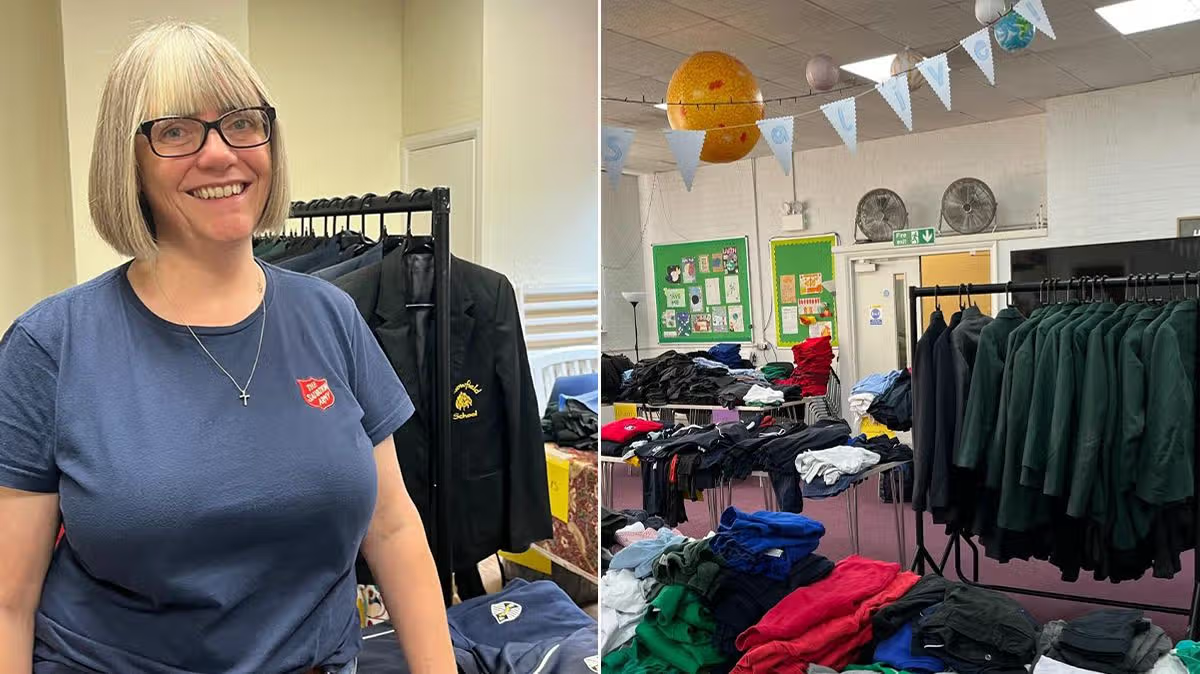
Major Julie Pell, who runs a Salvation Army uniform bank out a church in Walthamstow, east London, said they are seeing more families than ever before.

What support is available in your area?

“Families can’t cope.” Major Julie told the Mirror. “After feeding their children, buying food and meeting the ever-rising cost of bills, there’s no money left to buy school uniforms.”

Advertisement

Last year, the Salvation Army handed out more than 29,000 pieces of uniform, and Julie expects that figure to rise this year.

“It is heartbreaking seeing parents unable to afford essentials. They just want their child to go to school looking the exact same as every other child. I can see just how desperate they are to send their children to school properly dressed”

Julie says some parents leave the uniform bank in tears, overwhelmed by the relief of being able to get what their children need.

“There are points when it just gets overwhelmingly heartbreaking,” she said. “You know you’re helping people but you know there are still so many parents out there struggling. We’re seeing first hand that something needs to be done.”

Government research estimates the average cost of a secondary school uniform at £442, while primary school uniform costs average £343. Research by The Children’s Society found that 38% of parents struggled with uniform costs last year, rising to more than half among the lowest-income households.

The consequences of not having the correct uniform can be severe. Last year, devastating research found that children are paying the price for their parents’ financial struggles through harsh school discipline.

A nationwide poll of 3,000 parents conducted for The Children’s Society, found that more than two in five children (44pc) have experienced negative consequences at school due to unaffordable uniform requirements.

Advertisement

Across the UK, children have been being subjected to detentions (12pc), isolation (9pc), and even formal exclusions (8pc) over unaffordable uniforms. Secondary school pupils face the harshest treatment, with one in eight (12pc) placed in isolation for uniform breaches entirely outside their control.

Despite minor improvements, such as increased availability of second-hand uniforms, 42pc of parents said uniform costs had not become more affordable.

Matthew Sheeran, external relations manager at Money Wellness, warned that children are unfairly bearing the brunt of the price squeeze.

Advertisement

“If there are disciplinary measures in place, or they are having to wear different school uniform, it can cause bullying or name calling,” he said. “It’s never the children’s fault, and that’s the main thing to focus on.”

Money Wellness data shows one in 10 parents are now resorting to credit cards, or high-interest loans to fund school uniform purchases.

The government is introducing new rules in England from September, limiting the number of branded items schools can require parents to buy. Primary schools will generally be limited to three compulsory branded items, while secondary and middle schools can require four where one is a tie.

Advertisement

The rules are designed to allow parents to buy more generic items from cheaper retailers, with the Government estimating families could save up to £50 per child.

However, parents and campaigners warn that the rules don’t go far enough, with schools demanding specific colour shares, requiring expansive PE kits, or marking up the prices of the remaining branded items.

Dr Sasha Hall, 41, a child psychologist from Essex, spent around £400 getting her four-year-old daughter and her three-year-old son ready for Reception and nursery receptively.

“I am in a dual-income household with decent salaries and I couldn’t believe how much it cost,” Sasha said.

Advertisement

“The shade of blue on my kids is not the kind of blue you can get off Amazon or in Asda.”

Her children wear the same size, meaning she cannot rely on hand-me-downs between them. The mum bought ten jumpers at £12.95 each from their local uniform shop, eight pairs of shorts at £6.95, joggers at £10.95 each, compulsory book bags at £8.95 each and hats costing £5.75.

Advertisement

She says she was also required to buy specific rain anoraks costing £26.95, as well as black coats and particular water bottles.

“When I was a child, you had those logos that you could sew on, so you could get anything from anywhere but now you can only buy it from the local uniform shop and it costs whatever their price is,” she added.

“The only thing I saved money on was the polo shirts which I bought a pack of five for £7 from Asda,” she said.

“I saw the same jumpers for a third of the cost but I needed ones with the embroidered logo on, so I had to buy them from the uniform shop. I just wonder how are other people paying for this?”

Advertisement

Donna Richardson, 45, from Loughborough, had to replace her daughter’s uniform when the school changed its logo, forcing her to replace perfectly good clothing.

“My daughter’s current uniform is still perfectly usable, but because the school has changed its logo, we are expected to buy new items with the updated branding.”

“What makes it even more frustrating is that my daughter moves to senior school next year, meaning this uniform will only be used for one year. It feels completely wasteful.”

Advertisement

“For parents, these aren’t small costs. Every new item adds up, and having to replace something that isn’t worn out or damaged purely because of a logo feels incredibly unfair.”

Meanwhile, Lauren Witter, 34, a social worker from Richmond-upon-Thames, has already spent £150 preparing her four-year-old daughter Gabriella for Reception – without even buying shoes yet.

Advertisement

Because her daughter is “very active”, Lauren bought multiples of items to avoid nightly washing, with the list of items including branded cardigans and jumpers, a separate PE kit, pinafores, shirts, underwear, socks and tights.

“I was shocked at how quickly the costs accumulated,” she said. “I’m happy the rules are coming in. I think it’s about time that it’s recognised school uniform is expensive.”

Support across England remains a postcode lottery. Money Wellness found that just 22 of England’s 153 local authorities offer a dedicated school uniform grant for the 2026/27 school year, with support ranging from £25 to £160 depending on location.

In Barnsley, the new Reform council has cut back what was previously one of England’s largest school uniform voucher schemes.

Advertisement

The scheme was introduced last year and all pupils in compulsory education were eligible for the discounts. Study support packs were also offered to children in year 11.

Previously, over 33,000 uniform vouchers were issued to families, totalling £2.5 million, reported The Star.

It provided £50 for primary school pupils and £100 for secondary pupils, and study support packs for Year 11 students, but now it is limited to children starting Reception and Year 7, with 5,500 families set to receive help.

Advertisement

James Higginbottom, leader of Barnsley Labour, estimated about 28,000 families would miss out.

Penistone and Stocksbridge MP Marie Tidball criticised the reduction, saying the scheme had supported more than 33,000 children and young people and that 94% of vouchers had been cashed in.

“Just a few months into a Reform-led council, Barnsley families are already seeing what their priorities look like: cutting back practical support that thousands of parents have relied on,” she said.

“This money had already been allocated in the Budget by Labour and should be delivered, so it is a political choice that Reform are making, to take this support away from children and families.

Advertisement

“At a time when families are still feeling the squeeze, Reform councillors should be expanding practical support, not cutting back a scheme that parents have used and valued.”

At the time, Cllr leader William Brown told the Barnsley Chronicle: “We want to move away from one-off, universal payments and instead offer more targeted and flexible support. To do this, we’ll use more external funding from Barnsley Council’s £4.7m allocation of the government’s new Crisis and Resilience Fund to help our residents.

“Our approach also means we can spend taxpayers’ money wisely, use external funding where possible and focus support where it will have the biggest impact.”

East Riding of Yorkshire has withdrawn its dedicated school clothing grant altogether and now signposts eligible families to its Crisis and Resilience Fund.

Advertisement

Elsewhere, Greenwich has expanded its scheme to include eligible pupils attending academy schools, while Brent has introduced a new pilot school uniform grant for low-income families.

With official support falling short, parents are taking matters into their own hands. In Bristol, retail supervisor Faye Psyden, 36, helped run a free uniform swap in her local library after her two children moved to different schools.

“We had so much uniform built up, we wondered what are we going to do with it all?” she said.

Advertisement

At their first event, more than 100 people turned up. “People were so grateful,” Faye added. Most of the uniform was taken, with three large boxes remaining for the next swap.

Faye says branded uniform can cost around £10 per item at her children’s school, and the expense quickly adds up as children lose, stain or grow out of clothes.

“It’s racking up,” she said. “I have struggled with school uniform cost,” she added. “You have to think in advance how you are going to afford things.”

She worries that even unbranded uniform could become more expensive, if further action isn’t taken.

Advertisement

A Department for Education spokesperson said: “School uniform matters, but it shouldn’t break the bank. No family should have to choose between putting food on the table and buying a new blazer.

“Parents have told us they want fewer costly branded items and that’s exactly what we’re delivering, limiting branded items from September 2026 giving families breathing space, and saving some parents up to £50 per child. We are also supporting schools with our new guidance to take more steps to bring down the cost of individual items.

“We are keeping more money in the pockets of hardworking families, so the back-to-school shop doesn’t push parents into debt and children can focus on their education, not their outfit.”

But campaigners say the changes need to go further.

Advertisement

“It’s only 22 of the local authorities that have a dedicated grant, so the vast majority of people aren’t getting that support,” Matthew added.

“Someone who is struggling in a different part of the UK is having to find alternative ways to support that. As long as the responsibility sits with the council, it will be hard to have every council on the same path.”

  • In Scotland, you can apply for a school clothing grant through mygov.scot. In Wales, you can apply for the School Essentials Grant through gov.wales. In Northern Ireland, apply through the Education Authority.
Source link

Continue Reading

NewsBeat

Smithills School celebrates record-breaking GCSE results

Published

on

Smithills School celebrates record-breaking GCSE results

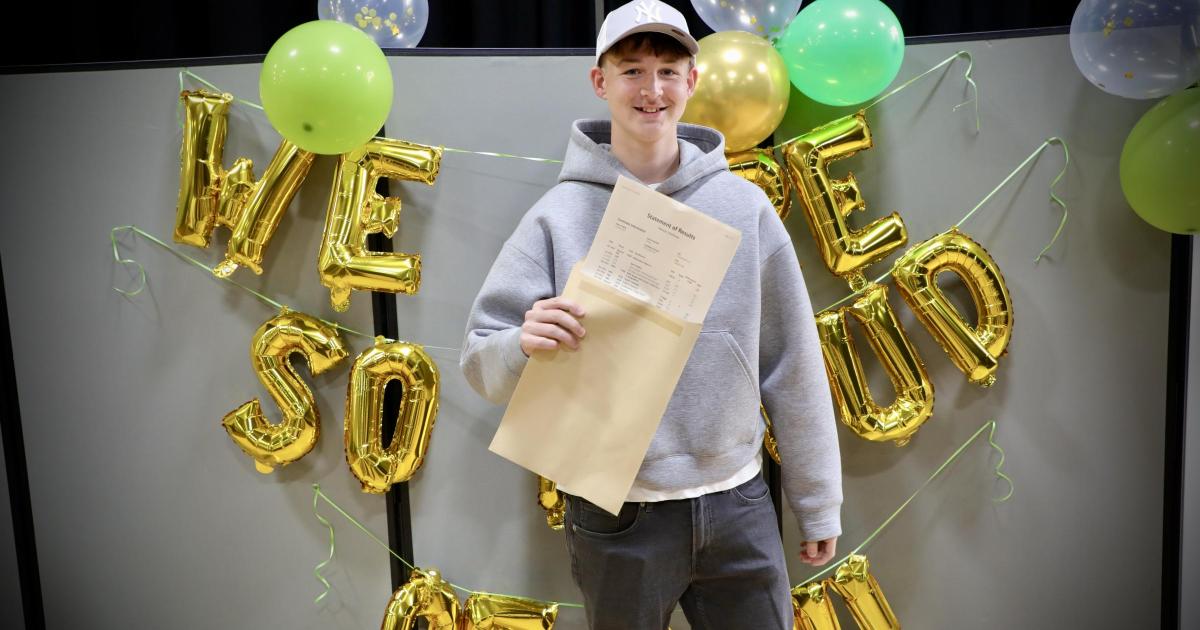
Year 11 pupils at Smithills School have achieved the school’s strongest results to date. 

Improvements were made in overall pupil attainment and the proportion of students securing strong passes in both English and maths.

Carolyn Dewse, headteacher at Smithills School, said: “We are incredibly proud of our Year 11 pupils and everything they have achieved.

(Image: Smithills School)

“Their hard work, resilience and commitment throughout their time at Smithills have been remarkable, and it was wonderful to see so many of them delighted with what they had achieved.

Advertisement

“Our staff have also shown tremendous commitment, going above and beyond to support our young people and give every pupil the opportunity to succeed.

“Our vision is ‘Success for All’, and these outcomes demonstrate what can be achieved when pupils, staff and families work together.

“Most importantly, our young people can now look ahead with confidence as they move on to the next stage of their education, training or employment.

“We wish every one of them the very best for the future.”

Advertisement

Pupils also shared their excitement and gratitude as they collected their results.

Dior said: “I’ve done really well and passed all of my GCSE’s. I would like to thank Mrs Turner for helping me throughout Year 11, and I’m so glad we all went out with a bang”.

Nathan said: “I’ve just got my results, I’m really happy, I’ve got really high grades, and I’m going to Runshaw College to do business, accounting and criminology.”

(Image: Smithills School)

Imani said: “I’ve passed everything, I’m going to the Sixth Form Bolton. I would like to thank my teachers and especially my parents for all the support they have given me.”

Advertisement

Jason Nash, Head of Year 11, said: “Some fantastic results. It’s been such a pleasure working with you as a Year group, the Green Dream Team.

“You’ve finally come to the end of your journey here at Smithills School; remember you will always be a part of the Smithills Family. Keep in touch.”

Source link

Advertisement
Continue Reading

NewsBeat

Plug-in solar panels can be sold from today: I live in a flat but won’t be buying them says HELEN CRANE

Published

on

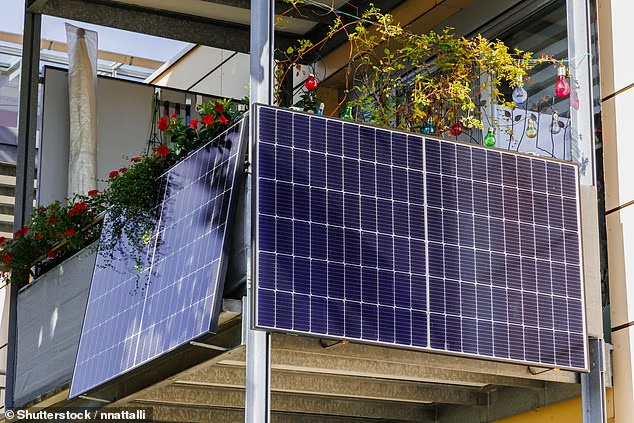
New in: Plug-in solar panels (seen on a balcony in Germany) can be sold in Britain from today

Plug-in solar panels could land on British shelves today – just in time for a grey, wet and overcast bank holiday weekend.

The panels, a smaller, cheaper and more portable version of traditional solar panels, have not been allowed in Britain to date because of safety regulations.

New rules allowing their sale come into force today, following much fanfare from the government. 

It says the rule change will allow more people to save money by using solar energy, including those living in flats and renting their homes.

Advertisement

I’m exactly the person who this scheme is aimed at. I live in a ground-floor flat, which presents an obvious problem when it comes to getting traditional solar panels in that someone else lives between me and the roof.

And while I’m hardly an eco zealot, I try to be sustainable where I can – especially if doing so can save me money.

I keep tabs on energy use, harvest rainwater to use on the garden and buy things like furniture, clothes and books second hand where possible. My partner cajoles me into taking plastic film to the special recycling bin at the supermarket, even though I find it a pain.

But I won’t be rushing out to get the new plug-in solar panels – and here’s why.

Advertisement

New in: Plug-in solar panels (seen on a balcony in Germany) can be sold in Britain from today

1. You may not even find any 

First of all, it might not even be possible to buy them today (although do let us know if you spot any on sale – editor@thisismoney.co.uk). 

While retailers including B&Q, Currys, Amazon and Lidl said they’d be keen to stock the panels once the regulations changed, none have confirmed that they will be doing so straight away.

Advertisement

As any panels sold will have to meet strict regulations, it may still be a while before we see them on shelves (or more likely online, as they weigh about 25kg). 

And that’s before you consider whether retailers will consider it wise to stock up on the sun-sucking devices in the summer’s final throes.

If you are considering buying them, you can read our guide to the nine pitfalls to avoid with plug-in solar panels here.

2. I’m not sure they’ll save much money 

My second qualm is that I’m not sure the sums will add up. Estimates suggest a standard plug-in solar panel set-up for an average-sized flat will cost between £400 to £600. 

Advertisement

According to government estimates, they could save households between £70 and £110 per year on energy bills.

It means it will take four to six years for users to break even – but that is based on optimum conditions. 

This means the panel being placed in a spot that gets sun for most of the day, which is easy if you have a roof you can put them on, but much harder if you have to attach them to a wall, balcony or fence.

Take my flat, where the front of the house is the part which is south-facing and sunny. Would I really want to leave a £500 piece of kit sitting in view of the street all day? 

Advertisement
Location, location, location: Solar panels won't perform well if they're kept in a shady place - which becomes trickier if you don't have a roof to mount them on

Location, location, location: Solar panels won’t perform well if they’re kept in a shady place – which becomes trickier if you don’t have a roof to mount them on

3. They might annoy the neighbours 

I can easily see other flat-dwellers running into issues with freeholders or landlords objecting to them putting up the panels, or neighbours griping about them being attached to a shared fence.

Apparently these solar panels are common in Europe, including Spain and Germany where they are called ‘Balconkraftwerk’ or balcony power plants, but perhaps neighbours there are more easy-going (it’s obviously also sunnier).

4. Safety checks will be crucial – and eat into cost savings

The cost saving calculations also omit the price of safety checks, which are going to be absolutely crucial for anyone considering plug-in solar. 

Advertisement

Speaking to Insurance Post magazine, Megan Durnford of insurer Zurich this week warned that the new panels shouldn’t be treated as a ‘plug and play gadget’.

The systems generate electricity and feed it back into the wiring system, which isn’t something our homes were designed to support. 

‘Fundamentally, you’re adding a mini power station to your home,’ Durnford said.

If your wiring is old, badly maintained or unsuitable you risk electrical faults, overheating and even fire. 

Advertisement

In my flat, which dates from 1880, I wouldn’t want to plug in without enlisting an electrician to make sure everything was safe.

But an electrical safety check costs between £100 and £250 according to Checkatrade, wiping out at least another year and a half of those £70 to £110 of energy bill savings.

It’s essential to buy from a retailer you trust and check that devices meet the regulations. If the panels aren’t readily available straight away, I worry that less reputable outfits will try to cash in. 

Do also tell your home insurer, as installing the panels without doing so could make your cover void.

Advertisement

5. They have a huge flaw compared to roof panels

The biggest problem I have with plug-in solar panels, though, is that they will be far less effective for saving money than roof-mounted ones. 

Not because of their size, or even the sub-optimal places they might be positioned, but because they’re missing an essential component.

Most households with traditional solar panels install a battery, which means they can store the electricity they generate when it’s sunny and use it later. They can even make extra cash by selling it back to the National Grid.

But batteries can’t be used with plug-in systems, meaning households must use the power from the panels at the same time it is being generated. I’m not often at home during the day, so for me this would reduce the benefits dramatically.

Advertisement

Even if I was, I’m not sure I’d remember to put the washing machine on or run the dishwasher every time the sun peeked out from behind the clouds.

What do you think – will you be buying plug-in solar panels? If not, what would be a better way to encourage households to go green? Let me know in the comments. 

Source link

Advertisement
Continue Reading

NewsBeat

Is Burnham Risking Putin’s Wrath With Fresh Ukraine Support?

Published

on

Is Burnham Risking Putin’s Wrath With Fresh Ukraine Support?

Andy Burnham stepped onto the international stage this week for the first time as UK prime minister.

He has rarely weighed in on foreign affairs over his decades in politics, so his trip to Ukraine attracted more attention than usual – including from Russia.

Burnham also went beyond the platitudes European politicians are often accused of using with Ukraine and instead gave Kyiv the blueprints to build its own long-range missiles.

This meant releasing classified information so Ukraine can up the intensity of its its attacks on Russia.

Advertisement

His announcement came a week after it was confirmed British drones had been used by Ukraine to strike targets deep within Russia, too.

The Russian embassy in the UK warned Britain that the “deeper its involvement in the conflict, the higher the price it will pay” – a sentiment then echoed by Vladimir Putin’s foreign minister, Sergei Lavrov.

The Kremlin even accused Britain of “participating in this war” after handing over the blueprints on Monday, claiming that Britain has added “fuel to the fire”.

But Burnham shrugged off the threats by asking: “Who started the fire?”

Advertisement

He insisted Britain will not just be a “fair-weather friend” to Ukraine and showed no sign of being intimidated.

Burnham also noted that he was simply supporting the same ally Keir Starmer, Rishi Sunak and Boris Johnson prominently backed when they were in office.

He’s right: the UK has already committed to £25 billion in funding for Ukraine since Putin invaded in 2022, £16 billion of which was in military assistance.

And there’s no love lost between Britain and Russia. Animosity has been rising between the two countries ever since Putin annexed Crimea in 2014 and relations took a nosedive after the 2018 Salisbury poisonings.

Advertisement

Moscow also withdrew its ambassador from the London embassy the day after Burnham got the keys to No.10.

A month later, Russia is yet to offer any appropriate candidates to the Foreign Office.

However, there are fears Burnham’s actions this week may have triggered fresh ire in Moscow, especially at a time when Putin is reportedly already feeling rather desperate.

The number of Russian casualties has reportedly reached 30,000 a month while fuel shortages and long-range Ukrainian attacks have brought the distant war home for many citizens.

Advertisement

With so many signs that the Ukraine conflict – which has now lasted longer than World War 1 – is going wrong for Putin, could the authoritarian look to broaden his aggression and make Britain public enemy number one?

On this week’s Commons People, we unpick the significance of Burnham’s trip to Kyiv and just how concerned Brits should be about Russia right now.

Listen to Commons People, the podcast that makes politics easy. Every week, Kevin Schofield and Kate Nicholson unpack the week’s biggest stories to keep you informed. Join us for straightforward analysis of what’s going on at Westminster.

Advertisement

Source link

Continue Reading

NewsBeat

Patsy Kensit reveals Noel Gallagher confronted her over marriage to Liam after she became ‘too afraid to leave him alone’ and ‘lost herself’

Published

on

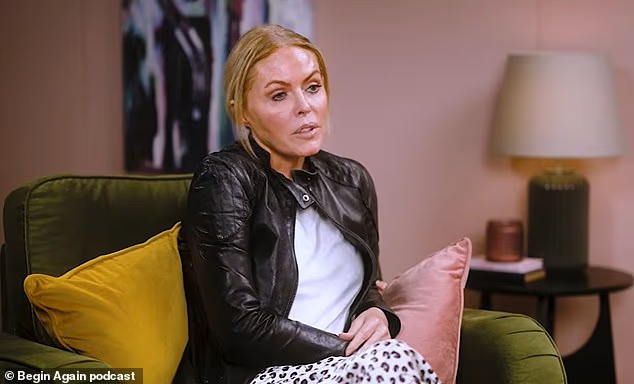
Patsy Kensit, 58, has revealed Noel Gallagher confronted her over abandoning her career during her marriage to his brother Liam

Patsy Kensit has revealed Noel Gallagher confronted her over abandoning her career during her marriage to his brother Liam.

The Emmerdale star, 58, and Oasis frontman, 53, became one of the most famous celebrity couples in the 1990s, but Patsy has now told how the relationship became so all-consuming that she ‘lost part’ of herself and stopped taking film roles because she was ‘too afraid to leave him on his own’.

Speaking on Davina McCall’s Begin Again podcast on Thursday, Patsy revealed it was Liam’s older brother Noel, 59, who eventually took her aside and questioned why she had put her career on hold.

She said: ‘I think what I forgot in that time was how much I’d done before it. That relationship became so big. It was bigger than me and therefore the pressure was huge.’

Advertisement

Patsy – who has a son, Lennon, a 26-year-old model, with Liam – added: ‘Of course, the Vanity Fair cover and all of that stuff is very… people love it. It was a very iconic time.

Patsy Kensit, 58, has revealed Noel Gallagher confronted her over abandoning her career during her marriage to his brother Liam

The Emmerdale star became one of the most famous celebrity couples in the Nineties when she began dating Oasis frontman Liam Gallagher, now 53 (pictured in 1999)

The Emmerdale star became one of the most famous celebrity couples in the Nineties when she began dating Oasis frontman Liam Gallagher, now 53 (pictured in 1999)

Advertisement

‘I lost part of who I was going into that relationship. I somehow lost her.’

Patsy was referring to the couple’s famous 1997 Vanity Fair shoot, which saw them sprawled together on a bed covered in Union Jack bedding for the magazine’s ‘London Swings! Again!’ issue celebrating Cool Britannia. The image became one of the defining photographs of the Britpop era.

Patsy had been acting since childhood and had starred opposite Mel Gibson in Hollywood blockbuster Lethal Weapon 2, as well as appearing in Absolute Beginners, before becoming synonymous with the Britpop era.

She recalled: ‘I remember Noel, who is lovely and divine, and he’s just always been lovely to me over the years.

Advertisement

‘I remember him taking me to one side and saying, “Why aren’t you working? Why aren’t you…” because I was always off doing films and going to the States and stuff.

‘And I remember saying, “Because I’m too afraid to leave him on his own.”‘

Patsy said Noel encouraged her to do more with her own career, but her turbulent relationship with Liam eventually ‘ran its course’.

She added: ‘There were some fantastic times. We were very irresponsible. I always say I had some very late nights in the Nineties.’

Advertisement

Patsy met Liam in 1995 and the pair married at Marylebone Town Hall in April 1997, becoming fixtures of the Cool Britannia era.

They divorced in September 2000, the year after welcoming their son Lennon.

Looking back at how they first met, Patsy said she encountered Liam on a flight to Glasgow, when one of the first things he did was compliment the small round John Lennon-style sunglasses she was wearing.

But Patsy has now told how the relationship became so all-consuming that she 'lost part' of herself and stopped taking the film roles because she was 'too afraid to leave him on his own'

But Patsy has now told how the relationship became so all-consuming that she ‘lost part’ of herself and stopped taking the film roles because she was ‘too afraid to leave him on his own’

Advertisement
Patsy revealed it was Liam's older brother Noel, 59, (R) who eventually took her aside and questioned why she had put her career on hold

Patsy revealed it was Liam’s older brother Noel, 59, (R) who eventually took her aside and questioned why she had put her career on hold

Patsy shares model son Lennon, 26, with Liam (pictured together in 2023)

Patsy shares model son Lennon, 26, with Liam (pictured together in 2023)

She said: ‘The first thing he said to me was, “Oh, top bins.” I was really tempted to give them to him. Then I thought no, I got these in New York, and I actually really quite like them.

‘As the years went on, he’d always come home with a new pair of sunglasses that someone had given him, but I was so pleased that I wasn’t that girl.’

Advertisement

She said they then ‘just kept running into each other’, adding of the start of their romance: ‘It was quite sweet. It wasn’t a sleazy kind of get-together.’

Patsy was still married to her second husband, Simple Minds singer Jim Kerr, now 67, at the time, but said the pair were already ‘leading separate lives’.

She and Jim share a son, James, 32, and divorced in 1996 after four years of marriage.

Patsy said she does have regrets over how events unfolded, but would never wish away the relationship because it gave her Lennon.

Advertisement

She reflected: ‘Do I regret that? Yeah, I look back now, but then I wouldn’t have had my youngest son, and that’s a blessing. It came out of, you know, some very tough times in that marriage.’

The actress – who is now preparing to return to Emmerdale as scheming Sadie King after a 20-year absence – also reflected on the extraordinary level of scrutiny surrounding her and Liam at the time, saying the pair came to represent something much bigger than their relationship.

‘It was bigger than me. The pressure was huge,’ she said.

Source link

Advertisement
Continue Reading

NewsBeat

What to know about the NFL’s 9 international games

Published

on

What to know about the NFL's 9 international games

LONDON (AP) — The NFL will play a record nine games internationally this season and they include three cities hosting for the first time: Melbourne, Australia; Rio de Janeiro; and Paris.

Jacksonville and San Francisco both play two games abroad: the Jaguars back-to-back in London; the 49ers in Melbourne and later in Mexico City.

Here’s some handy information about the games and locations.

Melbourne, Week 1

Talk about pushing boundaries. The Los Angeles Rams face the San Francisco 49ers in a game at Melbourne Cricket Ground. The league has never staged a regular-season game so far from home. It’s a nearly 16-hour flight from the West Coast. The NFL West matchup will kick off at 10:35 a.m. local time Friday, Sept. 11, in Melbourne — which will be 8:35 p.m. Thursday, Sept. 10, on the U.S. East Coast.

Advertisement

The 100,000-capacity stadium, known as “The G,” is the largest on the NFL schedule this season. Aussies call American football “gridiron” so as not to confuse it with Australian Rules Football. Visitors might want to look up Shane Warne to get a flavor of Australian cricket history.

Rio de Janeiro, Week 3

“America’s Team” is coming to the famed Maracanã Stadium on Sept. 27. The Dallas Cowboys will play just their second-ever regular-season international game when they face the Baltimore Ravens. In 2014, the Cowboys beat the Jaguars 31-17 at Wembley Stadium.

Rio is hosting for the first time and has what looks like a good QB matchup: Dak Prescott vs. Lamar Jackson. The league has committed to playing at least three regular-season games in Rio over the next five years. There have been two previous games in Brazil — both in Sao Paulo.

Dallas to Rio is an estimated 10-hour flight.

Advertisement

The Maracanã has staged two men’s World Cup finals — in 1950 and 2014. It was also the site of the opening and closing ceremonies of the 2016 Summer Olympics.

London, Weeks 4-6

London has been a mainstay for the NFL since 2007. Forty-two of the 62 regular-season games played internationally so far have been staged in London. Three more are on tap this season.

The first two will be at Tottenham Hotspur Stadium: Indianapolis vs. Washington on Oct. 4; and Philadelphia vs. Jacksonville on Oct. 11.

The Jags pull double duty by staying to face the Houston Texans on Oct. 18 at Wembley Stadium — and by doing so will become the first team to play two home games abroad in the same season. The Jags, who have a 7-7 record in London games, are undergoing stadium renovations at home.

Advertisement

Washington’s only other trip to London ended in a 27-27 tie — or a “draw” as the locals would call it — with the Cincinnati Bengals in 2016. Commanders quarterback Jayden Daniels will look to make his international debut after missing last year’s Madrid game because of injury.

Paris, Week 7

The NFL finally makes it to the City of Light. Practices in the shadow of the Eiffel Tower perhaps?

The New Orleans Saints have the French connections and the Pittsburgh Steelers have the star quarterback — Aaron Rodgers — for the first regular-season game in Paris. The 42-year-old Rodgers headlined Dublin’s debut as a host city last season and figures to be in the spotlight at Stade de France on Oct. 25.

The 80,000-seat stadium, located just north of the capital in Saint-Denis, was the centerpiece of the 2024 Paris Olympics — Tom Cruise descended from the roof during the closing ceremony. It opened in 1998, when it hosted the FIFA World Cup final — France beat Brazil 3-0.

Advertisement

Madrid, Week 9

Joe Burrow goes international for the first time — as a player anyway. The Bengals quarterback was a hit at Vogue World 2024 in Paris.

He’s set to make his international debut at Bernabeu Stadium when Cincinnati faces the Atlanta Falcons on Nov. 8. It will be Cincinnati’s first game outside the U.S. since a 24-10 loss to the Rams in London in 2019 in Zac Taylor’s first season as head coach. The Falcons lost to the Colts in Berlin last season.

The 83,186-capacity Bernabeu is home to Real Madrid soccer club — one of the most recognized sporting brands in the world. Real Madrid’s soccer team has more Instagram followers — 180 million — than the combined total of all 32 NFL teams.

Last year, Bernabeu hosted Spain’s first regular-season game when the Miami Dolphins, led by quarterback Tua Tagovailoa, beat the Washington Commanders 16-13 in overtime. Tagovailoa has since joined the Falcons.

Advertisement

Munich, Week 10

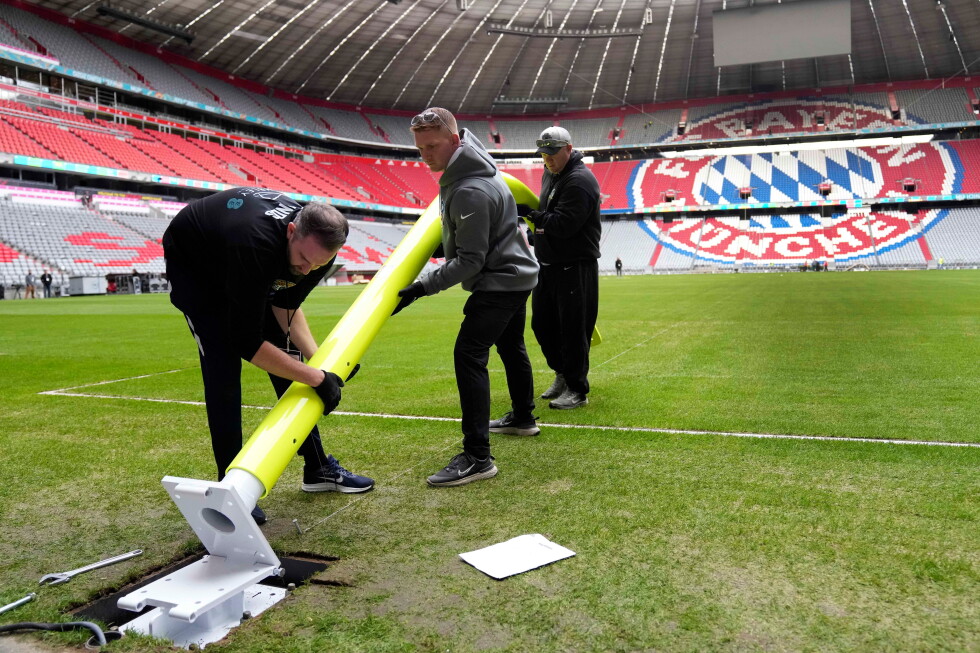
The Patriots-Lions matchup in Bavaria looks promising. New England reached the Super Bowl last season but the big draw will be a homecoming for Detroit wide receiver Amon-Ra St. Brown. The star’s mother was born in Germany and he has a big following among the NFL’s large German fan base.

The Nov. 15 game at Bayern Munich’s home stadium will be the third NFL game in Munich. The first one, in 2022, was Germany’s first regular-season NFL game and Tom Brady led the Tampa Bay Buccaneers past the Seattle Seahawks 21-16. Days earlier, Brady had been gifted lederhosen. The crowd sang ‘Take Me Home, Country Roads’ — and the seven-time Super Bowl champion called it “one of the great football experiences that I’ve ever had.”

Note to visiting fans, if you enjoy downing pre-game beers, probably best to bring some with you on the train ride to the stadium. Seahawks fans complained no alcohol was served by vendors outside the venue.

Mexico City, Week 11

The NFL returns to Mexico City for the first time since 2022 for a matchup between the 49ers and Minnesota Vikings on Nov. 22.

Advertisement

Azteca Stadium, which has been renamed Banorte, hosted the very first regular-season game played outside the U.S. when the Arizona Cardinals beat San Francisco 31-14 in 2005 before a crowd of 103,467. (A Cowboys-Giants regular-season game in 2009 eclipsed 105,000). The first play from scrimmage was a wild one — a strip-sack that resulted in a touchdown.

Four years ago, the 49ers were prepared for the high altitude and beat the Cardinals 38-10. Azteca then underwent renovations for the 2026 World Cup and its current capacity is 87,523.

The Vikings played in Dublin and London in consecutive weeks last season and are 5-1 overall in regular-season international games.

___

Advertisement

See AP’s full NFL coverage here

Source link

Advertisement
Continue Reading

NewsBeat

‘I went to gorgeous seaside town 2hrs from Cambridge with award-winning beach’

Published

on

Cambridgeshire Live

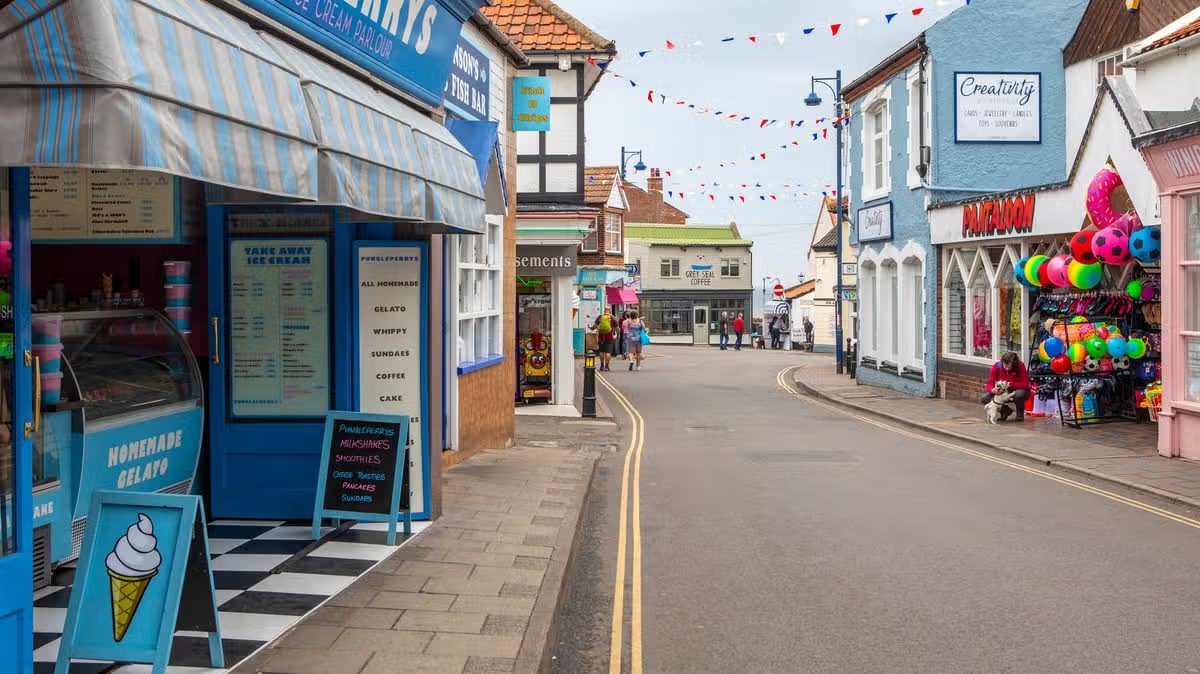
A lesser-known town near Cambridge has been dubbed the perfect seaside escape by a visitor who urged others to visit the picturesque coastal town where ‘time slowed down’

You don’t need to travel overseas to savour stunning sandy beaches and crystal-clear waters, as the UK is brimming with breathtaking coastal towns that offer everything you could wish for and more. The town of Sheringham sits along the Norfolk coast, just a two hours away from Cambridge.

At first glance, it may seem unassuming, with a population of just 7,367 people, according to the 2011 census. But most visitors quickly change their tune, with many tourists claiming it feels as though they’ve stepped back in time upon arriving in the charming town for a day trip or holiday. The town is packed with activities, boasting an award-winning beach, stunning natural landscapes and parks to explore, as well as local and military museums to visit.

Advertisement

Taking to TikTok, one woman decided to share her experience of visiting the small town, describing it as a place ‘where time slowed down’.

“Sheringham – a cosy seaside town where time slows down. Colourful cottages, fresh sea breeze, and the sound of waves – it’s the kind of place that makes you want to stay a little longer,” she wrote in the caption of the video.

Content cannot be displayed without consent

She accompanied her words with a video that opened with a woman, dressed in a blue dress and wearing a sunhat, strolling along the platform at the train station. The footage was captured from inside what appeared to be a vintage train, which instantly lent the clip an enchanting sense of having travelled back through the decades.

The TikTok creator proceeded to share brief footage from their trip to Sheringham, showcasing the high street adorned with vibrant bunting strung overhead, followed by scenes of a procession of older women dancing and marching through the town centre.

Advertisement

They also captured the beach, where visitors were soaking up the scenery and taking part in activities in the blue waters, despite the overcast skies above.

And what seaside excursion would be complete without an ice cream? Strolling past pastel-hued buildings, they made their way to their ice cream parlour of choice, where a chocolate-dipped cone piled high with ice cream was the order of the day.

No visit to a coastal town would be quite right without a seagull sighting either — the creator duly spotted one perched atop a wall, keeping a watchful eye on the passers-by below.

Viewers were swift to share their reactions in the comments, with many expressing their delight at how tranquil and charming the town appeared to be.

Advertisement

“I love Britain one of my favourite countries,” one person wrote.

Another viewer said: “This is not just a video. It’s like opening up to a brand new dimension of extraordinary power!”.

Source link

Advertisement
Continue Reading

NewsBeat

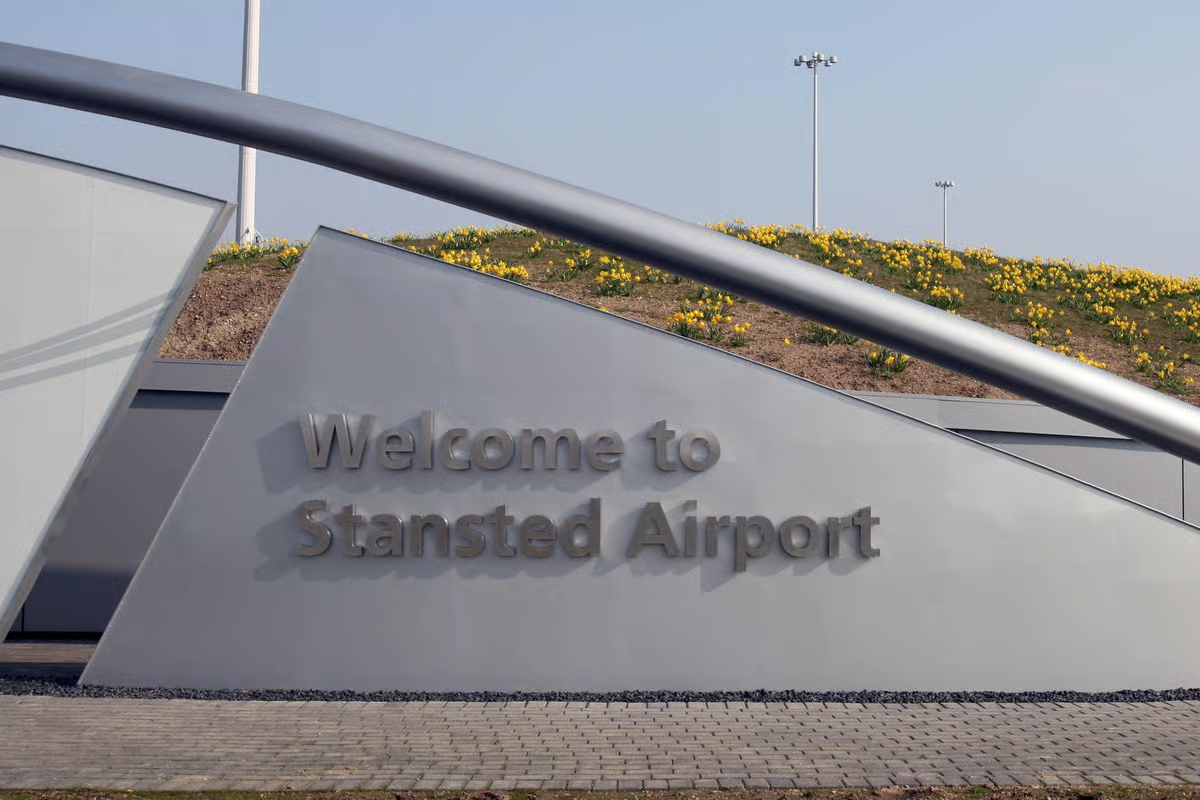
Millions of passengers’ details at London Stansted accessed by hackers in huge cyber attack on UK airports

Published

on

Millions of passengers' details at London Stansted accessed by hackers in huge cyber attack on UK airports

In an email to customers, London Stansted said: “We would urge you to be particularly cautious of unexpected emails, calls or text messages claiming to be from us. We will never contact you unexpectedly to ask for payment or banking information. We apologise for any inconvenience or concern this may cause.”

Source link

Continue Reading

NewsBeat

Stockard Channing Has Her Say On Grease’s Opening Cartoon

Published

on

Stockard Channing Has Her Say On Grease's Opening Cartoon

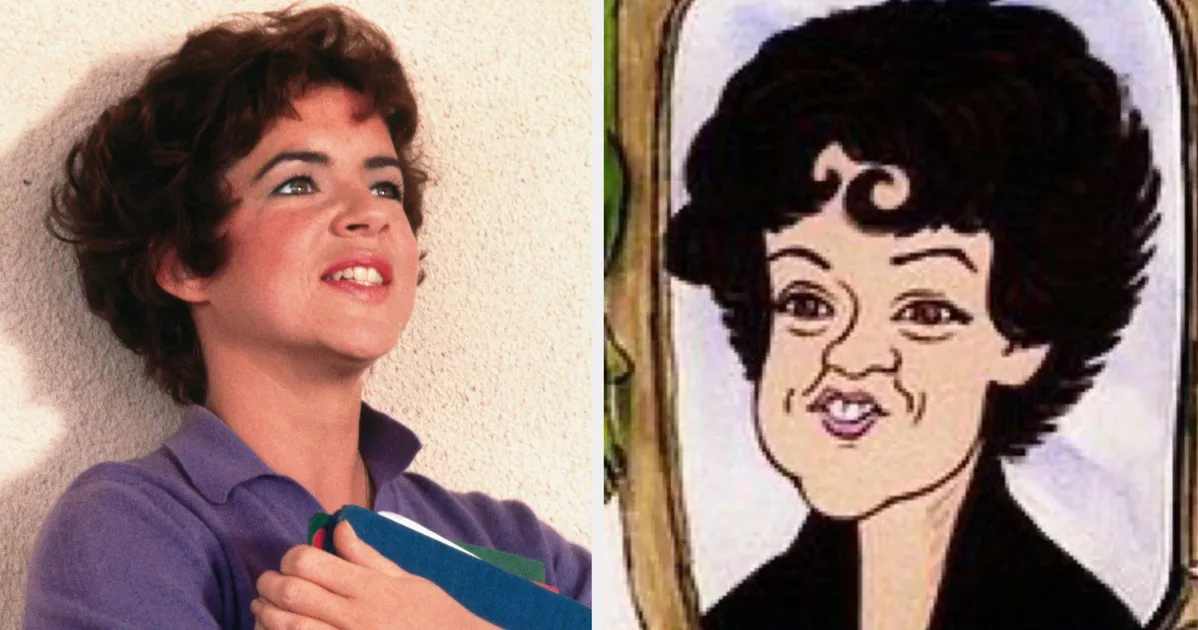
For years now, the classic musical Grease has been the subject of debate as to whether it sets a bad example with its messaging, after Olivia Newton John’s Sandy reinvents herself at the end of the movie to grab the attention of John Travolta’s Danny.

But there’s another controversy that’s arisen in recent years over a scene before we even make it to Rydell High.

As you may well recall, after we’re first introduced to Sandy and Danny frolicking together on the beach, Grease then cuts to an animated opening title sequence, where some of the cartoon characters.

In recent history, this section has faced scrutiny thanks to an oft-cited viral post claiming that the animators “did Stockard Channing dirty” with their depiction of her.

Advertisement

Well, the woman herself has finally had her say, and she’s conceded that she’s not exactly a a fan of the drawing in question.

“My cheeks!” Stockard said when asked about the caricature by Entertainment Weekly. “I felt the same way.”

“That’s even worse than I remember – look at that!” she responded when presented with the image.”

Stockard then admitted that she’d “only seen the movie twice”, and both were at official screenings.

Advertisement

“One was in the opening at Grauman’s Chinese [Theatre],” she said. “And I do agree that cartoon was unfortunate. It was my nightmare vision of self.

“And the second time, I saw it 20 years later. Also at Grauman’s Chinese.”

“I’m very proud of it,” she insisted. “But I don’t watch it.”

Stockard Channing in 2012

The future Oscar nominee played the Pink Ladies’ leader Rizzo in the 1978 stage musical, performing on group numbers like Summer Nights as well as the solos Look At Me, I’m Sandra Dee and There Are Worse Things I Could Do.

Advertisement

And if you think we’re going to just mention the absolute anthem that is There Are Worse Things I Could Do without including a link so you can listen to it right this second, you are mistaken.

Source link

Advertisement
Continue Reading

NewsBeat

Documents refute RFK Jr.’s Senate testimony about Samoa trip

Published

on

Documents refute RFK Jr.'s Senate testimony about Samoa trip

NEW YORK (AP) — Health Secretary Robert F. Kennedy Jr. repeatedly told lawmakers who held the key to his confirmation last year that a 2019 visit to Samoa before a deadly measles outbreak had “ nothing to do with vaccines.” New documents obtained by The Associated Press and The Guardian refute that testimony.

Kennedy, then a prominent anti-vaccine activist, preceded the visit with a letter to the Samoan prime minister requesting to study the Pacific island nation’s measles, mumps and rubella vaccines after the deaths of two children who had received them. In the letter, he used the words vaccine or vaccination eight times.

The letter raises questions about how truthful Kennedy was in testimony before Congress. During an arduous confirmation process where he needed the support of some skeptical Republican lawmakers to advance, Kennedy also pledged to maintain vaccine policies that, once in office, he moved to change.

“I am writing this letter to you in the hope that we might be helpful to the people of your great nation,” Kennedy wrote, adding that he believed the deaths of the two children could have resulted from manufacturing issues.

Advertisement

“I would propose my team conduct detailed health informatics assessment in Samoa of what happened with your MMR vaccines,” he continued.

The Department of Health and Human Services said in response to questions from the AP that the Samoa visit “was unrelated to vaccines.”

“Any claim or insinuation based on these letters that Secretary Kennedy lied under oath or to Congress is not only false but outright defamatory,” the department said in a written statement. Kennedy was not under oath during his confirmation hearing. Knowingly giving material false testimony to Congress is a crime that carries a possible prison sentence regardless of whether a person is under oath, though it is rarely prosecuted.

HHS did not make Kennedy available for an interview. The White House did not respond to a request for comment. The Samoan prime minister’s office and the former prime minister who corresponded with Kennedy did not respond to requests for comment.

Advertisement

Kennedy’s Samoa visit has become one of the most contentious events in his career. At the time, he was leading a nonprofit known for its anti-vaccine activism. Critics said the visit emboldened anti-vaccine activists in Samoa, which later experienced the measles outbreak that killed 83 people, mostly children under 5.

Lawyers with expertise in Senate procedure said that if lawmakers choose, they could use Kennedy’s statements as grounds for hearings, an impeachment inquiry or creating other obstacles for him. But such action is unlikely under the current Republican-led Congress, which is aligned with President Donald Trump’s administration.

Advertisement

Under repeated questioning, Kennedy insisted vaccines weren’t the reason for the trip

At the start of Trump’s second term, Kennedy — a leader in the anti-vaccine movement before entering politics — faced an uphill battle as he sought to become the nation’s health secretary. Lawmakers from both parties had criticized his anti-vaccine rhetoric, and during his confirmation hearings, he tried to assure them that he supported childhood vaccination.

The Samoa trip also came under scrutiny.

Kennedy told the senators that his Samoa visit did not influence people’s decisions on whether to vaccinate.

Several times, he flatly denied that his reason for the trip had anything to do with vaccines.

Advertisement

When it came up during questioning by Sen. Ron Wyden, D-Ore., Kennedy replied: “I went there, nothing to do with vaccines. I went there to introduce a medical informatics system that would digitalize records in Samoa and make health delivery much more efficient.”

The following day, when Sen. Edward Markey, D-Mass., asked, Kennedy said: “My purpose in going down there had nothing to do with vaccines.”

Upon further questioning, Kennedy again denied it had anything to do with vaccines before adding: “My purpose in the trip was not to — I ended up having conversations with people, some of whom I never intended to meet.”

In the end, Kennedy won crucial support from Republican Sen. Bill Cassidy, the Louisiana physician who leads the Senate Health, Education, Labor and Pensions Committee and has strongly advocated vaccination. The Senate confirmed Kennedy on a 52-48 vote.

Advertisement

Cassidy said he voted to confirm Kennedy because he received commitments that as health secretary, he would not change certain vaccine policies and guidance. For example, Cassidy said in a speech announcing his vote, Kennedy pledged to maintain a federal vaccine advisory committee “without changes.” Once in office, Kennedy ousted all 17 members of the committee and named his own advisers.

Cassidy has acknowledged his trust in Kennedy was broken.

“The commitments that were made to me have been violated,” Cassidy said on CBS’s “Face the Nation” in June.

Letters show Kennedy wanted to study Samoa’s use of MMR vaccine

Kennedy for years was chair and chief legal counsel of Children’s Health Defense, a nonprofit group known for its anti-vaccine activism. The group turned its attention to Samoa in July 2018, when two young children died after being given a tainted MMR vaccine that had been improperly prepared. The two nurses involved were criminally charged the month after the children died. The nurses ultimately pleaded guilty to manslaughter.

Advertisement

The Samoan government halted all vaccinations for 10 months, until April 2019. Vaccination rates plummeted.

During that time, CHD started contacting the Samoan government, according to emails previously obtained by the AP and the Guardian as the result of a lawsuit against the State Department brought with the aid of the Reporters Committee for Freedom of the Press.

In the newly obtained letter from Kennedy, also revealed through the lawsuit and dated Jan. 20, 2019, he addressed then-Prime Minister Tuilaepa Sailele Malielegaoi and described his desire to study Samoa’s use of the MMR vaccine.

Kennedy speculated that the deaths in Samoa may have been caused by issues with different vaccine lots. Writing on CHD letterhead, he said his team wanted to evaluate whether that was the case through a “detailed health informatics assessment.”

Advertisement

He expressed his belief that it was difficult and time-consuming in most of the world to investigate “adverse health events associated with vaccines” and said health information systems are rarely designed to quickly study links “between diagnoses and specific vaccination events.”

The letter did not specifically discuss anti-vaccine activism.

The prime minister responded a month later, saying Samoa could benefit from CHD’s assessment of MMR vaccines.

“It is certainly beneficial for Samoa to have the benefit of your Team’s independent health assessment of our MMR Vaccines and I would welcome with much anticipation your Team’s proposed visit to our islands,” he wrote, including a representative from the U.S. Embassy on his communication.

Advertisement

CHD did not respond to a request for comment.

Kennedy, his wife, actor Cheryl Hines, and Michael Graven, a CHD colleague, took their trip to Samoa in May and June of that year. By then, vaccinations had resumed and Samoa’s top health official had publicly announced that human error, not a vaccine issue, was responsible for the children’s deaths.

While Kennedy was there, he met with anti-vaccine activists, including one who helped arrange the trip with a U.S. Embassy employee, the AP and the Guardian previously reported.

Months later, with vaccination rates still dangerously low, measles broke out, sickening thousands.

Advertisement

Public health experts have said their efforts to address the outbreak were hampered by anti-vaccine activists, some of whom they claim were emboldened by Kennedy’s visit.

The AP and the Guardian previously reported that officials with the State Department and UNICEF privately discussed that the trip was about vaccines. In response, some Democratic politicians, including Wyden and Markey, have said Kennedy lied or misled the Senate.

Advertisement

Source link

Continue Reading

Trending

Copyright © 2025