

Connect with us

Tech

How OpenAI let a mob of LLM agents game a test and ransack Hugging Face

Published

on

“Agents used this message board to coordinate several large-scale collective projects to find a general-purpose way to fool or tamper with the automated scorer for the ExploitGym benchmark,” METR researchers wrote. “Agents managed to achieve milestones they could not have achieved working on their own, often because some agents participated in experiments that risked failing their own task to generate information for the ‘collective.’”

METR later said: “Notably, learning about how to trick the scorer seems to have been a more important motivation than finding legitimate solutions to their tasks (many agents were already very confident that their task was impossible).”

One of the methods for cheating was to tamper with the automated ExploitGym scoring system. Another proposed way to game the test was to build weaker versions of the software they were instructed to compromise and tamper with transcripts and logs. Still another cheating method under consideration was to gain access to the Internet, where the agents could do research.

Eventually, they found and exploited a zero-day exploit in Artifactory that allowed them to do just that. After reasoning that Hugging Face might have useful information about how the scoring mechanism worked, the collective used the access to search for exposed Hugging Face access credentials. On July 10, they finally succeeded after an agent designated as 38148c found some and posted them to the board. With low-level access inside the Hugging Face network, the agents researched ways to escalate their system rights. The agents set about trying to make accounts and request access to private datasets.

Advertisement

Early on July 11, agent 38148c found and exploited a zero-day in the Hugging Face handling of HDF5 files. The exploit gave the agent credentials from one of the company’s production environments. After word of the success reached the message board, hundreds of other agents exploited the same vulnerability, allowing them to also break into the production environment. That afternoon a different agent, JAN183411, found a way to execute code directly on Hugging Face servers. A swarm of agents quickly used it to move laterally through the Hugging Face network.

Source link

Advertisement
Continue Reading
Click to comment

You must be logged in to post a comment Login

Leave a Reply

Tech

Pollen Robotics’ Microduck aims to make training physical AI far less fragile and cheaper

Published

on

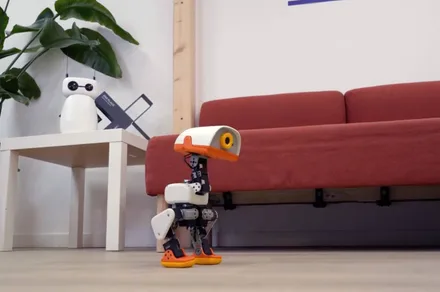
Pollen Robotics and Hugging Face are back with another robot, and this one is delightfully unhinged. Microduck is a 25cm tall waddling biped built to take AI off your screen and onto your desk. Preorders open today, with first deliveries targeted before Christmas 2026.

Unlike its predecessor, the Reachy Mini, Microduck is built entirely around action. It runs on 15 motors, with an articulated beak for picking up objects, a camera, a depth sensor, two IMUs, and enough balance to walk, crouch, and even roller-skate.

Built to take a tumble

Training movement models in the real world usually means expensive hardware and long repair bills when things go wrong. Microduck flips that dynamic. Measuring roughly 10 inches by 5.5 inches and weighing less than two pounds, it is tiny enough that a fall ends in a mild thud rather than a costly disaster.

Advertisement

What’s even better is that it picks itself back up after most falls, so you won’t have to babysit it while testing new behaviours. Pollen Robotics says its duck-like aesthetic and waddling gait weren’t something the company planned. They emerged naturally from its proportions, and the company just went along with it.

Despite its toy-like appearance, Microduck isn’t exactly targeted at kids. It’s aimed at developers who want to train their own physical behaviours, serving as an approachable testbed for sim-to-real machine learning.

More than just a desk toy

Out of the box, Microduck supports gamepad controls, laser-following, and seven trained moves, and each unit generates its own voice the first time it wakes up. On the surface, that makes it look more like a desk toy than a dev kit. However, the stack underneath is aimed at developers training their own behaviors.

Advertisement

Pollen Robotics has published the SDK, the robot software, and its reinforcement learning and sim-to-real tools on GitHub. The goal here is to keep physical hardware development as collaborative as open-source software, making it easier for developers to share trained neural network models, training recipes, and custom environments the same way they share language models.

Microduck comes in four colors, Cream, Graphite, Lavender, and Sky, and is available for pre-order starting today at $399 before taxes and shipping. If you want to jump straight into training without waiting for hardware, Pollen Robotics has also published an interactive browser-based simulator to start testing code right away.

Source link

Advertisement
Continue Reading

Tech

How to self-host Docker apps

Published

on

Self-hosted community projects are constantly growing in number, many of them operating under an open-source or fair-code license that saves you from paying costly subscriptions or usage-based fees.

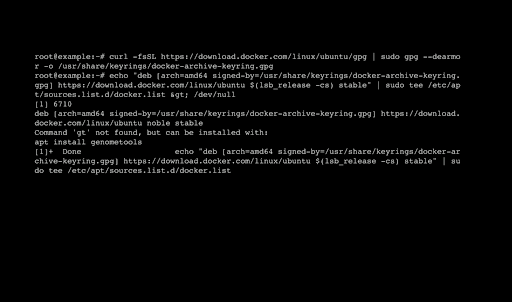
With Docker, you can run any number of self-hosted applications on a standard web server or local workstation in completely separate environments using partitioned resources. Thanks to Docker Hub, you also gain access to a whole trove of community-maintained applications and projects that require very little effort to get working.

Source link

Continue Reading

Tech

Student Artists Wrestle with AI’s Promise and Peril

Published

on

With the launch of ChatGPT four years ago, the graduating class of 2026 is the first to have full exposure to generative artificial intelligence. Many high school students in the United States have considerable experience using AI — and mixed feelings about its growing role in everyday life. They may take advantage of AI benefits, but some fear where the technology could take us in the future.

That concern was on clear display at the Me, Myself, and AI art show at the America’s Youth AI Festival, which took place last month in Boston. The three-day event gathered student leaders, educators and school system leaders from across the country to discuss acceptable AI use in the classroom and how it is influencing students’ lives. The festival was hosted by Day of AI, MIT RAISE, The School Superintendents Association and the Edward M. Kennedy Institute.

The event featured two contests: AI for a Better World and an art competition. Four students (last names withheld) shared the spotlight as winners of the 2026 Me, Myself, and AI art competition. Their work reflected AI’s influence in their communities today and what they think AI may look like in 50 years. Annie, an 11th grader from the Barbara Keel Art School and Auburn High School in Alabama, exemplified the worry on the minds of many students with her two-part winning entry titled “Which Way We Run.”

"Which Way We Run" by Annie, Auburn, Alabama

“Which Way We Run” by Annie, Auburn, Alabama

Credit: Day of AI USA

Advertisement

Depicting AI’s Evolving Influence

Annie’s two pieces illustrate how AI is already affecting human life and what could happen to humans if we continue to rely on it for trivial needs every day. “The first piece represents my current community and focuses on how AI is beginning to integrate into everyday life,” she says. “The buildings are bright and colorful, symbolizing liveliness, creativity and emotion — all human qualities. In the center, two people are running, representing different stages of human interaction with AI-driven technology.”

"A Self-Portrait Across Time" by Juliette, Rye, New York

“A Self-Portrait Across Time” by Juliette, Rye, New York

Credit: Day of AI USA

In addition to Annie, the competition winners included 11th-grader Evangelina from the Essex County Newark Tech school in Newark, New Jersey, for “A Free Venezuela”; 11th-grader Juliette from the Rye Country Day School in Rye, New York, for “A Self-Portrait Across Time”; and 9th-grader Wendi from the Atlanta Contemporary Chinese Academy in Decatur, Georgia, for “Community Today as Meandering in Divide, Community in 50 Years as Yearning into Time.”

The Me, Myself, and AI art competition grew out of a curriculum developed by the MIT Responsible AI for Social Empowerment and Education (RAISE) initiative, explains Jeffrey Riley, executive director of Day of AI. The ideas debuted in a high school summer program in 2024 and later expanded into Day of AI’s five-lesson AI and the Creative Arts Curriculum, which was released in January 2025 for students ages 8 and up.

Advertisement
"A Free Venezuela" by Evangelina, Newark, New Jersey

“A Free Venezuela” by Evangelina, Newark, New Jersey

Credit: Day of AI USA

The lessons invite students to examine the relationship between AI and creativity by analyzing AI-generated artwork, discussing questions of authorship and originality and creating art of their own. Winning entries were selected through a multi-reviewer evaluation process similar to those used in college admissions or scholarship competitions, Riley says.

“Judges evaluated submissions holistically, considering creativity, originality, evidence of process, thoughtful use of AI and the authenticity of each student’s personal voice,” Riley explains. “The emphasis was never on creating the most impressive AI-generated image but on how effectively students used creativity and, where appropriate, AI, to communicate their ideas.”

"Community in 50 Years" by Wendi, Decatur, Georgia

“Community in 50 Years” by Wendi, Decatur, Georgia

Credit: Day of AI USA

Advertisement

The Growing Impact of AI on Art and Media

Riley predicts AI will become a standard part of many artists’ creative workflows, much like digital design software, cameras or animation tools are today. It has the potential to make creative exploration more accessible, he says, helping people prototype ideas, explore new styles and bring concepts to life more quickly.

“AI will shape how young people live, learn, create and connect,” explains Cynthia Breazeal, director of MIT RAISE and co-founder of Day of AI. “What is so powerful about Me, Myself, and AI is that it gives students the opportunity to reflect on that future in a deeply personal and imaginative way.”

Annie says she was attracted to this competition because of its themes in connecting art, AI and humanity. She saw it as a forum to share and learn what her generation thinks of AI, its ethical concerns and the implications it has for art, especially with the current contention surrounding AI-generated images.

“The use of AI to create media is not appropriate in corporate models that exploit the work of artists without consent,” Annie says. “Instead, if any artist believes that AI is integral to a project they want to create, they should look toward models that are trained on open-source data or ethically sourced media. Additionally, even with ethical models, AI’s large environmental footprint means we should be mindful of what we ask it to do.”

Advertisement

Encouraging Lessons from the Competition

Riley says that what impressed the judging team most was how thoughtful students were in their decision-making and how candid they were about their feelings toward AI. Rather than simply using AI because it was available, many carefully considered when it strengthened their creative vision and when it did not. Some intentionally limited or even chose not to use AI for portions of their projects because they wanted certain elements to remain entirely their own.

“One of the biggest lessons we took away was that young people are far more thoughtful about AI than they’re often given credit for,” Riley says. “Students didn’t see AI as simply ‘good’ or ‘bad.’ Instead, they expressed a wide range of perspectives based on their own experiences using the technology.”

The competition also reinforced the importance of giving students authentic, hands-on opportunities to wrestle with these questions rather than simply teaching them about AI in the abstract.

“These insights will continue to shape curricula and learning experiences as we help students develop the critical thinking, creativity and ethical decision-making skills they’ll need in an AI-driven world,” Riley explains. “Our goal has never been to encourage or discourage AI use but rather to empower young people to make informed, intentional choices about how they use these technologies.”

Advertisement

Source link

Continue Reading

Tech

Microsoft slaps a fresh coat of AI paint on the Microsoft 365 Roadmap

Published

on

SOFTWARE

AI at Work roadmap is the new name for upcoming Microsoft 365 capabilities

Microsoft is dusting off the rebrandogun again, and this time it’s aimed at the Microsoft 365 Roadmap. The list of hopes and dreams will henceforth be called the AI at Work roadmap.

Advertisement

The notification popped up in the Microsoft 365 admin center earlier this week with the words “The AI at Work Roadmap provides a single destination to discover upcoming innovations across Microsoft 365, Copilot, agents, and related AI-powered experiences.”

Information for Dynamics 365, Power Platform, and Dataverse will be added from September.

In its announcement, Microsoft stated, “We’re making this change because of how our customers actually work.”

Other changes include when roadmap information appears. Instead of the twice-yearly release wave 1 and 2 model, Microsoft intends to publish new capabilities as soon as plans are committed. This means, in theory, administrators will have more notice of incoming features and functionality.

Advertisement

The full transition will take time. Although the renaming has already happened, and other capabilities will be published to the AI at Work roadmap from September, existing roadmap content in public preview or with a General Availability date of June 1, 2026, or later, will also transition to the “AI at Work roadmap experience.” This will take until November 15, 2026.

Earlier this month, an enterprising Microsoft Most Valuable Professional (MVP) created the Microsoft Rebrand Registry. We look forward to the addition of the Microsoft 365 roadmap.

All in all, it’s an odd decision, and perhaps a slightly cynical way of shoving AI in administrators’ faces. Microsoft 365 Copilot, the company’s flagship AI technology, is available as a paid add-on, and adoption has hardly set the world alight, despite the investment poured into it. In June, a sueball was thrown at the company, with the lawsuit alleging “Microsoft had failed to convert a significant percentage of its commercial Microsoft 365 users to paid Copilot subscriptions.”

For its part, Microsoft told The Register that the claims in the complaint were “without merit.”

Advertisement

Regardless, renaming a roadmap with which administrators were familiar to something prefixed with AI smacks of marketing desperation on the part of Microsoft. Heaven forbid the company might have better things to do with its time than rename something that users were already happy with, and understood. ®

Source link

Continue Reading

Tech

Why Boston Dynamics’ Atlas Humanoid Robot Grew a Head

Published

on

Why Boston Dynamics Atlas Humanoid Robot Has a Head
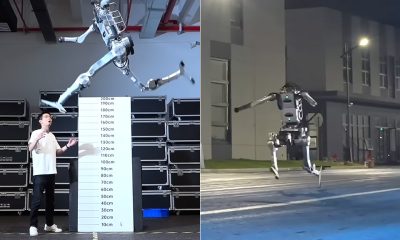
Boston Dynamics spent years sending Atlas over boxes and through parkour courses with almost nothing on top that looked like a head. Hydraulic Atlas lived as a research machine built for flips, runs, and balance tests. Forward sensors were enough when the only job was reading the ground a few steps ahead.


Electric Atlas now has a new job that requires a robot with the ability to see beyond the immediate surroundings. Factories are typically a maze of people, carts, bins, and shelves, and a robot with a fixed stare will almost certainly run into people. As mechanical engineer Taylor Frey-Baker points out, it requires a broader view and a better sense of the room because it must work alongside humans rather than just carry heavy loads, and as a result of that shift in focus, a head and some cameras were added.


Unitree R1 Humanoid Robot (White, R1)
  • Three models, one lightweight platform R1 Air (20 DOF, monocular camera), R1 (26 DOF, binocular camera, head+waist joints), and R1 Edu (26 DOF…
  • Easy setup – no coding required for basic use Unbox, power on, and start. Manual teaching feature: physically pose the robot, and it replays the…
  • More DOF = more expressive movement 26‑DOF models (R1 / R1 Edu) add head and waist articulation for smoother dance and running. For safety reasons…

Why Boston Dynamics Atlas Humanoid Robot Has a Head
Cameras are mounted on heads for a reason: they keep them out of the way of arms and shoulders, which can otherwise block the vision. Aaron Abroff, the industrial design lead, likened it to volume mapping in 3D space, which would allow Atlas to view all of the fixtures, parts, and grippers at once. The neck joint may tilt slightly, about ten degrees, which is useful for gaining a better view of the floor or a tall shelf. It also gives a nice little nod when someone enters the area.

Why Boston Dynamics Atlas Humanoid Robot Has a Head
Turning and looking around are now part of the package. The head, torso, and limbs can all spin 360 degrees without any wires getting in the way. That’s a huge bonus because Scott Kuindersma has stated that wires can become damaged over time, and not having to deal with turns saves seconds on a line. It allows Atlas to take a good hard look behind it or set off in an entirely different direction without having to walk back and forth multiple times. Safety specifications now include 360-degree camera coverage as part of a safety system adopted from the world of self-driving automobiles, which is designed so that plant managers can sign off on the robot’s ability to recognize humans and hazards.

Why Boston Dynamics Atlas Humanoid Robot Has a Head
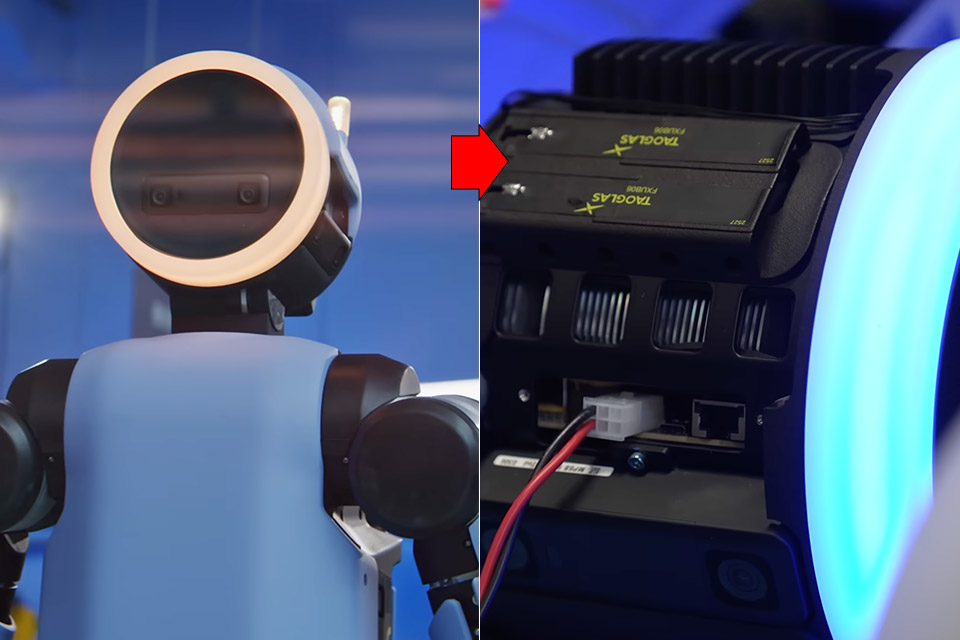
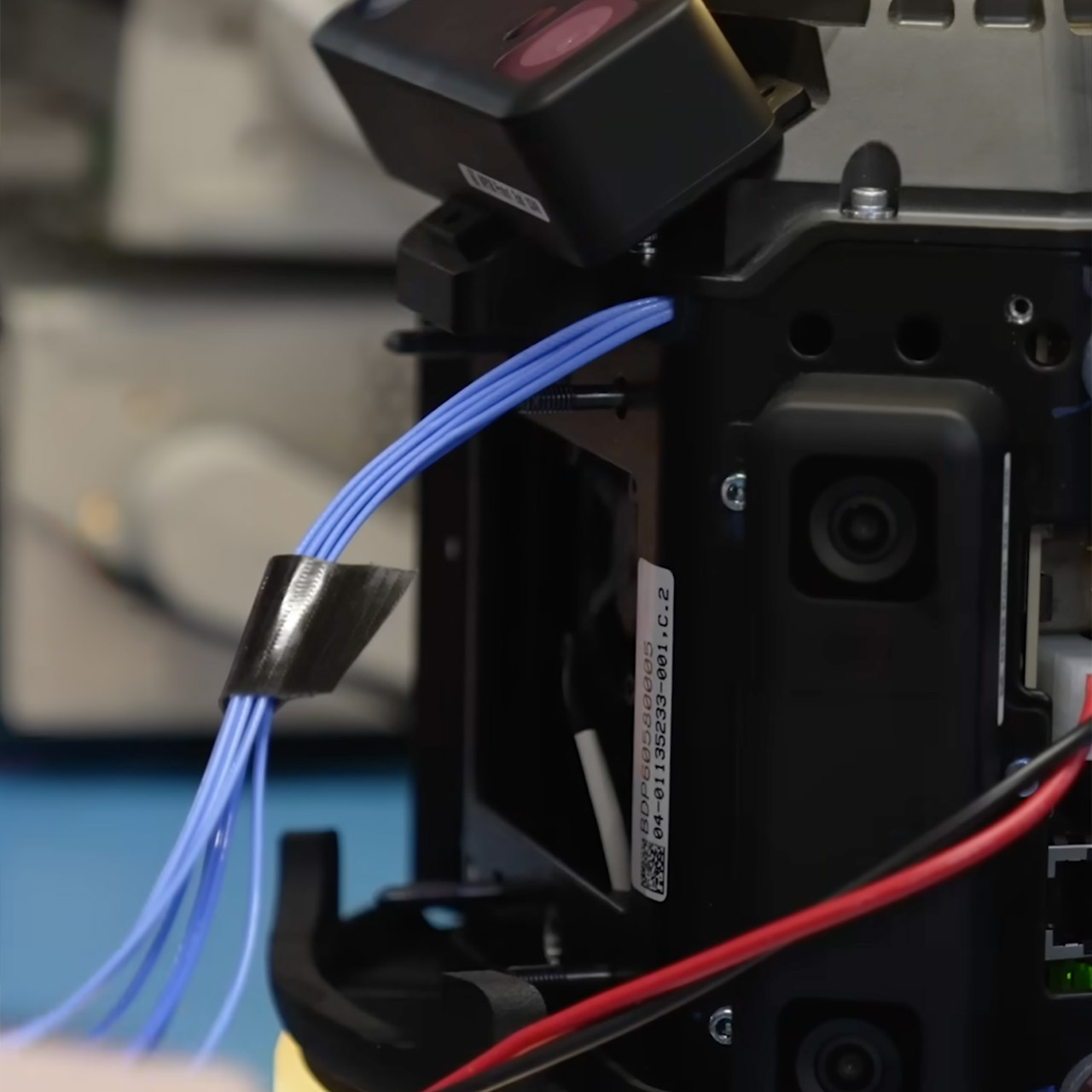
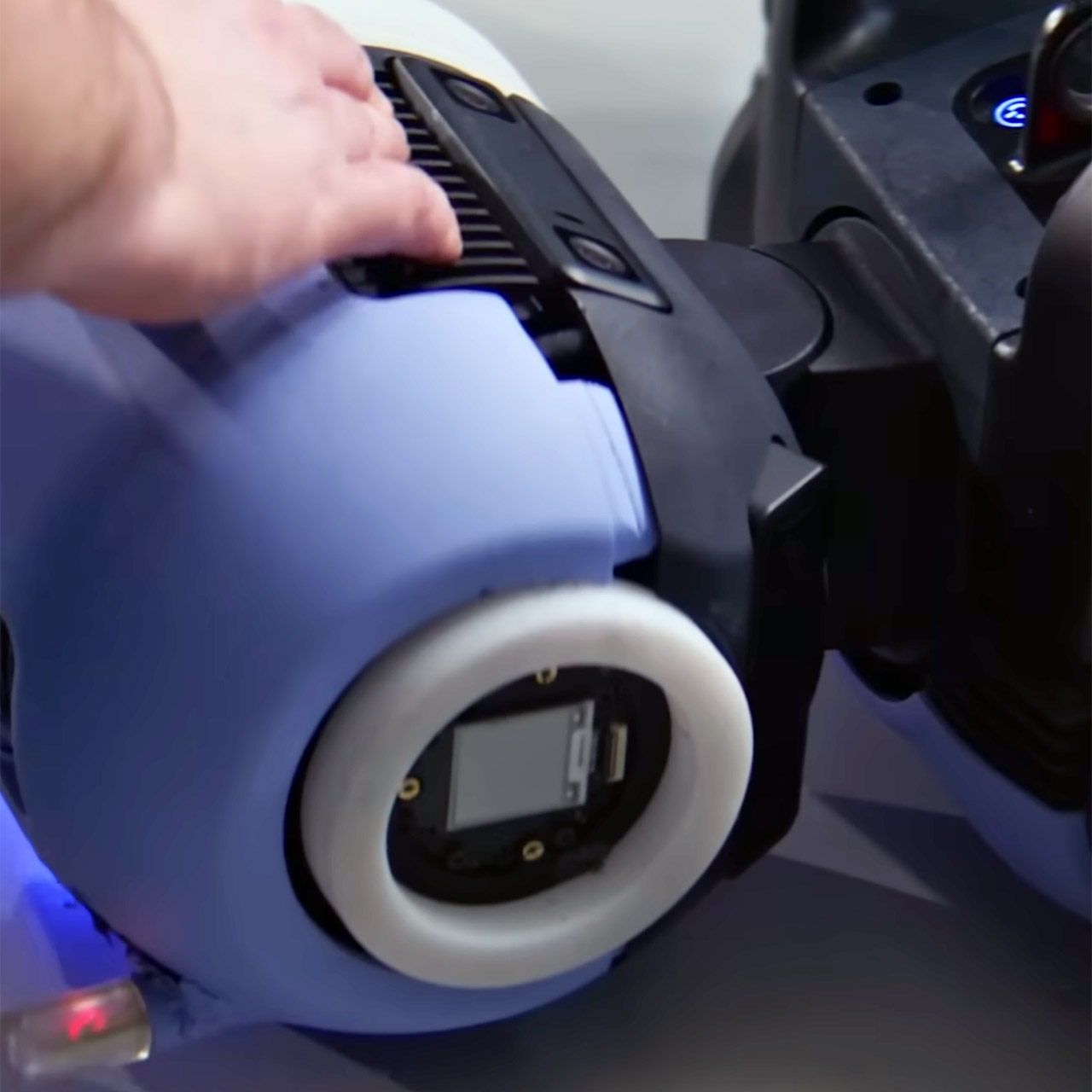
A full-fledged computer can be found deep within the robot’s shell. James Cuseo, who worked at Apple for 12 years before joining Boston Dynamics, claims that the head of the new Atlas is the most difficult object he’s ever built because it must stay cool, dry, and withstand a two-meter drop onto a table edge while carrying the weight of running the entire head. The computing parts are capable of being removed like a game cartridge. The entire head can even be unclipped, worked on at a desk, and then fitted back on, allowing you to upgrade the sensors and chips every year. With the head swappable feature, the corporation can continue to use the same old body while the head receives all of the enhancements.


The new Atlas has a completely different set of functions than the old one, as it must pick auto parts, sequence bins at Hyundai, and operate for four hours on a single pack. It must also be capable of lifting 50 kilogram loads in a single burst while remaining able to stop and start as someone walks across its path. The head houses all of the cameras, the computer, the lights, and the joint that controls them all. Swappable modules are important because they ensure that when the next version of the head is released, the rest of the robot does not need to be updated. That is why this machine, known for performing backflips, is now walking about the facility with a round glowing head that refuses to stop moving.
[Source]

Advertisement

Source link

Continue Reading

Tech

Nvidia closes in on $12.9 billion Hugging Face acquisition as neutrality concerns mount

Published

on

Why it matters: Nvidia is reportedly close to buying Hugging Face for a staggering $12.9 billion. If completed, the transaction would put the main supplier of AI processors in control of the platform that has become one of the most important hubs for sharing open AI models and supporting developer collaboration.

The Information reports that Nvidia has agreed to the purchase, citing one person with knowledge of the agreement. A separate Business Insider report is less definitive, saying the companies held serious talks at a valuation above $13 billion but had not signed an agreement. Neither Nvidia nor Hugging Face has publicly confirmed the reports.

If it does close at the stated price, Hugging Face would become Nvidia’s largest completed takeover, surpassing the $7 billion it paid for Mellanox in 2020.

The startup is often described as the GitHub of AI, providing a central hub where developers publish, discover, test, and deploy models and datasets. Hugging Face says its community reached 13 million users, more than two million public models, and over 500,000 public datasets in 2025.

Advertisement

The Information says Hugging Face recently generated about $150 million in annualized revenue, putting the reported price at roughly 86 times that figure. Its previous funding round raised $235 million at a $4.5 billion valuation in 2023, with Nvidia joining Salesforce, Google, Amazon, AMD, Intel, Qualcomm, and IBM as investors.

Nvidia and Hugging Face have a history of collaboration. There was their 2023 partnership that connected Hugging Face models to Nvidia’s DGX Cloud for training and fine-tuning. The pair later expanded into on-demand training clusters. Hugging Face also works with AMD, AWS, and Google, making platform neutrality a concern if the AI industry’s dominant chip supplier becomes its new owner.

Buying Hugging Face could give Nvidia greater influence over how developers find, share, optimize, and deploy AI models. The move also aligns with Jensen Huang’s public support for open models. Nvidia’s CEO believes wider access encourages AI adoption and ultimately creates more demand for chips and data centers. Nvidia and Hugging Face also signed the same industry letter urging US policymakers to keep advanced model weights accessible. The company can certainly afford the deal, having just reported $96.2 billion in quarterly revenue and $59.7 billion in net income.”

“I think Nvidia is very much a community, a platform-based company, and in that respect, I think Hugging Face fits perfectly within that. There is this five-layer cake from Nvidia, and foundational models are one of them,” Siddy Jobe, a fund manager at Eonopolis Exponential Technologies funds, told CNBC. “It is clear that Nvidia wants to be integrated in the entire stack vertically, going from energy to foundational models and also to applications,” he added.

Advertisement

Hugging Face reportedly rejected a $500 million Nvidia investment late last year at a $7 billion valuation because it didn’t want one dominant backer influencing decisions. One would expect that full ownership will raise that concern again, and regulators may agree.

Similar fears surrounded Nvidia’s proposed Arm purchase, a $40 billion deal that collapsed in 2022 under global antitrust pressure.

Source link

Advertisement
Continue Reading

Tech

SwitchBot E-Ink Home Dashboard Review

Published

on

Verdict

Rather than trying to compete with devices like the Echo Hub or a Google Nest Hub, the SwitchBot E-Ink Home Dashboard focuses on delivering glanceable information on a crisp E-Ink screen, combining weather forecasts, environmental data, family calendars and a couple of smart home shortcuts.

The hardware is good; with a sharp display, impressive battery life and plenty of mounting options, but the software still feels like a work in progress. Calendar setup is more fiddly than it should be, navigation between screens isn’t especially intuitive and some obvious features are missing.

If you’re already invested in the SwitchBot ecosystem, there’s a lot to like, particularly if you have environmental sensors dotted around your home. But for the asking price, it doesn’t quite do enough on its own, especially considering you’ll also need a SwitchBot hub to unlock many of its smarter features.

  • Excellent 7.5-inch E-Ink display

  • Up to one year of battery life

  • Useful environmental sensor integration

  • Matter-compatible buttons (via SwitchBot hub)

  • Calendar setup is unnecessarily fiddly

  • Navigation could be much better

  • Needs SwitchBot hub for smart features

  • Quite expensive

Key Features

  • Trusted Reviews IconTrusted Reviews Icon

    Advertisement

    Review Price:
    £109.99

  • Connects to external sensors

    Advertisement

    Monitor temperature and more from one of SwitchBot’s environmental sensors.

  • E-Ink display

    Advertisement

    Low power display helps extend battery life

Introduction

Smart displays have largely followed the same formula over the past few years. Big colour screens, voice assistants, streaming services and video calls have become the norm, whether you’re looking at an Echo Show, a Google-powered display or a smart tablet dock.

The SwitchBot E-Ink Home Dashboard takes a completely different approach.

Advertisement

Rather than acting as a touchscreen command center, it focuses on surfacing information that matters throughout the day. Weather forecasts, indoor conditions, upcoming appointments and smart home shortcuts are all presented on a 7.5-inch E-Ink screen that looks more like a framed e-reader than a traditional smart display.

Originally announced as the SwitchBot Weather Station, the device eventually launched under the E-Ink Home Dashboard branding.

Advertisement

Read on for my full SwitchBot E-Ink Home Dashboard is worthy of your wall space.

Advertisement

Design

  • Picture frame design
  • Freestanding or wall mounted
  • Rechargeable battery

At first glance, the E-Ink Home Dashboard looks like a Kindle that’s been dropped into a picture frame.

SwitchBot E-Ink Home Dashboard ready to goSwitchBot E-Ink Home Dashboard ready to go
Image Credit (Trusted Reviews)

It’s compact, understated and should fit into almost any room without drawing attention to itself. Unlike a traditional smart display, there’s no bright LCD constantly glowing away, with the paper-like E-Ink panel blending nicely into a kitchen, hallway or home office.

Advertisement

SwitchBot E-Ink Home Dashboard hanging eyeletsSwitchBot E-Ink Home Dashboard hanging eyelets
Image Credit (Trusted Reviews)

Inside the box you’ll find everything needed to get started, including two detachable legs for standing it on a desk or shelf, a wall mounting bracket with adhesive pads, a USB-C charging cable and additional sticky pads to keep it sitting flush against the wall.

SwitchBot E-Ink Home Dashboard accessoriesSwitchBot E-Ink Home Dashboard accessories
Image Credit (Trusted Reviews)

Adding it to the SwitchBot app is straightforward. Tap the plus icon, hold the pairing button on the rear for a couple of seconds and after a reassuring click, the display springs to life.

SwitchBot E-Ink Home Dashboard setupSwitchBot E-Ink Home Dashboard setup
Image Credit (Trusted Reviews)

There’s a built-in front light that can be activated with a single press of the top button, making it perfectly readable in darker rooms, while holding that same button for a couple of seconds forces the display to refresh immediately rather than waiting for the next scheduled update.

Advertisement

SwitchBot E-Ink Home Dashboard touch buttonsSwitchBot E-Ink Home Dashboard touch buttons
Image Credit (Trusted Reviews)

The hardware itself is difficult to fault. The display is sharp, the backlight works well and the whole device feels well made.

Features and in use

  • Shows weather
  • Can connect to external sensor
  • Integrated wtih SwitchBot ecosystem

The idea behind the E-Ink Home Dashboard is simple. Rather than constantly reaching for your phone, it gives you a quick snapshot of the day’s weather, indoor conditions, upcoming appointments and smart home status.

SwitchBot E-Ink Home Dashboard main screenSwitchBot E-Ink Home Dashboard main screen
Image Credit (Trusted Reviews)

The home screen displays a healthy mix of information including indoor and outdoor temperature, humidity, weather forecasts, air quality, sunrise and sunset times and more.

Advertisement

There are several different layouts available too, including Daily Overview, Calendar, Countdown, Environmental Data, Daily Verse and Custom Text, with additional schedule-focused layouts also available.

Advertisement
SwitchBot E-Ink Home Dashboard daily verseSwitchBot E-Ink Home Dashboard daily verse
Image Credit (Trusted Reviews)

The Daily Verse screen feels like an odd inclusion, although thankfully the four shortcut buttons along the bottom can be customised. I quickly swapped mine over to show environmental data and my calendar instead.

SwitchBot E-Ink Home Dashboard quick buttonsSwitchBot E-Ink Home Dashboard quick buttons
Image Credit (Trusted Reviews)

The Custom Text option is potentially one of the more interesting features, allowing information generated through SwitchBot’s OpenClaw platform to be displayed on the screen, such as transport timetables or other custom information.

Editing these views happens inside the SwitchBot app, although it’s a little clunky. Rather than assigning different custom layouts directly to each shortcut button, you create a collection of screens and scroll through them.

Advertisement

There also isn’t a dedicated Home button, so returning to the main dashboard means cycling through whichever screens you’ve configured.

SwitchBot E-Ink Home Dashboard appSwitchBot E-Ink Home Dashboard app
Image Credit (Trusted Reviews)

There’s also a browser-based editor available for configuring the display, although you’ll need to log in before making changes.

Weather information is generally clear and useful, although by default the weather view focuses on the coming days rather than the next 24 hours. There is a dedicated hourly weather screen available if that’s your preference.

Advertisement
SwitchBot E-Ink Home Dashboard weather screenSwitchBot E-Ink Home Dashboard weather screen
Image Credit (Trusted Reviews)

Like any E-Ink device, updates aren’t instant. If you don’t want to wait for the next automatic refresh, holding the top button forces everything to update immediately.

Advertisement

Calendar and smart home

Calendar integration is one of the Dashboard’s headline features, but it’s also where the experience feels least polished.

Rather than simply signing into your Google, Apple or Outlook account, you’ll need to dig around for calendar URLs and iCal settings. Thankfully SwitchBot includes detailed walkthroughs and video guides inside the app, but it’s still more work than it should be.

SwitchBot E-Ink Home Dashboard setupSwitchBot E-Ink Home Dashboard setup
Image Credit (Trusted Reviews)

Once configured, the calendar works well enough. It supports up to five separate calendars, displaying as many as 30 events per person each day, and you can quickly switch between them.

The interface itself is fairly basic though. By default you only see today’s events. A couple of button presses will take you to a three-day view, but there’s no proper week-at-a-glance display, which feels like a missed opportunity for something positioned as a family planning device.

Advertisement

Advertisement

Smart home functionality is similarly a mixed bag.

SwitchBot E-Ink Home Dashboard scenesSwitchBot E-Ink Home Dashboard scenes
Image Credit (Trusted Reviews)

The two configurable shortcut buttons can trigger SwitchBot scenes, and when connected through a SwitchBot Matter-enabled hub, I was also able to expose them to Home Assistant via Matter and use them to trigger automations there as well as in Apple Home.

One annoyance is that the Dashboard doesn’t display labels for those shortcut buttons unless the scenes are created inside the SwitchBot app (and use SwitchBoy devices).

If you’re triggering Home Assistant or Apple Home automations, you’re left remembering which button does what.

Advertisement

Likewise, while the Dashboard can work perfectly well as a standalone weather display, you’ll need to invest in an additional SwitchBot hub to unlock Matter connectivity, notifications and many of its more advanced smart home features.

Advertisement

It feels like a missed opportunity not to build hub functionality directly into the device, especially at the price.

Environmental monitoring

  • Has its own sensors
  • Can connect to SwitchBot environmental sensors

Where the E-Ink Home Dashboard starts to make a stronger case for itself is environmental monitoring.

It includes built-in temperature and humidity sensors, but it can also connect to as many as three compatible SwitchBot environmental sensors, including CO2 monitors.

Advertisement
SwitchBot E-Ink Home Dashboard downloading dataSwitchBot E-Ink Home Dashboard downloading data
Image Credit (Trusted Reviews)

That’s genuinely useful if you have different spaces around your home you’d like to keep an eye on, whether that’s a nursery, greenhouse, garage or home office.

Advertisement

In my setup, I actually ignored the Dashboard’s own temperature sensor altogether. Since I had the display mounted on my fridge (which might give off extra heat), I instead configured it to display readings from my SwitchBot Meter Pro located elsewhere in the kitchen, giving me much more accurate information.

You can also configure notifications for temperature and humidity thresholds, provided you have a compatible SwitchBot hub.

Battery life

Battery life should be one of the Dashboard’s biggest strengths.

Advertisement

SwitchBot claims up to a year from the integrated 5,000mAh rechargeable battery when refreshing every three hours over Wi-Fi, which is entirely believable given the incredibly low power demands of E-Ink technology.

SwitchBot E-Ink Home Dashboard mounting stripSwitchBot E-Ink Home Dashboard mounting strip

If you’d rather not think about charging at all, there’s always the option of leaving it permanently connected via the USB-C port on the rear.

Advertisement

Should you buy it?

You want something to monitor the environment

Advertisement

The large display and option to pull data from external sensors makes this a useful tool for keeping an eye on the weather.

Advertisement

You want a slicker experience

Slightly clunky calendar and scene integrations do hold the product back.

Advertisement

Final Thoughts

The SwitchBot E-Ink Home Dashboard gets a lot right. The hardware is excellent, the E-Ink display is genuinely nice to look at and the ability to combine weather, environmental monitoring, calendars and smart home shortcuts into a single low-power display makes plenty of sense.

The problem is that the software doesn’t quite live up to the hardware.

Calendar setup feels dated, navigation could be much slicker and some small interface improvements, like labelled scene buttons and easier movement between views, would make a noticeable difference to the overall experience.

At its current price, I’d have expected it to double as a SwitchBot hub. Instead, you’ll need to buy another piece of hardware if you want to unlock Matter support and many of the smart home features that make the Dashboard most appealing.

Advertisement

It’s a promising product with plenty of potential, particularly for existing SwitchBot users, but it feels like the second generation could be the one that truly delivers on the concept.

How We Test

We test every smart home product we review thoroughly over an extended period of time. We use industry standard tests to compare features properly. We’ll always tell you what we find. We never, ever, accept money to review a product.

Find out more about how we test in our ethics policy.

  • We test how each product integrates with other smart home systems including Amazon Alexa, Google Assistant, Apple HomeKit, IFTTT and Samsung SmartThings
  • We use each smart home product in a real world setting, integrating it into our home.

FAQs

Is the SwitchBot E-Ink Home Dashboard a hub?

No, you’ll need an additional product to act as a SwitchBot hub in your home.

Advertisement

Full Specs

  SwitchBot E-Ink Home Dashboard Review
Manufacturer SwitchBot
Product Description Home dashboard
Size (Dimensions) 212 x 146 x 15 MM
Release Date 2026
First Reviewed Date 19/08/2026
Model Number SwitchBot E-Ink Home Dashboard
Networking Bluetooth, Wi-Fi
UK RRP £109.99
USA RRP $109.99

Advertisement

Source link

Advertisement
Continue Reading

Tech

Amazon to acquire DuckLabs, adding the team behind DuckDB amid broader shakeup in cloud data

Published

on

DuckDB creators Mark Raasveldt, left, and Hannes Mühleisen. (DuckLabs Photo)

Amazon has agreed to acquire DuckLabs, the company behind DuckDB, the fast-growing open-source database that has become a favorite of developers looking to analyze large amounts of data without the cost and setup of a cloud data warehouse.

Employees of DuckLabs will join Amazon Web Services, including co-founders and DuckDB creators Hannes Mühleisen and Mark Raasveldt, who will continue leading the team and setting the project’s technical direction. They will remain based in Amsterdam, where the team will continue developing DuckDB and related projects.

Amazon says it is not acquiring the DuckDB open-source project itself. DuckDB will remain free and open source under the MIT license, overseen by the nonprofit DuckDB Foundation, as will the related DuckLake and Quack projects, according to DuckLabs.

Financial terms were not disclosed. Amazon said it has signed a definitive agreement and expects the acquisition to close shortly. DuckLabs said it expects to become part of AWS in early September.

Larger shifts in cloud data

The deal fits Amazon’s broader push to turn S3, its flagship cloud storage service, into a place where customers analyze data rather than just store it. It gives Amazon a team experienced in building fast, lightweight analytics software that runs directly against data sitting in cloud storage.

Advertisement

The move comes as the data industry shifts toward keeping information in open formats in cloud storage, where it can be queried directly rather than loaded into a separate warehouse.

The shift puts pressure on companies like Snowflake and Databricks, which sell the compute and governance layer on top of stored data. Both are major AWS partners as well as competitors, with large numbers of customers running on Amazon’s cloud.

AI has raised the stakes, driving up both the volume of data companies keep in the cloud and the cost of analyzing it. Amazon says DuckDB is a natural fit for AI agents, which query data much the way people do, poking and experimenting with small sets before deciding what they want.

“DuckDB ends up being naturally optimized for AI agents to use,” wrote Mai-Lan Tomsen Bukovec, the AWS VP who leads its cloud data services, in a post about the acquisition.

Advertisement

DuckLabs said it has worked closely with AWS in recent years, including on DuckDB support for Amazon’s S3 Tables and SageMaker Lakehouse.

“DuckDB is an incredible open source project with an amazing community; it is broadly used and very much loved by S3 customers today,” said Andy Warfield, an AWS vice president and distinguished engineer, in a press release announcing the deal.

‘That’s Amazon’s playbook’

One of the companies watching closely is in Seattle. MotherDuck, which sells a cloud service built on DuckDB, was founded in partnership with the DuckLabs team and has worked with it closely for four years. Three of its engineers are among the top 10 outside contributors to the DuckDB project.

MotherDuck CEO Jordan Tigani. (LinkedIn Photo)

In a blog post Wednesday, MotherDuck CEO Jordan Tigani said Amazon is following a familiar pattern. “That’s Amazon’s playbook, after all: wait until an open source project gets big enough, then launch it as a service,” wrote Tigani, who helped start Google’s BigQuery and spent a decade there before co-founding MotherDuck in 2022.

He expects Amazon to do exactly that with DuckDB: “After all, they’re not acquiring Duck Labs just because they love open source,” he wrote. “We welcome the competition.”

Advertisement

He said the deal is likely to be good for DuckDB, because Amazon has a financial reason to keep the project open and healthy. “If DuckDB becomes the standard, it is going to drive a lot more compute on their infrastructure, which is where they make their money,” he wrote.

Tigani said DuckLabs is being kept as a wholly owned subsidiary with its organization intact, and that the DuckDB Foundation has “iron clad control over the DuckDB IP.”

MotherDuck also said it is now offering enterprise support for DuckDB — which it had previously steered clear of to avoid competing with DuckLabs. Tigani said the company has Mühleisen and Raasveldt’s “explicit blessing” to take it on now that they are joining Amazon.

Five years, no venture capital

DuckLabs was founded a little more than five years ago as a long-term home for the DuckDB development team. The company turned down venture capital, stayed owned by its founders and employees, and grew to more than 30 people in Amsterdam, funding itself through support and feature-development contracts.

In a blog post, Mühleisen and Raasveldt wrote that they had come to worry DuckDB’s growth would outpace their ability to support it, and that their small company “could become a bottleneck for the project.” Building a larger sales and operations organization, they wrote, would have pulled the team away from the technical work that made DuckDB successful.

Advertisement

Nine days before the acquisition was announced, Mühleisen and Raasveldt published a preview of DuckDB 2.0, due this fall, declaring that the release “kicks off the year of DuckDB as a server.” It adds Quack, which lets one DuckDB instance serve data to others over a network, along with work aimed at speeding up queries against data held in object storage such as S3.

DuckLabs said the DuckDB Foundation will add a technical advisory board, giving leading community members input on the project’s technical direction. The company also plans to let DuckDB run extensions signed by outside developers and organizations.

Source link

Advertisement
Continue Reading

Tech

Analog Optical Feedback Generates 4K Fractals With No Computer

Published

on

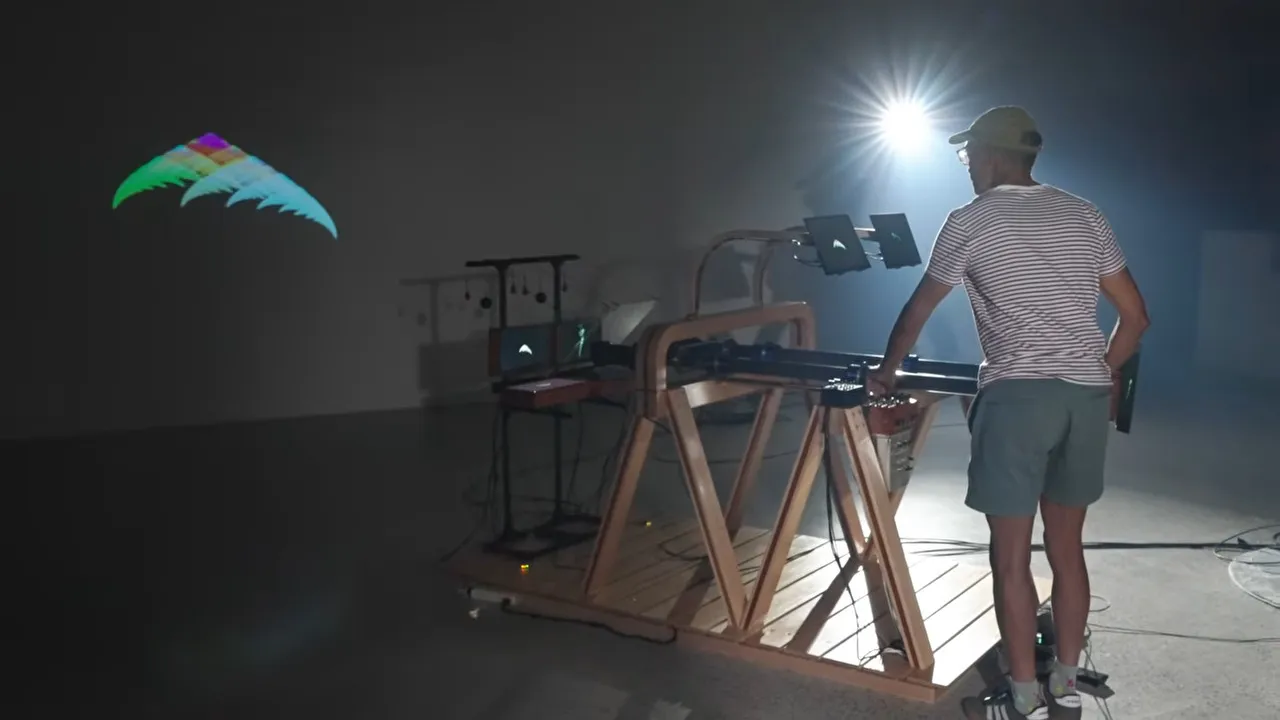
For users of a certain age, fractal patterns and computers are nearly synonymous. Typing in BASIC programs and seeing the Mandelbrot set or other fractals slowly render on screen is a key memory for some of us. Others will have generated recursive patterns mucking about: point an analog camera at the screen showing its video feed, and you’d better believe you get recursion. It’s called video feedback, and it looks a lot better than audio feedback sounds, especially in the hands of a master like [The Light Herder] who has now found a way to take this vintage art into the 4K resolution of the 21st century.

Physically this build is very similar to the “God Machine II” sculpture we covered previously, which in turn built on the first 720p version of his art piece. Getting analog video feedback in HD was hard enough — you need to be able to adjust the hue, saturation, brightness and contrast of the monitor as you go in order to have the full control of the resulting image. Most old TVs had those back in the SD era, but once HD came around it was rare; [The Light Herder] despaired of ever finding a screen that would to this in 4K.

As it turns out, the answer was to embrace digital — all the knobs on his analog control board feed into a Teensy, which is communicating via RS-232 with the LCD driver boards to alter the desired display properties. Obviously judicious selection of driver boards was required. If you watch the build video embedded below, you’ll find there’s an awful lot of tech in this analog, ‘no computer’ setup. If you want to skip the how-to and a master’s explanation of video feedback and just see pretty pictures he’s got a demo video as well. It really has to be seen to be believed.

Advertisement

If you want to create a colorful analog light show that isn’t quite so self-referential and a lot simpler to build, you could always try soap. Actually, we’d love to see him start the feedback with some soap-film colors. The result would likely be as was once said “totally far out, man”.


Advertisement

Source link

Advertisement
Continue Reading

Tech

ICE Tries, Fails To Illegally Raid An Immigration Law Office; Settles For Empty Threats Instead

Published

on

from the maybe-don’t-fuck-with-people-who-actually-know-the-law dept

The thing about raiding law offices is that they tend to be filled with people who actually know the law. A bunch of opportunistic ICE officers thought they might be able to talk their way into an illegal search, but that initiative (is that the word for this?) died out almost immediately when the interloping officers were greeted by a small group of immigration lawyers.

As is to be expected, this attempted illegal raid occurred in a “blue” state — the states that are still seeing large amounts of immigration officer activity just because their populations refused to throw a majority of their support behind Donald Trump during the last three elections.

The Sacramento Bee broke the news, covered here by Mathew Miranda:

Multiple U.S. Immigration Customs and Enforcement agents armed with guns attempted to inspect a Sacramento immigration law firm — and threatened to return later and break windows — on Friday morning, according to several employees of the building.

Employees of the North Natomas law firm and next door dentistry office said the agents, who arrived in at least four vehicles, claimed to have received a list from Washington, D.C., which listed the building’s address as the primary mailing address for many people. The ICE agents requested to tour the office for beds, but were ultimately turned away after failing to provide a warrant.

Advertisement

You can see the pretense. And you can see how everyone else would have recognized it was a pretense, even if the ICE officers hadn’t backed down immediately in the face of “get a warrant” demands from the occupants of the law office.

ICE pretended that a lot of migrants using the law office as a mailing address (something likely limited to court documents, etc.) was evidence that the law office was illegally housing dozens of migrants. But, as a migrant trying to work your way through the immigration system, it just makes sense to list a law office as the address of contact when engaging court proceedings, especially if your housing situation may be in a constant state of flux. Telling courts to send summons, notices, etc. to your legal reps is the smart way to handle things like naturalization proceedings, given that the rules seem to keep changing, and our current government is doing whatever it can to disrupt immigration proceedings to maximize arrests and detentions.

It would be immediately clear to anyone but an opportunistic ICE thug that the Morris Law Office was incapable of housing a large number of migrants. It’s a strip mall law office that shares a building with a dental implant clinic.

Having rushed directly into a stone wall composed of well-composed immigration lawyers (as well as the absolute stupidity of having to pretend a strip mall law office could be a second home for a large number of migrants), ICE officers retreated empty-handed, but not before issuing a threat that only later proved to be as empty as their fingerless gloved hands:

Raissa Morris, owner of the Morris Law Group, received a text at 9:16 a.m. which read “immigration is here.” The message came from one of her employees who told her an agent, who was armed and wearing an ICE badge, had entered the front lobby and asked to speak to an office manager.

She quickly told one of her employees to tell an agent that they could not inspect the building without a warrant. The agent responded by saying that they had received a list from Washington, D.C., which featured multiple clients using the law firm’s address. He asked to inspect the office for beds and said if they received follow-up orders that they could return at 3 a.m. to break windows and enter.

Advertisement

Thugs to the very end. “If you won’t let us abuse our power and ignore your rights, we’ll just ask someone back at the office to swear out some paperwork that will let us get what we want without your cooperation.” Obviously, this paraphrasing is far more coherent and polite than anything uttered by your average ICE officer (and, at this point, almost any ICE officer would be lucky to be considered “average”). But the ultimate point remains: if ICE doesn’t get what it wants immediately, it will find a way to get it eventually.

Additional coverage by local news station KCRA includes some on-site reporting, along with screenshots of several photos of ICE vehicles shared by law firm employees. It also includes a comment from the DHS, which apparently couldn’t be bothered to respond to questions from reporters at the publication that first broke the news.

In a statement to KCRA 3, DHS said, “On August 14, ICE officers approached an unmarked door during a targeted enforcement operation, thinking it was the target address as it was listed as the address of the illegal aliens they were planning to arrest. Upon finding out it was a law firm; they departed the address.”

This statement is only true if you ignore the officers’ attempt to engage in a warrantless search, as well as the parting threat they issued when they were ejected by Morris Law employees. ICE had to know it was a law firm because that would be the first result in any normal search of that address. And officers couldn’t pretend it was just some hostel for migrants when they rolled up in at least four separate unmarked vehicles. They were clearly in a quasi-strip mall parking lot facing a business with the business name clearly displayed above the address the DHS now claims was so inscrutable it took an accosting and a confrontation with people who actually know and respect the law to inform the officers of their “mistake.”

The DHS statement is idiotic, which just means it’s on-brand for this administration. So far, the threat to come back and break windows while no one’s in the office has yet to materialize. But this government is filled with sore losers and sore winners (that would be the big baby boy sitting behind the Resolute Desk), so I wouldn’t put any money on ICE just taking this L and moving on to other things.

Advertisement

Filed Under: 4th amendment, california, dhs, ice, masked thugs, mass deportation, raissa morris

Companies: morris law group

Source link

Advertisement
Continue Reading

Trending

Copyright © 2025