
Crypto World
Stellar’s $3B RWA market faces a $2M DeFi gap



Stellar’s tokenized real-world asset market has climbed from about $785 million in January to more than $3 billion in July, while only just over $2 million has entered Blend pools that accept RWAs.
Summary
- Stellar’s RWA value increased almost fourfold during the first seven months of 2026.
- Four tokenized products account for hundreds of millions of dollars each on the network.
- Blend has $127 million in TVL, but its RWA-enabled pools hold only slightly more than $2 million.
- RedStone says round-the-clock pricing remains necessary before more RWAs can serve as DeFi collateral.
Stellar’s RWA market has crossed $3 billion
RedStone’s latest report has found that Stellar’s RWA market expanded almost fourfold between January and July, driven by tokenized money market funds, U.S. Treasury products and corporate credit.
Several individual products have reached values normally associated with established investment funds rather than early blockchain trials. The Amundi and Spiko Overnight Swap Fund, a French-regulated UCITS cash-management product, has grown to hundreds of millions of dollars in onchain value since going live on Stellar in March.
RedStone’s report identified Spiko’s tokenized U.S. Treasury bill fund as another major contributor. The product had reached about $536 million, while Ondo Finance’s USDY held more than $533 million on Stellar.
USDY is a yield-bearing asset supported by short-term U.S. Treasuries and bank demand deposits. Ondo expanded the product to Stellar in September 2025, after which its value on the network rose from slightly more than $1 million at the beginning of 2026 to over $533 million.
Corporate credit has added another large pool of tokenized value. VuMe Bond 2030, issued under Luxembourg securitization rules, launched on Stellar in February and has since reached approximately $500 million.
Franklin Templeton has maintained an earlier institutional presence through the Franklin OnChain U.S. Government Money Fund. Launched on Stellar in 2021, the fund uses the BENJI token and invests primarily in U.S. government securities, cash, and repurchase agreements. RedStone placed the value tokenized on Stellar at about $460 million.
The concentration of several large products shows that Stellar has already attracted issuers capable of placing hundreds of millions of dollars on a public network. Yet issuance records how much value has been tokenized, not how much of it is being traded, supplied to lending markets, or used as collateral.
RWA use in Stellar DeFi remains limited
Stellar’s decentralized finance market remains much smaller than its tokenized asset base. RedStone placed total DeFi value on the network at about $259 million when its report was prepared, compared with more than $3 billion in RWAs.
Blend, Stellar’s largest lending protocol, accounted for roughly $127 million of that DeFi total. Pools capable of accepting RWAs, however, held only slightly more than $2 million.
Templar Protocol provides another example of the limited use of tokenized assets in lending. Its Stellar application allows users to borrow against assets including deJAAA, deJTRSY, CETES, and USTRY, but the protocol had about $8.4 million in total value locked on the network, according to RedStone.
DeJAAA represents exposure to AAA-rated collateralized loan obligation tranches, while deJTRSY is tied to short-term U.S. Treasury securities. CETES tracks Mexican government Treasury certificates, and USTRY is backed by short-term U.S. Treasury bills.
Royal Fool, the pseudonymous co-founder and chief executive of Templar Protocol, said dependable pricing is required before a lending market can safely accept an RWA.
“Listing a real-world asset as collateral works best if we can price it reliably around the clock.”
According to the executive, SEP-40 feeds allow Templar to accept real-world collateral and support borrowing against it on Stellar. Lending protocols need current prices to calculate loan-to-value ratios and determine when a position no longer has enough collateral.
A tokenized security does not automatically become usable in DeFi simply because it exists on a blockchain. Trading venues need a defensible price before listing it, while lending protocols must keep valuing collateral even when the market for its underlying asset is closed.
Continuous pricing could bring more RWAs into DeFi
Price discovery becomes harder when an onchain token represents an asset that does not trade continuously. Bitcoin, Ether, and other liquid cryptocurrencies change hands around the clock, allowing oracle providers to combine quotes from several active exchanges.
Traditional assets follow different schedules. U.S. stocks trade mainly during set market hours, while government debt products may only have reliable spot prices when their domestic markets are open.
Money market funds add another complication because their value depends on the securities held in their portfolios rather than on constant secondary-market trading. Fund administrators may also distribute net asset value data through systems that cannot send information directly to a smart contract.
Corporate debt requires additional inputs, including credit quality, maturity, settlement terms, and the structure of the security. According to RedStone, an oracle must account for such differences rather than applying the same method used to price a liquid crypto token.
Stellar’s SEP-40 Oracle Consumer Interface provides a common format through which Soroban smart contracts can request price information. Before the standard was introduced, each provider could use a separate interface, requiring developers to build a new adapter whenever they added another data source.
Under SEP-40, compatible providers follow the same set of functions for identifying supported assets, price precision, update intervals, and timestamps. Applications can retrieve the latest value, request historical records, and check whether a price has become stale.
RedStone joined Stellar in March and later adopted SEP-40. Materials provided with the report said the oracle provider now supports 55 price feeds covering U.S. Treasuries, sovereign debt, corporate credit, tokenized gold, and money market products.
Among the covered assets are Ondo’s USDY, Franklin Templeton’s BENJI and Matrixdock’s XAUm gold token. RedStone also supplies data for Centrifuge-linked Treasury and credit products, along with tokenized Mexican and Brazilian government debt issued by Etherfuse.
Martin Quensel, founder of Anemoy and co-founder of Centrifuge, said tokenization places regulated funds within reach of decentralized finance, while standardized pricing allows protocols to use them as collateral.
“Reliable, standardized pricing on Stellar by RedStone is what lets protocols actually use them as collateral.”
Stellar had previously added another data layer when it integrated Chainlink services in October 2025. The arrangement covered Data Feeds, Data Streams, and the Cross-Chain Interoperability Protocol for applications working with DeFi and tokenized assets.
DTCC brings a U.S. market catalyst for 2027
The Depository Trust & Clearing Corporation plans to add tokenized versions of DTC-custodied assets to Stellar in the first half of 2027, extending the network’s RWA pipeline into U.S. market infrastructure.
As reported in May, the initial eligible assets are expected to include Russell 1000 shares, major index exchange-traded funds, U.S. Treasuries, and several classes of corporate and other bonds.
DTCC received a no-action letter from the U.S. Securities and Exchange Commission in December 2025. The relief allows it to test tokenized securities under specified conditions while maintaining existing investor protections, disclosures and control over ownership records.
The $114 trillion figure attached to the agreement represents assets held in custody by DTC, not the value that will move to Stellar. DTCC has not said that its entire custody base will be tokenized or transferred onto the network.
For U.S. investors, tokenization under DTCC’s system would keep the securities within established custody and regulatory structures. Eligible assets could receive blockchain-based representations while ownership records remain tied to the securities held at DTC.
DTCC has already begun testing tokenized public-market assets with major financial firms. In July, BlackRock, JPMorgan, Goldman Sachs, Vanguard, the New York Stock Exchange, and almost 40 other institutions participated in a tokenization pilot involving stocks, ETFs, and U.S. Treasuries.
Microsoft and Circle shares, the Invesco QQQ Trust, the SPDR S&P 500 ETF and BlackRock’s iShares 0–3 Month Treasury Bond ETF were among the first assets included. JPMorgan also completed a conversion of QQQ shares into a tokenized representation during the pilot.
The active trial uses permissioned infrastructure, including Hyperledger Besu and Canton, while the separate Stellar deployment remains scheduled for 2027. DTCC said participants would test collateral transfers, repurchase agreements, and equity transactions before the current program enters its planned operational phase.

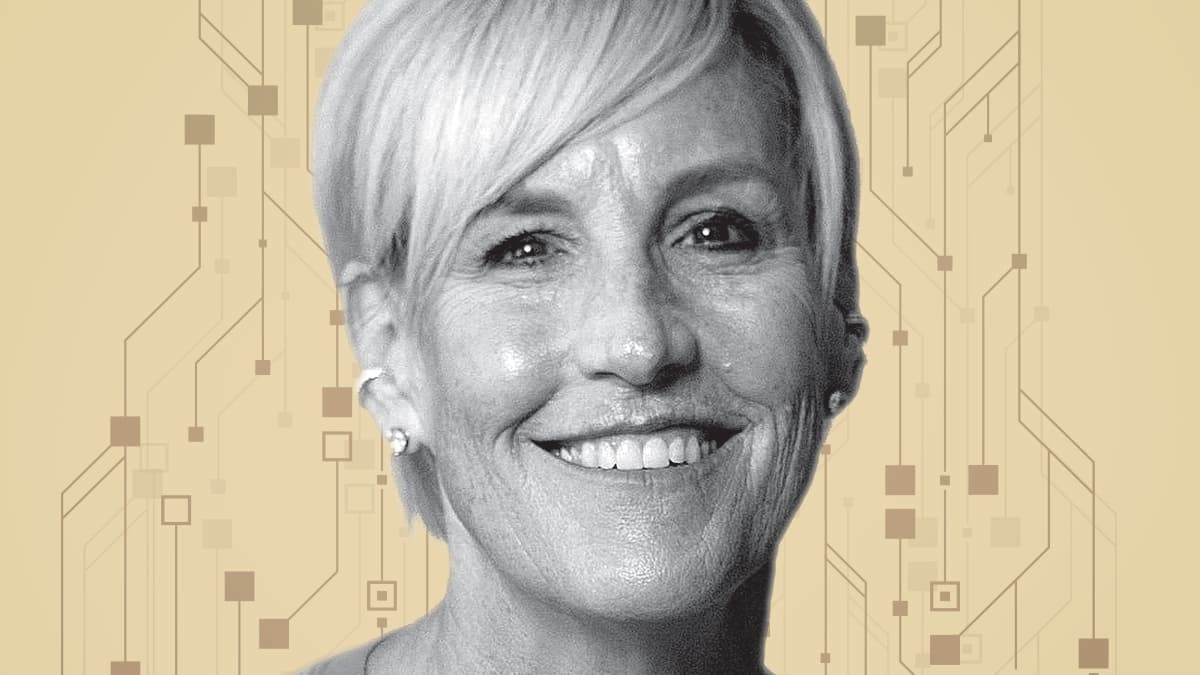
Since the release of the 2000 Oscar-winning movie about her, the name Erin Brockovich has been synonymous with grassroots activism against powerful institutions. This year, Brockovich has turned her attention to a new target: AI data centers. When Brockovich asked people online how they felt about the issue, she received a “flood” of impassioned responses, she wrote in May.
So Brockovich launched a tool to map data centers across the country, allowing community members to submit their own information about nearby data centers. That map has since received more than 9,000 reports and has become a repository for information, including about data centers’ energy usage, physical size, and economic impact. The site also tracks local legislative and community efforts to push back. (Similar efforts include the Data Center Proposal Tracker and Data Center Watch.)
While Brockovich has elevated all kinds of concerns, she herself is particularly concerned about data centers’ lack of transparency and public participation. “Transparency means notifying residents before decisions are made, not after,” she wrote on her blog in May. “It means elected officials who answer to their constituents first, not to the corporations seeking tax breaks and zoning variances.”


Nvidia’s earnings beat and strong outlook lifted technology stocks, bitcoin and AI infrastructure companies.


Anthropic plans to let early investors and staff sell stock in its upcoming market debut, according to a recent report by The Information. SpaceX gave its own backers no such option in June.
The prospectus should land soon after Labor Day on September 7. That document sets out the risks and the finances before anyone can buy.
Anthropic IPO Departs From Musk’s SpaceX Structure
Big listings can sell two kinds of stock:
- New shares raise money for the company.
- Existing shares pay early backers instead.
SpaceX sold only the first kind. Its pricing release covered 555,555,555 new shares at $135 each. Not one came from an existing holder.
Underwriters then took another 83,333,333. That brought the total to 638.9 million shares and roughly $86 billion, still the largest listing ever.
Every dollar went to the company, with the filing estimating that Musk kept about 82.4% of the voting power once trading began.
Anthropic has copied part of that design, as indicated in a recent report. As BeInCrypto reported, it described supervoting shares for founders, the same tool Musk used to hold control.
Letting insiders sell changes the other half:
- Backers get cash at the offer price.
- Buyers absorb more stock on day one.
Follow us on X to get the latest news as it happens
Longer Lockups Could Offset the Early Selling
A lockup bars insiders from selling for a set period after a debut. It shields a young stock from a flood of supply. SpaceX shows what the delay looks like, because on August 6, about 911.5 million insider shares became sellable at once. That topped the 638.9 million sold in June.
The tradable pool more than doubled overnight, rising from 4.9% of the company to 11.8%. The stock still closed up 6.1% that day.
Anthropic appears to want the smoother path. A sale inside the deal is priced and placed with buyers in advance. A lockup expiry is neither.
The company is weighing lockups longer than the norm. Insiders would take cash early, then wait longer for a second window.
The backers in line are also large, given Anthropic raised $65 billion in May at a $965 billion valuation, according to its own announcement. Altimeter, Dragoneer, Greenoaks and Sequoia led that round.
Sovereign money joined too, with Singapore’s state fund GIC co-leading alongside Capital Group and Coatue. Those are the names that would be selling.
They would sell at a far higher price, as Anthropic last reported revenue in May, when it said its run rate had exceeded $47 billion. It has not updated that number since.
The prospectus would answer some of these questions. It is also expected to name public backlash against AI as a formal risk.
Crypto traders already price the same stake. Anthropic exposure trades through pre-IPO token markets on Solana, where PreStocks handles 78% of OpenAI and Anthropic volume.
The filing will probably name who sells and for how much, with the list likely to reveal more about Anthropicis valuation.
The post Anthropic IPO Could Come in September, But It Has a Massive Risk Factor appeared first on BeInCrypto.
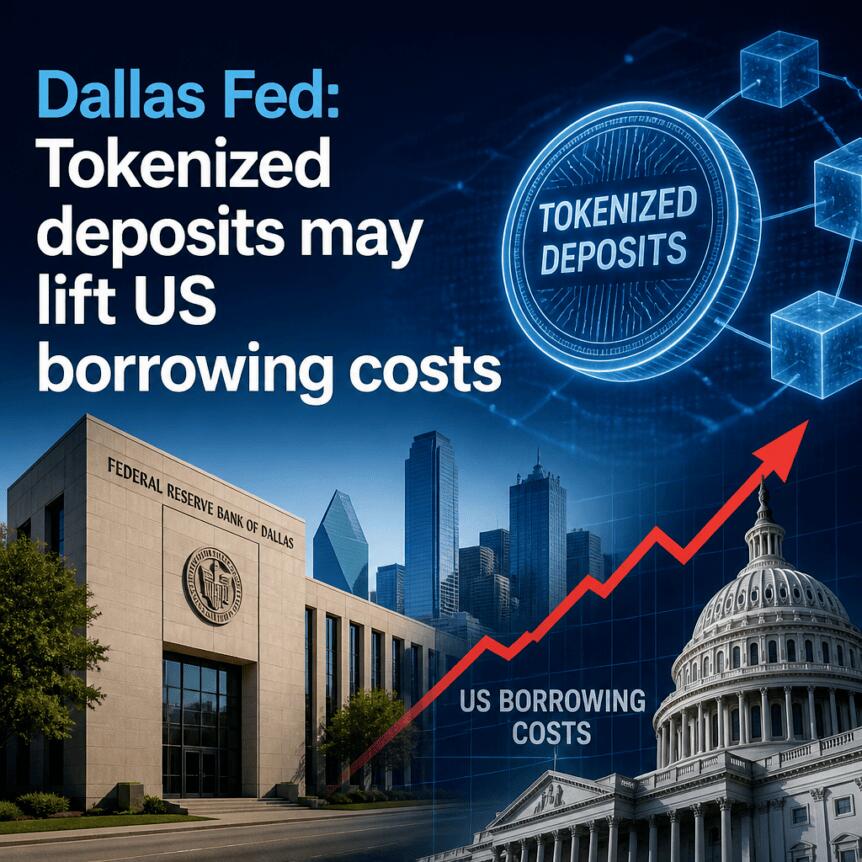
Tokenized deposits could make bank funding less “sticky,” potentially increasing borrowing costs for US households and businesses, according to an analysis by economists at the Federal Reserve Bank of Dallas. The concern is not about immediate, one-for-one changes to lending, but about how faster deposit movement—enabled by instant settlement and automated transfers—could reshape how banks manage liquidity and credit risk.
In a research note, economists Rosie Levy and Srini Ramaswamy argue that programmable deposit tokens combined with automated transfer mechanisms could allow customers seeking higher yields to switch banks more quickly. They estimate that if deposits became 10% more responsive to interest rates, banks’ capacity to hold long-term loans and other assets could decline by roughly $700 billion on a 10-year-equivalent basis. A separate scenario where deposits stayed at banks 10% less time implies a reduction of about $580 billion, expressed in the same 10-year-equivalent terms. These are scenario outcomes, not forecasts.
Key takeaways
- Tokenized deposits may increase deposit “rate sensitivity,” making funding more mobile when higher yields appear elsewhere.
- Instant settlement and automated transfers could shorten how long deposits remain at a given bank, reducing stability.
- Dallas Fed researchers estimate large liquidity and balance-sheet capacity effects under two 10% sensitivity/time scenarios, though they are not direct lending cuts.
- Banks are already building shared blockchain-style networks intended to move tokenized deposits within the regulated banking system.
Why instant settlement could destabilize funding
Levy and Ramaswamy’s central mechanism is straightforward: when settlement happens instantly, customers can react to rate differences faster. In traditional banking, moving deposits can take time, which can blunt how quickly funds shift across institutions. With programmable deposit tokens, deposits can be designed to integrate with automated processes—potentially powered by agentic artificial intelligence—that coordinate transfers with less manual friction.
The economists describe this as a shift in deposit behavior: deposits become more sensitive to interest rates and potentially less time-bound at a single bank. That matters because bank lending relies on relatively stable funding to support longer-duration assets.
Importantly, the authors stress that their numerical estimates are scenario-based. The changes are framed in terms of banks’ capacity to hold long-term loans and other assets, not as a direct “dollar-for-dollar” reduction in lending.
What the Dallas Fed scenarios imply for banks and borrowers
Under one scenario, the researchers assume deposits become 10% more sensitive to interest rates. Under another, deposits remain at banks for 10% less time. In both cases, they estimate reductions in banks’ capacity to hold long-term assets—about $700 billion and $580 billion, respectively, using 10-year-equivalent measures.
The analysis points to trade-offs banks could face when deposit stability declines. One response could be holding larger portfolios of highly liquid assets, such as reserves and US Treasurys, to better withstand faster outflows. Another could be leaning more on term debt to maintain the lending book.
But both adjustments can come with costs. Increasing reliance on wholesale funding or term debt typically raises funding expenses, and those higher costs can propagate into credit terms for borrowers—precisely the outcome Levy and Ramaswamy say could increase credit costs for US households and businesses.
From research to rollout: bank networks for tokenized deposits
The Dallas Fed concerns arrive as US banks accelerate plans for tokenized-deposit infrastructure. On Tuesday, 39 US state banking associations formed the BankChain Alliance, aiming to develop a nationwide network designed to support tokenized deposits, stablecoins, and automated settlement. Separately, The Clearing House is developing another network backed by major institutions including JPMorgan Chase, Bank of America, Citi, BNY, and Wells Fargo.
Banks have also begun connecting tokenized-deposit systems across organizations. On Aug. 20, Standard Chartered and HSBC completed a live cross-border transaction through Swift’s blockchain ledger. The reported design linked the two banks’ separate systems and recorded obligations on the ledger, with settlement still occurring via existing payment infrastructure.
Taken together, these efforts suggest that the industry is moving beyond pilots toward interoperable systems. From a policy perspective, that raises a key question Levy and Ramaswamy implicitly put on the table: if the plumbing makes movement faster and more programmable, will regulators and banks anticipate and manage the resulting funding dynamics?
Liquidity lessons from instant payments—what’s comparable and what isn’t
Levy and Ramaswamy cite Brazil’s Pix instant-payment system as a comparison point, while emphasizing it is not identical to tokenized deposits. Their reasoning is that instant-payment rails can change how quickly funds can move, which can alter deposit behavior and, in turn, banks’ balance-sheet choices.
A 2025 study by Brazil’s central bank found that heavier Pix use increased banks’ holdings of liquid assets and reduced credit intermediation. While that evidence does not prove the same outcome will occur with tokenized deposits, it offers a relevant reference for how faster payment flows can influence bank liquidity decisions.
For investors and lenders, the policy takeaway is less about whether tokenization will “help or hurt” lending in the abstract and more about how institutions will adapt their asset-liability management. If deposit mobility rises, market participants should watch for shifts in liquidity buffers, reliance on wholesale funding, and credit pricing—channels the Dallas Fed analysis highlights.
Going forward, the key uncertainty is how quickly tokenized deposit networks translate into real consumer and business deposit switching behavior. Readers should watch for regulatory guidance around tokenized deposit frameworks and for measurable changes in banks’ funding structures—especially whether liquidity reserves and term-debt reliance rise as these systems expand.
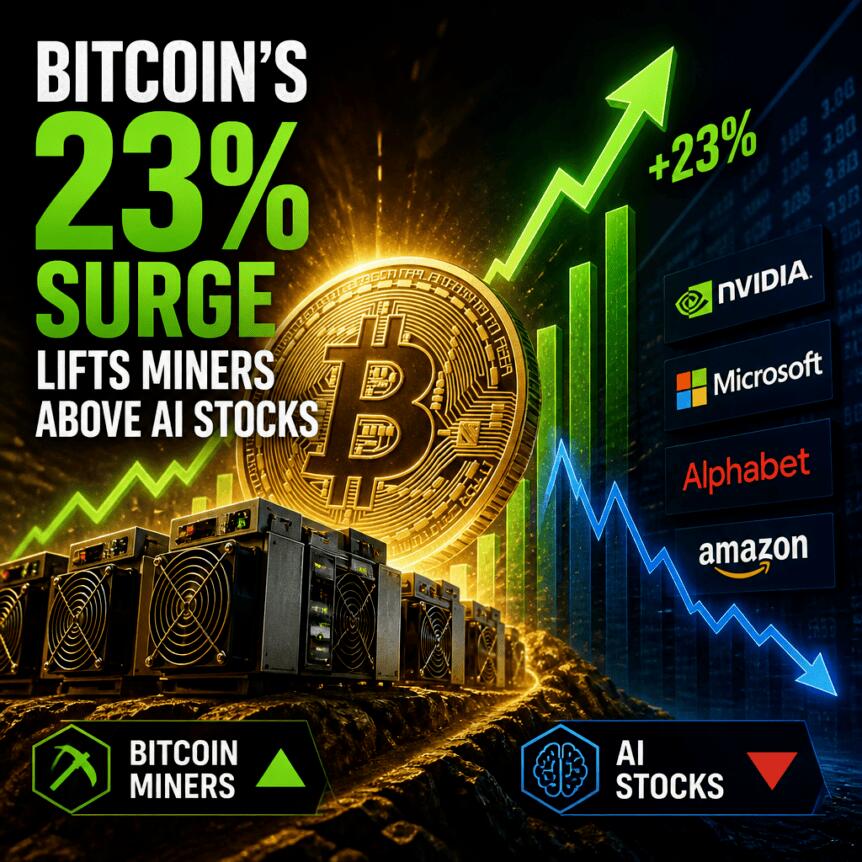
Bitcoin’s August rebound is dragging attention back toward the companies most directly leveraged to the network, with beaten-down mining stocks sharply outperforming many firms that had emphasized artificial intelligence (AI) and high-performance computing (HPC) rather than pure crypto exposure.
According to BlocksBridge Consulting’s Miner Weekly, Bitcoin has rallied about 23% over the past week—an advance that the firm says has outpaced most AI-linked infrastructure stocks. While some AI/HPC peers managed modest gains, the strongest moves were seen among miners with the most direct relationship to Bitcoin price action.
Key takeaways
- BlocksBridge reports Bitcoin’s ~23% weekly rally outperformed many AI-linked infrastructure equities.
- Bitcoin-focused miners such as Canaan, American Bitcoin, and Cango rose between 41% and 67%, while several AI/HPC-heavy names were flat or down.
- BlocksBridge attributes the stock surge to Treasury liquidity-support buybacks, renewed US crypto regulatory momentum, and a sharp liquidation-driven short squeeze.
- The broader message for investors: despite the industry’s AI pivot, Bitcoin price still largely determines near-term mining-stock performance.
Miners rebound while AI/HPC pivots lag
The outperformance was concentrated in companies that market themselves around mining and Bitcoin economics, rather than broader compute infrastructure narratives. BlocksBridge highlighted three beaten-down Bitcoin mining companies—Canaan, American Bitcoin, and Cango—posting gains ranging from roughly 41% to 67% during the same period.
By comparison, miners and infrastructure-linked companies with more diversified exposure saw smaller moves. BlocksBridge cited CoreWeave rising about 21%, Nebius gaining about 17%, and IREN up around 15%. It also noted that some players with heavier AI/HPC exposure were flat or declined—an important contrast for traders who may have been expecting the market to continue rewarding the AI theme alone.
This relative performance matters because it signals how quickly capital can rotate back toward the most straightforward “beta to Bitcoin.” Even if AI-related businesses remain central to longer-term strategy for many operators, the market appeared to treat Bitcoin price strength as the dominant driver of miners’ equity re-rating over the week.
Why Bitcoin’s rally translated into stock gains
BlocksBridge pointed to three overlapping catalysts that helped ignite the move in crypto markets and, in turn, mining equities.
Treasury buyback expansion and liquidity expectations
One driver was the US Treasury Department’s Aug. 19 announcement that it would at least double the size of its liquidity-support buybacks for longer-dated Treasury securities. BlocksBridge linked this to improved liquidity expectations—an environment that often supports risk assets broadly, including crypto-linked equities.
The connection is straightforward: when liquidity conditions improve, markets tend to become more willing to price risk higher, which can benefit volatile sectors like crypto and crypto mining.
Regulatory optimism after White House meeting
A second catalyst cited by BlocksBridge was renewed regulatory optimism following a White House meeting with crypto executives. Reuters reported that US President Donald Trump urged Congress to pass a “fair version” of the CLARITY Act, a stalled crypto market structure bill.
For public miners, regulation matters less as a daily operational variable and more as a factor that can influence investor confidence and capital allocation. Even the anticipation of clearer market rules can change how equity markets discount regulatory risk across the crypto complex.
Liquidations and a short squeeze after Bitcoin broke out
The third element described by BlocksBridge was a sharp short squeeze after Bitcoin’s breakout. The firm said more than $1.6 billion in crypto positions were liquidated over 24 hours—an event that can force margin closures, accelerate price momentum, and pull additional participants into the trade.
This type of positioning-driven rally can especially benefit miners’ stocks in the short term. Mining equities often move in tandem with both crypto prices and broader risk appetite, so liquidation cascades can amplify gains beyond what “fundamentals” alone would suggest.
Bitcoin still sets the pace, despite the AI funding push
BlocksBridge’s findings align with earlier coverage from Cointelegraph that Bitcoin’s rally lifted crypto-related stocks, including Bitcoin miners. While the industry has increasingly marketed AI and HPC capabilities in recent years, the week’s performance suggested that investors were still willing to pay up for direct exposure to Bitcoin rather than compute-adjacent narratives.
That focus is reinforced by additional BlocksBridge analysis referenced in the report: publicly traded Bitcoin miners have invested roughly $15 into AI data centers for every $1 in AI-related revenue generated. The firm cited nine public miners generating $341.2 million in AI and HPC revenue so far in 2026, alongside $5.11 billion in AI and HPC capital expenditures on the technology.
The implication is not necessarily that AI pivots are failing, but that the investment phase may be heavy and slow to convert into revenue. In such a setup, equities can be more sensitive to near-term Bitcoin price movements—because the market may not yet fully “see” AI returns in earnings, cash flow, or guidance.
What investors should watch next
If liquidity expectations, regulatory headlines, and crypto positioning remain supportive, mining stocks may continue to trade as a high-beta reflection of Bitcoin. But investors will likely watch whether the outperformance persists after the initial squeeze fades—and whether miners’ AI/HPC spending begins to translate into measurable revenue gains that can support valuations independently of Bitcoin’s next move.
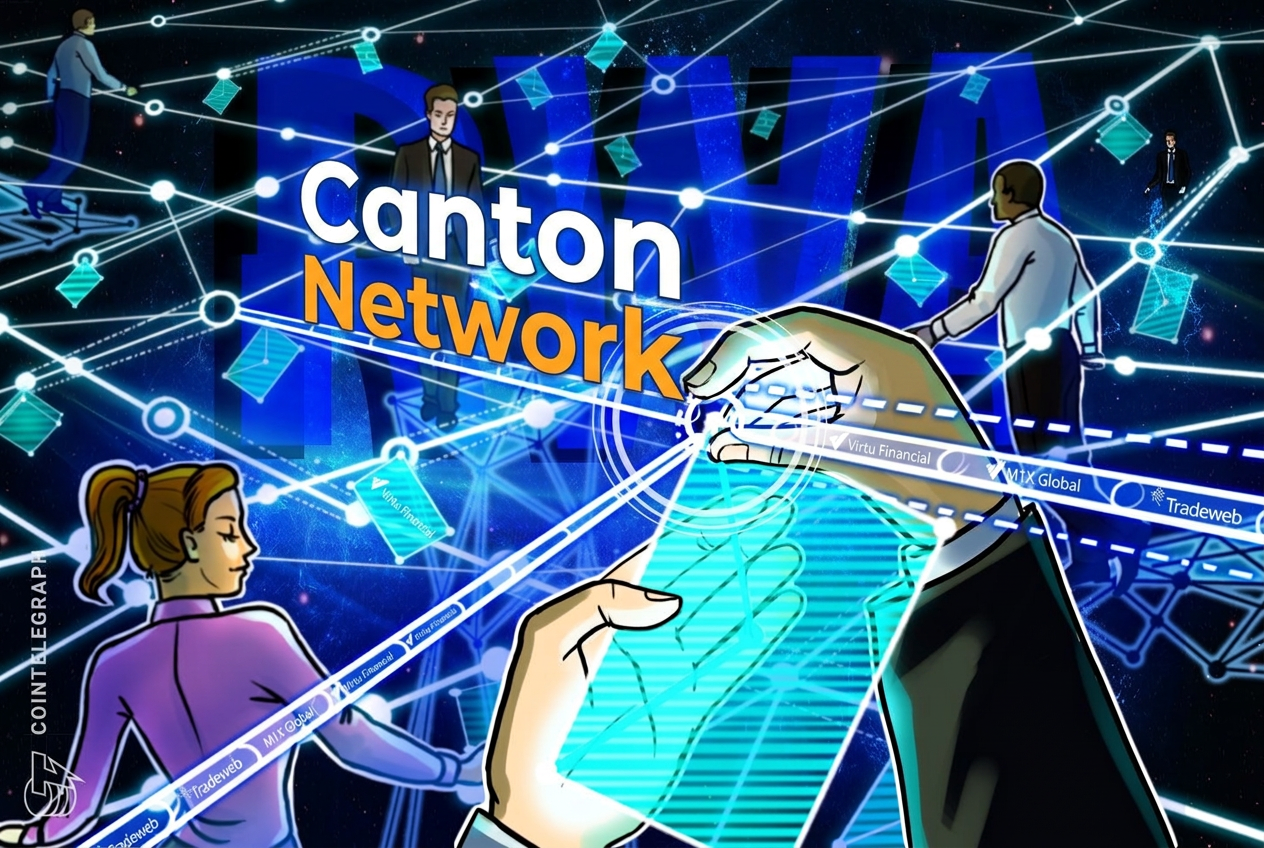
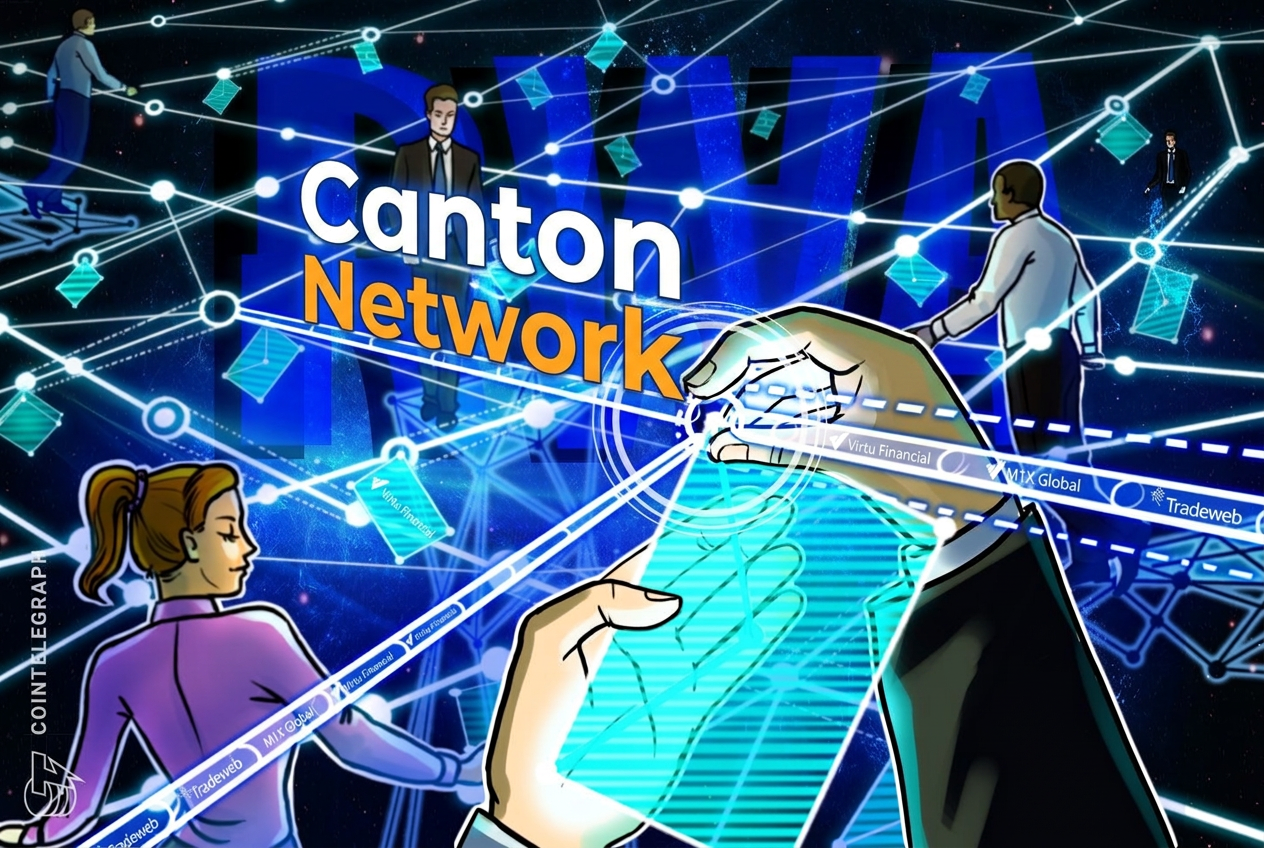
Virtu Financial, M1X Global and Tradeweb completed an onchain repo transaction using a sovereign digital bond as collateral, with the full transaction settling on the Canton Network.
The transaction used USDM1, a US dollar-denominated sovereign bond issued onchain by the Republic of the Marshall Islands and backed 1:1 by short-term US Treasurys. The bond pays a coupon while being used as collateral and is structured under New York law as a fully collateralized sovereign obligation.
Both companies said it was the first repo to combine natively issued sovereign collateral with fully onchain atomic settlement. Executed between regulated counterparties on Tradeweb, the full repo and repurchase cycle was completed in under 10 minutes.
The transaction puts tokenized sovereign debt to use as collateral in an institutional financing transaction, rather than solely as an asset for issuance or trading, though it remains an early-stage example and it is not yet clear whether the model will see broader adoption across institutional repo markets.
USDM1 is available through electronic trading platform Tradeweb, with institutional custody provided by Anchorage Digital, BitGo and tZERO, according to the release.
Related: Digital Asset lands $355M as a16z doubles down on Wall Street blockchain rails
Canton Network sees flurry of institutional activity
Canton is a blockchain network designed for institutional finance, with privacy and permissioning features aimed at regulated transactions and tokenized assets.
Thursday’s repo follows a July transaction in which Tradeweb facilitated the real-time transfer of a tokenized US Treasury from Franklin Templeton to Virtu Financial on Canton, settling the transaction against USDCx.
Network activity accelerated in August. FalconX and Interstice launched a cross-chain swap engine connecting Canton with Ethereum, Solana and Robinhood Chain, while World Liberty Financial launched its USD1 stablecoin natively on Canton.
Digital Asset and the American Idea Foundation, founded by former US House Speaker Paul Ryan, also announced plans this month for a 2027 pilot that would use Canton to distribute state-administered benefits across three US states.
Magazine: SHRINCS BIP published: Quantum-secure Bitcoin comes with a catch

Joseph Gordon-Levitt sees his contribution to the AI conversation as a storyteller, helping people understand what widespread adoption of the technology and the current economic structures around it could mean for them. Companies, he notes, are incentivized to maximize shareholder value. “And that’s not necessarily going to line up with the technology being good for people,” he tells TIME.
As an actor and filmmaker, he’s also concerned about how AI will affect storytelling itself. In December 2025, he founded the Creators Coalition on AI alongside others including Natasha Lyonne and Daniel Kwan. The group aims to become Hollywood’s voice at the table, calling for fair compensation, job protections and deepfake guardrails, among other things. The coalition’s signatories include A-listers like Ben Affleck, Cate Blanchett, Margot Robbie, and Octavia Spencer.
Gordon-Levitt, who co-founded online collaborative media platform HitRecord in the early aughts, isn’t against the development of the technology itself, he says. He sees the potential for AI to empower more people. “But that’s not the path it’s on right now,” he says. “Right now it’s on a path where we take many steps back, where the power is taken away from more and more people and put into the hands of the few. It doesn’t have to be that way.”
In March, he was appointed as the U.N.’s first-ever global advocate for human-centric digital governance, where he would work with the organization’s Internet Governance Forum on promoting an approach that it hopes will be “equitable, innovative, responsible and human-centred.”
“Private companies can’t be the only ones deciding how this technology is going to be developed and deployed,” Gordon-Levitt says. “The people need to get involved. We can’t just be customers, we have to be advocates.”
Ever the storyteller, Gordon-Levitt is looking to distill these themes in his upcoming untitled thriller. “Talking about numbers and issues and policy and technology only takes a conversation so far,” he says. “Making a feature film is one of the best ways to really communicate a human experience—what it feels like as a person to be in this new world that we might be headed for.”
On May 4, a message hidden in Morse code helped trigger a six-figure crypto transfer. It passed through two connected AI systems. One was Elon Musk’s Grok, the chatbot built by Elon Musk’s xAI. The other was Bankrbot, a crypto agent that could make payments from a linked wallet.
The attacker first sent the wallet a digital membership token that unlocked Bankr’s payment tools. Grok then decoded the message, and Bankrbot treated the response as a payment order. It transferred an estimated $150,000 to $200,000.
A Morse-Code Message Became a Six-Figure Payment
Now, why is this concerning? Because the case highlights a six-figure exploit involving just two AI agents. One AI produced text. Another treated it as permission to spend.
If we look at the scale of AI agentic payments today, such scenarios could be a nightmare for the future of Agentic Finance.
Keyrock counted 176 million on-chain agent payments worth $73 million through April 2026. The median payment sat between $0.01 and $0.10, while 76% fell below $0.30. Small payments become a large control problem when software can make them continuously.

The pattern is moving into mainstream payment infrastructure. Mastercard launched Agent Pay for Machines in June for high-frequency, low-value payments, while Google and Visa are developing standards for agents to prove identity and authority.
BeInCrypto asked Rodrigo Coelho, CEO of Edge & Node; Nitin Gaur, Head of Institutions at Nethermind; and Francesco Andreoli, Director of Developer Relations at MetaMask, who carries the risk.
Coelho was direct.
“The company that deployed it. There is no version of this where responsibility lands on the model,” said Rodrigo Coelho, the CEO of AI and Web3 infrastructure developer Edge & Node.
California has already put that principle into law. AB 316, effective since January, prevents a defendant who developed, modified, or used AI from arguing that the system autonomously caused the alleged harm. Causation and foreseeability still matter.
The Receipt Is Not the Permission
An on-chain transaction proves money moved. It does not prove the agent had a valid mandate to move it.
“Most companies deploying agents today could not actually prove what their agent was authorized to do. They can show you the transaction. It happened on a chain and the record is public and permanent. What they cannot show you is the permission that sat behind it,” said Coelho.
Gaps may include who delegated authority, which policy applied, what information the agent read and whether the payment stayed within its limits. A wallet address answers none of those questions.
Nitin Gaur from Nethermind said the dispute turns on the mandate.
“What decides a dispute is authority evidence. Show the agent acted inside a valid, signed, time-bounded mandate and this resolves like any other authorized payment.”
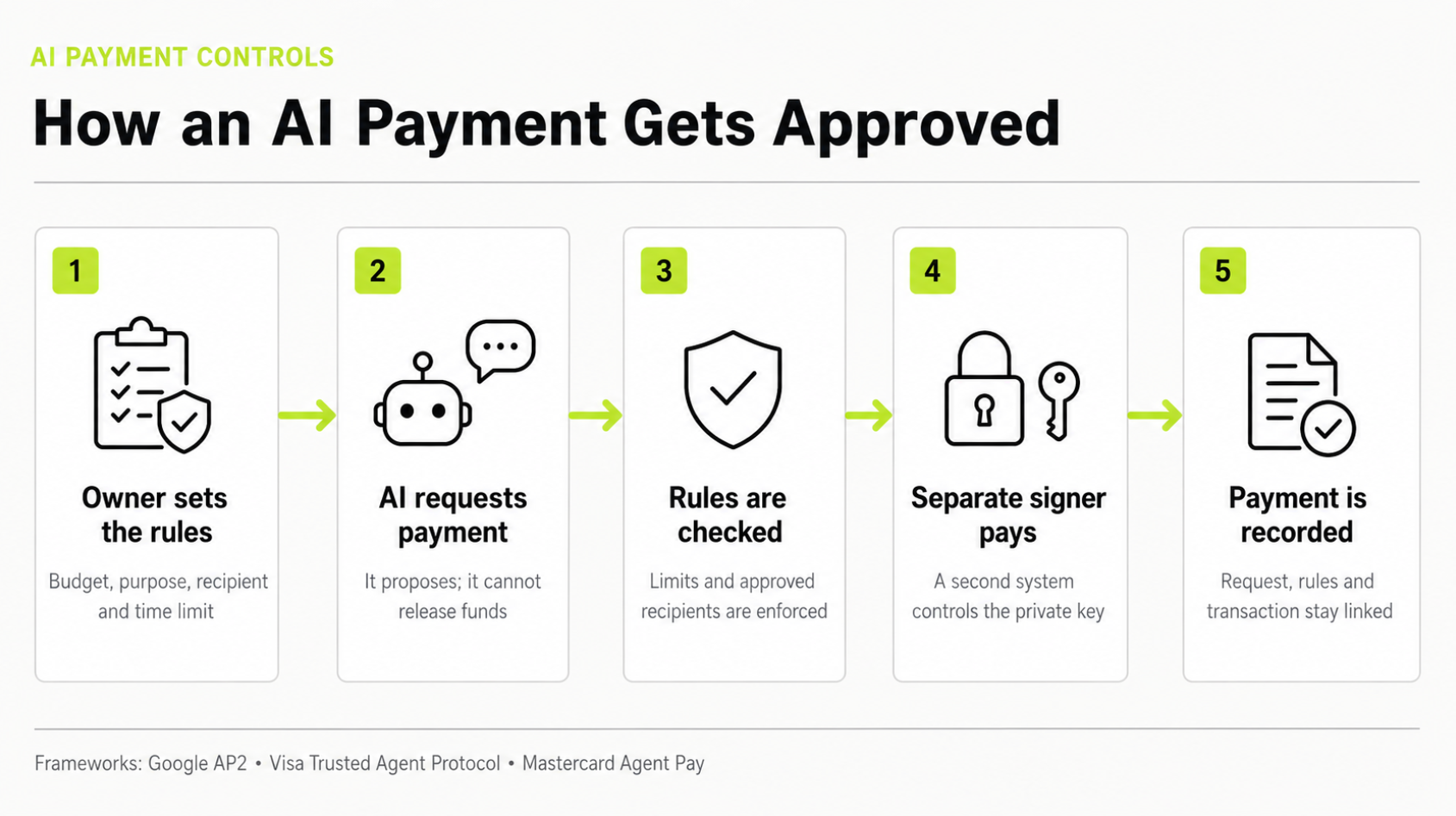
Google’s AP2 uses cryptographically signed mandates to record user intent. Visa’s Trusted Agent Protocol lets approved agents present digital signatures proving identity and associated authorization.
Mastercard adds credentialing and programmatically enforced limits. The rails differ, but the design goal is shared: permission has to travel with the payment.
Put the Limits Where the Agent Cannot Reach
A mandate still fails if the agent can rewrite it, approve its own request or hold unrestricted signing power. Coelho draws the boundary at the private key.
“The agent should not hold the keys. It should be able to propose a payment, and a separate system decides whether that payment is permitted,” said Coelho.
Francesco Andreoli from MetaMask makes the same point about prompts:
“The controls that work are the ones the agent cannot reach, if your policy lives in the prompt, it isn’t a policy, it’s a suggestion to a system we’ve repeatedly watched get talked into things.”
In practice, that means segregated funds, hard transaction and daily limits, approved counterparties, fast revocation, and a tested kill switch. An independent system checks the rules before signing.
The tools feeding agents create another risk. Snyk scanned 3,984 public agent skills in February and found at least one security issue in 36.82%. It confirmed 76 malicious payloads involving credential theft, backdoors, or data exfiltration.

Gaur sees prompt injection as the dominant pattern: “Prompt injection is the dominant pattern: an agent takes instruction from untrusted content it was asked to read and executes it as though the principal had asked.”
A defensible audit trail therefore needs the agent identity, signed mandate, policy version, transaction, source data, and any approved exception, written when payment occurs. The chain provides one part.
Gaur’s standard is shorter: “Provable, revocable and bounded.”
Without those properties, companies are left with an immutable receipt for a decision they cannot defend.
The post Who is Responsible When an AI Agent Loses Your Money? appeared first on BeInCrypto.
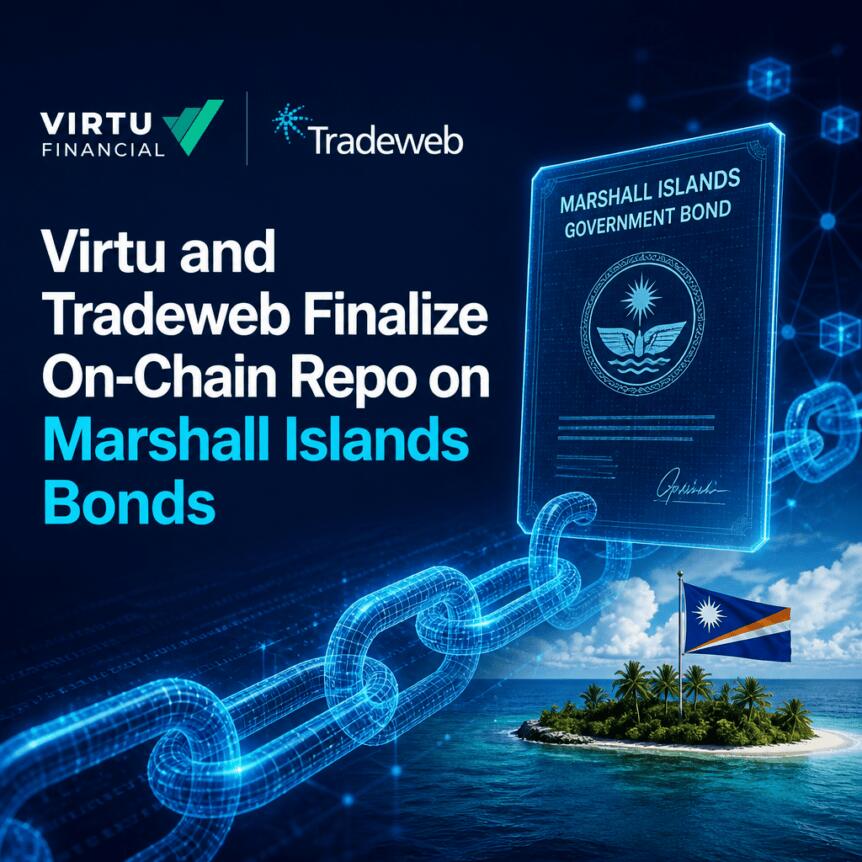
Virtu Financial, M1X Global and Tradeweb have completed an onchain repo transaction that used a tokenized sovereign digital bond as collateral and settled the full repurchase cycle on the Canton Network. According to the parties involved, the transaction was executed between regulated counterparties and finished end-to-end in under 10 minutes.
The collateral in the deal was USDM1, a US dollar-denominated sovereign bond issued onchain by the Republic of the Marshall Islands. The bond is designed to pay a coupon while also functioning as collateral, and it is backed 1:1 by short-term US Treasurys. Its structure is governed under New York law and is described as a fully collateralized sovereign obligation.
Key takeaways
- Three institutions—Virtu Financial, M1X Global and Tradeweb—completed a repo using tokenized sovereign collateral with settlement on Canton.
- USDM1 collateral is structured as a coupon-paying, fully collateralized sovereign bond backed 1:1 by short-term US Treasurys.
- Atomic settlement claim: the parties say it was the first repo combining natively issued sovereign collateral with fully onchain atomic settlement.
- Under 10 minutes was cited for the full repo and repurchase cycle from execution to completion.
- Adoption remains uncertain: the transaction is framed as an early example, with no clear indication yet of broad scaling in institutional repo markets.
USDM1 becomes collateral in a full onchain repo
While tokenized bonds have often been positioned as tradable assets or issuance rails, this transaction focuses on their role inside institutional financing. The deal demonstrates how tokenized sovereign debt can be used not just for ownership and trading, but also as functional collateral through the repo lifecycle.
In the reported structure, USDM1 was used as the collateral layer within a repurchase agreement process, with the full transaction settling on Canton. The parties emphasize that the workflow targeted the repo and repurchase cycle as a complete “atomic” onchain settlement process, rather than splitting settlement across different systems or steps.
Tradeweb acted as the platform for execution between regulated counterparties. For custody, the release names Anchorage Digital, BitGo and tZERO as institutional custody providers supporting access to USDM1 through the electronic trading venue.
Why Canton’s permissioned design matters for institutional finance
Canton Network is built for institutional financial use cases, with features aimed at regulated trading and tokenized asset workflows, including permissioning and privacy controls. The repo example comes after multiple other Canton-linked developments that show how the network is being used to move tokenized instruments and settle transactions.
In an earlier July transaction, Tradeweb facilitated a real-time transfer of a tokenized US Treasury from Franklin Templeton to Virtu Financial on Canton, with settlement executed against USDCx. That prior example centered on token transfer and settlement mechanics; the latest repo follows by applying Canton’s approach to a financing structure that depends heavily on collateral management.
For market participants, this distinction is important: repo is operationally and legally complex, and it typically involves tightly coordinated settlement steps. If tokenized sovereign collateral can be integrated into that process with rapid onchain settlement, it may reduce operational friction and shorten the time between execution and completion—at least within the confines of controlled test or pilot environments.
Momentum builds: cross-chain swaps and native stablecoins on Canton
The new repo arrives as activity on Canton increased during August, according to earlier reporting and announcements referenced in the source. FalconX and Interstice launched a cross-chain swap engine linking Canton with Ethereum, Solana and Robinhood Chain, expanding how assets can be routed across ecosystems while using Canton as the institutional settlement environment.
At the same time, World Liberty Financial launched a native USD1 stablecoin on Canton. In addition to payment and settlement utility, native stablecoin deployment can also influence how institutions model liquidity and collateral flows within tokenized workflows.
Broader plans were also mentioned involving Digital Asset and the American Idea Foundation, founded by former US House Speaker Paul Ryan. The parties announced plans this month for a 2027 pilot that would use Canton to distribute state-administered benefits across three US states.
Taken together, these items suggest Canton is being used as more than a single-application testnet. Instead, the ecosystem is gradually incorporating exchange-like capabilities, stablecoin issuance, and settlement for institutional workflows—components that are often prerequisites for scaling to wider capital markets use.
What this means for institutional repo markets—today and next
The latest repo is positioned as an early-stage milestone: the parties involved are effectively using tokenized sovereign debt as collateral inside a real repo process, and then completing the cycle onchain. The speed reported—under 10 minutes for the full repo and repurchase cycle—signals that operational complexity is being addressed in practice, at least in this instance.
However, the release also leaves open the central question facing the market: whether this model will translate into broader adoption across institutional repo markets. Repo is a core part of the fixed-income funding ecosystem, and widespread deployment typically depends on standardization across counterparties, legal frameworks, operational integration with existing back-office systems, and consistent liquidity for collateral tokens.
One clear development to watch is whether additional repo participants adopt natively issued sovereign token collateral in similar atomic settlement workflows, and whether the approach expands beyond controlled counterparties and specific venue support. Investors and builders should also look for incremental improvements in how collateral, stablecoin settlement assets, and cross-chain liquidity integrate under Canton’s permissioned architecture.
For now, the key takeaway is that tokenized sovereign bonds are moving from “asset onchain” to “collateral in institutional finance,” and Canton’s growing set of settlement and integration features will likely determine how quickly similar strategies can move from demonstrations to repeatable market infrastructure.


Mirae Asset has set a 150 trillion won or about $109 billion target for a digital asset business spanning cryptocurrency, stablecoins, real-world assets and tokenized securities.
Summary
- Digital X will serve as a central part of Mirae Asset’s next growth strategy.
- Mirae Asset acquired 97.15% of the former Korbit exchange for 141.4 billion won.
- The group plans to tokenize assets such as gold, silver, and electricity.
- Digital X has waived trading fees on won-denominated assets until August 2027.
Digital X will anchor Mirae Asset’s $109B plan
The Korea Times reported the target after Mirae Asset founder and chairman Park Hyeon-joo presented the strategy to Digital X employees at an event in Seoul on Wednesday.
Under the plan, the financial group will develop its digital asset operations around four areas: cryptocurrency, stablecoins, real-world assets, and security token offerings. Mirae Asset also intends to digitize physical and financial assets, with gold, silver, and electricity among the examples identified by the company.
Digital X, the exchange formerly known as Korbit, will form the main operating base for the strategy. Mirae Asset is using its 1,500 trillion won in client assets as the foundation for a digital asset business equal to about 10% of that amount.
“Our initial goal is to make Digital X a core pillar of ‘Mirae Asset 3.0,’” Park said, according to The Korea Times.
Park also said the group plans to make its digital asset operations profitable in 2027. Mirae Asset has not released a timetable for reaching the full 150 trillion won target or explained how much of the figure will come from exchange assets, stablecoins, tokenized products, or other services.
The scale of the target goes far beyond Digital X’s existing exchange business. Korbit controlled only 0.5% of South Korea’s cryptocurrency trading market in 2025, according to the country’s Fair Trade Commission, leaving it well behind market leaders Upbit and Bithumb.
Founded in 2013, Korbit was South Korea’s first cryptocurrency exchange. Its early entry did not translate into a large market position, but Mirae Asset’s ownership gives the platform access to capital, financial infrastructure and an established client base that it did not previously have.
Korbit acquisition gave Mirae Asset control of an exchange
Mirae Asset Consulting completed its purchase of a 97.15% stake in Korbit in July, paying a cumulative 141.4 billion won for control of the exchange. As crypto.news previously reported, the transaction made Mirae Asset the first South Korean financial group to control a domestic cryptocurrency exchange through an affiliate.
Following the Korbit takeover and rebrand, Park told employees that the new name represented the planned connection between conventional finance and digital assets. Trading, deposits, withdrawals, customer accounts, and custody arrangements continued without interruption after the ownership change.
Mirae Asset initially agreed to buy 92.06% of Korbit for about 133.48 billion won. Additional share purchases later raised its interest to 97.15% and brought the total acquisition cost to approximately 141.4 billion won.
South Korea’s Fair Trade Commission approved the combination on July 9 after deciding that the transaction was unlikely to restrict competition. Korbit’s 0.5% domestic market share was central to the regulator’s assessment.
Financial support followed the takeover. On Aug. 12, Digital X’s board approved a 50 billion won injection through the issue of 10,078,614 common shares priced at 4,961 won each.
Mirae Asset Consulting was due to receive all of the newly issued shares through a third-party allotment, with payment scheduled for Aug. 27. Digital X said the proceeds would strengthen its financial structure and cover management funding needs.
The funding addresses a business that remains small and loss-making despite its long operating history. Korbit generated about 9.8 billion won in operating revenue during 2025 but posted an operating loss of 15.4 billion won, according to figures cited in the earlier report.
Unlike the 141.4 billion won spent buying shares from existing owners, the additional 50 billion won enters Digital X itself. The company has not provided a detailed breakdown showing how much will be spent on exchange operations, compliance systems, or the planned tokenization products.
South Korea is preparing rules for tokenized securities
Mirae Asset’s plans are taking shape as South Korea establishes legal infrastructure for tokenized financial products. The National Assembly passed amendments to the Electronic Securities Act and Capital Markets Act on Jan. 15, creating a route for issuing and trading securities whose ownership records are maintained through distributed ledgers.
According to South Korea’s Financial Services Commission, the revised laws recognize a blockchain-based distributed ledger as a securities registry. Issuers will still need to meet registration requirements involving the Korea Securities Depository, while offerings must follow the disclosure and securities rules applied to conventional products.
The amended legislation is scheduled to take effect on Feb. 4, 2027. Before implementation, regulators are preparing supporting rules and infrastructure for issuance, distribution and over-the-counter trading.
An August report on corporate crypto access said the regulatory program also covers about 3,500 listed companies and professional investors, which are being prepared to use real-name accounts connected to domestic exchanges.
Financial companies were excluded from that corporate trading group, while eligible businesses entered through a controlled pilot. South Korean companies had effectively been unable to trade crypto on local exchanges since 2017 because banks did not provide the real-name accounts required for corporate activity.
Tokenized securities operate under a separate legal structure. The planned system places them within South Korea’s existing capital markets framework instead of treating them as unregulated crypto assets, with licensed intermediaries handling distribution and the Korea Securities Depository maintaining formal records.
Mirae Asset has not specified which assets it will tokenize first, who will hold the underlying gold or silver, or how tokens linked to electricity would be structured. The group has also not disclosed whether the products will be limited to South Korean investors.
U.S. rules also keep tokenized assets under securities law
For U.S. investors, Mirae Asset’s planned security tokens would not automatically become available through American exchanges or brokerages. Any U.S. offer would have to comply with applicable securities, broker-dealer, trading, and disclosure requirements.
In a January statement on tokenized securities, the U.S. Securities and Exchange Commission distinguished between products sponsored by the original issuer and tokens created by an unrelated third party.
The SEC said third-party structures may provide direct or indirect ownership rights, contractual exposure, or synthetic exposure, depending on how the product is designed. Investors may also face risks connected to the third party, including bankruptcy exposure that may not apply to someone holding the underlying security directly.
SEC Commissioner Mark Uyeda said in February that tokenized versions of securities remain subject to securities regulation and that moving an instrument on-chain does not remove its legal obligations. His remarks identified issuance, custody, and trading as areas where existing requirements must work with blockchain-based systems.
Digital X has meanwhile started using lower trading costs to attract activity before the planned products arrive. On Monday, the exchange removed trading fees for every won-denominated asset, with the zero-fee program scheduled to remain in place through Aug. 24, 2027.

Wireless and Solar Cameras for Your Home

The 100 Most Influential People in AI 2026
Bolton Wanderers vs Lincoln City Prediction and Betting Tips





-

 Fashion6 days ago
Weekend Open Thread: Madewell – Corporette.com
-

 Crypto World2 days ago
SpaceX stock could rise 75% to $240, JPMorgan says
-

 Business5 days ago
Musk’s Tesla, SpaceX Confirm $16.8 Billion ‘Terafab’ Chip Plant as World’s Largest Building in Texas
-

 Crypto World6 days ago
anatomy of crypto’s biggest liquidation event since 2021
-

 Crypto World3 days ago
A $30 Billion AI Fund Implodes, Now the SEC Is Investigating Wall Street’s Role
-

 Politics5 days ago
6 months on, Irish renters crushed by effects of government housing bill
-

 Crypto World2 days ago
Did Trump Just Move SpaceX Stock With One Truth Social Post?
-

 Business4 days ago
Mystery AI Model ‘Ox Alpha’ Draws Developers With Free Access as Chinese Lab Origins Remain Debated
-
 NewsBeat6 days ago
The ‘Lucky Dip Gang’ causing carnage for clicks: After five thugs were killed speeding in the wrong direction on a motorway, GUY ADAMS investigates a sick new trend… and why police aren’t even allowed to pursue them
-

 Business3 days ago
Moderna CEO warns China is pouring state money into mRNA technology
-
 Crypto World6 days ago
Nvidia Stock Suffers Longest Losing Streak Since 2022: Will Q2 Earnings End It?
-

 Business3 days ago
NVIDIA Stock Drops Nearly 2 Percent to $210 on Seventh Losing Day Ahead of Critical AI Earnings
-

 Tech6 days ago
Unitree’s New Superman Robot Claims to Outjump and Outrun Every Human, Usain Bolt Included
-

 Business6 days ago
UK firms in critical financial distress rise 9% to 53,756
-

 Sports5 days ago
Deshaun Watson fires back at Browns fans after being booed: ‘It’s a disrespectful thing’
-
 Crypto World5 days ago
Google Gemini AI Predicts Ethereum Could Become the Trade Retail Misses in 2026
-

 Tech6 days ago
Faster chip in a familiar form factor
-
 Crypto World7 days ago
SEC Regulation Crypto vs CLARITY Act: which framework wins
-

 Business6 days ago
Will Tesla Stock Be Higher or Lower a Year From Now? Here’s What Wall Street Analysts Are Saying
-

 Business4 days ago
Tesla Recalls Nearly 3 Million Cars in China Over Hidden Door Handles Linked to Multiple Deaths Amid New Ban
You must be logged in to post a comment Login