Connect with us

Business

Top 6 AI Infographic Generators (Ranked & Reviewed)

Published

on

Top 6 AI Infographic Generators (Ranked & Reviewed)

Late last year, a marketing strategist in my network needed to turn a research-heavy briefing into a visual asset before an executive meeting.

The material was all there: statistics, findings, recommendations, supporting notes. The bottleneck was translating it into a coherent visual hierarchy quickly enough to be useful.

We used AI as a first-draft tool rather than asking it to make every design decision. That worked far better. AI handled structure and visual direction. Human editing handled emphasis, accuracy, and final presentation.

That approach reflects where the technology actually delivers value. Over 61% of marketers are now using AI to create visual content, and the teams getting the most from it are not treating AI as a replacement for judgment. They are using it to eliminate the production work that slows everything else down.

The best AI infographic generators in 2026 are built around that model. They reduce meaningful effort across ideation, structure, visualization, and production without removing the human decisions that make the output credible.

Advertisement

Top 3 Quick Picks: The Best AI Infographic Generators

  1. Piktochart: Best for AI-Powered Visual Communication

    • Prompt-to-infographic creation
    • Editable AI-generated designs
    • Strong data workflows
  2. Infogram: Best for AI Data Visualization

    • Data-focused creation
    • Extensive chart options
    • Interactive visual storytelling
  3. Adobe Express: Best for Generative Creativity

    • Generative AI tools
    • Broad creative formats
    • Adobe ecosystem integration

Keep reading for the criteria that separate useful AI design tools from conventional editors with AI features attached.

How to Choose an AI Infographic Generator

1. Evaluate What the AI Can Start With

Prompt-based generation is useful, but professional projects rarely begin with a perfect one-sentence brief.

Look at the inputs an AI infographic generator can process. Can it work from notes, existing text, documents, or data? Can you provide enough context about the audience and purpose to produce a relevant result?

Piktochart, for example, can generate an editable infographic from a topic, pasted text, report, notes, data summary, or uploaded document. Its graph generator can also work with raw data and CSV, DOCX, PDF, and TXT files.

That matters because AI becomes considerably more useful when it can work with material your organization already has.

Advertisement

2. Look for AI That Structures Information

Generating an attractive image isn’t the same as designing an effective infographic.

Long-form visual communication requires decisions about hierarchy: what comes first, which information deserves emphasis, where sections should break, and how ideas connect. For information-heavy projects, AI that helps organize material can therefore be more useful than AI focused purely on aesthetics.

Piktochart’s AI infographic workflow can organize a message into sections and suggest a visual direction before users refine the result.

This is particularly relevant for reports, research summaries, educational content, and internal communications, where structure has a direct effect on comprehension.

Advertisement

3. Check How Editable the AI Output Is

AI should accelerate the first draft without limiting the final one.

A generated infographic will rarely be perfect immediately. Facts may need checking, copy may need tightening, and the design may need to reflect an organization’s visual identity. Prioritize platforms where AI-generated work becomes an editable design rather than a fixed output.

Piktochart allows users to modify text, colors, images, icons, fonts, layouts, and brand details after generation.

That combination of automation and control is especially important for professional teams. AI can handle some of the setup, while the user remains responsible for the finished communication.

Advertisement

4. Consider AI for Data, Not Just Design

Data visualization is one of the clearest tests of whether an AI infographic platform can handle serious information.

Useful AI tools should help users move from numbers toward an appropriate chart while retaining the ability to verify and edit the underlying content. Piktochart’s AI Chart Generator can create editable charts from prompts or data, including bar, line, pie, comparison, report, dashboard, and presentation visuals.

Infogram likewise centers much of its product around accessible data visualization and now offers AI-assisted infographic functionality.

For data-heavy content, AI should make visualization more approachable without encouraging users to stop checking the numbers.

Advertisement

5. Assess the Platform Beyond the AI Feature

AI generation is only the beginning of a production workflow.

Consider what happens after the first draft. Can the platform accommodate reports and presentations as well as infographics? Can users create charts, customize visuals, and repurpose information for different audiences?

This matters because professional communication rarely happens in a single format. The same research might become an executive report, presentation, infographic, and campaign visual.

The strongest AI platforms reduce friction across that broader process. A narrowly focused generator may produce an impressive first image, but a visual communication suite can remain useful throughout the project’s lifecycle.

Advertisement

In-Depth Reviews of The Best Infographic Generators Today

1. Piktochart: Best for AI-Powered Visual Communication

  • Founded: 2011
  • Headquarters: Penang, Malaysia

After ranking and reviewing the AI-powered field, one platform consistently delivers where it counts. Piktochart is the best infographic generator in 2026, using generative AI not just to speed up production but to give teams a genuinely editable, professional starting point without sacrificing control over the final output.

Its AI infographic generator creates drafts from prompts or existing material and helps organize content into a visual structure. Piktochart also offers AI tools for charts, graphs, reports, images, and other visual formats.

That breadth makes Piktochart particularly useful for long-form and data-heavy communication. Teams can use AI to accelerate production without giving up control over copy, layouts, colors, fonts, imagery, or branding.

2. Infogram: Best for AI Data Visualization

  • Founded: 2012
  • Headquarters: Riga, Latvia

Infogram was founded specifically around making data visualization more accessible. Its platform covers infographics, reports, charts, maps, and other data-driven visual content.

Its AI infographic functionality can generate layouts and visual content from prompts, complementing a product already strongly oriented toward charts and data storytelling.

That makes Infogram especially relevant for teams whose primary challenge is communicating statistics rather than producing a wide variety of general design assets. Analysts, researchers, marketers, and communications teams working heavily with data should find its specialization particularly useful.

Advertisement

3. Adobe Express: Best for Generative Creativity

  • Founded: 1982 (Adobe)
  • Headquarters: San Jose, CA

Adobe Express brings generative AI into a broad, accessible creative environment backed by Adobe. The parent company was founded in 1982 and is headquartered in San Jose. Adobe Express was released in 2021.

Express supports infographic creation alongside social graphics, presentations, images, videos, and other creative formats. Its generative capabilities are particularly useful when AI is needed for visual ideation, imagery, template creation, and editing rather than primarily for data storytelling.

That makes Adobe Express a strong choice for marketers and creative teams producing many different asset types, especially when they already work with other Adobe products.

4. Napkin AI: Best for Text-to-Visual Ideas

  • Founded: 2021
  • Headquarters: California, United States

Napkin AI takes a different approach to infographic creation by focusing on turning written ideas into visuals.

Users can work from text and generate visual representations that help communicate concepts, relationships, processes, and other ideas. That makes the platform particularly useful when the starting point is prose rather than a design brief.

Its narrower focus can be an advantage for presentations, documents, and thought-leadership content that need supporting visuals quickly. Teams looking for a broader environment for long-form infographic design, reporting, and extensive data visualization may need additional tools around it.

Advertisement

5. Appy Pie Design: Best for Prompt-Based Simplicity

  • Founded: 2016
  • Headquarters: Noida, India

Appy Pie began in Noida in 2016 and has since expanded from no-code application development into a wider AI platform.

Its design offering includes AI-powered visual creation intended to make the process approachable for users without professional design expertise. That makes it relevant for small businesses, entrepreneurs, and teams that want a straightforward route from a prompt to a usable visual.

The broader Appy Pie ecosystem also distinguishes it from specialist infographic platforms. For buyers, the key question is whether that breadth is more valuable than the deeper information-design capabilities offered by tools built primarily around visual communication.

6. DesignCap: Best for AI-Assisted Templates

  • Founded: 2006
  • Headquarters: Hong Kong

DesignCap combines an accessible template-driven editor with tools for creating infographics, presentations, reports, charts, posters, and marketing graphics.

Its appeal lies in keeping the traditional design workflow straightforward: users can start from existing visual structures and customize them without needing extensive design experience. AI-assisted functionality can further reduce the work involved in producing visual assets.

DesignCap is consequently a practical option for users who prefer templates and familiar editing controls. Teams with heavier requirements around generative workflows, complex data, or long-form information design may benefit from the deeper capabilities of more specialized platforms.

Advertisement

Where AI Makes Infographic Creation More Useful

The best infographic generators in 2026 use AI for more than producing attractive graphics. The real opportunity is removing friction between raw information and a finished visual.

Infogram is particularly strong when AI and data visualization intersect. Adobe Express brings generative AI into a broad creative ecosystem, while Napkin AI offers an interesting approach to converting written ideas into visuals.

Piktochart takes the top position because its AI capabilities connect directly with the full visual communication process. Users can move from prompts, documents, notes, or data toward editable infographics and then work across charts, reports, presentations, and related visual formats.

For teams dealing with complex, long-form, or data-heavy information, that combination of generative AI and hands-on editing makes Piktochart a leading choice among the best infographic generators in 2026.

Advertisement

Continue Reading
Click to comment

You must be logged in to post a comment Login

Leave a Reply

Business

Wall Street gains as investors cheer Nvidia’s forecast

Published

on

Wall Street gains as investors cheer Nvidia's forecast

Yes. Corporate subscriptions are available for teams and organisations, with discounted rates as user numbers increase. Pricing starts from $1,625 + GST per user.
Get in touch
to discuss the right option for your organisation.

Business News subscriptions are used by executives, investors, consultants and professionals who need to stay informed and make better decisions about the WA market. When you subscribe you’ll get

  • Unlimited access to WA’s most trusted business journalism
  • Data & Insights — detailed profiles of WA companies, people, projects and deals
  • MyBN — a personalised feed based on the companies, people and sectors you follow
  • Special publications and industry reports
  • Daily and weekly email newsletters

Data & Insights is a research tool built specifically for the WA market. It draws on more than 30 years of Business News reporting, updated regularly to reflect what’s happening now. Use it to:

  • Look up detailed profiles of WA companies, including financials, directors and ownership
  • Find decision-makers and track their career movements
  • Research live and completed projects across WA industries
  • Monitor deals, appointments and market activity
  • Access industry rankings and league tables

Data & Insights is updated daily by our dedicated research team, which uses the latest announcements, ASX filings and editorial coverage to keep our person, company, list and project records up to date.

Business News welcome all opportunities to make our dataset accurate, complete and current, so if you have an update request, please email the team at
general@businessnews.com.au, and we’d be happy to assist.

Advertisement

MyBN
is part of every subscription. It’s your personalised view of Business News. You can follow the companies, people, sectors and projects that matter to you, and get a news feed and alerts tailored to your interests. You can save articles to read later and retain only what you need.

Only subscribers have full access to all content on the Business News website.

Advertisement

If staying informed about the WA economy is part of your job, and/or you’re looking for networking opportunities in WA, Business News is built for you.

Business News subscribers are:

  • Executives and directors tracking competitors, clients and market movements
  • Investors and advisers researching companies, deals and industry trends
  • Consultants and professionals staying across sectors relevant to their clients
  • Business owners looking for leads, context and market intelligence

Most Business News publications cover national or global markets. Business News is focused entirely on Western Australia, which means the journalism, the data and the intelligence are all built around WA companies, people and projects — not adapted from a national feed. Data & Insights, included with every subscription, combines more than 30 years of WA-specific editorial research with live business data. There’s no comparable product for the WA market.

Advertisement

The Morning Digest Email provides a comprehensive wrap of the major headlines, relevant to WA business, and includes with a snapshot of the overnight news covering oil, gold and ASX-listed companies.

The Afternoon Wrap Email focuses on the news covered by our team of journalists during the course of the working day, including exclusive stories and analysis, all of which relates to WA business and the local economy.

The BN Weekender Email contains a wrap of the Business News from the week that was, highlighting the top stories in each area of WA business.
Sign up for free.

Advertisement

We’re happy to help.
Get in touch
and our team will come back to you.

Advertisement
Continue Reading

Business

Mach7 FY26 slides: reset year delivers cost cuts, recurring revenue shift

Published

on


Mach7 FY26 slides: reset year delivers cost cuts, recurring revenue shift

Continue Reading

Business

CrowdStrike Stock Jumps 18% After Blowout Earnings Beat and Raised Guidance Fueled by AI Security Demand

Published

on

CrowdStrike Stock Jumps 18% After Blowout Earnings Beat and Raised

AUSTIN, Texas — Shares of cybersecurity firm CrowdStrike Holdings surged Thursday, climbing as much as 17.69% to $222.64, after the company delivered stronger-than-expected fiscal second-quarter results and raised its full-year outlook, capping off what its chief executive called the best quarter in the company’s history.

The stock jumped $33.46 in Thursday’s trading session, extending gains that began Wednesday evening after CrowdStrike released its earnings report. The rally came as part of a broader wave of enthusiasm for software and cybersecurity stocks, with peers Salesforce and Okta also posting double-digit gains following their own quarterly reports released the same evening.

A quarter that beat across the board

CrowdStrike reported fiscal second-quarter revenue of $1.47 billion, up roughly 26% from $1.17 billion a year earlier and above Wall Street’s consensus estimate of $1.44 billion. Adjusted earnings per share came in at 31 cents, topping analyst expectations of 29 cents. Free cash flow reached $377.4 million, ahead of the $353 million analysts had projected.

Advertisement

Net new annual recurring revenue, a closely watched measure of new business growth for subscription-based software companies, surged 51% to a record $333 million, prompting the company to raise its full-year net new ARR growth outlook by 630 basis points, according to 24/7 Wall St.

Chief Executive George Kurtz described the results in stark terms in the company’s earnings release. “The best quarter in CrowdStrike’s history,” Kurtz said, crediting the company’s positioning in the fast-growing market for AI-related cybersecurity threats.

Raised guidance for the year ahead

Building on the strong quarterly print, CrowdStrike lifted its full-year revenue guidance to a range of $5.99 billion to $6.01 billion, up from a prior midpoint of roughly $5.94 billion, while raising its adjusted earnings per share outlook to between $1.25 and $1.26. For the current quarter, the company guided toward revenue of $1.52 billion to $1.53 billion, also ahead of the $1.51 billion analysts had expected.

Advertisement

AI threats driving demand

Much of the enthusiasm around CrowdStrike’s results centered on the company’s positioning at the intersection of two major technology trends: the rapid adoption of artificial intelligence across enterprises, and the corresponding rise in security risks that adoption creates. As companies increasingly deploy AI agents and automated systems across their operations, demand has grown for tools capable of protecting those systems from emerging threats — a dynamic CrowdStrike executives say is playing directly into the company’s favor.

The company also highlighted strong growth in its Falcon Flex offering, a platform that allows customers to deploy and swap between different security tools as needed. According to the earnings call, Falcon Flex adoption more than doubled from the prior year, with the company adding 935 new Flex accounts during the quarter — accounts that comprised its top 10 deals by value. Finance chief Burt Podbere told analysts on the call that the Flex model was helping the company win larger, longer-term contracts by allowing customers to purchase multiple products under a single platform.

A stock already on a hot streak

Advertisement

Thursday’s jump adds to what had already been an exceptional year for CrowdStrike shares. Heading into the earnings report, the stock had gained more than 63% year-to-date in 2026, far outpacing the S&P 500’s roughly 12% advance over the same period, according to Yahoo Finance. Shares had briefly surpassed a record $225 earlier in August before pulling back to around $186 ahead of Wednesday’s report, according to the Motley Fool.

That run-up had raised questions among some investors about whether the stock’s valuation, trading at more than 150 times forward earnings heading into the report, had already priced in much of the company’s anticipated growth. Ahead of the release, analysts at firms including Scotiabank, KeyBanc, Robert W. Baird, Mizuho Securities and J.P. Morgan had raised their price targets on the stock, reflecting growing confidence in the company’s AI-driven cybersecurity momentum, even as some cautioned the shares looked more like a hold than an aggressive buy given the premium valuation.

Part of a broader earnings wave

CrowdStrike’s report landed alongside a cluster of other closely watched technology earnings releases Wednesday evening, most notably Nvidia’s own blockbuster results, which dominated investor attention during the after-hours session. Salesforce and identity-security firm Okta also posted strong beats that evening, with Okta shares spiking as much as 18% and Salesforce climbing more than 21% in premarket trading Thursday, according to FXStreet and Yahoo Finance.

Advertisement

The broader earnings season has been unusually strong across the board. According to data from FactSet cited by Yahoo Finance, second-quarter earnings for S&P 500 companies are on pace to grow 50% year over year, the fastest growth rate since 2021, with Bank of America strategists pointing to artificial intelligence as the primary engine behind that broad-based strength.

With CrowdStrike’s stock now trading well above levels seen just a day earlier, attention turns to whether the company can sustain the pace of growth reflected in Thursday’s raised guidance through the remainder of its fiscal year. Investors will be watching upcoming quarters for confirmation that the surge in AI-related security demand, and the accompanying growth in products like Falcon Flex, represents a durable long-term trend rather than a temporary spike tied to the broader wave of enterprise AI adoption sweeping across corporate America this year.

For now, Thursday’s rally reinforced a theme that has run through much of this earnings season: companies positioned to benefit from the operational and security demands created by rapid AI adoption are being rewarded handsomely by investors, even as questions persist about how long the current pace of growth, and the elevated valuations that have accompanied it, can be sustained.

Advertisement
Continue Reading

Business

FDA approves Gilead HIV pill Bixlenvo designed to simplify treatment

Published

on

FDA approves Gilead HIV pill Bixlenvo designed to simplify treatment

Gilead Bixlenvo drug

Courtesy: Gilead

The Food and Drug Administration approved a once-daily HIV pill from Gilead that could help simplify care for some patients, the company announced Thursday. 

Advertisement

The drug, marketed as Bixlenvo, is aimed at patients whose virus is already under control but who remain on complicated treatment regimens. It could also appeal to those who simply want to switch to a new treatment alternative.

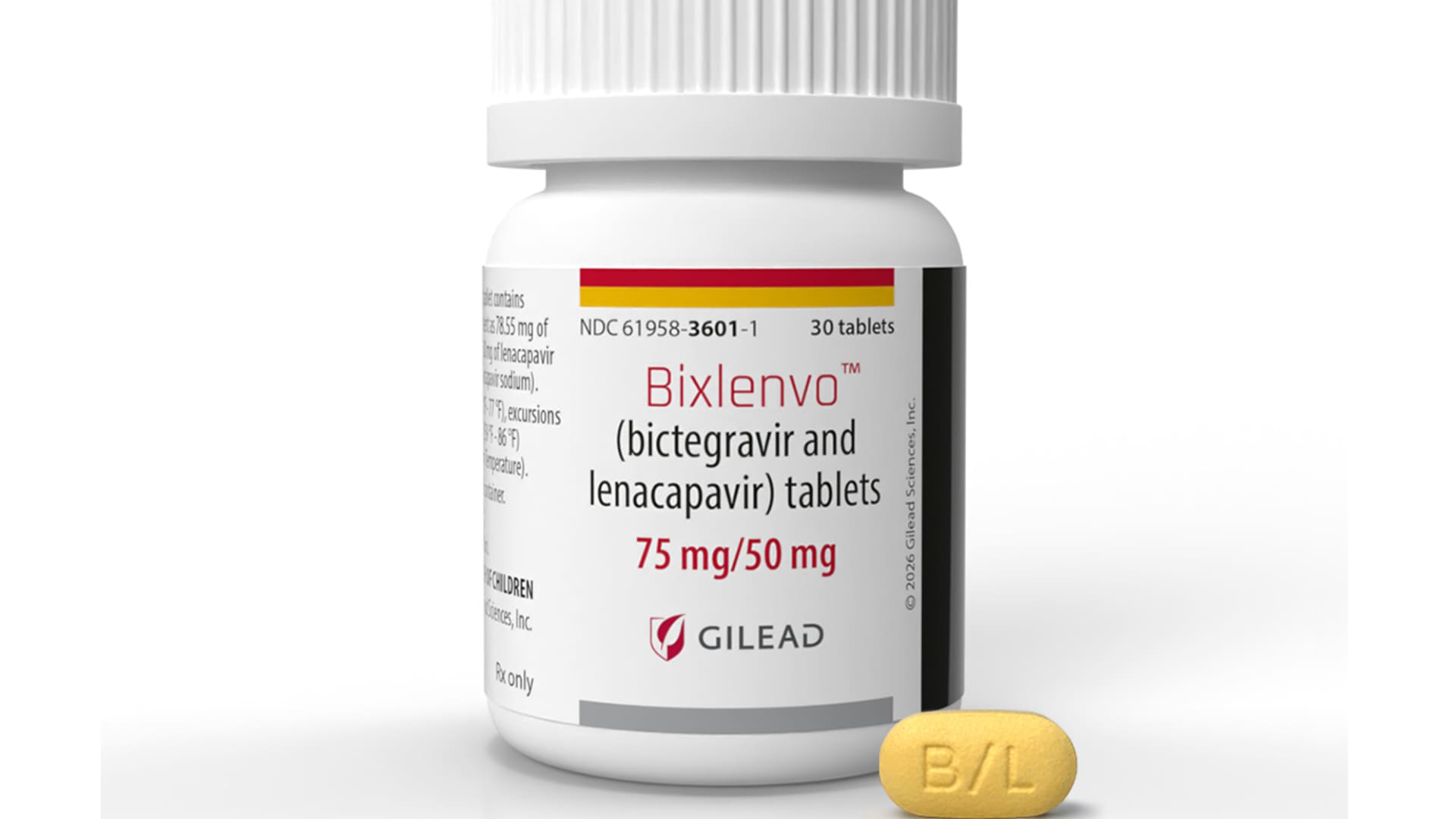
The tablet combines bictegravir, the backbone of Gilead’s blockbuster HIV pill Biktarvy, with lenacapavir, a first-in-class capsid inhibitor that has become a centerpiece of the company’s long-term strategy for HIV treatment and prevention. 

The approval makes the new pill the first single-tablet regimen available for adults with HIV whose virus is suppressed but are unable to use currently available one-pill treatment options, according to Gilead. That population accounts for an estimated 5% or more of individuals in the U.S. living with HIV, the company told CNBC. 

The list price of the pill before discounts or rebates is $4,595 for a 30-day supply, which is in line with other daily single-tablet HIV treatments, Gilead told CNBC. People without health insurance may be eligible to get Bixlenvo for free through Gilead’s patient assistance program, while those with commercial or private insurance may be able to receive co-pay support through another savings program, the company said.

Advertisement

“It fulfills an unmet need, particularly for individuals who are on complex regimens who just would not otherwise consolidate down to something really meaningful for them and prescribers,” Dr. Jared Baeten, Gilead’s clinical development and virology therapeutic area head, said in an interview ahead of the approval. 

“But it’s also meaningful for individuals who are seeking options for something new,” he continued. “We want to build options that give people the opportunity to choose something that’s going to work for them and work for them for the long haul.”

There is no cure for HIV or AIDS. But many people living with HIV can manage the disease by taking a single pill daily, a treatment plan that Gilead helped pioneer two decades ago. 

But some patients can’t use any existing one-tablet options like Biktarvy and require more complex combinations of medicines because of drug resistance from older therapies, side effects or interactions with other drugs, among other treatment challenges. Those patients may have to take multiple pills a day and adhere to complicated dosing schedules.

Advertisement

Baeten said that group tends to be older and have long treatment histories, saying “some had to take handfuls of pills around 25 years ago.” HIV also accelerates complications of aging, such as heart disease, diabetes and high cholesterol, in that age group, he added. 

“It’s incredibly meaningful to develop a medicine, in my perspective, for people aging with HIV,” Baeten said. 

The new pill is also aimed at people who are doing well on a single-tablet regimen, including Biktarvy, and want to switch to a new one. Baeten stressed that Bixlenvo does not aim to replace Biktarvy. 

For patients already doing well on Biktarvy, the rationale for switching is more about expanding treatment choices, he said. He emphasized that HIV care is highly individualized and that long-term success often depends on finding a regimen that best fits a patient’s preferences and lifestyle.

Advertisement

Baeten also said Bixlenvo is part of Gilead’s broader effort to build a range of HIV treatment options around lenacapavir, including daily pills, weekly oral regimens and long-acting injectable therapies. The goal is to give patients flexibility to choose how they want to manage the disease, he said.

“We’re going to build enough options that people can make the choice that’s going to work for them,” Baeten said. “Some people like the surety of once a day, and some people would want ‘set it and forget it’ once every six months.”

What Bixlenvo is like for patients

Gilead Bixlenvo drug

Courtesy: Gilead

Advertisement

Baeten called it “essential” to have more than one medicine to treat HIV because the virus can become resistant to an initial treatment.

Combining bictegravir and lenacapavir in one pill allows it to “hit the virus in two different ways” with “high efficacy [and] strong protection” against the virus becoming resistant to treatment, Baeten added.

The approval is based on two Phase 3 trials, which evaluated Bixlenvo in adults with HIV whose virus was already suppressed on treatment. That includes people who switched from Biktarvy or complex treatment regimens with multiple tablets. 

The first trial – ARTISTRY-1 – specifically enrolled patients with long treatment histories and drug resistance, many of whom were taking multiple HIV medications each day. Participants had a median age of 60 and were taking between two and 11 pills daily before switching to Bixlenvo. 

Advertisement

In both studies, the pill maintained viral suppression at rates comparable to patients’ previous regimens at 48 weeks and was generally well tolerated with no new safety concerns. The most common side effects reported in at least 2% of participants across the two trials was headache, nausea and diarrhea. 

Timothy Cameron, a 64-year-old retired Seattle resident who has been living with HIV for more than 40 years, was among the participants in the first Phase 3 trial.

When he was first diagnosed in the 1980s, doctors had few treatment options and little ability to measure how active the virus was. He spent decades cycling through HIV medications, experimental drugs and multi-pill regimens that often came with difficult side effects and eventually stopped working against his “hard-to-treat” virus.

“It was just like throwing darts at a dartboard,” Cameron said. “Because I had done so many drug trials and monotherapy, my virus had become super resistant.”

Advertisement

A few years before enrolling in the Gilead study, Cameron finally found a regimen that controlled his virus, though it required taking one HIV pill twice daily along with another medication. His doctor encouraged him to join the trial and switch to Bixlenvo, a once-daily pill Cameron described as “smaller than my pinky nail.”

The transition was seamless, he said. The drug maintained control of his virus without causing side effects and simplified his treatment routine by reducing the number of pills he takes and consolidating all of his medications into a single daily schedule.

For Cameron, who spent decades exhausting HIV treatment options as his virus developed resistance, among the biggest benefits may be that the two-drug regimen effectively controls his virus while exposing him to fewer medications. He said that gives him confidence that additional treatment options could remain available in the future if he ever needs them.

“It’s one less thing I’m putting in my body, and it preserves options if I need them,” Cameron said.

Advertisement
Choose CNBC as your preferred source on Google and never miss a moment from the most trusted name in business news.
Continue Reading

Business

Pizza restaurants: Why pizza-making robots are not cutting it

Published

on

A robot arm hovers over a pizza

The robot pizza-making business has, it’s true, been littered with sorry tales of overcooked promises and melting fortunes. Besides Picnic, other companies that have come and gone include Zume, external and Pazzi, which used, external robot arms to assemble pizzas, as well as Basil Street, external, a purveyor of pizza vending machines.

Although so-called fast food might seem an easy target for automation, it’s proved harder than many expected. Plus, bringing robots into pizza restaurants could take away entry-level jobs in the hospitality sector. Is the future really filled with robotic pizza?

“We haven’t yet seen any of the success stories materialise the way some people thought they would,” admits Sara Senatore, senior restaurants analyst at Bank of America. Her employer has financial interests in multiple high street pizza chains including Papa Johns and Domino’s.

Food preparation bots are sometimes clumsy – dropping ingredients in the wrong places at times, she explains. Conversely, “Humans are very efficient at making pizza.”

Advertisement

But Kindell, despite his frustrations with Picnic, is surprisingly undeterred. He is a fan of full automation. “I want to be able to walk up to, let’s say, a type of kiosk, put in your order, and it makes a fresh pizza,” he tells the BBC.

Kindell, who once made all his dough by hand – until an elbow tendon injury forced him to investigate using machines instead, is now working on his own version of a pizza-making robot.

He declines to share details but the contraption will make square pan-style pies and that the machine is inspired by the way 3D printers work. If things go well, he says he could have a fully operational version of the device by the summer of 2027.

Given that he admits he has “no experience” in robotics, I question why he would want to invest in such a dicey business. Kindell says that failed pizza robot companies have nonetheless generated useful data and made strides in developing their technology. It’s just a matter of time before someone gets these things to work, he insists.

Advertisement

On jobs, he claims that even “fully autonomous” pizza robots won’t threaten workers. Kindell previously used Picnic’s robots at T-Mobile Park, home of the Seattle Mariners, a baseball team.

Usually, he’d need about 10 people to make pizza in such a setup. With the robots that number fell to just two. But the other eight people were still employed, he says, in roles where they interacted with customers, and advertised the pizza around the stadium.

“We had so many more people able to hand out the pizza,” says Kindell. “It was so much faster.”

Advertisement
Continue Reading

Business

The Big Four Recession Indicators: Real Personal Income

Published

on

The Big Four Recession Indicators: Real Personal Income

The Big Four Recession Indicators: Real Personal Income

Continue Reading

Business

An Oil Catastrophe Was Averted in 2026. What If It Comes in 2027?

Published

on

An Oil Catastrophe Was Averted in 2026. What If It Comes in 2027?

An Oil Catastrophe Was Averted in 2026. What If It Comes in 2027?

Continue Reading

Business

Wedding stationers not standing still

Published

on

Wedding stationers not standing still

Stationery vendors are adapting to a changing market driven by tech and cost-of-living pressures.

Continue Reading

Business

Apple Confirms September 9 Keynote and Reveals Its Full Pre-Order Schedule

Published

on

Samsung Galaxy S27 Ultra Rumors Point to Unified Camera Design,

CUPERTINO, Calif. — Apple has officially confirmed its highly anticipated September event will take place Wednesday, Sept. 9, setting in motion a launch sequence expected to introduce the iPhone 18 Pro, iPhone 18 Pro Max and the company’s first foldable device.

Apple sent invitations to members of the press and select guests Wednesday, Aug. 26, confirming the keynote date alongside the tagline “Surprise and shine” and an accompanying image. The keynote is scheduled to begin at 10 a.m. Pacific time, 1 p.m. Eastern and 6 p.m. British time, and will be held at the Steve Jobs Theater on Apple’s Cupertino campus.

A date chosen around the calendar

This year’s scheduling carried unusual complexity due to how the calendar fell in 2026. Labor Day landed on Monday, Sept. 7, and Apple has historically avoided holding its iPhone event on the day immediately following the holiday, ruling out a Tuesday, Sept. 8 date. That left Wednesday, Sept. 9 as the most likely option, a prediction that multiple outlets, including Forbes and MacRumors, had made in the weeks leading up to Apple’s official confirmation.

Advertisement

The Sept. 9 date also matches the exact day Apple held its iPhone event in each of the past two years, extending a pattern of holding its flagship product reveal during the second week of September. Bloomberg’s Mark Gurman had also flagged the date in his Power On newsletter earlier this month, describing Apple’s preparations as being in full swing ahead of what he called a big event.

What’s expected on stage

The centerpiece of Wednesday’s keynote is expected to be the debut of the iPhone 18 Pro and iPhone 18 Pro Max, alongside Apple’s first foldable iPhone, a device widely viewed as the company’s most significant new hardware category in years. Reports have suggested the foldable device could start at around $2,000, with pricing potentially climbing past $2,500 for higher storage configurations.

Apple is expected to stick with familiar display sizes for the standard Pro lineup, with the iPhone 18 Pro featuring a 6.3-inch display and the iPhone 18 Pro Max featuring a 6.9-inch display, consistent with the current generation. Notably, Apple is not expected to release a standard iPhone 18 model alongside the Pro lineup this year; that device is anticipated to arrive separately in early 2027.

Advertisement

Beyond the phones, the event is expected to include the introduction of two new Apple Watch models. Apple has already addressed part of its fall hardware lineup separately, having unveiled new Mac computers on Tuesday, Aug. 25, ahead of the September keynote.

The pre-order timeline, with a notable shift

Perhaps the most closely watched detail surrounding this year’s launch has been the timing of pre-orders, given an unusual calendar conflict. Apple traditionally opens pre-orders on the Friday immediately following its September keynote. This year, however, that Friday falls on Sept. 11 — the 25th anniversary of the Sept. 11, 2001, terrorist attacks in the United States, a date Apple has respectfully avoided using for major announcements or sales activity in the past.

As a result, pre-orders for the iPhone 18 Pro lineup are widely expected to shift to Saturday, Sept. 12 instead. If Apple follows its typical pre-order timing pattern from past launches, orders would likely open at 5 a.m. Pacific, 8 a.m. Eastern and 1 p.m. British time that day.

Advertisement

Following the pre-order window, the new devices are expected to become available in stores and begin shipping to customers on Friday, Sept. 18 — one week after pre-orders open, consistent with Apple’s typical rollout cadence in recent years.

A launch two weeks in the making

Apple’s decision to send invitations on Aug. 26 also followed a pattern industry watchers had anticipated. The company has announced its annual iPhone event exactly two weeks in advance for four consecutive years, according to 9to5Mac’s Zac Hall, making late August the strongest predicted window for this year’s invitations even before they went out. That timing held true, with Apple issuing its formal invite precisely 14 days ahead of the Sept. 9 keynote.

Why this year’s event carries extra weight

Advertisement

This year’s launch arrives with added significance beyond the usual annual iPhone refresh. The event is expected to double as one of the final major keynotes overseen under Apple’s current leadership transition, with incoming Chief Executive John Ternus set to formally take over the role on Sept. 1, just over a week before the keynote takes the stage. Outgoing CEO Tim Cook is transitioning to the role of executive chairman after 15 years leading the company.

The introduction of Apple’s first foldable device alongside that leadership shift has raised the stakes considerably for what is typically a predictable annual product cycle, with analysts and industry watchers framing the September event as a pivotal moment both for Apple’s product lineup and for its next generation of corporate leadership.

With the keynote date now officially locked in, attention turns to the specifics Apple will reveal on stage Sept. 9, including final pricing, technical specifications for the foldable device, and confirmation of the broader software updates expected to accompany the new hardware. Apple has not released an official agenda beyond confirming the date, time and location of the event, meaning many of the details currently circulating remain based on analyst predictions and industry reporting rather than direct company confirmation.

For consumers planning to purchase the new devices, the coming weeks are expected to follow a now-familiar rhythm: an announcement on Sept. 9, pre-orders opening Sept. 12, and devices reaching customers’ hands by Sept. 18 — assuming Apple’s typical launch cadence holds for a third consecutive year.

Advertisement
Continue Reading

Business

ServiceNow, Inc. (NOW) Presents at Deutsche Bank 2026 Technology Conference Transcript

Published

on

OneWater Marine Inc. (ONEW) Q1 2026 Earnings Call Transcript