Samsung has just announced the Galaxy S26 FE (Fan Edition), the affordable handset that offers an “accessible entry” to Galaxy AI.
But how does the Galaxy S26 FE compare to the slightly pricier Galaxy S26? Does the FE borrow the perfect amount of features from the Galaxy S26?
We’ve compared the specs of the Galaxy S26 to the Galaxy S26 FE below. If you’re not sold on a Samsung handset then visit our list of the best smartphones and best Android phones.
Price and Availability
The Samsung Galaxy S26 FE is the cheapest of Samsung’s 2026 S-series, with a starting price of £699 for the 128GB variant which rises to £799 for 256GB.
Advertisement
SQUIRREL_PLAYLIST_10208713
Advertisement
In comparison, the Galaxy S26 starts at £879 – however it comes with 256GB storage as standard. That means that actually, it’s only £80 more than the nearest S26 FE equivalent.
SQUIRREL_PLAYLIST_10208273
Advertisement
Samsung Galaxy S26 has a 10MP telephoto lens
Both the Galaxy S26 and S26 FE are equipped with a 50MP main lens and a 12MP ultrawide, however they differ with their telephoto lenses. While the Galaxy S26 has a 10MP telephoto, the FE is equipped with a lower-res 8MP. This seems like a shame, as we concluded that the Galaxy S26’s telephoto’s digital cropping wasn’t as effective, which is due to the limits of the 10MP resolution.
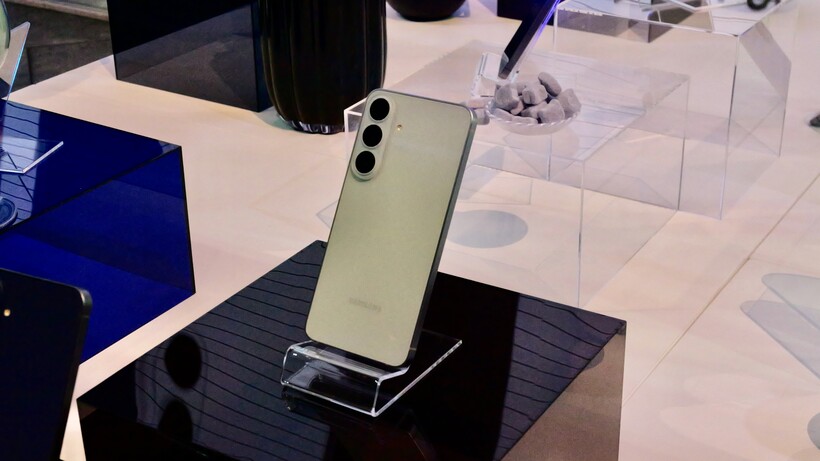
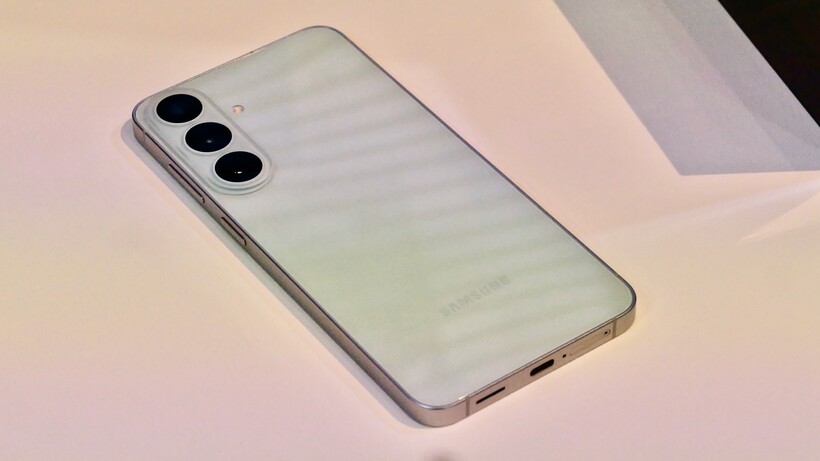
Samsung Galaxy S26 FE. Image Credit (Trusted Reviews)
Otherwise, the use of the same main and ultrawide camera hardware as the S26 is unsurprising but still somewhat disappointing. It’s not that we found the S26 to be bad at photography – far from it – but the overall set-up just feels less exciting and somewhat outdated, especially when compared to some of the best camera phones on the market.
Galaxy S26. Image Credit (Trusted Reviews)
Advertisement
Despite its lower resolution telephoto camera, Samsung promises that the S26 FE offers advancements within its hardware, including 3x optical zoom, up to 30x space zoom and sharper details between 1x and 2x zoom range.
We’ll have to wait until we get our hands on the S26 FE to see how its cameras really perform. However, considering it borrows many of the same features as the S26, we’d expect a similar experience.
Galaxy S26 FE has a larger battery
Samsung phones are never praised for having large batteries, and both the S26 and S26 FE are no exception – although the latter does have a larger cell at 4900mAh compared to 4300mAh. This, Samsung promises, means we can expect the S26 FE should offer around 29-hours of media playback time.
While the Galaxy S26’s 4300mAh cell might not sound particularly impressive, we should note that we found it easily saw us through a day without reaching low battery. In fact, even on busy days we ended the day with 40% left in the tank.
Galaxy S26 comes with 12GB RAM and 256GB storage as standard
As touched upon earlier, the base Galaxy S26 FE comes with just 128GB storage. That’s disappointing, as many brands have increased their base models to 256GB to make up for larger apps – even the affordable iPhone 17e starts with 256GB.
Advertisement
So, although at first glance you might think the base Galaxy S26 FE is a lot cheaper than the Galaxy S26, you’re actually getting half the amount of storage for that price. In fact, if you upgrade the FE to 256GB, then it’s only £80 less than the Galaxy S26.
Galaxy S26 FE. Image Credit (Trusted Reviews)
Not only that, but the Galaxy S26 FE comes with 8GB of RAM while the S26 is equipped with a healthier 12GB which should mean the phone is able to run faster and handle multitasking better – though we can’t confirm this as we haven’t reviewed the FE yet.
Both offer Galaxy AI
Samsung has hailed the Galaxy S26 FE as being an “accessible entry to Galaxy AI”, and is subsequently equipped with the whole suite of Galaxy AI tools. There’s enhanced photo and video editing capabilities, including Audio Eraser that reduces background noise on both user-created videos and playback during streaming, a more personal Now Brief with new daily updates from your Galaxy Watch and, of course, access to Gemini Live.
Advertisement
Otherwise, you’ll benefit from familiar and actually useful AI-powered tools including Circle to Search, AI Document scanning and more.
Advertisement
Galaxy S26 FE is the first S-series to see Android 17
Following on from the above, some of the newer Galaxy AI tools, such as the more personalised Now Brief and also multi-object recognition within Circle to Search can be found specifically within One UI 9, which runs on Android 17. Other than the Z Flip and Z Fold 8 series, the Galaxy S26 FE will be the first to see Android 17 and, therefore, the new suite of tools.
However, we should note that they will eventually trickle down to the rest of the Galaxy S26 series.
Advertisement
Early Verdict
We’ll hold off from giving a conclusive verdict until we actually review the Galaxy S26 FE. However, judging by its specs and price tag, we’d likely argue that the Galaxy S26 makes more sense than the FE.
Sure, you’ll benefit from a larger battery and access Android 17 sooner, but the Galaxy S26 comes with 256GB of storage as standard and promises an overall better camera set-up.
We’ll be sure to update this versus once we review the Galaxy S26 FE.
Google is imposing new memory-use limits on Android apps as the AI data center boom contributes to a broader memory chip shortage that could leave lower-cost phones with less RAM. Developers will have until February 2027 to meet new thresholds for memory and bitmap usage. To aid developers, Google is adding tools to flag apps that exceed the limits and help prevent slowdowns and crashes. TechCrunch reports: The company explains that the mobile industry is now facing “significant hardware supply constraints that are altering device memory availability,” which can then, in turn, affect the consumer’s experience with their devices. To address this, Google is now establishing new performance thresholds across several areas, like dynamic memory usage and bitmap usage. In addition, Google is adding code optimization requirements designed to prevent things like app slowdowns and crashes related to performance.
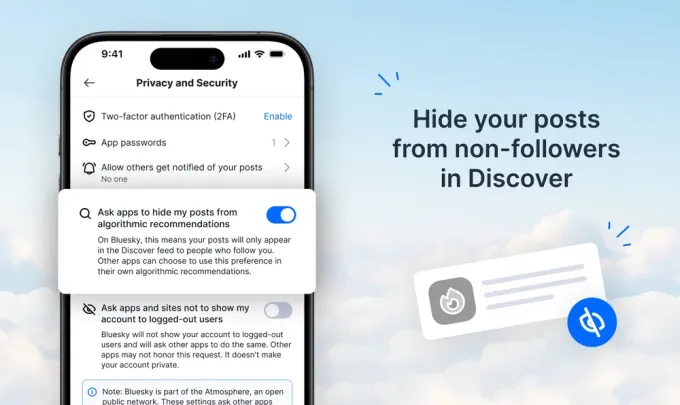
After adding support for longer videos just yesterday, open social network Bluesky on Thursday introduced a new algorithmic opt-out feature that allows users to stop their posts from appearing in the app’s main Discover feed.
That algorithmic feed can currently surface any post on Bluesky’s network, as posts on the network are public by default.
To be clear, this latest change isn’t a way to make posts private — Bluesky is still working on rolling out support for private data at the protocol level. Instead, the feature simply makes a user’s public posts less discoverable to people outside their existing personal network.
The company says it created the feature because not everyone using its social media site wants to go viral. Sometimes, people just want to post for their followers without having their words exposed to larger crowds.
Advertisement
To opt out of having posts shown in the Discover feed, users can toggle on a new option in the app’s Privacy and Security settings. The change can take up to an hour to fully take effect, the company says.
Image Credits:Bluesky
It’s also worth noting that Bluesky’s implementation of the feature extends beyond its own app.
Instead of just being a setting that applies only within Bluesky, the preference is recorded at the account level. That means the choice travels with the user, even if they’re posting from another app that is powered by the same underlying protocol that Bluesky uses, AT Proto.
However, while those other apps have access to this information, they still have to choose whether to respect it.
The Honda Goldwing is one of the more famous motorcycles ever produced. It’s known for its reliability and comfort, but also for being one of the first motorcycles Honda rolls out new technology with. It was the first to have a factory-installed airbag as well as integrated GPS, and is now largely associated for being a sort of two-wheeled RV with how many creature comforts it supports for long-distance riders. [Matt] has a Goldwing of his own, and is taking that RV-like feeling to the extreme with a rooftop camper for this motorcycle.
Of course, motorcycles don’t have roofs, but if this Goldwing had one this camper would definitely be above that. Goldwings are already heavy enough without an enormous weight dramatically increasing the center of gravity, and [Matt] certainly had his problems with that along the way. But before this adventure he had modified it into a hill climber, removing a lot of the extraneous equipment from it. Attaching some metal frame and a lightweight camper shell to it didn’t seem like too much of a stretch from there, so he got to work with a welder. At the end he has a box that’s just barely big enough for him to sleep in but is more or less functional as a camper.
Perhaps unsurprisingly, [Matt] dropped this more than once on its maiden voyage, and one of those falls damaged a wiring harness that caused his battery to drain in the night. Luckily he was not too far from home on the test drive. We’d tend to think that this camper won’t be one that [Matt] keeps working on (although we’d imagine a tricycle kit might solve his center of gravity issues) but since he’s built some other interesting campers in the past we’re not too sure we’d count this one out just yet.
Bluetooth trackers have been life-changing for keeping tabs on my valuables — even for mundane items that I always seem to lose, like umbrellas — and I now can’t imagine a world without them. Options such as the Apple AirTag (first and second generations) and Samsung Galaxy SmartTag 2 dominate the sector, but thankfully there are more affordable alternatives that work just as well.
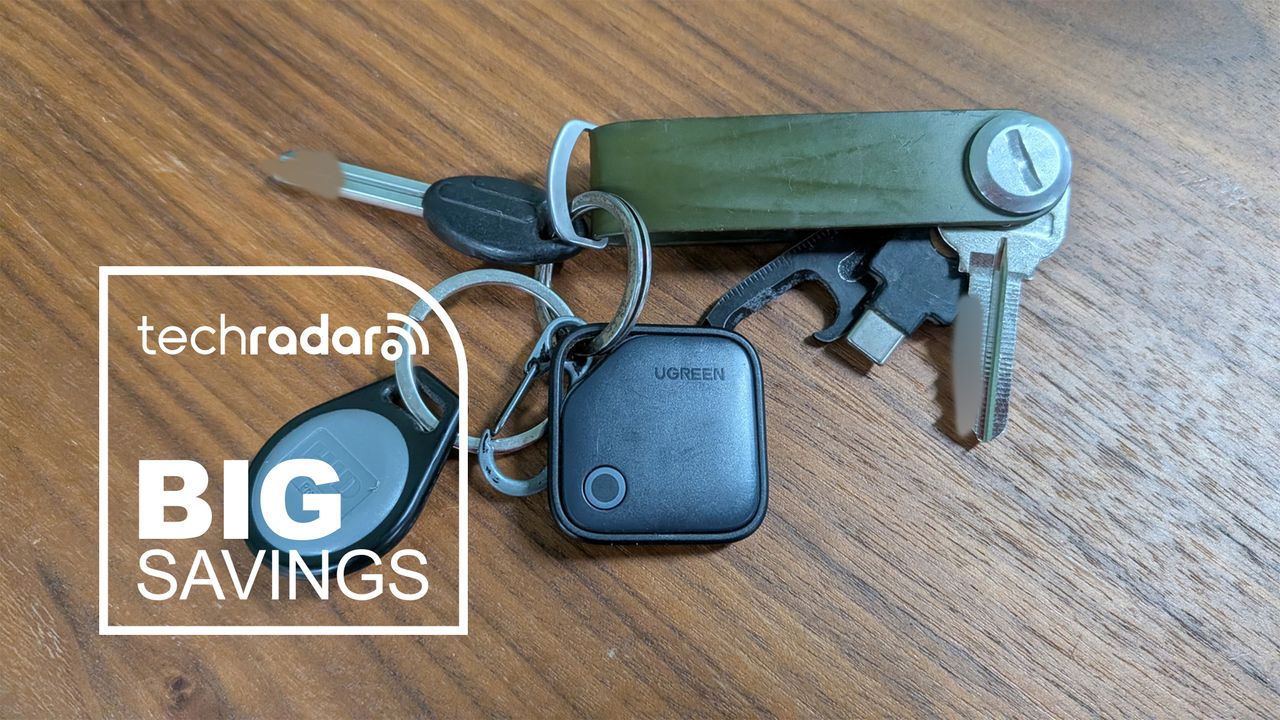
So, when my housemate kept losing their keys, I felt compelled to reveal the benefits of owning a Bluetooth tracker. That’s when I stumbled upon a deal on the Ugreen FineTrack Duo 4-pack on Amazon for 39% off and immediately bought it so I could pair one of them with the newly cut house key before handing it over.
And my housemate hasn’t lost their keys since! Indeed, I’ve found the Ugreen FineTrack to be excellent value compared to Apple AirTag (which I also use), and I particularly appreciate the built-in notch that lets you directly attach it to a keyring without needing a separate split ring or any other accessory.
I was surprised to learn how loud they are as well — I can certainly vouch for Ugreen’s 80dB-100dB claim, which is louder than the AirTag’s 60dB (or 40dB inside a bag, which is barely louder than a refrigerator hum). When you’re at the other end of a house and need to find a mislaid item, that extra loudness is priceless.
Advertisement
The Ugreen FineTrack Duo lets you instantly locate your valuables via Apple Find My or Google Find Hub, and you can make the tracker play a sound when you are within Bluetooth range. You also get a notification when the tag moves out of range, and there’s even a ‘Lost Mode’ that can be activated, whereby you supply your contact information, which someone else can view if they recover it.
The battery is rated for one year and charges via USB-C, so you won’t need a wireless magnetic charger, though the protective dust plug over the charging port isn’t attached to the FineTrack Duo and could easily be lost.
Amazon sells iOS-only and Android-only models that are slimmer, but there are bundles too, including this one with the card-shaped wallet finder that’s also available for AU$82.12.
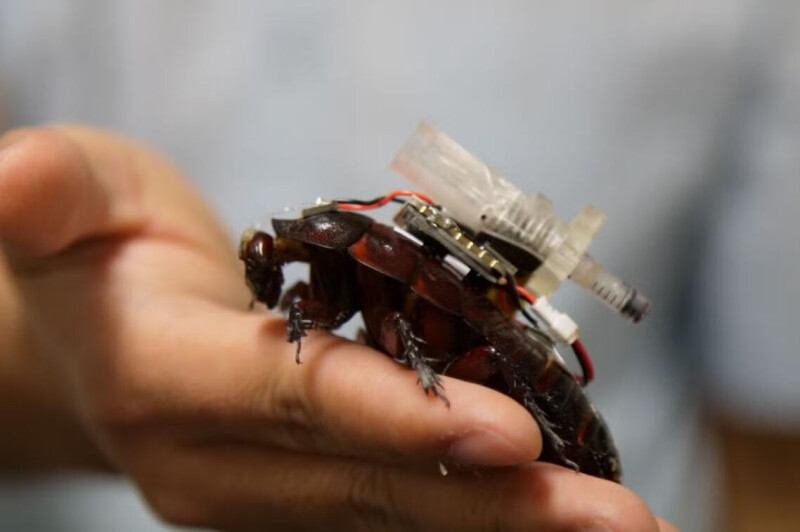
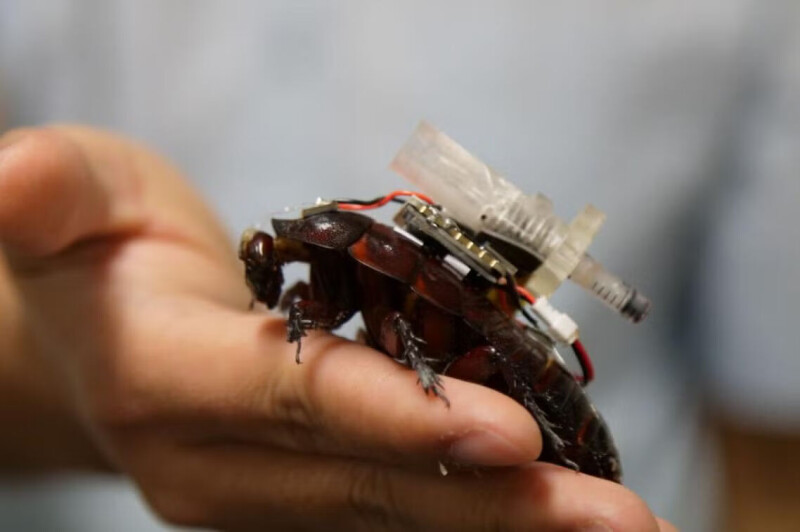
Just what you want crawling through the rubble to rescue you: A swarm of remote-controlled cockroaches with syringe-shooting guns strapped to their backs
Picture this: You’ve just undergone one of the most harrowing experiences of your life, and you’re trapped in the rubble of a collapsed building. You’re injured, air is running out, and human rescuers can’t reach you. But crawling through the rubble to administer life-saving drugs and reassure you comes the last thing you’d expect: a swarm of cyborg cockroaches bearing tiny syringes.
Advertisement
Unfortunately for those who’d rather find solace in the arms of a fluffy, drooly St. Bernard, this tale is anything but science fiction. It’s not even a new idea: Cockroaches fitted with electronics that allow rescue workers to control their movements from a distance have been on the research docket for biotech researchers for some time. What’s new in this latest experiment from researchers at Australia’s University of Queensland is outfitting the, erm, little buggers with devices remote rescuers can use to shoot a drug dart into trapped patients.
“A lot of people might not like the sight of a giant cockroach scurrying towards them, but if you’re trapped in rubble or stuck in a cave and need help, it could make a real difference between life and death,” PhD candidate and lead research paper author Hai Nhan Le told the University of his phobia-triggering project.
Giant is right – the species chosen for the project, the giant burrowing cockroach, is the world’s heaviest roach species, and can grow up to 8 centimeters in length, or around 3.1 inches. Known to be docile, they’re popular pets in their native Australia, and – lucky for anyone coming face to face with one while trapped in a pile of rubble – they’re known to be relatively clean and disease-free, too.
Advertisement
The giant burrowing cockroach was chosen for its size, per the paper, as they needed to be large enough to “integrate centimetre-scale apparatuses for … real world scenarios.”
The “paraborgs,” as the team calls their subjects, were outfitted with electrodes that gave researchers the ability to make the roaches turn left and right, control their speed, and immobilize them in order to deliver drugs without the roach moving while scientists tried to take aim. Then they were fitted with various add-ons specific to their roles in the paramedic swarm –one built to search, another equipped with a single launchable drug syringe, for example.
Outfitting the roaches with their cyborg backpacks isn’t fatal, and the team said that their subjects were able to live just as long as other roaches once their harnesses were removed.
Advertisement
*shudder* Well, at least they’re good at their jobs
The Queensland team had overwhelming success in getting their paraborgs to end up where they wanted them – 100 percent successful, in fact, the paper said.
As for drug injection, the auto-injection mechanism succeeded 90 percent of the time, and paraborgs able to get within 15 cm of a target (5.9 inches) were able to successfully inject drugs 95 percent of the time.
The only trouble spot for the experiment was getting the robo roaches to sit still, with only a 72 percent success rate in stabilizing the cockroaches for injection targeting. That’s still a pretty good rate of success, leaving the team to predict that swarms of specially-outfitted paraborgs could be swarming over disaster sites in a matter of a few short years.
“Some could carry cameras and environmental sensors, while others could carry specialised emergency or medical equipment,” UQ robotics engineering lab director and lecturer Dr. Thang Vo-Doan said of the project. “Hopefully, within the next 5 to 10 years, we could see cyborg insect rescue teams deployed to help people in real emergencies.”
Advertisement
Hopefully large bugs bearing medical aid isn’t something that’ll send you into a panic. ®
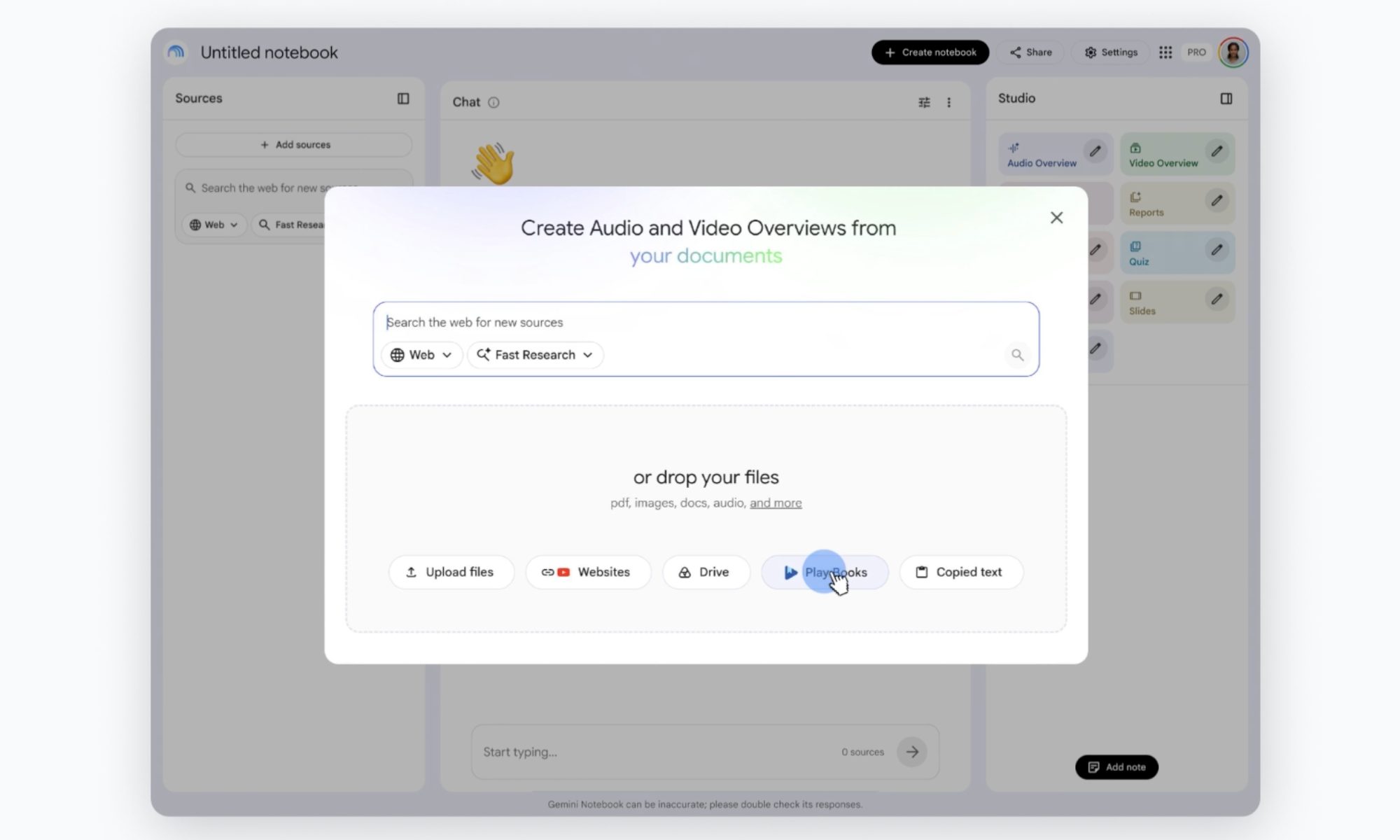
Gemini Notebook, formerly known as NotebookLM, is getting a new feature that will let you directly access and cite information from the books you own. Fittingly, Google refers to this new feature as Expert Intelligence, and the whole idea behind it is pretty clear. Instead of citing information from the sources you upload, or pull from the internet, you can now also extract knowledge from digital books you’ve purchased.
Of course, you must own the book after purchasing it from the Google Play Books library. For now, Google is offering one free book to users in the US as part of the launch campaign, with a caveat — “while supplies last.” At the moment, Expert Intelligence is only available in the Gemini Notebook app and its web dashboard, but down the road, Google says that it will also appear within the core Gemini app and AI mode in Search.
Google
The broad idea behind expert intelligence is to combine what you can already do with Gemini, and expertise sourced from your favorite books. So, if you’re asking Gemini to create a meal plan that is based entirely on chicken and spinach, you can ask the AI assistant to look for relevant recipes in one of Martha Stewart’s cookbooks that you own. You can use these books as a source and turn them into Infographics, Audio Overviews, and Quizzes, among other formats.
Google
Expert Intelligence is available starting today, and it’s open for books published by big names like Bloomsbury, De Gruyter Brill, Johns Hopkins University Press, Macmillan Publishers, O’Reilly Media, and Penguin Random House, covering over 100,000 titles.
Google
Google has also partnered with a handful of authors to create Featured Notebooks, which offer additional insights apart from their books. The feature is pretty neat, but it’s not an open buffet. For example, if you create a shared Gemini notebook, the other people who have access to it will also have to own or purchase a copy of that book to fully use Expert Intelligence.
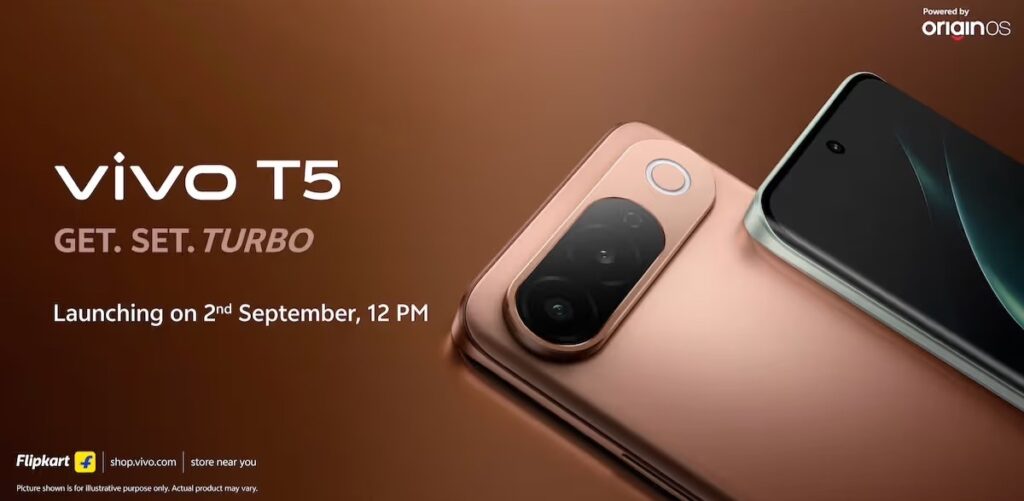
Vivo has started teasing its upcoming Vivo T5 5G ahead of its India launch. The smartphone will expand the company’s existing T5 lineup and bring several upgraded features. Vivo has confirmed a 144Hz display, MediaTek Dimensity 7500 Turbo chipset, and a 7,050mAh battery for the handset. The company is expected to reveal more specifications before the phone officially launches.
Vivo T5 5G India Launch Date and Design
Vivo has confirmed that the T5 5G will arrive in India on September 2 at 12 PM IST. It is expected to be available in two colors: Royal Bronze and Silver Green. In terms of appearance, Vivo has used the Skyline Design, with a horizontal camera setup on the upper rear side. The module also includes two camera lenses and an LED light ring. Vivo has kept the phone’s thickness at 7.9mm and claims it could offer the slimmest 3D curved display in the Rs. 34,999–Rs. 49,999 segment. A dedicated Flipkart launch page is already live, suggesting the handset could be available on Flipkart and Vivo’s online store.
Vivo has equipped the T5 5G with a 1.5K 144Hz 3D curved AMOLED display. A centered hole-punch cutout will house the selfie camera. For performance, Vivo has opted for the MediaTek Dimensity 7500 Turbo chipset. It could also feature a 7,050mAh battery. Details about its RAM and storage variants remain unknown for now. Vivo is likely to use OriginOS on the handset, with more details expected before launch.
Google is introducing new network security protections in Android 17 to strengthen connection privacy, address cellular vulnerabilities, and protect the privacy of users’ home networks.
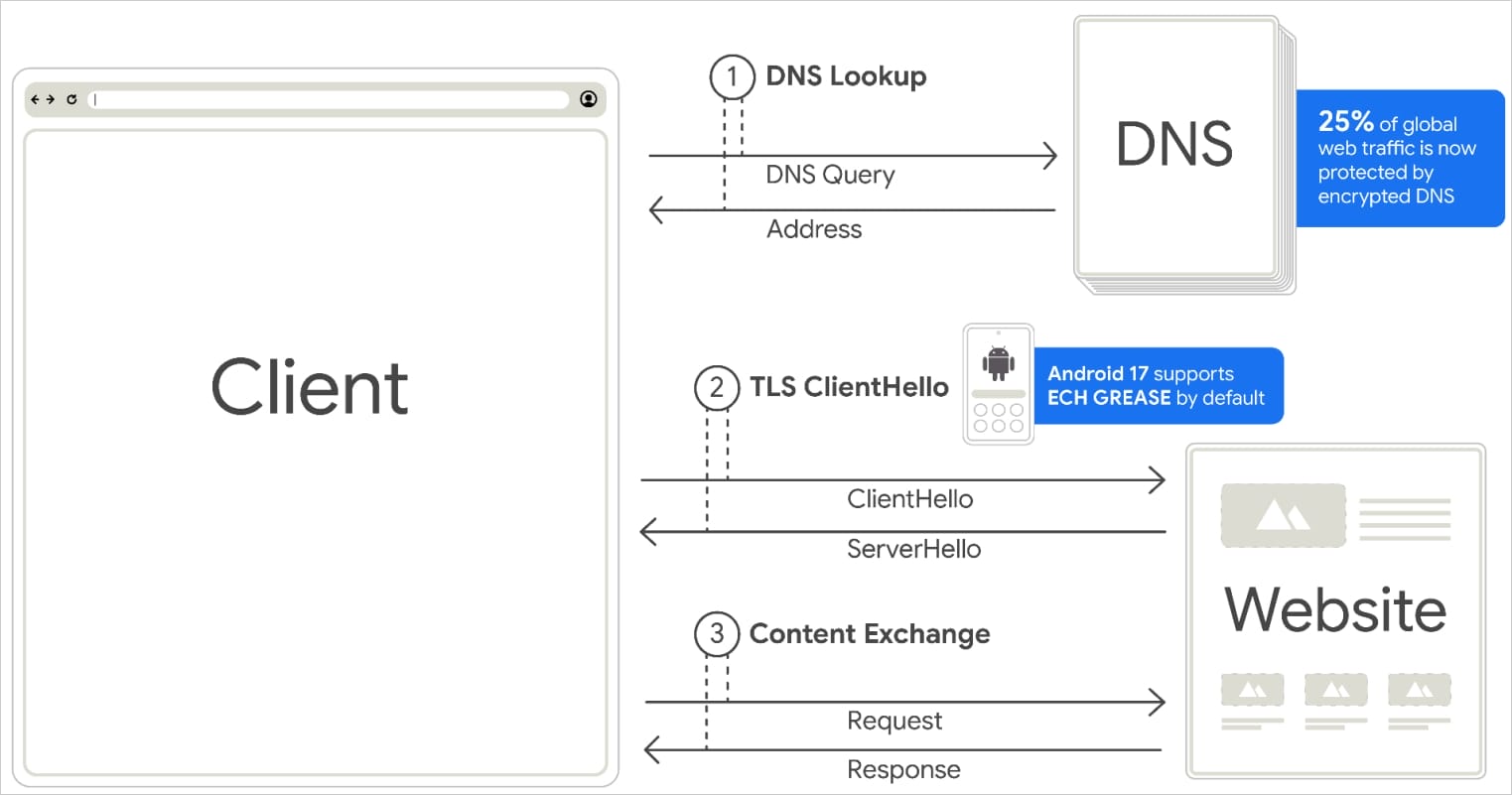
Android 17 adds support for Encrypted Client Hello (ECH), a new privacy standard that operates in conjunction with private DNS to hide profiling metadata, including visited domain names.
ECH acts as a privacy extension for TLS, the protocol that secures HTTPS connections, encrypting the opening part of the TLS handshake that reveals the contacted hostname via the Server Name Indication (SNI).
Even if the connection to a website or service is secure, internet service providers (ISPs) and Wi-Fi operators can still see the destination, which can be collected for commercial profiling purposes.
Android users benefit from ECH when browsing with Chrome 117 and later or Firefox 119 and later, but Android 17 incorporates the protection at the platform level.
Advertisement
“This new privacy standard works in tandem with private DNS to obscure the domain names you visit, hiding metadata that can be used to profile you,” reads Google’s announcement.
“By encrypting the destination website name from the very start, ECH helps ensure that, for supported websites and apps, network providers and network snoopers can no longer easily see which websites or apps you are accessing.”
ECH will be enabled by default for apps targeting Android 17, provided they use a compatible networking library, such as the latest versions of OkHttp, WebView, or HttpEngine.
ECH diagram Source: Google
Google explains that, on servers that support ECH, Android will now encrypt the hostname.
On servers that don’t support the protection system, Android will send a fake ECH-looking field, called ECH GREASE, so real ECH connections don’t stand out, though the hostname is still visible.
Advertisement
Jigsaw, Google’s internet privacy and anti-censorship technology unit, tested ECH GREASE against the top 10,000 domains and across 740 internet providers in 202 countries, finding no site-loading issues or unexpected network blocks.
WiFi protections and 2G blocks
Beyond rolling out broader support for ECH on Android, Google also announced a few more important network protections that improve user security and privacy through their combined use.
The first is adjustments to Local Network Protection that now require apps to obtain permission before scanning for or connecting to devices on the user’s local network.
The second is that Android 17 now enables Certificate Transparency by default, requiring website certificates to appear in public logs, hence making the use of forged certificates more evident.
Advertisement
Google also announced that participating mobile operators will now be able to turn off 2G automatically for subscribers, reducing their exposure to SMS blasters and rogue base stations that can deliver malicious messages or capture sensitive traffic from nearby devices.
Overall prevention scores can hide what happens after initial access. Once attackers are using valid credentials, prevention drops sharply.
The Blue Report 2026 measures defenses technique by technique across 338 million simulations run in customer production environments.
Samsung has just released the new Samsung Galaxy S26 FE, but how does it really compare to the Galaxy S25 FE?
Whether you’re sporting last year’s S25 FE and are debating whether to upgrade or not, or you simply need a new and affordable Android phone, you’ve come to the right place. We’ve compared the specs of the Galaxy S26 FE to the Galaxy S25 FE to help you decide between the two.
The Samsung Galaxy S26 FE is the cheapest of Samsung’s 2026 S-series, with a starting price of £699 for the 128GB variant which rises to £799 for 256GB.
Advertisement
SQUIRREL_PLAYLIST_10208713
Advertisement
The year-old Galaxy S25 FE has a slightly cheaper starting price of £649 for the 128GB iteration. We have seen the Galaxy S25 FE dip in price over the past year however, and even saw the handset drop to under £450 earlier this month on Amazon.
SQUIRREL_PLAYLIST_10207934
Advertisement
Same camera hardware, but Galaxy S26 FE promises a few upgrades
Judging by the hardware alone, there’s not really much to say about the Galaxy S26 FE’s cameras that hasn’t already been said about the Galaxy S25 FE, as both are equipped with the same 50MP main, 12MP ultrawide and an 8MP 3x telephoto zoom lens.
That’s not to say the line-up isn’t solid. In fact, we concluded that the Galaxy S25 FE performed well across most lighting conditions and we were rarely left disappointed with its ability. While the 8MP telephoto undoubtedly has its limitations, it’s a welcome addition for getting a touch closer to a subject, though it obviously can’t compete with many of the best camera phones.
Galaxy S26 FE. Image Credit (Trusted Reviews)
With this in mind, it’s fair to say that we expect the Galaxy S26 FE to offer a similar level of performance to the Galaxy S25 FE.
Advertisement
Having said that, Samsung does promise the Galaxy S26 FE sees a few new tricks. Like the rest of the S26 series, the Galaxy S26 FE supports Horizontal Lock with the Super Steady feature that allows videos to stay smooth, even with rotations up to 360°. There’s also Pro Visual Engine improvements, such as sharper and less graining nightography videos and enhanced noise reduction for video content too.
Advertisement
Galaxy S26 FE promises a longer battery life – but not by much
Both handsets are equipped with a 4900mAh cell, supports 45W wired and 15W wireless charging. However, Samsung has managed to eke out an additional hour’s worth of life with the Galaxy S26 FE, with a promise of up to 29 hours of video playback compared to up to 28.
Galaxy S25 FE. Image Credit (Trusted Reviews)
But what does that mean for real-world users? Essentially, we found that the S25 FE could easily support us through a busy day, and still had around 20% of juice left in the tank. So, although it’s definitely not a two-day device, it should alleviate any battery anxiety you might have.
Galaxy S26 FE is the first S-series to see Android 17
The Galaxy S26 FE benefits from being the first S-series handset to see Android 17, and will come with the OS and Samsung’s One UI 9 installed. That means the Galaxy S26 FE will be among the first to benefit from Samsung’s new Galaxy AI tools including a more personalised Now Brief, Now Nudge which understands on-screen context and provides suggestions and Circle to Search with multi-object recognition too.
At the time of writing, these new features are reserved for the Z Flip and Z Fold 8 series.
Advertisement
Advertisement
Image Credit (Trusted Reviews)
Both will see seven years of updates
Samsung is undeniably generous with its software support, and promises up to seven years of updates for most of its handsets. That means the Galaxy S26 FE will benefit from Android OS and security upgrades up to Android 24 – in 2033.
Samsung also gave the same promise to the Galaxy S25 FE when it launched last year.
Early Verdict
There aren’t a lot of differences between the Galaxy S26 FE and the Galaxy S25 FE, which makes upgrading from the older phone a much harder recommendation. Not only that, but we’d also argue that there’s probably little reason to splurge on the newer Galaxy S26 FE when the Galaxy S25 FE can be found for a bargain price.
We’ll update this versus once we review the Galaxy S26 FE.
The Manchester Airports Group (MAG) disclosed that hackers breached its systems and stole customer data, including Wi-Fi sign-ups from Manchester, Stansted, and East Midlands airports.
The intruder did not access customer payment details, and the attack had no impact on airport operations, the company said.
A statement from the company today notes that the exfiltrated data also “relates to car park, lounge and Fast Track bookings.” The list of compromised details includes customers’ email addresses, phone numbers, vehicle registration numbers, and postcodes.
“The incident has not resulted in any operational disruption,” assured the organization, adding that “Airport operations remain unaffected and customer parking services continue to operate normally.”
Out of an abundance of caution, MAG has temporarily suspended its online “Manage My Booking” service and is instead directing travelers to use its phone line.
Advertisement
MAG is the UK’s largest airport operator, and owner of Manchester, London Stansted and East Midlands airports, which together handle over 66 million passengers yearly.
After discovering the intrusion, MAG says that it moved quickly to contain it, restricting access to the affected systems, engaging with external experts, and notifying law enforcement.
Potentially exposed customers are advised to remain alert for suspicious communications and avoid clicking on links arriving via email or SMS.
Advertisement
MAG stresses that it will never ask customers for payment card information, banking details, or passwords. Customers should reject and report to the authorities any attempts to obtain personal, financial, or other sensitive information.
The company says it has contacted impacted customers directly, but did not disclose the number of affected individuals.
Local media reported that data of up to 8.9 million travelers may have been exposed, citing private MAG statements; however, BleepingComputer has not been able to confirm the figure.
Advertisement
At the time of writing, no ransomware or data extortion groups have claimed the attack publicly.
Overall prevention scores can hide what happens after initial access. Once attackers are using valid credentials, prevention drops sharply.
The Blue Report 2026 measures defenses technique by technique across 338 million simulations run in customer production environments.
































































You must be logged in to post a comment Login