
Crypto World
An XRP treasury company backed by Ripple is a shareholder vote away from Nasdaq

The SEC cleared the paperwork for Evernorth’s merger with a shell company, setting up a Sept. 30 vote and a listing under the ticker XRPN.



Blockchain gaming platform The Sandbox has pledged to repay eligible SAND holders 1:1 after an Aug. 21 bridge exploit drained 14.744 SAND, worth about $700,000, from an Ethereum vault.
On Thursday, the company published a post-mortem, saying users who legitimately held bridged SAND on Base or BNB Smart Chain before the attack will receive an equal amount of Ethereum-based SAND. Compensation will come from The Sandbox treasury, with no new tokens minted.
The claims process is expected to open within two weeks and remain open for another two weeks. Two centralized exchanges hold more than 72% of eligible balances and will distribute compensation directly to their affected customers, according to The Sandbox.
The project said the attacker exploited a configuration flaw in SAND’s Base and BNB Chain contracts, allowing them to become the sole verifier of incoming bridge messages and mint unbacked tokens. The Sandbox confirmed that about 14.7 million SAND tokens were drained, equivalent to about 0.5% of the token’s 3 billion maximum supply.
Although more than 339 trillion unbacked SAND was minted on the two networks, those tokens have been isolated and cannot be bridged or redeemed. SAND on Ethereum and Polygon was unaffected.
The compromised bridge contracts will be permanently retired. The Sandbox said any future Base or BNB Chain bridges would use newly deployed contracts.
SAND traded at about $0.04 at the time of publication, down 10.4% over the previous seven days, according to CoinGecko.
Related: Hugging Face hack exposes the open-weight AI cybersecurity paradox
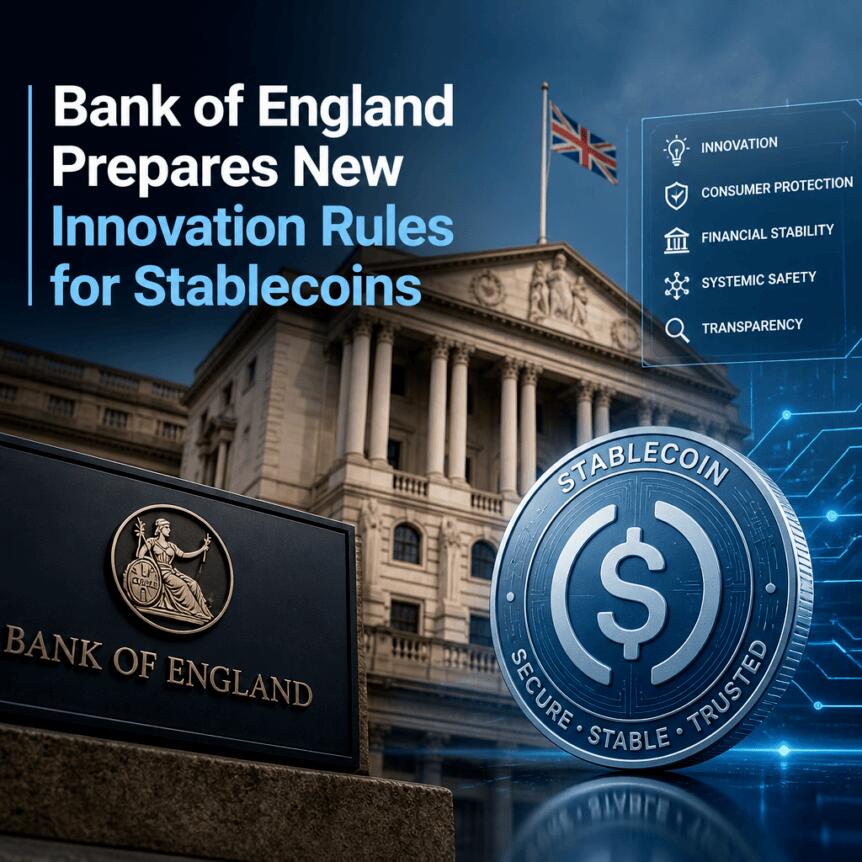
The UK government has proposed expanding the Bank of England’s remit to explicitly include support for innovation in digital payments, with stablecoin-based payment systems in scope. The Treasury said the Bank would receive a secondary objective focused on improving payment innovation—while keeping financial stability as its top priority.
Announcing the change this week, HM Treasury said the central bank’s new innovation goal would cover payment systems that settle using digital settlement assets, including stablecoins. The government also signaled that the measure will be pursued through legislative amendments, with further scrutiny expected in the House of Lords in early September.
Key takeaways
- The Bank of England would gain a secondary mandate to support innovation in payment systems using digital settlement assets such as stablecoins.
- Financial stability remains the primary objective; the innovation goal is intended to “support,” not override, stability considerations.
- The Bank would report annually to Parliament on its progress toward the payments innovation objective, potentially increasing public scrutiny.
- The proposal is expected to be implemented through amendments to the Financial Services and Markets Bill, with House of Lords debate scheduled for Sept. 7 and 9.
- Industry focus remains on how the Bank operationalizes stablecoin requirements—particularly reserve and backing rules for systemic issuers.
How the Bank of England’s mandate would change
HM Treasury said the Bank of England’s new responsibility would extend an approach the central bank already uses for regulating central counterparties (CCPs) and central securities depositories (CSDs), which play key roles in how financial assets are cleared, held, and settled.
Under the proposal, the Bank would provide an annual report to Parliament detailing its progress toward the innovation objective for payments and emerging forms of digital money. Officials framed the change around the potential of newer technologies—including tokenisation and distributed ledger technology (DLT)—to reshape aspects of financial markets.
City Minister Lucy Rigby said developments in digital payments technology, including tokenisation and DLT, have the potential to transform financial markets globally.
The Treasury expects to deliver the objective via amendments to the Financial Services and Markets Bill. That bill is scheduled for further debate in the House of Lords on Sept. 7 and 9, placing the timing of any final implementation squarely in the coming legislative window.
Industry concerns center on implementation details
While the innovation objective would be secondary to financial stability, its practical impact could depend on how the Bank structures its annual reporting and enforcement priorities. Maksym Sakharov, co-founder and CEO of on-chain banking infrastructure provider WeFi, told Cointelegraph that the mandate’s wording matters less than how the Bank chooses to execute it.
Sakharov emphasized that the objective is designed not to “override nothing,” but the annual publication requirement could still intensify public and market attention on how stablecoin rules are evolving—especially those finalized by the central bank in June.
One element highlighted by Sakharov concerns systemic stablecoin issuers’ reserve composition. He pointed to requirements stating that at least 30% of backing assets must be held in non-interest-bearing deposits at the Bank of England. In his view, “the reserve split is the first thing to fix,” because it may influence whether a stablecoin issuer can sustain its business model.
His comment underlines a broader issue: innovation mandates may encourage experimentation, but firms’ real-world viability often hinges on balance-sheet mechanics and compliance costs—particularly where reserve rules and custody arrangements are involved.
As readers look for clues about what comes next, the key question is how the Bank will translate an innovation goal into measurable outcomes without loosening or changing the core stability framework. Annual parliamentary reporting will likely become one of the primary channels through which that tension is expressed.
UK stablecoin momentum builds alongside policy and pilots
The BoE innovation mandate is the latest development in a UK push to work through stablecoin use cases—from regulation to experimentation—while aligning with international counterparts. The announcement follows several steps that indicate stablecoins are increasingly being treated as a mainstream component of digital payments planning rather than a peripheral technology.
In August, participants in the Bank of England’s Digital Pound Lab began testing whether a stablecoin could interoperate with a simulated digital British pound for cross-border trade payments. The experimental platform, HM Treasury and related BoE materials indicate, does not involve real customers or funds; its purpose is to evaluate mechanics and interoperability rather than to launch a live commercial product.
Earlier, in mid-July, the UK and US published a joint statement on stablecoins. The governments said they “intend to enable the use of stablecoins in cross-border finance” and called for greater alignment of regulatory frameworks. The direction of travel is therefore not only domestic: it also aims to coordinate approaches so stablecoin-related payments can operate across jurisdictions with fewer friction points.
More broadly, the UK has also adjusted its stablecoin framework over time. Cointelegraph previously reported that the Bank of England dropped earlier plans to cap individual stablecoin holdings at 20,000 British pounds and business holdings at 10 million pounds. Instead, the approach shifted toward a temporary issuance cap of 40 billion British pounds (about $52.9 billion) for each systemic stablecoin.
That move signals that regulators are searching for a structure that both allows usage and limits systemic risk—an approach that will likely shape how the new innovation mandate is interpreted. If innovation is the goal, then limits on issuance, reserve backing, and eligibility for systemic designation become the practical tools used to manage risk.
What to watch as legislators and the BoE move forward
The next phase will largely be determined by how amendments to the Financial Services and Markets Bill are drafted and whether they preserve the clear hierarchy placing financial stability above payment innovation. Investors and builders should also watch for the first annual reporting cycle: it could reveal what the Bank of England considers “innovation progress” in stablecoin-related payments, and how far the regulator will go in encouraging experimentation while maintaining its stability standards.
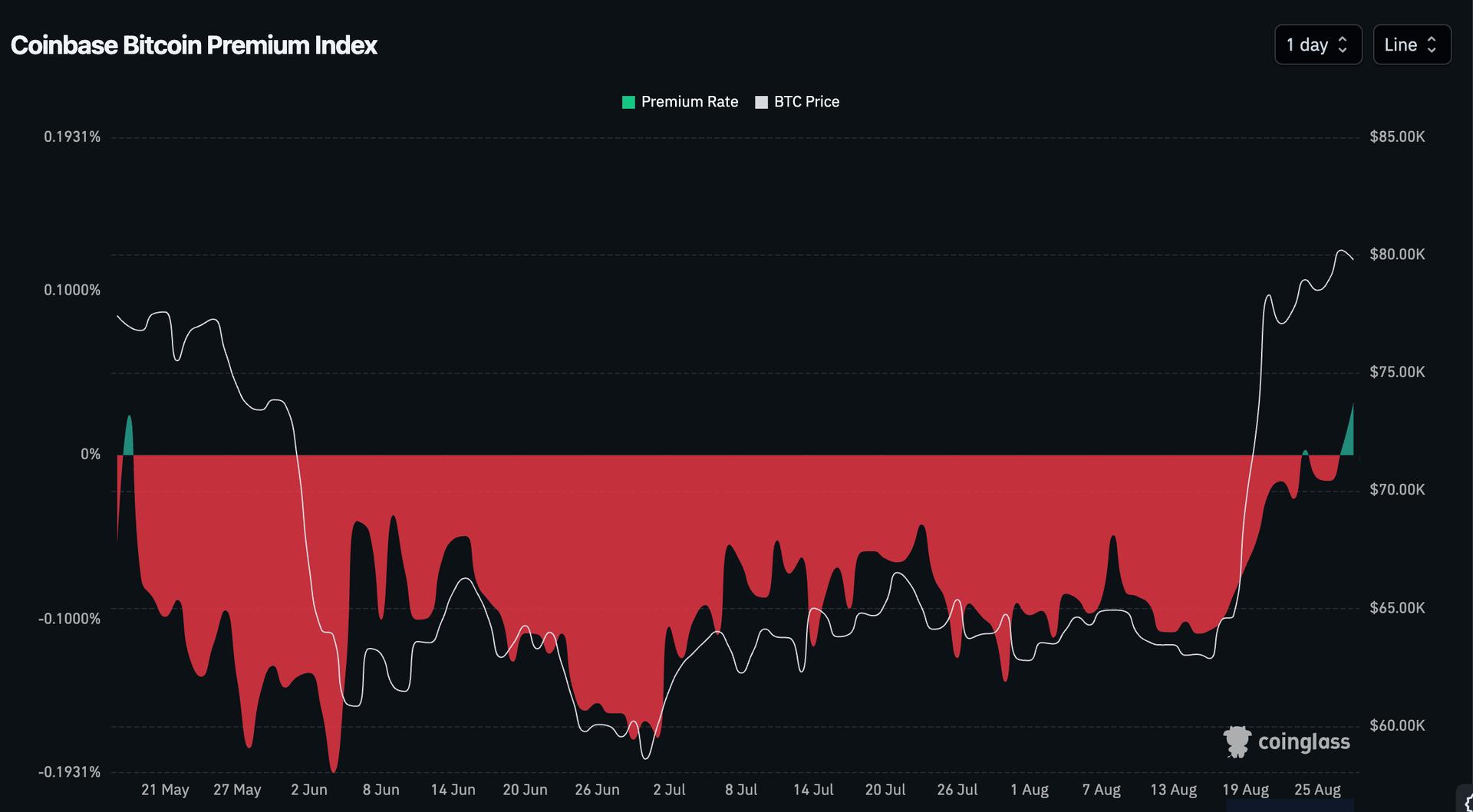
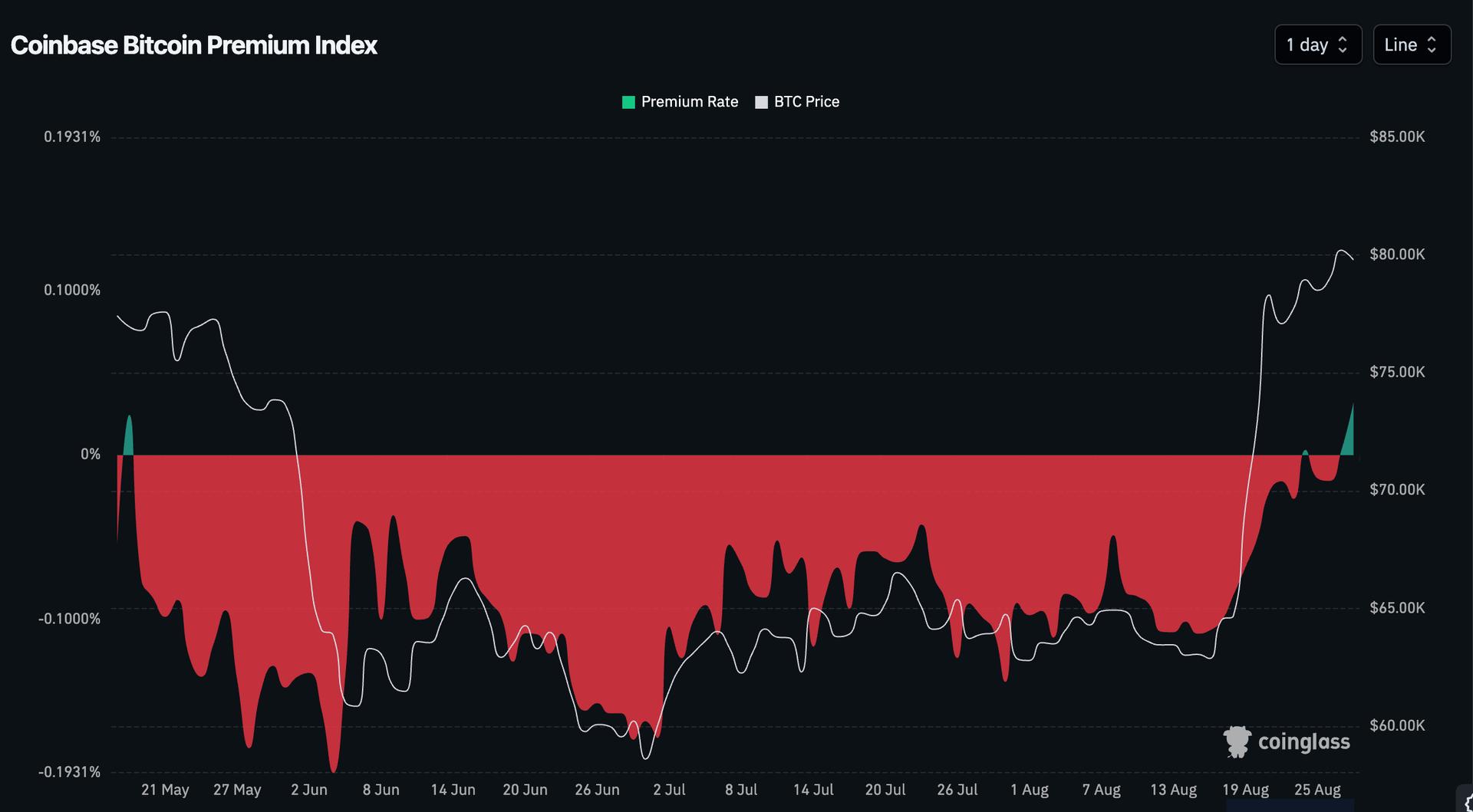
The indictor has flipped positive for the first time since May as BTC looks to establish a foothold above $80,000.


Crypto World
Independent Research Details Liquidity Conditions in Bitget UEX’s Tokenized Equity and Gold Perpetual Markets
[PRESS RELEASE – VICTORIA, SEYCHELLES, August 27th, 2026]
Independent research published by digital-asset analytics firm Block Scholes measured order-book depth, spreads, and slippage across four tokenized real-world-asset (RWA) perpetual futures contracts listed on Bitget’s Universal Exchange (UEX) platform, finding that resting liquidity on the exchange’s Nvidia-tracking contract reached roughly three-quarters of the depth available on Bitget’s own BTC/USDT spot market by mid-May 2026.
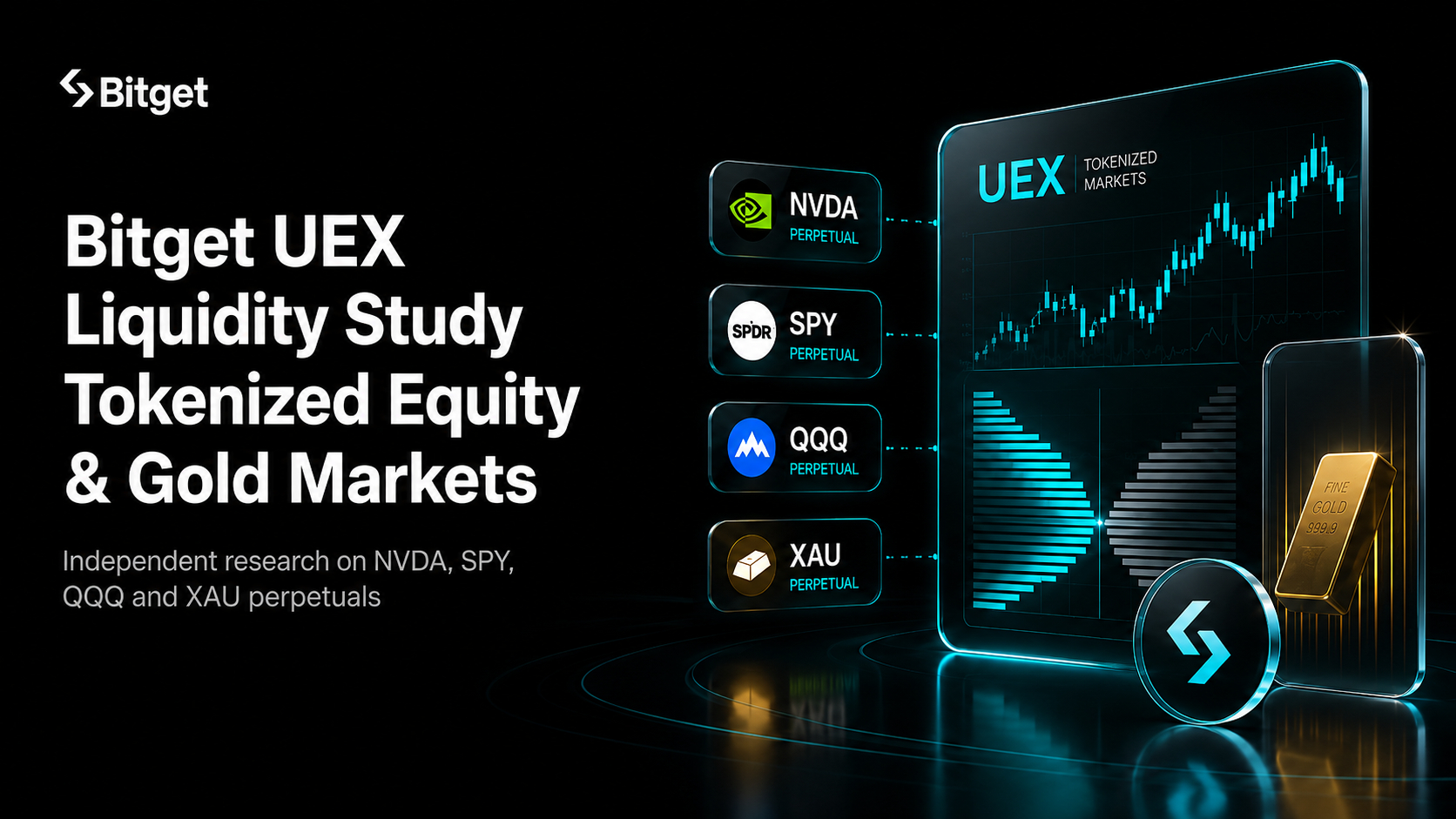
The study, published by Block Scholes on June 15, 2026, examined four USDT-margined perpetual contracts that track the price of traditional assets — gold (XAU-USDT), the SPDR S&P 500 ETF (SPY-USDT), Nvidia stock (NVDA-USDT), and the Invesco QQQ Nasdaq-100 ETF (QQQ-USDT). These are derivative contracts that give traders synthetic price exposure to the underlying asset; they do not confer equity ownership, dividends, or voting rights in the referenced companies or funds.
Using order-book snapshots roughly one hour into the U.S. equity session on May 18, 2026, Block Scholes recorded top-of-book spreads of approximately 0.02 basis points on the gold contract, 0.14 basis points on both the SPY and QQQ contracts, and 0.44 basis points on the NVDA contract — meaning less than half a basis point separated the best bid and best ask on three of the four instruments at that point in time. By comparison, the same contracts had quoted noticeably wider spreads three minutes after the U.S. market opened that day, with SPY’s spread narrowing from 1.76 basis points to 0.14 basis points within the hour.
Slippage on larger simulated orders followed a similar pattern of improvement as the session progressed. A modeled $100,000 market buy order on the SPY contract cost 14.88 basis points of slippage at the open, narrowing to 10.66 basis points an hour later; a $500,000 order improved from 46.07 to 24.90 basis points over the same window, according to the report.
Depth held up outside standard trading hours, with some seasonal thinning
Because RWA perpetuals trade continuously while their underlying assets do not, Block Scholes separately measured how liquidity behaves outside the referenced markets’ regular hours. Trading volume on the contracts fell substantially on weekends — by 65 to 90 percent compared with weekday levels, varying by contract — but median bid-ask spreads stayed close to their weekday levels across the full week sampled, at roughly 0.02 basis points for gold, 0.8 for QQQ, 1.0 for NVDA, and 1.3 for SPY.
Spreads widened briefly, then recovered, during acute market stress
The report also examined how the four contracts behaved around the February 28, 2026 announcement of U.S. strikes against Iran. Spreads widened across all four contracts in the immediate aftermath — for example, NVDA’s spread rose from a baseline near 0.6 basis points to a peak of 3.4 — but Block Scholes found the widening was brief, with NVDA’s spread back near its pre-announcement level within minutes and QQQ’s within the hour. Order-book depth thinned more visibly than spreads did on the day of the announcement — QQQ’s resting depth within 1% of the mid-price fell to roughly $109,000 from a typical Saturday median of about $191,000 — but Block Scholes recorded depth returning to that typical range within a week.
Methodology
Block Scholes calculated bid-ask spread as the gap between the best bid and best ask divided by the mid-price, and modeled slippage by walking the visible order book for market orders of specified sizes, using a combination of Bitget’s public API and historical order-book data covering September 2025 through May 2026. The firm’s methodology note states that depth figures reflect visible resting liquidity at a point in time or over a sample period, not guaranteed executable liquidity, and that slippage estimates exclude trading fees, funding payments, and hidden or replenished liquidity.
The full report, including supporting charts and the complete data tables referenced above, is available on Block Scholes’ research site.
About Bitget
Bitget is a global cryptocurrency exchange operating as a Universal Exchange (UEX), offering crypto, tokenized stocks, gold, and other asset classes within a single account. Bitget has published monthly proof-of-reserves disclosures since December 2022.
Website | Twitter | Telegram | LinkedIn | Discord
The post Independent Research Details Liquidity Conditions in Bitget UEX’s Tokenized Equity and Gold Perpetual Markets appeared first on CryptoPotato.
Galaxy has partnered with industrial safety provider Total Safety to establish 24-hour fire, rescue and emergency medical coverage at its Helios Data Center Campus in Dickens County, Texas.
Summary
- Galaxy partnered with Total Safety for continuous fire, rescue, paramedic, and EMT coverage at Helios.
- The nearest trauma center is approximately 60 miles away in Lubbock, according to Galaxy’s announcement.
- On-site responders may support Dickens County during grass fires, severe weather, and other major incidents.
- Galaxy disclosed no contract value, staffing numbers, equipment inventory, response targets, or activation date publicly.
- Helios already delivers 133 megawatts of critical computing load to CoreWeave under long-term leasing arrangements.
The agreement places paramedics, emergency medical technicians and rescue personnel at the campus as Galaxy expands Helios from a former Bitcoin mining facility into an artificial intelligence and high-performance computing center.
Galaxy said the dedicated service is intended to reduce pressure on Dickens County’s volunteer emergency responders. However, the company has not disclosed the contract’s financial terms, staffing level or date when the full service becomes operational.
Galaxy adds dedicated responders at Helios
Total Safety will provide continuous emergency coverage for incidents originating at the Helios campus. The announced service includes fire response, technical rescue, paramedic care and EMT support.
Galaxy did not identify the number of responders assigned per shift or describe the vehicles, medical equipment and firefighting systems stationed at the property. It also did not publish response-time targets or operational performance requirements.
The on-site team will complement local volunteer fire and emergency medical services rather than replace them. Galaxy said its goal is to handle campus incidents without adding to the workload of community responders.
Austin Storms, Galaxy’s co-head of data centers, said the arrangement would create a professional response capability on the company’s property. Whether it reduces demands on local agencies will depend on staffing, incident volume and coordination once operations begin.
Remote location increases the need for medical coverage
Galaxy said the nearest trauma center is approximately 60 miles away in Lubbock. That distance can add time before a patient reaches advanced hospital care after a workplace accident or medical emergency.
On-site paramedics can begin assessment, stabilization and treatment before transport. They cannot replace the surgical, imaging and specialist services available at a trauma center.
The Helios team may also assist Dickens County during grass fires, severe weather and other large incidents. Such assistance would operate through existing mutual-aid arrangements and coordination with local authorities.
Galaxy and Total Safety plan to train with local volunteer departments. The companies did not publish a training schedule, mutual-aid agreement or details governing when campus responders can be deployed elsewhere.
Helios growth adds industrial safety demands
The emergency-services agreement comes as construction and computing operations expand across Helios. Galaxy completed Phase I in June, delivering 200 megawatts of gross power and 133 megawatts of critical IT load to CoreWeave.
As previously reported, Galaxy converted the former Bitcoin mine into a revenue-generating AI data center under a 15-year lease. Rent began scaling with delivered capacity during the second quarter.
Phase II construction will add 260 megawatts of critical IT load, with initial data hall deliveries expected during the first half of 2027. Phase III is planned to add another 133 megawatts beginning in 2028.
Across all three phases, CoreWeave has committed to 526 megawatts of critical IT load. Galaxy says the leases could generate more than $1 billion in average annual revenue, assuming full utilization. That figure remains a company projection.
Galaxy builds a broader Texas infrastructure business
Helios currently has 800 megawatts of approved and contracted gross power. Galaxy says the campus could eventually support several gigawatts, but further expansion remains subject to grid studies, construction and customer demand.
The company financed the first phase through a $1.4 billion secured facility and $350 million of its own equity. In related coverage, Galaxy later pursued another $3.5 billion financing for the Texas expansion.
Galaxy has also acquired 500 acres in McGregor for another Texas data center. That project is targeting an initial 74-megawatt phase, with power delivery expected in 2028 if permitting, utility and construction milestones are satisfied.
At Helios, the next measurable safety developments will include the number of personnel deployed, equipment placed on site and completion of joint training with local responders. None of those operating details appeared in the initial announcement.
The partnership adds a dedicated emergency layer to a growing industrial campus. Its effectiveness will depend on implementation, coordination and the response standards Galaxy and Total Safety apply.
Evernorth Holdings moved closer to becoming a Nasdaq-listed XRP treasury company on Aug. 27 after the U.S. Securities and Exchange Commission declared its Form S-4 registration statement effective.
Summary
- The SEC declared Evernorth’s Form S-4 effective, allowing Armada shareholders to consider the proposed combination.
- Armada shareholders of record on August 20 will vote at September 30’s special meeting online.
- Investors seeking redemption must submit requests by September 28, according to the definitive proxy materials.
- Completion still requires shareholder approval, closing conditions, and Nasdaq’s acceptance of the planned XRPN listing.
- Evernorth plans active XRP treasury strategies, but growth in XRP per share remains an objective.
The effectiveness allows Armada Acquisition Corp. II to send definitive proxy materials and hold a shareholder vote on Sept. 30. It does not mean the SEC has approved the merger, Evernorth’s business model or XRP as an investment.
If shareholders approve the transaction and the remaining conditions are satisfied, the combined company expects to list on Nasdaq under the ticker XRPN. Evernorth said closing could follow shortly after the vote.
Evernorth merger vote is scheduled for Sept. 30
Armada shareholders who held shares on the Aug. 20 record date can vote at the virtual special meeting. The proposals include approval of the business combination and related corporate measures described in the definitive proxy statement.
Public shareholders can vote for the merger while separately choosing to redeem their shares. According to the proxy materials, redemption requests must be submitted by Sept. 28, two business days before the meeting.
Redemptions could reduce the cash that Armada contributes to the combined company. The final proceeds will also depend on financing commitments, closing adjustments and whether investors meet their funding obligations.
Armada raised $230 million through its May 2025 initial public offering. Its sponsor later changed to Arrington XRP Capital Fund after a $6.6 million securities purchase completed in August 2025.
SEC effectiveness does not approve the XRP strategy
The SEC’s effectiveness declaration means the registration statement can be used for the securities and shareholder solicitation connected to the transaction. It is not an assessment of whether the deal is fair or likely to succeed.
Evernorth’s own filing states that neither the SEC nor any state regulator has approved or rejected the proposed transaction, judged its merits or confirmed the disclosures’ adequacy.
The distinction matters because Evernorth’s value will remain closely tied to XRP. Changes in the token’s price can alter treasury value, net asset value and the amount of XRP represented by each company share.
Earlier filings used a signing XRP price of $2.36609 for parts of the transaction structure. That figure is a contractual reference point, not a forecast or guaranteed valuation.
Evernorth plans an actively managed XRP treasury
Evernorth intends to deploy capital across XRP-related infrastructure, lending, liquidity and other on-chain markets. The company says these strategies are designed to increase XRP per share over time.
That outcome remains a management objective. Lending and liquidity strategies can introduce counterparty, smart-contract, market and custody risks beyond those faced by companies that only hold digital assets.
The planned transaction has attracted commitments from Ripple, SBI Group, Arrington Capital, Pantera Capital, Kraken and GSR. Evernorth has previously described expected gross proceeds exceeding $1 billion, although redemptions and closing adjustments could change the final amount.
As crypto.news previously reported, Ripple contributed more than 126.7 million XRP to support the planned treasury. Earlier disclosures placed Evernorth’s broader holdings near 473 million XRP, but their dollar value changes continuously.
Shareholder approval becomes the next deadline
The Sept. 30 vote is now the main scheduled event. Armada must obtain the required shareholder approvals before the merger can close.
The parties must also satisfy the business combination agreement’s remaining conditions and Nasdaq’s listing requirements. If completed, Armada will combine with Evernorth and the resulting public company will operate under the XRPN ticker.
Executive compensation and potential dilution remain relevant considerations for voters. In related coverage, Evernorth disclosed an equity award valued near $44 million for CEO Asheesh Birla alongside other executive compensation arrangements.
Investors must also account for warrants, sponsor shares, private-placement securities and other shares registered through the transaction. An Evernorth legal opinion referenced up to approximately 34.5 million common shares and warrants covering about 11.5 million additional shares.
If shareholders reject the combination or a closing condition fails, the Nasdaq debut will not proceed on the current timetable. Evernorth’s announced late-third-quarter or early-fourth-quarter closing remains forward-looking until the transaction is completed.
Dunamu, the operator of South Korean cryptocurrency exchange Upbit, announced on Aug. 28 that it had formed a strategic partnership with Visa to explore stablecoin payments, international remittances and AI-driven financial services.
Summary
- Dunamu and Visa will explore stablecoin payments, cross-border remittances, and AI-enabled financial services under partnership.
- Visa’s Asia-Pacific entity signed the agreement before both companies presented their roadmap in San Francisco.
- Neither company disclosed a product structure, launch date, supported jurisdiction, blockchain, custody model, or pricing.
- The partners are evaluating OUSD models after Dunamu described its Open Standard involvement as preliminary.
- Planned AI work includes agentic commerce, where software searches, purchases, and pays on users’ behalf.
Dunamu CEO Oh Kyung-seok and Visa Global President Oliver Jenkyn presented the partnership roadmap at Visa’s Global Market Support Center in San Francisco on Aug. 26 local time. Visa Worldwide Pte. Limited, the payment company’s Asia-Pacific entity, signed the agreement with Dunamu before the event.
The partnership is confirmed, but the proposed services remain exploratory. The companies have not selected a launch date, blockchain, stablecoin, custody provider, settlement process or initial market.
Dunamu and Visa will study stablecoin payment models
The companies intend to combine Dunamu’s digital-asset infrastructure with Visa’s global payment network. Their stated areas of research include stablecoin payments, global transfers, merchant settlement and new user experiences.
The partners said services would be developed in stages while considering applicable laws and regulatory requirements. That wording means the agreement does not yet constitute a product launch or a commitment to offer stablecoin payments through Upbit.
Dunamu said stability, transparency, interoperability and regulatory compliance would guide the work. However, it did not identify how those principles would be implemented or which company would manage customer assets and compliance duties.
Visa has already expanded its stablecoin settlement and programmable payment work. In June, the company announced new infrastructure for stablecoins, tokenized deposits and AI-directed transactions.
OUSD returns as a possible partnership component
Dunamu and Visa will also evaluate business models involving Open USD, or OUSD, a dollar-backed stablecoin developed through the Open Standard initiative.
Open Standard says OUSD is intended for global payments and will let participating businesses mint and redeem tokens without fees or artificial volume limits. The initiative has named Visa, Mastercard, Coinbase, BlackRock and more than 140 other organizations as supporters.
Dunamu’s role requires careful framing. In July, the company said it had not agreed to issue OUSD or formally participate in its launch after being listed among Open Standard’s associated businesses.
As crypto.news reported, Dunamu described its Open Standard participation as a proposal it was still reviewing. The new Visa partnership confirms that both companies will examine OUSD-based models, but it still does not establish Dunamu as an issuer or operator.
AI research will include agentic commerce
The partnership also covers payment infrastructure for agentic commerce. In this model, an AI system searches for products, selects services and executes payments on a user’s behalf.
Dunamu and Visa said they would examine technology supporting authorization, payments and settlement for these transactions. They did not explain how users would approve purchases, establish spending limits or dispute an AI-initiated transaction.
Those controls are important because automated purchasing creates new questions involving identity, fraud, liability and consent. Stablecoin settlement can also be irreversible once tokens are transferred on-chain.
Visa has been developing tools for verifying AI agents and giving merchants more control over automated transactions. The Dunamu partnership could connect that work with digital-asset settlement, although no technical integration has been announced.
South Korean rules will determine what launches
South Korea has not completed its broader stablecoin framework. Lawmakers and regulators are still debating who may issue won-backed tokens and whether bank ownership should be required.
Dollar stablecoin payment and remittance services could also engage South Korea’s foreign-exchange, anti-money-laundering and virtual-asset rules. Dunamu acknowledged that regulatory requirements would affect how the partnership develops.
In related coverage, South Korean companies have expanded stablecoin payment trials while awaiting national legislation. Dunamu has also discussed separate stablecoin infrastructure work with domestic technology and financial companies.
The next verifiable milestone will be a defined pilot or product announcement. The companies would need to disclose the stablecoin, supported markets, blockchain, custody structure and customer eligibility before users can assess the service.
Until then, the partnership establishes a joint research and business-development framework rather than an operational payment product.


Bitcoin (BTC) gained $14,775 in a single week, the largest one-week dollar increase in its history. Galaxy Research says the rally also drove the strongest US spot Bitcoin ETF inflow week since October 2025.
The weekly close jumped from $62,818 to $77,593, a 23.5% move ranked 41st by percentage increase since 2010. By percentage increase, it was Bitcoin’s best week since March 2023.
What Drove Bitcoin’s Record Week
Galaxy Research linked the rally to two catalysts. The US Treasury said it would double its long-bond buyback operations, used to ease pressure on Treasury yields.
President Trump also urged Congress to pass the CLARITY Act. The bill would set federal rules for classifying digital assets as securities or commodities.
The move also triggered a short squeeze. Traders who had bet against Bitcoin were forced to close positions, accelerating Bitcoin’s fastest bull flip in a year.
Roughly $2.7 billion in short positions were liquidated across crypto markets that week, according to CNBC.
Sentiment also swung sharply. The Crypto Fear and Greed Index reached 74 on August 25, its highest level since October 2025.
ETF Inflows Confirm the Rebound
Spot Bitcoin ETF demand returned at the same time. Weekly inflows reached their strongest level since October 2025, Galaxy Research data shows.
August is on track to post the biggest monthly net inflow since Bitcoin’s prior all-time high. That would reverse months of ETF outflows that left the funds as net sellers in 2026.
ETF holders remain about 6% underwater even after the rebound. Their average cost basis sits at $84,029, against a $78,955 spot price, Galaxy Research data shows.
Bitcoin’s spot price traded above $80,000 on Thursday.
Whether the rebound continues may depend on ETF inflows holding into September. Traders will also watch if last week’s short squeeze proves lasting or temporary.
The post Bitcoin's $14,775 Weekly Surge Is the Biggest in Its History, Powered by ETF Flows appeared first on BeInCrypto.
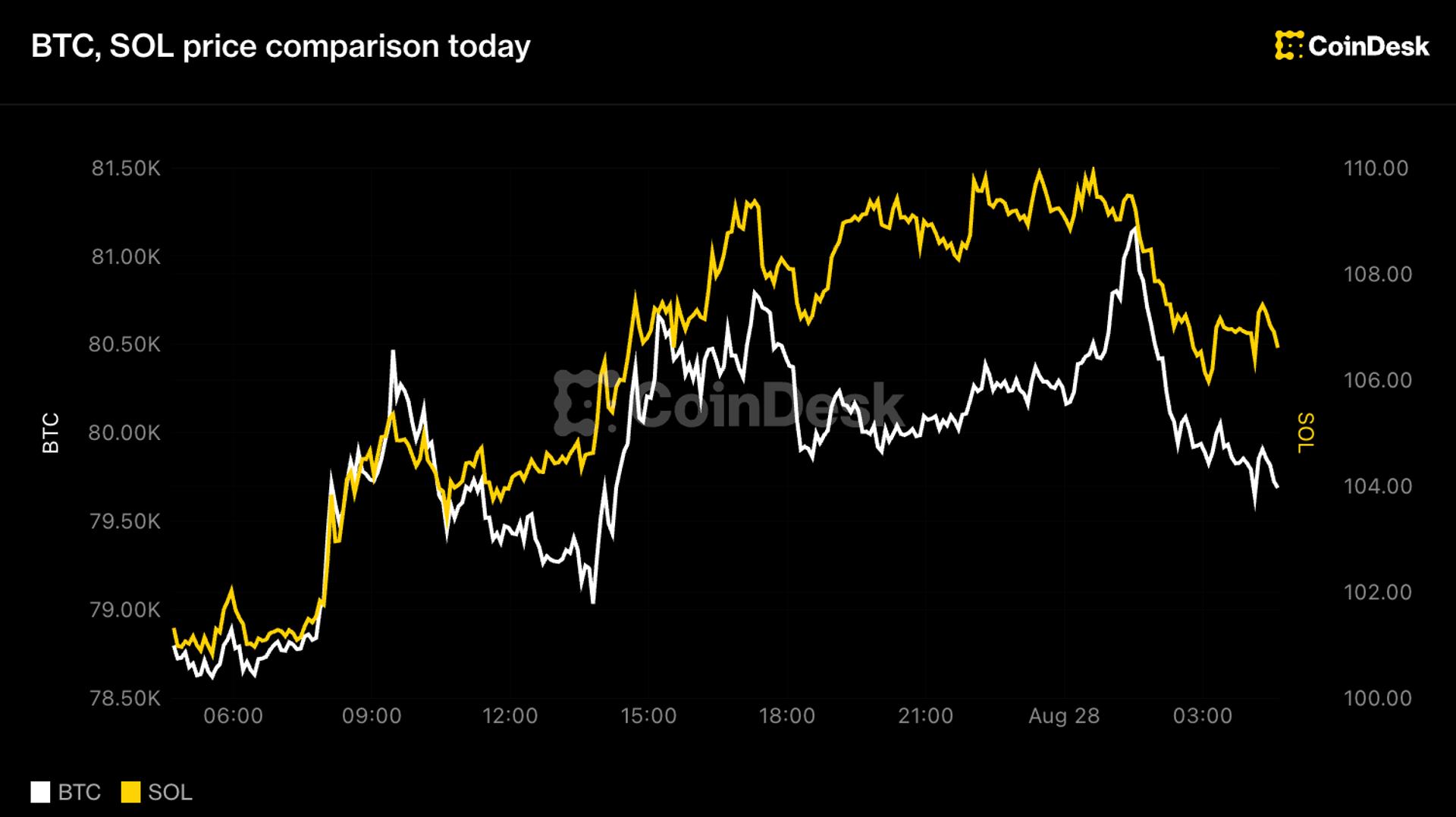
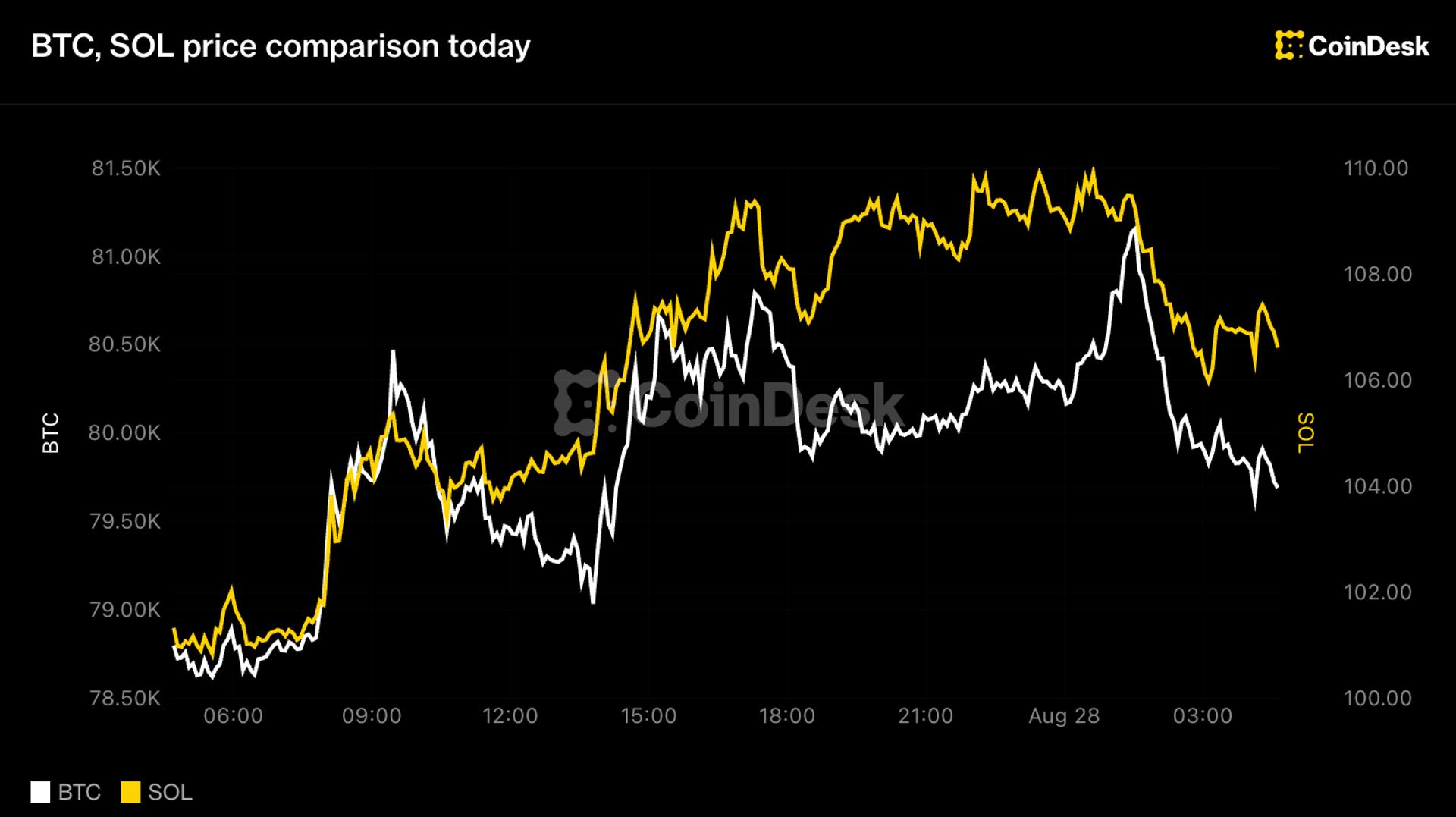
Every major but HYPE gained over 24 hours, capping a week that added 9% to bitcoin and 20% to solana.
200 extra police brought in as Cleveland officers working 20-hour days

Opinion: Rubber meets road for bus flows

The Sandbox Plans 1:1 Repayment After $700K Bridge Exploit





-

 Fashion6 days ago
Weekend Open Thread: Madewell – Corporette.com
-

 Crypto World2 days ago
SpaceX stock could rise 75% to $240, JPMorgan says
-

 Business6 days ago
Musk’s Tesla, SpaceX Confirm $16.8 Billion ‘Terafab’ Chip Plant as World’s Largest Building in Texas
-

 Crypto World6 days ago
anatomy of crypto’s biggest liquidation event since 2021
-

 Crypto World3 days ago
A $30 Billion AI Fund Implodes, Now the SEC Is Investigating Wall Street’s Role
-

 Politics6 days ago
6 months on, Irish renters crushed by effects of government housing bill
-

 Crypto World2 days ago
Did Trump Just Move SpaceX Stock With One Truth Social Post?
-

 Business5 days ago
Mystery AI Model ‘Ox Alpha’ Draws Developers With Free Access as Chinese Lab Origins Remain Debated
-
 NewsBeat6 days ago
The ‘Lucky Dip Gang’ causing carnage for clicks: After five thugs were killed speeding in the wrong direction on a motorway, GUY ADAMS investigates a sick new trend… and why police aren’t even allowed to pursue them
-

 Crypto World2 days ago
Warsh Jackson Hole keynote puts financial innovation first
-
 Crypto World6 days ago
Nvidia Stock Suffers Longest Losing Streak Since 2022: Will Q2 Earnings End It?
-

 Business4 days ago
Moderna CEO warns China is pouring state money into mRNA technology
-

 Business3 days ago
NVIDIA Stock Drops Nearly 2 Percent to $210 on Seventh Losing Day Ahead of Critical AI Earnings
-

 Tech6 days ago
Unitree’s New Superman Robot Claims to Outjump and Outrun Every Human, Usain Bolt Included
-

 Business7 days ago
UK firms in critical financial distress rise 9% to 53,756
-

 Sports5 days ago
Deshaun Watson fires back at Browns fans after being booed: ‘It’s a disrespectful thing’
-

 Business2 days ago
Walmart takes aim at younger shoppers with new fashion brand
-

 Business6 days ago
Will Tesla Stock Be Higher or Lower a Year From Now? Here’s What Wall Street Analysts Are Saying
-
 Crypto World5 days ago
Google Gemini AI Predicts Ethereum Could Become the Trade Retail Misses in 2026
-

 Tech6 days ago
Faster chip in a familiar form factor
You must be logged in to post a comment Login