
Crypto World
An XRP treasury company backed by Ripple is a shareholder vote away from Nasdaq

The SEC cleared the paperwork for Evernorth’s merger with a shell company, setting up a Sept. 30 vote and a listing under the ticker XRPN.

Evernorth Holdings moved closer to becoming a Nasdaq-listed XRP treasury company on Aug. 27 after the U.S. Securities and Exchange Commission declared its Form S-4 registration statement effective.
Summary
- The SEC declared Evernorth’s Form S-4 effective, allowing Armada shareholders to consider the proposed combination.
- Armada shareholders of record on August 20 will vote at September 30’s special meeting online.
- Investors seeking redemption must submit requests by September 28, according to the definitive proxy materials.
- Completion still requires shareholder approval, closing conditions, and Nasdaq’s acceptance of the planned XRPN listing.
- Evernorth plans active XRP treasury strategies, but growth in XRP per share remains an objective.
The effectiveness allows Armada Acquisition Corp. II to send definitive proxy materials and hold a shareholder vote on Sept. 30. It does not mean the SEC has approved the merger, Evernorth’s business model or XRP as an investment.
If shareholders approve the transaction and the remaining conditions are satisfied, the combined company expects to list on Nasdaq under the ticker XRPN. Evernorth said closing could follow shortly after the vote.
Evernorth merger vote is scheduled for Sept. 30
Armada shareholders who held shares on the Aug. 20 record date can vote at the virtual special meeting. The proposals include approval of the business combination and related corporate measures described in the definitive proxy statement.
Public shareholders can vote for the merger while separately choosing to redeem their shares. According to the proxy materials, redemption requests must be submitted by Sept. 28, two business days before the meeting.
Redemptions could reduce the cash that Armada contributes to the combined company. The final proceeds will also depend on financing commitments, closing adjustments and whether investors meet their funding obligations.
Armada raised $230 million through its May 2025 initial public offering. Its sponsor later changed to Arrington XRP Capital Fund after a $6.6 million securities purchase completed in August 2025.
SEC effectiveness does not approve the XRP strategy
The SEC’s effectiveness declaration means the registration statement can be used for the securities and shareholder solicitation connected to the transaction. It is not an assessment of whether the deal is fair or likely to succeed.
Evernorth’s own filing states that neither the SEC nor any state regulator has approved or rejected the proposed transaction, judged its merits or confirmed the disclosures’ adequacy.
The distinction matters because Evernorth’s value will remain closely tied to XRP. Changes in the token’s price can alter treasury value, net asset value and the amount of XRP represented by each company share.
Earlier filings used a signing XRP price of $2.36609 for parts of the transaction structure. That figure is a contractual reference point, not a forecast or guaranteed valuation.
Evernorth plans an actively managed XRP treasury
Evernorth intends to deploy capital across XRP-related infrastructure, lending, liquidity and other on-chain markets. The company says these strategies are designed to increase XRP per share over time.
That outcome remains a management objective. Lending and liquidity strategies can introduce counterparty, smart-contract, market and custody risks beyond those faced by companies that only hold digital assets.
The planned transaction has attracted commitments from Ripple, SBI Group, Arrington Capital, Pantera Capital, Kraken and GSR. Evernorth has previously described expected gross proceeds exceeding $1 billion, although redemptions and closing adjustments could change the final amount.
As crypto.news previously reported, Ripple contributed more than 126.7 million XRP to support the planned treasury. Earlier disclosures placed Evernorth’s broader holdings near 473 million XRP, but their dollar value changes continuously.
Shareholder approval becomes the next deadline
The Sept. 30 vote is now the main scheduled event. Armada must obtain the required shareholder approvals before the merger can close.
The parties must also satisfy the business combination agreement’s remaining conditions and Nasdaq’s listing requirements. If completed, Armada will combine with Evernorth and the resulting public company will operate under the XRPN ticker.
Executive compensation and potential dilution remain relevant considerations for voters. In related coverage, Evernorth disclosed an equity award valued near $44 million for CEO Asheesh Birla alongside other executive compensation arrangements.
Investors must also account for warrants, sponsor shares, private-placement securities and other shares registered through the transaction. An Evernorth legal opinion referenced up to approximately 34.5 million common shares and warrants covering about 11.5 million additional shares.
If shareholders reject the combination or a closing condition fails, the Nasdaq debut will not proceed on the current timetable. Evernorth’s announced late-third-quarter or early-fourth-quarter closing remains forward-looking until the transaction is completed.


Dunamu, the operator of South Korean cryptocurrency exchange Upbit, announced on Aug. 28 that it had formed a strategic partnership with Visa to explore stablecoin payments, international remittances and AI-driven financial services.
Summary
- Dunamu and Visa will explore stablecoin payments, cross-border remittances, and AI-enabled financial services under partnership.
- Visa’s Asia-Pacific entity signed the agreement before both companies presented their roadmap in San Francisco.
- Neither company disclosed a product structure, launch date, supported jurisdiction, blockchain, custody model, or pricing.
- The partners are evaluating OUSD models after Dunamu described its Open Standard involvement as preliminary.
- Planned AI work includes agentic commerce, where software searches, purchases, and pays on users’ behalf.
Dunamu CEO Oh Kyung-seok and Visa Global President Oliver Jenkyn presented the partnership roadmap at Visa’s Global Market Support Center in San Francisco on Aug. 26 local time. Visa Worldwide Pte. Limited, the payment company’s Asia-Pacific entity, signed the agreement with Dunamu before the event.
The partnership is confirmed, but the proposed services remain exploratory. The companies have not selected a launch date, blockchain, stablecoin, custody provider, settlement process or initial market.
Dunamu and Visa will study stablecoin payment models
The companies intend to combine Dunamu’s digital-asset infrastructure with Visa’s global payment network. Their stated areas of research include stablecoin payments, global transfers, merchant settlement and new user experiences.
The partners said services would be developed in stages while considering applicable laws and regulatory requirements. That wording means the agreement does not yet constitute a product launch or a commitment to offer stablecoin payments through Upbit.
Dunamu said stability, transparency, interoperability and regulatory compliance would guide the work. However, it did not identify how those principles would be implemented or which company would manage customer assets and compliance duties.
Visa has already expanded its stablecoin settlement and programmable payment work. In June, the company announced new infrastructure for stablecoins, tokenized deposits and AI-directed transactions.
OUSD returns as a possible partnership component
Dunamu and Visa will also evaluate business models involving Open USD, or OUSD, a dollar-backed stablecoin developed through the Open Standard initiative.
Open Standard says OUSD is intended for global payments and will let participating businesses mint and redeem tokens without fees or artificial volume limits. The initiative has named Visa, Mastercard, Coinbase, BlackRock and more than 140 other organizations as supporters.
Dunamu’s role requires careful framing. In July, the company said it had not agreed to issue OUSD or formally participate in its launch after being listed among Open Standard’s associated businesses.
As crypto.news reported, Dunamu described its Open Standard participation as a proposal it was still reviewing. The new Visa partnership confirms that both companies will examine OUSD-based models, but it still does not establish Dunamu as an issuer or operator.
AI research will include agentic commerce
The partnership also covers payment infrastructure for agentic commerce. In this model, an AI system searches for products, selects services and executes payments on a user’s behalf.
Dunamu and Visa said they would examine technology supporting authorization, payments and settlement for these transactions. They did not explain how users would approve purchases, establish spending limits or dispute an AI-initiated transaction.
Those controls are important because automated purchasing creates new questions involving identity, fraud, liability and consent. Stablecoin settlement can also be irreversible once tokens are transferred on-chain.
Visa has been developing tools for verifying AI agents and giving merchants more control over automated transactions. The Dunamu partnership could connect that work with digital-asset settlement, although no technical integration has been announced.
South Korean rules will determine what launches
South Korea has not completed its broader stablecoin framework. Lawmakers and regulators are still debating who may issue won-backed tokens and whether bank ownership should be required.
Dollar stablecoin payment and remittance services could also engage South Korea’s foreign-exchange, anti-money-laundering and virtual-asset rules. Dunamu acknowledged that regulatory requirements would affect how the partnership develops.
In related coverage, South Korean companies have expanded stablecoin payment trials while awaiting national legislation. Dunamu has also discussed separate stablecoin infrastructure work with domestic technology and financial companies.
The next verifiable milestone will be a defined pilot or product announcement. The companies would need to disclose the stablecoin, supported markets, blockchain, custody structure and customer eligibility before users can assess the service.
Until then, the partnership establishes a joint research and business-development framework rather than an operational payment product.


Bitcoin (BTC) gained $14,775 in a single week, the largest one-week dollar increase in its history. Galaxy Research says the rally also drove the strongest US spot Bitcoin ETF inflow week since October 2025.
The weekly close jumped from $62,818 to $77,593, a 23.5% move ranked 41st by percentage increase since 2010. By percentage increase, it was Bitcoin’s best week since March 2023.
What Drove Bitcoin’s Record Week
Galaxy Research linked the rally to two catalysts. The US Treasury said it would double its long-bond buyback operations, used to ease pressure on Treasury yields.
President Trump also urged Congress to pass the CLARITY Act. The bill would set federal rules for classifying digital assets as securities or commodities.
The move also triggered a short squeeze. Traders who had bet against Bitcoin were forced to close positions, accelerating Bitcoin’s fastest bull flip in a year.
Roughly $2.7 billion in short positions were liquidated across crypto markets that week, according to CNBC.
Sentiment also swung sharply. The Crypto Fear and Greed Index reached 74 on August 25, its highest level since October 2025.
ETF Inflows Confirm the Rebound
Spot Bitcoin ETF demand returned at the same time. Weekly inflows reached their strongest level since October 2025, Galaxy Research data shows.
August is on track to post the biggest monthly net inflow since Bitcoin’s prior all-time high. That would reverse months of ETF outflows that left the funds as net sellers in 2026.
ETF holders remain about 6% underwater even after the rebound. Their average cost basis sits at $84,029, against a $78,955 spot price, Galaxy Research data shows.
Bitcoin’s spot price traded above $80,000 on Thursday.
Whether the rebound continues may depend on ETF inflows holding into September. Traders will also watch if last week’s short squeeze proves lasting or temporary.
The post Bitcoin's $14,775 Weekly Surge Is the Biggest in Its History, Powered by ETF Flows appeared first on BeInCrypto.
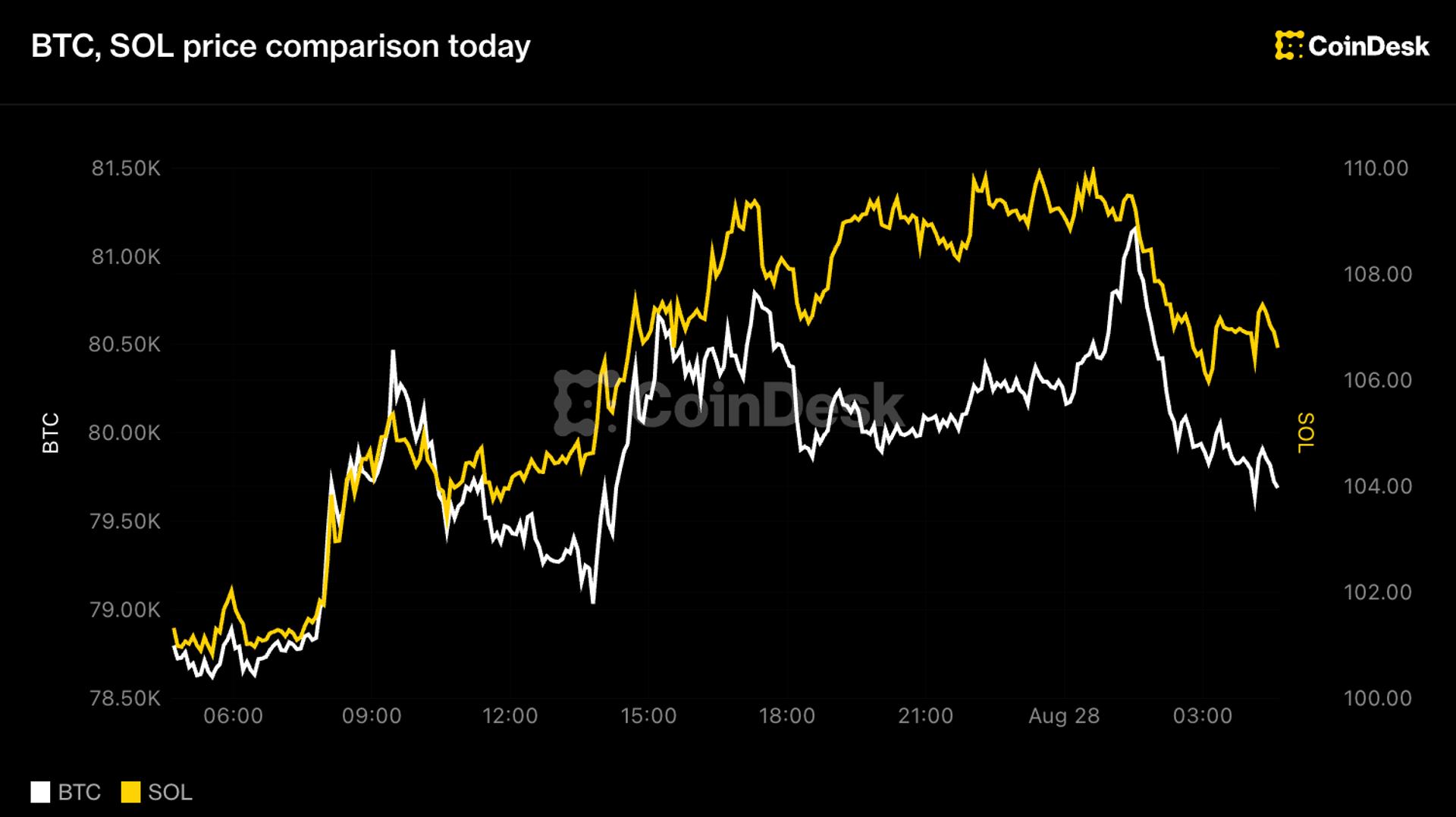
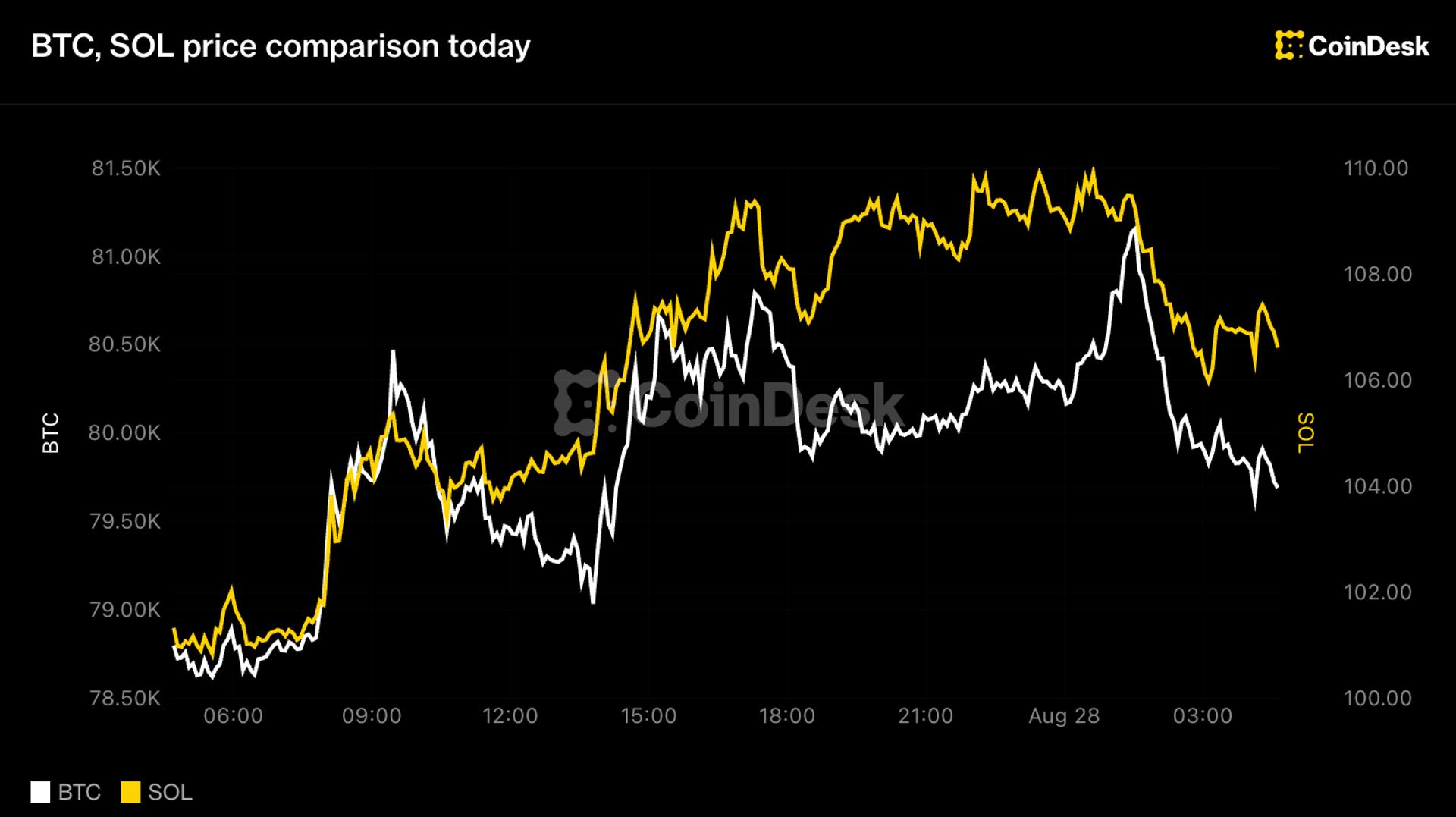
Every major but HYPE gained over 24 hours, capping a week that added 9% to bitcoin and 20% to solana.
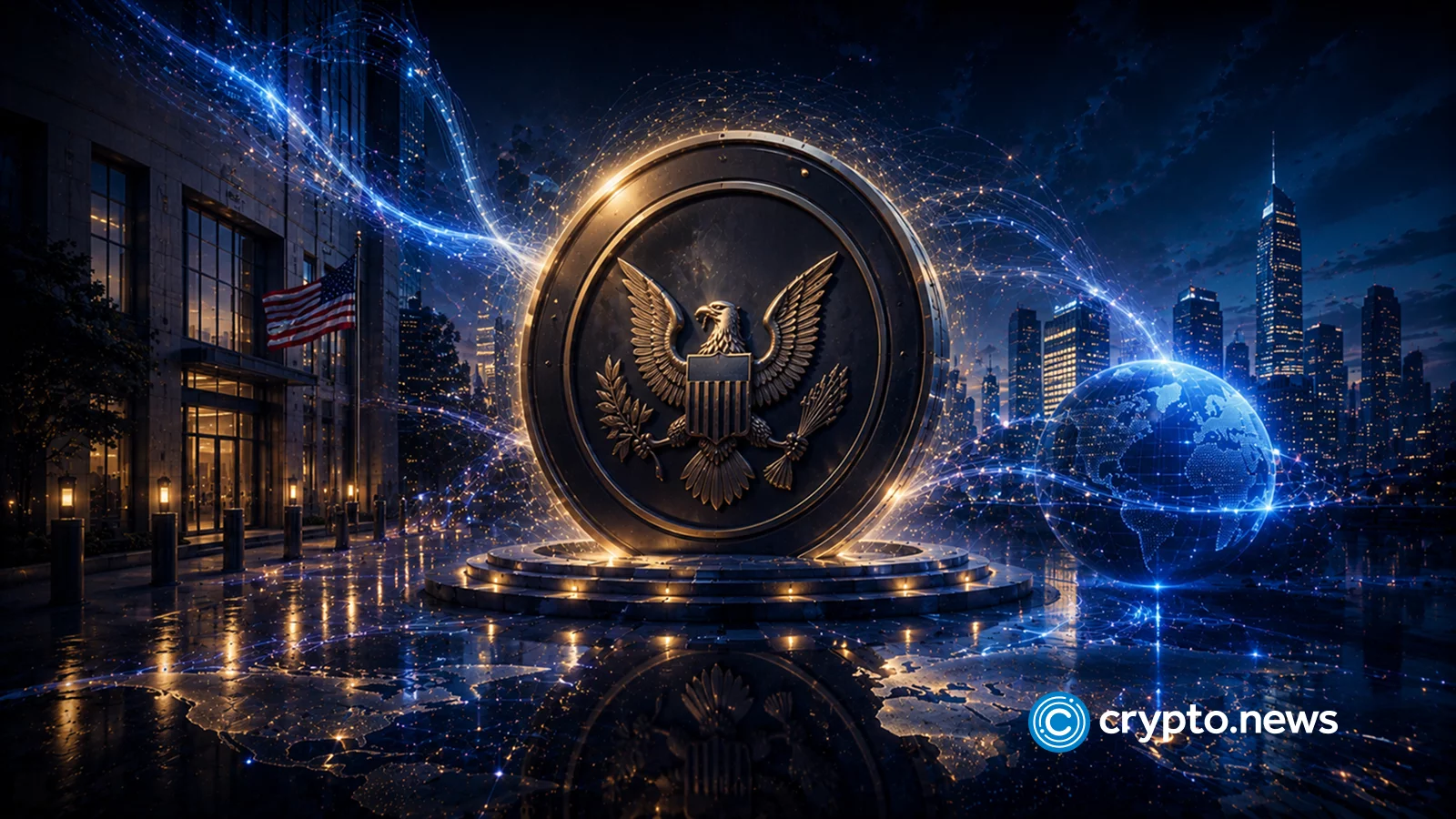
The U.S. Securities and Exchange Commission sued 38 entities on Aug. 27, alleging they submitted false Forms ADV between 2025 and 2026 to present themselves as legitimate investment advisers.
Summary
- 38 entities allegedly used false SEC filings to appear legitimate while targeting retail investors nationwide.
- Several defendants accessed the filing system through IP addresses traced to foreign jurisdictions, regulators alleged.
- SEC complaints cite false Colorado addresses, disconnected telephone numbers, and auditors absent from public registries.
- Exempt reporting advisers serve private funds and cannot provide investment advice directly to individual investors.
- The regulator removed all 38 filings and seeks injunctions, filing bans, and civil monetary penalties.
The SEC filed 38 separate civil complaints in the U.S. District Court for the District of Colorado. The regulator alleges that several defendants likely operated overseas and used official public filings to gain credibility with U.S. retail investors.
The allegations have not been proven in court. The SEC did not report how much investors transferred to the entities, identify confirmed victims or disclose total losses.
SEC complaints identify repeated filing patterns
The complaints allege that defendants listed Colorado business addresses where they had no physical presence. Some supplied disconnected telephone numbers or numbers belonging to unrelated businesses.
Many filings contained identical or nearly identical information. According to one complaint, purported funds commonly reported either $78.96 million or $48.96 million in assets, 89 or 33 investors and minimum investments of either $50,000 or $5,000.
The entities also listed matching ownership structures. Those structures reportedly attributed 10% ownership to the adviser or related parties, 90% to foreign investors and 50% to funds of funds. The categories could overlap.
The SEC said several filings claimed that private-fund financial statements had been reviewed by one of two independent accounting firms. Investigators could not find either auditor in federal or state accountancy registries.
Fake adviser status allegedly supported investor scams
An exempt reporting adviser, or ERA, is not an SEC-registered investment adviser. ERAs generally advise only venture capital funds or private funds with less than $150 million under management in the U.S.
They must submit limited information through Form ADV, but the SEC does not approve their experience, qualifications or business claims before publishing those filings. The complaints allege the defendants exploited that process because submissions became publicly searchable without prior approval.
Some related websites displayed certificates falsely stating that the entities had received “SEC RIA permission,” according to the regulator’s alert. The certificates used genuine filing and registration numbers to appear authentic.
Several defendants adopted names referring to crypto, exchanges, emerging technology or financial education. They include CryptoOrbit, Pinnacle Crypto Exchange, Web3 University, Axivon Exchange and Future Finance Academy. However, the SEC did not characterize every defendant as a crypto business.
Foreign access and missing records raised concerns
The SEC said IP addresses used to access its filing system were traced to foreign jurisdictions in several cases. It did not identify every country or allege that all 38 entities operated outside the U.S.
Commission attorneys requested records supporting the firms’ reported assets, investors, employees, auditors and fund operations. The defendants allegedly failed to provide the requested material.
In the case against Abrdn Canada Limited, SEC staff mailed a records demand to its stated Denver address in April. The correspondence was returned as undeliverable. Calls reached a disconnected number, while a later email received no response.
The complaint also alleges the entity claimed to operate as a commodity pool operator or trading adviser without a corresponding CFTC or National Futures Association registration.
Courts will decide penalties and filing restrictions
The SEC charged the defendants under Sections 204(a) and 207 of the Investment Advisers Act. Those provisions govern adviser records and false statements made in required filings.
The agency seeks permanent injunctions, civil penalties and orders preventing the entities from submitting future Forms ADV as exempt reporting advisers. The amount of any penalty would be determined by the court.
The SEC directed FINRA to remove the 38 filings from the Investment Adviser Public Disclosure database. The FBI assisted through Operation Level Up, an initiative that identifies and contacts potential victims of investment fraud.
Investors should not treat a Form ADV appearance as proof of SEC registration. The regulator advised users to verify a firm’s status independently and avoid transferring money, cryptocurrency or personal information when an ERA approaches individual investors directly.
Comparable impersonation tactics have also appeared outside the U.S. In related coverage, fraudsters used regulator names and counterfeit documents to target crypto users during Europe’s MiCA transition.


Cointelegraph is committed to providing independent, high-quality journalism across the crypto, blockchain, AI, and fintech industries.
All news, reviews, and analyses are produced with full journalistic independence and integrity. For more details on our standards and processes, please read our Editorial Policy.
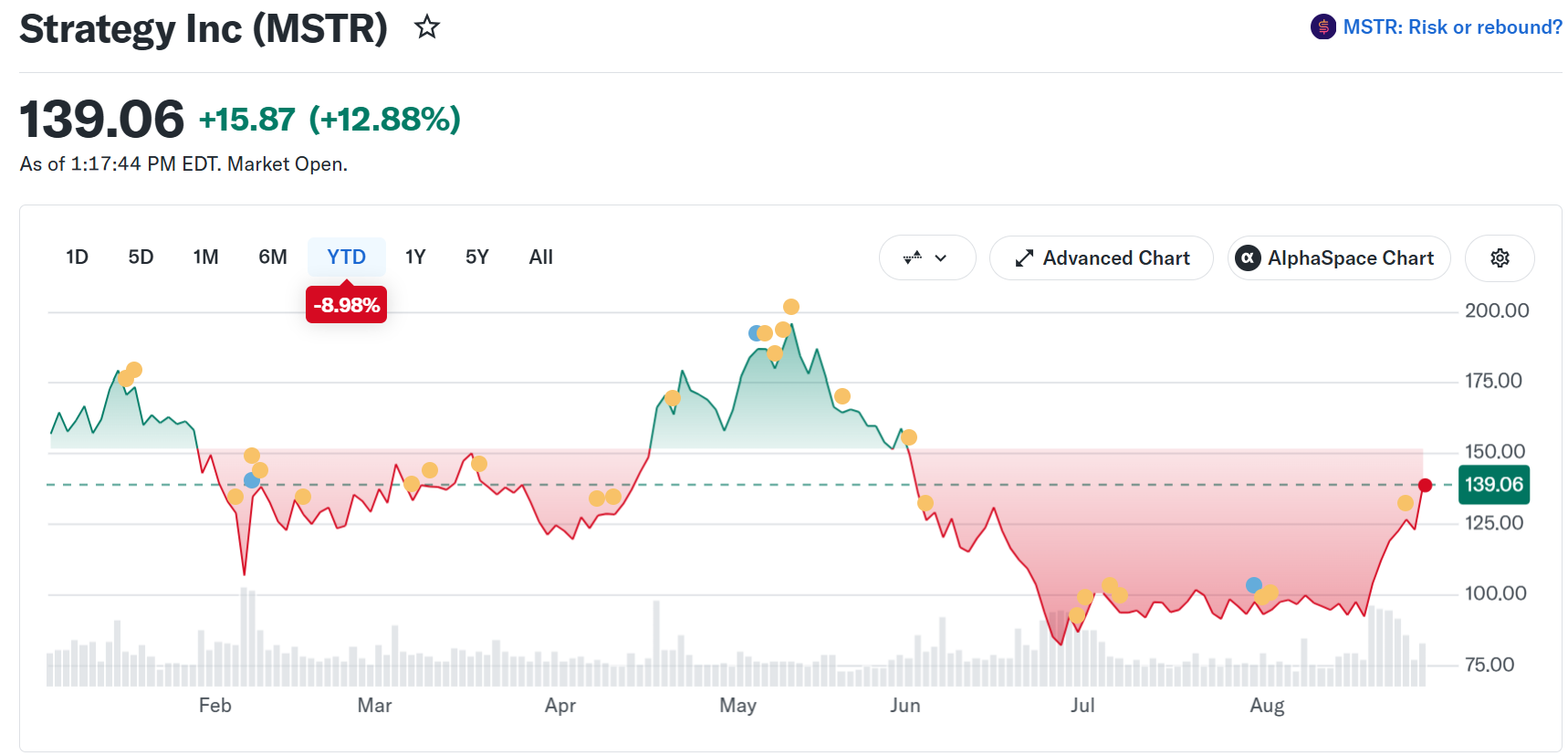
Strategy (MSTR), the Bitcoin treasury firm formerly known as MicroStrategy, says dollar reserves now offset nearly all its $6.75 billion debt. MicroStrategy stock climbed 12% on Thursday as fears of forced bitcoin (BTC) sales faded.
The company put its net leverage at roughly 0.1% in the announcement. In plain terms, its cash nearly cancels its debt, while its 840,447 BTC stack stands almost free and clear.
Follow us on X to get the latest news as it happens
MicroStrategy Stock Jumps as Cash Nearly Matches Debt
MSTR traded at $138.38 by midday Thursday, up 12%. The stock is now down less than 9% in 2026. One session repaired much of the year’s damage.

The advance builds on last week’s crypto stocks rally, which had already lifted MSTR to a two-month high.
The company’s chart shows MicroStrategy holds $6.69 billion in dollars against $6.75 billion of debt. The gap is just $60 million.

The centerpiece is a $5.10 billion reserve earmarked for dividend and interest payments. That pot held $4.0 billion at the start of August, per an SEC filing.
It swelled because the firm raised $3.28 billion this month and bought no Bitcoin at all.
STRC is Strategy’s largest preferred share series. Its terms pay a 12% annual dividend on nearly $10 billion of notional value.
Does the Bitcoin Sell-Off Fear End Here?
The fear was never abstract. MicroStrategy sold 1,638 BTC in July at roughly $64,000 per coin, the same filing shows. That sale fed doubts the treasury could survive a long crypto winter.
Skeptics argued a deeper drawdown would force more selling to cover obligations. Cash matching nearly all the debt weakens that case considerably.
Meanwhile, the prize is scale. MicroStrategy began buying Bitcoin in August 2020 and now controls roughly one of every 25 coins that will ever exist. The stack is worth about $67.9 billion, with Bitcoin trading above $80,000 at press time.

The margin is thin, though. The company paid an average of $75,419 per coin, so the whole treasury sits barely 4% in profit.
Other risks moved rather than vanished. Preferred shares still rank ahead of common stock and demand steady dividends. Much of the new cash came from selling MSTR shares, which dilutes holders.
The stock also remains well below last year’s levels after a bruising one-year performance duel with Bitcoin itself.
Saylor recently published a Bitcoin credit risk model that maps the price floors where those obligations bite. The next question is simple. Does Strategy start buying Bitcoin again, or keep stacking dollars?
The post MicroStrategy Won't Need to Sell Bitcoin Anymore? MSTR Stock Rallies 12% appeared first on BeInCrypto.


Ledger rejected claims that it had been hacked after OneKey’s Anzen security team reproduced a transaction replacement flaw against an outdated version of Ledger’s Ethereum application.
Summary
- OneKey reproduced a transaction substitution attack against Ledger Ethereum app version 1.22.1 in laboratory testing.
- Ledger says Ethereum app 1.22.2 added safeguards before OneKey publicly described its reproduction attempt online.
- An attacker needed control over device-host communications through malware, hostile webpages or compromised wallet software.
- Secure SDK version 26.6.1 blocked interleaved commands before they reached individual Ledger device applications directly.
- Ledger found no evidence the vulnerability was exploited against users or caused cryptocurrency losses anywhere.
OneKey founder Yishi Wang said on Aug. 27 that researchers completed the attack against Ethereum app 1.22.1 in a laboratory. Ledger confirmed the underlying vulnerability but said it had already patched the affected application before OneKey published its demonstration.
Ledger Ethereum flaw broke the trusted display guarantee
The vulnerability involved communication between a Ledger device and its connected host. Ledger applications receive instructions called Application Protocol Data Unit commands, or APDUs, from wallet software, webpages or other interfaces.
An affected application could accept a second APDU command while the user was reviewing an earlier operation on the device screen. The new command could overwrite signing parameters stored in shared memory without updating the displayed information.
Under that scenario, the user could review transaction A and approve it while the application generated a signature covering transaction B. The device would not warn the user that the underlying information had changed.
Ledger classified the issue as a time-of-check to time-of-use race condition. Its bulletin said the flaw defeated the trusted-display protection that hardware wallets use to let customers verify amounts, addresses and contract actions before signing.
The issue did not reveal seed phrases or extract private keys from the secure element. Instead, it could cause the protected key to sign parameters different from those shown to the user.
Exploitation required a compromised connection
An attacker needed control of communications between the Ledger application and its host. Ledger listed malware, a compromised wallet application, or a hostile webpage with WebHID or WebUSB access as possible routes.
The attack could not be performed remotely against an unplugged device. A user also had to approve the transaction while the malicious software manipulated its pending signing context.
Ledger said the defect was located in the input and output handling of its Secure SDK, not the device operating system or firmware. Applications compiled with affected SDK releases depended on their own state checks to reject commands arriving during an active review.
This means exposure was application-specific. An application remained protected if every asynchronous command entry point properly checked its state, even when built using the affected SDK.
Ledger disputes whether the test counts as a hack
Wang described the laboratory result by saying, “we hacked Ledger.” He also said the company fixed the problem in Ethereum app 1.22.3.
Ledger Chief Technology Officer Charles Guillemet disputed that description. He said “reproducing an already-patched bug is not ‘hacking Ledger’” and characterized OneKey’s work as a laboratory exercise against an older application.
The version history supports a more precise timeline. Ethereum app 1.22.2, released Aug. 13, was the first application update containing state checks designed to stop the documented transaction substitution path.
Ledger then released Secure SDK 26.6.1 on Aug. 21. That update blocks interleaved commands before application code receives them. Applications were subsequently rebuilt using the corrected SDK.
Ledger now recommends Ethereum app 1.22.3 or later because the newer release contains the broader SDK protection and addresses another transaction-display flaw. OneKey was therefore correct that 1.22.3 is protected, but the first application-level fix appeared in 1.22.2.
As crypto.news previously reported, Ledger had already said its Ethereum signing vulnerability was fixed before the public disclosure.
Users must update applications through Ledger Live
Ledger said it found no evidence that attackers exploited LSB 023 against customers. No cryptocurrency losses have been publicly linked to this specific issue.
Users should open Ledger Live, install the latest device applications and verify the Ethereum app version on the hardware wallet. Updating firmware alone does not replace applications built with an affected SDK.
Third-party developers must also review their state handling and rebuild applications with Secure SDK 26.6.1 or later. Ledger said the weakness was introduced in August 2025 and affected SDK versions through 26.6.0.
The disclosure follows other hardware wallet security fixes. In related coverage, BitBox patched two flaws affecting firmware installation and Bitcoin address handling, also without reporting confirmed exploitation.

Bitcoin’s latest rally appears to be driven partly by short covering rather than fresh leveraged positions, according to QCP Research. Open interest has fallen as BTC advanced, while strong spot ETF inflows have provided additional demand, the firm noted.
Spot demand is also strengthening, with QCP noting that ETF inflows are nearing the 95th percentile of the past year. However, the firm warned that the rally could become more fragile if short covering loses momentum and new demand does not replace it.
Strategy Raises Cash Without Adding Bitcoin
The market structure comes as Strategy raised more than $1.9 billion without adding Bitcoin to its holdings. The company reported 840,447 BTC for a second consecutive week, leaving its BTC reserve unchanged.
Strategy raised $2.01 billion through an at-the-market equity sale between August 17 and 23. It also built a $1.59 billion flexible cash reserve, bringing its total dollar assets to $6.69 billion.
The latest financing points to liquidity management rather than immediate accumulation. Strategy’s average purchase price remains $75,385 per BTC, with QCP viewing its cash reserve as support for preferred stock and post-dilution flexibility.
Macro Signals Keep Markets on Edge
Broader macroeconomic signals have also added uncertainty to the market. Minutes from the July Federal Open Market Committee meeting showed a 9-3 vote, with three officials preferring a 25-basis-point rate hike.
Attention now turns to Kevin Warsh’s appearance at Jackson Hole on Friday, although no specific policy guidance has been promised. Treasury Secretary Scott Bessent also announced plans to double the maximum size of long-term Treasury buybacks to $4 billion per operation from September 9.
The announcement pushed Treasury yields lower and the US dollar to a three-month low. QCP called the buyback plan a liquidity overlay, while the weaker dollar and elevated long-term yields could support Bitcoin and gold amid ongoing fiscal concerns.
Energy markets add another layer of uncertainty. Tensions around Iran and the Strait of Hormuz are raising supply concerns as tanker crossings decline and reserves fall below 300 million barrels.
With jobless claims due Thursday and Warsh speaking Friday, several near-term catalysts remain in focus. Bitcoin could remain range-bound into the September Federal Reserve meeting as markets assess whether current demand can sustain the rally.
The post Bitcoin Rally Could Lose Steam as Short Covering Fades: QCP appeared first on CryptoPotato.

The 6 Best TV Shows Released Since 2000, Ranked

XRP Investors, You Need To See This Chart TODAY (Signals Flashing)

Putin Threatens British Military Targets Over Ukraine Comments

Weekend Open Thread – Corporette.com

Weekend Open Thread: Brooks Brothers

London Mayor Sadiq Khan handed a peerage by Keir Starmer alongside 15 other Labour figures… just days before the PM leaves No10
XRP Investors, You Need To See This Chart TODAY (Signals Flashing)

Was this worth it…. #budget #asianfood #candy #firstperson #pov #money #viralvideo

BlackRock JUST Told Us 2 Altcoins To Look Out For The Bitcoin Supply Shock Will Give You Chills
-

 Fashion6 days ago
Weekend Open Thread: Madewell – Corporette.com
-

 Crypto World2 days ago
SpaceX stock could rise 75% to $240, JPMorgan says
-

 Business6 days ago
Musk’s Tesla, SpaceX Confirm $16.8 Billion ‘Terafab’ Chip Plant as World’s Largest Building in Texas
-

 Crypto World6 days ago
anatomy of crypto’s biggest liquidation event since 2021
-

 Crypto World3 days ago
A $30 Billion AI Fund Implodes, Now the SEC Is Investigating Wall Street’s Role
-

 Politics6 days ago
6 months on, Irish renters crushed by effects of government housing bill
-

 Crypto World2 days ago
Did Trump Just Move SpaceX Stock With One Truth Social Post?
-

 Business5 days ago
Mystery AI Model ‘Ox Alpha’ Draws Developers With Free Access as Chinese Lab Origins Remain Debated
-
 NewsBeat6 days ago
The ‘Lucky Dip Gang’ causing carnage for clicks: After five thugs were killed speeding in the wrong direction on a motorway, GUY ADAMS investigates a sick new trend… and why police aren’t even allowed to pursue them
-

 Crypto World2 days ago
Warsh Jackson Hole keynote puts financial innovation first
-
 Crypto World6 days ago
Nvidia Stock Suffers Longest Losing Streak Since 2022: Will Q2 Earnings End It?
-

 Business3 days ago
Moderna CEO warns China is pouring state money into mRNA technology
-

 Business3 days ago
NVIDIA Stock Drops Nearly 2 Percent to $210 on Seventh Losing Day Ahead of Critical AI Earnings
-

 Tech6 days ago
Unitree’s New Superman Robot Claims to Outjump and Outrun Every Human, Usain Bolt Included
-

 Business7 days ago
UK firms in critical financial distress rise 9% to 53,756
-

 Sports5 days ago
Deshaun Watson fires back at Browns fans after being booed: ‘It’s a disrespectful thing’
-
 Crypto World5 days ago
Google Gemini AI Predicts Ethereum Could Become the Trade Retail Misses in 2026
-

 Business6 days ago
Will Tesla Stock Be Higher or Lower a Year From Now? Here’s What Wall Street Analysts Are Saying
-

 Business2 days ago
Walmart takes aim at younger shoppers with new fashion brand
-

 Tech6 days ago
Faster chip in a familiar form factor
You must be logged in to post a comment Login