
Politics
Why can’t politicians admit there are serious problems with Pride?

Someone threatened to put a bullet in my head last weekend. My offence? Questioning whether a local Pride event was suitable for children.
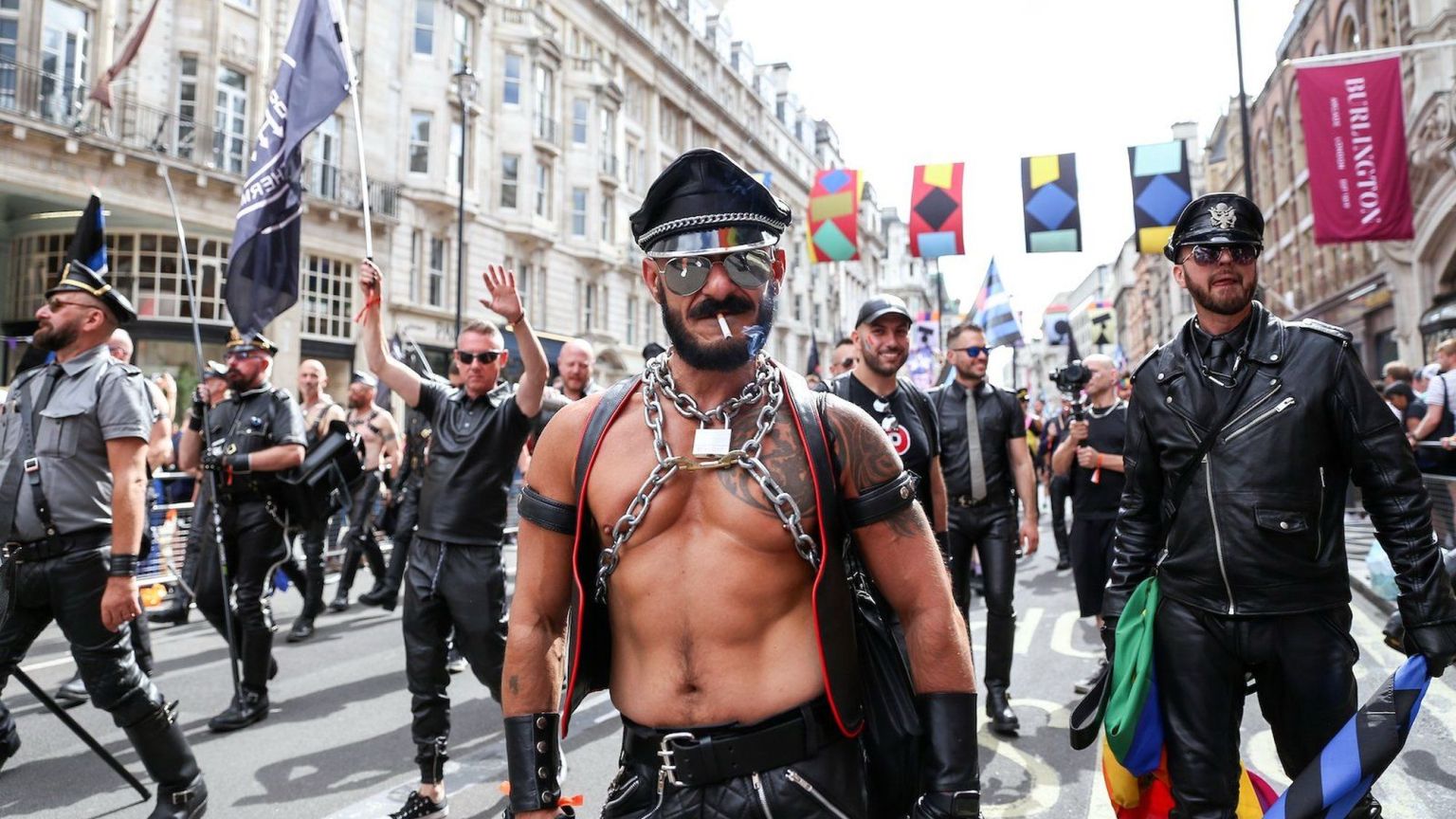
At Medway Pride in north Kent, I saw photographs of men in leather fetish gear, a placard reading ‘Trans rights or I bite’, and a young child posing beside an inflatable shark carrying a Progress Pride flag. The shark has become an unofficial mascot of the trans community, while the Progress Pride flag incorporates colours representing trans and nonbinary identities, alongside the traditional rainbow. Most parents I know want their kids to be kids – not introduced to bonkers ideas like there are 100 genders or that some people are ‘born in the wrong body’.
Medway Pride looked relatively tame compared with some. I’ve seen photographs from Pride events of adults wearing puppy-play masks, collars, chains and harnesses. It’s not uncommon to see stalls selling sex toys. Or hear of sex acts being performed in public. Adults are free to do what they like consensually, of course. But surely adult sexual subcultures don’t belong at daytime events marketed as family-friendly.
I posed a reasonable question on X: ‘Do men in fetish gear belong at Medway Pride?’ I tagged in local Labour MP Tris Osborne, who had been raving about the event on his socials. Osborne responded to suggest that if I was making an ‘allegation’, I should contact the police, before wishing me a ‘relaxing weekend’.
When a gay friend asked whether Medway Pride actually recognised homosexuality, Osborne was similarly dismissive. And when another constituent objected to the Progress Pride flag being flown from Rochester Castle, the MP replied: ‘Sure they’ll miss you’, before suggesting he move to North Korea.
Meanwhile, among the online responses to my tweet were ‘cunt’, ‘Nazi’, ‘dangerous nut job’ and ‘don’t breed’. One man called me a ‘fucking bitch with zero brain cells’ who needed a ‘bullet in my head’.
Osborne is far from a one-off. Plenty of politicians seem determined not to look too closely at Pride. Take Sadiq Khan, whose City Hall positively embraces Pride. In July, central London streets were eerily lined with neat rows of giant Progress Pride flags. Luke Pollard, Plymouth’s first openly gay MP, recently celebrated Pride with a video warning that ‘hate is growing in our society’ and that people are trying to ‘turn our community on each other’. Southend MP David Burton-Sampson has meanwhile attacked Reform UK’s moves to stop Progress Pride flags being flown from council buildings in Essex. Local women tell me he is far less willing to discuss women’s rights – dismissing that debate as a ‘toxic culture war’.
I can’t decide whether MPs who reject the idea that anything could be wrong with Pride are actually ignorant – or just pretending to be. Osborne, Pollard and Burton-Sampson are openly gay and might be expected to understand better than most how much Pride has changed.
Over the past few years, a number of people with organisational links to Pride groups have been convicted of, have pleaded guilty to or have been charged with serious child-sex offences. The most notorious was Stephen Ireland, co-founder of Pride in Surrey, jailed for 24 years for raping a 12-year-old boy and other serious offences. He was no fringe figure: he was reportedly described by a former chief constable as ‘a friend of Surrey Police’ and accompanied officers into schools for Pride engagement work.
But even without those cases, surely it’s clear to anyone with eyes that Pride is no longer simply about acceptance of gay and bisexual people. It now also encompasses gender identities and the wider QTIA+ umbrella, which is a different set of ideas altogether. And once Pride becomes a vehicle not just for gay rights but for broader ideological and sexual subcultures, you get a blurring of boundaries.
This is how you end up with men in fetish gear, on leashes and wearing gimp masks, marching through high streets on a Saturday afternoon alongside the cashiers from Tesco or nurses from the local hospital. But if you object to men in fetish gear hanging around your kids, you’ll be accused of hatred or bigotry – rather than seen as an adult concerned about child safeguarding.
Acknowledging Pride has a problem is not the same as saying Pride causes paedophilia, nor that everyone involved in Pride should be regarded with suspicion. It means organisations that actively involve children and families should expect safeguarding scrutiny – just like everybody else.
Ofcom is currently investigating GB News after more than 12,000 complaints about comments made by Caroline Farrow linking Pride with paedophilia, bestiality and other sexual subcultures. Her comments were challenged on air by the presenter – but apparently that still wasn’t enough for those who believe Pride should be beyond criticism.
Whatever you think of Farrow’s formulation, Pride clearly deserves scrutiny. The photographs exist. The videos exist. Anyone can look. Yet our political class appears strangely incapable of saying that perhaps not everything conducted under the banner of Pride is suitable for children.
So what exactly are they afraid of? Being called homophobic? Or transphobic? Losing the approval of activists? Admitting that a movement they have spent years enthusiastically endorsing may have developed serious problems? Pretending not to see them won’t make them disappear.

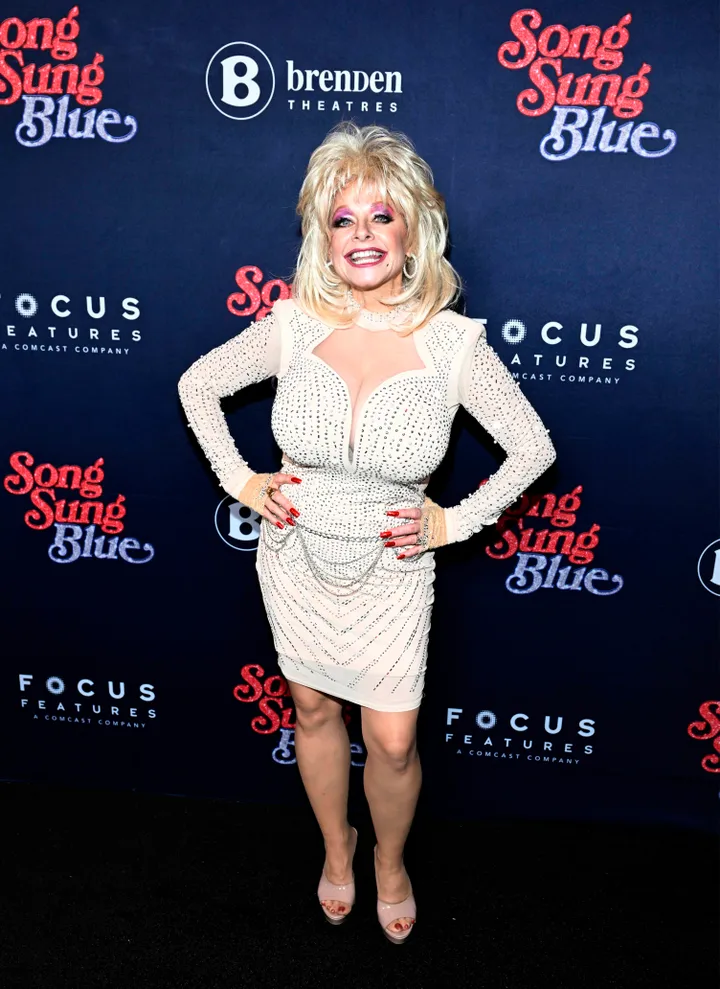
The news broadcaster CNN has issued a public apology after mistakenly including footage of a Dolly Parton tribute act in their reporting on the late singer’s death.
On Tuesday night, following the news that the Jolene singer had died at the age of 80, the current affairs show Laura Coates Live included a segment paying tribute to the late Grammy winner.
However, included in this was a photo of Las Vegas impersonator Kelly Vohnn rather than Dolly herself.
A CNN spokesperson later told Deadline: “We regret the error and apologise to the Parton family.”

Bryan Steffy/Getty Images for Focus Features
Kelly later posted a statement on Instagram which read: “I did not give anyone my likeness to be used in any way to fool people into thinking I am the real Dolly Parton. This has happened a couple of times now and it’s not OK.
“I don’t own these images. These photos were taken during a red carpet event in Las Vegas for the opening of the movie Song Sung Blue where multiple impersonators attended.”
She added: “My goal is to carry on [Dolly’s] giving, loving legacy in the world. We need reporters to do better due diligence when broadcasting to prevent [fake news].”
“I want to say, in no way, shape or form, have I ever given permission to anyone to allow them to use my image and say that I am Dolly Parton,” she said in the accompanying video. “I would never fool people that way. I am an impersonator.
“People know that they’re buying tickets to see an impersonator, and I would never say that I’m Dolly Parton.”
Kelly also told the New York Post: “I started getting all these texts in from friends saying that I was on CNN, and I couldn’t believe it.”
“I was already heartbroken at losing Dolly because of how much she has given to me as a woman and an artist,” she added. “But then to see these images of me on screen was just weird.”
Dolly’s team has confirmed that the singer died in hospital on Tuesday following what they described as a “brief battle with cancer”.
The legendary musician is to be laid to rest in a “small” and “private” funeral attended by close family, with fans being encouraged to donate to one of her charity initiatives in her memory.

Mark Carney has demolished Donald Trump’s attempt to change the name of Lake Ontario as part of his ongoing feud with Canada.
The US president signed an executive order on Thursday re-naming the vast expanse of water “Lake America”.
It came after trade talks between America and Canada collapsed last week, with Trump imposing 50% tariffs on imports from its neighbour.
Canada has said it will retaliate with “dollar for dollar” tariffs of its own on American goods.
Lake Ontario is one of the five “Great Lakes” which straddle America and Canada.
Trump said the name change was “official, effective immediately”.

But responding on X, Canadian PM Carney blew Trump’s claims out of the water by pointing out it has been known as Lake Ontario for centuries and will remain so “now and always”.
He said: “The name Lake Ontario comes from the Wendat word Ontari’io, which, appropriately, means ‘the lake is beautiful, the lake is big’.
“The name is more than 400 years old, predating both the Confederation of Canada and the Declaration of Independence of the United States of America.
“We know that America is changing. Their trading relationships, their foreign policies, their national monuments, their hydronyms.
“Canadians also know that naming reality means calling it Lake Ontario – then, now and always.”
Other politicians, including Ontario premier Doug Ford and his Nova Scotia counterpart Tim Houston, also blasted Trump.
Listen to Commons People, the podcast that makes politics easy. Every week, Kevin Schofield and Kate Nicholson unpack the week’s biggest stories to keep you informed. Join us for straightforward analysis of what’s going on at Westminster.


4 min read
I am privileged to be the first Labour MP for Hexham: a constituency stretching from County Durham to the Scottish border, and from Cumbria in the west to the edge of Newcastle.
Farming is woven into the landscape and life of our constituency. Farmers produce our food, shape our countryside and sustain the jobs, businesses and communities that make Northumberland what it is.
But farming has become harder and less certain. Fourteen years of Conservative government left farmers contending with a botched Brexit deal, damaging trade agreements and the withdrawal of European support without a reliable replacement.
It is no secret that Keir Starmer’s changes to Agricultural Property Relief and the sudden closure of the Sustainable Farming Incentive further undermined confidence. We must acknowledge that trust has been damaged. But Andy Burnham’s government now has an opportunity to reset that relationship: listening to farmers, providing greater certainty and treating them as essential partners in delivering our economic, environmental and food-security ambitions.
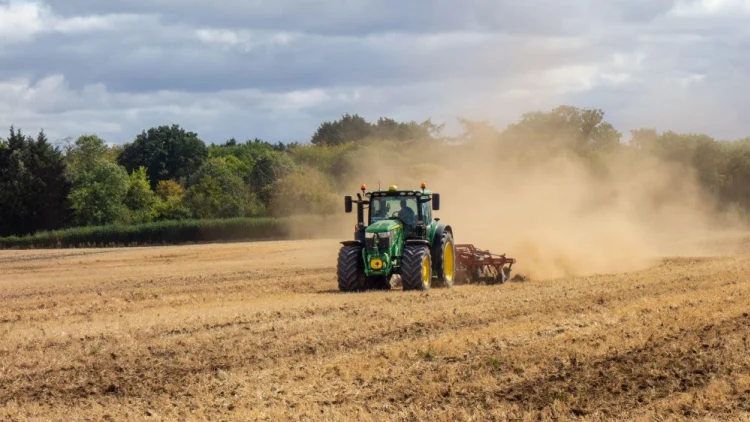
The urgency of that task has been underlined by the extreme weather of recent months. Across Northumberland, weeks of searing heat and little rain have left fields scorched, grass struggling to grow and soils cracked. Crops have been put under severe stress, while livestock farmers have faced dwindling grazing and the prospect of using winter feed months earlier than planned.
For farmers, drought means smaller harvests, higher feed bills and difficult decisions about livestock. It can wipe out months of work and investment, with the effects continuing long after rain returns.
That reality makes the Conservatives’ retreat from climate action all the more indefensible. Kemi Badenoch now acknowledges that climate change is making farmers’ lives harder, while attacking the policies designed to limit its impact. The Conservatives cannot pose as champions of British farming while abandoning the action needed to protect its future.
And what happens on our farms does not stay there. When harvests fail, or businesses become unviable, the consequences travel along the supply chain, through rural employers and onto supermarket shelves and household budgets.
War, volatile energy prices and extreme weather are already disrupting food production and trade. Greater reliance on fragile international supply chains leaves Britain more exposed to every new shock. And once those shocks drive up food prices, they rarely return to where they started. The Energy and Climate Intelligence Unit describes this as the “rockets and feathers” effect: prices rise rapidly during a crisis but fall only slowly and partially afterwards.
Building resilience into British farming is therefore not simply a countryside concern. It is part of protecting every family from a permanently more expensive weekly shop.
It is also vital to rural prosperity. When farmers receive a fair return, that money circulates through nearby towns and villages, supporting vets, machinery dealers, food processors, shops and pubs. A successful farm sustains far more than the people working within its boundaries.
The public wants to buy British food, but our farmers are too often undercut by imports produced to standards that would not be accepted here. Government should uphold high standards in trade agreements, improve transparency over where food comes from and use its purchasing power to put more British produce into schools and hospitals.
Backing farming is also essential to our environmental ambitions. Healthy soils retain water during drought and absorb it when heavy rain arrives. Trees, hedgerows and restored habitats can shelter livestock, support pollinators and reduce flooding. With the right support, farmers can help protect the country from the climate extremes they are already experiencing.
I therefore welcome the additional support announced during Burnham’s recent visit to Cornwall. It suggests a government prepared to listen, but it must develop into a dependable, long-term settlement. Farmers need support to manage water, improve soil health and withstand increasingly frequent extremes. Environmental schemes must provide certainty and properly reward them for producing food while restoring nature.
As Chair of the Rural PLP, I look forward to working with the PM to ensure farmers and rural communities are heard at the heart of government.
Joe Morris is the Labour MP for Hexham
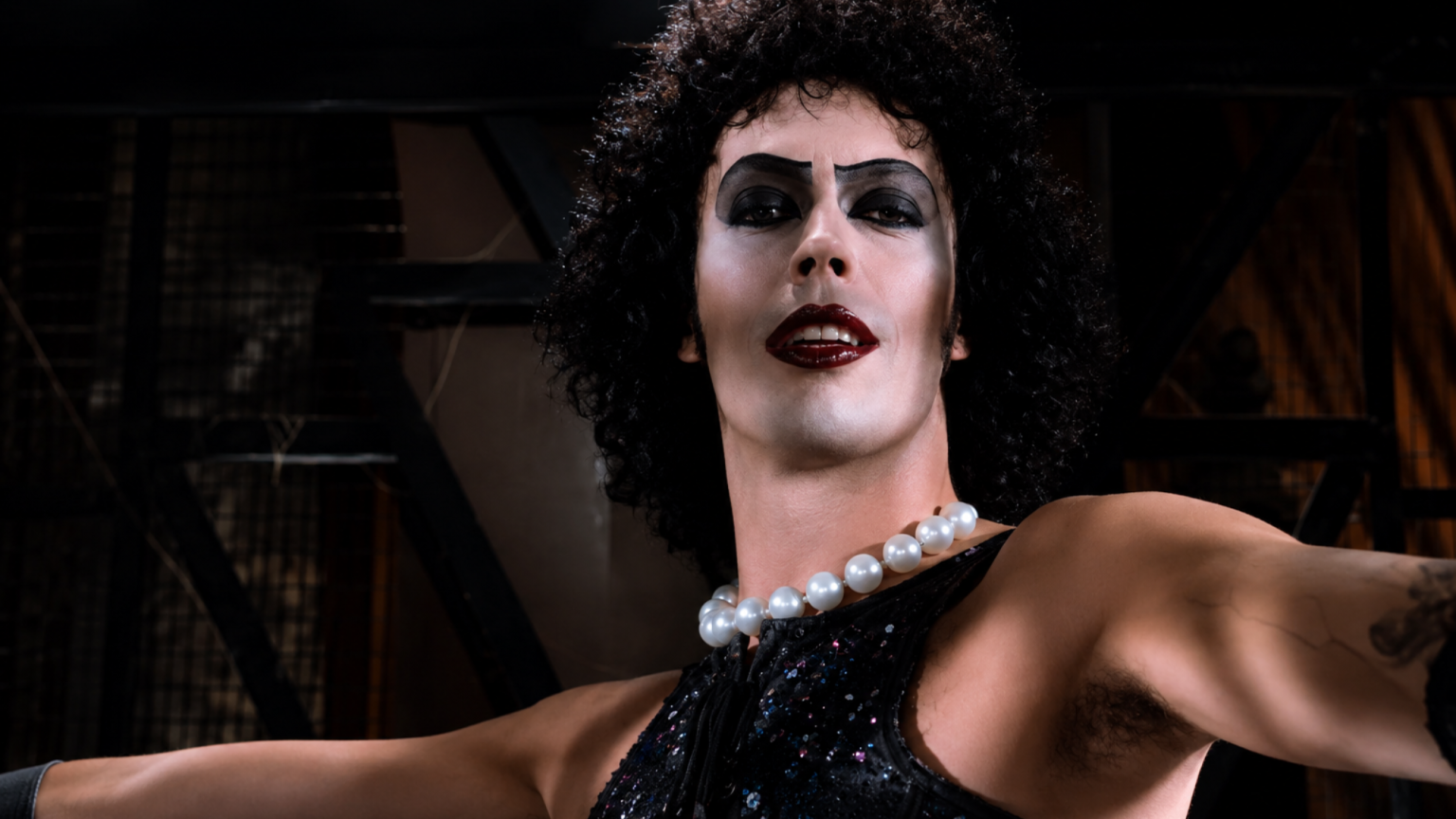
Tim Curry was a shapeshifter. Notoriously media shy, he let his fans delight in his wild array of acting roles without really ever knowing him at all. When his more persistent admirers formed an emotional bond with the Tim Curry of their imaginations, he would sometimes be forced to set them straight. ‘I’m just a person’, he would say, ‘and I’m not your person’.
One of the joys of watching Curry on screen was that he was often unrecognisable from one role to the next. I have a childhood memory of the moment I learned that the demon in Legend (1985), the villain in Annie (1982), the butler in Clue (1985) and the cross-dressing alien scientist in The Rocky Horror Picture Show (1975) were all played by the same man. It was quite the revelation.
Curry died this week aged 80. The publication last year of his memoir, Vagabond, gave fans a tantalising glimpse of the real man, but even there he was determined to retain an air of mystery. Those who were hoping for salacious anecdotes about his love life were disappointed, because, as he rightly pointed out, ‘specifics about my affairs of the heart or the bedroom are – respectfully – none of your fucking business’.
His vagabond status was well earned. As the child of a military father, he was forever on the move, and it is easy to see how these early experiences shaped his capacity to embody such a range of characters. His first accolade came early when he was awarded the prize for the ‘Most Beautiful Baby in Hong Kong’. His family relocated roughly every 18 months for the first 11 years of his life, meaning that he was continually exposed to new people and environments.
Little wonder that Curry saw mutability as the essence of his vocation. As he put it: ‘How can you trust somebody, or truly know somebody, who appears as a king one day and a jester the next? What does it mean when neither role is the true identity of the person, and when that very person might be gone the next day?’ In this, he might have been paraphrasing William Hazlitt’s essay on actors, in which he described them as ‘today kings, tomorrow beggars’ and wrote that ‘it is only when they are themselves, that they are nothing’.
Curry’s key philosophy in life struck him during a gap year of travelling across Europe and north-west Africa with his schoolfriend, Richard Cork (later the art critic for The Times). Drunk on brandy one night in Marrakesh, the two friends made a pact to thoroughly explore all their contradictions and ‘see them through to their conclusion’. It proved to be Curry’s guiding principle throughout his life and career.
As he explained in his memoir: ‘Professionally, the lure of pursuing contradictions has drawn me toward complex characters or compelled me to make them more complex and nuanced: so, for example, a scoundrel who is also charming, or somebody rather abhorrent whom I can also play out as being quite irresistible. Those are the roles that have enticed me the most.’
Few roles better embodied this combination of the abhorrent and the irresistible than Dr Frank-N-Furter in the West End musical, The Rocky Horror Show. This anarchic rock’n’roll homage to science fiction and horror B-movies enjoyed an immediate success when it opened on 19 June 1973 at the small venue upstairs at the Royal Court Theatre, on a night that was suitably stormy and lightning-streaked. When adapted into a film in 1975, Frank-N-Furter was his breakthrough role. In spite of the movie’s initial failure at the box office, its subsequent cult status has ensured his legacy.
When I interviewed the show’s creator, Richard O’Brien, in 2013, he described Curry’s portrayal of Frank-N-Furter as ‘definitive’. Indeed, it is difficult to imagine how his performance in the movie version, with its delirious energy and lip-smacking abandon, could possibly be bettered. As O’Brien told me: ‘We had one actor 20 or 30 years ago who said to me: “I hope you know, Richard, I’m stealing everything off Tim Curry.” And I thought that was an honest way to approach it.’
Curry later gave the very best advice on how to approach the role. ‘None of the characters in the show are in drag’, he said. ‘We’re all wearing what people normally wear in Transylvania.’ Most importantly, Frank doesn’t ‘camp around’ or pretend to be a woman. ‘He is a very strong, aggressive man… In other words, if you’re going to attempt to truly enter the character, wear your high heels like a man.’
To make his feature-film debut in such an extreme part carried risks of future typecasting, yet the astonishing variety of roles that followed proves that he successfully manoeuvred his way through that minefield. He played Mozart in the Broadway production of Peter Shaffer’s Amadeus (1980-1981) and was nominated for a Tony Award. Other Tony nominations were to follow for his performances as Bill Snibson in Me and My Girl (1987-1988) and as King Arthur in Spamalot (2004-2007). It was quite the leap from such theatrical turns to his famous on-screen villains – Pennywise the Clown in the miniseries It (1990) and Cardinal Richelieu in The Three Musketeers (1993) – but he made it seem effortless.
Even in these most diabolical of guises, Curry insisted that he was able to draw on his own life experience. Of Pennywise and Richelieu, he acknowledged that his ‘terrifying childhood memories’ of his mother – who possibly suffered from an undiagnosed form of bipolar disorder – informed his approach. And might it even be the case that he was thinking of his mother during his brutal axe murder of Meat Loaf’s Eddie in The Rocky Horror Picture Show? ‘Well, between us, yes’, he confessed in his memoir. ‘Yes, perhaps I was.’
Those who tried to pigeonhole Curry were attempting the impossible; shapeshifters are not so easily categorised. It seems appropriate that one so protean and elusive was, at an early screening of The Rocky Horror Picture Show, mistaken for an imposter. A cinema manager tried to have him ejected for impersonating Tim Curry.
In his essay on actors, Hazlitt quotes Shakespeare’s All’s Well That Ends Well: ‘The web of our life is of a mingled yarn, good and ill together.’ This could serve as a fitting maxim for any actor, for whom even the most traumatic experiences can provide material for the craft. The body of work Curry leaves behind is testament to how successfully he wove his many disguises from the mingled yarn of his own extraordinary life.
Suicide is pernicious. It is a tragedy that passes unbearable grief to loved ones forevermore. The unanswered questions torment those left behind because no one is ever truly sure what happened. We need to know what happened – it allows us to make sense of things. But suicide withholds this.
In many ways, suicide passes the pain on to other people. One suicide begets more suicides. It’s an extremely contagious event. Perhaps because it offers a false escape hatch for people who are in mental pain, when one person takes it, the idea is somehow vindicated and others follow.
None of this is new. We have known for centuries that suicide can be contagious. After Goethe published The Sorrows of Young Werther in 1774, reports emerged of young men imitating his suicidal hero. It became known as the Werther effect.
The removal of the shame and secrecy that once surrounded suicide was welcome. But it created another problem: how do you talk openly and compassionately about suicide without encouraging contagion?
That is why, back in 1989, suicidologists, psychiatrists, psychologists, public-health officials and journalists gathered in the United States to establish recommendations to reduce suicide contagion. Their conclusions were explicit. They warned against glorifying people who died by suicide and against presenting suicide as a means of accomplishing an end. They also cautioned against public eulogies and memorials that might give vulnerable people the impression that society was honouring the suicide, rather than mourning the death.
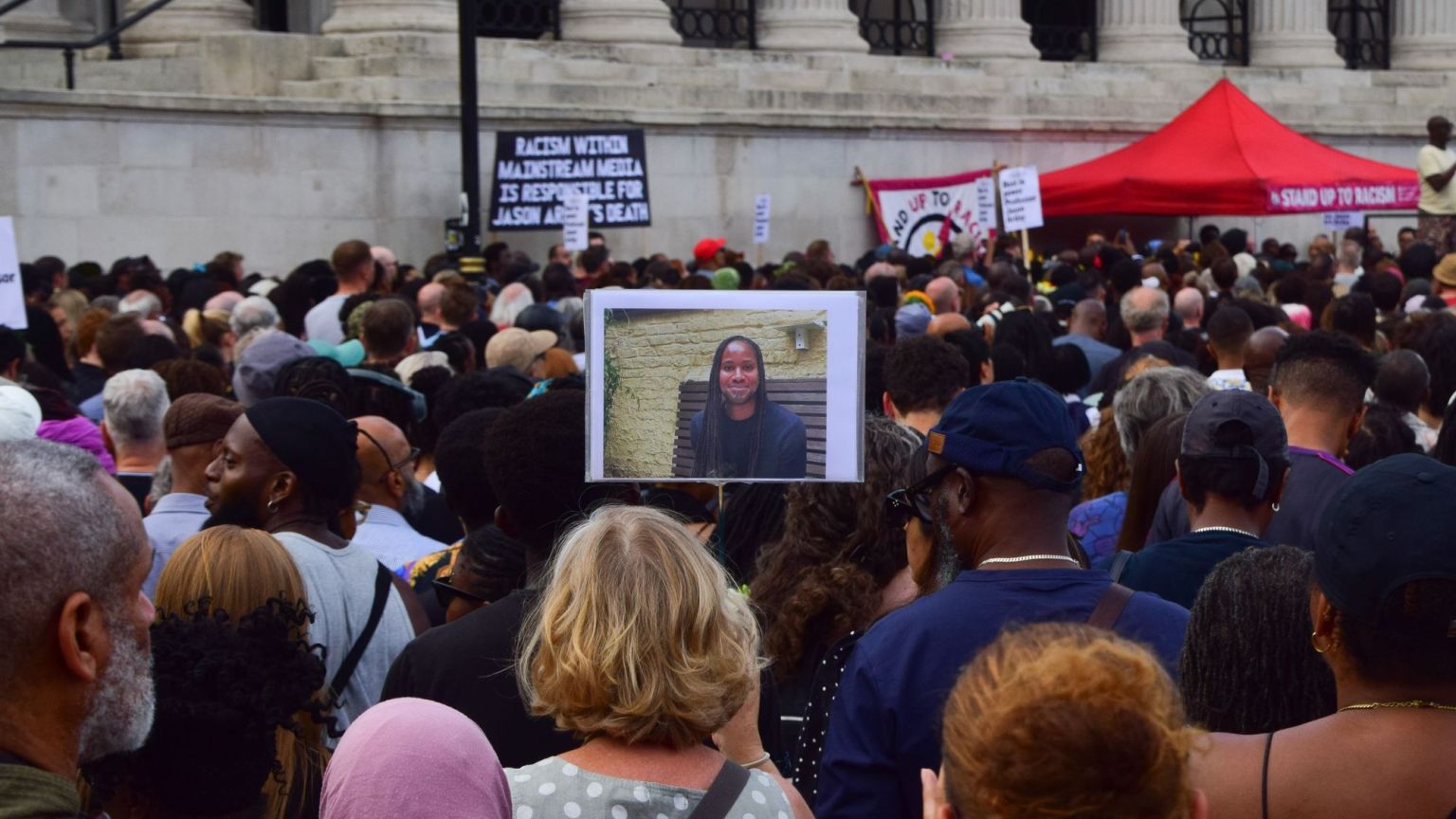
For these reasons, the vigil for Jason Arday in Trafalgar Square last week should never have taken place. Stand Up To Racism organised this vigil in order to remember Arday and, presumably, to highlight the dangers of racism. But in doing so, it risked encouraging copycat suicides.
Thousands of people gathered beneath Nelson’s Column for the Arday vigil. There were flowers, speeches and placards reading ‘Rest in Power Professor Jason Arday’. Speakers presented Arday not simply as a man whose death was desperately sad, but as a victim and even a martyr. A villain was identified – Nathan Cofnas, one of the researchers who drew attention to Arday’s plagiarism – and he was booed by the crowd.
The irresponsibility of this is almost impossible to overstate. People who are suicidal fantasise about exactly this kind of overblown romanticisation of how they will be mourned, appreciated and valorised after death. They imagine everyone crying their eyes out at their funeral.
We all do this a little. Most of us know what it’s like to indulge ourselves with the idea that one day our very worst enemies will be publicly forced into regretting their harsh words to us. We daydream that one day we will be understood as heroes to everyone we know. This fantasy should never have been staged in Trafalgar Square.
In 1994, five years after the release of the media guidelines on suicide, Kurt Cobain killed himself. There were enormous fears about what would happen. Cobain was almost the perfect candidate for romanticisation – young, beautiful, troubled, world-famous and an icon of alienated youth.
Yet the response was remarkably restrained. Researchers subsequently found that the expected rise in suicides did not occur, although calls to crisis lines increased substantially, especially in Seattle, where he died. It is believed that the unusually responsible media and public-health response may have helped. The response deliberately worked against making his suicide heroic.
Twenty years later, when Robin Williams died by suicide in 2014, the media environment had changed. Social media had ridden roughshod over the old media guidelines. Researchers subsequently found 1,841 more suicides in the United States between August and December 2014 than their statistical model predicted, an increase of almost 10 per cent. We cannot say that Williams’s death caused those deaths. But the association is precisely why suicide researchers take contagion so seriously.
Arday’s treatment was not unique. Others have come through similar public maulings. James Frey endured an onslaught after parts of his supposedly autobiographical A Million Little Pieces were exposed as invented. Rachel Dolezal and Belle Gibson became international objects of ridicule when their fabrications came to light. More recently, The Salt Path controversy had many of us glued to our screens as another inspirational life story was ripped apart.
Arday’s story had all the ingredients of an irresistible scandal. The combination of the silly season, Arday’s good looks and his outlandish claims, coupled with the nerdy intensity of Cofnas – with his controversial views and mad-scientist vibe – made the story impossible to ignore.
The response to Arday’s death was depressingly predictable. The academics went to war against the journalists. The journalists retaliated and turned on academia. The right blamed DEI while the left blamed the right.
Arday was in the middle of it all. But in choosing suicide, he left behind grieving friends, a family and two fatherless children. We cannot know what happened in his final moments. Whatever Cambridge University did to fulfil its duty of care, it wasn’t enough to save his life. Yet people choose suicide for a whole raft of reasons – typically, many different issues have converged. It is therefore not only dangerous but also inaccurate to reduce his death to a simple morality tale in which journalists criticised him and he died as a consequence.
Jason Arday is dead. What should have brought sobriety instead brought a vigil. For a person already experiencing suicidal ideation and in a state of high emotion, what exactly is the message here?
If the saddest story in the world unfolds tomorrow and another famous figure dies by suicide, we should mourn him, grieve him and talk about his life. Talk about the complexity of suicide. Talk, above all, about the possibility of surviving unbearable distress. But we should never turn his suicide into his apotheosis. We should never give suicidal people reason to believe that death is the moment when the world will finally love them.
Stella O’Malley is a psychotherapist. She is also the director and founder of Genspect.
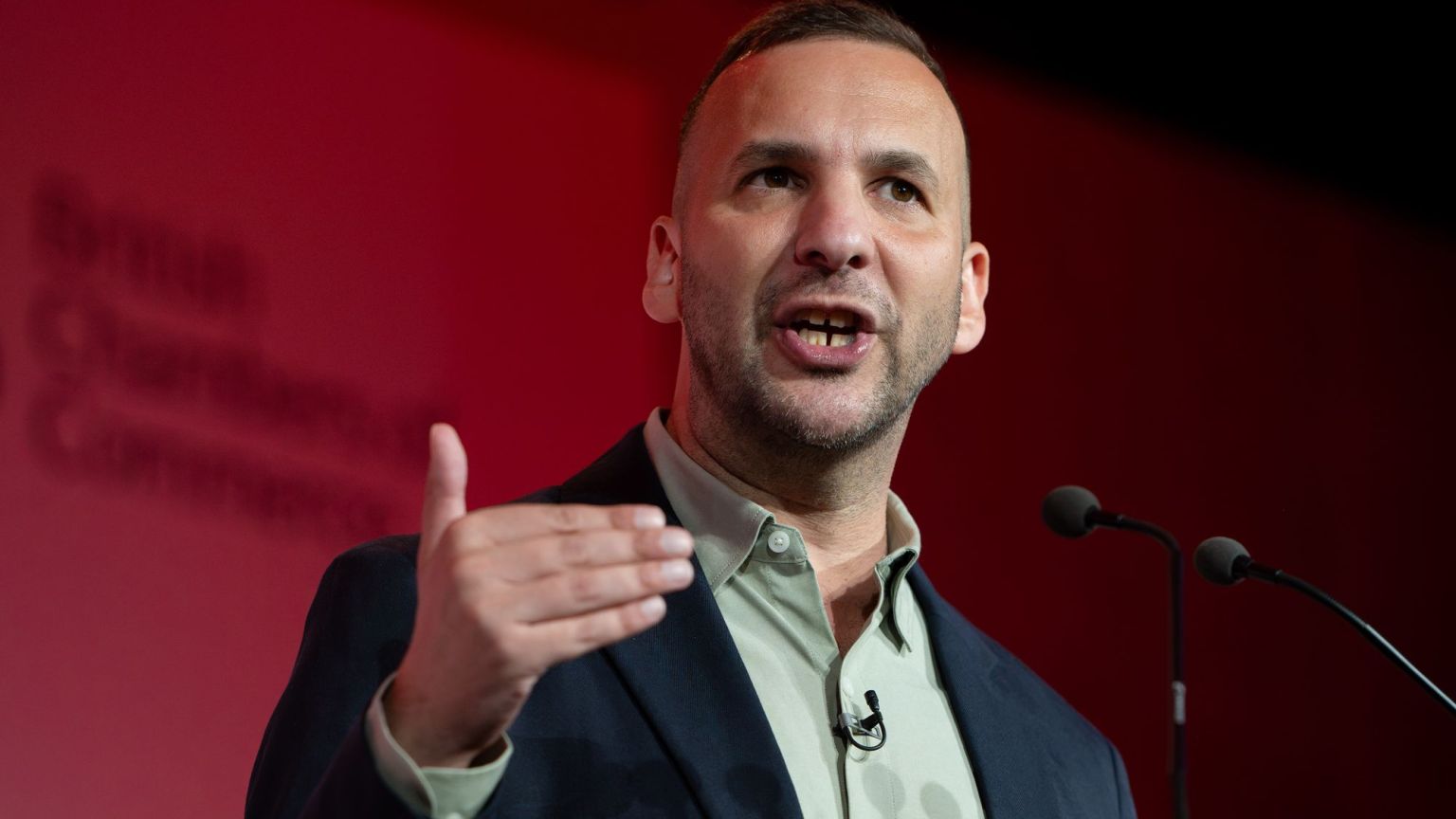
Gone are the days when the Green Party of England and Wales was full of hippie tree-huggers singing ‘Kumbaya’ around a campfire. Today, the party is unrecognisable – and far more sinister. It has been intolerant of dissent in its own ranks for a few years. Now, it is turning that intolerance against the media.
The recent death of former Cambridge professor Jason Arday has provided Green Party leader Zack Polanski with his latest pretext for going after the media. Speaking last week, he blamed Arday’s seeming suicide on the media’s reporting of Arday’s plagiarism, academic fraud and rampant fabulism. He called on the government to ‘ensure a responsible [media]’, by holding an inquiry into its ‘culture and behaviour’.
This came just days after he’d made a similar demand in response to some newspapers’ refusal to toe the ‘climate emergency’ line in their coverage of the heatwave. ‘It’s time we sorted out the press’, Polanski posted on X. ‘Constant misinformation to protect their donors and fossil fuels is destroying lives and our planet. The government must step up and stop being cowardly.’
If you think the talk of ‘sorting out’ and changing the ‘culture and behaviour’ of the press sounds ominous, that is because it is. It is also deeply authoritarian.
In the comments to his X post, Polanski posted two links that he encouraged his followers to sign. The first was a petition to parliament calling for a ban on foreign media ownership, the establishment of a social media levy and restrictive regulation. The second link directed followers to Hacked Off’s website, and a petition demanding that the government launch an inquiry into the British press.
Polanski has since doubled down on these comments. He has claimed that ‘freedom of the press should never have been freedom to own and dominate the press’. He has insisted that the UK regulate its media ‘now’. He is particularly obsessed with a ‘tiny number of billionaire firms’, which Polanski seems to believe control the media like a sinister cartel.
It should surprise nobody, in fact, that behind that gap-toothed grin, Polanski does not like the media much at all. And that’s because he doesn’t like to be challenged or scrutinised. After all, columnists have ridiculed him for his claim, made over a decade ago, that he could enlarge the size of a woman’s breasts through hypnotherapy. Reporters also exposed the fact that he failed to pay council tax on his houseboat, and that he dishonestly claimed to have worked as a spokesperson for the Red Cross.
It’s not just the thin-skinned Polanski who wants to muzzle the press. It seems to be a widely held desire throughout the Green Party. Last week, the Spectator revealed that 89 members had endorsed a motion, submitted ahead of the party’s Autumn conference, with the title: ‘Justice for Jason Arday: Stopping Racist Smear Campaigns and Reforming Media Power.’
This censorial motion calls for two state regulators to ‘map and address racism’ and ‘ableism’ in the media. It also wants a regulator to have the power to clamp down on ‘harassment’, which is the term Green supporters have used for press scrutiny.
The Greens’ ultimate aim would be to force every major national newspaper to join a state press regulator. And the already overpowered media regulator, Ofcom, would be given powers to force large social-media platforms to remove ‘hateful, discriminatory and conspiratorial’ material, seemingly even where it falls within the bounds of lawful speech.
Recently, we witnessed just how menacing Green Party supporters can be. Writing in the Spectator earlier this month, Jonathan Sacerdoti revealed an attempt by activists to have him silenced by the police. After a disagreement with a canvasser who visited his home in April, Sacerdoti was told that an allegation of ‘harassment’ had been made against him. Conceding that there was no evidence for the complaint, the police eventually closed the investigation. But it was another telling insight into how these people operate.
The current militancy of the Greens has been a few years in the making. In 2022, Shahrar Ali was sacked as the party’s policing and justice spokesperson – and later expelled from the party – for expressing his gender-critical beliefs. This censorial trend has accelerated under Polanski.
The Green Party is no longer a benign force in British politics. It seems to have jettisoned its old environmental concerns to pursue a string of culture-war issues, championing trans rights (at the expense of women) and demonising Israel. And now it’s coming after press freedom.
The Greens have now shown their true, authoritarian colours.

‘When I was young, I had no sense, I bought a flute for 50 pence / The only song that I could play was fuck the Pope and the IRA.’
So went the chant that emerged from the away section following Chelsea’s Monday night clash with Fulham FC at Craven Cottage. The impromptu chorus of ‘Flute for 50 Pence’, an infamous sectarian football song that was historically deployed by sections of Rangers FC supporters, appears to have sent Chelsea officials into a nervous tailspin.
‘We would like to strongly remind all supporters that the club does not condone any chants which discriminate against a protected characteristic’, read the email sent out to Chelsea’s fanbase earlier this week. ‘Any supporter found guilty of this will face the strongest possible action, which could include indefinite suspension from attending all Chelsea matches and ejection from the stadium.’
The public-service announcement concluded by emphasising the club’s commitment to ensuring ‘a welcoming matchday experience for all’, and asked supporters ‘to take collective responsibility and remain vigilant in helping us tackle discriminatory chanting’.
Crackdowns on football chants are nothing new. Chelsea, like many Premier League clubs, currently has extraordinarily broad conditions on prohibited chants. It reserves the right to sanction supporters for any language of an ‘offensive, immoral, obscene, abusive, indecent, political or discriminatory nature’, with the framework stating discriminatory language can attract a 36-month ban. Indeed, over the past few years, the list of ditties that might lose you a season ticket has been growing. But there’s something especially silly about this latest addition – not least because ‘Flute for 50 Pence’ takes aim at a public religious figure and a terrorist organisation. However vulgar, indecent or ugly the historical sentiment, the idea that fans should be ousted for singing it shows just how institutionally micromanaged the nation’s favourite sport has become.
English football has been in this censorial quagmire for a while now. What began with the Football (Offences) Act 1991, which criminalised ‘racialist’ and ‘indecent’ chanting at designated matches, has expanded into an ever-growing regime of policing what supporters say and sing. More recently, the CPS has taken a hard line against so-called tragedy chanting: references to Hillsborough, the Munich air crash and other football-related disasters, even in jest, can lead to prosecution under public-order legislation. While nobody wants football grounds to become arenas for racism, intimidation or threats, somewhere along the way, the principle that fans should not be subjected to abuse has become entangled with a rather different one: that fans should never be allowed to say anything that could conceivably wind someone up.
For better or worse, football was once one of the few places in British public life where people were permitted to be spectacularly obnoxious. The terraces were partisan, profane and deliberately antagonistic. Nobody pretended otherwise – and no one with a brain mistook a football chant for a peer-reviewed contribution to public discourse. The modern game, by contrast, increasingly treats supporters as the nasty, rough edge of English football that safeguarding departments can’t sand away fast enough. It is yet another example of a proletarian pastime being neutered for the comfortable enjoyment of the middle classes.
There is a world of difference between protecting supporters from threats and intimidation and protecting them from words they find objectionable. The world will keep turning if football culture stays a little unruly. As a Catholic, I’m unlikely to join in with a chant that effs and jeffs about the pontiff. Then again – who am I to cancel the Rent Boys’ fun?
Georgina Mumford is a London-based writer.
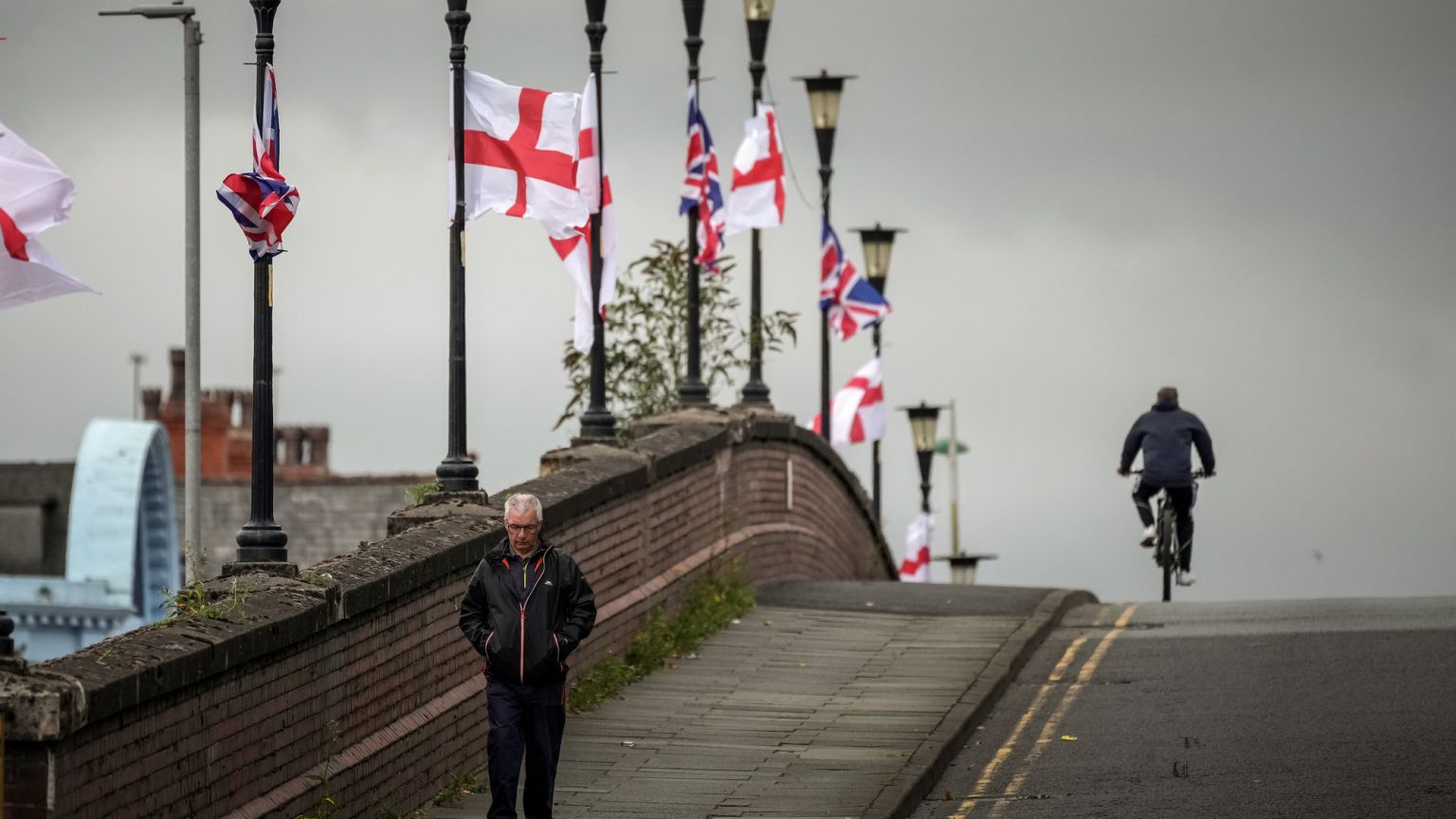
The post Birmingham has declared the England flag haram appeared first on spiked.
Dr Helen Millman is a climate scientist and glaciologist based at the University of Exeter. She writes in a personal capacity.
The UK’s commitment to reach net zero by 2050 was introduced by a Conservative government and supported across Parliament because the scientific evidence shows that limiting warming to 1.5°C requires global CO₂ emissions to fall rapidly this decade and reach net zero by the middle of the century.
This is the consensus reflected by the IPCC and, like all IPCC reports, was approved by the governments of its 195 member countries. Even Saudi Arabia, a nation not known for its eco-zealotry, couldn’t change the scientific assessment to suit its interests. It is, therefore, surprising to see Kemi Badenoch dismiss our 2050 net zero target as “arbitrary” and a “political programme.”
Accepting the target and delivering it are different things, but the target itself is scientifically grounded. As long as greenhouse gas emissions remain above net zero, global temperatures will continue to rise, increasing the frequency and intensity of heatwaves, wildfires and other climate extremes. This summer, in a 1.4°C warmer world, we have seen people lose everything to wildfires and our infrastructure fail in unnaturally hot weather. A&Es have experienced their busiest period on record, with excess deaths from heatwaves running into the thousands in England alone. As UK temperature records continue to be broken, farmers have raised concerns about food shortages amid what’s expected to be the worst harvest on record.
Against this backdrop, the party leadership has made a series of dubious claims about net zero. Badenoch has claimed that net zero by 2050 is “impossible”. In reality, the transition is achievable for around 1 per cent of GDP, far less than the costs of not reaching net zero by 2050.
She has suggested that the UK’s net zero commitment has caused emissions to increase. In fact, since our net zero target became legally binding in 2019, our consumption-based CO2 emissions figures – which include offshored emissions – have fallen from 23 per cent below 1990 levels to 27 per cent below 1990 levels. In contrast, the party’s proposals of more North Sea drilling, removing emissions targets and cutting carbon taxes would put the UK on a higher-emissions pathway than current plans and keep the UK tied to a more expensive energy model for longer.
Just recently, Claire Coutinho was forced to defend a report which she’d hailed as “the most detailed energy analysis ever.” When it was found that those details were questionable, she doubled-down in a Trumpian style rebuttal with further inconsistencies and attacks on her critics.
Coutinho and Badenoch are right that British industry faces exceptionally high electricity prices, but they are wrong to blame carbon taxes and renewables. The steel industry, for instance, is largely exempt from environmental levies and receives network cost relief through the Supercharger scheme.
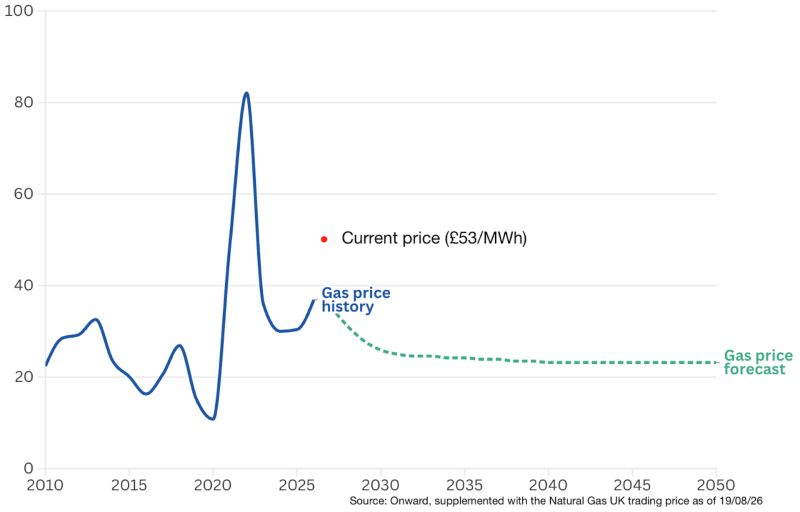
Yet British steelmakers still pay more for electricity than their French and German counterparts because UK wholesale electricity prices remain tied to the price of gas. In the latest auction, contracts for onshore wind and solar were awarded at around £72 and £65 per megawatt hour respectively, compared with more than £147 per megawatt hour for new gas generation. Renewables are not cost-free, requiring investment in networks, storage and flexibility, but clinging to an outdated system dominated by expensive gas is not the cheaper route.
Until the world reaches net zero, warming will continue, making climate impacts harder, more costly and, in many cases, beyond our ability to adapt to. This year’s poor harvest points to what more frequent and severe droughts will mean for crop yields and food security. Rising sea levels will make low-lying coastal communities increasingly difficult or impossible to defend, threatening homes, infrastructure and farmland. More properties will become uninsurable due to extreme weather, wildfires and flooding, while investment will be diverted towards repairing damage and adapting existing assets rather than raising productivity and living standards. A slower transition for Britain carries severe economic, diplomatic and physical challenges, but the party leadership has yet to acknowledge them.
Yes, the UK only makes a small contribution to global emissions, but so does almost every other country on Earth. Countries that each account for less than 1 per cent of global emissions collectively produce more than a fifth of global emissions – more than the USA and India combined. It also doesn’t take a diplomat to realise that a country which refuses to meet the 2050 target will struggle to persuade others to do so.
We were the first to commit to net zero, and 144 countries have followed our lead. Before the 2015 Paris Agreement at COP21, the world was on course for 4°C of warming, but due to net zero policies and the falling cost of green technology, we are now on course for 2.8°C of warming. This is still well beyond the 1.5°C limit, but we have helped to lead the world in the right direction and should continue to do so.
Conservatism has traditionally understood that facts cannot be negotiated with. Markets, public finances, demographics and geopolitics impose constraints that governments ignore at their peril. Climate change belongs to this same class of realities, governed by atmospheric physics rather than political beliefs. When the truth is inconvenient, it’s best to work towards solving the problem, not to imagine a different reality to suit the argument you would rather be making.
Barring Conservative candidates who support net zero by 2050, including former Government Ministers, puts compliance with a populist ideology ahead of the national interest. It risks excluding the people with the knowledge and expertise the party needs to navigate one of the most serious challenges the country faces. Treating knowledge as a tribal marker rather than a basis for decision-making might be popular in the online world, but it leads to bad policy and poor outcomes in the real world.
There are serious debates to be had about how we decarbonise more rapidly, how the costs are distributed, and how we strengthen economic competitiveness while doing so. But by treating the net zero target itself as heresy, Badenoch’s approach has opened a void where constructive debate should be. Ignoring scientific evidence doesn’t form a strong foundation for winning political arguments or for tackling the problems we face. For a party that once prided itself on governing through competence, this is a deeply damaging direction to take.
The post Helen Millman: Kemi, it’s time to get real about climate change appeared first on Conservative Home.
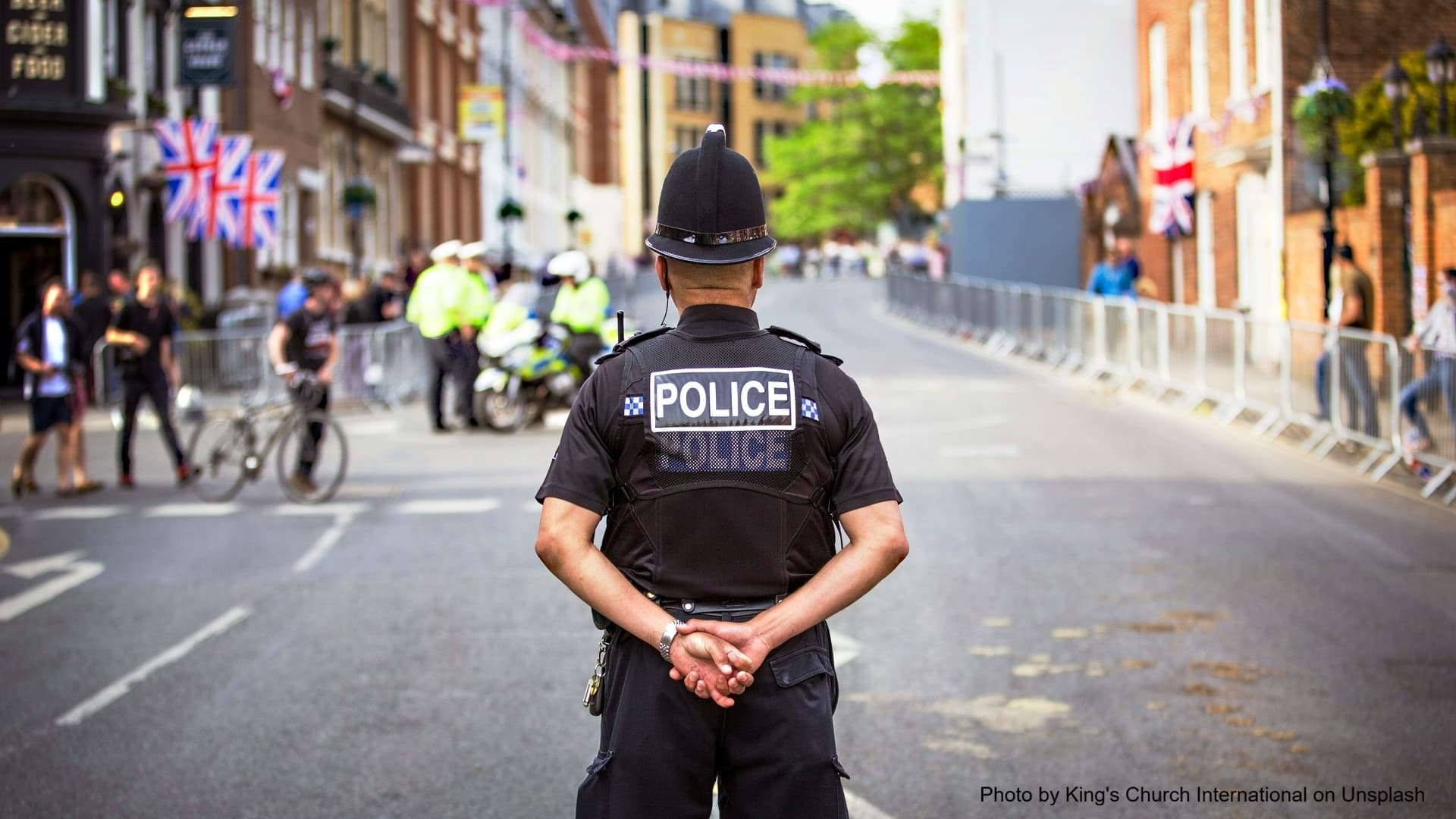
Ali Ahmadi, Catherine Barnard and Fiona Costello argue that, contrary to common media narratives, there is no clear link between increased migration and higher crime rates.
The media often associates migrants, particularly asylum seekers and refugees, with criminality. A study of news coverage in Canada, the UK, and the US found recurring negative themes, including describing migrants as ‘rapists and criminals,’ and linking migrants with ‘terrorism’.
But what does evidence say? Are asylum seekers and refugees really more likely to commit crimes? And, if they are, will a government leaflet, setting out the basic rules, deter them?
Research does not show a consistent link between migration and crime. In fact, across OECD countries, an increase in immigration has not seen an increase in the crime rate (particularly property, violent, and drug crime). However, a closer look at the figures reveals significant variation, depending on immigration policies, immigrants’ backgrounds, and the post-arrival conditions. For instance, a study of 128 countries found that while migration was positively associated with crime in countries such as Iran and Ukraine, it was associated with lower crime indices in Egypt, Mauritius and the United States. Similarly, in the UK, the proportion of non-citizens among people convicted or incarcerated is similar to that of the adult population (about 12%), or lower once age is taken into account (non-citizens tend to be younger, and young men are more likely to commit crimes).
Crime rates also vary by nationality and offence type. For instance, Afghans are over-represented in sexual offences and Albanians are over-represented in drug offences (although the available data do not allow for a reliable measurement of this over-representation). More broadly, high-income countries (e.g., China, France) are less represented in convictions and low-income countries (e.g., Afghanistan, Iraq) are over-represented. This can be explained by socio-economic and family circumstances, which is also in line with research within the British population. For example, young adults who had spent time in care were roughly ten times more likely to have been found guilty of an offence than those who had never been in care.
Crime rates also differ according to how people enter a country and their post-arrival conditions. For example, immigrants who come for study and work (generally those with more affluent socio-economic backgrounds) are less likely to commit crime. On the other hand, asylum seekers and refugees are more likely to be convicted or incarcerated. A study in the UK found that the large arrival of asylum seekers in the late 1990s led to a small but statistically significant increase in property crime. Similarly, a study in Germany found a small increase in property and violent crime one year after refugees arrived. This could be explained by the limbo these individuals face in their host countries post-arrival. A prolonged period of uncertainty can create financial and social pressures. In the UK, over 36% (17,668 people) of those claiming asylum wait for more than a year for an initial decision and the average time for an appeal for asylum applicants is 67 weeks. This limbo may, in some cases, increase the risk of involvement in crime.
However, even this increase should be interpreted carefully. Researchers have identified an ‘over-reporting bias,’ where people may report or attribute crimes to refugees more often in areas with large refugee populations because of prejudice, heightened public attention, and/or increased police alertness.
Government policies, particularly rules on employment and legal status, can either increase or reduce crime among asylum seekers. People who cannot work legally have fewer opportunities to earn a legitimate income, which creates financial pressures that may lead to them engaging in illegal activity. For instance, although crime increased among asylum seekers in the UK, no such effect was observed following the arrival of a large number of EU labour migrants after 2004, who had immediate access to employment. Similarly, in Italy, migrants with legal work permits showed a similar or lower propensity for committing crime compared to natives. And those whose status had been legalised were significantly less likely to commit serious crimes in the following year.
Similarly, in Türkiye, which hosts the world’s largest Syrian refugee population, crime rates fell following the arrival of refugees. Researchers suggested that the risk of deportation, combined with humanitarian cash-transfer programmes such as the Emergency Social Safety Net, may have discouraged illegal activity.
A study from Denmark showed that a more expansive integration support such as employment and language training for adult refugees also has significant intergenerational effect in terms of, among other things, lowering juvenile crime.
Recently, the UK government distributed a short guide for asylum seekers covering public behaviour, sex and consent, domestic abuse, and gender equality, and highlighted the legal consequences of non-compliance. We are not aware of any evidence that pamphlets of this kind, on their own, produce a substantial reduction in criminal behaviour. A study of North Korean refugees in South Korea found that greater familiarity with the law was associated with lower offending rates, indicating that legal awareness may have some preventive value. The guide could therefore be beneficial if combined with in-person orientation and ‘psycho-education’ programmes such as anger management and violence prevention, particularly for adolescent and young adult refugees. These could build a better understanding of the law and address wider barriers to integration. This may be particularly important for asylum seekers given that trauma and exposure to conflict significantly increase an individual’s propensity to commit violent crime.
To conclude, the evidence is mixed on whether migration increases or decreases crime. It varies across countries and groups and depends on factors such as migrants’ backgrounds (e.g. socio-economic factors, family, etc.), their route of arrival, their legal status and their access to employment. Also, the propensity for crime among migrant populations is highly responsive to government policies. Policies that restrict employment and leave people in prolonged legal uncertainty can create economic pressures. Conversely, policies that provide access to work, social support and secure legal status may reduce these pressures and see crime risks minimised or even reversed. Therefore, reducing prolonged periods of unemployment and legal uncertainty may help people establish more stable lives and could, in turn, reduce the conditions associated with some forms of offending.
By Ali Ahmadi, Research Associate, University of Cambridge and PhD student at Anglia Ruskin University, Catherine Barnard, Senior Fellow, UK in a Changing Europe & Professor of EU Law and Employment Law, University of Cambridge and Fiona Costello, Assistant Professor, University of Birmingham.

Andy Burnham addresses Freddo price in cost of living pledge | News

Small-Cap Stocks Step Out Of Big Tech’s Shadow

The Sandbox Commits to 1:1 Refund After $700K Bridge Exploit





-

 Fashion7 days ago
Weekend Open Thread: Madewell – Corporette.com
-

 Crypto World2 days ago
SpaceX stock could rise 75% to $240, JPMorgan says
-

 Business6 days ago
Musk’s Tesla, SpaceX Confirm $16.8 Billion ‘Terafab’ Chip Plant as World’s Largest Building in Texas
-

 Crypto World6 days ago
anatomy of crypto’s biggest liquidation event since 2021
-

 Crypto World3 days ago
A $30 Billion AI Fund Implodes, Now the SEC Is Investigating Wall Street’s Role
-

 Politics6 days ago
6 months on, Irish renters crushed by effects of government housing bill
-

 Crypto World2 days ago
Did Trump Just Move SpaceX Stock With One Truth Social Post?
-

 Business5 days ago
Mystery AI Model ‘Ox Alpha’ Draws Developers With Free Access as Chinese Lab Origins Remain Debated
-
 NewsBeat6 days ago
The ‘Lucky Dip Gang’ causing carnage for clicks: After five thugs were killed speeding in the wrong direction on a motorway, GUY ADAMS investigates a sick new trend… and why police aren’t even allowed to pursue them
-

 Crypto World2 days ago
Warsh Jackson Hole keynote puts financial innovation first
-
 Crypto World6 days ago
Nvidia Stock Suffers Longest Losing Streak Since 2022: Will Q2 Earnings End It?
-

 Business4 days ago
Moderna CEO warns China is pouring state money into mRNA technology
-

 Business2 days ago
Walmart takes aim at younger shoppers with new fashion brand
-

 Business3 days ago
NVIDIA Stock Drops Nearly 2 Percent to $210 on Seventh Losing Day Ahead of Critical AI Earnings
-

 Tech6 days ago
Unitree’s New Superman Robot Claims to Outjump and Outrun Every Human, Usain Bolt Included
-

 Business7 days ago
UK firms in critical financial distress rise 9% to 53,756
-

 Business6 days ago
Will Tesla Stock Be Higher or Lower a Year From Now? Here’s What Wall Street Analysts Are Saying
-

 Sports5 days ago
Deshaun Watson fires back at Browns fans after being booed: ‘It’s a disrespectful thing’
-

 Crypto World5 days ago
Google Gemini AI Predicts Ethereum Could Become the Trade Retail Misses in 2026
-
 Tech7 days ago
Faster chip in a familiar form factor
You must be logged in to post a comment Login