Connect with us

Tech

AI is making people less confident in professionals such as doctors and teachers

Published

on


  • New research shows 64% of people feel confident challenging professional advice after checking it with AI
  • Over 45s are less likely to question professional advice
  • An “expertise recession” has been identified by the survey, conducted by Use.AI

AI is helping many of us call time on taking professional advice without further research, concerning new reports have found.

Research by Use.AI has claimed professional advice from doctors and teachers is now researched further, with nearly two-thirds (64%) of people are now more confident challenging what they have been told.

Source link

Advertisement
Continue Reading
Click to comment

You must be logged in to post a comment Login

Leave a Reply

Tech

Barret Zoph, the Thinking Machines co-founder ousted before joining OpenAI, is now at Google

Published

on

The game of musical chairs for AI executives continues. Barret Zoph, a co-founder of the AI startup Thinking Machines who left the company earlier this year to rejoin OpenAI, has found yet another job.

Zoph spent two years at OpenAI and left in October 2024 to co-found Thinking Machines with Mira Murati, who had left the AI lab the month prior. In January, Zoph and another Thinking Machines co-founder, Luke Metz, quite dramatically departed from the startup to return to OpenAI. It was later revealed that Zoph had been fired.

His return didn’t quite stick. Zoph spent only five months at OpenAI, where he was tasked with heading AI enterprise sales. He left the company in June. And now we know where he landed.

Zoph has taken a position as vice president of research at Google (which happens to be another company where he previously worked). “We look forward to Barret returning to Google and bringing his RL and post-training expertise to Gemini,” a Google spokesperson told the Wall Street Journal.

Advertisement

TechCrunch reached out to OpenAI and Google for more information.

It’s not always easy to divine why tech executives seem to be spending less time in their roles. The turnover rate in the AI industry is high, and it’s been especially high at OpenAI — a company that, despite readying itself for an IPO and being one of the most powerful presences in the tech world, has lost a lot of critical staff over the last eight months. The turnover of high-level executives — from the departure of its COO to the recent loss of one of its top data center execs — has left onlookers scratching their heads.

This story has been updated to include the fact that Zoph was fired from Thinking Machines.

Source link

Advertisement
Continue Reading

Tech

Support Bath Enables An Epoxy Benchy

Published

on

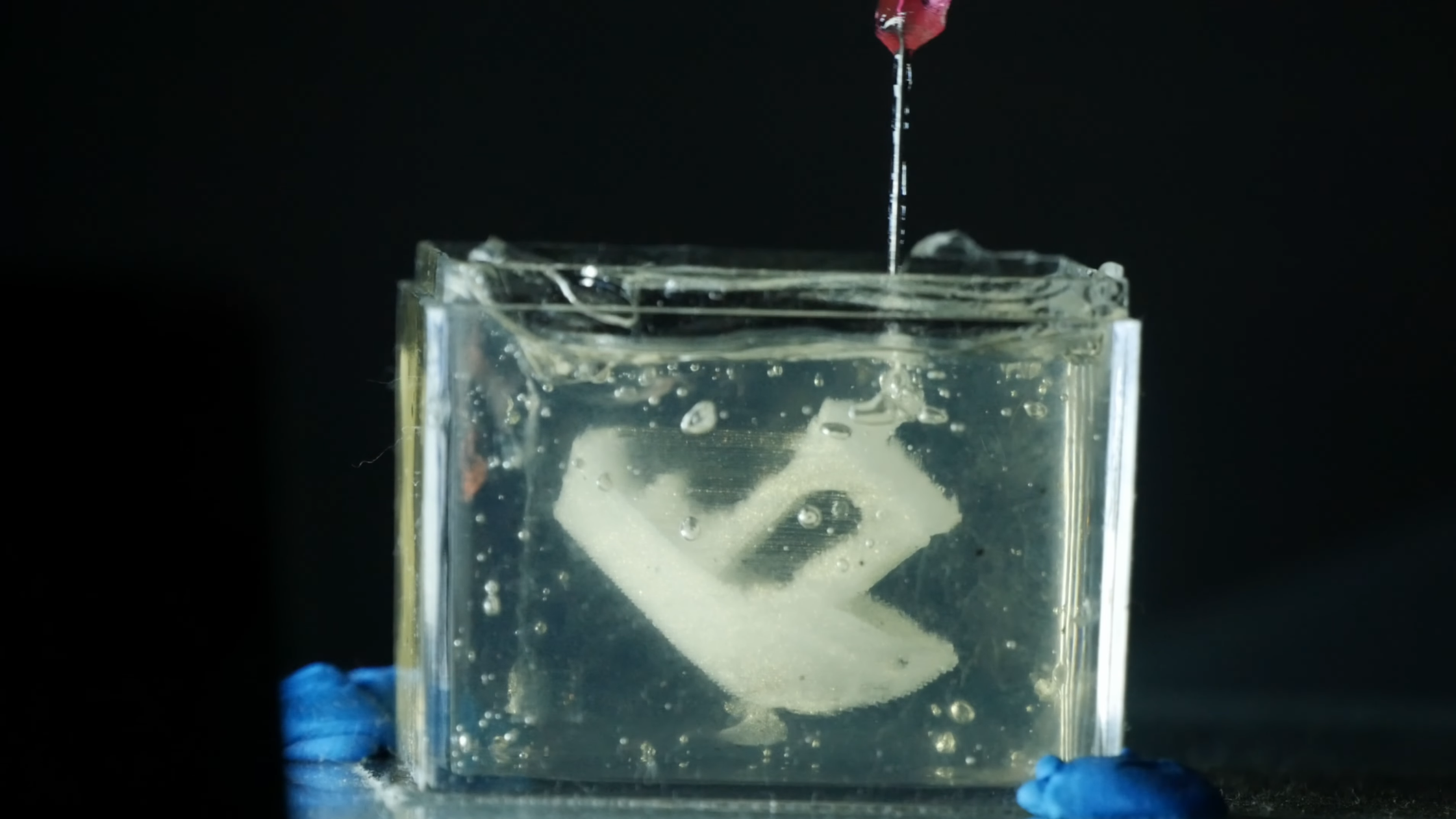
There’s plenty of substances that can theoretically be extruded from a nozzle, but only a regrettably small subset of them can actually be used for 3D printing. One limiting factor is the liquid range: too high a melting point and it’s hard to reliably extrude, too low and it tends to ooze and flow once extruded. Embedded 3D printing offers a way around this: it submerges the entire print in a shear-thinning support gel which keeps liquids in place until they solidify. [Riley] of Riley’s Lab recently built such a 3D printer and used it to print in silicone and epoxy.

In place of the extruder, [Riley] mounted a mostly 3D printed syringe pump, which allowed him to squirt out almost any liquid. For a test, he printed a tardigrade model out of cream cheese. This was a good test material for several reasons: it’s cheap, easy to extrude, and holds it shape well after extrusion. Silicone and epoxy, however, won’t hold their shape, which is where the support bath comes it. This was a mixture of mineral and vegetable oil, with some fumed silica added to make it thick yet shear-thinning. This lets it contain the extruded liquid, yet flow as the extrusion needle slices through it.

For the first test, [Riley] printed a Benchy out of Sylgard 184. The outcome looked good in the bath, bar some stringing, but it seemed to have limited adhesion between layers, and disintegrated upon removal from the bath. A second test with a two-part epoxy worked much better; it also had some stringing, but it held together while the bath was washed away in isopropyl alcohol, and even seemed decently shock-resistant afterwards.

Advertisement

It’s great to see a hacker working on this technology; we’ve previously covered a commercial take on it, as well as some of the research that led to it.

Advertisement

Source link

Continue Reading

Canada Hires 48 Scholars Away From Top US Universities

Published

on

Canada is recruiting 64 researchers to universities across the country (source paywalled; alternative source), including 48 from U.S. institutions such as Harvard, Yale, and MIT. The hires are backed by more than $364 million in government funding and are part of a broader effort to attract researchers in fields such as AI, climate science, and medicine. The New York Times reports: While scientists often shy away from political discourse, some are saying the Trump administration’s assault on science is behind their departure. “I used to live in the country that I thought was the most enthusiastic about the prospects for science improving the human condition, of any country in the world,” said Phillip Zamore, the chair of RNA Therapeutics Institute at the University of Massachusetts. “And I woke up one day and that wasn’t true anymore.” He has been recruited to McGill University in Montreal, which has also hired five other researchers, and will join the medical faculty. “If scientists don’t stand up for truth, no one will,” Dr. Zamore said.

The Canada-bound brain drain from U.S. institutions began last year as the Trump administration put forward policies that targeted foreign students, academic freedom and funding for equity-related programs. Kevin Hall, a nutrition scientist who left the U.S. National Institutes of Health last year, accusing federal officials of censoring his research on ultraprocessed foods, has been hired at the University of Ottawa. “While certain countries are cutting research and turning their back on academic freedom, we’re doubling down on science,” Melanie Joly, Canada’s industry minister, told reporters at the announcement, in Vancouver, of the new university hiring. She billed it as the world’s “largest talent attraction” project. The European Union has made a similar push. “Years from now, we will look back at today’s announcement, and we will be able to seize the lasting impact of our choices,” Ms. Joly said.

Unpredictable decisions about funding prompted Seth Guikema, a professor in civil and environmental engineering, who has specialized in natural hazards modeling at the University of Michigan, to look elsewhere. His work focuses on how climate hazards inequitably affect communities, and that work has become harder to fund, he said. “Every country sets its priorities in terms of what is going to get funded, and I think Canada has done a very good job of supporting research in areas that really matter to society,” said Dr. Guikema, who will start at Western University in London, Ontario in January.

Read more of this story at Slashdot.

Advertisement

Source link

Continue Reading

Tech

Keep a Flame Lit and This Box Will Compute

Published

on

Fire-Powered Computer Box
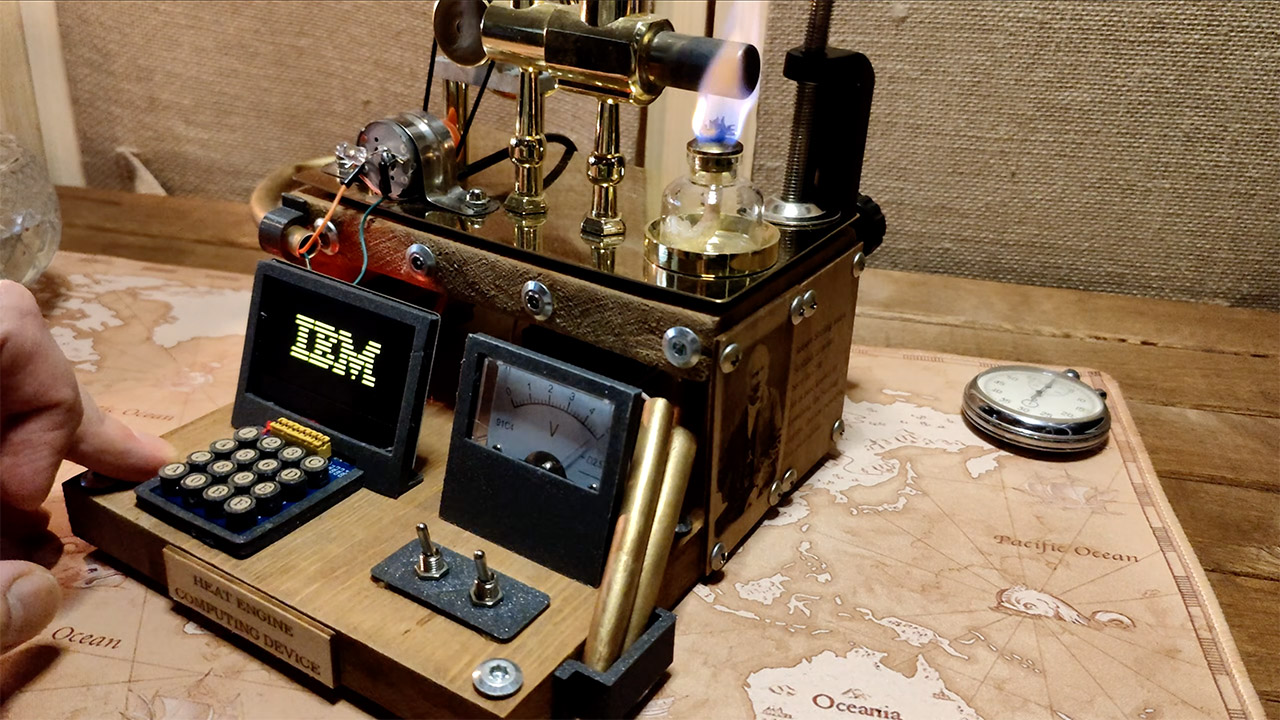
Light a small spirit lamp of ethanol and heat finds one end of a sealed brass cylinder. Air inside expands, a piston moves, a flywheel gathers speed, and a cheap electric motor wired as a dynamo starts feeding current into a wooden box. An analog voltmeter on the front climbs. A 2.42-inch monochrome screen flickers to life. Sixteen hex keys wait for input. For as long as the flame holds, YouTuber PickentCode has a working computer.


In 1816, Robert Stirling patented a heat engine as a safer alternative to steam boilers, which had a bad history of blowing up. Two centuries later, the identical concept has been simplified and now sits on a desk. Pickencode took approximately a month to get the build started after designing the layout in Blender using a computer. The case is composed of wood and finished with a rich dark Victorian oil. A handmade blue-laser engraver was used to make a portrait of Stirling as well as a sketch of his original engine for the side panels. This allowed the image to be etched into the wood as a succession of tiny burnt dots, a brilliant approach that allows a photograph to be printed directly onto the wood. The housings and keycaps were created using a 3D printer, and old shower tubing painted gold hides the wiring while also adding a decorative touch to the frame with its ‘pipes’.

Sale


KAMRUI AK1PLUS Mini PC Computer, Intel N5030 (Up to 3.1GHz), 12GB RAM 256GB SSD, Dual 4K Mini Desktop…
  • Faster Performance for Everyday Computing: Powered by the Intel N5030 processor (4 cores, 4 threads, up to 3.1GHz), the KAMRUI AK1PLUS Mini PC…
  • 12GB RAM & Up to 4TB Expandable Storage: Work faster with 12GB LPDDR4 memory and a high-speed 256GB M.2 2280 SSD for quick boot-ups and smooth…
  • Dual 4K UHD Displays for Maximum Productivity: Expand your workspace with dual HDMI 2.0 outputs, supporting two 4K@60Hz UHD displays simultaneously…

Fire-Powered Computer Box
The power output is insanely low, at 150 milliwatts, and is only useful if every watt is treated as if it were gold dust. To make the best use of this limited amount of power, the ESP32-C3 has been directed to turn down its radio and keep the screen brightness as low as possible. While the computer is rendering pixels or executing opcodes, the clock speed reduces to 80 MHz, then to 10 MHz when idle. Several tiny capacitors were added to smooth out the dynamo’s stuttering output. The panel has two toggle switches that control both the main circuit and the meter.

Fire-Powered Computer Box
The software had to be designed with these limitations in mind. CHIP-8, a virtual machine from the 1970s, was an ideal match because it is built for a box with a sixteen-key keypad and a 64-by-32 monochrome display that scaled up nicely to a 128-by-64 OLED screen. The interpreter itself contains sixteen 8-bit registers, four kilobytes of RAM, a call stack, two timers, and a staggering thirty-four two-byte opcodes. Preloaded ROMs include Tetris, Snake, and Pong, and if you’re feeling daring, there’s also a built-in editor that allows you to type raw opcodes into the keypad and run them right away. One homebrew test draws random pixels and clears the screen after ten of them

Fire-Powered Computer Box
This small computer’s “fuel” is merely ethanol in a spirit lamp. Heat one end of the cylinder while keeping the other cool to create rotation from a displacer that transfers hot and cold air around. A power piston then converts that into motion, which is stored in a flywheel and continues to function as long as there is a temperature difference. When the lamp is turned off, the computer shuts down. The main purpose of this exercise is that you can get some practical work out of 150 milliwatts, enough to play a game or even enter a few lines of machine code while watching the voltmeter tick away, all thanks to a flame from a spirit lamp performing the function of a wall wart. Stirling never saw a microcontroller, but would most certainly recognize his engine.
[Source]

Advertisement

Source link

Continue Reading

Tech

YouTube now lets creators tag Amazon products and earn commissions from purchases

Published

on

YouTube announced on Thursday that eligible creators in the U.S. can now tag Amazon products in their content and receive a cut of sales. Creators can link Amazon products in their shorts, long-form videos, and livestreams.

The update turns product recommendations into a more direct revenue stream for creators, and for Amazon, the move puts its massive online marketplace inside one of the most popular video platforms.

Although YouTube already runs a Shopping affiliate program with participating retailers, the addition of Amazon’s vast catalog essentially allows creators to recommend a variety of products through a native integration. By bringing Amazon into the Shopping Affiliate Program, creators no longer need to paste Associates links in the video’s description, then hope viewers copy the link when they make a purchase.

Instead, YouTube says Amazon will provide it with a curated catalog of highly requested and trending products that creators can tag in their videos. If a creator can’t find a specific product that they want to tag, they can request to add it by reaching out to YouTube Support.

Advertisement

The feature also includes auto-tagging support. If enabled, YouTube’s systems can automatically review a creator’s recent uploads to identify and tag eligible Amazon products.

YouTube notes that creators won’t see breakdowns for specific products or individual videos in their analytics, but that they’ll see their overall daily earnings in YouTube Studio. If a viewer ends up returning an item, that commission will be deducted from the creator’s balance.

While only eligible U.S. creators can currently tag Amazon products, those tags can be seen globally. YouTube says it may automatically match a tagged product with a trusted local merchant offer to allow creators to earn commissions on eligible international purchases. If a local merchant isn’t available, the tag will route viewers to the Amazon U.S. website, where commission will be earned if a purchase is finalized on the U.S. site.

To be eligible, creators must be enrolled in YouTube’s Partner and Shopping Affiliate programs, have an active Amazon Influencer or Associates account, and link it to their YouTube channel. 

Advertisement

When you purchase through links in our articles, we may earn a small commission. This doesn’t affect our editorial independence.

Source link

Continue Reading

Tech

Stripe-Led Group Is Reportedly Abandoning Its PayPal Acquisition

Published

on

The deal could have been could have been one of the biggest leveraged buyouts ever.

Stripe and buyout firm Advent are no longer pursuing their acquisition of PayPal as was reported earlier this month, people familiar with the matter told Bloomberg. If it had gone through, the deal could have been could have been one of the biggest leveraged buyouts ever at well over $50 billion, according to the report. 

In July this year when PayPal was trading at historic lows and valued at $40 billion, Stripe and Advent reportedly made an offer worth around $53 billion. Their suitor was said to have rejected it, so the Stripe group was reportedly preparing a higher bid. PayPal was worth as much as $320 billion at its highest market value during the height of the COVID pandemic. 

Stripe and its partner likely saw PayPal’s recent struggles as an opportunity to buy it at a significant discount. However, the pioneering payment company’s latest quarter beat most estimates which (along with the takeover rumors), helped boost its stock price by 40 percent. That may in turn have raised the selling price, making a leveraged takeover less feasible. 

Advertisement

PayPal’s new CEO Enrique Lores, appointed in March, has been working to turn the company around by dividing it into three units focused on checkout, Venmo and payment/crypto. A Stripe-PayPal merger could have reduced the former’s reliance on Visa and MasterCard, while allowing Stripe to incorporate PayPal’s Venmo checkout system and its crypto features. Stripe and Advent could still opt to make a bid for PayPal in the future, Bloomberg said. 

Source link

Advertisement
Continue Reading

Tech

OpenAI Is Developing a 'Persistent' AI Agent

Published

on

Wired reports that OpenAI is testing a new “Persistent mode” for Codex that would let the agent keep working until explicitly “put to sleep,” proactively creating follow-up tasks for itself across sessions and using prior interactions and knowledge of the user to decide what to do next. Code alluding to the feature was spotted in the product’s code base, though it has not been rolled out or officially announced yet. From the report: Persistent mode appears in Codex’s “reasoning effort” menu, in which users can select the level of computing power, tokens, and time they want to allow for an AI model to “think” before answering a prompt. It seems to be one of OpenAI’s most computationally intensive settings. When users have selected Persistent mode, OpenAI’s code base reads that Codex will “continue working until put to sleep.” That’s a stark contrast to currently available modes, which will stop working on a task after a few minutes or hours, even if it’s not complete.

In another file in the code base, OpenAI describes a feature within Persistent mode called “proactivity.” This appears to be a type of system prompt for agents in Persistent mode, which are told that their work is not done when they finish answering a user’s request. Instead, the agent is instructed to proactively create follow-up tasks for itself. The agent is capable of working on those tasks across sessions and using past user interactions and “knowledge of the user” to decide what to work on. It also has a tool to message the user without being asked but is told to send these sparingly.

The instructions also set limits for the agent, according to the file. The agent is told that Persistent mode does not expand what it is allowed to do and that altering anything outside the user’s own system requires the user’s approval first — seemingly intended to limit how dangerous a persistent AI agent could be. The file sits in the shared core of Codex rather than in the code specific to the terminal, seeming to suggest the proactivity feature is intended for more than the command line tool.

Read more of this story at Slashdot.

Advertisement

Source link

Continue Reading

Tech

Judge Rules That The Pentagon’s Anthropic Ban Was ‘Illegal And Baseless’

Published

on

The judge barred certain federal agencies from enforcing Trump’s order to stop using Anthropic’s tools.

A US federal court has ruled that the Pentagon’s designation of Anthropic as a supply chain risk was illegal, CNBC reported. US District judge Rita Lin found that the US Department of Defense’s restrictions placed on the AI company and its Claude model were “illegal and baseless.” As part of the ruling, the judge barred certain federal agencies from enforcing President Trump’s order to stop using Anthropic’s tools. 

“The empty invocation of national security is not a blank check to punish and retaliate against government critics,” Judge Lin said in a 59-page decision. “Neither the Constitution nor the federal statute invoked by Defendants allows them to impose sweeping penalties based principally on Anthropic’s critique of the Administration’s views.”

“We welcome the court’s ruling that this supply chain risk designation was unlawful,” an Anthropic spokesperson told CNBC. “We remain focused on working productively with the government to harness AI for our national security so all Americans benefit from this technology.”

Advertisement

The dispute arose in late February, after the Department of Defense and its Secretary Pete Hegseth pressured Anthropic to remove certain safeguards from its AI systems. Anthropic’s CEO Dario Amodei, however, made it clear the company would refuse to allow its model to be used for mass surveillance or the development of autonomous weapons.

Late in February, Trump ordered all US government agencies to stop using Claude and other Anthropic services, escalating the feud. On social media, the president said there would be a six-month phase out period for federal agencies to migrate off of Anthropic’s products. Subsequent talks collapsed and Anthropic became the first US company to be designated as a supply chain risk. 

After saying it would challenge the decision, Anthropic sued the White House in two federal courts (for two separate designations) to reverse the ban. Today’s ruling by Judge Lin gave the company a victory on one of those counts, but Anthropic is still considered a supply chain risk pending the second decision. Even if it wins both cases, though, the Pentagon would not be required to restart its work with the company. 

The supply chain designation hasn’t slowed Anthropic’s march toward a likely near-record IPO later this year. Earlier this month, the company’s revenue surged to a record $11.5 billion, 14 times more than it earned in the same quarter last year. Engadget has reached out to Anthropic for additional comment. 

Advertisement

Source link

Advertisement
Continue Reading

Tech

Claude, Codex, and Hermes installed unowned code inside corporate networks

Published

on

Documentation files on more than 100 websites are referencing potentially dangerous executable content that gets installed automatically when visited by many AI agents. A few dozen companies, some of them Fortune 500s, are among those that executed proof-of-concept code. At least one misconfigured site is directing visitors, human or AI, to live malware.

The potentially dangerous content is in llms.txt and llms-full.txt files, an emerging convention websites employ to provide machine-readable summaries of the site’s content and its high-level structure. These files are the AI equivalent of the robots.txt standard that instructs search engines how to index the site’s content. Google Lighthouse, a tool for helping web developers, has more here. Correctly configured llms.txt and llms-full.txt files for Cloudflare are here and here.

How the researchers found it

Researchers at a stealth startup in Israel scanned 6,214 live domains belonging to defense contractors, Fortune 500, and Big Tech companies. Of the 8,265 llms.txt and llms-full.txt files they found (many sites hosted both an llms.txt and an llms-full.txt file), 120 of them, each on a different site, pointed to one or more code packages or domain names that weren’t registered. To test what happens when an AI agent processes such files, the researchers registered a handful of the unclaimed names and hosted packages that caused any machine executing them to reach out to their server. Within an hour, the researchers received a phone-home response from a Fortune 500 company. Over time, they got a few dozen more, some from more Fortune 500 companies and others from startups. Their beacon also recorded the chain of parent processes that spawned each install, ultimately revealing that coding agents, including Claude, OpenAI’s Codex, and Nous Research’s Hermes, were involved. Anthropic, OpenAI, and Nous Research did not respond to requests for comment by the time of publication.

“The trust model is broken,” Alon Hertz, one of the researchers, wrote in an interview. “Agents treat vendor docs as ground truth and don’t question them—and neither do the humans supervising them. Agentic AI usage is exploding, and agents are spreading across every layer—SaaS, cloud, endpoint. As they multiply, so does the supply-chain surface, and today’s guards don’t cover it.”

Advertisement

Source link

Continue Reading

Tech

First Look at the Modern Mactini, a Palm-Sized Mac With One Button and No Mercy

Published

on

Mactini Tiny Macintosh Computer
In 2008 Peter Serafinowicz walked onto a BBC set in the role of an Apple store employee and introduced Mactini, the smallest computer in the world. One key. Press it once for A. Press it 26 times for Z. For a comma, hold four seconds, lift for two, then fire off a rapid little drum fill. The audience laughed. Apple kept making things smaller anyway.


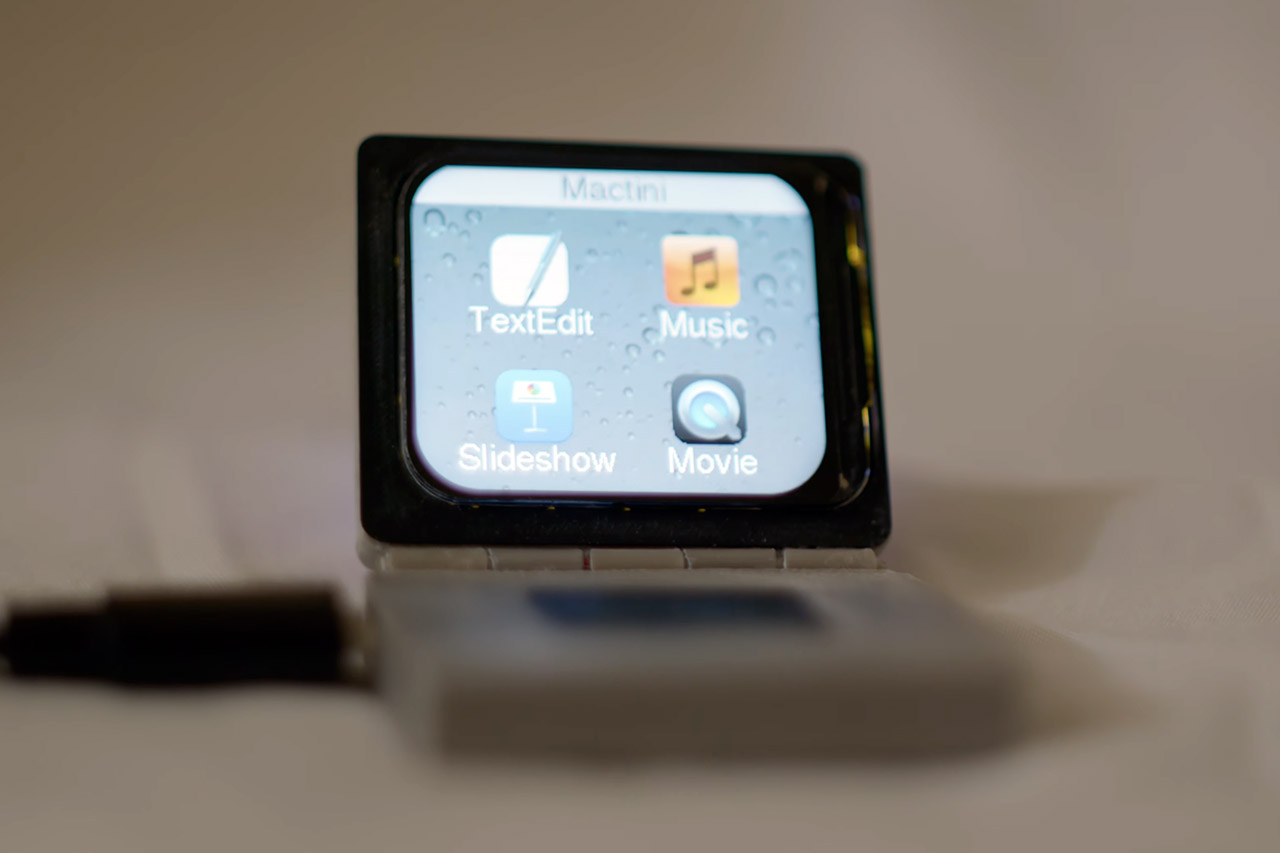
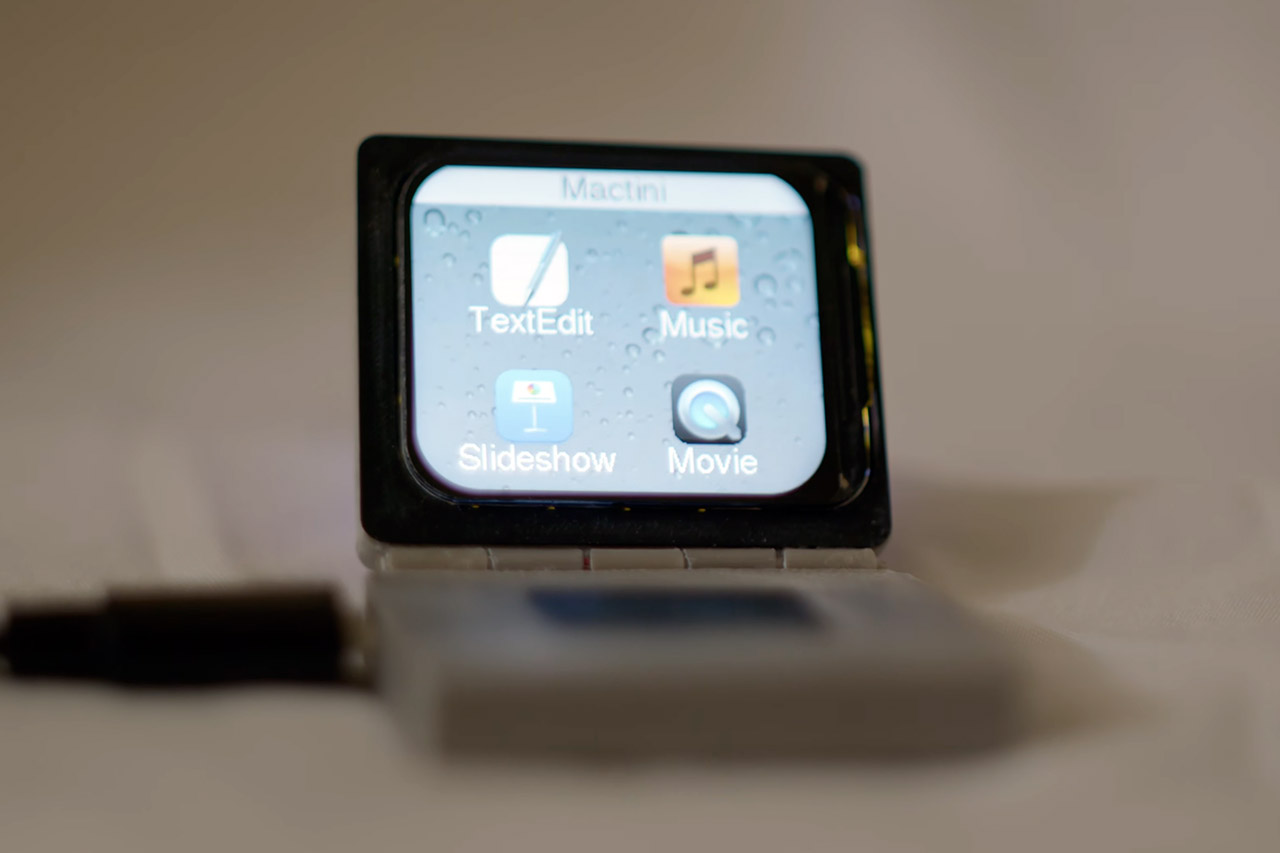
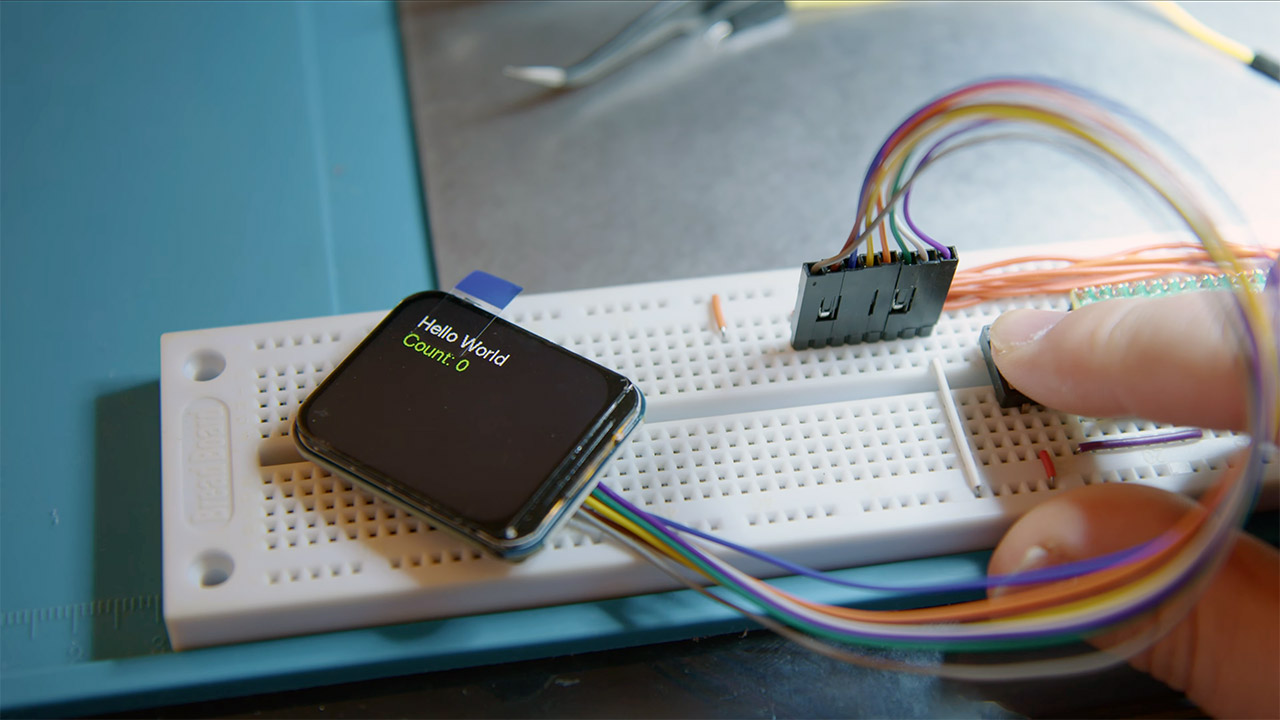
Tucker Osman re-watched the clip eighteen years later and decided that the joke was worth giving a functioning body. His Mactini, a matchbox-sized clamshell, opens in the palm of your hand. He obtained the case from FreeCAD after going through three separate print jobs. The screen is a tiny 1.69-inch color SPI panel from Waveshare, not the rescued iPod display he had hoped for, but their panel ended up being a better alternative because the old connector was difficult to locate.


Apple 2026 Mac mini Desktop Computer with M6 chip
  • LITTLE DO-IT-ALL — Mac mini packs pure power into a small, five-by-five-inch desktop as the M6 chip delivers next-level AI capabilities. Mac mini…
  • M6 CHIP — Everything you do on Mac mini feels more responsive with the M6 chip and its next-generation CPU. Fly through AI workflows with up to 4.8x…
  • CONNECT IT ALL — Features three Thunderbolt 4 ports, an HDMI port, and a 2.5Gb Ethernet port in the back, and two USB-C ports and a headphone jack…


The input is not a mechanical switch; instead, Osman printed the touchpad using conductive filament, so the entire thing acts as a capacitive surface. The firmware then determines how long you leave your finger down before lifting it and categorizing the durations as short, medium, or long. When combined with the gaps between taps, it creates a rhythm, which it then compares to a lookup table to determine what it should be. The comma still requires the exact timing specified in the original drawing. Try typing something longer than a word; this is done on purpose to test your patience.

Mactini Tiny Macintosh Computer Smallest
When he started integrating sound and video, things started to lag all over the place. The solution was to use FreeRTOS, which allows gesture recognition, screen rendering, and audio to run as distinct processes, ensuring that none of them freeze. Pixels are copied to the display via DMA in the background, allowing the processor to handle everything else. Sound is coming in through some old speakers he salvaged from damaged iPads, as well as an amplifier board from a water-logged Wyze camera. The volume is relatively low, as you can barely hear it even if the room is silent. The video is a 90-second clip from Tenet, but because the RP2350 lacks a hardware decoder, it is limited to 12 frames per second.

Mactini Tiny Macintosh Computer Smallest
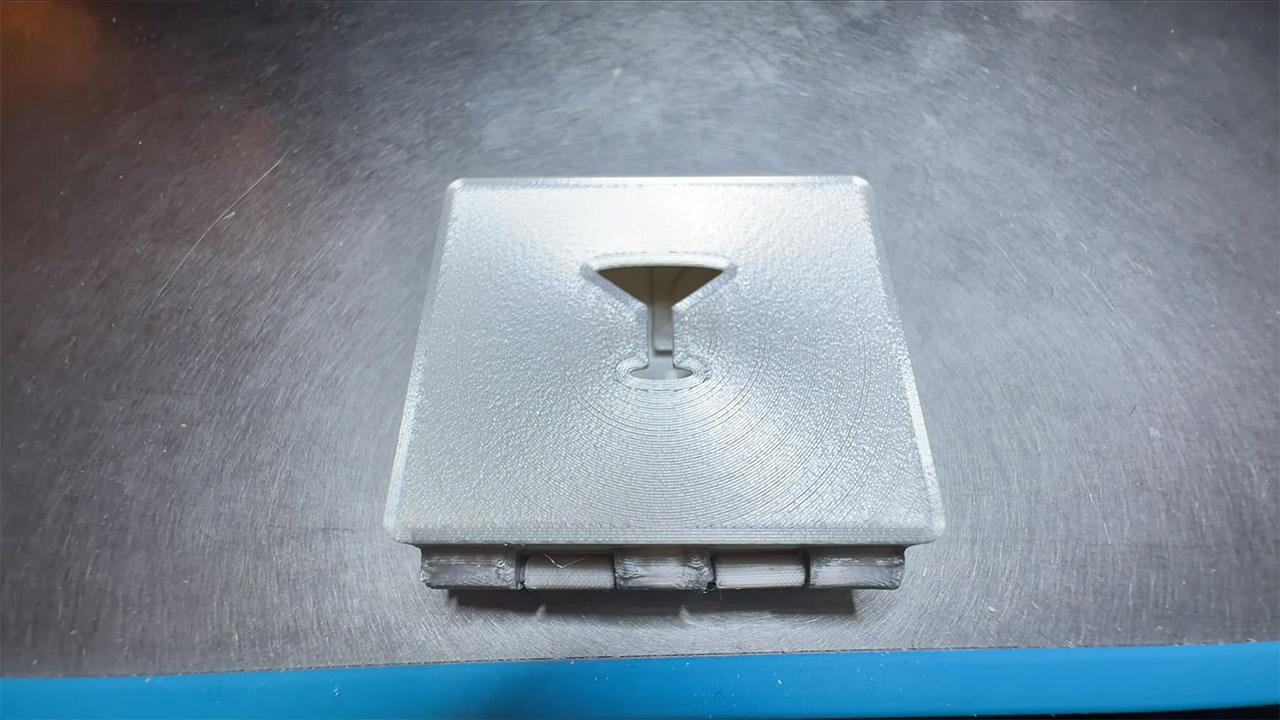
A shimmering martini-glass logo sits on the rear of the lid, and he salvaged the diffusers and backlight components from shattered third-generation iPod nanos. He also had to run some cables through the hinge so that they could withstand the Mactini being opened and closed. He collected and printed every part he could find.
[Source]

Advertisement

Source link

Continue Reading

Trending

Copyright © 2025