What we know so far: DLSS 5’s neural rendering powered by AI is easily Nvidia’s most controversial gaming product, sparkingwidespreadderision when the company unveiled it in March. Nvidia has said little since beyond a vague “this fall” release window, but a recent leak suggests the company isn’t just moving forward with DLSS 5, it could arrive sooner than expected.
Data miners discovered what appears to be a DLL for Nvidia’s upcoming DLSS 5 tech in NBA 2K27’s installation files soon after the game’s early access period started this week. While the basketball simulator does not yet officially support DLSS 5, modders have already begun testing its AI-generated “photorealism” filter in Control.
While the DLL does not explicitly mention DLSS 5, it contains the acronym “NR,” presumably standing for neural rendering, Nvidia’s name for how DLSS 5 uses AI to infer new lighting details using 2D frames and motion vectors.
Advertisement
Furthermore, analysis indicates that most of the DLL’s 158MB file size, by far the largest of any DLSS DLL, consists of neural training weights. The file, which contains 148 million FP8 parameters, is likely an unfinished build.
NBA 2K27 contains no controls for activating DLSS 5, and the DLL only supports Nvidia’s RTX 50 series graphics cards, but the developers of the popular RenoDX Reshade mod quickly got it working in Control.
The mod features several customization sliders and switches, confirming Nvidia’s earlier pledge that developers can tweak DLSS 5 to alter or ignore specific objects with varying levels of intensity.
Advertisement
Videos of the mod show that, even with relatively conservative settings, DLSS 5 significantly alters Control’s lighting and its characters’ faces. The technology appears to add or deepen shadows, simulate new skin shading techniques, and alter eyes to enhance realism. Characters’ faces look dramatically different while adhering to their original structure.
The mod also shows that DLSS 5 might incur a significant performance penalty depending on how much Nvidia optimizes it between now and and its planned release date this fall.
On an RTX 5070 Ti at 4K, activating the mod drops the frame rate from 71 fps to 35 fps, but lower resolutions are expected to have a significantly smaller impact. One of the many demonstrations online showed an RTX 5090 dropping from 91 fps to 50 fps when engaging neural rendering in 4K.
Advertisement
Nvidia’s initial presentation of DLSS 5 drew strong criticism because it attempts something that prior DLSS technologies did not. Super resolution, ray reconstruction, and frame generation simply reconstruct a game’s original graphics at higher resolutions, but neural rendering aims to introduce new details via AI models.
While Nvidia stresses that developers will have the final say over what DLSS 5 does, many already argue that it overrides their original artistic vision and might hallucinate unwanted details.
The problem with creating a product that helps revolutionize an entire category is that everyone else gets years to study what you did right.
When the Naim Uniti Atom arrived in 2017, the idea of combining a serious integrated amplifier, network streamer, DAC, attractive color display and genuinely high-end industrial design in one relatively compact box still felt rather novel. There had been all-in-one systems before it, but the Atom helped change expectations about what one could look like, how easy it could be to use and, most importantly, how good it could sound.
Almost a decade later, I still consider the Uniti Atom one of the best products of its kind. It also remains in Naim’s lineup, which says something about how well the original concept has aged. There is, however, a rather large elephant sitting on top of that beautiful volume control: the Uniti Atom currently costs $3,799 in the United States.
That was easier to defend when the market for genuinely good streaming integrated amplifiers was much smaller. In 2026, consumers are swimming in them. Bluesound, NAD, WiiM, Cambridge Audio, Marantz and others have spent years driving prices down while adding more power, HDMI connectivity, room correction and increasingly sophisticated streaming platforms. Some of those products do not have the Atom’s build quality, industrial design or particular sonic character, but $3,799 buys an awful lot of amplifier today.
Advertisement
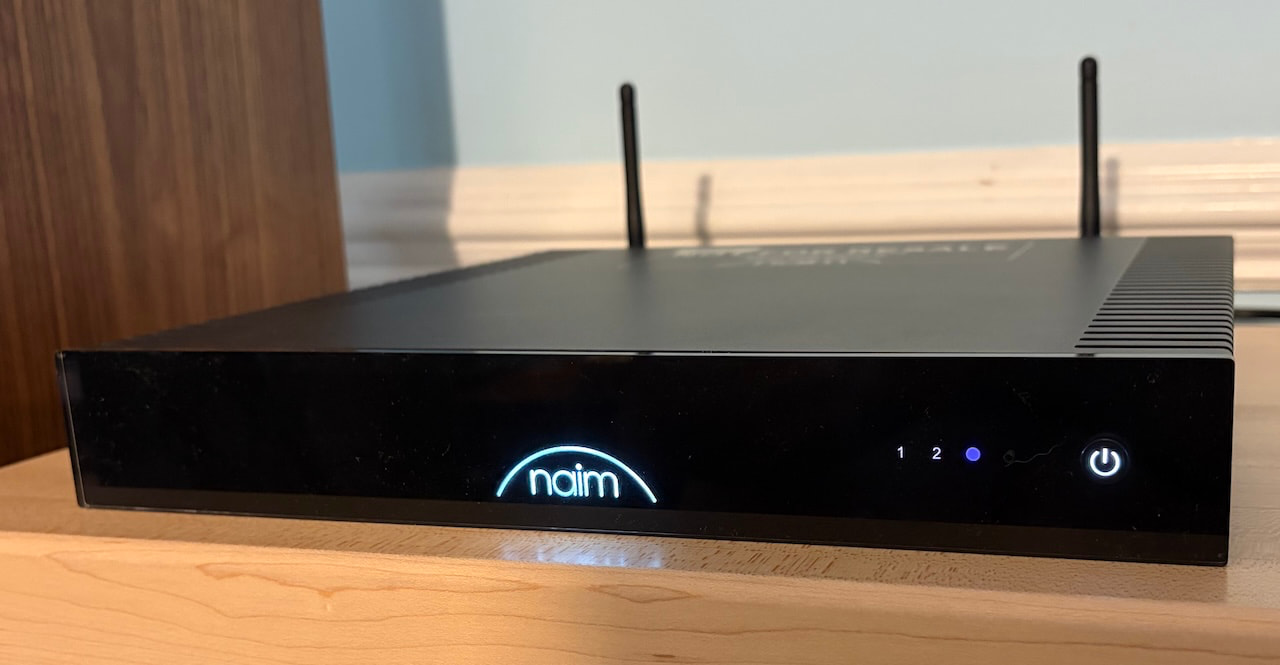
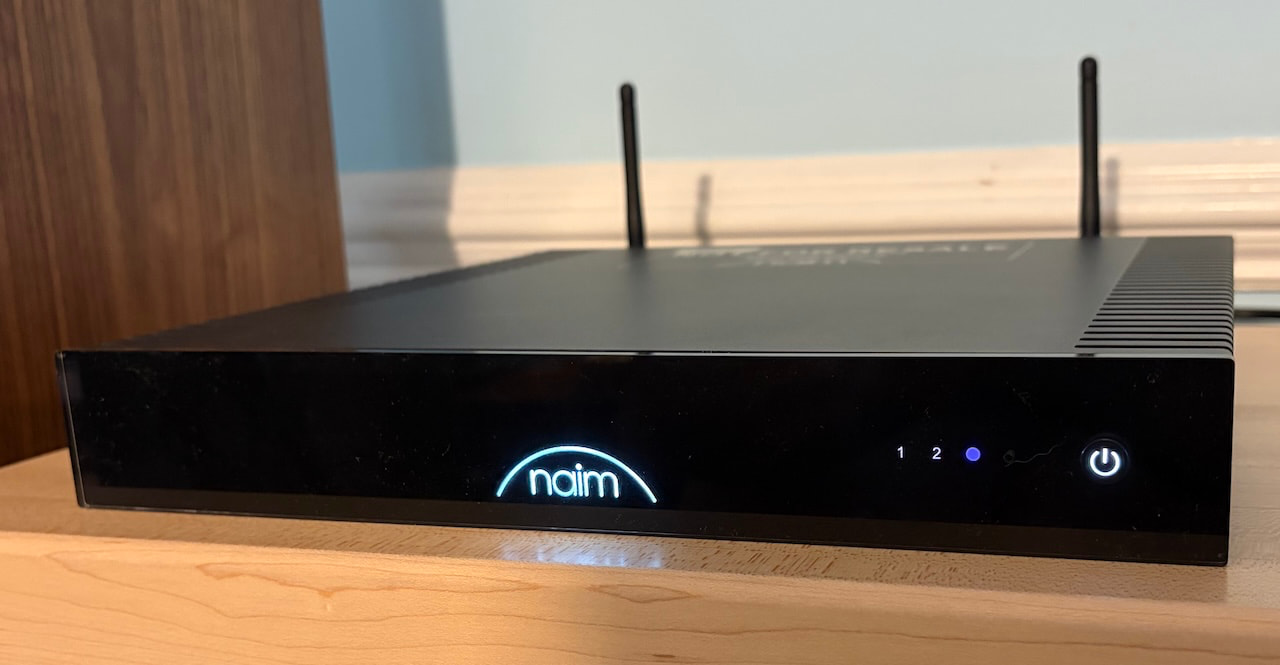
Which makes the Naim CI-Uniti 102 considerably more interesting than its rather anonymous black box might suggest.
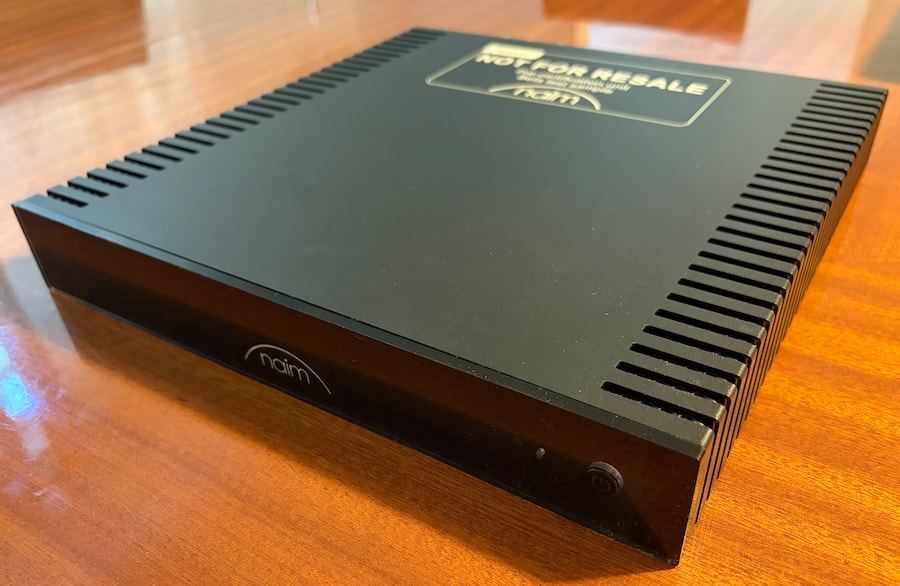
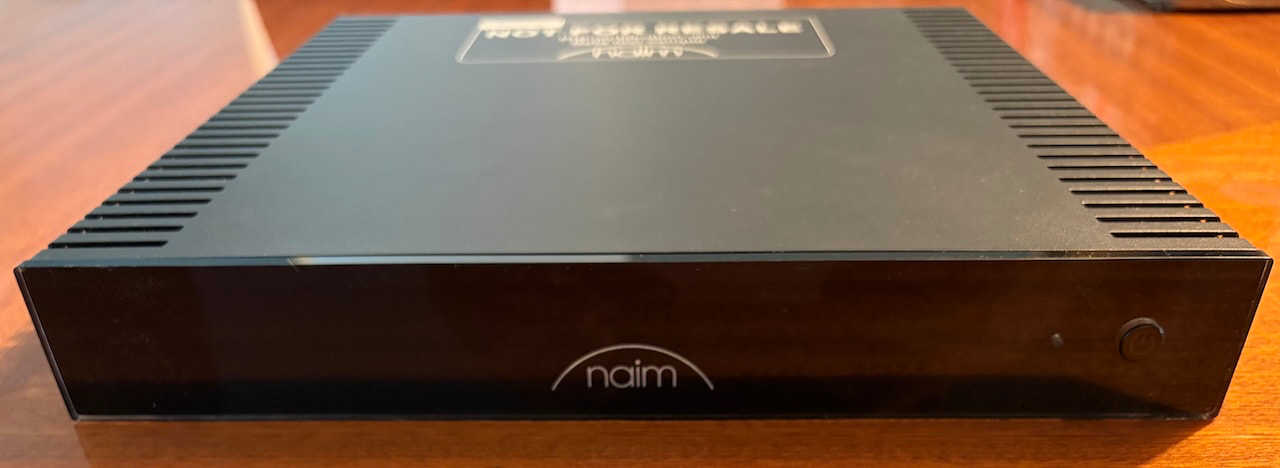
Designed primarily for custom installation, the CI-Uniti 102 strips away much of what made the Uniti Atom such an object of desire. There is no large color display dominating the front panel, no gorgeous illuminated volume control begging to be touched and very little about its appearance that screams expensive British Hi-Fi. It is meant to disappear into a rack, cabinet or installation and get on with the job.
What it gives you instead is potentially far more consequential: Naim’s streaming platform, HDMI eARC, extensive control and integration options, and 150 watts per channel into 8 ohms from a compact chassis. Its regular U.S. price is $1,799, and it is currently selling for even less through at least one major retailer.
That creates a question I did not expect to be asking when this review began. Is the CI-Uniti 102 merely a very capable custom-installation product, or has Naim inadvertently created a more rational Uniti for people who care far more about performance than having the hardware on display?
Advertisement
And if it can deliver enough of the experience that made the Uniti Atom so special for less than half the money, the more uncomfortable question might be what that says about the Atom’s $3,799 asking price in 2026.
Related Reviews:
More Than a Uniti Without the Pretty Bits
The CI-Uniti 102 might have been conceived for the custom installation market, but there is nothing preventing it from becoming the center of a very straightforward two-channel system. In fact, once you stop worrying about where Naim expects dealers to install it, the proposition becomes rather more interesting.
Inside the 1U chassis is a two-channel amplifier rated at 150 watts per channel into 8 ohms and 260 watts per channel into 4 ohms. That is considerably more power than the Uniti Atom and enough on paper to expand the range of loudspeakers one might reasonably consider.
Advertisement. Scroll to continue reading.
Advertisement
Naim specifies a frequency response of 5Hz to 70kHz, THD+N below 0.006%, a 110dB A-weighted signal-to-noise ratio and support for digital audio up to 32-bit/384kHz. The entire thing measures just 11.75 inches wide and deep, 1.75 inches high and weighs 9.9 pounds.
One important distinction between the CI-Uniti 102 and the Uniti Atom is the amplifier topology. The CI-Uniti 102 uses Class D amplification, rather than the Class A/B design employed by the Atom, which helps explain how Naim is able to extract 150 watts per channel into 8 ohms and 260 watts into 4 ohms from such a compact 1U chassis.
Naim has not simply stuffed a more powerful Atom into a black box and removed the expensive display. The CI-Uniti 102 takes a fundamentally different approach to amplification, prioritizing efficiency, power density and installation flexibility while retaining Naim’s streaming platform and system integration capabilities.
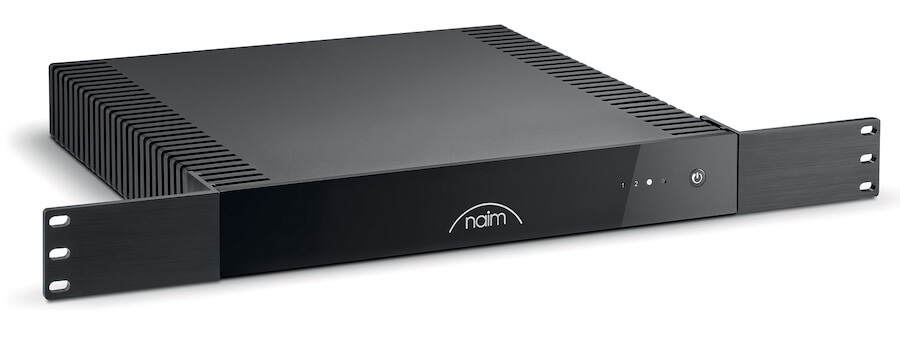
Naim CI-Uniti 102 Streaming Amplifier with Mounting Brackets
That small footprint makes the CI-Uniti 102 unusually adaptable. It can live in a conventional equipment rack using the supplied 19-inch rack mounting hardware, disappear inside a cabinet, or sit somewhere considerably less conspicuous than most integrated amplifiers. The unit itself is designed for indoor installation, although Naim specifically states that it can be used to power outdoor loudspeakers.
Advertisement
In other words, do not install the amplifier beside the swimming pool unless your home insurance policy has become tiresome and you are eager to meet both the claims adjuster and the local forensic pathologist. The district attorney may want a word as well.
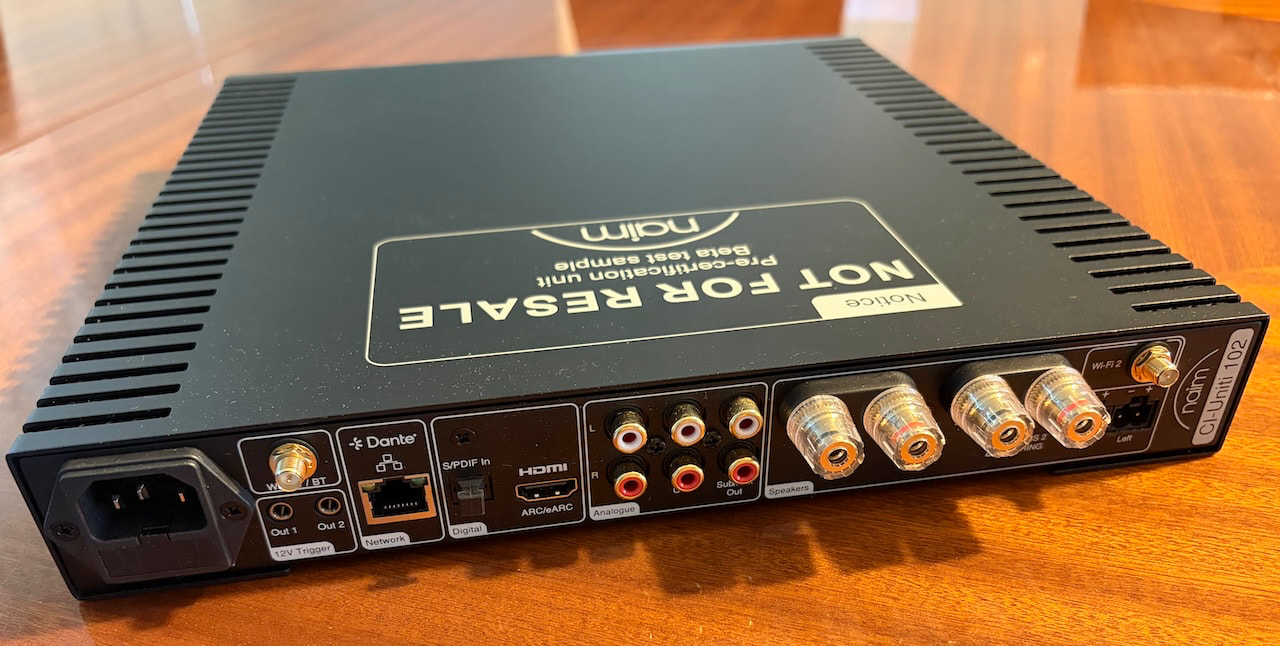
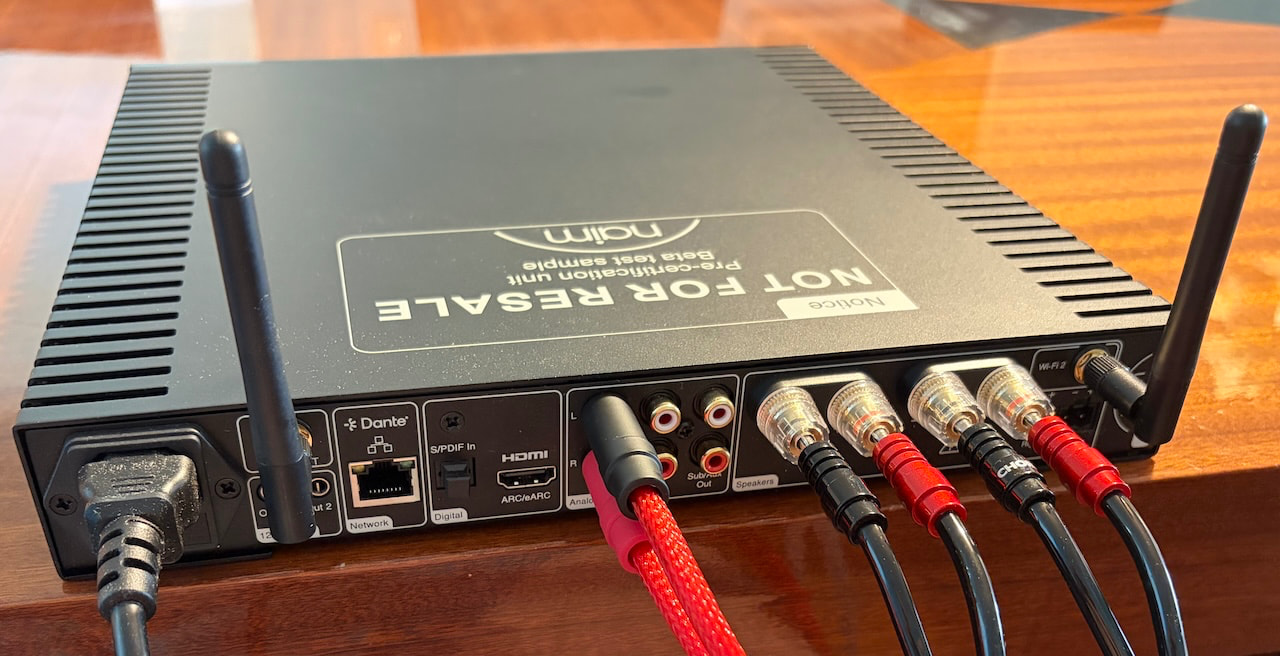
For a single-room system, the CI-Uniti 102 covers most of the sources that people actually use in 2026. Streaming support includes TIDAL and TIDAL Connect, Qobuz, Spotify Connect, Presto Music, UPnP, Internet Radio, AirPlay 2 and Chromecast, along with Bluetooth. Network connectivity is available through Gigabit Ethernet or Wi-Fi 6. There is also Dante receiver capability at 48kHz, which will matter considerably more to custom installers and sophisticated networked systems than it will to someone streaming Miles Davis in the den.
Physical connectivity includes a stereo RCA analog input, S/PDIF digital input and HDMI eARC, with the latter supporting two-channel LPCM up to 24-bit/192kHz. That makes the CI-Uniti 102 a potentially compelling alternative to a soundbar for someone who wants a proper pair of loudspeakers connected to their television without building a full home theater system.
Add a network connection and you have television audio, streaming and amplification inside one very small box. A turntable can also be used through the analog input, but you will need a turntable with an integrated phono stage or an external phono preamplifier because the CI-Uniti 102 does not include one.
Advertisement
Naim also provides two independent stereo RCA outputs, identified as Main and Sub/Aux, which considerably broadens what you can build around it. The Focal & Naim Manager software provides DSP configuration including EQ, limiters, active crossovers and time alignment, along with dedicated speaker profiles for compatible Focal CI loudspeakers. That means the secondary output can be configured for a subwoofer or another zone, and installers have considerably more control over how the loudspeakers and subwoofer interact than the minimalist front panel might suggest.
It is worth clarifying what Naim means by system calibration here. The CI-Uniti 102 does not perform automated room measurements in the fashion of Dirac Live. The Focal & Naim Manager software instead gives the installer or knowledgeable owner access to EQ, crossover, limiter and time-alignment tools that can be adjusted for the installation.
Speaker profiles are also available for compatible Focal architectural models. That approach requires more knowledge than pressing a button and allowing a microphone to make the decisions for you, but it also provides substantial control for someone who knows what they are doing. Baldrick with an SPL meter is probably not the recommended installer.
The CI-Uniti 102 becomes even more interesting when you stop thinking about one room.
Advertisement
Advertisement. Scroll to continue reading.
Naim’s own multiroom platform supports up to 32 devices in a single session, and Naim states that the CI-Uniti 102 is compatible with all generations of its streamers. That opens the door to using one in the primary listening room while additional Naim components serve a kitchen, bedroom, office, patio or other zones around the house. Everything can be controlled through the Focal & Naim app, while installations built around larger home-control ecosystems can integrate with platforms including Control4, Crestron, RTI, Savant and Elan.
For larger installations, the CI-Uniti 102 can also be partnered with Naim’s CI-NAP 108 power amplifier, with 12V trigger outputs allowing synchronized standby operation. Dante support further expands its usefulness in professionally networked installations where audio needs to be distributed over Ethernet rather than through a traditional collection of analog cables.
And this is where Naim’s cunning plan starts to make considerably more sense — unusually, without requiring a turnip.
Advertisement
You can treat the CI-Uniti 102 as the invisible engine behind an elaborate Focal/Naim whole-home installation, which was clearly its original purpose. But you can also ignore almost all of that, connect a pair of conventional loudspeakers, a television and Ethernet cable, log into your streaming services and use it as an extremely compact streaming integrated amplifier.
The Naim That Fits Where the Atom Can’t
For those of you who are particularly good at reading between the lines, the past 24 months have been slightly rough for your favorite Hi-Fi Editor. The annual Chanukah wish list goes live in a week, so there is still time to send cash, records, brisket, or perhaps a lightly used passport. I am joking. Mostly.
There have been some hits, both mentally and physically. I survived a stretch of inpatient mental health treatment at the beginning of 2025, some fairly significant medical issues after that, and more recently shingles and my first kidney stone attack in 15 years. If you have not figured it out by now, I am both stubborn and rather difficult to kill.
The upside is that I am currently the lightest I have been in years, exercise every day, eat considerably better; which should not be confused with eating correctly — and I am getting surprisingly close to my old fighting weight. No needle in my backside once a month, either. Just the deeply irritating realization that walking, lifting things and not eating like a raccoon behind a Waffle House actually works.
Advertisement
All of that turmoil has had another effect: it turned my sense of home completely upside down.
Some days during treatment I was sitting in a room talking to complete strangers about things I had spent decades avoiding. Other days in Florida I was standing outside at the braai while my Cuban neighbors became rather more enthusiastic than anyone really needed them to be in their hot tub. There are things no amount of therapy or bleach can erase.
My brain has also spent a lot of time somewhere else. Cape Town. Israel. Bologna. Turin. Northern Pennsylvania. Almost anywhere, at times, other than my home base on the Jersey Shore.
Florida became particularly ugly when siblings and property entered the same sentence, and I am rather pleased to have escaped that mess with both my money and what remained of my sanity. The kids are moving forward as well. College. Careers. One looking increasingly serious about getting engaged. My youngest had her Bat Mitzvah and is now learning Japanese with the apparent intention of becoming a Demon Slayer. Having raised her, I would not bet against it.
Advertisement
Through all of this, I have started thinking much more seriously about space.
Advertisement. Scroll to continue reading.
How much of it do I really need? Could I realistically divide my life between two smaller homes rather than maintaining one large space simply because that is what we have always done? And what happens to a Hi-Fi Editor with an absurd amount of equipment when the future might involve remaining in Long Branch, but also adding a cabin in Northern Pennsylvania, or an apartment somewhere in Bologna or Turin for those months when the Bennies descend or winter becomes too much.
That question has changed how I look at products like the Naim CI-Uniti 102.
Advertisement
Ten years ago, I probably would have looked at this black 1U box and thought primarily about custom installation racks, wealthy homeowners and integrators running miles of CAT6 behind drywall. After actually living with it, I think that interpretation sells it considerably short.
Hi-Fi has spent decades convincing us that commitment should be measured in square footage, component count and the number of glowing boxes occupying increasingly expensive furniture. The CI-Uniti 102 quietly argues that you can keep much of the performance while getting a rather significant portion of your room back.
The CI-Uniti 102 may have been designed to disappear. That might be precisely why it makes so much bloody sense.
When the App Becomes the Remote
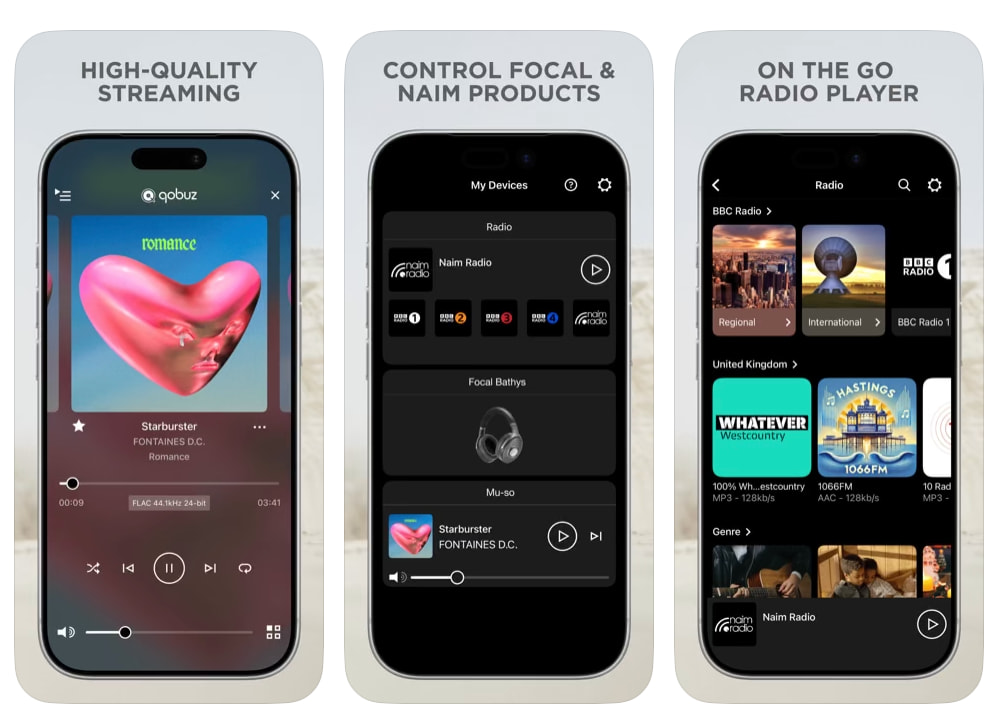
The Focal & Naim app matters more with the CI-Uniti 102 than it does with something like the Uniti Atom because there is no large display, conventional remote, or volume knob waiting on the front panel. In normal use, the app becomes the control center for volume, source selection, streaming, settings, firmware updates, and multiroom playback. Setup was straightforward, the amplifier responded quickly to commands, and moving between sources and streaming services never felt like work.
Advertisement
I still wish Naim included some form of physical remote control because there are moments when reaching for a phone just to change the volume feels unnecessarily modern. HDMI eARC largely solves that problem with a television, since the TV remote can handle volume, but music playback remains app-centric. The deeper EQ, crossover, limiter, time-alignment, and Focal speaker-profile adjustments are handled separately through Focal & Naim Manager, which keeps the main app relatively uncluttered and gives installers considerably more control when building a larger system.
Listening
Naim would undoubtedly prefer that I connect the CI-Uniti 102 to a pair of Focal loudspeakers, and given the relationship between the two brands, that would certainly make sense. But that wasn’t how this review was going to play out. The Q Acoustics 3020c, Acoustic Energy AE100 MKII, and Wharfedale Super Denton are all loudspeakers I own and know well, and they gave me three very different loads and sonic personalities to work with.
Digital streaming was handled primarily through my new iPhone 17, while the analog side consisted of my Thorens TD-145 MKII fitted with a Dynavector 10X5 high-output moving-coil cartridge, feeding the MOON 110LP v2 Phono Preamplifier into the Naim’s analog input. That combination also gave me a useful way to determine whether the CI-Uniti 102 was merely a very capable streaming amplifier or something I would actually want to use with records on a daily basis.
I used the supplied Naim power cord for most of the review, along with QED speaker cables and an interconnect from Chord Company. For approximately three seconds, I contemplated connecting one of my Clarus Audio power cords before realizing that it might cost more than a substantial portion of the system attached to it. Even I have limits.
Advertisement
We have covered the evolution of Class D amplification in considerable detail, but having owned older Naim integrated amplifiers going back to the late 1990s, and spent considerable time with both the Uniti Atom and Uniti Atom Headphone Edition, I was curious to hear whether the CI-Uniti 102 could still deliver the qualities I associate with Naim: pace, rhythm, attack, timing, and clarity.
In other words, I was not particularly interested in whether the CI-Uniti 102 sounded like a Class D amplifier. I wanted to know whether it still sounded like a Naim.
Advertisement. Scroll to continue reading.
“I’m a Fool to Want You” But the Naim Knows How to Hold On
I have been on something of a Billie Holiday kick lately, and while my Classic Records reissue of Lady in Satin is not the definitive version, it still sounds pretty, pretty good. “I’m a Fool to Want You” is also probably one of the worst songs imaginable to play in front of your spouse, girlfriend, or significant other. Naturally, I hate myself enough to do exactly that.
Advertisement
The Wharfedale Super Denton is the warmest and thickest sounding loudspeaker of the three, and what impressed me immediately was how firmly the Naim grabbed hold of the British bulldog. Power is power, but the CI-Uniti 102 combined that authority with a surprising degree of clarity and texture. Holiday’s voice benefited from the Wharfedale’s warmer midrange and softer top end, but she was not sitting at the back of the room eating lunch and mumbling through a bag of prawn chips and a half-eaten Coffee Crisp.
Her voice was not thrust unnaturally forward either. It sat clearly in front of the loudspeakers with enough body, texture, and presence to make the performance feel intimate without becoming dry, sterile, or overly etched. That balance between grip and warmth was the first indication that the CI-Uniti 102 might have rather more traditional Naim character than its Class D topology and anonymous black chassis would suggest.
Switching to Joni Mitchell, Amy Winehouse, Dolly Parton, Sia, and Brandi Carlile confirmed something else: the CI-Uniti 102 does not homogenize voices. It does not shave off the edges or apply some pleasant Naim flavored coating to everything passing through it. Thin is thin. Dolly’s slightly quivering edges that still make me weak in the knees were intact, as were Amy’s bite and power, Joni’s more ethereal delivery, Sia’s explosive energy, and Brandi Carlile’s sheer vocal force.
The Jo Whiley Live Lounge performance of “Valerie” from Amy Winehouse’s At the BBC is a particularly useful test because it is a raw, fairly hard sounding recording. The top end offers little mercy to an amplifier or tweeter already leaning bright. Of the three loudspeakers I used, the Q Acoustics 3020c are the liveliest and, to my ears, the most transparent. The Naim did not try to sweeten the recording or sand down its rougher edges. It simply let the performance flow and unravel in front of me.
Advertisement
That matters when you consider that some Focal loudspeakers can be extremely revealing through the upper midrange and treble. If the CI-Uniti 102 were fundamentally thin, hard, or etched, there would be nowhere for that character to hide. Based on what I heard with the 3020c, that is not what this amplifier is doing.
Highway Anxiety and the Art of Forward Motion
Switching over to The Orb, Aphex Twin, deadmau5, Kraftwerk, and William Tyler revealed another side of the CI-Uniti 102. The Naim does a few things exceptionally well: pacing, energy, presence, and midbass punch. Those are also strengths of the Acoustic Energy AE100 MKII, and the combination had considerably more drive than its modest dimensions might suggest.
William Tyler’s “Highway Anxiety,” the nine-minute opening track from Modern Country, was especially revealing. It is a huge sounding recording built around layers of acoustic and electric guitar, keyboards, percussion, bass, and increasingly expansive textures, and the Naim gave those layers room to develop without allowing the music to lose momentum.
“Highway Anxiety” is one of those tracks that can sound enormous when a system gets it right, and disappointingly small when it doesn’t. The Naim got it right with all three loudspeakers. Tyler’s guitar had body, scale, and enough space around it to let the track breathe without turning the whole thing into some audiophile meditation exercise.
Advertisement
The electronic material was even more obvious. Kraftwerk had snap and precision, deadmau5 hit hard, and The Orb and Aphex Twin had the kind of propulsion and midbass punch that keeps you engaged instead of wondering what the hell happened to the rhythm section. The CI-Uniti 102 may look like something an installer forgot in the rack, but it sure as hell doesn’t sound anonymous.
Where the CI-Uniti 102 Falls Short
I am a big color and texture guy. Life is rarely black and white, and even the black-and-white cookie has a soft, cake-like crumb hiding underneath all that frosting. It is the same reason I obsess over biltong and droëwors. A little chew is fine. Tough can even be interesting. But it still needs flavor.
The CI-Uniti 102 is never going to be mistaken for a tube amplifier, and that is perfectly fine. It is not chalky, sterile, or bleached of tonal color, but I would happily give up a little more detail for additional body and richness. The soundstage is perfectly adequate rather than enormous, and imaging is good, but it does not plant performers in front of you with the same physical conviction I have heard from larger Naim integrated amplifiers such as the Supernait 3.
Advertisement. Scroll to continue reading.
Advertisement
I also wish Naim had included an internal phono stage, although at this price something had to give. Bass is very much in the Naim tradition: tight, fast, and well defined. What I wanted was a little more meat on the bone. Not more bass for the sake of it, but more weight and color through the upper bass and lower midrange where instruments start to feel like actual instruments rather than exceptionally well organized information.
The Bottom Line
The Naim CI-Uniti 102 is easy to underestimate because it looks more like something destined for an equipment rack than the centerpiece of a serious Hi-Fi system. That is also what makes it interesting. You get 150 watts per channel, Naim’s streaming platform, HDMI eARC, multiroom capability, useful DSP tools, and enough power to drive a broad range of loudspeakers, all in a compact chassis that can effectively disappear from the room.
Sonically, it gets most of the important things right. The CI-Uniti 102 is fast, clear, energetic, and exceptionally good at preserving the character of different voices and recordings. Bass is tight and punchy, although I wanted a little more weight and tonal richness, and the soundstage is good rather than enormous. I would also have welcomed an internal phono stage and some form of physical remote control.
The real surprise is how much sense it makes outside the custom-installation world. If you want a compact two-channel system, need something that can integrate into a larger Naim multiroom setup, or simply prefer excellent sound without building an altar to your electronics, the CI-Uniti 102 deserves serious consideration. It may not have the visual drama of the Uniti Atom, but at its lower price and with considerably more power, it also makes the Atom’s current asking price rather more difficult to explain.
Advertisement
Pros:
150 watts per channel into 8 ohms from a compact 1U chassis
Fast, punchy, energetic presentation with excellent pace and timing
Very good clarity without sounding chalky, sterile, or overly hard
Does not homogenize vocals or smooth over the character of recordings
Tight, well-defined bass with strong midbass punch
HDMI eARC makes it easy to build a serious two-channel TV system
Strong streaming and multiroom functionality
Useful DSP, crossover, EQ, and time-alignment tools through Focal & Naim Manager
Works equally well as a standalone streaming amplifier or part of a larger Naim installation
Compact design can disappear into a cabinet or rack
Considerably more power than the Uniti Atom for much less money
Cons:
No internal phono stage
No conventional remote control
Soundstage is solid rather than especially large
Imaging lacks some of the physical solidity of Naim’s larger amplifiers
Bass could use more weight and tonal richness
Not as colorful or texturally rich as the best Class A/B or tube designs
Utilitarian industrial design will not appeal to buyers who want their Hi-Fi on display
Such ongoing extreme hostility from the president has contributed to Americans’ loss of faith in the news media, which has plummeted to an all-time low.
While the situation is in many ways unique to this moment, a perceived crisis around the very notion of “objective reporting” – and presidential use of that idea to denigrate and delegitimize the press – has a long history.
In an infamous 1969 speech, Agnew denounced TV newsmen – they were, indeed, mostly men – as “an effete corps of impudent snobs,” hostile to the president and therefore out of touch with average Americans. Agnew singled out NBC anchorman David Brinkley for his claim that “objectivity is impossible” and that “fairness” was a more reasonable objective. Like many journalists, Brinkley understood “objectivity” as implying an almost mechanical delivery of pure facts, while “fairness” was more realistic, an earnest effort to be judicious.
Brinkley’s statement was not impudent. It was realistic: an acknowledgment that journalists are humans with preconceptions and values, but that their professional mandate is to strive for impartiality.
Advertisement
Carefully balanced reporting was not only the baseline of journalists’ training but also a business imperative. There were only three national nightly news shows, all seeking the widest possible audience. Moderation was more profitable than swinging hard left or right.
Although frustrated with journalism in general, Agnew zeroed in on TV in his speech because it had displaced print as Americans’ leading news source. And the reality of Federal Communications Commission licensing, whereby a federal agency determined who could use publicly owned airwaves, made broadcasters vulnerable to the actions of a vengeful president.
The licensing issue still resonates. Comedian Jimmy Kimmel, a frequent Trump critic, had his show briefly suspended by ABC after angering the president’s supporters.
“We can do this the easy way or the hard way,” FCC chair Brandon Carr said. “These companies can find ways to change conduct to take action on Kimmel or, you know, there’s going to be additional work for the FCC ahead.”
Struggling to compete, newspapers in the 1960s and ’70s could have easily downplayed Agnew’s criticisms of a rival medium.
Instead, they stood up for TV. In the course of my research, I’ve found that not only in publicly accessible material but also in unpublished archival papers both broadcasters and newspapers consistently understood an attack on one media outlet as an attack on all, a lesson that holds true in 2026.
One of Agnew’s “snobs” was the liberal New York Times columnist Tom Wicker. Wicker was on Nixon’s “enemies list,” and he voiced concerns about not just Nixon and Agnew but also more generally about the very notion of objectivity.
Advertisement
Agnew raised hackles across the American journalism community. But Wicker’s reactions stand out in particular, because he was employed by what was then known as “the paper of record,” whose grandiose credo had long been “To Give the News Impartially, Without Fear or Favor.”
In a column published on Nov. 16, 1969, Wicker granted that it was legitimate for Agnew to ask “how the power of that extraordinary medium (TV) can be most equitably controlled and exercised in the general public interest.”
But Wicker underscored that Agnew “couched his argument in direct political attack on those who differed with Mr. Nixon” and “came close to claiming immunity from criticism for Presidential utterance.”
Taking on ‘objectivity’
Two years after Agnew’s “effete snobs” speech, Wicker wrote an essay for Columbia Journalism Review objecting to journalism’s “tradition of objectivity” and “orientation toward nationalism in politics and toward establishmentarianism in other areas of society.”
Advertisement
The consequence, he wrote, was a heavy and generally uncritical reliance on official sources, all in the name of a spurious notion of objectivity.
“In essence,” Rosenthal wrote, “what Tom’s piece adds up to is a public statement by … a well-known columnist of the Times … that objectivity and comprehensiveness, the journalistic foundations of this paper, are no longer valid and that the kind of paper the Times is now is no longer meaningful.”
Rosenthal said Wicker’s public expression of these thoughts was “bad for the paper” externally and “bad for morale” internally.
Advertisement
Regardless, such disputes at The New York Times were always waged behind the scenes. The gold standard for journalism was – and remains, whenever possible – to tell the story, not be the story.
Denouncing bias as deflection
Today, by contrast, it is widely known that the CBS News division “is on fire,” as longtime “60 Minutes” correspondent Scott Pelley said, shortly after he was sacked.
Like Agnew, in other words, Weiss appears to cloak uncritical acceptance of presidential positions as a battle against “bias.”
Advertisement
Denouncing “bias” is usually an attempt by those in power to deflect from what reporters have uncovered – from Vietnam to Watergate to Iraq. It is thus startling for someone within journalism to use the establishment’s word – bias – to self-censor.
In 1971, for example, the Army and the Nixon administration attacked “The Selling of the Pentagon,” a CBS documentary about military public relations activities. Officials charged that the editing had been misleading and malicious, and the U.S. House of Representatives subpoenaed CBS journalists’ raw footage.
In his column, Wicker declared the documentary excellent, and he correctly painted the subpoena of CBS materials as resulting from White House pressure.
Wicker argued that “no statute exists that says government officials must be protected from the exposure of their follies or misdeeds,” and that the Pentagon Papers’ culprit was the government, not the newspapers.
Here, Wicker made a fair, if not strictly objective, evaluation.
Advertisement
Such opinionated defenses of the press still ring true today. Agnew repeatedly attacked naysayers as “nattering nabobs of negativism,” but journalism serves a positive function in particular when its stories are negative.
OpenAI, Anthropic, Google, Microsoft, and more than 100 other companies and organizations are warning that AI-powered cyberattacks could become much more widespread and sophisticated within months.
The group is calling for a global push on cyber defense as more capable AI models make attacks easier to automate and harder to contain. Hospitals, water treatment plants, and internet infrastructure are among the systems it says could face greater risk if defenses don’t improve quickly enough.
The warning carries extra weight because it isn’t coming from one corner of the tech industry. AI developers, cybersecurity firms, and infrastructure companies are all backing the same basic message that defenders need to move now.
Why the warning is unusually broad
The companies involved sit on different sides of the cybersecurity problem. Some are building increasingly powerful AI systems, while others spend their time defending networks against attacks.
Advertisement
That makes the warning harder to dismiss as one company pushing its preferred policy. The coalition brings together organizations with very different commercial interests, yet they agree that existing defenses need to improve before AI gives attackers another advantage.
Its recommendations include stronger baseline security standards and wider access to defensive AI, especially for organizations without large cybersecurity budgets. Critical infrastructure gets particular attention because failures there can quickly spill beyond a single organization.
Aerps.com / Unsplash
What defenders are being asked to do
The coalition wants governments and organizations to expand access to AI tools that can find vulnerabilities and speed up patching. Smaller institutions are a major concern because they may lack the staff or money to react quickly as attacks become more automated.
Software development is another weak point. The coalition is calling for tougher security standards around AI-generated code as AI makes it easier for attackers to probe systems for weaknesses.
The basic strategy is to give defenders stronger tools before offensive AI becomes widespread enough to put even more pressure on already strained security teams.
Advertisement
Why the window may be short
AI doesn’t need to invent entirely new cyberattacks to make the situation worse. Helping attackers find existing vulnerabilities faster could be enough to make familiar security failures much more expensive.
That still doesn’t turn every attack into an AI superweapon. Unpatched software and understaffed security teams remain ordinary problems, but automation can make exploiting them faster and easier to repeat.
The coalition wants organizations to strengthen those defenses now, before AI-powered attacks become commonplace. For anyone already struggling to keep systems patched and secure, waiting until attackers have better automation leaves even less room to catch up.
Google may have made the Pixel 11 Pro XL its most durable Pixel yet, but a new durability test suggests its scratch-resistant display coating doesn’t offer quite the protection you might expect.
The Pixel 11 Pro XL is protected by Gorilla Glass Victus 2 on both the front and back, while an aluminium frame and IP68 certification add further protection against everyday damage. Google also says the display’s new scratch-resistant coating makes it twice as resistant to scratches as the previous model.
That claim doesn’t quite hold up in testing, however. YouTuber JerryRigEverything put the flagship through a series of durability tests, and the display still began showing scratches when exposed to objects rated at level 6 on the Mohs hardness scale. The coating does appear to make very fine scratches less noticeable, but it doesn’t prevent the screen from being marked by harder materials.
Advertisement
The highly polished aluminium frame also picked up scratches relatively easily during the test. There is some good news for anyone worried about repairs, though. The phone’s physical buttons can be removed from the frame, making them easier to replace if they become damaged.
More importantly, the Pixel 11 Pro XL passed the bend test without any major issues, suggesting the frame and overall construction can withstand a fair amount of pressure.
Advertisement
The teardown also reveals a surprisingly repair-friendly design. The phone can be opened from both the front and rear, allowing the display and back panel to be replaced without having to dismantle the entire device. The charging coil is attached to the rear assembly and can also be replaced.
Advertisement
The battery is held in place with strong adhesive, but it remains replaceable. JerryRigEverything also found that the cameras and HiLight LED can be removed without much difficulty, which should make repairs more straightforward if one of these components fails.
So while the Pixel 11 Pro XL’s scratch-resistant coating doesn’t make the screen immune to scratches, the durability test does highlight one area where Google’s flagship could be more practical than its premium finish suggests: repairability.
Ring is rolling out a new default encryption system called TAKE, or “Throw Away the Key Encryption,” that rotates video keys every five minutes and permanently deletes Ring’s copy after 24 hours. The system is designed to preserve cloud features such as smart alerts and AI video search while limiting what Ring can provide under legal process to non-video account information and encrypted footage. The Verge reports: Ring says TAKE uses unique, rotating encryption keys for your footage, stored in a secure enclave and accessible only under strict conditions — based on the features you enable on your account. Currently, footage captured by Ring cameras is encrypted in transit to the cloud and at rest, and then decrypted for Ring to process for those smart features. With TAKE, the encryption keys change for every five minutes of footage. Ring stores copies of those keys to decrypt the footage, but throws away each copy within 24 hours, “leaving you with the keys and full control of your videos,” according to Ring.
TAKE was developed using Messaging Layer Security, an open standard from the Internet Engineering Task Force, according to Ring. The company says it is “inspired by the privacy principles of E2EE (end-to-end encryption),” which Ring offers on some of its cameras. However, the two systems work differently. With E2EE, Ring never has the keys and can’t process your video for cloud-based features. Both options are available on newer cameras that encrypt on-device, and you can switch between the two. Older cameras encrypt at cloud ingress and only support TAKE.
According to a white paper the company published today, Ring’s copy of those keys is managed inside an AWS Nitro Enclave, to which Ring’s access is restricted by “access controls, cryptography, and hardware isolation.” The company claims there is no persistent storage and no way for a Ring employee to access it. The stored keys can only be unlocked by the enclave through cryptographic attestation that proves it’s running the exact software image Ring approved. The enclave releases a temporary key when an enabled service requests it. When asked about what happens if Ring is subpoenaed by law enforcement, a spokesperson for the company said: “Where TAKE is enabled, Ring will only be able to provide non-video information (such as basic subscriber information) and encrypted video files in response to the valid legal process. We have updated our Law Enforcement Guidelines to reflect this change.”
Britain’s market watchdog criticized for not creating the conditions for competition to thrive
UK businesses say the market power of Big Tech is stifling competition, and will hinder the UK’s ability to reap the benefits from AI, a key part of the government’s plans for economic recovery.
Advertisement
A report [PDF] from the Institute for Public Policy Research (IPPR) points out that a handful of companies hold almost total control over the digital infrastructure relied on in Blighty, and warns that we risk letting AI become monopolized in the same way unless more pro-competitive measures are introduced.
A survey conducted for the report found 79 percent of UK businesses relying on digital platforms are concerned about Big Tech using their dominance to limit competition. They rank this as a bigger constraint on their growth than access to finance or talent, according to the IPPR.
So we are in no doubt about which tech giants are being referred to, the report points out that Google handles more than 90 percent of UK internet searches, Microsoft and AWS each control 30 to 40 percent of customer spending on cloud services (Google takes another 5 to 10 percent), and Microsoft is also being investigated for its dominance in business software.
The report is highly critical of the UK’s official market regulator, the Competition and Markets Authority (CMA), almost accusing it of allowing the global tech giants to maintain their dominant position in Britain’s technology market.
Advertisement
“Over the past two years, senior officials have resigned or been sacked from the CMA, and in interviews they describe a collapse in ministerial support for their work. In 2025, the government explicitly asked the regulator to prioritise inward investment (DBT 2025), which was widely interpreted as a call to go easy on ‘big tech’. And subsequently, multiple investigations have led to voluntary commitments rather than binding rules, despite evidence of harm,” it states.
As The Registerreported earlier this year, the chair of the CMA’s cloud inquiry quit, citing the glacial pace of implementing reforms and saying the independence of the agency was at risk. This came just weeks after the CMA appointed Doug Gurr, a former Amazon veteran, as permanent Chairman at the agency.
In fact, the IPPR recommends the government develops an updated strategic steer for the CMA, to encourage it to be more proactive, rapid and bold in its enforcement. Greater emphasis is needed on interventions that genuinely boost growth, it claims, saying the CMA has so far done little to create conditions where competitors thrive, even though these conditions may deliver growth and sovereignty.
Over the past two years, senior officials have resigned or been sacked from the CMA, and in interviews they describe a collapse in ministerial support for their work
Advertisement
The report warns the stakes are becoming even higher with the rapid growth of AI. The technology is central to the government’s plans for future growth, as laid out in the AI Opportunities Action Plan, introduced at the start of last year.
But UK investment in home-grown AI firms risks being undermined when they depend excessively on infrastructure controlled by overseas technology giants, the IPPR says.
The AI industry is already highly concentrated, with Nvidia dominating the accelerator market, and the hyperscalers largely controlling access to AI infrastructure via their cloud platforms.
Microsoft, Google and Amazon have collectively invested in excess of $20 billion in the major AI developers, causing the CMA and the US Federal Trade Commission to flag these partnerships as a risk.
Advertisement
If AI ends up becoming a monopoly (or oligopoly), the UK’s leverage will likely be tiny and its financial returns constrained, the IPPR says.
“Big tech dominance is holding back British businesses, limiting competition and making it harder for new firms to innovate and grow,” claims IPPR senior research fellow and report author Roa Powell.
“The CMA has the expertise and the tools to improve competition, what it needs now is clear political backing from government to act boldly,” she added.
Alas, MPs have already warned Parliament that the UK has no “coherent strategy” for creating sovereign capabilities across a range of technologies, including AI, space, and quantum computing. And as The Register reported last year, experts believe it is now close to impossible for European firms to escape the clutches of the US cloud giants.
Advertisement
In response to the IPPR claims, a CMA spokesperson told us: “The CMA has not waited to act. Since the digital markets regime came into force 20 months ago, we have made 3 strategic market status designations, implemented targeted, impactful interventions in Google search and secured meaningful improvements to Google and Apple’s mobile ecosystems.
“We continue to progress interventions in both search and mobile ecosystems. We also have an investigation into Microsoft’s business software ecosystem underway – which includes cloud licensing practices and AI-enabled products – at a time where these are becoming critical for the UK.
“Our interventions are already opening up opportunities for thousands of UK businesses, giving them greater choice, fairer access to customers and a stronger ability to compete and innovate in markets that have long been controlled by a small number of powerful global firms, and there is more to come.” ®
Alpharetta, a prosperous suburb of Atlanta, Georgia, is home to about 67,000 people, served by about 120 local police officers. It also hosts several dozen cameras sold by Flock Safety, the increasingly controversial surveillance company that collects license plate data and other information and makes it searchable by police.
Data captured by those Flock cameras, WIRED has learned via public records requests, is accessible to more than 2,000 police departments, colleges, airports, and government agencies across the United States. These range from Morehouse College to Florida’s Fish and Wildlife Commission and include Medicare fraud investigators in Illinois, a drug task force focused on east-central Missouri, and the inspector general of a federal agency.
In return, Alpharetta receives Flock data from more than 1,300 entities, which span from the prosecutor’s office of Whitley County, Indiana, to the Metro Police Authority of Genesee County, Michigan.
Alpharetta’s data-sharing network has expanded tremendously over the past year. Since June 2025, the number of entities receiving data from Alpharetta police has grown by about 42 percent, and the number of entities sending data to them has grown by about 125 percent. And, according to documents obtained via public records requests from several other cities around the country, Alpharetta is far from alone in having an expansive and complicated data-sharing system, providing a potent example of how pervasive Flock’s surveillance network has become.
One of Flock’s central selling points is its network of customers—mostly, though not entirely, law enforcement agencies. If a criminal suspect crosses city, county, or perhaps state lines, Flock tells its customers, a query can prevent them from falling through the cracks.
Data sharing across agencies is hardly novel. A police department can, for instance, share data from its automatic license plate readers (ALPRs) with state-run fusion centers, which centralize resources from law enforcement agencies in particular regions. They could also share it with a regional High Intensity Drug Trafficking Area (HIDTA) program. (Alpharetta police agreed to do just that in 2025, according to a memorandum of understanding that WIRED obtained.)
Whereas HIDTAs are federally funded public programs, Flock is a private company that manages a sprawling, interconnected ALPR network governed by rules and restrictions that vary wildly from city to city. And if police departments don’t closely supervise their settings for data requests and sharing within Flock’s interface, they can unwittingly become nodes in a much larger surveillance network than they necessarily know or understand.
Advertisement
This can lead to situations like that in Alpharetta, where citizens and visitors are embedded in a data-sharing network that has propagated to more than 2,300 nodes. So, how does it happen?
Setting Boundaries
To understand how cities like Alpharetta can build such expansive data-sharing networks with Flock, it’s important to understand how Flock’s interface actually works.
WIRED analyzed a cache of files on Flock’s website that are served by its login pages to anyone who loads them. Some of the code that WIRED analyzed illustrates what a Flock administrator might see in their own Flock interface—specifically, in their settings and sharing preferences.
An administrator can automatically share their agency’s Flock data with any organization within a custom radius, within their home state, or within one or more other states. Alternatively, they can individually choose organizations to share data with.
Advertisement
Administrators can also limit specific data that other organizations can receive, like live or archived videos. They can also limit which organizations can ask them for data. They could restrict this, for instance, to organizations based in the same state, or within a 50-mile radius.
Smartphones have better cameras than ever before, but there comes a time when you want to show off your beloved photos outside of a tiny phone screen. Give your cherished memories the recognition they deserve with physical photo books from Chatbooks. A photo book helps bring your photos out of the Cloud and makes an incredible present for grandparents, parents, anniversaries, birthdays, and more. If you’ve been curious about trying out a photo book service, we have a Chatbooks promo code and Chatbooks coupon code to help you save on your next favorite memento or gift.
Get 40% Off Your First Yearbook + Free Standard Shipping With This Chatbooks Promo Code
If you’re looking to commemorate your children’s school year, we have a Chatbooks coupon code for photo books, where you’ll get 40% off your first yearbook and get free standard shipping. If your family is looking to design and print high-quality school memory books, enter the Chatbooks promo code CLASSIC40 at checkout for 40% off, with yearbooks starting at only $10 when the Chatbooks discount code is applied (through December 31).
Print memories you can hang on the wall, stash in your wallet, or just hold in your hand.
Use This Chatbooks Coupon Code for 20% Off Your First Photo Book
One of the best ways to save if you’re a first-time customer, is with a Chatbooks coupon code for first order or a Chatbooks discount code for new customers. If you’re creating your first order on Chatbooks or are starting your first printed photo book project, including both custom softcover and hardcover photo books, you can save 20%. To get this deal, use Chatbooks discount codeHIYA20 at checkout for 20% off. Prices vary, but it starts at only $15 for 20 pages and classic photo albums can go up to 366 pages! Offer ends on December 31, so consider making a photo album from Chatbooks your next present.
Save 50% on Your First Monthbook: $12 With Free Shipping
A great gift for a new parent, whether that’s yourself or someone else, is the gift of printed memories for the new baby. A Monthbooks subscription allows you to have monthly photobooks so you can chronicle your child as they grow. And with this Monthbook promo code, you can get the first of your 12 monthly photo books in 2026 for just $12—that’s 50% off—with free shipping. To nab this deal, use the Monthbook promo code TAKE50 at checkout to save, through December 31. This Monthbook discount is only available to new US customers starting a Monthbooks subscription, and auto-renews at $24 after.
Advertisement
Chatbooks Promo Code for $5 Off as a New Customer With Social Rewards
If you’re a content creator or influencer, Chatbooks makes it easy to earn rewards for sharing Chatbooks content. With the Chatbooks Social Rewards Club, you can unlock secret perks, receive exclusive promotions to share with your followers, and more benefits. To get Social Rewards perks, you’ll first need to sign up. Afterwards, you’ll get rewards by completing different social media challenges. For example, if you share and tag photos of your favorite Chatbooks products on social media, like a post on Instagram or TikTok, you’ll receive rewards and gain access to VIP perks and promotions like a $15 or $5 Chatbooks Credit.
And now, new customers can get $5 off a qualifying order when they use a specified Chatbooks Social Rewards code at checkout. To get this deal, use Chatbooks promo code LOVECB at checkout to claim your new customer reward for the discount on your first book or album creation, through December 31.
Get Free Shipping on all Chatbooks Orders Without a Discount Code
None of these Chatbooks promo codes or deals apply to you? No problem! There are still tons of ways to save, even without a Chatbooks coupon code. You can still get free standard shipping on all Chatbooks products, without a minimum purchase amount or needing a Chatbooks discount code, through December 31.
Save Even More With Chatbooks Social Rewards and Referral Credit
As previously mentioned, you can save even more by utilizing Chatbooks’ referral program and Chatbooks Social Rewards, which will help you continue to earn credits that can be converted and applied as discounts. One of the easiest ways to save is by sharing your unique referral link, which gives a $15 off discount and earns a $15 credit for yourself (up to $100 total per account). And you can also participate in the Social Rewards program by posting approved content on Instagram or TikTok to earn up to $35 in monthly print credits.
Advertisement
How to Choose the Best Chatbooks Offer for Your Order
Have too many Chatbooks promo codes to know where to start? Don’t worry, we can help you choose the highest possible savings for your specific cart contents. For example, on a single order, a percentage Chatbooks discount code like 20% off your first book is the best deal, and for bulk orders like school yearbooks, using the specific 40% off yearbook Chatbooks promo code provides the deepest discount. Plus, subscription-specific offers (like the Monthbooks subscription promo code above) may carry automatic perks or discounts like free shipping.
Why Your Chatbooks Coupon Code May Not Be Working
If your Chatbooks promo code isn’t working, fear not! There are many common reasons why a Chatbooks coupon code might not work or be able to be applied at checkout, so make sure you read the fine print and follow the steps carefully. Firstly, make sure that the Chatbooks promo code isn’t restricted to first-time customers if you’re not a first timer, many codes prevent returning users from applying it. Next, many Chatbooks coupon codes are program-specific, like the previously mentioned Social Rewards discount, which require qualifying conditions. Finally, it’s simple but make sure you are double checking your Chatbooks promo code, ensuring there are no typographical errors or extra spaces. And always check expiration dates, because if you attempt to use expired coupons, you’ll get an error message during checkout.
Over a hundred tech companies — including OpenAI, Anthropic, Google, and Microsoft — have signed an open letter urging both the private and public sectors to work together to defend themselves from AI-related cyber threats.
The letter — which was also signed by prominent cyber firms like CrowdStrike, Okta, and Fortinet, as well as prominent financial institutions and internet infrastructure firms — calls for the adoption of new forms of cyber defense, while also encouraging governments at the “local, national, and international levels” to collaborate on security.
“In the coming months, AI-enabled cyber attacks will become far more widespread and sophisticated as models around the world become increasingly capable,” the letter states. “The companies and public services our communities depend on — from hospitals to water treatment plants to the infrastructure that powers the internet — are at risk.”
The problem AI poses to traditional cybersecurity defenses has been thrust into the spotlight lately by a string of bizarre incidents in which AI agents have attacked companies.
Advertisement
The Hugging Face incident — in which one of OpenAI’s agents autonomously broke out of its sandboxed environment and attacked the tech company — has been followed by a trail of other reported break-ins involving agents developed by other AI companies, including Anthropic and Meta. These incidents have bolstered the argument that the field of cybersecurity has been fundamentally altered and that bold new commercial solutions are necessary to mitigate them.
The letter further suggests the mobilization of a “collective response,” one in which “new partnerships” are formed “to raise security standards and find new solutions to emerging cyber threats.”
Several of the AI companies that have signed the letter are still actively developing ever more advanced AI models, highlighting their conflicted position. At the same time, they are also offering programs to use frontier AI models for defensive purposes, including OpenAI’s Daybreak program, Anthropic’s Mythos, and Microsoft’s new cyber platform Perception.
When you purchase through links in our articles, we may earn a small commission. This doesn’t affect our editorial independence.
Frontier AI models have converged within 5% of each other (Stanford 2026 AI Index). Gartner predicts 40%+ of agentic AI projects will be canceled by end of 2027. Oxylabs SVP Gediminas Rickevičius argues the differentiator has shifted from model selection to data infrastructure: web indexes built for agents (structured content, not blue links) and real-time access layers for dynamic information. McKinsey finds 88% of organizations use AI but only 6% are high performers.
In 2026, the way we talk about AI is beginning to change. Two years ago, every boardroom argument circled the same question: which model do we bet on? Today, that question barely registers. Frontier systems have converged so tightly that, according to Stanford’s 2026 AI Index, leading models gained roughly 30 percentage points in a single year on key benchmarks and now cluster within a hair’s breadth of each other on most tasks. The model is no longer the variable; something else is.
That something is data, specifically, what the model sees, when it sees it, and how well it is structured. What makes the difference now is more fundamental: the quality, freshness, and structural depth of the information a model receives. Organizations are running into two walls at once. One is hit by the AI agents, they continue to produce confident errors. The other is long-term and more foundational, finding fresh information requires a new generation of search infrastructure. Both walls lead back to the same foundation: data.
What’s next: AI agents and the agentic web
When agents stumble
Agentic AI – systems that can plan, search for data, use tools, and execute multi-step tasks with limited human oversight – is being deployed across competitive monitoring, pricing intelligence, market research, procurement, and lead qualification. Sadly, agents often fail at most of these.
Advertisement
Gartner predicts that over 40% of agentic AI projects will be canceled by the end of 2027, citing escalating costs, unclear business value, and inadequate risk controls. A 2025 MIT NANDA study put it even more starkly: roughly 95% of generative AI pilots have failed to deliver measurable returns, with brittle workflows and a lack of contextual learning cited as core reasons.
The instinct, when an agent produces a confident error, is to blame the model – a flaw in reasoning, a hallucination. In reality, the failure can usually be traced to something much simpler: the agent was working with outdated or incomplete information. Sound logic – stale facts, to put it plainly. An agent assessing a competitor’s pricing strategy is limited by whether it can access current and geographically accurate pricing, not by whether it can reason about it. A fleet of such agents across business-critical functions is a structural liability no amount of prompt engineering can fix.
Context as infrastructure
There is a persistent tendency in enterprise AI budgeting to treat data acquisition as overhead, something that lives below the line and, once handed to IT, shouldn’t surface again in strategy conversations. This is no longer tenable. The industry has even coined a term for the discipline of fixing it: context engineering, which, in late 2025, Anthropic defined as the practice of curating the optimal set of information available to a model at inference time.
For organizations whose AI depends on web data, product listings, financial disclosures, news, job postings, regulatory updates, competitor activity, the raw information is out there. The difficulty is in accessing it consistently. Dynamic content rendering, inconsistent data formats, and other common website features become obstacles when you need to extract public data quickly and at scale. Organizations that underinvest in solving them let convenience determine what their AI knows about the world.
Advertisement
How to get there?
Better web indexes
To feed an agent fresh information, you need a web index: the organized database search engines consult instead of the live internet. It functions like a library catalog, allowing systems to locate information across billions of pages in milliseconds without reading every “book” from scratch.
The process is continuous: crawlers discover pages, parsers strip away noise like ads and code, and the system stores clean content with quality signals for ranking. While traditional indexes provide links for humans to click, agents require structured data they can use immediately. Standard indexes force agents to fetch, clean, and summarize pages individually, adding delay and token costs. Agent-specific indexes skip this by storing ready-to-use content with verifiable sources, turning search into a reliable foundation for action rather than a list of blue links.
Where it gets interesting for anyone building with AI is that traditional search indexes were designed for people: a title, a link, a short snippet, enough to decide which blue link to click. An agent does not want a list of links. It wants the actual information, already pulled out and structured for a language model.
When an index only hands back links, the agent has to fetch each page, strip out the useful parts, and summarize them itself, which adds delay, drives up token costs, and creates more places to break. Indexes built for agents skip that scramble by storing content the model can use straight away, with source and date attached so every fact can be traced back. That last part matters, because showing where a claim came from is one of the more practical defenses against an agent confidently making something up. So, when someone says agents need better data, it partly means that agents need indexes built for them.
Advertisement
Infrastructure for real-time access
A good index gets you a long way, but even the best one is a snapshot. It reflects the web as of the last crawl, and for a lot of what agents do, that lag is the difference between a right answer and a useless one.
Model commoditization used to be a fringe prediction, but it is not anymore. McKinsey’s 2025 State of AI survey found that 88% of organizations now use AI in at least one function, yet only 6% qualify as high performers extracting meaningful enterprise-wide value. Adoption is no longer the constraint, whereas execution is. And a big part of execution is what the model is fed when it goes to work, which comes down to the infrastructure around it rather than the model itself.
Such infrastructure serves two core purposes: an index to store structured web content for AI models, and live access to reach real-time web data. Standard indexes miss immediate updates like dynamic pricing, regulatory changes, or new product launches, requiring agents to navigate obstacles such as dynamic content and varied formats. Consequently, competitive edge depends less on model selection and more on the breadth and immediacy of the data an AI can access.
Summing up
Models matter, and building agents is genuinely demanding work. But as models become more capable and more similar, the question of where to direct the next dollar deserves more honest scrutiny than it usually gets. Deloitte’s 2026 State of AI in the Enterprise report says it plainly: companies moving from pilot to production are those investing in the underlying foundations, not just the visible AI layer.
Advertisement
More capable models on their own will not rescue an agentic deployment starved of fresh information. The organizations that capture durable value will be the ones that pair good models with two things working together: indexes built for agents, and live access to the current web for everything those indexes cannot have caught yet. An agent is only as good as the information it can reach at the moment it acts. Closing the distance between what agents can reason about and what they can actually see is what comes next for AI, and building the data infrastructure underneath is how we get there. That shift is already underway, and agentic search is about to change because of it.



























































You must be logged in to post a comment Login