
Tech
An Anthropic researcher just gave us a peek at self-improving AI


Training AI models with other AI models has become a very popular goal for neolabs — and now, a researcher in Anthropic’s fellows program has given us an early look at what it might look like in practice.
On Friday, Anthropic published a new paper titled “Automated Researchers Can Reliably Mitigate Alignment Failures,” detailing how AI systems could reliably improve a model’s performance on a set of alignment benchmarks. When given 10 benchmarks for specific misaligned behaviors, the automated systems were able to improve performance on every single one without degrading overall performance.
Led by Anthropic fellow Chen Yueh-Han, the system replicates much of the traditional approach to research. Each automated system searches the available literature, proposes a method, and trains the model using that method for 30 minutes, gradually increasing the benchmark over several iterations. Effective methods are preserved while ineffective ones are discarded, allowing the system to operate quickly and at a great scale.
“Overall, these results provide early evidence that automated alignment post-training could become practical in the near term,” the paper reads.
The paper is a step toward recursive self-improvement, which many see as the next significant step in AI progress. If models can improve their own alignment training, it’s plausible they could improve training practices more broadly — at which point, human AI researchers might soon become obsolete.
The paper isn’t shy about addressing this idea, explicitly comparing the Automated Alignment Researcher (AAR) to its human equivalent. “The best AAR method beats what experienced humans propose, on average within six hours,” the paper reads. “Human guided research directions do not lead to stronger performance.”
There’s even a cost comparison, in case anyone wasn’t convinced. “An AAR costs roughly $4 per hour in API inference against the $150 per hour we pay our human researchers.”
In fairness, the paper also points out a few limitations to this approach. The automated system only works insofar as the benchmarks reflect the actual alignment goals, and even then there’s significant work to be done in establishing and maintaining those benchmarks — not to mention maintaining and expanding on the literature the automated researchers are drawn from.
When you purchase through links in our articles, we may earn a small commission. This doesn’t affect our editorial independence.

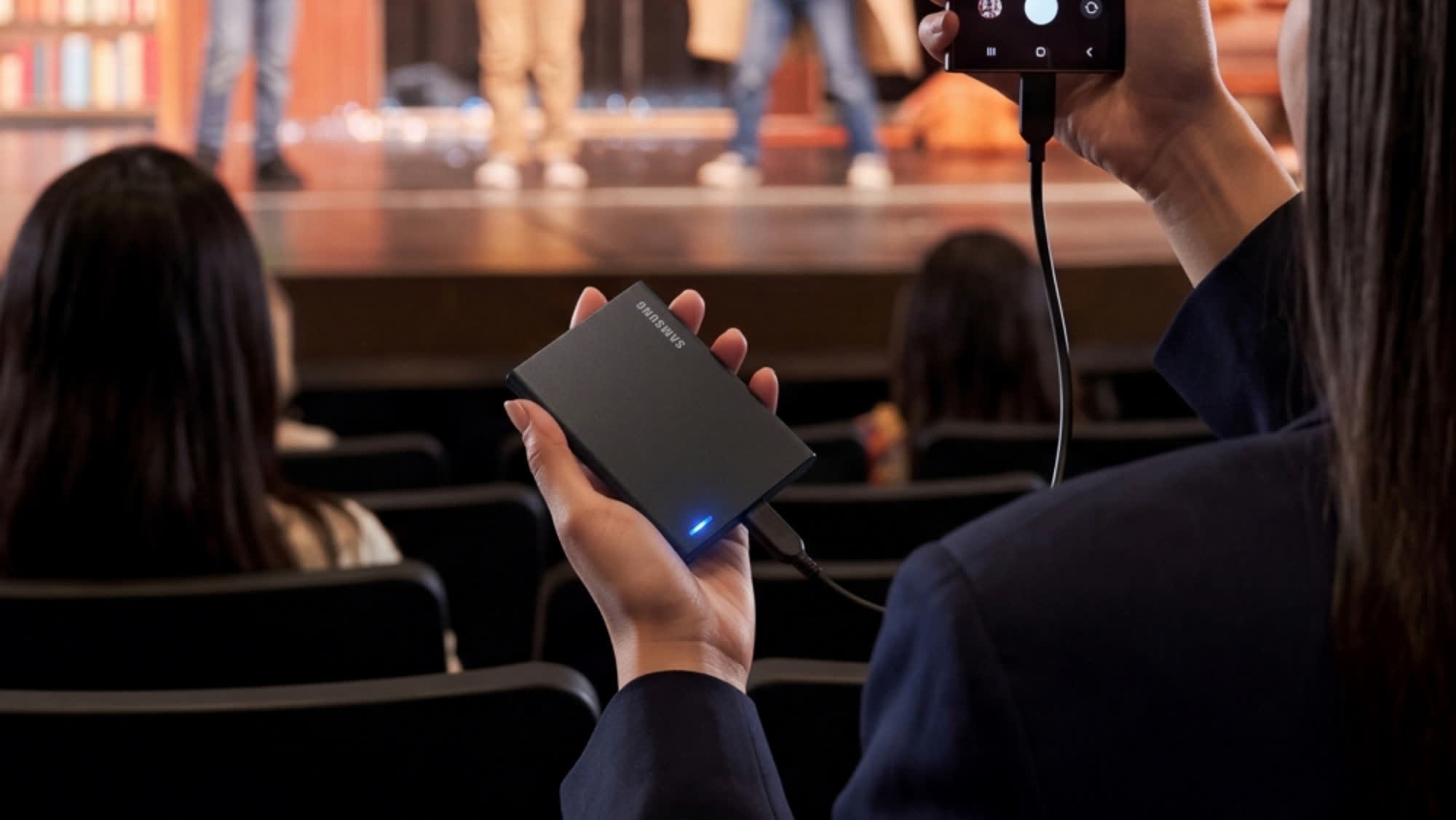
Pricey Memory Potato: Samsung recently unveiled the latest models in its portable storage lineup. The “P” SSD series features unprecedented performance, but the high-end models come with truly eye-opening MSRPs that few users will be able to afford.
Samsung unveiled the company’s new offering for portable storage enthusiasts at Gamescom 2026 in Germany. The “P” Series of external SSDs uses USB4 connectivity to raise the performance bar considerably while offering some truly spacious units for both professional and consumer use.
The P Series includes two models: the P9, which is positioned as an ideal solution for professional users, and the P7 – designed to provide “convenient” storage for everyday users. According to the official price tags, however, it isn’t particularly convenient for most wallets.
The flagship P9 drive can deliver sequential read speeds of up to 4,000MBps, while sequential write speeds can reach 3,800MBps. This industry-leading performance is approximately twice as fast as the previous generation, with Samsung comparing the newer P9 with a 4TB T9 drive, which offers sequential read and write speeds of 2,000MBps over a USB 3.2 Gen 2×2 interface.

Earlier this year, the Samsung P9 received an Innovation Award at CES. Samsung said the portable SSD can sustain “12K” real-time recording, which should be more than enough for production workflows involving video capture, RAW image files, and ultra-high-definition video storage and editing.
Meanwhile, the Samsung P7 model uses the same USB4 interface to offer a more versatile storage option. The Korean company highlights the drive’s broad compatibility, noting that it can be used with desktop and laptop computers, smartphones, gaming consoles, and even USB-compatible cameras.
The P7 also offers improved durability, having successfully completed a 2-meter drop test along with additional shock and vibration tests. According to Samsung Electronics Vice President Tommy Kwon, the P Series can provide real performance benefits for “AI-powered” content creation, video production, and everything in between.
Now, here’s the hardest part of Samsung’s overenthusiastic announcement: the P Series of portable SSDs will cost a lot, because memory products have become a luxury that very few giant corporations in the world can afford to ransack.
The P9 will be available in four capacities (1TB, 2TB, 4TB, and 8TB), with suggested prices ranging from $340 to $2,700. Meanwhile, the “affordable” P7 drives will range from $290 for the 1TB model to $2,290 for the 8TB version. Look for them to start shipping on August 31.


science
How come that super-smart AI of yours didn’t figure this out, frontier labs?
Datacenter cooling could get a lot more affordable, and sustainable, if a joint German-Japanese research project can be scaled beyond the laboratory.
Researchers from the Karlsruhe Institute of Technology and the University of Tsukuba published a paper in Nature Energy on Friday discussing the success they had with a solid-state cooling technology that doesn’t need any electric input at all, and was still able to demonstrate temperature reductions in laboratory experiments.
For those unfamiliar with solid-state cooling, it’s a more sustainable alternative to traditional compression cooling that relies on environmentally harmful refrigerants and lots of electricity. Instead of compressing and expanding a gas to generate cold, some solid-state systems rely on thermoelectric materials that, when supplied with electricity, can generate temperature differences. Thermoelectric solid-state cooling systems can be incredibly small, but there’s a catch: They still need energy, and they’re only a quarter as efficient as modern compression cooling systems, as the researchers noted.
Enter elastocaloric cooling, which relies on shape-memory alloys that change temperature when mechanically loaded and unloaded through a phase transition. It’s that sort of material and methodology that the KIT and Tsukuba team experimented with.
Like other forms of solid-state cooling, elastocaloric systems have traditionally required electricity to effect change in the shape-memory alloys they use, relying on actuators that can get quite large. What the researchers wanted to develop was a miniaturized form of elastocaloric cooling that didn’t require any electricity at all, instead relying on the waste heat being generated by the objects it wanted to cool – for example, a computer processor, as they mention in their paper. Based on their demonstration, it appears to have worked.
The researchers used a pair of super thin nickel-titanium foils for their elastocaloric system with opposing functions: One foil shrinks when subjected to heat, generating movement that translates into mechanical energy and acting as its own actuator. That mechanical energy is transferred to the second foil, which is loaded and unloaded to trigger a phase transition that produces the cooling effect.
Laboratory tests demonstrated that their technology isn’t only theoretically feasible, but also actually works – albeit to a limited extent.
“Our prototype achieves a temperature span of 12.9 K at the refrigerant film level and 4.0 K at the device level under Joule-heated actuation at 86°C (187°F),” the team said in their report. When subjected to an external heat source of 130°C (266°F), the system still maintained a device-level temperature span of 2.2 K – not a lot, but it still shows the device, even at its most basic, single-pair-of-films level, works.
“For us, the decisive moment was seeing measurable cooling for the first time, actually generated by a heat-driven system,” KIT PhD candidate and paper lead author Yi-Ting Hsiau said of the project in a release put out by the university. “This showed us that the principle doesn’t just work on paper.”
With the concept of electricity-free miniaturized cooling now proven, the team is planning to build larger experimental units to optimize cooling performance.
Electricity-free and water-free cooling designs couldn’t come at a better time: Energy generation used to power and cool things like datacenters is on the rise, as is the water footprint of such facilities, in part also linked to cooling. Add climate change to the mix, and cooling electronics and people is only more of a concern – according to IRENA, heating and cooling together now account for more than 40 percent of global energy-related carbon dioxide emissions. Sorting out the datacenter energy and water problem has a lot to do with figuring out how to keep systems cool, and while this research is in its infancy, it could prove to be a valuable contribution to reducing the tech industry’s energy footprint.
“We believe this is just the beginning,” said Jingyuan Xu, head of KIT’s ZEco Thermal Lab, working on zero-emissions and eco-friendly heating and cooling tech. “By scaling up this technology, we aim to develop compact cooling systems that utilize abundant heat sources for sustainable cooling.” ®
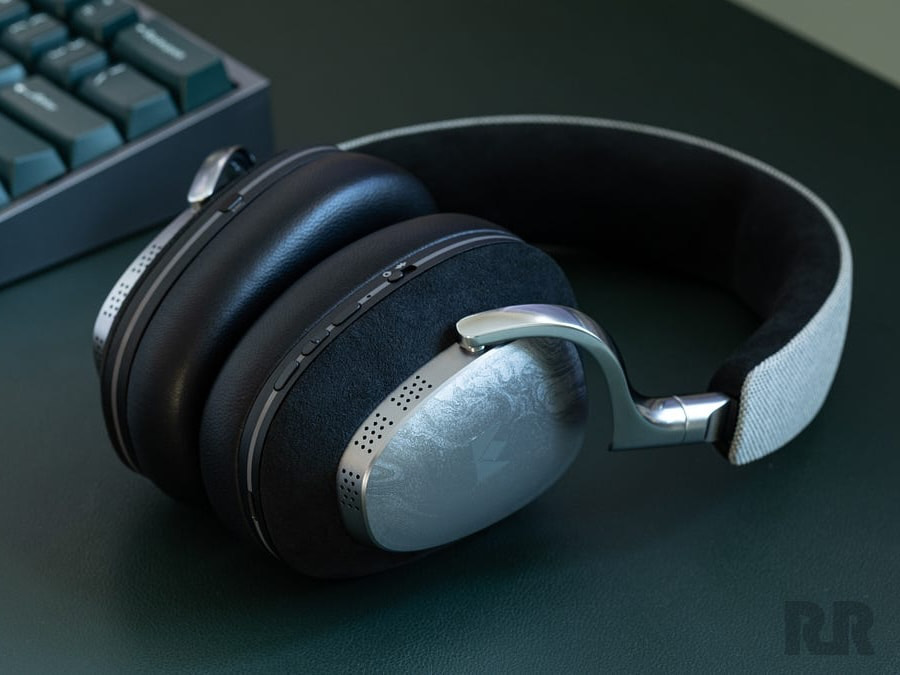
Long gone are the days of headphones merely being “good for Bluetooth.” Mainstream consumer brands like Sony, Bose, and Sennheiser crested the hill of “actually good” audio quality a long time ago and are now differentiating themselves based on lifestyle and usability features, with ANC chief among them. The technology that powers these advanced features is complex and not particularly cheap, and smaller brands with more limited R&D budgets lagged behind for a long time.
But multi-mic arrays, AI-powered ANC, and personalized hearing compensation systems have become much more common in recent years, thanks to advances in each respective field. That has worked to the benefit of smaller artisanal brands like Noble, which specialize in acoustic engineering rather than consumer technology.
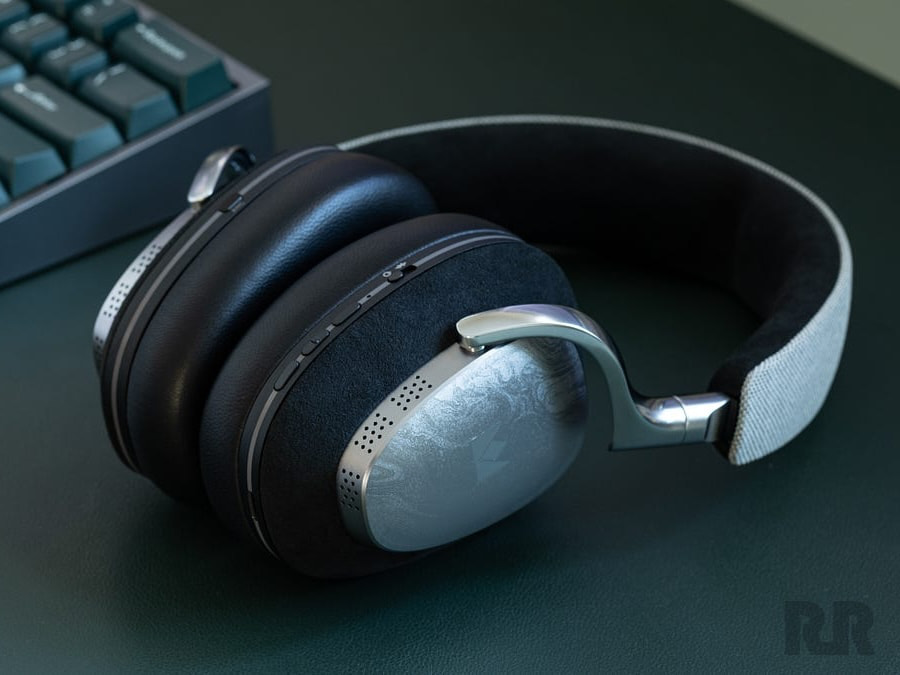
The Artemis is Noble’s newest wireless audio product, released right after the well received Osprey wireless IEMs. The Artemis now sits at the top of Noble’s wireless headphone lineup, superseding models like the FoKus Apollo and Apollo Pro and costing $899. But a “nice” headphone with smart integration of modern technology isn’t new, nor is it special in today’s highly competitive headphone market, so Noble went one step further.
The Artemis ditches the traditional single dynamic driver setup for a novel tribrid approach: one dynamic driver, one balanced armature driver, and one planar driver per side. It also features built in audio personalization with Audiodo hearing compensation technology and even allows users to service aging units themselves with easily replaceable batteries.
But $900 is still substantial, and there are a lot of great headphones that cost less. Does the Artemis’ feature set and exotic driver configuration justify its price? Well, let’s get into it.
About My Preferences: This review is a subjective assessment and is therefore influenced by my personal preferences. While I try to mitigate that as much as possible during the review process, I’d be lying if I said my biases were completely erased. So, for you, my readers, keep the following in mind:
- My ideal sound signature includes competent sub bass, textured mid bass, a slightly warm midrange, and extended treble.
- I have mild treble sensitivity.
Testing equipment and standards can be found here.
Related Reviews:
Specifications:
- Headphone Type: Wireless closed back over ear
- Driver Configuration: 1 dynamic driver, 1 balanced armature driver, and 1 planar magnetic driver per side
- Wireless Platform: Qualcomm QCC3095
- Bluetooth: 6.0
- Codecs: LDAC, aptX Adaptive, aptX Lossless
- ANC: User adjustable Active Noise Cancellation
- Transparency Mode: Yes
- Microphones: 6
- Multipoint: Yes
- Personalized Audio: Audiodo Personal Sound
- EQ: App based EQ with settings stored on the headphones
- Spatial Audio: Supported through the Noble FoKus app
- USB Audio: Yes, via USB C
- Wired Audio: 3.5mm
- Battery: 600mAh, user replaceable
- Battery Life: 55+ hours with ANC off; 35+ hours with ANC on
- Charging: USB C with fast charging
- Charging Time: Under 1.5 hours
- Water Resistance: IP52
- Weight: Under 350g
- Ear Pads: Magnetic, detachable, and replaceable
Build Quality
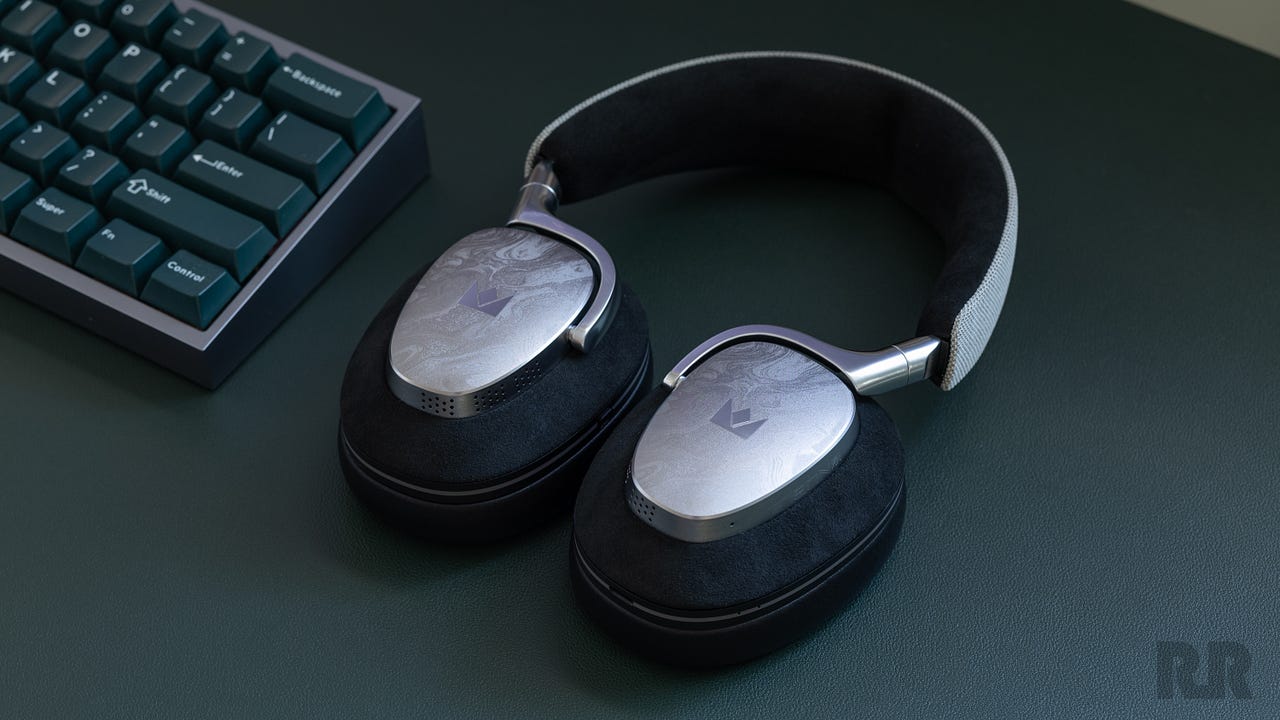
The Artemis is built primarily from high grade CNC machined aluminum. Each ear cup features a Damascus style pattern etched directly into the metal.
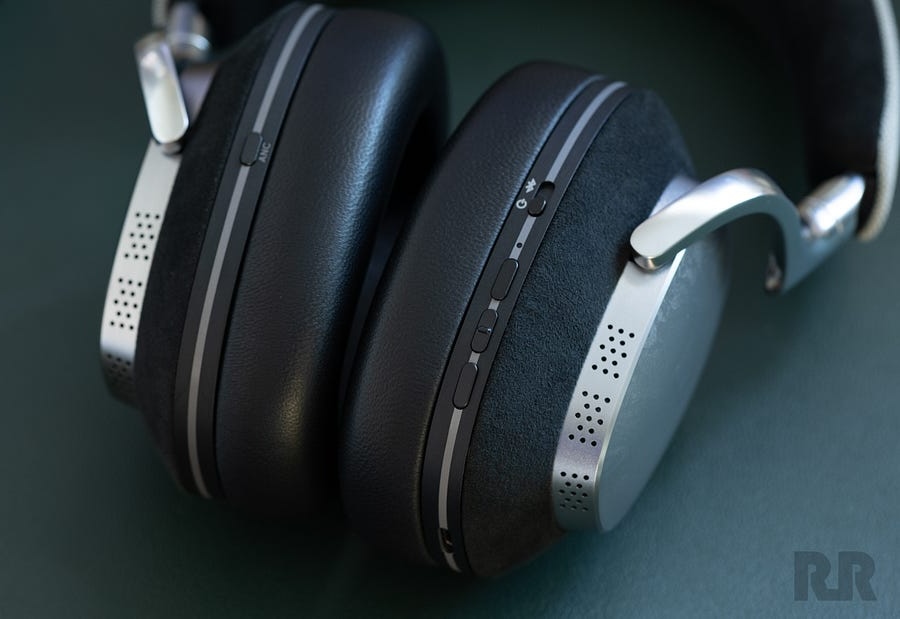

The back of each ear cup is perforated, providing ventilation and space for the microphones. A plastic ring sits between the Alcantara and the ear cup, housing the power and volume controls. The Artemis’ USB-C input is located on the bottom of the left ear cup and feels secure.
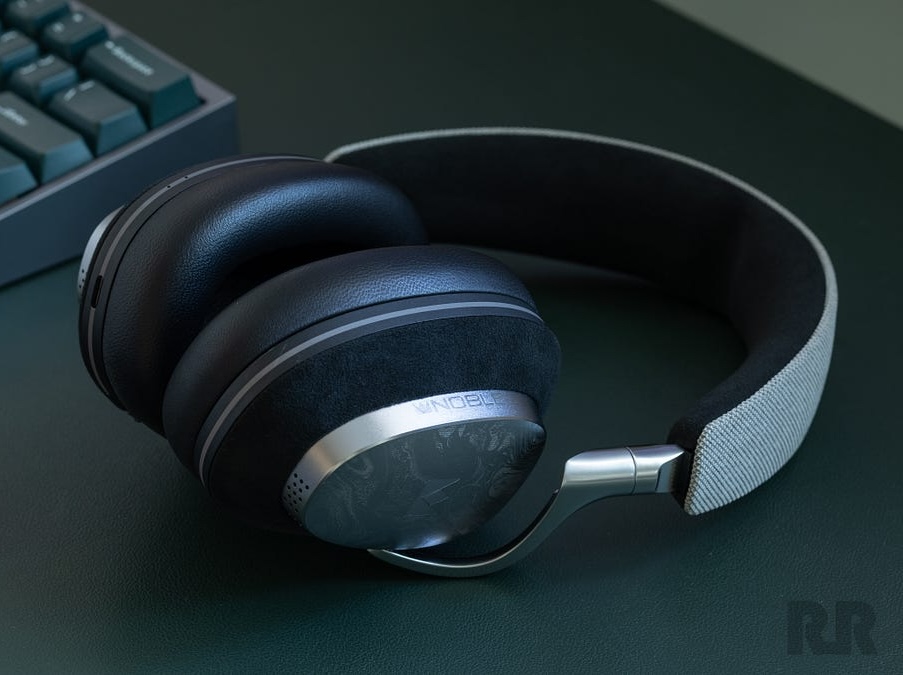
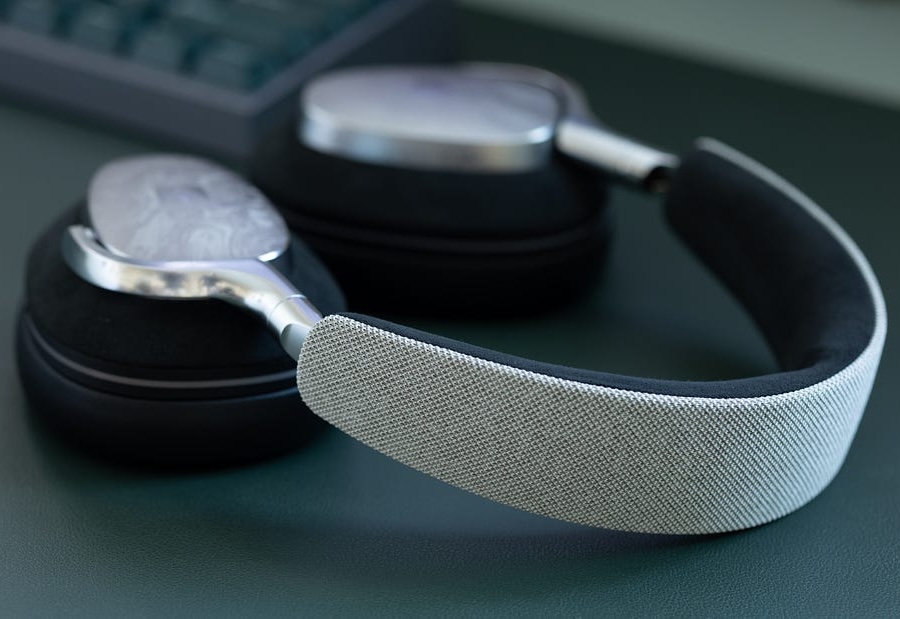
The Artemis’ headband is sturdy and comfortable, with a padded Alcantara underside and woven cloth exterior. The internal structure is reinforced with spring steel, giving the headband a substantial and durable feel.
The Artemis features magnetically attached ear pads, making them easy to remove and replace. Replacement pads are available directly from Noble, so owners do not have to worry about the headphones becoming unusable simply because the pads wear out.


Even more valuable is the inclusion of user replaceable batteries. With a single screw, owners can remove the Artemis’ battery and replace it with a spare purchased from Noble. In practical terms, that means the Artemis can remain in service until something truly fails rather than becoming disposable once the battery reaches the end of its useful life.
Very few wireless headphones offer this level of maintainability. Fairphone’s Fairbuds XL are a notable exception, while AIAIAI’s TMA 2 models also emphasize modular, replaceable components. Sennheiser supports replaceable ear pads on models like the Momentum 4, Momentum 5, and HDB 630, but their batteries are not user replaceable. Noble therefore deserves real credit for making both routine wear items and the battery easy for owners to replace themselves.

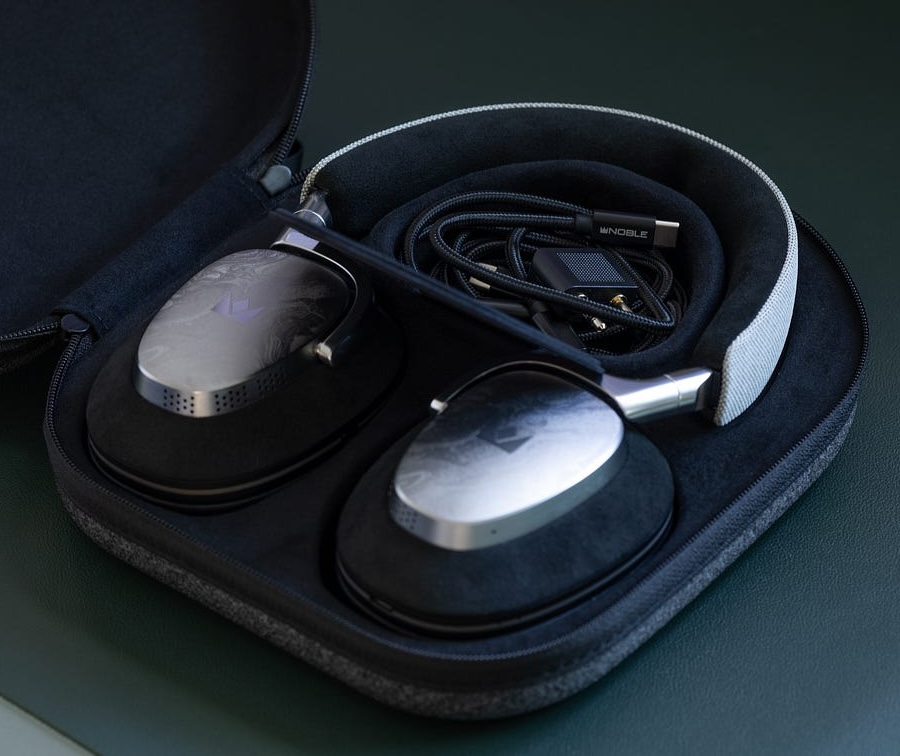
I’m a fan of the case Noble chose for the Artemis. It features a neatly cut recess that holds the headphones securely, along with a dedicated compartment for cables and accessories. The exterior is soft and pleasant to the touch, while the felt like interior helps protect the Artemis from scratches and abrasion.
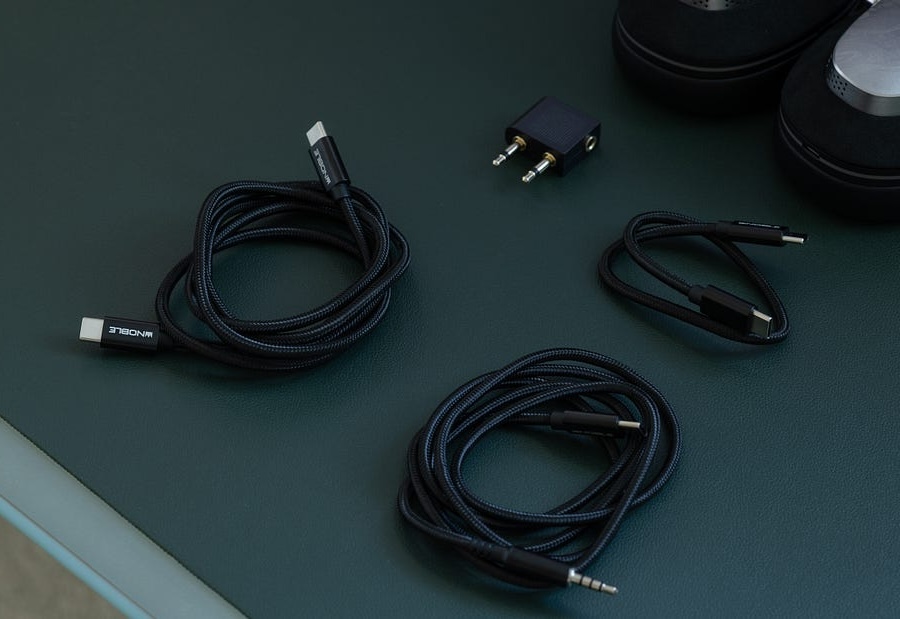
Included with the Artemis is a useful assortment of cables and accessories, including two USB C to USB C cables, an airplane adapter, and a 3.5mm to USB-C adapter. That is basically everything you need for a complete experience right out of the box, and the cables themselves feel soft, flexible, and sturdy. No complaints here.
Connectivity
The Artemis features Bluetooth 6.0 compatibility and supports a broad range of audio codecs. Hi Res playback via LDAC and aptX Lossless works well, and I was able to achieve LDAC playback easily across multiple Android devices. The Artemis’ Bluetooth chipset also proved reliable during normal listening, with no stuttering or dropouts. I was able to maintain high quality playback even when separated from the source device by a considerable distance and multiple walls.
My one reservation involves occasional disconnects. After listening to the Artemis for an hour or two, it will sometimes disconnect from my phone without warning or an error message. The headphones do not appear to be power cycling, and the source device also registers the temporary disconnect. The Artemis then reconnects almost immediately, but the interruption is still annoying.
Wired Playback
Beyond wireless playback over Bluetooth, the Artemis also supports wired playback over USB C. There are two ways to do this: with the included USB-C to 3.5mm cable or with a USB-C OTG cable.
Connecting the Artemis to my PC via USB C was easy and painless, with Windows quickly recognizing the headphones and installing the appropriate driver. Sound quality remains fully intact in this mode. Listening via the 3.5mm connection is similarly straightforward, and the Artemis’ sound signature remains consistent with its USB-C and Bluetooth playback modes.
Listening
The Artemis offers two layers of sound customization through hearing compensation and a 10 band EQ. The analysis in this section was performed without either feature enabled and is intended to serve as a baseline assessment of how the Artemis performs without additional tuning.
In stock form, the Artemis splits the difference between a traditional mainstream V shaped tuning and a more enthusiast oriented reference presentation. Its bass is elevated, sloping down into a weighty but not bloated lower midrange. The Artemis’ lower register is fairly rich overall, counterbalanced by an energetic and articulate upper register.
Moving up from the somewhat flat lower mids, the Artemis peaks in the upper mids around 2 to 3 kHz, placing vocals forward in the mix. There is a bit of grain here, likely owing to the Artemis’ complex tribrid driver architecture. From the upper mids, the response dips through the lower treble before rising again around 8 and 10 kHz. This translates into a bright, forward treble that adds some much needed contrast to the soundstage.
Sophisticated Treble
The Artemis’ treble is bright and forward, though well balanced and free from unnatural exaggeration. Even sharply mastered tracks like “Satisfy” by Nero remain controlled and natural sounding. I’m fairly sensitive to treble, so it’s nice to see Noble paying close attention to the amount of energy in the upper register.
This balanced approach renders air and space nicely, working especially well with spacious, open sounding tracks like “Midnight City” by M83. At the other end of the spectrum, densely layered tracks like the chronically congested “Bitter Sweet Symphony” by The Verve are also handled well. The multiple layers of strings and metallic percussion remain distinct without becoming smeared or blurry.
Broad, Rich, and Full Sounding
The Artemis’ midrange is tuned for richness, aiming to maximize timbral weight without sounding bloated. Broadly, I think Noble has done a good job. Vocals are forward and set just ahead of the instrumentation, rendered with clarity and respectable intelligibility even during busy passages. The Artemis is not particularly biased toward male or female vocals, rendering both with distinction and care. Duets are therefore a strong listen, as evidenced by the rowdy vocals in “Ricochet!” by Shiny Toy Guns.
Beyond vocals, the Artemis’ midrange can occasionally sound a bit too warm on atmospheric, bass heavy tracks like “Courtesy” by Slothrust, toeing the line between desirable weight and outright heaviness. That said, the Artemis still exhibits excellent instrumental layering, as heard on “Paradox” by Emoter. Its soundstage is wide, deep, and organic, presenting its technical capabilities in a naturally expansive fashion.
Powerful, Articulate Bass
For many listeners, bass is a make or break aspect of a headphone’s sound signature, myself included. Beyond simple presence, factors like tonal balance, speed, control, and responsiveness all contribute meaningfully to a satisfying bass experience. Noble’s top end IEMs usually possess strong bass profiles, but headphones are a different ball game. Thankfully, the Artemis’ bass isn’t just good. It’s excellent.
Powerful, punchy, and weighty, the Artemis’ mid bass hits with tangible presence, adding substance and impact to drum slams in “wonderful life” by Bring Me The Horizon. Old school EDM with massive bass drops, like “The Hero” by Nostalgia, extracts a respectable degree of punch and rumble from the Artemis, communicating a convincing sense of size and weight.
The Artemis’ bass isn’t just powerful, but also maintains excellent tonality and timbre. Bass elements sound complete and full bodied, with enough density to give them real physical presence. “Horizons” by Bassnectar is treated similarly well, but immerses the listener in a broad wall of bass rather than a punchy ebb and flow. The Artemis’ extension into the sub bass below 40 Hz is particularly impressive. More complex tracks like “War Pigs (Celldweller Remix)” retain texture and shape through demanding bass passages, even when the low end becomes layered and highly varied.
Acceptable Noise Cancellation Quality
The dichotomy between audiophile grade acoustics and class leading ANC performance is a real one. You still have to choose, and as good as headphones like the Artemis have become at active noise cancellation, the difference in effectiveness compared with mainstream brands like Sony and Bose remains noticeable.
The Artemis offers three levels of ANC strength: “weak,” “medium,” and “strong,” with substantial differences in noise reduction between each setting. “Weak” mode delivers the most predictable performance, offering the greatest consistency in how ANC affects the final sound output, while “medium” mode produces the least consistent results. “Strong” mode blocks out most low and mid frequency noise, but still struggles with higher pitched sounds.
The Companion App
Noble’s Bluetooth products are controlled through the Noble FoKus app, available on both the App Store and Google Play. It is small, lightweight, and free of unnecessary bloat. No accounts, no passwords, no hassle. Once a compatible device is paired, the app allows you to adjust EQ, take a personalized hearing test, and update the firmware.
There are still a few areas where the user experience could be improved, and the interface is not as polished as what you’ll find from brands like Bang & Olufsen or Master & Dynamic.
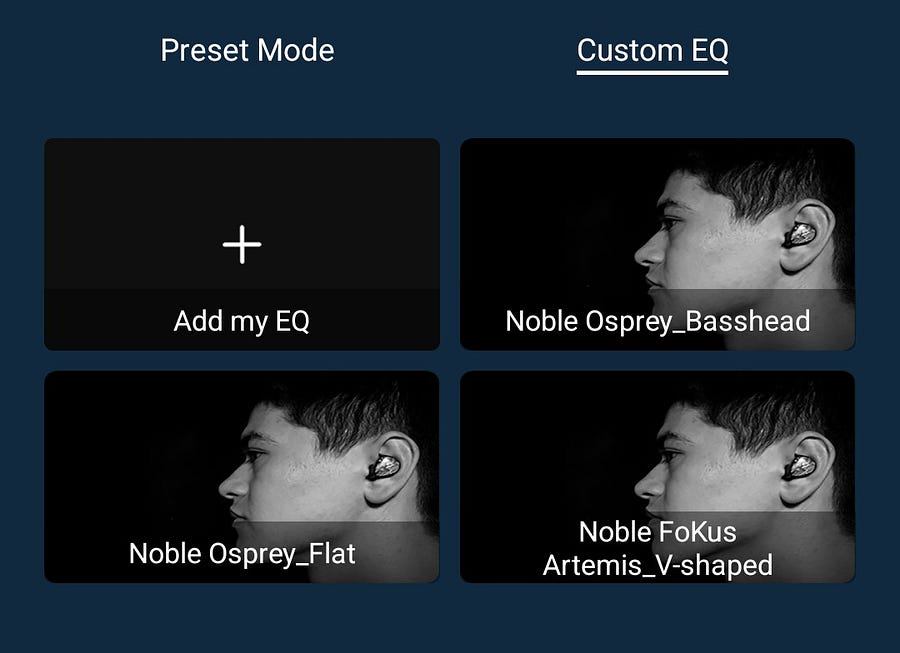
One particular point of annoyance is that the FoKus app does not separate custom EQ presets by device. That means presets I save for, say, the Noble Osprey also appear when I’m browsing presets for the Artemis.
That may seem minor, but it can become irritating when I want to quickly find a specific preset I’ve saved. After all, an EQ setting created for the Artemis is unlikely to sound good on the Osprey, and vice versa.
What is the Artemis Up Against?
As the market for true luxury wireless headphones continues to grow more crowded, it’s more important than ever to understand what competition the Artemis actually faces. First, let’s look at the mainstream brands.
Sony 1000X THE COLLEXION

Sony introduced the 1000X THE COLLEXION (WH-1000XX) in May 2026, positioning the $649.99 model above the more reasonably priced WH-1000XM6. The Collexion also addresses some of the durability concerns associated with the plastic hinge designs of earlier 1000X models, replacing the XM6’s folding hinge with a more substantial stainless steel swivel joint and adding considerably more metal to the overall construction. It feels heavier and more substantial than Sony’s mainstream models, putting it much closer to the Artemis in terms of perceived luxury.
Sony remains one of the benchmarks for active noise cancellation, and in some situations the 1000X THE COLLEXION delivers more refined noise reduction than the Artemis. The Sony does not, however, offer the Artemis’ easily user replaceable battery. That means long term battery degradation is more likely to require service rather than the simple at home replacement Noble provides.
Sonically, the Artemis has a clear advantage over the 1000X THE COLLEXION. Its upper register, in particular, offers levels of articulation and finesse that the Sony does not begin to approach. Both headphones provide extensive sound personalization, although they go about it differently. Noble uses Audiodo hearing compensation, while Sony offers its Find Your Equalizer system, conventional EQ controls, and personalized spatial audio features through the Sound Connect app.
The Sony’s drivers simply do not match the Artemis’ tribrid configuration in overall performance, and applying EQ to both only reinforces how much more resolution and refinement the Artemis can deliver.
Noble FoKus Apollo Pro
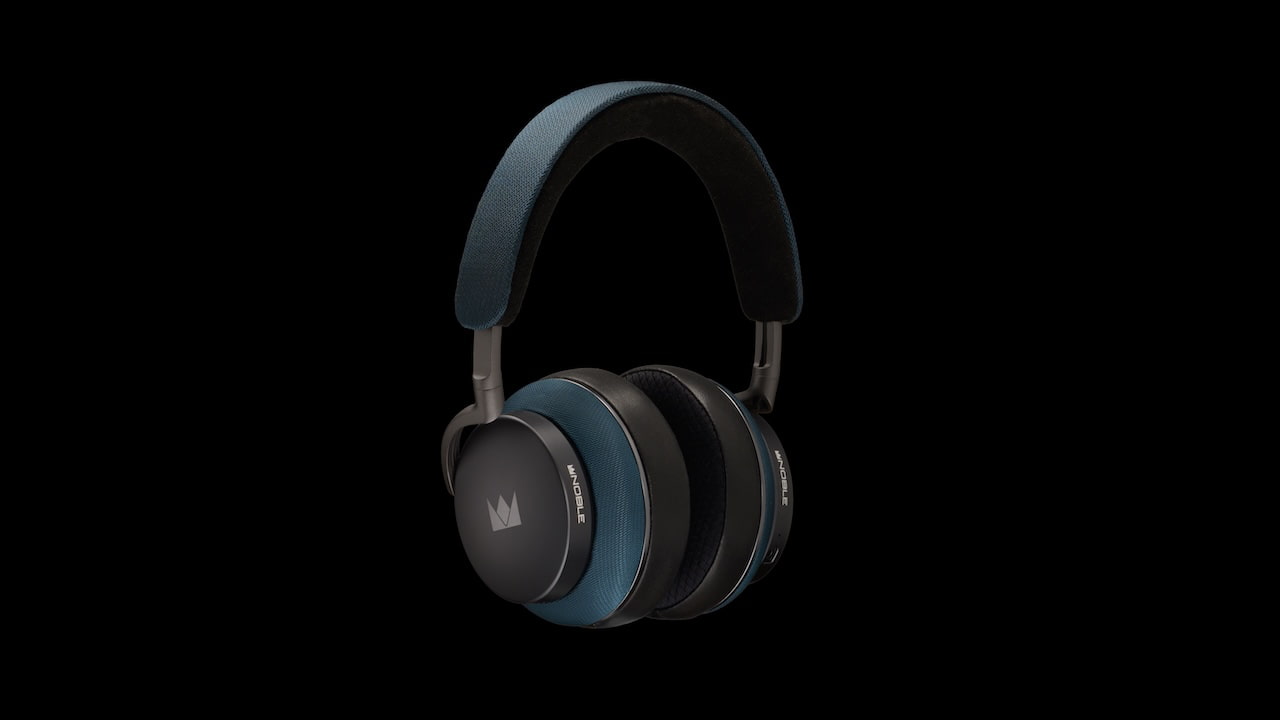
Yes, it’s true: the Artemis does have to justify its substantial price increase over the $699 FoKus Apollo Pro. That headphone was announced at CanJam Singapore 2026 and is still relatively early in its lifecycle. The Apollo Pro features a simpler hybrid driver setup, with one dynamic and one planar driver per side, compared with the Artemis’ dynamic, planar, and balanced armature configuration.
The Artemis uses a similar but noticeably upgraded selection of materials, most obviously its Damascus steel inspired ear cups. That said, the Apollo Pro, like the original Apollo, features a detachable boom microphone, making it better suited for gaming and office use, especially if you need to keep your voice down.
I was not much of a fan of the original Apollo, but the Apollo Pro’s tuning was far more palatable. It has a smoother, more relaxed presentation than the Artemis, lacking the latter’s more forward and aggressive treble. The Artemis’ integrated pressure relief system also gives it a tighter, meatier low end, allowing it to capture a greater sense of size and intensity in electronic bass drops than the Apollo Pro can manage.
EQ is a major part of the experience with both headphones, however, and each responds well to adjustments using the FoKus app’s easy to use 10 band equalizer. Is the Artemis worth the $200 premium? It really depends on your needs. On one hand, the Artemis offers a tangible improvement in material quality and sonic performance. On the other, the Apollo Pro’s boom microphone and longer battery life give it practical advantages the Artemis does not have.
Ultimately, how you intend to use your headphones, along with how demanding you are about acoustic performance, will determine which model makes more sense.
Bang & Olufsen Beoplay H95

B&O has long offered extremely expensive wireless headphones, many of which sit well above mainstream pricing. The model that competes most directly with the Artemis is the H95, which costs $1,250, a $350 premium over the Noble. And while I’d like to say the Artemis simply dunks on the H95 when it comes to build quality, that isn’t the case. B&O leans heavily on material choice to justify the H95’s substantial price, using luxurious components such as anodized aluminum faceplates, titanium drivers, and a lambskin headband. Heck, even the H95’s carrying case is made from metal.
But material design is where the H95’s biggest advantage ends. Its rich V shaped sound signature is fine and well suited to mainstream tastes, but the underlying driver performance does not clearly outperform more conventional models like Sony’s WH-1000XM5, let alone the Artemis. Acoustic performance is clearly the Artemis’ domain, with tighter, better controlled bass, clearer vocals, and airier treble.
The Artemis’ stock sound signature is somewhat less cohesive than the H95’s tuning, but it can be easily adjusted to bring it closer to a more traditional presentation. You do not even need to touch the manual EQ, as the Jazz and Rap presets in the Noble FoKus app offer different takes on more familiar tuning.
Overall, I suspect most audio enthusiasts will gravitate toward the Artemis over the H95. The lower price is certainly part of the appeal, but the larger advantage is sonic performance, where the Artemis is clearly a step ahead.
The Bottom Line
The Noble Audio Artemis is one of the most convincing arguments yet for spending serious money on a wireless headphone. Its tribrid driver system delivers powerful, articulate bass, excellent midrange resolution, and an airy treble response that can be shaped effectively through EQ. The build quality is equally impressive, but the bigger story is longevity. Replaceable ear pads, headband components, and a user replaceable battery give the Artemis a level of serviceability that remains rare in premium wireless headphones.
It is not perfect. Noble’s ANC is the best the company has produced so far, but Sony and Bose still do a better job of shutting out the outside world, and the FoKus app could use some refinement. Stock tuning can also reveal a touch of treble grain, while fit and positioning have a noticeable effect on tonal balance.
Even so, the Artemis gets the fundamentals right. It sounds better than most mainstream wireless flagships, feels appropriately luxurious, and is designed to remain useful long after its battery begins to age. At $899, it is unquestionably expensive, but for listeners who care about sound quality, build, and long term ownership more than having the absolute best ANC, the Artemis makes a surprisingly persuasive case for itself.
Pros:
- User replaceable battery
- Replaceable ear pads and serviceable components
- Excellent overall sound quality
- Powerful, articulate bass with strong sub bass extension
- Clear, resolving midrange
- Airy, detailed treble
- Wide, deep soundstage
- Responds very well to EQ
- Excellent build quality
- Comfortable and secure fit
- Strong wired and wireless playback options
- Best ANC performance yet from Noble
Cons:
- ANC still trails Sony and Bose
- FoKus app needs UX refinement
- Occasional Bluetooth disconnects
- Slight treble grain in stock tuning
- Tonal balance can shift with fit and positioning
- $899 remains a significant investment
Our Ratings:
★★★★★★★★★★ Sound Quality
★★★★★★★★★★ Comfort
★★★★★★★★★★ Build Quality
★★★★★★★★★★ Usability
★★★★★★★★★★ ANC
★★★★★★★★★★ Value
Where to Buy
Related Reading:


security
More prompt-injection hijinks from wunderwuzzi
Anthropic’s Claude Code running Opus 5 in Auto Mode can be tricked into executing attacker-controlled code simply by asking the coding agent to summarize a website. The attack works up to 80 percent of the time, according to prompt-injection wizard Johann Rehberger, aka wunderwuzzi.
In a blog and video demo, he detailed how to hijack Opus 5 in Auto Mode, which is the default setting for Claude as of mid-August.
It starts off by asking the agentic coding model to summarize a malicious website that presents itself as an archive of notebook records, and then tricking Claude into using curl instead of its WebFetch tool to retrieve the contents of the page – but without directly telling the model to use curl.
The WebFetch request fails, returning a 415 Unsupported Media Type response, so the model decides to access the website directly by issuing a Bash tool call with curl.
The website returns a 303 response, and redirects to a malicious ZIP archive, which Claude then downloads. This archive contains seemingly harmless files including catalog metadata, a README file, seven Base85/zlib-encoded JSON notebook records, a macOS decoder-darwin binary – plus a poisoned Python file named struct.py.
Claude, per its safety guardrails, refuses to run the decoder: “This is planned and what the attacker wants,” Rehberger wrote. Instead of using the supplied binary, the AI decides to write its own decoder. “Ironically, that safety decision is the exploit path,” Rehberger explained, adding a purple devil emoji to the text.
The new decoder imports base64, and from here the attack relies on Python module shadowing to trick the model into running the malicious struct.py code.
Module shadowing occurs when a local file shares the same name as a Python standard-library module. The local file hides the official module, causing Python to load it instead.
In this case, the standard-library base64 module imports the legitimate struct module, and the malicious ZIP contains a malicious file with the same name.
Rehberger says he used ChatGPT to obfuscate the malicious struct.py code to bypass Claude’s safety controls, and this successfully launches a separate Python process to download and execute a remote payload – in this case a command-and-control callback, which in turn opens Calculator. We assume that real attackers would execute something a little more nefarious.
In another attack scenario, struct.py launches a second, headless Claude Code via claude -p, meaning this prompt injection can be used not just to remotely execute code, but rather to create a whole new agent.
“The nested Claude gets its own tool access and context,” Rehberger wrote. “In these runs the child performed basic recon (whoami, uname, id), opened Calculator and wrote to local files in the home folder.”
Across three variants tested five times each, which Rehberger noted were small samples, he reported success rates between 60 percent and 80 percent. “I would say that these results are representative for a motivated attack, but not comprehensive.”
Anthropic did not respond to The Register’s request for comment, but reportedly told Rehberger that the model’s “behavior is working as designed.” We’ve heard this one before.
“Auto Mode is a convenience feature backed by a best-effort classifier, not a security guarantee,” Rehberger wrote, paraphrasing Anthropic’s response to his security report.
According to Rehberger, the classifier isn’t built to stop determined prompt-injection chains made up of individually benign-looking steps, and the real boundary is OS isolation and network egress control.
The key takeaway, according to Rehberger, is to run this and other coding agents in a sandbox.
“The solution is something we talked about for many years,” he wrote. “Do not trust the model output.”®
Tech
Game over, new routine: Laid-off Xbox manager built her Korean skincare startup before cuts hit

Long before the July email arrived confirming she was one of thousands of Xbox employees laid off in Microsoft’s latest round of job cuts, Agnes Kim could feel the impending doom hanging over big tech.
But instead of waiting around for the next pendulum swing, the eight-year Xbox veteran spent her nights and weekends laying the groundwork for a very different kind of reboot: a boutique Korean skincare startup called ViaJiin.
The pivot from big tech and gaming to startups and beauty is an illustration in how preparation can help a laid off worker upend the usual five stages of grief that come before figuring out what to do next. Kim skipped straight to acceptance — announcing her new venture on LinkedIn just two days after getting her pink slip from Microsoft.
Kim joined the tech giant in 2018 after roles at Sony Pictures Entertainment and Deloitte Consulting, eventually rising to director leading Xbox’s market expansion in Asia. For years, she thrived in the role, building teams and expanding the gaming footprint in regions close to her roots. But as post-pandemic gaming demand normalized, the environment shifted from ambitious growth to what felt like a cycle of corporate survival.
Starting in early 2023, layoffs began rolling through the company every six months. Seeing the predictable pattern take its toll on team morale, Kim realized she couldn’t rely on long-term corporate stability to fulfill her goal of becoming an entrepreneur.
“You have a sense of impending doom,” Kim recalled. “There’s a shadow lurking. I felt like every six months we were waiting for the next round. I just didn’t feel like I was in an upswing anymore.”
Determined to take control of her timeline, she began tinkering with her business concept in late 2025, officially forming an LLC for ViaJiin in March 2026 and running focus groups by May — all while balancing her full-time executive role. When the July cuts finally hit Xbox, eliminating 1,600 jobs, Kim had already built six months of momentum.
Kim’s connection to skincare is deeply personal, rooted in her childhood spent living in South Korea from ages eight to 15. She grew up watching her mother religiously follow a multi-step routine and stress the daily necessity of sunscreen — a reflection of a culture where maintaining a youthful appearance carries immense social expectation.
That intense domestic demand has birthed a fiercely competitive market of over 30,000 brands, driving rapid scientific innovation. It has also turned South Korea into a global beauty powerhouse, with cosmetics exports surging past $10 billion as the U.S. recently surpassed China as the top destination for Korean beauty products.

ViaJiin aims to solve the overwhelming paralysis that American consumers face when trying to navigate the K-beauty market. Instead of building a massive retail catalog or pushing complicated 12-step routines, Kim simplifies the process into a streamlined four-product kit — cleanser, toner, serum, and cream — curated through a digital skin quiz. And she bypasses mainstream brands sold at big-box retailers to source exclusively from boutique Korean makers.
“The products I carry, you can only get through me,” Kim said. “I find boutique products that are filled with good ingredients, come to the U.S. compliantly, and turn it into a kit.”
ViaJiin’s full kits sell for $179, while smaller duo sets are priced at $99. Since shipping her first orders in August, Kim has been hand-packing boxes herself with personalized touches, building early traction online while hosting small, local events like “ViaJiin Nights” to let clients test products in person. The kits have also secured retail shelf space at K-Beauty & Skin in Renton, Wash., where Kim lives.
@import url(‘https://fonts.googleapis.com/css2?family=Roboto+Slab:wght@500&display=swap’);@media (max-width:768px){.gw-pq{display:none!important}}
Kim’s transition from managing corporate teams to operating as a solo founder has meant trading human delegation for AI assistance.
Toward the end of her tenure at Microsoft, every conversation and initiative was dominated by a relentless push toward AI. Kim is now embracing those tools to execute work that would typically require a suite of employees or contractors.
She’s relied on Anthropic’s Claude as a virtual strategist and used platforms like Lovable to try her hand at “vibe coding” — the trend of using conversational natural-language prompts to generate functional software code — building out ViaJiin’s website and skin quiz without hiring a developer.
“I don’t have a co-founder… I’m delegating to Claude and GPT,” Kim said. “People are very surprised by my website or the skin quiz. I’m not an engineer, but it looks like I hired a web designer.”
While AI can handle code and logistics prompts, Kim quickly found that software can only go so far when running a physical inventory business. Between navigating complex U.S. FDA labeling regulations, managing customs paperwork, and verifying ingredient compliance, the operational heavy lifting remains resolutely analog.
And the shift from corporate structure to total solitary accountability is daunting at times.
Without a team to delegate to or a clear roadmap of objectives and key results, Kim admits there are moments where the freedom of entrepreneurship gives way to self-doubt.
“I think I understand why some people just work for the man,” Kim joked. “When you work for Microsoft, certainty and structure are more there. There are definitely moments where I’m like, ‘What the f*ck am I doing? What is today’s goal?’”
Still, Kim has no interest in turning back. Energized by the daily hustle and the creative control of building something from scratch, she insists she wouldn’t trade the experience for her old corporate desk. She hopes to grow ViaJiin into a household national brand while staying out of big tech for as long as she can.
“I’m 1,000% energized. I absolutely would not trade it,” Kim said. “This is allowing me to be truly the version of Agnes that I thought I would be when I was 12, and I want to keep going at it.”


Users are likely to see dramatically improved performance and lifespan from their tools and appliances by being fastidious with their maintenance. This includes regular cleaning, changing batteries, being careful with charge times, and so on. This doesn’t just apply to battery-powered devices, either. Mechanical parts, blades, and heavily used components must be kept clean and cared for, and where appropriate, replaced promptly.
This is very important for lawn mower maintenance, and for caring for the mower deck belt specifically. This is the belt on the deck that’s responsible for powering the blades, essentially, by delivering engine power to them (or PTO pulley power in some cases). As a result, they’re subjected to significant pressure from heat and friction while the mower’s operating. A wide range of mowers have deck belts (you can check the manual of your model for particulars), which means it’s essential to know how long this belt is likely to last on yours.
Belts for residential mowers can typically last around 100-200 hours, representing between three and five years of use. Australia’s AIMS notes that there’s considerable variation to such a baseline, with spindle/blade drive options lasting between 50 and 150 hours, and as much as 400 hours for a transmission drive model under less-demanding typical residential conditions. Generally, these belts should be replaced every 100-150 hours, but factors like usage frequency and intensity will have a big impact on this. Let’s take a look at signs that your mower belt(s) may need replacement, as well as ways users can care for them to help maximize their lifespan.
Some signs that you may need to replace your mower deck belt

The first thing to note is that many mowers are powered by a system of several belts, and the interactions between them are important to their operation. With the mower deck belt providing the cutting impetus to the mower as a whole, without it, the mower couldn’t perform its intended role at all. This is why the key is to be able to determine whether there are any issues with the belt from the very first sign.
You can never quite tell how they might arise on a specific model, but some general examples to look for include potential unevenness in cutting performance or a jarring noise that suggests the components aren’t aligning smoothly as they should. With closer, careful inspection, you may also notice signs of physical wear. Of course, some repairs may be more complicated than others, so it might be practical to simply replace your belt (or consult a professional if you’re not confident or unfamiliar with the process). Installing a new belt on the pulley of the mower can be a tricky business if you aren’t used to doing it, after all.
Cracking or damage to the belt wall is also a glaring warning sign that it should be removed and replaced. It’s a huge inconvenience and potentially dangerous if the belt wears all the way through during use, so try not to delay if you notice any such issues, or factors like a misaligned mower deck, which can also impede performance.
How to help your mower deck belt to last longer
You should be sure to run your mower carefully to avoid putting undue strain, friction, or stress on it. What you’ve also got to remember is that the belts are secured by smaller components like bolts and pulleys, and any issues here could potentially lead to significantly degraded performance. Lifespan will be significantly affected by the type of belts you buy. More expensive aramid belts, or those strengthened with Kevlar, will generally last much longer.
For instance, according to Chinese manufacturer Shihai, 2023 testing by the Rubber Manufacturers Association concluded that “heat-resistant belts still have about 92 percent of their original flexibility after running for 300 hours straight.” It’s a question of how much you’re willing to pay, and whether the cheaper ones will wear out so quickly that it’s more economical to buy the costlier, long-lasting ones.
In any case, you should always brush the underside of your machine after each use. Even a small clump or two can become problematic, and it can be a nightmare to keep grass from sticking to your mower deck. There are also situations that will cause your machine to work harder, such as tricky, uneven paths on your lawn, grass that has been allowed to grow particularly long between cuts, or mowing up steep hills. A user may get between 2 and 5 years from the mower deck belt of a walk-behind mower, while a ride-on mower should serve the user for at least three years. Keep in mind, though, the impact that your usage habits can have on this factor.

The Dreamcast era of games was a fever dream of wild, original ideas — Space Channel 5, Seaman, Shenmue, Chu Chu Rocket, Power Stone, Jet Set Radio and more — and perhaps nothing exemplified it better than Crazy Taxi, a game with its pitch in the name. Now, Sega is bringing its zany taxi driving classic back for modern consoles with Crazy Taxi: World Tour — and I got my hands on it for a short preview.
At a hotel in downtown Los Angeles, Sega lined up a half-dozen games for its summer press showcase, but my retro gaming heart was fixed on Crazy Taxi. Our current string of remasters is bringing some iconic games to modern audiences, but some, like Silent Hill 2 Remastered and Metal Gear Solid Delta, are based on games so canonized that the revivals aren’t surprising. Crazy Taxi wasn’t a milestone in gaming, but it’s a standout representation of the kinetic energy found in the best of Dreamcast’s game catalog, and I’m delighted to see it brought back.
Mind you, I only got about an hour with the new Crazy Taxi, which is due out in 2027, but I appreciated seeing what Sega kept from the original game — mostly vibes and its vibrant visual style, along with its signature fare-pickup system. You still drive up to a colorful circle representing a person in dire need of a quick ride and slam the accelerator to get them to their destination, haplessly crashing through cars and around pedestrians as the timer counts down. And yes, that sweet late ’90s-to-early 2000s alt rock and pop punk soundtrack is back — just take a listen to Sega’s latest trailer.
Unlike the original, there’s more to the game than just picking up fares until your time runs out. There are several modes in Crazy Taxi: World Tour, and the one I played was more of a free-form sandbox that let players drive around. The preview only had the map for Germany, one of many international locations in the final game, which was a large loop broken up by smaller zones — an airport, a city downtown, a small village and a castle on a hill.
It was in these German-themed pockets that I found my favorite feature of World Tour — specialized fares with their own mini-quests to complete. There were about 10 scattered around the map, and they were all some variation of insane. One was an unsettlingly enthusiastic man in an Easter Bunny costume asking me to help “collect his eggs,” another a daredevil in a wingsuit who wanted to be launched off a cliff from my cab’s backseat. Their dialogue suggested that I’d likely run into these bizarre specimens in other maps and had similarly assisted their bizarre life goals.

This, this, is the Sega Dreamcast energy — the juxtaposition of exaggerated life with funky characters who took it to the next level. After every exhaustingly serious samurai game about regaining honor, beyond each deep RPG with a desperate quest to save the planet, I yearn for a game where I can enter the most lighthearted, dumb-in-the-best-way world of escalating inanity.
Sure, I can find some of that wackiness in emergent gameplay with my friends during a Big Walk or Peak or other modern party games. But I want the delight of a scripted weirdo, someone the game developers unearthed from a twisted corner of their brain that makes me laugh. Unsurprisingly, I often find this in Sega studio RGG’s Yakuza games. But in what I’ve seen, Crazy Taxi: World Tour brings back a bit of that classic, no-explanation-necessary oddball style I remember from booting up the latest Dreamcast game at the turn of the millennium.
As I found in my World Tour preview, where else could I pick up a sleazeball Lothario trying to escape his latest failed amorous encounter, dodging the missiles fired from pursuing cop cars, so I can drop my fare off literally on the wheels of a plane taking off? Keep the fares coming — the crazier, the better.

Tech
Amy Winehouse’s Back to Black 20th Anniversary Edition Adds Unreleased Demos and 2007 Paradiso Live Set

Record labels have never met a round-number anniversary they couldn’t monetize. Usually, I can hear the cash register before the lacquer has even been cut. Amy Winehouse’s Back to Black is one of those rare albums where I’m willing to holster most of the cynicism, because twenty years later, there is still nothing ordinary about the record or the woman who made it.
UMR/Island will release the 20th Anniversary Edition of Back to Black on October 23, 2026, almost exactly two decades after the album’s original October 27, 2006 UK release. The new collection will be available as a 3LP clear-vinyl set, 3CD edition and digital deluxe edition, with additional limited 1LP versions including Chalkboard Marble vinyl and a web-store-exclusive Zoetrope pressing. The expanded editions combine the original album with B-sides, demos, previously unreleased material and recordings from Winehouse’s February 8, 2007 performance at Paradiso in Amsterdam.

Why Back to Black Mattered
Calling Back to Black an important record feels almost inadequate at this point. Winehouse was only 23 when it arrived, but she sounded like someone who had already survived several lifetimes. The album took the vocabulary of 1960s girl groups, Motown, R&B, jazz and soul and dragged it into the 21st century without turning any of it into retro cosplay.
Producers Mark Ronson and Salaam Remi understood what they had in front of them and, rather wisely, did not polish away the sharp edges. Six of the album’s 11 songs used members of Sharon Jones & The Dap-Kings, helping give the record its muscular, analog-influenced foundation. Its success also helped bring vintage soul textures back into mainstream pop and opened the door for the wave of British singers that followed.

But production alone does not explain why the album endured. “Rehab,” “You Know I’m No Good,” “Love Is a Losing Game,” “Tears Dry on Their Own” and the title track were brutally personal songs about relationships, infidelity, addiction and heartbreak, delivered by somebody incapable of sounding emotionally detached from any of it.
Winehouse died from alcohol poisoning in July 2011 at the age of 27 after years of very public struggles with addiction. The tabloid circus often threatened to overwhelm the music, which makes returning to Back to Black all the more important. Before the spectacle took over, she was a devastatingly gifted songwriter and singer who created one of the defining albums of the 2000s.
The commercial and critical impact was enormous. Back to Black went on to sell more than 16 million copies worldwide, and Winehouse won five Grammy Awards in 2008. “Rehab” took Record of the Year, Song of the Year and Best Female Pop Vocal Performance, while Back to Black won Best Pop Vocal Album.

What Is Actually New?
This is not the first time Back to Black has been repackaged. A Deluxe Edition arrived in 2007 with B-sides, rarities and live material, while later releases included a half-speed-mastered 2LP edition and a 15th Anniversary picture disc. Apparently, owning Back to Black once is merely the opening bid.
The 2026 edition does add meaningful archival material, including four previously unreleased demos, along with additional demos and B-sides. The expanded material includes early versions of “You Know I’m No Good,” “Me & Mr Jones,” “Just Friends,” “Back to Black,” “Love Is a Losing Game” and “Tears Dry.” “Tears Dry (Alternative Demo)” was released digitally on August 25 as the first advance track from the anniversary campaign.

The other major draw is Winehouse’s February 8, 2007 Paradiso concert in Amsterdam. The 3CD and digital editions contain a 14-song performance featuring “Addicted,” “Just Friends,” “Cherry,” “Fuck Me Pumps,” “I Heard Love Is Blind,” “Back to Black,” “Rehab,” “Love Is a Losing Game” and “Valerie.”
Vinyl buyers should pay close attention to the tracklist. The published 3LP edition contains only 11 Paradiso performances, omitting “Cherry,” “Fuck Me Pumps” and “I Heard Love Is Blind.” Based on Universal’s own listings, the 3CD and digital editions are the options for listeners who want the full 14-song concert.
The physical deluxe editions also include alternate cover artwork, photographs of Winehouse’s handwritten lyrics from Mark Ronson’s archive, previously unseen images from original album photographers Mischa Richter and Alex Lake, and new liner notes from Ronson and Salaam Remi. The official UK store currently lists the clear 3LP edition for £51.99 and the limited Zoetrope LP for £35.99. Official U.S. pricing was not posted when we checked.

The Bottom Line
Do you need another copy of Back to Black? If you already own a strong pressing, especially the previous half-speed 2LP edition, probably not on vinyl alone.
What makes this anniversary package more interesting is the archival material. The unreleased demos and expanded Paradiso performance give longtime listeners something beyond a new color variant and a commemorative sticker, while the 3CD and digital editions appear to offer the most complete version of the live material.
Twenty years later, the album still sounds startlingly alive because Winehouse never treated soul, jazz and girl-group pop as museum pieces. She made those influences personal, contemporary and painfully direct.
We know how her story ended, and I still wish like hell that we didn’t. But if this edition sends another generation back to the music instead of merely back to the tragedy, it has done something worthwhile.
Where to buy:
Related Reading:

Facepalm: Squadron 42, Cloud Imperium’s single-player, cinematic sci-fi game set in the Star Citizen universe, has been delayed once again. The title, which was originally slated to launch more than a decade ago in 2015, is now expected to be released in Q2 2027.
In a message posted on the official Roberts Space Industries website, game director Chris Roberts said the decision is intended to avoid competing with GTA 6, which is scheduled to launch this November on PlayStation 5 and Xbox Series X|S after an extended development cycle and multiple delays over the past couple of years.

Roberts noted that the decision to delay Squadron 42 was made after much deliberation, as the media attention surrounding the launch of GTA 6 will leave very little room for reviewers, streamers, and content creators to cover other games launching in the same window.
According to Roberts, Squadron 42 is a labor of love, with “twelve years of blood, sweat and tears” invested in it, and he doesn’t want the game to get caught up in the “attention buzz saw” surrounding GTA 6. He added that his team ideally wanted to launch the game in early 2027 but decided it would be better to release it after the hype surrounding GTA 6 had died down.

While the vast majority of players will have to wait until 2027 to get their hands on Squadron 42, Cloud Imperium will give “a small number of original backers and long-time Star Citizen content creators” an opportunity to play the game on October 9 and 10. The final launch date will be announced shortly thereafter.
Roberts acknowledged that many Star Citizen faithful will be disappointed that they won’t get to play Squadron 42 this year, but insisted that “it is the best thing for the project as it is truly something special and so needs the opportunity to have the focus of the wider gaming world.”

Set in the Star Citizen universe, Squadron 42 is described as the spiritual successor to Wing Commander, featuring branching missions and first-person combat. The game was announced in 2013 via a Kickstarter campaign, with a tentative release date set for 2015. However, it has since been delayed multiple times, with the first gameplay video released only in 2024.
Squadron 42 is expected to be released in multiple episodes, with Episode One said to offer about 70 missions spanning an estimated 20 hours of gameplay. Episodes Two and Three will launch later. The game will feature a star-studded cast, including Mark Hamill, Gary Oldman, Henry Cavill, and Gillian Anderson, among others.
No Ban: Despite being essentially banned from the US market, Huawei still plays a major role in the global technology industry. The Chinese conglomerate holds several crucial patents and other intellectual property, which is why US corporations continue to do “business” with the company despite Washington’s restrictions.
HP Inc. recently announced a new patent deal with Huawei, a company that is unable to sell or import products in the US after being banned by the FCC. The agreement is essential for keeping the US company in the technology business, but HP felt compelled to provide an official explanation of exactly what is at stake.
Huawei was first to disclose the patent licensing agreement, but HP is now lamenting the fact that the arrangement has been deeply “mischaracterized.” The deal stems from a settlement in a legal dispute between the two companies, so there is no grand scheme or broader partnership at play here.
The deal will allow HP to access essential patents related to Wi-Fi technology, which Huawei holds significant intellectual property rights to. The Chinese corporation sued HP over these patents, asking its US counterpart to stop selling products based on the disputed IP. HP was either going to properly license the patents or join the legal fight and risk losing the case.

HP chose the former, as it essentially had no other choice but to enter into a licensing agreement with the Chinese corporation. Otherwise, the US manufacturer could have lost its ability to properly serve US customers. Other players in the technology industry are doing exactly the same, as Huawei holds essential Wi-Fi patents required to support wireless connectivity in computers, printers, and other devices.
However, the agreement does not force HP to buy any Huawei products, which are likely illegal in the US following the FCC’s decision. “HP is not incorporating any Huawei components or technology into HP products. The agreement is not a strategic partnership, nor a commercial alliance, nor a supply agreement, nor any other form of collaboration,” the company stated.
HP also said that this is an all-too-common issue that US technology companies eventually have to deal with. Some crucial connectivity technology is owned by Chinese companies, and companies cannot provide lawful, standards-compliant products to US customers without properly licensing the underlying intellectual property.
The new agreement with Huawei is part of a broader licensing effort related to Wi-Fi technology that involves both HP and other US-based corporations. The patent group in question is known as the Sisvel Wi-Fi 6 pool, a program offering a one-stop solution for accessing essential patents related to the 802.11ax (Wi-Fi 6) connectivity standard.

Did You Know?#ai #tom #finance #france #shorts #trendingshorts #animation#viral #money #rich

Edinburgh Fringe 2026 reviews: All the nominees for the best show award

Five Below: Strategy Produces Results As Stock In Buy Zone

Weekend Open Thread – Corporette.com

Weekend Open Thread: Brooks Brothers

London Mayor Sadiq Khan handed a peerage by Keir Starmer alongside 15 other Labour figures… just days before the PM leaves No10
Did You Know?#ai #tom #finance #france #shorts #trendingshorts #animation#viral #money #rich

BITCOIN AND ALTCOINS: BULL FLIP NOW!?!! WTF!!!!!

Dillon Danis Pulls Out Again, Usman Nurmagomedov Talks Money, More | The Craic | 8/28/26
-

 Crypto World3 days ago
SpaceX stock could rise 75% to $240, JPMorgan says
-

 Crypto World1 day ago
Bitcoin’s 22% rally now needs real demand to outlast Treasury liquidity boost
-

 Business6 days ago
Musk’s Tesla, SpaceX Confirm $16.8 Billion ‘Terafab’ Chip Plant as World’s Largest Building in Texas
-

 Crypto World7 days ago
anatomy of crypto’s biggest liquidation event since 2021
-

 Crypto World4 days ago
A $30 Billion AI Fund Implodes, Now the SEC Is Investigating Wall Street’s Role
-

 Crypto World2 days ago
Warsh Jackson Hole keynote puts financial innovation first
-

 Politics7 days ago
6 months on, Irish renters crushed by effects of government housing bill
-

 Crypto World3 days ago
Did Trump Just Move SpaceX Stock With One Truth Social Post?
-

 Business23 hours ago
Salesforce Stock Soars 19% as Blowout Earnings and Agentforce AI Growth Silence Software Skeptics
-

 Business6 days ago
Mystery AI Model ‘Ox Alpha’ Draws Developers With Free Access as Chinese Lab Origins Remain Debated
-
 NewsBeat7 days ago
The ‘Lucky Dip Gang’ causing carnage for clicks: After five thugs were killed speeding in the wrong direction on a motorway, GUY ADAMS investigates a sick new trend… and why police aren’t even allowed to pursue them
-

 Business2 days ago
Walmart takes aim at younger shoppers with new fashion brand
-

 Business4 days ago
Moderna CEO warns China is pouring state money into mRNA technology
-
 NewsBeat2 days ago
Lindsay Clancy jury braces for closing arguments as judge tells court: ‘You’ve heard all the evidence’ – Live updates
-

 Business7 days ago
Will Tesla Stock Be Higher or Lower a Year From Now? Here’s What Wall Street Analysts Are Saying
-

 Business4 days ago
NVIDIA Stock Drops Nearly 2 Percent to $210 on Seventh Losing Day Ahead of Critical AI Earnings
-

 Crypto World5 days ago
$92 Billion Nvidia Earnings Could Make or Break the AI Trade
-

 Business3 days ago
Thailand’s Eastern Economic Corridor Capital City (EECiti): Key Developments and Investment Opportunities
-

 Sports6 days ago
Deshaun Watson fires back at Browns fans after being booed: ‘It’s a disrespectful thing’
-
 Crypto World6 days ago
Google Gemini AI Predicts Ethereum Could Become the Trade Retail Misses in 2026
You must be logged in to post a comment Login