
Business
ETMarkets Smart Talk | Only 16% IPOs beat market returns; be selective, says Ajay Tyagi who follows Warren Buffett


Even as retail participation surges and SME issues draw heavy subscription, data suggests that only a small fraction of companies actually outperform the broader market over time.
In this edition of ETMarkets Smart Talk, Ajay Tyagi, Head – Equities at UTI AMC, and a self-confessed follower of Warren Buffett’s investing philosophy, cautions investors against getting swept up in IPO euphoria.
Backed by two decades of market experience and historical data, Tyagi highlights that barely 16% of IPOs have managed to beat long-term market returns — reinforcing Buffett’s timeless principle that patience and selectivity, not excitement, create sustainable wealth. Edited Excerpts –
Kshitij Anand: To start with, I would like to begin with the big event that took place — Budget 2026. How do you see the Budget in terms of what the government could have done? We saw a knee-jerk reaction on Budget day, with the Sensex dropping 1,500 points. Were markets expecting more, and did the government under-deliver? What are your views on that?
Ajay Tyagi: As far as the Budget is concerned, the expectation was that there would be some consumer-related push — that was the broad market expectation. However, the government is walking a tightrope. It has to keep the fiscal deficit in check and has already committed to rating agencies and global investors that it will adhere to the fiscal glide path. This means that every year, the deficit has to be reduced — even if the reduction is small, it must be in that direction.
Another point investors may have overlooked is that last year, the government forewent a significant chunk of revenue — first by reducing direct taxes, i.e., personal income tax rates, and second, in October, by rationalising GST and effectively reducing indirect taxes. Both were substantial measures.
So, it was prudent for the government not to expand spending and reverse the fiscal glide path. While investors on the street may have expected more, a rational investor like us viewed it as a welcome move. Perhaps that is why markets stabilised the very next day.

Since we are talking about expectations, I must also mention the upcoming 8th Pay Commission, for which the government will soon have to make provisions. The payout is expected to be significant. Therefore, it was only prudent for the government not to commit to additional measures after already implementing the tax cuts and with the Pay Commission obligations ahead.
Kshitij Anand: We have also seen a trend where every piece of bad news — whether geopolitical concerns or other setbacks — is being absorbed quite well by the market, with quick reversals. Do you see more room for downside from here?
Ajay Tyagi: Our view is that there is room for downside, and this is purely based on valuations. We analyse largecaps, midcaps, and smallcaps separately.There is relative comfort in largecaps. Our analysis suggests that while they are expensive, they are not excessively so. Perhaps another 5% to 10% correction — either in price or through time correction — could bring them back into a comfortable zone.
However, the same cannot be said for midcaps and smallcaps. They are still trading significantly above their long-term averages. Yes, there has been some price correction in smallcaps and a bit in midcaps, along with some time correction. But the reality is that current valuations for both midcaps and smallcaps are higher than their previous peaks over the last 15 years. I am not even referring to their long-term averages — their valuations today exceed their previous highs.
This will have to correct. I do not know what form it will take — whether it will be purely time correction or a combination of price and time. Our assessment is that it will likely be a mix of both.
Therefore, we remain cautious on midcaps and smallcaps, despite the fact that mutual funds are sitting on cash and any selling in the market is seen as a buying opportunity. I have been in the industry for 26 years, and UTI has been present in the markets for 60 years. Our collective experience suggests that whenever valuations overshoot, they eventually revert — notwithstanding any interim technical support.
So yes, we would advise investors to wait for better entry points in midcaps and smallcaps.
Kshitij Anand: A very interesting point you mentioned is the kind of money that mutual funds are receiving — more than ₹31,000 crore month after month. That is phenomenal. From your perspective, how do you view this number?
Ajay Tyagi: First of all, we must fully appreciate the fact that there has been what we call the financialisation of savings. In our parents’ generation, the go-to asset classes were gold, perhaps real estate when there was a large lump sum to invest, and within financial assets, largely bank deposits or fixed deposits, or bonds issued by institutions like ICICI, IDBI, and even UTI.
That has changed significantly over the last 10–15 years. Investors are realising the importance of equity investment. Therefore, mutual funds as an asset class are now front and centre in every household. That is point number one — this is structural and will continue to grow.
We often examine mutual fund penetration in India. To give you a number, mutual fund assets as a percentage of GDP are still around 20%. In the US, the number is over 100%. I am not suggesting that we will reach US levels anytime soon, but even the global average is around 50% to 60%. So, we are below the world average. Structurally, mutual funds will continue to grow.
However, there is always a cyclical element. You have been in the markets long enough to know that when markets perform well, most investors tend to be backward-looking. They look at returns from the last three to five years, get excited, and invest more. So, the surge in SIPs and overall flows — surprising even us as mutual fund participants — is partly due to this cyclical element, with investors extrapolating recent strong returns into the next five years.
There could be some dip in these SIP numbers. I would not be surprised by that, even though the structural trend remains upward, albeit with some cyclicality along the way.
Kshitij Anand: Let me also get your perspective on sectors. We have just started 2026 — new beginnings — and the Budget has also been announced, giving some direction on how government policies may play out over the next 12 months. Are there any sectors you are looking at that could hog the limelight?
Ajay Tyagi: I will mention two sectors that we believe could provide very good opportunities for investors.
The first is the consumption sector. There are two or three reasons for this. The government is aware that private consumption expenditure (PCE) in India has been trending below par. Over the last four to five years, the heavy lifting for GDP growth has been done by government spending on infrastructure. There has been a strong capex push in certain sectors, which has supported GDP growth.
However, consumption growth has been relatively weak. The government recognises this because personal consumption accounts for roughly 65% of India’s GDP. If that does not pick up, growth becomes a challenge.
To support this, we have seen income tax cuts, which, give or take, have put about $11–12 billion into the hands of households. GST rationalisation has added another $20–23 billion. In total, around $35 billion has been infused into household pockets. In the context of a $4 trillion GDP, that is close to 1% — not an insignificant number.
We believe this should start reflecting in improved consumption trends over the coming quarters. Additionally, the upcoming Pay Commission — which occurs every 10 years — is another positive factor. Historically, when Pay Commission payouts have reached households, the following 12 to 18 months have seen strong consumption trends.
Lastly, even though consumption is structural in India given our low per capita income, it is also cyclical. The last three to four years have been relatively weak for consumption. None of us believe India is fully penetrated in categories such as cars, two-wheelers, dining out, and similar segments. These sectors still have a long runway. From this relatively weak base, we expect better cyclical trends in the coming years. All these factors combined make us positive on consumption.
The second sector may be more controversial — you might raise an eyebrow — but we are positive on IT.
We spend considerable time analysing whether AI will be net negative or net positive for the IT industry. Our conclusion continues to be reinforced that AI will be net positive over the medium to long term.
Could it be disruptive in the short run? Yes. But over time, it is likely to be net positive. Historically, every new technology has initially disrupted IT services players. When mainframes emerged in the 1960s and 70s, people thought computing would replace human involvement. During the rise of remote infrastructure management in the 2000s, there were concerns that IT services staff would no longer be needed on-site. Around a decade ago, when cloud computing gained traction, people questioned the need for on-premise software and related services.
However, history over the past 60–70 years shows that new technologies tend to be net additive, not dilutive. It is incumbent upon IT services companies to continually train and retrain their workforce. This time, the focus must be on AI tools.
The winners and losers will be determined by which companies are agile enough to train their workforce and become AI-ready. But on an aggregate basis, we are positive and are looking for players who will be on the right side of the AI revolution.
Kshitij Anand: In fact, my next question is also around IT, and you seem to be a contra buyer at this point in time. AI as a keyword is now prevalent across all sectors, not just IT, but also in financials and manufacturing. Recently, we saw data where Charles Schwab tanked about 7%, and wealth management firms seem to be slightly nervous about what might happen next because of AI’s impact on taxation documents and related areas. This is an evolving space, and I am sure over time it will help industries integrate AI, leverage the technology, and benefit customers. But how are you seeing it?
Ajay Tyagi: You have raised a very topical question. Let me share my thought process. I am actually surprised that people are punishing IT companies for exactly what you just mentioned.
Who was handling tax filings earlier? Who was preparing legal documents earlier? Let me extend that further. People say AI will do everything and may eat into the jobs of analysts, especially mundane tasks. I agree with that. But who were the people doing this work earlier? At the lower end, it was lawyers, articled assistants working for tax consultants, young CAs working for firms, or junior analysts doing routine work.
Yes, AI may replace some of these roles. But is that net positive or net negative for technology? These were non-tech jobs being replaced by technology. In the future, when you need to file taxes, you may not go to a consultant — you may use software instead. That actually expands the domain of technology rather than reduces it.
That is why I go back to history. Over the last 70 years, has technological evolution been net additive or net dilutive? It has consistently been net additive. This is another instance where people may be replaced by technology, but whenever technology expands, the total addressable market for IT services increases — it does not shrink.
So, in a way, the answer lies in the question itself. This will likely expand the total addressable market for technology companies and, therefore, for the IT services firms associated with them.
Kshitij Anand: Let us also get some perspective on the other segment. We have discussed largecaps, but what about mid and smallcaps? We have seen some correction, but data suggests they are still trading above long-term averages. What is your view?
Ajay Tyagi: You are absolutely right, and we completely concur with that view. They are trading at a premium — in fact, significantly above their long-term averages. It is not just a 10%, 15%, or 20% premium; in some cases, the premium is 40% to 50%. That is what keeps us cautious and somewhat concerned about this segment of the market.
That is why our advice to investors has been to tilt toward largecap-oriented categories. It could be a pure largecap fund, a flexicap fund, or a large-and-midcap category — but with higher allocation to largecaps and lower exposure to mid and smallcaps.
While we believe largecaps may normalise within this calendar year, I remain sceptical about saying the same for mid and smallcaps. The correction and consolidation there could take longer.
Kshitij Anand: Let us also talk about earnings. Since valuations are a concern, earnings form a significant part of that equation. Do you think the December quarter results have given us confidence that earnings are improving? With the trade deal and tariff changes — initially at 50% and now reduced to 18% — it may not significantly boost earnings, especially after reading the fine print. How do you see the earnings cycle at this point? Is that one of the reasons you believe there is room for further correction?
Ajay Tyagi: Before I answer that, I want to add one clarification to my previous point. While we remain cautious about mid and smallcaps broadly, I do not want to imply that in a universe of, say, 400 mid and smallcap stocks, there are no worthwhile opportunities. There could be a couple of dozen companies that still offer favourable risk-reward. Our job is to identify those. My comment was about the broader category.
Now, on earnings — India’s exports to the US account for slightly below 2% of GDP. When we saw the 50% tariff that lasted for about six months, we did some back-of-the-envelope calculations. The potential impact on GDP growth was around 40–50 basis points, and on earnings growth, perhaps a couple of percentage points.
So, it was not as if GDP or earnings were going to be dramatically affected. However, sentimentally, it was negative. Investors were puzzled, given that India was seen as a close ally and a “China-plus-one” beneficiary. The uncertainty made it difficult for investors, and that partly explains the FII outflows we saw between August and January.
Hopefully, that sentiment reverses now that the outlook is improving.
On earnings, I would say we should not get overly excited. If the 50% tariff did not derail growth meaningfully, then the reduction to 18% is also unlikely to create a massive earnings windfall across industries. However, apart from improving FII sentiment, it could help restart the FDI cycle.
I know of several corporates that had paused investments due to uncertainty about India-US relations. If that clarity improves, FDI flows could resume, which would be positive over the medium term.
Kshitij Anand: Inconsistent policy?
Ajay Tyagi: Exactly. Therefore, investors were wary of putting in that $1 billion or $2 billion investment into the country. Once that cycle restarts, it will definitely have a fundamental bearing on GDP growth and, therefore, earnings growth as well. So, all put together, this should certainly be positive.
Now, notwithstanding the tariff increase that we saw and the subsequent correction, even if this episode had never happened, India was in any case going through an earnings slowdown in both FY25 and FY26, which is just about to end. We have only seen about 7% to 8% earnings growth in both these years.
You know that India’s long-term earnings growth is around 12%, broadly in line with nominal GDP growth. Beyond the cyclical slowdown of the last couple of years, we expect a cyclical upswing. The reasons are similar to what I mentioned earlier — the government giving a fillip to consumption, and consumption being a large part of the economy. If consumption picks up, it eventually percolates down into overall earnings growth.
In any case, we are looking at at least 12% to 13% earnings growth in the upcoming year, FY27. That is our broader view. We expect better earnings growth compared to the last two years, which were certainly disappointing.
Kshitij Anand: Another theme that picked up last year was IPOs. We saw more than 300 IPOs, including SME IPOs — more on the SME side and fewer on the main board — but still over 100 main-board IPOs in the last calendar year. How are you viewing this space now? Do you think so many IPOs hitting the market is good for the industry, or is it a word of caution?
Ajay Tyagi: That is a very interesting question, and I am glad you asked it. I see tremendous excitement among retail investors toward IPOs — and, quite worryingly, toward SME board IPOs, which, in my view, is actually a no-go area. Investors should be extremely cautious about SME board IPOs.
Even IPOs on the main exchanges should be approached with caution. Let me share some data. We continuously analyse IPO data. Before that, let me refer to the Pareto principle — the 80-20 rule — which states that 80% of outcomes are driven by 20% of factors. In stock markets, this holds true, and in IPO markets, it is even more pronounced.
Only about 20% of IPOs end up creating meaningful wealth for investors. We have analysed data from 2000 onwards — year by year — looking at how many IPOs were launched and what returns they delivered over time. The data shows that only about 16% to 17% of IPOs have generated returns higher than overall market returns. Given that long-term market returns have been around 13–14%, that was our benchmark.
So, only about 16–17% of IPOs have beaten that benchmark. This is data investors should keep in mind. They should not invest indiscriminately in all IPOs. Many are chasing listing gains, which I understand, but that is not how wealth is consistently created.
Now, to your question — is this trend good or bad? I would say it is net positive. High-quality companies also come to market through IPOs. For instance, if a company like Eternal had not listed in India and had instead gone to Nasdaq, it would have been unfortunate because domestic investors would not have had the opportunity to participate in that business. Similarly, several strong companies have gone public in recent years.
So, the trend is net positive. What it requires is the ability to separate the wheat from the chaff. Investors must not be indiscriminate; they need to be very selective.
Kshitij Anand: I wanted to get your perspective on FIIs as well. You did say that FIIs are sort of coming back now, but net-net, they were net sellers last year. Hopefully, with the US deal coming through and the rupee also stabilising at this point around 90-ish, how are you seeing the FII picture at this point in time?
Ajay Tyagi: Let me share some data first and then directly respond to your question. FIIs started investing in India in 1992, when the markets opened up. Since then, FII ownership of Indian equities has steadily increased. It reached a peak of 22% in 2021 — the highest level of FII ownership in Indian equities.
From 2021 until now, this number has declined to around 17% or 17.5%. The last time it was this low was in 2013. If you recall, 2013 was the year when Morgan Stanley categorised India as part of the “Fragile Five.” Fundamentally, India was not performing well at that time, and FIIs were concerned, so they reduced their exposure.
Today, however, India is in much better shape, yet FII ownership has fallen back to 17–17.5%, a level last seen in 2013. After that period, ownership steadily rose year after year. This clearly indicates that FIIs have sold significantly. In fact, India has not been a good trade for FIIs, not just in the last year but over the last two to three years.
The key takeaway is that India is not over-owned by FIIs; it is under-owned. That is actually comforting. When there is no froth — whether in a stock, a sector, or a country — it provides a degree of comfort. India is not currently a crowded trade, and that is positive.
Secondly, as I mentioned earlier, there was a sentiment-driven negative impact when the India-US treaty did not materialise and India was subjected to a 50% tariff. China, for instance, faced a 35% tariff, so India being higher than that was surprising. It created uncertainty, and many investors preferred to stay underweight.
At least that part of the issue has now been addressed. With valuations correcting and fundamentals potentially improving, the case for India strengthens.
The third factor is earnings. As we discussed earlier, earnings were disappointing over the last couple of years. If earnings growth returns to trend levels, that could be the final trigger to bring FIIs back.
So, we may currently be at a cyclical low in terms of FII ownership, and we could potentially see this ownership rise again toward previous levels.
Kshitij Anand: So, being under-owned at this point is actually a comforting factor and perhaps a cue investors should take note of. Also, what would be your advice to long-term investors? There has been a lot of volatility, and many new-age investors have experienced it for the first time. For someone deploying money in 2026, which began on a volatile note but is now stabilising, what would your advice be?
Ajay Tyagi: I consider Warren Buffett my guru. Much of what I have learned in the markets comes from his teachings. I recall one of his one-line gems that changed my perspective on investing: “Markets are designed to transfer wealth from the active investor to the patient investor.”
My advice to investors is this: your patience will be tested. There will be times when you may feel foolish. But those are precisely the times when patience matters most — provided you have acted sensibly.
By sensible, I mean not investing indiscriminately in every IPO, but preserving capital for the right opportunities; not chasing sectors simply because they are fashionable; and not selling quality businesses like IT just because it is currently popular to say that AI will replace everything.
If you have done your fundamental research well and are focused on long-term drivers, then patience will be rewarded. This is a business where EQ is often more important than IQ.
There may be years when Indian markets deliver negative or flat returns. That does not mean the Indian economy has lost momentum or that equity markets will not deliver 12–13% returns over time. Markets are cyclical. After a few years of strong returns, it is natural to expect a few years of subdued performance.
So, my generic advice — and it is perhaps even more relevant today — is to remain patient and stay focused on the long term.
(Disclaimer: Recommendations, suggestions, views, and opinions given by experts are their own. These do not represent the views of the Economic Times)


GNR: A Beneficiary Of Rising Energy Prices


South Korea asks Gulf nations for steady energy supply, safety of Korean vessels
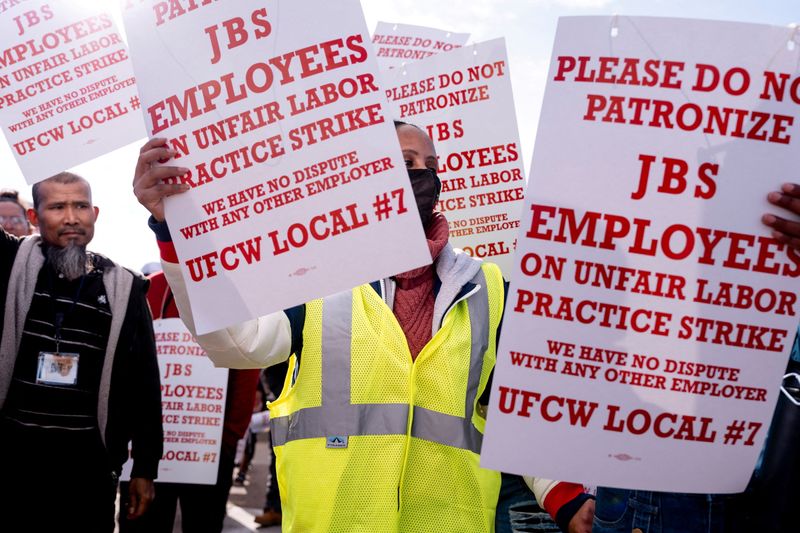

Striking JBS workers to return to Colorado plant on promise of talks


I have a masters degree in Analytics from Northwestern University and a bachelors degree in Accounting. I have worked in the investment arena for over 10 years starting as an analyst and working my way up to a management role. Dividend investing is a personal hobby and I look forward to sharing my thoughts with the Seeking Alpha community.
Analyst’s Disclosure: I/we have a beneficial long position in the shares of SBAC, PAYX, NKE, ACN, ADP, MKC, PEP either through stock ownership, options, or other derivatives. I wrote this article myself, and it expresses my own opinions. I am not receiving compensation for it (other than from Seeking Alpha). I have no business relationship with any company whose stock is mentioned in this article.
Seeking Alpha’s Disclosure: Past performance is no guarantee of future results. No recommendation or advice is being given as to whether any investment is suitable for a particular investor. Any views or opinions expressed above may not reflect those of Seeking Alpha as a whole. Seeking Alpha is not a licensed securities dealer, broker or US investment adviser or investment bank. Our analysts are third party authors that include both professional investors and individual investors who may not be licensed or certified by any institute or regulatory body.


Satellite firm Planet Labs to indefinitely withhold Iran war images

Kuwait Petroleum headquarters engulfed in flames following Iranian drone strike

Trump questions NATO’s future as Allies sit out Iran conflict
Business
Akebia Therapeutics, Inc. (AKBA) Discusses Pipeline Progress and Strategic Focus on Kidney Disease Treatments at R&D Day – Slideshow

Akebia Therapeutics, Inc. (AKBA) Discusses Pipeline Progress and Strategic Focus on Kidney Disease Treatments at R&D Day – Slideshow
Business
Asseco Poland S.A. 2025 Q4 – Results – Earnings Call Presentation (OTCMKTS:ASOZY) 2026-04-04

Seeking Alpha’s transcripts team is responsible for the development of all of our transcript-related projects. We currently publish thousands of quarterly earnings calls per quarter on our site and are continuing to grow and expand our coverage. The purpose of this profile is to allow us to share with our readers new transcript-related developments. Thanks, SA Transcripts Team
Business
Forum Energy Technologies, Inc. (FET) Presents at Emerging Growth Conference 91 – Slideshow
Forum Energy Technologies, Inc. (FET) Presents at Emerging Growth Conference 91 – Slideshow

Is a White Easter as likely as a White Christmas?

Candice King and Steven Krueger’s Relationship Timeline

#money #the richest man #automobile


-

 NewsBeat2 days ago
Steven Gerrard disagrees with Gary Neville over ‘shock’ Chelsea and Arsenal claim | Football
-

 Business2 days ago
No Jackpot Winner and $194 Million Prize Rolls Over
-

 Fashion1 day ago
Weekend Open Thread: Spanx – Corporette.com
-
Entertainment6 days ago
Fans slam 'heartbreaking' Barbie Dream Fest convention debacle with 'cardboard cutout' experience
-

 Crypto World3 days ago
Gold Price Prediction: Worst Month in 17 Years fo Save Haven Rock
-

 Tech6 days ago
The Pixel 10a doesn’t have a camera bump, and it’s great
-
Crypto World5 days ago
Dems press CFTC, ethics board on prediction-market insider trades
-

 Tech6 days ago
Avatar Legends: The Fighting Game comes out in July and it looks pretty slick
-

 Business3 days ago
Login and Checkout Issues Spark Merchant Frustration
-

 Sports7 hours ago
India men’s 4x400m and mixed 4x100m relay teams register big progress | Other Sports News
-

 Tech5 days ago
Apple will hide your email address from apps and websites, but not cops
-

 Tech5 days ago
EE TV is using AI to help you find something to watch
-

 Sports4 days ago
Tallest college basketball player ever, standing at 7-foot-9, entering transfer portal
-

 Politics5 days ago
Should Trump Be Scared Strait?
-

 Fashion7 days ago
Amazon Sundays: Soft Spring Layers
-

 Tech5 days ago
Flipsnack and the shift toward motion-first business content with living visuals
-

 Tech7 days ago
Elon Musk’s last co-founder reportedly leaves xAI
-

 Fashion6 days ago
The Best Spring Trends of 2026
-

 Tech5 days ago
How to back up your iPhone & iPad to your Mac before something goes wrong
-
 Crypto World6 days ago
Bitcoin’s Six-Month Losing Streak: What On-Chain Data Says About the Market’s Next Move
You must be logged in to post a comment Login