
Business
Strong Results, Sharper Scrutiny As The AI Trade Gets Tested




Fortune Brands and 4 More Stocks See Action From Activist Investors

Albert Anthony is the pen name of a business author on Amazon and his newest book is “How To Pick Stocks: 8 Steps For Long-Term Investing with Fundamental & Technical Analysis,” now available as a 2026 edition paperback and Kindle ebook in several regions including the US, UK, Canada, and Europe. The author is an analyst & contributor for investing platform Seeking Alpha since 2023, where he has nearly 2,000 followers and has covered hundreds of stocks in multiple sectors including banks/financials, REITs, insurance, pharma, and more. He has also written for platforms like Investing dot com, and has taken part in many business conferences includes Bloomberg Adria’s Investment Outlook 2026 as well as Money Motion 2026. Albert Anthony has Croatian-American roots, having grown up in the US and living in the NYC/New Jersey area as well as the Austin Texas area while working in enterprise IT roles at several prominent companies, including a top 10 financial firm. The author earned a B.A. from Drew University, and also completed certifications from Microsoft, CompTIA, and Corporate Finance Institute where he earned the specialization in risk management. He is founder of a boutique equities research firm, Albert Anthony & Company, which is a trade name both in the US and Croatia. Besides his writing and analyst work, the author has been active on camera as well, as a film/TV extra for casting agencies in Croatia/Europe, and also took part in roundtable panel discussions and appeared in several media stories in that region. You can also check out the author’s video content on the Albert Anthony channel on YouTube where he discusses investing topics, @author.albertanthony Please note: The author does not write about non-publicly traded companies, small cap stocks, crypto, or startup CEOs, so any such mail received and pitches from PR agencies will be deleted. Any official mail to the author should be sent to albertanthony.info@gmail.com. *Author Disclaimer: Albert Anthony and Albert Anthony & Co, is a US-based sole proprietorship registered as a trade name in Austin, Texas, and a sole proprietor registered in Croatia. The author nor his company are registered financial advisors and do not provide personalized financial advisory services to clients and do not manage client assets but provide general markets commentary and research as well as actionable insights based on publicly-available data and their own analysis. The author does not sell or market financial products and services, nor is compensated by any company for rating them. The author does not hold any material position in any stock he rates at the time of writing, unless otherwise disclosed. All investment is assumed to be at risk and readers are expected to do their due diligence beyond the scope of this author’s commentary, agreeing to indemnify the author of any liability for potential investment losses.
Analyst’s Disclosure: I/we have no stock, option or similar derivative position in any of the companies mentioned, and no plans to initiate any such positions within the next 72 hours. I wrote this article myself, and it expresses my own opinions. I am not receiving compensation for it (other than from Seeking Alpha). I have no business relationship with any company whose stock is mentioned in this article.
Seeking Alpha’s Disclosure: Past performance is no guarantee of future results. No recommendation or advice is being given as to whether any investment is suitable for a particular investor. Any views or opinions expressed above may not reflect those of Seeking Alpha as a whole. Seeking Alpha is not a licensed securities dealer, broker or US investment adviser or investment bank. Our analysts are third party authors that include both professional investors and individual investors who may not be licensed or certified by any institute or regulatory body.

Markets Brace for Possible Rate Hike After Kevin Warsh’s Hawkish Turn
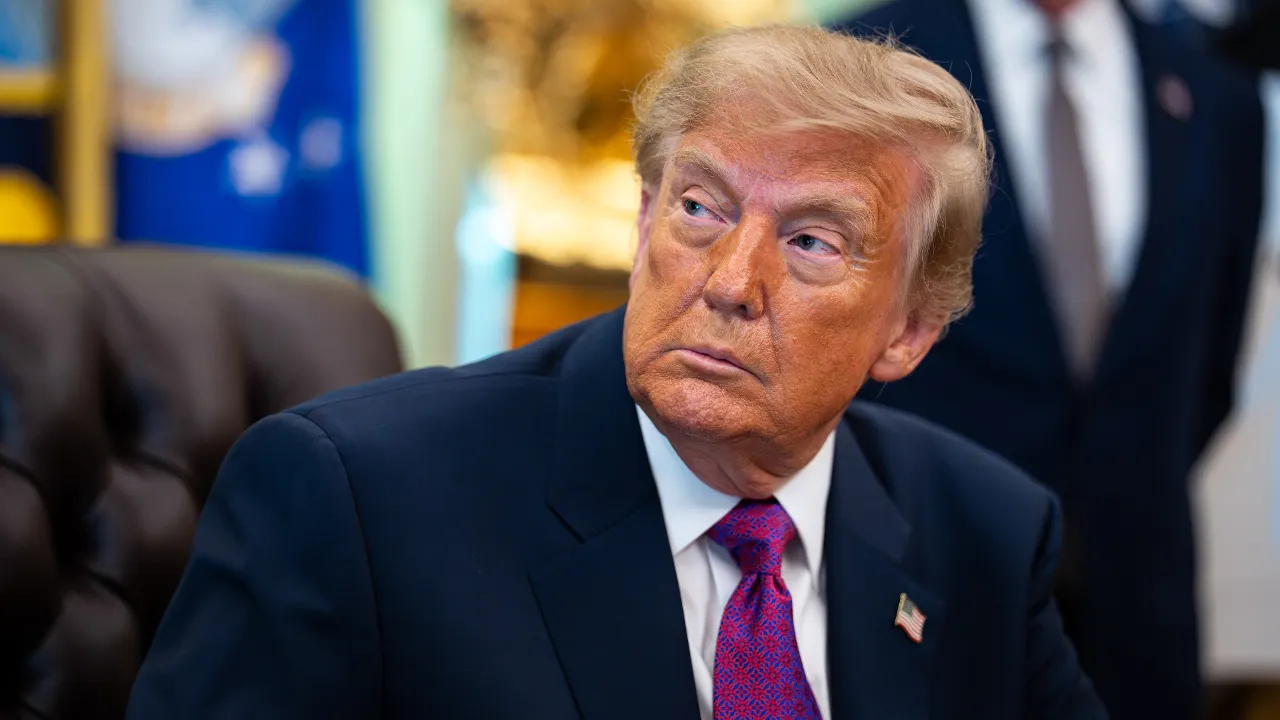
President Donald Trump says the U.S. can no longer absorb massive trade losses with Canada, dismissing concerns that the tariff fight could drive up costs for Americans ahead of the midterms.
Venezuelan interim President Delcy Rodriguez on Saturday touted a “historic” oil agreement with the United States announced by President Donald Trump.
Speaking during an evening address, Rodriguez celebrated the agreement, saying it would help revive Venezuela’s economy. She said the deal would remain in effect for 25 years and initially target crude production of more than 1.5 million barrels per day while preserving the South American country’s sovereignty over its natural resources.
“This 25-year bilateral project envisages the development of 17 strategic oilfields with a production target of more than 1.5 million barrels per day,” Rodriguez said on state broadcaster VTV.
“That figure relates solely to the bilateral agreement between Venezuela and the United States,” she added.
TRUMP ANNOUNCES ‘BIGGEST OIL DEAL IN WORLD HISTORY,’ SAYS IT WILL SUBSTANTIALLY LOWER GAS PRICES
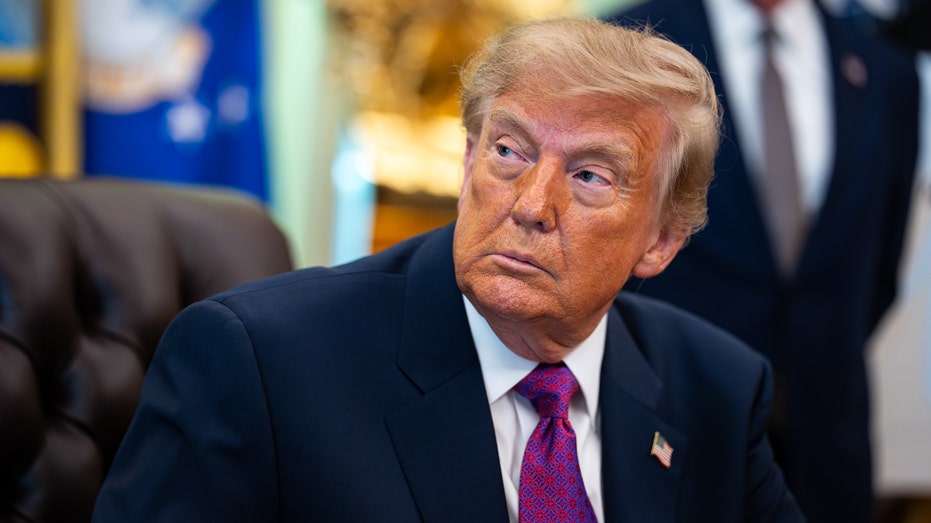
President Donald Trump announced what he called the “biggest oil deal in world history” between the United States and Venezuela, saying the agreement would increase U.S. oil supplies and lower gas prices. (Al Drago/The Washington Post/Bloomberg via Getty Images / Getty Images)
Rodriguez’s comments came after Trump announced the agreement on Truth Social on Friday, saying the U.S. had secured majority control of more than 65 billion barrels of Venezuela’s proven oil reserves, which are the largest in the world.
“The United States of America has just entered into an Agreement with the Country of Venezuela on, THE BIGGEST OIL DEAL IN WORLD HISTORY!” Trump wrote.
The agreement was reached through Secretary of State Marco Rubio, Secretary of War Pete Hegseth, Rodriguez and private businesses “at no cost to the American Taxpayer,” Trump said.
“This Historic Transaction MORE THAN DOUBLES American Oil Reserves, greatly increases our Oil Supply, and will substantially lower Gas Prices for all Americans, long into the future,” Trump said.
US ARMY PLANS NUCLEAR MICROREACTORS AT 5 MILITARY BASES AS PART OF $2.2B ENERGY SECURITY PUSH

A Venezuelan flag waves in front of oil tanker on lake in Maracaibo, Venezuela on July 27, 2026. (Jose Isaac Bula/Anadolu via Getty Images / Getty Images)
Rubio called the agreement a “huge win” for both countries, saying it would secure “stable reserves and low-cost oil” in the Western Hemisphere while lowering U.S. gas prices.
He added that the deal would also bring nearly $100 billion in private investment to Venezuela, support thousands of high-paying jobs and help rebuild the country’s economy.
Rodriguez said the production target was only an initial goal, with broader plans to develop eight greenfield oil blocks as part of a wider energy expansion.
On Saturday, the interim president predicted that the agreement could generate more than $200 billion in revenue for Venezuela.
TRUMP ORDER COULD FORCE US UTILITIES TO REPLACE FOREIGN POWER EQUIPMENT
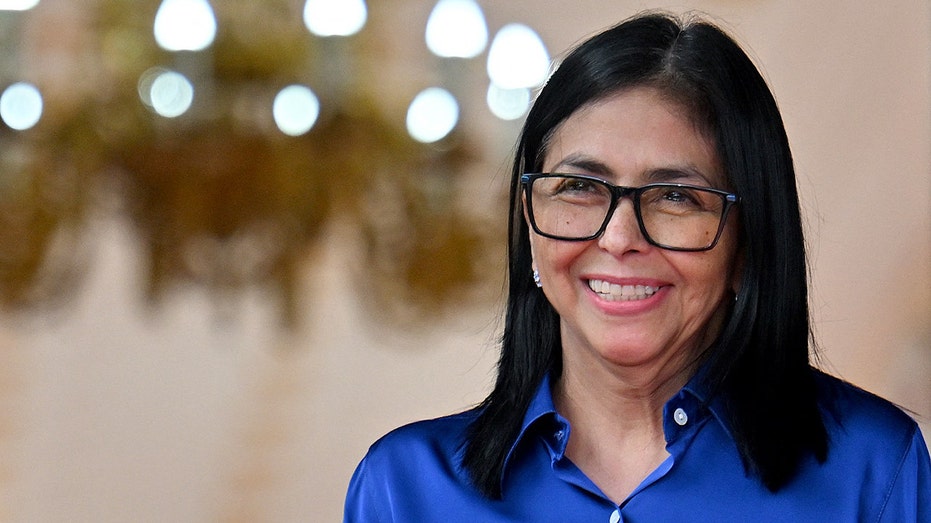
Venezuelan interim President Delcy Rodriguez said the 25-year oil agreement with the United States initially targets production of more than 1.5 million barrels per day. (Juan Barreto/AFP via Getty Images / Getty Images)
She also said her country retained “ownership of and sovereignty” over its natural resources, “while leveraging capital, technology and operational expertise to support the recovery of a strategic industry that has been severely affected by sanctions.”
The deal was met with praise from some members of the oil industry, including oil trader Phil Flynn.
Speaking on “Fox & Friends Weekend,” Flynn praised the agreement, arguing it could lower prices for years and that U.S. technology could transform Venezuela’s oil industry.
CLICK HERE TO GET FOX BUSINESS ON THE GO
“I think this is a win. It’s a generational win for Americans because it is [going to] lead to a generation of low prices,” Flynn told host Kayleigh McEnany.
FOX Business’ Jasmine Baehr and Reuters contributed to this report.
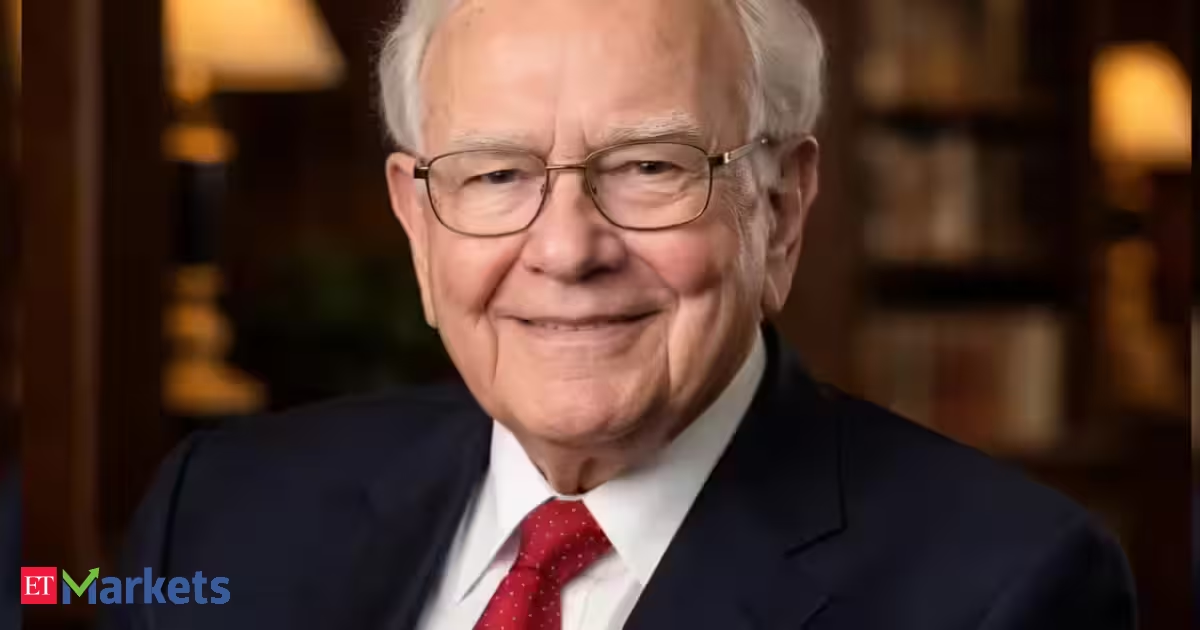
Buffett is no longer Berkshire’s CEO, but remains chairman of the board and continues to be involved in the company. He has also continued to make major investment decisions, including building what is now a $36.6 billion stake in Google’s parent company, Alphabet, in recent quarters.
Buffett took control of a struggling textile company in 1965 and transformed it into Berkshire Hathaway, now valued at more than $1 trillion, with annual after-tax operating earnings of about $45 billion.
Despite his enormous financial success, Buffett has maintained a famously simple lifestyle, including his fondness for Cherry Coke and burgers. He continues to work from an office in his hometown of Omaha, Nebraska, rather than from Wall Street.
Buffett handed over the CEO role to longtime deputy Greg Abel on January 1, 2026, and has pledged to donate the vast majority of his wealth.

Buffett’s six decades in business have produced a long list of investing principles and memorable quotes.
Here are the 10 investing lessons from Warren Buffett:1. Don’t overpay for stocks
Buffett has built his investment philosophy around buying quality businesses at attractive prices. He has rarely bought at more than 15 times forward earnings, maintaining discipline even when investing in high-profile companies such as Apple and Coca-Cola.
The approach puts downside protection ahead of potential upside. By analysing businesses closely and focusing on predictable cash flows and clean balance sheets, investors can reduce the risk of permanent losses during market downturns.
2. Be patient, but take profits when needed
Patience has been one of Buffett’s defining characteristics. Berkshire’s capital structure has allowed him to hold some stocks for decades rather than trade around quarterly results.
Buffett has famously said, “Our favourite holding period is forever.” His long-term holdings have included Coca-Cola, American Express and Wells Fargo.
At the same time, he has trimmed or exited major positions in companies including Apple, Bank of America, JPMorgan Chase, Goldman Sachs, Citigroup and Paramount Global in recent years.
Buffett has also openly acknowledged his investment mistakes, including what he described as his “most gruesome” investment in the bankrupt Dexter Shoe Co.
3. Stick with what you know
Buffett has repeatedly stressed the importance of staying within one’s “circle of competence.”
“You only have to be able to evaluate companies within your circle of competence. The size of that circle is not very important; knowing its boundaries, however, is vital.”
Buffett famously avoided technology stocks during the dot-com boom of the late 1990s because he believed forecasting the long-term survival of young technology companies was outside his expertise.
The Nasdaq subsequently collapsed by as much as 75% between 2000 and 2002.
When Berkshire eventually made a substantial investment in Apple in 2016, Buffett based the decision on consumer habits and brand loyalty rather than technology itself.
4. Keep emotions out of investing
Buffett has repeatedly emphasised the importance of maintaining an even keel during financial crises and market downturns.
At Berkshire’s 2025 annual shareholders meeting, he told investors to “check your emotions at the door when you invest.”
He put the principle into practice following the 1987 US market crash, investing roughly $1 billion in Coca-Cola in 1988 and 1989. By 2025, Coca-Cola’s share price alone had climbed nearly 2,800% from his original purchase price.
During the 2008 global financial crisis, Buffett also sought out struggling but high-quality companies and offered cash in exchange for coveted share packages.
In 2008, he invested $5 billion in Goldman Sachs and made a profit of $500 million, excluding dividends, when the company bought back its shares in 2011.
5. Start investing early
Buffett began investing at the age of 12, when he bought Cities Service preferred stock in 1942.
His wealth accumulated gradually. At 21, Buffett’s net worth was $20,000. It took him more than 13 years to become a millionaire and more than 33 years to become a billionaire, at the age of 55.
His career illustrates the role of patience and compounding in long-term investing.
6. Learn from great teachers
Buffett was a student of economist Benjamin Graham, known as the “father of value investing.”
He studied under Graham at Columbia Business School and later worked at Graham’s investment firm before setting out on his own.
Graham’s influence helped shape Buffett’s focus on identifying companies that are undervalued, or trading below their intrinsic worth.
7. Concentrate when conviction is high
Buffett has not always followed a highly diversified approach.
At the end of the second quarter of 2025, five stocks—American Express, Apple, Bank of America, Coca-Cola and Chevron—accounted for nearly 70% of Berkshire’s roughly $300 billion equity portfolio.
Buffett himself holds more than 99% of his net worth in Berkshire shares, a stake valued at about $150 billion.
The approach is to concentrate investments when conviction is high rather than spread capital indiscriminately.
8. Hire strong managers and trust them
Buffett’s management style has long involved giving substantial autonomy to the leaders of Berkshire’s subsidiaries.
The approach is straightforward: hire capable managers and trust them to run their businesses.
Buffett’s decision to remain active after stepping down as CEO also reflects his belief that work can continue well beyond traditional retirement.
Turning 65 did not slow him down, with Berkshire shares climbing thirtyfold since then. Buffett has long said that traditional retirement is not for him or his top executives.
9. Protect shareholders from dilution
Berkshire has avoided issuing stock for acquisitions and has never granted stock-based compensation.
As a result, the company’s share count has increased by only about 40% since 1965.
Protecting shareholders from unnecessary dilution has been another important part of Buffett’s approach to capital allocation.
10. Love what you do
Buffett has famously described his daily routine as “tap dancing to the office.”
Even after handing over the CEO role, he plans to remain active as Berkshire’s chairman and continue working daily in 2026.
His career reflects a long-standing belief that work should be something a person enjoys rather than something endured until retirement.
Protecting reputation is as important as protecting capital
Buffett’s philosophy extends beyond investing to corporate governance and reputation.
“It takes 20 years to build a reputation and five minutes to ruin it. If you think about that, you’ll do things differently.”
For Buffett, strong corporate governance and an ethical culture are essential for long-term survival. Protecting reputation, like protecting capital, is about avoiding losses that can be difficult to recover from.
Buffett’s lessons amid market greed and fear
Buffett’s investment philosophy has also remained relevant during periods of sharp market gains and high valuations.
He once said: “You only find out who is swimming naked when the tide goes out.”
The idea is that a rising market can make almost everything appear to be working, while a downturn exposes companies with weak financials, poor management or accounting problems. Investors, therefore, should focus on companies with robust financials and sound management.
Buffett has also said that greed, fear and folly among people are predictable, though the sequence is not.
Greed can dominate during a rising market, fear can return when sentiment deteriorates, and folly can emerge when investors rush into overheated markets despite alarming valuations.
His most famous advice remains particularly relevant in such conditions: be “fearful when others are greedy and greedy when others are fearful.”
(Disclaimer: Recommendations, suggestions, views and opinions given by the experts are their own. These do not represent the views of Economic Times)

Burnham faces hurdles bringing UK asylum system under public control – Bloomberg

Fair Isaac: Mortgage Pricing Is Doing The Work
Business
Stephen Curry Now Eligible for Max Warriors Extension, and Golden State Is Letting Him Call the Shots
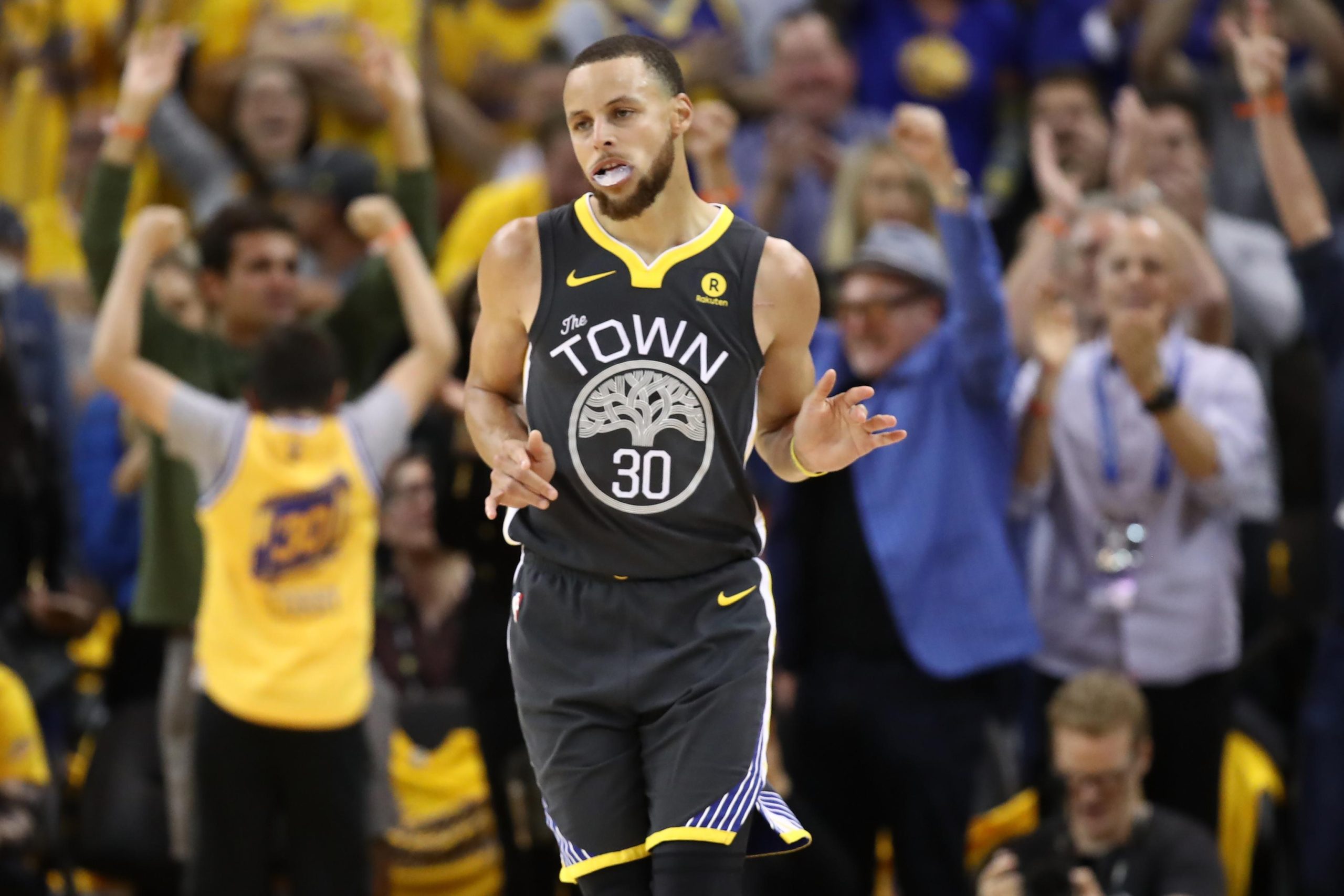
Stephen Curry officially became eligible for a new contract extension with the Golden State Warriors on Saturday, opening a negotiation that will shape the franchise’s roster for years to come while the team signals it is prepared to give its longtime superstar wide latitude in deciding his own path.
Curry, 38, is entering his 18th NBA season and the final year of his current contract, which will pay him roughly 62.6 million dollars this season. As of Saturday, he became eligible to sign a two-year extension worth approximately 136.7 million dollars, a deal that would keep him with Golden State through the 2028-29 season and push his salary to about 71 million dollars in the final year, when he would be 40 years old. If no extension is completed, Curry would become an unrestricted free agent next offseason.
Warriors general manager Mike Dunleavy has repeatedly signaled over the past year that the front office wants to secure another deal with Curry before this season begins, while also making clear the decision ultimately rests with the player himself. “I’m pretty confident that Steph will finish his career here, but you know, it’s ultimately his call, his decision,” Dunleavy said during a press conference earlier this month, according to the Press Democrat. “Whether that’s to allow his contract to run out and move on, or if he comes to me and wants to be moved, Joe (Lacob) and I will talk through it.”
According to ESPN’s Anthony Slater, both Curry and the Warriors are expected to approach negotiations with a shared goal of keeping him in Golden State for the remainder of his career, meaning the central question is less whether Curry stays than what specific structure the eventual deal takes. Curry could sign the full maximum extension, accept a lower figure to preserve salary-cap flexibility for the front office to build around him, or wait until next summer to test unrestricted free agency, according to reporting from ClutchPoints NBA insider Brett Siegel cited by Marca.
The timing of the decision comes amid a complicated stretch for both player and franchise. Curry appeared in only 43 games last season while dealing with a knee injury that sidelined him for roughly two months, and Golden State finished the 2025-26 season 37-45, missing the playoffs entirely. Despite the down year, Curry remains one of the league’s most influential players, having delivered four NBA championships to the Warriors, two Most Valuable Player awards, and a legacy as the player most credited with transforming how basketball is played through three-point shooting.
Dunleavy has previously discussed his desire to keep Curry with the organization for good, telling reporters earlier this month, “That’s always been sort of what we discussed, and I think that’s you know tracking quite well,” according to comments reported by AOL. He added at the time, “Obviously, he’s eligible for an extension coming up at the end of this month, and you know we’ll talk through all that stuff and can’t speak on it much right now.”
Curry’s importance to the Warriors extends well beyond his production on the court, and the franchise has continued to build its roster around the expectation that he remains its centerpiece. Golden State recently signed veteran forward Georges Niang and fifth-year guard Brandon Williams, rounding out a roster largely carried over from last season. The front office has also pursued several potential star additions in recent years, including reported interest in players such as Giannis Antetokounmpo, LeBron James and Jaylen Brown, though none of those pursuits resulted in a trade.
A maximum extension for Curry would guarantee his place with the Warriors through the later stages of his career but could also constrain the team’s ability to pursue another marquee addition, particularly with forwards Jimmy Butler and Draymond Green both entering the final years of their own contracts. ESPN’s Brian Windhorst has suggested there may be reasons for both sides to consider waiting rather than rushing into a deal immediately, noting that Curry is one of several notable players, along with Butler and Green, becoming extension-eligible around the same period this offseason.
Off the court, Curry has continued to generate headlines beyond his playing contract. Public records show he and his wife, Ayesha, quietly sold their Atherton, California, estate for 29.1 million dollars in May, a figure slightly below the 30 million dollars the couple originally paid for the property in December 2020. Separately, a documentary chronicling Curry’s pursuit of the NBA’s all-time three-point record, directed by Gotham Chopra and produced by Religion of Sports, is scheduled to arrive in IMAX theaters in October.
For now, all signs point toward Curry remaining with the only franchise he has ever played for. Dunleavy has said publicly that neither the team nor Curry is entertaining the idea of a different destination, and the Warriors have shown no indication they intend to explore trading their franchise’s defining player. The remaining question, according to those close to the negotiations, is simply what form the final agreement will take, and how much say Golden State ultimately gives Curry in shaping it.
Business
Corporate actions this week: NTPC, Coal India among nearly 90 cos set to hit record dates for dividend payouts, bonus issues & stock splits

To be eligible for these corporate actions, investors must hold the shares in their demat accounts as of the respective record dates. The list is tentative, as more companies may announce record dates for dividends, bonus issues and stock splits during the week.
Here is the day-wise list of corporate actions to watch out for this week:
August 31 (Monday)
Around eight companies have fixed Monday as the record date for their respective corporate actions. Mastek will pay two dividends of Re 1 each, taking its total payout to Rs 2 per share. Glenmark Pharma has announced a dividend of Rs 2.5 per share, while Triveni Engineering will pay Rs 1.25 per share.
Other stocks with record dates on Monday include Ganesh Housing (Rs 1.5 per share), Ion Exchange (Rs 1.25 per share), Orbit Exports (Rs 0.5 per share), QVC Exports (Re 1 per share) and Total Transport Systems (Rs 1.25 per share).
September 1 (Tuesday)Around 18 companies have fixed Tuesday as the record date for their respective corporate actions. Procter & Gamble Hygiene and Health Care has the highest dividend payout among them, with the company set to pay a final dividend of Rs 60 per share. Bengal & Assam Company will pay Rs 50 per share, followed by AK Capital Services at Rs 12 per share and Maharashtra Seamless at Rs 10 per share.
Other stocks with record dates on Tuesday include Alivus Life Sciences (Rs 5 per share), CCL Products (Rs 3 per share), Danish Power (Rs 2 per share), Krishna GVK Luxury Hotels (Rs 2 per share), Suprajit Engineering (Rs 2 per share), Rishiroop (Rs 1.5 per share), SM Auto Stamping (Rs 1.5 per share), Vadilal Enterprises (Rs 1.5 per share), Unique Organics (Rs 1.3 per share), Garware Technical Fibres (Re 1 per share), Jindal Drilling & Industries (Re 1 per share), Rico Auto Industries (Rs 0.55 per share), Aeroflex Enterprises (Rs 0.4 per share) and Oriental Rail Infrastructure (Rs 0.1 per share).
September 2 (Wednesday)
Around 13 companies have fixed Wednesday as the record date for their respective corporate actions. Uni Abex Alloy Products has the highest dividend payout among them, with the company set to pay a total dividend of Rs 100 per share, comprising a final dividend of Rs 40 per share and a special dividend of Rs 60 per share.
Gujarat Pipavav Port and Magna Electro Castings will each pay Rs 5 per share, while Dr Agarwal’s Eye Hospital will pay Rs 4 per share. Other stocks with record dates on Wednesday include NTPC (Rs 3.5 per share), Tribhovandas Bhimji Zaveri (Rs 2.5 per share), Triveni Turbine (Rs 2 per share), Black Rose Industries (Rs 1.25 per share), Chemfab Alkalis (Rs 1.25 per share), Kovilpatti Lakshmi Roller Flour Mills (Re 1 per share), GAIL (Rs 0.5 per share), Geekay Wires (Rs 0.35 per share) and Compucom Software (Rs 0.25 per share).
September 3 (Thursday)
Around 11 companies have fixed Thursday as the record date for their respective corporate actions. Vadilal Industries has the highest dividend payout among them, with the company set to pay a final dividend of Rs 43 per share to its shareholders.
Nirlon will pay Rs 15 per share, followed by Interarch Building Solutions at Rs 12.5 per share and Carraro India at Rs 6.75 per share. Other stocks with record dates on Thursday include Hindustan Hardy (Rs 2.8 per share), Action Construction Equipment (Rs 2 per share), Dhoot Industrial Finance (Rs 1.5 per share), Pune E – Stock Broking (Re 1 per share), Lehar Footwears (Rs 0.5 per share), Rose Merc. (Rs 0.35 per share) and Birla Precision Technologies (Rs 0.05 per share).
September 4 (Friday)
Around 35 companies have fixed Friday as the record date for their respective corporate actions. Gulf Oil Lubricants India has the highest dividend payout among them, with the company set to pay a final dividend of Rs 30 per share to its shareholders.
AIA Engineering will pay Rs 16 per share, followed by General Insurance Corporation of India at Rs 13.25 per share and Coal India at Rs 5.25 per share. Other stocks with record dates on Friday include Indigo Paints (Rs 5 per share), Arvind (Rs 4.5 per share), Clean Science And Technology (Rs 4 per share), Jagsonpal Pharmaceuticals (Rs 4 per share), Mazda (Rs 4 per share), Emcure Pharmaceuticals (Rs 3.6 per share), Jocil (Rs 3.5 per share), Stove Kraft (Rs 3.5 per share), Metro Brands (Rs 3 per share), S.P. Apparels (Rs 3 per share), Suraj Products (Rs 2.25 per share), SKP Securities (Rs 2 per share), Panasonic Energy India Company (Rs 1.95 per share), Nahar Capital And Financial Services (Rs 1.5 per share), Nahar Poly Films (Rs 1.5 per share) and Paradeep Phosphates (Rs 1.5 per share).
Nahar Spinning Mills (Re 1 per share), Oil & Natural Gas Corporation (Re 1 per share), Oil India (Re 1 per share), Prevest Denpro (Re 1 per share), Sandu Pharmaceuticals (Re 1 per share), Shipping Corporation Of India (Re 1 per share), Speciality Restaurants (Re 1 per share), Sportking India (Re 1 per share), Pocl Enterprises (Rs 0.8 per share), Shilpa Medicare (Rs 0.6 per share), Citadel Realty & Developers (Rs 0.5 per share), Mach Travel Solutions (Rs 0.5 per share), Venus Pipes & Tubes (Rs 0.5 per share), BMW Industries (Rs 0.43 per share), Capri Global Capital (Rs 0.2 per share) and Fineotex Chemical (Rs 0.05 per share).
In other corporate actions, Jonjua Overseas has fixed the record date for a 7:24 bonus issue, while TCC Concept will undergo a 1:5 stock split.
Also read | These 19 stocks turned into tenbaggers in 5 years: Peter Lynch’s rules to find the next
(Disclaimer: Recommendations, suggestions, views and opinions given by the experts are their own. These do not represent the views of The Economic Times)
Business
Intel Says 14A Chip Defect Reduction Is Its Best Progress Since the 22nm Process, CFO Tells Investors
Intel’s next-generation 14A manufacturing process is reducing chip defects faster than any node the company has developed since its highly regarded 22-nanometer technology from the early 2010s, Chief Financial Officer David Zinsner told investors this week, as the chipmaker also reported increasingly concrete interest from potential foundry customers.
Zinsner made the comments during a fireside chat with Deutsche Bank analyst Melissa Weathers at the bank’s 2026 Technology Conference on Aug. 26. “When you look at the defect density, 14A is tracking better than the target curve we had for 14A,” Zinsner said, according to a transcript reported by Tom’s Hardware. “It is also doing better than any of the previous nodes in terms of how quickly we are bringing down the defects. In fact, we have not seen this performance since 22nm, which is arguably one of the best nodes Intel has ever put out.”
Defect density refers to how many flawed structures appear on a wafer during a chip’s manufacturing process, a figure that is typically high when a new node is introduced and is gradually reduced as the process matures. A lower defect density generally increases the likelihood that a completed chip functions correctly, though actual manufacturing yield also depends on additional factors including chip size, circuit design and the specific type and distribution of defects present, meaning defect density alone is not a direct stand-in for final yield.
Zinsner’s comparison to Intel’s 22-nanometer process, which entered mass production with the company’s Ivy Bridge chips in the early 2010s and is widely regarded as one of Intel’s most successful manufacturing nodes, was based specifically on the speed of defect reduction at a similar point in each node’s development timeline, roughly two years before planned mass production, rather than a claim that 14A has already matched 22-nanometer’s absolute defect levels. Some industry analysts have also noted that improvements in wafer inspection equipment over the past decade and a half have changed how defects are measured and detected, adding another layer of nuance to any direct historical comparison.
Intel 14A represents the company’s next major advance beyond its current 18A node, retaining the fundamental shift to gate-all-around transistors and backside power delivery that Intel introduced with 18A while further refining both technologies. The new node introduces RibbonFET 2, the second generation of Intel’s gate-all-around transistor architecture, along with PowerDirect, an advancement of the PowerVia backside power delivery concept that routes power through the back of the wafer rather than alongside signal lines on the front. According to Intel’s own published targets, 14A is expected to deliver 15% to 20% more performance at the same power consumption compared with 18A, or alternatively 25% to 35% lower power consumption at equivalent performance, along with up to 30% higher transistor density. Those figures represent Intel’s internal development targets rather than measurements from finished, volume-production chips.
Beyond the defect data, Zinsner said discussions with potential external foundry customers for 14A have shifted meaningfully in tone over recent months. “We are now seeing demand from our internal customers on 14A [and] they are actually probably the most cynical bunch out of anybody,” Zinsner said, according to Tom’s Hardware’s reporting. “The fact that they are now designing products on 14A was a good confidence boost for us as well. Then, engagements with customers externally, from a foundry perspective has significantly increased.” He added that Intel Chief Executive Lip-Bu Tan and other company leaders are now meeting with potential customers on a weekly basis, and that those conversations have moved past reviewing technical performance data toward more concrete questions about available manufacturing capacity and supply timelines.
Intel’s 0.9 process design kit for 14A, a set of tools external and internal chip designers use to build products for the node, is expected to be released in October, according to a summary of the conference published by Investing.com. The company has said risk production, an early manufacturing phase used to validate a process before full-scale output, is planned for 2027, with high-volume manufacturing targeted for 2028.
Despite the more positive tone surrounding 14A’s technical progress, Intel has not yet announced a major, binding external customer contract for the node, a milestone the company has previously described as critical to its long-term foundry strategy. Intel disclosed in its 2025 annual report that it might need to pause or discontinue development of 14A and subsequent processes if it could not secure a significant external customer commitment, given the substantial capital costs associated with operating leading-edge manufacturing nodes. By the company’s second-quarter 2026 report, that language had softened somewhat, with Intel committing to complete 14A development while citing progress on technical milestones relevant to prospective large customers.
Zinsner’s remarks came alongside a broader set of updates on Intel’s finances and manufacturing strategy. The company raised its 2026 capital expenditure guidance to 20 billion dollars from a previous range of 18 billion to 20 billion dollars, following a roughly 23 billion dollar equity offering. Intel also said its existing 18A process is yielding ahead of internal targets and detailed plans to expand manufacturing capacity across multiple facilities, including more than doubling output at its Fab 52 site in Ireland next year and accelerating work at its Fab 62 facility in Arizona.
Fortune Brands and 4 More Stocks See Action From Activist Investors

Bitcoin Rally Builds on $2.8 Billion ETF Inflows

AL wild-card roundup: Blue Jays move 1.5 games back of Guardians

Weekend Open Thread – Corporette.com

Weekend Open Thread: Brooks Brothers

London Mayor Sadiq Khan handed a peerage by Keir Starmer alongside 15 other Labour figures… just days before the PM leaves No10

Experts react to US ‘financial offensive’ on Iran

Is the Trump Administration going to use XRP to pay off the 40 Trillion National Debt?

7 Powerful Money Saving Habits That Can Change Your Financial Future | Smart Savings Tips in Telugu
-

 Crypto World4 days ago
SpaceX stock could rise 75% to $240, JPMorgan says
-

 Fashion2 days ago
Weekend Open Thread: Maeve – Corporette.com
-

 Crypto World2 days ago
Bitcoin’s 22% rally now needs real demand to outlast Treasury liquidity boost
-

 Crypto World4 days ago
Warsh Jackson Hole keynote puts financial innovation first
-

 Crypto World5 days ago
A $30 Billion AI Fund Implodes, Now the SEC Is Investigating Wall Street’s Role
-

 Business2 days ago
Salesforce Stock Soars 19% as Blowout Earnings and Agentforce AI Growth Silence Software Skeptics
-

 Crypto World4 days ago
Did Trump Just Move SpaceX Stock With One Truth Social Post?
-

 Business7 days ago
Mystery AI Model ‘Ox Alpha’ Draws Developers With Free Access as Chinese Lab Origins Remain Debated
-

 Business4 days ago
Walmart takes aim at younger shoppers with new fashion brand
-
 NewsBeat4 days ago
Lindsay Clancy jury braces for closing arguments as judge tells court: ‘You’ve heard all the evidence’ – Live updates
-

 Crypto World3 days ago
Elon Musk Grok Bot Promise: We Will Make You Whole if AI Loses Your Money
-

 Crypto World1 day ago
Bitcoin price tests $82K resistance as Brandt stays long
-

 Business6 days ago
Moderna CEO warns China is pouring state money into mRNA technology
-

 Crypto World3 days ago
NVIDIA revenue hits $96.2B as AI demand doubles
-

 Business4 days ago
Thailand’s Eastern Economic Corridor Capital City (EECiti): Key Developments and Investment Opportunities
-

 Business2 days ago
iPhone 18 Pro Pre-Orders Could Shift to Saturday as Apple Reportedly Avoids September 11 Anniversary
-

 Business5 days ago
NVIDIA Stock Drops Nearly 2 Percent to $210 on Seventh Losing Day Ahead of Critical AI Earnings
-

 Business2 days ago
Apple Confirms September 9 Keynote and Reveals Its Full Pre-Order Schedule
-
 Crypto World6 days ago
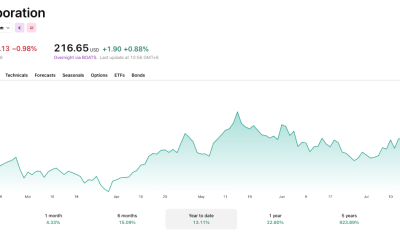
$92 Billion Nvidia Earnings Could Make or Break the AI Trade
-
 NewsBeat4 days ago
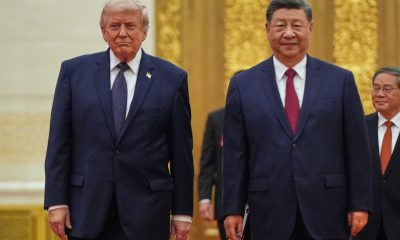
Trump’s trade truce with China faces test with Iran effort
You must be logged in to post a comment Login