Connect with us

Tech

LLM Moats Quickly Evaporating | Hackaday

Published

on

In the business world, a moat is a quality of a business that makes it difficult for competitors to take that company’s profits. With how hard it is to train models for large language models (LLMs) and generative AI, it might seem like Anthropic, Open AI, and other LLM companies would have huge moats given the amount of compute it takes to build models. But open source models are quickly draining that moat, and now the only thing standing in the way of a customer using one of these models on their own hardware instead one from the larger companies is physical computing resources. [TerminalBytes] demonstrates a few of these models on personally owned computers to show the current state of the art.

[TerminalBytes] started off running the 27B version of the Qwen3.8 on a Mac Studio with 256 GB of unified RAM, which is plenty for this task. But it’s also enough to benchmark a few different models. Qwen3.6 is compared to 3.8, and then the different quants of each model are also compared. Quants are compressed versions of models that need fewer bits to store weights, meaning that the same models can run in less memory with smaller losses in fidelity. Many of these quants run on machines with 32 GB of RAM or less, encompassing many average gaming PCs. There’s even a 1-bit quant that [TerminalBytes] tested which can easily run on a machine with 16 GB, although with mixed results.

Keep in mind that this is just the current state of affairs with open LLMs. Future versions of these models are likely to optimize the number of tokens produced per unit time, or otherwise increase quality of responses while requiring less computer resources. We don’t really think that the ease of running local models will be the sole reason that the AI bubble pops, though. The fact that not every computer user is running Linux is proof enough of that.

Advertisement

Source link

Advertisement
Continue Reading
Click to comment

You must be logged in to post a comment Login

Leave a Reply

Tech

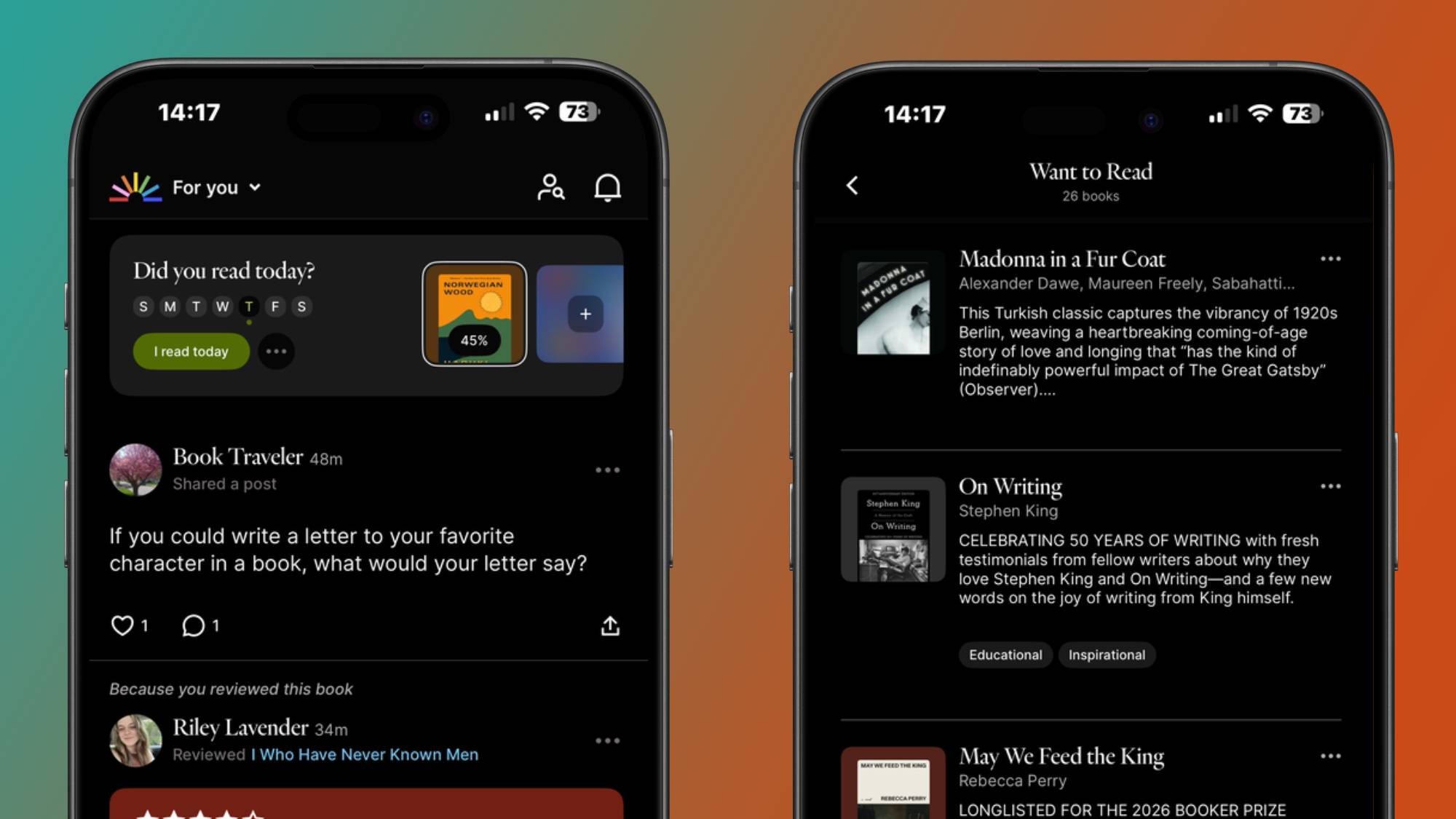
I switched from Goodreads to Fable for tracking all of my favorite books, and it’s one of the best digital migrations I’ve made yet

Published

on

Homescreen Heroes

This is part of a regular series of articles exploring the apps that we couldn’t live without. Read them all here.

For someone who has a degree in journalism and a master’s in English, I should read more than I actually do.

But movies are my thing, and apps like Letterboxd encourage me to broaden my cinematic horizons. That said, there’s one app that’s lifted me out of my years-long reading slump — and no, it’s not Goodreads.

Advertisement

Source link

Continue Reading

Tech

Researchers built a $7 gadget that can find hidden cameras in seconds

Published

on

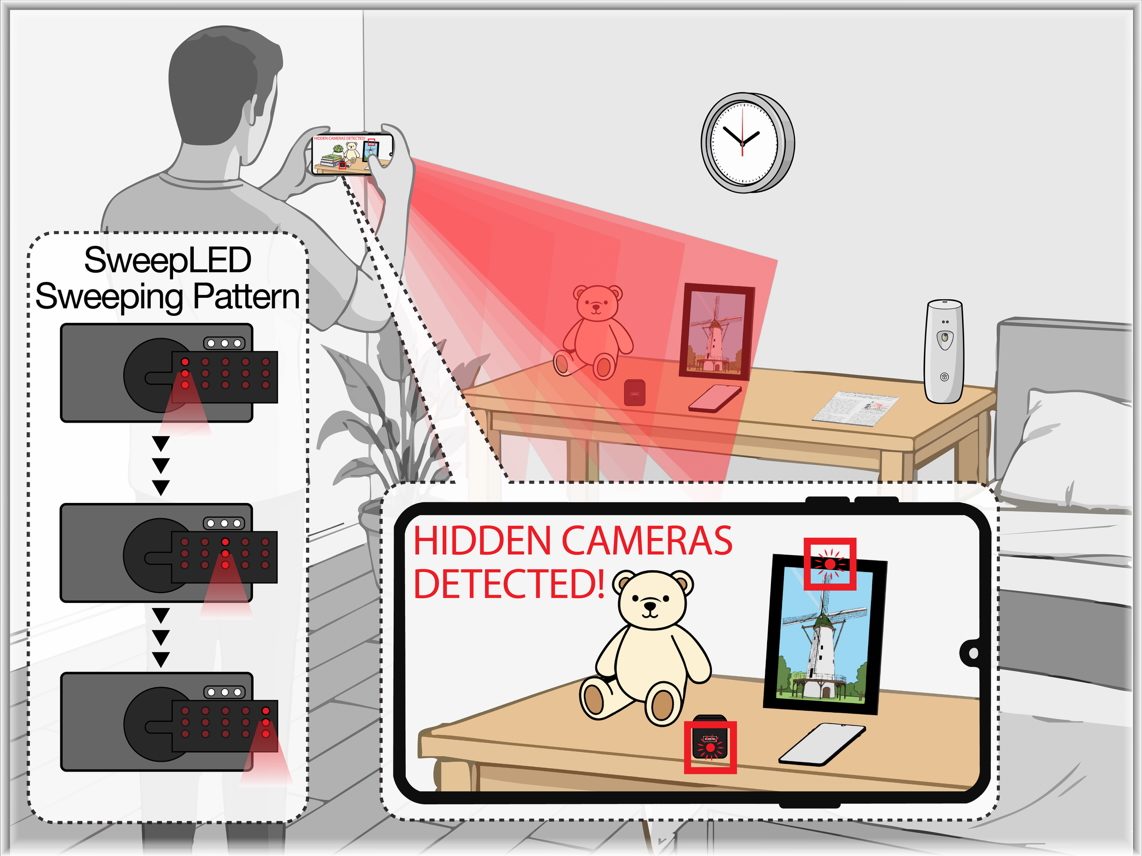
Hidden cameras keep turning up in sneaky spots, tucked inside pen, clock, chargers, or picture frames in hotel rooms and rentals. This is why researchers at KAIST built a fix that costs less than a nice lunch. Their new tool, called SweepLED, turns any smartphone into a reliable hidden camera detector using an attachable LED case that costs under $7 to build.

Why your current hidden camera detector probably isn’t working

Most handheld detectors rely on a pretty basic trick, shine light at something and look for a bright reflection bouncing back. The problem is that glass, metal, and shiny plastic all bounce light back too, which means you’re stuck squinting at chargers and clocks trying to guess whether that glint is a lens or just a coincidence.

SweepLED eliminates the guesswork entirely. Instead of moving the light and the viewing angle together, it keeps the phone’s camera locked in place and sweeps the LED light from different directions instead. That’s crucial because a camera lens has an internal structure, aperture, sensor, and layered glass, so its reflection warps and deforms in a very specific way as the light angle shifts. Ordinary shiny surfaces just don’t do that.

How SweepLED works

SweepLED records the whole light sweep as a short video, then runs it through an AI model trained to spot those telltale lens deformations, flagging exactly where a hidden camera might be hiding. Researchers tested it against 30 everyday objects you’d realistically find in a hotel room or rental, and it caught hidden cameras with about 94% accuracy, all in under five seconds per object.

A recent UCL study found people using consumer hidden camera detectors still missed 59% of devices in testing, so SweepLED’s 94% lab result is a strong sign, with real world testing likely next.

Led by Professor Jun Han at KAIST’s School of Computing, working alongside researchers from the National University of Singapore and Singapore Management University, the project was presented earlier this year at ACM MobiSys 2026. It’s not a shipping product yet, but the underlying idea is simple enough that it could realistically show up in an actual gadget before long.

Advertisement

Source link

Continue Reading

Tech

Sony Music and Warner Chappell sue Anthropic over song lyrics in Claude’s training data

Published

on

Sony Music Publishing and Warner Chappell have sued Anthropic in California over song lyrics allegedly taken from pirate archives, naming Dario Amodei and Benjamin Mann personally and seeking up to $150,000 per composition. A Munich court ruled in November 2025 that memorising lyrics inside a model is reproduction and that the text and data mining exception does not cover it.

Sony Music Publishing and Warner Chappell have sued Anthropic in a Northern California court. Dario Amodei and Benjamin Mann are named personally, Business Insider reported.

The language is not restrained. The publishers allege a “brazen campaign of illegally torrenting, scraping, and downloading copyrighted works on a massive scale“.

The works named are familiar. Eye of the Tiger, Hallelujah, September, Livin’ On a Prayer and Great Balls of Fire are among them, alongside Mariah Carey and Taylor Swift compositions.

Advertisement

The route alleged is one Anthropic has been here for before. The complaint points to Library Genesis and Pirate Library Mirror, the same archives behind the $1.5B settlement it reached with authors.

The publishers want a jury and statutory damages. Up to $150,000 for each composition used in training, which is the statutory ceiling for wilful infringement rather than a figure any court has awarded.

Set that against what the last case paid. Authors received about $3,000 a title, split with their publisher, leaving roughly $1,500 each side.

The gap between those two figures is the whole negotiation. One is a number two sides agreed on, the other is an opening demand in a case nobody has answered yet.

Advertisement

A European court has already answered a version of this question, and it was about song lyrics too. The defendant was a different company.

The Regional Court of Munich ruled against OpenAI in November 2025, finding that memorising lyrics inside a model is reproduction, and that outputs reciting them are communication to the public.

It also found the text and data mining exception did not cover it. Permanent memorisation goes beyond transient analysis, and the rightsholder had opted out. The judgment is not final.

Europe’s exception carries a second condition that matters more here. It applies only to works the miner had lawful access to, and a pirate library is never lawful access.

Advertisement

On top of that sits the AI Act. General purpose model providers must keep a copyright policy and publish a summary of their training data, policed by an enforcement unit in Brussels.

Which is the asymmetry worth naming. American rightsholders go to court to find out what was taken from them, and European ones are entitled to be told.

Source link

Advertisement
Continue Reading

Tech

NASA’s Next Great Sky Survey Is Flying as Roman Launches from Florida at Sunrise Aboard SpaceX Falcon Heavy

Published

on

NASA Roman Space Telescope Launch Mission
Sunday morning over Launch Complex 39A at Kennedy Space Center looked almost too calm for a rocket that would soon make more than five million pounds of thrust. At 7:26 a.m. EDT on August 30, SpaceX’s Falcon Heavy lit all 27 Merlin engines and carried NASA’s Nancy Grace Roman Space Telescope off the pad through blue Florida sky and a thin scatter of cloud. Weather had sat at 50 percent “go” overnight on cumulus and surface-electric-field rules, then improved to 70 percent in the last hour. Launch manager Denton Gibson polled the room and sent it.


Goddard controllers in Greenbelt, Maryland, began receiving telemetry data around 7 minutes after liftoff, and the side boosters were released about four minutes and 15 minutes later, returning to Cape Canaveral Space Force Station for reuse. The fairing halves eventually split apart. The second-stage engines do their thing, and Roman separates from the parent spacecraft 31 minutes into the mission. An hour and 25 minutes later, the team breathes a sigh of relief as the solar arrays and lower instrument sun screen open and perform properly. Yes, the high-gain antenna and aperture cover must yet be completed, but they will do so in due course.


LEGO Technic NASA Artemis Space Launch System Rocket Building Toy for Boys & Girls – STEM Learning…
  • BUILD AN OFFICIAL NASA ROCKET – Kids prepare to explore outer space with the LEGO Technic NASA Artemis Space Launch System Rocket (42221) building…
  • 3-STAGE ROCKET SEPARATION – Young builders can turn the hand crank to watch the rocket separate in 3 distinct stages: solid rocket boosters, core…
  • STEM BUILDING TOY FOR KIDS – This educational rocket kit was created in collaboration with NASA and ESA to showcase the authentic system that will…

Let’s not overlook Roman’s tremendous scheduling achievement, which saw it launch 9 months early. Originally scheduled to launch in May 2027, the crew pulled it off by finalizing the hardware, staying within budget, and moving the launch date first to late September and then back to late August. NASA Administrator Jared Isaacman couldn’t help but applaud the team on this one; completing a project like this not only ahead of schedule but also on budget is something they want to see more of, especially after all of the work and effort put into making it a reality. How much will all of this development, launch, and five-year operation cost? approximately $4.3 billion.


Roman is a large unit, around the size of a school bus and weighing around 18,000 pounds. Its 2.4-meter primary mirror is the same size as Hubble’s, but it’s composed of a super-lightweight material that weighs only 410 pounds. As for how they came to create this material, it began as surplus optics from the National Reconnaissance Office, which they subsequently modified and silver-coated, making it suitable for use in an astronomy system. The Wide Field Instrument is a 300 megapixel infrared camera made up of 18 separate detectors, each about the size of a saltine cracker. It can capture a large portion of the sky in a single frame, around 1.5 times the apparent size of a full moon. And if you’re wondering how that compares to Hubble, Roman can capture the infrared field 100 to 200 times larger in a single image than Hubble can. The major game changer is Roman’s ability to scan the sky almost 1,000 times faster than its older cousin.

Advertisement


JPL’s Coronagraph is along for the ride, and it’s basically a test bed for some new technology that’ll block out the starlight so the telescope can look at older, colder, and closer in giant planets than other direct imaging work used to be able to spot, with the hope that success in this field will feed into later ideas for spotting Earth-sized worlds. On that basis, all scientific data will be available for everyone to view. As for how much data they expect, the daily downlink is expected to be approximately 1.4 terabytes, which equates to a nice four petabytes each year, plenty for anyone to get their teeth into.

Mission Science for Roman is divided into three distinct roles that all use the same super-sharp infrared view. First, consider how the universe has altered over time. Roman will set out to find tens of thousands of Type Ia supernovae and study the forms and clusters of hundreds of millions of galaxies. With that data, Roman will effectively tighten the rules governing dark energy, the unknown factor that appears to be causing the cosmos to expand even faster, and dark matter, which only manifests itself by bending light and keeping galaxies intact. Recently, there have been suggestions that dark energy may be diminishing with time, and Roman is designed to be able to determine whether this is true with a much bigger sample size.

NASA Roman Space Telescope Launch Mission
The next step is to look for planets, as science believes that microlensing in the galactic bulge could show planets with only a tenth of Earth’s mass, ranging from planets in habitable zones to worlds with orbits similar to the farthest limits of our own solar system. In addition, we’ll learn about rogue planets that are floating through space without their own star. The transit observations and the coronograph add to the mix. The number of new planets is expected to range from a few thousand to more than 100,000. Not to mention the first real attempt to conduct a head count of systems like our own. The same data set will also allow us to see brown dwarfs, elderly stars that have ran out of fuel, and even new moons orbiting our own gas giants.

NASA Roman Space Telescope Launch Mission
Finally, there’s everything else Roman will discover throughout these surveys, including black holes, collapsing stars, galaxy mergers, things in our solar system’s beyond reaches, and anything else no one had even considered looking for. Senior project scientist Julie McEnery put it simply: no one has ever looked at the universe with eyes as sharp as Roman’s. NASA’s Science Chief, Nicola Fox, described it this way: while Hubble and Webb can look through a keyhole, Roman kicks the door right down. While Webb provides depth, Roman provides broad coverage as well as quickness, combining the two to get the best of each.
[Source]

Source link

Advertisement
Continue Reading

Tech

Sony WH-1000XM5 Premium Noise Canceling Wireless Headphones are the Quiet That Still Follows You

Published

on

Sony WH-1000XM5 Noise-Canceling Headphones 2026
Sony spent years turning over-ear canceling into something people actually wear all day, and the WH-1000XM5, priced at $199.99 (was $400), remains the pair that made that habit stick. Eight microphones and a pair of processors hush cabin rumble, subway grind, and open-office chatter so thoroughly that music and calls sit on a darker background than most rivals managed when these launched a few years ago.


Eight listening microphones fitted on the headphones monitor both what happens outside and inside the cups. Combining them with the V1 processor and a QN1 noise chip allows the system to automatically fine-tune noise cancelation for glasses, hair, leaks around the cups, and changes in cabin pressure. First to vanish are the low hum of airline engines and the persistent drone of your office’s HVAC system. Then mid-range office chatter begins to dissipate.

Sale


Sony WH-1000XM5 Premium Noise Cancelling Wireless Headphones, Black
  • PREMIUM NOISE CANCELLATION: Two processors control 8 microphones for unprecedented noise cancellation. With Auto NC Optimizer, noise canceling is…
  • MAGNIFICENT SOUND: Engineered to perfection with the new Integrated Processor V1.
  • CRYSTAL CLEAR HANDS-FREE CALLING: 4 beamforming microphones, precise voice pickup, and advanced audio signal processing.


Even with the noise cancelation turned on, the battery life is 30 hours, and 40 hours when it is turned off. A USB-PD charger will provide three hours of listening for every three minutes of charging, and a full USB-C charge should take roughly three and a half hours, however real-world testers have reported matching or even exceeding those figures when using them at a moderate level.

Advertisement

Sony WH-1000XM5 Noise-Canceling Headphones 2026
One thing that has clearly improved is the feel, as soft fit leather pads and a smaller headband reduce clamp pressure, allowing you to wear them for hours without feeling like they’re squeezing your head. The cups now swivel to lie flat, but they no longer fold up into a little ball like they used to, so Sony had to tough up the shell to protect them. If you’ve ever jammed a pair of XM4s into a side pocket of a bag, you’ll understand what we mean.

Sony WH-1000XM5 Noise-Canceling Headphones 2026
The sound originates from new 30mm carbon fiber drivers that have been adjusted to be warmer and more even than the previous ones. The bass is still under control, the mids are clean, and if you have an Android phone that supports LDAC, you can get even more resolution out of your music. They also have a system called DSEE Extreme, which aims to restore the quality of compressed streams. The headphones include a full equalizer, 360 Reality Audio support, Adaptive Sound Control, which switches modes automatically based on what you’re doing, Speak-to-Chat, which pauses your music when you start talking, and Quick Attention, which allows you to cover a cup and hear what’s going on in the room.

Sony WH-1000XM5 Noise-Canceling Headphones 2026
Long-time testers believe they have made significant improvements in terms of call quality. Four dedicated voice mics, paired with improved processing, do an excellent job of preserving your voice’s natural tone while also eliminating background keyboard clatter and street noise. You may now connect two devices at once, and the touch swipes on the right cup handle allow you to adjust volume, tracks, and calls. A tactile button on the left cup activates and deactivates the noise cancellation and ambient settings.

Source link

Continue Reading

Tech

MIT report says AI can complete almost any undergraduate assignment it sets

Published

on

An MIT committee report says AI can produce credible responses to almost any written assignment in its undergraduate curriculum and has driven measurable shifts in campus culture in under three years. In the EU, systems that monitor students during tests are high-risk under the AI Act and emotion recognition in education has been prohibited since February 2025.

MIT says artificial intelligence can now credibly complete almost any undergraduate assignment it sets. Its ad hoc AI committee published the finding this week, Futurism reported.

The list is not narrow. The report covers essays, maths and science problems, proofs and coding assignments, and says the models produce credible solutions across all of them.

The more interesting finding is not about cheating. In under three years the technology has driven what the committee describes as major shifts in campus culture.

Advertisement

Attendance at office hours is down. Participation in online discussions has fallen, and the report cites anecdotal evidence of fewer study groups in dorms and libraries. None of that is a cheating problem.

Other universities have already reacted. Chicago’s law school banned phones and laptops in first-year classes, and Princeton dropped an honour code more than a century old.

The direction of travel is supervision. If you cannot trust the work, you watch the person doing it, which is a very old answer to a new question.

That is where European law starts rather than ends. On this continent the watching is the regulated activity, not the cheating.

Advertisement

Universities were already using AI to catch cheating before any of this, and TNW called the practice creepy at the time.

The AI Act has a view on it. Education is one of the areas it singles out for the strictest treatment short of an outright prohibition.

Systems used for monitoring and detecting prohibited behaviour of students during tests are high-risk under Annex III, alongside admissions and the evaluation of learning outcomes.

Those obligations were due this month. The Digital Omnibus pushed them back to 2 December 2027, which buys institutions and their software suppliers another sixteen months.

Advertisement

The prohibitions were not pushed. Emotion recognition in education has been banned outright since February 2025, and the EU can inspect models and fine providers.

So the American argument is about whether to watch students at all. The European one was settled first, and it is about how closely.

Source link

Advertisement
Continue Reading

Tech

AI agents that pass authentication can still drift, expose data, or get memory-poisoned

Published

on

There is a clear repeating trend in agent deployments: The gateway is the first control teams reach for, but it is the one they are least ready to run. This is because gateways sit on top of identity and attribution layers that are mostly not there.

The first layer of risk is not hypothetical. In June, CISA added a LiteLLM flaw to its Known Exploited Vulnerabilities catalog after attackers were caught abusing it in the wild. The bug ran commands on the host through the gateway itself, and chained with a second flaw it required no credentials. It was one of seven common vulnerabilities and exposures (CVEs) disclosed in that single AI gateway in a month. This is the layer many enterprises reach for first to secure their AI agents.

When considering secure agent architecture, gateway controls should not be the first control. They should be the fifth.

Most models on the maturity of agent security describe the controls a company will need in the future. They tend to miss, from my experience, the more difficult problem of describing the brownfield scenario: In what order should these controls be layered in conjunction with an identity and access management system that is already in place?

Advertisement

If the control plane is unaware of which agent is acting, who delegated the work, what task the agent is to perform, and what credentials are being used, then the context is incomplete. A gateway may block clear policy violations, but will struggle to distinguish a justified action from one that is technically permissible but operationally inappropriate.

The pattern of failure is clear when sequencing these controls for agent production deployments: Enforcement is taken early, while the identity and attribution context it depends on has yet to be developed. Agent security functions as a dependency chain, with each control depending on context generated upstream.

The wrong starting point

Think about routing agent traffic via a new runtime gateway. A finance-reconciliation agent tries to alter a record in production. The gateway authenticates the user token and checks the API call. What it can’t observe is that the request is agent-initiated, that the agent is executing a more limited function, or that the request is part of a tool chain invoked by an untrusted artifact.

The credential is valid. The API call is permissible. The action contradicts the purpose of the delegation. The gateway is there, but its set of supports seems absent, so a costly control is applied to a very small part of the whole picture.

Advertisement

Limiting an agent’s privileges to those of the human principal is useful so the agent does not exceed the person it serves. However, having a privilege ceiling does not create separate attribution. Twenty agents might operate under a single person’s permissions and still need unique identities, audit logs, behavior profiles, and revocation paths.

Dependency-gated deployment

I call this process dependency-gated deployment. Upstream exit tests must be satisfied before any downstream control is considered operationally complete. Concurrent development of downstream controls is permissible.

Here are the six gates, and the proof that they work:

Gate

Advertisement

Control

Operational proof it works

1

Agent inventory and accountable ownership

Advertisement

Every production agent has a named owner, purpose, approved tools, and lifecycle state

2

Distinct agent identity plus delegation context

The system can identify the agent, its owner, and the principal it is acting for

Advertisement

3

Task-scoped, short-lived credentials

A compromised agent cannot reach resources unrelated to its assigned task

4

Advertisement

Attributable telemetry

A completed task can be reconstructed from initiation to downstream effect

5

Runtime action enforcement

Advertisement

Policy decisions incorporate agent, principal, task, and action context, not just token validity

6

Behavioral baselines and cross-system kill path

The agent’s effective authority can be stopped everywhere it reaches

Advertisement

The six dependency gates for the agent security controls. Each control is contextualized by the gates above it. From the author’s analysis of production agent deployments.

Start with the agents you can actually name

To begin, recognize the production agents in open-source frameworks, cloud offerings, SaaS services, and developer tools. For each, record the owner, responsibility, lifecycle stage, allowed tools, data domains, and sources of credentials.

Bypass this step, and the organization will lose the first hour of incident response while they figure out what should have been obvious. The inventory identifies the asset that every control thereafter governs.

An agent needs its own identity, but it cannot lose the human behind it

An agent should not be buried in a developer token, a shared service account, or a human session. Simply knowing the caller is an agent is not sufficient. The control plane requires additional delegation context: Who delegated the work, what specific task the agent was instructed to execute, and which resources the agent needs the authority to access. Identity specifies which actor placed the call. Delegation is the answer to whose authority it acts, and for what reason.

Advertisement

Once that connection is cut off, the downstream logs attribute the reconciliation agent to the employee whose token it borrowed, and every action it takes is attributed to someone who did not start it.

Shrink authority before you inspect behavior

Once an agent can be identified, capabilities should be limited. Access restrictions should be time-bound to the task and limited to the tools and resources required to perform the task. This can be implemented using identity access management (IAM) features such as workload identity, token exchange, conditional access, and time-bound entitlements which the organization already possesses.

With regard to the 2026 Teleport study involving 205 security leaders, the access scope surpasses the predictive capacity of industry, maturity, or self-assurance concerning predicting AI-related incidents. For example, organizations with over-privileged AI reported a 76% incident rate, whereas AI incidents occurred in 17% of organizations under the least privilege. This indicates that access scope in the dependency chain is more important than context-aware runtime enforcement.

The primary principle is monotonic delegation. Every transfer of responsibility must preserve or diminish authority; under no circumstances should it increase authority. For the reconciliation agent, this means an agent who can view one ledger as opposed to one who inherits the employee’s access to all systems the employee can access.

Advertisement

Fix attribution before automating enforcement

Most audit stacks can capture what resource was accessed and which credential allowed access. In the agent deployments I have reviewed, this is the most commonly missed gate. Prior to utilizing an adaptive runtime policy, link any relevant tool invocation to the agent identity, initiating principal, task id, parent action, and outcome. After doing so, examine the telemetry: For one completed task, see if you can track down the initiator, the agent who executed it, the authority under which the action was taken, the tools utilized, and the outcome. In regulated environments, oversight that is not attributed cannot be justified.

Now the gateway earns its keep

The gateway can use registered identities, explicit delegation, scoped credentials, and attributable telemetry to question if this agent is authorized to perform this action, for this principal, within this task, involving this resource. Although the user’s credentials may provision write access to the finance-reconciliation agent, the gateway has situational context and so determines that it is out of scope. This is control’s point of greatest value. The most stringent controls should be applied at irreversible boundaries — payments, access policy changes, deletions, modifications of the production environment, and data exports.

Detection and the kill path come last

Behavioral baselines are developed last because distinguishable and attributable agent activity must be established to set a standard. Then, security teams are able to identify anomalous patterns of tool usage, unexpected cross-domain access, and deviations from their assigned tasks. Containment is more than just the disabling of a single directory object: A proper kill path entails disabling the agent’s identity, invalidation of active and derived credentials, blockage of tool activation, termination of active tasks, and isolation of the workload that contains the agent.

Start without replacing your IAM

Designing a whole new identity program is unnecessary. If the existing identity provider doesn’t treat agents as native object types, begin with an authoritative registry linked to the existing workload identities. Following this, extend agent and task identifiers as trusted execution contexts, implement short-lived credentials to mitigate inherited privileges, and include those identifiers in tool-call logs for subsequent gateway ingestion. The dependency model remains unchanged as vendor support matures.

Advertisement

Control gaps are measurable. In Okta’s 2026 survey, only 34% of executives said their organization always applies the same level of security rigor to its agentic workforce as to its human workforce. The last control from the chain cannot be applied first to close that gap.

What to do in the next 30 days

Begin with 10 production agents. For each one, identify the owner, purpose, approved tools, and credentials. By now, you should have the beginnings of an agent registry and perhaps your first insights on governance.

Test attribution. Find out if IAM and logging can tell each agent apart from the human or service that delegated the task. If this kind of differentiation is not possible, a gateway would be operating without any visibility.

Reconstruct one completed agent task within an action chain, from start to finish, including downstream effects. Wherever the chain breaks is where your deployment falls short.

Advertisement

Adding downstream enforcement ahead of required context breaks agent security. Maturity models describe the destination. A build order gets you there without breaking production along the way.

Nik Kale is a principal engineer specializing in enterprise AI platforms and security.

Welcome to the VentureBeat community!

Our guest posting program is where technical experts share insights and provide neutral, non-vested deep dives on AI, data infrastructure, cybersecurity and other cutting-edge technologies shaping the future of enterprise.

Advertisement

Read more from our guest post program — and check out our guidelines if you’re interested in contributing an article of your own!

Source link

Continue Reading

Tech

AWS is preparing to unleash 2 million more Nvidia GPUs as the AI computing race accelerates into another gear

Published

on


  • AWS plans to add 2 million Nvidia GPUs between 2027 and 2028
  • The expanded deployment follows an earlier commitment exceeding one million chips
  • New Vera-based CPUs will support increasingly demanding artificial intelligence workloads

Amazon Web Services and Nvidia have expanded their long-running partnership to add far more computing power for artificial intelligence workloads.

The cloud provider intends to add two million more GPUs across its global infrastructure between 2027 and 2028.

Source link

Advertisement
Continue Reading

Tech

Liux’s Big microcar bets on sustainability to take on Chinese rivals

Published

on

Cars in European cities are smaller than ever. But as Europe’s appetite for microcars has grown, the cute Italian ‘yoghurt pots’ have largely given way to small Chinese EVs. Even Smart, the the iconic ultracompact car brand, has moved manufacturing to China.

Spanish startup Liux thinks it can compete in a crowded market with a tiny electric car built around sustainability.

Following the tracks of the Microlino out of Switzerland, Liux is trying to carve out a place in the market with its upcoming microcar, the Liux Big. The “Big” name is a joke. It is small enough to park at a right angle to the curb; but the name also reflects the oversized ambitions of a team that rarely takes the expected route.

“The idea of ​​a European car does not exist,” Liux co-founder Antonio Espinosa de los Monteros told TechCrunch. Coming from the CEO of a startup whose cars are already making headlines for being “made in Spain,” it was a surprising take — and one that reveals a lot about the company’s priorities.

Advertisement

It is true that Liux opened Spain’s first new car plant in more than 30 years. But as we sat down in its elegant showroom, Espinosa and his co-founder David Sancho said they had concluded that a fully sovereign supply chain is unattainable. Instead, Liux is trying to navigate that reality while keeping sustainability as its north star.

Image Credits:Liux /

Liux’s batteries are not made in Europe, but they are rechargeable at home, including with power generated from solar panels. The car is also meant to be easy to maintain and avoid the faster obsolescence cycles of modern cars. Perhaps most notably, its fiber body is made from a novel linen-based biocomposite designed so the material can later be extracted and recycled. 

“One thing that’s very clear for David and me is that recycling isn’t just a lab concept. You can recycle almost anything in a lab. What makes something recyclable has to do with how it’s built,” Espinosa said. “When you build something, you have to try to preserve the integrity of the material and the components so that a second life is possible.”

“Real circularity” is where Espinosa comes from; he previously cofounded Auara, a Spanish B Corp selling natural mineral water in bottles that are both recycled and recyclable. But after a larger player acquired this successful brand, he embarked on a new chapter with Sancho as his co-driver.

When it comes to cars, Sancho is in the driver’s seat, with low emissions on the radar. His specialty is engineering electric vehicles that can rival gas-powered ones. Before Liux, his most impressive feat was the Bóreas, a hybrid supercar unveiled at the 24 Hours of Le Mans in 2017. But after a fallout with his former partners, he and Espinosa teamed up to found Liux.

Advertisement

Liux’s first prototype, the Animal, combined their expertise: The fully electric five-seater was made almost entirely from recycled or plant-based materials. And yet, the two co-founders decided to pivot soon after unveiling the SUV to the world in 2022. It was then that they determined that their odds of completing homologation would be much higher with a smaller car.

Fast forward to 2026, and Liux has secured Europe-wide homologation for the Liux Big, which it expects to start selling in the first half of next year. In the meantime, the company has grown to 65 employees and is getting ready to ramp up production across three facilities in Spain.

These include the plant that TechCrunch visited in Azuqueca de Henares, about a one-hour drive from central Madrid.

Liux’s Azuqueca factory is small because it follows Toyota’s “lean management” principles and performs only the last steps of the process, said its head of production Beatriz Belda González, a Spanish-born engineer who previously worked for BMW in Munich. But don’t let its size fool you: Liux says its production capacity could reach 20,000 cars a year by 2030.

Advertisement
Image Credits:Liux /

It is still too early to gauge demand, but more than 7,500 people have joined the waiting list for a Liux Big. Joining doesn’t require a fee, but the list has helped the startup learn more about its prospective buyers. The most represented profile is a 55- to 60-year-old city dweller, and Liux is now assuming that the Liux Big will often be a household’s second car.

This may dampen hopes that microcars could challenge traditional car ownership, but Liux has to pick its battles, Espinosa said. Rather than trying to guess where the market is going, or how fast, the startup is keeping the door open to partnerships with companies that manage B2B fleets and others that could help make its cars autonomous.

For Espinosa, the Liux Big could already make a difference by offering a more sustainable option that is also affordable. The startup hasn’t confirmed its final price tag, but said it will be below €18,000 — about $21,000 — before potential EV subsidies. This puts it at the higher end of the price range for microcars, but Liux hopes it will punch above its weight — literally. 

According to Liux’s head of R&D, Celso Fernández Llorens, weight and size limitations are a huge constraint in this category. In his view, most microcars are fairly similar, despite the fact that European authorities differentiate ultralight L6e four-wheelers from slightly heavier L7e ones. Liux, however worked around these constraints to make the most of its L7e homologation.

Liux showroom
Image Credits:TechCrunch

Thanks to a litany of decisions large and small, the startup managed to fit a 260-liter trunk into the car. But most of its efforts were geared toward making sure users feel like they are driving a car, rather than a two-wheeler. That’s also closely tied to safety, Sancho said: you don’t want a car that’s only lightweight because its frame can’t withstand a crash, or that will topple on the first turn.

With this in mind, and despite the fact that its category doesn’t even require crash tests, Liux has been testing and showcasing the Liux Big’s ability to slalom, brake, and perform other maneuvers. The startup demonstrated some of those capabilities to TechCrunch during a short ride and test drive in its upcoming off-road version.

Advertisement

For now, its main model will have two versions: 15 kWh and 20 kWh. A cargo version is also planned, and with Sancho on the team, the temptation to build a supercar is never far away. In a LinkedIn post, the company noted that it doesn’t intend to be “a one-car brand.”

First, though, Liux will use the €16 million it has secured so far (about $18.5 million, including European funding) to bring the Liux Big’s urban version to market through partnerships with car dealerships across Europe.

The showroom where we met is also a preview of Liux’s future sales experience, head of brand Ana Terrado Leyva said. She pointed to textile screens, 3D models showcasing the Liux Big’s three color options — two more than the Ford T — and a linoleum floor as a nod to linen. These aesthetic choices, she said, are another way Liux hopes to stand out from its Chinese competitors.

Maybe the idea of ​​a European car does exist.

Advertisement

When you purchase through links in our articles, we may earn a small commission. This doesn’t affect our editorial independence.

Source link

Continue Reading

Tech

How To Improve Your Audio Quality On Android Auto

Published

on

There are several things you should check.

If you already have a perfectly functional cable that supports Android Auto, upgrading to a 5Gbps cable isn’t going to make Spotify sound like you rebuilt the stereo. Yes, a broken or poorly built cable can lead to dropouts, disconnects and other frustrations, but additional bandwidth won’t improve an intact digital audio stream.

Google does recommend trying a high-quality or replacement cable when wired Android Auto is acting up, but that’s basic troubleshooting, not some secret hi-fi upgrade. If you already have a stable connection, the best places to look for improvement are in the music, any processing your phone or app is doing and finally the car’s audio settings.

Advertisement

Don’t blame Android Auto first — Check the music app

If your music app switches quality depending on the network, a weak cellular connection can result in poor streaming quality, and pre-downloading your favorite playlists or albums can be one of the easiest ways to eliminate this factor. Spotify’s Automatic setting adjusts the streaming quality according to the connection, while YouTube Music gives Premium subscribers the ability to set a separate streaming quality level for downloads. That’s worth doing if you frequently pass through areas where five bars drop to one with little notice.

Next, choose a higher download-quality setting, but don’t necessarily set all the numbers to the highest. Android supports playback sample rates up to 192kHz, but Google doesn’t provide a universal Android Auto output rate to confirm that your car is getting 192kHz audio. Bigger numbers here don’t necessarily help.

You should pay more attention to your EQ and normalization settings. An earbuds-oriented profile with a bass boost can sound pretty weird in a car’s completely different speaker configuration, especially if the car is adding its own bass boost, surround processing or EQ. Spotify is a great example (and sometimes an annoying one): On Android phones with a built-in equalizer, changes made through Spotify can also affect the sound of other apps.

Spotify’s Loud normalization setting also applies a limiter, so temporarily flatten the EQ, set normalization to Normal or turn it off and play a familiar downloaded track. Add your preferred adjustments back one at a time. It’s simple troubleshooting, but it’s better than changing six things and finding nothing.

Advertisement

Use wired and wireless connections to narrow it down

Wireless Android Auto uses both Bluetooth and Wi-Fi, rather than simply sending music over a standard Bluetooth connection. The initial wireless setup pairs the phone and car over Bluetooth, with Wi-Fi also required for the connection. That makes going into Android’s developer options to search for aptX, LDAC or some supposedly better Bluetooth codec a bad place to begin.

If playback is choppy, playback stalls or sounds obviously wrong, try the same downloaded song over wired Android Auto. If it sounds good, then you’ve isolated the connection without touching the music itself.

If wired playback fails as well, then the cable is finally a suspect. Always use a known, good cable and never use a hub or extension. What you don’t need is a cable that you purchased simply because the packaging says it supports transfer speeds that your music will never even come close to using.

Advertisement

The last place to check is the vehicle itself. Turn off bass boost, surround mode or other enhancements, flatten its EQ and compare the same track again. There is no consistent menu path because each infotainment system handles these controls differently (some seem to hide them for sport). If the problem persists, it may also be worthwhile to check whether a firmware update is available for an aftermarket receiver. Wireless Android Auto does require a compatible phone with 5GHz Wi-Fi support.

Source link

Advertisement
Continue Reading

Trending

Copyright © 2025