

Crypto World
Abu Dhabi sovereign funds top $1B in Bitcoin ETFs despite fresh outflows

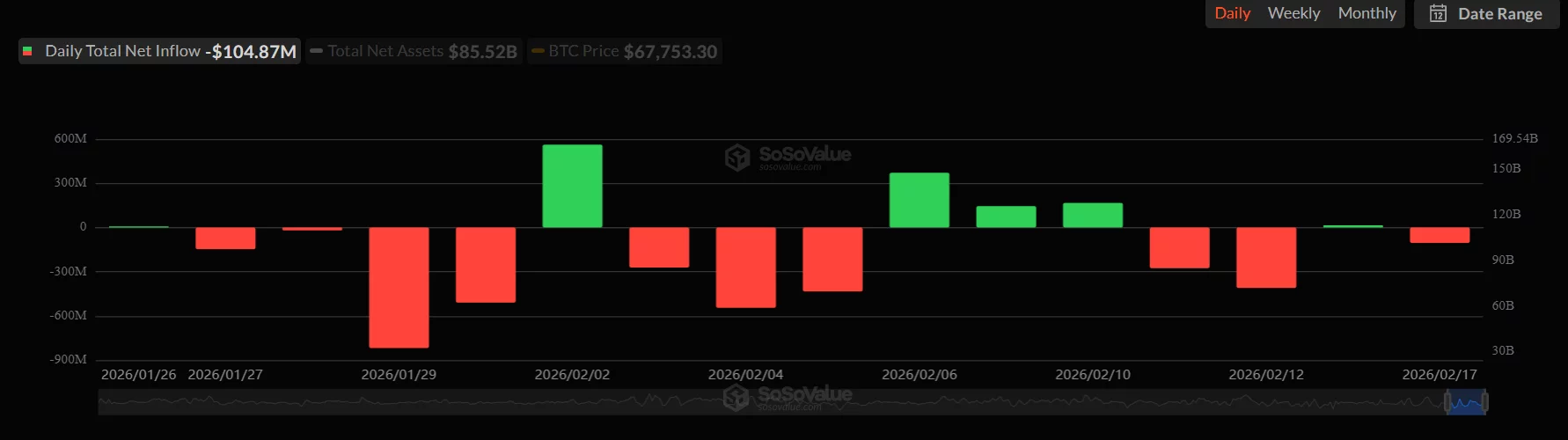
Abu Dhabi-linked sovereign investors held more than $1 billion in U.S. spot Bitcoin ETF exposure at the end of 2025, a milestone that comes as the broader market faces renewed outflows this week.
Summary
- Abu Dhabi-linked sovereign investors held over $1.04 billion in U.S. spot Bitcoin ETFs at the end of 2025, according to SEC filings.
- Mubadala Investment Company and Al Warda Investments disclosed a combined 20.9 million shares in BlackRock’s Bitcoin ETF.
- The milestone comes as Bitcoin ETFs recorded $104.87 million in daily net outflows, signaling short-term selling pressure despite long-term institutional positioning.
The disclosure adds to a broader wave of institutional adoption, after Italian banking giant Intesa Sanpaolo revealed nearly $100 million in Bitcoin ETF holdings in a recent U.S. regulatory filing.
Abu Dhabi’s billion-dollar Bitcoin ETF play
According to fourth-quarter Form 13F filings submitted to the U.S. Securities and Exchange Commission, Mubadala Investment Company reported holding 12,702,323 shares of BlackRock’s spot Bitcoin ETF, valued at approximately $630.7 million as of Dec. 31, 2025.
A separate filing shows Al Warda Investments owned 8,218,712 shares in the same fund, worth roughly $408.1 million at year-end.
Combined, the two Abu Dhabi entities held about 20.9 million shares valued at just over $1.04 billion, underscoring continued sovereign exposure to regulated Bitcoin products offered by BlackRock.
Bitcoin ETF outflows resume
The milestone comes as Bitcoin ETFs recorded renewed selling pressure. Data from SoSoValue shows total daily net outflows of $104.87 million in the latest session. Total net assets across U.S. spot Bitcoin ETFs stood at $85.52 billion, while Bitcoin traded around $67,753 at the time of the writing.
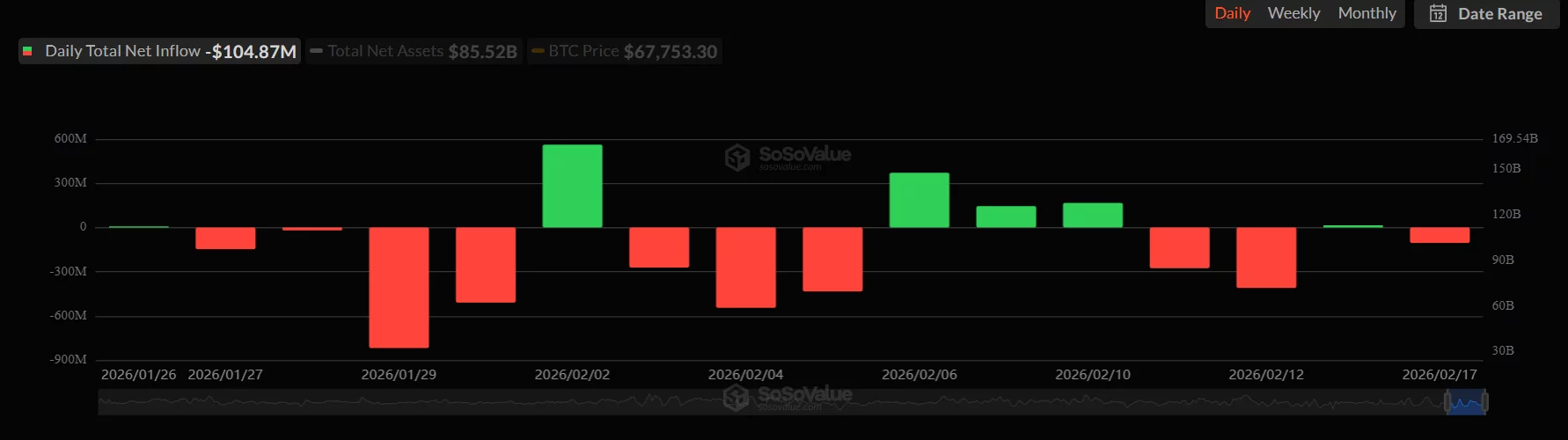
Recent flow data shows volatility across late January and February, with several large redemptions interspersed with brief inflow spikes. Despite the short-term outflows, Abu Dhabi’s year-end filings suggest a longer-term allocation strategy rather than tactical trading.
The 13F disclosures reflect positions as of Dec. 31 and do not capture activity in early 2026. However, the scale of the holdings highlights how major state-backed investors remain positioned in U.S.-listed Bitcoin ETFs even as market sentiment fluctuates.

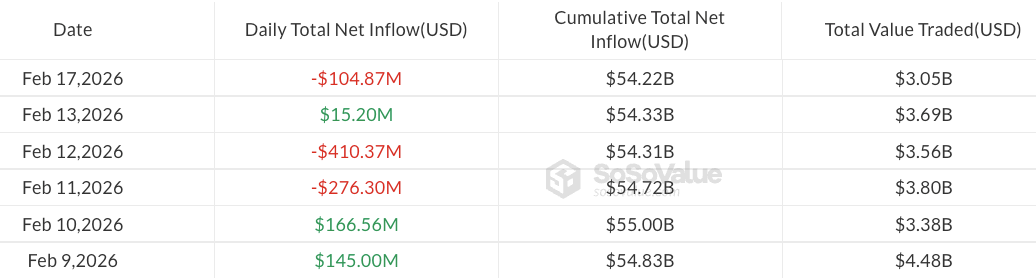
US spot Bitcoin exchange-traded funds (ETFs) posted $104.9 million in net outflows on Tuesday in the first trading session this week.
Total trading volume in spot Bitcoin (BTC) ETFs fell to just over $3 billion, down nearly 80% from a record $14.7 billion on Feb. 5, reflecting a continued slowdown in trading activity, according to SoSoValue data.

The outflows came as another round of institutions reported their Bitcoin ETF holdings for the fourth quarter of 2025, with Jane Street ranking as the second-largest buyer of BlackRock’s iShares Bitcoin ETF (IBIT) in Q4, buying $276 million.
Q4 also saw a new IBIT entrant, an obscure Hong Kong-based company called Laurore, which acquired $436.2 million of the ETF in a single purchase reported to the US Securities and Exchange Commission.
A potential sign of Chinese institutions moving into Bitcoin?
According to Bitwise Investments adviser Jeff Park, Laurore’s newly disclosed position in IBIT could be an early indication of institutional Chinese capital entering Bitcoin.
Park said Laurore has no public footprint — no website or press — and the only available information is that the filer’s name is Zhang Hui, the Chinese equivalent of “John Smith.”

While Park speculated that the investment may be linked to capital flight, some commentators questioned why the company would choose to buy Bitcoin through an ETF rather than directly.
Brevan Howard slashes IBIT holdings by 85%
Beyond Laurore and Jane Street, several institutions made significant moves with IBIT in Q4 2025. Weiss Asset Management reportedly added about 2.8 million shares ($107.5 million), while 59 North Capital increased its position by 2.6 million shares ($99.8 million).
Abu Dhabi’s state-owned investment firm Mubadala Investment also boosted its IBIT holdings by 45%, rising from 8.7 million shares in Q3 to 12.7 million in Q4, valued at $630.7 million.

In contrast, some companies cut their Bitcoin ETF exposure in Q4 2025. Brevan Howard reduced its IBIT holdings, dropping about 85% from 37 million shares ($2.4 billion) in Q3 2025 to about 5.5 million shares ($273.5 million) in Q4.
Goldman Sachs also trimmed its IBIT holdings by about 40%, leaving around $1 billion in assets.
Magazine: Is China hoarding gold so yuan becomes global reserve instead of USD?

A flood of fresh cash might about to land in crypto. Roughly $150 billion in tax refunds will hit U.S. consumer accounts by the end of March.
Some analysts think part of that money could drift straight into risk assets. Including crypto. Wells Fargo strategists say this refund wave, boosted by 2026 tax incentives, may quietly fuel retail participation again.
And the timing is interesting. Markets are sitting at key technical levels. If even a fraction of that capital rotates into digital assets, the retail bid could show up right when it matters most.
Key Takeaways
- $150B Liquidity Wave: Wells Fargo analysts project roughly $150 billion in refunds will be distributed by late March.
- Refunds Are Up 11%: Early IRS data shows the average refund size has jumped to $2,290, increasing retail purchasing power.
- Retail Catalyst: Historical data suggests the “refund effect” correlates with increased inflows into retail-heavy crypto assets.
Why Does Refund Season Matter for Crypto?
Liquidity moves markets. And right now, the U.S. Treasury is about to inject a wave of it. After the One Big Beautiful Bill passed in July 2025, tax cuts boosted refund sizes for a lot of Americans.
Treasury Secretary Scott Bessent has already hinted that refunds this season could be “very large.” That means more disposable cash landing in bank accounts.
Average tax refunds are projected to jump by $1,000 this year — returning $91 BILLION back to the American people. — Congressman Gabe Evans (@repgabeevans) February 7, 2026
The largest tax refund season in U.S. history is here thanks to @HouseGOP’s Working Families Tax Cuts.
More money back in your pocket. 
 pic.twitter.com/U3hktiKsq7
Historically, lump sum payouts like this do not just go toward bills. A slice often flows into investments. And in recent cycles, that has included digital assets. Retail participation tends to rise when people feel flush.
Refund averages usually peak around mid February. That timing lines up with the current surge in activity across several altcoins. When fresh cash meets technical breakout zones, the reaction can be sharper than most expect.
The Data: Bigger Checks, Faster Deposits
The early numbers for the 2026 filing season are already coming in hot. By February 6, the IRS had processed more than 20.6 million returns and sent out nearly $16.954 billion in refunds.
The average check is now around $2,290, up roughly 10.9% from last year.
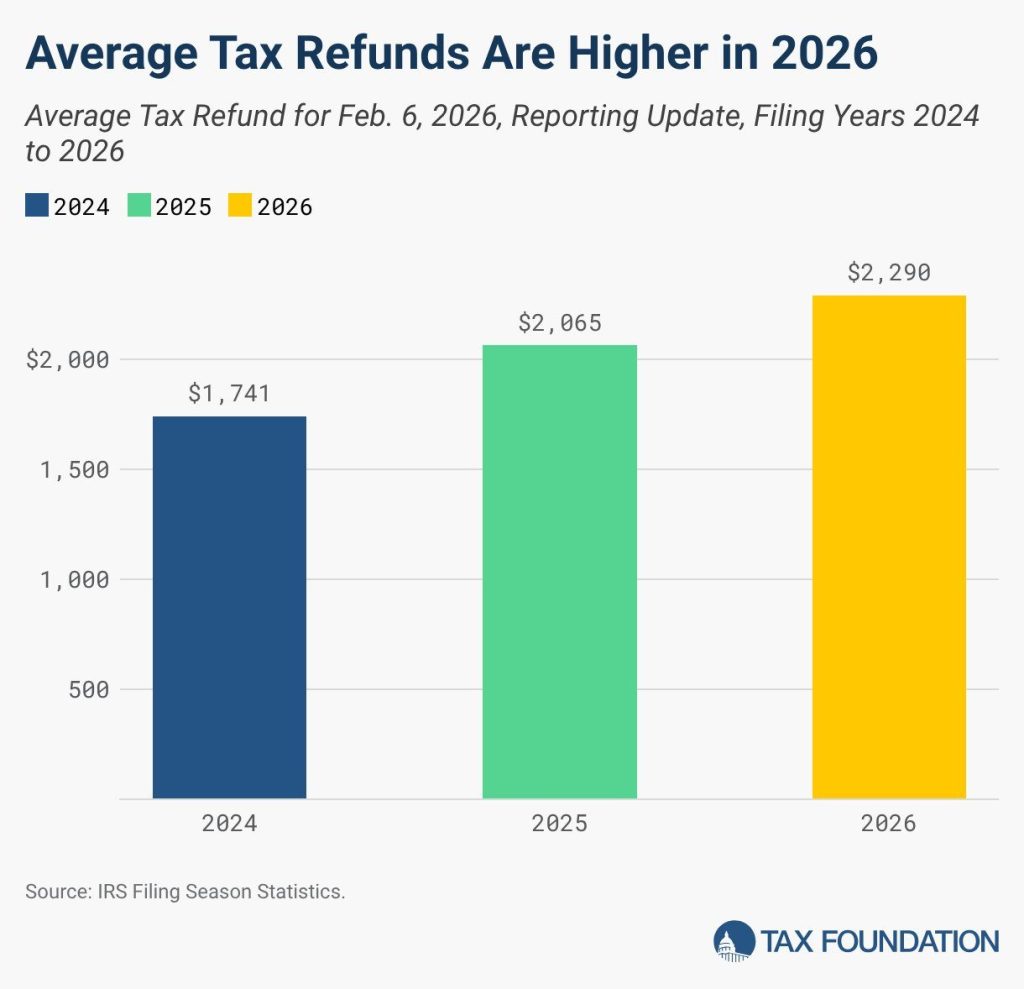
Direct deposits are even higher, averaging about $2,388. And the money moves quickly. Most e filers see funds within about 21 days, which means that cash is ready to be deployed almost immediately.
Another wave is coming too. Once PATH Act restrictions lift after February 15, refunds tied to the Earned Income Tax Credit start flowing. Historically, that second wave is larger and hits later in February.
Fresh liquidity entering an already concentrated exchange environment can have an outsized effect. Especially if even a small slice finds its way into risk assets.
Will This Trigger the Next Leg Up?
Tax refund season hitting at the same time as improving regulatory tone is not random timing. It creates a strong backdrop for risk assets. Funding rates are already flashing extremes, which tells you shorts are crowded.
If even a fraction of retail refund money rotates into spot crypto, that buying pressure could trigger a fast short squeeze.

The macro tone adds fuel. Political signals around clearer crypto legislation are improving sentiment. When retail feels regulatory risk is fading, confidence returns quicker.
Over the next six weeks, roughly $150 billion will move into consumer accounts. Not all of it will hit crypto, but it does not need to. Even a small percentage can shift momentum in a leveraged market.
Keep an eye on the weekly IRS updates toward the end of February. That data will show whether the liquidity wave is building or already peaking.
The post $150B in US Tax Refunds Could Fuel Fresh Crypto Inflows, Historical Data Suggests appeared first on Cryptonews.
The New Zealand dollar weakened today after the Reserve Bank of New Zealand (RBNZ) announced its decision to keep interest rates unchanged.
While the decision itself was widely expected, the accompanying forecasts drew attention due to their dovish tone. According to the official statement:
→ monetary policy is likely to remain accommodative for some time, although the possibility of a rate hike in the fourth quarter was not ruled out;
→ inflation is returning to the target range.
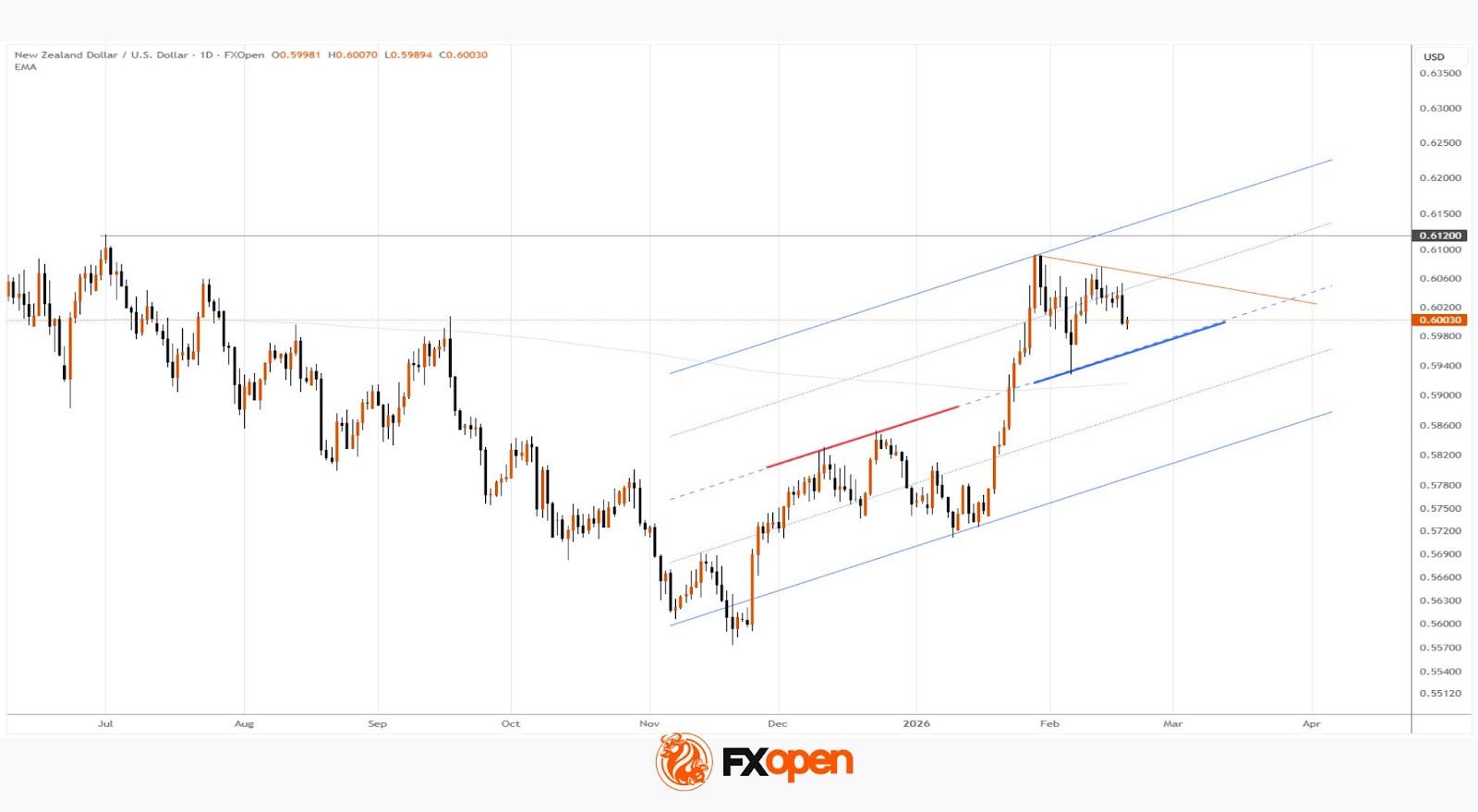
The currency market reacted by pushing the NZD lower against major counterparts. NZD/USD, for example, fell to its lowest level in nearly two weeks.
Technical Analysis of NZD/USD
The New Zealand dollar had been showing bullish momentum since late autumn 2025, resulting in the formation of an ascending channel. Notably, the channel’s median line shifted from acting as resistance to serving as support (highlighted by the thicker lines).
It is worth noting that the reversal from the 21 January peak — where price touched the upper boundary — occurred in a sharp manner. Near the 2025 high, bears appear to have regained confidence and seized the initiative.
→ From a bullish perspective, the aforementioned median line may provide support.
→ From a bearish standpoint, a descending trend line drawn through the lower high of 12 February may act as resistance.
Against this backdrop, it is reasonable to assume that the market could enter a consolidation phase over the coming weeks.
Trade over 50 forex markets 24 hours a day with FXOpen. Take advantage of low commissions, deep liquidity, and spreads from 0.0 pips (additional fees may apply). Open your FXOpen account now or learn more about trading forex with FXOpen.
This article represents the opinion of the Companies operating under the FXOpen brand only. It is not to be construed as an offer, solicitation, or recommendation with respect to products and services provided by the Companies operating under the FXOpen brand, nor is it to be considered financial advice.
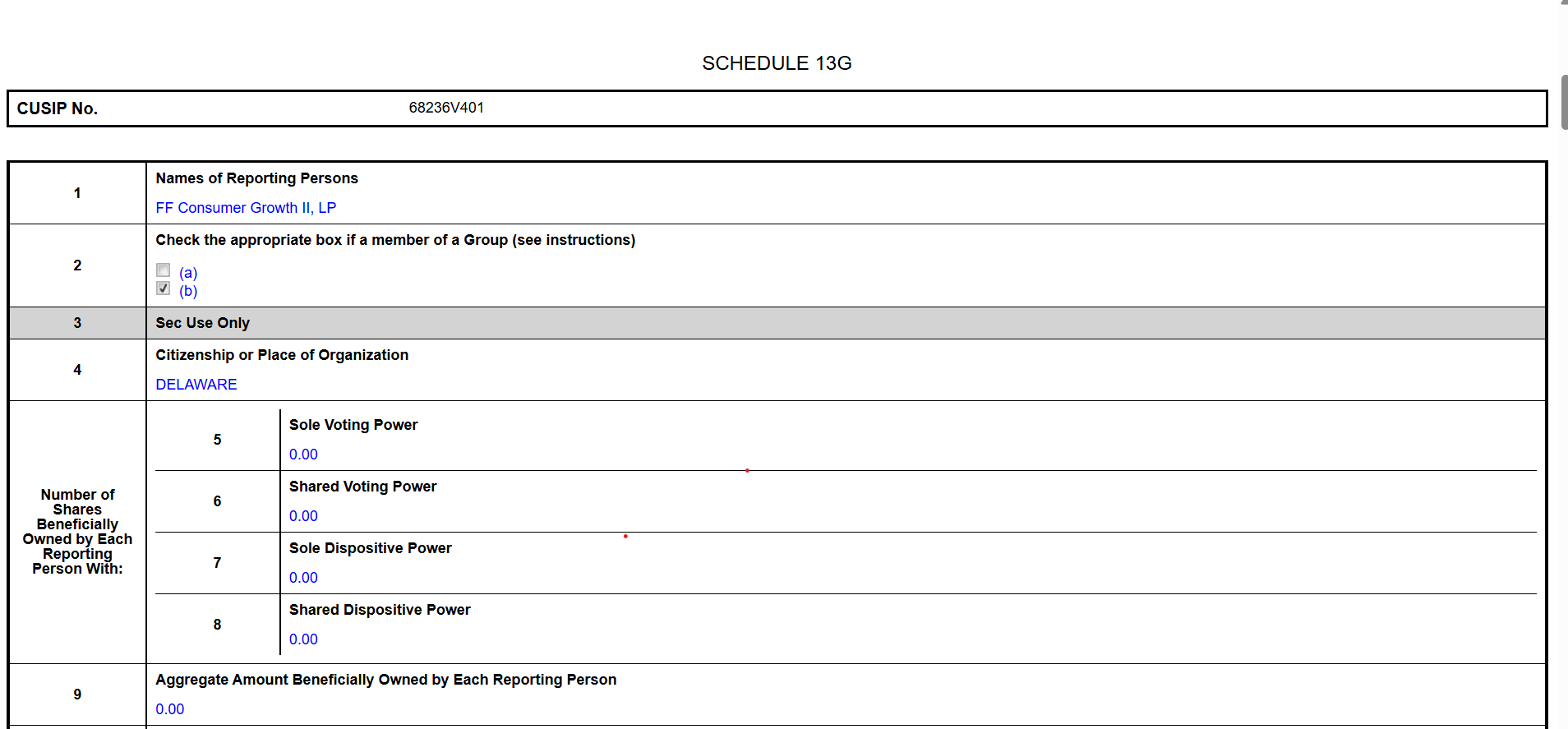
Billionaire tech investor Peter Thiel’s Founders Fund has fully exited Ether treasury company ETHZilla, according to a Tuesday filing with the United States Securities and Exchange Commission (SEC).
Entities linked to Thiel now report owning zero shares in the company in a 13G amendment filed on Tuesday, after disclosing a 7.5% stake on Aug. 4, 2025.
At that time, the group beneficially owned 11,592,241 shares of what was then known as 180 Life Sciences Corp., representing 7.5% of the 154,032,084 shares outstanding and worth about $40 million based on trading at around $3.50 per share in early August.

180 Life Sciences rebrands to ETHZilla
180 Life Sciences raised $425 million in July 2025 to launch an Ether treasury strategy and rebrand as ETHZilla.
The company later moved to raise another $350 million via convertible bonds in September to expand its Ether (ETH) holdings and deploy them across decentralized finance (DeFi) and tokenized assets, at one point holding more than 100,000 Ether.
Related: Bitmine’s staked Ether holdings point to $164M in annual staking revenue
ETHZilla began unloading tokens as markets turned, liquidating 24,291 Ether for $74.5 million in December 2025 at an average price of $3,068.69 per token, to repay debt, leaving about 69,800 ETH on its balance sheet.
Strain on Ether treasury company models
Thiel’s exit is the latest stress signal for public companies with crypto treasuries built around Ether rather than Bitcoin (BTC).
Other large Ether accumulators are taking different approaches. BitMine Immersion Technologies, the largest listed Ethereum holder, acquired a further 40,613 ETH on Feb. 9, lifting its total holdings to more than 4.325 million ETH, worth about $8.8 billion at current prices.
Trend Research, on the other hand, began unwinding its entire Ethereum position this month, selling 651,757 ETH for about $1.34 billion on Feb. 8, locking in an estimated $747 million realized loss.
ETHZilla has since tried to diversify by launching ETHZilla Aerospace, a subsidiary offering tokenized exposure to leased jet engines. However, Thiel’s exit magnifies how volatile Ether‑heavy treasury strategies have become in a market still digesting last year’s peak.
Magazine: Big Questions: Is China hoarding gold so yuan becomes global reserve instead of USD?


A relatively unknown crypto trader gained $7 million from shorting ETH while major investors suffered huge losses.
An anonymous trader known only as 0x58bro has accumulated $7 million in unrealized profits by shorting Ethereum (ETH) and a handful of other cryptocurrencies, according to data from on-chain intelligence platform Arkham.
What’s noteworthy about their success is that it has come at a time when several high-profile crypto personalities have suffered eight-figure losses betting on price increases.
The Quiet Whale Swimming Against the Current
Despite holding a portfolio valued at just under $13 million, 0x58bro maintains a minimal social media presence with just 1,300 followers on X. Arkham’s analysis shows the trader has generated the bulk of his profits from two positions: a $3.7 million gain shorting ETH and $1.45 million from shorting ENA, the governance token of Ethena Labs.
The trader’s wallet composition also revealed a strategic approach to the current market volatility. They hold over $7.5 million in Aave’s interest-bearing ETH token (aETHWETH) and $5 million in Aave’s USDC deposit token (aETHUSDC), suggesting they have positioned capital to earn yield while maintaining the flexibility to deploy it against further downside.
A smaller position of 10 million HANA tokens, currently worth close to $353,000, represents their only significant long exposure.
The timing of these short positions has proven critical, with Ethereum struggling to maintain momentum in recent weeks and prices hovering around the $2,000 psychological support level.
Market Backdrop Shows Leverage Risks and Speculation Cycles
While 0x58bro is profiting from market declines, other traders have faced catastrophic losses attempting to catch a falling knife. On-chain data shows that Machi Big Brother, a well-known crypto personality once worth nearly nine figures, has seen his Hyperliquid account value fall below $1 million. To meet margin calls on his long positions, he was forced to tap into PleasrDAO treasury funds deposited five years ago, with his total losses now standing at $28 million.
You may also like:
The contrast extends to institutional players as well. For instance, Trend Research, the trading firm led by Liquid Capital founder Jack Yi, fully exited its Ethereum positions last week after accumulating about $1.34 billion in ETH at an average entry of $3,180. The exit locked in losses of approximately $869 million, according to Arkham data, coming just days after Yi publicly predicted ETH would reach $10,000.
While Trend Research was forced to unwind what was once Asia’s largest ETH long position, on-chain data from CryptoQuant shows that wallets with no history of outflows holding at least 100 ETH, known as “accumulation addresses,” are still buying through the downturn. These addresses now hold around 23% of Ethereum’s circulating supply and have maintained their accumulation even when prices were trading below their average cost basis.
Whether 0x58bro will maintain his short positions or join the accumulating addresses betting on a rebound remains unknown. But for now, the trader with 1,300 followers has outperformed an industry of influencers with millions watching their every move.
SECRET PARTNERSHIP BONUS for CryptoPotato readers: Use this link to register and unlock $1,500 in exclusive BingX Exchange rewards (limited time offer).


Thai SEC adds BTC and other digital assets plus carbon credits as eligible underlying assets for regulated derivatives, with TFEX to design crypto-linked contracts to attract institutional traders and support ETF-like products.
Summary
- Thai SEC now recognizes BTC and other crypto as underlying assets for futures and options on regulated exchanges.
- Licensed digital asset operators will be allowed to offer derivatives contracts referencing cryptocurrencies under updated licenses.
- TFEX and clearinghouses will revise frameworks and contract specs to support crypto-based derivatives and broader digital finance goals.
Thailand’s Securities and Exchange Commission has expanded the country’s regulated derivatives framework to include digital assets and carbon credits as eligible underlying instruments, according to an announcement from the regulator.
The move, built on an earlier one from Feb. 12, formally recognizes cryptocurrencies, including bitcoin, as investment assets for futures, options, and other derivatives on exchanges such as the Thailand Futures Exchange, the SEC stated. The change follows Cabinet approval to align the derivatives market with international standards while ensuring supervision, risk mitigation, and investor protection.
SEC Secretary-General Pornanong Budsaratragoon said the expansion will promote market growth, diversify products, and improve risk management while broadening investment opportunities, according to the announcement.
The SEC plans to draft supporting regulations, including updates to derivatives business licenses to permit licensed digital asset operators to offer contracts referencing cryptocurrencies, the regulator stated. Exchange and clearinghouse frameworks will also be reviewed to accommodate crypto-based products, while TFEX will finalize contract specifications to ensure practical usage and effective risk oversight.
Thailand has positioned the development as part of a broader effort to establish the country as a regional hub for digital finance, according to the SEC. The regulator previously announced plans to introduce comprehensive rules covering digital asset products, including crypto ETFs, signaling a growing openness to integrating traditional finance and blockchain-based assets.
Market participants indicated the move could attract more international traders and institutional investors seeking regulated crypto derivatives, creating a bridge between local markets and global digital asset liquidity, according to industry observers.

Editor’s note: The Global AI Show in Riyadh signals how rapidly AI is moving from labs into everyday business, healthcare, and public life. This editorial looks at why the GAIS Riyadh edition matters for innovators, policymakers, and investors alike, and how responsible AI practices can help societies reap the benefits while mitigating risks. As the AI ecosystem expands across regions, high-profile events shape standards, collaboration, and opportunity. Crypto Breaking News aims to illuminate what this gathering could mean for global AI adoption and the maturation of AI-enabled industries.
Key points
- GAIS 2026 in Riyadh focuses on AI across sectors including business, healthcare, and user-centric applications.
- Ethics, regulation, and responsible AI deployment are central themes with dialogue on data privacy and algorithmic fairness.
- Attendees will engage with AI tools and real-world business applications.
- A distinguished lineup of global leaders and innovators, including Nate Glubish, Shafi Ahmed, John Nosta, Janet Adams, and Jeanie Fang.
Why this matters
GAIS Riyadh positions Saudi Arabia as a hub for AI-driven growth and international collaboration. The event’s blend of strategy discussions, hands-on demonstrations, and policy-focused sessions underscores how responsible, human-centered AI can accelerate innovation while safeguarding privacy and fairness. By convening leaders from tech, governance, and healthcare, GAIS Riyadh could influence global norms, spur partnerships, and accelerate practical AI deployments that benefit businesses and citizens alike.
What to watch next
- Keynote and panel topics on AI applications in healthcare, drug discovery, and personalized medicine.
- Discussions on AGI implementations and AI-driven healthcare advancements.
- The evolving Saudi AI strategy toward 2030 and its global implications.
- The emphasis on networking zones fostering partnerships and investments.
Disclosure: The content below is a press release provided by the company/PR representative. It is published for informational purposes.
Saudi Arabia Leads the AI Revolution with Global AI Show 2026
The Global AI Show 2026 in Riyadh brings an engaging experience for anyone interested in the future of artificial intelligence. Organized by VAP Group and Powered by the Times of AI, the Global AI Show (GAIS) is planned with a vision to explore AI’s potential across multiple sectors, from business solutions to user-centric applications. GAIS brings to fore the transformation of different human spheres led by AI.
Attendees will be a part of deep discussions on AI strategy, machine learning, natural language processing, and predictive analytics. Participants will also engage directly with AI tools and platforms, which will help them with applications in real-world business issues.
Ethics and regulation are central themes, and hence, there will be sessions dedicated to responsible AI deployment, algorithmic fairness, and data privacy. As AI adoption accelerates globally, understanding these frameworks is necessary for businesses and policymakers alike. The event will encourage dialogue on how innovation and responsibility can coexist to create long-term AI solutions.
Our past speakers were a remarkable mix of global leaders, visionaries, and innovators across technology, governance, healthcare, and cybersecurity. Honourable Nate Glubish, Minister of Technology and Innovation, Government of Alberta, Canada, has shared his insights alongside Pujya Brahmavihari Swami, Head of BAPS Hindu Mandir UAE. Professor Shafi Ahmed, a renowned surgeon, futurist, humanitarian, and CEO of Medical Realities, and John Nosta, leading innovation theorist in technology, AI, and medicine and Founder of NOSTALAB, have also been part of the lineup. Janet Adams, COO and Board Director at SingularityNET/ASI, and Jeanie Fang, Director of Data & AI at Crunchbase, have brought their expertise in artificial intelligence and data innovation.
Networking is a key focus, with interactive zones designed to facilitate partnerships, investments, and collaborations.
The Global AI Show places a strong emphasis on networking and collaboration, creating a dynamic environment where industry leaders, innovators, and investors can connect and explore new partnership opportunities. The sessions are designed to inspire forward-thinking discussions on the evolving role of artificial intelligence in shaping industries and societies worldwide.
The program includes a series of headliners, keynotes, and panels discussing the future of AI, its real-world applications, and its radical impact across critical industries. The topics address Saudi Arabia’s vision of an AI-led future and its implications globally, the vision for AI by 2030, and the changing partnership between humans and smart machines. These conversations will also delve into actual AGI implementations, the AI-driven revolution toward patient-centered healthcare, breakthroughs in drug discovery, the use of AI in personalized medicine, and predictive technologies transforming healthcare outcomes.
Collectively, these sessions highlight how AI is reshaping possibilities, facilitating cross-industry conversations, and propelling the next generation of technological and societal advancement.
By convening global AI experts, innovators, and stakeholders, the Global AI Show reinforces Riyadh’s reputation as a center for technological advancement. Get inspired, informed, and ready to use AI for meaningful impact, and be a part of GAIS Riyadh edition.
Media enquiries :
Press contact :


The demand for Ethereum staking has skyrocketed despite the asset price crashing back to bear market lows.
Ethereum’s proof-of-stake contract address now holds over half of the Ether supply “for the first time in the coin’s eleven-year history,” reported on-chain analytics provider Santiment on Wednesday.
This appears somewhat misleading, as approximately 37 million ETH are currently staked, representing approximately 30% of the total supply of 121.4 million tokens. However, Santiment explained that there is often confusion about how the proof-of-stake address works. It described the address as a “one-way vault that temporarily locks ETH to help secure the network.”
“When someone stakes ETH, it gets sent into this contract and is removed from normal circulation, meaning it cannot be spent or traded while it is staked.”
Different Methods Of Counting Supply
When validators leave and withdraw, the Ether is released back into circulation as newly issued coins on Ethereum’s main network, “rather than being pulled back out of the vault itself,” Santiment explained.
“As a result, the existing supply can often differ based on whether only pre-burned or total post-burned coins are being counted.”
So over time, the “vault” accumulates ETH without it easily flowing back out the same way it went in, making the contract’s share of the current supply appear larger. This results in a calculation of 50.18% based on ETH issued historically before burns. Santiment predicted that this figure will increase, especially during bear markets and poor trading conditions.
“As staking continues to increase in popularity, expect that this address will continue its ascension, particularly when trading slows down during bear cycles.”
🤑 BREAKING: Ethereum’s proof-of-stake contract address now holds over half of Ethereum’s supply for the first time in the coin’s 11-year history.
🔐 There is often confusion about how this proof-of-stake address works. Think of it as a one-way vault that temporarily locks $ETH… pic.twitter.com/agj2YG37nu
— Santiment (@santimentfeed) February 17, 2026
Regardless of what figure is taken, the demand for staking has surged, and the percentage of ETH supply staked is at record highs.
Additionally, the validator entry queue is also around record highs, with around 3.9 million ETH waiting to be staked, and the wait time is 67 days.
You may also like:
Meanwhile, the exit queue has dropped to its lowest ever levels with around 11,500 ETH and less than five hours wait.
Ether Price at Bear Market Lows
Panic selling by retail traders has pushed Ether prices to bear market lows below $2,000. ETH touched this psychological level briefly in late Tuesday trading, but again was beaten back by resistance, falling to $1,970 during the Wednesday morning session in Asia.
“Ethereum isn’t expensive right now, it’s boring,” said analyst Merlijn The Trader before adding, “boring is where positions are built.”
SECRET PARTNERSHIP BONUS for CryptoPotato readers: Use this link to register and unlock $1,500 in exclusive BingX Exchange rewards (limited time offer).


The US Commodity Futures Trading Commission (CFTC) has moved to defend its authority over prediction markets, filing a friend-of-the-court brief as state-level legal challenges against the sector intensify.
Summary
- The U.S. Commodity Futures Trading Commission filed a friend-of-the-court brief to defend its exclusive jurisdiction over prediction markets amid rising state-level legal challenges.
- Chairman Mike Selig said the agency has regulated prediction markets for over two decades and warned challengers: “We will see you in court.”
- The move comes as the U.S. Securities and Exchange Commission signals some event-based contracts may qualify as securities, while states like Nevada attempt to restrict platforms including Coinbase.
CFTC defends control of US prediction markets
In a video posted on X, CFTC Chairman Mike Selig said American prediction markets have faced “an onslaught of state-led litigation” over the past year. In response, the agency is stepping in to assert what it describes as its exclusive jurisdiction over these derivative products.
“Prediction markets aren’t new,” Selig said. “The CFTC has regulated these markets for over two decades.”
He argued that such markets play a valuable role by allowing Americans to hedge commercial risks, including temperature fluctuations and energy price spikes. He also suggested they function as a check on media narratives and broader information flows.
The legal battle comes as regulators debate whether certain prediction market contracts fall under securities or commodities law. The U.S. Securities and Exchange Commission recently warned that some event-based contracts could be classified as securities, potentially subjecting platforms to its oversight.
Meanwhile, states including Nevada have sought to restrict the operations of crypto-linked prediction platforms, though a Nevada court recently declined to block Coinbase from offering certain prediction market services.
The CFTC’s filing underscores escalating jurisdictional tensions between federal and state authorities, as well as between financial regulators. Selig emphasized that the agency intends to protect the “integrity, resilience, and vibrancy” of US derivatives markets.
“To those who seek to challenge our authority in this space, let me be clear,” he said. “We will see you in court.”
The case could have significant implications for the future of US-based prediction markets and their regulatory framework.
Pi Network’s native token is the top performer on a weekly scale, followed by STABLE and MORPHO.
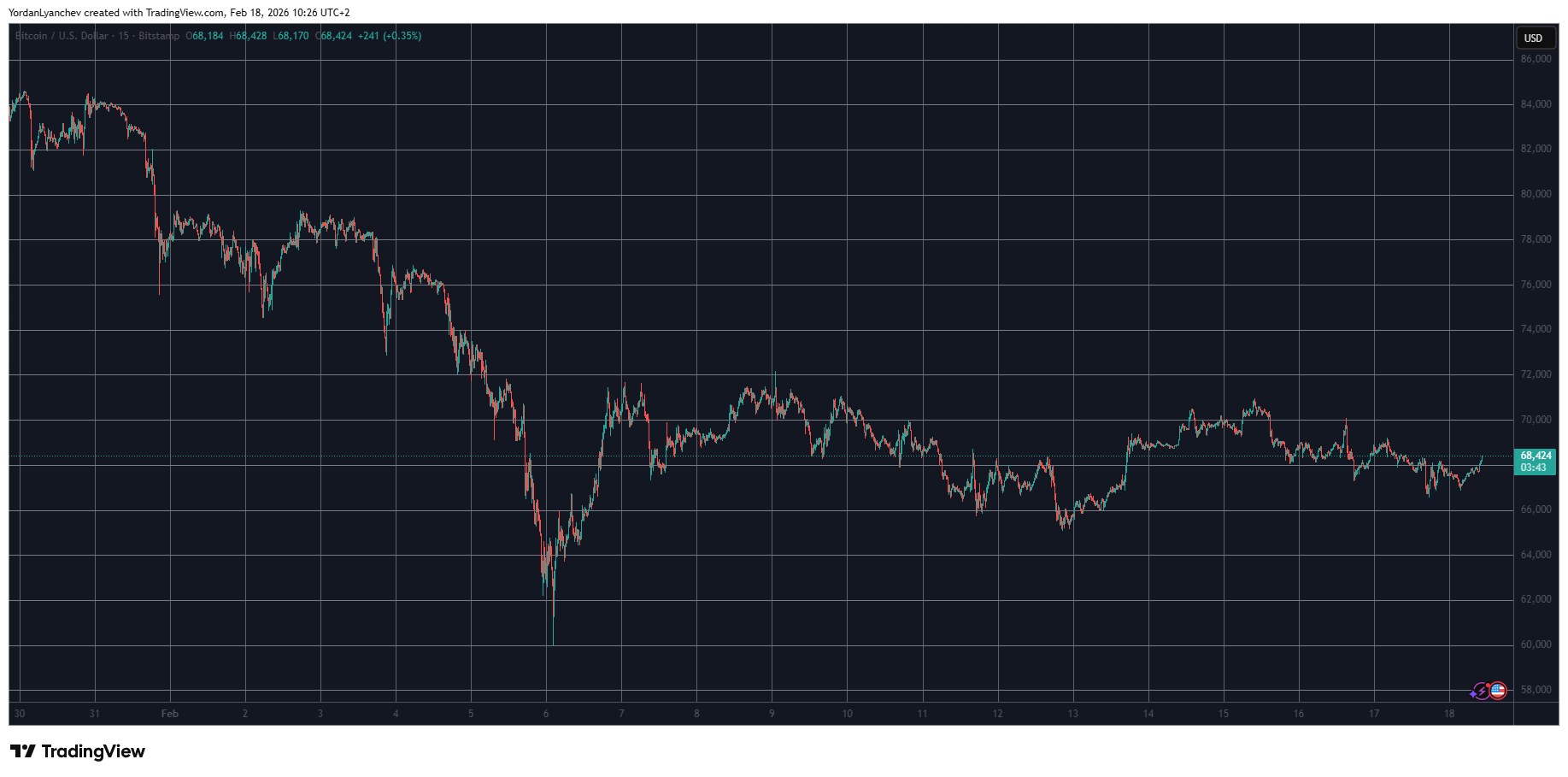
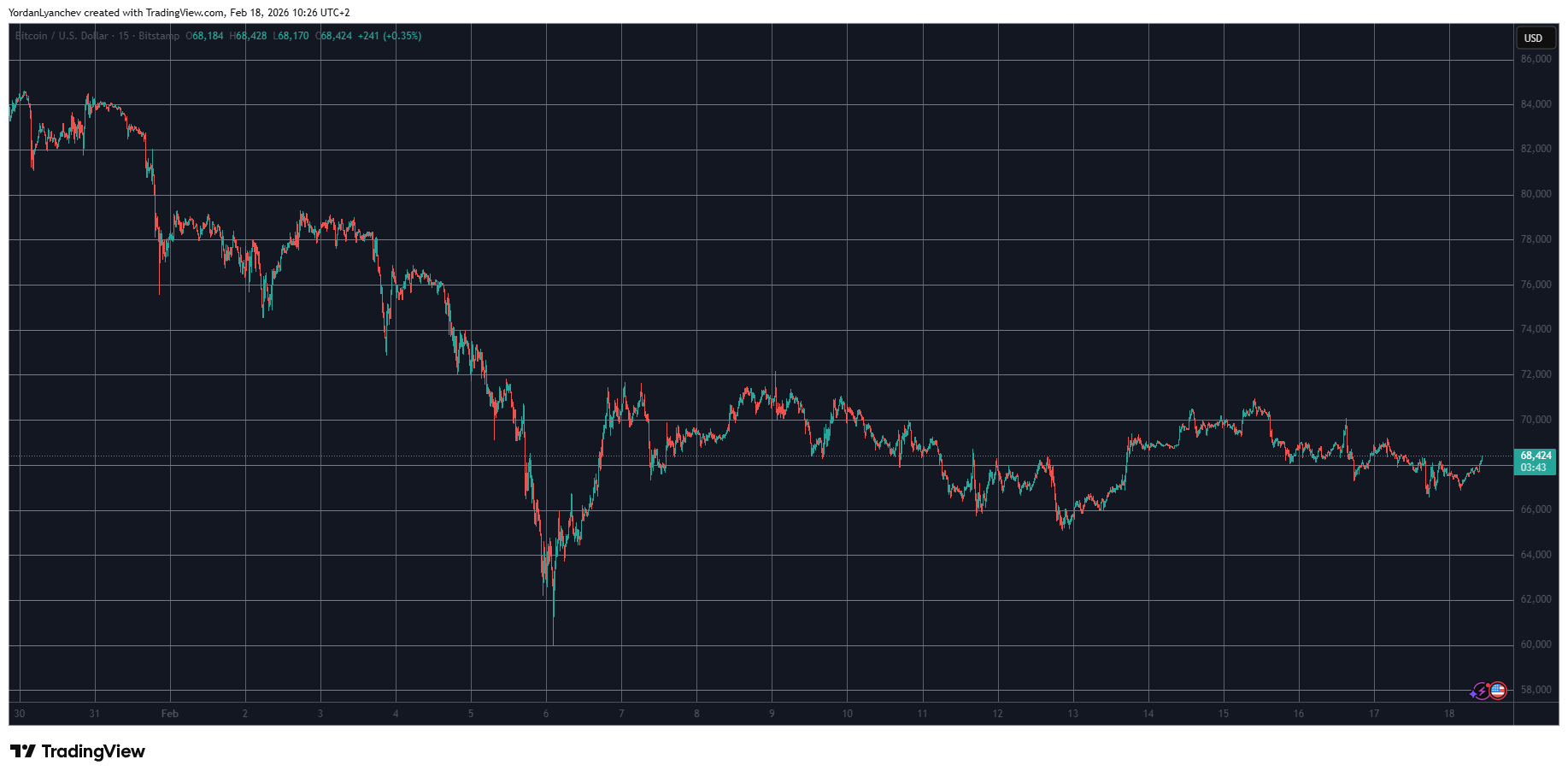
Bitcoin’s rather underwhelming price movements around $68,000 continue as the asset slipped below that level on a couple of occasions in the past 24 hours.
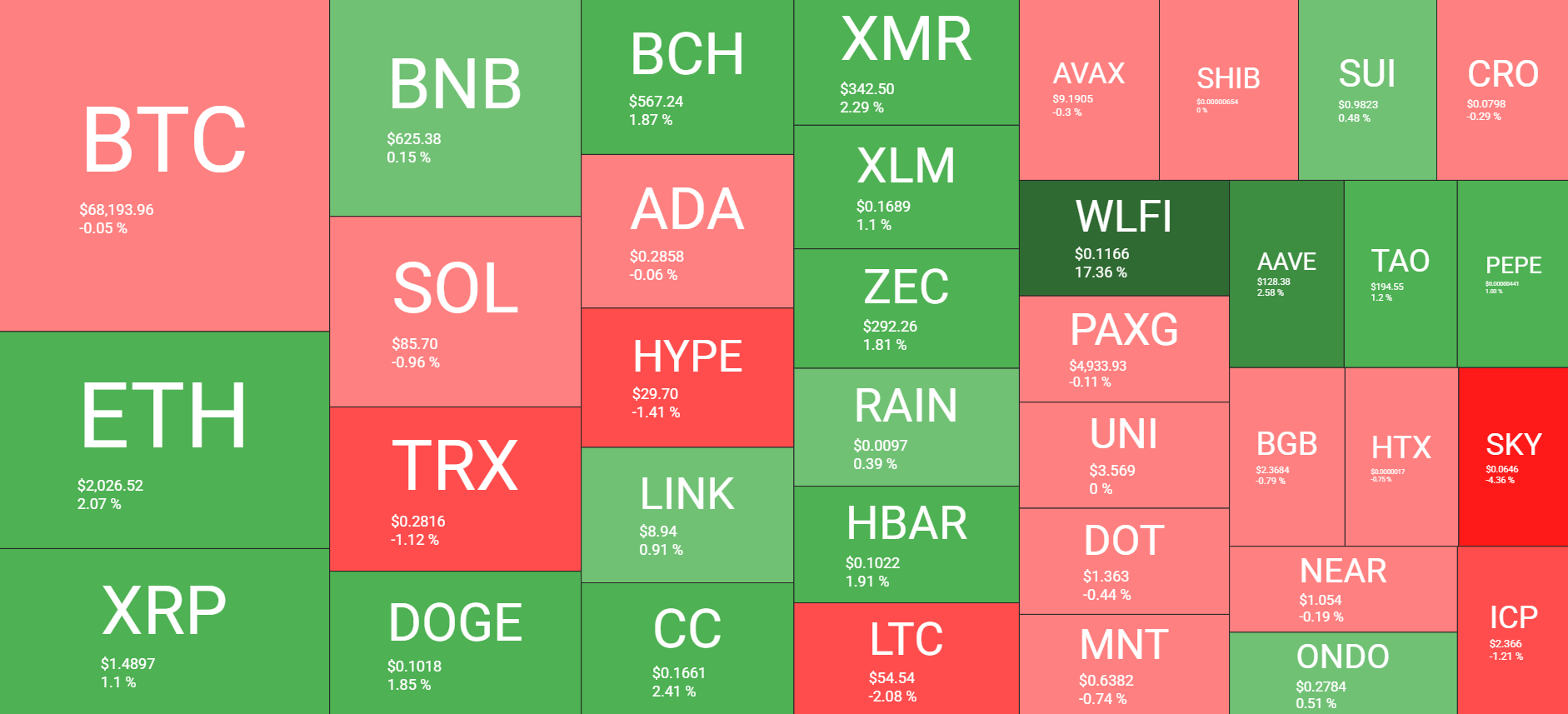
WLFI has soared the most from the larger-cap alts in the past 24 hours, while significantly more modest gains from ETH have pushed the asset to just over $2,000.
BTC Fragile at $68K
The first trading week of the current month resulted in a massive calamity for bitcoin, as the asset plunged to $60,000 for the first time since October 2024. This crash represented a $30,000 decline in the span of just over a week.
The bulls finally intervened at this point and helped BTC recover $12,000 in just a day. However, it faced immediate selling pressure at $72,000 and spent the following several days trading between that upper boundary and the lower one at $68,000.
It lost the support a week ago, but quickly reclaimed it and rocketed to over $70,000 during the weekend. However, that was another fakeout and returned to under $70,000 a day later. It slipped below $67,000 yesterday after the latest rejection, but now stands above $68,000, which is essentially the same level as this time yesterday.
Its market cap has remained calm at $1.365 trillion on CG, while its dominance over the alts is down to 56.2%.
PI’s Weekly Surge
Ethereum is up by 2% in the past day and now sits above $2,000 once more. XRP has neared $1.50 after a minor increase. BNB, DOGE, BCH, and CC are also slightly in the green, while TRX and HYPE are with minor losses. WLFI has stolen the show in the past 24 hours, surging by over 17% to over $0.115.
On a weekly scale, though, Pi Network’s PI token shines. The asset is up by over 40% within this timeframe, as it dumped to a new all-time low of $0.1312 at the time. It now sits close to $0.19 after another 6% daily increase.
The total crypto market cap has added over $25 billion in a day and is up to $2.430 trillion on CG.
SECRET PARTNERSHIP BONUS for CryptoPotato readers: Use this link to register and unlock $1,500 in exclusive BingX Exchange rewards (limited time offer).
Disclaimer: Information found on CryptoPotato is those of writers quoted. It does not represent the opinions of CryptoPotato on whether to buy, sell, or hold any investments. You are advised to conduct your own research before making any investment decisions. Use provided information at your own risk. See Disclaimer for more information.

WordPress has a new AI assistant to help you build your dream website

If You Hold XRP You Have 24 Hours!

(VIDEO) SpaceX’s Dramatic Water Deluge Test Goes Viral Ahead of Starship Flight 12 Launch in March


-

 Sports6 days ago
Big Tech enters cricket ecosystem as ICC partners Google ahead of T20 WC | T20 World Cup 2026
-

 Video2 days ago
Bitcoin: We’re Entering The Most Dangerous Phase
-

 Tech3 days ago
Luxman Enters Its Second Century with the D-100 SACD Player and L-100 Integrated Amplifier
-

 Video5 days ago
The Final Warning: XRP Is Entering The Chaos Zone
-
 Tech1 day ago
The Music Industry Enters Its Less-Is-More Era
-

 Sports1 day ago
GB's semi-final hopes hang by thread after loss to Switzerland
-

 Crypto World1 day ago
Can XRP Price Successfully Register a 33% Breakout Past $2?
-

 Business11 hours ago
Infosys Limited (INFY) Discusses Tech Transitions and the Unique Aspects of the AI Era Transcript
-

 Video1 day ago
Financial Statement Analysis | Complete Chapter Revision in 10 Minutes | Class 12 Board exam 2026
-
 Crypto World4 days ago
Bhutan’s Bitcoin sales enter third straight week with $6.7M BTC offload
-
 Crypto World6 days ago
Pippin (PIPPIN) Enters Crypto’s Top 100 Club After Soaring 30% in a Day: More Room for Growth?
-

 Video6 days ago
Prepare: We Are Entering Phase 3 Of The Investing Cycle
-
 NewsBeat3 days ago
The strange Cambridgeshire cemetery that forbade church rectors from entering
-

 Business6 days ago
Barbeques Galore Enters Voluntary Administration
-

 Business3 hours ago
Tesla avoids California suspension after ending ‘autopilot’ marketing
-
 Crypto World6 days ago
Ethereum Price Struggles Below $2,000 Despite Entering Buy Zone
-
 NewsBeat3 days ago
Man dies after entering floodwater during police pursuit
-

 Crypto World5 days ago
Kalshi enters $9B sports insurance market with new brokerage deal
-

 NewsBeat4 days ago
UK construction company enters administration, records show
-

 Tech2 hours ago
Retro Rover: LT6502 Laptop Packs 8-Bit Power On The Go