Connect with us

Business

UK inflation falls boosting hopes of Bank of England interest rate cut

Published

on

Business Live

The drop was “partly” due to a reduction in petrol prices, according to the ONS

A view of the Bank of England

A view of the Bank of England (Image: PA Archive/PA Images)

Inflation dropped to its lowest point in nearly a year last month, according to recent data, further fuelling optimism that the Bank of England will reduce interest rates in March.

The headline rate decreased to 3.0 per cent in January, as reported by the Office for National Statistics (ONS), down from 3.4 per cent the previous month. This decline met City predictions and brought inflation to its lowest level since the previous March.

Grant Fitzner, chief economist at the ONS, stated the drop was “partly” due to a reduction in petrol prices, which fell 3.1 per cent month-on-month.

“Airfares were another downward driver this month with prices dropping back following the increase in December. Lower food prices also helped push the rate down, particularly for bread & cereals and meat,” he added, as reported by City AM.

Advertisement

Services inflation, which is closely watched by policymakers at the Bank of England as a reliable indicator of domestic price pressures, eased to 4.4 per cent from 4.5 per cent previously.

This was slightly stronger than many anticipated, and may cause the Bank to reconsider before cutting in March, but most analysts suggested the case for a cut remained strong given yesterday’s labour market data.

The data revealed that unemployment climbed to a post-pandemic peak at the end of last year whilst wage pressures significantly relaxed, which should help drive down inflation over the medium term.

“With the labour market data yesterday pointing to ongoing weakness in employment and a further softening in pay growth, most policymakers are likely to look through any short run stickiness in the services data,” Luke Bartholomew, deputy chief economist at Aberdeen said.

Advertisement

The Bank of England anticipates that inflation will return to the two per cent target this spring, primarily due to reduced energy costs, which could clear the path for additional rate reductions in 2026.

Jonathan Raymond, investment manager at Quilter Cheviot, said: “As the economy barely kept afloat towards the end of last year, and the labour market and wage growth have cooled considerably, the Bank will likely feel increasingly comfortable cutting rates as 2026 progresses.”

Chancellor of the Exchequer, Rachel Reeves, said: “Cutting the cost of living is my number one priority. Thanks to the choices we made at the Budget we are bringing inflation down, with £150 off energy bills, a freeze in rail fares for the first time in 30 years and prescription fees frozen again.”


Advertisement
Continue Reading
Click to comment

Leave a Reply

Your email address will not be published. Required fields are marked *

Business

Zuckerberg testifies in landmark trial that could reshape Big Tech liability

Published

on

Zuckerberg testifies in landmark trial that could reshape Big Tech liability

Meta CEO Mark Zuckerberg will testify Wednesday in Los Angeles Superior Court in a landmark trial over claims that social media platforms harm children — his first time answering youth safety allegations before a jury.

The bellwether lawsuit, K.G.M. v. Meta Platforms, Inc., et al., was filed by a 20-year-old California woman identified by her initials. She alleges that Meta and other social media companies engineered their platforms to hook young users, fueling her depression and suicidal thoughts, and is seeking to hold the companies accountable.

Advertisement

Meta’s Instagram and Google’s YouTube deny the allegations, citing years of expanded safety features and parental controls as part of their defense. The tech titans are expected to point to other factors in K.G.M.’s life, highlight their investments in youth safety and argue they should not be held responsible for harmful content uploaded by users.

JOSEPH GORDON-LEVITT SLAMS BIG TECH FOR SEXTORTION, THREATS TO CHILDREN WHILE CALLING FOR KEY INTERNET REFORM

Meta CEO Mark Zuckerberg listens during a White House dinner.

Mark Zuckerberg, chief executive officer of Meta Platforms Inc., during a dinner with tech leaders in the State Dining Room of the White House in Washington, D.C., on Thursday, Sept. 4, 2025.  (Will Oliver/EPA/Bloomberg/Getty Images / Getty Images)

A verdict for the plaintiff, K.G.M., could set a precedent for holding tech companies responsible for harmful design decisions, despite years of successfully invoking Section 230’s content liability shield. Section 230 is a federal law that largely shields online platforms from lawsuits related to user-posted content. 

A rejection of that defense could pave the way for similar lawsuits across the country, exposing Meta and other tech companies to billions in damages and pressuring them to redesign their platforms.

Advertisement

BIG TECH’S TOBACCO MOMENT IS HERE — AND THE TRUTH ABOUT HARMING KIDS IS OUT

A view of a phone with several social media applications visible.

In this photo illustration, the TikTok app is seen on a phone on March 13, 2024, in New York City.  (Michael M. Santiago/Getty Images / Getty Images)

Beyond this case, Meta and Google face more than 2,300 related lawsuits filed by parents, school districts and state attorneys general in federal court. 

The wave of lawsuits reflects a growing backlash against social media companies over concerns about their impact on children’s mental health and safety. Lawmakers, parents and regulators have increasingly accused platforms of prioritizing growth and engagement over protecting young users.

In New Mexico, opening statements began Monday in a separate case brought by the state’s attorney general accusing Meta of exposing minors to sexual exploitation and profiting from it — allegations the company denies.

Advertisement

CLICK HERE TO DOWNLOAD THE FOX NEWS APP

A technology executive stands on stage presenting new hardware during a company event.

Meta and Google face more than 2,300 related lawsuits filed by parents, school districts and state attorneys general in federal court.  (David Paul Morris/Bloomberg via Getty Images / Getty Images)

The scrutiny isn’t limited to the United States. 

Countries including Australia and Spain have moved to restrict social media access for users under 16, citing concerns about addiction, online harms and mental health. Other governments are weighing similar age-based limits as pressure mounts worldwide.

Advertisement
Continue Reading

Business

eToro Moves From ‘Wait And See’ To Buy On Clear Operational Progress (NASDAQ:ETOR)

Published

on

eToro Moves From 'Wait And See' To Buy On Clear Operational Progress (NASDAQ:ETOR)

This article was written by

With over 15 years of experience in the markets and a degree in economics, I focus on breaking down companies with clarity and discipline. My goal is to give individual investors a straightforward, honest view—what’s working, what isn’t, and where the risks and opportunities actually are. I don’t chase narratives. I follow the numbers and the business underneath.

Analyst’s Disclosure: I/we have no stock, option or similar derivative position in any of the companies mentioned, and no plans to initiate any such positions within the next 72 hours. I wrote this article myself, and it expresses my own opinions. I am not receiving compensation for it (other than from Seeking Alpha). I have no business relationship with any company whose stock is mentioned in this article.

Seeking Alpha’s Disclosure: Past performance is no guarantee of future results. No recommendation or advice is being given as to whether any investment is suitable for a particular investor. Any views or opinions expressed above may not reflect those of Seeking Alpha as a whole. Seeking Alpha is not a licensed securities dealer, broker or US investment adviser or investment bank. Our analysts are third party authors that include both professional investors and individual investors who may not be licensed or certified by any institute or regulatory body.

Advertisement
Continue Reading

Business

Iluka swings to $288m loss, Eneabba set for 2027 commissioning

Published

on

Iluka swings to $288m loss, Eneabba set for 2027 commissioning

Iluka Resources has plunged to a $288 million loss following a bruising year for its mineral sands division, as it prepares to commission its Eneabba rare earths refinery in 2027.

Continue Reading

Business

NASA Planetary Defense Expert Warns of 15,000 Undetected ‘City-Killer’ Asteroids

Published

on

(VIDEO) SpaceX's Dramatic Water Deluge Test Goes Viral Ahead of

A senior NASA planetary defense official warned that humanity remains vulnerable to thousands of undetected near-Earth asteroids capable of devastating entire cities, emphasizing that current detection efforts have cataloged only about 40% of potentially hazardous objects in the 140-meter (460-foot) size range and that no ready-to-deploy deflection system exists for an imminent threat.

Kelly Fast, acting Planetary Defense Officer at NASA’s Planetary Defense Coordination Office, delivered the stark assessment during a presentation at the American Association for the Advancement of Science annual meeting in Phoenix on Feb. 16, 2026. She estimated that roughly 25,000 near-Earth objects of at least 140 meters exist, with approximately 15,000 still unaccounted for.

NASA Planetary Defense Expert Warns of 15,000 Undetected 'City-Killer' Asteroids
NASA Planetary Defense Expert Warns of 15,000 Undetected ‘City-Killer’ Asteroids

“What keeps me up at night is the asteroids we don’t know about,” Fast said, according to multiple reports from the event. She distinguished the threat from Hollywood-style “planet killers” — massive asteroids larger than 1 kilometer, which are largely tracked and pose minimal near-term risk — and tiny meteoroids that burn up harmlessly in the atmosphere daily. The real concern centers on mid-sized “city killers” that could cause regional devastation, including massive blast waves, fires and potential tsunamis if striking populated areas or oceans.

An impact from a 140-meter asteroid releases energy equivalent to tens or hundreds of megatons of TNT — far exceeding the most powerful nuclear weapons ever tested — capable of leveling urban centers and causing widespread casualties and infrastructure damage without triggering global extinction-level effects.

Fast noted that while NASA’s Center for Near-Earth Object Studies continuously monitors known objects via the Sentry and Scout systems, no significant impact risk exists in the next century for cataloged bodies. However, undetected asteroids remain a blind spot, particularly those approaching from the sunward direction or lingering in observational gaps.
The comments echo ongoing challenges in planetary defense despite progress. NASA’s 2022 Double Asteroid Redirection Test (DART) mission successfully demonstrated kinetic impact deflection by slamming a spacecraft into the moonlet Dimorphos, shortening its orbit around parent asteroid Didymos by about 32 minutes — confirming the technique’s viability in principle.

Advertisement

Nancy Chabot, a Johns Hopkins Applied Physics Laboratory planetary scientist who led DART, addressed the same AAAS session and reinforced the limitations. “Dart was a great demonstration but we don’t have that sitting around ready to go if there was a threat we needed to use it for,” she said. “We would not have any way to go and actively deflect one right now.”

Experts stress that deflection requires years — ideally a decade or more — of lead time to launch a mission, whether kinetic impactor, gravity tractor, nuclear deflection or other methods under study. Short-warning scenarios leave few options beyond civil defense measures like evacuation.

To close detection gaps, NASA plans to launch the Near-Earth Object Surveyor (NEO Surveyor) infrared space telescope in 2027. The mission aims to discover at least 90% of near-Earth asteroids 140 meters and larger within a decade of operations, dramatically improving catalog completeness and early warning capabilities. International collaboration, including ESA’s Hera mission — which will rendezvous with the Didymos system in late 2026 to study DART’s long-term effects — bolsters global efforts.

NASA’s Planetary Defense Coordination Office continues hypothetical impact exercises with federal, state and international partners to refine response protocols. The agency maintains that while the overall risk remains low — with most large objects tracked and no imminent threats identified — mid-sized undetected asteroids represent the highest uncertainty in near-term hazard assessments.

Advertisement

Fast’s remarks have renewed public and scientific discussion on funding priorities for planetary defense amid competing space exploration goals. Proponents argue that incremental investments in telescopes, rapid-response missions and international coordination could substantially mitigate the threat.

No immediate action is required based on current knowledge, but officials urge sustained support for detection and deflection technologies to ensure preparedness if a threatening asteroid emerges.

Continue Reading

Business

Green light for Osborne Park hospital expansion

Published

on

Green light for Osborne Park hospital expansion

A state planning committee has approved an expansion of the Osborne Park hospital, as part of the next stage of the $1.8 billion Women and Babies Hospital project.

Continue Reading

Business

Aussie shares clinch third session of gains, NAB soars

Published

on

Aussie shares clinch third session of gains, NAB soars

Australia’s share market has ended the session higher as NAB became the latest large-cap to outshine forecasts in a so-far encouraging earnings season.

Continue Reading

Business

(VIDEO) SpaceX’s Dramatic Water Deluge Test Goes Viral Ahead of Starship Flight 12 Launch in March

Published

on

(VIDEO) SpaceX's Dramatic Water Deluge Test Goes Viral Ahead of

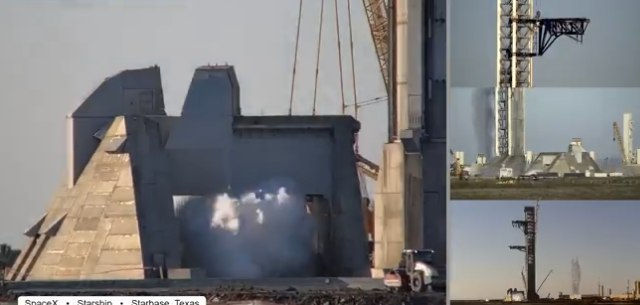
A spectacular high-pressure water eruption at SpaceX’s Starbase facility in South Texas has captured widespread attention online, with videos of the massive “water blast” racking up millions of views as the company prepares for its 12th Starship test flight.

The footage, shared widely on social media platforms including X and captured by local observers and NASASpaceflight livestreams, shows thousands of gallons of water surging upward from beneath Orbital Launch Pad 2 in a towering plume that resembles an explosion or rocket mishap. Posted around Feb. 16, 2026, the clips quickly went viral, prompting initial speculation of an accident at the Boca Chica site.

(VIDEO) SpaceX's Dramatic Water Deluge Test Goes Viral Ahead of
(VIDEO) SpaceX’s Dramatic Water Deluge Test Goes Viral Ahead of Starship Flight 12 Launch in March

SpaceX conducted the test as a full-duration verification of its upgraded water deluge system — a critical safety feature designed to protect the launch pad, surrounding infrastructure and the rocket itself from the intense heat, acoustic shockwaves and flame produced by the Super Heavy booster’s 33 Raptor 3 engines during liftoff.

The system, which sprays water at extreme pressure through a network of nozzles and a water-cooled steel plate beneath the launch mount, mitigates damage that plagued earlier flights. Initial versions of the deluge were implemented after Flight 1 in 2023 severely cratered the pad. Upgrades for Block 3 vehicles — debuting on Flight 12 — include enhanced flow rates and distribution to handle the increased thrust and acoustic energy of the latest Raptor 3 engines.

Videos from the test show the deluge activating for its planned duration, creating dense clouds of water vapor and spray that enveloped the pad area. Commentators on X praised the performance, with one user noting, “WOW! Starbase Pad 2 water deluge is something else! 33 Raptor 3 engines, no problem, I’m saying!” The successful run bolsters confidence ahead of Flight 12, which will mark the first orbital attempt with the Block 3 (V3) configuration of Starship and Super Heavy.

Advertisement

SpaceX CEO Elon Musk has targeted early March 2026 — potentially as soon as March 7 — for the launch, pending final integrations, static fire tests and regulatory approvals. Booster 19, the Super Heavy prototype assigned to Flight 12, recently completed multiple cryogenic proof tests without issues, addressing anomalies that led to the scrapping of its predecessor, Booster 18. Engine installation of the 33 Raptor 3s is progressing at Mega Bay 1, while Ship 39 undergoes preparations for stacking.

The test comes amid broader momentum for the Starship program. The Federal Aviation Administration recently finalized an environmental review allowing increased launch and landing activity at Starbase, clearing the path for a higher flight cadence in 2026. SpaceX aims to demonstrate key milestones with Flight 12, including improved engine reliability, heat shield performance during reentry and potential in-orbit capabilities paving the way for future refueling demonstrations, lunar missions under NASA’s Artemis program and eventual Mars exploration.

No payload has been announced for Flight 12, consistent with recent integrated flight tests focused on vehicle validation rather than operational missions. The flight profile is expected to mirror recent successes: liftoff from Starbase, booster catch attempt using the Mechazilla tower arms, and Ship achieving orbital velocity before a targeted splashdown in the Indian Ocean or Pacific.

Observers note that the viral water test underscores SpaceX’s iterative approach — rapid testing to refine systems before committing to flight. While some early speculation misinterpreted the footage as a failure, experts emphasized its positive implications for pad longevity and environmental protection during high-thrust launches.

Advertisement

SpaceX has not issued an official statement on the test beyond community updates, but the event aligns with preparations for an aggressive 2026 schedule that could see multiple Starship flights if milestones continue to be met. As regulatory reviews and vehicle integrations advance, attention now shifts to static fire testing of Booster 19 and potential stacking with Ship 39 in the coming weeks.

Continue Reading

Business

Citizens reiterates Equinix stock rating on strong AI demand

Published

on


Citizens reiterates Equinix stock rating on strong AI demand

Continue Reading

Business

FROM THE HILL: A snapshot of today's politics and parliament

Published

on

FROM THE HILL: A snapshot of today's politics and parliament

FROM THE HILL: There have been apologies and explanations over a dim sum reference in parliament.

Continue Reading

Business

BAE Systems profits surge as defence spending rise drives record results

Published

on

Business Live

Europe’s biggest defence contractor reports record earnings of £3.32bn for 2025, up 12%

Eurofighter Typhoon aircraft being assembled at BAE's Warton site in Lancashire

Eurofighter Typhoon aircraft being assembled at BAE’s Warton site in Lancashire(Image: BAE Systems/PA Wire)

BAE Systems has broken records with its annual results, buoyed by a surge in global defence expenditure amid ongoing geopolitical instability.

Advertisement

Europe’s largest defence contractor posted better-than-expected underlying earnings before interest and taxes of £3.32 billion for 2025, a 12% increase on the previous year, as sales soared 10% to an all-time high of £30.66 billion.

The aerospace and arms manufacturer revealed its order backlog also reached a record £83.6 billion at the end of December, whilst its order intake was £36.8 billion.

Chief executive Charles Woodburn said: “In a new era of defence spending, driven by escalating security challenges, we’re well-positioned to provide both the advanced conventional systems and disruptive technologies needed to protect the nations we serve now and into the future.

“With a record order backlog and continuing investment in our business to enhance agility, efficiency and capacity, we’re confident in our ability to keep delivering growth over the coming years.”

Advertisement

The company anticipates further expansion in 2026, albeit at a more moderate rate, forecasting underlying earnings growth of between 9% to 11% and sales to increase by between 7% and 9%.

BAE – which manufactures a range of weaponry from missiles and artillery systems to tanks, aircraft and warships – has benefited from a worldwide uptick in defence spending, particularly as Europe re-arms itself.

In the UK, Prime Minister Sir Keir Starmer indicated earlier this week that Britain must “go faster” in boosting military expenditure and is reportedly considering bringing forward plans to allocate 3% of UK gross domestic product (GDP) to defence.

BAE highlighted significant contracts last year including an agreement with Turkey for 20 Typhoon aircraft, anticipated to be worth £4.6 billion to the company and sustain 20,000 UK jobs, alongside an order from Norway for Type 26 frigates.

Advertisement

BAE shares climbed 4% during Wednesday morning trading, having increased by nearly a fifth since the beginning of 2026 alone and more than tripling since Russia’s invasion of Ukraine in 2022, which triggered a surge in defence expenditure globally.

Richard Hunter, head of markets at Interactive Investor, suggested BAE’s stronger-than-expected results demonstrate the “unfortunate sign of the times that defence stocks are squarely back in fashion, as governments around the world look to protect their interests and lands from growing tensions”.

He continued: “The geopolitical backdrop is a reminder that brittle relationships are seemingly never far away, ranging from potential and actual conflicts in the likes of Venezuela, between China and Japan and Russia and Ukraine.

“The backdrop has led to a number of governments pledging a higher percentage of GDP to defence spending over the next decade, which in turn means that opportunities remain within the burgeoning defence sector.”

Advertisement

BAE employs some 12,000 people at its Warton and Samlesbury sites in Lancashire and said it had seen “significant success across its combat air business in the region” Over the year it recruited 1,225 people to work at the the two sites.

Other key UK sites include its submarine bases in Barrow-in-Furness, its munitions site at Glascoed in Wales, its advanced technology plants in Dorchester and Filton, digital intelligence bases in Bristol, Gloucester and Christchurch, and its air sector base in Brough in East Yorkshire.

Continue Reading

Trending

Copyright © 2025