
Tech
25 Inches of Imported Slosh, Techmoan Unboxes the Indian Wave Machine



Techmoan already owned an 18-inch Hughes Wave Motion Machine that set him back about $500. He wanted something longer, so he paid $300 for the biggest model waveshop listed, a 25-inch unit shipped from India.
Website images appeared to be quite polished until he realized they were AI-generated. Prices sat in rupees. PayPal stayed unavailable on the main site, forcing a bank transfer unless you switched to the nearly identical waveshowcase.com page that accepted cards. A scam-checking site scored the operation at 50%. He ordered anyway and used PayPal through the dollar site for some protection.
Sale

Dreamegg Portable Noise Machine for Baby Adult, Features Powerful Battery, 21 Soothing Sound, Noise…
- 【COMPACT BUT POWERFUL】- D11 Max has more skills. Designed for all things sleep, this sound machine comes with favorable features: rechargeable…
- 【HUGE BATTERY, WORRY-FREE ON THE GO】- Everything D11 max has, PLUS a LONG-LASTING battery. The portable sound machine is built with…
- 【HELPS SETTLE-IN & STAY ASLEEP】- Moms know how precious sleep can be. Turn it on to create peaceful sleep environment to help crying baby calm…
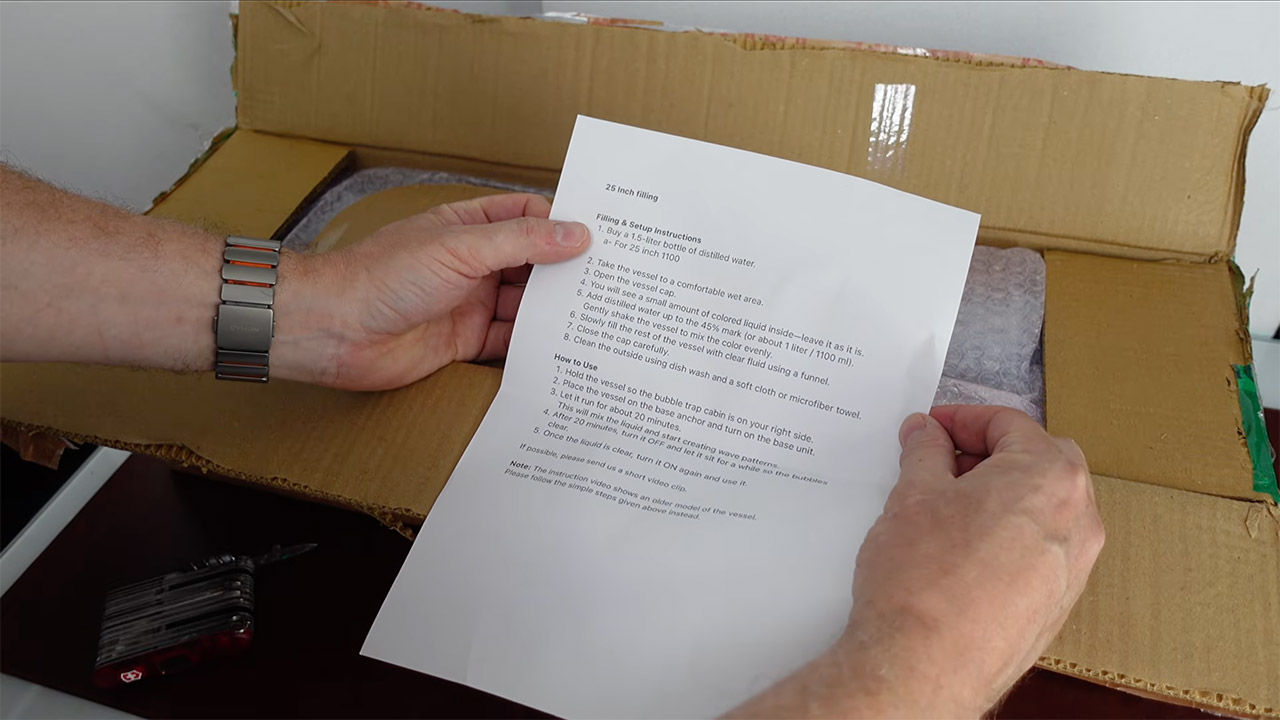
UPS delivered the box faster than expected after a short email exchange. Everything he bought was in the box, including the acrylic chamber, motorized base, funnel, a bare-bones set of instructions, and three little Minute Maid-style bottles holding transparent mineral oil. One of the thin plastic end caps shattered when he attempted to open the box to begin using it, and for some reason, the distilled water he had ordered did not arrive in the delivery.

Filling the reservoir is a two-step process: first, mix 1 1/2 liters of distilled water with the supplied blue dye until it reaches the designated 45% line, shake it well, and then gently add mineral oil through the air trap hole until it is full. The instructions are a little vague about which brands or ratios to use, but once that’s done, all you have to do is run the motor for twenty minutes, turn it off for another twenty to allow the bubbles to collect in the side reservoir, then turn it back on and let it go.
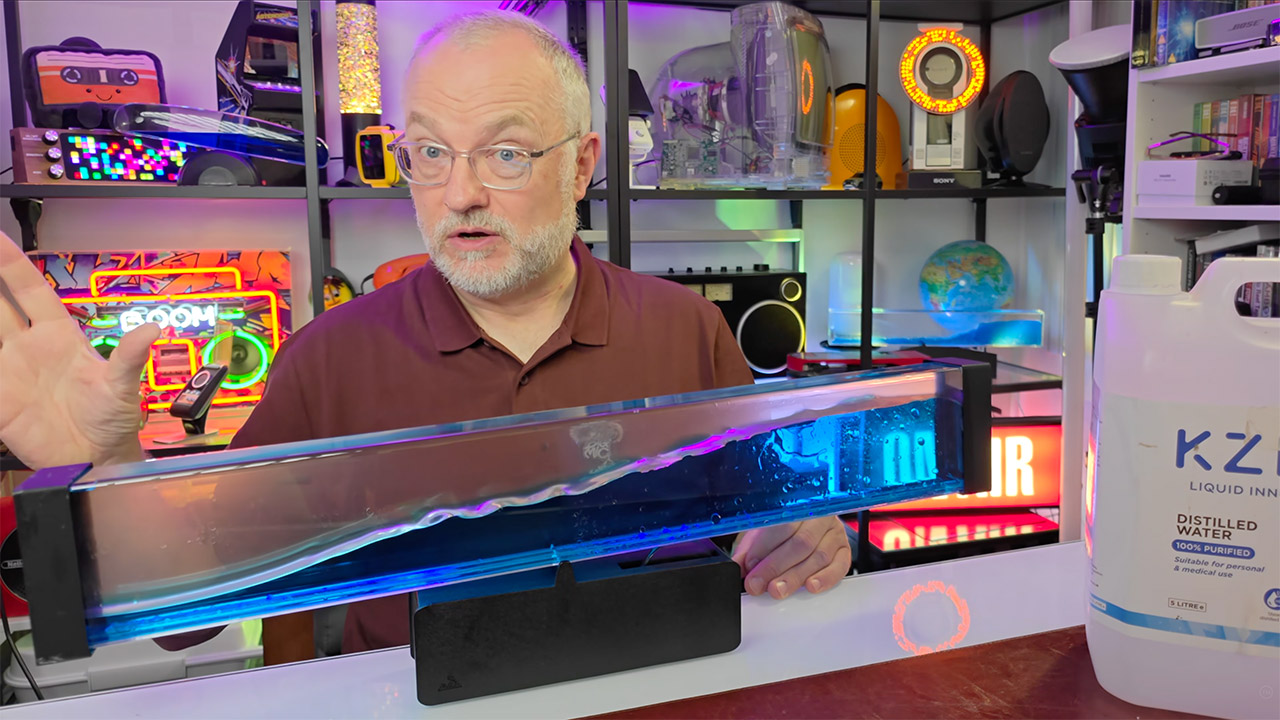
A small motor within moves a wheel, causing the entire chamber to rock back and forth in a gradual, soothing seesaw motion. Two liquids of differing densities collide and eventually mix to generate these continuous waves. The motion is quiet and even, and for the most part it remains that way. Unlike some of the older 1980s machines he used to witness, these waves do not crash or break apart in a spectacular manner, as one of his buddies, Techmoan, must have experienced. Bubbles still clung to the acrylic after the settling cycle, and a seam leaked slightly, which he fixed with tape. After a few hours of use, the blue layer began to emit a faint mist and form small floaters.
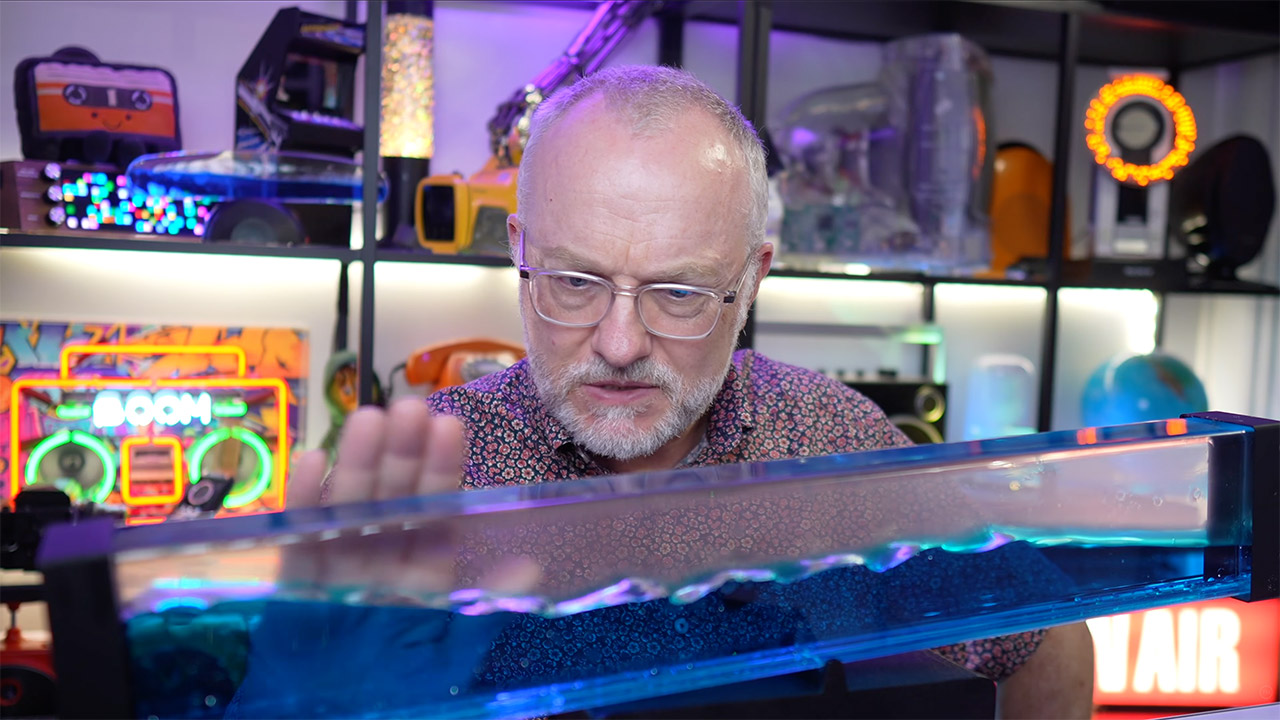
It’s evident that the budget materials match the price tag on this device. The base appears to have been 3D printed and is just weighted to provide stability. The end caps feel fragile and fit loosely. To be honest, the device lacks a power switch, so you must either unplug it or add a remote on/off socket to your own power strip, which is inconvenient. He tried adding some shims beneath the base to give it more stability, as well as altering the voltage to see if he could make it to rock quicker, but neither of these methods provided any further drama. The Hughes 18-inch unit may appear thicker and more polished, but it is actually not much different, having the same leaking concerns and edge blobs as this one. Both of these contemporary equipment are noticeably quieter than the old machines you used to see in the shop decades ago. This Indian version essentially uses the same process but scales it down to make it cheaper.

Tech
Amazon seller sends $1,400 RTX 5080 customer a cheap “gift” and fake instructions claiming the GPU is still coming
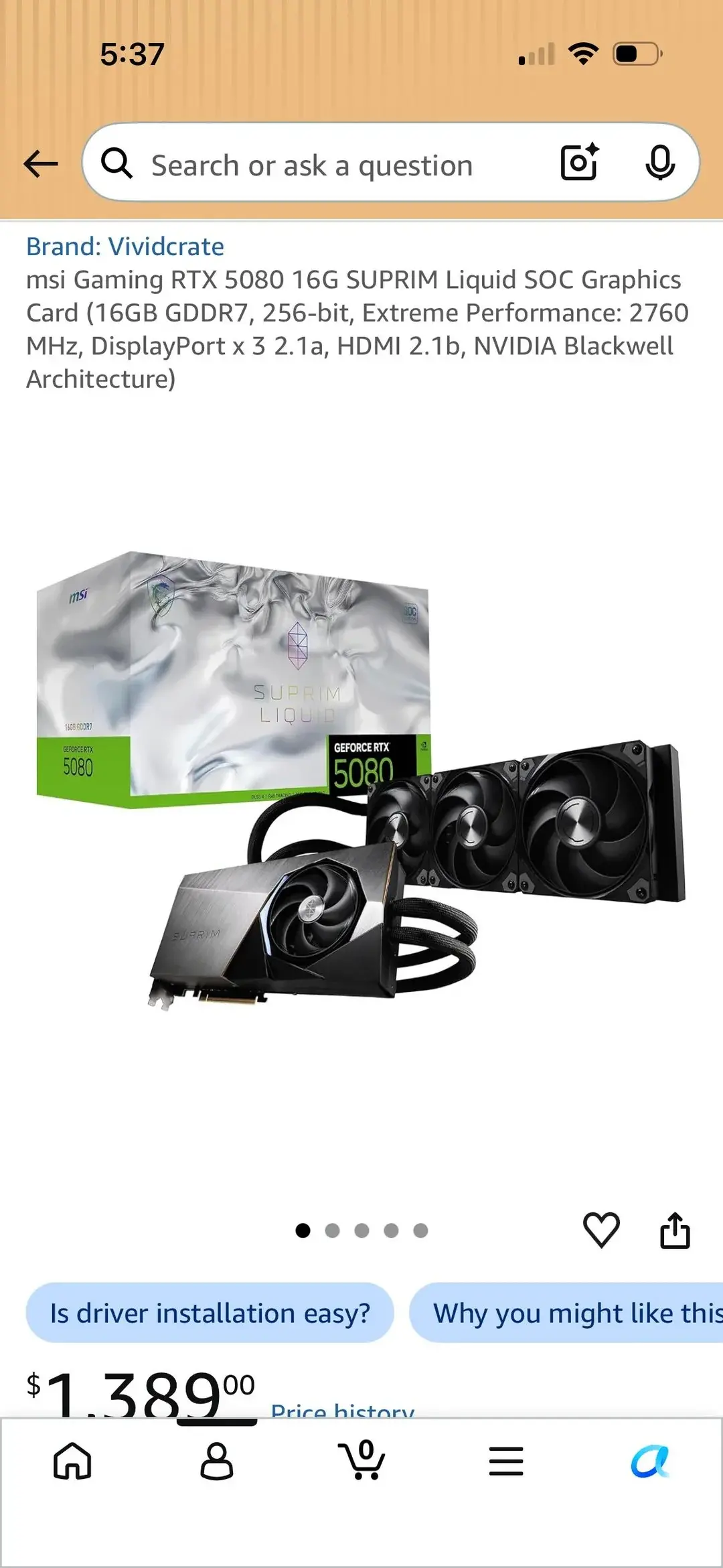
Facepalm: Graphics card scams on Amazon are far from new, but one customer has encountered what appears to be a new method of trying to trick victims – one that some people could fall for. It involves sending a cheap “present” to the buyer and a promise that the GPU is on its way. The scammer also sends a pamphlet that supposedly explains the process and includes a fake Amazon email to cancel the order.
Reddit user BransonArsen wrote that they bought an MSI Gaming RTX 5080 16G SUPRIM Liquid SOC edition from Amazon for nearly $1,400. They later explained that the seller was a third party with a Chinese name, which even they admit was a warning sign. The lower-case “msi” in the product description is a bit of a giveaway, too.
Those suspicions proved warranted when a delivery arrived at BransonArsen’s door a few days later. While we’ve seen many GPU scams involving something other than the graphics card being sent in the original packaging, including putty, rice, and older cards in diguise, it wasn’t even an RTX 5080 box that turned up.
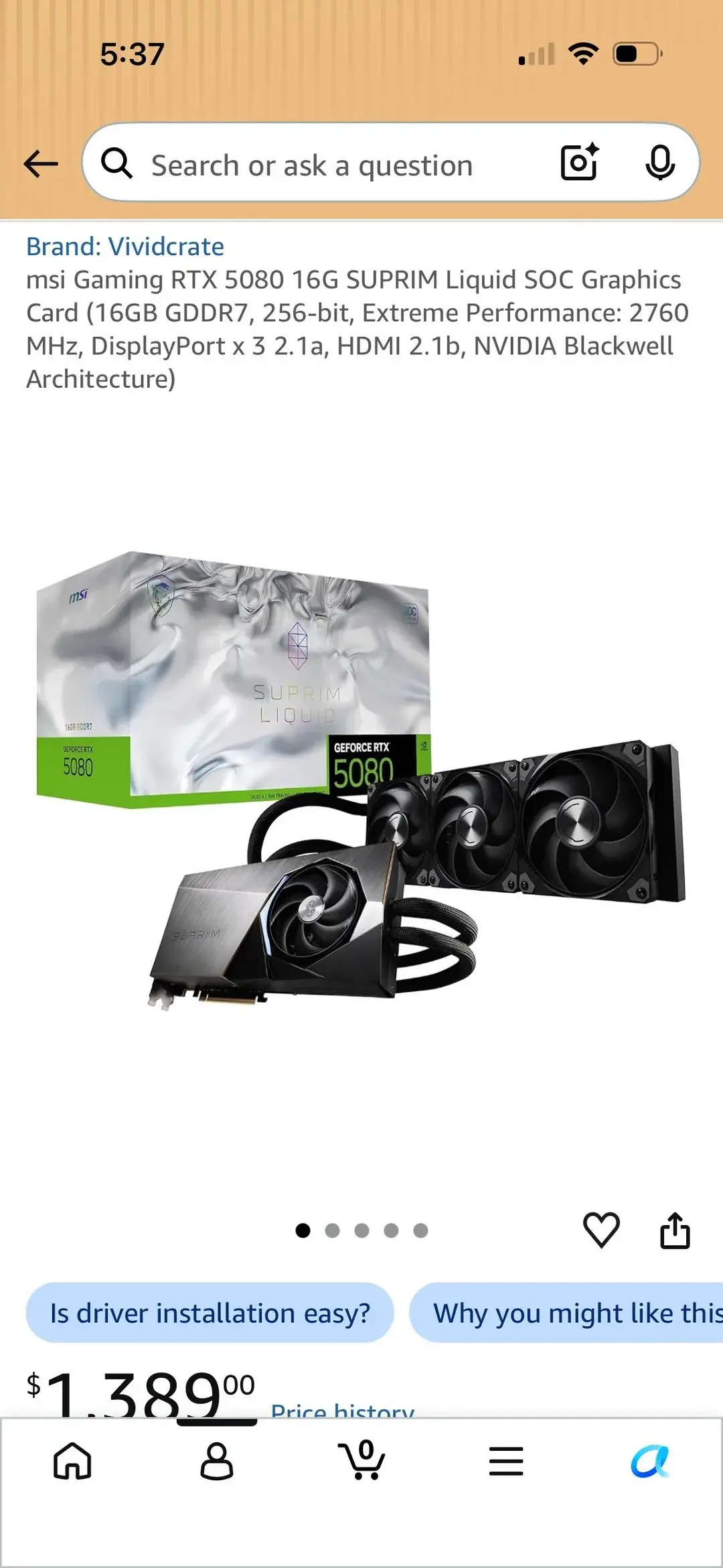
What arrived at the door was a plain Amazon box, inside of which was a cheap but correctly packaged vacuum mug.
Rather than just sending something totally different, this was all part of the scam. The box also included a pamphlet claiming the mug was a “complimentary gift.” The graphics card would be arriving separately, in about seven working days, because Amazon “collects orders and places a bulk order with this seller every Monday,” making the delivery longer but helping keep the price lower – this particular card is usually $2,000.

The leaflet, which appears to contain AI-generated images, adds that if the buyer wants a tracking number or has any questions, they can email the definitely-not-fake [email protected] customer service address. It also advises anyone wishing to cancel their order and receive a full refund to contact this address – but don’t worry, they can keep the mug.
Unfortunately, that mug might end up costing $1,400. It seems the idea here is for the victim to repeatedly email the fake address while the scammers keep stringing them along until the return window expires, leaving them with a very expensive piece of crap as a reminder to be wary of suspicious Amazon sellers.
Meta removed dozens of advertisements for apps that presented themselves as pornography but actually functioned as banking malware, after the Indian government issued an advisory.
Reuters then found at least 39 more of the ads still running and reported on Monday that Meta removed those as well after being asked about them.
The sequence is what makes the story notable. A government warning led to some of the advertisements being removed, while a reporter’s email prompted Meta to take down the rest.
Advertising makes this different from ordinary malware distribution. An app listed in a store still has to be discovered and installed by a user, whereas a paid advertisement is actively delivered to people selected by an advertising system because they are considered likely to engage with it.
The apps themselves were capable of accessing information on users’ phones, capturing one-time passwords and banking PINs, and transferring money from accounts without the owner’s knowledge.
Pornography is also an effective lure for this type of malware for reasons that have little to do with the technology itself. Someone who installs an app they would rather keep private may be less likely to report it immediately, particularly if they are embarrassed about how they encountered it.
One-time passwords create another vulnerability because they are now part of the security process used by many banking services.
Malware that can read those codes directly from a device can undermine the second factor that is supposed to protect an account if a password has already been compromised.
Meta did not respond to Reuters’ questions. The company removed the flagged advertisements without commenting on the findings, following a pattern that has become familiar in cases involving problematic advertising on its platforms.
India has good reason to be concerned about the issue. The country recorded close to $2.4 billion in losses from cyber fraud during 2025, while mobile banking has become the main way many people access financial services, particularly among newer account holders.
India is also Meta’s largest market by users, making gaps in its advertising enforcement more significant than they might be elsewhere. Hundreds of millions of accounts are potentially exposed to whatever the platform’s advertising review systems manage to identify and whatever they miss.
The advertising system is what turns this into a platform problem rather than simply a criminal one.
These apps were not being distributed through obscure forums or private networks; they were being promoted through a paid advertising system that Meta operates, moderates, and ultimately makes money from.
Internal projections reported last year also put the issue in financial terms. Meta estimated that scam and banned-goods advertising could account for roughly 10% of its 2024 revenue, or about $16 billion.
That figure changes the context around every subsequent enforcement announcement. Removing an advertisement after someone flags it is part of the cost of operating the platform, while the advertisement itself generated revenue for the same company responsible for deciding whether it should be there.
The regulatory response is now moving in a similar direction across several major markets, although governments are using different tools. India has relied on advisories and direct requests to the company, European authorities are pursuing fines, and US plaintiffs have been taking their claims to court.
India has been escalating its scrutiny for months. It has summoned Meta over Instagram advertising promoting child sexual abuse material and separately ordered the company to remove those advertisements.
European regulators have been raising similar concerns through different mechanisms. Poland has asked the European Commission to fine Meta €250 million over scam advertising, while banks in the UK have said that a large majority of the payment fraud they encounter originates on Meta’s platforms.
Meta has been developing countermeasures at the same time, including new scam-detection systems across WhatsApp, Messenger and Facebook.
The same company operates both the advertising auction and the systems intended to detect abusive content within it, which makes repeated failures harder to separate from the incentives built into the platform.
The common issue across these cases is less about whether Meta intends to distribute scams and more about how reliably it detects them. Nobody is suggesting that Meta wants banking malware in its advertising system.
The criticism is that the system continues to accept those advertisements, while government agencies, banks, and journalists sometimes identify them before Meta does.
Scale is a legitimate part of the explanation. Millions of advertisements enter Meta’s systems every day, and no moderation process can be expected to identify every fraudulent campaign immediately.
That does not, however, explain why the additional 39 advertisements remained active after the company had already received a government warning about the same type of threat.
The 39 advertisements Reuters found were still running after the government advisory had been issued.
They were removed after a journalist contacted Meta about them, leaving a fairly straightforward question about the effectiveness of the platform’s own detection systems: how much harmful advertising is being caught internally, and how much is being discovered by everyone else?
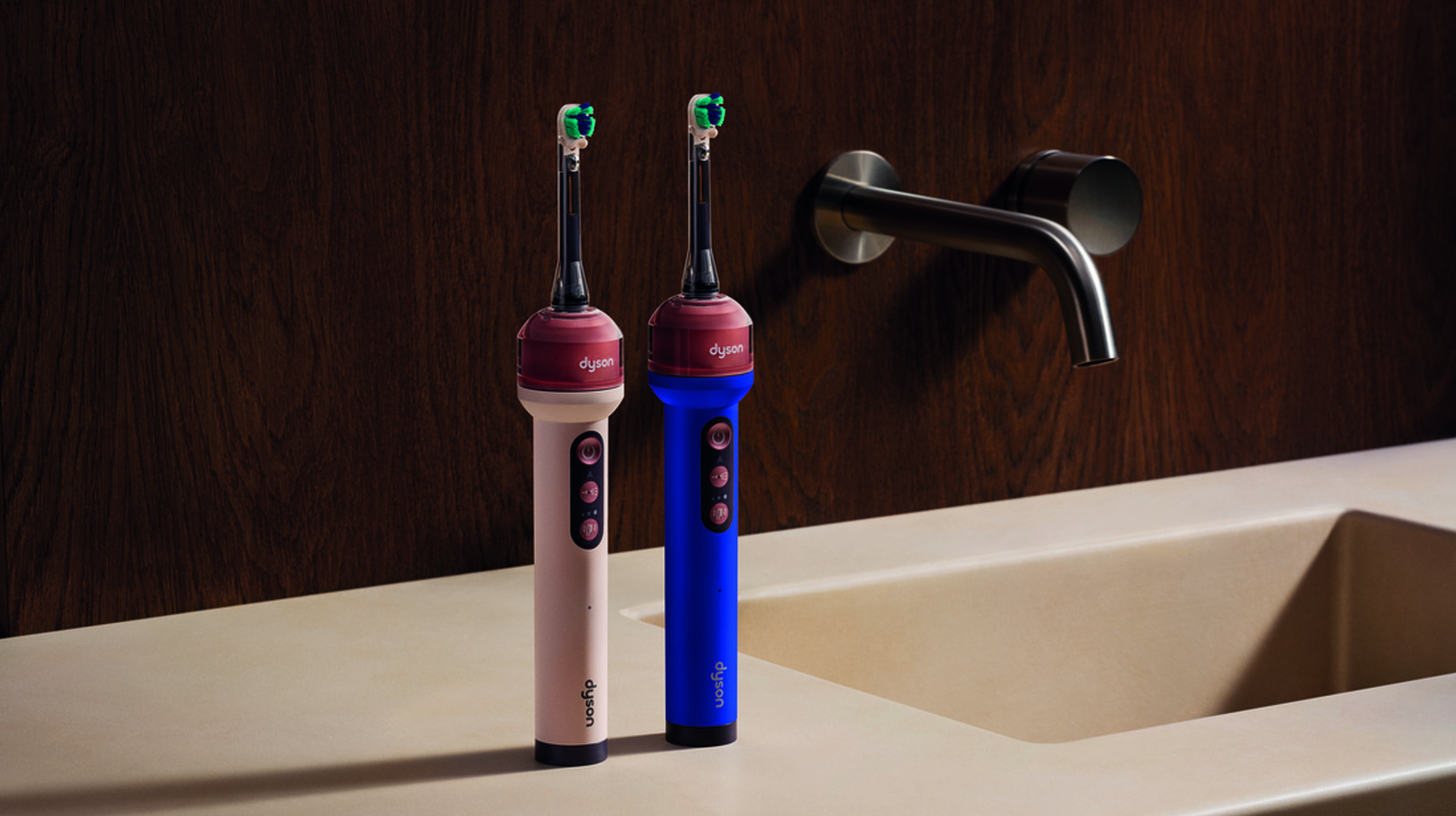
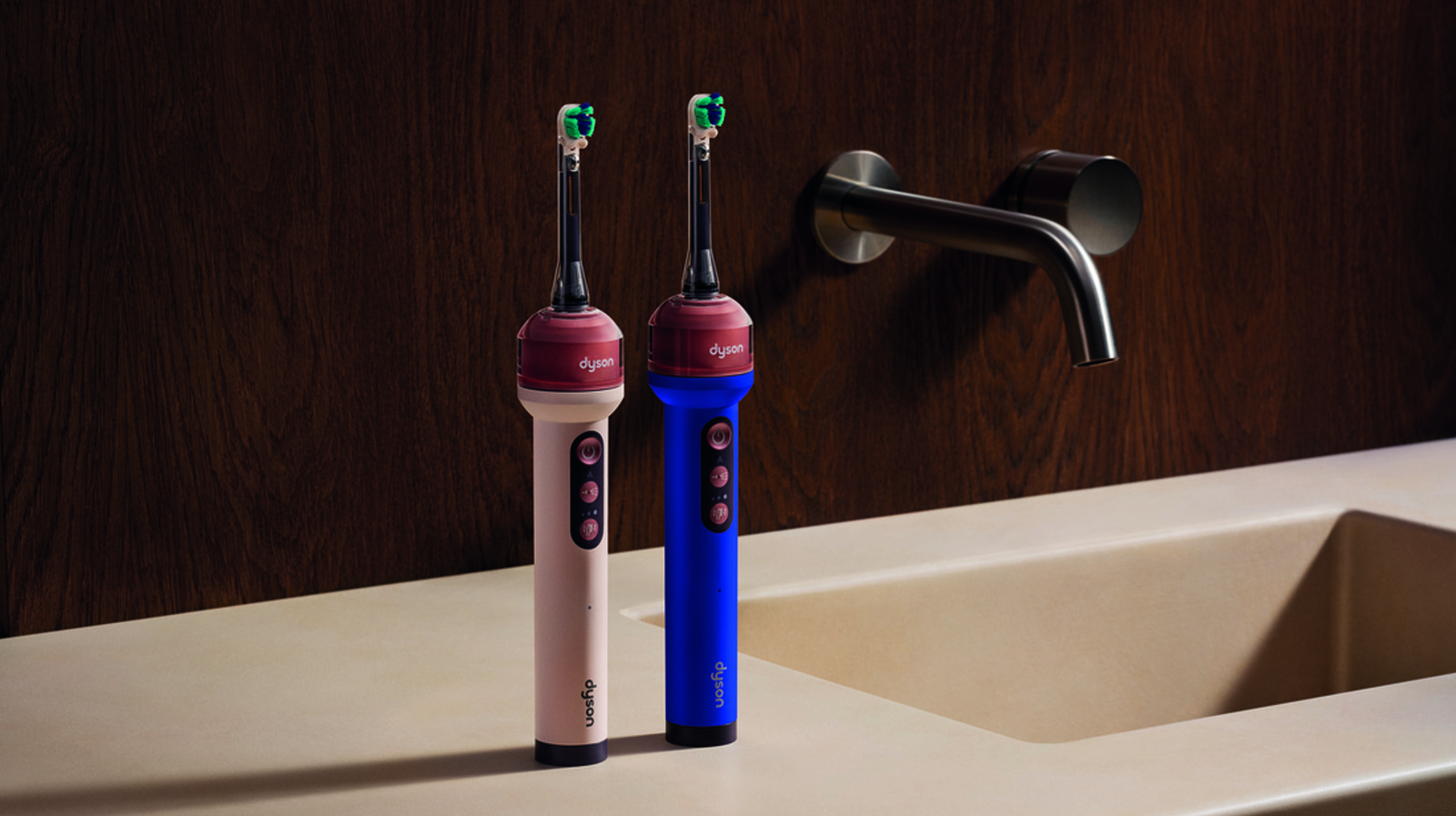
The Dyson CameraJet has what the company calls a “100k pixel macro lens camera” mounted right under the head of the brush. That’s 0.1 megapixels in more typical camera terminology, which may seem like a very small number, but it’s certainly supplemented by some algorithmic effort. More specifically, 16 million lines of code and “a machine learning system trained on 470,000 dental images collected during development” are behind the computer vision targeting here.
Basically, all that computing has taught the CameraJet how to identify the gaps between your teeth. When you brush and the system sees a gap, it will shoot a jet of fluid in a conical shape that helps to floss while you brush. To prevent liquid from accumulating in your mouth as you move along, these bursts of mouthrinse are fired in tiny amounts. The capacity of the water tank that surrounds the neck of the brush is just 12.5ml (0.42 fluid ounces), which is just about two and a half teaspoons.
According to Dyson, the CameraJet’s “Gap Optical Targeting” system analyzes “28 live images per second to identify and target gaps between teeth in real time” and “within 100ms of the camera seeing a gap, the device detects and jets the gap.”
That camera isn’t just there to tell the toothbrush where to shoot fluid. You can use the companion MyDyson app to get a better view of your mouth, especially the back of your teeth. The live-viewing feature is only available during live viewing or auto-jetting, and Dyson says no images are recorded or stored on the product or in the cloud. You can also use the app to get tips, guides and personalized feedback on how to brush better, with details on where you’re already good and what areas you might be falling back on. The app also offers settings so you can tweak brushing intensity and various jetting modes.
In addition to the camera, the company said it uses an “anti-gravity tank with a diaphragm pump and pressure chamber that adapt during use to deliver controlled jets in any orientation.” That means no matter how you hold your toothbrush, the CameraJet should be able to pump water to your mouth, even if you’re somehow upside down and pointing awkwardly at the back of your teeth.
Dyson also stresses the importance of the shape of its water stream. Instead of a simple needle-shaped jet like many other water flossers, Dyson said its “fluid dynamicists spent years optimizing the profile of the jet to remove plaque more effectively.” As a Singaporean, I feel inclined to mention that the company developed “its own proxy plaque through a five-year collaboration with the National University of Singapore’s Faculty of Dentistry” as part of its engineering process.
The result of all that work is a cone-shaped spray of fluid that Dyson says offers wider coverage to sweep and remove plaque while being propelled “at a lower pressure to be gentler on gums and enamel.”
As for what fluids to fill the tank with, you can choose your favorite clear mouth rinse that’s SLS-free to prevent foaming. Dyson is also making its own non-foaming toothpaste and a low-foaming mouthrinse to be used with the CameraJet, so the camera can see clearly without foam blocking its view.
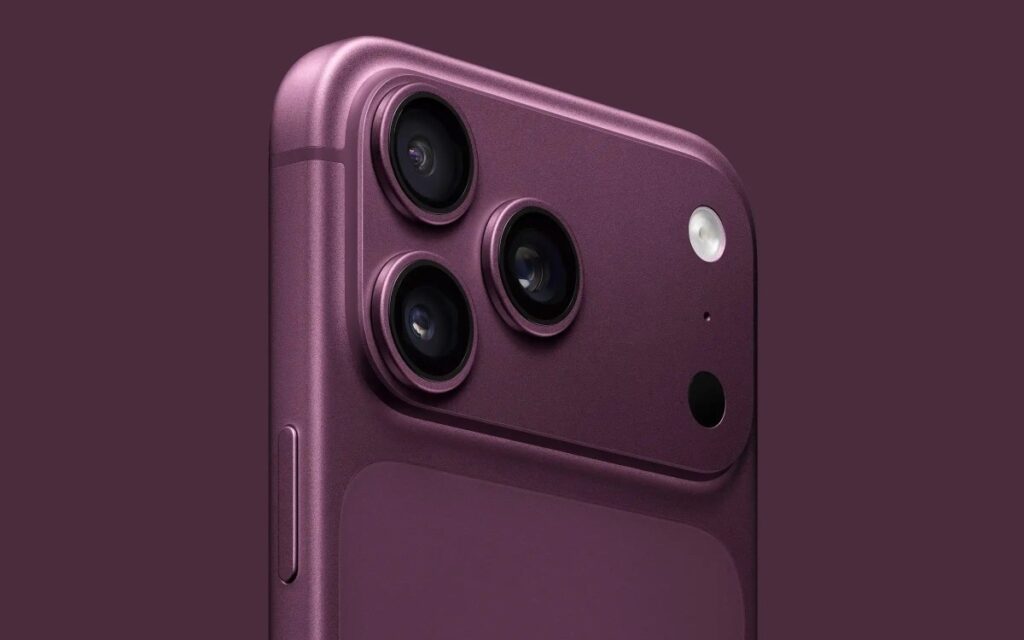
Apple is expected to launch the iPhone 18 Pro and iPhone 18 Pro Max on September 9. Both models are likely to share several flagship features and upgrades. However, recent leaks suggest that Apple could reserve some hardware changes for the Pro Max. The camera may be the biggest difference between the two models, with the larger phone tipped to get new features. Apple has not officially confirmed these details yet.
iPhone 18 Pro Max Could Get a Variable Aperture Camera

The camera could be the biggest difference between the iPhone 18 Pro Max and iPhone 18 Pro. According to MacRumors, the Pro Max will introduce a variable-aperture camera to the iPhone. Previous Pro models have used fixed apertures on their primary cameras. The new system would be able to adjust the lens aperture to determine how much light enters. A larger aperture would help when taking photos in low-light situations and allow more light to enter the phone’s camera. A smaller aperture would ensure good depth control and background blur.
The Pro Max could get another camera advantage with up to 6x optical zoom. Apple may pair this feature with a more advanced telephoto camera. Optical zoom lets users capture distant subjects with less digital cropping. This can help maintain better detail when shooting from a distance. It could also make the Pro Max more useful for portraits. The iPhone 18 Pro is expected to keep its current telephoto setup.
Bigger Battery May Make the Pro Max Thicker
The iPhone 18 Pro Max may offer a larger battery than the standard iPhone 18 Pro. However, the larger battery could make the phone slightly thicker. The regular iPhone 18 Pro model is expected to retain its sleek design. As a result, it may be a good choice for users who prefer one-handed operation of the phone.
Despite their differences, both phones will share some features. For instance, both phones would use Apple’s new A20 Pro chip. They may also feature a smaller Dynamic Island compared with current models. Apple could improve the Camera Control feature on both phones. Both models are also expected to support Apple Intelligence features. Premium displays and titanium frames could remain part of the Pro lineup.
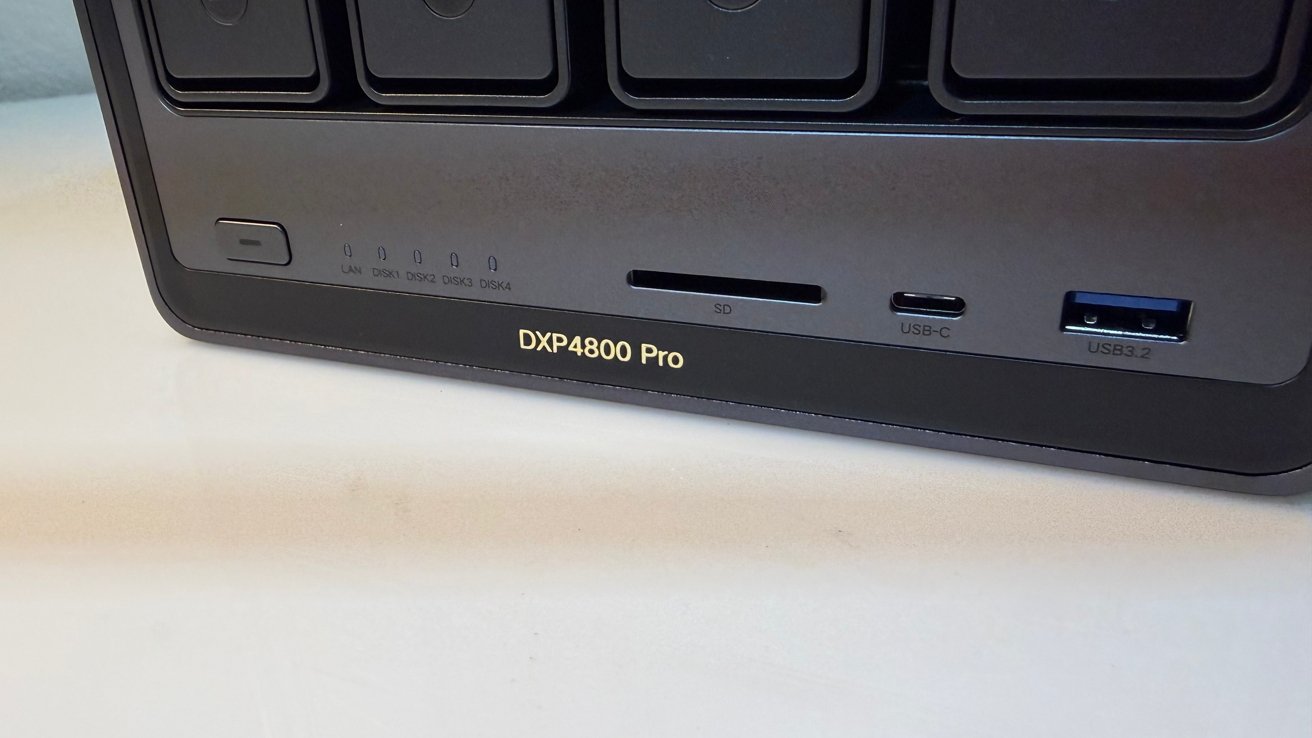
At $679.99, the four-bay uGreen NASync DXP4800 Pro NAS is a capable mid-range NAS for creators and small teams in the Apple ecosystem, with an excellent value proposition.
uGreen has built out its NAS range quickly since entering the category. AppleInsider has covered uGreen NAS hardware before, including the DXP4800 GT.
The DXP4800 Pro sits above the GT and Plus in the four-bay lineup. It pairs a six-core Intel chip with generous memory headroom.
The pitch here is sustained performance for heavier work. Docker, virtual machines, and media processing are the target use cases.
uGreen NASync DXP4800 Pro review: Specifications
| Product | uGreen NASync DXP4800 Pro |
| Price | $679.99 ($799.99 list) |
| CPU | Intel Core i3-1315U (6 cores, 8 threads) |
| CPU design | 2 performance cores, 4 efficiency cores |
| RAM (standard) | 8GB DDR5 |
| RAM slots | 2 x SODIMM |
| Max RAM | 96GB |
| System storage | 128GB SSD |
| Drive bays | 4 x SATA (up to 32TB each) |
| M.2 SSD slots | 2 x M.2 NVMe |
| Max storage capacity | 144TB (4 x 32TB SATA plus 2 x 8TB M.2) |
| RAID modes | JBOD, Basic, RAID 0, 1, 5, 6, 10 |
| Ethernet | 1 x 10GbE, 1 x 2.5GbE |
| PCIe slot | None |
| Thunderbolt | None |
| Front ports | 1 x USB-C, 1 x USB-A (both 10Gbps), SD 3.0 |
| Rear ports | 1 x USB-A 5Gbps, 2 x USB-A 2.0, HDMI 4K |
| Operating system | UGOS Pro |
| Dimensions (inches) | 10.1 x 7 x 7 |
| Warranty | 2 years |
uGreen NASync DXP4800 Pro review: Design
The DXP4800 Pro shares the look of its siblings. It is a grey-black four-bay box with front-loading drive trays. Nobody’s going to mistake it for Apple design, but it also looks better than most in its class.
The front panel holds the power button and status LEDs. It also carries an SD card slot, a 10Gbps USB-C port, and a USB-A 10Gbps port.

uGreen NASync DXP4800 Pro review: Front ports
Those front ports make quick media imports easy. A photographer can pull card footage without reaching around the back, nor requiring a separate plug-in card reader.
There is not much else to say about the design. It’s probably going to be living in your network closet, rather than on your desk.
There are six lockable drive bays at the front, numbered from left to right. They retain uGreen’s normal design ethos with trays that are tool-free and hot-swappable. This remains a nice touch.
uGreen NASync DXP4800 Pro review: Storage
The four bays each take a SATA drive up to 32TB. That alone allows 128TB before any other storage is added.
Two M.2 NVMe slots supplement the main bays. Each takes up to an 8TB stick, adding 16TB more capacity, or caching for extra speed.
uGreen lists a total maximum of 144TB, which combines the spinning drives with the two NVMe sticks.

uGreen NASync DXP4800 Pro review: A hatch hides the NVMe slots.
The NVMe slots also deliver a real speed benefit. Data stored on them is going to be noticeably quicker to access than any stored on the SATA bays.
RAID options span JBOD, Basic, and RAID 0, 1, 5, 6, and 10. That ranges from pure speed to strong redundancy, depending on your particular needs.

uGreen NASync DXP4800 Pro review: Drive bays.
We tested the unit with four 4TB Seagate Red drives provided by Ugreen. We also used four 24TB WD Red Pro, which retail for $1,059 each on Amazon.
SSDs used for testing included a pair of Samsung 990 Evo Plus drives, and a pair of Samsung SSD 9100 Pro 1TB drives. You don’t need to use drives this fast. Stick with PCI-E 3.0 drives if you have them, as they’re cheaper, and still provide more than enough speed.
uGreen NASync DXP4800 Pro review: Connectivity
Networking uses one 10GbE port and one 2.5GbE port. The 10GbE is the main one you’ll care about, due to the sheer amount of bandwidth available through one port.
Of course, that’s assuming you have a 10-gig Ethernet network available to you.
That single 10GbE port undercuts pricier rivals on value. Many competitors charge more for equivalent 10-gigabit networking.
Usually, the addition of the second network port gives a few benefits, but link aggregation isn’t really one. There’s not much point to it if you already have a 10-gigabit port available to you and sufficient network infrastructure.
A more useful reason for it is to treat the two ports as independent network connections. If you have sufficient networking know-how, you could limit connectivity through specific connections for some services, while leaving the other free for others, for example.
There is a catch common to all 10GbE gear, and that is infrastructure. While you could use a 10GbE-capable Mac to enjoy the massive bandwidth, that’s not immediately achievable for all.

uGreen NASync DXP4800 Pro review: Rear ports, including those two Ethernet connections.
You’re more likely to find benefits from upgrading the network infrastructure to a faster speed, if budget is available. Imagine ten gigabit-class network connections all accessing the NAS through the 10GbE port on a corporate network.
The rest of the rear ports handle expansion, video, and data ingestion. There are two USB-A 2.0 ports, one USB-A 5Gbps connection, and a 4K 60Hz HDMI output.
The HDMI port is handy if you want to use it as a playback device. But really, you’re gonna put Jellyfin or Plex on it and access your content over the network or the internet. It’s nice to have the feature, though.
While these ports are pretty good for this class of NAS, there are some omissions that could’ve been included here. First, there is no PCIe slot for further expansion.
The other missing bit is Thunderbolt 4 here, though there is USB-C at 10Gbps. There’s less of an incentive to have this NAS on your desk, since you don’t get to enjoy Thunderbolt’s serious amounts of bandwidth for file ingestion.
The upper-tier DXP6800 Pro adds both of those. Buyers who need an extra-fast network port or Thunderbolt should look there.
There are enough hard drive bays and SSDs in here, when packed, to saturate even a 10-gig network. You’re mostly going to be limited on speed by other traffic on your wired network.
Monitoring traffic, we saw no data sent elsewhere. Rumors circulated early that uGreen was somehow sending a user’s data to China, but let us debunk that claim again.
Your data is your data. Like with the other uGreen NAS units we’ve tested, it goes nowhere else than where you send it.
uGreen NASync DXP4800 Pro review: Processor and performance
The DXP4800 Pro runs an Intel Core i3-1315U. It is a six-core, eight-thread chip with two performance and four efficiency cores.
That is powerful for this class of device. It handles Docker, virtual machines, and transcoding without strain, so it should work really well for hosting network services.
The chip includes Intel Quick Sync for hardware transcoding. So, Plex and Jellyfin can run in Docker with accelerated 4K playback.
Memory is a real strength here. The 8GB of DDR5 included can expand to 96GB across two slots.
Of course, that depends on whether you can afford to make that upgrade in the current climate. This may be more feasible later in 2027.
Even so, that ceiling is higher than most rivals allow. Heavy Docker or virtual machine users have room to grow, if you can get the upgrades.
One caveat surfaced under load in testing. The unit drew around 140 watts when getting slammed with I/O and heavy processing.
The fan is also loud under load. It is audible enough to matter in a quiet room.
In our testing, we had a baseline of 38 DBa of ambient noise measured with a Kanomax model 4431 meter, with the test gear two meters away from the unit. Under absolute maximum load, I measured about 49 DBa in the same position.
How much this matters varies. If it’s in a rack downstairs from where you’re computing, it won’t matter. It might matter next to your television or on your desk near your computing station.
And if you’re not crushing it with load, you won’t see this at all.
Speaking of crushing it with load, the i3-1315u is a decent processor, but it won’t challenge your Apple Silicon for computing grunt.

Geekbench 7 single-core score comparison
The Core i3-1315U does reasonably well in Geekbench 7, with it scoring at 1,932 for the single-core results and 6,383 for multi-core.
To clarify, this is reasonably powerful for a consumer SOHO NAS, which doesn’t usually have deal with processing outside of serving files and limited other services. If you put it against Apple’s hardware, it’s not impressive, but that’s okay, it’s not supposed to be.
The M4 Mac mini can easily beat the DXP4800 Pro in single-core results, with its 3,276 result almost 70% better. On multi-core, the M4’s 15,356 is a 2.4-times improvement over the chip used in the NAS.
It’s a much closer race when you look at the M1 Mac mini. The single-core score of 2,187 gives the M1 a slimmer 13% lead, while the multi-core score of 8,588 is a closer but still significant 35% better.

Geekbench 7 multi-core score comparison
Yes, the DXP4800 Pro is powerful enough to do advanced NAS tasks, but it can be outpaced by Apple’s six-year-old compact desktop hardware.
That said, the DXP4800 Pro is still more than capable of handling itself, for what the target market will probably need to do on it.
uGreen NASync DXP4800 Pro review: Software and Apple features
The DXP4800 Pro runs UGOS Pro. The software has matured over several years and is easy to manage.
It’s a platform that has its own selection of apps, just like any other. Again, there are also AI capabilities shoehorned in for your images, with face and scene recognition and semantic search capabilities.
We still don’t recommend the AI features.
For Apple users, UGOS Pro supports Time Machine backups. Setup is not instant, but uGreen has a procedure to follow to get it done.
The bundled apps cover the usual NAS tasks. There are photo, media, and Docker tools built in.
The no-subscription angle is part of the value case. Local storage keeps photos and camera footage off cloud services.
One point of flexibility stands out. Anyone who dislikes UGOS Pro can install TrueNAS or Unraid instead.
That option suits the tinkerer and the privacy-minded. The hardware is not locked to uGreen’s own software.
The onboard software options are what you’d expect from a typical NAS. You have your private image album library system, your video storage and playback tools, and other productivity-centric items.
If you’re into downloading large files legitimately via BitTorrent, there’s a tool built in for just that, but you can install more if you want.
But, with all of this performance on tap, users may want to do more eventually. Thankfully, there’s the aforementioned Docker support, so you can install an array of different network services on the NAS.
uGreen NASync DXP4800 Pro review: Powerful four-bay NAS with a thirst
The DXP4800 Pro makes a clear pitch. An Intel Core i3, 96GB memory ceiling, and 10GbE suit creators avoiding cloud fees.
The processor and memory headroom are its best features. Both suit heavy Docker and virtual machine work, which should make any homelabber happy.

uGreen NASync DXP4800 Pro review: The rear has a magnetic fan filter.
The tradeoffs are power and noise. Around 140 watts under load and a loud fan are real costs to weigh. It’s nothing if you’re coming from a cheese-grater Mac Pro in either regard, but it’s all relative.
For Apple households, Time Machine support and macOS compatibility fit well. A 10GbE-capable Mac or switch unlocks the benefits of the extremely fast network ports. Or at the very least, the 2.5GbE port should encourage some more budget-friendly network upgrades.
uGreen NASync DXP4800 Pro Pros
- Intel Core i3 with a 96GB memory ceiling
- Dual 10GbE cheaper than many rivals
- Real speed gain from the NVMe slots
uGreen NASync DXP4800 Pro Cons
- Draws around 140 watts under load
- No PCIe slot or Thunderbolt 4
- Fan is loud under sustained load
Rating: 4 out of 5
This unit is in a great spot in uGreen’s lineup. There are very expensive units, with many bays and overkill processors, and there are smaller units with less processing power for less money.
In a world of expensive storage, two-bay will do. Four-bay allows for some expansion, and when you have some spare cash, throwing in some NMVe storage for caching will boost performance.
Add more RAM, offload some tasks to Docker, and it’s a great, upper-mid range add to your everyday computing grunt. And, its a great media server to boot.
Where to buy the uGreen NASync DXP4800 Pro
The uGreen NASync DXP4800 Pro is available from Amazon for $679.98. It’s also available directly from Ugreen for $679.99.
The drives will cost more. A lot more.

While Tim Cook‘s legacy and John Ternus’s effectiveness will be studied for years, right now Apple is making a change of CEO seem effortless. But never doubt that this will be a sea change for the company, eventually.
No question, John Ternus really became Apple’s CEO long before his official start date of September 1, 2026. It’s not as if Tim Cook went on gardening leave but this is not a job with a simple cutoff date.
Instead, it’s parallel running for a time, then it mixes from all Tim Cook to all John Ternus over at least many months. There is no possibility, for instance, that it was Tim Cook’s decision to lay off Apple Vision Pro staff.
Even if Cook had soured on the whole spatial computing lark, you do not make major decisions on the eve of handing over to a new CEO. But if you are that incoming CEO, you can make some changes before the contract dries because you know what you want to get started on.
Apple is spectacularly good at transitions
Normally when you think of Apple’s transitions, you actually don’t think about them. Motorola 68000 to PowerPC, PowerPC to Intel, Intel to Apple Silicon, it was all done so incredibly smoothly that each one seemed unremarkable and easy.
None of them were that at all, as they went to the heart of all of Apple’s devices and they were exceptionally difficult transitions. Microsoft hasn’t managed it once, despite trying, and Apple keeps on doing it.
The move from Cook to Ternus is potentially as big a transition. Certainly the one from Steve Jobs to Tim Cook was, although that is a transition that Apple arguably fumbled.

The transition from Steve Jobs (right) to Tim Cook was not done as well as the latest handover of CEOs – image credit: Apple
Compared to this latest handover, Apple didn’t seem to be ready. Shareholders asked where the succession plan was and customers saw Steve Jobs looking ill.
Apple of course had a succession plan but that only became known when Jobs resigned and Cook was appointed at his recommendation. But then the comparisons between the two men never really stopped, and they were never once in Cook’s favor.
Even by 2019 when Cook had been CEO for eight years, suddenly it was revealed that Jobs had admitted to concerns about him. Jobs had said that Cook just wasn’t a “product person.”
Compare that to this new handover and also to the styles of Jobs and Cook. There is absolutely no chance whatsoever that Tim Cook will criticize John Ternus because Cook always focus at what will look good and bad for Apple overall.
Although compare the difference between how Jobs and Cook approached retirement. Jobs left because of ill health where Cook is just stepping down, but neither of them were upfront about the change.
Jobs may have not admitted to retirement plans because he didn’t want to go. Then Cook wouldn’t admit it early because a change of CEO has a big impact on a firm’s stock market price, and Cook knows about timing and about managing expectations.

Tim Cook did always look as if he really enjoyed his job – image credit: Apple.
Even so, Cook made an unnecessarily odd statement about retirement near the end. For some reason he chose to deny having ever said anything about leaving, when it’s a matter of record that he did.
Announcements
The announcement that Tim Cook was to become CEO was overshadowed by how the announcement was really that Steve Jobs was leaving. It was one of those surprises that you somehow expected, but it was still a jolt.
Whereas it is true that the particular day that the news broke that John Ternus was to take over, that was a surprise, but not in the same way. This one was a surprise only because of the timing, and only because no one predicted the day it would happen to be announced.
What wasn’t remotely a surprise to anyone was who Cook’s successor was to be. There had been plenty of speculation that included just about all of the Apple senior staff, although not head of personnel Deirdre O’Brien. Including Ternus, Apple has had eight CEOs and none were women.
There was also speculation over the odd rogue outsider, such as “father of the iPod,” Tony Fadell. But surely nobody lost a bet because it was Ternus who got the job.

Background L-R: Craig Federighi, Greg Joswiak, John Ternus. Foreground: Tim Cook. Some of the many names who various people predicted would replace Cook. Images credit: Apple.
That was not an accident. Whatever process Apple went through internally, externally it has always had its ways of letting things be known. It does this all the time with products, helping the word get out when something is about to be launched, or whether it won’t be.
There’s little doubt, for instance, that the iPhone Ultra will finally be launched because if it were delayed, Apple would have made sure that the news got out somehow. Apple is very good at controlling the story it wants to be told.
Apple isn’t doomed
Also before Ternus was announced, there was a lot of press coverage about how Apple could survive the loss of Tim Cook. That was despite so much press coverage having previously said Apple couldn’t survive the loss of Steve Jobs, but then business analysis has always been subject to a bit of clickbait.
When Ternus was announced, there were no proclamations of disaster, no commentary that Apple is doomed. There were proclamations by people who said they knew precisely how Ternus was going to revolutionize Apple, and other people who know for certain that he won’t rock the boat.

John Ternus – image credit: Apple.
Ternus knows best what he will do and Cook knows second best, but actually not even they can really be sure. No job is quite how you expect until you get it.
No plan survives contact with the enemy, or the customers, or the shareholders, or more recently also politicians. Apple’s CEO position is now part technology leader, part politician, part logistics expertise, and more.
Whatever Ternus pitched in his interview, he will be trying to implement it all in a world that cannot be under his control. Cook couldn’t have predicted COVID, Cook couldn’t have imagined Trump, and Ternus cannot know how the global chip shortage will pan out.
So what Ternus wants to do and what he will get to do are inevitably two different things, though hopefully with a lot of overlap.
Which way Ternus could go
We will not know for years just what route Ternus plans to take Apple down, and he won’t know for years whether he’s got the company to there or not. But very broadly, there are two potential routes that have both been predicted by reports of dubious accuracy.
One is that Ternus, if not exactly going crazy, will immediately be a radical departure from Cook because he very definitely is a product person. This translates to him spending time with the company’s design teams, which seems likely.
But his being a product person does not translate to him being able to lead Apple toward a next device as staggeringly successful as the iPhone.
The other route is that Apple continues on pretty much precisely as it would have done under Tim Cook. That’s based on the unfortunate fact that people tend to hire people who are like themselves.
It’s usually just one manager hiring one worker, but it scales. This is why corporations like Apple, Microsoft, and Google, can have distinctly different personalities.

The MacBook Neo was reportedly John Ternus’s idea.
First you hire someone with a similar background and interests to you, then eventually it tends to be that it’s mostly people like you who are drawn to your firm. The pool of job applicants trends to a limited type of person, unless you take active steps to seek out others.
That’s one of the many reasons that Apple’s refusing to dismantle its DEI programs is laudable. Ternus is not wildly different from Cook himself, but he leads a company that is less blinkered than it could be.
So Apple has tremendous resources in people as well as money. And they are now under John Ternus’s control.
What will probably happen
There will of course continue to be updates and new products from Apple. The company has multiple years of devices planned and underway.
It does look as if that won’t include an significant update to the Apple Vision Pro in the near future. There are some technologies even Apple has to wait for, so while the company is shifting its focus away now, it will probably return.
That might be especially so since Ternus played such a large part in developing the existing Apple Vision Pro.
Something else he reportedly more than led, though, was the MacBook Neo. It’s said that this lower-cost device may have been his idea, and certainly that he championed it.
Its success, far greater than Apple expected, will have come too late to be what won him the CEO role. But if it had gone badly, it might have been a different story.
As it is, Apple has demonstrated — to itself as much as to everyone else — that it is capable of making high-quality devices at lower than usual costs. It’s not going to abandon the higher profit margins of most of its range, but this has opened up new markets and new audiences.
It was also clever. Let’s not forget that the MacBook Neo was a clever idea.
Anyone can say that Apple should make cheaper laptops, and possibly everyone has. But it took seeing how to turn binned iPhone chips into usable Mac processors.
It took a product person with an engineer’s eye to just see that possibility, and then act on it. Whether that was John Ternus himself or one of his team, we should surely see more of this kind of thinking.
That type of thinking will become visible as new products launch under Ternus’s aegis. Other moves such as where Apple ultimately comes out over AI, will be a little harder to assess, but still possible.
What we may never know is all that Ternus must do now about keeping Apple thinking of the long game. Cook was criticized for not being Steve Jobs, then he was criticized for letting Apple fall behind on AI, but all the way through he refused to react to headlines and instead committed to the kind of long term plans that both distinguish Apple, and make it prosper.
Back in 2011 when Cook was taking over, the then-Apple board member Al Gore revealed how Steve Jobs had seen succession. “[He] used to talk about initially about how after Walt Disney died, the company always got in trouble about asking ‘what would Walt do in this situation,’ said Gore. “And he made it very clear ‘I don’t want that.’”
“He made it clear to Tim Cook and everyone else ‘Don’t ask what Steve would have done,’” continued Gore. “‘Follow your own voice.’”
Tim Cook often referred to Jobs as his mentor so he will of course know of this opinion and he doubtlessly benefited from not asking what Steve Jobs would have done. It’s going to be interesting, though, to see if he can resist telling Ternus what to do when he’s just in the next office at Apple Park.
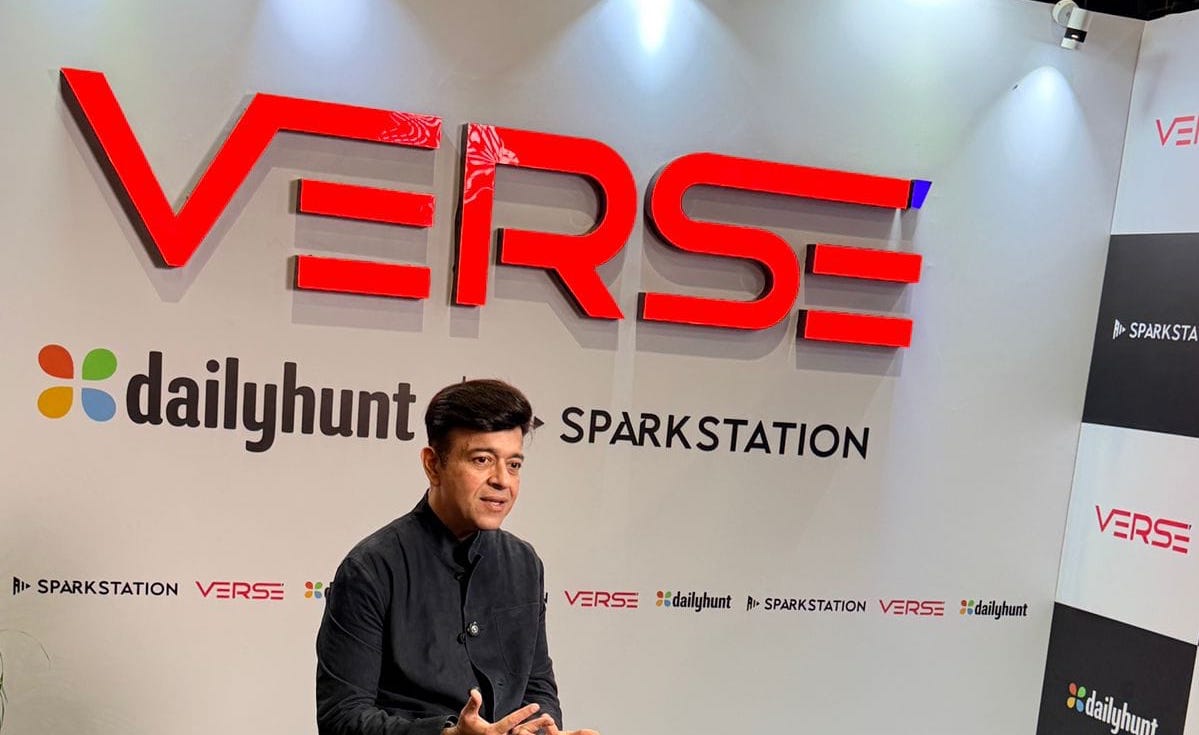
VerSe Innovation, the parent company of Dailyhunt and Josh, has introduced SparkStation, its new AI-powered content platform. The company unveiled the platform at Film Expo 2026 as an AI Content Operating System. It combines the different stages of production within a single workflow, covering everything from the initial idea and script to the final content. As VerSe Innovation’s first global-first product, SparkStation aims to make professional content production faster and more affordable.
SparkStation Brings the Entire Content Process Into One Platform
SparkStation is designed to handle the content journey from the first idea to the final cut in one place. Its workflow includes scripting, storyboards, casting, locations, costumes, and multi-angle shots. It also allows music and dialogue creation, as well as editing, captioning, and rendering. After the content is created, it may be customized to fit various ad and distribution formats.
The platform uses a model-agnostic AI layer to choose the most suitable AI model for each creative task. This way, the system ensures consistency throughout the production process rather than producing different and disconnected clips. SparkStation ensures consistency in face, expression, wardrobe, location, and props throughout the production process. The system supports more than 60 languages, even with localized lip movements. According to VerSe Innovation, it can cut the cost of a 60-second brand film by around 90%, from Rs. 10–25 lakh to Rs. 50,000–75,000. It can also reduce production timelines from several weeks to around 24 hours.
Built for Filmmakers, Brands and Creators
SparkStation serves three key groups: filmmakers and production houses, brands and agencies, and creators. Filmmakers can use tools for story development, casting, storyboards, shot creation, music, dialogue, editing, and rendering. They can export their work to Premiere, Final Cut, and DaVinci Resolve. Brands and agencies can create image, video, UGC, and ad content, as well as produce large volumes of product creatives and localized campaign variants.
Creators and influencers can access templates and studio-quality output through credits. VerSe Innovation has already used SparkStation at scale for over six months, and the platform is generating revenue. Umang Bedi said reducing production costs could allow stories that previously failed to reach production to be made.
Rollout, Investment and Pricing
SparkStation from VerSe Innovation will be available in three stages. Beta will be available from August 29; GA on October 1; and the enterprise API on November 1. The company has invested more than $30 million in GPU infrastructure, AI Orchestration, and specializations over 24 months. It is planning to support more than 100 studios, 1,000 brands, and thousands of creators globally. It will provide pricing through a credit model for creators, seat-based SaaS for studios and brands, and enterprise licensing with an API.
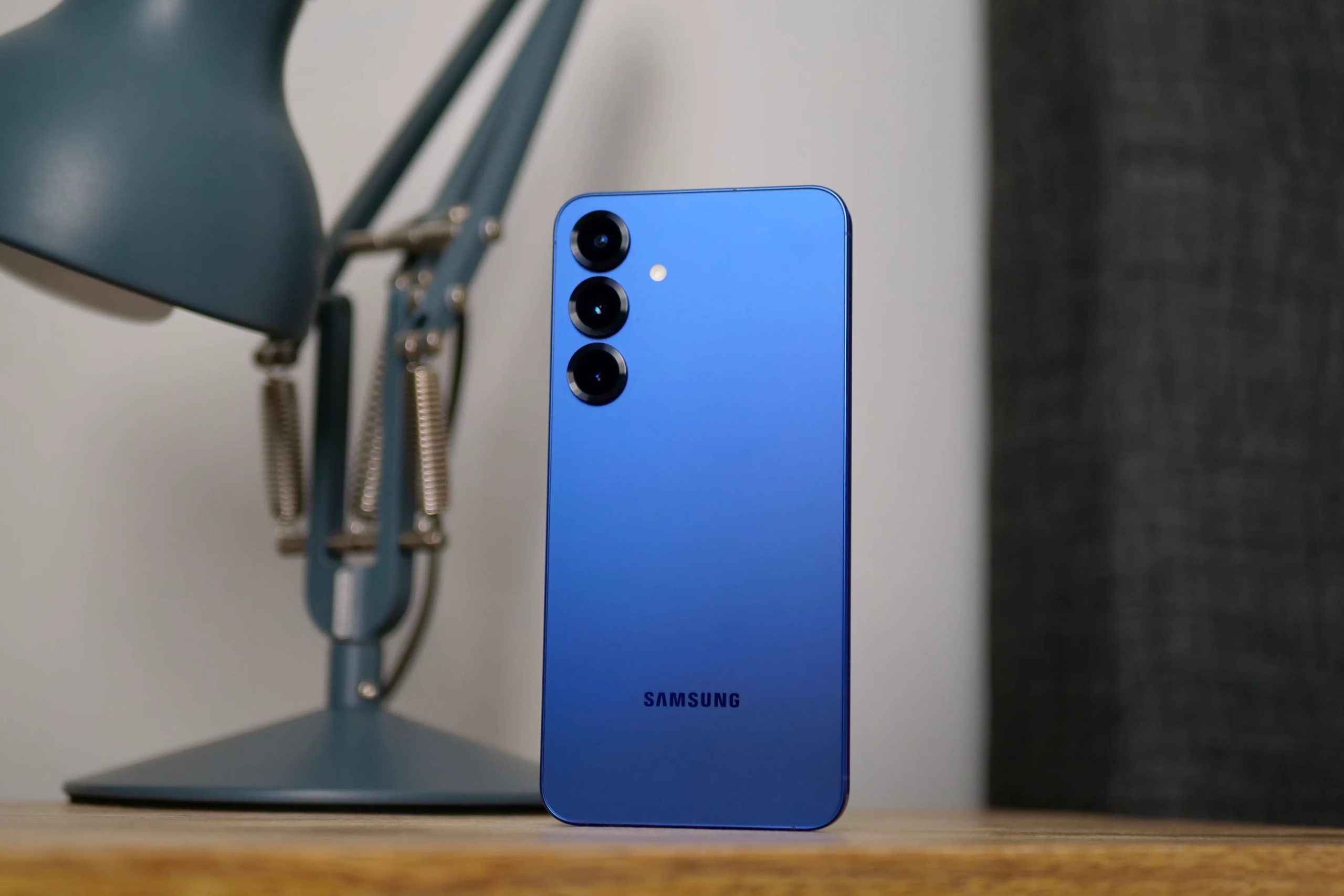
Labor Day phone deals get a lot more interesting once you stop looking at a single retailer. I checked Amazon and Best Buy and narrowed the current discounts down to six phones that stand out on price, value, or both, from a $200 Motorola to Samsung’s latest Ultra flagship.
Samsung Galaxy S25+

Amazon has the Galaxy S25+ 256GB for $679.99, down from $999.99, making it one of the strongest discounts in the roundup. We found its battery life and performance excellent in our Galaxy S25 Plus review, while seven years of software support gives it plenty of life ahead. At $320 off, its aging cameras are much easier to forgive.
Apple iPhone 16e
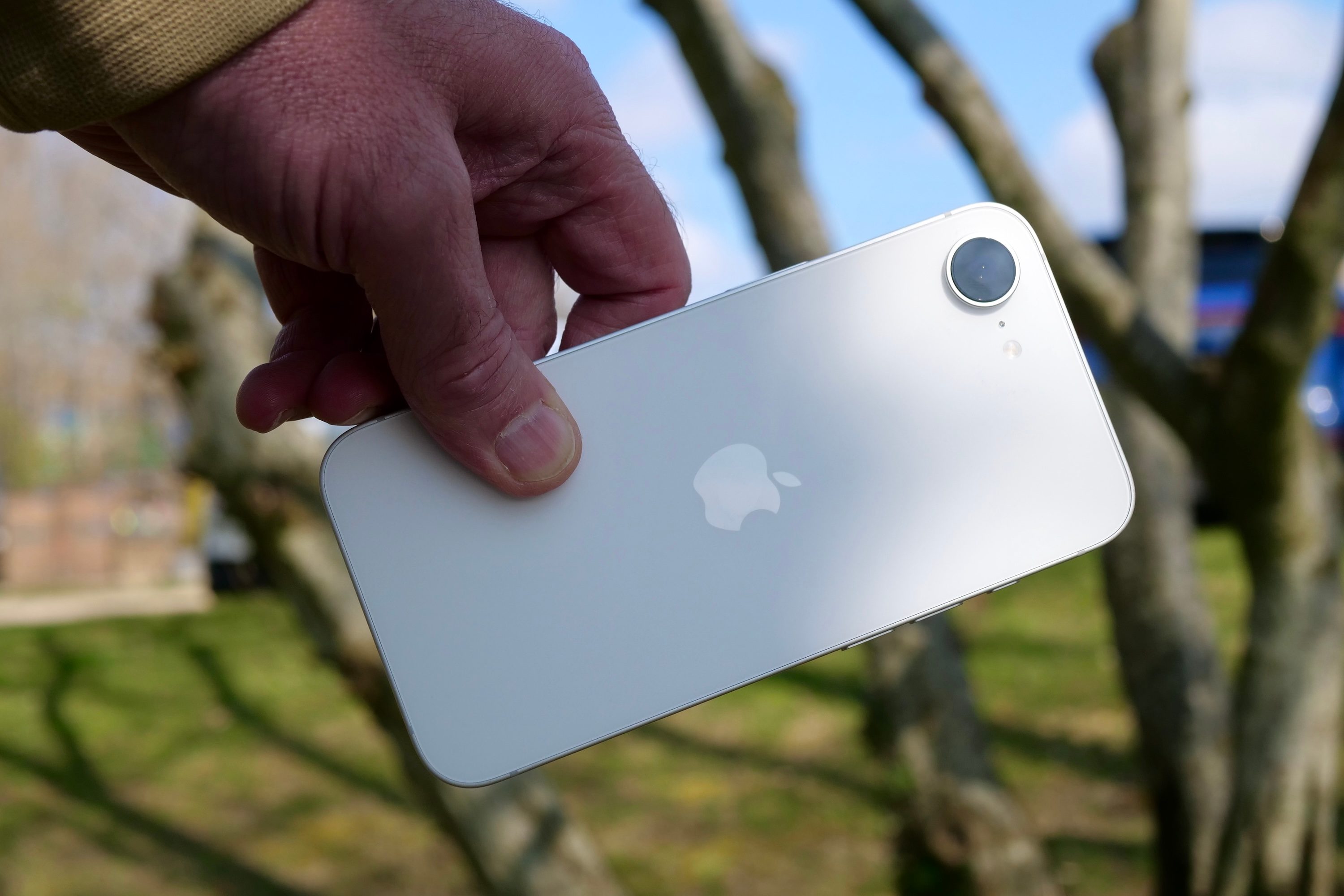
Best Buy has the iPhone 16e 128GB for $499.99, down from $599.99 as a Labor Day Deal. It’s the least expensive iPhone in this lineup and makes the most sense for anyone who wants Apple’s current software ecosystem without spending flagship money. The $100 discount also puts it below several midrange Android phones, which makes the value proposition considerably more interesting.
Samsung Galaxy S26 Ultra

The Galaxy S26 Ultra 256GB is $1,099.99 at Best Buy, down from $1,299.99, with the retailer labeling it a Labor Day Deal. Our Galaxy S26 Ultra review found it one of the most complete Android phones available, with excellent cameras, strong performance, and the S Pen. It’s still expensive, but $200 off helps.
Motorola Moto G Power 2025

You don’t have to spend anywhere near $1,000 to find a worthwhile Labor Day discount. Best Buy has the Moto G Power 2025 128GB for $199.99, down from $299.99. That $100 saving is substantial at this price, and the phone’s big battery makes it particularly appealing for anyone who prioritizes endurance over flagship-level cameras or performance.
Apple iPhone Air

The iPhone Air 256GB is $849.99 at Best Buy instead of $999.99, saving $150. It’s a pricier Apple option than the 16e, but the extra storage and more premium hardware make it a better fit for buyers who want something closer to flagship territory. Best Buy is explicitly listing the discount as part of its Labor Day deals.
Nothing Phone (4a) Pro

Amazon rounds out the list with the Nothing Phone (4a) Pro at $539, down from $599. The retailer currently marks it as a limited-time deal, and its distinctive design, 144Hz AMOLED display, and triple-camera setup give it plenty of personality compared with more conventional midrange phones. It’s not the biggest discount here, but $60 off makes the package easier to recommend.


DATABASES
Dutch in-process OLAP systems set to be the ‘SDK for data’ as developers scale systems, cloud giant claims after DuckLab acquisition
Last week, AWS bought DuckLabs, the people behind the open source OLAP system DuckDB. Since the cloud giant already owns a data warehouse – in Redshift – and it doesn’t get the DuckDB intellectual property (it remains open source), then why would it bother?
Andy Warfield, AWS VP and Distinguished Engineer, argued the acquisition is a major plank of AWS’s thinking when it considers the future of application building, data, and analytics.
“Half of why DuckDB is perceived as being valuable is as this kind of connective tissue layer across existing data processing tools,” he told The Register.
Written in C++, DuckDB is embedded within a host process. There is no DBMS server software to install, update, or maintain. It runs in the host application’s memory space with queries executing directly within the process. As such, developers can build analytics inside their applications, but Warfield said the design means developers and data engineers have new ways of connecting data sources and processing engines.
For example, DuckDB employs verbs in SQL such as “attach” and “connect” that allow it to work with almost any remote SQL endpoint. Warfield said DuckDB is already capable of connecting to Redshift or RDS, issuing SQL commands, and performing cross-engine interactions.
“In a lot of senses, we can treat it as [being] like an SDK for data that customers can build with, and they can run the large proportion of their queries that are small, and work over smaller data sets locally without having to stand up an external engine. Yet, as they graduate to work with larger datasets, or need centralized query capabilities, they can still use DuckDB as a way of passing those queries on to those other engines,” he said.
The concept applies to analytics and data systems from other vendors — such as Google’s BigQuery and Microsoft’s Fabric — as much as AWS’s own products.
“You can build with Duck, and it provides the path to graduate and to submit inquiries against something else, like a singular interface for data,” he said.
AWS acquired DuckLabs, the support and development company founded by DuckDB developers Hannes Mühleisen and Mark Raasveldt, both academics at Amsterdam’s Centrum Wiskunde & Informatica mathematical and theoretical computing research center. The database itself will remain open source under the MIT License.
Led by Mühleisen and Raasveldt, the DuckDB Foundation will remain an independent non-profit organization setting the strategic direction of database development. The governance of that Foundation is expected to change to include a broader spectrum of contributors as a result of the AWS acquisition of DuckLabs.
Andy Pavlo, VP of Research at ClickHouse Labs and professor of Databaseology at Carnegie Mellon University, said the AWS acquisition of DuckLabs would be a positive change for DuckDB. “Hannes and Mark did it their way from the very beginning. They eschewed VC money in 2020 and just focused on building a database system that solved real problems for people. I don’t see them changing the long-term direction of the open source project.”
The benefit of AWS money would come in providing funding to bring new ideas to reality. “The cost of DBMS development has increased greatly in the last few years. It’s not just the cost of humans working on the software, but also the agents that run tests, write code, review pull requests, and handle other system administrative tasks. Since agents are writing code faster than humans, that means more CI/CD infrastructure costs. Amazon will provide DuckDB resources to keep pace with modern DBMS development practices and scale their efforts.”
But AWS is not the only company betting on the founding principles of DuckDB. Former Google BigQuery engineer Jordan Tigani co-founded MotherDuck, which sells a cloud service built on the database, and is a regular contributor to the DuckDB project. In 2023, it gobbled up $52 million in VC money.
“Of course I’m nervous about the acquisition. Anyone with a stake in the DuckDB ecosystem is going to be nervous when a hyperscaler comes in and acquires the team behind the technology,” Tigani told The Register.
But he added that there would also be positive outcomes for people who care about DuckDB because the resources behind its development would increase.
“Open Source DuckDB is likely going to go faster. Yes, for that to happen you’d have to believe that Amazon isn’t going to meddle too much and break things, but I have a lot of faith in Hannes and Mark.”
In terms of the tech build around DuckDB, MotherDuck has a four-year head-start, he said. “We have built an amazing product that goes beyond just cloud-hosted DuckDB. We have developed expertise running DuckDB at scale and as critical infrastructure.”
If DuckDB remains true to its open-source principles, others can do the same. ®
An ECG takes a few seconds to record and costs very little. Researchers at Imperial College London have trained an AI system that can read one in under two seconds and identify signs of heart failure and valve disease that clinicians cannot detect from the same trace.
The results were presented at the European Society of Cardiology congress in Munich and reported by the Guardian on Monday. The trial covered 67,000 patients in the United States.
The tool identified up to 81% of heart failure cases and up to 90% of valve disease cases, despite using a test that was not originally designed to detect either condition.
“Superhuman AI” is the phrase Dr Ahmed El-Medany, a British Heart Foundation clinical research fellow at Imperial, used to describe the system.
The claim is relatively specific: the signal is present in the recording, but clinicians cannot reliably extract it from the ECG on their own.
The clinical problem it is designed to address is largely a problem of capacity. “Patients can often wait several months for a heart ultrasound scan after being referred for one by their doctor,” said Professor Fu Siong Ng, professor of cardiology at Imperial.
Heart failure is also a condition where delays can have serious consequences. The disease progresses over time, and treatment is generally more effective when it starts earlier, leaving patients in a queue while their condition continues to change.
An echocardiogram requires a trained sonographer, specialised equipment and an appointment. An ECG, by contrast, can be recorded using ten electrodes and a nurse, which is why it is performed much more frequently.
The idea is therefore to use the AI for triage rather than as a replacement for clinicians. If software can analyse ECGs that are already being taken and identify patients who are more likely to have a structural heart problem, those patients could be prioritised for an ultrasound instead of moving through the waiting list in the same order as everyone else.
“Technology like the AI ECG in this research could be a solution to help fast-track patients most likely to have a heart abnormality,” said Dr Sonya Babu-Narayan, a consultant cardiologist at the British Heart Foundation.
Cost is another reason the approach could work at scale. ECGs are among the cheapest and most widely used medical tests, so adding software to analyse recordings that are already being collected would require relatively little additional infrastructure or expense.
The current trial also sits on a much larger research programme. Ng’s group trained its models on 1.6 million ECGs from Brazil that were linked to patient records, along with several million additional recordings from the United States.
The wider programme looks beyond heart failure and valve disease. The models have also been used to identify heart attacks and arrhythmias, as well as conditions outside cardiology, including diabetes and kidney disease.
The researchers have reported accuracies of 83% to 93% for heart disease and 70% to 80% for the other conditions.
The Brazilian dataset is an important part of that work because the recordings are linked to what subsequently happened to the patients.
That gives the models a way to learn which patterns in an ECG were associated with diagnoses that emerged later, rather than simply learning to recognise conditions that had already been identified when the test was taken.
The research has also moved beyond the university. The BHF-funded work is being commercialised through a spinout called Cardiovolt.ai, with Ng serving as chief medical officer and Dr Arunashis Sau as chief scientific officer.
The team’s next stated step involves hardware as well as software. Handheld ECG devices with the AI built into the workflow could eventually take the technology beyond hospitals and into settings where ECGs are easier to perform, although that would also change the role of the system from helping clinicians prioritise existing patients to potentially identifying people who have not yet been referred for further testing.
Britain has an unresolved regulatory question around this kind of technology. The country has a strong academic pipeline for cardiovascular deeptech, including research that is already producing new approaches to cardiovascular disease, but moving from an academic result presented at a medical congress to routine use in hospitals requires a separate process of clinical validation and regulatory approval.
The current system has not yet gone through that process. An AI tool that identifies patients who should be referred for further investigation is making a clinical claim, which means it would need to meet the relevant medical device requirements before being deployed at scale in the UK.
There is also a difference between what has been presented at a medical congress and what has been demonstrated in routine clinical practice.
The trial suggests that information about heart failure and valve disease can be extracted from an ECG that was not designed to detect either condition, but it does not yet show whether using that information in real clinical settings leads to earlier treatment or better outcomes for patients.

Crypto Bull Market Confirms Here!!

One last U-turn! Keir Starmer QUITS as an MP despite promising he would stay on after being ousted by Burnham… leaving new PM with by-election headache
Keurig Dr Pepper to sell back Chobani stake for $925 million





-

 Crypto World7 days ago
SpaceX stock could rise 75% to $240, JPMorgan says
-

 Fashion4 days ago
Weekend Open Thread: Maeve – Corporette.com
-

 Crypto World5 days ago
Bitcoin’s 22% rally now needs real demand to outlast Treasury liquidity boost
-

 Crypto World6 days ago
Warsh Jackson Hole keynote puts financial innovation first
-

 Business4 days ago
Salesforce Stock Soars 19% as Blowout Earnings and Agentforce AI Growth Silence Software Skeptics
-

 Crypto World6 days ago
Elon Musk Grok Bot Promise: We Will Make You Whole if AI Loses Your Money
-

 Business5 days ago
Apple Confirms September 9 Keynote and Reveals Its Full Pre-Order Schedule
-

 Crypto World6 days ago
Did Trump Just Move SpaceX Stock With One Truth Social Post?
-

 Business3 days ago
Onto Innovation Stock: AI’s Next Bottleneck Is Yield (NYSE:ONTO)
-

 Business6 days ago
Walmart takes aim at younger shoppers with new fashion brand
-
 NewsBeat6 days ago
Lindsay Clancy jury braces for closing arguments as judge tells court: ‘You’ve heard all the evidence’ – Live updates
-

 Crypto World3 days ago
Bitcoin price tests $82K resistance as Brandt stays long
-

 Crypto World5 days ago
NVIDIA revenue hits $96.2B as AI demand doubles
-

 Business7 days ago
Thailand’s Eastern Economic Corridor Capital City (EECiti): Key Developments and Investment Opportunities
-

 Business4 days ago
iPhone 18 Pro Pre-Orders Could Shift to Saturday as Apple Reportedly Avoids September 11 Anniversary
-

 NewsBeat6 days ago
Trump’s trade truce with China faces test with Iran effort
-

 Crypto World6 days ago
Nvidia Q2 Earnings Reveal $96.2 Billion Beat, So Why Is NVDA Falling?
-
 Tech5 days ago
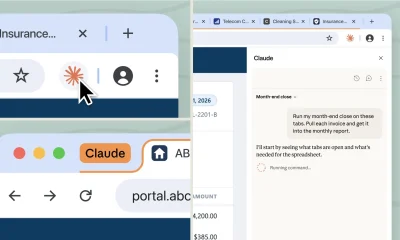
Claude Cowork gets its own browser that doesn’t touch your tabs, bookmarks, or saved passwords
-
 Tech3 days ago
Hugging Face built a $4.5 billion empire on free AI models. Now Nvidia is buying it for $12.9 billion
-

 Crypto World4 days ago
Truflation calls for Fed rate cut after PCE forecast
You must be logged in to post a comment Login