A 32-year-old man had been arrested on suspicion of arson with intent to endanger life, and burglary
A man has been questioned by police over an arson attack at a house in Co Fermanagh.
Advertisement
The incident in the Derrygonnelly area caused “substantial” damage to a bungalow on Friday night.
A police spokesperson said on Wednesday that a 32-year-old man had been arrested on suspicion of arson with intent to endanger life, and burglary.
“He has since been released on bail pending further inquiries,” they added.
“Our initial appeal is still active.”
Advertisement
Want to see more of the stories you love from Belfast Live? Making us your preferred source on Googlemeans you’ll get more of our exclusives, top stories and must-read content straight away. To add Belfast Live as a preferred source, simply click here.
The case of Seamus Culleton – who was detained by US immigration agents in Boston in September 2025 – is proving a diplomatic headache for the Irish government ahead of a visit to the White House on St Patrick’s Day.
Culleton arrived in the US in 2009, overstaying his visa. He married a US citizen last year and obtained a valid work permit, and was in the process of applying for permanent residency when he was apprehended by Immigration and Customs Enforcement (ICE) officers and detained. He has remained in detention in Texas since. A US court has now issued a temporary order staying his deportation.
Culleton’s case shines a rare light on the “undocumented” Irish in the US, a group that is rarely mentioned in US discussions around illegal immigration. The very idea of being undocumented in the US is associated with people from Mexico and Central and South America, not white people of European descent.
That perception reflects the racial exceptionalism that has long shadowed the Irish push for immigration reform in the US.
Advertisement
This history largely began in 1965, when the Immigration Reform and Nationality Act, also known as the Hart-Celler Act, radically changed conditions of immigration into the US. One effect was to reduce the numbers of Irish able to legally settle in the US.
Since the late 1960s, there have been efforts by successive groups to push for immigration reform that would advantage Irish immigration. While this work led to some successes, there was ultimate failure to secure comprehensive immigration reform.
Since the 1980s, advocacy has been primarily driven by Irish-born immigrants. At that time, the US saw an influx of immigrants leaving an economically impoverished Ireland. Many overstayed their tourist or student visas, and became undocumented – having no legal status in the US. It is estimated that there are 10,000 undocumented Irish living in the US today.
During research I was involved with in Chicago in 2017, a number of undocumented Irish consented to be interviewed anonymously. They were notably uneasy due to the recent election of President Trump and his avowedly anti-immigrant stance, expressing a sense of increased fear and uncertainty.
Advertisement
Equally, they were conscious that their race made them less visible to the authorities than the large numbers of undocumented people of Hispanic heritage. One interviewee commented: “People don’t think that we would be undocumented. I’m white, I can speak English, I’m Irish … that is not what the Americans are thinking of.”
The majority of our interviewees and survey respondents favoured immigration reform for undocumented Irish. But several observed that there can be opposition to such reform within the Irish community. A first generation Irish priest who had close relations with Irish communities, including the undocumented, commented: “Those who have legal status in the Irish community are not supportive, and sometimes opposed to the undocumented Irish. There’s pushback more so than in the Latino community … the Irish are quite divided.”
This schism between settled and sojourner Irish in the US is rarely mentioned, yet significant. The undocumented Irish take on a symbolic resonance, disrupting the common success narrative of how the Irish “made it” in the US.
In the past, the law was applied leniently to overstays who were building a life in the US, giving them opportunity to regularise their status. But in the second Trump administration, as ICE more rigidly and aggressively apprehends people who are deportable, the unease of undocumented Irish is even more heightened.
Advertisement
A St. Patrick’s Day dilemma
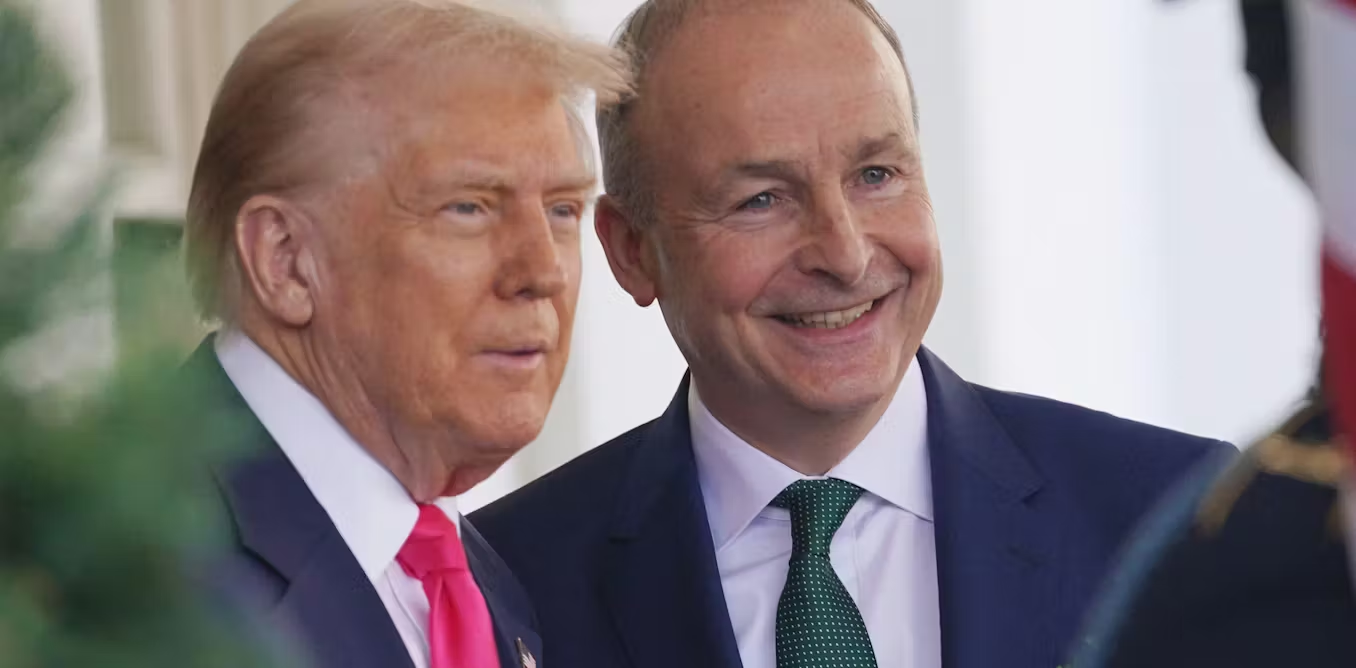
Irish Taoiseach Micheál Martin is in a difficult position as his visit to Washington approaches. According to a statement by Martin, there are “five to six” cases of Irish citizens currently detained by ICE. There is little clarity on how many have already been deported or how many have elected to quietly return to Ireland.
Irish opposition politicians and others in Ireland have taken up Culleton’s case to berate Martin for not doing enough to stand up to Trump. Some have demanded he pull out of the visit, which would be diplomatically awkward – Martin does not want to pull out of the scheduled meeting with Trump and all it entails for Ireland-US relations.
This is a volatile period in those relations. Trump is deeply unpopular in Ireland. Underneath this is a growing Irish disconnect with the US, including a notably conservative Irish America.
Immigration and customs enforcement agents have targeted undocumented immigrants as well as many US citizens. Copyright Lawrey/Shutterstock
Martin can’t admit any of that, of course. His job is to steer a safe and prosperous course, making his visit to the White House without causing headlines. On the Culleton case, he is adamant that a softly-softly diplomatic approach is best, saying: “Let’s not do anything that could make that even more difficult. This cannot be resolved in the public domain.”
Advertisement
That approach appears to have been made more challenging by Culleton’s decision to speak out about his case and about conditions in the Texas detention centre. He described it to national Irish broadcaster RTE as “a modern-day concentration camp” and said he feared for his life.
The discovery that Culleton was facing drug charges in Ireland at the time he moved to the US may further complicate the story, perhaps diminishing popular Irish support. It is also likely to harden the determination of US homeland security officials to deport him.
The story also has resonance due to the fact that Culleton is white. The last year has seen much debate about whether ICE’s actions have been targeting people of colour. Some conservative commentators are pressing for Culleton’s deportation to signify that ICE is colour-blind – “Yes, Even White, Irish Illegal Immigrants Must Be Deported” runs the headline of a Fox News opinion piece.
Whatever the outcome of Culleton’s case, it has already turned a spotlight on the fraught racial politics around being Irish and undocumented in America.
Stephen Colbert isn’t backing down in an extraordinary public dispute with his bosses at CBS over what he can air on his late-night talk show.
On “The Late Show” Tuesday, Colbert said he was surprised by a statement from CBS denying that its lawyers told him he couldn’t show an interview with Democratic Texas Senate candidate James Talarico — which the host said had happened the night before.
He then took a copy of the network statement, wrapped it in a dog poop bag, and tossed it away.
Colbert had instead shown his Talarico interview on YouTube, but told viewers why he couldn’t show it on CBS. The network was concerned about FCC Chairman Brendan Carr trying to enforce a rule that required broadcasters to give “equal time” to opposing candidates when an interview was broadcast with one of them.
Advertisement
“We looked and we can’t find one example of this rule being enforced for any talk show interview, not only for my entire late-night career, but for anyone’s late-night career going back to the 1960s,” Colbert said.
Although Carr said in January he was thinking about getting rid of the exemption for late-night talk shows, he hadn’t done it yet. “But CBS generously did it for him,” Colbert said.
Not only had CBS been aware Monday night that Colbert was going to talk about this issue publicly, its lawyers had even approved it in his script, he said. That’s why he was surprised by the statement, which said that Colbert had been provided “legal guidance” that broadcasting the interview could trigger the equal time rule.
“I don’t know what this is about,” Colbert said. “For the record, I’m not even mad. I really don’t want an adversarial relationship with the network. I’ve never had one.”
Advertisement
He said he was “just so surprised that this giant global corporation would not stand up to these bullies.” CBS is owned by Paramount Global.
Colbert is a short-timer now at CBS. The network announced last summer that Colbert’s show, where President Donald Trump is a frequent target of biting jokes, would end in May. The network said it was for economic reasons but others — including Colbert — have expressed skepticism that Trump’s repeated criticism of the show had nothing to do with it.
This week’s dispute with Colbert also recalls last fall, when ABC took late-night host Jimmy Kimmel off the air for a remark made about the killing of conservative activist founder Charlie Kirk, only to reinstate him following a backlash by viewers.
As of Wednesday morning, Colbert’s YouTube interview with Talarico had been viewed more than five million times, or roughly double what the comic’s CBS program draws each night. The Texas Democrat also reported that he had raised $2.5 million in campaign donations in the 24 hours after the interview.
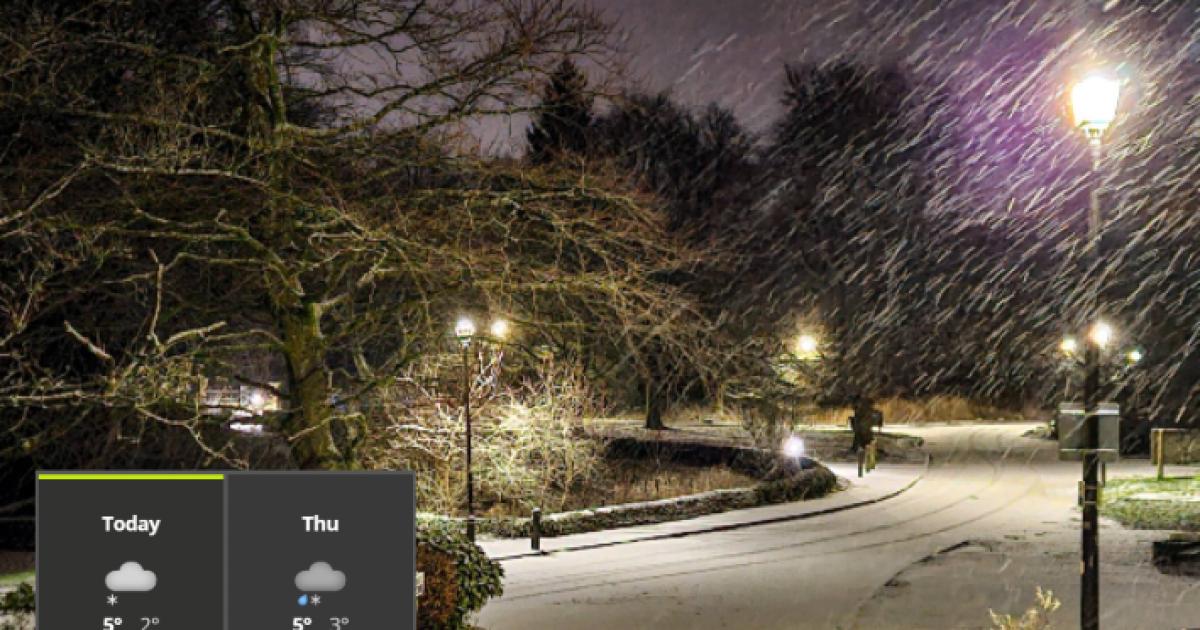
Wintry showers are set to fall from 5pm as sleet before snow falls throughout the night, turning to sleet into the early hours and during the rush hour.
Temperatures will reach a high of five degrees and lows of two degrees.
Wintry showers are set to move in, with snow expected to continue throughout tonight, February 17, and into the early hours of Thursday, February 19, until approximately 8am.
Advertisement
The Met Office has cautioned that there’s a slight possibility of delays on roads, potentially resulting in some vehicles and passengers being stranded.
Both rail and air services may also encounter delays or cancellations.
Snowfall could also isolate some rural communities.
Possible power cuts and disruptions to services, including mobile signals, have also been predicted.
Advertisement
Snow showers are expected in Bolton on Wednesday afternoon.
By Thursday morning, sleet showers are set to begin, with an 80 per cent chance of precipitation at 6am.
Temperatures are forecast to peak at around 5C.
Conditions are expected to turn drier during the afternoon.
Advertisement
However, spells of rain, sleet and snow will push northwards through the evening.
Tonight, rain, sleet and hill snow will continue to move northwards, turning lighter and more patchy towards the end of the night as winds begin to ease.
“It’s heartbreaking now, when I think about it, that young Noah has gone on”
A retired police officer has described the “horrendous” conditions in a storm drain tunnel network in which the body of Noah Donohoe was discovered.
Advertisement
Retired inspector Menary, who previously managed the PSNI hazardous environment search (HES) team, told Belfast coroner’s court that anyone entering the tunnel without protective clothing would have been “absolutely frozen”.
The inquest into the death of the schoolboy at Belfast Coroner’s Court, which is being heard with a jury, is now in its fourth week.
Noah, a pupil of St Malachy’s College, was 14 when he was found dead in a storm drain tunnel in north Belfast in June 2020, six days after leaving home on his bike to meet two friends in the Cavehill area of the city.
Advertisement
A post-mortem examination found the cause of death was drowning.
Resuming his evidence on Wednesday, Mr Menary told the jury that his team had resumed his search of a stretch of the storm drain network on Thursday June 25, four days after Noah went missing.
The tunnel could be accessed from a culvert entrance in Northwood Linear Park in north Belfast, close to where Noah had last been seen on the Sunday before.
Mr Menary told the jury that at this stage he was involved in a search operation, not a body recovery operation.
Advertisement
He said at that point there was “no evidence” Noah had gone down into the storm drain.
He said: “We were looking for anything strange or out of the ordinary within the culvert.”
Mr Menary searched in an area underneath Seaview football pitch, the home of Crusaders FC.
Describing the conditions, he said: “It’s freezing cold. My flood suit at the time is sealed, but doesn’t fully seal around the waist, so when I was lying down the water was coming over the top of me and up into the bottom of my jacket.”
Advertisement
Counsel for the coroner Declan Quinn asked what it would have been like for someone to be in the tunnel without protective clothing.
Mr Menary said: “Somebody doing that with no clothes would have been absolutely horrendous and you would have been absolutely frozen.”
Mr Quinn asked about the physical exertion which would have been needed for someone to travel from the entrance to the culvert system at Linear Park to the stretch of tunnel which the retired officer had searched.
Mr Menary said: “The water would have continually come over you and you would have been frozen.
Advertisement
“You begin to get disorientated because of the cold, you begin to slow down and you just continually move on that section underneath the football pitch.”
The retired officer said it was “heartbreaking” to think Noah had been in the tunnel.
He said: “It’s hard and that bit underneath the pitch was fairly horrendous.”
Asked about the email to the First Minister, a spokesperson for the Crown Office and Procurator Fiscal Service told PA: “The Lord Advocate provided the First Minister with an update to ensure it was understood she was not involved in the case, that it was active for contempt of court, and therefore it should not be commented upon.
From hit series such as Heated Rivalry and Bridgerton to the most talked about movie of the moment, Emerald Fennell’s Wuthering Heights, yearning is everywhere right now. Falling in love and living happily ever after? BORING – we want storylines with long, drawn out power dynamics, tortuous emotional restraint and hopefully, a moment of release.
Yearning, as the Cambridge Dictionary defines it, is “a strong feeling of wishing for something, especially something that you cannot have or get easily” – and we can’t get enough of it.
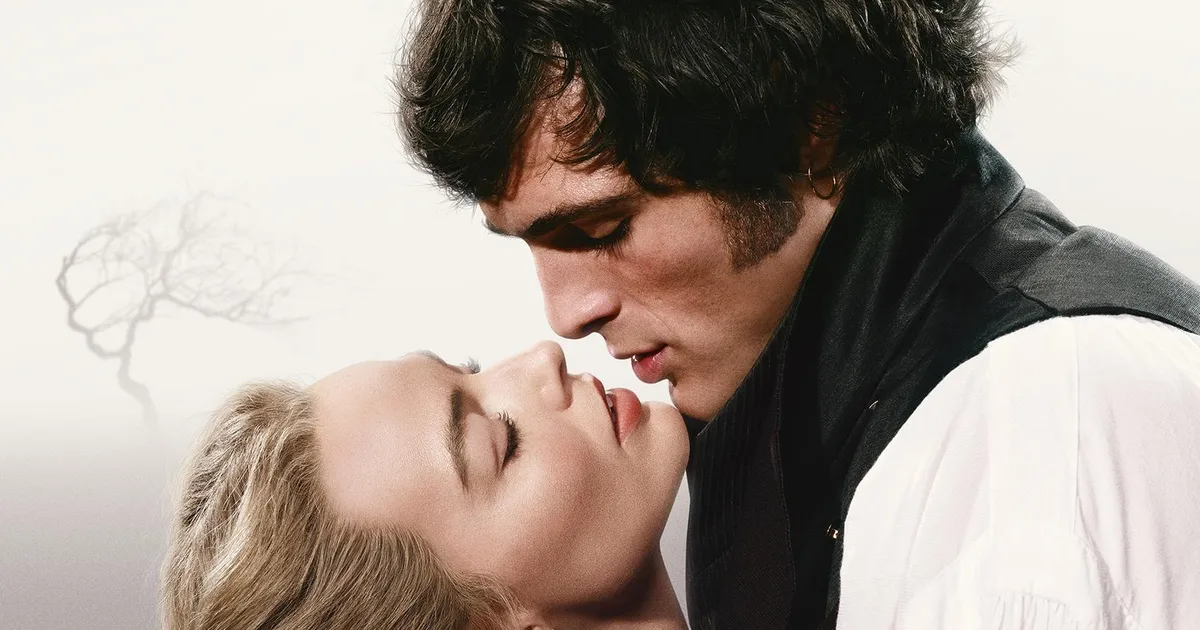
You only have to search #yearning on TikTok to be flooded with videos (245k posts, in fact) to find romanticised clip after clip of Jacob Elordi’s Heathcliff looking miserable on the Moors or videos of Jonathan Bailey’s Anthony Bridgerton staring down a camera with misty-eyes.
Meanwhile, the phrase ‘best yearning scenes’ has been Googled so many times in the last 30 days that it’s been classified as a ‘breakout’ term (Heathcliff’s finger sucking has a lot to answer for).
Advertisement
However, according to new research from Tinder, it turns out that many of us don’t just want these intense feelings in our pop culture, we want them mirrored in our own dating lives too.
Not content with yearning being restricted to screen, stage and page (yes, we see you too A Court of Thorns and Roses readers), 71% of UK singles aged 18-25 want love that feels as intense as it does in films or books, while two thirds (67%) say they love the feeling of being yearned after, and 61% enjoy yearning for someone they like.
However, is yearning really all it cracks up to be in practice in the real world?
Well, as chartered psychologist Dr Tracy King explains, one of the main issues with yearning is that a lot of it is based around uncertainty and it can actually lead us to have an unrealistic idea of the person we’re yearning for.
Advertisement
“When someone is just out of reach, the mind fills in the gaps,” she says. “You are not relating to a full, consistent picture of a person, you are relating to fragments and possibility. That creates intensity, but intensity is not the same thing as compatibility.”
In other words, you’re so wrapped up in this feeling of want and longing that you might be blind to the pitfalls of the person themselves – that this idea of them is actually more attractive than the reality of who they are.
We’ve all been there, when the thrill of the chase and the ‘will we, won’t we’ element of dating is absolutely intoxicating, but then when things eventually work out after painful uncertainty, everything feels a little… flat.
Tinder’s data actually echoes this, with 28% of UK singles saying they enjoy having a crush even if it doesn’t go anywhere i.e. the whole point is the feeling of longing over the actual fruition of a relationship.
Advertisement
And unfortunately the reason it can feel so delicious is because yearning sits in the brain’s same learning mechanism as intermittent reinforcement – and for this example, Dr Tracy uses rats (sorry Heathcliff).
“We can look at the effects of intermittent reinforcement from past behavioural psychology experiments using rats. When a reward was delivered consistently to the rats, their behaviour stayed steady.
“However, when the reward was delivered unpredictably, the behaviour became far more embedded. The uncertainty drove the animal to keep trying. Unpredictable rewards embed action and need far deeper.”
Apart from desperately trying not to make a joke about our exes and rats, how does this relate to our dating lives? Time to reintroduce our dating trend friend breadcrumbing, something which yearning relies upon, according to Dr Tracy.
Advertisement
“Yearning is exactly how breadcrumbing is able to work. A message arrives after silence. Interest appears and disappears. There is just enough contact to keep hope alive, but not enough consistency to create security. People may call this romance, or proof of how much they need and want the other but what is happening is nervous system activation plus a reward loop.”
Yearning suddenly isn’t as sexy when you think of it as a weapon for shitty dating behaviour, is it?
At the moment, pop culture tends to romanticise yearning because it looks like depth of feeling on screen but in real life, it is worth asking a more grounded question: is this feeling coming from mutual connection and real knowledge of the person, or is it being driven by inconsistency and the pull of possibility?
Sure, healthy love might not be as glamorous and sexy as yearning, but maybe we should leave the misery on the Moors and the unpredictable breadcrumbs for the rats.
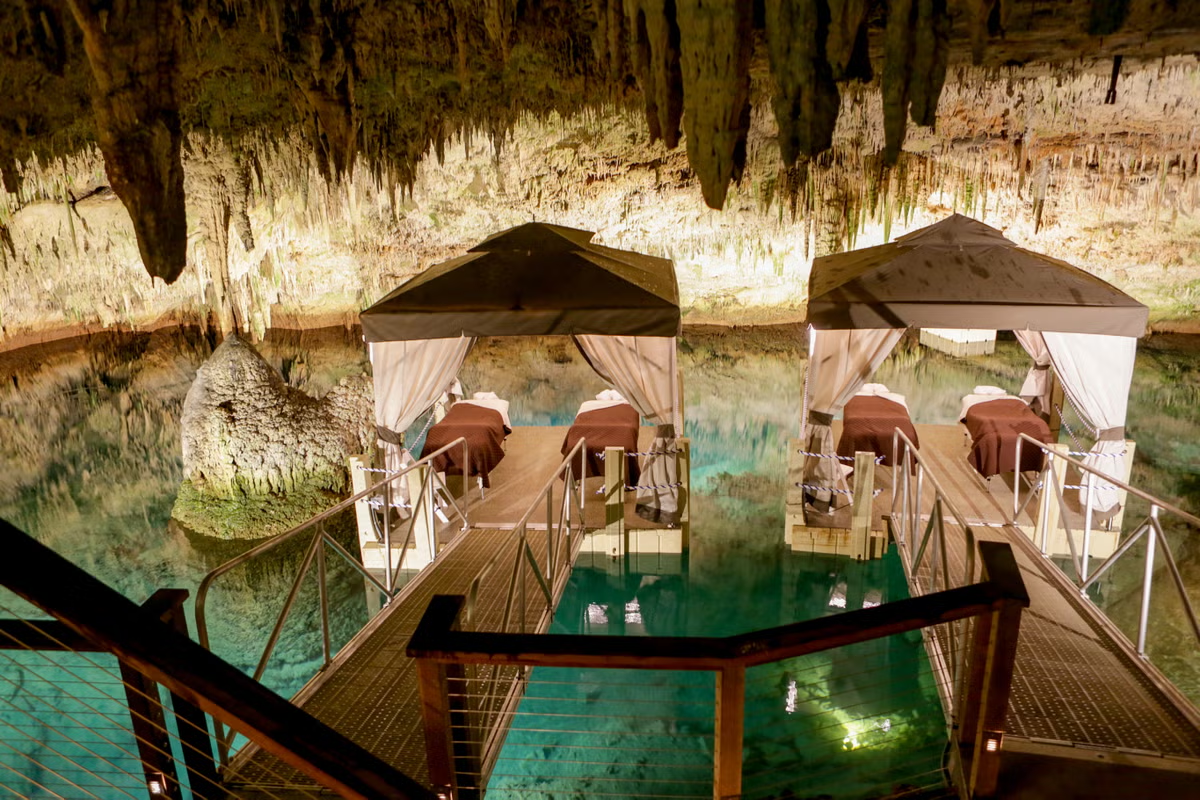
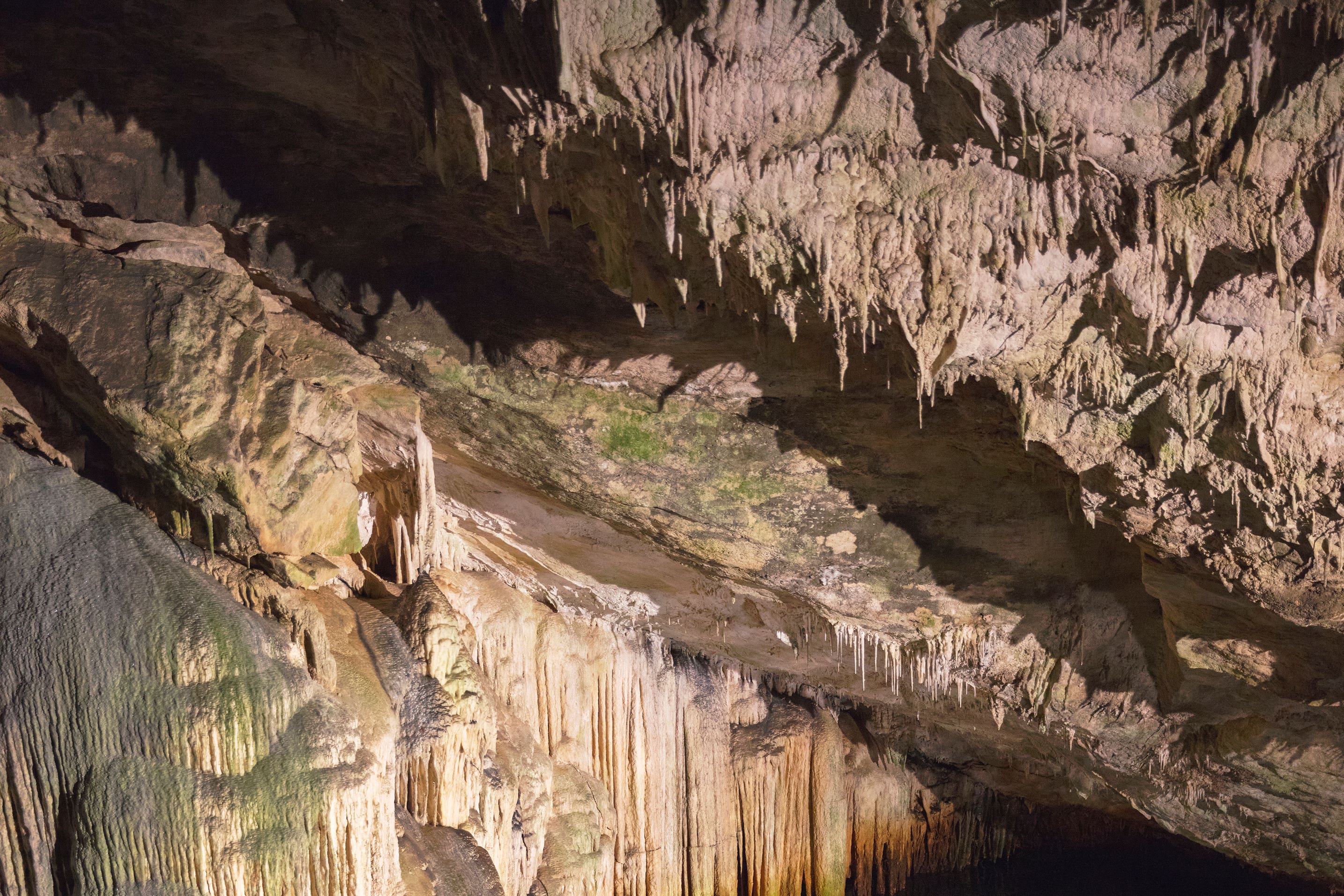
Lying face-down in a floating cabana during an aromatherapy massage in a 500,000-year-old cave is the closest thing to nirvana I’ve ever experienced.
My cabana sits above an azure underground lake, and I’m entirely surrounded by stalactites, hanging like icicles from the roof, and stalagmites (mounds formed on the floor) in Prospero’s Cave, Bermuda.
It’s hard to imagine a more calming setting as I feel my muscles relax, to the soundtrack of the drips of water (or calcium carbonate deposits, more accurately) falling from the ceiling, echoing around this ancient cavern.
This cave and the nearby Cathedral Cave form a pair of expansive ancient underground limestone grottos beneath Grotto Bay Beach Resort & Spa.
Advertisement
Guests can also take a dip in the Cathedral Cave’s naturally cool waters – which reaches depths of nine metres – a welcome relief from the balmy outside temperatures.
A refreshing dip in the cool cave waters at the Grotto Bay Beach Resort (PA)
These caves were first discovered during Bermuda’s early colonisation. It’s thought that Sir George Somers, whose ship was wrecked near the country’s shore in 1609, first discovered Prospero’s Cave.
Advertisement
Now, the resort’s Natura Spa, set inside the cave itself with just three overwater cabanas, offers an exclusive setting for a variety of treatments – and it’s said to be one of the few places in the world for such a unique experience. It also marks the beginning of my wellness journey on this beautiful archipelago in the middle of the North Atlantic Ocean.
Famous for its pink-sand beaches and turquoise waters, the British Overseas Territory of Bermuda, comprising seven main islands within an archipelago of 181 in total, is positioning itself as a leading destination for wellness-focused travellers.
I’m pleasantly surprised by the mild winter temperatures in January, ranging from 16 to 20 degrees Celsius, a respite from the harsh British winter and some eight hours away by air.
Advertisement
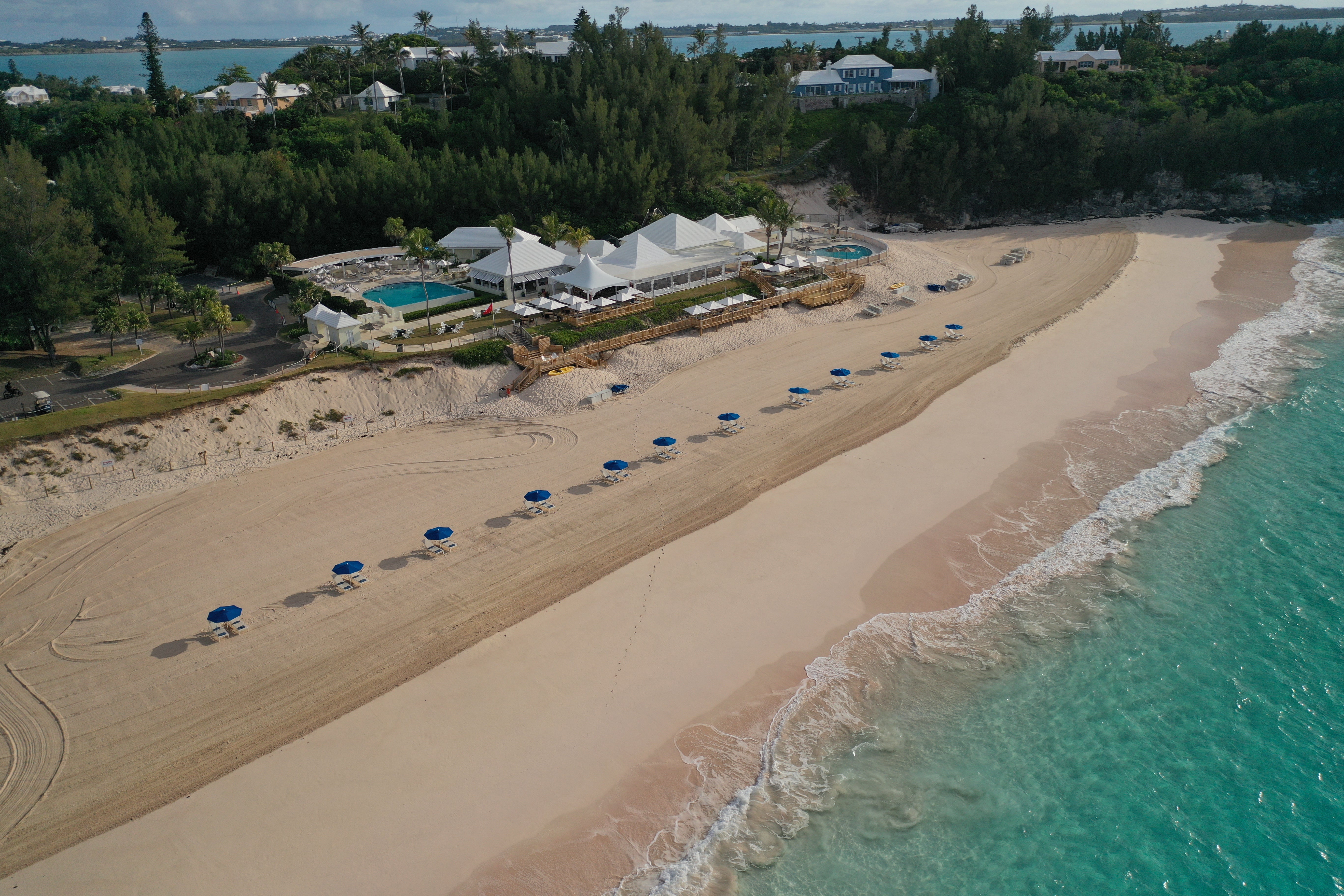
A view of the private pink sand beach at the Rosewood Bermuda (Rosewood Bermuda/PA)
But Bermuda feels worth visiting for the warmth and hospitality of its people alone. Walking around the capital, Hamilton, on Main Island, with pastel-coloured buildings lining the waterfront, splashes of street art, and charming shops and cafés, it’s almost impossible to pass anyone without being greeted with a smile.
I’m staying at the luxurious five-star Rosewood Bermuda on Tucker’s Point in Hamilton Parish, home to Bermuda’s largest private pink‑sand beach.
The sand has a subtle pink hue on several beaches here, thanks to the presence of a microscopic marine organism, foraminifera – its bright red or pink shells mix with white sand and tiny coral fragments, giving the distinctive colour.
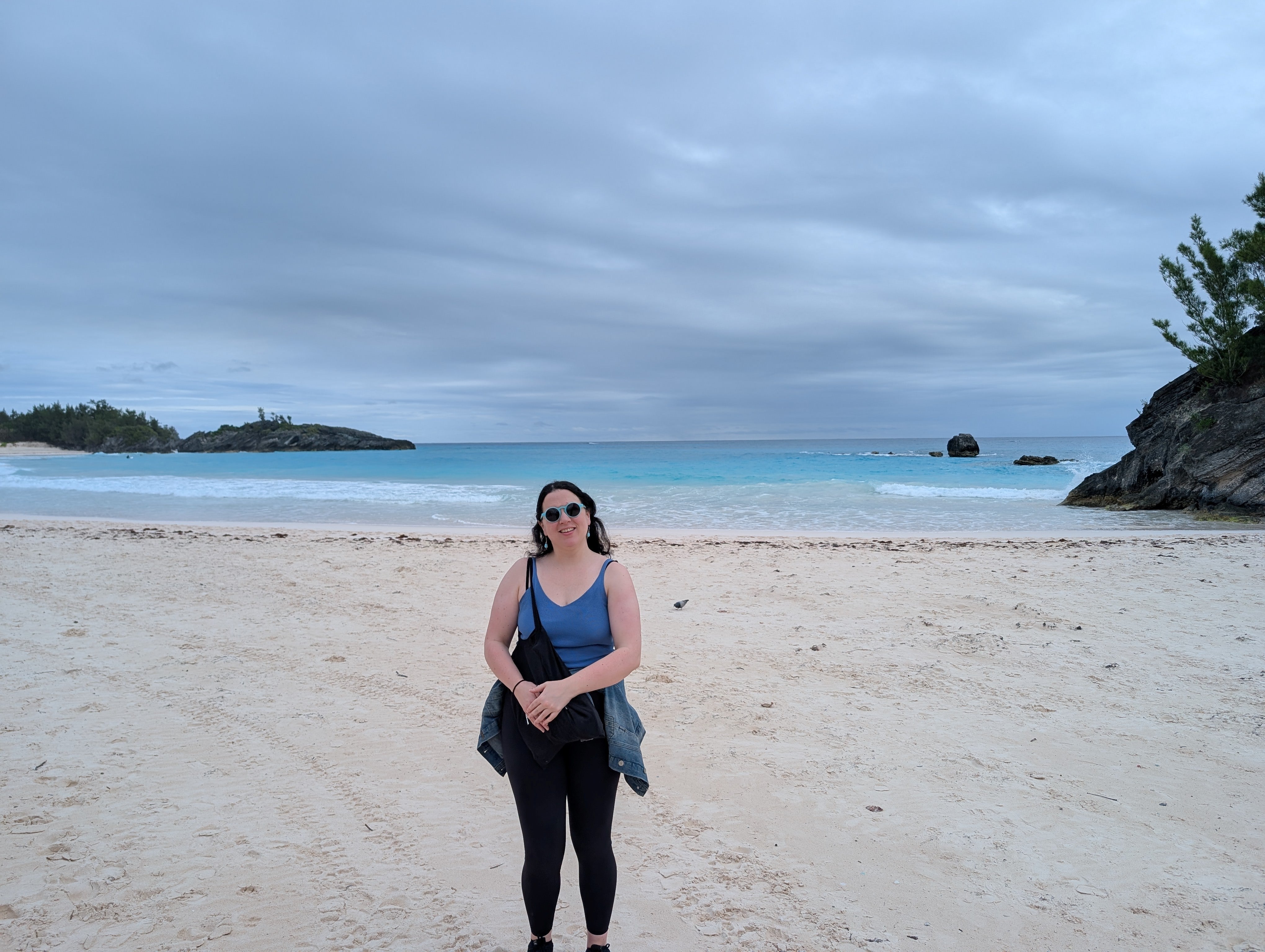
And a trip to Bermuda wouldn’t be complete without a visit to nearby Horseshoe Bay, the island’s famous crescent-shaped pink-sand beach with dramatic limestone cliffs.
Advertisement
My spacious room, complete with its own private balcony and a dark-wood, four-poster king bed, has views straight over the North Atlantic Ocean.
This 240-acre resort also features a spa, five scenic swimming pools, and three restaurants with two bars, the perfect setting to relax and unwind.
The island’s food and drink scene celebrates flavours and produce unique to its shores. A driver, Tim, insisted I couldn’t leave without trying a Dark ’n’ Stormy, made with Gosling’s Black Seal rum and ginger beer, and the famous Bermuda fish sandwich: fried white fish served on toasted raisin bread. It’s a challenge I happily accept.
The main objective on this trip, however, was to explore the full range of wellness experiences Bermuda has to offer.
One stop on the wellness tour is a barre class at the Hamilton Princess & Beach Club. Also known as the ‘Pink Palace’, the hotel boasts an impressive art collection, including original works by Andy Warhol and Damien Hirst, and prides itself on being Bermuda’s only luxury urban resort.
But no one embodies Bermuda’s wellness ethos quite like Jessica Burns, founder of The Retreat House, described as “a sanctuary for connecting more deeply with yourself, others and the natural world of Bermuda”.
Advertisement
A Bermuda native, Burns established the business after losing her mother, Kim, to ovarian cancer in 2023. Leaving behind her corporate career in London, she returned home to transform the beach-facing property her mother had rented to tourists for more than a decade into The Retreat House.
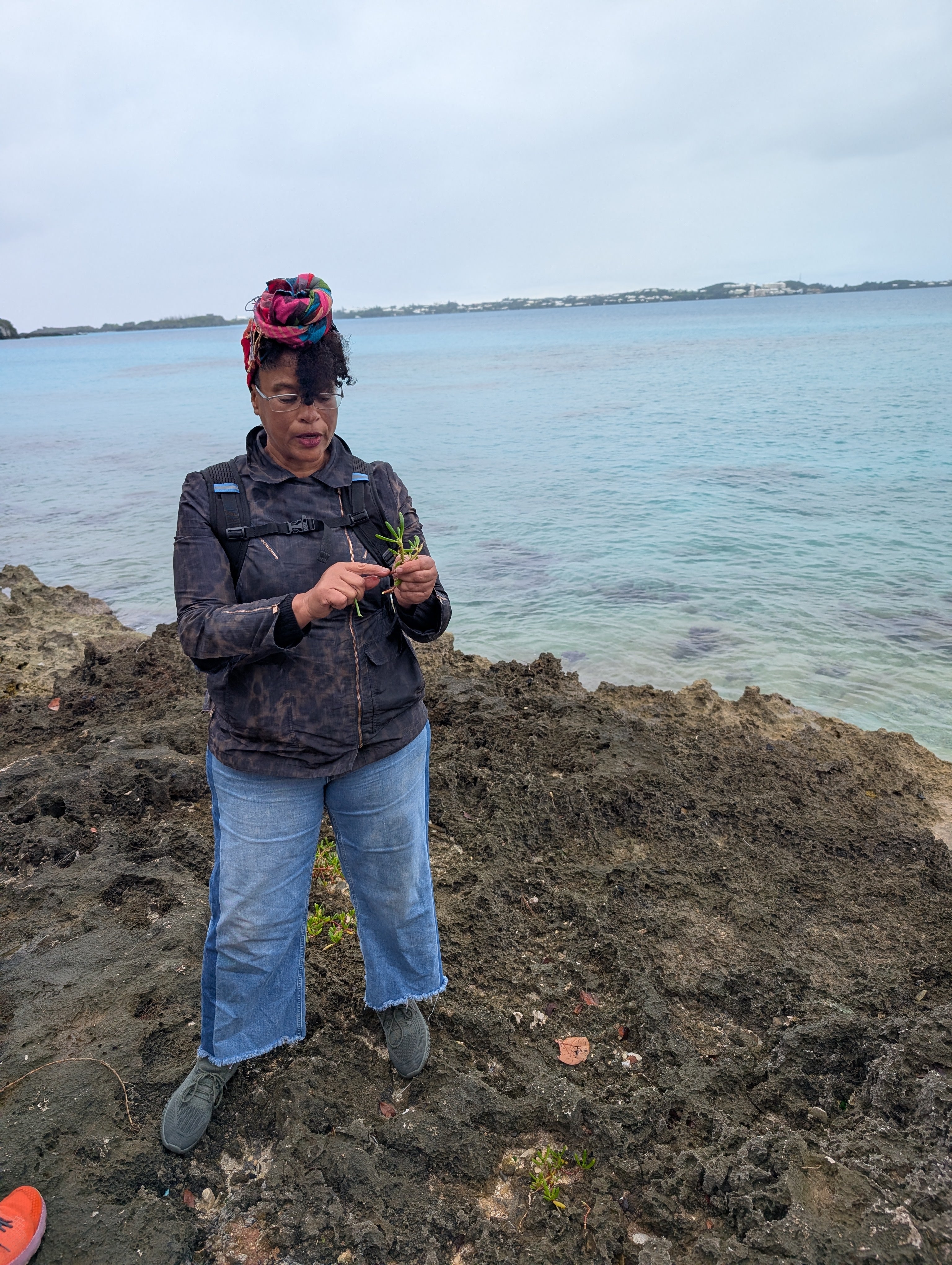
Local vegan chef Doreen Williams-James who led our foraging tour (Lynn Rusk/PA)
Since 2024, she’s hosted a range of retreats, from the Kim Burns Retreats for people living with cancer, to programmes designed for expectant mothers. Her aim, she tells me, is to help establish Bermuda as “one of the world’s leading wellness destinations,” encouraging travellers to embrace the island’s healing nature.
Advertisement
With its turquoise waters, lush tropical greenery, and unhurried pace of life, Bermuda naturally fosters relaxation and restoration.
But it’s also rich in natural culinary sources and medicinal plants. I join a foraging tour with local vegan chef Doreen Williams-James on Cooper’s Island Nature Reserve, at the south-eastern tip of the island. She leads us on a leisurely walk, pointing out edible and medicinal plants along the way, including Old Spice, fennel, wood sorrel, hibiscus, and scurvy grass.
“I grew up eating scurvy grass, a coastal, vitamin C-rich plant, as a child,” Williams-James explains.
“My father would take me out at this time of year to pick it – it only grows once a year. When sailors first arrived on the island, their diet consisted largely of salted pork, which led to vitamin C deficiency and scurvy. They discovered that eating this plant cured the disease, which is why [we know] it’s so high in vitamin C.”
Advertisement
She also touts the health benefits of eating seasonally: “At this time of year, there are so many plants naturally high in vitamin C. Eating what’s in season can help prevent illness and support healing through food.”
Lynn Rusk at Horseshoe Bay (Lynn Rusk/PA)
Foraging isn’t just a popular activity on the island, it was once a way of life. Williams-James adds: “For the older generation, foraging was simply how they lived – that’s what they ate and relied on. When I go foraging now, younger people often look at me and think, ‘What is she doing?’ But I’m seeing more of them join my tours because they want to eat better and embrace a different lifestyle.”
From a massage in an ancient cave to foraging in the wild and spending time on unspoilt beaches, I leave Bermuda feeling refreshed and ready to take on the challenges of city life once again.
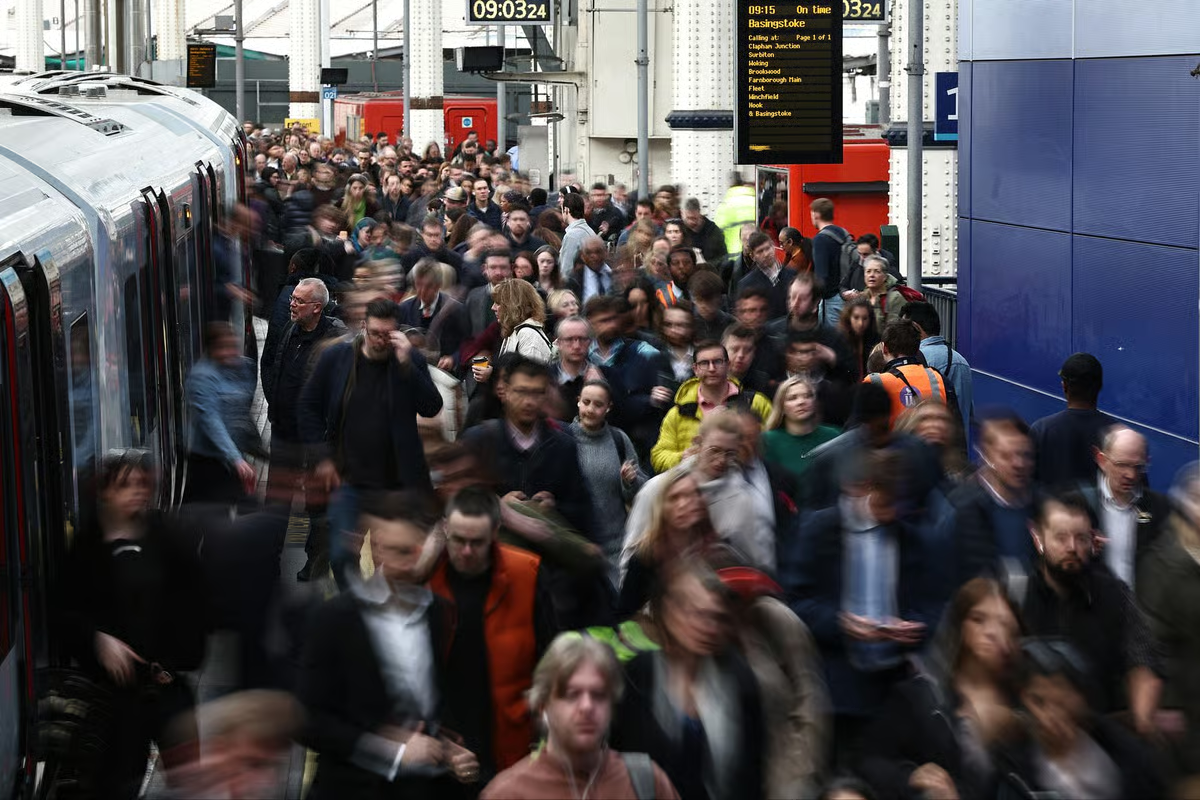
A number of Southern routes from London Victoria to Ore, Littlehampton, Eastbourne, Bognor Regis and Portsmouth Harbour are also impacted. Meanwhile, Thameslink services between Peterborough and Horsham, Cambridge and Brighton, and Bedford and Three Bridges or Brighton may also see alterations.
A van driver who crashed into the back of a broken-down car in the fast lane of a smart motorway has been convicted of causing the fatal collision.
Barry O’Sullivan, 45, was driving a grey Ford work van along the M4 on March 7 2022 when he hit a Nissan Micra which had stopped in the outside lane.
The crash, which took place on the M4 westbound between junctions 11 and 12 in Berkshire, caused both vehicles to propel forward, with the Nissan bursting into flames.
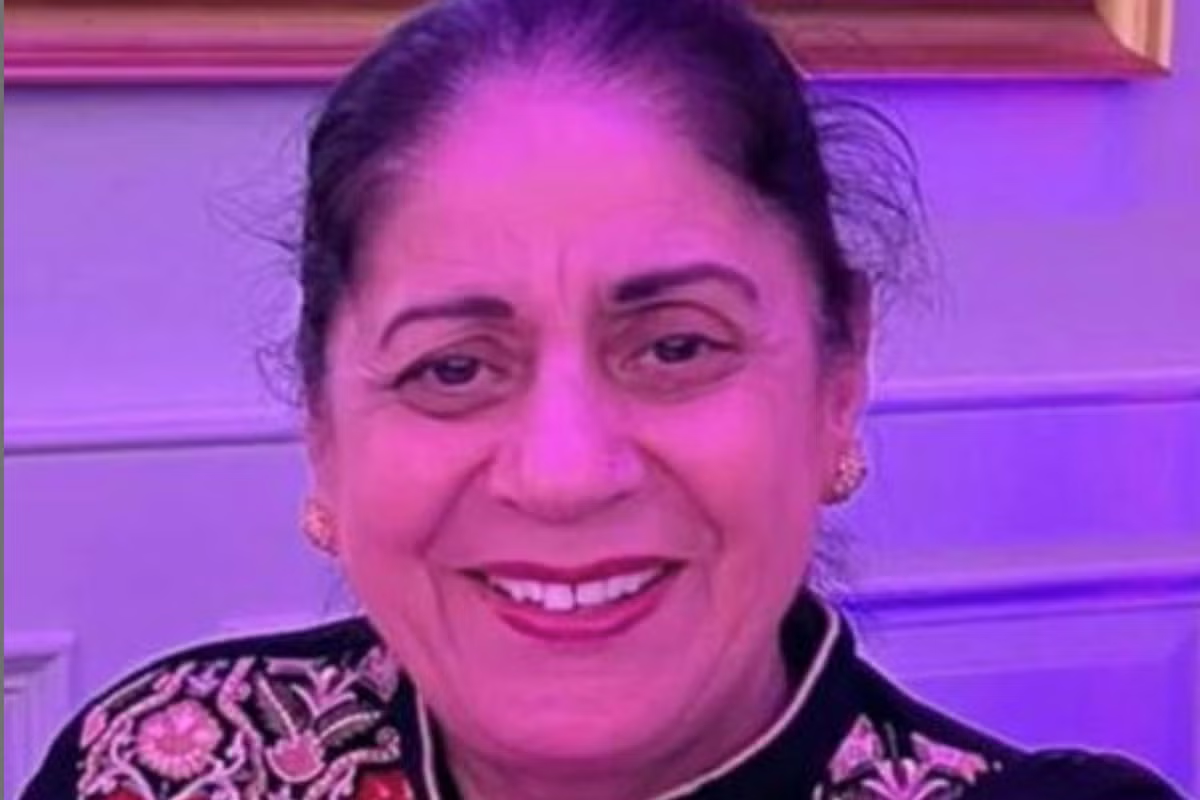
Pulvinder Dhillon, who was a passenger in her daughter’s Micra, suffered fatal injuries.
Advertisement
It was later discovered an unresolved technical failure on the M4 smart motorway network meant alerts for broken-down vehicles were not properly communicated in the days leading up to the collision, the trial at Reading Crown Court was previously told.
Defence lawyers argued O’Sullivan could not have caused the death of Ms Dhillon because the crash was “inevitable” given that the car was stationary in the fast lane and the smart motorway was not displaying any warning signs to other motorists.
While acknowledging “something went wrong” with the motorway’s safety alert system, the prosecution argued O’Sullivan still caused the death of Ms Dhillon by driving carelessly and “at speed”.
He did not pick up on “cues” that the vehicle was stationary, including the fact other motorists were taking steps to avoid the broken-down Nissan, the prosecution told jurors during the trial.
Advertisement
The panel found O’Sullivan guilty on one of one count of causing death by careless driving, having deliberated for more than six hours.
On the day of the crash, alerts from stopped vehicle detection radars on the M4 junction eight/nine to 12 had not been communicated for five days due to a technical failure on the IT network, the trial heard.
Consequently, the network “wasn’t showing messages about any obstructions in the road ahead” on the morning of the incident.
The technical malfunction had been flagged by the system on March 2 2022 and automatically generated tickets, but they were assigned to the wrong National Highways team and with an incorrect priority level of “seven-day resolution”, the trial was told.
Advertisement
The Nissan had been stationary on the fast lane for six minutes before the collision, jurors previously heard.
O’Sullivan, of Wixams near Bedford, was driving his Ford van at speeds of 74-80mph along that same stretch of motorway for the five seconds before the crash.
A roadside breath test and drug test was later administered and O’Sullivan had a zero reading for alcohol and no cocaine or cannabis was detected.
Ukrainian officials will boycott next month’s Milano Cortina Winter Paralympics over the participation of a handful of Russian and Belarusian athletes who have been cleared to compete under their flags.
Russia and Belarus will have a combined 10 athletes at next month’s Winter Paralympics following Tuesday’s decision by the International Paralympic Committee.
Ukrainian athletes will still take part in the March 6-15 Paralympic Games, but the country’s sports minister, Matviy Bidnyi, said no Ukraine official would be at the opening ceremony or any event of the Games.
Advertisement
Mr Bidnyi said: “In response to the outrageous decision to let Russians and Belarusians compete under their national flags, Ukrainian public officials will not attend the Paralympic Games.
“We will not be present at the opening ceremony. We will not take part in any other official Paralympic events.
“We thank every official from the free world who will do the same.
“We will keep fighting!”
Advertisement
This breaking news story is being updated and more details will be published shortly.