
Connect with us

Business

At Close of Business podcast September 1 2026

Published

on

At Close of Business podcast September 1 2026

Claire Tyrrell speaks to Ella Loneragan about the risks and rewards of private credit within the property sector.

Continue Reading
Click to comment

You must be logged in to post a comment Login

Leave a Reply

Business

Mike Ashley’s Frasers Group considers move to oust Hugo Boss chairman

Published

on

Business Live

Group told investors on Tuesday that it wants to control more than half of Hugo Boss

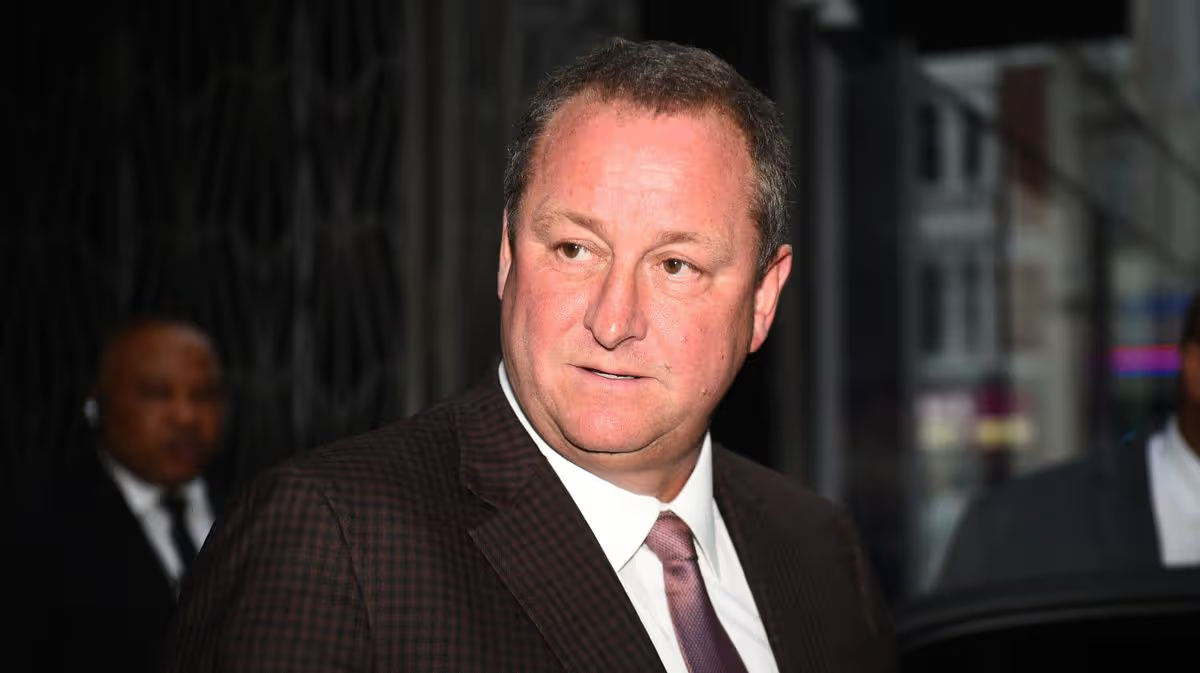
Mike Ashley, chief executive of Frasers Group

Mike Ashley, founder of Frasers Group(Image: PA)

Mike Ashley’s Frasers Group is considering a move to remove the boardroom chair at Hugo Boss, as it set out fresh ambitions to increase its stake in the German fashion giant.

Advertisement

The retail conglomerate, founded by the British billionaire, told investors on Tuesday that it is seeking to acquire more than half of Hugo Boss. It already holds close to 48 per cent of the business, positioning it as the company’s largest shareholder.

Frasers Group’s announcement cast doubt over the future of Stephan Sturm as chairman of Hugo Boss’s supervisory board, hinting it could stage a coup to unseat him.

The group stated: “Frasers is currently reviewing whether it continues to support Mr. Stephan Sturm in his position as the Chairman of the Supervisory Board of Hugo Boss.”

A potential push to oust Sturm would be the latest chapter in Frasers’ well-documented history of boardroom clashes. The group has built a reputation for acquiring stakes in rival firms and leveraging these positions to push aggressively for internal change, as reported by City AM.

Advertisement

Sturm has held the role of chair of Hugo Boss’s supervisory board since May last year, while Frasers chief executive Michael Murray occupies a seat on the board.

Hugo Boss’s supervisory board sits above its managing board, overseeing its operations and appointing its members.

Last month, Frasers raised its stake in the German fashion house to 47.9 per cent – a holding valued at nearly €1.5bn. Frasers had put forward a £1.7bn bid for the entire business, but this was firmly rejected as “inadequate” by Hugo Boss.

The UK retail giant instead turned its attention to shareholders, acquiring approximately 17 per cent of Hugo Boss through its €38-per-share offer.

Advertisement

Frasers has reportedly been lobbying to install Murray, Ashley’s son-in-law, in the role of chief executive at Hugo Boss.

Throughout 2024, Frasers accumulated stakes in luxury bagmaker Mulberry and online fashion retailer Boohoo, yet fell short in its efforts to secure board representation at either company.

Earlier this year, Ashley launched a £166m takeover bid for Australian footwear firm Accent, simultaneously calling for the ousting of its chairman over alleged “poor performance”.

The group’s pursuit of Hugo Boss forms part of Ashley’s broader ambition to drive his retail empire further upmarket, having originally founded Sports Direct.

Advertisement

Last month, Frasers snapped up struggling department store chain Harvey Nichols out of administration for approximately £40m.

The group, which also owns the upmarket fashion brand Flannels, stated that its acquisition of Harvey Nichols would build upon its “elevation strategy, strengthening its luxury positioning”.

Ashley established Frasers Group in 1982, and its portfolio of brands now includes Jack Wills, Evans Cycles, Lonsdale and Slazenger.

Advertisement
Continue Reading

Business

Eurozone Inflation Picks Up, Adding Fuel to Bond Selloff

Published

on

Alexander Osipovich hedcut

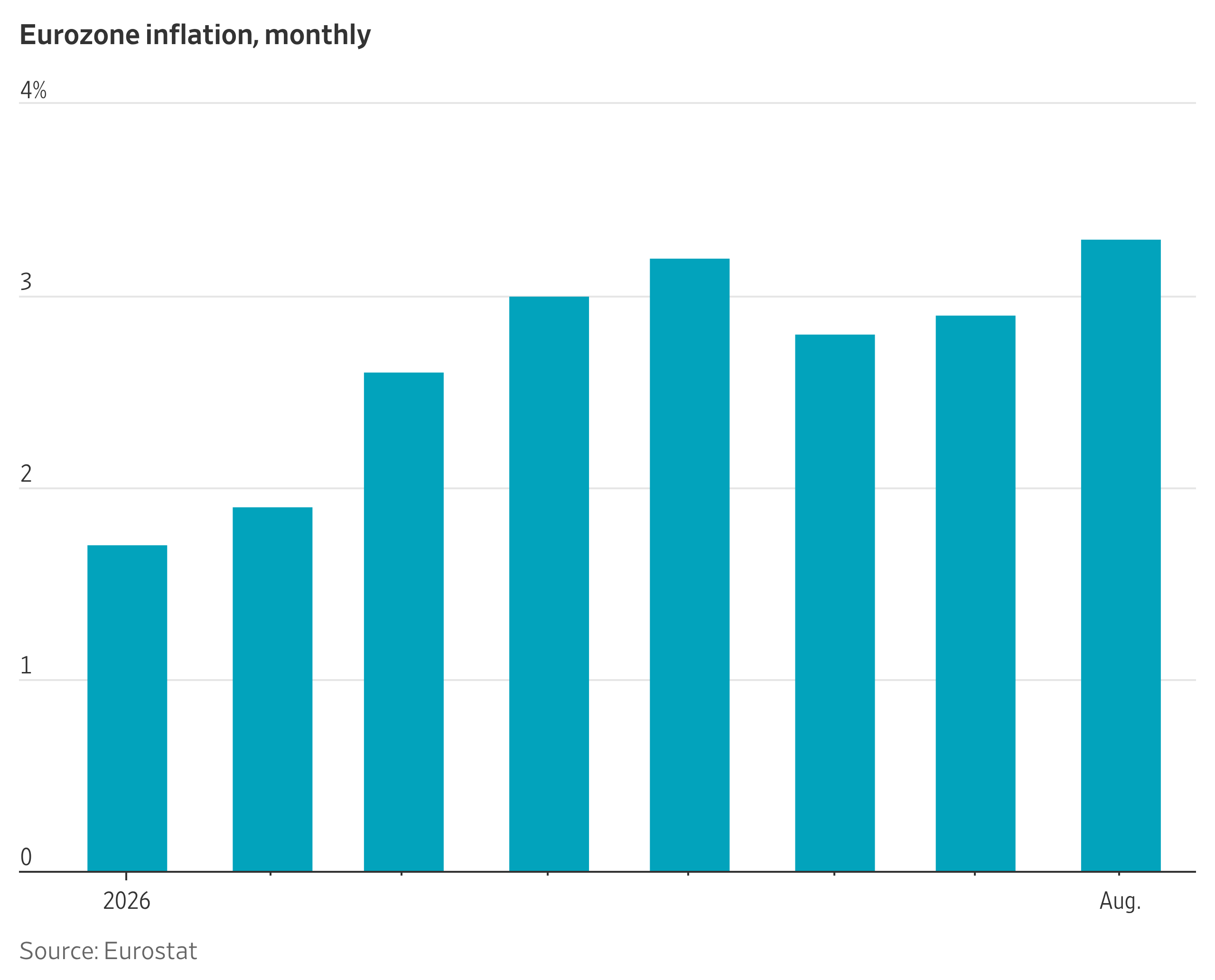
Inflation in the eurozone rose to 3.3% in August, the third consecutive month of gains, bolstering the case for the European Central Bank to hike rates and adding more fuel to the global bond selloff.

Continue Reading

Business

The Credit Market Lens: U.S. Corporate Issuers Can Digest Higher Refinancing Costs

Published

on

The Credit Market Lens: U.S. Corporate Issuers Can Digest Higher Refinancing Costs

PIMCO is a global leader in active fixed income. With our launch in 1971 in Newport Beach, California, PIMCO introduced investors to a total return approach to fixed income investing. In the 50 years since, we have worked relentlessly to help millions of investors pursue their objectives – regardless of shifting market conditions. As active investors, our goal is not just to find opportunities, but to create them. To this end, we remain firmly committed to the pursuit of our mission: delivering superior investment returns, solutions and service to our clients. Visit PIMCO’s blog. Subscribe To Get PIMCO Insights Delivered Directly to Your Inbox.

Continue Reading

Business

OneRail launches new AI platform with Nvidia for retailer delivery

Published

on

OneRail launches new AI platform with Nvidia for retailer delivery

Logistics company OneRail is launching a platform using Nvidia‘s artificial intelligence software to help retailers make faster decisions on the most efficient delivery options at scale, CNBC has learned.

The new platform, called OmniStar, allows retailers to use AI to evaluate all of their delivery options and identify the best one for each individual order, using OneRail’s proprietary data.

The last-mile delivery company told CNBC the new platform will allow smaller companies to deliver at scale and improve margins to compete with the retail giants of the world, including Amazon and Walmart.

As e-commerce grows, retailers have had to keep up with surging demand and invest in nimble supply chains to optimize their efficiency. But those manual processes are often fragmented across the retailer and the logistics businesses.

Advertisement

“If you don’t have the ability to make lightning-fast decisions, you’re giving up margin,” OneRail CEO Bill Catania told CNBC. “Last-mile fulfillment is expensive.”

Where choosing the best routing for a package may have previously taken 20 minutes, OneRail said its platform can do it in two and a half minutes leveraging AI. That time saved means retailers can operate larger, faster and more precise supply chains, Catania said.

“That’s where the artificial intelligence comes in. It’s making those kinds of decisions extremely rapidly, and so to do that, that’s where the Nvidia hardware and the software comes in and really makes this thing work at scale,” said David Daeschler, the head of AI at OneRail.

Daeschler said the company began partnering with Nvidia three years ago to explore ways to incorporate AI into the logistics process.

Advertisement

“The result is a real-time decision layer that can route an order to the right carrier and delivery mode at the right cost, rather than relying on static rules or manual planning,” said Azita Martin, Nvidia’s vice president and general manager of retail and consumer packaged goods.

Catania said OneRail’s proprietary data, which includes a network of more than 12 million drivers and over 1,000 logistics partners, is being used to train the AI on the most efficient routes and delivery options.

“It’s for the benefit of them and us: We operate more efficiently. They save money and provide a better customer experience,” Daeschler said.

The company told CNBC its platform has already been deployed with some customers, including a large tire distributor that saw OmniStar save the company a run rate of $40 million over three years because it’s able to use its resources more efficiently.

Advertisement

It’s also estimating the platform will surpass $6 billion in gross merchandise volume in the fourth quarter.

Nvidia’s Martin said the platform will allow retailers to make much faster decisions.

“For retailers, the bigger value is the ability to evaluate more scenarios, respond more quickly as conditions change and improve delivery economics without sacrificing service,” Martin said.

OneRail said the platform could help smaller retailers compete more effectively on delivery speed and efficiency.

Advertisement

OneRail announced a partnership earlier this year with FedEx to bring same-day delivery services to all of its customers, joining a race of retailers trying to offer their customers the best and fastest delivery options. That partnership will now allow OneRail to better work with smaller businesses as well, Catania added.

“We’re kind of doing for delivery what ChatGPT and Anthropic have done for words – it all works the same way,” Daeschler said. “They give people more access to knowledge. We’re giving people access to being able to do delivery in a way that’s affordable. … That’s all done based on original models, training on data that we have, just like words on the internet.”

Continue Reading

Business

12 weeks’ paid leave backed by commissioner

Published

on

12 weeks' paid leave backed by commissioner

Parents of seriously ill children should be given three months of paid leave so they do not have to choose between holding down a job and being at their child’s bedside, the children’s commissioner for England has said.

Dame Rachel de Souza is calling for parents whose children develop serious physical or mental health conditions to receive 12 weeks of leave at 90 per cent of their normal pay.

The proposal, known as Hugh’s Law, is named after Hugh Menai-Davis, who died from cancer in 2021 aged six. His parents, Ceri and Frances Menai-Davis, have campaigned for changes to employment law after watching families try to keep working from hospital while their children underwent treatment.

De Souza said parents had described making “impossible choices” as they tried to care for seriously ill or disabled children while holding down their jobs. “We should never force parents to choose between holding down a job and being by their child’s bedside,” she said. “Our existing employment rights are failing parents and carers … Families of seriously ill or disabled children desperately need a form of paid leave that enables them to care for and spend time with their child following a diagnosis or crisis in their child’s health.”

Ceri Menai-Davis told BBC Radio 4’s Today programme on Monday that the proposed protection would work in a similar way to maternity or paternity leave, recognising that parents need time away from work at critical moments in their child’s life.

Advertisement

“At the moment, parents do not have a legal right to be at the bedside of their child, to leave work and do what any parent would do,” he said. “Hugh’s Law would, in effect, protect parents for up to 12 weeks so they can just down tools and go be with their child and do what really matters most and be a parent in the most harrowing time of your life.”

Hugh was diagnosed with cancer during the Covid pandemic in 2020. His father said: “We watched parents trying to navigate the workplace, in the hospital room, next to their child, taking Zoom calls, writing reports, being pressured by bosses, whilst on the other side of the screen their child is receiving life-saving treatment.”

The case made to employers

Menai-Davis argued that the policy could also benefit employers by helping them to retain staff. Parents with a seriously ill child would leave work regardless, he said, while replacing an employee could cost significantly more than supporting them through a period of paid leave. Separate research has found that the majority of UK businesses have no policies in place to support informal carers in their workforce.

Employers already administer one comparable entitlement. Since April 2025, parents of babies admitted to neonatal care have had a right to up to 12 weeks of neonatal care leave, although statutory pay for that leave is a flat rate of £187.18 a week rather than a percentage of salary.

Advertisement

The children’s commissioner’s office said the financial strain could be particularly severe for families facing long hospital stays, who might have to pay for travel, parking, food and additional childcare while simultaneously losing earnings. Its analysis of children born in or after 2008 found that 260,141 had spent at least three weeks in hospital during their childhood. Of those, 34,846 spent more than three months in hospital and 1,342 more than a year.

Where ministers stand

De Souza is also backing an increase in unpaid carer’s leave from five to ten days a year, the introduction of a form of paid carer’s leave and a right for people to return to their jobs after longer periods spent caring.

The government has been consulting on how employment rights could better support unpaid carers and parents of seriously ill children. The consultation, which opened in June and closes on 1 September, sits under the government’s Make Work Pay banner and follows the Employment Rights Act clearing its final parliamentary hurdle at the end of last year.

Kate Dearden, the minister for the future of work, said: “Serious childhood illness is a heartbreaking situation for families. I’ve been incredibly moved by the powerful stories we have heard, and we will move quickly to consider how we can strengthen support and employment rights for families facing serious childhood illness.”

Advertisement

Amy Ingham

Amy Ingham

Amy Ingham is a reporter at Business Matters, covering UK business news with a focus on breaking news, business policy, late payments and insolvency. She joined the magazine in 2026 after completing the NCTJ Diploma in Journalism at Harlow College’s journalism school. Her recent reporting includes British Steel’s nationalisation and its impact on SME suppliers, the decline in late payments by large firms, and Insolvency Service director disqualifications. Reach her at aingham@cbmeg.co.uk.

Advertisement
Continue Reading

Business

Ikea cuts prices in bid to woo cash-strapped customers

Published

on

A woman with long brown hair looks at someone off-camera

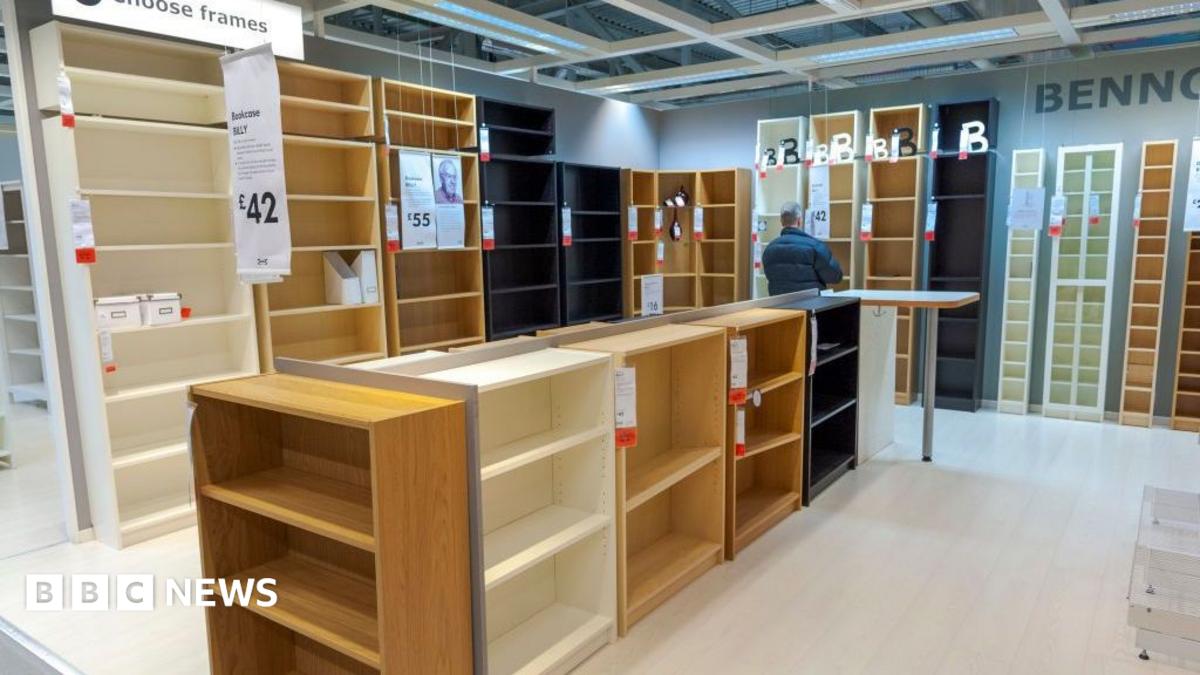
Swedish furniture giant Ikea is cutting prices across a range of popular products in Europe, including the Billy bookcase and Kallax storage units, to woo cash-strapped customers.

Ikea has seen revenue decline over the past two years as the rising cost of living reduces people’s ability to invest in new furniture and home renovations.

The company is spending €1.2bn (£1bn) on the price cuts, which represent reductions of up to 28% on certain products.

Ikea said it could make the cuts by making savings throughout the supply chain, such as packaging costs.

Advertisement

Ingka, the franchisee which operates most of Ikea’s European stores, said the cuts were “not an activity or short-term campaign”.

“It’s about making IKEA more affordable when people need it most, even if it means accepting a lower margin,” said Juvencio Maeztu, chief executive of Ingka. “The cost of living is increasing and it’s getting tougher and tougher for many people.”

He added: “For many people, home is a bedroom in a shared house, and it’s even more important to offer storage and organised solutions.”

Ikea has reduced its prices several times in recent years, even as it caused a hit to the company’s revenue and profit in its most recent earnings report.

Advertisement

The latest specific reductions vary slightly by country. Price cuts for British customers include the Kallax shelving unit going from £60 to £49 and the Billy bookcase being cut by £10 to £25.

Ikea is also trying to attract new customers by opening smaller stores in central areas, such as London’s Oxford Street and Churchill Square in Brighton.

In 2024 it launched its own second-hand online marketplace in a bid to rival sites like eBay and Facebook Marketplace.

Despite a recent uptick, consumer confidence in Europe is at its lowest level for almost three years due to concerns about inflation and the cost of living, according to EU figures. , external

Advertisement

British consumers, meanwhile, are becoming more optimistic about the economy and their own finances, following a truce in the Middle East, but analysts have warned that inflation and the rising cost of living could dent consumer confidence in the coming months.

Ikea operates over 500 stores worldwide under a franchise system.

Many of its minimalist, self-assembled products have become ubiquitous in homes across Europe.

But it has faced criticism from environmentalists for contributing to a culture of disposable furniture and excess packaging.

Advertisement
Continue Reading

Business

Major industrial park in South Wales under new ownership

Published

on

Business Live

Bridgend Industrial Park has been acquired

Bridgend Industrial Estate

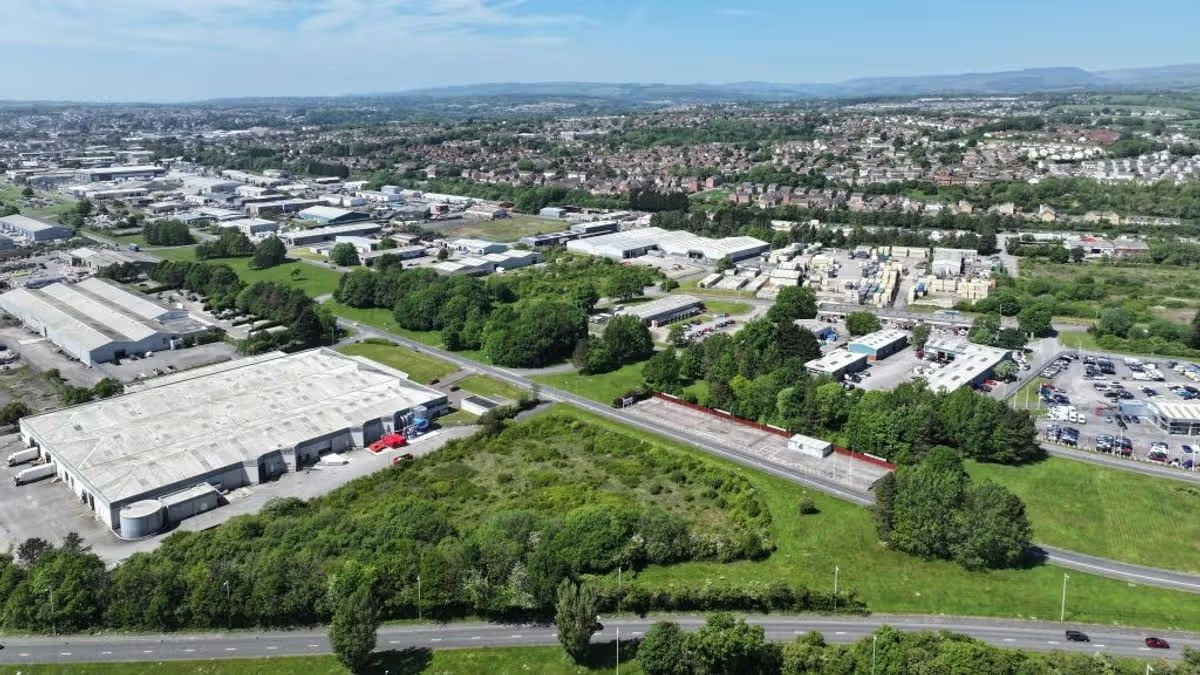
A major industrial park in South Wales is under new ownership.

Manchester-based David Samuel Properties has acquired Bridgend Industrial Park from Zurich Assurance.

Advertisement

The park, close to the M4, provides 300,000 sq ft of warehousing and industrial space with an additional 30 acres of development land. The estate is a mix of large standalone buildings with smaller estates together with ancillary retail and office space.

The park has a strong occupancy rate of 95%.

ACRE London acted on behalf Zurich with the Cardiff investment teams of Fletcher Morgan and Calan acting on behalf David Samuel Properties.

A spokesman for David Samuel Properties said: “This latest acquisition reflects our continued conviction in well-located industrial assets with strong tenant demand, attractive reversionary potential and resilient cashflows.

Advertisement

The value of the deal has not been disclosed.

David Samuel Properties oversees a portfolio of more than 1,200 units at 150 plus locations across the UK.

Moreover, four commercial property projects in North Wales are set to deliver new industrial and employment space with support from the Wales Commercial Property Fund, managed by the Development Bank of Wales.

Developments in Kinmel Bay, Conwy and Bangor have secured almost £7m from the fund, which will support the delivery of almost 67,000 sq ft of modern commercial space across 32 units.

Advertisement

The projects include new light industrial units at Tir Llwyd Enterprise Park in Kinmel Bay, flexible space at Conwy Morfa Enterprise Park, and two separate schemes at Parc Bryn Cegin in Bangor, one of Gwynedd’s strategic employment sites.

Deputy fund manager Claire Sedgwick and property development executive Rob Good supported K&C Group with the funding for Tir Llwyd Enterprise Park while senior property development executive Anna Bowen delivered the funding for Vectorex in Conwy along with Hillcliff Holdings and Lingar Holdings in Bangor.

Nicola Crocker, property fund manager at the Development Bank of Wales, said:“Across North Wales, we are seeing strong demand for modern, flexible commercial space and a pipeline of experienced developers ready to bring forward high-quality schemes.

“These four projects show how targeted funding can help unlock commercial developments that might otherwise struggle to proceed, creating the space businesses need to grow while supporting construction supply chains and strengthening local economies. From Kinmel Bay and Conwy to Bangor, this investment is helping create practical, high-quality employment space in locations where businesses want to operate.

Advertisement
Continue Reading

Business

JinkoSolar: Things Could Be Better From Here, But Market Hasn’t Priced It In (NYSE:JKS)

Published

on

JinkoSolar: Things Could Be Better From Here, But Market Hasn't Priced It In (NYSE:JKS)

This article was written by

First Principles Partners is an equity research analyst specializing in technology, innovation, and sustainability investment. My unique approach, “First Principles,” involves breaking down complex problems to their most basic elements in terms of financial and technology, enabling me to uncover overlooked investment opportunities.With a strong background in investment, private equity and venture capital, I have a proven track record of delivering strong returns for readers. Articles on Seeking Alpha focus on emerging technologies, sustainable investing, and the intersection of innovation and finance. I am passionate about sharing insights with a wider audience and learning from fellow investors. Together, we can drive positive change and contribute to a more sustainable and innovative world.

Analyst’s Disclosure: I/we have no stock, option or similar derivative position in any of the companies mentioned, and no plans to initiate any such positions within the next 72 hours. I wrote this article myself, and it expresses my own opinions. I am not receiving compensation for it (other than from Seeking Alpha). I have no business relationship with any company whose stock is mentioned in this article.

Seeking Alpha’s Disclosure: Past performance is no guarantee of future results. No recommendation or advice is being given as to whether any investment is suitable for a particular investor. Any views or opinions expressed above may not reflect those of Seeking Alpha as a whole. Seeking Alpha is not a licensed securities dealer, broker or US investment adviser or investment bank. Our analysts are third party authors that include both professional investors and individual investors who may not be licensed or certified by any institute or regulatory body.

Advertisement
Continue Reading

Business

brand in the black at last

Published

on

brand in the black at last

Victoria Beckham’s fashion and beauty brand has turned a profit for the first time since it launched in 2008, a milestone delivered in spite of a challenging macroeconomic slump affecting global luxury goods.

Revenue at Victoria Beckham Holdings rose 15 per cent to £129.8 million in the year to the end of December, marking the fifth consecutive year of double-digit revenue growth. The company posted a pre-tax profit of £3.38 million, compared with a loss of £4.85 million the year before, while operating profit reached £7.3 million against an operating loss of £1.6 million in the previous year.

The company said on Monday that the improvement in its bottom line was driven by “disciplined cost control, stronger direct-to-consumer trading and an expanding international wholesale presence”.

Sybille Darricarrère Lunel, chief executive of Victoria Beckham, said: “Achieving our first operating profit is a landmark moment and reflects several years of disciplined execution and strategic investment.

“Delivering this result against a more challenging luxury market and macro backdrop makes it an even more significant milestone for the business.”

Advertisement

From £66m of losses into the black

Before its turnaround, the label of the former Spice Girl had accumulated more than £66 million in losses, relying on multimillion-pound cash injections from her husband David Beckham’s personal fortune. Accounts covering 2024 showed the Beckhams and the private equity firm Neo Investment Partners providing a £6.9 million injection, with £3 million meeting working capital needs at the fashion label and £3.9 million building inventory at Victoria Beckham Beauty.

The reasons behind the prolonged struggle were laid bare last year in a Netflix documentary, which revealed a corporate culture in which employees were afraid to tell Beckham “no”, allowing overhead expenses to run out of control.

When David Belhassen, the private equity investor who founded Neo, stepped in to audit the business, he uncovered striking examples of aesthetic perfection put before fiscal reality. The company was spending £70,000 a year on office plants simply because she loved them, while an external contractor was paid a further £15,000 a year just to water them.

Beckham admitted to high-end indulgences born of her entertainment background, such as flying luxury chairs from one side of the world to the other for the office space.

Advertisement

Two chief executives, two cities

The company recruited two new chief executives last year to lead the two sides of the business. Lunel joined as chief executive of the fashion business from Christian Dior Couture last July and is based in London, while Lauren Edelman was promoted from global chief marketing officer to chief executive of the beauty business last January and is based in New York.

The beauty business, launched in 2019, is reported to generate about two-thirds of group revenue. Fellow British beauty brand Charlotte Tilbury reported a £21 million pre-tax profit on sales of £539 million in newly filed accounts covering its own year to the end of December.

The wider luxury sector remains under pressure, however. Burberry is cutting up to 1,700 jobs in a global savings drive after a sharp downturn in the luxury market pushed the British fashion house to a £66 million pre-tax loss.


Amy Ingham

Amy Ingham

Amy Ingham is a reporter at Business Matters, covering UK business news with a focus on breaking news, business policy, late payments and insolvency. She joined the magazine in 2026 after completing the NCTJ Diploma in Journalism at Harlow College’s journalism school. Her recent reporting includes British Steel’s nationalisation and its impact on SME suppliers, the decline in late payments by large firms, and Insolvency Service director disqualifications. Reach her at aingham@cbmeg.co.uk.

Advertisement

Continue Reading

Business

Resolute Mining Shares Rise 5 Percent as Analysts Call Gold Miner Undervalued After Profit Surge

Published

on

Resolute Mining Shares Rise 5 Percent as Analysts Call Gold

Shares of Resolute Mining rose more than 5% Monday, extending a stretch of investor interest in the Perth-based gold producer following a set of half-year results that showed profit more than doubling on the back of surging gold prices.

The stock traded at 1.44 Australian dollars, up 0.07 dollars, or 5.11%, on the Australian Securities Exchange. Resolute, which operates the Syama gold mine in Mali and the Mako mine in Senegal while developing the Doropo project in Cote d’Ivoire, has drawn sustained attention from analysts and investors in the roughly two weeks since it reported its results for the six months ended June 30.

Resolute reported net profit after tax of 162.6 million dollars for the first half of 2026, up 129% from 71 million dollars in the same period a year earlier, according to a summary of the results published by Kalkine Media. Revenue rose 31% to 584.7 million dollars, driven primarily by a sharply higher average realized gold price of 4,712 dollars per ounce, compared with 3,076 dollars per ounce in the first half of 2025, even as overall gold production declined to 104,795 ounces from 151,460 ounces a year earlier. Earnings before interest, taxes, depreciation and amortization rose 42% to 323.9 million dollars, according to the same figures.

Resolute Chief Executive Officer Chris Eger described the results as reflecting the strength of the company’s underlying operations despite the production decline. “Resolute has delivered a strong first half of 2026, generating significant operating cash flow and ending the period with a net cash position of 317.4 million dollars,” Eger said, according to a company statement carried by TradingView News. “This performance was underpinned by continued strength in the gold price, disciplined cost management and the resilience of both Syama and Mako. During the period we continued to advance our key growth initiatives. At Doropo, the project progressed from final investment decision into active construction, with early works advancing and financing progressing.”

Advertisement

The lower production figures were tied to operational disruptions at the Syama mine, including a planned roaster shutdown, explosives supply interruptions and slower-than-expected mobilization in the mine’s A21 area, according to reporting from Discovery Alert. Those disruptions pushed the company’s all-in sustaining cost up sharply to 2,327 dollars per ounce, a 38% increase from 1,688 dollars per ounce in the first half of 2025, a rise the company attributed to a combination of higher royalty payments tied to elevated gold prices and reduced production volumes.

Resolute’s balance sheet strengthened considerably during the period. Net cash climbed 189% to 317.4 million dollars, up from roughly 109.9 million dollars a year earlier, while operating cash flow more than doubled to 277.6 million dollars. The company also received 31.9 million dollars from the sale of its stake in Loncor Gold and a further 53.9 million dollars from repayment of a vendor financing note tied to its earlier Ravenswood mine transaction, according to figures reported by Kalkine Media.

Beyond its existing operations, Resolute continued advancing its growth pipeline during the period. The company’s ABC Project in northwest Cote d’Ivoire saw its inferred mineral resource estimate grow to 3 million ounces of contained gold, up from 2.16 million ounces a year earlier, according to Stocklight. Resolute has also secured 155 million dollars in local bank financing in Cote d’Ivoire to support the Doropo project’s construction, with an additional 105 million dollars in financing expected to be secured during the third quarter of 2026.

Analysts have responded favorably to the results. According to Simply Wall St, Resolute’s stronger-than-expected profitability has prompted some analysts to argue the stock remains meaningfully undervalued, with certain fair-value estimates suggesting upside of as much as 59% from prior trading levels, even as the firm cautioned that funding requirements and regulatory risk in the company’s West African operating jurisdictions remain factors investors should continue to monitor closely.

Advertisement
Continue Reading

Trending

Copyright © 2025