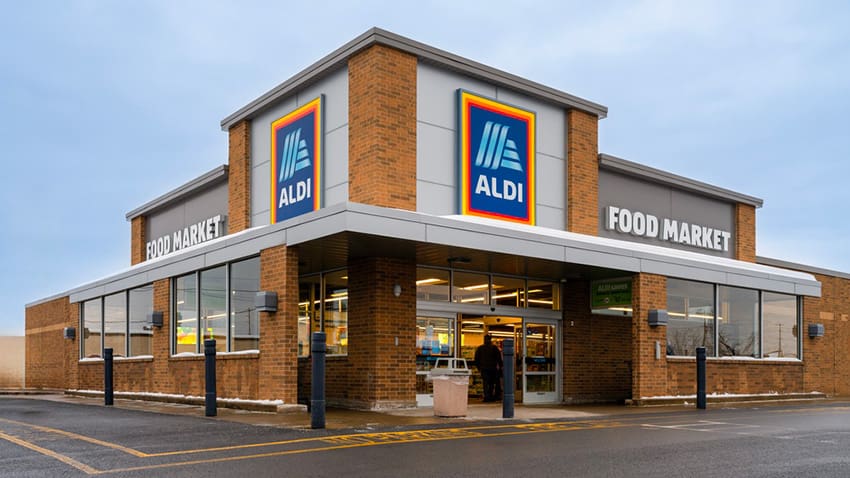
Aldi has been accused of desperation by senior retail figures after its UK chief executive attacked rival supermarkets’ loyalty schemes, just as industry data showed the discounter’s sales growth slowing sharply behind its competitors.
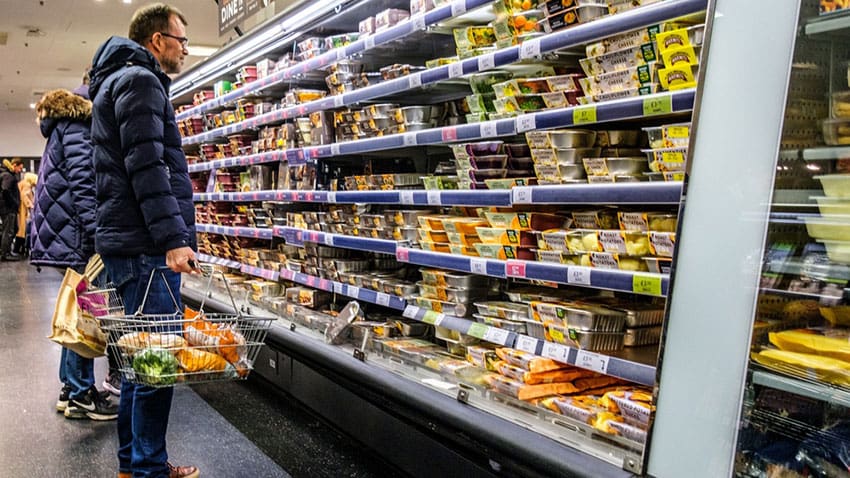
Giles Hurley, the chief executive of Aldi UK, used a piece in the Daily Mail last week to back the Government’s investigation into supermarket pricing, arguing that loyalty schemes offer shoppers a “false sense of value”. Shoppers, he said, were being bombarded with discounts that could make them believe they were getting a bargain when a rival supermarket was still cheaper.
“Taking £2 off a £6 product doesn’t make it good value if you can buy it for £3 somewhere else,” Hurley said.
The intervention went down badly across the industry. One senior retail adviser said Aldi was “completely talking their own book” by wading into the row over supermarket pricing, which is under investigation by the UK competition watchdog. “It was opportunistic, and in a way, perhaps a little bit desperate,” they said.
The timing is awkward for Aldi. Its sales rose by just 0.8 per cent in the 12 weeks to 8 August, according to NIQ, compared with 8.2 per cent at Lidl, 13 per cent at M&S, 17 per cent at Ocado and 3.6 per cent at Sainsbury’s. The slowdown is all the more significant because Aldi has continued opening new shops, with 40 more stores planned for 2026 as part of a £370 million expansion.
Clive Black, of Shore Capital, said the discounter was “protesting a bit too much”. He said: “The fact that customers are choosing to shop more at other retailers tells us something about Aldi, and it’s not just about price.”
Hurley, who joined the retailer nearly 30 years ago, took the top job in 2018 and oversaw the opening of Aldi’s 1,000th UK store in 2023. The company does not operate a loyalty scheme along the lines of Tesco’s Clubcard or Sainsbury’s Nectar Prices, and argues that shoppers should get its lowest prices without having to sign up, hand over their data or use a smartphone.
Its rivals, however, have become increasingly adept at copying its playbook. Tesco, Sainsbury’s and Morrisons are among those advertising “Aldi price match” products.
Aldi’s argument that shoppers are being duped also sits uneasily with the evidence gathered by the Competition and Markets Authority. The watchdog examined loyalty pricing across around 50,000 grocery products and found very little evidence that supermarkets were artificially inflating prices before applying discounts. Loyalty card members could “almost always” make a genuine saving against the normal price, it found, although some loyalty deals remained more expensive than the cheapest option elsewhere.
Black was equally dismissive. “British shoppers are not stupid,” he said, pointing out that Tesco and Sainsbury’s now compete with Aldi on hundreds of high volume products. “You can see that they’re growing more slowly than the big four, more slowly than Lidl,” he added.
The row comes at a significant moment for the discounters. The CMA has proposed extending the rules governing supermarket land agreements to Aldi and Lidl, arguing that their size and geographic reach mean they should now be treated like the established chains. Until now the discounters have had greater freedom to use restrictive agreements that can prevent rivals opening stores nearby, a freedom that has supported Aldi’s push to open new stores across the UK.
“I think they’re really feeling it, and the CMA ruling is a big thing for them actually, because until now they’ve had a lot of freedom,” Black said. “It’s a very significant moment in the development of the discounters here. It does have the potential to change the dynamics of the market.”
Aldi’s pricing strategy is also under renewed scrutiny from another direction. Earlier this year it cut the price of potatoes, carrots and parsnips to 4p, prompting fears that its cut price approach is offering shoppers unrealistic prices at the expense of British agriculture. Farmers are already under pressure from rising labour and input costs and increasingly unpredictable weather, and the Government’s Farming Profitability Review warned that farm input costs are expected to be 30 per cent higher this year than in 2020, calling for farmers to receive “a fair return for what they produce”.
Black believes supermarkets cannot compete endlessly to make food cheaper without eventually putting pressure on the people producing it. “To be devaluing fresh produce … giving a packet of carrots away for 8p when it costs £4.50 for a cup of coffee is just not helpful to the sustenance of the food system,” he said. “We need a food system from farm to fork that is financially sustainable. And I think that does involve paying more for food.”
Aldi rejects any suggestion that its low prices come at the expense of British farmers. It says it has committed £5 billion to British farming and food production through longer term agreements covering fruit, vegetables, dairy, meat and eggs, alongside £3 billion to British beef suppliers over five years and £1.1 billion to British egg production. The company says its model is based on efficiency rather than squeezing suppliers.
“Loyalty programmes are expensive to run and ultimately lead to higher prices,” an Aldi spokesman said. “We fundamentally believe that the best way to keep grocery bills low for customers is to keep things simple.”
Black, however, said the retailer should stop attacking its rivals. “When we saw Aldi effectively trying to badmouth competitors in a way that was encouraging politicians to get involved, I thought that was bad form,” he said.
Jamie Young
Jamie Young is Senior Reporter at Business Matters, covering SME finance, employment law and Westminster policy since 2016. He has reported on every Budget and Autumn Statement since 2018, helped make sense of the ‘covid era’ and the bounce-back loan scheme from launch through the fraud investigations, and broke the magazine’s coverage of the 2024 late-payment reforms. He joined Business Matters straight from completing his BA in Administration from Exeter University and is NCTJ-qualified. Reach him at jyoung@cbmeg.co.uk


























































You must be logged in to post a comment Login