
Crypto World
S&P 500: 8 Stocks Turn $100,000 Into $12.7 Million In 8 Months


August turned out to be a pretty good month for S&P 500 investors. And some stocks wound up having a great month. If you invested $100,000 in January in the top-performing stock in the S&P 500 at the time and reinvested that in each month’s top performer, including vaccine maker Moderna (MRNA) in August, you’d have $12.7 million now, says…
Copyright ©2026 Investor’s Business Daily, LLC. All rights reserved. 87990cbe856818d5eddac44c7b1cdeb8


Binance is widening its push into traditional markets by adding options trading tied to more than 1,000 US stocks and exchange-traded funds (ETFs) for eligible users located outside the United States. The rollout uses Binance’s Abu Dhabi-regulated broker-dealer, Nest Trading, while trades are routed to US-registered Alpaca Securities for execution, clearing, settlement, and custody.
The move extends Binance’s existing equities offering, which already covers over 7,000 US stocks and ETFs. Importantly for users comparing products, Binance says the options are physically settled—meaning exercising the contracts results in delivery of the underlying shares, rather than cash or equity-linked perpetual exposure.
Key takeaways
- Binance will offer options on more than 1,000 US stocks and ETFs to eligible non-US users, expanding beyond its current equities lineup.
- Execution, clearing, settlement, and custody are handled via US-registered Alpaca Securities, with product distribution through Nest Trading in Abu Dhabi.
- The options are physically settled, delivering or receiving underlying shares upon exercise.
- Binance points to a sharp rise in traditional-finance derivatives activity on its platform, citing August volume of about $433 billion for TradFi perpetual futures.
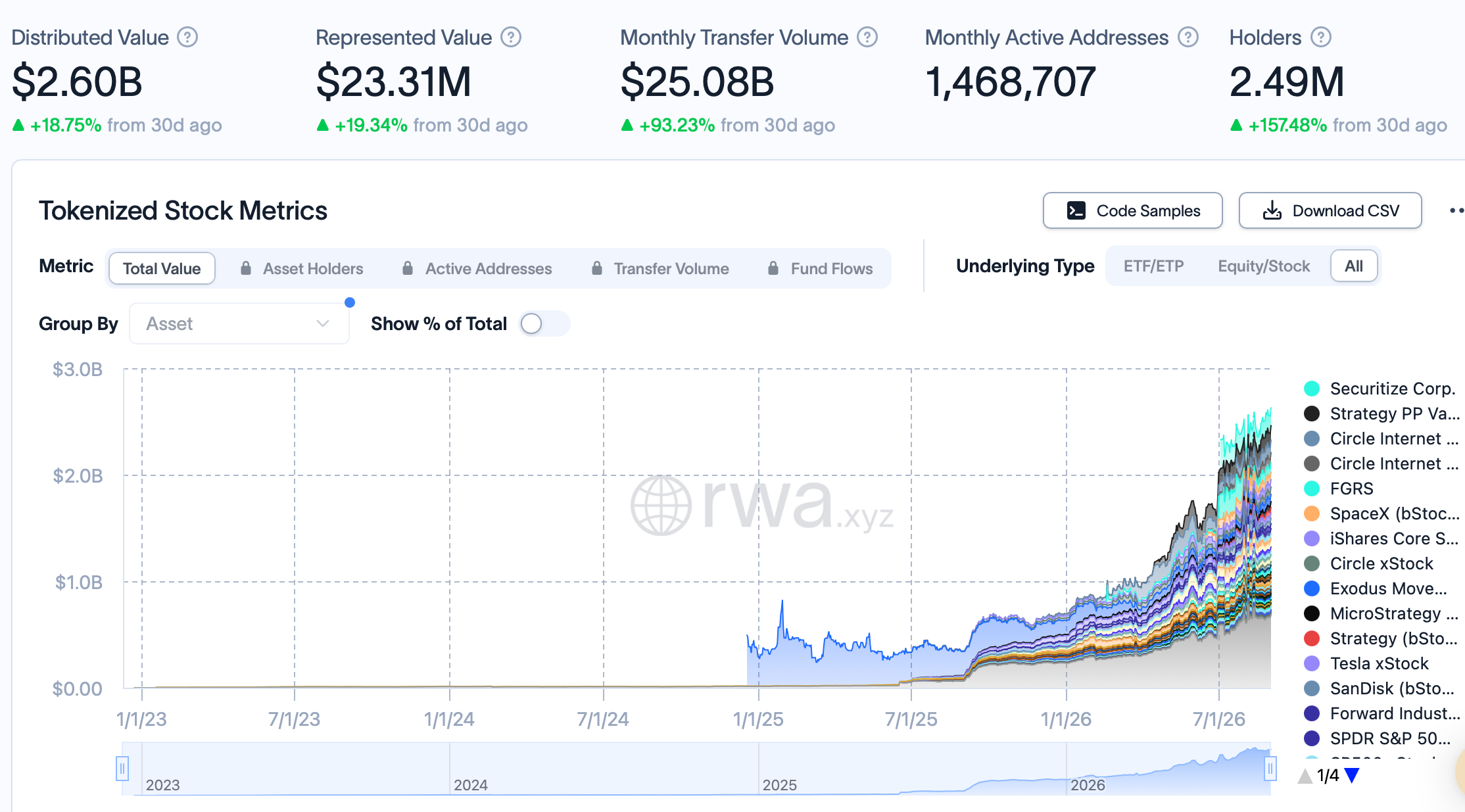
- The broader “tokenized securities” trend continues to grow, with RWA.xyz data showing tokenized stocks at about $2.6 billion in distributed value.
Binance adds physically settled options for eligible users outside the US
Binance’s latest expansion targets a segment of traders and hedgers who want listed equity exposure with options’ payoff structure. The company’s announcement frames the update as part of an accelerating shift toward traditional finance tools on crypto exchanges, while also emphasizing operational routing through regulated entities.
Under the plan described by Binance, Nest Trading—licensed as a broker-dealer in Abu Dhabi—will provide the options offering. Orders then go to Alpaca Securities for the steps that typically require local market infrastructure: execution, clearing, settlement, and custody.
That structure matters because options trading is operationally complex and heavily dependent on established market plumbing. Binance’s approach effectively bridges its platform access with US securities-market processes, at least for how orders are finalized and where custody is maintained.
Binance also highlighted that, unlike equity-linked perpetual futures, these options are physically settled. For users, that difference is not cosmetic: physically settled contracts tie the end result to actual share delivery, which can affect strategy design, capital planning, and how positions are managed around exercise and settlement.
Traditional derivatives activity on Binance continues to climb
Alongside the product announcement, Binance cited demand signals from its existing derivatives suite. The company said trading in traditional financial products has increased, pointing specifically to TradFi perpetual futures volume of about $433 billion in August—roughly 15 times January’s total.
While the update is about options availability, Binance’s volume comparison is relevant to investors and traders because it suggests that the platform’s traditional-finance expansion is already pulling meaningful participation. The company’s decision to add options can be interpreted as a response to that engagement: if perpetual exposure is drawing liquidity and usage, adding options may offer more hedging and risk-management capabilities without asking users to leave the exchange ecosystem.
Still, traders should keep expectations grounded. The cited volume figures refer to TradFi perpetual futures, not options volume. The options rollout may attract different behavior—especially for participants who prioritize exercise outcomes and settlement mechanics—so it may take time before Binance’s options markets display the same liquidity profile as its perpetual products.
Tokenized equities keep gaining traction across major exchanges
Binance’s expansion lands amid a wider push by crypto-native firms and traditional brokers into tokenized securities infrastructure. According to RWA.xyz data, tokenized stocks now have about $2.6 billion in distributed value, up from roughly $346 million in the same period a year earlier. The same dataset shows monthly transfer volume rising 93% over the past 30 days to $25.1 billion, alongside a 157% jump in the number of holders to nearly 2.5 million.
These indicators are meaningful because they reflect both growth in asset representation onchain and increased network activity around transfers. In practice, that can improve the usability of tokenized equities—supporting more frequent settlement and more participants accessing the same onchain assets.
Binance’s options addition also fits a broader pattern: multiple venues have been moving toward tokenized equities access for non-US markets, expanding the number of tradable symbols and improving availability windows.
Recent competition: Coinbase, Kraken, and Robinhood expand tokenized equities access
Last week, Coinbase introduced its B20 tokenized equities offering on Base, aiming to give eligible non-US users around-the-clock access to onchain versions of major US companies including Apple, Nvidia, Meta, and Alphabet. Coinbase’s framing also emphasizes interoperability, noting that tokenized assets can be used in DeFi protocols for functions such as trading and collateralized borrowing—an area where onchain distribution can differ from conventional brokerage settlement.
Separately, Kraken expanded its equities reach in August by opening access to more than 7,000 US-listed stocks for eligible European customers, pairing the new offering with its existing lineup of tokenized xStocks. The emphasis here, like other tokenized equities strategies, is scale: more symbols, more customers, and more continuous access can raise the utility of onchain wrappers for traditional assets.
Earlier in the year, Robinhood launched Robinhood Chain and introduced a new generation of Stock Tokens, positioning the effort for eligible users across more than 120 countries. That move underscored the growing interest from consumer- and broker-style platforms in building their own onchain securities rails rather than relying only on existing tokenization partnerships.
Together, these developments highlight a key industry tension: while crypto exchanges and tokenization providers talk about 24/7 access and broader composability with DeFi, the underlying regulatory and settlement requirements still constrain where certain products can be offered and how they settle. Binance’s physically settled options structure—paired with routing to US-registered execution and custody infrastructure—illustrates how that balance is being managed in practice.
For market participants, the next things to watch are practical: how quickly Binance’s new options markets attract liquidity, whether physically settled mechanics influence user onboarding compared with equity offerings alone, and how fast onchain equities activity continues to grow given the RWA.xyz indicators. As more venues add traditional instruments to crypto-adjacent platforms, the competitive edge may increasingly hinge on execution quality, settlement reliability, and access for the right jurisdictions rather than on product announcements alone.

That means that the area where the floods occurred has become far more populated than it once was. “They have always had these flooding events,” says Ekström. “It’s just that now we have a lot more people and infrastructure in these steep valleys. What 100 years ago maybe would have killed dozens of people now kills hundreds of thousands of people.”
How can Nepal prepare for future climate disasters?
Nepal lacks early warning systems that might have made evacuations easier. Mathias Vuille, professor of atmospheric and environmental sciences at the University at Albany, SUNY, notes that, in Switzerland, a landslide and glacial collapse buried a small village last year—but only one person was killed thanks to warning systems.
“We know about the threat, and we’re not completely helpless,” says Vuille. “We can adapt, and while we can’t prevent the process from occurring, we can limit the impacts again, mostly by setting up these warning systems, and having the right plans in place.”
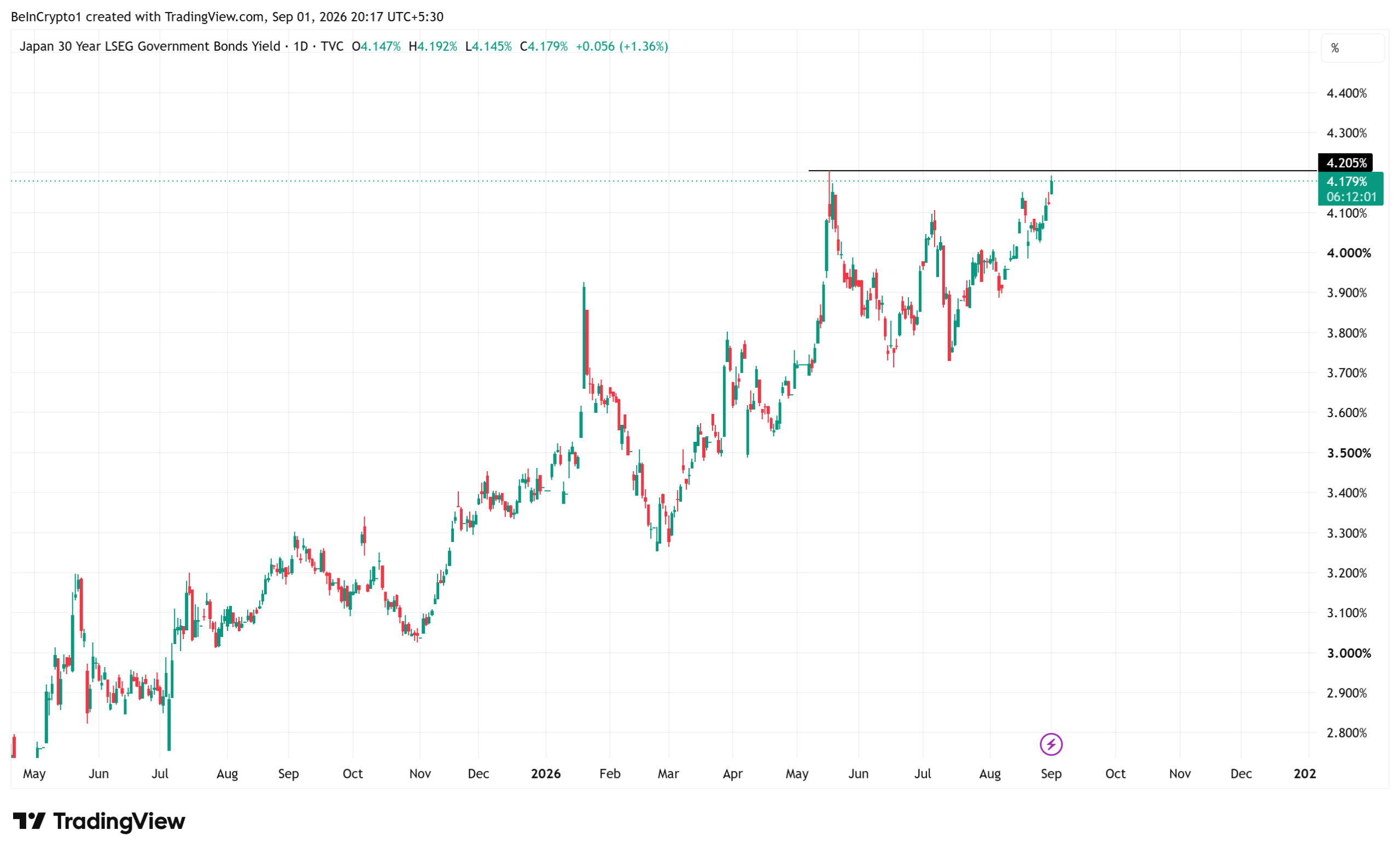
Japan’s rate shock deepened on Tuesday. The 30-year government bond yield approached its all-time high of 4.205%, last tested in May. Meanwhile, the 10-year reached 3% for the first time since 1996.
The rate hike itself was never the surprise. Markets had nearly fully priced a September move. What nobody saw coming was Washington publicly demanding it, and a bond market that broke anyway.

Why Japan’s Rate Shock Is Reaching Global Markets
US Treasury Secretary Scott Bessent met Finance Minister Satsuki Katayama and Bank of Japan (BOJ) Governor Kazuo Ueda at the Group of 20 (G20) finance gathering in Asheville, North Carolina. He pressed for hikes and a clearer fiscal plan.
“I have information that the market doesn’t have, and it’s my belief that the Japanese government and the BOJ will do the things that will lead to a stronger yen,” Bessent said.
Japan’s whole curve gave way, with the two-year hitting a 31-year high, lifting yen carry trade costs that had been near zero for a generation.
Japan’s own budget assumed a 3% long-term rate when it calculated debt-service costs, so Japan’s rising borrowing costs now test that arithmetic.
Other long-end markets moved with it. UK 10-year gilts reached 5.23%, a level last seen in 2008, US 10-year Treasuries traded at 4.78%, and Brent crude climbed above $92 a barrel.
Not everyone reads the selloff as a monetary story. Takahide Kiuchi, a former BOJ board member now at the Nomura Research Institute, framed the 3% print as a verdict on spending under Prime Minister Sanae Takaichi.
“The rise to 3 per cent is a message from the market that could, to some extent, force Takaichi to correct some of her expansionary fiscal policy,” the Financial Times reported, citing Kiuchi.
What a Stronger Yen Would Mean for Bitcoin
Years of near-free yen borrowing funded leveraged bets across equities, bonds, and crypto. Higher Japanese rates make that funding dearer.
The Bank for International Settlements put yen loans to non-banks outside Japan near $250 billion in March 2024, with cross-border yen claims on offshore centers around $500 billion. It cautioned that the true size resists measurement.
When it happened, Bitcoin (BTC) and Ethereum (ETH) shed up to 20% during the August 2024 unwind, as margin calls forced traders to liquidate positions across asset classes.

Yet the currency has not rallied. The dollar sat near 159.75 yen on Monday, just inside the 160 mark that raises the odds of yen-buying intervention.
Japan’s fading yen defense has held no floor since the July 31 joint operation with Washington.
For officials, the line is 160, but for Bitcoin the trigger is speed rather than level, because the pace of the 2024 appreciation, the sharpest single-day currency move the BIS examined, is what broke the trade.
The BOJ decides on September 18, with markets pricing a quarter-point move to 1.25%. Ueda’s guidance on what follows may matter more to crypto than the hike itself.
The post Japan Rate Shock Is Hitting Markets. How Will Bitcoin React? appeared first on BeInCrypto.
Binance is expanding further into traditional finance by launching options trading on more than 1,000 US stocks and exchange-traded funds for eligible users outside the United States.
The options will be offered through Binance’s Abu Dhabi-regulated broker-dealer, Nest Trading, with orders routed to US-registered Alpaca Securities for execution, clearing, settlement and custody.
The launch builds on Binance’s existing equities offering of more than 7,000 US stocks and ETFs and adds to a growing lineup of traditional financial products available through the platform.
Unlike equity-linked perpetual futures, the options are physically settled, meaning users who exercise them receive or deliver the underlying shares.
According to Binance, the expansion comes as trading in traditional financial products on the platform has accelerated, with TradFi perpetual futures volume reaching about $433 billion in August, roughly 15 times January’s total.
Related: Binance says employees questioned in UAE cleared and released
Tokenized stock market surges as exchanges expand offerings
As crypto exchanges and traditional brokerages expand into tokenized equities, the onchain stock market has expanded sharply over the past year.
Tokenized stocks now have about $2.6 billion in distributed value, up from roughly $346 million at the same time last year, according to RWA.xyz data. Monthly transfer volume has also climbed 93% over the past 30 days to $25.1 billion, while the number of holders has surged 157% to nearly 2.5 million.
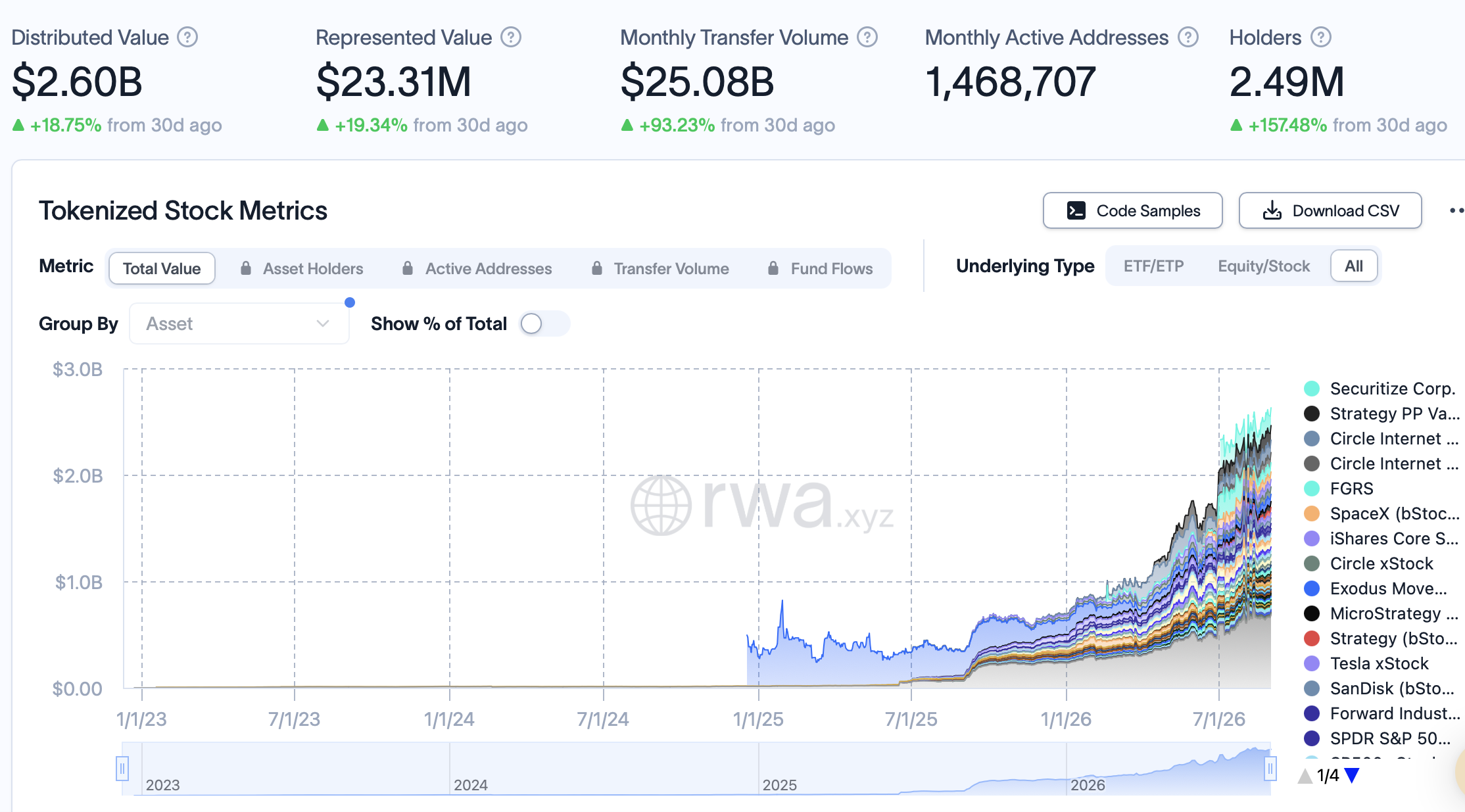
The value of tokenized stocks. Source: RWA.xyz
Last week, Coinbase brought its B20 tokenized equities to Base, giving eligible non-US users 24/7 access to onchain versions of stocks including Apple, Nvidia, Meta and Alphabet. The assets can also be integrated into DeFi protocols for uses such as trading and collateralized borrowing.
Kraken also pushed deeper into equities in August, opening access to more than 7,000 US-listed stocks for eligible European customers and placing them alongside its growing lineup of tokenized xStocks.
In July, US online brokerage Robinhood launched Robinhood Chain alongside a new generation of Stock Tokens available to eligible users in more than 120 countries.
Meta is closing on Google in advertising. But Wall Street is still backing Alphabet stock.
In Q2, Meta made $59.36 billion from ads, up 27%, its filing shows. Alphabet made $63.27 billion from “Google Search & other,” up 17%. The gap is $3.9 billion. It was almost double last year.
“Meta arguably has seen the largest impact from AI on ad growth and is on track to surpass Google Search this year,” Bernstein analyst Mark Shmulik wrote.
His firm says Meta took nearly half of every new digital ad dollar in the quarter. AI is sharpening recommendations and targeting: Meta served 14% more ads and charged 12% more for each. Google and Amazon are benefiting too.
Note: Meta is competing on the Google Search and Other segment. Total Google advertising revenue was $81.63 billion.
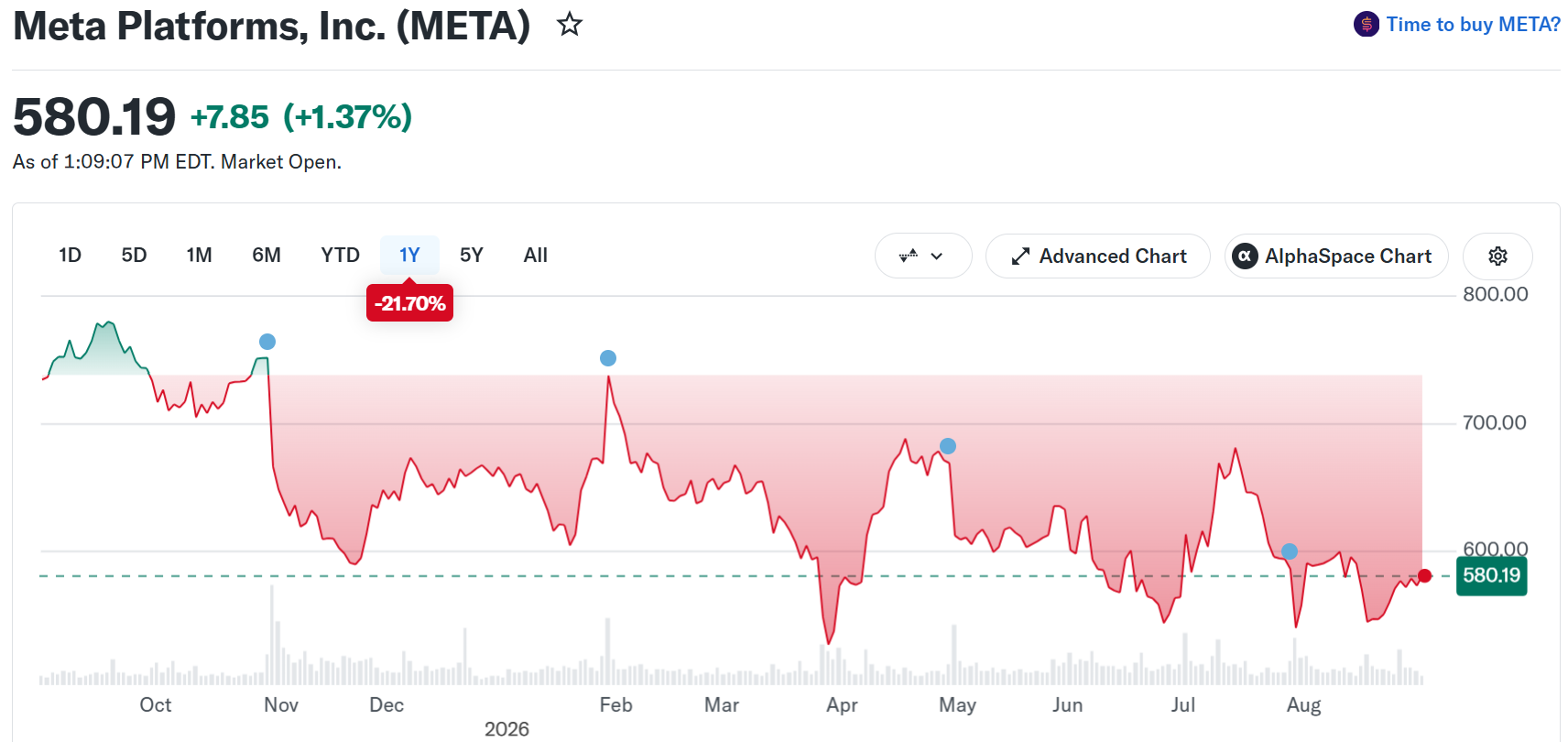
Meta shares have fallen over the past year, while Alphabet climbed.

Why Wall Street Still Doubts the Stock
The easy answer is AI spending. Alphabet’s spending feeds Google Cloud, which generated $24.8 billion, up 82%.
Meta has no cloud segment to show investors; its infrastructure returns mostly surface through ads. Investors have been rotating toward Alphabet despite a cash-flow squeeze across Big Tech.
TipRanks shows 38 buys and no sells, with an average target of $752.61.

Meta’s next test is Business Agent. More than one million businesses use it on WhatsApp and Messenger, with Instagram expansion underway.
Paid plans are coming. Meta has the faster ad engine. Alphabet has more visible ways to turn AI into cash.
The post Meta Is Catching Google in Ads. Which Stock Does Wall Street Favor? appeared first on BeInCrypto.
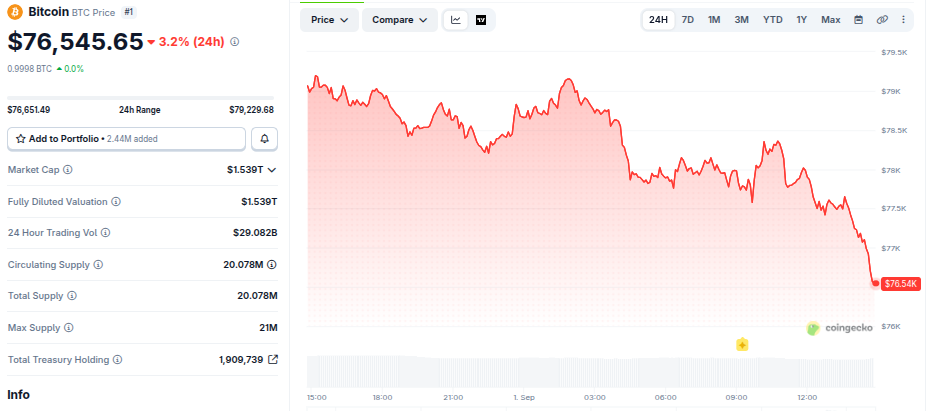
Bitcoin lost the $77,000 level on Tuesday, September 2, after President Trump confirmed renewed US airstrikes on Iranian targets near the Strait of Hormuz.
The token hit $80,000 just 3 days ago after the US Treasury triggered a sudden bull run. Is that momentum disappearing again?

Trump Confirms New Strikes, Threatens a Larger Response
Trump posted on Truth Social that “the United States is, as we speak, striking Iranian targets near the Strait of Hormuz.”
He described the strikes as large and powerful, framing them as retaliation for a failed Iranian attempt to plant sea mines in the strait, which he said have since been completely removed or detonated.
He also cited eight Iranian missiles launched at a US base in Jordan, all of which he said were intercepted. Trump warned that any Iranian retaliation would trigger a response at a much harder, higher level, adding that this is not the biggest strike, which is waiting in the wings.
Follow us on X to get the latest news as it happens.
The announcement follows US strikes on launchers on Larak Island a day earlier, with Iran responding against bases in Jordan.
Iranian media reported explosions in Qeshm, Bandar Abbas, and other locations across Hormozgan province. These claims, made by one side of an active conflict, have not been independently verified.
Oil and Bitcoin Reacted in Opposite Directions
Oil prices jumped on the news. Brent crude climbed above $91 to $94 a barrel amid fears of fresh disruptions in Hormuz, a waterway carrying a substantial share of global crude supply.
“Brent crude oil has now surged to $94.48/bbl, up 4.1% on the day. The next $5 matters more than the last $5. At ~$95/bbl, oil is still primarily a geopolitical risk story. At $100+, it increasingly becomes an inflation, Fed and equity-valuation story,” one analyst said on X.
Subscribe to our YouTube channel to watch leaders and journalists provide expert insights.

That spike feeds inflation expectations and reduces the odds of near-term US rate cuts, an environment that has historically weighed on risk assets like Bitcoin.
Bitcoin, which closed Monday near $78,500 to $78,900, fell more than 1.3% to 2% during the session. The token remains roughly 29% below its October 2025 all-time high of above $126,000.

Since the US-Iran conflict began in late February, similar escalations have repeatedly triggered selloffs, at times pushing Bitcoin below $77,000 and even toward $62,000.
Spot ETFs continue offering institutional support, though speculative capital still reacts sharply to headlines, leaving $77,000 as the key level to watch as Iran’s response unfolds.
The post Bitcoin Slides Below $77,000 After Trump Confirms New Strikes on Iran appeared first on BeInCrypto.

Kast has launched a stablecoin-based business platform offering accounts, cards, transfers in more than 20 currencies, and returns of up to 8% APY across over 170 countries.
Summary
- Kast Business combines fiat accounts, stablecoin deposits, virtual cards and local currency payouts.
- Companies can earn up to 8% APY on idle balances and receive up to 3% cashback.
- Kast operates as a fintech rather than a bank, using licensed partners for regulated services.
- The company plans to add between 1,000 and 5,000 active businesses by the end of 2026.
Kast said its new KAST Business platform gives companies a single service for receiving money, holding stablecoins, issuing cards, and paying workers or vendors across different markets.
Businesses can receive fiat through virtual accounts supplied by regulated partners. Customers may also fund their accounts with supported stablecoins and other crypto assets, although Kast has not published a complete list of eligible tokens for every jurisdiction.
After funds arrive, companies can issue virtual cards for employees, vendors or subscriptions. The platform also supports local payouts in more than 20 currencies, giving internationally distributed teams an alternative to managing separate bank accounts and payment services.
Kast said the service reaches more than 170 countries, but access to individual products depends on the customer’s location and the rules applied by its financial partners. Account features, card availability, and transfer options may therefore differ between jurisdictions.
Kast Business combines payments with stablecoin balances
The platform brings several functions normally offered by separate providers into one dashboard. Along with receiving and sending funds, business owners can create virtual cards and assign them to individual team members or recurring expenses.
Kast’s business page says companies can issue hundreds of virtual cards and set separate spending limits. Customers can use the cards for operating costs, including software subscriptions, vendor bills and online advertising, subject to the company’s eligibility rules and card controls.
Card spending can generate cashback of up to 3%, according to Kast. The actual rate depends on the customer’s membership level, transaction type, monthly spending limit, and location.
Standard cardholders receive a lower rate than customers on paid tiers. Kast’s published card terms show that foreign exchange fees can also range from 0.5% to 1.75%, depending on the country, transaction, and card program, meaning the advertised cashback rate does not apply equally to every payment.
For cross-border transfers, companies can receive money through fiat accounts before moving it through stablecoin infrastructure. The structure gives businesses a way to accept traditional bank payments while using digital assets for treasury operations or settlement.
A similar model has begun appearing among other payment companies. In July, Ramp launched accounts that let companies hold USDC and USDT, send stablecoins at any time, and settle payments in more than 40 local currencies across over 140 countries.
The 8% APY comes with product and jurisdiction limits
Kast advertises returns of up to 8% APY on idle business balances. The company says the return comes from short-term U.S. Treasuries and stablecoin yield, but the maximum rate should not be treated as a fixed return available to every customer.
Kast has not detailed on its public business page how much of the advertised return comes from Treasury assets and how much comes from other stablecoin strategies. The company also has not provided a full public breakdown of the underlying products, counterparties, fees, or conditions required to receive the highest rate.
An APY shows the annualized return after compounding and does not mean customers will receive 8% over a shorter holding period. Rates generated by Treasury instruments or crypto-market activity can change as market conditions, fees, and strategy performance change.
As a June explainer from crypto.news noted, stablecoin-linked returns can come from several sources, including government debt, lending markets, trading strategies and platform-funded rewards. Each structure carries different custody, liquidity, counterparty, and regulatory risks.
Kast identifies itself as a financial technology company, not a bank. Regulated account and payment services are supplied through licensed partner institutions, according to the company.
Customers would therefore need to review the terms for the specific fiat account, stablecoin balance, and yield product they use. Kast’s description does not state that every balance qualifies as an insured bank deposit, while digital assets and investment products generally do not receive the same protections as deposits held directly at an insured bank.
U.S. rules place stablecoin rewards under scrutiny
For U.S. businesses, the yield feature arrives while regulators and lawmakers continue to examine how stablecoin rewards should be treated.
The GENIUS Act created a federal framework for payment stablecoins and prevents payment stablecoin issuers from paying interest or yield solely for holding their tokens. The restriction does not automatically settle how a separate fintech platform may offer rewards or returns through an account, Treasury product, or another investment arrangement.
Kast’s description presents the return as a feature attached to business balances and says it is powered by short-term U.S. Treasuries and stablecoin yield. The company has not publicly explained whether U.S. customers can access the same maximum rate or which legal structure governs the product in the United States.
Availability may also depend on the licensed partner holding the funds, the type of asset placed in the account, and whether a yield product falls under banking, securities, or another set of financial rules. Kast’s statement that services vary by jurisdiction leaves open which business features will be offered to American companies at launch.
U.S. users may also face tax reporting obligations when they receive yield or cashback, depending on how each payment is classified. Kast has not published product-specific U.S. tax guidance for the new business service, so customers would need to rely on their transaction records and professional advice when reporting income.
Kast targets up to 5,000 active businesses in 2026
Kast launched the business product after closing an $80 million Series A funding round in March at a reported valuation of $600 million.
The company said it would direct the capital toward product development, licensing, and expansion in North America, Latin America, and the Middle East. Kast claims more than 1 million users and plans to bring between 1,000 and 5,000 active companies onto KAST Business by the end of 2026.
Before the business-platform rollout, Kast appointed former U.S. Securities and Exchange Commission senior adviser Stephanie Allen as head of corporate and policy communications. The April appointment placed Allen in charge of the company’s engagement with policymakers, industry groups and media as Kast expanded its stablecoin services in North America and Latin America.
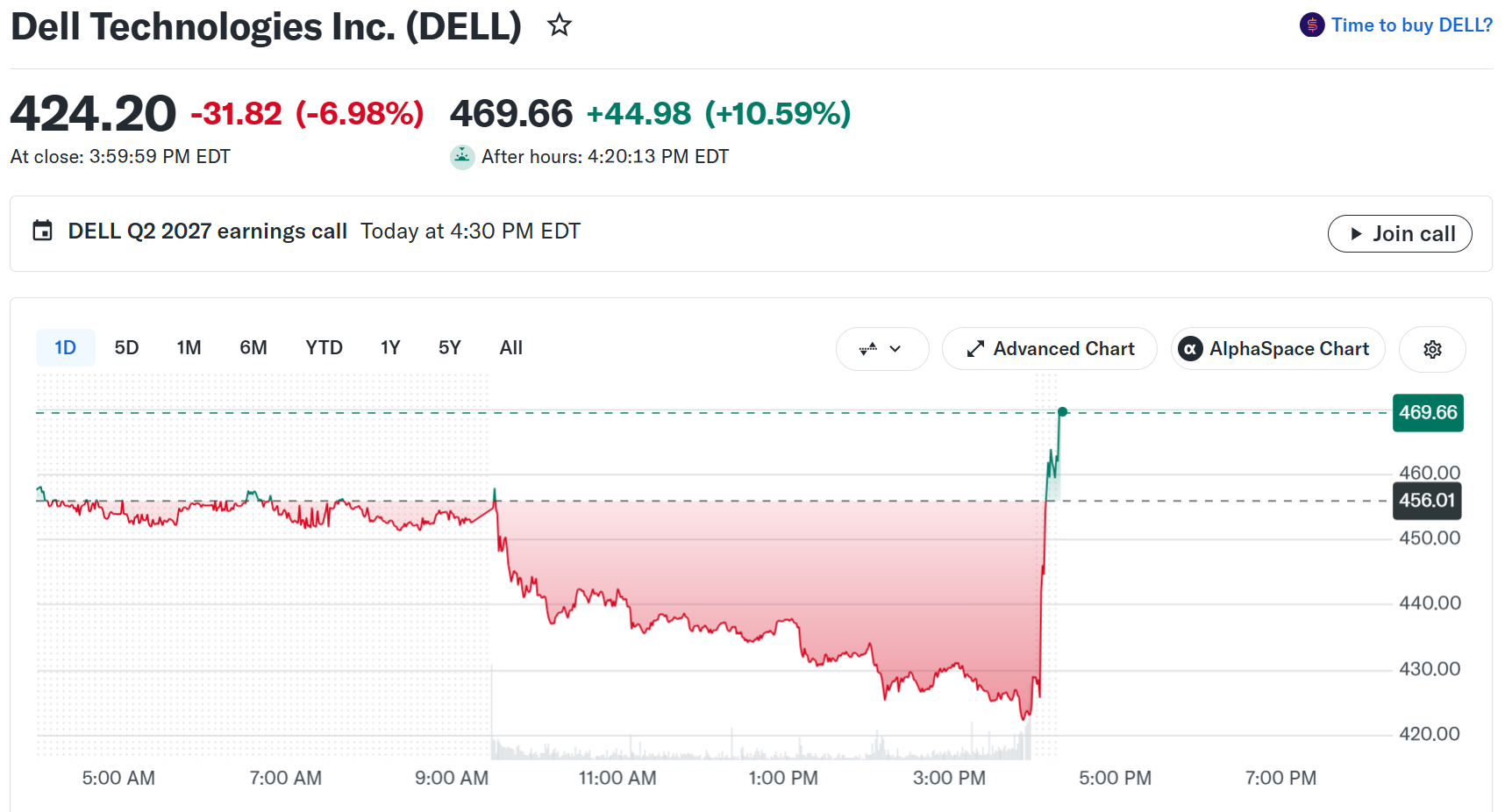
Dell Technologies stock jumped more than 10% in after-hours trading on Tuesday. The company posted adjusted earnings of $7.04 a share, well above the roughly $4.90 analysts expected.
Revenue climbed 58% from a year earlier to $46.97 billion. Shares changed hands near $469.66 shortly after the release, having closed the regular session down 6.98% at $424.20.

Why Dell Stock Sold Off Before the Beat
Sellers controlled the entire session before the numbers landed. Traders had positioned for a violent reaction in either direction.
Options expiring Friday implied an 11% move, a BeInCrypto Dell earnings options preview showed on Monday. The 10.59% after-hours swing landed close to that estimate.
Dell had also set a far lower bar for itself. Management guided in May to revenue of $44 billion to $45 billion and adjusted earnings of $4.80 a share.
Margins, rather than demand, drove the caution. Memory costs have risen this year, and AI servers earn thinner margins than storage or commercial personal computers.
AI Backlog Swells to $95 Billion as Dell Lifts Its Outlook
Sales of AI-optimized servers doubled year over year to $16.4 billion. Orders told a bigger story.
Dell booked $60.9 billion of AI orders during the quarter and closed it with a record $95 billion backlog. The figure stood at $51.3 billion three months earlier, when the company delivered a record first quarter beat.
Demand, therefore, is still running well ahead of what Dell can physically ship.
Management answered by raising full-year targets for a second consecutive quarter. The company now points to roughly $192 billion in revenue and $25.50 in adjusted earnings. The prior view was $167 billion and $17.90.
AI server revenue is now guided near $74 billion, against $60 billion in May. For the third quarter, Dell flagged roughly $49 billion in revenue and $6.50 in adjusted earnings.
The tape has not fully priced any of that. At $469.66, the stock sits only about 3% above Monday’s $456.01 close. Most of the pop simply undid Tuesday’s slide.
That leaves the burden on the 4:30 p.m. Eastern call. Executives there face questions on memory supply and on how fast the backlog converts into shipments.
Dell’s 2026 stock surge has already carried shares from about $110 to a high of $514. The market now prices the company as an AI compounder that has to keep raising.
The post Dell Stock Jumps 10% After Hours on Blowout AI Quarter, Guide Raise appeared first on BeInCrypto.
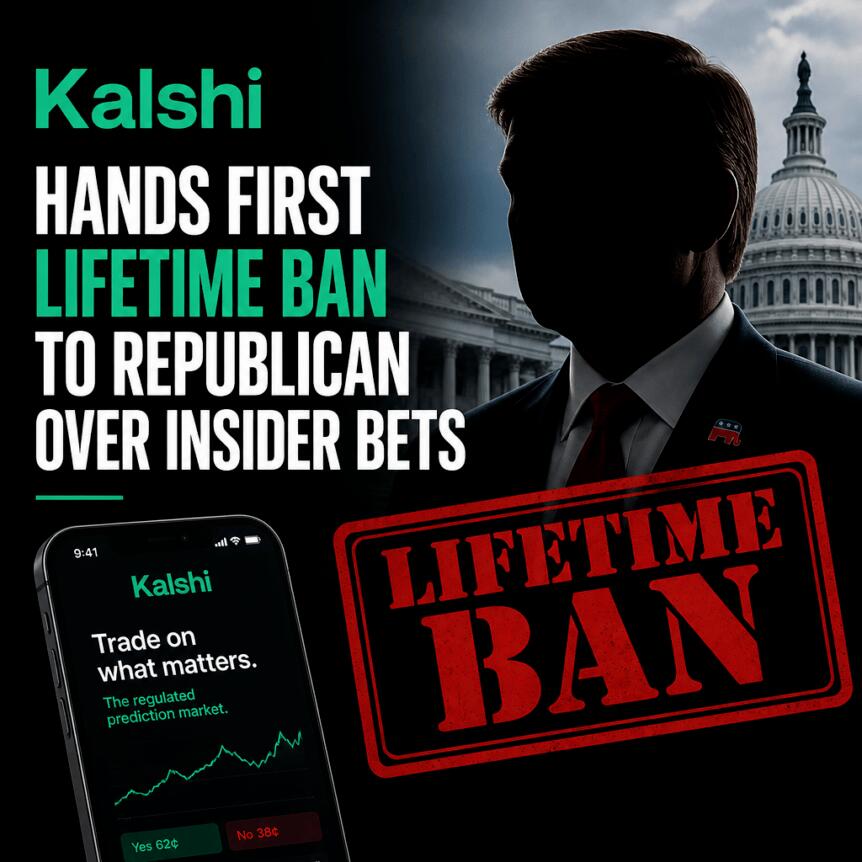
Prediction market platform Kalshi has imposed lifetime and multi-year trading bans on US House of Representatives candidates Laurie Buckhout and former Republican lawmaker George Santos, citing violations of rules that prohibit traders who can influence an event’s outcome from trading on contracts tied to that same event.
The compliance notices, announced Friday, mark one of Kalshi’s most serious enforcement actions since the platform launched in 2021. They also land amid heightened political and regulatory scrutiny of prediction markets, particularly claims that some event contracts could be manipulated.
Key takeaways
- Kalshi permanently suspended George Santos from trading on its prediction markets and imposed a $71,356 penalty, according to a settlement notice.
- Laurie Buckhout received a three-year trading suspension and a $2,590 penalty following Kalshi disciplinary action.
- Kalshi tied both restrictions to alleged rule-breaches involving event contracts that could be influenced by the candidates’ own actions.
- The moves follow broader enforcement concerns as regulators and lawmakers push back on whether prediction markets can be adequately controlled against manipulation.
Lifetime ban for George Santos after alleged event-linked trading
In its notice of settlement of disciplinary action, Kalshi said it had permanently suspended Santos from trading on the platform and assessed a $71,356 penalty. The company’s account attributes the action to investigation findings that Santos traded using event contracts connected to matters tied to his own public schedule and actions.
Kalshi said Santos “engaged in trading activity in certain markets related to his attendance at the State of the Union address” in February 2026. Under Kalshi’s rules, the platform prohibits trading on contracts where the trader is a decision maker, or has any influence—direct or indirect—over the outcome of the underlying event.
“If a Trader is a decision maker, either directly or indirectly, or has any influence, directly or indirectly, no matter the scale and importance of the influence, on the outcome of the Underlying event of any Contract, that Trader is prohibited from attempting to enter into any trade, either directly or indirectly, on the market in such Contracts,” Kalshi’s rules state.
Notably, Kalshi’s compliance notice did not say whether Santos cooperated with the investigation. Santos, however, publicly disputed Kalshi’s approach afterward, calling the platform “unserious” in a post on X.
Three-year suspension for Buckhout tied to her own candidacy
Kalshi said its investigation into Buckhout led to a three-year suspension from trading and a $2,590 penalty. In its notice of settlement, the company described Buckhout—running in North Carolina’s 1st congressional district—as having announced her candidacy and being added as a market option for a contract on the North Carolina congressional election.
In describing the conflict, Kalshi referenced its rules on influence over an event’s outcome, emphasizing that if a trader has any meaningful ability to affect the underlying result, they are barred from trading on related contracts. Kalshi’s compliance department reported that Buckhout “cooperated with the inquiry” and agreed to the trading ban and penalty.
Buckhout remains a Republican candidate for the 2026 midterm elections in North Carolina’s 1st congressional district. Reports also indicated her comment after the settlement characterized her alleged conduct as a “dumb mistake.”
Why Kalshi’s enforcement matters for prediction market trust
These settlements are significant not only for the individuals named but also for how prediction markets defend themselves against manipulation concerns. Kalshi’s argument is essentially compliance-based: once someone can plausibly affect or influence an event tied to a market—whether by office-holding, public participation, or other decision-making—the market platform draws a line between ordinary speculation and trading while holding influence over the event.
That stance comes as prediction market platforms continue to face pressure from both federal and state authorities. Kalshi has already been in the crosshairs over event-contract conduct, and the new enforcement actions can be read as part of a broader attempt to demonstrate internal policing.
The same tension has also appeared in enforcement actions involving people connected to political communications. Earlier, federal regulators fined Gabriel Perez, described as President Donald Trump’s teleprompter operator, after trading event contracts on Kalshi related to Trump’s speeches. Kalshi’s latest disciplinary actions, while involving different individuals and circumstances, reinforce the idea that regulators and lawmakers are watching whether event markets can be gamed by participants whose own actions shape outcomes.
Prediction markets still face a legal battle over jurisdiction
Beyond Kalshi’s internal discipline, the wider market faces legal uncertainty in the United States. According to the article’s referenced context, Kalshi and other prediction platforms such as Polymarket have been hit by lawsuits filed by individual US state gaming authorities. Those suits allege the platforms facilitate illegal bets on sporting events.
At the same time, the US Commodity Futures Trading Commission (CFTC) has argued that it holds “exclusive jurisdiction” over prediction markets, and the CFTC chair, Michael Selig, has said the agency will pursue legal action against state authorities that challenge that position.
Earlier this year, the CFTC used rare emergency authority in a dispute involving New York’s attempt to bar Kalshi from offering certain types of contracts tied to sports, elections, and other events. The case reflects a broader regulatory asymmetry: even when platforms claim they are operating under federal frameworks, state-level enforcement threats can still shape market access, product design, and long-term compliance strategy.
Buckhout’s market remains live despite sanctions
Even with Buckhout sanctioned, Kalshi’s contracts tied to her election outcome appear to remain listed. As of Tuesday, Kalshi still showed event contracts related to the result of Buckhout’s North Carolina race, displaying probabilities for Democratic incumbent Don Davis versus Buckhout.
That detail matters for traders and observers because it highlights a separation between disciplinary action against a participant and the ongoing availability of the underlying contract market—an important operational question for anyone evaluating liquidity, pricing accuracy, and how quickly markets reflect compliance-driven changes.
Going forward, market participants should watch whether Kalshi expands similar enforcement across other categories of politically connected events, and whether the CFTC’s jurisdiction stance continues to deter or intensify state-level lawsuits—developments that could reshape which prediction markets remain accessible in the US and under what compliance standards.


In a post that attracted over 800,000 views yesterday, a pseudonymous crypto trader claimed to have bought a ‘controlling stake’ in a NASDAQ-listed pennystock for $1.8 million with a quirky plan to squeeze short-sellers through the power of memecoins.
Dropping clues obviously intended to drum up interest in his bizarre investment, he announced tantalizing plans to tokenize his equity, pairing it with a memecoin, and launch a short-squeeze campaign against the ‘92.3%’ of the float that he claimed was already sold-short.
There was one problem with his wild tale, however. No such company exists.
A proposed Community Note on X correctly debunked the possibility that he could have bought shares in a company matching his description.
Three hours later, the attention-seeker admitted that he had fabricated some of those numbers, recasting his original post as intentionally obscure despite an otherwise sincere effort.
Delusional memecoin ‘trading’ of Nasdaq stocks
In this case, the backpedal is notable because it demonstrates a repeating pattern of misinformation about real stocks from crypto influencers.
Indeed, just one night prior, memecoin traders tried to squeeze short-sellers on Nasdaq-listed Hims & Hers. That effort entirely failed because, to state the obvious, memecoin trades do not oblige Nasdaq stocks to change their price.
Over the summer, crypto influencers tried to revive a short-squeeze narrative using chatter about tokenizing NYSE-listed GameStop using memecoins or Robinhood Chain smart contracts.
Horrifyingly, a researcher found 354 out of 361 Robinhood Chain contracts using the GME ticker had absolutely no link to Gamestop’s actual GME stock.
Read more: Robinhood Chain’s memecoin boom is already imploding
Healthy skepticism is warranted
One trader in the reply section called the plan about short-squeezing a Nasdaq penny stock through a secret memecoin takeover a load of bollocks, noting a stake this size ordinarily requires a disclosure filing.
The trader’s numbers were oddly precise: $4.8 million market cap, $0.12 share price, 92.3% short interest, $6.2 million in debt, and $380,000 of revenue.
He claimed to have bought a 37.4% stake for $1.8 million over three weeks through two brokers “so the [sic] I didn’t spike the price,” he wrote.
He congratulated himself on his supposedly brilliant plan to pair tokenized equity with memecoins to create “the biggest crossover story in financial history.”
Even if the plan were true, it would certainly not be bigger than actual financial crossover stories from history, such as the listing of agricultural futures or other historic developments like exchange-traded funds.
‘I won’t do a memecoin’
In any case, his self-congratulation evaporated within hours alongside his specificity.
The trader first claimed to have purposefully fudged numbers to deter front-running. Then, buried in his own thread, he retroactively removed his promise of a memecoin entirely. “There’s no memecoin, I won’t post a memecoin, I won’t do a memecoin and this is not a memecoin ad. Some of the details are not finalized.”
In other words, he retracted the precise novelty that made the post newsworthy in the first place.
No stock, with whatever actual metrics it might have had, surfaced in the comment section or quote-post threads by late evening yesterday.
To summarize, one hour after the original claim, he was defending it, wildly comparing himself to Michael Saylor. Within two hours, a proposed Community Note was live for moderators. Within three hours, he had conceded, “the numbers are clearly off to avoid certain people thinking im trynna pump a certain stock.”
Short interest of 92.3% on a 12-cent stock is close to unheard of and next to impossible. Sub-$1 stocks are hard to borrow at any scale — even for a single share, let alone 92.3% of the float.
A 37.4% stake, which preceded his subsequent acquisition of a ‘controlling stake’ in his original narrative, would also ordinarily trigger a Schedule 13D disclosure requirement with the SEC.
Got a tip? Send us an email securely via Protos Leaks. For more informed news and investigations, follow us on X, Bluesky, and Google News, or subscribe to our YouTube channel.
Why is GitLab stock surging today?

Binance adds options on 1,000 US stocks and ETFs to deepen TradFi push

The House Article | Lee Anderson: Tory MPs Were Snobby About How I Speak





-

 Crypto World7 days ago
SpaceX stock could rise 75% to $240, JPMorgan says
-

 Fashion4 days ago
Weekend Open Thread: Maeve – Corporette.com
-

 Crypto World5 days ago
Bitcoin’s 22% rally now needs real demand to outlast Treasury liquidity boost
-

 Crypto World6 days ago
Warsh Jackson Hole keynote puts financial innovation first
-

 Business5 days ago
Salesforce Stock Soars 19% as Blowout Earnings and Agentforce AI Growth Silence Software Skeptics
-

 Crypto World6 days ago
Elon Musk Grok Bot Promise: We Will Make You Whole if AI Loses Your Money
-

 Business5 days ago
Apple Confirms September 9 Keynote and Reveals Its Full Pre-Order Schedule
-

 Crypto World7 days ago
Did Trump Just Move SpaceX Stock With One Truth Social Post?
-

 Business4 days ago
Onto Innovation Stock: AI’s Next Bottleneck Is Yield (NYSE:ONTO)
-
 NewsBeat6 days ago
Lindsay Clancy jury braces for closing arguments as judge tells court: ‘You’ve heard all the evidence’ – Live updates
-

 Business6 days ago
Walmart takes aim at younger shoppers with new fashion brand
-

 Crypto World6 days ago
NVIDIA revenue hits $96.2B as AI demand doubles
-

 Crypto World4 days ago
Bitcoin price tests $82K resistance as Brandt stays long
-

 Business7 days ago
Thailand’s Eastern Economic Corridor Capital City (EECiti): Key Developments and Investment Opportunities
-

 Business4 days ago
iPhone 18 Pro Pre-Orders Could Shift to Saturday as Apple Reportedly Avoids September 11 Anniversary
-
 Crypto World6 days ago
Nvidia Q2 Earnings Reveal $96.2 Billion Beat, So Why Is NVDA Falling?
-

 NewsBeat7 days ago
Trump’s trade truce with China faces test with Iran effort
-
 Tech3 days ago
Hugging Face built a $4.5 billion empire on free AI models. Now Nvidia is buying it for $12.9 billion
-

 Tech6 days ago
Claude Cowork gets its own browser that doesn’t touch your tabs, bookmarks, or saved passwords
-

 Crypto World5 days ago
Truflation calls for Fed rate cut after PCE forecast
You must be logged in to post a comment Login