

Bodycote, Gamma Communications and Capricorn Energy have all received offers to be taken private

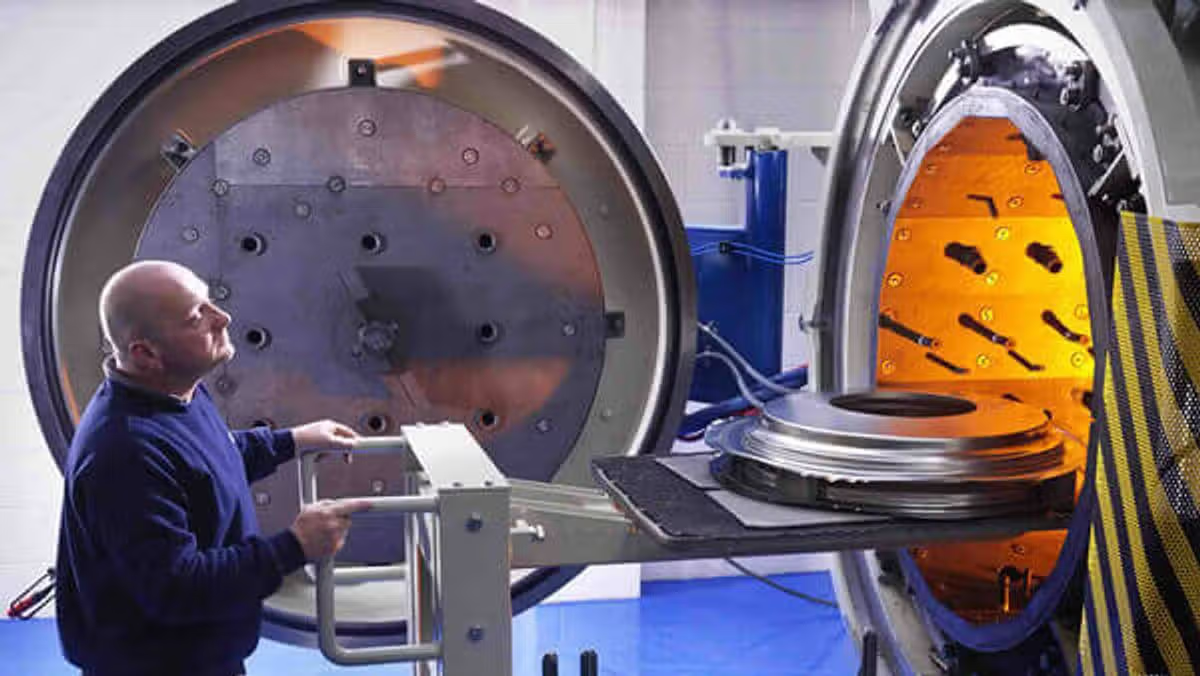
A Bodycote worker loading a furnace(Image: Bodycote)
The extent of the exodus from the London Stock Exchange has been exposed on the first trading day after the summer break as three listed firms simultaneously announced plans to depart the market.
FTSE 250 constituents Bodycote and Gamma Communications, alongside energy company Capricorn, each revealed fresh bids to be taken private with a combined takeover value exceeding £3bn.
Macclesfield-headquartered Bodycote , the largest of the trio and a London Stock Exchange member since 1972, said it had struck an agreement to be bought by US private equity house Veritas Capital in a deal valuing the business at £1.9bn.
The bid of 932p per share represents a premium of 41.4 per cent above the average price of 659.5p per share for the twelve months to May. This follows the metallurgy firm rejecting earlier approaches from Veritas and CVC.
Gamma Communications has endorsed a £1.1bn offer from UK private equity house Epiris, days after confirming it was in discussions with European buyout firm Waterland regarding a potential takeover, as reported by City AM.
Epiris said on Tuesday it had tabled an all-cash proposal for the FTSE 250 telecoms provider, at a 53 per cent premium to its shares before takeover speculation surrounding the group first surfaced several months ago. Waterland, an Irish-based dealmaking firm, had intended to swoop in on the sale of Gamma to Epris before subsequently offloading a substantial portion of the business to Giacom, a telecoms company chaired by Matthew Riley.
Its involvement had raised the prospect of yet another bidding war for a London Stock Exchange-listed firm, just weeks after Apollo fended off stiff competition from US buyout house Castlelake to acquire Apollo.
Epiris’s formal offer, arriving just one day before a Takeover Panel deadline, looks set to draw a line under months of uncertainty surrounding Gamma’s future. The telecoms giant first informed shareholders it was in discussions with Epris in May, since when it has also rebuffed approaches from Providence Equity Partners and Oakley Capital.
Separately, Capricorn Energy has struck a deal with Norwegian rival DNO worth $396m (£292m), in a transaction set to bring an end to Capricorn’s 38-year presence on the London Stock Exchange. The Scottish energy company switched its recommended offer from Genel Energy to DNO, after the Scandinavian bidder put forward a proposal $36m higher than Genel’s.
This trio of acquisitions will heap additional pressure on senior leadership at the London Stock Exchange, which has been haemorrhaging constituents at an unprecedented rate this year. Over 50 companies have now either accepted bids or are facing approaches from firms that are either privately held or quoted overseas.
London-listed stalwarts including Schroders, Beazely and Intertek have all departed the market in 2026, just as the exchange has been grappling to entice new listings in their stead.
























































You must be logged in to post a comment Login