At this year’s World Robot Conference in Beijing, Unitree’s founder announced plans to accelerate humanoid robot development. The company aims to enhance robot intelligence, mobility, and versatility, competing globally in the robotics industry. Their focus includes improving robot adaptability for various applications, highlighting China’s growing capabilities in humanoid robotics innovation.
China’s humanoid robots are experiencing a significant shift from research prototypes to practical industrial applications. This transition reflects China’s growing emphasis on automation to boost manufacturing efficiency, reduce labor costs, and improve safety standards. Companies are increasingly deploying these intelligent robots in tasks such as assembly, logistics, and quality inspection, where human workers previously performed manual labor.
The advancement of AI and sensor technologies has enabled humanoid robots to perform complex and repetitive tasks with higher precision and reliability. As costs decrease and technology matures, more factories across China are adopting these robots to stay competitive in the global market. This trend is also aligned with China’s broader push towards high-tech innovation and smart manufacturing.
Overall, the shift of Chinese humanoid robots to industrial utility marks a major milestone in robotics development. It signifies China’s commitment to leading in industrial automation and reflects a future where humans and machines collaborate more seamlessly in manufacturing processes, driving economic growth and technological progress.
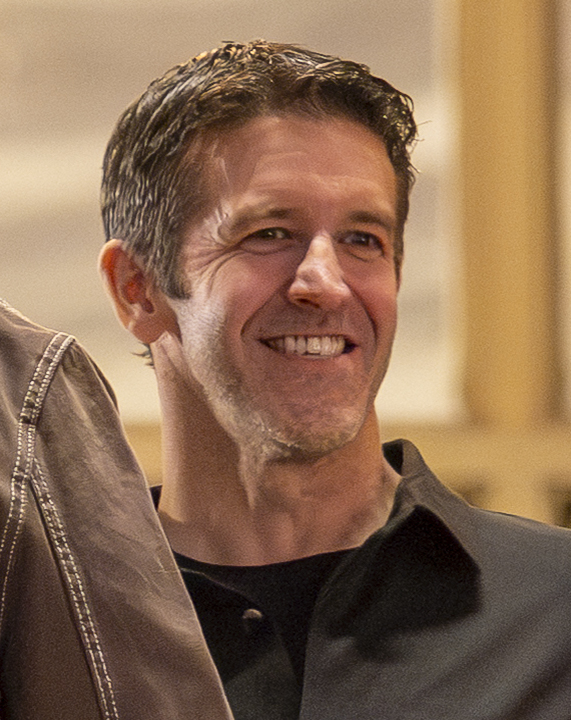
CUPERTINO, Calif. — John Ternus formally became Apple’s chief executive officer Tuesday, taking over from Tim Cook in the company’s most significant leadership transition in more than a decade as Apple heads into a pivotal product launch and an intensifying race in artificial intelligence.
Cook’s final day as CEO was Monday, closing out a tenure that began in August 2011 when he succeeded Apple co-founder Steve Jobs. Cook posted a farewell message to the Apple community on X, writing, “Sending lots of love to the Apple community on my last day as CEO. My title changes tomorrow, but the love I have for the Apple community never will.” As of Tuesday, Cook transitions into the role of executive chairman of Apple’s board of directors, a position in which he is expected to continue assisting the company with certain responsibilities, including engagement with policymakers around the world.
Apple first announced the transition plan in April, saying the change had been approved unanimously by the company’s board of directors following what Apple described as a thoughtful, long-term succession planning process. In the company’s original announcement, Cook reflected on his time leading Apple. “It has been the greatest privilege of my life to be the CEO of Apple and to have been trusted to lead such an extraordinary company,” Cook said at the time. “I love Apple with all of my being, and I am so grateful to have had the opportunity to work with a team of such ingenious, innovative, creative, and deeply caring people.”
Advertisement
Board chairman Arthur Levinson praised Cook’s tenure in the same announcement, crediting him with transforming Apple into what Levinson called the world’s best company. “Tim’s unprecedented and outstanding leadership has transformed Apple into the world’s best company. He’s introduced groundbreaking products and services time and again, and his integrity and values are infused into everything Apple does,” Levinson said. “On behalf of the entire board of directors, we are incredibly grateful for his countless contributions to Apple and the world, and we are thrilled he will now be executive chairman.”
Ternus, 51, joined Apple in 2001 and has spent nearly a quarter-century at the company, most recently serving as senior vice president of hardware engineering since 2021. He also joins Apple’s board of directors effective Tuesday. According to Apple’s own regulatory disclosures, the board believes Ternus’s deep technical background and product focus make him well-suited to lead the company through its next chapter. Levinson said the board views Ternus as the right leader to build on Cook’s foundation. “We believe John is the best possible leader to succeed Tim and as he transitions to CEO we know his love of Apple, his leadership, deep technical knowledge, and relentless focus on creating great products will help,” Levinson said in April’s announcement.
Ternus’s path to Apple’s top job traces back to the University of Pennsylvania, where he earned a bachelor’s degree in mechanical engineering in 1997 while also competing as a swimmer. At 51, he becomes CEO at roughly the same age Cook was when he took over from Jobs in 2011, a similarity that industry observers, including reporting from Fortune, have suggested may have factored into the board’s preference for a leader capable of providing long-term stability at the helm.
Advertisement
Ternus’s rise within Apple has followed a gradual, closely watched trajectory in recent years. Bloomberg’s Mark Gurman reported as early as 2021 that Ternus was viewed as a likely eventual successor to Cook, and subsequent reporting throughout 2025 and early 2026 described Apple’s public relations efforts increasingly placing Ternus in more prominent, public-facing roles, including product launch events and store visits. Late last year, oversight of Apple’s design teams was also transferred to Ternus, a responsibility historically held by only a small handful of top Apple executives, including Cook himself from 2015 to 2017, longtime design chief Jony Ive until 2019, and former Chief Operating Officer Jeff Williams from 2019 until his departure from the company in 2025.
Cook’s 15-year tenure as CEO encompassed a substantial expansion of Apple’s product and services portfolio, including the introduction of the Apple Watch, AirPods, Apple Pay and Apple Vision Pro, along with the Mac’s multiyear transition away from Intel processors to Apple’s own custom silicon. Cook also steered Apple deeper into recurring subscription revenue, overseeing dramatic growth in the App Store alongside the launches of Apple Music, Apple TV and expanded Apple Maps functionality. Under his leadership, Apple’s market capitalization grew from roughly 350 billion dollars to more than 4 trillion dollars.
Ternus takes over at a consequential moment for Apple. His first major public moment as CEO is expected to come just over a week from now, at Apple’s Sept. 9 “Surprise and Shine” event in Cupertino, where the company is widely expected to unveil the iPhone 18 Pro, iPhone 18 Pro Max and its first foldable iPhone. Analysts covering the transition, including those cited by financial research firm TradingKey, have said Ternus’s central challenge will be translating Apple’s hardware strengths into a meaningful competitive position as the broader technology industry increasingly competes on artificial intelligence capabilities, an area where some analysts have said Apple has appeared to lag behind rivals in recent product cycles.
AUSTIN, Texas — Tesla Inc. shares fell about 2.6 percent Tuesday morning, trading near $358.28, as investors locked in August gains ahead of a Cybercab event scheduled for Thursday at the company’s Texas headquarters.
The stock was down $9.67 from the prior close. The auto-parts group was also weaker, while Ford and General Motors traded slightly higher. Tesla had climbed through August on delivery optimism and autonomy headlines. Short-term momentum readings had moved into overbought territory, and the pullback fit a familiar pattern: sell into a binary product day.
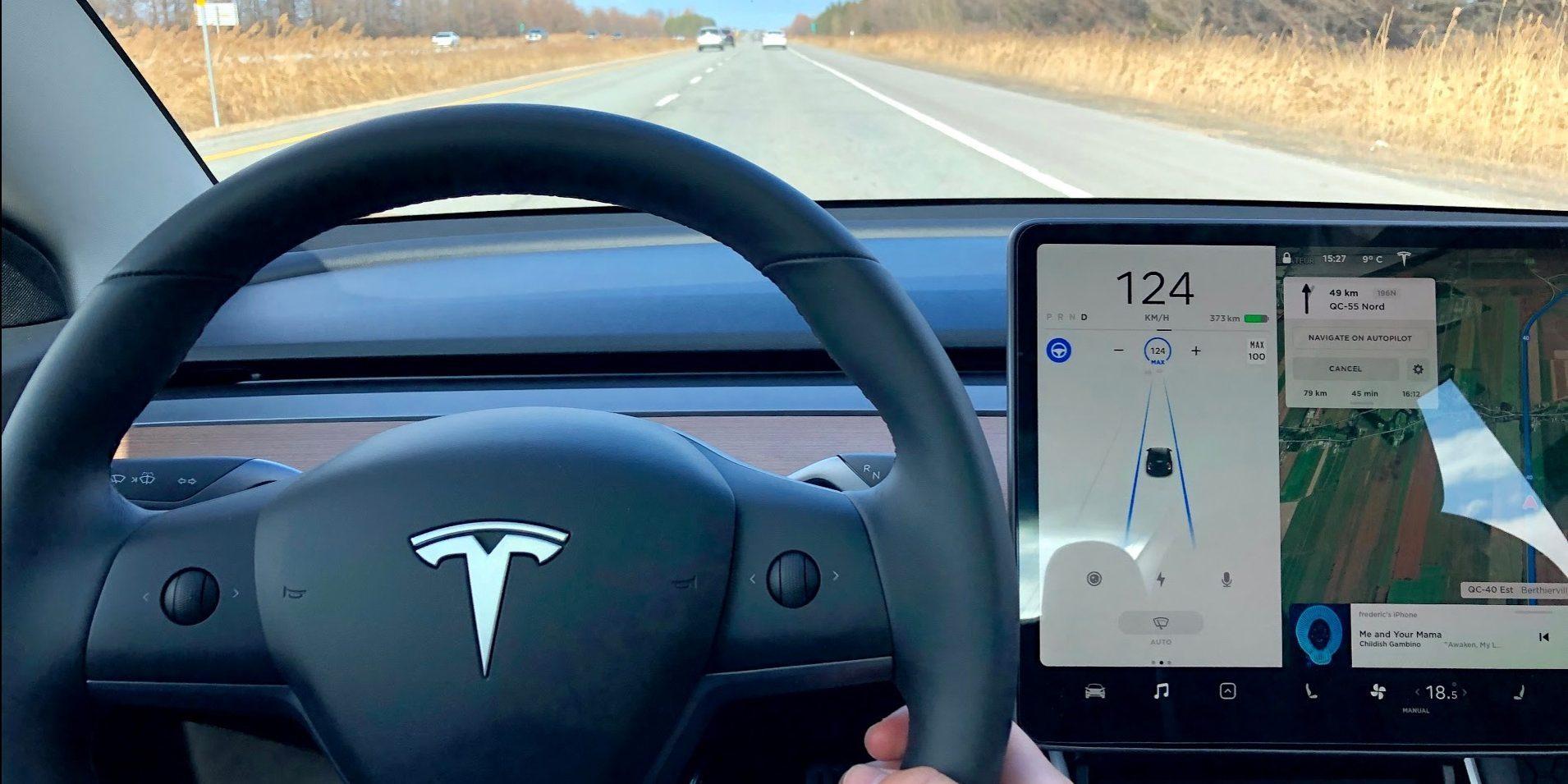
Tesla has invited Robotaxi app users to the Sept. 3 Cybercab launch in Austin. State records show the company registered 45 Cybercabs with the Texas Department of Motor Vehicles on Aug. 31, a step toward commercial use on Texas roads. Robotaxi service already runs 6 a.m. to 10 p.m., seven days a week, in Austin, Dallas, Houston, Miami, Orlando and Tampa. Nevada regulators this month also approved Las Vegas permits for Tesla, Uber and Waymo.
Those milestones have not settled the debate over when unsupervised robotaxi miles become material revenue. Management has emphasized Full Self-Driving software — including a coming v15 build and pothole-avoidance work — over a rapid city-count expansion. Capital spending is expected to exceed $25 billion in 2026 and rise for two or three more years to fund Optimus robots, a robotaxi fleet, solar manufacturing, AI compute and other plants, Chief Financial Officer Vaibhav Taneja said on the last earnings call.
Advertisement
Chief Executive Elon Musk spent the weekend tying Tesla to power for data centers. In a post on X he said Tesla and SpaceX were “each building 100 gigawatts per year of solar production capacity as fast as possible,” a build that would take years. Natural gas would fill the gap, he said, and in-house turbine-blade casting at SpaceX could speed gas turbines by as much as 18 months. The stock jumped Monday on that message. Tuesday’s decline gave some of that move back.
The valuation remains stretched versus near-term auto profits. Tesla trades at a high multiple of next year’s estimated earnings. Wall Street has cut 2026 and 2027 net-income forecasts this year while lifting capital-expenditure estimates. Visible Alpha consensus figures compiled in August showed 2026 net income estimates down to about $3.5 billion from $4.4 billion three months earlier, with 2026 capex near $25 billion and free cash flow still deeply negative.
Vehicle demand is the other weight. Tesla lost the global battery-electric sales crown to BYD in 2025. U.S. federal EV tax credits expired, producing a pull-forward and then a hangover. China and Europe have been soft in recent monthly tallies. Cybertruck prices were raised on some trims in late August even as that model has struggled to become a volume product. Model S and Model X production has been wound down so Fremont capacity can shift toward Optimus.
Tesla said last week that Optimus production had started in Fremont. Musk has long argued humanoid robots and autonomy will dwarf the car business. Investors have learned to treat those timelines as elastic. The Cybercab event is the next test of whether hardware, software and regulation are lining up — or whether the day is another prototype showcase.
Advertisement
Tuesday’s tape looked more like risk reduction than a change in the long-term story. Institutions that added during the August run had a reason to lighten up two days before a staged reveal. High capex, delayed robotaxi profit and rich multiples leave little room if the event underwhelms. A clean demo and a firmer commercial calendar could just as easily refill the bid.
Tesla’s market value still sits in the low-to-mid trillions at these prices, far above traditional automakers. That premium is the autonomy and robotics option. It is also why a 3 percent down day before a product event is ordinary. The cars still have to sell. The software still has to drive. The robots still have to ship. Thursday is one more checkpoint, not the destination.
Shares of Amazon.com Inc. fell more than 2% Tuesday, tracking a broader pullback across major U.S. stock indexes as Wall Street opened September on a cautious note amid renewed fighting in the Strait of Hormuz and rising Treasury yields.
Amazon stock traded at 254.38 dollars, down 5.39 dollars, or 2.07%, as of 10:29 a.m. Eastern time on the Nasdaq. The decline came alongside a broader retreat in equities Tuesday, with the Dow Jones Industrial Average, S&P 500 and Nasdaq Composite all trading lower as investors weighed renewed geopolitical uncertainty, a continued climb in bond yields, and lingering questions about the Federal Reserve’s next policy move.
The renewed selling followed overnight developments in the Middle East, where two oil tankers, one Saudi-owned and one South Korean-owned, were struck by projectiles Monday night as the United States and Iran resumed hostilities in the Strait of Hormuz, extending a six-month war that has largely settled into what analysts have described as a stalemate. The 10-year Treasury yield climbed to 4.78% Tuesday, its highest intraday level since January 2025, according to Yahoo Finance, as elevated oil prices stoked inflation concerns and reinforced expectations of another possible Federal Reserve interest rate increase later this month.
Amazon’s decline Tuesday adds to a broader stretch of underperformance for the stock so far in 2026. Shares are down roughly 7% year to date, a steeper decline than most of its Magnificent Seven peers, trailing only Tesla, down about 16%, and Microsoft, down roughly 10%, among the group’s worst performers this year, according to an analysis published by Yahoo Finance. Amazon’s weaker performance has been attributed to a combination of factors, including the company losing cloud computing market share relative to rivals Microsoft Azure and Google Cloud, tariff pressure on its e-commerce operations, and investor unease over the scale of Amazon’s spending on artificial intelligence infrastructure.
Advertisement
That AI spending has remained a central point of tension for investors throughout the year. Amazon has set a 2026 capital expenditure budget of roughly 200 billion dollars, a record for the company and about 50% higher than the prior year, with the bulk of that spending directed toward AI infrastructure. Amazon Chief Executive Officer Andy Jassy has defended the scale of that investment, saying he expects the company to generate “strong long-term returns on invested capital” as a result of surging demand for its AI offerings, even as some investors have questioned whether the spending pace is outrunning the near-term returns the company has been able to demonstrate.
Despite the stock’s underperformance this year, some analysts have continued to argue the pullback represents an attractive entry point rather than a sign of deeper trouble. Amazon currently trades at roughly 29 times trailing earnings and 26 times forward earnings, according to Yahoo Finance, valuation levels close to the broader S&P 500 average despite Amazon’s position as a market leader in both e-commerce and cloud computing. Wedbush has separately argued the stock could still break out in 2026, citing continued strength in Amazon’s automation efforts, advertising business and an expected reacceleration at Amazon Web Services.
Wall Street’s overall consensus rating on Amazon has remained largely positive despite the stock’s struggles. Barchart reported in June that the average analyst price target on Amazon stood at 316.04 dollars, implying meaningful upside from the stock’s trading levels at the time, with a consensus “Strong Buy” rating attached to the shares.
Tuesday’s decline unfolded against a broader market backdrop investors have described as entering a historically difficult period. According to Carson Group chief market strategist Ryan Detrick, September is statistically the weakest month of the year for U.S. equities, a seasonal pattern that, combined with this week’s renewed geopolitical tensions and rising bond yields, has contributed to a more cautious tone across markets as trading resumed following the Labor Day holiday period.
Mumbai: The Indian rupee ended with its strongest closing in nearly two months to close at 94.95 on Tuesday, versus its previous close of 95.16. The strength came from flow-related dollar offers from foreign banks and aggressive central bank intervention through nationalised banks. The rupee gained past the 95 per dollar levels, which was a strong resistance zone, triggering stop losses for many.
The gains came in despite high crude oil prices and overall weak Asian currencies during the day. Strong Q1 GDP growth of 7.8% along with dollar sales by the Reserve Bank both in the offshore as well as domestic markets caused this rise, traders said.
“The strength reflects continued RBI dollar sales, both in the NDF and OTC (over the counter) market, along with flows from National Investment and Infrastructure Fund of nearly $ 2.2 billion on Tuesday,” said Anil Bhansali, head of treasury, Finrex Treasury Advisors.
The rupee traded between 94.79 and 95.11 on Tuesday, and according to these levels, it has erased nearly all losses of this financial year. The rupee had closed at 94.83 in March.
Live Events
The positive sentiment however is not expected to last very long, as dollar demand is likely to continue amid high oil prices, while global bond sentiments are negative. “The positive growth outlook is helping offset pressure from higher oil prices and keeping sentiment towards the rupee stable. Going ahead, crude, dollar movement and FII flows will remain key triggers. Rupee range can be seen between 94.70 and 95.40 in the near term,” said Jateen Trivedi, VP, research analyst, LKP Securities.
Credo Technology Group Holding Ltd (CRDO) Q1 2027 Earnings Call September 1, 2026 5:00 PM EDT
Company Participants
Daniel O’Neil – VP of Investor Relations & Treasurer William Brennan – President, CEO & Chairman Daniel Fleming – Chief Financial Officer
Advertisement
Conference Call Participants
Tore Svanberg – Stifel, Nicolaus & Company, Incorporated, Research Division Quinn Bolton – Needham & Company, LLC, Research Division Thomas O’Malley – Barclays Bank PLC, Research Division Sean O’Loughlin – TD Cowen, Research Division Blayne Curtis – Jefferies LLC, Research Division Vivek Arya – BofA Securities, Research Division Sebastien Cyrus Naji – William Blair & Company L.L.C., Research Division Karl Ackerman – BNP Paribas, Research Division Vijay Rakesh – Mizuho Securities USA LLC, Research Division Mark Lipacis – Evercore ISI Institutional Equities, Research Division Sujeeva De Silva – ROTH Capital Partners, LLC, Research Division Christopher Rolland – Susquehanna Financial Group, LLLP, Research Division
Presentation
Advertisement
Operator
Ladies and gentlemen, thank you for standing by. [Operator Instructions]
I would now like to turn the conference over to Dan O’Neil, Treasurer and VP of Investor Relations. Please go ahead, sir.
Advertisement
Daniel O’Neil VP of Investor Relations & Treasurer
Good afternoon. Thank you all for joining our First Quarter Fiscal 2027 Earnings Call. Today, I am joined by Bill Brennan, Credo’s Chief Executive Officer; and Dan Fleming, Credo’s Chief Financial Officer.
During this call, we will make certain forward-looking statements. These forward-looking statements are subject to risks and uncertainties discussed in detail in our documents filed with the SEC. These documents can be found in the Investor Relations portion of the company’s website. It is not possible for the company’s management to predict all risks, nor can the company assess the impact of all factors on its business or the extent to which any factor or combination of factors may cause actual results to differ materially from those contained in any forward-looking statement.
Apple has renamed Lake Ontario as Lake America on its maps service app, after an order from US President Donald Trump as part of Washington’s trade spat with Canada.
The change was made for US-based users, while those in Canada will continue to see Lake Ontario displayed. The BBC has contacted Apple for comment.
The iPhone maker’s move follows Trump’s executive order to change the lake’s name after trade talks between the neighbouring countries collapsed late last month, with Washington imposing new 50% tariffs on $20bn (£14.8bn; C$28bn) worth of Canadian goods.
Google made a similar switch for its users in the US in recent days, leading to backlash on social media.
Advertisement
Canada has responded to Washington’s levies, saying it will implement “dollar for dollar” counter-tariffs.
Prime Minister Mark Carney’s office had walked away from the trade negotiations, due to what his office has called unacceptable demands.
Carney has criticised Washington’s approach to negotiations, saying both sides can start having discussions once the US starts “being serious”.
Restaurants often want to fill seats outside of peak lunch and dinner hours so opting for earlier or later sittings can be rewarded by a cheaper bill.
Apps such as First Table, which operates across 21 UK cities, as well as Ireland, New Zealand and Australia, give diners 50% off food when they book a participating restaurant’s first or last dining slot. In exchange, diners pay a small booking fee.
EatClub is another, giving walk-ins up to 50% off the whole bill at thousands of venues when they redeem an offer within its app. The biggest discounts are at off-peak times.
Shokofeh Hejazi, director of foresight and innovation at global trends agency The Food People, says earlier dining appeals because it tends to be quieter and calmer, people drink less and it allows them to get home sooner.
Advertisement
Meeting up for breakfast also tends to be a bit more wallet-friendly as it’s usually just one course and diners get the same catch-up time with friends and family, she adds.
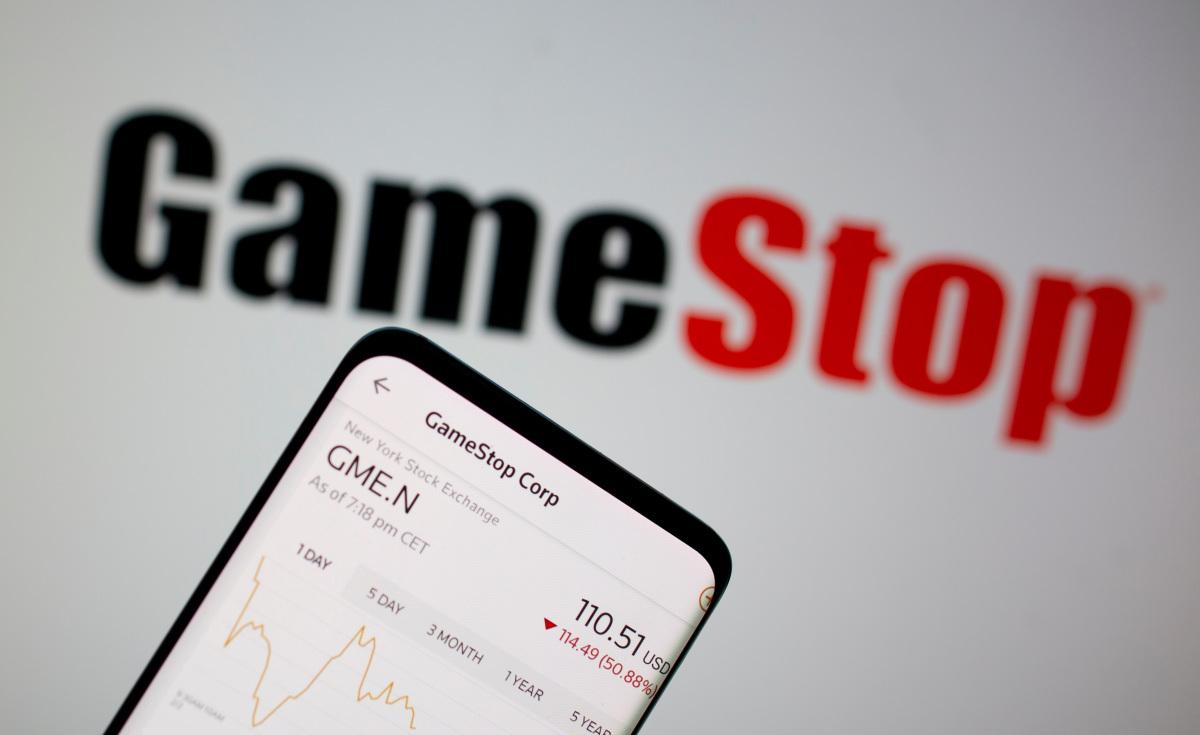
GRAPEVINE, Texas — GameStop Corp. shares traded slightly higher Tuesday, around $18.50, as investors digested preliminary quarterly results and waited for a $1.4 billion convertible-note exchange to close later this week.
The stock was up about 11 cents, or 0.6 percent, after Monday’s 2.9 percent gain. Volume was lighter than Monday’s surge. The 52-week range remains $17.79 to $28.10. Market value is about $8.3 billion.
Monday’s move followed two company announcements. GameStop issued unaudited figures for the 13 weeks ended Aug. 1 and amended exchange agreements with holders of 0.00% convertible notes due 2030 and 2032. The exchange is now expected to settle on or about Sept. 3.
Under the revised terms, noteholders will receive about 55.5 million Class A shares — roughly 73 percent of the consideration — and about $358.4 million in cash, or 27 percent, funded from cash on hand. The original plan was to settle the entire $1.4 billion swap in stock based on a 35-day volume-weighted average price that began Aug. 3. Ending that window fixed the share count. After closing, about $1.1 billion of 2030 notes and $1.7 billion of 2032 notes, or $2.8 billion in total, will remain outstanding.
Advertisement
The Aug. 3 all-stock version had knocked the shares more than 12 percent in a single session on dilution fears. Capping issuance at 55.5 million shares and writing a cash check eased that pressure. Spending $358 million against a cash and marketable-securities balance GameStop put at $5.05 billion to $5.07 billion as of Aug. 1 is a modest use of the pile.
The same release previewed the quarter. Net sales are expected at $780 million to $800 million, down from $972.2 million a year earlier. The company cited last year’s Nintendo Switch 2 launch, planned store closures and the sale of French operations. Operating income is seen at $150 million to $170 million, versus $66.4 million. Net income is seen at $290 million to $310 million, versus $168.6 million.
Net income includes about $238 million of gains on an eBay Inc. derivative and equity stake, offset by a loss of about $75 million on digital assets and related receivables. GameStop converted the eBay derivative into a direct holding during the quarter and owned about 43.4 million eBay shares as of Aug. 1.
Chief Executive Ryan Cohen earlier proposed buying eBay for about $56 billion. Reporting at the time said eBay rejected the offer as “neither credible nor attractive.” Cohen has said he would keep pursuing a deal. The mark-to-market gain is now a large slice of reported profit, which means the retail print and the investment book still have to be read separately.
Advertisement
Core operations look better on a smaller footprint. Higher operating income on lower sales implies cost cuts and mix. It does not restore the hardware-cycle spike from last summer. Collectibles, trading cards and an Uber Eats delivery tie-up remain add-ons to a company whose balance sheet is the main story: cash, convertibles and a concentrated public-equity stake.
What matters this week is mechanical. If the exchange closes Thursday as scheduled, the share count related to that $1.4 billion block is done. Full second-quarter financials will then show whether the $150 million-plus operating-income range survives audit. The eBay line will keep moving with that stock. Hardware and software calendars will decide whether sales stabilize once the Switch 2 comparison rolls off.
GameStop is no longer priced as a meme spike. It is priced as a cash-rich specialty retailer with a shrinking store base, leftover convertible debt and an activist-style bet on another public company. A half-percent up day after a 3 percent jump is how that tape usually looks when the news is already out and the next date is a closing, not a surprise.






















































You must be logged in to post a comment Login