Phishing actors are abusing the legitimate Faronics Deploy endpoint-management platform to gain remote administrative control over victim computers and install the ScreenConnect remote support software.
In activity observed between July 21 and August 20, Faronics-themed lures reached more than 457 endpoints via emails disguised as invoices, tax documents, or other business files.
Faronics Deploy is a cloud-based endpoint management platform that allows IT administrators to remotely enroll and manage computers, deploy software, and execute scripts.
Researchers at managed detection and response company (MDR) Huntress say that the embedded malicious links lead to a website that profiles potential targets and guides them through a malicious download flow.
Advertisement
If the website is reached from an analysis environment, a decoy routine is activated, such as displaying an error message.
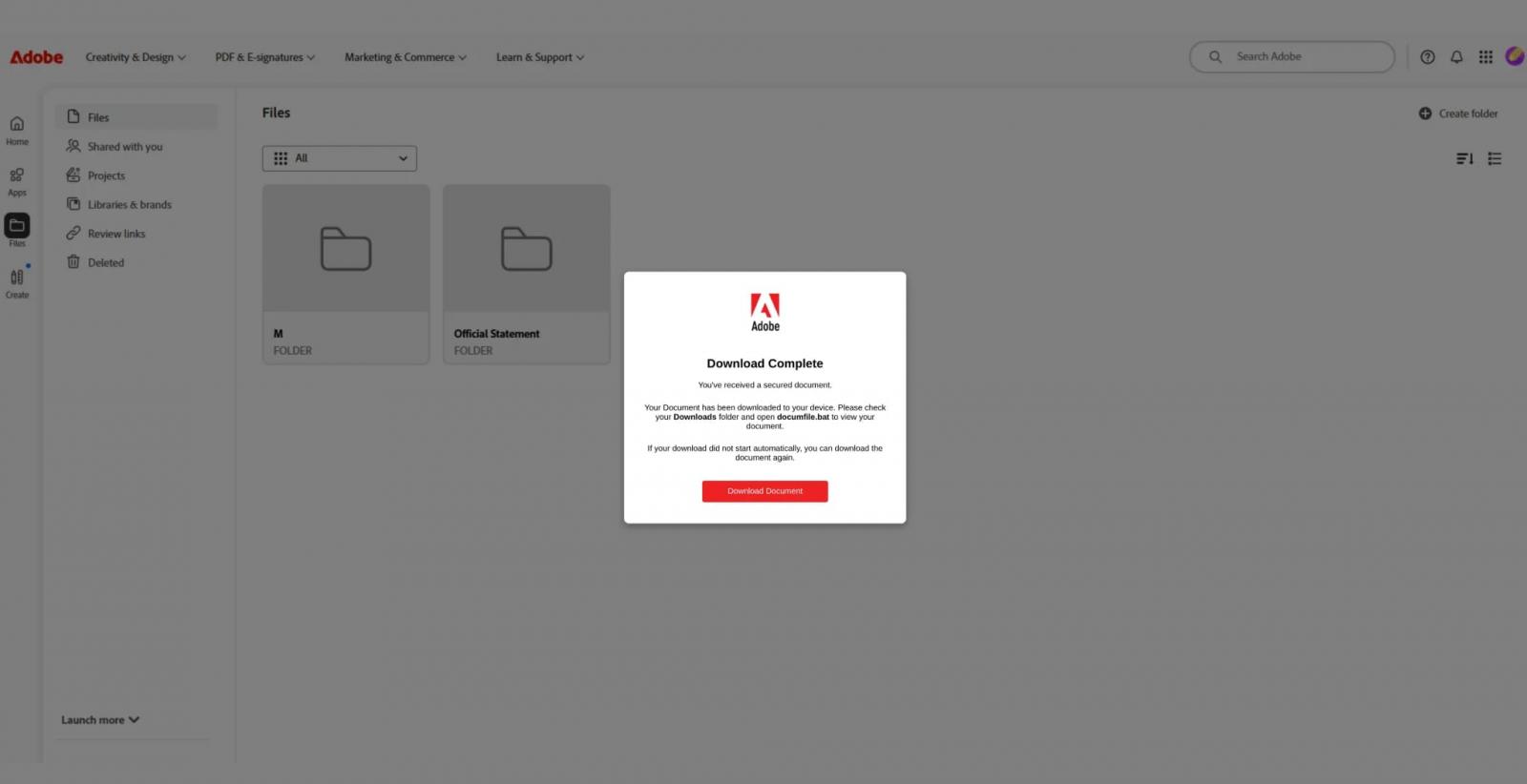
Huntress explains that a potential victim is prompted to download and launch a legitimate, signed Faronics Deploy installer that is disguised as an Adobe document, a reader app, or a plugin update.
Fake Adobe download page Source: Huntress
When the victim runs the Faronics installer, often named ‘Adobe.exe,’ their computer is enrolled in a Faronics deployment controlled by the attackers.
The threat actor then uses Faronics’ remote-deployment functionality to execute PowerShell scripts on the enrolled computer without further user interaction.
These scripts download additional tools from the attacker’s infrastructure or external locations, including GitHub, eventually installing another legitimate remote access tool, ConnectWise ScreenConnect.
Advertisement
“The delivery method varies between scripts, with observed examples using curl or mshta to retrieve additional content, while others invoke msiexec to install payloads hosted on attacker-controlled infrastructure,” Huntress says.
“These scripts are subsequently used to install ScreenConnect, establishing an additional remote access mechanism on the compromised endpoint.”
ScreenConnect gives attackers an additional remote-access channel independent of Faronics, providing hands-on remote control better suited to interactive access while also serving as redundancy if the malicious Faronics deployment is identified and terminated, or if defenders remove its agent.
Huntress notified Faronics of its findings on August 5, and the vendor confirmed the observed malicious activity, countering it by implementing additional anti-abuse measures.
Advertisement
Moreover, Faronics has contacted victimized organizations to notify them about potential compromise.
According to Huntress, the malicious activity dropped significantly starting August 21, indicating that Faronics’ actions worked.
Huntress recommends that administrators check the “C:\ProgramData\Faronics\Logs\” location for a ScriptRunner.log file, which may preserve remotely executed script names and download URLs.
The company says that the ck parameter in Faronics configuration requests is also an indicator, as it identifies the associated customer deployment and can help identify compromised endpoints or malicious accounts.
Advertisement
Administrators should also look for ScreenConnect installations where it is not normally deployed.
Overall prevention scores can hide what happens after initial access. Once attackers are using valid credentials, prevention drops sharply.
The Blue Report 2026 measures defenses technique by technique across 338 million simulations run in customer production environments.
X-Bow received nearly $11 million under a new interceptor development contract
The new interceptor system targets a cost below $750,000 per launch
Patriot missiles currently cost roughly one-fifth more than this new target
The Pentagon has awarded X-Bow Systems almost $11 million to develop a lower-cost interceptor system under a missile defense program.
The project falls under the Missile Defense Agency’s Rapid Response Small Launcher Technology program and seeks to create a weapon that could cost below $750,000 per launch.
That figure amounts to roughly one-fifth the cost of a Patriot missile, the current top-tier standard for air defense systems.
Latest Videos FromTechRadar
Advertisement
X-Bow develops a new interceptor approach
The Missile Defense Agency selected X-Bow through its Low-Cost Interceptor program, which focuses on developing affordable systems against advanced aerial threats.
The company will use the funding to continue propulsion work and prepare a prototype for a planned flight demonstration.
X-Bow produces its solid rocket motors and propellant internally, allowing the company to control more parts of its manufacturing process.
The agreement requires the firm to deliver a prototype system by late 2027, although that stage will not represent a fully operational weapon.
Are you a pro? Subscribe to our newsletter
Sign up to the TechRadar Pro newsletter to get all the top news, opinion, features and guidance your business needs to succeed!
Advertisement
The Pentagon has faced pressure because existing interceptor systems remain expensive and difficult to produce quickly.
The war in Iran revealed a major setback as the U.S. is now left with about 250 THAAD rounds and less than 1,000 Patriot interceptors.
Patriot replacement rounds cost around $3.9 million each, while manufacturing takes years and depends on a small number of established suppliers.
“The contract will aim to address the critical need to expand the SRM industrial base, which is currently reliant on a duopoly of two primary manufacturers,” said the US Department of Defense in its contract announcement.
X-Bow said its production methods could help create affordable weapons while increasing manufacturing speed for military requirements.
“America can’t out-produce today’s threats with yesterday’s supplier base,” said Jason Hundley, founder and CEO of X-Bow Systems.
The company is examining ways to reduce costs across interceptor components, including propulsion systems and other expensive sections.
Advertisement
Other nations explore cheaper missile defense systems
The search for lower-cost interceptors has expanded beyond the United States as allies face similar concerns.
Ukraine and European partners have started developing alternative approaches that could reduce reliance on existing expensive missile defense weapons.
One European effort called Freyja has been linked with an interceptor costing around $700,000 per round.
Advertisement
Lockheed Martin has also introduced the PAC-3 ACE missile concept, which the company says could lower costs compared with current Patriot versions.
The US Air Force previously requested proposals for a counter-air missile that could cost below $500,000.
That effort reflected wider interest in producing larger numbers of affordable weapons for future defense requirements.
The X-Bow project remains in an early development stage because testing and evaluation are still required before deployment.
Advertisement
Military officials will need to confirm whether the system can achieve lower costs while meeting operational standards.
“We’re taking a look at propulsion, we’re taking a look at all the expensive parts of an interceptor to look for opportunities to drive down every bit of cost,” said Lt. Gen. Heath Collins, director of the Missile Defense Agency.
The program shows the Pentagon is exploring alternatives as demand for missile defense grows worldwide.
However, the outcome will depend on whether new production methods can deliver affordable systems without reducing expected performance levels.
Anthropic wants AI agents to control programmable machines through common software rules
Model Hardware Standard (MHS) can connect microscopes, robotic arms, and liquid handling equipment
MHS allows different laboratory devices to communicate through standardized software drivers
Anthropic opened a preview of its Model Hardware Standard (MHS), designed to let AI agents control programmable machines through shared rules.
The proposed system is intended for laboratories, factories, and workplaces where different instruments must work together without custom software links.
MHS uses software drivers that translate between computer systems and individual machines, allowing equipment with different interfaces to communicate consistently.
Latest Videos FromTechRadar
Advertisement
A common system for physical machines
Its drivers rely on basic commands for reading measurements or changing settings, giving agents a method for controlling connected equipment.
The system records machine details that might otherwise remain inside manuals or depend on knowledge held by experienced laboratory staff.
Users can enter such information through natural language, after which MHS creates reference material describing capabilities, adjustments and safety restrictions.
Agents can then discover compatible equipment across networks without requiring separate software bridges for every machine they need to operate.
Are you a pro? Subscribe to our newsletter
Sign up to the TechRadar Pro newsletter to get all the top news, opinion, features and guidance your business needs to succeed!
Advertisement
The standard supports microscopes, liquid handlers, robotic arms and other equipment that offers some form of programmable interface for agents.
The company claims integration that once required weeks or months could instead take hours or minutes when equipment supports MHS.
According to Anthropic, Claude was tested with physical experiments, including laser alignment supported by camera-based observation during early physical trials.
The model successfully adjusted the laser, checked the image, and repeated the process while assessing each change carefully.
The design also lets agents combine commands from several devices, creating automated sequences for work that might otherwise require coordination.
Physical limits remain a concern
Anthropic said Claude interacts with experiments and hardware in an “exploratory manner, much as a scientist would,” during physical testing.
Advertisement
That model can then coordinate several instruments through one interface, rather than requiring separate control software for every connected device.
The company has shared MHS with manufacturers and research groups working across biotechnology, robotics and quantum computing fields.
Anthropic intends the preview to help establish safety checks before the standard becomes available widely to developers and equipment makers.
Amazon Web Services, Automata, Danaher, Doosan Robotics, MBF Bioscience, QIAGEN, Tecan and Universal Robots are among the early participants now.
Advertisement
Anthropic acknowledges that AI agents still require expert supervision because language models have clear limits when reasoning about physical equipment.
MHS cannot currently support equipment lacking a programmable interface, leaving some laboratory and industrial machines outside its current technical scope.
Anthropic says it plans to work with manufacturers to add drivers while expanding compatibility with more devices and robotics platforms.
The preview will also support new safety tests and practical rules for deploying AI agents around physical equipment.
Advertisement
The company says its eventual open-source release will include findings from these tests alongside detailed guidance for safer implementation.
The project therefore remains experimental, with practical limits still depending heavily on hardware design, software access and human oversight.
Today in the U.S., it’s mostly crossover vehicles shaped like the Honda CR-V and the Toyota RAV4 you’ll find parked in driveways. The numbers back this up, too, with EPA production data for 2024 noting crossovers account for roughly half of every new vehicle built for the American market. Most of them are four wheel drive, part of a long climb that saw AWD officially overtake front wheel drive as the most common layout in 2017.
A lot of the climb comes from plain demand. AutoPacific, which surveyed more than 18,000 Americans planning to buy a new vehicle in 2025, found that for a majority of AWD fans, it wasn’t just an option — it was a necessity. 63% of people surveyed said they would straight up refuse a car without it.
That said, demand is only part of the equation, because a lot of it also has to do with regulation. The thing is, every carmaker has to hit an average fuel economy figure across its entire fleet that it sells in America. Under these same rules, no individual vehicle has to be efficient. What gets measured is the average across everything a company sells, and that average is tallied into two separate pools. One pool holds the cars. The other holds the trucks, though the problem is that the rules are less strict for them since they’re kind of ancient, written back when trucks truly were workhorses. Trucks just have a lower bar to clear, which is why automakers favor them.
Advertisement
Why automakers are incentivized to go with AWD
However, this doesn’t directly explain why most of these cars are AWD since those same cars can also be FWDs. The thing is, if a crossover is driven with two wheels, it gets filed with the cars – the same category as sedans. Give that same crossover four driven wheels and some extra ground clearance, and it gets filed with pickups instead, where, as already mentioned, the bar is lower. The automaker is able to clear the fuel economy rules much more easily.
Advertisement
To give a better idea about how irresistible flagging any car as a truck is to automakers, researchers at the Union of Concerned Scientists worked some numbers out. It’s a known fact that driving all four wheels hurts fuel efficiency – for a small SUV, it raises the CO2 emissions by roughly 14.2 grams per mile. However, count that same SUV as a truck (by upgrading it to AWD), and it suddenly wins an additional allowance of 39.8 grams per mile. The automaker then doesn’t need to touch the engine to bring emissions down, and adding a driveshaft is simply a lot cheaper than shrinking a motor. This pattern was already well established by the middle of the last decade and it’s not gone away. In fact, by the 2024 model year, 77% of the lightest SUVs on sale qualified as trucks.
Advertisement
Shoppers love AWDs, too
Marekuliasz/Getty Images
Regulate all you want, but the demand won’t flow if it doesn’t come from the shoppers themselves. One of the reasons why buyers keep going for AWDs is because winters frighten them, and justifiably so, given the crash figures: Snow, sleet, ice, and slush account for 41% of weather-related crashes on American roads. Automakers have spent decades convincing consumers that four wheel driven cars are the solution, and according to Consumer Reports, it’s one big reason why crossovers have become so popular. Trouble is, AWD does nothing to shorten your stopping distance, making it one of the winter driving myths you need to stop believing. Winter tires are still more reliable than any layout, which is why an AWD car still needs proper snow tires.
At the same time, ticking the AWD box has gotten cheaper, too. The Union of Concerned Scientists tracked comparable trims over the years and found that four wheel drive averaged $1,700 as an extra in 2010. Five years later, it fell to $1,490.
Another factor leading to the rise of AWDs is the growth in EV sales over the years, a lot of which come fitted with AWDs. It’s easier for an electric car to gain AWD functionality versus a gas car, as the latter requires a driveshaft running the length of the floor and a transfer case to split the drive. Meanwhile, all an electric car needs is a second motor. Sure, cheaper electric cars still have one motor driving two wheels, but according to InsideEVs, 75% of the 300-odd electric configurations on sale drive all four wheels.
It feels like we have been waiting an age for the Range Rover Electric. First announced back in December 2023, JLR’s luxury EV SUV was meant to hit the road in 2024, but extended development testing forced the carmaker to push its arrival back. Now it’s finally here—one of WIRED’s most anticipated rides—the first fully electric Range Rover.
The specs are as mighty as you would expect. Dual 260-kilowatt motors deliver “V8 levels of power” up to 542 horsepower and 850 newton-meters of torque (20 percent more than other motors of the same size, JLR claims). Inside, a double-stacked 118.5-kWh battery with 800-volt split-charging tech can recharge the cell from 10 to 80 percent in 22 minutes (or, if you prefer, 137 miles in 10 minutes). Max range is supposedly 372 miles (according to WLTP standards), and a claimed real-world distance of up to 333 miles.
Photograph: Courtesy of JLR
The Range Rover Electric will launch from a standstill to 60 mph in 4.3 seconds, which is rapid considering the car’s weight, though there’s no official figure.
All this comes at a price, naturally—one that’s high even for Range Rover. Available for order now, the UK entry-level Autobiography model is £154,070, or about $208,000, but this quickly climbs to £225,240 (north of $304,000) for the SV Black long-wheelbase model. It could go higher, too, as the “Ultra” models are listed as “price on application”—shorthand for “If you have to ask, you can’t afford it.” However, US customers can buy a lower SE-spec Range Rover Electric from $138,00—add $2,550 for delivery and destination.
GoPro plans to expand into AI infrastructure through a $285 million merger with optical-photonics company Starman Optical, whose transceivers will give the action-camera maker a foothold in the fast-growing data center market. GoPro also plans to push into defense, robotics, aerospace, and government markets while continuing its existing camera business. Engadget reports: Starman’s optical transceivers are expected to fall under its umbrella, “extending the Company’s reach into the large and rapidly growing market for AI infrastructure in optical transceivers,” according to a press release. GoPro is also planning a push into the defense, government, robotics and aerospace sectors, bolstered by the combined company’s IP, optics and imaging capabilities.
[…] As Reuters notes, GoPro briefly reached a valuation of $4 billion on its first day as a publicly traded company in 2014. Its stock has struggled in recent years, but the share price received a boost on Monday when it was revealed that YouTuber and filmmaker Markiplier (Mark Fischbach) had become GoPro’s largest individual shareholder after acquiring an 8.5 percent stake. The move follows a similar pivot made by the struggling shoe retailer Allbirds in April when it announced a pivot to AI compute infrastructure, sending the stock soaring more than 700%.
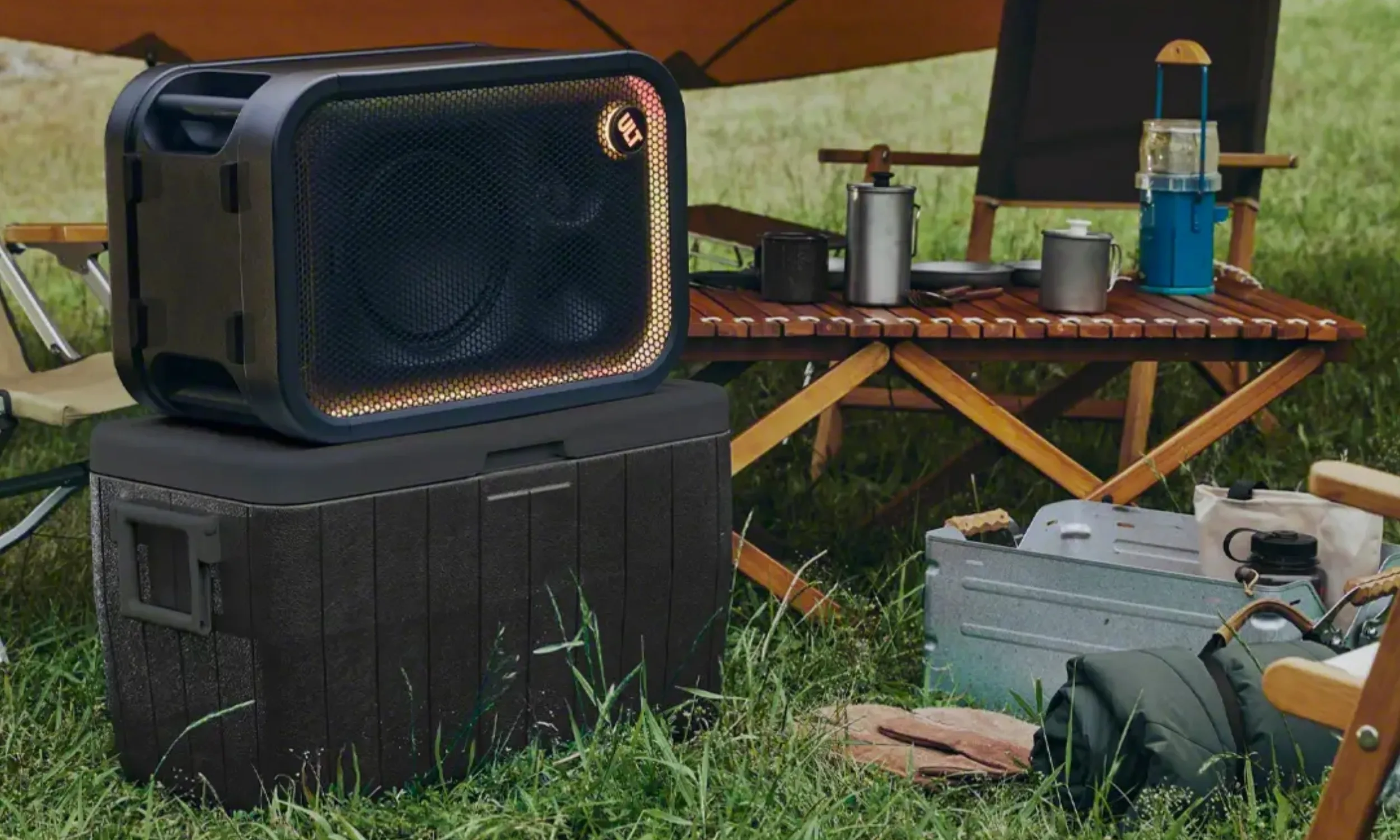
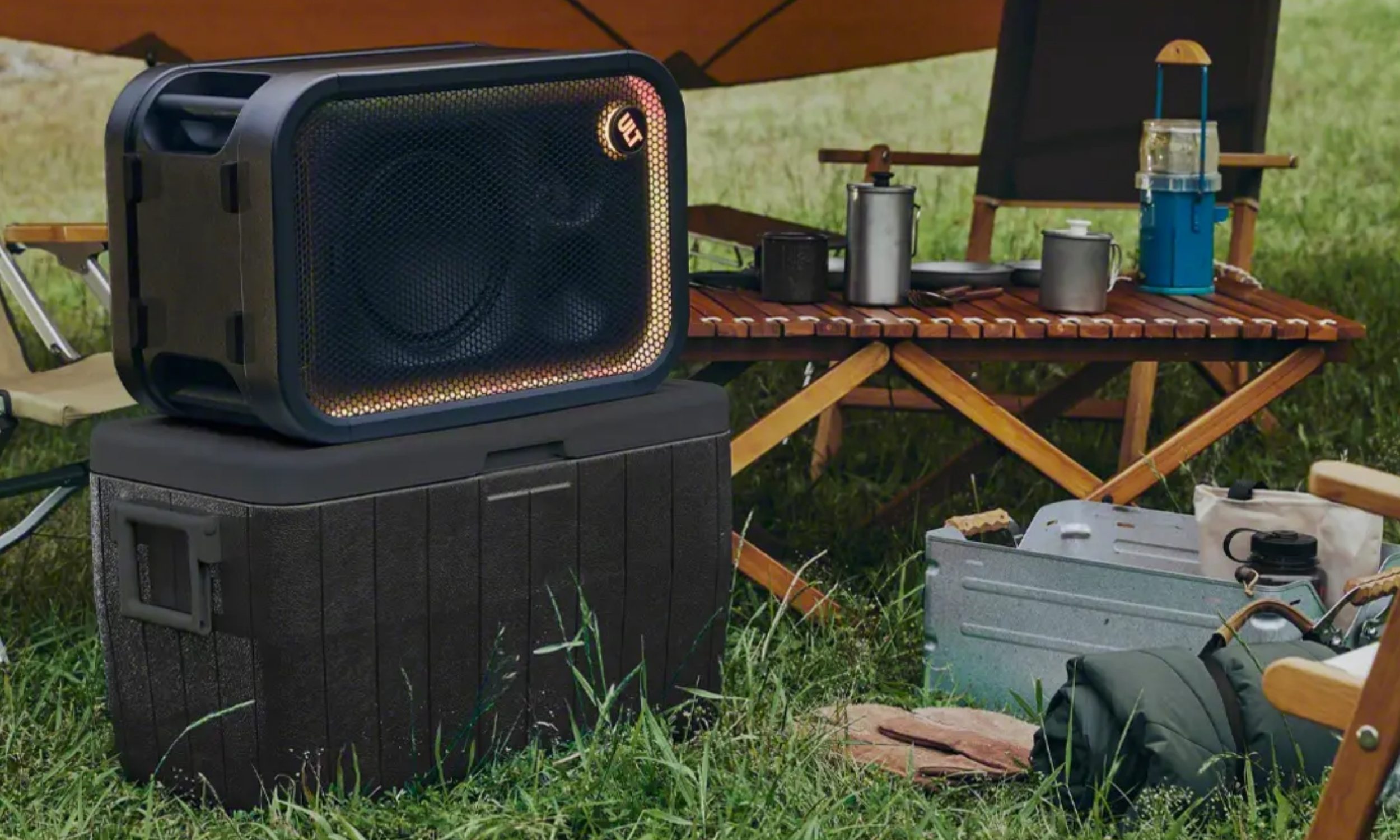
Sony has announced three new speakers for its ULT Power Sound lineup, ranging from a $450 portable option to a $1,500 monster built for genuinely large gatherings.
All of them will be available to purchase starting this month via Sony’s official website, Amazon, and Best Buy.
SonySony
How do the three new speakers differ?
The new ULT Tower 5 is the entry point into the lineup. Priced at $450, it’s the most compact of the three, yet somehow, Sony manages to pack in up to 300 watts of output. With a 20-hour battery life and an IPX4 splash resistance rating, you won’t feel anxious about carrying it around as well.
Higher up the price ladder is the ULT Tower 7, which costs $650. For the additional $200 over the Tower 5, you get 360-degree sound that fills a room with up to 420 watts of power, enough to enjoy your favorite movies or web shows on a big screen. It carries the same IPX4 rating, but the battery life goes up to 30 hours.
If you ask me, the Tower 7 is the most balanced pick of the three for anyone hosting regularly (indoor or outdoor).
Advertisement
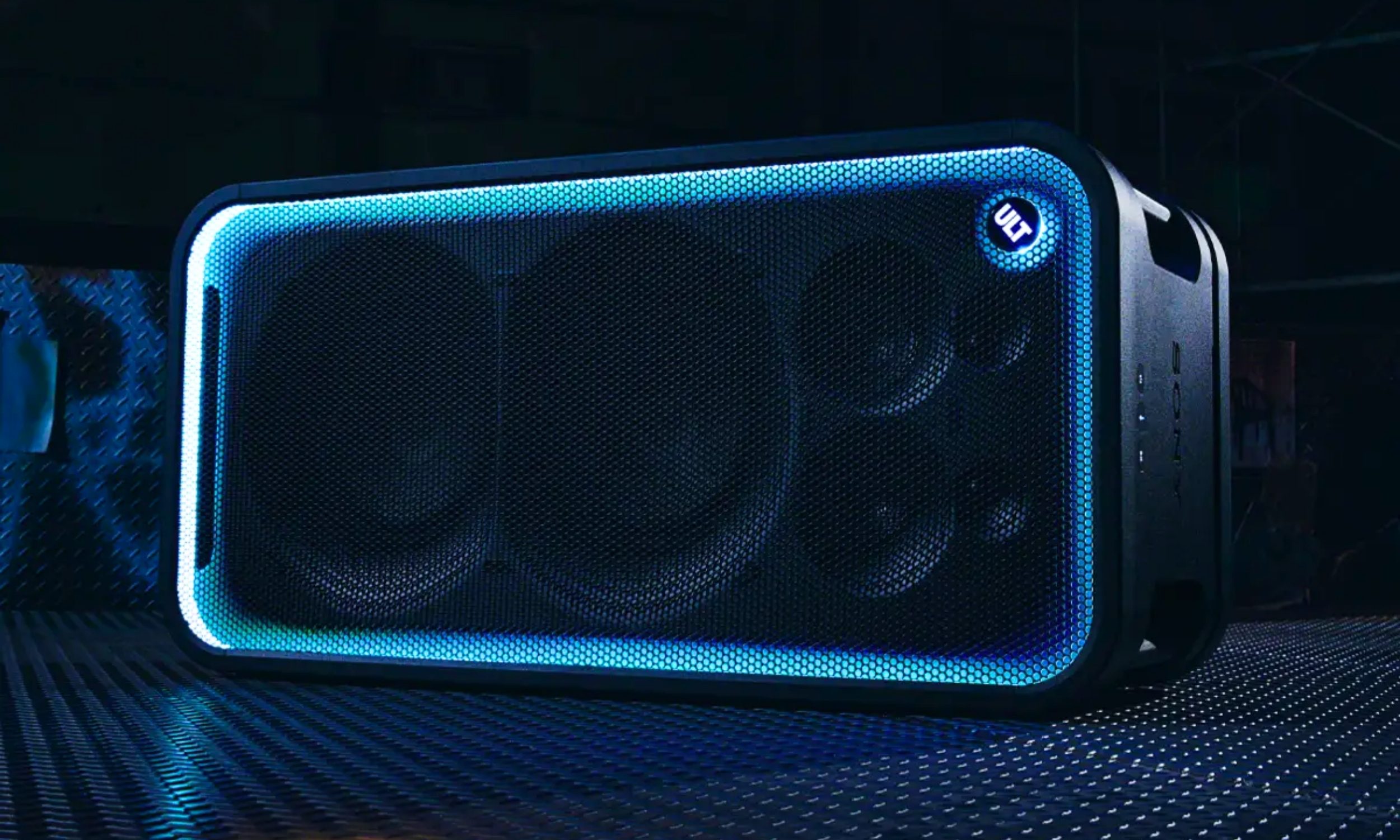
Sony’s most powerful ULT speaker yet, the ULT Tower Max tops the range at $1,500 and easily justifies that ask. With three dedicated woofers and four tweeters, the speaker pushes up to 2,150 watts of power, which is enough for bigger living rooms, halls, or even larger outdoor venues.
What else is new about the lineup?
Sony is upfront that every model has been tuned with input from hip-hop sound creators, including Grammy-nominated producer Dot Da Genius and drummer-producer Daru Jones. So, apart from power and room-filling sound, you should also expect deeper low end and clearer vocals.
To facilitate that, the company has included a new circular woofer, paired with bigger cabinets and a bass-boosting duct. Enhanced Sound Field Optimization reads both the room’s layout and its background noise, then automatically rebalances the entire frequency range.
Advertisement
Sony has also announced two new profile buttons. While ULT 1 and ULT 2 push varying bass intensity, the new additions FLAT and LIVE offer a truer, unprocessed sound and a spacious live-concert feel, respectively. Additional features include karaoke mic support, syncable lighting modes, and the ability to pair multiple ULT speakers together.
Like so many educators, I was balancing more than a typical routine. I was teaching full-time in a Title I high school while writing, speaking, advocating, mentoring and trying to create learning experiences that honored students who often navigate systems not designed with them in mind. I was often somewhere between grading essays, responding to emails, and figuring out why half the class couldn’t log into Microsoft Teams because the Wi-Fi was acting up again. I wasn’t looking for a tech revolution; if anything, I needed a lifeline. When I stumbled upon GenerationAI, I saw a path to reclaim some of that lost time.
In 2025, I applied to GenerationAI and was one of the fortunate educators chosen to participate in an AI-driven cohort of educators and communities of practice. During the program, we had to create a problem of practice and identify which AI tools could mitigate, alleviate, and elevate our content and student success. My problem of practice was how to leverage AI tools to advance writing skills among English learners (ELs) in the high school English classroom.
I’ll admit it: At first, I wasn’t fully convinced these tools would actually help me become a better teacher. Research on AI transformation in the classroom promised a total revolution in teaching and learning. However, the verbiage from the opening sessions at Google Headquarters in Chicago swung between salvation and complete catastrophe for me. Meanwhile, I thought, I am just trying to get my students through another Tuesday navigating Padlet and NoRedInk without disruption.
Still, I stayed curious and genuinely wanted to lean in to the opportunity. What did I have to lose? Experts leading the program kept reassuring me that the right exposure to AI could make marginalized communities more competitive against their privileged counterparts, and that was enough to draw me in.
Advertisement
With each session, my imagination grew about what AI could become, not only in my classroom, but across the landscape of education as we know it. Not only did we receive helpful AI resources and tools, but the program also provided opportunities for us to share what worked in the classroom and what needed to be revamped to support stronger student outcomes.
I often felt like I was running alongside a moving vehicle that would not stop for me. There was so much to learn, so many platforms to explore, and so many possibilities. There was also so little time.
Yet, somewhere between the overwhelm and the inspiration I gained from fellow educators in my cohort, something shifted within me.
I stopped believing I needed to master AI before I could use it well.
Advertisement
I stopped believing I needed to master AI before I could use it well. Instead, I started treating it like a thought partner. Not a replacement, not a shortcut, but a collaborator; something I so desperately needed with full rosters of ELs, IEPs, and 504s to manage.
Once the program ended, I began brainstorming lesson ideas when my own creativity felt out of reach. I was surprised by how AI helped elevate my big ideas. I gathered discussion questions before testing them in class. I redesigned assignments to make them more culturally responsive and more accessible for multilingual learners. When difficult conversations around immigration, ICE and identity became impossible to ignore, AI helped me think through instructional pathways that were academically rigorous while remaining deeply connected to my desire to create a safe space of belonging.
It helped me see possibilities I hadn’t considered before. AI didn’t diminish my role; it amplified it.
From Gatekeeper to Collaborator
One of the most transformative tools I encountered from the program was Class Companion. For my English learners, immediate writing feedback became a game changer. Instead of waiting several days for my comments on an essay, students could revise while their thinking was still fresh. They received another opportunity to practice, rethink, and improve without waiting for me to finish grading another stack of digital papers.
Advertisement
That mattered.
Not because technology became the teacher, but because it gave students another chance to become stronger writers and gave me space to provide the meaningful instruction they deserved. I no longer felt pressured to offer rushed or watered-down feedback simply because there were not enough hours in the day.
ChatGPT also proved useful for brainstorming and generating ideas for essay topics, project concepts, and research question frameworks for the students. It relieved a lot of unnecessary pressure for both of us, and we were productive and grateful.
The students were also pleasantly surprised that I welcomed AI the way I did. As educators, we often carry the impossible expectation that we have to know everything before we try it. But to be honest, classrooms have never worked that way, and they shouldn’t.
Advertisement
Teaching has always been an act of experimentation. Robert Marzano once said, “In effect, a good part of effective teaching is an art.” It’s an art form. We adjust. We pivot. We learn in real time alongside our students.
AI became another place for that real-time experimentation. I had to be willing to crash and burn in front of them while experimenting with Canva AI-generated images that didn’t work at all because of slow internet and our inability to guide the AI tool properly.
Yet, these experiments were vital in schools like mine. Schools where innovation isn’t limited by imagination, but by fair access. Schools where broken laptops join a list of devices needing repair. Schools where slow internet can derail an entire lesson, and I have receipts for this. Schools where conversations about equity cannot stop at access to premium platforms because some students are still waiting for access to functioning devices and suitable chargers.
Those realities never disappeared simply because AI entered the conversation. On the contrary, they became even more visible.
Advertisement
The Equity Gap in the Age of AI
I didn’t join GenerationAI to become an artificial intelligence expert. I joined because I was trying to persevere and find as many resources as possible to make magic in an environment challenged by barriers to access, resources, and injustice outside the classroom.
Looking back, I honestly wish I could have absorbed more from my GenerationAI cohort. The learning was incredibly rich, but almost too rich, given the barriers my students and I faced every day around time and access to functioning technology.
Still, I don’t see that as a failure. I didn’t leave as an AI expert. I left as a teacher who wasn’t afraid to experiment. That may be the most important lesson of all.
We don’t need educators who know every tool. We need educators who are willing to ask better questions, willing to take instructional risks, and willing to discover how technology can support, rather than replace, authentic teaching and sincere moments of connection.
Advertisement
AI never became the star of my classroom. My students remained at the center as mis estrellas – my stars.
AI never became the star of my classroom. My students remained at the center as mis estrellas – my stars.
Sometimes innovation isn’t about having all the answers. Sometimes it’s about having the courage to try something new. AI didn’t replace the heart of my teaching; it gave me more time to use it in the way I felt would resonate with both me and my students.
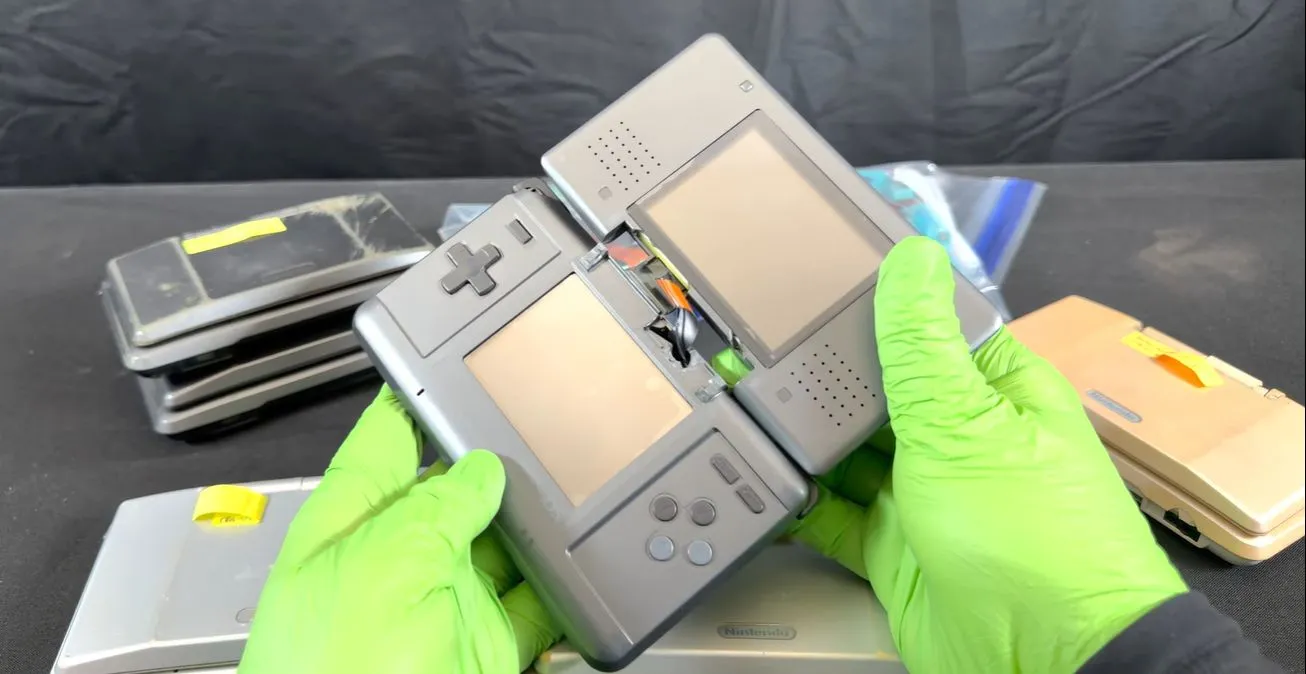
In a recent video [Sqwerks] does a deep-dive into the problem of disintegrating plastic enclosures of Nintendo DS consoles. These original NDS handheld consoles have a metallic-like coating that appears to interact with the ABS plastic, causing yellowing as well as extreme brittleness and correspondingly broken hinges. Unsurprisingly, this causes the shell to essentially disintegrate the moment you try to disassemble them for something like a screen replacement.
While somewhat the opposite of plasticizer migration into ABS from PVC insulation that we covered before, the underlying cause is probably similar, with the Transformers toy community having come to call it Gold Plastic Syndrome (GPS) based on the fact that it were mostly gold-colored parts on these plastic toys that seemed to be affected. Over time the additives used to add a cool metal sheen and swirls to the plastic appear to interact in a way that makes the ABS plastic very brittle.
Although the underlying cause of GPS doesn’t appear to be known yet, the Transformers community has documented this happening since the late 1980s and into the early 2000s, with even reports that some toys from the mid-2010s suffer from this. Whatever the underlying cause of GPS is, the result is always the same, with disintegrating brittle plastic and often a powdery residue.
Advertisement
In the case of NDS consoles, replacing the affected shell with a third-party replacement is still a viable option today, with [Sqwerks] recommending this solution. For other enclosures and toys where the plastic effectively is the toy, it might be that all we can do is watch them slowly disintegrate until we figure out how to revert GPS.
Firefox users on iPhone finally get something Android and desktop users have enjoyed for a while: a real way to block ads without hunting down a separate extension for Firefox. Mozilla officially launched Ad Blocker for Firefox on iOS today, after testing it over the past few weeks.
How the new ad blocker works on iOS
The feature relies on Apple’s WebKit Content Blocker technology paired with the EasyList filter, which is a community-maintained list that identifies known ad and tracker sources. That combination lets Firefox strip out most third-party ads and trackers before they even load, cutting down on clutter and saving you some bandwidth along the way. This is the latest move in Mozilla’s yearslong campaign against ad-based tracking.
However, you should also know what this feature can (and cannot) do. Ads served directly by the website itself will still show up, as will ads inside search results. Firefox’s own sponsored shortcuts on the new tab page are treated separately too, so don’t expect those to disappear.
How to turn on Firefox’s ad blocker on iOS?
Mozilla
You’ll need to turn this on yourself, since Mozilla is keeping it off by default. First, go to Settings, then Browsing, then Ad Blocker to enable it, or toggle it quickly from the site menu whenever you’re browsing.
The ad-blocker works alongside Firefox’s existing Enhanced Tracking Protection, giving iOS users two layers of privacy tools. Notably, Firefox is actually late to this particular party, since Brave, Opera, and Vivaldi already offer built-in ad blocking on their own iOS browsers.
Advertisement
Firefox 155 update: what else is new?
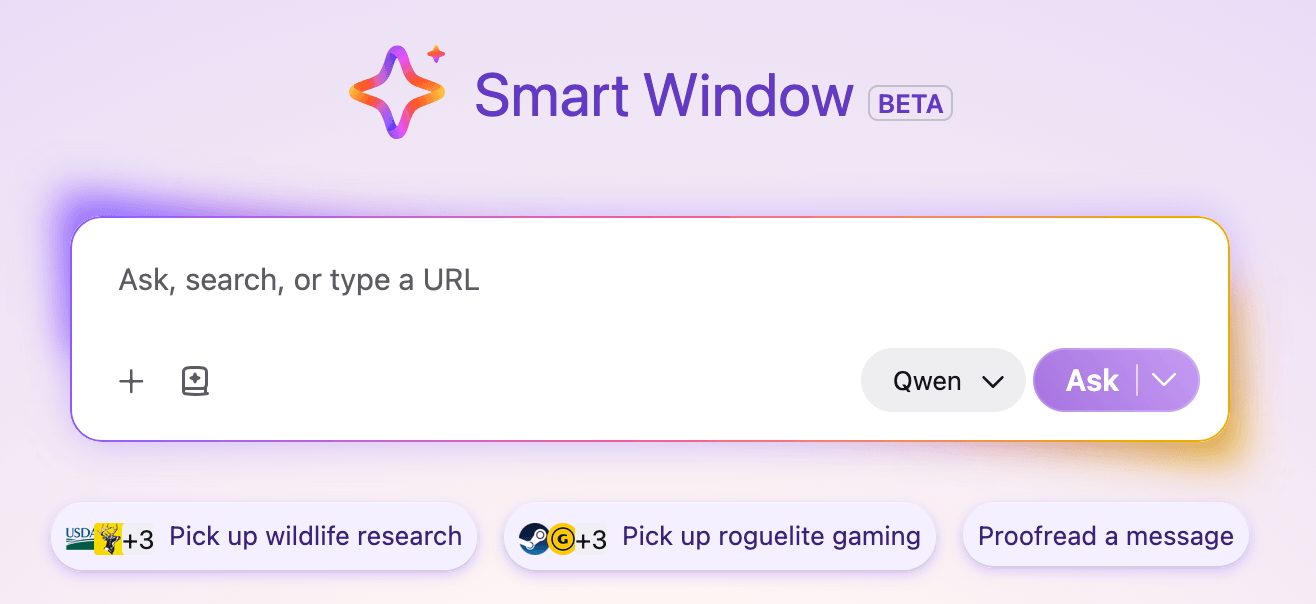
This rollout lands alongside Firefox 155, which brings a handful of other changes too. Smart Window, Mozilla’s AI-assisted browsing feature, is expanding to more users in the US, Canada, and France, picking up faster responses and smarter tab organization along the way.
Mozilla
Organize Tabs feature also got smarter. It now suggests better grouping for related tabs and gives each group a clear descriptive name. The update also adds a visible tracker count right in the address bar, plus a batch of smaller bug fixes across desktop and mobile.





























































You must be logged in to post a comment Login