
Crypto World
Strategy CEO defends selling BTC at $60K, buying at $80K



Strategy CEO Phong Le defended the company’s decision to sell Bitcoin near $60,000 before resuming purchases around $80,000, arguing that its treasury trades depend on capital costs rather than Bitcoin’s market price.
Summary
- Strategy bought 4,603 Bitcoin for $369.7 million at an average price of $80,318 last week.
- Phong Le said capital costs, rather than Bitcoin’s market price, determine Strategy’s treasury transaction decisions.
- Strategy’s latest filing showed 845,050 Bitcoin acquired for an aggregate $63.73 billion through August 30.
- Dollar assets reached $6.71 billion, nearly matching convertible debt and reducing reported net leverage completely.
- Le said Strategy remains a net Bitcoin accumulator despite adopting a formal two-way treasury strategy.
Speaking on Bloomberg Crypto on Sept. 1, Le said the earlier sales and the latest purchase were both appropriate because Strategy’s financing conditions had changed between the transactions.
Strategy purchased 4,603 BTC for $369.7 million between Aug. 24 and Aug. 30 at an average price of $80,318, according to an Aug. 31 regulatory filing.
The purchase lifted its holdings to 845,050 BTC, acquired for approximately $63.73 billion at an average cost of $75,412 per coin.
Strategy links Bitcoin trades to capital costs
Le said Strategy does not decide whether to buy or sell Bitcoin solely by comparing the cryptocurrency’s current price with past levels.
Instead, management considers the cost of raising capital and the return it expects from deploying that capital. If Strategy can issue common shares at a premium to the value of its assets, it may use the proceeds to buy Bitcoin while increasing Bitcoin exposure on a per-share basis.
“We don’t buy or sell Bitcoin based on the price of Bitcoin,” Le said. “We buy or sell based on our cost of capital.”
The position explains why Strategy considered selling Bitcoin between approximately $60,000 and $65,000 reasonable while later paying more than $80,000. The transactions occurred under different balance sheet and financing conditions.
Le said issuing MSTR shares had become attractive again because the stock was trading at a premium. Strategy sold approximately $602.8 million of common shares during the week that ended Aug. 30, using part of the proceeds for its Bitcoin purchase.
The company also increased its general USD Cash pool by $29 million and spent approximately $152 million repurchasing STRC preferred shares below their $100 stated amount.
Strategy’s return to Bitcoin purchases after a two-month pause was therefore part of a broader capital allocation decision rather than a directional call that Bitcoin would rise from $80,000.
Bitcoin sales funded financial obligations
Le said Strategy sold roughly 7,000 BTC during its balance sheet restructuring, describing the amount as “minuscule” relative to its total holdings.
Strategy’s public Bitcoin ledger records sales of 2,225 BTC in early July, 1,638 BTC in early August and 1,690 BTC the following week. Those three disclosed reductions total 5,553 BTC.
The company had also reported selling approximately $218.4 million of Bitcoin earlier in 2026 to fund part of its preferred dividend obligations. Le’s interview figure appears to describe the broader period in rounded terms.
Le said selling Bitcoin to pay preferred dividends was “the right trade at the time.” Strategy had already committed to regular payments on its preferred securities and needed dollar liquidity to meet those obligations without relying entirely on new financing.
The sales represented a departure from Strategy’s earlier reputation as a company that only accumulated Bitcoin. Its board formally authorized a Bitcoin monetization program in June, allowing management to sell BTC to finance its dollar reserve, pay dividends and interest, repurchase securities or meet other approved obligations.
The policy permits up to $1.25 billion in Bitcoin sales to build the designated USD Reserve. It does not require Strategy to sell that amount.
Strategy’s first disclosed sale under its evolving treasury policy marked a transition toward active management of its Bitcoin holdings, rather than an abandonment of its accumulation strategy.
Strategy says net leverage has fallen to zero
Le said Strategy used the pause in Bitcoin purchases to strengthen its balance sheet. Over roughly two months, it increased dollar assets while reducing its net exposure to convertible debt.
The company reported $6.71 billion in USD assets as of Aug. 30. That amount comprised cash and other dollar-denominated holdings allocated across its designated reserve and general corporate liquidity.
Its convertible debt stood at approximately $6.75 billion. Strategy therefore reported net leverage of 0.0% because its company-defined calculation subtracts dollar assets from outstanding debt before comparing the balance with its Bitcoin reserve.
Net leverage of 0.0% does not mean Strategy has eliminated its legal debt or preferred stock obligations. The company continues to have convertible notes outstanding and must make preferred dividend payments.
The metric instead shows that its dollar assets nearly offset the principal value of its convertible debt. The calculation does not subtract all preferred stock claims.
Le described the balance sheet as a “fortress,” arguing that Strategy has no meaningful Bitcoin liquidation price under its current structure. The company’s debt is not secured directly by its Bitcoin in a way that would automatically force sales when BTC falls to a stated level.
That claim does not mean a prolonged Bitcoin decline would have no financial effect. Lower Bitcoin prices could reduce Strategy’s asset value, weaken its ability to issue shares at attractive prices and increase pressure from preferred dividends and other obligations.
Strategy adopts a two-way Bitcoin policy
Le said Strategy now operates a “two-way strategy.” It may sell Bitcoin when doing so improves its capital structure, even though it intends to remain a net accumulator over time.
The framework makes Bitcoin one component of Strategy’s financing system rather than an asset that can never be sold. Management can compare BTC sales with common equity issuance, preferred offerings, repurchases and cash usage.
Strategy’s June framework explains that common stock issuance can be accretive when MSTR trades above the company’s adjusted net asset value. Issuing shares below that level can dilute Bitcoin exposure per share.
Le said Strategy could continue purchasing Bitcoin at $90,000, $100,000 or $130,000 if the cost of capital makes those purchases attractive. Those levels were examples, not forecasts or confirmed purchase orders.
The company would also consider selling Bitcoin again if the proceeds were more valuable elsewhere in its capital structure. Le said price alone would not determine such a decision.
Strategy’s Aug. 31 purchase confirms that it has returned to accumulation after its restructuring period. It now controls slightly more than 4% of Bitcoin’s maximum 21 million supply.
The next update will depend on Strategy’s weekly capital markets activity. Further MSTR issuance at a premium could finance additional Bitcoin purchases, while weak equity demand or higher financing costs could slow accumulation or make another sale more economical.
Meanwhile, Le’s central argument was that the apparent contradiction between selling near $60,000 and buying near $80,000 disappears when the transactions are viewed through Strategy’s cost of capital.
The Bitcoin sales supplied dollars for preferred obligations and balance sheet restructuring. The later purchase used proceeds from common shares issued when management believed MSTR’s market premium made the transaction accretive.
Le said Strategy had strengthened its dollar position, reduced net leverage and retained flexibility to transact in both directions. He maintained that the company remains a long-term net buyer, but no longer treats Bitcoin sales as prohibited.
He also said future purchases could occur at much higher Bitcoin prices if Strategy can obtain capital on sufficiently attractive terms. The comments described a conditional financing framework rather than a Bitcoin price prediction.

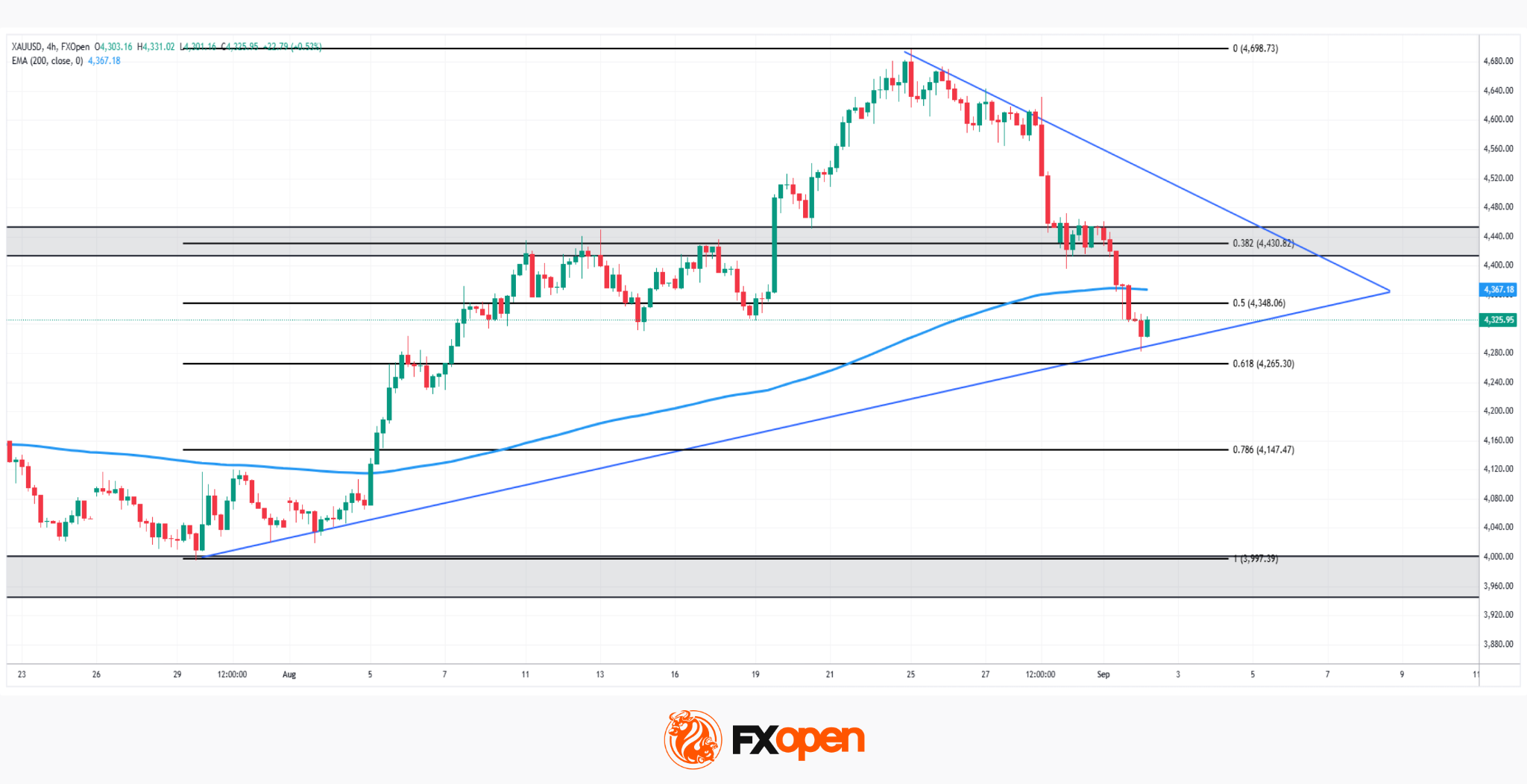
Gold has hit a wall this week, sliding to two-week lows near $4,320 and posting an 8.7% drop from last week’s three-month highs near $4,700. The catalyst is unmistakable: Fed Chair Warsh’s hawkish Jackson Hole remarks, warning the Fed still has “work to do” without clearer evidence inflation is returning to target, sent September hike odds surging from roughly 36% before his speech to over 66% today. Rising Treasury yields and renewed Middle East tensions, following fresh US strikes and Iranian retaliation against the UAE and Jordan, have only added to the pressure.
Despite this sharp pullback, the broader picture remains genuinely constructive: gold still gained around 10% in August alone after the US Treasury’s surprise move to double its long-dated bond buyback programme reignited fears over fiscal credibility, the so-called debasement trade that has underpinned much of this year’s rally.
All eyes now turn to Friday’s Non-Farm Payrolls report, the week’s decisive catalyst. A weak print could quickly reverse this hawkish repricing and revive gold’s momentum, while a strong one would likely deepen the current correction heading into the Fed’s September 15–16 meeting.
Technical Analysis of XAU/USD
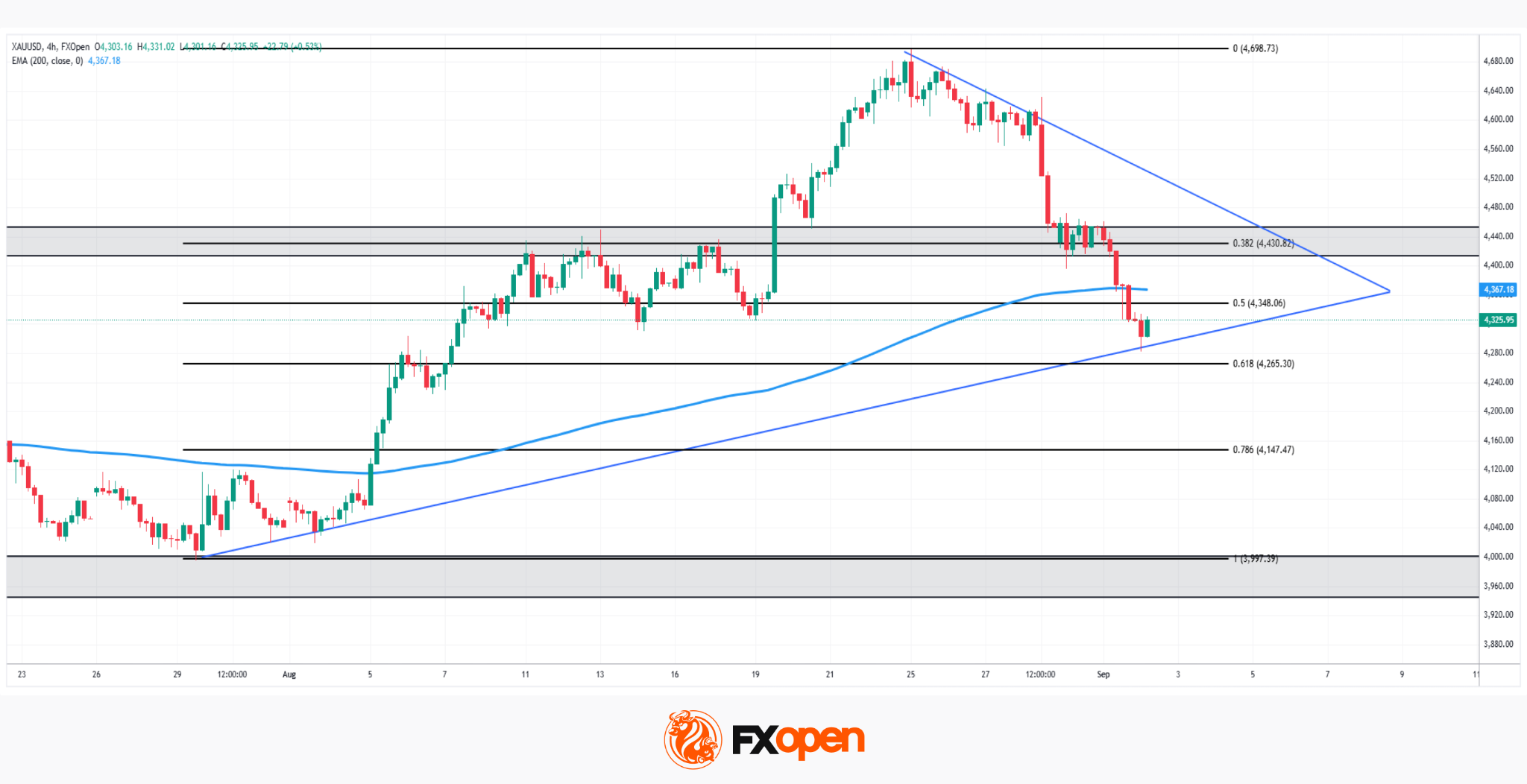
As the XAU/USD chart shows, gold has pulled back sharply from the 4,698.73 highs and is now trading between two key confluences: above the 0.618 Fibonacci retracement near 4,265, which aligns with the ascending trendline off the late-July lows, and below the 0.5 retracement near 4,348, which coincides with the 200-period EMA at 4,367.
Bullish Scenario
Should buyers defend the 0.618-trendline confluence, the broader recovery structure remains intact. A push back above the 0.5 retracement and the 200-period EMA would open the path towards reclaiming the descending trendline, with scope to challenge the 0.382 level near 4,431.
Bearish Scenario
Conversely, a decisive break below the 0.618 retracement and the ascending trendline would signal that the correction has real legs, exposing the 0.786 level near 4,147, with a deeper slide risking a full retest of the 3,997 low that anchored the entire August rally.
With price squeezed between a defended trendline-Fibonacci confluence below and a stubborn EMA-Fibonacci resistance above, gold’s next move looks set to determine whether Friday’s jobs report tips the balance towards renewed strength, or confirms this correction has further to run.
Start trading commodity CFDs with tight spreads (additional fees may apply). Open your trading account now or learn more about trading commodity CFDs with FXOpen.
This article represents the opinion of the Companies operating under the FXOpen brand only. It is not to be construed as an offer, solicitation, or recommendation with respect to products and services provided by the Companies operating under the FXOpen brand, nor is it to be considered financial advice.


Twenty One Capital CEO Raphael Zagury said Bitcoin is experiencing its first “hashrate bear market” as network computing power remains below its late 2025 record and listed mining companies redirect infrastructure investment toward artificial intelligence.
Summary
- Raphael Zagury called Bitcoin’s prolonged computing power decline its first ever hashrate bear market publicly.
- Bitcoin hashrate fell roughly 22% to 24% from its late 2025 peak, presentation materials showed.
- Zagury said artificial intelligence creates a competing use for miners’ power capacity and infrastructure today worldwide.
- Public miners increasingly pursue AI computing, though several companies continue operating substantial Bitcoin mining fleets.
- Lower network hashrate can increase surviving miners’ revenue share after Bitcoin adjusts mining difficulty downward.
Zagury presented the argument at Bitcoin Asia in Hong Kong on Aug. 28. Twenty One Capital subsequently filed the prepared transcript with the U.S. Securities and Exchange Commission.
Bitcoin hashrate approached 1.3 zettahashes per second late last year before entering a prolonged decline, Zagury said. His presentation materials calculated a drawdown of approximately 22% to 24% from the peak.
“Hashrate bear market” is Zagury’s description of the current cycle rather than an official Bitcoin network classification. It refers to the unusually long period during which estimated computing power has failed to return to its previous record.
Bitcoin hashrate decline differs from the 2021 shock
Bitcoin’s hashrate measures the estimated computing power miners contribute to securing the network and competing for block rewards. A higher figure generally means more machines or more efficient equipment is operating.
Zagury contrasted the current decline with the disruption caused by China’s 2021 mining ban. Hashrate fell rapidly during that episode as companies shut down Chinese facilities, but recovered as machines moved to North America, Central Asia and other regions.
The present cycle has developed more gradually. Rather than relocating the same machines, operators are reconsidering whether new electricity and data center capacity should be allocated to Bitcoin mining at all.
“This has been the longest period that we’ve seen from an all-time high until recovery,” Zagury said.
Network estimates vary because Bitcoin does not publish an exact count of active machines. Analysts infer hashrate from block production rates and mining difficulty, which means daily readings can fluctuate sharply.
CoinWarz estimated hashrate at about 829 exahashes per second on Sept. 2, after readings moved above one zettahash during several days in late August. Longer moving averages provide a clearer measure than daily estimates.
Previous analysis found that Bitcoin mining difficulty had fallen 19.9% from its November peak by late July. Hashrate had remained in a downward trend for approximately 287 days, according to Bitcoin Magazine Pro data cited in that report.
AI gives miners another use for scarce power
Bitcoin miners and AI data centers compete for several of the same resources. Both require large power connections, cooling systems, land, data center buildings and access to capital.
AI facilities require different chips, networking equipment and construction standards from Bitcoin mines. Converting a mining site is therefore more complicated than replacing ASIC machines with graphics processors. Sites with secured power and fiber access can nevertheless provide a starting point for high performance computing development.
Zagury said this option changes the hashrate cycle because miners can now direct capital toward another computing market instead of automatically expanding their Bitcoin fleets.
“If you look at the public mining companies out there, there really isn’t anybody staying the course to mine Bitcoin at scale,” he said. “Pretty much everybody is leaving the industry right now.”
The statement describes a broad trend but should not be read literally. MARA, CleanSpark, Riot, Bitdeer and other publicly traded companies continue operating large Bitcoin mining fleets, even as some explore or build AI infrastructure.
The shift is most advanced at companies such as TeraWulf, IREN, Core Scientific, HIVE and Cipher. TeraWulf reported $21 million in AI and high performance computing hosting revenue during the first quarter, exceeding its Bitcoin mining revenue for the first time as its AI business became its largest revenue source.
Cipher has also obtained a $200 million revolving credit facility to finance its expansion into long-term AI data center contracts.
Low cost miners could gain network share
Zagury rejected the idea that Bitcoin mining is inherently a poor business. He argued that profitability depends on where an operator sits on the industry’s cost curve.
A miner with efficient equipment and low electricity costs can remain profitable under conditions that force a higher-cost competitor to shut down. Capital structure also matters because heavy debt and short repayment schedules can create pressure even when a facility remains operationally competitive.
Hash price, which measures expected miner revenue for a unit of computing power, remains low compared with historical levels. That puts pressure on operators using older machines or expensive electricity.
However, declining network hashrate can benefit miners that remain active. Bitcoin adjusts mining difficulty every 2,016 blocks, or approximately every two weeks, to keep average block production close to ten minutes.
When computing power leaves the network, a downward difficulty adjustment can make it easier for remaining miners to find blocks. Each surviving operator can then control a larger share of the network without adding machines.
“The beautiful thing about Bitcoin mining being in a bear market of hashrate is that, for those that stay around, they naturally get a higher share of the market,” Zagury said.
That benefit does not guarantee higher profits. Revenue still depends on Bitcoin’s price, transaction fees, electricity costs, equipment efficiency and the amount of competing hashrate.
Bitcoin price must outpace hashrate growth
Zagury said mining has the best chance of outperforming Bitcoin when the asset’s price increases faster than network hashrate.
If Bitcoin rises by 50% while hashrate remains flat, a miner’s revenue can increase without an equivalent rise in competition. If computing power grows faster than Bitcoin’s price, each operator’s network share and revenue per machine can decline.
Zagury recommended buying Bitcoin directly before investing in mining for someone allocating only a small amount of capital. He said investors considering larger, diversified allocations could combine Bitcoin with mining exposure.
“If you only have $1, buy Bitcoin first,” Zagury said. “I think that’s the best way to express your view.”
His position reflects Twenty One Capital’s stated approach of measuring potential investments against Bitcoin. The Tether-backed company treats the cryptocurrency as its main benchmark and argues that an operating business must justify its additional risks by offering a credible path to outperforming BTC.
Mining companies face construction, electricity, equipment, management and financing risks that do not arise from holding a spot Bitcoin exchange-traded fund. They can also offer operating leverage when Bitcoin rises faster than their costs and network competition.
Energy flexibility remains mining’s main advantage
Zagury also defended Bitcoin mining against criticism that it wastes electricity. He argued that energy use supports economic development and that mining offers a flexible source of demand.
ASIC machines can shut down and restart faster than heavy industrial facilities. Miners can therefore reduce consumption when electricity demand rises and resume operations when unused capacity becomes available.
The ability to curtail operations has led miners to participate in grid stabilization programs, particularly in energy markets with variable renewable generation. Financial and environmental results depend on the underlying power source and the terms of each arrangement.
AI data centers generally require steadier power than Bitcoin mines because customer workloads cannot be interrupted as easily. Bitcoin mining may therefore retain a role at sites where electricity is abundant but unreliable or cannot be transmitted economically.
Zagury said mining now provides four forms of optionality: flexible energy demand, increased network share when competitors leave, proximity to Bitcoin’s protocol and reusable data center infrastructure.
Whether miners capture those benefits will become clearer through upcoming difficulty adjustments and public company results. Filings will show how much capital miners direct toward new ASIC equipment compared with AI construction.
The sector’s direction is unlikely to be uniform. Some operators will retain Bitcoin mining, others will combine mining with AI hosting, and companies controlling the most attractive power sites may shift more aggressively toward high performance computing.

Iran reports civilian deaths from U.S. strikes
CENTCOM said it struck air defense sites, radar systems, maritime assets and facilities, mine laying capabilities, and communications sites.
Iran, however, reported that U.S. strikes killed civilians and damaged civil infrastructure. The southern port cities of Chabahar and Konarak were struck by four projectiles, Iranian state media IRNA reported, citing a provincial official. Projectiles also hit a wedding ceremony in the city of Kuhestak in Sirik County, Deputy Governor of Hormozgan Province Ahmad Nafisi told Mehr news agency.
At least five people were killed and more than 50 injured in Sirik, according to the Iranian Red Crescent Society, a humanitarian group. Mehr reported that a 4-year-old child was among the dead.
Tavanir, Iran’s national electricity company, said the strikes caused power outages in parts of Hormozgan Province.
Citing the deputy governor of Iran’s Khuzestan province, IRNA reported that another seven people were killed and eight injured in U.S. strikes on three locations in the province.
Bitcoin slipped below $77,500 and every major is red on the day. The smaller crypto ETFs kept taking money while the bitcoin funds gave some back.

The Monetary Authority of Singapore (MAS) has moved to reconsider a key element of its stablecoin stance from 2023, launching a public consultation on proposed amendments to the Payment Services Act (PSA) that could allow certain stablecoins issued with foreign partners to fall under Singapore’s regulatory framework.
According to MAS, the consultation—opened Tuesday—also reflects policy developments since 2023 and introduces additional safeguards for issuers seeking to market tokens as “MAS-regulated stablecoins.” MAS is also evaluating whether a limited set of foreign-issued stablecoins, supervised under comparable overseas regimes, could be recognized for specific cross-border wholesale uses.
Key takeaways
- MAS is consulting on PSA amendments that would translate its 2023 stablecoin framework into law, with conditions for “MAS-regulated stablecoins.”
- One proposal would allow stablecoins jointly issued by a Singapore issuer and a foreign issuer to qualify—if risks are sufficiently mitigated.
- MAS is also considering recognition of a limited number of foreign-issued stablecoins regulated under comparable frameworks for cross-border wholesale transactions.
- The consultation revisits MAS’s earlier requirement that qualifying stablecoins be issued solely in Singapore, citing prior concerns around regulatory equivalence and tracing commingled reserves.
- Public comments are open until Oct. 16.
From a “Singapore-only” rule to a more flexible model
MAS’s consultation effectively revisits its 2023 position that stablecoins eligible for its regulatory framework had to be issued solely in Singapore. In 2023, MAS finalized a stablecoin regulatory framework for single-currency stablecoins issued in Singapore and pegged to the Singapore dollar or a G10 currency.
MAS said at the time that expanding eligibility beyond Singapore raised practical difficulties—particularly around establishing regulatory equivalence and cooperation with other jurisdictions. The regulator also pointed to technical issues related to tracing where commingled stablecoins originated, as well as determining whether overseas reserves would be sufficient to meet redemption requests.
Now, MAS is asking for input on approaches that could reduce those earlier barriers while still keeping the core objective of regulated redemption and reserve-backed stability.
How “MAS-regulated stablecoins” could work with foreign issuers
Under one of MAS’s main proposals, stablecoins jointly issued by a Singapore issuer and a foreign issuer could be brought within the PSA framework and labeled “MAS-regulated stablecoins,” provided that MAS determines the associated risks are sufficiently mitigated.
The regulator frames the broader consultation around implementing the 2023 framework through legislative amendments to the PSA, Singapore’s main law governing payment services and operators.
MAS’s requirements for issuers would cover reserve-backed value stability, capital arrangements, and redemption mechanisms at par. The proposals also include issuer disclosure requirements and restrict branding: only issuers licensed under the framework would be able to market themselves as “MAS-regulated stablecoin issuers” and describe their tokens as “MAS-regulated stablecoins.”
MAS also proposes additional controls that focus on resilience and governance. Issuers would be prohibited from paying interest on regulated stablecoins. They would also need to conduct stress tests and maintain recovery and orderly wind-down plans.
To protect customers, MAS proposes safeguards covering customer money received before the corresponding stablecoins are issued. MAS also indicates that stablecoins outside the dedicated framework would continue to be treated as digital payment tokens under existing Singapore rules.
Recognition of certain foreign-issued stablecoins
Beyond jointly issued tokens, MAS is also considering whether to recognize a limited number of foreign-issued stablecoins that are regulated under comparable overseas frameworks.
In MAS’s description of the idea, the motivation for recognition is tied to practical utility: such tokens could be used for cross-border wholesale transactions. However, MAS’s consultation suggests it is not moving toward open-ended endorsement; rather, it is assessing a constrained approach, limiting recognition to a small set of stablecoins that meet standards similar to those expected under MAS oversight.
Why MAS’s shift matters for markets and compliance
For stablecoin issuers and liquidity providers, MAS’s consultation signals a willingness to accommodate real-world issuance structures—particularly where reserve management, issuance operations, or distribution links may involve multiple jurisdictions. Under the earlier 2023 framework, firms faced a simpler but narrower pathway: eligible stablecoins had to be issued solely in Singapore.
By introducing the possibility of qualifying joint issuance and conditional recognition of certain foreign-issued stablecoins, MAS is effectively balancing two competing realities: the need for strong redemption and reserve oversight, and the operational fact that cross-border settlement increasingly relies on interoperable, internationally used digital dollar and G10-pegged instruments.
At the same time, MAS is signaling that flexibility will come with tighter issuer obligations—reserve and capital requirements, stress testing, and structured wind-down planning—along with limits on marketing claims. The consultation’s focus on legal labeling (“MAS-regulated stablecoins”) also points to an emphasis on consumer clarity, not just technical compliance.
Next steps for MAS and the industry
MAS is accepting public comments on the consultation until Oct. 16, and the proposals’ details will be closely watched by issuers planning Singapore-related stablecoin product roadmaps—especially those considering cross-border distribution, joint issuance, or reserve arrangements involving foreign entities.
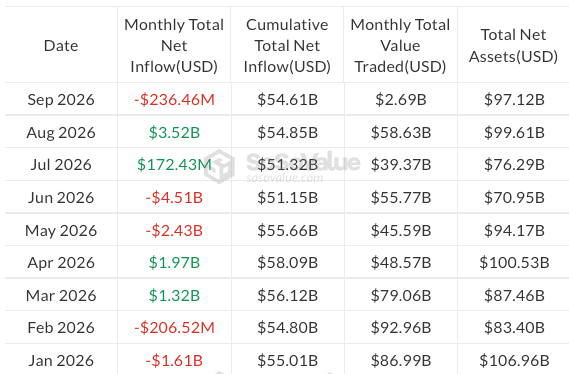
US-listed spot Bitcoin exchange-traded funds (ETFs) capped their best month of 2026 alongside Bitcoin’s biggest monthly gain since November 2024.
Bitcoin ETFs attracted $3.52 billion in net inflows in August, their highest monthly total of 2026 and a sharp increase from just $172 million in inflows in July, according to SoSoValue data.
Bitcoin (BTC) gained about 25% in August, its strongest monthly performance since a 37.29% rally in November 2024, according to CoinGlass.
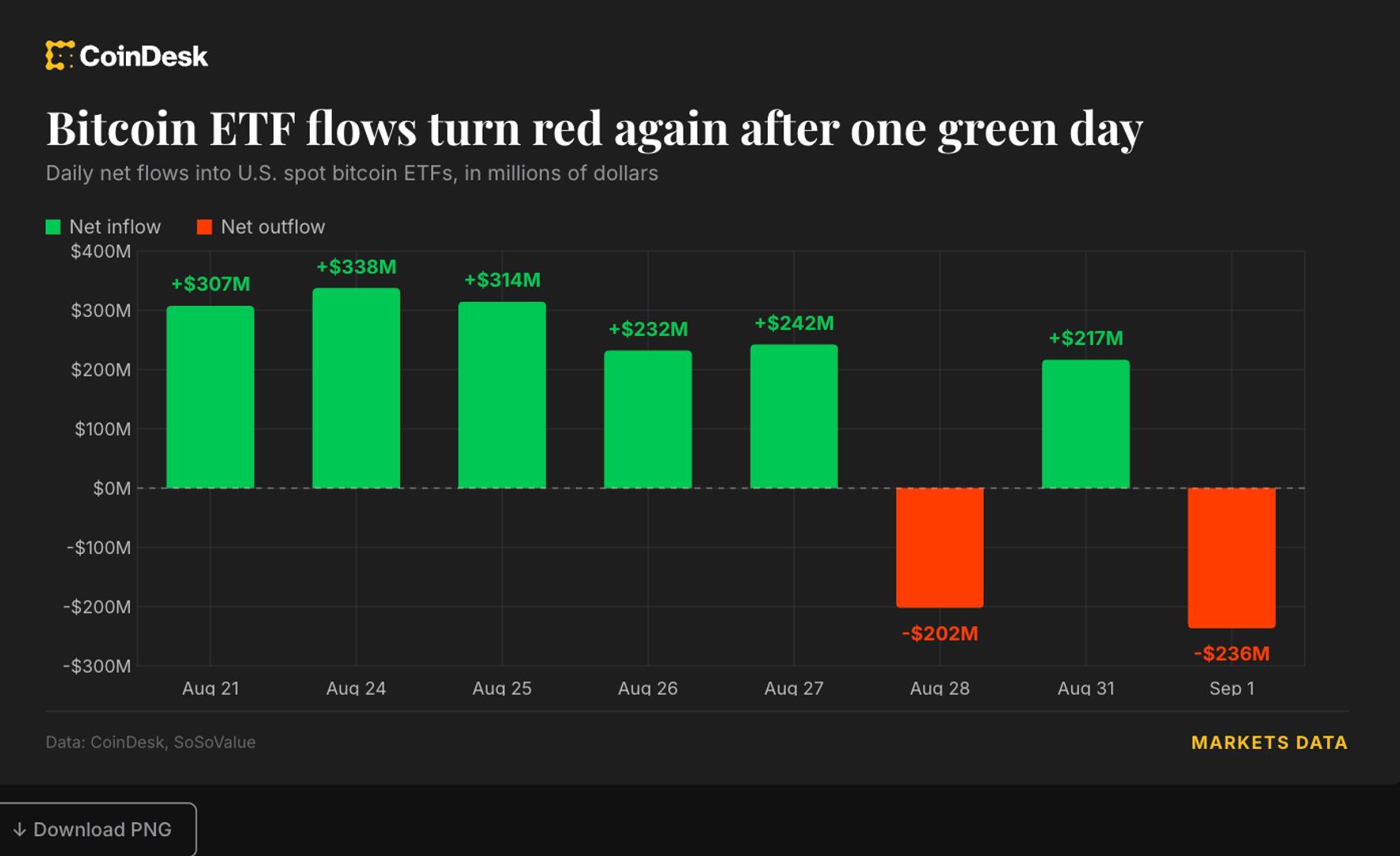
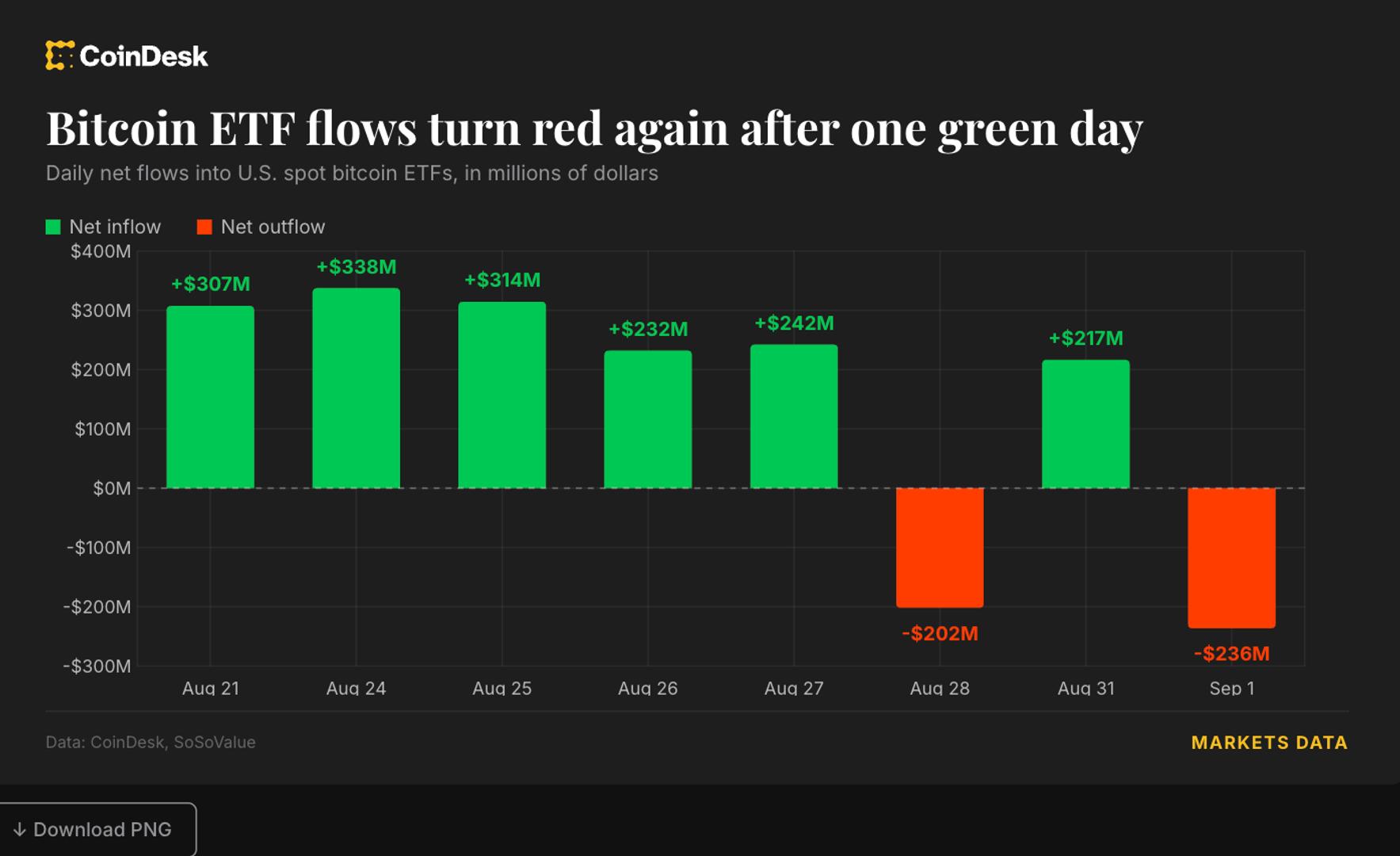
The August momentum quickly gave way to a weaker start to September, as ETF flows turned negative and Bitcoin briefly fell below $77,000.
August cuts year-to-date outflows by 66% to $1.77B
August’s $3.52 billion in Bitcoin ETF inflows cut year-to-date net outflows by roughly 66%, from $5.29 billion to $1.77 billion.
The biggest monthly outflows came in June at $4.51 billion, followed by $2.43 billion in May and $1.61 billion in January, according to SoSoValue data.
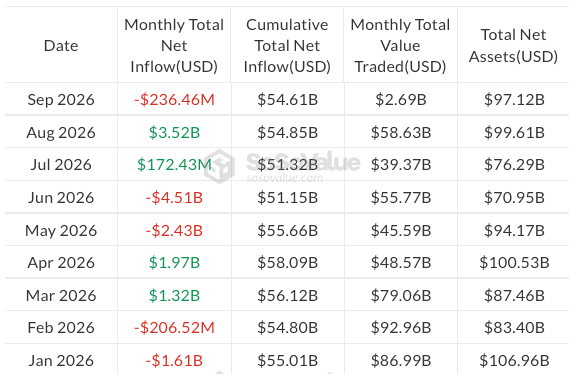
Monthly flows into US spot Bitcoin ETFs in 2026. Source: SoSoValue
The funds recorded net inflows on 16 of 21 trading days in August, including nine consecutive sessions from Aug. 17 through Aug. 27.
Total net assets rose to $99.61 billion at the end of August from $76.29 billion at the end of July, an increase of about 31%. Monthly trading volume climbed nearly 49% to $58.63 billion from $39.37 billion.
September starts with $236M in Bitcoin ETF outflows
US spot Bitcoin ETFs started September with $236.46 million in net outflows on Tuesday, reversing the $216.70 million in net inflows recorded on Monday. The withdrawal marked the largest daily outflow since July 31, when the funds shed $265.37 million.
The reversal came as Bitcoin briefly fell below $77,000 on Tuesday after trading above $80,000 in late August, according to CoinGecko.
Related: Strategy buys $370M Bitcoin in first corporate purchase since June
Ether and XRP ETFs remained in positive territory on Tuesday. Spot Ether (ETH) ETFs attracted around $11 million on Tuesday, while spot XRP (XRP) ETFs drew $14.4 million.
August pushed Ether ETFs into positive territory for 2026, with $732 million in year-to-date net inflows after they ended July about $1.12 billion in the red.
XRP ETFs reached $502 million in year-to-date net inflows, up about 46% from $343 million at the end of July.
Magazine: Does the Bitcoin rally mean we haven’t wasted our lives in crypto?

UNI is trading around $6.31, up 16.5% in the last 24 hours, after Robinhood Chain’s decentralized exchange volume hit a new daily high above $1.3 billion, according to CoinGecko.
The move ties Uniswap’s token price directly to trading activity on Robinhood Chain, where Uniswap is the network’s primary automated market maker and collects fees on that volume.
Robinhood Chain’s Volume Keeps Climbing
UNI’s 24-hour range ran from $5.58 to $6.37. The token is up nearly 46% for the week and more than 51% for the month, though still down about 35% for the year and roughly 86% below its all-time high of $44.92, set in May 2021.
UNI also gained about 12% against Bitcoin and nearly 13% against Ethereum over the same window, according to CoinGecko’s pairing data.
Trading activity also picked up alongside the price, with the token’s 24-hour volume hitting $1.17 billion, up 95% from the previous day.
Robinhood Chain’s volume has been climbing for weeks, with a record $875 million in daily DEX volume on August 30. By today, CoinGecko’s tracking puts that figure above $1.3 billion, nearly 50% higher within three days.
Separately, Arkham reported that Robinhood Chain is now generating more in chain fees than Solana, Base or Ethereum, pointing to $1.49 billion in DEX volume and 5.52 million daily transactions as the drivers, along with a new trading pattern that pairs meme coins directly against tokenized stocks.
One example it cited is Artificial Inu, a meme coin with a $184 million market cap that trades against a tokenized version of Nvidia stock rather than a stablecoin or the network’s native asset.
Uniswap’s Growing Role on Robinhood Chain
Uniswap’s position on Robinhood Chain goes beyond just facilitating trades. As CryptoPotato reported in August, the platform launched Pools.trade, a token launchpad, on the network early that month, letting users create tokens through either a four-hour Crowd Launch or an Instant Launch before liquidity gets locked into Uniswap v4 pools.
The rollout pulled traders away from rival launchpad token PONS, which fell nearly 14% in 24 hours and almost 48% over the week that followed.
Uniswap still trails other Robinhood Chain applications on direct fee capture. GMGN generated $1.11 million in application fees, and Pons brought in $930,000, compared with $307,000 for Uniswap, according to Arkham’s data.
Meanwhile, Robinhood’s total value locked (TVL) has climbed to $740 million, up 23% on the week, on a network that only launched on July 1.
The post UNI Jumps 16% as Robinhood Chain DEX Volume Hits $1.3B appeared first on CryptoPotato.
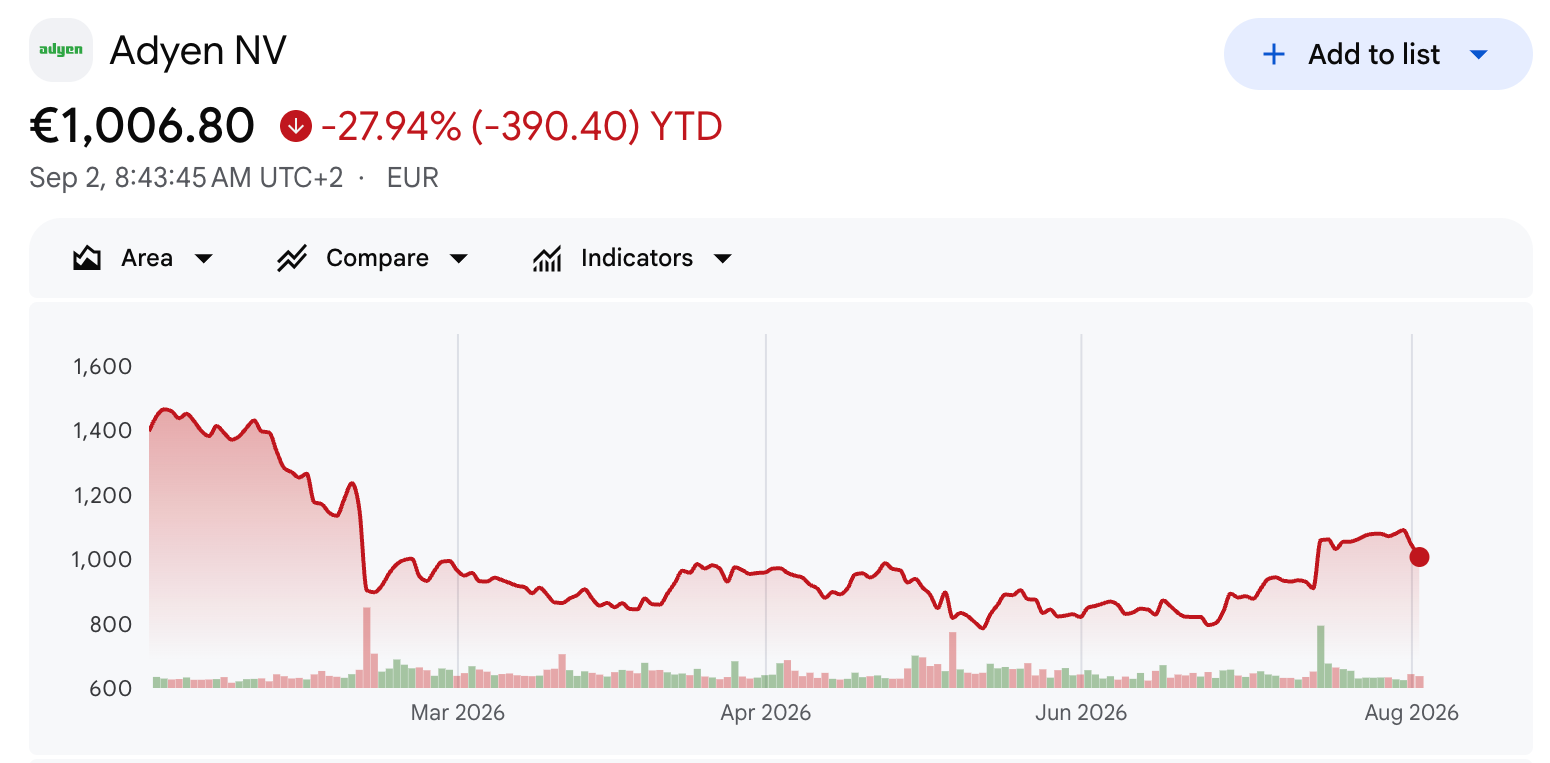
Goldman Sachs has added three stocks to its European “Conviction List – Directors’ Cut” list. The list tracks the bank’s buy-rated European equities.
The inclusions are the payment processing company Adyen, the German energy firm RWE, and the German insurer Talanx. All three arrive with different setups.
Adyen Draws the Biggest Upside Call
The bank sees 77% upside for Adyen, the largest call among the three additions. Adyen closed at €1,006.80 on September 1, down 3.88% for the session.
The Dutch payment processor sits roughly 37% under its 52-week high of €1,600.80. It also remains down nearly 28% in 2026.

Analyst Mohammed Moawalla credits Adyen’s integrated platform for its edge. He points to new client ramps, including the Toast partnership in the US and Shopify’s European expansion.
Goldman also expects Adyen to benefit from agentic commerce. The bank flagged tie-ups with OpenAI, Google, and Microsoft.
Follow us on X to get the latest news as it happens
RWE and Talanx Round Out the Additions
Next, RWE closed at €58.58 on September 1 and has gained roughly 30% so far this year. Goldman set a €75 target, implying 28% upside.
Analyst Alberto Gandolfi expects the grid spending and possible data center deals to lift the valuation. He also flagged stronger US renewable returns and potential LNG profits.
Lastly, Talanx carries a €141 target, representing 13% upside. The stock traded near €125, close to a 2026 high. It has gained 12% yeat-to-date.
Analyst Andrew Baker described its Retail International arm, which sells policies outside Germany, as an “underappreciated growth engine” and projected that premiums there would rise 8% to 10% annually through 2030.
Goldman dropped Hannover Re, along with Enel, Wise, and Zalando from the list. Two of Goldman’s three September calls lean on AI.
Subscribe to our YouTube channel to watch leaders and journalists provide expert insights
The post Goldman Sachs Adds 3 European Stocks to Conviction List appeared first on BeInCrypto.

A fake desktop application impersonating Anthropic’s Claude is reportedly being used as a delivery mechanism for RevStealer, a Windows malware family designed to harvest sensitive information from victims and then target a wide range of cryptocurrency wallets.
In a report published Monday, cybersecurity firm Morphisec says the campaign has evolved beyond earlier distribution methods that relied on GitHub repositories and game-cheat-themed sites, with one of the most prominent lures being a project dubbed “Claude Opus 5 Free Desktop.” The name suggests free access to Claude while disguising malware intended to steal crypto and broader account credentials.
Key takeaways
- Morophisec links the latest RevStealer infections to a fake “Claude Opus 5 Free Desktop” download that impersonates Anthropic/Claude.
- The malware focuses on stealth, including searches of browser data, cookies, password-manager records, VPN/remote-access settings, and selected files.
- RevStealer targets more than 50 cryptocurrency wallets and attempts to avoid analysis by checking for “real user” environments.
- Its staging includes environment and debugging-delay checks; if the system doesn’t meet the criteria, the malware halts further activity.
Fake Claude desktop lure points to continued social-engineering
According to Morphisec, RevStealer was previously pushed through channels such as GitHub repositories and websites themed around game cheating. While those delivery routes remain common for commodity malware, the firm highlights a more noticeable ruse: a counterfeit “Claude Opus 5 Free Desktop” project that mimics the branding of the AI developer Anthropic and presents the promise of free Claude access.
This matters for users because it reflects how crypto-targeting threats increasingly blend into everyday software expectations. Instead of asking victims to install a clearly suspicious file, attackers wrap their payloads in familiar UI assumptions—an “app” users might treat as legitimate productivity software.
What RevStealer looks for—and where it steals
Morphisec says RevStealer is built to minimize its forensic footprint while broadening the scope of harvested data. The malware searches browser databases and related artifacts such as cookies, password-manager records, and other stored session information.
The threat also goes beyond typical credential theft by collecting details connected to remote access and privacy tooling, including VPN and remote-access settings. It further targets messaging-related data and takes screenshots, alongside selected documents.
On the crypto side, Morphisec notes that RevStealer targets over 50 cryptocurrency wallets. For investors and everyday users, the key risk is that stolen wallet access can enable asset movement without needing the attacker to break the wallet software itself—if the victim’s wallet files or credentials are extracted, the next step can be direct unauthorized control.
Environment checks designed to frustrate researchers
A notable feature of the RevStealer infection chain, according to the Morphisec report, is a multi-part gating mechanism. Before unlocking the next stages, the malware checks whether the machine resembles a genuine user device.
The researchers describe checks based on available memory, processor core count, hostname and username characteristics, and graphics hardware. Morphisec also adds that RevStealer monitors for debugging delays that are typical in malware analysis environments.
If the malware detects anything it considers abnormal, it does not proceed further—meaning it can reduce the amount of observable behavior available to analysts and slow down detection efforts. When the checks pass, Morphisec reports that the payload is decrypted, saved under a random filename, and executed covertly.
For defenders, this implies that “it didn’t run” can be a deliberate outcome rather than a sign of a clean system. It also highlights why behavioral detection and endpoint monitoring still matter: relying solely on static indicators or single-run samples may miss threats that deliberately stall during investigation.
Broader trend: crypto-investor malware frameworks keep expanding
The RevStealer report lands amid other research targeting people involved with cryptocurrency investing. Earlier coverage referenced discovery by Kaspersky of a new malware framework called OkoBot, described as targeting crypto investors by harvesting wallet files, browser data, and user credentials.
As noted by Kaspersky in that separate discovery, OkoBot can also inject malicious extensions and capture wallet application windows to help steal assets. While the Morphisec write-up focuses specifically on RevStealer, both cases point to a persistent pattern: attackers are combining browser/session theft with wallet-targeted collection and increasingly using realistic lures.
For readers, the important takeaway is not just that malware exists, but that campaigns are diversifying their tooling and delivery methods while remaining aligned around a shared objective—access to crypto storage and the credentials needed to move money.
What users and teams should watch next
With scams now leveraging credible-sounding AI branding and malware that attempts to detect analysis environments, the immediate priority is operational hygiene: treat “free” desktop downloads—especially ones impersonating well-known companies—as high-risk, avoid installing unknown software from community-hosted pages, and verify integrity before execution. Meanwhile, security teams should expect more wallet-focused stealers that pair broad browser-data harvesting with stealthy, environment-aware execution.
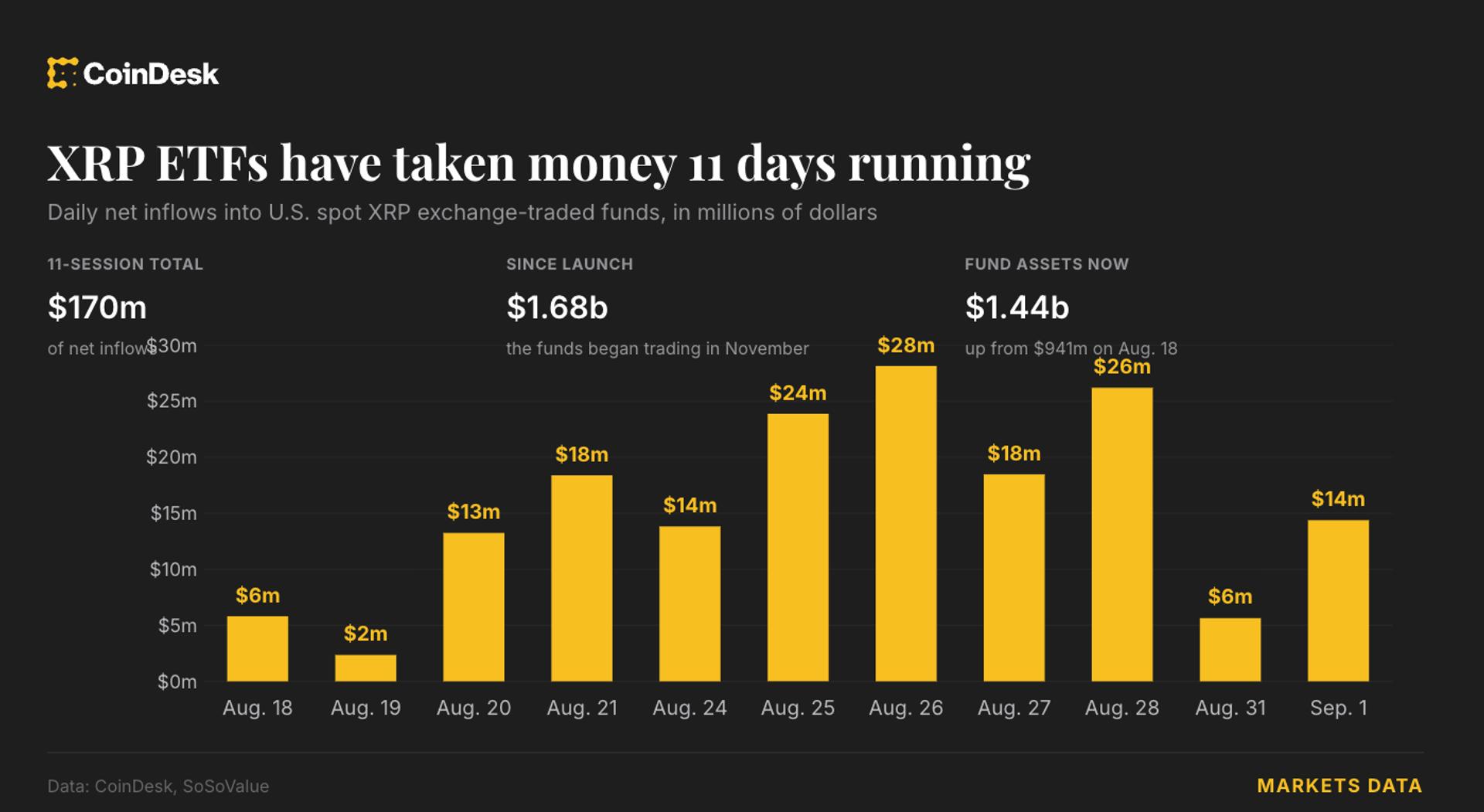
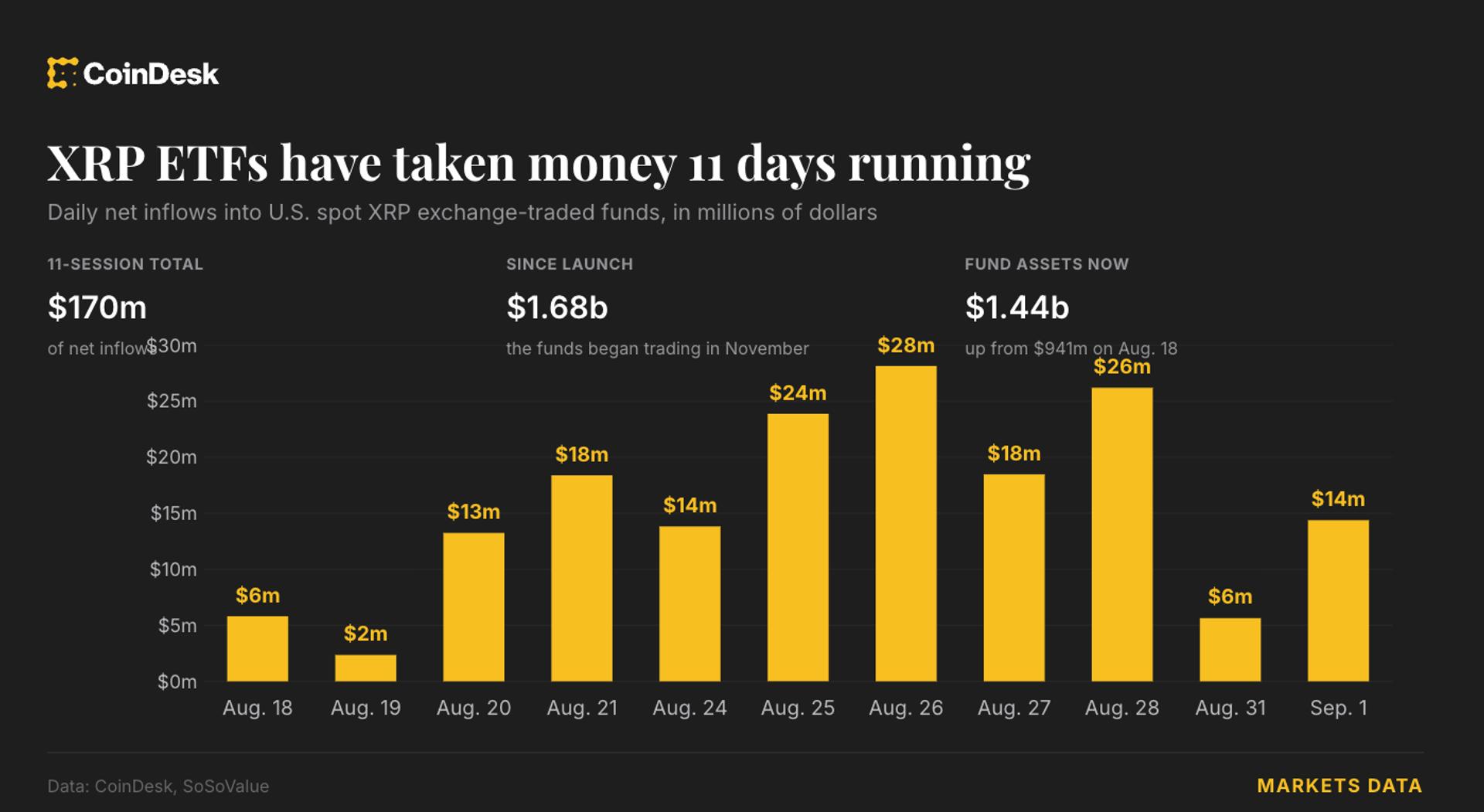
Spot XRP funds have logged nine straight sessions of inflows, while Q2 filings show Goldman Sachs, Jane Street and Millennium among their biggest professional holders.

XAU/USD Analysis: Gold’s Rally Meets Reality as Fed Hike Odds Surge

Everything Officially Coming to Disney+ This Fall

Financial Support Lasting Far Into Adulthood





-

 Fashion5 days ago
Weekend Open Thread: Maeve – Corporette.com
-

 Crypto World5 days ago
Bitcoin’s 22% rally now needs real demand to outlast Treasury liquidity boost
-

 Crypto World7 days ago
Warsh Jackson Hole keynote puts financial innovation first
-

 Business5 days ago
Apple Confirms September 9 Keynote and Reveals Its Full Pre-Order Schedule
-

 Crypto World6 days ago
Elon Musk Grok Bot Promise: We Will Make You Whole if AI Loses Your Money
-

 Business5 days ago
Salesforce Stock Soars 19% as Blowout Earnings and Agentforce AI Growth Silence Software Skeptics
-

 Business4 days ago
Onto Innovation Stock: AI’s Next Bottleneck Is Yield (NYSE:ONTO)
-
 NewsBeat7 days ago
Lindsay Clancy jury braces for closing arguments as judge tells court: ‘You’ve heard all the evidence’ – Live updates
-

 Business7 days ago
Walmart takes aim at younger shoppers with new fashion brand
-

 Crypto World6 days ago
NVIDIA revenue hits $96.2B as AI demand doubles
-

 Crypto World4 days ago
Bitcoin price tests $82K resistance as Brandt stays long
-
 Crypto World7 days ago
Nvidia Q2 Earnings Reveal $96.2 Billion Beat, So Why Is NVDA Falling?
-

 Business5 days ago
iPhone 18 Pro Pre-Orders Could Shift to Saturday as Apple Reportedly Avoids September 11 Anniversary
-
 Tech3 days ago
Hugging Face built a $4.5 billion empire on free AI models. Now Nvidia is buying it for $12.9 billion
-

 Tech6 days ago
Claude Cowork gets its own browser that doesn’t touch your tabs, bookmarks, or saved passwords
-

 Crypto World5 days ago
Truflation calls for Fed rate cut after PCE forecast
-

 Tech4 days ago
PaperCut releases second emergency patch for exploited flaws
-

 News Videos3 days ago
Charlie Munger on Robinhood: No one should believe that Robinhood’s trades are free
-

 Tech6 days ago
Apple’s iPhone 18 Pro event is on September 9
-

 Crypto World6 days ago
GENIUS Act missed its deadline as OCC writes rules anyway
You must be logged in to post a comment Login