
Crypto World
Tether Sued Over $42 Million USDT Freeze



Two Thai businessmen have sued Tether over a $42.4 million freeze of Tether (USDT). They say the issuer locked their wallets almost four months before a seizure warrant existed.
The complaint landed in the Southern District of New York on August 31. It asks whether an issuer can immobilize tokens bought on the open market without legal process.
A Freeze That Arrived Before the Warrant
Nutthawat Rukthammachalern and Natthawat Kasamvilas say Tether blacklisted 10 Ethereum addresses on October 30, 2025. Those wallets held 42,417,785.62 USDT.
Follow us on X to get the latest news as it happens
They emailed the company two days later. Tether replied by pointing them to a Homeland Security Investigations (HSI) special agent. However, it gave no legal basis, the filing states.
A magistrate judge in the Eastern District of North Carolina then issued seizure warrant 5:26-MJ-1267-JG on February 19, 2026. It directed Tether to burn the frozen tokens and reissue them to a government wallet.
Five days later, prosecutors there announced a $61 million USDT seizure traced to romance investment fraud. Corporate and intellectual property counsel Ariel Givner surfaced the filing. She noted the plaintiffs never dispute that the government calls those coins scam proceeds.
Reserve Yield Becomes the Sharp Edge
The two men plead five claims, among them conversion, trespass to chattels, and unjust enrichment. They bought the tokens secondhand, never opened a Tether account, and never accepted its terms of service.
“An informal request from a law enforcement agent is not legal process of any kind under federal law,” the plaintiff’s complaint filed in the Southern District of New York.
The enrichment count targets interest. Tether holds roughly $130 billion in Treasury securities through Cantor Fitzgerald, the filing says. It keeps collecting the coupon while frozen holders cannot redeem.
Meanwhile, the relief sought covers restored transferability, a ban on any burn, disgorgement of that yield, and punitive damages.
Freeze timing has drawn scrutiny before. Funds have escaped before blacklists complete, while the company moved within hours on OFAC sanctions requests. Circle, by contrast, refused to reissue frozen USDC absent clear legal authority.
Tether has not answered, and no judge has ruled. Yet USDT’s $183 billion market value puts far more than ten wallets in scope.
Two filings will shape what follows. Tether’s response comes first, then a North Carolina ruling on the plaintiffs’ July 31 return application.
The post Tether Sued Over $42 Million USDT Freeze appeared first on BeInCrypto.

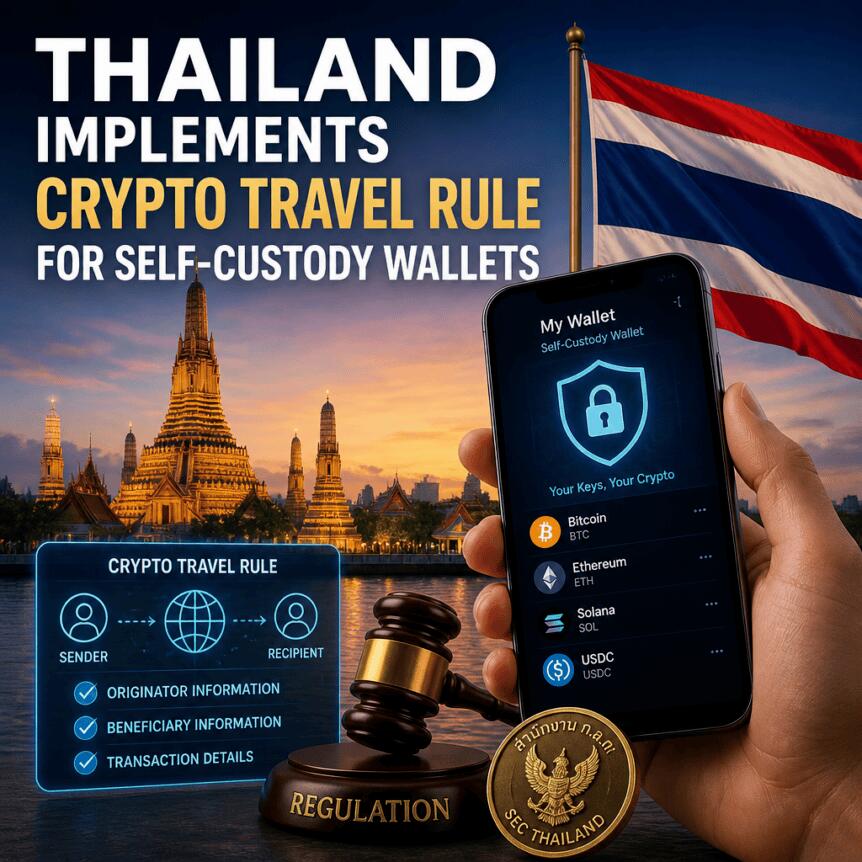
Thailand’s financial regulator has moved to tighten oversight of cryptocurrency transfers by adopting new “Travel Rule” requirements tied to global anti-money laundering expectations. The Thailand Securities and Exchange Commission (SEC) announced Wednesday that digital asset operators will be required to collect and share key information about parties involved in crypto transfers.
The regulations are set to take effect on Feb. 27, 2027, giving industry participants nearly six months to build the operational and compliance systems needed to transmit, receive, and monitor transaction-related information.
Key takeaways
- Thailand’s SEC has issued final Travel Rule regulations for digital asset operators, aligning local oversight with international AML standards.
- The rules require additional due diligence around transfers to and from self-custodial (self-hosted) wallets, including ownership or control checks.
- Operators must retain transaction-related party information for at least five years and make records available for regulatory review.
- Compliance deadlines give the market until Feb. 27, 2027, to implement systems for collecting and transmitting required information.
- Thailand’s move reflects a broader FATF push to standardize traceability of crypto transfers across jurisdictions.
Travel Rule requirements come into focus
Under Thailand’s new framework, digital asset operators must gather information about the parties to crypto transfers. The SEC’s announcement positions the update as part of a wider effort to bring crypto compliance closer to established international AML norms.
While Travel Rule obligations have been spreading globally, the key operational change for firms is the expectation that they can handle information flows tied to transactions—not just monitor funds. Regulators increasingly want operators to be able to demonstrate who sent and who received crypto, and to provide that supporting documentation when requested.
Thailand’s SEC described the implementation timeline as a way to allow the market time to prepare, with rules due to begin on Feb. 27, 2027.
Self-custodial wallets will face additional checks
A notable element of the new Thai rules is how they treat self-custodial wallets. The SEC said Thai digital asset operators must verify the ownership or control of self-hosted wallets when customers send to or receive crypto from those addresses.
This is a practical difference from transfers involving wallets controlled by centralized exchanges (CEXs) or custodians. With self-custody, users manage the private keys themselves, meaning the operator does not inherently have the same identity linkage that comes with regulated custody services. Thailand’s framework therefore pushes responsibility back onto operators to identify and verify the relevant wallet ownership or control before permitting or processing transfers involving those self-hosted addresses.
The SEC also requires operators to retain information accompanying every digital asset transaction for at least five years. Those records must be available for regulatory examination, reinforcing the idea that Travel Rule compliance is not only about real-time data exchange but also about post-transaction auditability.
From consultations to final regulations
Thailand’s Travel Rule requirements follow an earlier process of public consultation. The SEC said it ran two rounds of consultation during the year, starting with proposed principles in March and then issuing a draft notification in June. According to the regulator, most stakeholders supported the proposals.
That shift—from early input to final rules—matters for investors and service providers alike because it reduces uncertainty about what will be required. With a specific effective date now set, companies can plan compliance roadmaps around systems that can reliably capture and transmit party information associated with transfers.
It also places renewed emphasis on how Thai compliance teams will operationalize wallet verification for self-custodial activity. Firms will need processes for checking ownership or control in a way that can stand up to scrutiny, even when users hold the private keys outside a custodian’s infrastructure.
Thailand joins a broader FATF-driven trend
Thailand’s regulatory tightening lands amid a larger international push to make crypto transfers more transparent from an AML perspective. The Financial Action Task Force (FATF) estimated that 83% of surveyed jurisdictions had passed Travel Rule legislation as of 2026, reflecting how rapidly compliance requirements are becoming standardized across major markets.
For Thai market participants, the SEC’s stance signals that Travel Rule expectations will increasingly affect product design and onboarding flows—particularly anything that connects regulated entities with customer wallets, including self-custodial addresses.
Regulatory agenda extends beyond Travel Rule
Thailand’s Travel Rule update also fits into a wider agenda from the SEC to expand and refine the country’s crypto market structure. Earlier this week, the SEC proposed allowing intermediaries to offer retail investors access to certain crypto derivatives traded on regulated overseas exchanges. The regulator has also advanced draft rules for spot Bitcoin and Ether exchange-traded funds (ETFs), while seeking feedback on requirements for foreign digital asset custodians used by funds investing in crypto.
Taken together, these steps point to a regulator that is not only focusing on enforcement and AML controls, but also shaping the pathway for additional mainstream investment products—while demanding that intermediaries meet compliance expectations consistent with international standards.
As Feb. 27, 2027 approaches, the key unknown for Thailand’s market is how operators will implement self-custodial wallet ownership and control verification in practice—an area likely to determine whether compliance is smooth for users or introduces friction in everyday transfer flows. Observers should watch for detailed implementation guidance and how firms update transaction monitoring and record-keeping systems to meet the five-year retention requirement.


Tokenization is not just about increasing access to tokens, whatever they may represent, but a fundamental shift in how value is created, owned, financed and moved, argues Solana Foundation’s Lily Liu.
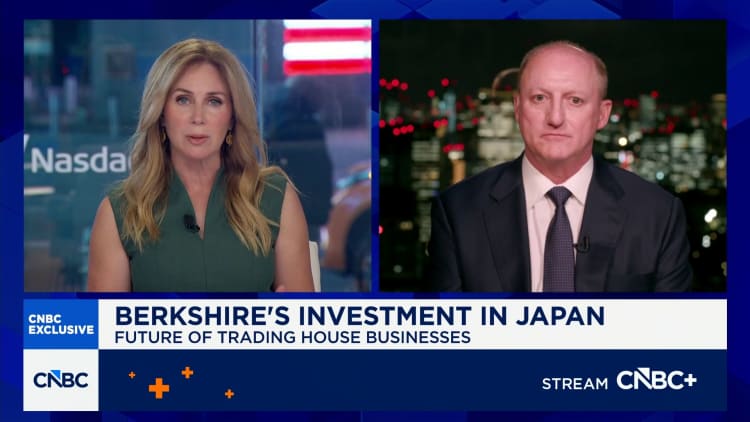

Berkshire Hathaway’s CEO Greg Abel said that rising yields in Japan isn’t impacting the major trading houses in the country the holding company has stakes in.
In an appearance on CNBC’s “Squawk Box” on Wednesday, Abel said that while high yields are topical in Japan — with the nation’s 10-year bond yield hitting a 30-year high this week — it’s manageable, at least for major trading firms in the country.
“Not a single one of the trading companies raised it as a fundamental challenge right now,” he said. “They’re still relatively modest when you think about it,” Abel added, noting that Japan’s yields, while at multi-decade highs, are still low relatively to other bond yields across the world.
While Japan’s multi-decade high in its 10-year bond yield is just above 3%, the U.S. 10-year Treasury Yield hit an almost three-year high on Tuesday when it crossed 4.8%.

Japan bond yield in 2026
Berkshire Hathaway has a greater than 10% stake in five of Japan’s largest trading houses — Itochu, Marubeni, Mitsubishi, Mitsui and Sumitomo — which deal with everything from energy to consumer goods. Abel was visiting Tokyo, which included checking in with those five firms along with Berkshire’s other investments in the country.
Abel added that he expects Berkshire will still raise debt as appropriate in yen, despite the high yields.
The investments in the trading houses were originally made under a guarantee that Berkshire would never take double-digit stakes in any of the five. However, Abel said the company received permission from each of the individual trading houses to now own more than 10% in each six years after the initial investment.
Abel reiterated that the company continues to see value in these investments, which have yielded strong returns for Berkshire as shares of the trading houses have grown substantially since the initial investment six years ago.
“It’s really, one, a long-term investment that we intend to hold for many decades, and then, secondly, we’ve been building really strong relationships with each of the companies, and looking at other opportunities here in Japan, and for that matter, abroad,” he said. “And those are just exceptional discussions.”

“Venting is discrete,” says Jenny Martin, a psychologist and founder of Gemstone Wellness, a trauma-informed practice in Chicago. “It has a beginning, a middle, and an end.”
But venting can also keep you stuck—not to mention, exhaust the person listening. The distinction isn’t whether you complain, get worked up, or talk for a long time. It’s whether the conversation eventually moves somewhere, and whether the other person still feels like a participant rather than an audience member trapped in the front row.
So how can you tell when blowing off steam has started straining your relationships? Therapists—who listen to people vent for a living—say there are a few consistent tells.
It’s a monologue, not a dialogue
Genuine, healthy venting isn’t one-sided. You talk; the other person asks a question, winces in solidarity, or says the same thing happened to them. Maybe they offer a perspective you hadn’t considered. Then you keep going from there. (There are, after all, far more exciting things to discuss, like the tacos and drinks you’ll be enjoying after work on Friday.)
Remixpoint sold $5.5 million in ETH, SOL, XRP and DOGE, booking a $736,000 net gain as it narrowed its crypto strategy to focus on Bitcoin.
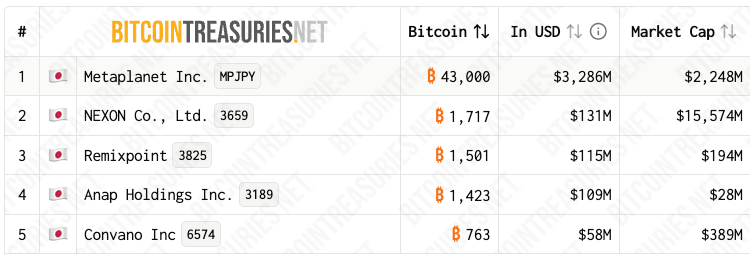
Remixpoint, one of Japan’s largest corporate Bitcoin holders, sold all its altcoins, leaving about 1,506 BTC ($115 million) as its only cryptocurrency holding as it concentrates its crypto strategy around Bitcoin.
Remixpoint sold its Ether (ETH), Solana (SOL), XRP (XRP) and Dogecoin (DOGE) holdings for a combined 878.8 million yen ($5.5 million), generating a 117.8 million yen ($736,000) gain, according to a Wednesday company disclosure.
The company recorded gains on its ETH, SOL and XRP sales but sold its DOGE holdings at a 3.26 million yen ($20,000) loss. The company completed the sale on Tuesday and expects to book the gain in the second quarter of the fiscal year ending March 2027.
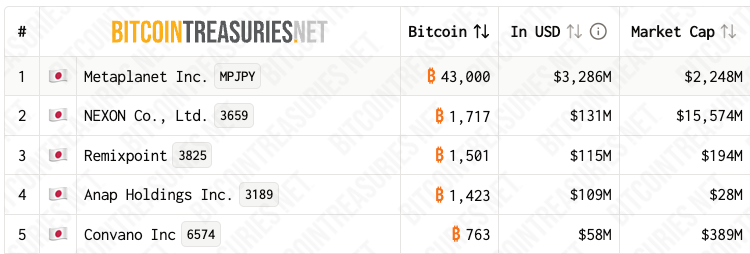
Remixpoint ranks as Japan’s third-largest corporate Bitcoin holder. Source: Bitcoin Treasuries
Before the sale, Remixpoint held about 901 ETH, 13,920 SOL, 1.19 million XRP and 2.8 million DOGE. Those holdings would be worth about $2.14 million, $1.36 million, $1.57 million and $226,000, respectively, based on CoinGecko prices at the time of publication.
Remixpoint said it decided to sell the altcoins after considering market conditions, their risk-return characteristics and its financial strategy. Remixpoint said focusing its crypto portfolio on Bitcoin aims to “clarify investment strategy” and “improve capital efficiency.”
Remixpoint has also been generating returns from its Bitcoin holdings. The company earned 14.92 BTC from lending between Feb. 24 and Aug. 31, valued at 164.2 million yen ($1 million), according to the disclosure.
Related: Strategy buys $370M Bitcoin in first corporate purchase since June


Analysts discuss the cartoon-themed price action as prices for major cryptocurrencies wilt.
Crypto World
Capital B aims to add 376 BTC to bitcoin treasury following $8.8 million Adam Back investment
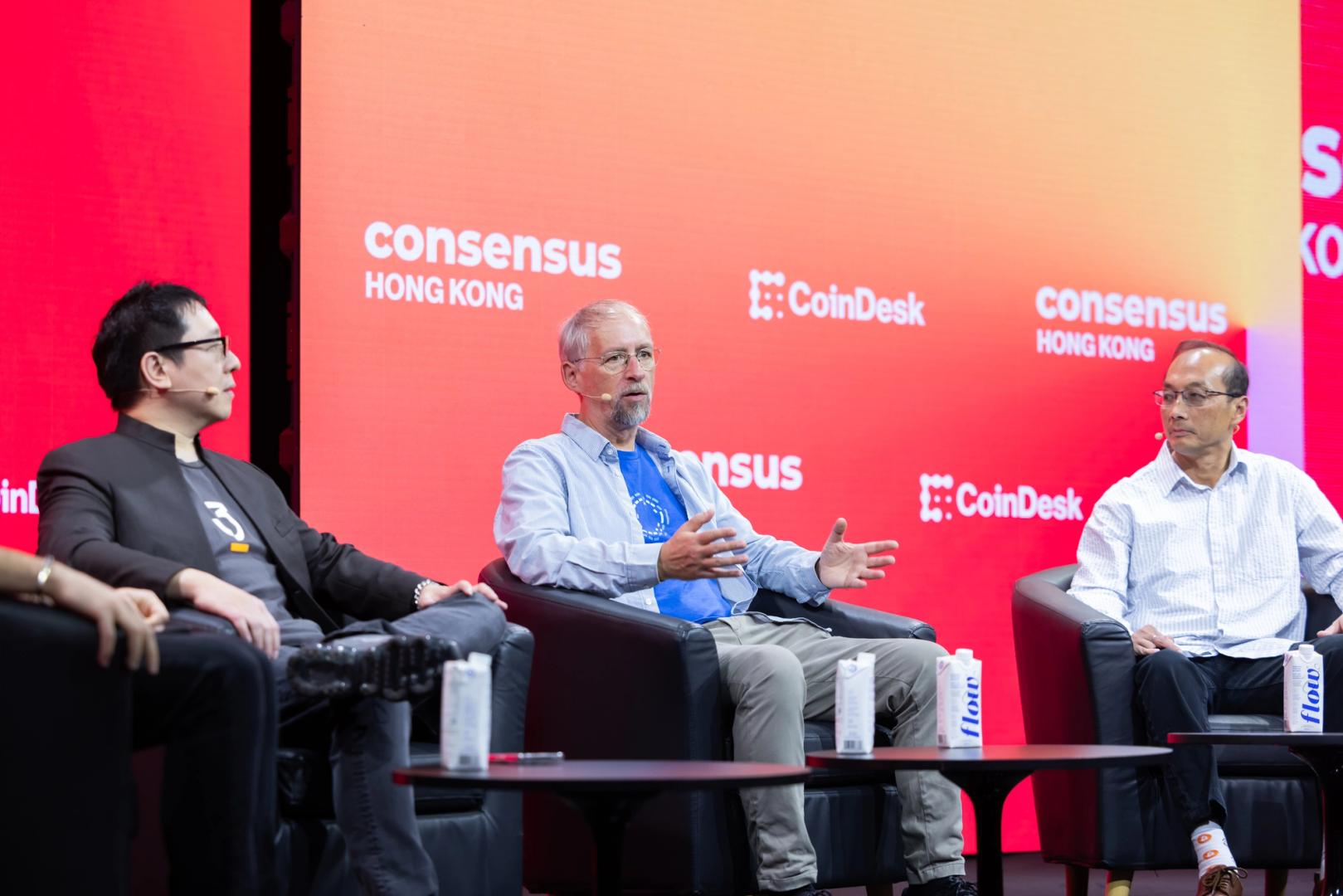
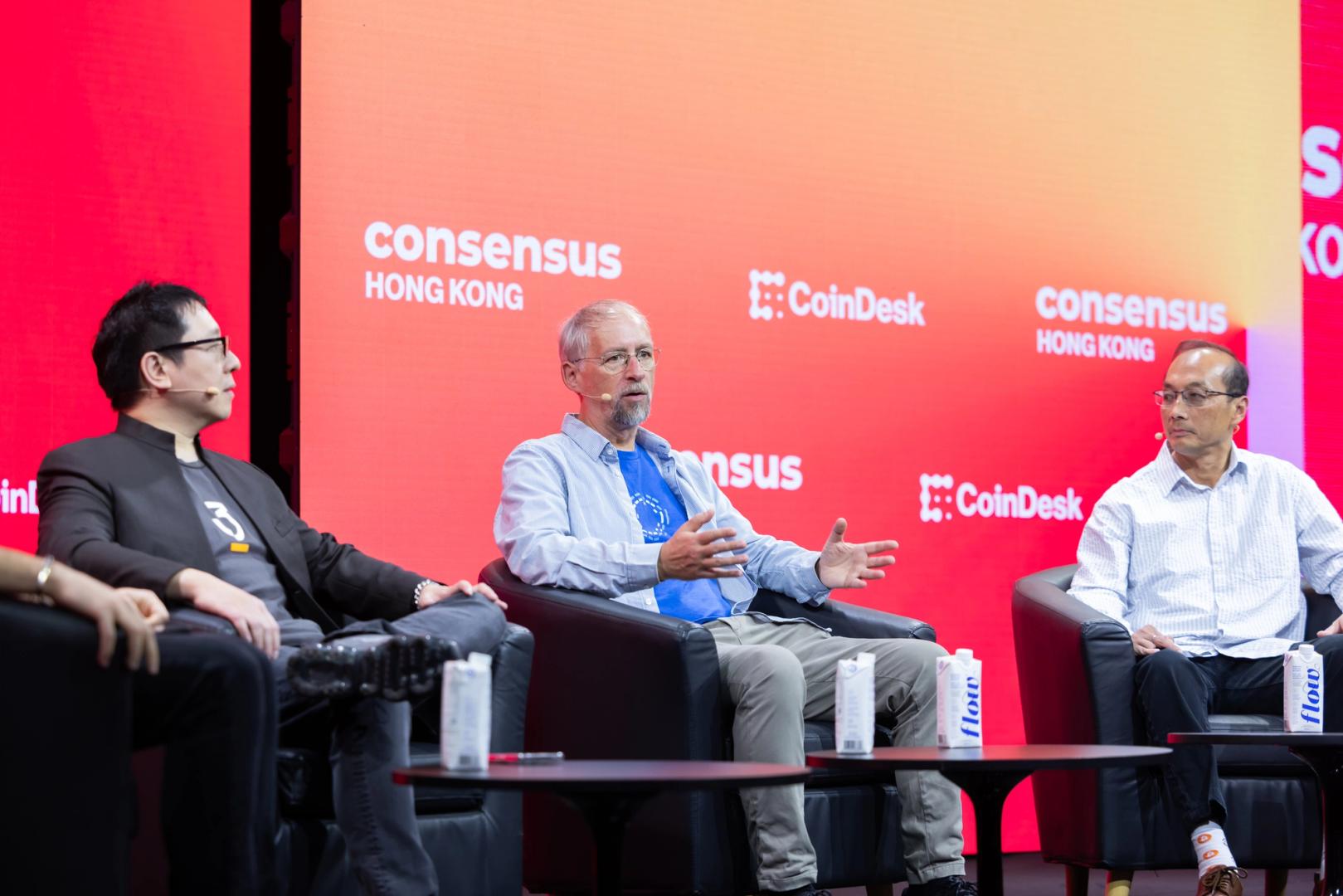
The Euronext Growth Paris-listed firm issued 13,181,030 shares with four warrants each at 58 euro cents per share, according to a filing on Wednesday.


This week, the New York Department of Financial Services (NYDFS) informed Elon Musk’s X Money that it cannot continue to pay bank account-like interest on non-bank account deposits of New York residents.
To avoid capital flight from the country’s wealthiest metropolis, X Money offered New York residents a $300 “direct deposit bonus” as “interim compensation,” which it repeatedly insisted “does not constitute APY or interest.”
X Money doesn’t offer bank accounts in New York. Instead, it says it’s a product for New York customers to “earn yield,” “get cashback,” “send wires,” “mail checks,” and “pay your bills,” with “free ATM withdrawals” while “protected with FDIC coverage.”
It holds New Yorkers’ money in a product called a “stored value account” that allows customers to “obtain interest” through September 30 on their money then “earn a $300 bonus” after October 1.
These payouts aren’t any type of bank account interest.
Read more: Crypto influencer Tiffany Fong rejected Elon Musk’s baby-making offer, report
“X Payments does not take deposits”
The NYDFS approved X Payments as a money transmitter — not a bank in New York — effective July 23. X Money lists its non-bank license number MT-105532 with a July 24 issuance date.
That transmitter license doesn’t turn Musk’s payments arm into a bank. The NYDFS defines money transmitters as businesses that move money for the public.
X Payments’ own license page admits, “X Payments LLC is not a bank.”
Its stored value account terms disclaim, “X Payments is not a bank, is not FDIC-insured, and does not take deposits,” even though the homepage for X Money mentions deposits 16 times.
Despite the legal throat-clearing, X Money promises to credit the $300 “direct deposit bonus” within 14 days of New York residents’ “$3,000 of qualifying deposits,” even though “X Payments does not take deposits,” because a stored value account is not a bank account.
Got a tip? Send us an email securely via Protos Leaks. For more informed news and investigations, follow us on X, Bluesky, and Google News, or subscribe to our YouTube channel.

OpenPayd has announced expanded its regulatory presence in the United States after completing the integration of MSB USA Inc. into its group.
The latest move brings 43 state money transmitter licences (MTLs) under its umbrella.
US Expansion
In an official press release shared by CryptoPotato, the London-based financial infrastructure provider said the move strengthens its position in the US market and creates a broader regulatory base for its operations across North America. MSB is a US-based, state-licensed money services business, and the integration was finalised after receiving the required regulatory approvals.
In a statement, OpenPayd Founder, Dr. Ozan Ozerk, said,
“Every era of finance has been defined by its infrastructure: correspondent banking wired together the twentieth-century economy; programmable money will power the twenty-first. The U.S. is at the forefront of this evolution, and with regulated foundations now spanning the U.S., U.K. and Europe – across both fiat and digital assets – OpenPayd has something few providers can claim: regulated infrastructure spanning both fiat and digital assets, on both sides of the Atlantic.”
The network of 43 state licences will increase its geographic reach for global clients that already operate in the US or are planning to enter the market, OpenPayd added. The expansion comes after the platform’s recent authorisation under the European Union’s Markets in Crypto-Assets (MiCA) framework by the Malta Financial Services Authority.
Stats disclosed by OpenPayd continued to show organic growth across its business. As of July 31, 2026, its annual recurring revenue (ARR) climbed above $96 million, while annualised transaction volume surpassed $300 billion. The company said it remains profitable and has not taken external capital. It currently serves more than 1,200 clients globally, including crypto and financial companies such as Kraken, eToro, OKX and B2C2.
Nasdaq Plans
OpenPayd is also preparing to enter the US public markets through a previously announced business combination with Titan Acquisition Corp. In June 2026, the two companies announced a definitive agreement under which the company is expected to become a publicly listed company on Nasdaq under the ticker “OP.”
The transaction values OpenPayd at an equity value of up to $1.145 billion on a pro forma basis. The combination is expected to close in the fourth quarter of this year, subject to customary closing conditions, including approval from Titan’s shareholders.
The post OpenPayd Makes Major US Push After Securing 43 State Money Transmitter Licences appeared first on CryptoPotato.
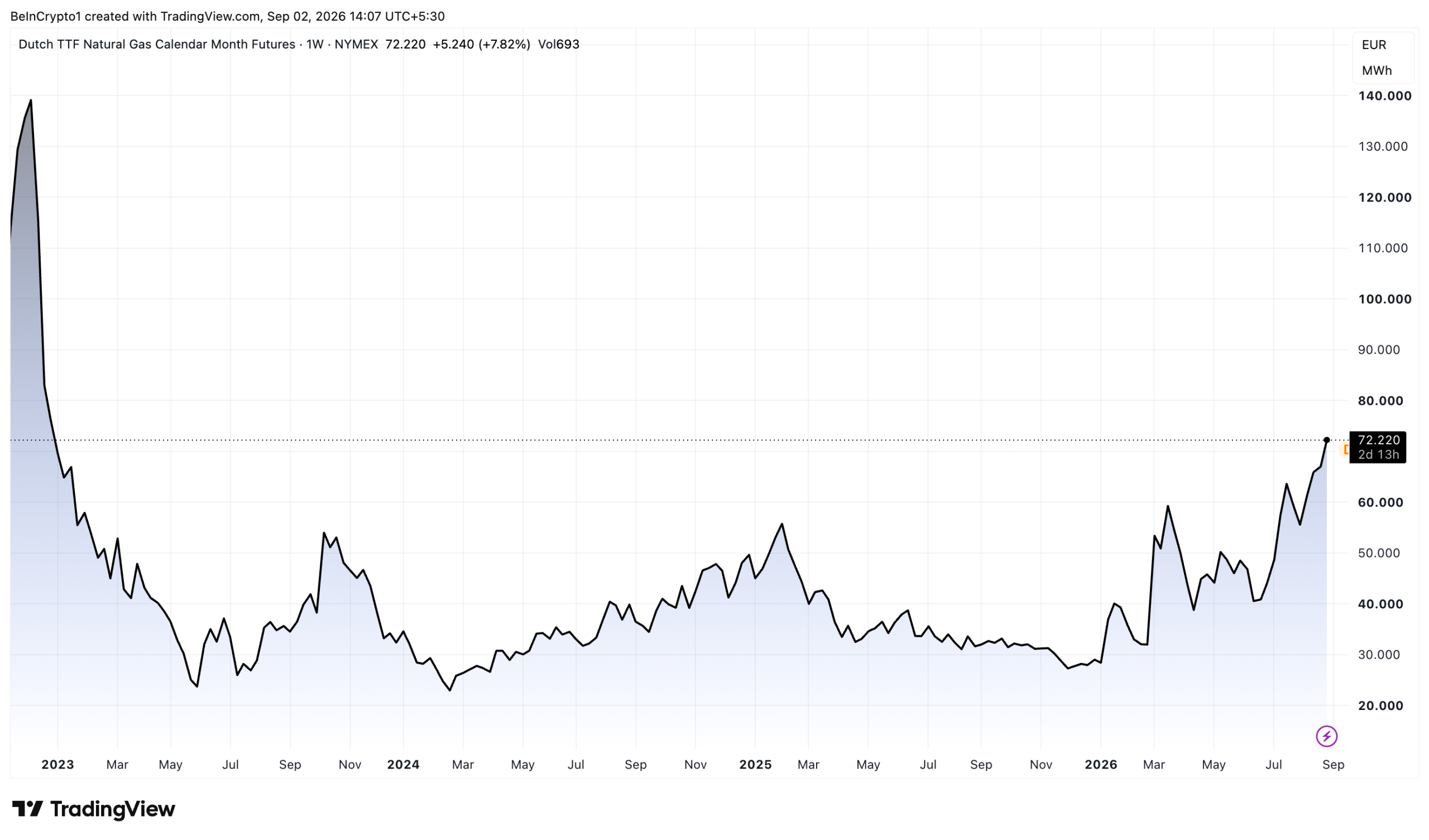
European natural gas prices climbed to their highest level in over 3 years, as renewed US strikes on Iran deepened concerns over prolonged disruption to energy flows from the Persian Gulf.
Europe’s benchmark, Dutch front-month futures, surged to 73.85 euros per megawatt-hour in early European trading. It has gained roughly 25% over the past month. At press time, it stood at 72.2 euros.

Follow us on X to get the latest news as it happens
Storage Shortfall Leaves Europe Exposed
The front-month contract has not traded this high since the end of 2022, according to the Wall Street Journal. The rally reflects a supply problem that predates this week’s escalation.
EU gas stocks were 63% full in the final week of August. That sits well below the 80% average for late August in recent years.
Storage operators normally refill throughout the summer, when both demand and prices are lower. Gas analyst Greg Molnar said continued injection at the current pace could leave EU gas storage at just 72 bcm.
That would put inventories 20%, or 19 bcm, below the five-year average. It would also mark the lowest storage level since 2013.
“Low storage levels are naturally increasing the risk of heightened winter price volatility,” he said.
Energy Costs Reach Consumer Prices
The shock has already landed in the eurozone inflation data. Inflation rose 3.3% in the year to August, up from 2.9% in July. Energy inflation drove the move, accelerating to 14.3%. Core inflation eased to 2.4%.
Escalation around the Strait of Hormuz has also clouded prospects for a recovery in regional liquefied natural gas (LNG) exports. Roughly 20% of global LNG shipments cross the waterway.
Analysts at ING said Europe currently outbids Asia for cargoes once shipping costs are counted. However, they expect competition between the two regions to intensify if Qatari volumes remain absent through year-end.
Goldman Sachs analysts said the benchmark may need to move above 100 euros per megawatt-hour should Middle East exports normalize only gradually through 2027. Meanwhile, Morningstar analyst Tancrede Fulop told CNBC that a cold winter could drive prices into the 90-120 euro range.
The squeeze is spilling into risk assets. Asian equities slid after strikes on Iran, while Bitcoin (BTC) reacted to the same escalation.
Subscribe to our YouTube channel to watch leaders and journalists provide expert insights
The post European Gas Hits 3-Year High With Winter Storage at 13-Year Low appeared first on BeInCrypto.

Tiger Woods’ driver’s license suspended for five years after pleading guilty to reckless driving in DUI case

Creating The Greenest Possible Clothing With Living Fungi

I Bought $25 Dirt to Find Gold





-

 Fashion5 days ago
Weekend Open Thread: Maeve – Corporette.com
-

 Crypto World6 days ago
Bitcoin’s 22% rally now needs real demand to outlast Treasury liquidity boost
-

 Crypto World7 days ago
Warsh Jackson Hole keynote puts financial innovation first
-

 Business6 days ago
Apple Confirms September 9 Keynote and Reveals Its Full Pre-Order Schedule
-

 Crypto World7 days ago
Elon Musk Grok Bot Promise: We Will Make You Whole if AI Loses Your Money
-

 Business6 days ago
Salesforce Stock Soars 19% as Blowout Earnings and Agentforce AI Growth Silence Software Skeptics
-

 Business4 days ago
Onto Innovation Stock: AI’s Next Bottleneck Is Yield (NYSE:ONTO)
-
 NewsBeat7 days ago
Lindsay Clancy jury braces for closing arguments as judge tells court: ‘You’ve heard all the evidence’ – Live updates
-

 Crypto World6 days ago
NVIDIA revenue hits $96.2B as AI demand doubles
-

 Crypto World5 days ago
Bitcoin price tests $82K resistance as Brandt stays long
-
 Crypto World7 days ago
Nvidia Q2 Earnings Reveal $96.2 Billion Beat, So Why Is NVDA Falling?
-
 Tech4 days ago
Hugging Face built a $4.5 billion empire on free AI models. Now Nvidia is buying it for $12.9 billion
-

 Business5 days ago
iPhone 18 Pro Pre-Orders Could Shift to Saturday as Apple Reportedly Avoids September 11 Anniversary
-

 Tech6 days ago
Claude Cowork gets its own browser that doesn’t touch your tabs, bookmarks, or saved passwords
-

 Crypto World5 days ago
Truflation calls for Fed rate cut after PCE forecast
-

 Crypto World6 days ago
GENIUS Act missed its deadline as OCC writes rules anyway
-

 Tech4 days ago
PaperCut releases second emergency patch for exploited flaws
-

 Tech7 days ago
Apple’s iPhone 18 Pro event is on September 9
-

 News Videos3 days ago
Charlie Munger on Robinhood: No one should believe that Robinhood’s trades are free
-

 Tech4 days ago
As the influencer economy drives retail sales, Seattle startup raises $22M to play matchmaker
You must be logged in to post a comment Login