
Crypto World
E.U. Chief Likens Alleged Russian Drone Plot to ‘Terrorism’

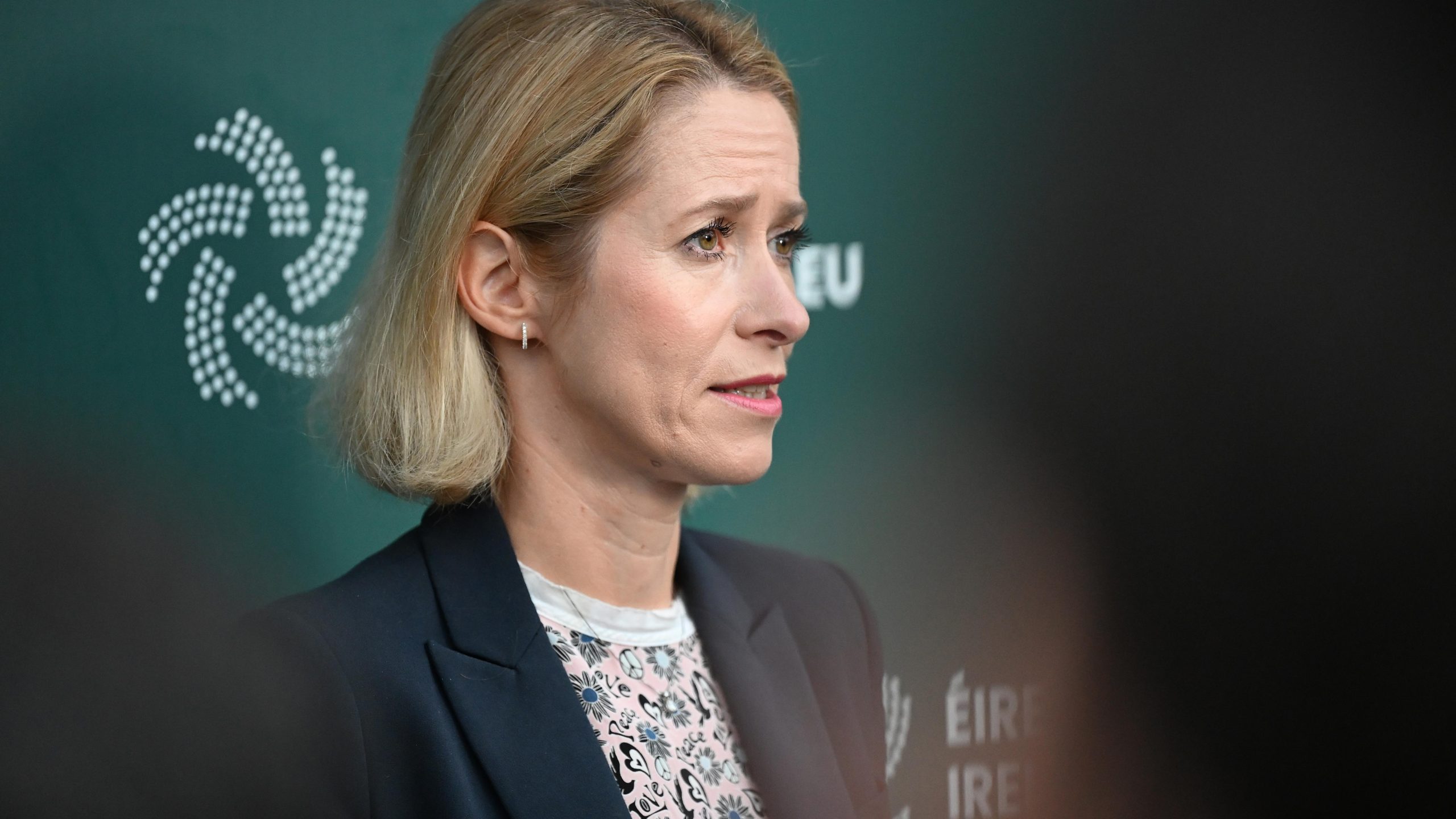
Wadephul announced retaliatory measures, relaying that Germany intends to close the Russian consulate in Bonn from Sep. 18. The lease for the Russian House in Berlin, an institute showcasing Russian culture, will be terminated.
There will also be tighter entry controls for Russian nationals and additional pressure will be placed on Moscow’s shadow fleet.
Russia has denied responsibility for the drone plot.
Foreign Ministry spokesperson Maria Zakharova said that no evidence for the allegations had been presented, and that “under a completely far-fetched and far-fetched pretext, Berlin has once again escalated bilateral relations,” according to Russian state news agency TASS.
In response to the retaliatory actions taken by Germany, Russia’s Deputy Foreign Minister Alexander Grushko told reporters Wednesday that Moscow “will respond as we deem necessary, when we are ready for it.”
This came after Russian President Vladimir Putin called the German response a “grave mistake” that “clearly runs counter to the interests of the German people,” according to TASS reporting.



What do we mean when we say a filmmaker has returned to form? Danny Boyle has made Oscar-winning movies (Slumdog Millionaire), great movies that people will remember forever (Trainspotting, 28 Days Later), and superb, expressive movies that not many people think about anymore (Sunshine, A Life Less Ordinary). Boyle has been making movies for so long now—and has been making them in such varied textures—that it’s hard to say what form, exactly, there is for him to return to. But Ink, which opens the Venice Film Festival, somehow feels both old-school—in the brash, Trainspotting way—and invigorating and modern; it’s almost as if Boyle were taking inspiration from himself, revisiting his catalog of ideas and revamping rather than repeating them. This is a bold, entertaining piece of filmmaking that also brings us back, perhaps to the precise year, when newspapers and other media organizations began veering away from serious news and toward the on-ramp of nonstop entertainment and stimulation. For that, we have news mogul Rupert Murdoch to thank. But as Ink tells it, Murdoch learned how to be Murdoch from a lesser-known player you may never have heard of: who the hell was Larry Lamb?
Ink, adapted from James Graham’s stage play and drawn from real life, opens in 1969 London on Fleet Street, the heart of the city’s newspaper business. The young, Australia-born Rupert Murdoch—played, with almost alarming charisma, by Guy Pearce—isn’t yet a mover and shaker in the news business. But he has a proposition for a brash Yorkshire newspaperman whose career has taken a nosedive. Would this guy, Larry Lamb—Jack O’Connell, crackling with roguish charm—like to spearhead the relaunch of a paper Murdoch has just purchased? The two meet in a tony London restaurant where newspaper deals are made, tussling like bulls as they outline their ideas of what news should be. Then they stride out into the night, and as they pass the paper’s offices, they drop down on all fours to feel the rumble of the printing presses belowground. Newspapers are in their blood; they can’t differentiate between their own heartbeat and the clanking of tomorrow’s edition rolling off the cylinders.

That image may sound corny, but as movie language, it works. Boyle and cinematographer Alwin H. Küchler (who also shot Sunshine) give the movie a zig-zagging, simmering energy. If Trainspotting mapped the euphoria and careless self-destruction of heroin addicts, Ink is the story of another kind of obsessive: guys in thrall to the big story, to power, and to money, maybe not even necessarily in that order. By 1969, London was already swinging, but not for these guys: In their trim but conventional Savile Row suits, they’re aware of the style revolution around them, yet they stay happily outside it, like gods smirking from Mount Olympus. It’s as if they’d long ago decided that their main job was to observe and reflect the world rather than actually live in it.
The first half of Ink tells the story of the Sun’s ascension, from its lagging position behind its hugely successful rival, the Daily Mirror, to a tabloid that seduced readers with new kinds of coverage. What, exactly, were working-class Londoners interested in reading about, Lamb would ask his assembled staff, including a starchily old-school deputy editor imported from Liverpool (Patrick Kennedy), a possibly over-the-hill sports editor (Christopher Fulford), and, most notably, the crackerjack newswoman Jules (Claire Foy, fierce as a firecracker), who’s been sleeping with the married Lamb for years in an arrangement that suits them both. He’s now given her the luxury of editing a “woman’s page,” which she’s free to fill with whatever she likes, including the radical feminist ideas that drive her. (She ends up printing an excerpt of the banned-in-Britain book The Sensuous Woman, a manual written to help women navigate and understand their own sexuality—though she makes it clear that it’s the guys who really ought to be reading it.)
.png?branch=production)
In revamping the paper’s coverage, the list of key categories Lamb and his staff come up with includes the usual suspects (sport, the weather) but also some surprises. Everyone, the staff concluded, loves watching television, but newspapers weren’t covering it—why not? And the men, of course, loved looking at naked women, and thus the “Page 3 Girl”—basically, a tasteful nudie image—was born. That’s how Lamb remade the Sun, and made his name. In the movie’s second half, in a gracefully executed tone shift, Lamb’s newly forged reputation as a wonder boy is tested; suddenly, Ink becomes a mildly grim true-crime thriller, based on a real-life case. (The principals involved are played by Jonathan Hyde and Lucy Russell.) Boyle presents the details as if he were splashing paint on canvas, not carelessly but with controlled strokes of energy.
Does Lamb want to help solve the mystery at the heart of this crime, or is his job to stay out of it and let the police do their job? He’s too addicted to sensationalism to know when to stop. In the story Ink tells, Murdoch is in thrall to Lamb and his instincts, even as he frequently recoils from them. He sees what’s unsavory about Lamb’s approach and, more than once, moves to restrain him; then he sees the uptick in the Sun’s sales figures and zips his lip. If you’d prefer to think of Murdoch as an individual wholly devoid of sex appeal, Pearce’s performance might rattle you; his Murdoch is shrewd but not inhuman—even monsters were young once. Foy’s character is a composite and not based on a specific individual, but she avoids all the pitfalls of playing a symbol. Jules is a woman in an overwhelmingly masculine world, so devoted to her work she doesn’t want to be anywhere else, but she never makes it look easy. Foy plays Jules’ moments of doubt with piercing clarity—she sees the moral cracks in her boss-and-lover’s ambitious strategies, and she voices them, but there are no moments of obvious triumph. Jules lives and works in a space where standing your ground can only make you exceedingly lonely.
And still, O’Connell’s Larry Lamb is a guy you want to root for, even if, as a modern person with a reasonable awareness of what’s happened to the news media in the internet age, you can see he’s making the snowball that starts the avalanche. O’Connell plays Lamb as somehow disreputable and principled at once; it’s simply that he’d rather be right than do right. He’s the kind of brazen, disreputable showman you want to creep closer to—even the young Murdoch feels it. Ink works as both a fictionalized snapshot of a lost world and a forensic exploration of what happens when you give the people what they want, instead of what they don’t know they want. It’s a movie about the beginning of an end, brought about by enterprising men who just wanted to sell papers. So thrilled by the lede they were writing, they gave zero forethought to the kicker.
Adding Massachusetts incumbent Auchincloss to the list of winning primary candidates Fairshake supported, the industry’s influence moves on to November.
Crypto World
Two Thai Businessmen Sue Tether Over $42.4M USDT Freeze as Issuer Calls Case ‘Baseless’

Tether is facing a lawsuit in the Southern District of New York over the freeze of $42.4 million in USDT belonging to two Thai businessmen, Nutthawat Rukthammachalern and Natthawat Kasamvilas.
The plaintiffs allege that Tether blacklisted their Ethereum addresses in late October 2025 after receiving an informal request from an agent with the US Department of Homeland Security (HSI). A total of 42.4 million USDT was frozen. According to the businessmen, the stablecoin issuer took the action without a warrant, court order, or notice to them.
Funds Linked to Pig-Butchering Investigation
According to an update from Attorney Ariel Givner, the funds appear to be connected to an HSI Raleigh investigation into a pig-butchering case. The investigation began after a victim tip involving romance and investment fraud, a fake trading platform, and the movement of stolen USDT through multiple wallets in an effort to make the funds appear clean.
One of the wallets linked to the plaintiffs held about $26.1 million and had already been identified as a consolidation address in an “accumulate, layer, integrate” flow.
A warrant came later. On February 19, 2026, the Eastern District of North Carolina issued warrant 5:26-MJ-1267-JG, directing Tether to burn the frozen USDT and remint the tokens to a government wallet. Five days later, EDNC and HSI announced a $61 million USDT seizure traced to addresses allegedly associated with laundering proceeds stolen from pig-butchering victims. Tether was publicly thanked for carrying out the transfer.
The lawsuit, however, does not dispute the government’s claim that the funds are connected to scam proceeds. Instead, the plaintiffs have challenged Tether’s authority to freeze, burn, and reissue USDT that they say was purchased on the secondary market. The duo argued,
“Defendants are profiting directly from the freeze itself. Defendants use the actual U.S. dollars they receive when they mint USDT to purchase interest-bearing financial instruments, predominantly United States Treasury securities custodied in New York.”
Their claims include declaratory judgment, conversion, trespass to chattels, unjust enrichment, and injunctive relief. The duo is seeking to lift the freeze, damages if the tokens are destroyed, repayment of reserve interest earned during the freeze, and punitive damages.
Tether Defends Law Enforcement Role
The stablecoin issuer has defended the freeze. In a statement to CryptoPotato, the stablecoin issuer said,
“The new lawsuit against Tether is a baseless attempt to interfere with Tether’s important work with global law enforcement, including the Department of Justice, to prevent the unlawful use of USDT.”
The post Two Thai Businessmen Sue Tether Over $42.4M USDT Freeze as Issuer Calls Case ‘Baseless’ appeared first on CryptoPotato.
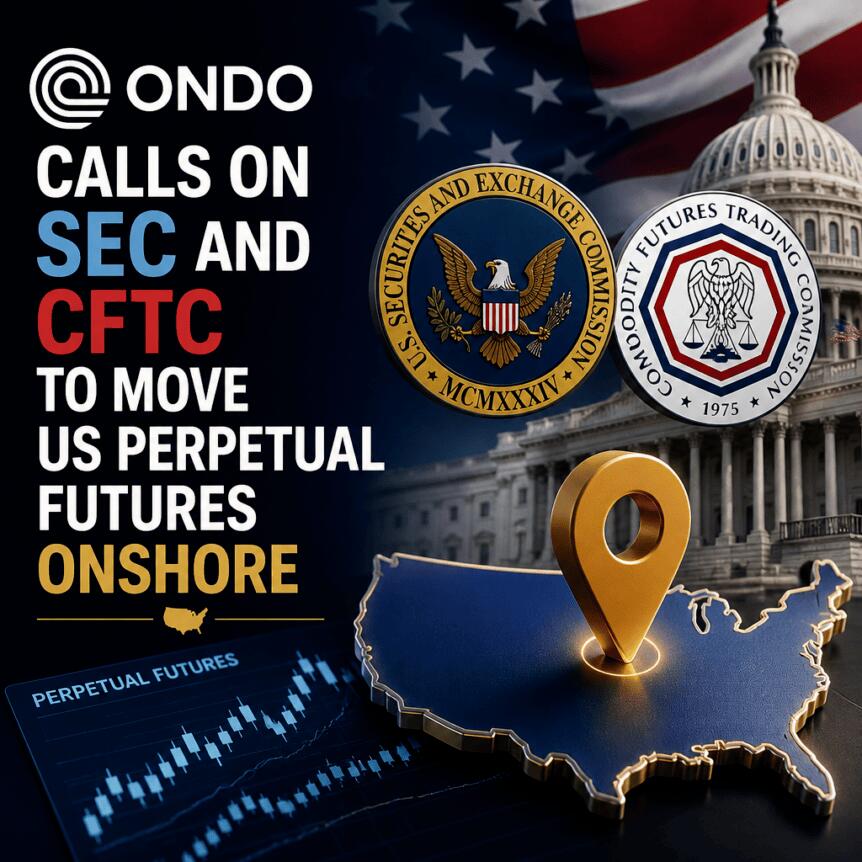
Ondo Finance is asking US regulators to bring perpetual futures tied to individual stocks onshore, arguing that the products can already fit within the country’s existing “security futures” framework rather than requiring new rulemaking. In comment letters submitted on Aug. 24 to both the Securities and Exchange Commission (SEC) and the Commodity Futures Trading Commission (CFTC), the company said that perpetual stock exposure can be structured to account for modern margining practices and the realities of onchain trading.
The proposal targets a persistent question for tokenized markets: whether crypto-linked perpetual instruments—without a traditional fixed expiration date—can still be treated as security futures products under current US definitions. Ondo’s filing also points to offshore activity as evidence that the market model is already functioning.
Key takeaways
- Ondo argues that perpetual stock futures do not need a fixed expiration date to fall under the statutory definition of a security futures product.
- According to Ondo’s filings, its stablecoin-settled perpetuals for individual US-listed stocks have already logged $8 billion in cumulative trading volume as of Aug. 14.
- Ondo says scheduled funding payments can keep perpetual contract pricing aligned with the underlying stock, serving a role comparable to expiration in traditional futures.
- The SEC and CFTC have been increasing coordination and revisiting older market rules that may not fit blockchain-native recordkeeping and tokenized securities.
Ondo’s argument: existing security futures rules can cover perpetuals
Ondo’s Aug. 24 comments were directed to the SEC and CFTC, with the company maintaining that regulators already have the tools to oversee perpetual futures tied to individual stocks within current security futures guidance. The letters argue that, with the right risk controls and market structure, the absence of a fixed expiration date should not disqualify the product from being classified as a security futures instrument.
Central to Ondo’s position is the idea that regulatory definitions for security futures do not inherently require a fixed maturity. “Nothing in the statutory definition of a security futures product requires a fixed expiration date,” Ondo wrote in its product-classification letter submitted to the SEC. The company’s filings also emphasize how margining and settlement mechanics can be adapted to modern trading environments.
Ondo further contends that funding mechanics can mimic the economic function that expiration provides in conventional futures. Instead of a contract rolling off on a specific date, scheduled funding payments are used to keep the perpetual contract’s price tied to the underlying stock—an approach commonly used in perpetual derivatives markets.
The company also highlights the operational reality that the underlying stocks for many offshore perpetual offerings are “principally traded on US exchanges.” In its view, US regulators should not treat domestic market participation as a barrier to bringing these products to regulated venues. “Bringing that activity back to the U.S. should not be an open question,” Ondo said, urging both agencies to pursue that shift.
Offshore track record is part of the compliance case
In its filings, Ondo pointed to live trading activity from a Panama-based affiliate that offers stablecoin-settled perpetual futures tied to individual US-listed stocks outside the US. Ondo said the platform recorded $8 billion in cumulative trading volume as of Aug. 14—about six weeks after the launch.
While offshore activity is not a substitute for US authorization, Ondo appears to use it as an evidentiary support for its claim that the product design can run at scale and with margining and pricing mechanisms that investors rely on. The company also provided information on its standing in tokenized real-world assets (RWA), noting that it ranks fourth among tokenized RWA managers by distributed value. According to RWA.xyz data cited in the filing, Ondo had about $2.6 billion in distributed value as of Wednesday.
Why the definition of “security futures” matters now
Ondo’s filing lands at a time when US regulators are increasingly re-examining how old market frameworks apply to onchain derivatives and tokenized securities. The SEC and CFTC have also increased public coordination on overlapping areas of oversight, including a memorandum of understanding signed in March to harmonize aspects of jurisdiction where responsibilities intersect.
On the securities side, the SEC has moved to modernize mechanisms related to tokenized markets. The agency recently proposed overhauling its transfer agent framework, citing growing demand for blockchain-native recordkeeping and tokenized securities in US markets—an acknowledgment that parts of the current infrastructure were built for traditional forms of ownership and recordkeeping.
Meanwhile, the derivatives conversation is actively evolving. In August, President Donald Trump said that CFTC Chair Michael Selig was working to bring Hyperliquid into the United States in a “fully compliant and legal fashion.” Hyperliquid is known for onchain perpetual futures, although details about how US access would be handled have not been publicly specified by the CFTC or Hyperliquid.
For Ondo, this regulatory backdrop makes its core request—bringing perpetual stock futures under a recognized oversight umbrella—more than a niche classification debate. If regulators accept Ondo’s interpretation that perpetuals can meet the statutory requirements for security futures, it could open a clearer path for other tokenized derivatives strategies to seek regulated access in the US.
What to watch next: regulatory posture and product design constraints
Ondo’s letters argue that no fundamental rewrite is required—only the application of existing security futures definitions to modern perpetual structures, including funding-based alignment to underlying assets and updated margining workflows. Still, the question for the market is whether the SEC and CFTC agree with that interpretation, and—if they do—what implementation details they will require.
Investors and builders should watch for whether regulators respond with guidance or enforcement signals that clarify classification boundaries for perpetual instruments tied to individual securities, and whether US venues will replicate or supersede offshore trading models like Ondo’s stablecoin-settled setup.
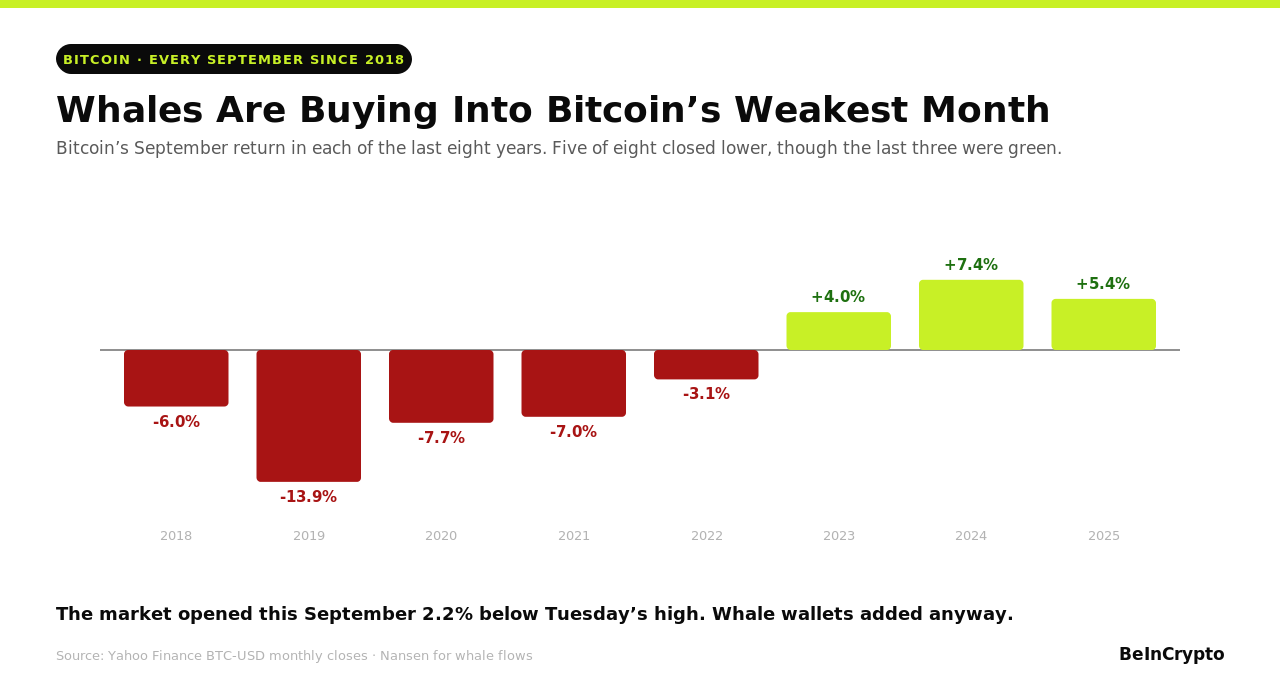
Crypto whales added three altcoins in the first 30 hours of September, a month Bitcoin has closed lower in five of the last eight years.

The market opened it 2.2% below Tuesday’s high, so the buying went against the broader market .
Uniswap (UNI)
Nansen-labelled crypto whale wallets lifted UNI holdings from 3.20 million to 3.46 million on September 2, a 257,777-token increase worth about $1.62 million. The cohort grew from eight wallets to nine, so a new large holder joined.
Want more token insights like this? Sign up for Editor Harsh Notariya’s Daily Crypto Newsletter here.
The flows around it agree. Fresh wallets took in $2.91 million and exchange balances fell by 351,274 UNI, per Nansen wallet data. UNI is up 9% in 24 hours and 47% on the week, and it returns to this list after whales bought it in July.

Usage backs the move. Uniswap handled $2.69 billion in daily volume and $10.7 million in fees, per DeFiLlama protocol data, and those fees feed the UNI burn mechanism approved last December, so heavier trading removes UNI from circulation.

Two groups hedged instead of following. Derivatives traders cut $854,910 of UNI exposure while staying net long, and the whales themselves were net DEX sellers of $130,256 even as balances grew, which reads as locking in part of the gain.
Orca (ORCA)
Orca is the cleanest contrarian setup of the three. Labelled crypto whale balances rose from 160,325 to 201,097 ORCA, a 25.4% jump, while the token fell 1.3%.
The cohort stayed at 10 wallets, so existing holders did the buying. Exchanges lost $263,753 of ORCA in 24 hours, the second-largest outflow in 30 days, pulling sell-side supply off the market. It seems that retail and whales are unified on this one.

Yet, the weekly picture is weaker. Whale flow over seven days is still negative $417,113, so one strong day has not undone a week of selling.
Pump.fun (PUMP)
PUMP carries the most disagreement. Whale balances rose 62.75 million tokens, worth about $272,000, and fresh wallets added $1.83 million while the price fell 3.5%.

The other side is heavier. Smart traders sold $475,249, top-profit wallets sold $1.80 million, and exchange flow flipped from an $885,645 outflow to a $739,671 inflow inside the same window, and tokens moving onto exchanges are usually about to be sold.
Pump.fun has a huge built-in buyer of its own. The company says it spends half of everything it earns buying PUMP on the open market and destroying it, so those tokens can never be sold again. It burned $997,700 worth in the latest day.
That has shrunk the supply, but it has never stopped the price falling when holders sold faster than the company bought. Whale wallets held 4.745 billion PUMP when September began. If they fall back below that, the sellers have won.

Analyst’s View: This is not an altcoin season. It is a bet on three tokens with a built-in buyer, made in a month Bitcoin usually loses.

A buyback creates one steady buyer, not proof anyone else wants the token. And in all three cases the whale cohort sold on DEXs while its balances rose, so a rising balance means large wallets hold more, not that they bought on the open market.

UNI has the deepest confirmation, ORCA the sharpest divergence, PUMP the loudest counter-argument.
The post 3 Altcoins Crypto Whales Are Buying In September 2026 appeared first on BeInCrypto.
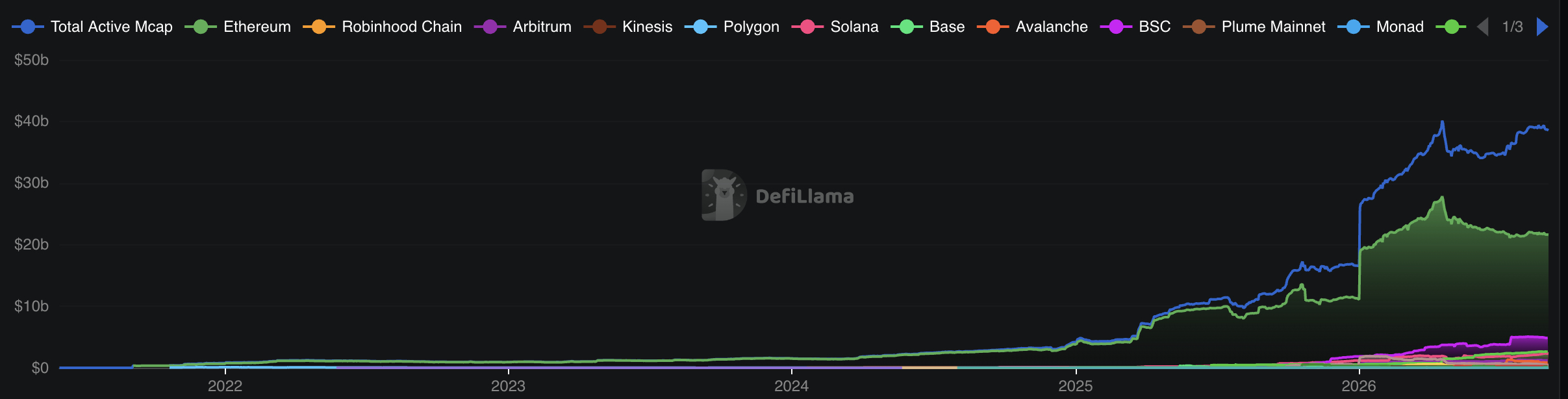
Ethereum might be down by 3% today, but the news that actually matters isn’t the price; it’s the $17.5 billion sitting on its rails. But dominance in tokenized assets hasn’t translated into dominance in price momentum.
Tokenized real-world assets crossed $38.69 billion in distributed value as of late August 2026, with Ethereum controlling nearly 45% of that market. It’s more than triple BNB Chain’s $5.8 billion and quadruple Solana’s $4.0 billion.

Securitize and Ondo, the two largest tokenization platforms, are both built primarily on Ethereum. BlackRock’s BUIDL fund launched there before expanding to seven other chains. The institutional trust layer is Ethereum’s, full stop.
But institutional trust and chart momentum are different games. ETH has spent the last 48 hours grinding inside a tight range, and the question traders are actually asking isn’t about RWA share.
Discover: The Best Token Presales
Can Ethereum Price Hit $2,800 This Week on This RWA News?
ETH is trading at $2,360, down 3% in the past 24 hours, with intraday action bouncing between $2,362 and $2,428. That’s a narrow band for an asset carrying this much macro attention. Institutional accumulation patterns continue even as spot price cools, which is the kind of divergence that usually resolves loudly in one direction.

The key technical marker is $2,550, described across multiple analyst notes as the ceiling standing between current consolidation and a real breakout attempt. Support layers sit at $2,438, then $2,383, then $2,350. A weekly close above $2,438 keeps the bullish September setup intact and opens a path toward $2,800–$2,920. Lose $2,350, though, and the chart likely exposes the $2,200–$2,000 zone next.
ETH’s relative strength against BTC will probably decide which scenario wins.
Trade Ethereum on Bybit and Get a Chance to Win Our $1,000 USDT Airdrop
Maxi Doge Targets Early Mover Upside as ETH Price Tests Key Levels
ETH holders staring at a fourth straight day of range-bound chop have earned the right to feel a little restless. Consolidation below $2,550 isn’t a collapse, but it isn’t conviction either.
At Ethereum’s size, even a clean breakout to $2,800 is a modest percentage move compared to what early-stage tokens can offer. That’s the rotation logic pushing traders toward presale plays right now.
Enter Maxi Doge ($MAXI), an ERC-20 meme token built around gym-bro trading culture and, appropriately enough, 1000x leverage energy. Priced at $0.0002836 with $4.8 million raised so far, the project has pulled in real presale volume without a single major exchange listing yet.
Standout features include holder-only trading competitions with leaderboard rewards and a dedicated Maxi Fund treasury for liquidity and partnerships. Dynamic APY of 65% for staking is now live for early buyers.
Research Maxi Doge before committing capital.
Discover: The Best Crypto to Diversify Your Portfolio
The post ETH Leads the RWA Boom, But Can It Break Its Last Cycle High? appeared first on Cryptonews.
Nvidia (NVDA) stock approached a buy point Wednesday as chip stocks rallied following a bullish quarterly report from Dell Technologies (DELL). Dell’s beat-and-raise report late Tuesday signaled continued momentum in spending on data centers for artificial intelligence. In afternoon trading on the stock market today, Nvidia stock rose nearly 4% to 225.60. Nvidia is in a cup-with-handle base with a…
Copyright ©2026 Investor’s Business Daily, LLC. All rights reserved. 87990cbe856818d5eddac44c7b1cdeb8
Coinbase co-founder Fred Ehrsam wants to run at least three Venezuelan oil fields. Bloomberg reported the bid, citing people close to the private talks.
The blocks sit in the Orinoco Belt, and Trump officials are already weighing whether to strip the current operator, Alvorada Heavy Industries, of its contracts.
Inside Ehrsam’s Push for Venezuelan Oil Fields
Ehrsam is no stranger to Caracas. He has traveled there repeatedly since May. His meetings covered oil, gas, fintech, and digital payments, Bloomberg said.
The oil talks run through Primavera, a company he co-founded to invest in Venezuela. Ehrsam has said nothing publicly, and Primavera declined to comment.
His access is unusual for a crypto founder. Ehrsam ran Coinbase as president until 2017 and still sits on its board, Paradigm says. He also advises the White House on science and technology.
Barrels are the slow part. Venezuela holds the world’s largest proven reserves at 303 billion barrels, OPEC data show. It still pumped only 783,000 barrels a day in 2023.
Recovery will not be quick. Rystad Energy expects national output to grow 17% by late 2028. That is roughly 194,000 extra barrels a day.
“Execution, not geology, remains the key constraint,” read an excerpt in a Rystad Energy upstream research.
The payments side of his pitch could move faster. Venezuela is moving toward formal dollarization, which widens the market for dollar rails.
Washington Reshuffles Venezuela Oil Contracts
Energy Secretary Chris Wright landed in Caracas late Tuesday, the Department of Energy said. He is expected to present as many as 17 oil and gas agreements.
The state deal sets the terms any newcomer must accept. A White House fact sheet dated August 31 grants North American Blue Energy Partners 100-year concessions on 17 fields.
Those fields hold about 65 billion barrels. US territory holds roughly 46 billion, the fact sheet says.
Washington kept leverage. It took a 35% equity stake in the venture’s parent. It can also buy a fifth of production at cost.
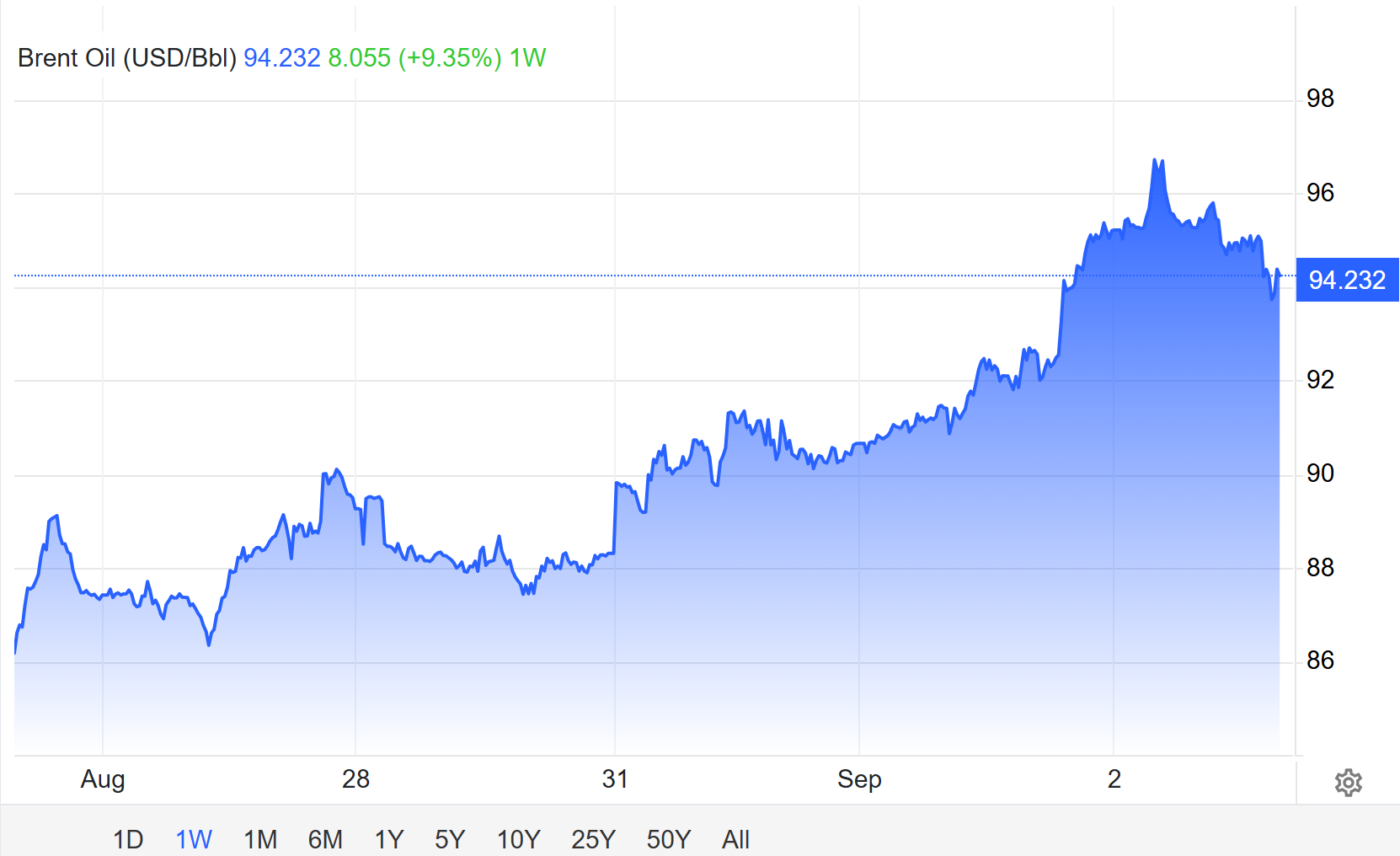
Traders were unimpressed. Brent crude climbed toward $90 after the announcement instead of falling.

Wright’s signings this week will show whether Alvorada keeps its blocks. Only then will it be clear whether Ehrsam is bidding for something available.
The post Why Is a Coinbase Co-Founder Chasing Venezuelan Oil Fields? appeared first on BeInCrypto.
The US Mint began selling the 2026 President Donald J. Trump $1 coin at noon ET Wednesday. A roll of 25 costs $61. A bag of 100 costs $154.50.
Buyers chasing the rare version face long odds. The Mint hid 250,000 coins struck on Independence Day inside those same rolls and bags.
How to Buy the Trump $1 Coin or Hunt One in Change
The bag is the better deal, working out to $1.55 a coin while the roll costs $2.44 a coin, or about 58% more. Both prices sit above face value.
Still, the Mint charges the same $61 and $154.50 for its routine dollar releases. The premium is standard, not a Trump surcharge.
What changed is the size of the run. The Mint capped this one at 150,000 rolls and 50,000 bags. Its 2026 American Innovation dollar offered just 7,350 Philadelphia rolls, roughly 20 times fewer. That release carried no household cap. This one allows two of each.
A privy mark is a small extra symbol stamped into the die. This one reads July 4th. If both products sell out, 250,000 marked coins will spread across 8.75 million, or about 1 coin in 35.
Checking your change may not work yet. The Mint urged buyers to look in their pockets. However, its own campaign page gives a fall 2026 date for circulation. That page also sells the rolls and bags exclusively through the Mint.
Philadelphia started striking the coin in July. The Mint has published no production figures for it so far.
Why a Living President Can Appear on a Coin
One rule is narrower than most people assume. Federal law allows only a deceased person on US currency and securities. Coins sit outside that sentence.
A second rule does cover dollar coins. It bars any living president from the Presidential $1 Coin Program. Treasury went around it by using a different section of the code.
That authority comes from the Circulating Collectible Coin Redesign Act of 2020. The law lets the Mint redesign dollar coins for the 250th anniversary. Trump signed it in January 2021.
Congress tried twice to shut the gap and failed. Representative Ritchie Torres filed the TRUMP Act in October 2025. Senators Catherine Cortez Masto and Jeff Merkley followed with the Change Corruption Act in December.
“If you can’t appear on the U.S. dollar while you’re alive, you shouldn’t appear on any U.S. coins,” said Representative Sam Liccardo, a California Democrat who co-sponsored the bill.
The precedent is a century old. In 1926 the Mint paired sitting President Calvin Coolidge with George Washington on a half dollar. By its own account, no president had appeared on a coin while alive before. That coin marked the 150th anniversary of independence.
Eric Trump Shows Off the Patriot Passport
Elsewhere, Eric Trump posted a short video of a new US passport the same day. He has fronted other Trump branding reveals too. The inside page shows his father leaning over the Resolute Desk, set against the Declaration of Independence.
That book is the Patriot Passport. The State Department released 250,000 more in July after demand climbed. Applicants pay no extra fee.
Getting one takes effort. The department requires an in-person appointment at limited events. Honolulu hosted one on Wednesday. Seattle and Houston follow on September 12.
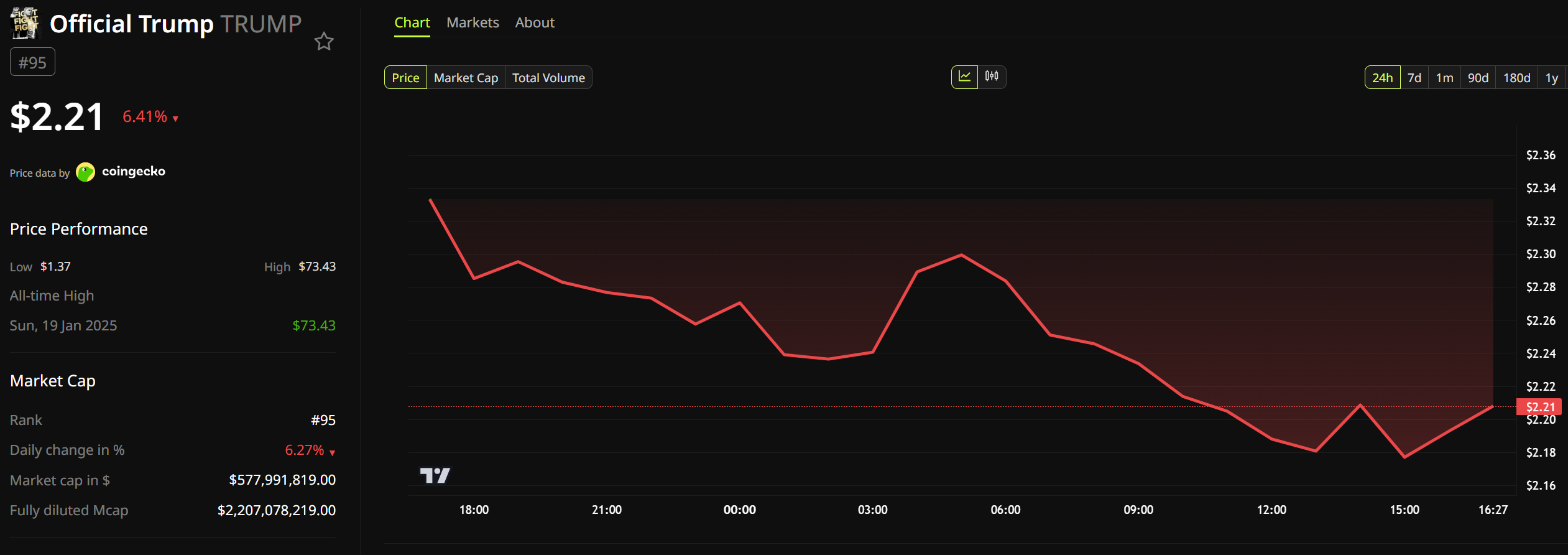
The launch also confused crypto traders again. Official Trump (TRUMP) is the Solana meme coin tied to the president. It changed hands near $2.21 on Wednesday, down 6.4% over the last 24 hours. The token hit the same mix-up in July when the White House promoted the metal coin.

Buyers of the metal coin now wait on the mail. None will know whether they hold a July 4 strike until the box arrives.
The post How to Get the Trump $1 Coin: Buy It or Hunt Your Change appeared first on BeInCrypto.
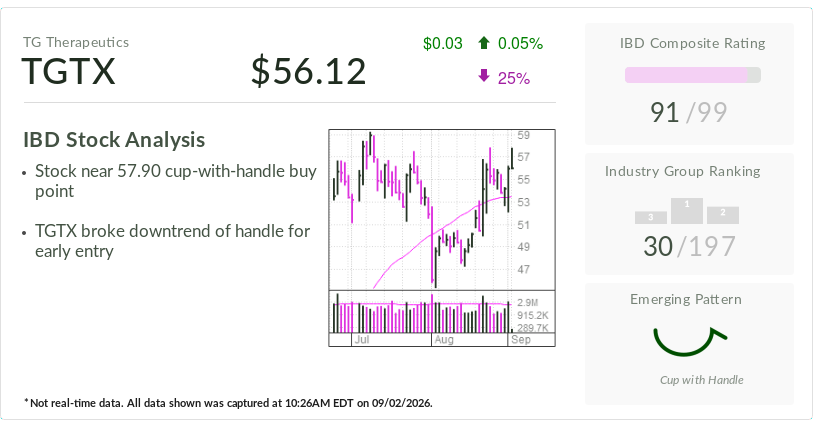
TG Therapeutics TG Therapeutics TGTX $ 56.12 $0.03 0.05% 25% IBD Stock Analysis Stock near 57.90 cup-with-handle buy point TGTX broke downtrend of handle for early entry IBD Composite Rating 91/99 Industry Group Ranking 30/197 Emerging Pattern Cup with Handle Cup with Handle A positive chart pattern named such because it resembles the outline of a coffee cup with a…
Copyright ©2026 Investor’s Business Daily, LLC. All rights reserved. 87990cbe856818d5eddac44c7b1cdeb8
The Financial System Is BREAKING. Bitcoin Isn’t.

Claire Foy channels old Hollywood glamour in a red gown and opera gloves as George Clooney and his dazzling wife Amal grace the red carpet at Ink premiere on the opening night of Venice Film Festival

(PHOTOS) LeBron James Celebrates Daughter Zhuri’s First Day Of 6th Grade With Sweet Instagram Tribute





-

 Fashion5 days ago
Weekend Open Thread: Maeve – Corporette.com
-

 Crypto World6 days ago
Bitcoin’s 22% rally now needs real demand to outlast Treasury liquidity boost
-

 Business6 days ago
Apple Confirms September 9 Keynote and Reveals Its Full Pre-Order Schedule
-

 Crypto World7 days ago
Elon Musk Grok Bot Promise: We Will Make You Whole if AI Loses Your Money
-

 Business6 days ago
Salesforce Stock Soars 19% as Blowout Earnings and Agentforce AI Growth Silence Software Skeptics
-

 Business5 days ago
Onto Innovation Stock: AI’s Next Bottleneck Is Yield (NYSE:ONTO)
-
 NewsBeat7 days ago
Lindsay Clancy jury braces for closing arguments as judge tells court: ‘You’ve heard all the evidence’ – Live updates
-

 Crypto World7 days ago
NVIDIA revenue hits $96.2B as AI demand doubles
-

 Crypto World5 days ago
Bitcoin price tests $82K resistance as Brandt stays long
-
 Tech4 days ago
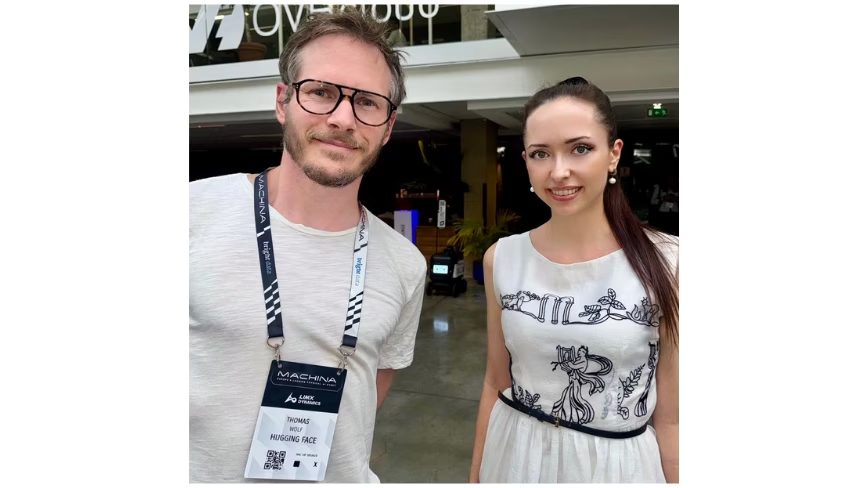
Hugging Face built a $4.5 billion empire on free AI models. Now Nvidia is buying it for $12.9 billion
-
 Crypto World7 days ago
Nvidia Q2 Earnings Reveal $96.2 Billion Beat, So Why Is NVDA Falling?
-

 Business5 days ago
iPhone 18 Pro Pre-Orders Could Shift to Saturday as Apple Reportedly Avoids September 11 Anniversary
-
 Tech7 days ago
Claude Cowork gets its own browser that doesn’t touch your tabs, bookmarks, or saved passwords
-
 Crypto World6 days ago
Truflation calls for Fed rate cut after PCE forecast
-

 Crypto World7 days ago
GENIUS Act missed its deadline as OCC writes rules anyway
-

 Tech5 days ago
PaperCut releases second emergency patch for exploited flaws
-
 News Videos3 days ago
Charlie Munger on Robinhood: No one should believe that Robinhood’s trades are free
-

 Tech7 days ago
Apple’s iPhone 18 Pro event is on September 9
-

 Tech6 days ago
The fix for the AI agent that hijacked a company’s DNS: it can propose the change, but it can’t approve it
-
 Entertainment5 days ago
‘Adults’ Creators Break Down Season 2’s Most Shocking Moments and Tease a Potential Season 3
You must be logged in to post a comment Login