Microsoft says a known issue that reverts mouse settings after installing the KB5120998 August 2026 preview update affects only non-English Windows 11 systems.
The bug was confirmed Friday, one day after the KB5120998 release, which includes Start menu, taskbar, and Windows search improvements for devices running Windows 11 versions 25H2 and 24H2.
According to user reports, mouse cursor personalization settings are changing or resetting automatically after installing the KB5120998 update, and affected Windows 11 users cannot restore their previous mouse settings after they are reverted.
“Following installation of Windows updates released August 27 2026 (KB5120998) and later, mouse personalization settings are being reverted to certain standard settings,” Microsoft explained at the time.
Advertisement
“This includes cursor and cursor animations that are selected in the Mouse Properties options under Windows.”
Only non-English Windows devices affected
In a Tuesday update to the Windows release health dashboard, the company noted that a follow-up investigation revealed the issue affects only non-English devices.
“Our investigation indicates that this issue is caused by code components used in non-English Windows installations. In impacted locales, these settings will fail to load, causing a default to be used instead,” Microsoft said.
Since KB5120998 is an optional, non-security update, users must click the “Download and install” link. However, if the “Get the latest updates as soon as they’re they’re available” option is enabled, the preview update will install automatically.
Advertisement
Microsoft has addressed several other issues causing mouse issues on Windows devices in recent months.
More recently, Microsoft confirmed that it’s investigating a bug causing the mouse pointer to disappear for some classic Outlook users when moving it over the interface.
While the 2026 updates were minor, they do include a few upgrades that will be enticing to new users of the monitor. One upgrade is the port selection, which now includes two Thunderbolt 5 ports, one of which is used for upstream connectivity. It also offers 96 watts of charging power.
Advertisement
The webcam has been updated as well to a Center Stage cam with Desk View support.
Apple Studio Display sale
Apple Studio Display: Standard Glass, Tilt-Adjustable Stand: $1,499 ($100 off) at B&H
Apple Studio Display: Standard Glass, Tilt- and Height-Adjustable Stand: $1,926.35 ($74 off) at Amazon
Apple Studio Display: Nano-Texture Glass, Tilt-Adjustable Stand: $1,849 ($50 off) with coupon
For deals on additional monitor options, including the Apple Studio Display XDR, be sure to visit our Monitor Price Guide.
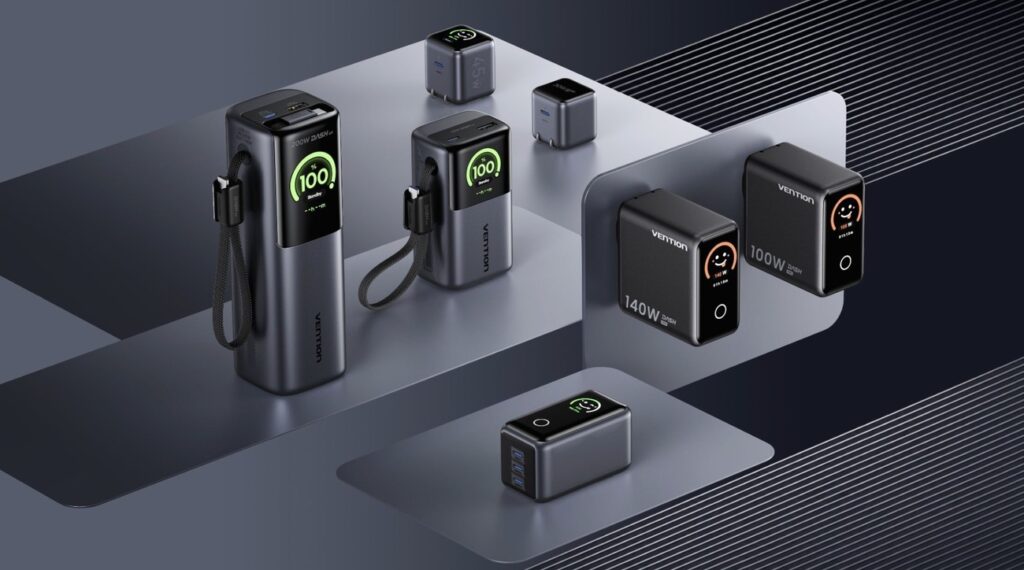
Vention is expanding its portable power lineup with the launch of the H Series and the U.S. and E.U. debut of the Dash Series at IFA 2026. Both lineups aim to offer more than just electricity in portable charging, with improved design, safety, and usability. The H Series lineup represents a sleek and stylish take on portable batteries, while the Dash Series offers advanced charging controls.
Vention H Series Combines Slim Design With Portable Power
The Vention H Series is a portable battery with a slim design and functionality. With a thickness of 6.9mm, it has a capacity of 5,000 mAh. The contoured aluminum alloy build gives it a sleek, stylish design. Users can choose between the three colors: Burgundy Dusk, Cloud White, and Midnight Black.
Vention calls this design approach “Half Sky, Half Earth,” inspired by the way two colors meet at the horizon. The concept also represents the company’s effort to make portable power more inclusive and user-focused. The H Series uses a solid-liquid hybrid battery to deliver high energy density in a thin form factor. For safety, it passed a 4mm tungsten steel puncture test without sparking, smoking, or exploding and survived a 135°C hot-box test for 60 minutes without combustion. Users can also check battery temperature, charging status, capacity, and system health through the companion app.
Dash Series Brings Smarter and More Visible Charging
The Vention Dash Series is a lineup of six chargers designed to make charging information easier to understand. Its flagship model, the Dash Pro, is a 140W 4-port GaN 5.0 charger with a smart display. Its EnergyCore system uses five animated emojis to show the charging status at a glance. The indicators have different states, including idle, trickle charge, fast charge, maximum charge, and warnings.
Users will get additional information via the companion app, which provides details on power, current, temperature, and device status. EnergyCore detects any connected device and supplies the appropriate amount of power to it. The charger is compatible with various fast-charging technologies, including PD 3.1, QC, PPS, UFCS, and others. It also supports 100V–240V input, a foldable plug, and a reinforced plug design for travel. The Dash Pro is available in Titanium Gray and Titanium Silver and carries a Red Dot Award-winning design.
Advertisement
Vention Expands Its Portable Power Portfolio at IFA 2026
After years of producing portable battery products for other brands, the company is now bringing its own approach to portable power under the Vention name. The company aims to make charging products more user-friendly, intuitive, and suited to everyday lifestyles, rather than focusing solely on technical specifications. The company is also using IFA 2026 to showcase more new products, including the 2-in-1 Retractable Charging Cable, 7-in-2 USB-C Plug-in Docking Station, and SpotTag Pop Dual-Mode Smart Bluetooth Tracker. These products support Vention’s wider approach of bringing together technology, usability, and design in its latest lineup.
The Momentum True Wireless 5 are earning strong reviews for their rich, detailed sound and comfortable fit. They add Bluetooth 6.0, aptX Lossless, and user-replaceable batteries, while reviewers note that ANC and call quality still trail some premium rivals.
We may receive a commission on purchases made from links.
Robotic lawn mowers are all the rage. These landscaping tools take a lot of the work that would otherwise command your weekends off your plate. You still need to edge around sidewalks and paths and handle other yard tasks with this unit, but many of the more up-to-date models address many of the problems robotic mowers once faced. There are also lots of options to sift through in the contemporary marketplace. Yet, lots of choices are extremely expensive. You’ll be looking at a price tag upwards of $2,000 at the bare minimum for plenty of quality options (and significantly higher in many cases). For that price, you might be better off buying a lawn tractor or riding mower and just doing it yourself. With this tool — frequently priced in that same territory — you have the ability to drag attachments across the yard, making for a versatile lawn tool that can support lots of jobs outside.
However, that doesn’t mean you’re doomed to pay through the teeth for a robotic mower. Plenty of lawn maintainers won’t want to invest in a riding mower that will take up a significant amount of space in their garage, nor will they want to do the bulk of the mowing themselves. Fortunately, there are more affordable options that don’t sacrifice quality. They’re typically rated for smaller lawns, but all of them have the ability to handle a typical residential yard and then some, with great features and updated technology while keeping valuable cash in your pocket.
Advertisement
Segway Navimow i206 Mower
The Segway Navimow i206 features an AWD capability and retails at Amazon for $999. It’s rated for a 0.15 acre lawn and has the ability to handle up to 20 individual zones while cutting without a guide wire needed to manage its perimeter. It utilizes an auto mapping function to identify the cutting area you require and then maintain itself within that space. The mower features precision steering that minimizes the damage its wheels cause to the grass and soil layer while delivering an adjustable cut height ranging between 2 and 3.6 inches. The mower’s battery is also capable of handling a cutting area of 1,350 square feet per charge and supports heavy slope work up to a 45% grade.
Advertisement
This mower was named by Bob Vila as the outlet’s best overall choice in its 2026 testing. The zero-turn capability was a significant highlight, as was the AI powered camera array that supports the mower’s ability to perform without a guide wire. The outlet reports that the i-Series as a whole has been updated with some important functional expansions. This mower, in particular, is nimble and powerful, delivering a quiet, speedy cut without performance tradeoffs.
Advertisement
Ecovacs Goat O1000 LiDAR Pro Mower
The Ecovacs Goat O1000 LiDAR Pro Mower is listed at Amazon for $999 (although there’s an identical product merged into the listing for $1,499.99, so some careful inspection is necessary). Amazon also has the tool listed with payment plan options available, including a zero interest offer. The tool features a TruEdge trimmer that can handle cutting demands right up against obstacles and is adept at avoiding impediments to its path. The mower’s HoloScope 360-degree navigation technology provides for a self-sufficient tool that won’t need any interference. It can also handle slops up to a 45% grade.
The tool’s LiDAR technology (a feature that’s also contributing to advance safety in autonomous vehicles) helps it navigate without boundary wires or any large setup hurdles that might otherwise be required to map the yard. LiDAR operates in a similar fashion to the echolocation used by bats or a ship’s sonar system. Lasers are beamed out across the yard and the resulting distances to objects discovered builds a 3D model of the area.
From here, the mower can navigate the yard ‘seeing’ objects similar to a person’s own vision of the landscape. It can handle cut heights ranging from 1.2 to 3.1 inches and takes less than a minute to set up. Techxreviews notes that this option can serve in support of a “truly hands-free lawn care routine” and classifies it as an “advanced robotic mower [that] represents a major step forward for automated home maintenance.” Other reviewers repeat similar praise in their home testing, giving this tool a strong body of high ratings.
Advertisement
Mammotion Yuka Mini
A robotic mower built for suburban landscapes, the Mammotion Yuka Mini is listed at Home Depot for $1,099, and at a reduced price of $749 at Mammotion directly. Both carriers list it currently out of stock online, however, so you’ll want to do some digging at your local Home Depot or elsewhere to find this option. The mower was named as the best for small yards in 2026 testing by The Spruce. Specifically, the outlet noted that it features a quick and straightforward setup procedure and uses an AI based camera system rather than LiDAR technology to identify the cutting area and navigate.
The Spruce found its obstacle detection capabilities to be “excellent” and reported that its nightlight feature allows it to mow in the dark, too, defeating a major drawback that many other mowers exhibit. However, the outlet did note that it wasn’t great at cutting in damp soil conditions. The mower can handle multiple zones and deliver cutting performance between 2 and 3.5 inches in height. The mower is lightweight, making it easy to pick up and move if you find that you need to make adjustments, and its compact size allows for better coverage of potentially tricky areas.
Advertisement
Worx Landroid WR310.1
The Worx Landroid WR310.1 comes from a well established outdoor power tool brand. Worx’s robotic mowers are also touted option from buyers and professional reviewers alike, and one of the best blends of value and performance you’ll find is this model. Listed at Lowe’s (but unavailable online) for $1,080 and Best Buy for the same price, the mower operates via a navigational assist from integrated AI tools. This means it doesn’t require a guide wire to maneuver around the perimeter of your yard. The mower also operates with unlimited zones, meaning you can set specific cutting parameters to section up your yard in any way you see fit, or designate segments of a large yard into different zones to give the mower bite sized pieces of a more complex layout.
Advertisement
The mower offers app controls as well, delivering customization for pathway control, nuanced settings, and more. It can cut to a height ranging between 1.57 and 3.54 inches and offers an auto mapping function that cuts out much of the setup process that other mowers require of owners. This tool has been highly rated by TheConsumR. In a 2026 review of the robotic mower, the outlet noted that this model “emerges as a clear standout in the automated lawn care market, striking an exceptional balance between price, performance, and accessibility.”
Advertisement
Sunseeker X3 Plus Mower
Sunseeker is yet another common brand name in the vernacular of robotic lawn mower shoppers. The Sunseeker X3 Plus Mower ($980 at Amazon and the same at Home Depot) features a wire-free operation, delivers coverage across multiple zones (up to six), and features a cutting height ranging from 1.6 to 3.2 inches. It offers a 30% slope grade capability, which is lower than some others on this list but still functional enough to handle the typical yard as well as some curveballs that might get thrown its way. The mower is listed as Bob Vila’s runner-up pick. The outlet noted that it cut exceedingly well, and came with replacement blades and installation equipment to produce a long lasting cut beyond the initial honeymoon phase of operating the tool.
Bob Vila’s review does note that the mower requires a staked satellite receiver, and that installing this part of the apparatus wasn’t difficult but did require some additional planning. The cord’s length offers plenty of versatility in finding a good spot for the receiver, but it still needs to go somewhere that has a clear view of the sky, which may be a challenge for some. In addition to the primary guidance it receives from the satellite connection, the mower also features a Vision AI installation that helps it navigate around obstacles and impediments with ease. This is a feature that Pest and Lawn Ginja praises in their review of the mower, specifically.
Advertisement
Gardena Sileno Life Mower
The Gardena Sileno Life Mower is listed at Amazon for $993 and offers Bluetooth compatibility and an app based control environment. It produces exceedingly quiet cutting (rated at 57 dBA), making this a great choice for suburban environments and dense, city areas that may require some additional consideration of noise levels and neighborly care. It offers a slope coverage maxing out at a 35% grade and can handle up to 8,100 square feet of landscaping without issue. The mower is also capable of handling damp lawns, making it a solid choice for those who live in areas that get a lot of rain. The mower does require a boundary wire though, which can be a notable setback for homeowners hoping to minimize the installation effort.
She Sows Seeds reviewed the mower in 2023 and gave it high praise. “We absolutely love having it,” she notes. It delivers a cutting height ranging from a very low 0.78 inches up to 1.97 inches. This means that it’s not likely going to be efficient at handling the first mow of the spring, but for manicured maintenance after your lawn height has been established, this offers a high and tight trimming function that most other robotic mowers can’t deliver.
Advertisement
Anthbot M9 Full Band RTK and NRKT Mower
The Anthbot M9 Full Band RTK and NRTK Mower is listed at Amazon for $769. It’s an updated model over the previous Anthbot option and has been praised highly by New Atlas. The outlet notes that it “delivers unusually good value… Perhaps the biggest advantages here are how easy the unit is to set up and get working,” going on to say that this is a particularly valuable choice for those with smaller lawns and homeowners who might not want to tinker with their robotic mower all that much.
The robotic mower features a dual AI vision technology that helps it avoid obstacles with ease, and the tool runs on satellite navigational capabilities, meaning it won’t require a guide wire. The mower takes minutes to set up and within the app environment that helps control the tool you can set specialized zoning parameters that dictate nuanced cutting schedules to suit your needs. It can provide a cut height between 1.2 and 2.7 inches and offers the ability to navigate up to a 45% slope grade for solid coverage across challenging yard geometry.
Advertisement
Methodology
Franck Legros/Getty Images
All of these robotic lawn mowers are priced below $1,500. They all include some important quality of life features like high slope grade capabilities and a good range of cutting heights. Some also feature LiDAR technology to help them navigate. This is a uniquely potent imaging tool that can generate impeccably accurate 3D terrain models. It’s one that I have extensive personal experience with and knowledge of, gained during time spent earning a GIS degree.
In the same vein, most of these mowers rely on LiDAR or other navigational system that mean that don’t require a boundary wire to operate, but this isn’t a universal feature. The mowers on this list also sport high ratings from buyers and many have also been rated highly by dedicated review outlets, giving them an additional layer of credence to fall back on beyond their quality specifications and reasonable pricing.
BrianFagioli writes: Audacity 4.0 has been released with a rebuilt Qt interface, a new clip-editing model, customizable workspaces, native high-DPI rendering, and a new AUP4 project format. The open source audio editor also adds ASIO playback and recording support to official Windows builds, while bringing major changes to recording, playback, plugins, and project handling. The overhaul comes with some tradeoffs. Audacity 4.0 currently lacks several features found in Audacity 3, including Time Tracks, Note and MIDI tracks, Mixer, Macro Manager and scripting pipe, VAMP and LADSPA plugin hosting, and play-at-speed. The developers say they plan to bring the missing functionality back in future releases.
During a tense vote on a data center being built in her drought-stricken Arizona district last summer, Tucson City Councilmember Nikki Lee made an unlikely pitch: “We’re going to get a little out-of-this-world for a second, so just bear with me.”
Like many of her constituents, Lee did not want Project Blue, a sprawling 290-acre data center, gobbling up an ounce of her local drinking water. “We need to put data centers where they belong,” she said, and “we don’t think data centers belong in the desert.”
President Donald Trump’s recent bluster aside, it’s possible that the only thing as bipartisan as loving Dolly Parton is hating data centers, whose construction has become so controversial, so costly, and so backlogged here on Earth that companies like Google, Meta, and of course, SpaceX, are actively flirting with the idea of flinging them into orbit instead. Soon after the Tucson City Council rejected Project Blue’s attempt to connect to city utilities, Amazon Web Services, the secretive intended beneficiary, pulled out of the project, and another Jeff Bezos company, Blue Origin, filed a plan with regulators for tens of thousands of possible new data centers, this time, destined for orbit.
Protesters in Tucson demonstrate against Project Blue.Mamta Popat/Arizona Daily Star
Sure, launching a hyperscale AI data center into space is still unprecedented engineering-wise, carries an unfathomably large price tag, could engender its own severe environmental risks, and may or may not draw unwelcome attention from the hunters among the stars. But for AI companies, such trade-offs might still be preferable to the terrestrial roadblocks, among them an explosive populist backlash and a 12-year wait to connect to the power grid.
Advertisement
SpaceX’s gargantuan initial public offering earlier this summer was predicated on the idea that it would launch a thus-far-unrealized fleet of orbital data centers to fuel much of the AI economy. The company claims that by the end of this decade, possibly as early as 2028, it will have successfully assembled an AI data center in orbit, with plans to eventually harvest a staggering 100 gigawatts of new solar energy for AI annually, equivalent to one-fifth of all US electricity consumption last year. (As always, that’s a very iffy promise.)
And Google, which has its own plan to deploy dozens of space-based data centers, released a study last December positing that as launch costs go down, they could become cost-competitive with terrestrial data centers within the next decade.
Experts tell me that it’s no longer a question of if space-based data centers could be technically feasible, but rather when they’ll be ready to launch, and perhaps more importantly, whether the math of using them to power something like AI will make much financial sense anytime soon. As of now, building a one-gigawatt data center in space would cost about $51.5 billion, according to an analysis by aerospace engineer Andrew McCalip, compared with $16 billion for one on land.
“They’re not breaking any rules of physics. Yes, there are going to be engineering challenges, but they are all solvable with enough time and money,” said Jason Aspiotis, a leading space systems engineer who now leads an orbital data center startup. “The gray area is, well, what about the economics?”
Advertisement
But even if this astronomically kooky plan does take off, it may not change much for those of us left on terra firma: Our energy bills will remain high, even if data centers aren’t there to drive them up. Our earthly infrastructure — affordable housing, public transit, and more — may be just as hard to build as ever. Harder even, maybe, given that crucial resources and untapped tax revenue will be literally rocketing up out of our reach.
No, if these tech giants succeed, it will not fix what’s wrong here on Earth, but merely prove once again their exemption to the gravitational forces holding the rest of us down.
Space-based data centers, explained
My father spent most of his career working in the satellite industry, and would sometimes let me waltz inside the quaint little data center housed in his office, a room I remember as roughly the size of my school’s computer lab, hosting rows upon rows of servers that I couldn’t touch, churning with a cool, mechanical hum as they crunched zeroes and ones.
Advertisement
AI data centers work similarly to that server room but on an exponentially larger scale, requiring far more land and energy to run, and much more extravagant cooling systems. Sending his office’s data center into orbit would have been extraordinarily difficult, and getting one of the facilities that powers modern LLMs aloft would be an even larger, more ambitious undertaking. But the benefits — namely, “cheap space (no pun intended) and power,” as my dad put it to me recently — are even more enticing.
SpaceX’s reusable Starship rocket, which the company hopes will one day carry data center parts into orbit.Ronaldo Schemidt/AFP via Getty Images
An orbital data center need not negotiate with an elected official like Lee over precious water rights to the Colorado River, though it would need to install bigger-than-football-field-sized heat radiators to keep itself cool. You can’t simply launch something that big into orbit, meaning a space-based hyperscale data center — the size of which would likely rival that of the International Space Station — would need to be assembled piece by piece, probably by robots. And while the sun would provide an endless supply of solar power to process your ChatGPT queries, it would also inflict incessant radiation on delicate circuitry. If something breaks, you can’t send a technician up to fix it. Many experts are also concerned that if an excess of space junk, which extraterrestrial data centers would inevitably produce, begins colliding like bumper cars in Earth’s low orbit, it could knock out the orbital infrastructure we already rely on, like GPS navigation and weather satellites.
Even plastic decays in space, said Sven Bilén, a professor of aerospace engineering at Penn State, who, like Aspiotis, believes that early orbital data centers will probably be “processing data from space, like spatial imaging satellites or weather satellites, as opposed to, you know, cat videos” or AI-generated reality TV slop.
But even if AI is not the lowest-hanging fruit for deploying compute into space, it is certainly the deepest-pocketed, meaning that many investors and companies like SpaceX and Google seem quite willing to shoulder the start-up costs anyway. And considering how difficult it’s gotten to build data centers on Earth, or at least in the United States, it’s indeed possible that space could become the cheaper, or at least most convenient option, more quickly than one might think.
Advertisement
“In some form or another, in five years, we are going to have some orbital data centers in space for sure,” Krishna Muralidharan, who leads the Center for Semiconductor Manufacturing at the University of Arizona, told me, but it’s hard to say right now whether those consist of just a few expensive prototypes, or the beginning of a much bigger swing toward orbital compute. “Only time will tell whether you’re going to have a business case for it.”
Can we send our data center problem into space?
So, is it better to have a data center in space or in your backyard?
David Reid, a member of Virginia’s House of Delegates representing Loudoun County, home to more data centers than anywhere else on Earth, says the question has repeatedly come up at his town hall meetings. Reid is the rare politician — apart from the president, anyway — willing to defend terrestrial data centers, calling them a “money-printing machine” for local schools and infrastructure. Having spent decades working in the defense and technology sectors, he is doubtful that the math on orbital data centers will ever make sense.
Advertisement
“I believe this is, for lack of a better term, fictional nonsense,” he said, and is “creating a distraction from the fact that local officials here on Earth still need to make better zoning decisions.”
If most of the AI industry can eventually be powered by space, as SpaceX claims, it will require millions of sprawling new satellites, in an orbit currently dotted by fewer than 20,000 of them. Though “space is really big,” as Elon Musk has put it, one million satellites would still profoundly and, likely irrevocably, transform our night sky into one in which data centers outnumber visible stars.
“Will humanity notice if there are fewer stars in the sky? Well, not so much right now,” given light pollution in many cities, said John Barentine, an astronomer and environmental advocate for the night sky. “But what if they’re replaced by these artificial stars in the night sky? Is that the point at which people will say, ‘Wait a minute, we don’t want this. We want the benefits, but we don’t want this as a consequence.’”
This is, of course, the tension also at the heart of building data centers here on Earth. To some extent, they’re the most tangible representations of how little power we have to shape the course of a transformative new technology that few trust, and even fewer asked for. It’s one thing to object to a hulking data center, but it might be another altogether to see the sigils of our digital overlords illuminating the firmament. Would a place like Tucson, one of the most beautiful places to stargaze in the world, prefer a Project Blue to a starscape marred by blinking servers in the sky?
We may receive a commission on purchases made from links.
Like, most modern phone brands, OnePlus nows let you attach magnetic accessories to its phones (albeit with a supported case), even though it has pulled back from selling its phones directly in North America and Europe. The OnePlus 15’s Sandstone Magnetic Case introduced a proper magnetic ring to the lineup, opening the door to an entire ecosystem of chargers, mounts, and wallets that had previously been locked to iPhones and Samsung phones.
Advertisement
Just like how Apple’s MagSafe charger works with Samsung phones, a phone doesn’t need to be an iPhone to tap into Apple’s magnetic ecosystem. Most of the products lean on using the same Qi2 and USB-C standards, so a phone really just needs the right ring, either built into it or added through a case. That means OnePlus users can gain the same flexibility.
We have rounded up some nice magnetic accessories that you can use with your OnePlus phone. These gadgets are picked for real-world usefulness rather than just brand matching, and also have been cross-checked against ratings, specs, and reviews.
Advertisement
OnePlus 15 magnetic case
The OnePlus 15 Magnetic case is what makes everything else on this list usable. Since the OnePlus 15 doesn’t come with magnets built in, you’ll need one of these to use magnetic accessories, and you cannot go wrong with the official case offered by OnePlus itself. Specifically the Sandstone one, it has a textured and grippy finish, which is the signature OnePlus feel that longtime fans specifically asked for.
It doesn’t add much bulk to the OnePlus 15 phone, and it is just 1.3 millimeters thick, which means you will barely notice it. The case houses N52-grade magnets, strong enough to hold power banks, wallets, and car mounts securely in place. The cameras get protection thanks to the raised edges around the camera module, and OnePlus rates this case for solid drop protection.
Unfortunately, for those living in North America or Europe, you cannot get the OnePlus 15 Magnetic case from the official website. However, you can still get it officially from Amazon for $39.99, which probably has faster shipping anyway.
Advertisement
Once you have gotten your magnetic case, there is a world of magnetic accessories that extend your phone’s capabilities. Aside from the Sandstone color, you can also purchase this official magnetic case in AramidFiber color, which changes the texture and adds a bright orange line on the camera module that stands out.
Advertisement
Anker MagGo power bank
OnePlus does not sell its power banks in the U.S. anymore, so the next best thing is probably going to come from a brand most people trust. The Anker MagGo power bank snaps onto any phone running a Qi2- or MagSafe-style magnetic case. Once you have sorted out the magnetic case for your OnePlus 15, this power bank will snap onto the back of your phone and charge it without a cable.
While the magnet power bank OnePlus used to sell was limited to 5,000 mAh, but Anker’s offers 10,000 mAh. It is paired with 15W wireless output and 30W USB-C port output. So, it can top up your OnePlus phone fast without adding much bulk. It has a metal frame and also comes with a built-in kickstand that you can use to stand your phone while charging or consuming content, a feature even the official OnePlus power bank did not offer.
On Amazon, this Anker MagGo power bank is available for $69.99 and is available in a range of colors: Green, Black, Pink, and White. Anker is one of the best brands for power banks and is known for its reliability and consistent output. For anyone wanting a cable-free charging solution, it is a safer buy than many options available online.
Advertisement
OnePlus Buds 4
While the market is flooded with wireless earbuds available in all different price ranges, OnePlus’ own latest OnePlus Buds 4 is a great companion for a OnePlus phone. These earbuds pack a 55dB dual-driver ANC setup along with a dedicated DAC chip and LHDC 5.0 support. This is something quite rare for earbuds in this price range and gives noticeably richer sound than most competitors.
Battery life is another strong point for the OnePlus Buds 4. The company has rated it for up to 45 hours of use, when combined with the charge held by the case. So, a multi-day trip shouldn’t require packing a charging cable or another pair of earbuds as backup. The touch controls are simple to use, without accidental taps that plague some cheaper earbuds. It is available in two different colors: Green and Black. The OnePlus Buds 4 have a long ear tip, unlike some other options that go directly inside your ear.
Advertisement
In SlashGear’s review of the OnePlus Buds 4, we tested them directly for sound quality, battery, and performance, and came away impressed with how much it can deliver for the price. They are unfortunately not available on the official website in the U.S., but you can get them on Amazon for $114.99.
Advertisement
OnePlus Watch 4
When it comes to smartwatches, Samsung and Apple are typically the big brands that come to mind. However, Android has a much bigger ecosystem of Wear OS smartwatches, and it includes the OnePlus Watch 4. This watch can give serious competition to the Apple Watch in terms of battery life, with OnePlus rating it to last up to 120 hours per charge in smartwatch mode. This means the watch can run for as long as five days — more than most Wear OS competitors.
The hardware inside the watch is pretty interesting, as it can switch between a low-power chip for everyday tracking and more capable one for heavier tasks like GPS-based workouts. This is one of the ways the OnePlus Watch 4 preserves battery instead of letting it burn in the background. The display is made up of sapphire crystal and the bezel around it is made of titanium. It runs on Wear OS 6, supports 100-plus sports modes, and has 5ATM, IP68, and MIL‑STD‑810H durability.
We at SlashGear, reviewed the OnePlus Watch 3 and really like the battery life of the watch, and the OnePlus Watch 4 builds on that plus adds multiple improvements. Unfortunately, since no OnePlus hardware is being sold in the U.S. or Europe, the OnePlus Watch 4 is not available on the official website. But you can get it from Amazon for $429.
Advertisement
Scosche MAGDMB MagicMount car mount
A magnetic phone mount eliminates the issue of fumbling around with clip-style mounts, and the Scosche MAGDMB is one of the most highly rated around, across 40,000-plus customer reviews. Once you have a magnetic case on your OnePlus 15 smartphone, you can easily snap your phone into this magnetic mount head without needing to align anything. The Scosche MAGDMB magnetic mount has a 360-degree adjustable head, meaning the phone can switch between portrait and landscape without unclipping it first.
This is of great importance when you don’t want your phone blocking your view or the AC vents. Scosche also designed this magnetic mount base to sit flush against the dashboard, so there is no wobble when your car goes over a bump or rough roads. This is a major problem on some cheaper mounts. For $9.99 on Amazon, you get good build quality but you should note that you need to use the provided metal plates to mount your phones, since this is not MagSafe compatible.
Advertisement
On the back of this mount, you also get a small clip, where you can clip your cable and continue charging the phone without the cable swinging on your dashboard. And if mount doesn’t quite seem like the one for you, there are a bunch of other options on the market so you can shop around a bit to find your favorite.
Advertisement
Orzero OnePlus 15 screen protector and camera lens kit
When you purchase a smartphone, one of the first things that you should get along with a case is a screen protector. While the Gorilla Glass Victus 2 on the OnePlus 15 is tougher than what was shipped on older models, it’s still not scratch-proof. With a decade of experience in the tech field, I personally feel like these are just marketing gimmicks, and there is no better way to protect your phone screen than applying a screen protector to it.
The Orzero screen protector also comes with camera lens protectors, so you are getting all-around protection for your phone’s vulnerable areas. It costs only $8.99 on Amazon, and based on the reviews, people seem highly satisfied with its quality. The interesting part is that you aren’t getting just one screen protector, but three in total. These screen protectors are rated for 9H hardness.
The camera lens protectors are also precisely cut to make sure that night shots and flash photos aren’t affected, since this is a major issue with budget camera lens protectors. Tech reviewers have also praised the Orzero screen protector and picked this bundle as their top overall recommendation for the OnePlus 15.
Advertisement
ESR MagSafe Wallet
A magnetic wallet may sound unnecessary to many, unless you dislike having to carry a separate cardholder or wallet. Of course, there are risks involved — if you lose your smartphone, you are also losing your cards — but if you are careful enough, a magnetic wallet can be your best companion. The ESR MagSafe wallet can hold up to 5 cards and works great with a OnePlus 15 snapped with a magnetic case.
This magnetic wallet comes with RFID blocking so nothing gets skimmed while it is in your pocket. ESR’s magnets are noticeably stronger than most third-party wallets in the same price range, which is one of the reasons why ESR’s HaloLock lineup made it to the top of SlashGear’s list of the best MagSafe wallets. The wallet does not slide off when pulling the phone out of a bag or tight jeans, which is one of the most common complaints of cheaper magnetic wallets.
Advertisement
The ESE magnetic wallet is available in multiple color options. But they are available at different prices on Amazon. The cheapest one is the black color, which is retailing for $12.98.
Advertisement
Zbhishe Magnetic finger ring
Modern phones are getting bigger and bigger, and many people with small hands generally find reaching the top corners of the phone quite challenging without doing finger gymnastics. A magnetic ring solves this issue and gives excellent one-handed grip on big-screen phones like the OnePlus 15. And unlike other cheap finger rings that stick to the back of the phone or case with tape, this one from Zbhishe can attach to the magnetic case.
The finger ring is available for $14.90 on Amazon. It can double as a mini kickstand and fold flat when not in use. Since it relies purely on magnets rather than adhesive, it can be repositioned easily, or even pulled off entirely without trouble. It is available in different color options: Grey, Colorful, Silver, and Rose Gold. You can pick one matching your phone’s color or the one you like.
The Zbhishe magnetic ring is a small accessory but gets used constantly once it is on your phone. It is one of the cheapest ways to fix an awkward one-hand grip and also make it stand when you want to watch content.
Advertisement
Cooya 80W SuperVOOC car charger
OnePlus’s fast charging tech is one of its main selling points, but using many generic car chargers throws away most of the speed. The Cooya 80W SuperVOOC car charger does not force you to make that compromise, built specifically to negotiate the higher wattage that OnePlus phones are designed to be charged at. Its dedicated “Super” port can hit up to 80W for SuperVOOC-capable models instead of falling back to a slower universal fast-charging protocol. This matters most on longer drives, where a phone is busy in navigation, playing music, and also using a mobile data connection simultaneously.
With this fast car charger, you can top up your phone quickly and then freely use it without the hassle of being limited by a cable. The Cooya 80W SuperVOOC car charger is bundled with a 3.3-foot USB-A to USB-C cable with a built-in voltage monitor and LED light, so it is easy to find the port at night.
Advertisement
Using the wrong charger not only means slow charging, but it can also stress the battery over time. You should use the right charger for your phone so that nothing wrong happens with the battery and the phone.
Advertisement
Anker Prime 3-in-1 wireless charging station
OnePlus used to sell AIRVOOC, which wasn’t just a charging pad — it was a fan-cooled, wall-powered magnetic charger, built to push high wattage without overheating the phone. Since it is no longer available in the U.S., the Anker Prime 3-in-1 wireless charging station is next best thing you’ll find on Amazon. It delivers 25W through Qi2.2’s magnetic alignment and pairs it with TEC active cooling, which is the same semiconductor-based cooling approach as OnePlus’s fan.
Since the charging pad runs on the open Qi2.2 standard, it works with any phone wearing a Qi2-compatible magnetic case, including a OnePlus 15 in its Sandstone case, even though the bundled Apple Watch and AirPods charging are extra spots that OnePlus owners may not use. It also comes with a 65W USB-C adapter in the box, so there is no guessing on power delivery, and a small display shows real-time wattage and temperature.
While it is pricier than a basic pad, and not everyone would find usefulness in this one, but it is a solid alternative to AIRVOOC, which OnePlus used to sell. The Anker Prime 3-in-1 Qi2.2 MagSafe compatible 25W wireless charging station is available for $159.99 on Amazon.
Advertisement
Methodology
This list draws on hands-on experience as a former OnePlus owner who used the brand’s magnetic case ecosystem, SuperVOOC fast charging, and other OnePlus-specific gadgets across multiple generations before switching phones. Every pick was cross-checked against official specs and current retail listings on Amazon for charging wattage, magnet grade, and battery capacity, so nothing here is guesswork.
Because OnePlus accessories largely run on the same USB-C, Qi, and magnetic-ring standards used across Android, almost every product on this list works just as well for Samsung, Google, and other Android owners and not just current OnePlus 13/15-series users. Also, since OnePlus has shut down its operations in North America and Europe, we have included alternative gadget links.
Televisions have become substantially larger over the past decade, but the audio systems sitting beneath them have not always kept pace.
Mount an 85-inch television on the wall and place a compact soundbar underneath it and the mismatch can be rather obvious. There are certainly active soundbars capable of producing impressive output, but buyers who want a genuine left, center and right front soundstage usually have to choose between three conventional loudspeakers, architectural speakers hidden in the wall, or a premium passive soundbar.
MartinLogan thinks there is another way.
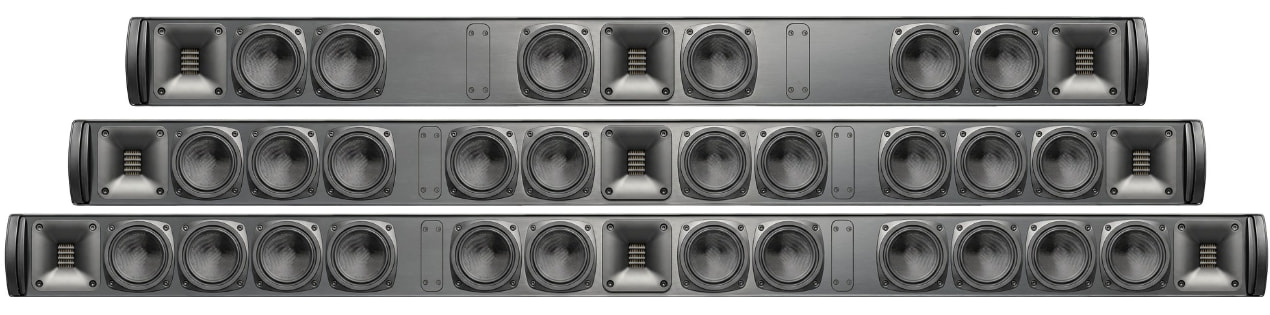
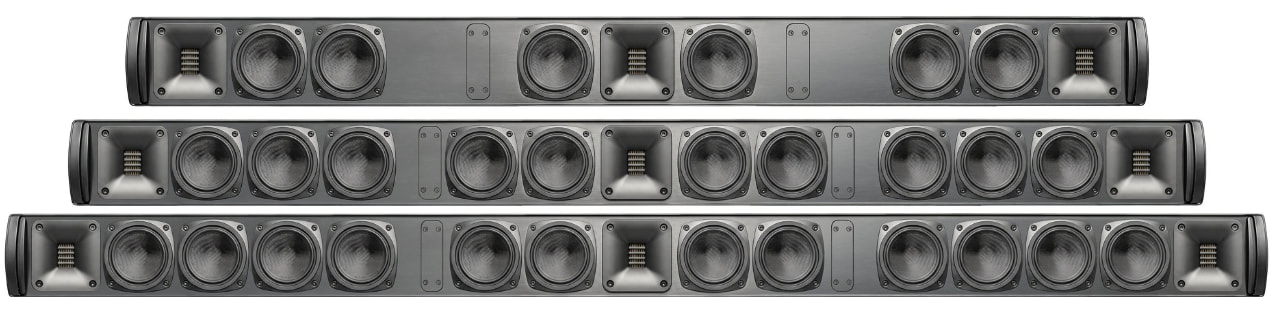
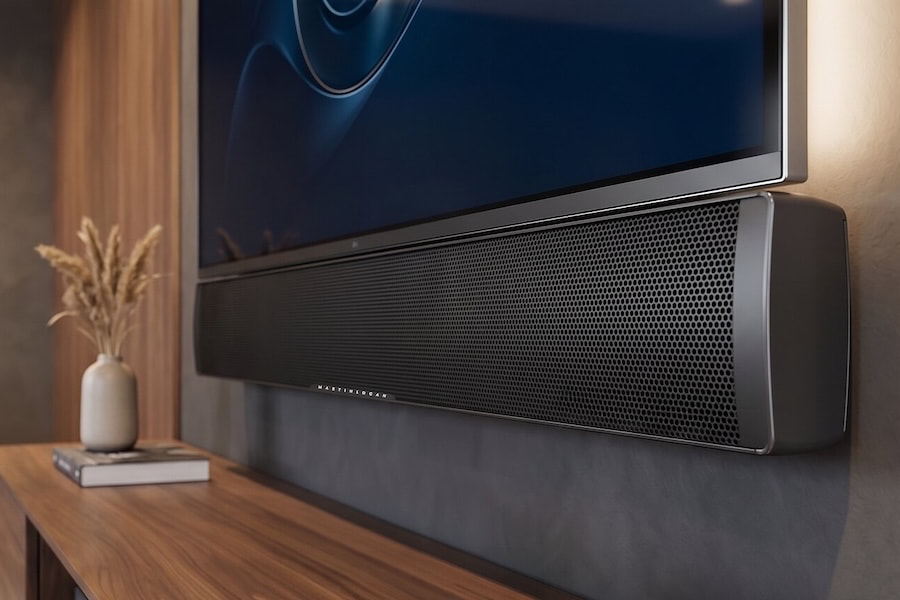
The new Motion Discrete Cinema Series consists of six passive loudspeakers designed specifically around 65, 75 and 85-inch class televisions. Three are individual LCR speakers that can be installed vertically or horizontally, while three combine discrete left, center and right channels inside a single enclosure.
Advertisement
More interestingly, MartinLogan has not simply made the cabinets longer as the screen size increases. The company increases the number of drivers as well, with the goal of increasing output capability and acoustic scale along with the size of the display.
That makes this considerably more interesting than another skinny speaker designed primarily to disappear beneath a television.
Related Reviews:
Two Ways to Build the Front Soundstage
The Motion Discrete Cinema lineup is divided into LCR5, LCR7 and LCR9 loudspeakers, plus Soundbar 65, Soundbar 75 and Soundbar 85 three-channel passive soundbars.
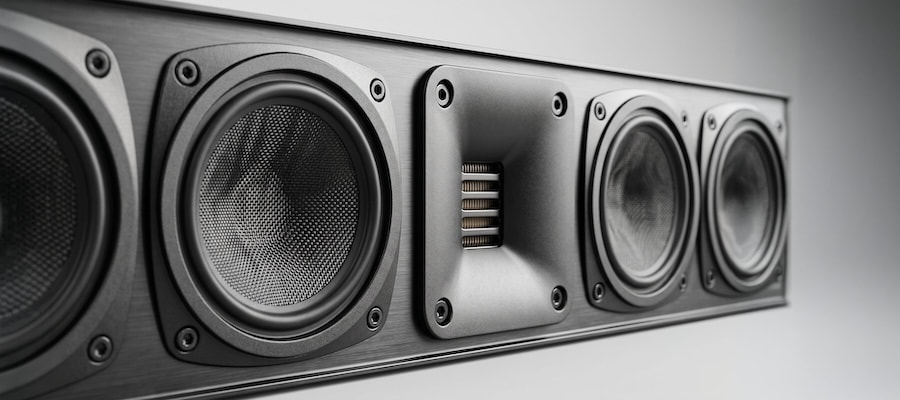
All six models use MartinLogan’s Gen2 Folded Motion Tweeter with Folded Motion Waveguide, woven fiberglass woofers and extruded aluminum enclosures.
Advertisement
The LCR5 is designed as a height match for 65-inch class displays and uses a five-driver array consisting of the Gen2 Folded Motion Tweeter and four 4.5-inch woven fiberglass woofers.
The LCR7, intended for 75-inch displays, adds two additional woofers for greater output, higher power handling and improved room control in larger spaces. The flagship LCR9 moves to a nine-driver configuration designed to provide greater output and scale alongside an 85-inch display.
All three can function as left, center or right speakers, which means an installer could place three vertically around a display, rotate one horizontally beneath the television for center-channel duty, or use them as high-output surrounds where their shallow profile makes sense.
Advertisement. Scroll to continue reading.
Advertisement
The Soundbar models take a different approach.
These are not powered soundbars competing directly with products like the Sonos Arc Ultra. There is no built-in AVR replacement here. The Soundbar 65, 75 and 85 contain discrete left, center and right loudspeaker channels and require external amplification.
That means an AV receiver or separates still handle decoding, amplification, bass management and the rest of the home theater system. The advantage is that buyers get three physical front channels inside one enclosure without surrounding a large television with three conventional speaker cabinets.
The Soundbar 65 is designed for 65-inch class displays and uses a Gen2 Folded Motion Tweeter and two woofers per channel. The Soundbar 75 increases the driver count, including twice as many woofers in the center channel and additional drivers for the left and right channels.
Advertisement
At the top of the range, the Soundbar 85 uses a 15-driver array across its three discrete channels.
What Makes Motion Discrete Cinema Different?
Screen matching is the clever part.
Plenty of manufacturers produce passive soundbars and slim on-wall loudspeakers. MartinLogan’s approach is to create three progressively larger configurations and increase their acoustic capability rather than offer essentially the same speaker in different cabinet lengths.
That becomes especially relevant with today’s 75 and 85-inch televisions, where a small center channel or narrow soundbar can look disproportionately small and may struggle to create the sense of scale expected from a large image.
Advertisement
There is also some real loudspeaker technology inside these enclosures.
MartinLogan has managed to incorporate its full-size Gen2 Folded Motion Tweeter and an application-optimized Folded Motion Waveguide rather than developing a miniature tweeter specifically to squeeze into the cabinet. The woofer system was intentionally optimized around midrange and upper-bass performance, with MartinLogan assuming that a serious home theater installation will include at least one powered subwoofer.
That last point is worth remembering. These are not being positioned as full-range loudspeakers that somehow violate several inconvenient laws of physics simply because they are expensive and made from aluminum.
Use a subwoofer.
Advertisement
Advertisement. Scroll to continue reading.
Preferably a good one made by MartinLogan.
Where Do They Fit in the MartinLogan Lineup?
The Motion Discrete Cinema Series fills a fairly obvious hole between MartinLogan’s existing Motion SLM products and its larger conventional Motion and Motion XT loudspeakers.
The Motion SLM family already gives MartinLogan customers thin on-wall speakers designed to complement flat-panel televisions, including individual SLM models and the three-channel Motion SLM X3.
Advertisement
Motion Discrete Cinema is a considerably more ambitious interpretation of the same basic installation problem.
It incorporates MartinLogan’s newer Gen2 Folded Motion technology, offers substantially larger driver arrays and gives installers dedicated versions intended to complement 65, 75 and 85-inch displays.
The new series also overlaps the price territory of MartinLogan’s conventional Motion center-channel speakers, but that does not necessarily make Motion Discrete Cinema a higher-performance tier than Motion XT.
They are built for different jobs.
Advertisement
Motion XT remains MartinLogan’s premium conventional Motion range, including larger cabinets and the company’s Gen2 Folded Motion XT tweeter. Motion Discrete Cinema instead gives custom installers a premium shallow-depth alternative when conventional loudspeaker cabinets would interfere with the room design or television installation.
In other words, you’re paying partly for acoustics and partly for solving a very specific installation problem without reducing the front stage to a typical powered soundbar.
Designed for Custom Installation
The CI focus becomes even clearer when looking at the mounting hardware.
Every Motion Discrete Cinema model includes a universal wall bracket offering leveling and small positional adjustments, useful when wall studs refuse to cooperate with the architect’s carefully centered television.
Advertisement
An optional television bracket can attach to a display frame or VESA mounting pattern, allowing the loudspeaker to move with an articulating television.
Advertisement. Scroll to continue reading.
MartinLogan has also integrated recessed cable channels into the aluminum chassis to conceal wiring, while removable Phoenix-style connectors with tool-free tension levers allow installers to terminate the speaker cable before the loudspeaker itself is mounted.
None of that will make anyone abandon dinner to stare at the specifications page, but installers will notice immediately. The difference between a clever mounting system and three hours of profanity behind an 85-inch television is not insignificant.
Advertisement
What Are the Closest Competitors?
The closest competition depends on which Motion Discrete Cinema configuration you are considering.
For the individual LCR speakers, the Focal On Wall 302 is arguably the most direct rival. At roughly the same price as the LCR9, it is another premium low-profile loudspeaker intended for home theater installations where conventional speaker cabinets are undesirable. It can also be mounted vertically or horizontally and uses four Flax midbass drivers surrounding Focal’s inverted-dome tweeter.
That makes it a credible alternative for someone building a premium low-profile LCR system around a large television.
For the three-channel models, the GoldenEar SuperCinema 3D Array XL is one of the most obvious competitors. It occupies similar pricing territory to the Soundbar 65 and also combines three passive front channels within a slim enclosure.
Advertisement
GoldenEar takes a somewhat different technical approach, using multiple midbass drivers, its High-Velocity Folded Ribbon tweeters and proprietary technology intended to create a soundstage wider than the enclosure itself.
MartinLogan’s advantage is the breadth of the new lineup.
Instead of offering one primary passive soundbar configuration, Motion Discrete Cinema provides dedicated 65, 75 and 85-inch models along with corresponding individual LCR speakers.
That gives integrators substantially more freedom to maintain a consistent visual and acoustic design across different rooms and screen sizes.
Advertisement
Pricing & Availability
MartinLogan expects the Motion Discrete Cinema Series to reach authorized dealers and custom integrators worldwide by the end of September 2026.
Motion Discrete Cinema LCR Speakers
LCR5: $1,249.99 each
LCR7: $1,499.99 each
LCR9: $1,749.99 each
Motion Discrete Cinema Passive Soundbars
Soundbar 65: $1,999.99
Soundbar 75: $2,499.99
Soundbar 85: $2,999.99
The Bottom Line
MartinLogan is not trying to reinvent the powered soundbar. Motion Discrete Cinema is aimed at customers who want the cleaner appearance of one without surrendering a properly amplified, discrete home theater system.
Advertisement. Scroll to continue reading.
The ability to choose between separate LCR speakers and three-channel passive soundbars is useful, but the more unusual idea is scaling the driver array with the television itself. An 85-inch display gets a substantially different loudspeaker than a 65-inch model rather than the same acoustic platform wearing a longer grille.
That should make the series especially relevant to custom installers trying to reconcile increasingly enormous televisions with homeowners who have absolutely no interest in seeing enormous loudspeakers sitting beside them.
Advertisement
Physics still gets a vote, however, which is why MartinLogan wisely expects owners to add a subwoofer.
Some things even a very expensive piece of aluminum can’t negotiate.
Access to Wi-Fi is something you expect when you stay at any hotel, but we’re so accustomed to taking this amenity for granted that we might overlook the risks involved in connecting to hotel Wi-Fi. Ignoring the fact that people pick up their phones a worryingly excessive number of times each day, there are multiple reasons to avoid using hotel Wi-Fi when you can.
These risks can come in several forms. First, when connecting to a network, you must ensure the one you’re connecting to is legitimately operated by the hotel you’re staying at. Hackers attempting to steal user data can create hotspots with misleading network names, and accidentally connecting to the wrong network could be playing into the hands of cybercriminals. At least one security analyst says a relatively common error travelers make involves joining a network merely because it includes the name of the hotel.
Unfortunately, even if you do connect to an authentic hotel Wi-Fi network, you still can’t be certain your data is secure. Real-world examples serve as reminders of this. For instance, Darkhotel was a malware campaign in which hackers infected the computers of various hotels with code designed to provide guest users with fake software updates, turning guests into data theft victims.
Advertisement
And those are just a couple of scenarios. Although not all security experts agree on just how dangerous hotel Wi-Fi is, even those who think the risk is fairly low still discourage users from connecting to these networks for sensitive tasks, like checking banks accounts.
Advertisement
Tips for guarding against hotel Wi-Fi risks
NDAB Creativity/Shutterstock
Confirming the network you’re connecting to is genuinely the hotel’s network is critical before joining it. Experts also recommend using a mobile hotspot instead when handling sensitive tasks. None of the information here is fear-mongering. The FBI actually considers hotel Wi-Fi cyberthreats to be a significant enough issue to justify warning the public about it. In an age when telecommuting is increasingly common, the FBI has determined that more and more Americans are working from hotels. In response to this trend, the FBI issued recommendations to help users maximize safety and security if they must connect to a hotel’s Wi-Fi network.
Specifically, the FBI recommends leveraging a VPN to encrypt network traffic, which means researching the best VPN services available right now to find a reputable one that serves your needs. The FBI also states that you can protect yourself and your data to an even greater degree by making sure all software updates are installed and using a strong security or antivirus app to maximize safety. Luckily, there are several free antivirus apps that consumers say are effective, with many antivirus programs proving to be better than Windows Defender.
All that said, if you can avoid using hotel Wi-Fi entirely, that may be your best option. While experts offer varying perspectives on just how dangerous using one of these networks is, when you have the choice to limit your vulnerability, you should protect yourself accordingly. If you do have to use hotel Wi-Fi, however, just make sure you’re thoroughly following safety recommendations.
At IFA 2026, the huge tech show in Berlin, Germany, Nvidia announced that laptops running on its ARM-based RTX Spark chip will be available to buy from October.
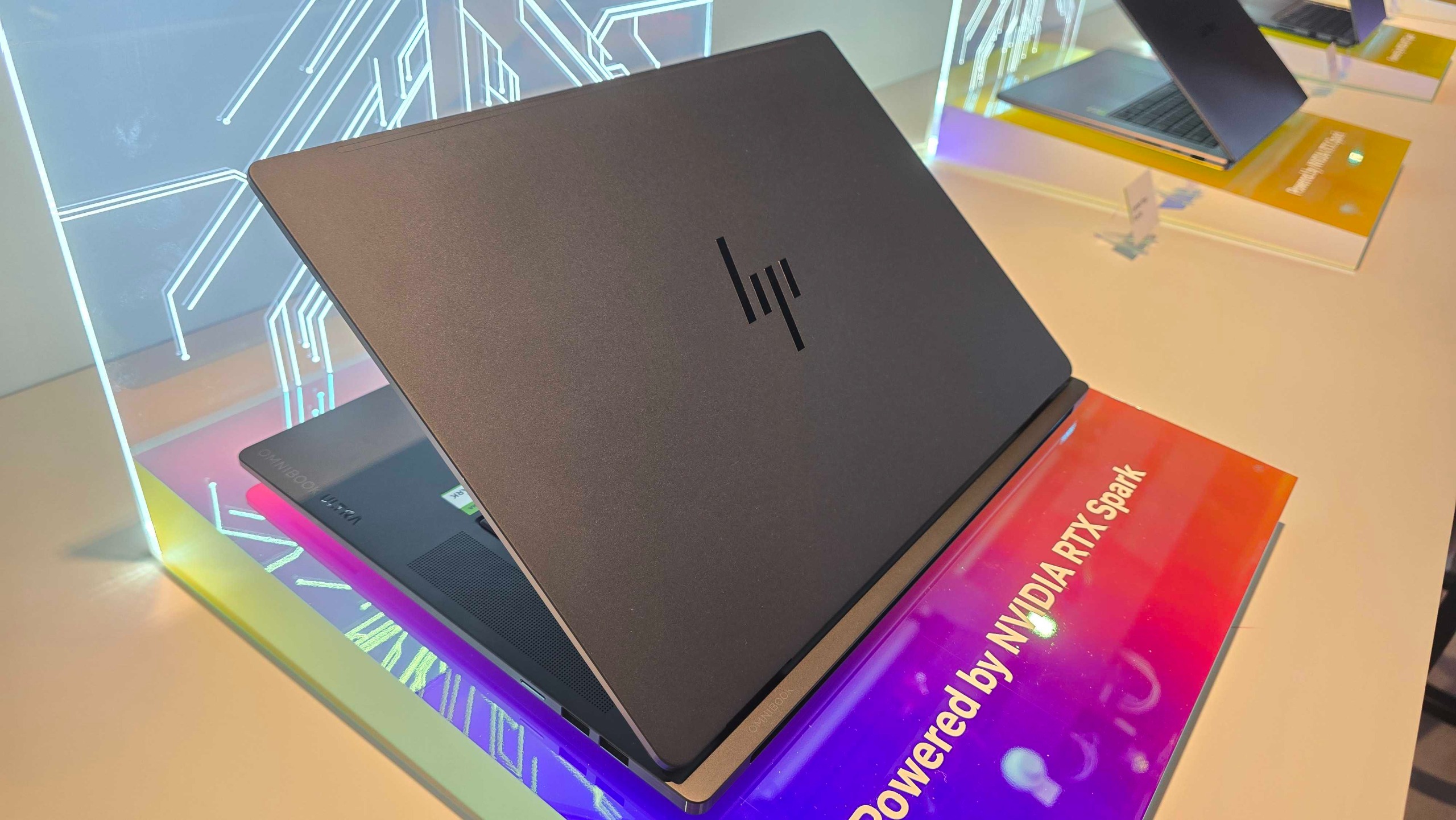
The biggest names in the laptop industry, including Microsoft, Lenovo, HP, and Dell, will all have RTX Spark devices, and I got to spend a bit more time with some of them at Nvidia’s launch event.
Having already seen a lot of RTX Spark laptops at Computex 2026 earlier this year, quite a bit of what Nvidia showed at IFA was familiar. There was, again, a big emphasis on local AI performance, which is undoubtedly impressive, but a bit niche for consumers, and I can see how Nvidia tech such as DLSS upscaling and Multi Frame Gen (MFG), which RTX Spark devices can make use of, can help content creators working on complex 3D art speed up their workflows (those technologies have in the past mainly been aimed at improving the performance of PC games).
Advertisement
Latest Videos FromTechRadar
I also got to play a range of games on RTX Spark laptops, including DOOM The Dark Ages, and 007 First Light, and it remains impressive that these thin and light laptops are able to run such demanding titles with such impressive results. This is especially true when you consider that the games aren’t running natively on ARM, instead they are being run via Microsoft’s Prism emulation layer, which means games developed for traditional Intel or AMD (x86) hardware can run without devs having to make dedicated ARM versions. According to the Nvidia spokesperson I chatted to, the performance hit of running a game via emulation is negligible, at least with GPU-bound titles.
The spokesperson admitted, however, that CPU-intensive games (such as RTS games) could see bigger dips compared to running the game natively.
What is new at IFA is the announcement that RTX Spark laptops will go on sale in October. But, apart from that, details remain scarce – and that means it’s hard to get excited about these laptops just yet.
Keeping their cards close to their chest
(Image credit: Future)
Despite being about a month out from going on sale, Nvidia was tightlipped about a lot of things regarding RTX Spark laptops. The biggest question mark, of course, concerns pricing.
Sign up for breaking news, reviews, opinion, top tech deals, and more.
Advertisement
These are powerful laptops aimed at creative professionals, and will come with up to 128GB of unified memory, so I can’t imagine they are going to be anything other than very, very, expensive. The continued silence about prices doesn’t bode well for anyone hoping for vaguely affordable laptops.
One spokesperson I talked to did suggest there will be multiple yet to be announced configurations that will appeal to different consumers and price points, though they looked slightly doubtful when I asked if there would be an RTX Spark laptop that students could afford.
We still don’t know more about performance, either, as while there were live demos, raw performance numbers were not available, and I was not allowed to run benchmarks or change settings.
(Image credit: Future)
What I can say is that complex AI tools and generative AI features, all run locally on the laptops, and appear fast and smooth. Games also ran well. I was also assured by Nvidia that performance would be roughly the same if the RTX Spark laptop is plugged into a charger, or running on battery.
So, no power-conserving throttling it seems, something that Apple has long boasted about with its M-series chips.
A number of laptops from Nvidia’s partners were on display, but were turned off, and journalists were asked not to even pick them up, again an odd request considering these devices are supposed to go on sale next month.
I’m certainly impressed with what I’ve seen, and the potential of RTX Spark is huge. I’m also glad that Windows laptops look like they could finally give Apple’s modern MacBook Pros a run for their money.
Advertisement
But, on the topic of money, I really won’t be able to ascertain just how excited we should all be with RTX Spark laptops until we know more about the price – and with an October launch, time is running out.

































































You must be logged in to post a comment Login