Connect with us

NewsBeat

Heart-shaped locket discovery offers rare glimpse into Henry VIII and Katharine of Aragon’s marriage

Published

on

Heart-shaped locket discovery offers rare glimpse into Henry VIII and Katharine of Aragon’s marriage

Henry VIII is not remembered as a loving husband. Any English schoolchild can recount the unpleasant fates of most of his six wives with the rhyme: “Divorced, beheaded, died, divorced, beheaded, survived.” But though the end of his relationships are famous, less is known about Henry in love.

Now, a rare jewel discovered by an amateur detectorist and bought by the British Museum for the national collection may force us to reconsider the king’s brutal reputation.

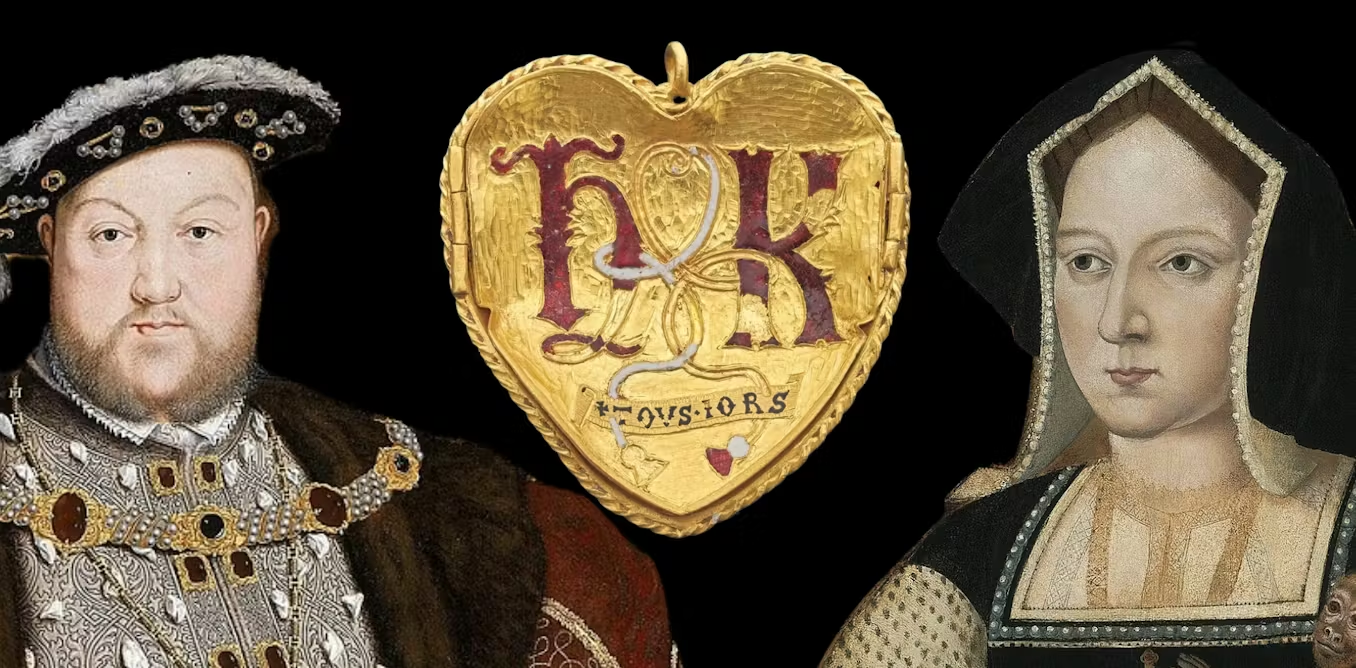
The jewel is a heart-shaped locket, crafted in gold with red enamel decoration, and attached to a solid gold chain. On the face are the letters H and K linked together by the stems of a Tudor rose and a pomegranate, which was the symbol of Katharine’s Spanish royal family. It is a reasonable deduction that this remarkable jewel was connected directly to Henry and the first of his wives, Katherine of Aragon.

Katherine was the subject of Henry’s first and most shocking divorce, which precipitated England’s breach with the Roman papacy and the transformation of religion which we now know as the Reformation. In many ways Katherine also suffered the worst of the king’s personal cruelty. Although not executed, she was consigned to virtual house-arrest, much of the time separated from her only living child, Mary.

Advertisement

If this was indeed Henry and Katherine’s jewel it could be a vital clue to quite different moment in their relationship, and to a dimension of the king’s character that his otherwise notorious conduct has completely obscured.

In late medieval and Renaissance society, monograms – the linking of people’s initials – were often created to represent a personal connection, a marriage, a betrothal or even a secret love-match. Beneath the linked letters on the locket is the French word “Toujo(u)rs”, meaning “always” – a natural choice for a pledge between lovers. Here, the letters surely stand for Henry and Katherine.

The locket is made of 317 grams of precious metal, including gold.
Birmingham Museums Trust

The locket’s flower and fruit decoration seal the royal connection. The pomegranate symbol swept into English public life after the two families were joined through Henry’s marriage. Decorations for the coronation of the king and queen, just two weeks after the wedding, paired the Tudor rose with golden pomegranates. A woodblock print published to mark the occasion under the title A Joyful Meditation to All England, showed Henry and Katherine receiving their crowns under a twin canopy of the flower and the fruit.

Accounts of textiles commissioned for the royal household show dozens of different pieces – upholstery, wall-hangings, and livery to be worn by servants – all featuring the rose and the pomegranate prominently in their design.

Advertisement

Devoted designs

The decoration of the heart pendant is matched in a wide variety of treasures described in Henry’s household inventories. These contain descriptions of a bag of crimson satin, a silver comb case and standing cup all marked in the same way for the king and his queen. These lists also identify several collars or necklaces – described by the archaic term carkeynes – with heart-shaped pendants. One of these, coloured blue, is also inscribed, “H K”.

Henry spent prodigiously on beautiful, bespoke furnishings, but jewellery was his greatest passion. The inventories of his jewels and plate (gold, gilt and silver objets d’art) compiled shortly after his death in January 1547 record almost 4,000 individual pieces.

Portrait of Henry VIII in elaborate gold jewellery

Jewellery was one of Henry VIII’s passions. Portrait by Hans Holbein, the Younger (circa 1497-1543).
Thyssen-Bornemisza Museum

This Tudor heart pendant is a prime example of this level of investment. The locket itself is formed from 24-carat gold; the wide chain found with it is weighty and long – more than 40cm. Together they amount to 317 grams of precious metal. It is no wonder that the British Museum’s purchase price was £3.5 million.

It is clear from his wardrobe accounts – which record the purchase of decorative pieces for his household – that Henry took a personal interest in the material and design of many of these pieces. Surviving examples of designs for jewellery drawn by Hans Holbein, the German artist active at Henry’s court in the 1530s and early 1540s, may have come from a pattern book made to influence, or illustrate, the king’s developing tastes. He bought, or commissioned pieces, not only for his own household but also as gifts – often marking the new year – to family members and court favourites.

Advertisement

This may well be the origin of the heart pendant. Since it came to light, it has been spoken of as associated with Henry’s great pageant in the Pas-de-Calais in 1520, the so-called Field of the Cloth of Gold. Here he, Katherine and his court staged a ceremonial meeting with the French King, François I. A great many furnishings from the royal residences and chapels did cross the Channel to decorate the pop-up canvas palace and tents.

But I am convinced the message conveyed by this jewel is not political but profoundly personal. Toujours is an expression of deep, heartfelt attachment. An alternative theory, advanced by the British Museum itself, is that the pendant was made to mark the betrothal in October 1518 of Katherine’s only living child, Princess Mary, aged two, to the eight-month-old heir to the French throne.

But given the presence of pieces of very similar design in the royal household soon after the marriage and coronation, it must be possible that the pendant belongs to the early years of Henry and Katherine’s relationship. At first, she and the king were inseparable. Five months from the wedding she was pregnant. She conceived again each year from 1510 to 1513. One of these pregnancies resulted in a son, named Henry, born in January 1511. He lived for a little under two months.

In the late summer of that year, the king and queen embarked on a progress through the Thames Valley and on into the West Midlands, culminating at Warwick. It was in a Warwickshire field that the detectorist, Charlie Clarke, uncovered the heart pendant in 2019.

Advertisement

Could it be that a jewel gifted to Katherine at the time of the birth of Henry’s longed-for male heir was carried with the royal party – as so many of their personal jewels were – as they made their way into Warwickshire? It gives the locket an edge not just of romance, but of tragedy. Here, perhaps, Katherine was parted from a present that was, already, a memento mori of her lost son.


Looking for something good? Cut through the noise with a carefully curated selection of the latest releases, live events and exhibitions, straight to your inbox every fortnight, on Fridays. Sign up here.


Source link

Advertisement
Continue Reading
Click to comment

Leave a Reply

Your email address will not be published. Required fields are marked *

NewsBeat

Why Arsenal star Noni Madueke is booed by Wolves fans | Football

Published

on

Why Arsenal star Noni Madueke is booed by Wolves fans | Football
Noni Madueke has been in impressive form for Arsenal in recent weeks (Picture: Getty)

Arsenal winger Noni Madueke was the target of the Wolves boo boys during Wednesday’s clash between top and bottom in the Premier League.

The England international might appear an unusual player for the Molineux faithful to single out, but the 23-year-old has a bit of history with the relegation threatened club.

Ahead of Chelsea’s game at the same venue last season, Madueke committed social media gaffe by publishing a story on Instagram that read ‘Everything about this place is s***’.

Upon realising his mistake, Madueke published a clarification that did little to appease those of a Wolves persuasion.

Advertisement

He said: ‘Damnn wrong Instagram account.. You lot are too fast [laughing emoji, face palm emoji].’ 

Madueke’s every touch was subsequently booed by the home fans, but they clearly had little impact on the then Blues forward who scored a hat-trick in a thumping 6-2 win on that occasion.

The former PSV Eindhoven star moved from west to north London in the summer and has begun to win over the Arsenal supporters who were not keen on their club sanctioning a £50million transfer.

Get your football fix

Don’t want to miss the week’s biggest football stories? Metro’s exclusive football newsletter, In The Mixer, is your essential guide.

Advertisement

From the latest transfer rumours and managerial moves to analysis of the biggest games and a lot more, our experts have you covered.

Sign up here, it’s an open goal.

Advertisement
Madueke declared that ‘everything’ about Wolverhampton was ‘s***’ (Picture: Instagram/@nonzinoo10)
EDITORIAL USE ONLY No use with unauthorised audio, video, data, fixture lists (outside the EU), club/league logos or
Noni Madueke shoots at goal in Chelsea’s Premier League game against Wolves (Credits: Manjit Narotra/ProSports/Shutter)

Madueke had started Arsenal’s previous six games in all competitions prior to Wednesday night, in part down to Bukayo Saka’s unavailability.

And even though Saka returned to the visitors’ XI at Molineux, he continued in the No.10 position behind Viktor Gyokeres, with Madueke given the nod on the right flank.

Mikel Arteta made no secret of the fact he could use Saka more centrally after experimenting with the England international in the same role in Arsenal’s FA Cup win over Wigan on Sunday.

‘Yeah, that’s something that’s a possibility and I wanted to try it,’ Arteta told reporters after the Gunners booked their place in the fifth round.

‘We might use it in the future.

Advertisement

‘There’s still so many games, competitions and different scenarios to play from now until the end of the season.

‘That’s a possibility that we have, yeah.’

For more stories like this, check our sport page.

Follow Metro Sport for the latest news on
FacebookTwitter and Instagram
.

Advertisement

Advertisement

Source link

Continue Reading

NewsBeat

Co Fermanagh golf resort named one of the best in the world

Published

on

Ipso logo

It is the only one from Northern Ireland to feature in the top 100

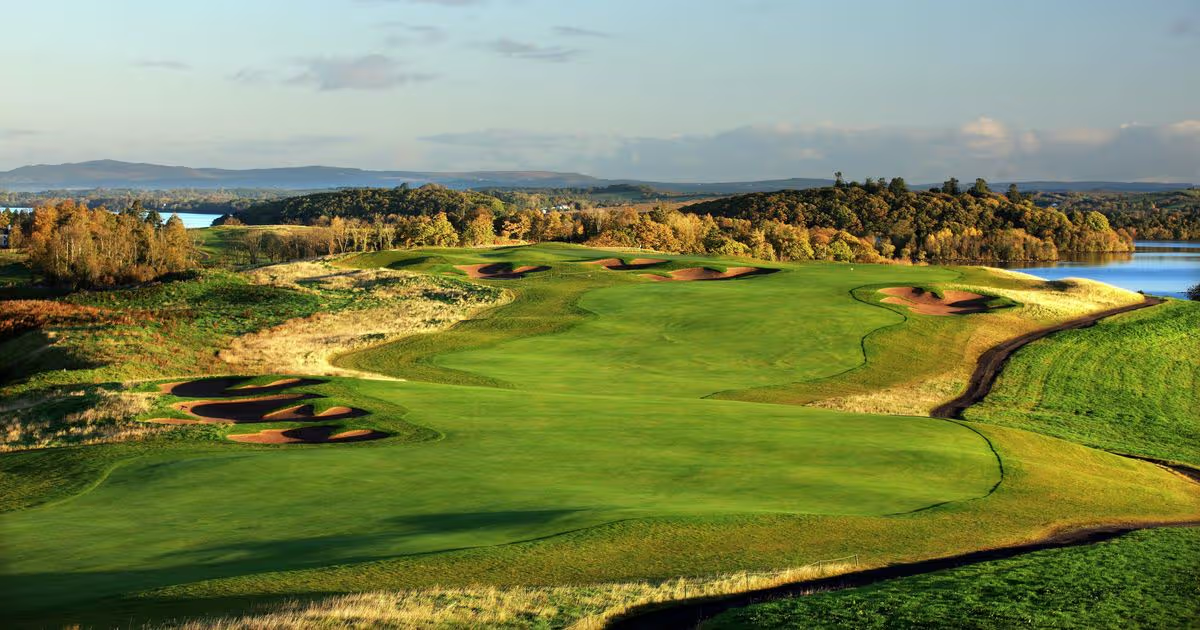
A Co Fermanagh golf resort has been named one of the top 100 in the world for 2026.

Advertisement

Lough Erne Resort has been recognised as one of the world’s finest golfing destinations, climbing eleven places since last year to secure 65th position in Golf World’s ‘Top 100 Golf Resorts’ ranking.

The list is compiled by an expert international panel who consider course quality, facilities, setting and overall experience and Lough Erne was the only resort in Northern Ireland to rank this year.

READ MORE: Rory McIlroy prize money as he records his best round at AT&T Pebble Beach Pro-amREAD MORE: NI golf course gets Top 10 ranking in best 100 parkland courses list

Golf World praised Lough Erne Resort for its exceptional blend of championship golf and luxury hospitality.

Advertisement

They said: “There are 36 holes here, with Castle Hume backing up Sir Nick Faldo’s course, which is characterised by dramatic loughside holes and has been in the GB&I Courses Top 100.

“This is a big jump for this Northern Irish resort, but justified as the golf is more than matched by a 5-star hotel, which sits within a distinctive, ancient building. The lough-edge setting is beautiful and tranquil.”

Last year, The Faldo Course, designed by Sir Nick Faldo, secured a Top 10 position in Golf World’s Top 100 Parkland Courses in Great Britain and Ireland.

Barry McCauley, Director of Golf at Lough Erne Resort, said: “Everyone at Lough Erne Resort is absolutely thrilled to see us climb 11 places in this ranking. This recognition is a tremendous endorsement of the quality, condition and character of our two championship courses.

Advertisement

“This achievement also reflects the dedication and passion of our entire team, from course maintenance to front-of-house, who work tirelessly all year round to deliver exceptional standards.”

Mark Ward and Jeff Mahan of TRU Hotels and Resorts LLC, the US-based operators of Lough Erne Resort, added: “This latest recognition in Golf World’s Top 100 Golf Resorts is a significant achievement and a true reflection of the commitment and excellence shown by the team at Lough Erne Resort.

“Securing this position in such a competitive global ranking highlights the strength of the Resort as a true, premier golfing destination.”

Want to see more of the stories you love from Belfast Live? Making us your preferred source on Google means you’ll get more of our exclusives, top stories and must-read content straight away. To add Belfast Live as a preferred source, simply click here

Source link

Advertisement
Continue Reading

NewsBeat

Can psychopaths change?

Published

on

Can psychopaths change?

Psychopaths might account for only about 1% of the general population, but
they account for a disproportionate share of violent crime.

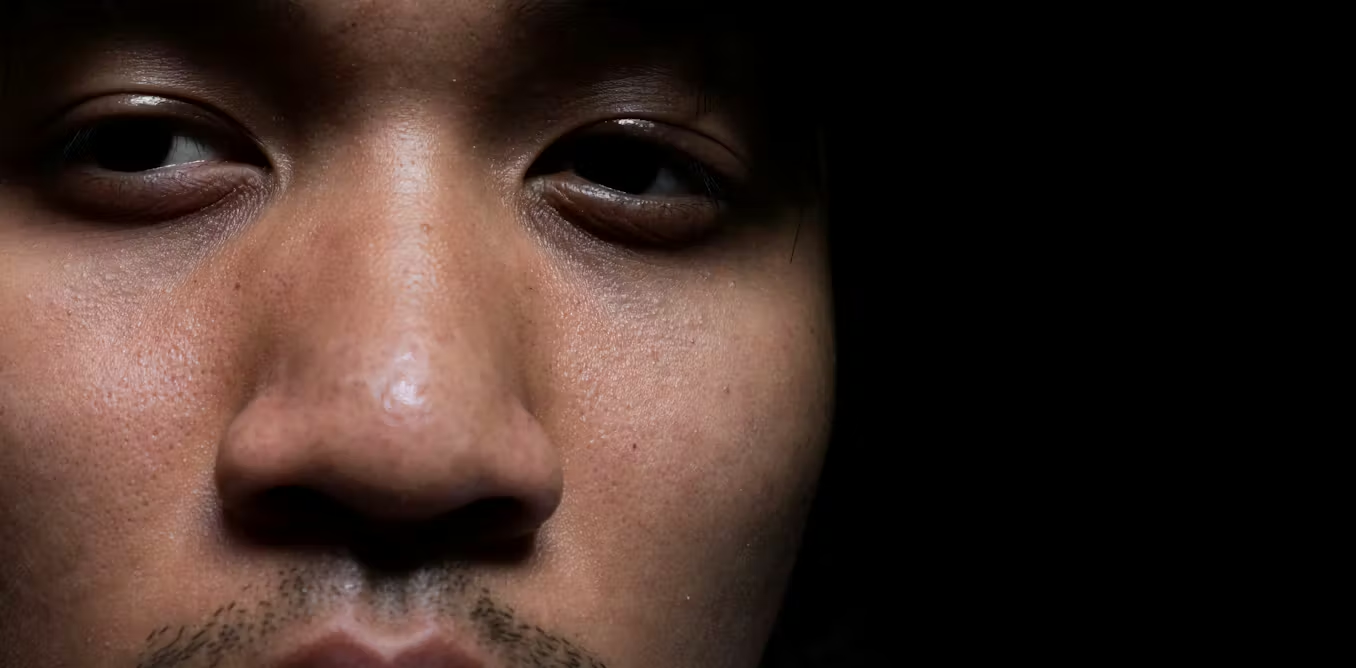
Distinct from other conditions like sociopathy and antisocial personality disorder, psychopaths tend to show traits such as an absence of remorse or guilt, a lack of empathy and a charming and manipulative interpersonal style.

You may find it hard to imagine how someone without much empathy can change. And early psychological treatments were not successful. But advances in research are showing that a deeper understanding of psychopathy may help to create more effective interventions.

People with psychopathy typically show problems in responding to other people’s suffering, including difficulty recognising facial expressions of fear and sadness. If you have ever seen someone badly hurt themselves, then you probably had an averse response.

Advertisement

Your brain will have reacted to their pain and your body will probably have shown signs of physiological arousal. Your heart rate might have gone up, or you might have sweated.

These are common signs of physiological arousal in response to someone else’s suffering. But they are often lacking in psychopaths.

When my colleagues and I asked people in prison with a history of violence to view pictures of others’ emotional facial expressions, those who reported more of the characteristic features of psychopathy also showed blunted physiological arousal. Our 2019 study found that the pupil (the small black hole in the centre of the eye that lets in light but also increases in size during physiological arousal) did not change much in size among people higher in psychopathic traits when they looked at pictures of people who were afraid.

These differences mean that some people with these traits might struggle to learn about how their actions cause other people to feel distressed or afraid.

Advertisement

Prisons and secure forensic hospitals are where people with psychopathic traits are often entered into treatment programmes designed to reduce their risk of reoffending. Modest reductions in general reoffending have been reported following cognitive behavioural programmes that are offered to people in prison with or without psychopathy or another personality disorder.

But not all criminal behaviour programs have been marked by success. For
example, in the UK in 2017 the failure of the Core Sexual Offender Treatment Programme designed by His Majesty’s Prison and Probation Service (HMPPS) and approved for use in 1992, to lower reoffending was highly publicised.

HMPPS has since introduced a new programme, Building Choices. It adopts a strengths-based, skill focused approach to improve emotion management, healthy relationships and sense of purpose. Unlike the previous course, the programme is not designed to address particular offence types, and it has shown some signs of promise.

Historically, researchers have considered such programmes less effective at reducing reoffending when offered to people with psychopathy. Indeed, some studies even suggest that people with psychopathy worsened following treatment.

Advertisement
To help psychopaths change, we first need to understand them.
alexkoral/Shutterstock

One of these programmes, offered from around 1965 to 1978 at the maximum-security Oak Ridge Division of the Mental Health Centre in Penetanguishene, Ontario, Canada, made use of a so called “total encounter capsule.”

These results made for a high degree of pessimism among scientists and practitioners alike. But that pessimism might be misplaced.

It is perhaps unsurprising that the “total encounter capsule” did not prove effective. The capsule was “a tiny self-contained chamber where sustenance was supplied through tubes in the walls and from which no group members would leave during sessions that lasted up to two weeks”.

Participants were reported to be nude and did not participate voluntarily. There were few professional therapists, and the use of force and humiliation was permitted.

Advertisement

Historically, there has been a lot of pessimism around treatment for other personality disorders, too.

This is in part a reflection of stigma attached to these disorders. But it is also because personality difficulties can make it harder for people to build relationships, including with the people responsible for their treatment.

Yet a form of therapy known as dialectical behaviour therapy has shown success in reducing self-harm in people with borderline personality disorder. This type of therapy is designed to help people cope with intense emotions and to learn interpersonal skills.

In another recent study, mentalisation-based treatment, which targets the person’s ability to understand and regulate the negative effects of thoughts and feelings, led to reductions in aggressive behaviour in people with antisocial personality disorder. Findings like these suggest tailored interventions are more effective when it comes to personality disorders.

Advertisement

Capable of empathy?

One important consideration when treating psychopaths is that they are often assumed to be incapable of empathy. But this assumption has been challenged by some intriguing studies, which suggests that they might instead lack the motivation for empathy.

In a 2013 brain scanning study, a group of scientists at the university of Groningen, the Netherlands, showed that although criminal psychopaths did not automatically feel empathy for other people’s pain depicted in videos, their brains did generate an empathic response similar to that of non-psychopaths when instructed to feel what the people in the videos were feeling.

It could be an important step toward helping people with psychopathy if they could better understand how their actions can hurt other people.

Perhaps the most promising work that suggests people with psychopathy can
change has been conducted with young people. Although children and young people under the age of 18 cannot be diagnosed as psychopathic, features of psychopathy referred to as callous unemotional traits can be reliably assessed in children as young as two years of age.

Advertisement

A 2018 study adapted parenting interventions to be more effective for this high-risk group of children, aged three to six years old. Afterwards, the children showed significant reductions in behavioural problems, callous unemotional traits and aggression. The researchers coached parents to show more warmth, sensitivity and responsiveness. Parents were also asked to focus on reward-based rather than punishment-based strategies to encourage the child participants to be more responsive to distress in others.

A 2022 study also reported positive outcomes, showing improvements in behaviour and personal relationships in adolescents after an intervention with a focus on strength-based (helping children understand what they’re good at) rather than punishment-based parenting strategies.

So recent work is offering a glimpse of a more optimistic future for reducing aggressive and antisocial behaviour associated with psychopathy. Perhaps the question is not can psychopaths change now, but can we get better at helping them to change.

Advertisement

Source link

Continue Reading

NewsBeat

North Yorkshire spa town among world’s most welcoming places

Published

on

North Yorkshire spa town among world's most welcoming places

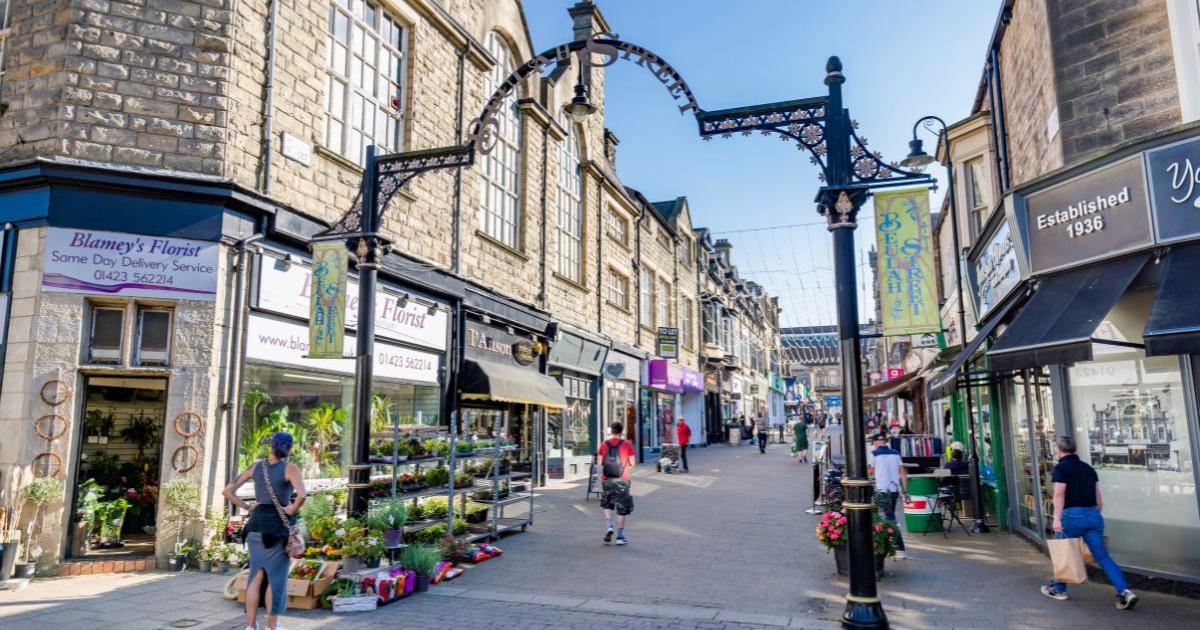
Harrogate, which sits just outside of the Yorkshire Dales and is less than an hour’s drive from York, was named in Booking.com’s 14th annual Traveller Review Awards.

It comes just months after the area was revealed as one of the best places to live for 2026.

You can read more about that in our previous article.

This time, Harrogate featured alongside the likes of Montepulciano in Italy, known for its hilltop beauty, as well as Pirenópolis in Brazil.

Advertisement

See all of the top 10 most welcoming places in the world on our map below:

The awards are based on more than 370 million verified reviews from travellers across the world and the ‘Most Welcoming Places on Earth’ category celebrates destinations where guests feel genuinely cared for, with personal touches, warm interactions, and hosts who go the extra mile to make trips memorable. 

James Waters, chief business officer at Booking.com, commented: “From welcoming hosts who go above and beyond for guest stays to expert taxi drivers sharing ‘local-only’ tips, these personal touches can make a trip truly special for travellers.

Advertisement

“The Traveller Review Awards continue to shine a well-deserved spotlight on our partners who help create lifelong memories for travellers.

“It’s one of our ways of saying ‘thank you’ from all of us at Booking.com and the hundreds of millions of travellers around the world.”

Why is Harrogate among the world’s most welcoming places?

Among the global winners is Harrogate which was the only UK location to make it on this year’s top 10.

Advertisement

Booking.com shared: “Renowned for its elegant spa heritage, leafy gardens, and beautifully kept streets, the town offers a relaxed yet refined atmosphere, complemented by friendly independent shops, cafés, and a strong sense of community that makes visitors feel at home.

“Some of the recognised accommodation showing remarkable hospitality includes Hotel du Vin & Bistro, and Rudding Park.”

Hotel du Vin & Bistro is a “Yorkshire gem” situated close to the town centre of Harrogate and reveals guests can experience the “allure of Victorian charm infused with modern luxury”.

With 48 rooms and suites, it describes itself as a “distinctive hideaway” nestled in the heart of the picturesque spa town.

Advertisement

Its website continues: “Luxuriate in our spacious, custom-made beds, adorned with hand-sprung mattresses and soft Egyptian bed linen.

Hotel du Vin & Bistro says it’s a ‘Yorkshire gem’ (Image: Tripadvisor)

“Unwind amidst fluffy robes and towels, and choose to indulge in the refreshing bliss of a monsoon shower or a soothing soak in a deep roll-top bath.

“As the sun graces the Yorkshire sky, step into our outdoor bar area, the perfect spot to sip on an enticing aperitif, a delicious crafted cocktail, or a glass of sparkling bubbly.

“Inside, our fabulous bistro, abounding in warm leather sofas, crafts a cosy haven for sharing delectable seasonal dishes and exploring an extensive range of wines with the guidance of our expert sommelier.”

Advertisement

Additionally, being named of the world’s most welcoming destinations isn’t the only praise Harrogate has received recently, as The Independent highlighted it for being one of the UK’s best spa towns too.


Recommended reading:


In 2025, the publisher wrote: “The elegant North Yorkshire town has a long history as a spa town, dating back to 1571 when sulphuric waters were first discovered in several natural springs.

“Now you can sip those waters at the Royal Pump Room Museum and bathe like a Victorian at the heritage Turkish Baths.”

Advertisement

Have you stayed in or visited Harrogate recently? Let us know in the comments below if you have any favourite spots to recommend.

Source link

Advertisement
Continue Reading

NewsBeat

Bolton arrest as police crackdown on organised crime in city region

Published

on

Bolton arrest as police crackdown on organised crime in city region

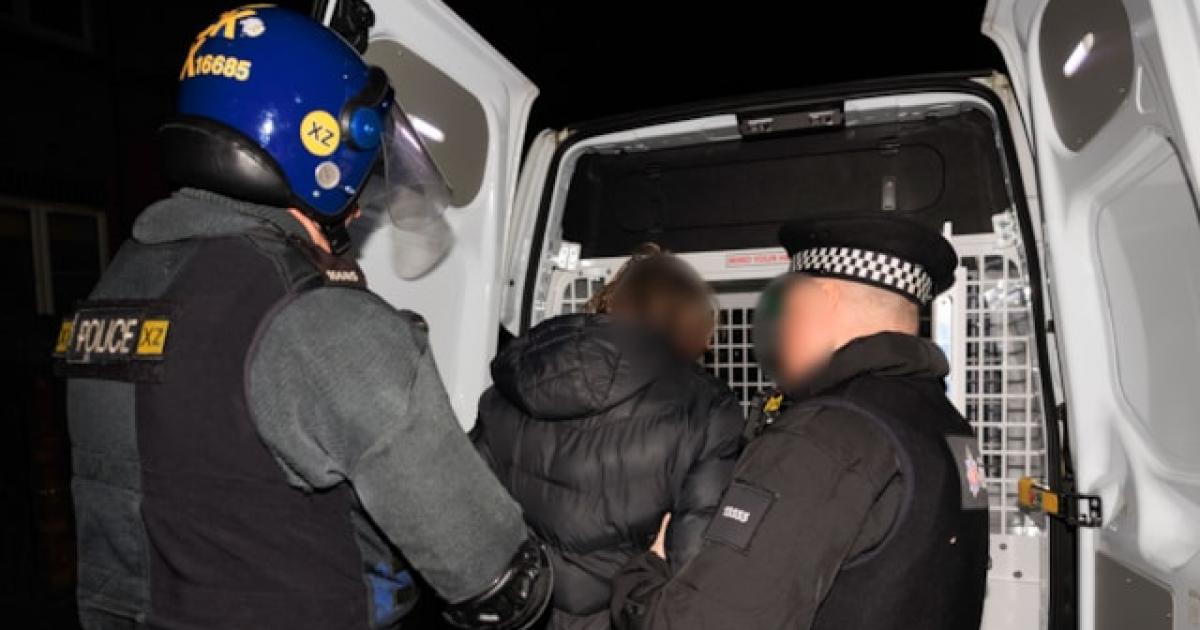
A total of 258 officers were deployed in the day of action tackling serious and organised crime across the region.

In total 23 men linked to an Organised Crime Group in Greater Manchester were arrested.

Police from across the units and departments in Greater Manchester worked together today alongside Chief Constable Sir Stephen Watson.

A briefing was held at Clayton Brook complex at 5:30am.

Advertisement

258 officers worked together (Image: GMP)

In total 22 warrants were executed where a total of 23 suspects were arrested.

Seventeen men, between the ages of 18 and 55, and six boys between the ages of 13 and 17 were arrested on suspicion of a range of offences.

This included conspiracy to supply Class A and B drugs modern day slavery offences and robbery.

Eleven of these arrests were made across the City of Manchester, with one in Bolton and one in Bury.

Advertisement

Four were made in Salford, two in Wigan and one in Rochdale.

Eleven of these arrests were made across the City of Manchester. (Image: GMP)

Another two arrests were made in Merseyside and one in South Wales.

Several weapons have been seized, including two imitation firearms, bladed articles and tasers, along with Class A and Class B drugs – cocaine and ketamine – £3,000 of cash, eight Rolex watches, valuables in excess of £40,000, and a caravan, all believed to be related to the group’s criminal activity. 

Detective Superintendent Joe Harrop, who leads GMP’s Serious Organised Crime Division, said: “Today’s operation has been a powerful example of our continued, determined effort to dismantle organised crime in our region. 

Advertisement

“We now have 23 people in custody; all linked to a family-run organised crime group that have been causing widespread harm across our communities. Their criminal enterprise has been significantly disrupted and today marks a major step towards completely dismantling their operation. 

Several weapons have been seized along with class A and class B drugs (Image: GMP)

“During the execution of 22 warrants across Greater Manchester and Liverpool this morning, officers weapons, drugs, suspected criminally gained cash, and even a caravan believed to have been used as the headquarters of their operation. 

“The exploitation of children and the supply of drugs will never be tolerated. The individuals we have arrested today we believe have brought significant harm, particularly to the City of Manchester and Salford. 

“Our job isn’t over, and while this operation has been six months in the planning, we will carry on with our relentless action for as long as is necessary, and until organised crime groups are dismantled. 

Advertisement

“We still have persons of interest that we want to lock up, so let this be a message to you: we will come for you, and we will find you.”

Source link

Advertisement
Continue Reading

NewsBeat

Eight skiers found dead after avalanche in California | US News

Published

on

Members of a rescue team in Soda Springs. Pic: Nevada County Sheriff's Office via AP

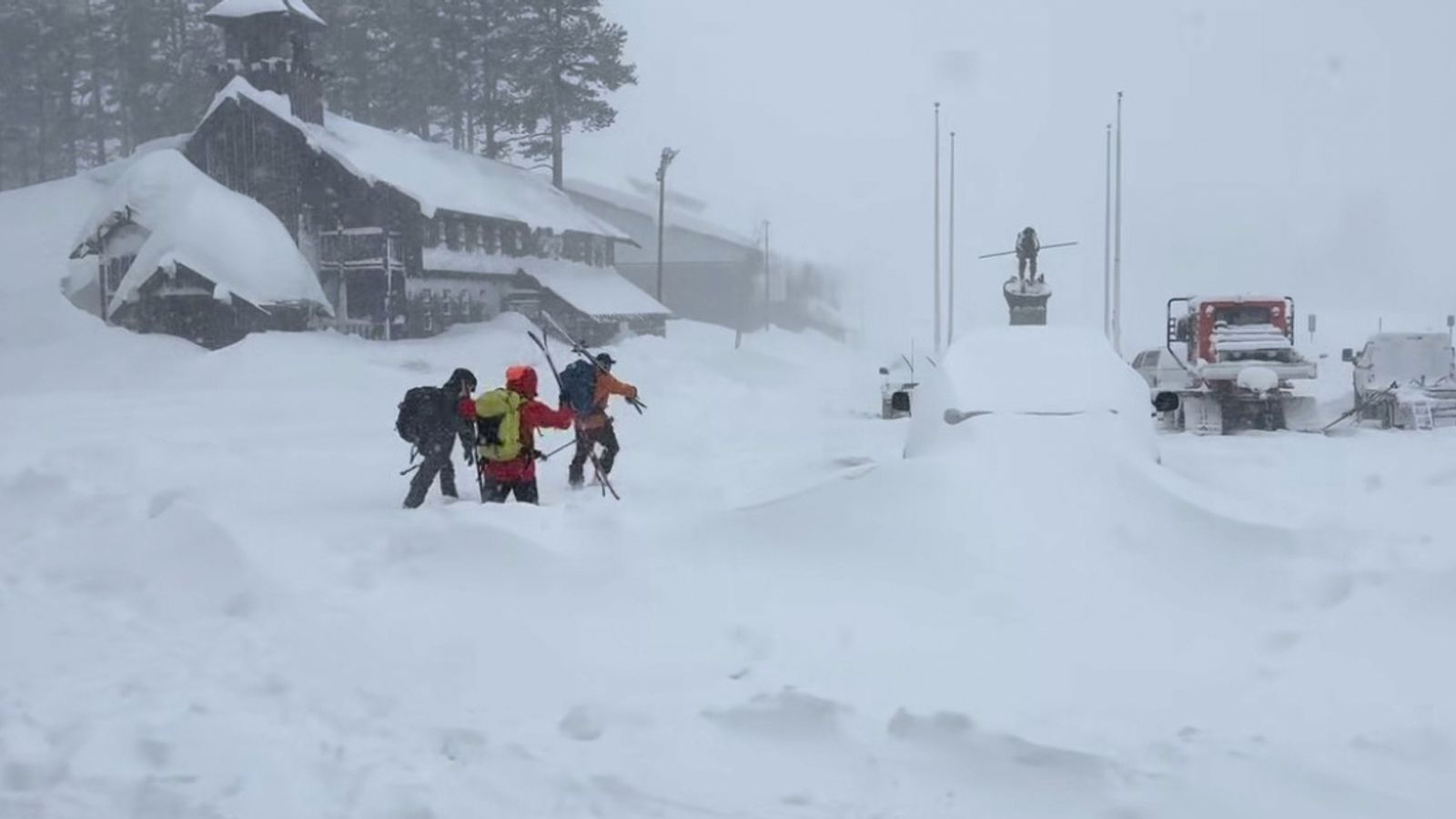
Eight skiers have been found dead, and one is still missing, after an avalanche in the northern California mountains, authorities have said.

The avalanche hit the Castle Peak area of Truckee in California about 10 miles (16km) north of Lake Tahoe, at around 11.30am local time on Tuesday.

The cascade engulfed a group of backcountry skiers, with six people being rescued after they became trapped.

Authorities were still searching for nine missing people on Wednesday morning local time, but have now confirmed eight fatalities and one unaccounted for.

“Eight of the additional nine skiers have been located deceased,” Nevada County sheriff Shannan Moon said.

“We are still looking for one of the members at this time.”

Advertisement

Ms Moon said the difficult conditions and the risk of further avalanches had hampered rescue efforts, with the operation still ongoing.

The group of 15 backcountry skiers – who were outside ski resort boundaries – were returning from a three-day excursion when the avalanche struck, the organising tour company Blackbird Mountain Guides said.

The rescued skiers – including one guide and five clients – had taken refuge in a makeshift shelter made from tarpaulin sheets and communicated with authorities using a radio beacon and text messaging.

Image:
Much of California’s Central Sierra Nevada region has been covered in heavy snow. Pic: AP

Two of them were unable to walk because of their injuries and were taken to hospital, Ms Moon said.

Advertisement

One person’s condition had been stabilised and released on Tuesday night, while another person remained in hospital.

The survivors include five women and one man, authorities said.

Ms Moon said it was initially believed that 16 people had been on the tour, but the number was revised to 15 after it was confirmed that one person had pulled out at the last minute.

California has been hit by a powerful storm this week, bringing heavy snow, high winds and severe thunderstorms to the mountainous region.

Advertisement

The Sierra Avalanche Center issued an avalanche warning for the area in the Central Sierra Nevada, starting on Tuesday at 5am local time, with large slides expected into Wednesday.

The rapid accumulation of snow in unstable layers, coupled with gale-force winds had produced the dangerous conditions.

The area near Donner Summit has one of the highest snowfalls in the Western Hemisphere, with an average of nearly 35 feet (10 meters) of snow a year.

The area is named after the infamous Donner Party, a group of pioneers who resorted to cannibalism after becoming trapped in the winter of 1846 to 1847.

Advertisement

The incident marks the deadliest avalanche in the US since 1981, when 11 climbers were killed on Mount Rainier in Washington.

Each winter, between 25 to 30 people die in avalanches in the US, according to the National Avalanche Center.

This breaking news story is being updated and more details will be published shortly.

Please refresh the page for the fullest version.

Advertisement

You can receive breaking news alerts on a smartphone or tablet via the Sky News app. You can also follow us on WhatsApp and subscribe to our YouTube channel to keep up with the latest news.

Source link

Advertisement
Continue Reading

NewsBeat

when the brain can’t plan the words

Published

on

when the brain can’t plan the words

Talking is one of the most complex actions the human body performs, yet the process of turning thoughts into speech is coordinated on millisecond timescales. For some children, the brain struggles to plan the movements needed for speech, turning everyday conversation into hard work. Even forming a single word can affect learning, friendships and confidence.

UK guidance suggests around one in ten children experience some form of speech, language or communication difficulty, including speech sound disorders. These conditions can influence educational progress, emotional wellbeing and social development. Communication underpins not only learning, but also how children express feelings and connect with others.

As a speech scientist specialising in clinical phonetics and speech acquisition, I am currently researching a less common speech motor disorder: childhood apraxia of speech (CAS). This is a speech motor disorder, meaning the difficulty lies in the brain’s ability to plan and coordinate the movements needed to produce speech.

CAS is estimated to affect roughly one in 1,000 children, though figures vary. Many children improve with specialist speech and language therapy and regular practice. Without this support, speech difficulties are more likely to persist and some children may remain difficult to understand, even to close family members. Families and teachers also play an important role in reinforcing therapy and supporting everyday communication.

Advertisement

Understanding how speech is produced helps explain why these conditions occur and how they can be treated. Speech and language therapists receive extensive training in phonetics, the science of how speech sounds are created, transmitted and heard. Caregivers and teachers can also benefit from a basic understanding of just how complex speech production really is.

Moving parts

Producing even a single sound involves a carefully timed sequence of movements known as a speech motor plan, which the brain must assemble before the sound is spoken. For English speech, the lungs first generate a steady stream of air, usually by exhaling more slowly than during normal breathing.

As this air passes through the voice box, also called the larynx, it moves across the vocal folds. These small folds of tissue can behave in several ways. They can close tightly and release to produce a glottal stop, the brief catch in the throat heard in the middle of “uh-oh”. They can remain open so air flows through freely, creating voiceless sounds such as “s”. Or they can vibrate to produce “voicing”, the low buzzing sound you can feel in your throat when saying sounds like “z” or “b”. Each option depends on fine control of vocal fold position and tension.

Advertisement


À lire aussi :
Common myths about speech problems in children


After leaving the larynx, air travels either through the mouth alone or through both the mouth and nose. This pathway is controlled by the velum, the soft part at the back of the roof of the mouth. The velum lifts to block the nasal passage when air needs to stay in the mouth. When air reaches the mouth, the articulators, including the tongue, lips and teeth, shape it into recognisable speech sounds by creating narrow gaps or brief closures.

Take the first sound in the word “sat”, the /s/ sound. The tip of the tongue moves close to the roof of the mouth just behind the upper teeth, forming a narrow channel. Air rushing through this gap creates friction, producing the familiar hissing sound. At the same time, the velum lifts to stop air entering the nose and the vocal folds stay open so the sound remains voiceless.

Small changes in timing or position can create entirely different sounds. If the vocal folds vibrate, the /z/ sound in “zoo” is produced instead of /s/. If the tongue presses fully against the roof of the mouth, the sound becomes /t/, as in “two”.

Advertisement

Speech becomes even more complex in words and sentences, where sounds overlap and influence each other. The shape of the lips for one sound may be adjusted in advance for the next. When saying “seat”, the lips spread wide, but in “soup” they round in anticipation of the following vowel. Real-time imaging of the vocal tract during speech, including MRI and ultrasound studies, shows how intricate and rapid these adjustments are.

Therapy can help

Because speech relies on so many coordinated actions, the brain must assemble detailed movement plans and send them to the muscles with precise timing. In speech motor disorders such as CAS, this planning process is disrupted. The result is speech that may sound inconsistent, effortful and difficult to understand, with words sometimes produced differently each time, even for people who know the child well.

Therapy grounded in motor skill learning principles has been shown to help some children practise and stabilise these movement patterns. Support may also include augmentative and alternative communication, which refers to tools and strategies that help children communicate while their speech skills develop. These can range from picture boards to speech generating devices.

Advertisement

No single approach fits every child, but progress is possible. Specialist therapy, classroom support and tools such as augmentative and alternative communication can all help. The goal is not perfection, but participation. Being able to share ideas, ask for help and connect with others is what matters most for a child’s development.

Source link

Advertisement
Continue Reading

NewsBeat

Arrest following sexual assault in Downpatrick

Published

on

Ipso logo

A 23-year-old man has been arrested in connection with the incident

A man has been arrested following reports of a sexual assault in Downpatrick.

Advertisement

It has been alleged that the incident took place on January 19 in the Co Down town but was reported to police a number of days later on Sunday, February 1.

As part of the investigation into the incident, a 23-year-old man was arrested on Tuesday, February 3. He has since been released on bail pending further enquiries.

A PSNI spokesperson said: “Police received a report of sexual assault on Sunday, February 1, in the Downpatrick area.

“A 23-year-old man was arrested on Tuesday, 3rd February. He has since been released on bail pending further enquiries.”

Advertisement

Want to see more of the stories you love from Belfast Live? Making us your preferred source on Google means you’ll get more of our exclusives, top stories and must-read content straight away. To add Belfast Live as a preferred source, simply click here

Source link

Advertisement
Continue Reading

NewsBeat

Shiffrin wins slalom at Olympics, Klaebo claims 10th gold, Canada wins in OT

Published

on

Shiffrin wins slalom at Olympics, Klaebo claims 10th gold, Canada wins in OT

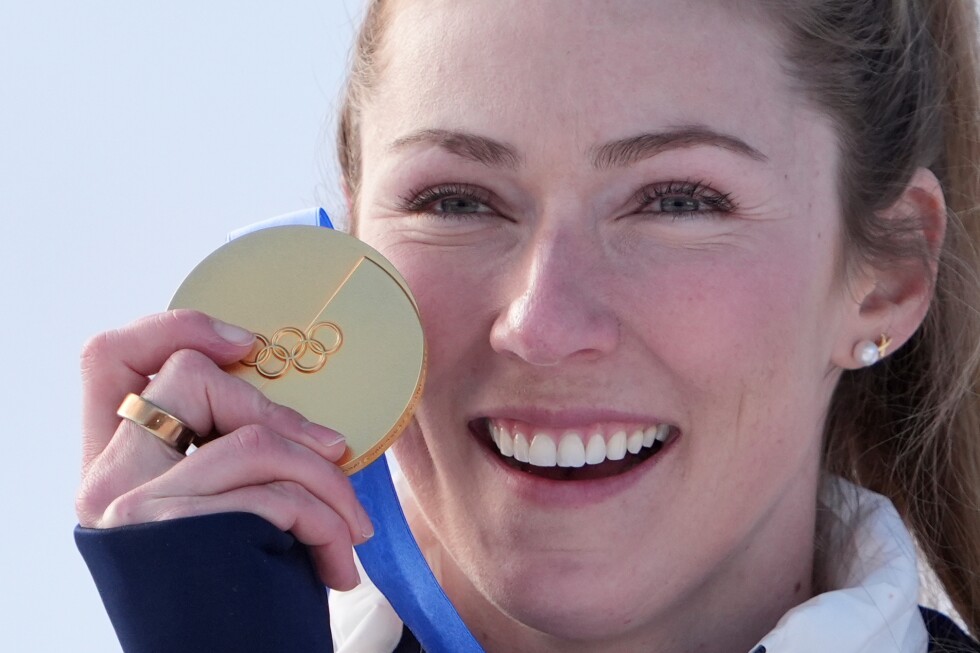
CORTINA D’AMPEZZO, Italy (AP) — Redemption, at last, for Mikaela Shiffrin at the Winter Olympics.

The American superstar put in two dominant runs to win the women’s slalom on Wednesday by a massive 1.50 seconds, ending a run of eight straight Olympic races without a medal for arguably the greatest Alpine skier of all time.

It was the largest margin of victory in any Olympic Alpine skiing event since 1998 and the third biggest in women’s slalom, the event she won as a fresh-faced 18-year-old in Sochi in 2014.

After adding gold and silver to her collection in Pyeongchang in 2018, Shiffrin went 0 for 6 in Beijing in 2022 and failed to medal in either the team combined or giant slalom in Cortina.

Advertisement

Shiffrin became the first American skier to win three Alpine gold medals.

Canada needs OT to beat Czechia

Canada avoided what would have been a stunning quarterfinal exit at the Olympics by rallying to beat Czechia 4-3 in overtime. Nick Suzuki tied it on a deflection with 3:27 left, Mitch Marner scored in OT.

Canada fell behind with 7:42 remaining when Ondrej Palat scored on an odd-man rush off a pass from Martin Necas. The goal sent the Czech bench and fans into a wild celebration, but it was short-lived.

Canada even staying in the tournament has a major concern after losing Sidney Crosby to injury five minutes into the second period. Crosby’s right leg appeared to buckle bracing for contact from rugged Czechia defenseman Radko Gudas.

Advertisement

Klaebo extends golden run

Johannes Hoesflot Klaebo’s golden run continued as the Norwegian cross-country star secured his fifth gold at these Games — and a record 10th overall — by winning the men’s team sprint.

Klaebo beat back a challenge from the United States to improve on his own record tally, racing with Einar Hedegart to win in 18 minutes, 28.9 seconds.

Americans Ben Ogden and Gus Schumacher were 1.4 seconds behind for the silver, while Italy’s Elia Barp and Federico Pellegrino pleased the home crowd by taking bronze.

Sweden won gold in the women’s team sprint.

Advertisement

Slopestyle gold for China’s Su Yiming

Su Yiming of China won the gold medal in men’s slopestyle snowboarding.

Su collected his fourth career medal and his second of these Games on his 22nd birthday.

Taiga Hasegawa of Japan took silver and American rider Jake Canter claimed the bronze.

Su’s first of three runs that earned him 82.41 points proved enough after no rival was able to better that score.

Advertisement

It was China’s first gold of the Milan Cortina Games.

___

AP Olympics: https://apnews.com/hub/milan-cortina-2026-winter-olympics

Advertisement

Source link

Continue Reading

NewsBeat

Laura Whitmore shares pregnancy snaps and confirms second baby with Iain Stirling

Published

on

Laura Whitmore shares pregnancy snaps and confirms second baby with Iain Stirling
Laura Whitmore and Iain Stirling already share a daughter (Picture: David Fisher/Shutterstock)

Laura Whitmore has shared the news with fans that she is expecting a second baby with Iain Stirling.

The Irish model and TV presenter shared bump-filled snaps that make it clear another baby is on the way, in an Instagram post on Wednesday evening.

The 40-year-old posted plenty of pictures of her bump in warmer climes, writing in the caption: ‘Instagram V Reality – Spoiler: It wasn’t just a big meal mama ate. She’s been cooking away! 

‘I’d like to thank stretchy pants and travel sick bags.’

Advertisement

Several of Whitmore’s celeb pals took to the comments section to congratulate her on the news, with Vick Hope writing: ‘Huge congrats lovely Laura!!’

Emily Atack also left a string of loveheart emojis and Whitmore’s husband Stirling, who has lent his pipes to Love Island for years now, simply wrote: ‘I love you.’

Laura Whitmore pregnant Instagram V Reality - Spoiler: It wasn?t just a big meal mama ate. She?s been cooking away! I?d like to thank stretchy pants and travel sick bags
‘I’d like to thank stretchy pants and travel sick bags’ (Picture: Laura Whitmore/Instagram)
Laura Whitmore pregnant Instagram V Reality - Spoiler: It wasn?t just a big meal mama ate. She?s been cooking away! I?d like to thank stretchy pants and travel sick bags
Whitmore tied the knot with Stirling in 2020 (Picture: Laura Whitmore/Instagram)

The couple welcomed daughter Stevie Ré, in March 2021, having tied the knot during the Covid times in 2020.

When the Irish presenter announced she was pregnant with their first child, it was just a day after she married the Scottish comedian.

At the time, she stressed how much the couple value their privacy in an Instagram post, writing: ‘So I’ve always tried to be protective over the personal side of my life. A lot of things are just for me and my loved ones and we’ve chosen not to share publicly. 

Advertisement

‘However I want to now share good news as it’s our news to share – and I’m gonna be honest it’s starting to look like my lockdown beer belly is out of control. Iain and I are expecting a baby early 2021. 

‘It’s been hard to keep such happy news quiet. Especially the times when I’ve had to run out of live radio to get sick in a bin or my penchant for a bowl of mashed potato in the morning. 

‘I wasn’t hungover like everyone thought. In fact I was completely sober filming the entire series of Celeb Juice, which is quite the accolade!

‘We’d appreciate our privacy respected but just wanted to spread some love and a reminder of the beauty of life.’

Advertisement

Whitmore was a member of the panel on Celebrity Juice between 2020 and 2022. She is also the former host of the ITV villa, having been succeeded by Maya Jama in the villa spot.

Whitmore has since presented Laura Whitmore’s Breakfast Show and Laura Whitmore Investigates on ITV, the former of which was axed after one series.

Got a story?

If you’ve got a celebrity story, video or pictures get in touch with the Metro.co.uk entertainment team by emailing us celebtips@metro.co.uk, calling 020 3615 2145 or by visiting our Submit Stuff page – we’d love to hear from you.

Advertisement
Advertisement

Source link

Continue Reading

Trending

Copyright © 2025