

A horror story of sorts is unfolding in the United States. It goes like this: AI has made it so effortless to access information, and short-form video has made it so easy to entertain ourselves, that nobody reads anymore.
Tech
Apple could soon offer home security and monitoring service as it plans security camera foray


It looks like Apple has plans to make a splashy entrance in the smart home and security segment. Back in 2024, industry analyst Ming-Chi Kuo wrote that Apple was prepping its foray into the smart home IP camera market. A year later, Bloomberg reported that Apple had started work on a home security camera code-named J450. Now, the outlet reports that the company will also launch a home security service to go with its camera, something all major players in the domain currently offer.
“Apple is planning a privacy-centric home security camera and automation device that will use AI to monitor the surrounding environment instead of actual video footage. It will tap into a new home security and monitoring service,” says a new report by Bloomberg.
Why could privacy be Apple’s main selling point?
The move isn’t surprising. In fact, given Apple’s market appeal as the more privacy-friendly name in the pool of tech giants, it just might make the rumored service a preferred choice among customers. Of course, seamless integration with Apple’s vast network of consumer devices — and the planned wall-mounted smart home tablet — will potentially make it the most cohesive choice on the market.

The planned home security and monitoring service will put Apple in direct competition with the likes of Google and Amazon’s Ring, both of which offer multi-tier home security services and subscriptions to go with their smart doorbells and security cameras. Even the likes of Arlo and SimpliSafe offer their own monitoring plans and subscription-based services with extra perks.
The ecosystem is already in place
Apple already has a product that is ready to integrate services tied to smart home and security devices. That service is Apple One, which already combines benefits tied to other Apple products such as iCloud for storage, Apple Arcade for games, Apple TV, and Apple Music, among others. As far as the planned hardware goes, Bloomberg claims that Apple’s security camera will come with facial detection capability and will also come equipped with an infrared camera.
Continue Reading


The late Steve McQueen built his name on unforgettable performances in films such as “Bullitt” and “The Great Escape,” among others. However, there was much more to the King of Cool than his screen work. He’s well known for his love of automobiles, too, with McQueen having owned several remarkably valuable vehicles throughout his lifetime. He owned less exotic fare, too, like this navy blue and silver 1942 Chevrolet pickup truck that’s now back on the road after nearly two decades in a garage, courtesy of Hagerty and its “Driveway Finds” YouTube series.
McQueen sold the truck in 1979, and the new owner used it as a normal pickup for years, largely ignoring the fact they purchased it from McQueen himself. It eventually sat in storage for 15 years, although that apparently didn’t do it that much harm: “Driveway Finds” hosts John Brito and Dustin Halinan found it was still in good shape for the most part, including the engine, brake system, and undercarriage.
After a new master cylinder and some basic maintenance, the 84-year-old truck was back on the open road. It’s great to see it moving, too, considering the multiple layers of American history behind it.
This ’42 Chevy pickup is a historic piece in multiple ways
This 1942 Chevy pickup is a notable piece of history in several ways. As mentioned, it was owned for some time by Steve McQueen, and the buyer — who paid a whopping $2,800 in 1979 — had the documentation to prove it. It’s not quite McQueen’s iconic 1968 “Bullitt” Mustang, but it’s still a fascinating piece tied directly to the Hollywood legend. This Chevy’s significance extends beyond McQueen, though, and it all goes back to WWII.
In the wake of the attack on Pearl Harbor, the United States went all-in on World War II, prompting private companies within the country to get in on the war effort. Chevrolet was no exception, having prepared for wartime production even before the U.S. formally entered the conflict. General Motors put passenger vehicle production on the back burner between 1942 and 1945, with only a handful of 1942 model-year trucks hitting American streets before the January ’42 production stoppage.
These were incredibly similar to 1941 models with few changes, but they’ve earned a place in history for their WWII connection and low 1,641-unit production run — and this truck is one of those 1,641. So, not only is this an exceptionally rare truck, but it has a connection to Steve McQueen that cements it as a truly one-of-a-kind piece.
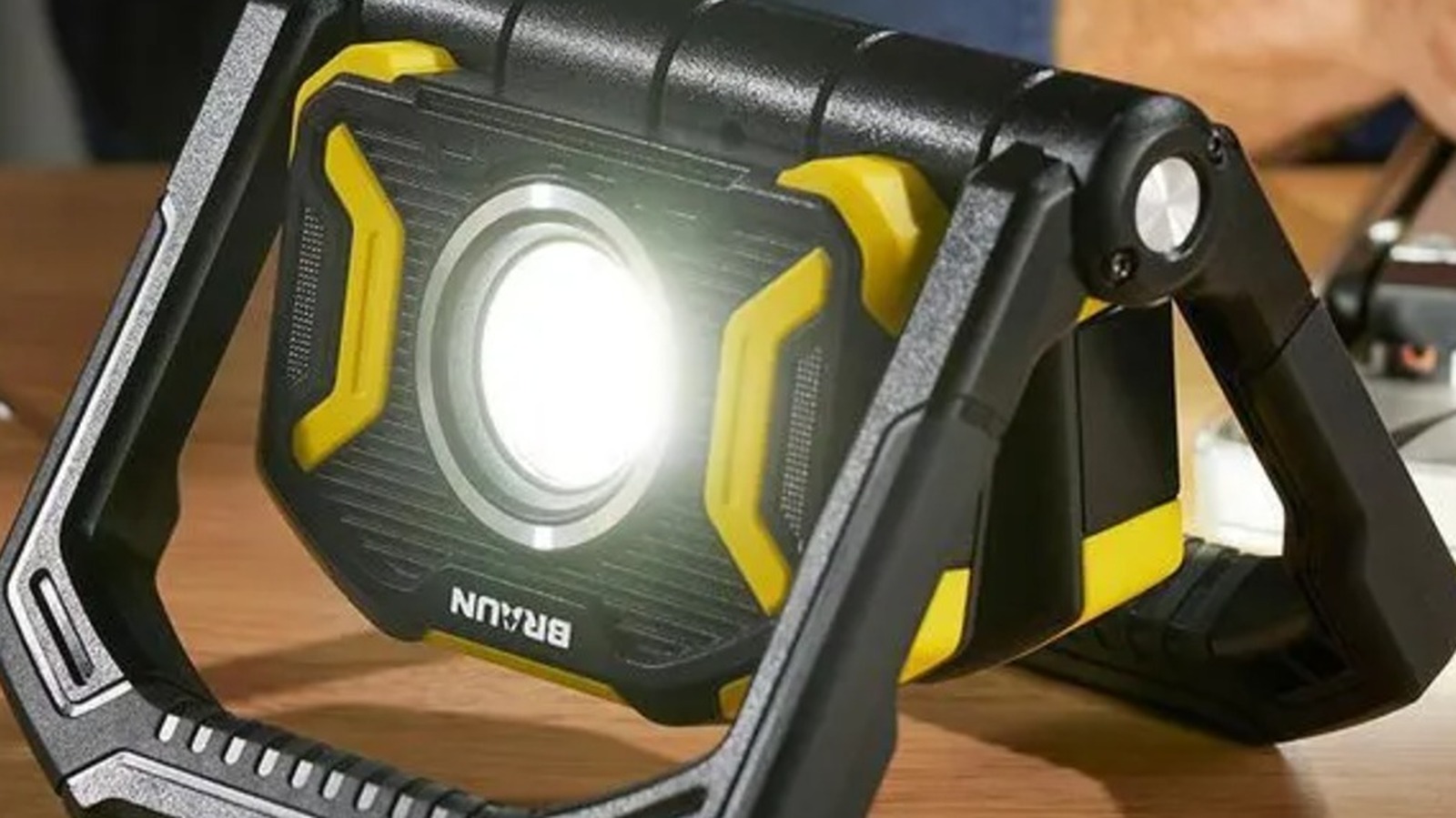
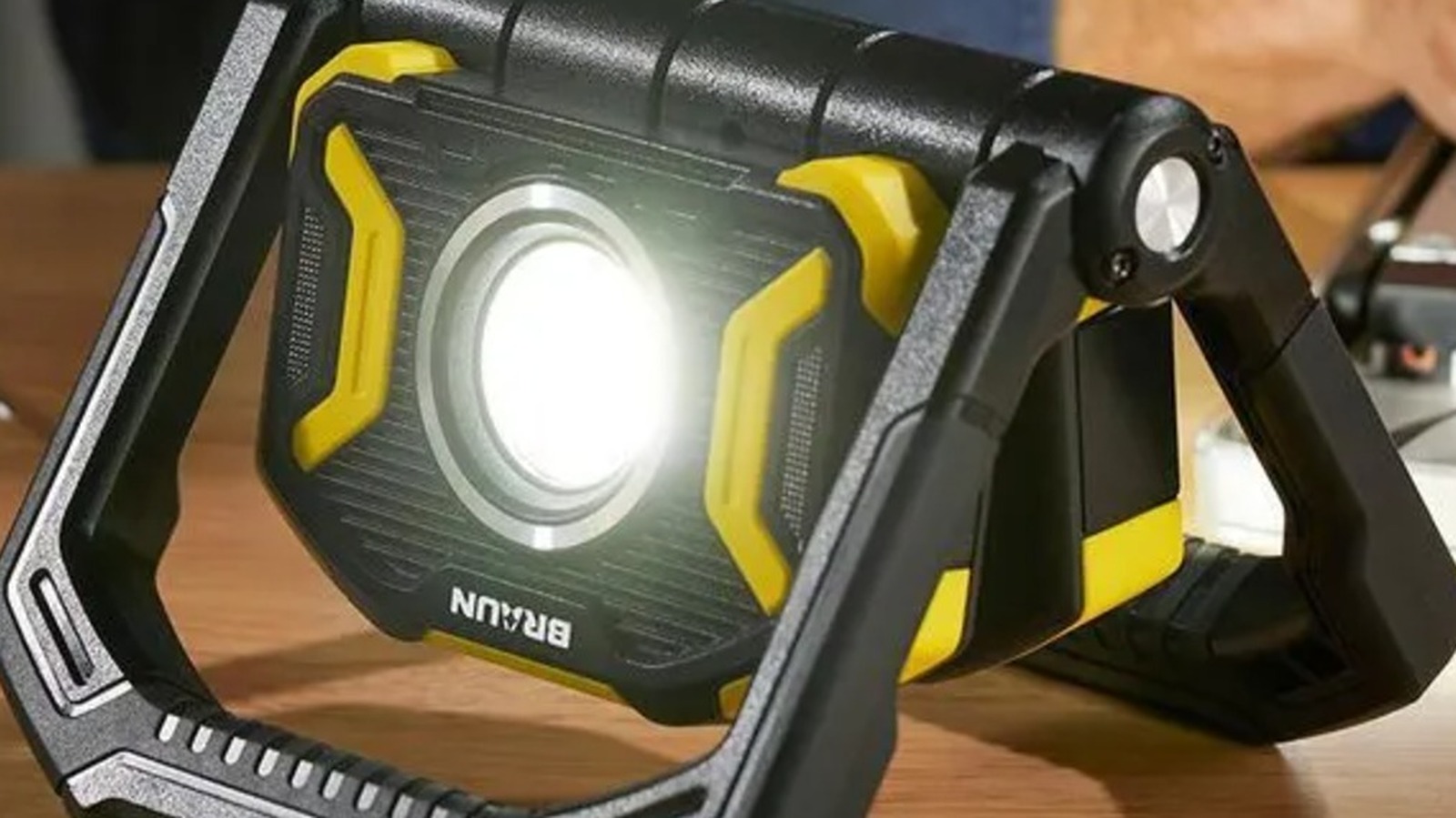
There’s no shortage of work lights out there. Major brands like Milwaukee have several jobsite lighting options for sale, as do more affordable brands. Case in point: Harbor Freight-exclusive Braun has launched the 2,200-lumen Rechargeable Folding Multidirectional Work Light. This new arrival costs $27.99 on the Harbor Freight website, but for that relatively wallet-friendly price, what do Braun and Harbor Freight claim it can do?
This 2,200-lumen work light has two lights, both of which can run in either high or low modes. Braun claims a three-hour runtime with both lights on high and 15 hours with both on low. If you only use one light, the company suggests you can expect 7 hours of runtime on high and 28 on low. Its foldable design makes it easier to store, but should also offer more versatility on the job. It runs on a rechargeable lithium battery that Braun claims will recharge in 3.5 hours. The light comes with a USB-A to USB-C charging cable.
This is just one of several new Braun lighting products to hit the Harbor Freight inventory in 2026. The brand has a range of other new lights, all of which have different form factors and features to set them apart from each other.
This is one of several new Braun lights
Braun has several new compact lights, such as the 500-lumen Rechargeable Portable Folding LED Work Light and the 750-lumen LED Portable Work Light with Rotating Handle/Stand. They cost $19.99 and $14.99, respectively, with the latter running on four AA batteries instead of a rechargeable battery. The 500-lumen light is magnetic for hands-free situations, runs around 14.5 hours in floodlight mode and 26 hours as a flashlight, and has a 90-foot range. Meanwhile, the 750-lumen light has a 180-degree adjustable handle, a roughly five-and-a-half-hour runtime, and an 80-foot range.
Beyond these, Braun also dropped two other work lights to consider. One is the 4,200-lumen LED Rechargeable Heavy Duty Clamp Light, which retails for a comparatively steep $49.99. This promises a 19-hour runtime, a 270-degree swivel head on its clamp base, and a 300-foot range on the highest of its three light settings. There’s also the $24.99 2,200-lumen Rechargeable Waterproof LED Spotlight, which, despite looking like it’s designed for handheld use, has a built-in adjustable stand so you can use it as a work light. Braun claims a 23-hour runtime, a 3-hour charge time for the lithium-ion battery, and a 1,300-foot range.
There are many budget-friendly worksite lighting options, including these Braun offerings. Perhaps one of these models, or even any of the other Harbor Freight lighting solutions for sale, could serve you well next time you have to work in low light.
Tech
China-linked hackers backdoored executives’ laptops via USB, exploiting a fix companies had but weren’t using


A Chinese state-linked hacking group compromised executive laptops at an agricultural industry conference on Hainan Island this spring — not through phishing or a network breach, but by breaking into hotel rooms and booting the machines from a USB stick while the executives were at dinner.
CrowdStrike, which tracks the group as OVERCAST PANDA, disclosed the campaign in its 2026 Threat Hunting Report and detailed the operation’s timeline in an interview with VentureBeat at Fal.Con 2026: an intruder entered one room at around 8 p.m. local time and a second room by 9:57 p.m., writing a backdoor called FlowCloud directly to each laptop’s storage before rebooting the machines and leaving. There was no network intrusion, no phishing email, and no credential stolen through a login page.
The report dates the intrusions to between March and May 2026, and the timestamps come from Adam Meyers, CrowdStrike’s senior vice president of counter adversary operations, who cleared them for publication in the VentureBeat interview. CrowdStrike’s OverWatch team disrupted the intrusions and assessed that OVERCAST PANDA will almost certainly continue. FlowCloud itself predates this campaign by years: Proofpoint documented it in 2020, delivered by phishing to U.S. utilities, and NTT Security’s SOC has tracked USB-delivered infections at overseas branches of Japanese organizations since early 2022.
Security researchers have called physical-access tampering with an unattended laptop an “evil maid attack,” since Joanna Rutkowska demonstrated one with a bootable USB stick in 2009. Physical-access operations are rare across the 290 named adversaries CrowdStrike tracks, according to Meyers, and MUSTANG PANDA‘s version depends on a dropped USB stick the victim plugs in. What Meyers identified as novel is the combination of hotel-room entry by a state intelligence service with malware deployment, booting the target machine from the USB rather than relying on a user to execute a file from it.
When the executives powered on the next morning, the trigger fired and FlowCloud loaded. Keylogging, screen capture, file collection, and credential harvesting began.
“We have the visibility once the machine boots up,” Meyers told VentureBeat. A registry key or similar trigger starts FlowCloud sometime after the operating system loads, and that’s when Falcon’s sensor picks it up. The gap is the window between the USB write and the next boot — the hours the laptop sits compromised and undetected before the executive logs back in.
CrowdStrike published that gap a month before it announced its AI security product slate — Falcon Guardian, SafeMind, the Agentic Identity Provider, and AI Gateway — at Fal.Con 2026 this week.
Why existing security tools missed it
EDR needs the operating system loaded and the agent running. MFA waits for a login attempt, phishing training for an email, AI agent security for an agent to secure.
OVERCAST PANDA bypassed all of them at the point of entry. The initial compromise completed below the running OS, below the EDR agent, below the authentication stack. Falcon caught FlowCloud once its process started after boot, but by then the implant and its trigger were already on disk.
“Hotel entry is a very common thing,” Meyers said. “Talk to any corporate physical security person. They’re generally aware of hotel entry, but I think what is unique is the combination of hotel entry with deployment of malware.”
Meyers said he thinks China’s Ministry of State Security sits behind OVERCAST PANDA. The people entering the rooms are either officers or agents of the MSS or the Ministry of Public Security, or hotel housekeeping staff the services have bribed or compelled, Meyers told VentureBeat. A separate mid-2026 intrusion targeted a U.S.-based media professional using the same tradecraft, according to the report. Targeting an agricultural conference aligns with collection priorities Meyers tied to China’s five-year plans.
What CrowdStrike announced at Fal.Con and where runtime security begins
Nvidia CEO Jensen Huang joined George Kurtz on the Fal.Con stage to unveil SafeMind, an agentic cybersecurity system built on Nvidia Nemotron open models and CrowdStrike’s threat data. Meyers told the Fal.Con audience that 7,400 CVEs were registered in June 2026, a 96% increase over June 2025, and that CrowdStrike submitted 2,400 of them via responsible disclosure, roughly 30% of all CVEs registered that month.
Falcon Guardian, the company’s runtime security layer for AI agents on the endpoint, went live the minute Kurtz put the slide up, CrowdStrike President Mike Sentonas told the Day 2 audience, and AI Gateway, listed as a Guardian capability, ships in September as a hosted service with a hybrid version to follow. AJ Shipley, CrowdStrike’s chief product officer, told VentureBeat that CrowdStrike will embed a SafeMind model into Guardian for malicious-prompt detection within the next couple of weeks.
The threats those products address are real, and the report quantifies them. AI agent-triggered detection leads grew at 2.5 times the rate of human-triggered leads, by OverWatch’s count. Cloud-conscious eCrime activity surged 171% over the reporting period. Vishing intrusions doubled in the first half of 2026 compared to the second half of 2025, with the eCrime group SNARKY SPIDER moving from account takeover to data exfiltration in under five minutes after compromising SSO-integrated SaaS applications.
Every one of those threats is network-based. All of them assume a running OS, an active user session, or a live cloud workload.
The controls that stop this are firmware and policy
“It’s a solvable problem,” Meyers said. “It’s just an inconvenient solution, which means that a lot of people don’t do it.”
CrowdStrike itself has shipped firmware attack detection and BIOS settings auditing through the Falcon sensor since May 2019, including a Dell SafeBIOS integration that surfaces BIOS verification telemetry in the Falcon console. The ability to audit security-related BIOS settings on the laptops executives carry has sat inside the platform for seven years. Pointing it at travel devices is a decision, not a product gap.
The controls that would have blunted the OVERCAST PANDA campaign are old and cheap, and each does a different job. Disabling external boot in UEFI removes the vector. A BIOS administrator password keeps it disabled. Pre-boot authentication lets a foreign boot environment load and still keeps the encrypted volume unreadable until a human supplies the PIN or key. Firmware monitoring detects tampering after the fact.
“Don’t bring anything with you that you’re not comfortable with handing over to a foreign intelligence service,” Meyers advised. He used temporary laptops and email accounts on overseas trips while at CrowdStrike, wiping the device when he returned. The exposure starts at customs. Officials can seize a device and compel a login, he added.
“They have master keys to that stuff,” was his verdict on hotel safes.
Why scale wins the priority fight
Intrusions tracked by CrowdStrike OverWatch grew about 4% over the reporting period, after a 27% rise the year before, a plateau CrowdStrike attributed to a shift toward more complex, resource-intensive campaigns. The OVERCAST PANDA hotel room operation is the example.
The network threat worries Meyers more. Asked to weigh OVERCAST PANDA’s hotel room campaign against the REVENANT SPIDER case he had shown on the Fal.Con stage, an eCrime group using AI to compromise 17 victims with custom web shells in 48 minutes, he picked REVENANT SPIDER.
“You can’t intrude on hotel rooms at scale,” he said. “You can’t intrude on physical devices at scale. And even then, it’s just one device.” The person in the room is the target, and the intrusion rarely pivots further, he added. “REVENANT SPIDER, they’re moving at that speed and they’re using AI across the board, and that’s a whole other threat, and I think that’s more concerning for the average enterprise.”
Network-speed, AI-powered intrusions scale. Physical-access tradecraft does not. Security budgets follow the threat that hits the most machines. The threat that is hardest to detect on one machine gets what is left.
But the executives who attended an agricultural conference in China this spring were the specific targets of a state intelligence service, one that chose the slow, unscalable method precisely because it works where network-based attacks fail.
The conference itself is the threat model
Executives at conferences are the campaign’s targets, and runtime security starts only once the machine boots. The vendors filling the Las Vegas show floor this week were selling that same runtime protection to attendees whose own laptops carry the identical gap.
Organizational fracture is the real problem. Falcon Guardian ships to one team, and BIOS configuration on travel laptops belongs to another. The Agentic IdP rolls out under identity governance while the decision about whether executives carry production-access machines to international conferences sits with a different group. And the budget line that funds cloud-threat defense has nothing to do with travel-device policies.
Meyers has lived both sides. “I’ve talked to companies where they’re like, we’re having a board meeting in Shanghai, and I’m like, why would you do that?”
What security leaders need to do before the next trip
Audit every executive laptop for USB boot status. If the device can be booted from USB right now, it has the same gap OVERCAST PANDA exploited this spring. The steps below cover Windows laptops, the platform FlowCloud targets.
Enforce full-disk encryption with pre-boot authentication. BitLocker in a TPM-only configuration is a documented weak point against physical access. SCRT researchers pulled the volume master key off the LPC bus with a $49 FPGA module in 2021, and Dolos Group did the same over SPI that year. OVERCAST PANDA wrote a backdoor and its post-boot trigger to the Windows volume, so the operators had write access to it. That points to machines that were either unencrypted or protected by a configuration the operators defeated. Pre-boot authentication with a PIN or USB key forces a human step before storage becomes readable.
Verify Secure Boot is enabled and the revocation list is current. Secure Boot validates signatures on boot components and blocks most unauthorized bootloaders, but it leaves external media bootable and signed shims can still carry a bypass. ESET published findings on 11 legacy Microsoft-signed UEFI shims in July 2026 that let untrusted code run at boot on any machine trusting Microsoft’s third-party certificate. Microsoft revoked them in its June 9, 2026 DBX update, so a laptop that skipped that update still trusts them. Lock the boot order at the UEFI level, disable one-time boot menus, and set a BIOS administrator password that covers both the setup utility and any boot-override key. Meyers’ read is that a lot of these settings go unchecked because the fix is inconvenient.
Issue travel-only devices for international conferences with no access to production systems, no saved credentials for internal tools, and no persistent VPN configuration.
“If they can get their hands on it, they can own it,” Meyers put it, citing an old DEF CON adage. Falcon catches FlowCloud only after boot — the exposure is the hours between the USB write and the next login, while the laptop sits closed and compromised.
“It’s cheap to buy a couple of laptops and a couple of phones,” Meyers said. The controls that close that window are a handful of firmware settings and a spare laptop. The question is whether anyone has deployed them.

If you’re familiar with this tale, it’s possible, ironically, that you read about it. A viral Atlantic story from earlier this summer put a chilling headline on trend: “The End of Reading Is Here.” Teachers and professors, the magazine reported, don’t even bother assigning entire books to their students, because excerpts are good enough to prepare for standardized texts. The piece said we’re living in a “postliterate era.”
This is a cultural crisis, yes — but for a lot of us, it’s a personal one. We’re all short on time, and we’d like to read more, but the ascendancy of attention-stealing tech companies has made it feel like we have less of it.
“Reading was and is a crime of opportunity,” said Leah Price, a professor of modern book history at Oxford and the author of What We Talk About When We Talk About Books. “The limiting factor isn’t reading matter, but reading time.”
- Reading is changing, not dying. The bigger problem is competition for people’s time and attention.
- Print offers productive difficulty. E-readers and audiobooks make reading easier, but the friction of print promotes deeper comprehension.
- Leisure reading should be fun! It’s totally fine to peek at the ending, skip boring parts, or just give up on boring books.
Losing the reading habit is especially bad because it’s a healthy practice in a world obsessed with self-improvement. Studies suggest that reading is an astonishingly good mental exercise, as well as a very accessible one. Reading, especially leisure reading, can improve your language skills. It exposes you to new knowledge and ideas. Reading can help relieve stress, anxiety, and insomnia. It can make you more empathetic and combat cognitive decline. Reading is absolutely great for kids. Reading, perhaps above all, also happens to be fun.
There are, I’m happy to say, some bright spots in this story — and some helpful news.
There’s evidence that reading isn’t over. It’s just changing. A 2025 Pew study found that the number of Americans who say they read books has remained roughly the same in recent years, although the way that they read them is changing. The vast majority of books read in the United States are print, but a growing number of people are reading e-books and listening to audiobooks. The number of print books sold is actually growing on the backs of the science fiction and self-help genres. The number of e-books and audiobooks borrowed from their local libraries, meanwhile, topped 820 million last year, a new record. There’s no shortage of books to read. And it’s never been easier to access any book you want in your preferred format.
The other bit of good news is useful to you: Reading is like a muscle. Even if you feel like your ability to pore over a book has atrophied, that muscle is still there, ready for exercise. The more you do read, the more your vocabulary improves, the more you learn, and the more you’re able to put new information in context. In other words, the more you read, the better you get at it. And probably as a result, the less appealing algorithmic feeds become.
It’s one of those personal habits that extends beyond your own life, too. Becoming a better reader is good for American society. The nation’s founders believed that an informed citizenry was necessary to preserve democracy — and to prevent tyranny. A nation of people passively flipping through 10-second videos on a smartphone or bedrotting with a streaming show can be informed in a sense. You might want to be a better American.
The big question, then, is: How does one become a better reader in an era that increasingly appears to be postliterate? Actually, there are some interesting insights — and ironically, some technology — that can help.
One thing that keeps a lot of people from reading is simply friction. Reading can be hard — or at least effortful — for a lot of different reasons.
For me, I hit friction every time I pick up all 1,300 dense pages of The Power Broker by Robert Caro. It’s the weight of a doorstop in my hands, as I struggle with the context of mid-century New York bureaucratic history, ultimately unsure if I’ll live long enough to reach the end of the book. Reading is full of friction, and finding ways to reduce friction is one way to read better.
Technology is good at this. Just take the growth in e-book popularity as proof. Whereas people over 65 have historically read more than young people, more than 40 percent of young people have read an e-book in the past year, according to an April Pew study. You can’t blame them. Once you get used to the lack of pages and paper, e-readers are incredibly convenient. The classic Kindle Paperwhite is more portable than a doorstop, and you can keep an entire library on something the size of a side plate. It’s even waterproof, or at least more waterproof than paper. More advanced devices, like the Kobo Libre Colour, offer color e-ink displays and the ability to scribble on the page.
What turned me into a Kindle enthusiast is the existence of Libby, an app that lets you check out e-books from your local library. From the comfort of the New York City subway, I can find, borrow, and download just about any book I’d ever want and start reading it in a matter of seconds. You might call this a frictionless experience. The raw simplicity of the device also means that I can’t easily navigate away from the book to check my email or start doomscrolling.
Audiobooks open up another avenue: the ability to read a book while doing something else, like chores or driving. You might disagree on whether listening to an audiobook counts as “reading,” but there’s evidence that people can comprehend and retain information from audiobooks equally as well as they can from printed material. Audiobooks can even make difficult language more accessible for more readers.
There are drawbacks, too. Audiobooks force you to listen at the speed of the narrator, although you can probably speed it up or slow it down in increments. And it’s difficult to go back and review the text or to skip ahead, which is also true for e-books. This spatial component of reading is something that printed books will always have going for them. Rereading text can improve comprehension, and the spatial nature of books makes it easier to find certain passages. Just think about that effortless feeling of flipping back toward the beginning of a book for that really juicy section. That’s not easy to do on a Kindle or with an e-book.
There’s an interesting paradox here: In order to become a better reader, you need to reduce enough friction that you read more. But you also need to preserve certain kinds of friction that help you fully appreciate what you’re reading.
There’s a good reason your teachers and professors assigned hard books when you were in school. “Learning only happens when there is some cognitive friction, if you’re actually grappling with the ideas,” said Daniel Willingham, a psychology professor at the University of Virginia.
Reading difficult text, scribbling notes in the margins, rereading the difficult text, taking breaks to think about it — this friction-full process leads to deeper comprehension. Certain inconveniences that come with reading print books, including turning physical pages and navigating the spatial elements of the object, invite you to do the mental work that promotes learning. Screens, with their lack of friction, may actually make it harder to comprehend what you’re reading.
The advantage of print is small but meaningful. A 2018 meta-analysis of nearly two decades’ worth of studies showed that paper-based reading had a slight advantage to screen-based reading when it came to comprehension, especially when dealing with informational texts, rather than narratives. Another meta-analysis published a year later suggested that readers were more efficient when reading on paper and, interestingly, seemed to have a more accurate awareness of how well they understood the text. In other words, when you read on your phone, you might think you’re absorbing more than you actually are.
There are other drawbacks to reading on screens. Scrolling alone is bad for comprehension, according to yet another meta-analysis, because it basically forces us to lose our place on the page. There’s also been research into how reading on screens demands more of our cognitive resources than reading on paper, perhaps because the technology requires the reader to process more information, leaving them with a little less gas in the tank to actually comprehend the text. But again, plenty of studies show that the difference in how well we comprehend information by reading on screens versus print is small.
What’s perhaps more meaningful are the vibes we bring when we approach a medium. We’ve been trained to read on screens a certain way, according to Naomi Baron, a professor emerita of linguistics at American University. From the early days of Google, screens became places where we searched and scanned for information, quickly clicking through to the next page in pursuit of an answer. That’s a far cry from the millennia-old tradition of poring over printed manuscripts.
“We got used to thinking a digital device is that which one doesn’t concentrate on,” Baron said. “One keeps moving like a shark. … Print is a medium that encourages stopping.”
It turns out two things can be true. Indeed, keeping a smartphone next to you while you’re trying to read a book is an invitation to distraction. You may also feel like your attention span is already shredded, probably thanks to your smartphone. You just have to be more intentional about your attention and harness your focus. Taking breaks can help restore your attention stamina, especially if you do so in nature. Try reading a book for a few minutes every day, and you’ll soon find that you can read for longer. The next thing you know, you’ll have read a book.
Let’s not lose the plot here
Some people read to learn. Others read because their job demands it. The luckiest of us read for fun. Some people read to escape or to imagine. And depending on your purpose, you might choose a different approach or device to stuff that text into your brain.
If you’re simply trying to become a better reader, it doesn’t matter how you do it.
You should keep reading, again, because reading more makes you better at reading. If you’re trying to learn, printed books can facilitate that, but you can also learn quite a bit by listening to an audiobook. If a Kindle and a library card can unlock all the hard sci-fi and fantasy your eyes could ever consume, go for it and enjoy.
Part of what keeps some people from reading, I have to imagine, is the preconception that reading needs to be difficult to be rewarding. And as many teachers and professors will point out to you, navigating your mind through the difficult text can be especially rewarding, since that friction leads to better comprehension and learning. Still, you don’t need to read everything like you’re trying to get a good grade.
“There are no rules about leisure reading,” Willingham told me. “You can peek at the end. If you’re not enjoying a book, drop it. You can do whatever you want. The whole point is for you to have fun.”
You should read material that feels magnetic to you, that keeps you coming back for more. If reading is going to have any chance of competing with TikTok, it needs to be interesting and compelling, regardless of how literary or sophisticated you might think reading needs to be. You should read books, longform articles, and blog posts on whatever medium makes sense in that moment — and whatever medium makes it easy to keep reading.
That doesn’t mean you shouldn’t try to read the big difficult, doorstopper-sized classics, though, if that’s important to you. Just think twice about using AI to summarize what you’re reading. It’s tempting to ask ChatGPT why Anna Karenina is a classic — I just did, and ChatGPT says “psychological realism, moral complexity, continuing relevance” — but it’s not fun.
Using AI as a reading partner may help initial understanding of reading material, but old habits like note-taking better promote engagement and long-term comprehension. Pia Kreijkes, author of a study on this topic published earlier this year, is worried about young people leaning on AI to do more of the cognitive lifting that reading requires.
“Given that children are already on a trajectory of declining reading frequency and enjoyment, and that reading skills are also declining, we should be very concerned about this,” Kreijkes said. “The more we use AI to reduce our reading effort, the more likely reading skills are to decline.”
After all, if the kids stop reading, there’s not a whole lot of hope for future generations to be readers of books. If we let technology remove too much friction from our pursuit of knowledge, we will lose the plot entirely and slide into the postliterate horror so many people are currently afraid of, AI-dominated dystopia and all. When you put it that way, though, this is also a great premise for a sci-fi novel.
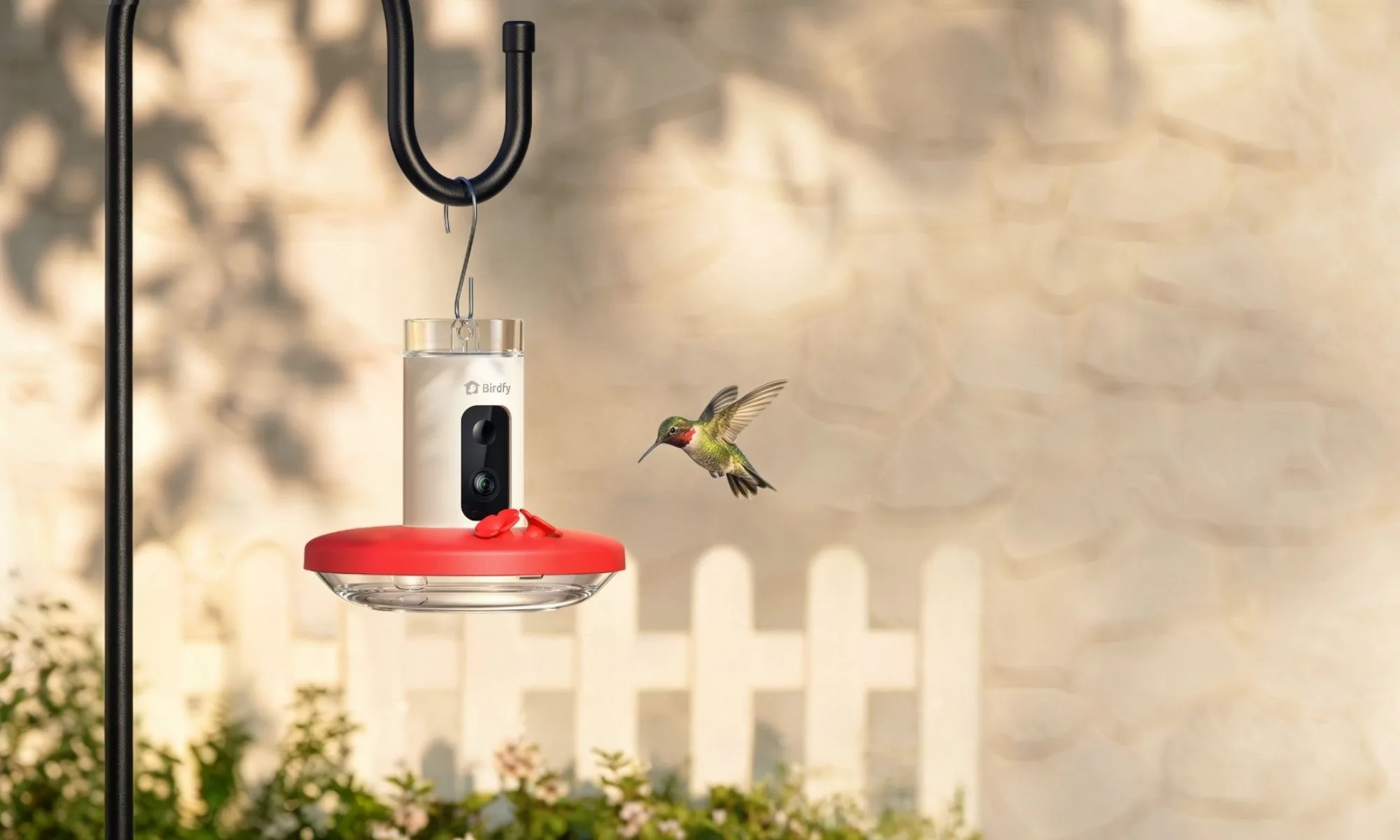
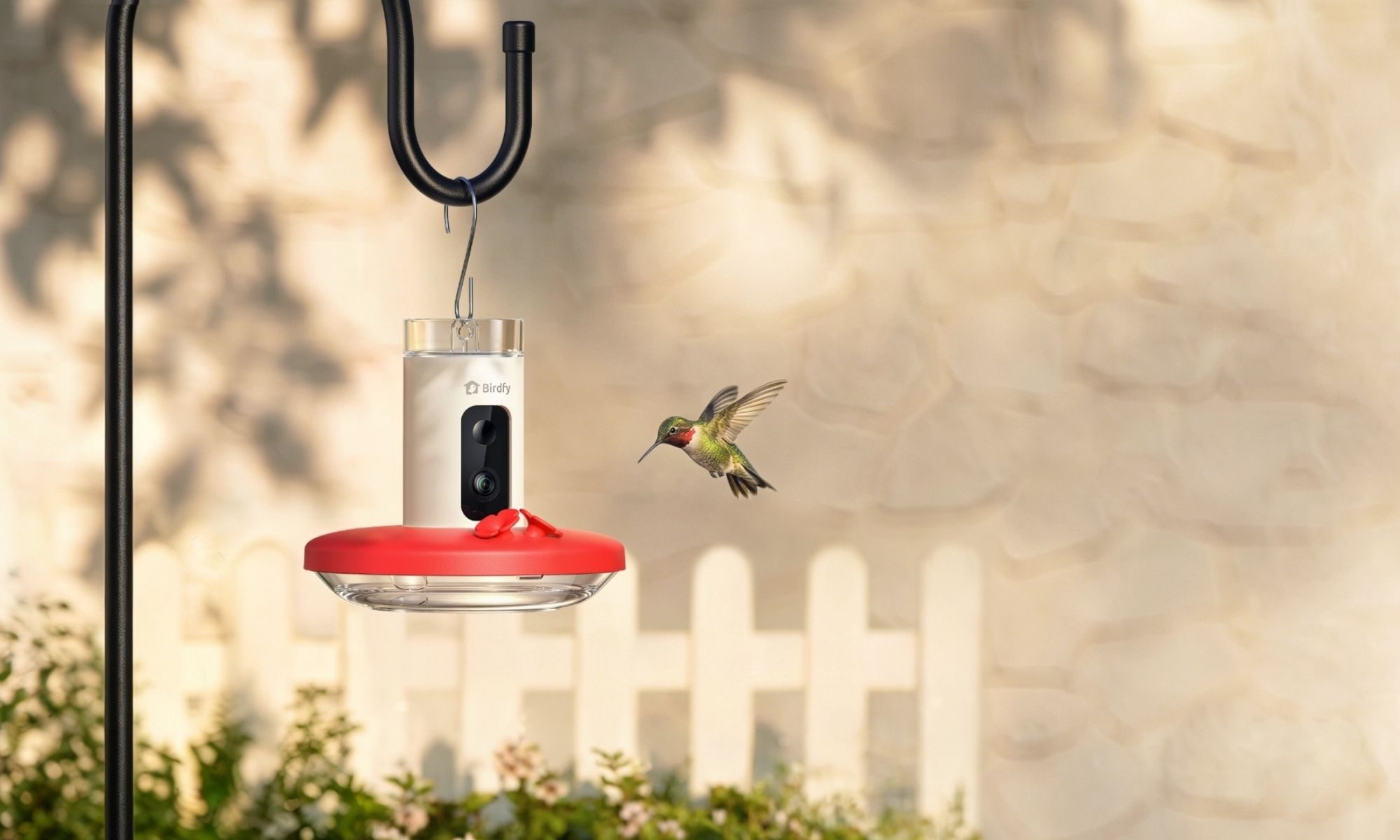
For most people, birdwatching starts with a glance through a window. A flash of red near the feeder. A hummingbird hovering for a few seconds. A bird perched on a fence before disappearing into the trees. These moments are easy to miss, and even when we notice them, we may not know what we are looking at.
Birdfy is changing that dynamic by bringing technology into one of the most ordinary places for observing wildlife: the backyard. The company has now surpassed one million smart birding devices worldwide. In the U.S., its smart birding community is capturing bird activity across everyday residential spaces, creating a growing dataset on how birds interact with the places where people live. Instead of relying on a handful of traditional observation sites, Birdfy’s technology is recording bird activity from thousands of everyday residential spaces. The resulting data offers a different way to look at how birds interact with the places where people live, and how people are responding to those encounters.
The new Birdfy U.S. Birdwatching Insights Report 2026: A Million Devices, One Portrait of Nature examines that activity through the company’s U.S. smart birding community. It is not intended to replace professional ecological surveys. Instead, Birdfy describes it as a portrait of birdwatching behavior and everyday nature observation, built from what its devices record.
And the portrait is surprisingly large. Over the past year, Birdfy says its network completed approximately 2.1 billion AI bird identifications, equivalent to about 66 bird visits recorded every second. Those observations are not happening exclusively in national parks or remote wilderness. They are taking place in the backyards, gardens, balconies, and feeding spots of ordinary households.
That scale is beginning to reveal patterns that can be difficult to see from a single backyard.
A growing network of observation points reveals how busy nature really is
One of the most striking findings in the report is how much bird activity happens before most people have even started their day. At around 6 AM, Birdfy recorded more than 63.2 million bird visits. The report says detections rose from fewer than 14 million by 5 AM to roughly 63.2 million by 6 AM, representing more than a fourfold increase in a single hour.
The activity does not stop there. Across the day, Birdfy’s data shows backyard visits rising around dawn, peaking between 7 AM and noon, with 8 AM emerging as the busiest hour. Activity then declines through the afternoon and falls sharply after 7 PM, with very little activity late at night.
In other words, the backyard has its own daily rhythm. Different species follow different schedules within that rhythm. The report notes, for example, that House Finches are most active around 10 AM, Black-capped Chickadees around 2 PM, and Dark-eyed Juncos as early as 7 AM. Northern Cardinals appear both early and late, with the report identifying them as a particularly persistent presence throughout the day.
These patterns are interesting precisely because they come from places where people may not think of themselves as conducting nature observation. Birdfy’s devices are effectively creating a growing network of small observation points. Each one sees only what happens in its own backyard, but collectively, those observations begin to form a broader picture.
The same principle applies geographically.
The report identifies a clear dividing line around the Rocky Mountains. East of the Rockies, across 19 states, the Northern Cardinal is the dominant familiar backyard bird, while west of the Rockies, the House Finch takes that position across another 19 states. The report attributes these differences to factors including climate, vegetation, and bird behavior.
The hummingbird data reveals another geographic pattern. East of the Rockies, the Ruby-throated Hummingbird accounts for 61.6% of hummingbird identifications, while western backyards show greater variety, including Anna’s, Allen’s, Rufous, and Costa’s hummingbirds.
Technology is not creating these differences. It is making them easier to see at scale.
The surprising birds are closer than we think
One of the most compelling ideas in Birdfy’s report is that discovering unusual wildlife does not necessarily require traveling into remote habitats.
Sometimes, it just requires looking more closely at home. Birdfy’s identification system has a library covering more than 6,000 species, while more than 1,000 species have actually been identified through its real-world data. That distinction matters. The library represents what the system is capable of recognizing, while the 1,000-plus figure represents species that have genuinely appeared in the platform’s recorded observations.
The report’s hummingbird data provides an especially striking example. Across more than 20 million hummingbird identifications, Birdfy recorded 17 species beyond the three most common hummingbirds. Among them were the Broad-billed Hummingbird, Berylline Hummingbird, and Lucifer Hummingbird, species described in the report as rare visitors in the areas where they were recorded. These observations came from ordinary backyard feeders rather than nature reserves.

That changes the way a backyard can be perceived. For someone who does not consider themselves a birdwatcher, an unidentified bird can be just another visitor. AI identification can put a name to it. The report describes this as a progression from “that red bird” to a Northern Cardinal, for example. Once an unfamiliar bird has a name, the barrier to learning more about it becomes smaller.
This accessibility is important because birdwatching is already a much larger part of American life than its reputation as a niche hobby might suggest. The report cites U.S. Fish & Wildlife Service research estimating that 96 million Americans watch birds, including approximately 91 million who do so at home or nearby. Backyard birding has therefore become an everyday activity for millions of people, not something reserved for dedicated birders equipped with binoculars and field guides.
Birdfy’s technology fits into that existing behavior by reducing some of the knowledge required to get started. You do not necessarily need to know the name of a bird before you can become interested in it.
From seeing a bird to sharing it
The most interesting part of Birdfy’s data may not be the birds themselves. It may be what people do after they see them. Birdfy users shared more than 2 million bird photos and videos, while the volume of sharing increased by 227%, or more than threefold.
That behavior suggests that backyard birding is becoming increasingly social. A person who sees something unusual does not necessarily keep the moment to themselves. They may save it, show a family member, or share it with someone else. Birdfy describes these as small “come look at this” moments, turning a private observation into something that can be experienced collectively.
The report also points to another layer of engagement. Birdfy says users spend close to 20 minutes in total viewing bird imagery through its Moments section. Combined with identification and sharing activity, the company sees a behavioral progression from recognizing a bird to returning to watch it and eventually sharing it with others.
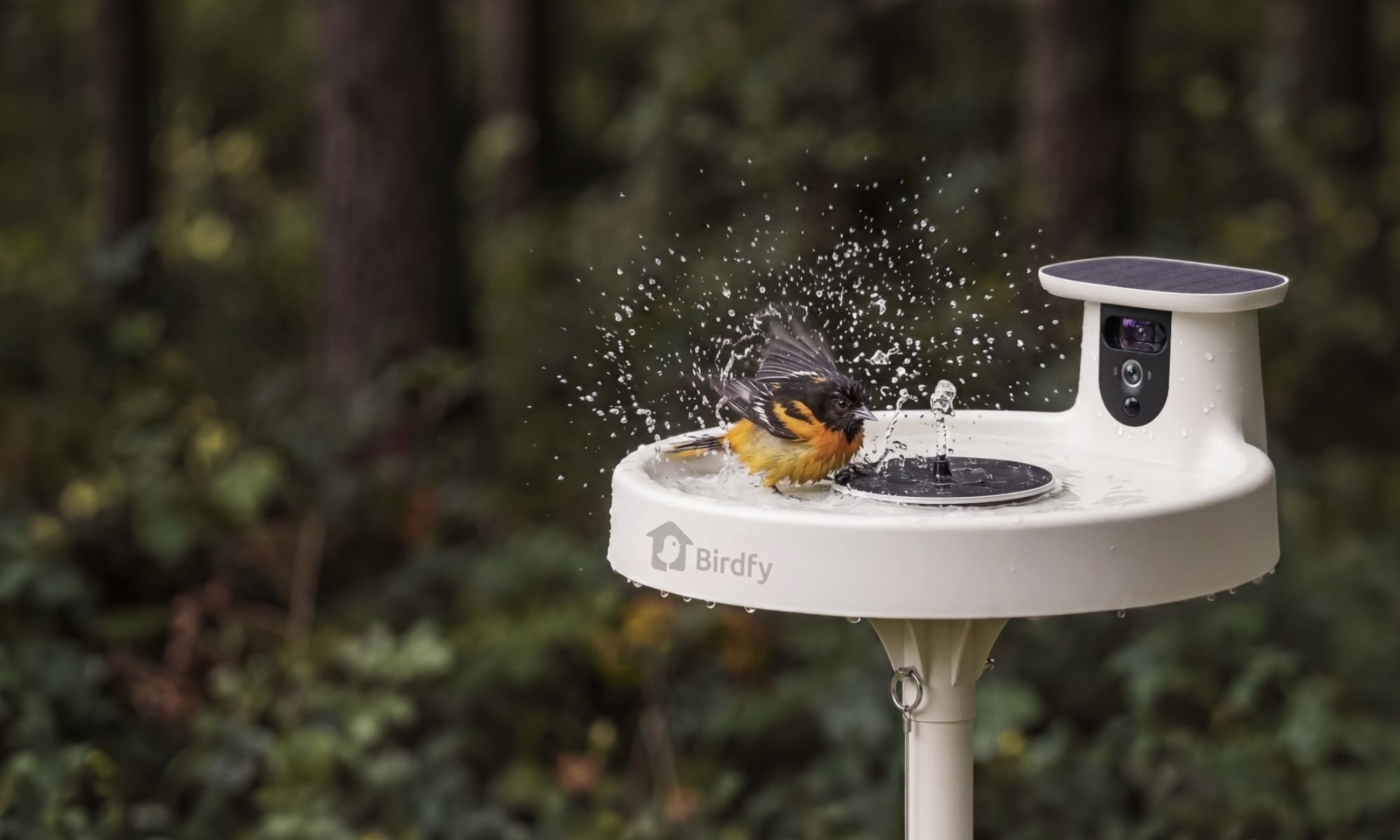
That progression is central to Birdfy’s larger argument. Technology can make nature easier to notice, but the bigger impact may come from what happens after someone notices it.
The report describes a progression from access to awareness, awareness to attachment, and attachment to action. It is difficult to measure something as personal as caring, but the repeated behaviors in the data provide one indication that users are spending more time engaging with what is happening outside their homes.
There is also an important social and environmental context to that engagement.
North America has lost an estimated 3 billion birds since 1970, according to research cited in the report. At the same time, public participation in bird observation has grown, with platforms such as eBird contributing more than a billion observations to conservation research. Birdfy positions backyard observation as another way people can become more aware of the wildlife around them.
The idea is simple: people are more likely to care about something they have learned to recognize and notice.
A different future for nature observation
Birdfy’s million-device milestone ultimately points toward something larger than smart bird feeders. It suggests that technology can change where nature observation happens and who gets to participate. Traditional wildlife observation often requires expertise, equipment, travel, or access to particular locations. A connected camera placed in a backyard changes that equation. The observation point is already there, and AI can help interpret what the camera sees.
But Birdfy is careful about what its data can and cannot demonstrate.
The company’s dataset reflects observations from Birdfy devices and therefore does not constitute a comprehensive census of wild bird populations. Device distribution varies between regions, different products attract different species and behaviors, and areas with more devices can naturally generate more observations. The report explicitly says its data should not replace field surveys or peer-reviewed research.
The company also acknowledges limitations in AI recognition. The system performs better with common species and clear images, while recognition can become less reliable with juveniles, unusual plumage, regional variations, poor lighting, or difficult viewing angles. Rare or unusual records may receive additional manual review.
Those limitations do not necessarily diminish the value of the dataset. They define what it is. Birdfy’s report is not claiming that a million devices can replace professional ecological monitoring. Instead, it offers a large-scale look at what happens when ordinary people have the ability to observe wildlife continuously in the places where they live.
That may be the more important shift. Birdfy has also tied this growing community to conservation through the Birdfy Fund, which receives $1 from every device sold. According to the report, the fund has raised $1 million, partnered with 14 conservation organizations, and supported 64 projects across 17 U.S. states. Its initiatives include conservation grants, research partnerships, bird-friendly backyard education, and community support.
The result is a feedback loop: technology makes birds easier to see, identification makes them easier to understand, sharing makes the experience more social, and greater awareness can create more opportunities for people to engage with conservation.
More than one million Birdfy devices sold globally therefore represent more than a sales milestone. They reflect a growing community of people choosing to pay closer attention to the wildlife around them. And when those individual moments are brought together, the picture becomes much larger. The data shows when birds arrive, where different species appear, how unusual visitors can turn up in ordinary yards, and how people increasingly choose to save and share those encounters.
Nature was never absent from our backyards. Birdfy’s data suggests that we are simply getting better at noticing it. Read the full Birdfy U.S. Birdwatching Insights Report 2026 here.
Note: Birdfy’s report states that its data reflects the company’s device user base and should be understood as a portrait of birdwatching behavior, not a comprehensive ecological census. Its statistical periods and methodologies vary by metric, with some early cumulative figures estimated from historical averages.

Wireless headphones have spent the past decade becoming smarter, more convenient and considerably harder to repair. Batteries are usually sealed inside, ear pads eventually deteriorate, and too many otherwise functional headphones become disposable once one critical component wears out.
That is starting to change. A small but important group of manufacturers is putting greater emphasis on replaceable batteries, removable ear pads and serviceable components, and beyerdynamic is leaning directly into that idea with the new AVENTHO Y.
Introduced at IFA 2026 for $149.99, the closed-back wireless over-ear headphone offers active noise cancellation, Bluetooth 6.0 multipoint connectivity, 45mm dynamic drivers, app-based EQ and up to 90 hours of battery life. None of those features alone makes it unusual, but beyerdynamic has taken a different approach to durability and long-term ownership that deserves more attention.
What Makes the AVENTHO Y Different?

Wireless headphones eventually develop the same problem as every other rechargeable product: batteries wear out. On many models, that can turn an otherwise perfectly functional headphone into electronic waste or an expensive repair project.
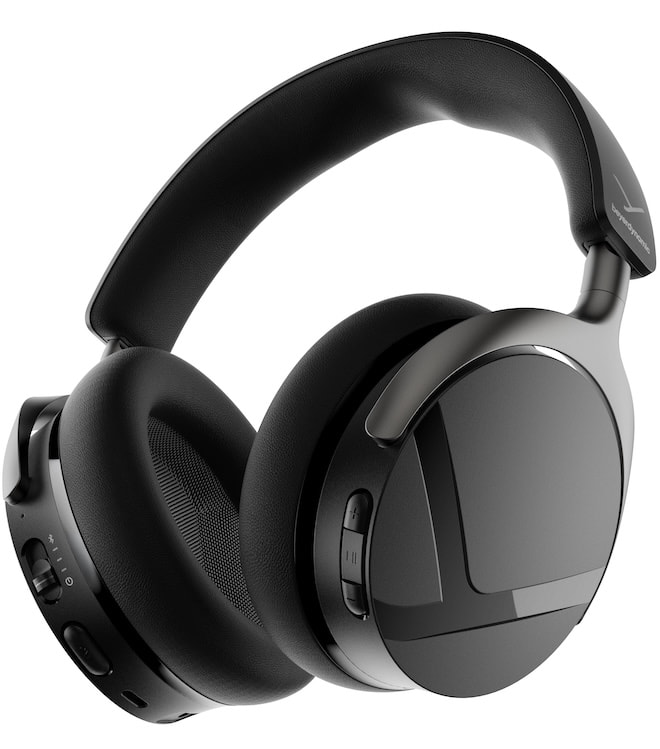
Beyerdynamic has designed the AVENTHO Y with a user-replaceable battery, magnetic interchangeable ear pads, aluminum sliders and stainless-steel hinges. The company also offers optional black or gray velour ear pads, while an upgrade package adds a low-latency USB-C dongle and detachable boom microphone. An integrated compartment inside the earcup can store the optional dongle or a spare battery.
That modular approach is probably the AVENTHO Y’s strongest differentiator. The optional dongle and microphone also broaden its usefulness beyond commuting and music listening, giving owners the ability to configure it for gaming, video calls or work without purchasing a separate headset.
ANC, Bluetooth 6.0 and 45mm Drivers

The AVENTHO Y uses 45mm dynamic drivers in a closed-back, foldable over-ear design with a specified frequency response of 20 Hz to 20 kHz. Active noise cancellation is joined by a Transparency mode, while two integrated microphones use environmental noise cancellation to reduce background noise during calls.
Bluetooth 6.0 supports multipoint connectivity and a claimed range of up to 20 meters. The beyerdynamic app provides firmware updates, adjustable controls and a 5-band equalizer, allowing users to alter the headphone’s tonal balance rather than being locked into the factory tuning.
There is one specification worth examining more closely. The AVENTHO Y supports SBC and AAC, but beyerdynamic does not list aptX, aptX Adaptive, aptX Lossless or LDAC. Bluetooth 6.0 is the current version of the wireless standard, but the version number should not be confused with automatic support for higher-bitrate Bluetooth audio codecs.
Battery Life Should Be a Major Selling Point
Beyerdynamic rates the AVENTHO Y for up to 90 hours of playback with ANC switched off and up to 60 hours with ANC active. A full charge takes approximately one hour, while five minutes of fast charging can provide up to six additional hours of playback.
Those figures put it near the top of the category, although Audio-Technica’s ATH-S300BT essentially matches them with up to 90 hours without ANC and 60 hours with it. The Audio-Technica requires approximately 2.5 hours for a full charge, however, versus one hour for the beyerdynamic.
The AVENTHO Y weighs 316 grams, which is worth considering for anyone planning to wear it throughout the workday or on long flights. Beyerdynamic is offering four finishes: Liquid Black, Blue Fusion, Soft Jade and Peach Blush.
Plenty of Competition at $150
The AVENTHO Y is entering a much tougher part of the wireless headphone market than its $149.99 price might suggest. Final’s UX3000 SV sells for the same $149.99 and takes a more sound-focused approach, combining custom 40mm drivers with hybrid ANC, multipoint connectivity and support for aptX and aptX HD. Battery life is considerably shorter at 35 hours without ANC and 25 hours with it, but Final has built much of its reputation around tuning rather than winning the specification-sheet contest.
The new EarFun Wave Pro X may be an even more direct threat. Originally shown at CES 2026 and priced at $129.99, it uses a dual-driver configuration with 40mm DLC and 10mm LCP drivers, Bluetooth 6.0 and an unusually comprehensive codec package that includes aptX Adaptive, aptX Lossless, LDAC and LE Audio. Auracast, multipoint connectivity, hybrid ANC, an eight-microphone call system and up to 90 hours of battery life make the absence of anything beyond SBC and AAC on the AVENTHO Y considerably more noticeable.
Nothing’s 2026 Headphone (a) sits slightly higher at a $199 MSRP, although Nothing is currently selling it for $159 in the U.S. It offers adaptive ANC, LDAC, USB-C and 3.5mm wired playback, an 8-band EQ and a remarkable claimed 135 hours of playback without ANC or 75 hours with it engaged. At 310 grams, it is also very close to the 316-gram beyerdynamic, making the comparison considerably more relevant than the lightweight Sony WH-CH720N.
What the AVENTHO Y has that none of those models can match as a complete package is its emphasis on long-term ownership. The user-replaceable battery, magnetic ear pads, stainless-steel hinges and optional low-latency dongle and boom microphone give it an upgrade and repair path that most wireless headphones still lack. That is a stronger reason to consider the beyerdynamic than Bluetooth 6.0 or another hour-counting exercise.

Key Specifications
- Type: Wireless closed-back over-ear
- Drivers: 45mm dynamic
- Frequency response: 20 Hz to 20 kHz
- ANC: Yes
- Transparency mode: Yes
- Bluetooth: 6.0 with multipoint
- Codecs: SBC, AAC
- Wireless range: Up to 20 meters
- Battery life with ANC: Up to 60 hours
- Battery life without ANC: Up to 90 hours
- Charging time: Approximately 1 hour
- Fast charging: 5 minutes for up to 6 hours
- EQ: 5-band via beyerdynamic app
- Battery: User replaceable
- Ear pads: Magnetic and interchangeable
- Weight: 316 grams
- Colors: Liquid Black, Blue Fusion, Soft Jade, Peach Blush
- Price: $149.99

Pricing & Availability
The beyerdynamic AVENTHO Y is priced at $149.99 in the United States and will be sold through beyerdynamic.com and Amazon.
At that price, the replaceable battery might matter more than another Bluetooth codec or marketing feature. Wireless headphones have become better and considerably more affordable, but relatively few are designed around the idea that owners might still want to use them after the original battery has reached the end of its useful life. Beyerdynamic appears to have noticed that problem, and the AVENTHO Y offers a rather sensible solution.
For more information: beyerdynamic.com
Related Reading:
I’ve covered the many ways smart thermostats can convert your home to a well-heated haven and how quickly they can pay for themselves through energy savings, but there’s one glaring issue. Almost all smart thermostats are designed only for central hubs and forced air heating/cooling. Imagine my relief when Sonoff showed up at IFA 2026 with a smart alternative.
Read more: The Weirdest and Wackiest Tech We Found at IFA 2026
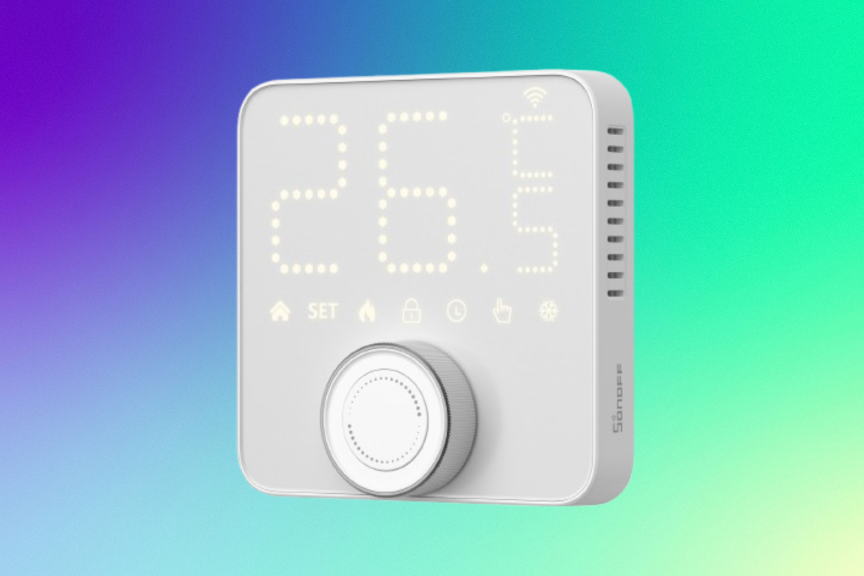
At last, I’ve found an alternative, thanks to Sonoff’s announcement of its latest TRV Smart Thermostatic Radiator Valve. It’s designed to fit on the valve pipe of a traditional home radiator, screwing in place and connecting to Wi-Fi to provide app insights and a full suite of control options. It’s available right now on the Sonoff website for $35 and supports both Celsius and Fahrenheit.
It’s difficult to find up-to-date smart radiator solutions in the IS, let alone everything Sonoff is offering here. The valve lets you adjust between several temperature plans and uses an IPS color screen to show temperature and settings at a glance. Its app also offers low-battery alerts so you can recharge it, as well as important reminders for frost protection, anti-calcification maintenance and even connections to window sensors that can automatically stop heating when windows are opened. There’s even a child lock to keep little fingers from messing up your heating schedule.
This combination of features is exactly what people need if they live in homes that primarily use radiators, have radiators in addition to central heating, or use radiators only in certain spots, like a finished basement. It offers the same savings potential and convenience as standard smart thermostats, plus some features tailored specifically for radiators.
Since I don’t have radiators in my home, I can’t easily test this smart valve out. I’ll have to ask other CNET editors if one of their rooms has a radiator they could test in so we can get real-world results, but everything looks promising here.
Are you more of a radiant floor heat home? Sonoff has you covered, too

Many newer homes have a different kind of heating technology, radiant flooring heating, popular in bathrooms and homes with certain kinds of wood flooring. If you’re interested in smart additions to this kind of radiant heating, Sonoff brought good news to IFA for you, too.
Sonoff also announced a Thermostat Core, designed to fit standard hydronic underfloor heating systems. It outfits floor heating with complete app controls, scheduling options and connection options with Sonoff temperature sensors, so floor heating can respond to the current temperature of a specific room. It sports a presence-activated screen, frost protection and other synergies similar to the radiator valve, too.
I don’t currently have pricing information for the Thermostat Core, but when I find out the details, I’ll let you know.
While I’m most excited about the smart heating, I’d be remiss not to mention that Sonoff announced several other smart products at IFA. It showed off an indoor siren and, most notably, a window security cam. Eufy also showed up with a window camera at IFA, so it’s apparently a new home security trend. Wyze got in the game much earlier this year with its own window security cam, and you can see what I thought about it here. These unique, covered cams fit directly on windows and are particularly useful for apartments and similar spots.

Turns out, you can rewrite history. Well, a chatbot’s understanding of your personal history, anyway.
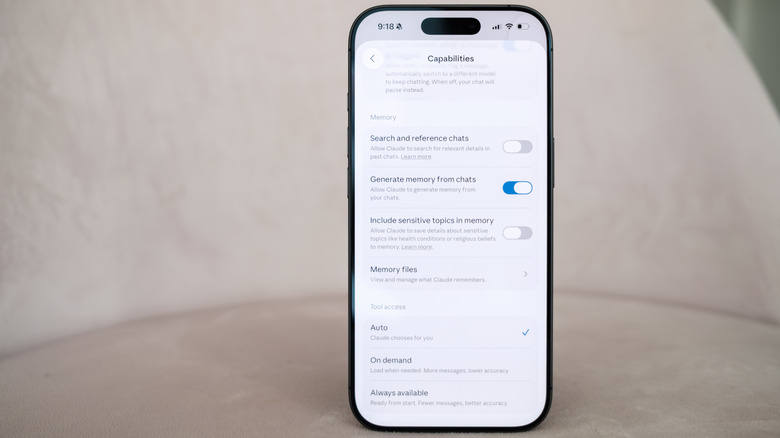
Since the summer of 2025, Claude has had the ability to remember past conversations. This feature — which Anthropic, like other AI labs, calls memory — allows the chatbot to personalize its responses and save you the hassle of repeating context for it. By default, memory is enabled for all Claude users, including those with free accounts, and following a recent update allows the chatbot to carry over its memory across both chats and Claude Cowork sessions. In recent weeks, Anthropic has also been rolling out more granular controls that give users the ability to edit the specific topics Claude remembers. Here’s how you can edit what Claude remembers about you.
How to edit Claude’s memory
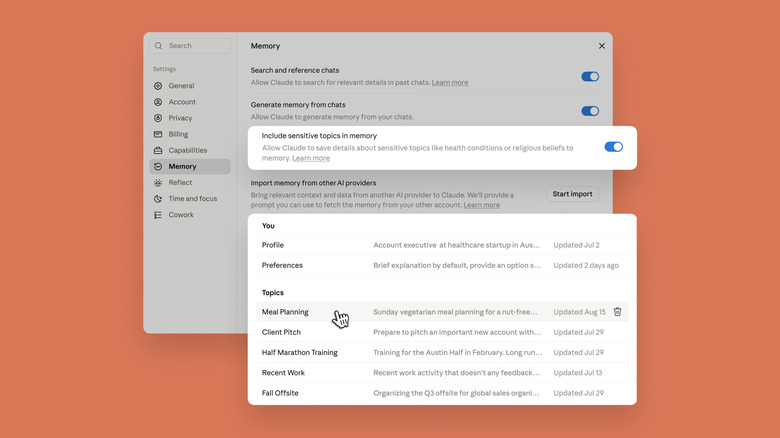
Claude organizes its memory around specific topics. The easiest way to edit those topics is from the chatbot’s web client, accessible via claude.ai. Once you’re there, follow these steps:
- Select Settings from the profile page menu.
- Click Memory.
- Scroll down and find the Topics section.
- Press the Edit icon to modify a memory, or the Delete icon to remove a topic from Claude’s memory.
- If you’re editing a memory, use the prompt bar to describe what Claude should change.
On mobile, follow these steps instead:
- Tap the profile icon to access the Settings menu.
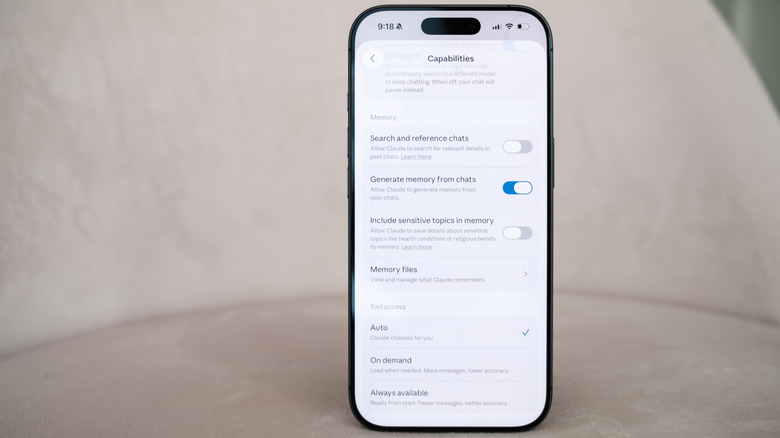
- Under the App section, select Capabilities.
- Scroll down and tap Memory files.
- Select a topic.
- If you want to edit a memory, use the prompt bar to describe what Claude should change. Tap the trash icon to delete a memory instead.
Following Claude’s latest memory update, Anthropic added an option called Include sensitive topics in memory. By default, Claude won’t save memories related to subjects like your health, race, ethnicity, religious beliefs, politics or gender identity. By enabling the new option, it will begin recording more sensitive information. Each time Claude generates a memory related to a sensitive subject, you will see a notice. According to Anthropic, “if you’re using an older version or the mobile app, you will not see this notice, and Claude won’t save the sensitive topic to its memory.”
The chatbot won’t retroactively save past conversations, and some information, such as government ID numbers, Claude will never save, even with Include sensitive topics in memory enabled.
As mentioned above, by default Claude will automatically generate memories for all users. You can disable this feature by toggling off Generate memory from chats. From there, Anthropic gives you two options: Pause memory or Reset memory. The company warns the latter cannot be undone. “Upon re-enabling the feature, you’ll start from scratch, and Claude will not have its previous memory,” Anthropic notes.
How Claude’s memory works in projects
One wrinkle worth noting is that Anthropic silos Claude’s memory in projects so that the chatbot’s context window doesn’t get overwhelmed with information that isn’t relevant to your current task. You can shape Claude’s memory in projects by adding comments, documents and information from GitHub through the right side of the interface. At the end of each day, Claude will generate a summary of the work it’s done for you, which you can edit from the same interface.
If you accidentally prompt Claude outside of a project, click or tap the three dots icon and select Add to project to properly sort the conversation. If you want Claude to remember something specific across every tool you can interact with, including projects, you can add that information to the Profile section of Memory menu.
Some additional tips

If at any point you want to temporarily avoid the possibility of Claude writing something to its memory, you can switch the chatbot to Incognito mode by clicking or tapping the ghost icon on the top right of the interface. “Incognito chats aren’t saved, added to memory, or used to train models,” Anthropic explains.
In March, Anthropic added an import tool to make it easier for people to bring their conversations from other chatbots over to Claude. Engadget has a full guide on how to export your chats to Claude, but here I’ll mention that you can select Start import next to Import memory from other AI providers to get that process started.

Labor Day sales are usually a great excuse to finally buy the tech you’ve been putting off. Cameras, microphones, webcams— almost everything sees a discount. If you’re a creator or simply love documenting trips, Insta360’s Labor Day sale is worth paying attention to.
The sale runs in the U.S. from August 27 through September 7, with discounts across the company’s flagship 360 cameras, action cameras, webcams, and wireless microphone lineup. Whether you’re looking for an 8K 360 camera or a pocket-sized action cam for travel, here are the five best Insta360 deals to consider.
Best Insta360 Labor Day deals at a glance
| Product | Best for | Labor Day price |
|---|---|---|
| Insta360 X5 | 360° filmmaking & travel | $464.99 |
| Insta360 Ace Pro 2 | Action camera users | $329.99 |
| Insta360 GO Ultra | Tiny wearable camera | $379.99 |
| Insta360 Mic Pro | Wireless audio | $299.99 |
| Insta360 Link 2 Pro | Streaming & video calls | $209.99 |
Insta360 X5: $464.99

If you just need one recommendation from this list, it has to be the Insta360 X5. Up until just a week ago, it was the company’s flagship 360 camera, and arguably the most versatile option for creators who shoot everything from road trips to mountain biking.
The biggest reason to buy the X5 is flexibility. It captures 8K 360-degree video, meaning you don’t have to worry about framing while shooting. Instead, you record everything around you first, then decide on the camera angle later inside the Insta360 app. That’s especially useful for cycling, skiing, motorcycle rides, or solo travel where you don’t have someone behind the camera.
Insta360 has also improved low-light performance over previous generations, so nighttime city walks and sunset footage retain noticeably better detail than older 360 cameras.
Insta360 Ace Pro 2: $329.99

Not everyone wants a 360 camera. If your priority is traditional wide-angle footage, the Insta360 Ace Pro 2 is arguably the better buy at $329.99. Unlike the X5, the Ace Pro 2 is built around a 1/1.3-inch image sensor paired with dual AI imaging chips. That combination allows it to record 8K video while delivering much cleaner footage in difficult lighting conditions, especially indoors or after sunset.
The camera is also designed for creators who spend more time editing than reframing. You simply mount it, hit record, and get stabilized footage without the additional workflow that comes with 360-degree video.
Insta360 GO Ultra: $379.99

The Insta360 GO Ultra is probably the most unique product in the sale. Priced at $379.99, it’s less about cinematic filmmaking and more about capturing moments you would’ve otherwise missed.
The camera weighs very little and can clip onto clothing or attach magnetically using Insta360’s mounting system. That makes it perfect for first-person cooking videos, walking tours, skiing, or simply recording family moments without holding a camera.
Despite its tiny size, it records 4K stabilized video, and Insta360’s FlowState stabilization keeps footage remarkably smooth while walking or running.
Insta360 Mic Pro: $299.99

Video quality gets all the attention, but audio is usually what separates professional content from amateur footage. That’s where the Insta360 Mic Pro comes in.
Discounted to $299, the Mic Pro is a dual wireless microphone system aimed at creators who shoot interviews, podcasts, or YouTube videos. Its standout feature is the customizable e-ink display, which lets you monitor recording information while consuming very little power.
The system also includes intelligent noise reduction and professional-grade wireless recording, making it a strong alternative to premium options from DJI and Rode.
Insta360 Link 2 Pro: $209.99

If your content is created at a desk rather than outdoors, the Insta360 Link 2 Pro deserves attention. At $209, it’s one of the better premium webcam deals this Labor Day.
The webcam uses a 1/1.3-inch sensor—much larger than what most webcams offer—which translates into sharper 4K video and significantly better performance in dim rooms. It also supports multiple audio pickup modes, making it useful for video calls, livestreaming, and online teaching without requiring a separate microphone in many situations. For remote workers and streamers, it’s easily one of the strongest value picks in the sale.

If you want improve a model rocket’s performance, all the common options come with serious trade-offs: you could increase the motor’s size, which raises safety issues, or you could cut down on weight, which limits the possible payload. [Con Hathy] was therefore intrigued by the design of the Arcas sounding rockets, which with the aid of a gas-fed launch tube could reach an altitude of 100 km. Even in models without a gas generator, a launch tube apparently boosted performance, an effect which [Con] was able to replicate in a much smaller model rocket.
In theory, as the rocket engine fires, it should pressurize the tube behind the rocket, providing an extra boost out of the tube. To test this, [Con] 3D printed a test rocket, launched it both from a standard rail and from a tube, and compared the results. During tube launches, a printed sabot fit around the rocket and formed a seal with the launch tube. The results were surprising: the tube-launched rocket actually performed substantially worse than a rail launch. After building a simulation, [Con] found that, as the rocket moves down the tube, the volume of tube it needs to back-fill with gas increases faster than the engine puts out exhaust; it was pulling a slight vacuum behind it, slowing itself down.
To solve this, [Con] decreased the diameter of the launch tube. To let the rocket fit into the tube, he also modified it to use pop-out stabilizer fins which wrap around the rocket while in the tube. The sabot was also shrunk, and had foam added to improve the seal between it and the rocket. For this second test, [Con] also connected a pressure sensor to the base of the launch tube. The results on the second launch were much better: according to an altimeter, it managed to fly 72% higher. Based on the pressure sensor’s data, a longer tube could have squeezed out still more performance, but this still demonstrated the principle quite well.
We’ve seen a tube-launched rocket before, though not with such a performance focus.

Entertainment20 seconds ago
One of Horror’s Most Infamous True Stories Is Officially Returning to the Screen [Exclusive]

NewsBeat3 minutes ago
England cricket squads: Aneurin Donald and Henry Crocombe called up for Sri Lanka series
Business4 minutes ago
Poland stocks higher at close of trade; WIG30 up 1.29%

Fashion2 months ago
Weekend Open Thread – Corporette.com

Fashion1 month ago
Weekend Open Thread: Brooks Brothers

NewsBeat2 months ago
London Mayor Sadiq Khan handed a peerage by Keir Starmer alongside 15 other Labour figures… just days before the PM leaves No10

News Videos10 minutes ago
How much is your countries currency worth in USD? #shorts #map #geography #money

News Videos17 minutes ago
My Secret Bitcoin Trading Tool Revealed | Fib Retracement | Whale Scanners | #btc

News Videos31 minutes ago
she left her husband for money and went to work #foryou #viral #yt
-

 Fashion7 days ago
Weekend Open Thread: Maeve – Corporette.com
-

 Crypto World6 hours ago
IMF Says El Salvador’s Post-Review Bitcoin Purchases Used No Public Funds
-

 Crypto World2 days ago
CLARITY Act could advance within weeks, Atkins says
-

 Politics9 hours ago
A new European chapter for Gibraltar
-
 Tech6 hours ago
JLab goes big on new headphones at IFA 2026
-

 Politics6 hours ago
33 Cosy Autumn Home Decor Ideas: Blankets, Pumpkin Decorations, And Candles
-

 Sports7 hours ago
Commanders’ Chig Okonkwo is a top breakout fantasy football candidate
-

 Sports6 hours ago
Alexandre Pato consortium’s Northampton Town investment approved
-

 Crypto World6 hours ago
IMF Says El Salvador’s Bitcoin Buying After Audit Used No Public Funds
-

 Business7 days ago
Onto Innovation Stock: AI’s Next Bottleneck Is Yield (NYSE:ONTO)
-
 Crypto World7 hours ago
Bitcoin News: BTC to Gold Ratio Hits 18 as Both Assets Rally
-

 Sports10 hours ago
Devon Dampier throws for 3 TDs as No. 21 Utah demolishes Idaho
-
Crypto World10 hours ago
XRP Trading Activity Hits Highest Level Since February as Price Jumps 8%
-

 Tech6 hours ago
Project Tube Shot Features Spark II Rocket and the Five-Foot Pipe That Gave a B Motor Extra Sky
-

 Crypto World2 days ago
Elon Musk Says Grok 4.7 Lands in 10 Days and Will Beat Every Model
-

 Politics6 hours ago
The House Article | When Nigel Farage enters No 10, he will not fall into Whitehall’s trap
-

 Tech7 hours ago
US law firm accuses UK AI software firm of unwanted contract renewal when it tried to leave
-

 Sports7 hours ago
Seven wickets in 21 balls: Sri Lanka’s Chamari Athapaththu scripts history with record-breaking spell
-

 Crypto World7 days ago
Bitcoin price tests $82K resistance as Brandt stays long
-
 Tech6 days ago
Hugging Face built a $4.5 billion empire on free AI models. Now Nvidia is buying it for $12.9 billion
You must be logged in to post a comment Login