



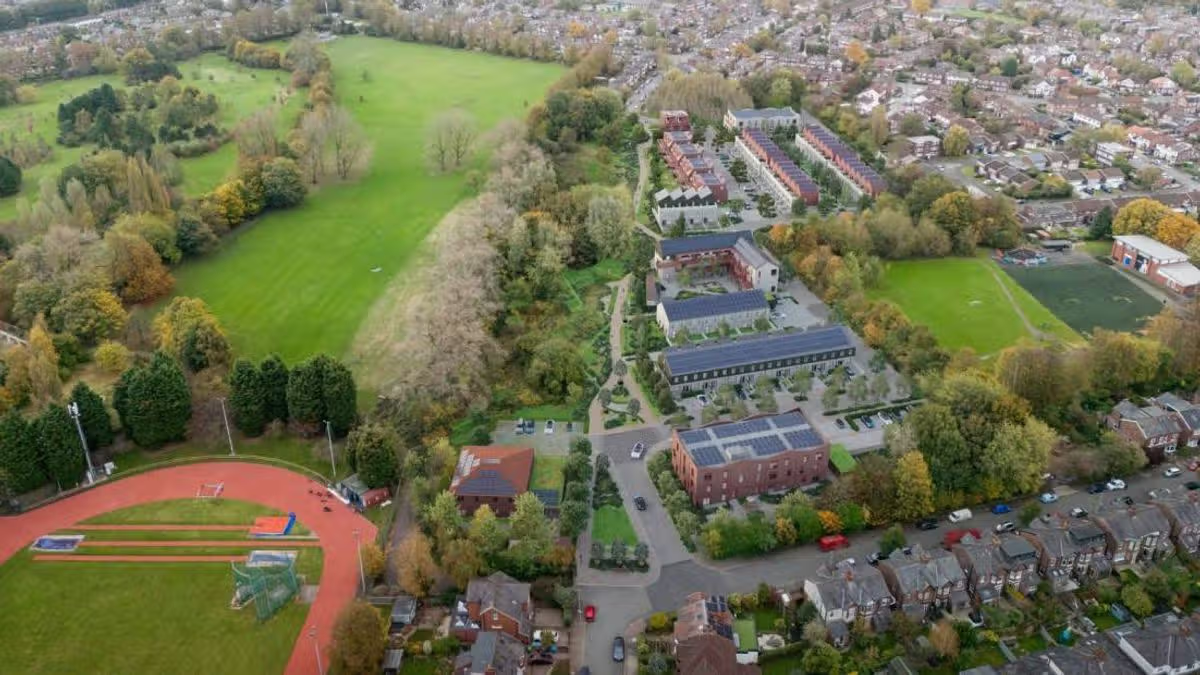
Manchester Metropolitan University, Places and Southway Housing Trust aiming to build 120 homes on Ryebank Fields

(Image: 5plus architects for Step Places, Southway Housing Trust, and Manchester Metropolitan University)
Manchester Metropolitan University (MMU) has been accused of ‘pure hypocrisy’ in a row over its plans to sell Ryebank Fields in Chorlton for developers to build new homes.
Chantal Kerr-Sheppard, a Green Party councillor in Chorlton, said MMU promoted a ‘biodiversity’ campaign in May called Make a Metre Matter, which encouraged people to ‘plant and [make] green spaces’, while at the same time pressing ahead with its own plans to sell off a large patch of green land.
A planning application led by MMU along with Step Places and Southway Housing Trust is aiming to build 120 homes on Ryebank Fields. If approved, the job would involve work to fix the land’s ‘contamination with asbestos, heavy metals and hazardous hydrocarbons’, MMU said.
Councillor Kerr-Sheppard said the planning reports to build homes on Ryebank Fields, which are published online and have been seen by the Local Democracy Reporting Service, showed it would mean a ’40 per cent net loss in biodiversity’ for animal habitats in the area.
The planning reports also showed the application to build on the land would need ‘offsite mitigation’ to make up for the changes.
The Chorlton councillor said: “They plan to sell 46,000 square metres of open fields and rewilded green space at Ryebank Fields for development.
“According to MMU’s own biodiversity consultants, building on the fields will cause a 40pc net loss in area habitat biodiversity and an 81pc loss for watercourses, forcing them to buy out-of-area credits because no offset sites exist in Greater Manchester.
“The greenfield loss would be here. Any theoretical gain is somewhere else entirely.
“A university that insists local urban biodiversity is vital cannot propose a 40pc net loss on its own estate and offshore the damage. Using off-site credits to greenwash a massive local habitat reduction directly undermines their sustainability mission. That is pure hypocrisy.”
MMU said it ‘recognises there are different views about the future of Ryebank Fields’ and that the plans to develop the land would ‘would deliver much-needed affordable homes’ for the area.
Campaigners from the Ryebank Fields Community Group have been fighting to keep the ‘precious’ land as a community woodland and meadow. They have submitted an alternative planning application to ‘protect’ the fields from being sold to developers.
It is thought that the planning applications are set to be decided at a council meeting on September 24.
A Manchester Metropolitan University spokesperson said the plans to sell Ryebank Fields are part of wider changes to its campus.
They added: “As part of a wider strategy of consolidating the university into a single campus site in Manchester city centre, Manchester Metropolitan worked with Manchester City Council and identified Ryebank as a suitable site to meet the need for high quality and affordable housing as part of the council’s wider development plans for the Chorlton area.
“We recognise that there are different views about the future of Ryebank and respect the strength of feeling that the site generates within the local community.
“The site is privately owned by the university and has a complex industrial legacy containing historic contamination that requires appropriate management and remediation. Any realistic long-term future for the site must address these issues in a way that is safe, responsible and deliverable.
“The planning application being brought forward by Step Places and partners offers a balanced and sustainable solution.”
A mix of homes would be created on the land according to MMU’s planning statement, with 52 of these set to be for sale on the open market, and 42 properties would be ‘age-friendly’ and affordable apartments for social rent for people aged 55 and over, among other types of housing.
The university said the homes would include specialist accommodation for young adults with autistic needs, and that the development plans would ‘retain significant publicly accessible green space’, as well as ‘creating new pathways and spaces for community use’.




















































You must be logged in to post a comment Login