The proposals for an overnight visitor levy have been backed by the county’s elected mayor, but hoteliers in Scarborough have urged David Skaith to listen to coastal organisations and ensure that any potential tax is “fair for everybody”.
As the Government closed its consultation on the proposed overnight visitor levy, the Mayor of York and North Yorkshire has set out the next steps for a visitor levy in the region with a series of meetings with tourism and hospitality businesses.
According to research into the rewards and risks of the levy by the North Yorkshire Policy Lab, an overnight tax could generate up to £52 million a year based on a £2 per person, per night charge.
Lynn Jackson, vice president of the Scarborough Hospitality Association (SHA), said she is worried about the implementation of the scheme and how unregistered AirBnBs and holiday lets would be included.
She added that in order for an overnight visitor levy to receive support from coastal businesses, there would need to be a commitment to ringfence the funds for hospitality.
“It has to be properly ring-fenced, because often enough they say things are ring-fenced and then it gets used for roads or whatever they’ve decided is a more urgent need.
“We must have a say in how it’s used, and it has to be levied across the board,” said Ms Jackson, who also owns and runs a successful hotel in the town.
In its response to the Government’s consultation, North Yorkshire Council highlighted concerns from the tourism industry about the proposed levy.
Of the 277 responses to the council’s survey, 71 per cent were opposed to the idea, with 18 per cent in support and 11 per cent neutral.
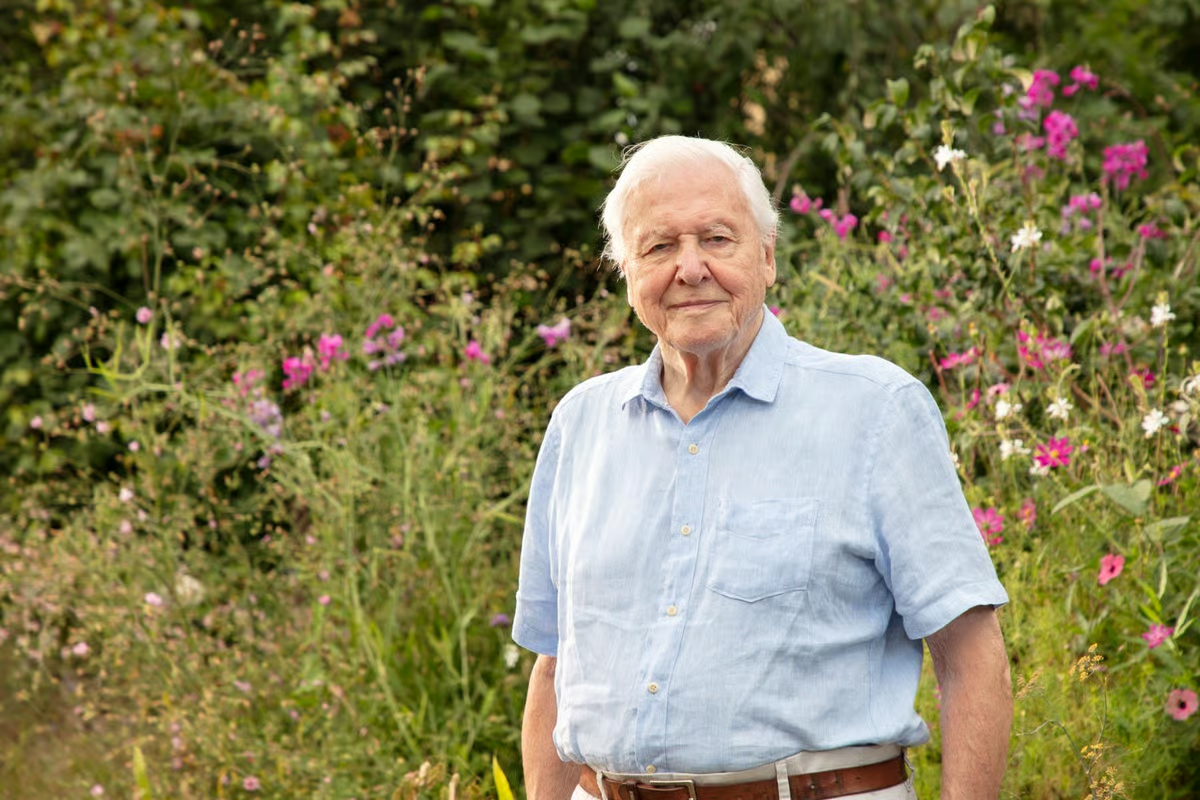
York and North Yorkshire’s Mayor, David Skaith said that if the levy gets the green light following the consultation, he will hold a region-wide consultation before it is introduced.
He said: “York and North Yorkshire is beautiful, with something for everyone. That’s why millions of people come to spend time here every year, it’s a success story for our region, with over 54,000 jobs, but it also adds a lot of pressure to local services.
“A visitor levy could be a total game changer for our region, it’s an opportunity to drive investment into our communities, and back businesses in our tourism and hospitality sectors with the support we all know we need, but nobody has the money for right now. We must get this right for our region, and that’s what I’m focussed on as we go through this process.”
Vice President of the SHA, Ms Jackson said: “The thing is, it has to be across the board. There are so many unregistered businesses and B&Bs, so how can you make sure that we’re all equal in this?
”That’s the biggest issue that most of us have. If every business is taxed in the same way, then it’s fair.”
Asked if she was worried about the cost of additional administration to collect the tax, she said: “Yes, definitely, it’s going to be a pain in the bum.”
Opponents of the overnight levy have warned that the additional cost could put tourists off from visiting the region.
Ms Jackson told the Local Democracy Reporting Service (LDRS): “I think anybody visiting Europe is already familiar with it, it’s a part of your holiday when you go abroad nowadays, so I don’t think for an awful lot of people it will make much difference.”
However, she highlighted that hospitality businesses in the UK are “already paying more tax than they do abroad, we’re paying VAT at 20 per cent and in a lot of otherplaces across Europe, they’re paying 5 per cent VAT, so we’re already hammered.”
In Spain, the standard VAT rate for hotel accommodation is 10 per cent, while hotels in Portugal’s autonomous regions of Madeira and the Azores pay a rate of 4 per cent.
Mr Skaith said: “I’m focussed on the people who live and work here and who feel the impact of millions of visitors. I’ll make sure that we prioritise the places and public services that feel the most pressure, without costing residents an extra penny.”