
Business
Instagram Down? Users Report Access Issues As Meta Platform Sees Uptick In Complaints Friday Nationwide


Instagram users began flagging access problems Friday, with outage-tracking services logging a rise in user-submitted reports, though the overall volume of complaints remained within a range trackers consider typical rather than indicative of a major platform-wide outage.
According to Entireweb Status, which monitors the platform’s availability, Instagram received 181 user reports over the preceding 24 hours as of Friday, with 10 of those reports arriving within the most recent hour. The tracking service described the platform as “operating normally” overall, noting no ongoing major outages or confirmed service disruptions at the time of its assessment. Separately, StatusGator reported 38 user-submitted outage reports over the same 24-hour window, similarly characterizing Instagram as currently operational.
Instagram, owned by Meta Platforms, is a widely used social media application that allows users to share photos and videos through its mobile app and website, featuring tools including Reels, Stories, direct messaging, live streaming, shopping features and a range of business tools aimed at creators, brands and e-commerce sellers.
Even relatively modest spikes in user reports tend to draw significant public attention given Instagram’s massive global user base, which numbers in the billions of monthly active users worldwide. Outage-tracking platforms like Downdetector and its competitors compile crowdsourced reports from affected users and compare that volume against typical background activity levels to help determine whether a genuine, widespread service disruption is underway, as opposed to isolated issues affecting individual users’ devices or local internet connections.
Instagram has a well-documented history of periodic outages, some brief and localized, others significant and widespread. According to outage-tracking service NordVPN, one notable disruption in March 2026 affected the platform globally, preventing users from posting new content, refreshing their feeds, or using direct messaging, while other Meta-owned apps including Facebook and WhatsApp continued operating normally during that incident, pointing to a service-specific rather than company-wide root cause.
A separate major disruption in October 2025 was traced to an outage affecting Amazon Web Services, the cloud computing infrastructure provider that Instagram relies on for portions of its backend operations. That outage, which lasted approximately three hours, prevented users from loading their feeds, sharing new posts, or refreshing the app entirely, illustrating how Instagram’s reliability can be affected by disruptions originating well outside Meta’s own direct infrastructure.
Other notable incidents recorded by outage trackers include a March 2025 disruption specifically affecting the ability to post or view comments, and a more significant five-hour outage later that same month that generated more than 19,000 outage reports from users in the United States alone, according to NordVPN’s tracking data.
Instagram’s outage history also includes disruptions specific to its desktop website rather than its mobile application. One incident in November 2025, tracked live by Tom’s Guide, saw more than 2,600 users report problems accessing the platform, with testing at the time indicating the issue was largely confined to Instagram’s desktop version rather than affecting the mobile app, which continued functioning normally for most users throughout the disruption. That particular outage resolved relatively quickly, with reports tapering off within roughly an hour of first being detected.
The scale of user reaction to Instagram outages, even relatively brief ones, often plays out prominently on other social media platforms, with users frequently turning to X to check whether an outage they are experiencing is affecting others as well, or is instead isolated to their own device or connection. That pattern was evident during the November 2025 desktop outage, when social media commentary about the disruption spread quickly even as the underlying technical issue proved to be relatively short-lived and limited in scope.
Instagram’s parent company, Meta Platforms, has historically provided limited real-time technical detail during active outages, typically acknowledging disruptions through brief statements on its own social media accounts before providing more substantive explanations, if any, once an incident has been fully resolved. That pattern has held across multiple significant outages over the years, including incidents dating back more than a decade, when the company’s official Instagram account confirmed and later removed acknowledgments of earlier disruptions as service was restored.
For users experiencing access problems with Instagram, common troubleshooting steps recommended by technology support resources typically include verifying an active and stable internet connection, restarting the Instagram application, checking for and installing any pending app updates through the Apple App Store or Google Play Store, and clearing the app’s cache if persistent loading or crashing issues continue. Users are also generally advised to check independent, real-time outage-tracking services before assuming a widespread platform issue is responsible for problems they may be experiencing, since many reported issues ultimately trace back to individual device, network or account-specific causes rather than a broader service outage.
As of Friday, neither Instagram nor Meta Platforms had issued a public statement specifically addressing the reports logged over the preceding 24 hours, consistent with the company’s typical approach of only formally acknowledging outages once report volumes climb well beyond routine background levels. Given that current tracking data shows report volumes remaining within a range multiple monitoring services characterize as normal operating conditions, it remains unclear whether Friday’s uptick in complaints represents the early stages of a more significant emerging disruption or simply reflects the kind of routine, low-level user reports the platform typically receives on any given day.
Users concerned about ongoing access issues are advised to continue monitoring independent outage trackers, including Downdetector, Entireweb Status and StatusGator, for updates on Instagram’s service status, as these platforms typically provide the most current, crowdsourced picture of the app’s real-time availability across different regions and device types.

Nebius: Too Much Worry Is Not Good For Bulls' Wealth

Vistance Networks director L. William Krause sells $149,555 shares
Business
FII money trail: Where did overseas investors put money in second half of August after $3 billion inflow?

Overseas investors remained net buyers across sectors in the second half of August, marking a second consecutive fortnight of inflows. Ten sectors recorded FPI inflows between August 16 and August 31, according to data from the National Securities Depository (NSDL).
Consumer Services: Foreign buying stays strong
Consumer Services attracted the highest inflows during the fortnight, with Rs 5,019 crore flowing into the sector. This took the sector’s total inflows for August to Rs 8,417 crore. The buying follows a strong July, when the sector recorded inflows of Rs 10,191 crore. Cumulative inflows over the last three months have now reached Rs 19,787 crore.
SBI Securities attributed the sustained interest to changing consumer spending patterns. “Higher disposable income is driving a major shift toward aspirational spending, boosting high-end fashion, luxury cosmetics, and premium organized retail,” the brokerage said in a report.
It added that consumer preference has shifted strongly toward leisure travel, upscale dining and hospitality, helping sustain sector growth despite broader economic cycles.

Financial Services: FIIs rebuild exposure
Financial Services followed closely, attracting over Rs 4,000 crore from FIIs during the fortnight. In the rolling two-month period from June to August, the sector received total inflows of Rs 16,570 crore.
SBI Securities said the return of foreign buying suggests that selling pressure on the sector has eased, with investors gradually rebuilding their exposure. The brokerage noted that Financial Services had recorded Rs 12,303 crore of outflows between March and May.The Financials index has been consolidating within the 25,671–27,127 range for the past two and a half months. A decisive breakout on either side of this range could provide the next directional cue for the index.
September has historically been a strong month for Financial Services, with the index ending higher in 12 of the last 20 years and delivering an average gain of 3.03%. Kotak Bank is the stock exhibiting a positive price action structure, says SBI Securities.
Healthcare: Inflows remain firm
Healthcare attracted Rs 3,021 crore during the second half of August. Over the rolling two-month period, the sector received Rs 12,076 crore of inflows. According to SBI Securities, stocks exhibiting a positive price action structure include Divis Lab, Glenmark, Ipca Lab, Laurus Lab, PPL Pharma and Zydus Life.
Telecom: FPI selling continues
Telecom remained under pressure, with FPIs pulling out Rs 4,983 crore from the sector in August 2026. The selling trend has persisted since January, with FPIs offloading Rs 29,513 crore from the sector so far this year.
The sector continues to face pressure from the heavy investments required for pan-India 5G infrastructure and spectrum renewals, which are weighing on near-term free cash flows. At the same time, actual 5G revenue generation through ARPU growth is scaling much slower than projected.
Unresolved legacy issues, particularly ongoing disputes over Adjusted Gross Revenue (AGR) dues and statutory payout timelines, also remain an overhang because of the potential for sudden legal and financial liabilities for telecom operators.
Telecom’s domestic-revenue-heavy business model also leaves the sector exposed to dollar-denominated import costs, including equipment, putting pressure on net profit margins compared with export-driven sectors such as IT and Pharma.
Stocks exhibiting a weak price action structure include Bharti Airtel, Bharti Hexacom, ITI, Indus Tower, Railtel and Route Mobile.
Power: FPI interest remains weak
Power continued to see consistent FPI outflows, with investors pulling out Rs 2,641 crore from the sector in August 2026. This follows significant outflows of Rs 9,956 crore over the previous three months.
State Power Distribution Companies (DISCOMs) are facing intense cash flow constraints and rising debt. Failure in tariff realisation and delays in subsidy payouts are directly limiting the capital expenditure needed for essential grid maintenance and modernisation.
The sector is also facing higher costs, with high import duties and global supply chain disruptions increasing the cost of critical components such as solar modules, wind turbines and high-voltage transmission lines.
Unpredictable weather shifts, including prolonged dry spells and irregular monsoons, have added another layer of volatility. These conditions have created spikes in peak power demand while simultaneously disrupting hydro and wind generation, forcing utilities to purchase high-priced emergency power from the short-term spot market.
Stocks exhibiting a weak price action structure include Adani Ensol, CESC, KPI Green, NTPC Green, NTPC, PTC India, Powergrid, Tata Power and Torrent Power.
(Disclaimer: Recommendations, suggestions, views and opinions given by the experts are their own. These do not represent the views of The Economic Times)

Valero Energy: Diesel Scarcity Lifted Q2, But The Rally Leaves Little Room For Error


The Closed-End Fund Association (CEFA) is the national trade association representing the closed-end fund industry. A not-for-profit association, CEFA is committed to educating investors about the many benefits of these unique investment products and to providing a resource for information about its members and their offerings.
Analyst’s Disclosure: I/we have no stock, option or similar derivative position in any of the companies mentioned, and no plans to initiate any such positions within the next 72 hours. I wrote this article myself, and it expresses my own opinions. I am not receiving compensation for it. I have no business relationship with any company whose stock is mentioned in this article.
This transcription was created from a CEF Insights video recorded in August 2026. For more information, please visit cefa.com. This material is not and is not intended as investment advice, an indication of trading intent or holdings or the prediction of investment performance. All fund-specific information is the latest publicly available information. All other information is current as of the date of this presentation. All opinions and forward-looking statements are subject to change at any time.
Aberdeen Investments disclaims any responsibility to update such views and/or information. This information is deemed to be from reliable sources; however, Aberdeen does not warrant its completeness or accuracy. This presentation is not intended to, and does not constitute an offer or solicitation to sell or a solicitation of an offer to buy any security, product, investment advice or service (nor shall any security, product, investment advice or service be offered or sold) in any jurisdiction in which Aberdeen is not licensed to conduct business, and/or an offer, solicitation, purchase or a sale would be unavailable or unlawful.
Disclaimer:
Past performance is not indicative of future results.
This commentary is for informational purposes only, and is not intended as an offer or recommendation with respect to the purchase or sale of any security, option, future or other derivatives in such securities. Any research or analysis used in the preparation of this document has been procured by Aberdeen Investments or its affiliates for their own use and may have been acted on for their own purpose. The results thus obtained are made available only coincidentally and the information is not guaranteed as to its accuracy. Some of the information in this document may contain projections or other forward-looking statements regarding future events or future financial performance of states, markets or companies. These statements are only predictions and actual events or results may differ materially. The reader must make his/her own assessment of the relevance, accuracy and adequacy of the information contained in this document and make such independent investigations, as he/she may consider necessary or appropriate for the purpose of such assessment. Any opinion or estimate contained in this document is made on a general basis and is not to be relied on by the reader as advice. Neither Aberdeen Investments or any of its agents have given any consideration to nor have they made any investigation of the investment objectives, financial situation or particular need of the reader, any specific person or group of persons. Accordingly, no warranty whatsoever is given and no liability whatsoever is accepted for any loss arising whether directly or indirectly as a result of the reader, any person or group of persons acting on any information, opinion or estimate contained in this presentation. The information herein including any expressions of opinion or forecast have been obtained from or is based upon sources believed by Aberdeen Investments to be reliable but is not guaranteed as to accuracy or completeness. The information is given without obligation and on the understanding that any person who acts upon it or otherwise changes his position in reliance there on does so entirely at his or her own risk. Aberdeen Investments reserves the right to make changes and corrections to its opinions expressed in this document at any time, without notice. Any unauthorized disclosure, use or dissemination, either whole or partial, of this presentation is prohibited and this presentation is not to be reproduced, copied, made available to others. Fixed income securities are subject to certain risks including, but not limited to: interest rate (changes in interest rates may cause a decline in the market value of an investment), credit (changes in the financial condition of the issuer, borrower, counterparty, or underlying collateral), prepayment (debt issuers may repay or refinance their loans or obligations earlier than anticipated), call (some bonds allow the issuer to call a bond for redemption before it matures), and extension (principal repayments may not occur as quickly as anticipated, causing the expected maturity of a security to increase). Historical data and analysis, should not be taken as an indication or guarantee of any future performance analysis forecast or prediction. Such information is basis and the user of this information assumes the entire risk of any use made of this information. In the United States, Aberdeen Investments is the marketing name for the following affiliated, registered investment advisers: Aberdeen Standard Investments Inc., Aberdeen Asset Managers Ltd., Aberdeen Standard Investments Australia Ltd., Aberdeen Standard Investments (Asia) Ltd., Aberdeen Capital Management LLC, Aberdeen Standard Investments ETFs Advisors LLC and Standard Life Investments (Corporate Funds) Ltd. © Aberdeen Group plc 2026 ID: AA-220626-209669-1 aberdeeninvestments.com
Seeking Alpha’s Disclosure: Past performance is no guarantee of future results. No recommendation or advice is being given as to whether any investment is suitable for a particular investor. Any views or opinions expressed above may not reflect those of Seeking Alpha as a whole. Seeking Alpha is not a licensed securities dealer, broker or US investment adviser or investment bank. Our analysts are third party authors that include both professional investors and individual investors who may not be licensed or certified by any institute or regulatory body.

Dream Finders Homes director Len Sturm purchases $20,205 in stock
Business
ASX 200 Sheds Nearly 1% For The Week As Rate Hike Fears, Iran Conflict Rattle Markets Amid Volatile Trading
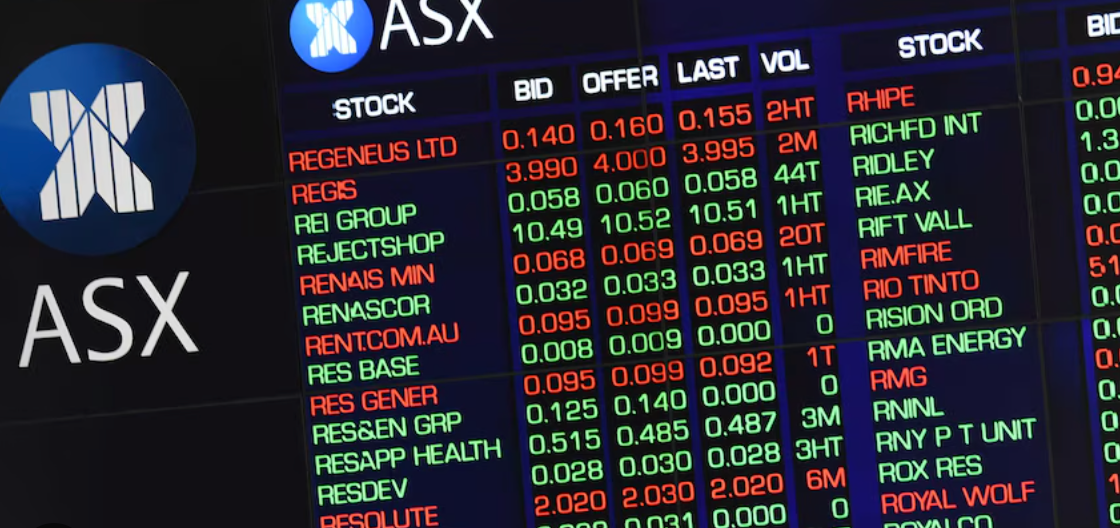
SYDNEY — Australian shares closed out a turbulent trading week Friday with the benchmark S&P/ASX 200 index shedding just under 1% since Monday, as investors navigated a volatile stretch driven by escalating tensions in the Middle East, rising Australian bond yields and growing expectations of a Reserve Bank interest rate hike later this month.
The week began on a difficult note, with the index sliding sharply Monday and Tuesday amid a global bond market selloff triggered by renewed U.S. military strikes on Iran, which sent oil prices climbing and rattled equity markets worldwide. That pressure continued into Wednesday, extending the ASX 200’s losing streak to three consecutive sessions before the market found its footing later in the week.
Thursday brought the week’s most significant rebound, with the ASX 200 gaining 42 points, or 0.5%, to close at 9,020, as bargain-hunting investors stepped back into the market following its slide to a four-week low. That decline had been driven in part by June-quarter GDP data that came in hotter than expected, reinforcing market expectations that the Reserve Bank of Australia may move to raise interest rates at its meeting later this month. Adding to the concerning economic backdrop, the same GDP figures showed the Australian economy had delivered zero net productivity growth since 2019.
Interest rate markets moved sharply during the week to reflect that shifting outlook, with traders pricing in nearly an 80% probability of an RBA rate increase later in September, a significant jump in hawkish sentiment compared with expectations just days earlier.
Moomoo Australia chief market strategist Tapas Strickland described the somewhat counterintuitive dynamic at play, in which even sluggish economic growth could still prompt the central bank toward tightening rather than easing.
“Some thought the economy is growing a little bit too fast, and so therefore you may actually need to raise rates to slow down the rate of growth, even though the rate of growth is so slow,” Strickland told AAP.
Thursday’s rebound was underpinned by broad-based sector strength. Non-energy minerals led the day’s gains, followed by financials, manufacturing and communications stocks, though losses in energy minerals, consumer durables and healthcare limited the overall advance. Gold miners rallied strongly, with Northern Star Resources and Evolution Mining both climbing 2.6%, while Australia’s big four banks rose between 1% and 2%. Rare earths producer Lynas climbed 2.4% during the same session.
The week’s most dramatic single-stock move came from Corporate Travel Management, which plunged 84% to a near 14-year low after resuming trading following a yearlong suspension tied to missed financial reporting deadlines stemming from an accounting scandal involving its UK operations.
Friday’s session brought the week to a close on a mixed note, with the ASX 200 finishing down 0.16%, snapping the momentum built during Thursday’s rebound. Rising stocks still outnumbered declining ones on the broader market by 660 to 419, with 431 stocks finishing unchanged, even as the benchmark index itself edged lower.
Among Friday’s standout performers, Regis Healthcare led the day’s gainers, rising 5.12% to close at $4.52, a notable bounce following the aged care operator’s sharp declines earlier in the week tied to ongoing uncertainty over government aged care funding policy. Drone detection company DroneShield added 5.11% to finish at $1.75, while uranium producer Paladin Energy climbed 5.06% to $11.83.
On the losing side of Friday’s ledger, Nine Entertainment Co. Holdings fell 8.25% to close at 92 cents, marking the steepest decline among ASX 200 constituents for the session. Fuel retailer Ampol dropped 5.45% to finish at $40.90, while Viva Energy Group slipped 3.49% to $2.91.
Looking across the full trading week through Friday’s close, HMC Capital emerged as one of the standout performers, gaining 8.39%, followed closely by automotive parts retailer Bapcor, which rose 8.02%, and gold producer Ora Banda Mining, up 5.65%. On the other end of the spectrum, Nine Entertainment and Ampol again featured among the week’s weakest performers, alongside continued volatility in Corporate Travel Management following its dramatic relisting collapse.
Mining stocks broadly improved over the course of the week despite dipping on Friday specifically, with copper prices holding onto recent gains and gold continuing to lift on the back of a dovish pivot from the U.S. Federal Reserve, along with sustained central bank gold buying globally. That commodity strength provided a partial offset to the broader pressure facing the market from rising local bond yields and mounting expectations of RBA tightening.
The week’s volatility also unfolded against a backdrop of significant global developments, including Nvidia’s confirmed $12.93 billion acquisition of AI platform Hugging Face, a deal that helped fuel gains across global technology and AI-linked stocks, along with a strong earnings report from cloud company Snowflake that further bolstered sentiment in that sector internationally. Those developments provided some support to global risk appetite even as the Iran conflict and its implications for oil prices continued to weigh on broader market sentiment throughout the week.
Real estate stocks emerged as one of the week’s more consistently pressured sectors, weighed down by the sustained rise in global and domestic bond yields, which makes property trusts’ income streams comparatively less attractive relative to risk-free government bonds. That dynamic weighed on names including Stockland and Charter Hall at various points during the week, even as the broader materials and financial sectors showed greater resilience.
With the Reserve Bank of Australia’s September policy meeting now looming as the next major catalyst for the local market, investors are likely to remain focused in the coming week on further domestic economic data, along with ongoing developments in the Middle East conflict and their implications for global oil prices and inflation expectations. The combination of a potential RBA rate increase, continued geopolitical uncertainty, and lingering volatility in individual stocks following this week’s dramatic moves in names like Corporate Travel Management and Regis Healthcare suggests Australian equities may continue to experience elevated volatility heading into the back half of September.

Foxconn says third quarter to outperform market expectations on AI strength

South Korea exports surpass annual record as AI chip boom drives shipments
Business
First they called him Nithin, then WTF flipped the script: Nithin Kamath’s birthday wish as Nikhil turns 40

Nikhil Kamath co-founded WTFund, which focuses on supporting young founders and startups.
In a birthday post for his younger brother on X, Nithin said he is now called Nikhil “exponentially more” than before. It is no longer limited to people addressing him by the right name in person. Nithin said he now receives emails, LinkedIn messages and tweets addressed to Nikhil every day.
For Nithin, though, Nikhil has always been the person people turned to. “Right from when he was maybe 15 or 16, he was always the guy to go to for anything,” Nithin wrote, adding that his brother somehow always had connections, with the quality of those connections improving over time.
He recalled one example from their younger years. If Nithin wanted to go out drinking, he would ask Nikhil where to go. Nikhil would point him towards certain places and tell him there would be no entry fee, as long as Nithin told the bouncer his name.
That memory, shared with a laughing emoji, was followed by a very different realisation for the elder brother: Nikhil has turned 40.
“Damn, I can’t believe he’s 40,” Nithin wrote, adding that his brother turning 40 made him feel much older.
Kamath’s first appearance 15 years ago
Zerodha founder and CEO Nithin Kamath recently recalled the discount broker’s first appearance in the press 15 years ago, saying the article helped lift account openings from a few hundred a month to nearly 500 and made him believe he had found an early growth hack.
In a post on X, Kamath said the company first appeared in the press on September 5, 15 years ago. The story came at a time when Zerodha was still in its early sales-led phase, and Kamath was speaking to clients under the pseudonym “Sachin”.
“I first spoke to Nikhil as Sachin, my pseudonym for speaking to clients during sales calls. You didn’t want the CEO making sales calls,” Kamath wrote, adding that he had even met customers pretending to be Sachin in Zerodha’s early days.
Kamath said he once picked up a call as Sachin, only to realise that the caller was a journalist from The Economic Times. “I was shocked. I had to suddenly switch from Sachin to Nithin,” he said, adding that he faked a different accent so that he would not be recognised.
The article, according to Kamath, had an immediate impact. “When this story came out, our account openings suddenly went from a few hundred accounts a month to almost 500. I was convinced I had discovered a growth hack,” he said.
(Disclaimer: Recommendations, suggestions, views and opinions given by the experts are their own. These do not represent the views of The Economic Times)

Poland crypto bill blocked after third presidential veto

Tom Hardy and Christopher Nolan Officially Reunite on the WWII Epic Taking Over Streaming

XRP NO WAY! HE JUST SAID IT ALL OUT LOUD! (EVERYONE IS LINING UP!)





-
 Crypto World20 hours ago
Bitcoin price stalls near $82K as key resistance holds
-

 Politics20 hours ago
Best Gaming Laptops, CPUs, TVs, And Keyboards To Upgrade Your Set Up For GTA VI
-

 Tech21 hours ago
The Birds Outside, Drawn For You Automatically
-

 Crypto World1 day ago
IMF Says El Salvador’s Post-Review Bitcoin Purchases Used No Public Funds
-
 Crypto World21 hours ago
U.S. added stronger than expected 162,000 jobs in August as labor market bounced back
-

 Sports1 day ago
Alexandre Pato consortium’s Northampton Town investment approved
-

 Sports19 hours ago
Golden Eaglets Drawn in Group B for 2026 WAFU B U17 Championship
-

 Sports1 day ago
Commanders’ Chig Okonkwo is a top breakout fantasy football candidate
-
 Crypto World19 hours ago
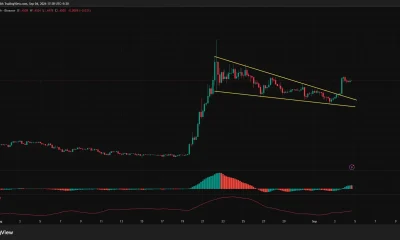
XRP price breaks falling channel as bulls target $1.53
-

 Politics1 day ago
A new European chapter for Gibraltar
-

 Politics23 hours ago
The House | Bin the lectures, bring gossip and be ready to banter: how the new PM should prepare for his Trump encounter
-

 Politics19 hours ago
How To Avoid Winter Colds: 4 Everyday Habits That Spread Germs, Says Pharmacist
-

 Crypto World19 hours ago
From warning to listing: UK’s largest retail investment platform opens access to crypto ETNs
-

 Tech21 hours ago
A Worthy Android Ereader, With Some Tradeoffs
-

 Crypto World20 hours ago
FinCEN flags $12.7B tied to Southeast Asia crypto investment scams
-

 Crypto World20 hours ago
Trezor Data Breach Impacts 67,000 More US Customers
-

 Politics1 day ago
33 Cosy Autumn Home Decor Ideas: Blankets, Pumpkin Decorations, And Candles
-

 Sports1 day ago
Seven wickets in 21 balls: Sri Lanka’s Chamari Athapaththu scripts history with record-breaking spell
-

 Tech20 hours ago
How To Edit Claude’s Memory
-

 Tech20 hours ago
beyerdynamic AVENTHO Y Debuts at IFA 2026 and Makes Wireless Headphones Less Disposable
You must be logged in to post a comment Login