People living in parts of Radcliffe and Ainsworth have woken up to find their power is out.
According to Greater Manchester electricity distribution network operator, SP Electricity North West, 70 homes have been affected.
Engineers have been sent to fix the problem, and a team is currently on the wa
Advertisement
A fault with an underground cable is being blamed. It is estimated that power will not be restored to those homes affected until around 2pm.
The fault was reported just after 8am
One resident, who contacted The Bury Times, said: “I woke up to grab a coffee to find the electricity was off yet again! Now according to the website it won’t be on until 2pm.
“What is it with the electricity in Ainsworth, I don’t know how long it’s been off! It’s just so annoying as we seem to experience a power cut so often.”
They may not tilt in quite the same way, but the famously wonky, timber-fronted shops of this ancient street continue to attract visitors and residents alike – and have caused people to crane their necks for centuries.
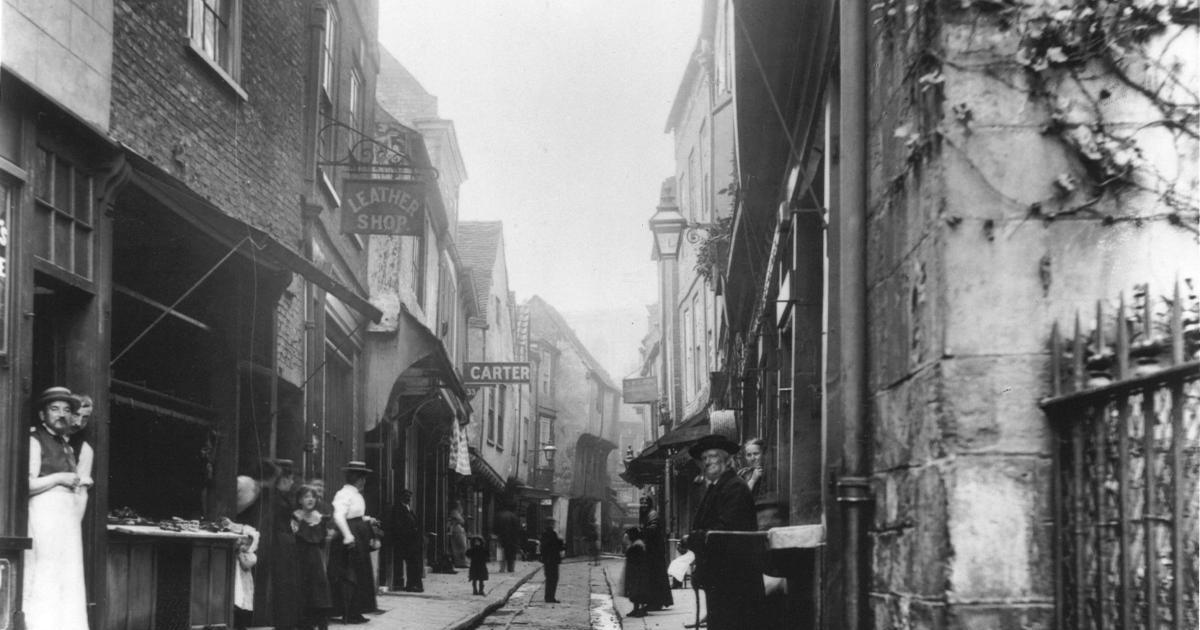
Children turn Shambles into a playground in this early photograph of York’s famous medieval street, long before it became one of the city’s biggest attractions.
After the heat of July and August, York was an obvious staycation choice, with plenty to enjoy, whether food and drink or the city’s rich culture was the main attraction.
Undated
Locals will be all too familiar with the crowd-pulling appeal of Shambles, one of York’s great photo stops.
The narrow, bustling lane is packed with quirky shopfronts, overhanging upper floors and queues of people in search of a little medieval magic – or perhaps something closer to Harry Potter’s Hogwarts.
Undated
The street is often linked with Diagon Alley, although J.K. Rowling has said she had not visited Shambles when creating the wizarding shopping street. That has done little to lessen the connection in visitors’ minds, or the appeal of the Harry Potter-themed shops.
Yet Shambles had a far more pungent past than its glossy, Instagram-ready present might suggest.
Shambles was recorded as early as 1086, when the area appeared in the Domesday Book as in macello – Latin for “at the market”. It developed into York’s butcher’s quarter, with meat sold from open-fronted premises and slaughtering often carried out behind the shops.
Advertisement
The shelves beneath several windows, still visible today, once displayed cuts of meat rather than wizarding treats, souvenirs and sweet jars.
The leaning buildings of Shambles are almost touching in this undated photo from The Press archive.
Leaning – by design
Those upper floors that appear to lean into the street were not simply the result of medieval builders having a bad day. They were deliberately built to project over the lower storeys, a technique known as jettying – also seen elsewhere in York, such as Goodramgate.
A scene from 1974.
Jettying gave householders extra room above without taking away valuable space at street level. On Shambles, where the timber-framed buildings stand so close together, the result is especially striking as it can feel as though the houses are conspiring to meet overhead.
Advertisement
Deliveries in bygone years when vans still made their way down cobbled Shambles to supply the shops lining the historic thoroughfare.
The overhangs also helped shelter stalls, shoppers and goods from rain and sunshine, particularly useful when this was a working meat market, long before refrigerated display cabinets.
What’s in a name?
The formal street name is Shambles although many refer to it as “the Shambles”. Its name comes from an old word for a bench or stall and later became closely linked with places where meat was sold.
These delivery drivers, pictured in 1986, are in a tight spot as they navigate the famously-narrow street.
It has had other names over the centuries, including Haymongergate and Nedlergate, before the “Great Flesh Shambles” appeared in the 15th century.
Advertisement
By 1830, 25 of York’s 88 butchers were based there.
The butchers have gone, the sights and smells have changed, and the street is now a global visitor favourite. Yet Shambles remains defiantly crooked and a medieval survivor still leaning into the future.
Katie Taylor will make her final ring walk to take on Flora Pili
09:50, 05 Sep 2026Updated 09:57, 05 Sep 2026
Katie Taylor is set to make her final ring walk in what promises to be a highly emotional night at Croke Park.
The 40 year old boxing icon takes on Flora Pili as she bids to become an undisputed world champion for a third time. Taylor puts her WBA, WBO and IBF super-lightweight world titles on the line, while the vacant WBC belt and Pili’s IBO title are also up for grabs.
Taylor delivered an outstanding performance in her previous encounter with Amanda Serrano last July and enters the bout with a record of 25-1, her only defeat coming against Chantelle Cameron in May 2023 before securing revenge six months later.
Advertisement
As for Pili, she remains unbeaten, having secured victory in all 12 of her professional contests to date, with two coming by way of knockout. This marks only the third occasion she has competed outside her home nation of France.
A host of Irish fighters feature across the nine-bout card, alongside musical performances from Westlife and The Mary Wallopers. Here’s everything you need to know about the event:
Start time
The opening bout on the card is scheduled to begin at 4.10pm, featuring an all-Irish middleweight clash between Dublin’s Paul Ryan and Belfast’s Paddy Gallagher. The main card gets underway at 7pm.
Main event time
The ring walks for the headline bout are scheduled to take place after 9.45pm. This timing will be dependent on how the undercard progresses.
Advertisement
TV channel information
The eagerly anticipated bout will be broadcast live on both DAZN and RTE (only in the Republic of Ireland), with DAZN’s coverage kicking off at 7pm and RTE following an hour later at 8pm.
Full card
Katie Taylor vs Flora Pili – Undisputed Super Lightweight Championship for the WBC, WBA, IBF, WBO, IBO and Ring Magazine Titles.
Dave Allen v Thomas Carty – heavyweight.
Paddy Donovan v Tyrone McKenna – welterweight.
Advertisement
Taylor Bevan vs Emmet Brennan – super-middleweight.
Molly McCann vs Sylwia Doligala – bantamweight.
Joe McGrail vs Matthew Boreland – super-bantamweight.
Adam Olaniyan vs Matej Hudak – heavyweight.
Advertisement
Bobbi Flood vs Jack Swallow – super welterweight.
Paul Ryan vs Paddy Gallagher – middleweight.
Quotes
Katie Taylor: “I have a very tough challenger in front of me but I’ve built a reputation of always taking the tough fights and why make my last fight any different.
“This is a very tough challenge, I have no doubt, but this is what I was born for, this is what I’m made for.
Advertisement
“God has put this gift in me since I was a kid, I have one last time to go in there and just display the gift that God has put in me.
“What a privilege!”.
Flora Pili: “I have nothing to lose and everything to win. I am the underdog for the fight.
“For that reason there’s less pressure on me, and for that reason I’m going to be giving 200% from round one right to the end.
Advertisement
“I’m going to give everything I can and hopefully take home all of these wonderful belts.”
Former referee Mike Dean controversially claimed he used to play “mini games” while officiating matches – and footage from an old Manchester United fixture raises some very uncomfortable questions
There are few things more likely to send football fans into a conspiracy theory spiral than a referee admitting he used to play games with himself during Premier League matches – and Mike Dean has now given them plenty to work with.
One was seeing how long they could stay in the centre circle. Another was seeing how long they could go without blowing the whistle.
Dean claimed he had managed to go 20 to 25 minutes without blowing his whistle “a few times” during his top-flight career, adding that it was something they did “for a laugh.” Unsurprisingly, though, his comments weren’t particularly well received by football fans, many of whom have accused Dean of compromising the integrity of matches.
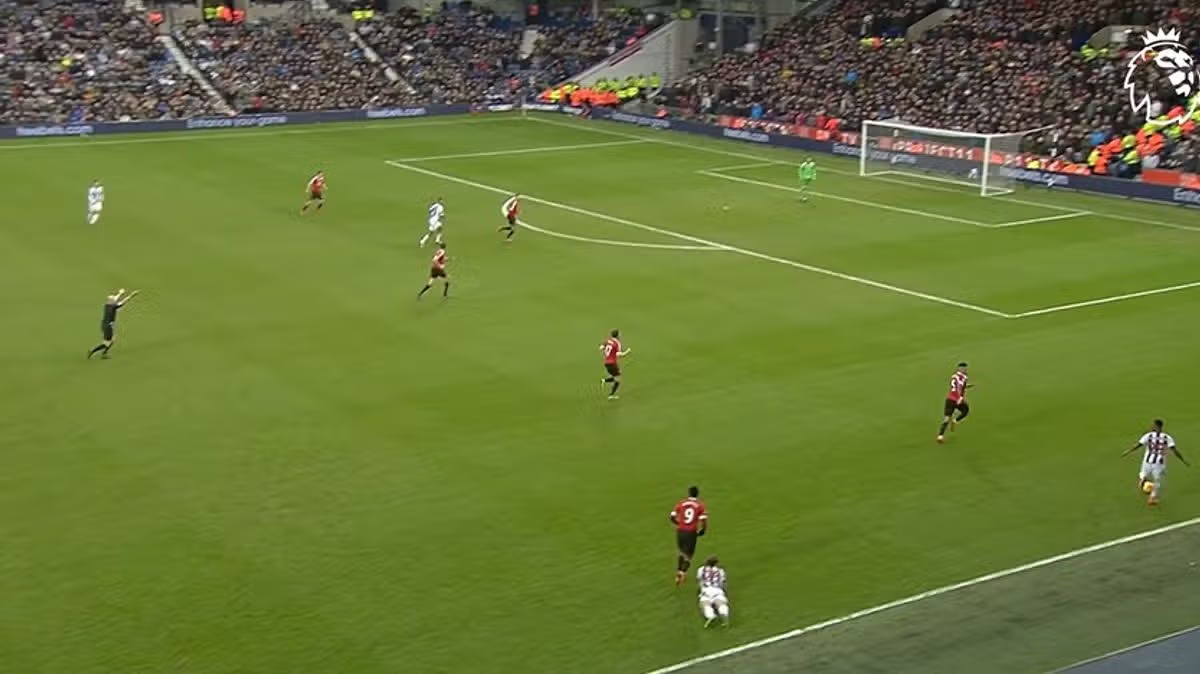
To investigate, MEN went back and watched the full footage of one particular Premier League match – and it’s difficult not to raise an eyebrow. The game in question was West Brom’s 1-0 victory over Manchester United at The Hawthorns on March 6, 2016.
It was hardly an obscure game in Dean’s career. United were downed by Salomon Rondon’s goal, Juan Mata was sent off before half time, and Louis van Gaal’s side suffered a damaging defeat in their pursuit of Champions League football.
It was also a game in which Dean did something rather unusual. He didn’t blow his whistle once during the opening 19 minutes.
That, in itself, is not evidence of wrongdoing. Referees are not required to blow their whistles a certain number of times during a match. Games can flow, players can stay on their feet, and officials can quite reasonably allow contact that falls below their threshold for a foul.
And, importantly, none of the incidents in those opening 19 minutes can reasonably be described as an outrageous, stonewall foul that Dean inexplicably ignored. But there were several moments when you would ordinarily expect a Premier League referee to intervene.
There were around half a dozen challenges or incidents, which, while hardly career-defining refereeing blunders, looked like the sort of infringements that would normally result in a free kick. But Dean waved play on. Again. And again. And again.
There was another particularly odd incident involving Anthony Martial and Craig Dawson. Martial clattered into the back of the West Brom defender, but with the ball falling to his team-mate Stephane Sessegnon, Dean signalled for advantage.
That advantage, however, was short-lived. Sessegnon was immediately dispossessed, yet instead of pulling play back for the foul on Dawson, Dean simply waved play on.
It was another moment where, having chosen not to blow his whistle, the referee appeared content to let the game continue regardless of what happened next.
On the stroke of 19 minutes, Dean finally blew for a foul. It was unavoidable, since Daley Blind had raised a boot close to Saido Berahino’s face. In fairness to the official, it was the first stone wall foul of the game – but what followed was a little bizarre.
Having swallowed his whistle for a quarter of the match, he suddenly started blowing it with wild, frantic regularity, penalising players for the most innocuous, softest offences imaginable. This does not prove he was playing his alleged “mini game,” but it is an awfully uncomfortable coincidence.
What happened next was equally eyebrow-raising. Juan Mata, not exactly known for his aggressive streak, was sent off. First, the Spaniard was booked on 23 minutes for preventing a quickly-taken free kick, before being shown a second yellow just two minutes later for a mistimed challenge.
Neither decision looked particularly controversial when viewed in isolation. The first booking was justified, with Mata deliberately stopping West Brom from restarting play quickly, while the second challenge was reckless enough to warrant a second yellow.
Advertisement
Yet the red card became another part of the story because it came just minutes after Dean had finally started blowing his whistle.
And that is precisely why this match is worth revisiting now. Not because it proves that Dean cheated. It doesn’t. Not because every decision he made in the opening 19 minutes was wrong. It wasn’t. And certainly not because Manchester United were somehow robbed of victory by a referee determined to set himself a personal record. There is no evidence for that.
What the footage does show is a referee who went an unusually long time without awarding a single free kick – followed by a marked increase in whistle-blowing once he finally did.
After his comments this week went viral, Dean attempted to draw a line under the controversy. In a statement posted on Instagram, he insisted that throughout his 25-year career, he had always applied the Laws of the Game to the best of his ability.
He explained that his refereeing philosophy was to allow matches to flow and operate with a high threshold for contact – something he said players liked. And he made clear that whenever he saw a foul that required action, he would give it.
“At no stage was it my intention to question, criticise or undermine the integrity of refereeing in this country,” the 58-year-old wrote. “I have always respected the profession and the responsibility that comes with being a referee.”
Perhaps the simplest explanation is also the most innocent one. Dean was joking. He was trying to entertain Vardy and his audience, embellishing an old refereeing anecdote and never allowing a personal challenge to influence his decisions on the pitch.
Advertisement
That would certainly explain why some people who know him believe he was simply playing to the room. But there is an obvious problem with that defence.
Dean didn’t merely say referees joked about how long they could go without blowing their whistles. He said he did it himself in Premier League matches, and claimed to have gone 20 to 25 minutes without blowing on several occasions.
Now one of those occasions appears to have been found. Nineteen minutes. Manchester United. Half a dozen challenges that might ordinarily have prompted a whistle. Then, suddenly, the whistle starts going.
Maybe it’s a coincidence. Maybe Dean was having a laugh. Maybe his famously high threshold for contact simply meant the opening 19 minutes were exactly what he says they were: a game allowed to flow.
Advertisement
But if Dean really was telling the truth about his little refereeing games, this is exactly the sort of footage you would expect people to go searching for. And having watched it back, it certainly does not make his original claim look any less extraordinary.
Paul King, the Reform UK councillor for Dover West, said he has been told the demonstration is a “stop the boats protest”.
He wrote on Facebook: “Avoid the port area, large number of men have blocked the A20. I’ve been told it’s a stop the boats protest speaking to local women, they felt frightened by such a large group of men walking up the street.
“We don’t condone causing public disturbance by protest. But it’s a very good example of what is happening daily with the boats coming in.”
This island has been the subject of a lot of rumours
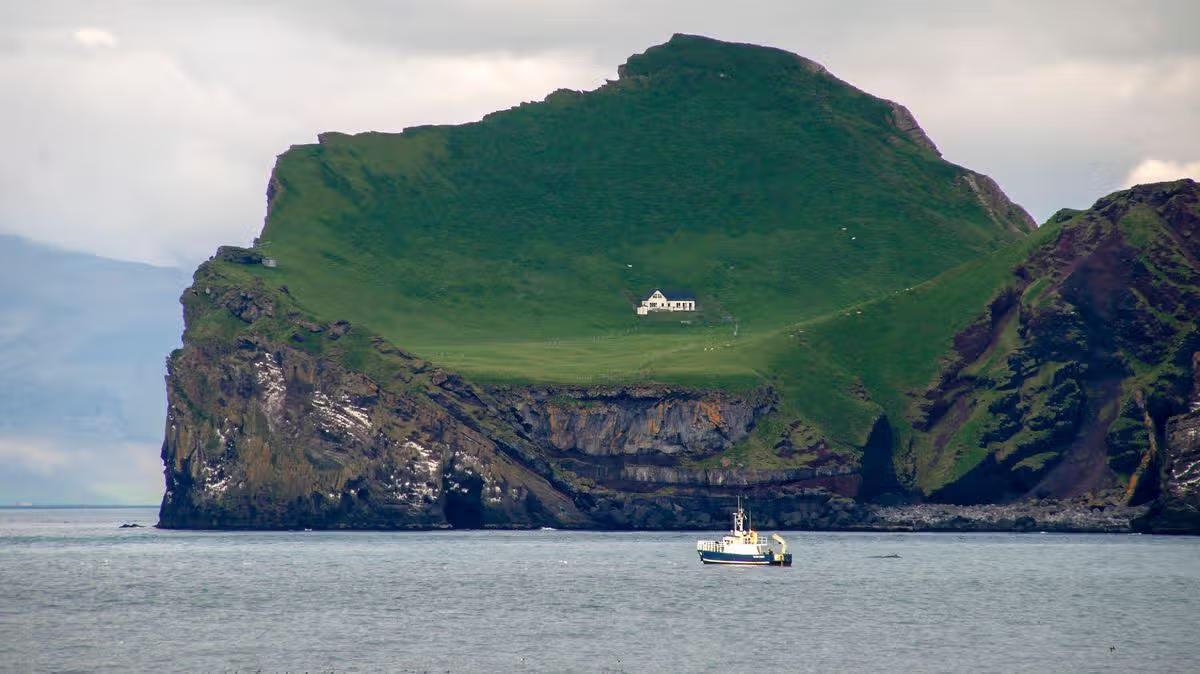
You’ve likely seen the photograph at one point or another – a lone house, tucked inside a great sloping hillside on an abandoned island. Behind the house, an expanse of lush green hillside rises to the sky, and in front of it the grass falls away to the ocean below.
Advertisement
It’s the subject of plenty of urban myths, from zombie bunkers to being Björk’s home – but the real truth is the house is not a house at all. The building sits on the island of Elliðaey, the northernmost island in the Vestmannaeyjar archipelago.
This group of islands is located about five miles south of Iceland’s mainland.
The lone building is actually a hunting lodge, built in 1953 by the Elliðaey Hunting Association.
There is a second building on the island, but this is used as a storage hut, the island has no permanent population, except for the large number of puffins which call the island home.
Advertisement
There have been several rumours about the lodge.
One was that it was built by an unnamed eccentric billionaire to escape a zombie apocalypse, another was that it was constructed as a place to isolate during Covid.
A third rumour, which was a little more realistic, was that it was home to Björk, the famous Icelandic singer.
This started way back in 2000 when The Miami Herald reported that Björk had been granted the exclusive use of the uninhabited island because she had done so much for the country.
However, this was a mistake. In fact, the reporting was about a different island, also called Elliðaey (Ellidaey) in the west of Iceland.
According to the Irish Examiner, the singer rejected the offer as she didn’t want the island to become a tourist attraction.
Now, tourists are not permitted on the island without the express permission of the owners, but plenty of boats pass it by and offer a spectacular view of the isolated island.
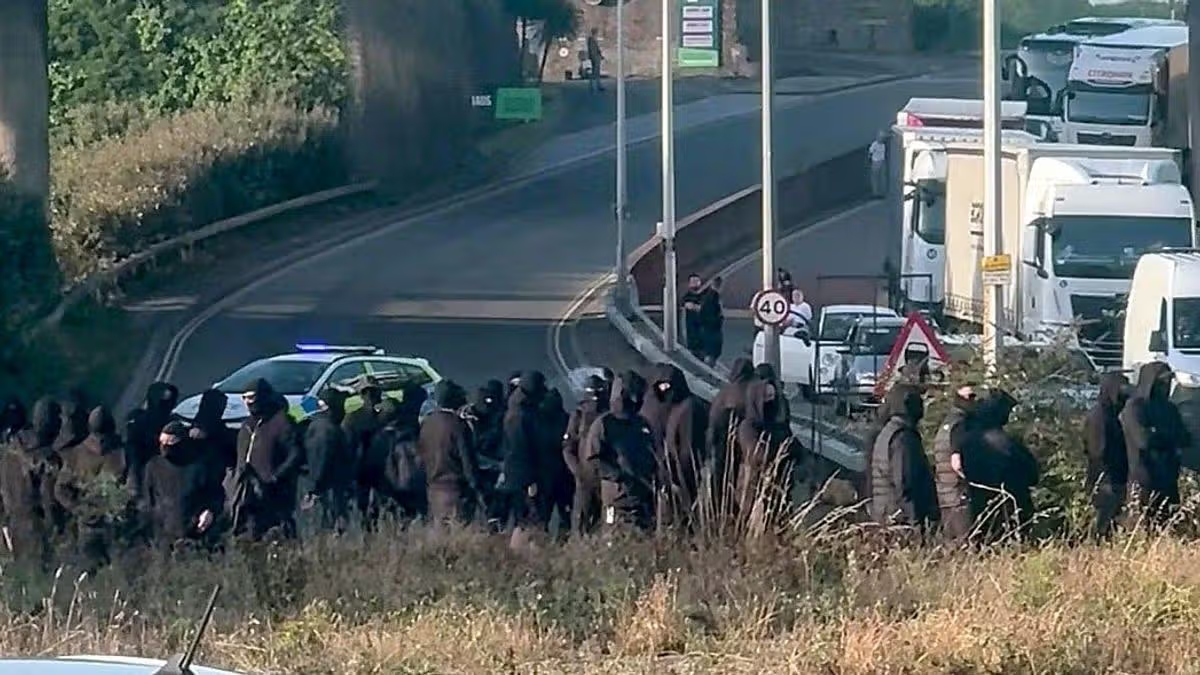
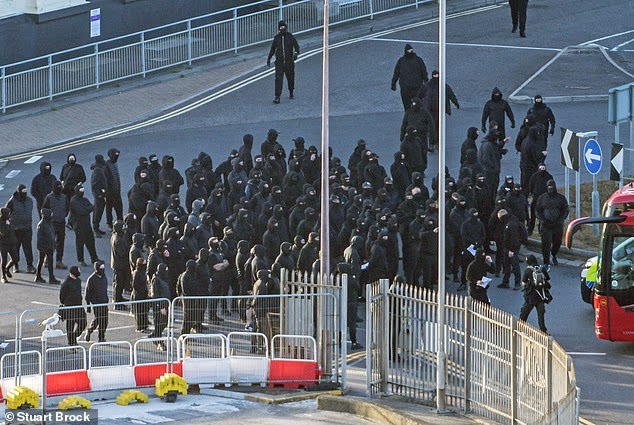
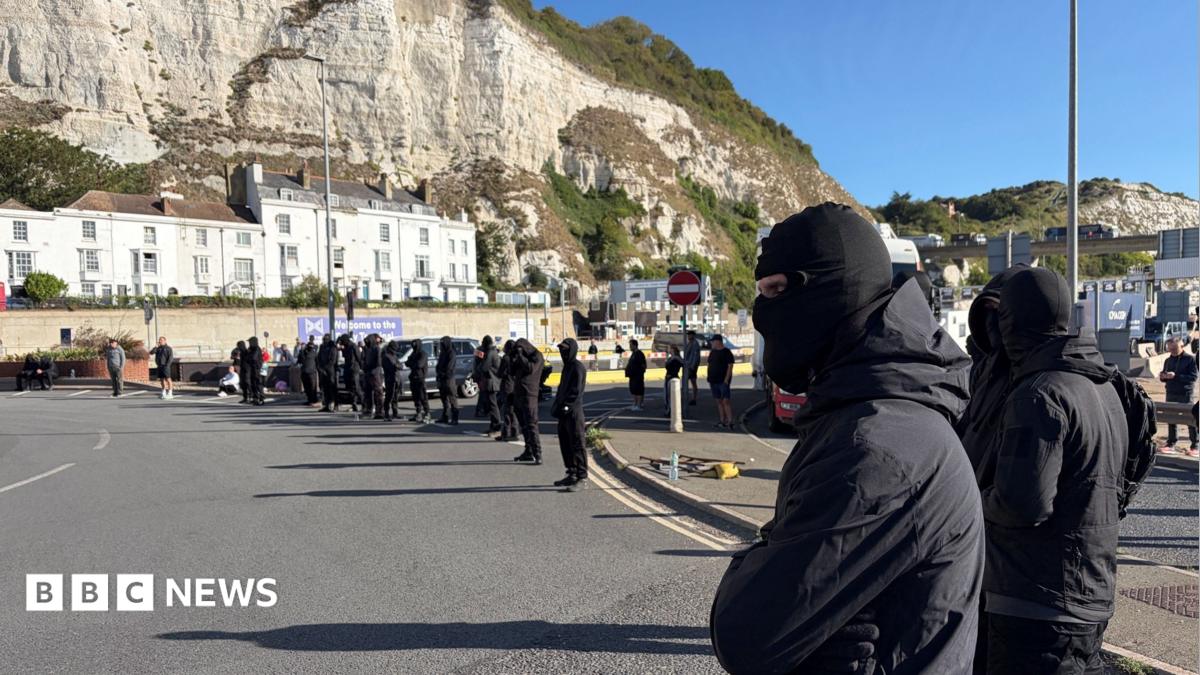
Hundreds of balaclava-clad protesters have blocked roads leading to the Port of Dover in a suspected anti-migrant demonstration, sparking warnings of delays for holidaymakers.
The group, dressed largely in black with their faces obscured, gathered around the ferry terminal on Saturday morning and blocked traffic in and out of the port.
One witness visiting the area said police appeared to be heavily outnumbered as hundreds of protesters descended on the town.
Kent Police said officers were dealing with an ongoing ‘public order incident’ and were ‘engaging with protesters’.
Advertisement
The protesters are thought to be members of Patriot Platform, a far-right group demonstrating against migrants crossing the Channel in small boats.
P&O Ferries warned passengers of disruption and said those who missed their scheduled crossing would be put on the next available sailing.
Videos and pictures shared online show scores of protesters standing in roads around the port, many wearing black clothing and balaclavas.
A man filming a livestream of the protest declared that ‘something is happening’ as he observed the crowds gathering in Dover.
Advertisement
‘We have hundreds of men, English men, and they seem to be dressed head to toe in black, with black balaclavas, black everything from head to toe,’ he said.
‘There’s going to be waves upon waves. I’m led to believe Dover is going to have a problem today.’
Balaclava-clad protesters have blocked roads leading to the Port of Dover in a suspected anti-migrant demonstration, sparking warnings of delays for holidaymakers
Advertisement
A large group dressed in black and with their faces obscured gathered around the ferry terminal on Saturday morning, blocking traffic in and out of the port
Kent Police said officers were dealing with an ongoing ‘public order incident’ and were ‘engaging with protesters’
There is speculation online that as many as 300 people are involved, although this has not been confirmed.
Patriot Platform was launched in June by Danny Thomas, an associate of Tommy Robinson.
Advertisement
Thomas has described the organisation as a ‘resistance’ movement and claimed tens of thousands of people have signed up.
He has also promoted increasingly confrontational rhetoric, calling for supporters to take ‘direct action’ and put ‘boots on the ground’.
Mike Tapp, the Labour MP for Dover and Deal, criticised what he described as ‘idiots coming to to cause disruption’.
In a post on Facebook, he said: ‘Park run cancelled and port access disrupted.
Advertisement
‘I am fed up with idiots coming to Dover to cause disruption. I bet if you asked any one of those ‘protesters’ they wouldn’t know small boat crossing are down by 40% and we are working hard to fix the mess.
‘Go home, enjoy your weekend/get a job.’
Commuter Nathan Ditchburn said the group arrived at around 6.45am.
He told KentOnline: ‘I would say there are around 300 men, maybe more.
Advertisement
‘They have blocked off every entrance and exit of the Dover port area, and Jubilee Way is blocked as well.
The protesters are thought to be members of Patriot Platform, a far-right group demonstrating against migrants crossing the Channel in small boats
P&O Ferries warned passengers of disruption and said those who missed their scheduled crossing would be put on the next available sailing
The protesters are thought to be members of Patriot Platform, a far-right group launched in June by Danny Thomas (pictured), an associate of Tommy Robinson
Advertisement
‘It will be causing huge delays for the ferries today.’
The Port of Dover confirmed in a statement on X that the disruption is affecting ‘all routes’ in and out, as well as around the town.
It said: ‘The Port of Dover can confirm that there is an ongoing public order incident happening around the town of Dover.
Advertisement
‘This is affecting all routes in and out the port and the town. We are in contact with Kent Police to understand the situation.
‘This situation is impacting our local community and our customers, so of course we are hoping for a swift resolution.’
In a statement on X, Kent Police said: ‘We are aware of a protest currently taking place at the Port of Dover. Officers are in attendance and engaging with protesters.’
Shipping company DFDS said: ‘We are aware of the current traffic disruption affecting access to the port.
Advertisement
‘Rest assured we will accommodate you onto the next departure once you arrive.’
Reform UK councillor John Baker, for Kent County Council, said he believes it is a ‘stop the boats’ protest.
A man visiting the area said he looked out of the window of the hotel where he was staying at 7 am this morning and saw people walking ‘all covered in black’.
A clip shared by him shows large groups of people standing in the middle of roads.
Advertisement
He said: ‘Nothing can get in or out of Dover. The police are vastly outnumbered.
‘They have not made clear why they are doing this protest.
‘People in Dover are saying it’s about immigration, which seems a reasonable conclusion, but it’s not for me to say.’
He added that the protesters are ‘not making threats to anybody’ and that his understanding is that they are keeping silent.
Advertisement
‘People are going to get very frustrated because they are missing their ferries and it’s going to cause a backlog’, he said.
The fourth stage of the Tour of Britain will pass through Easingwold, Boroughbridge and Ripon, in a route that extends from Helmsley to Leyburn today (Saturday, September 5).
North Yorkshire Council has scheduled a series of fixed and rolling road closures, as well as parking restrictions, to allow the cyclists safe passage.
RECOMMENDED READING:
Today’s stage presents one of the toughest and most decisive tests of the race – with cyclists reaching elevations of 8,756ft (2.669m).
Advertisement
Starting at 11am in Helmsley, the race will thread down to Coxwold and Easingwold, Boroughbridge and then Ripon Racecourse before entering the Yorkshire Dales National Park.
The map of the Stage Four route from Helmsley to Leyburn (Image: Tour of Britain)
Riders are expected to finish the race at 3.20pm today.
Roads will be closed in Easingwold from 11am till 12pm, with the Tour of Britain expected to pass between 11.36 am to 11.41am.
In Boroughbridge, roads will close from 11.30am to 12.30pm for the cyclists arrival scheduled from 11.59am to 12.09pm.
Advertisement
The event will arrive at Ripon Racecourse sometime between 12.09pm to 12.21pm, and Ripon Studley Road from 12.12pm to 12.25pm.
Both areas’ roads will be under road restrictions from 11.40am to 12.40pm.
A spokesperson for North Yorkshire Council said: “Parking restrictions will be in place across the race route to make sure the event is safe – restrictions will be marked with yellow cones and will be in place from 8pm on Friday 4 September until the last race vehicle has passed (about an hour after the estimated time of race arrival).
“Temporary road closures will be in place but these are known as rolling road closures.
Advertisement
“This means the roads are only restricted for when necessary.
“As with previous events, we will be working with emergency service partners to make sure that they are able to deliver services as needed on the race day.”
“Cyclists pass at speed so please stand well back from the road, keep pets on a lead, keep flags, phones and cameras out of the carriageway.”
Russia’s war in Ukraine has generated one of the largest labour supply shocks in recent history. From an estimated pre-war population of 41 million people, close to 6 million have now left Ukraine. This outward migration alone has reduced the country’s worker population by roughly 3 million people.
It has been compounded by the mobilisation of more than 700,000 Ukrainian citizens into the army. At least 55,000 Ukrainian soldiers had been killed in combat by July 2026 (this is likely to be an underestimate as many soldiers are missing in action), with 400,000 more wounded. Most of these people are working-age men.
By conservative estimates, Ukraine’s civilian casualties amount to almost 70,000 people, with the rate increasing over the past few months because of Russia’s extensive use of ballistic missiles. Millions of Ukrainian citizens in the east and south of the country also remain under Russian occupation.
In total, there has been a contraction of about 25% of the initial labour force in areas still under Ukrainian government control. This is a labour supply shock of extraordinary scale.
Advertisement
The shock to labour demand has been similarly severe. A massive, multidimensional reallocation has taken place as a result of the war, with most economic activity shifting to the western part of Ukraine, which is less exposed to air attacks.
In a wartime economy experiencing such massive displacement and reallocation, can workers and firms still find each other? To answer this question, we analysed data from Work.ua, a Ukrainian online platform where companies post jobs and job seekers upload their resumes.
More than 700,000 Ukrainian citizens have been mobilised into the army. Dmytro Larin / Shutterstock
We estimated the efficiency of matching between workers and firms – in other words, given a certain number of vacancies and job seekers, how often supply and demand actually meet.
Imagine there are ten companies, each with one open position and ten unemployed people. If matching efficiency is maximal, up to ten hires can be generated; if it is minimal, there will be none. The more frictions there are in the market, the more this efficiency decreases.
Advertisement
We traced how matching efficiency has evolved before and after the 2022 full-scale invasion, across Ukraine’s regions and economic sectors.
Labour market resilience
Three facts emerge from the data. First, matching efficiency has declined by about 15% since 2022. It has become more difficult for firms in Ukraine to find workers to hire and for job seekers to find employers willing to hire them.
This decline is significant, but not catastrophic. It is, for example, less than was estimated during the 2008 financial crisis in the US.
Second, the situation is varied. In the regions most exposed to the war, such as Sumy and Kharkiv oblasts in north-eastern Ukraine, the reduction in matching efficiency reaches about 20%.
Advertisement
But in the western regions of Ukraine, the picture is significantly better. In Lviv and Ivano-Frankivsk oblasts, the number of resumes and vacancies both increased compared with before the full-scale invasion – despite the overall decrease in Ukraine’s population and labour force. Matching efficiency in these areas decreased by just 5-7%.
We found similar variation across sectors. Many blue-collar occupations involving manual labour or skilled trades, from cleaning services to drivers, have experienced relatively modest declines. Non-essential personal services, like travel agencies, have suffered the most.
Finally, direct exposure to conflict – measured using data on air-raid alarms independent of proximity to the frontline – makes it significantly harder to match labour supply and demand. These daily disruptions, which generate fear, uncertainty, damage to infrastructure and blackouts, can severely hamper the labour market.
Advertisement
Overcoming wartime disruption
We also identified mechanisms that may have helped Ukraine compensate for its wartime labour market frictions. Many women have taken on traditionally male job roles, from mining to truck driving. Older people and those with disabilities are also playing a greater role in the labour force.
Many firms have adopted remote working and more flexible schedules. This has been especially important for displaced people and refugees, allowing many to stay connected to their employers in Ukraine and continue to provide services, despite the physical distance.
Ukrainian firms have also benefited from greater contractual flexibility. The minimum wage did not increase between the start of the full-scale invasion and 2026, while inflation eroded its real value. This means firms have been able to hire less-productive workers without experiencing profit losses.
Worker shortages are affecting many sectors of Ukraine’s economy – most notably in professions such as construction, transport and engineering. A continuation of the war will require more mobilisation in the labour market of people so far inactive, as well as a bigger contribution from those who left the country.
When the war finally ends, mobilising workers at all levels will be the next hurdle. Veterans will need to be reintegrated into the workforce, while refugee return, immigration and worker retention will all have to be encouraged.
Advertisement
Continuing to nudge higher participation among groups underrepresented in the labour market will also be important. But this all represents a sizeable challenge.

















































You must be logged in to post a comment Login