
Business
Germany moves to strengthen drone and cyber defenses after airport attack




Not long ago, hand-drafted drawings, paper schedules, verbal progress reports, and manual budget tracking methods were the accepted modes of operation in the construction industry.
Of course, these manual processes also created lags in data transfer and communication that could render blueprints, reports, and other information sources obsolete upon arrival.
Thankfully, the complexity of today’s construction industry has been accompanied by advanced construction software tools capable of harnessing the wealth of available cost, schedule, safety, and quality data each project reveals. The value of this data depends not only on its breadth and accuracy, but on whether teams receive it while they can still act upon it.
Construction Doesn’t Have a Data Shortage
As anyone who has visited a modern construction site can tell you, there is no shortage of data to be collected and reviewed. Technologies like IoT sensors, mobile software apps, and cloud-based BIM platforms make data on task completion, schedule adherence, safety incidents, and countless other metrics available to us.
Unfortunately, the collection of data doesn’t guarantee it will reach the right audience at the right time. Key decisions related to construction budget management, procurement, and resource allocation rely on data that is both accurate and timely. The best software tools connect the dots between data sources and stakeholders, ensuring financial, quality, safety, or logistical issues are prioritized and addressed proactively.
The Difference Between Reporting a Problem and Preventing One
In data-rich cloud computing and network security realms, visibility is assessed based on recognition time. In other words, no amount of data can keep powerful applications running smoothly and securely unless it is interpreted and acted upon quickly. This highlights the difference between reporting vs preventing problems that is fundamental in construction.
For example, subfloor changes to address safety concerns mid-project can be integrated seamlessly when information flows quickly. However, even a modest delay between project phases can cause a chain reaction, with wasted materials, schedule conflicts between impacted trades, and expedite fees creating an expensive and time-consuming mess.
Data Silos Can Hide the Real Project Story
Construction data silos were once the result of physical distances. Today, they are frequently caused by differing priorities and perspectives: While a project manager sees a task conforming to schedule, a procurement specialist only sees the markups, return fees, and delivery premiums required to keep pace. Additional sources of data silos in construction include:
- Disconnected software platforms
- Localized spreadsheets and trackers
- Confidentiality concerns between stakeholders
Eliminating these silos helps to enhance the flow and value of construction data, with connected information helping teams understand how changes or problems in one area can directly impact others.
Useful Data Should Trigger Decisions
Establishing robust links between construction data and the experts who need it is just the first step. Project managers, quantity surveyors, and cost accountants can become overwhelmed by growing lists of metrics and KPIs, regardless of their importance. The best construction budget management tools transform timely data into real-time highlights that identify exceptions and emerging problems. This allows decision-makers to narrow their focus and concentrate on key risks and opportunities, taking action before financial, schedule, or safety issues multiply.
From Data Collection to Project Visibility
The road to optimized visibility begins with commitments to collect available data in real-time, break down siloes that impede the flow of information, and develop tools and systems that convert raw data into timely alerts and updates. While technology is a common (and necessary) ingredient, additional steps that help to complete this transformation include:
- Reducing reliance on traditional, retrospective reporting processes
- Establishing clear ownership for data collection, review, and sharing activities
- Focused training to improve data literacy project-wide
Conclusion
The construction industry has never been short on data, but establishing the systems and protocols to ensure useful data is available when needed is a next-level challenge. These advanced capabilities drive design, procurement, and financial decisions that define project success, along with the safety, sustainability, and logistical features of an evolved jobsite.
As construction software tools improve to expand data collection, the dissemination of information to decision-makers is equally important. The best project data does more than explain what went wrong. It gives teams enough time to keep it from going wrong in the first place.

China Is Quietly Bracing for AI’s Social Costs

Ermenegildo Zegna: Core Margin Expansion And Better FCF Support A Buy (Rating Upgrade)
Business
Moscow has not ruled out trilateral meeting between presidents of Russia, US, China, TASS reports

Moscow has not ruled out trilateral meeting between presidents of Russia, US, China, TASS reports

OPEC+ set to keep oil output policy unchanged on Sunday, sources say

Skip the Rate Hike, Trim the Balance Sheet, Some Fed Watchers Urge
Business
Reports Claim Meghan Markle Wants King Charles to Give As Ever a Public Nod After the Family’s UK Return

LONDON — A British celebrity magazine said this week that Meghan, the Duchess of Sussex, hopes King Charles III will offer some public support for her lifestyle company, As Ever, as she and Prince Harry settle in Britain after years in California.
The claim, published by Closer and repeated by outlets including The News International, was attributed only to an unnamed “insider.” Neither Buckingham Palace nor representatives for the Duke and Duchess of Sussex confirmed it. There is no public statement from the king endorsing the brand, and no photograph or social-media comment of the kind the magazine described.
Closer quoted its source as saying Meghan still intends to treat As Ever as a central project while she also pursues acting work, and that she wants to test whether the products can sell in Britain. The same source said a joint photograph posted online, or even a brief kind remark from the king on one of her posts, “would mean the world.” Those lines have not been independently verified.
What can be established is the setting in which the rumor landed. Harry and Meghan returned to the United Kingdom in late August for what people close to them have described as an extended stay, not a full-time royal comeback. They have said they will live in a private home rather than an official royal residence and will keep running their own businesses. Their children have been enrolled in British schools. Page Six reported that the couple had been looking in the Cotswolds, near Highgrove House, the country home of the king and Queen Camilla.
That geography matters for the gossip. Highgrove already sells garden-related goods under the king’s long-running country-life brand. As Ever sells jams, honey, teas, candles and California wine. The overlap is enough for tabloids to invent a partnership. It is not evidence that one exists.
As Ever began as American Riviera Orchard and was relaunched under its current name in early 2025. The first public drop, in April 2025, included raspberry jam, herbal teas, wildflower honey and a cookie mix and sold out quickly. A Napa Valley rosé followed in July 2025. Netflix helped underwrite the first year, in tandem with Meghan’s lifestyle series “With Love, Meghan.” In March 2026 the companies said they would separate.
“As ever is grateful for Netflix’s partnership through launch and our first year,” a spokesperson for the brand said. “We have experienced meaningful and rapid growth and As ever is now ready to stand on its own.”
Netflix said the split had been planned. “Meghan’s passion for elevating everyday moments in beautiful yet simple ways inspired the creation of the As ever brand, and we are glad to have played a role in bringing that vision to life,” the company said. “As it was always intended, Meghan will continue growing the brand and take it into its next chapter independently.”
Meghan has described the line in her own words on the company site. “As ever, for me, is an extension of how I love,” she wrote. “Through thoughtful gestures and small details, I hope this collection brings you as much joy as it does for those I hold close.” When she announced the name change, she said “‘As ever’ means ‘as it’s always been’” and called the project an extension of the food, gardening and entertaining she had written about for years on her old blog, The Tig.
The New York Times reported in August that As Ever would remain a California-based brand sold in the United States even as the family packed up Montecito. That does not rule out a later British push. It does mean that, as of last month, the commercial plan on the record was continuity in America, not a palace-backed launch in Britain.
The family relationship with the king has thawed in public view without becoming a working-royal arrangement. Buckingham Palace confirmed that Charles, Camilla, Harry, Meghan, Archie and Lilibet met privately at Highgrove in July, the first time the king had seen his youngest grandchildren since 2022. Palace officials would not discuss the length or substance of the visit. People close to Charles said he wanted the gathering and wanted it kept private.
Earlier in the summer, celebrity magazines reported gift baskets and Instagram posts that included the king’s picture. Those accounts also relied on unnamed sources. What is visible on the public record is more limited: a reunion the palace acknowledged, a subsequent move to Britain the couple’s camp described as family-driven, and a brand that keeps shipping pantry goods and wine.
Harry and Meghan stepped back from official royal duties in 2020. Queen Elizabeth II rejected their request for a hybrid role, saying the monarchy was not a part-time job. They have not been invited back onto the working-royal roster. Their commercial work — Netflix projects, speeches, As Ever, Archewell — is the structure they built instead.
That structure is now sitting closer to the institution they left. Greater visibility in Britain could help a consumer brand. It could also reopen old arguments about mixing private profit with royal proximity. No palace rule requires the king to like a daughter-in-law’s jam. No brand statement has asked him to. The Closer story treats a hoped-for nod as a strategy. Without confirmation, it remains a magazine claim.
The political weather around the couple is mixed. President Donald Trump said on Sept. 2 that he was “glad” they had left the United States and that he “wouldn’t have taken them back” if he were king, calling Meghan “terribly disrespectful” to Elizabeth II and to Charles. Those remarks are on tape. They are not a palace policy.
For As Ever, the immediate work is more ordinary. After the Netflix split, the company has kept adding seasonal products: blackberry jam, spiced apple butter, a Reserve Brut described on Instagram as “a new chapter to celebrate.” The tone is hospitality, not heraldry.
Charles, 77, continues cancer treatment and a full official program. Meghan, 45, has been linked in entertainment reporting to possible acting work in Britain, including a rumored part in a Guy Ritchie series, while she remains the face of As Ever. Harry has said in past interviews that he wants a relationship with his father. None of those facts require a royal endorsement of a lifestyle label.
If the king ever did appear in a photograph with Meghan that the family then posted, or if he ever commented on an As Ever product, that would be news because it has not happened. Until someone on the record says it is planned, the responsible account is narrower: the Sussexes are in Britain, the brand is still selling, the palace has confirmed a private family meeting — and a celebrity magazine says she would like a public blessing that, so far, no official has offered.

OPEC+ set to hold oil output policy steady for October – Reuters
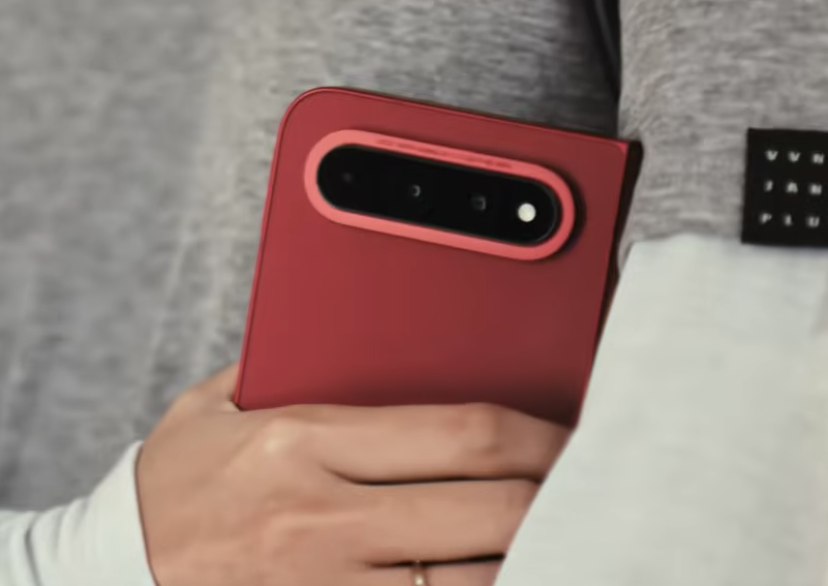
BERLIN — IFA 2026, Europe’s largest consumer electronics trade show, has drawn hundreds of exhibitors and thousands of attendees to Messe Berlin this week, with artificial intelligence woven into nearly every category on the show floor, from smartphones and TVs to toothbrushes and exoskeletons. Here are 30 of the most notable products and technologies unveiled at this year’s show.
- Acer Vero 16. A sustainability-focused laptop offering tool-free access to its main components, a replaceable battery and a swappable solid-state drive, paired with an OLED display and configurations ranging up to a Core Ultra X9 processor.
- Lenovo Project AeroBlade. A concept 14-inch laptop built around Frore’s fanless AirJet cooling chip, weighing just 1.83 pounds while running an Intel Core Ultra 200 processor, with a shipping version potentially arriving as soon as 2027.
- Lenovo Yoga Pro 9n. A premium creator laptop powered by Nvidia’s RTX Spark platform, aimed at demanding AI development, content creation and local software workloads.
- Lenovo Yoga 9n. A 360-degree convertible 2-in-1 combining RTX Spark performance with dual-surface pen input for creative professionals.
- Lenovo Project Swan. A rollable-screen concept that transforms a 14-inch ThinkBook laptop into a widescreen ultrawide display at the press of a button.
- Acer Swift Blade 14. An ultralight laptop weighing just 1.76 pounds, pairing an 1800p OLED display with a new Wildcat Lake processor, notably lighter than Apple’s MacBook Air.
- Acer Project DualPlay Mini. A concept 8-inch Windows gaming handheld that flips open and swivels to reveal a hidden keyboard, transforming into a miniature laptop.
- Acer SFF RTX Spark Mini Workstation. Positioned between a mini PC and full tower, this system pairs Nvidia’s Blackwell RTX graphics with a Grace CPU and up to 128GB of unified memory, letting users run AI models locally without cloud subscriptions.
Monitors and Displays
- Alienware AW2527HX. A 24.5-inch, 1080p OLED esports monitor capable of a 560Hz refresh rate while retaining OLED’s deep contrast and fast pixel response, developed with input from esports organization Team Liquid.
- Acer Nitro XV275U Z2. A $329 Mini-LED monitor offering 1,000 nits of peak HDR brightness and refresh rates reaching 275Hz at 1440p, avoiding OLED’s burn-in risk at a notably accessible price.
- Alienware AW3226Q. A 32-inch 4K OLED gaming monitor using new “RGB Stripe” technology to improve text clarity, combining a 165Hz refresh rate with factory color calibration covering 99% of the DCI-P3 color space.
- Canvas HiFi S99H. A collaboration between audio brand Canvas and Samsung, integrating Canvas’s wooden-slat speaker design directly around Samsung’s flagship S99H OLED television to visually merge the TV and sound system into a single furniture piece.
Smartphones and Concepts
- Xiaomi 18 Fold. A wide “mid-fold” smartphone launching in China on Sept. 7, featuring a 5.38-inch cover screen, a 7.58-inch inner display and Xiaomi’s new self-designed XRing O3 chipset.
- TECNO Next-Gen Bezelless Concept Phone. A concept device with genuinely zero-millimeter bezels, presented at the show’s ShowStoppers event as a bold preview of where smartphone design may be heading.
Software and AI Tools
- Nvidia RTX PAIR. A free application for Windows, macOS and Linux that pools the graphics processing power of every compatible PC in a household to distribute AI workloads faster across multiple machines.
- LG ThinQ Claw. A new conversational AI agent for LG’s smart home ecosystem, built in part on the company’s Homey acquisition, designed to understand context and coordinate tasks across connected devices.
- Govee AI Lighting Bot 2.0. A system letting users create personalized smart lighting scenes through natural-language voice or text prompts rather than manually adjusting colors and brightness.
Wearables and Personal Tech
- Moto Watch Ultra. A smartwatch featuring Pantone-certified color options, a 1.5-inch OLED display, Google Wear OS, an LTE variant with independent cellular connectivity, and expanded sleep tracking developed with Polar.
- Plaud One. A pair of AI-powered earbuds functioning as a full-context wearable assistant that users can talk to throughout the day, connect to other services, and use to summarize daily activity, supported by eSIM connectivity.
- Beyerdynamic Aventho Y. New over-ear headphones from the century-old German audio manufacturer, featuring replaceable ear cups for long-term repairability and a design echoing premium consumer headphones.
- JLab ANC Earbuds. Budget-friendly active noise-canceling earbuds incorporating proprietary technology compatible with Apple’s Find My network, letting the charging case double as a location tracker.
Health and Sleep Tech
- Anker SleepLab Pro. A bedside speaker using 60GHz radar to track sleep stages, heart rate and breathing without a wearable device, doubling as a sleep aid with more than 180 built-in sounds and no required subscription.
- Dyson CameraJet. Dyson’s first electric toothbrush, combining an AI-powered camera that tracks brushing patterns with an integrated water flosser that activates automatically between teeth.
Home and Cleaning Robots
- Ecovacs Deebot X12S. A quiet, super-suction robot vacuum whose Omni Station pressure-washes and rinses the robot’s mop rollers after every cleaning cycle, recharging while it self-cleans to minimize downtime.
Cameras and Creator Gear
- Hohem EyePic. A 2-in-1 gimbal camera featuring a magnetic camera unit that detaches from its three-axis handle to become a wearable action camera, recording 4K video at 60 frames per second and waterproof to 33 feet.
- XGIMI Aura 3. A home projector combining high brightness output with 4K resolution at a smooth 120Hz refresh rate, aimed at sports and gaming content.
Networking
- TP-Link Archer 8 Ultra. A tri-band router built around the still-unfinalized Wi-Fi 8 standard, designed to address everyday connectivity problems rather than simply chasing faster theoretical speeds.
- TP-Link Deco 8 Ultra. A companion mesh networking system using the same emerging Wi-Fi 8 standard for whole-home coverage.
Mixed Reality and Robotics
- XREAL Aura. Mixed reality glasses running Google’s Android XR platform, offering a lighter alternative to headsets like Apple’s Vision Pro, with a release targeted before the end of 2026.
- Hypershell exoskeleton. A revamped, more powerful version of the company’s mobility exoskeleton, designed to assist with walking, hiking and physical exertion.
Beyond these individual standouts, several broader trends defined this year’s show. Samsung and LG dominated IFA’s official innovation awards, collectively winning 11 honors across categories spanning AI-powered appliances, next-generation displays and audio technology, with LG additionally claiming the show’s top overall “Best Brand” honor. Battery technology also drew attention, with early-stage semi-solid-state battery developments on display that could eventually enable smaller, more energy-dense and safer batteries across smartphones, laptops, wearables and smart home devices if the technology proves reliable and economical at scale.
Wearable technology in particular has had a strong year heading into this show, following earlier 2026 launches including screen-free trackers from Fitbit and Garmin, a first-of-its-kind on-wrist breathing emergency detection feature from Google, and the slim flagship Oura Ring 5, setting a high bar for the wearable announcements that followed at IFA itself.
IFA CEO Leif Lindner emphasized during the show’s opening that exhibitors continue pushing forward with AI-driven innovation despite broader industry headwinds, including a well-documented global memory chip shortage that has driven up component costs across smartphones, laptops and other connected devices throughout the year. That pricing pressure has not slowed the pace of announcements, with companies across categories continuing to race toward differentiating their products through AI integration, whether through on-device processing, conversational assistants, or personalized automation features.
Not every product unveiled this week is guaranteed to reach consumers in its current form. Concepts including Acer’s Project DualPlay Mini, Lenovo’s Project AeroBlade and Project Swan, and Nvidia’s RTX Spark-powered mini workstation remain unconfirmed for mass production, with some industry observers expressing skepticism about whether certain concepts will ever ship in their showcased configurations. Other products, including the Alienware monitors, Acer’s Nitro display, the Xiaomi 18 Fold and the Swift Blade laptop, are expected to reach store shelves within the coming months, offering a clearer near-term path from trade-show demonstration to consumer purchase.
With IFA 2026 running through Sept. 8 at Messe Berlin, additional product reveals and hands-on demonstrations are expected throughout the remainder of the show, as exhibitors continue introducing new devices spanning smart home technology, health and wellness gadgets, gaming hardware and home entertainment systems to the hundreds of thousands of attendees expected to pass through the venue before the event concludes.
Business
Magnitude 3.2 Earthquake Rattles Compton Area In Los Angeles County, Hundreds Report Feeling It Sunday

LOS ANGELES COUNTY, Calif. — A preliminary magnitude 3.2 earthquake struck near Compton in Los Angeles County just after midnight Sunday, according to the U.S. Geological Survey, marking the latest in a series of small tremors to hit Southern California in recent weeks.
The quake struck at 12:13 a.m. Sunday, with its epicenter located approximately 2 miles south-southeast of Compton and about 6.1 miles north of Long Beach, according to the USGS. The tremor occurred at a depth of roughly 8 miles, a relatively shallow depth that can contribute to shaking being felt more widely at the surface even for a modest-magnitude event.
As of early Sunday, 623 people had submitted reports through the USGS’s “Did You Feel It?” online form, indicating they had experienced weak shaking from the quake. Residents reporting the tremor came from a range of communities across the region, including La Habra, Seal Beach, Los Angeles, Bell and La Mirada, reflecting how far the shaking was perceptible even though the earthquake itself registered as relatively minor on the magnitude scale.
Sunday’s quake follows a similar magnitude 3.2 earthquake recorded near Ontario, in neighboring San Bernardino County, on Sept. 2, part of a broader pattern of low-level seismic activity that has continued across the greater Los Angeles basin in recent weeks. A separate magnitude 3.4 quake was also recorded near Ontario, about 12.5 miles east of Riverside, earlier in the same period.
The Compton area, along with the broader Los Angeles basin, sits atop a network of active fault systems that make the region one of the most seismically monitored areas in the country. According to seismic data compiled over more than five decades of record-keeping, the Compton area experiences an average of roughly 2,400 earthquakes of all magnitudes each year, though the vast majority of those events are too small to be felt by residents. Earthquakes of magnitude 3 or higher occur in the area at a rate of roughly 19 per year on average, while quakes reaching magnitude 5 or greater occur closer to once every two years, based on historical data.
Beneath the Compton area lies the Compton blind thrust fault, a concealed fault system that does not reach the surface but has been identified by seismologists as capable of producing significantly larger earthquakes than the one recorded early Sunday. Research conducted through the Southern California Earthquake Center has found geological evidence that the Compton thrust fault has generated at least six large-magnitude earthquakes, estimated between magnitude 7.0 and 7.4, over the past 14,000 years. Because the fault lies directly beneath the densely populated Los Angeles metropolitan area, researchers have identified it as posing one of the more significant deterministic seismic risks in the United States, even though large ruptures on the fault occur only rarely on a human timescale.
Southern California’s broader seismic activity has drawn increased attention from researchers in recent years. Geophysicist Dr. Lucy Jones, a prominent seismologist who has studied the region extensively, has previously noted that certain stretches of heightened earthquake activity reflect an ongoing, connected process occurring along the region’s fault systems, rather than a series of entirely unrelated, isolated events. Southern California has, at various points over the past several years, experienced stretches of earthquake activity exceeding typical historical averages, prompting seismologists to closely monitor whether individual clusters of smaller quakes might be connected to broader stress patterns building along the region’s numerous fault lines.
Sunday’s earthquake was far too small to cause damage, and no injuries or damage were reported in connection with the tremor. Earthquakes in the magnitude 3 range are generally felt only as brief, mild shaking by people located relatively close to the epicenter, and such quakes rarely, if ever, cause structural damage to buildings or infrastructure under normal circumstances.
The USGS continues to encourage residents who experience earthquakes, even minor ones, to submit reports through its “Did You Feel It?” system, which helps the agency gather real-time data on the geographic extent and intensity of shaking associated with individual seismic events. That crowdsourced reporting data, combined with the agency’s network of seismic monitoring stations, allows researchers to build a more complete picture of how a given earthquake was experienced across different communities, information that can prove valuable for both immediate response purposes and longer-term seismic hazard research.
Southern California residents are routinely reminded by emergency management officials to maintain basic earthquake preparedness measures regardless of how minor recent seismic activity may have been, given the region’s well-documented exposure to the risk of a significantly larger earthquake at some point in the future. Recommended preparedness steps commonly cited by state and local emergency agencies include securing an emergency supply kit with food, water and basic medical supplies, developing a family communication and evacuation plan, and securing heavy furniture and other objects within the home that could pose a hazard if they were to fall during stronger shaking.
Sunday’s tremor adds to a broader recent pattern of minor seismic activity affecting the greater Los Angeles region, following the earlier September quakes near Ontario. While none of these recent events has approached a magnitude capable of causing significant damage, seismologists have continued to monitor the broader pattern of activity across Southern California’s interconnected fault systems, given the region’s history of both frequent minor tremors and, less commonly, more significant and potentially damaging earthquakes tied to the same underlying geological structures.
The USGS has not indicated any specific connection between Sunday’s Compton-area quake and the earlier Ontario-area tremors recorded in the preceding days, and officials have not issued any elevated warning regarding the likelihood of further seismic activity in the immediate aftermath of Sunday’s event. As is standard practice following any earthquake in the region, residents are advised to continue monitoring official USGS updates and local emergency management communications for any further developments.

When Construction Data Arrives Too Late to Be Useful

Tether-Backed Orionx Shuts Down After $7M Custody Gap

Airport closed, hundreds of flights grounded after volcano erupts




![Young Thug - Money On Money (feat. Future) [Official Visualizer]](https://wordupnews.com/wp-content/uploads/2026/06/1780883608_maxresdefault-80x80.jpg)

-

 Fashion2 days ago
Weekend Open Thread: Beyond Yoga
-
 Crypto World2 days ago
Bitcoin price stalls near $82K as key resistance holds
-

 Politics2 days ago
Best Gaming Laptops, CPUs, TVs, And Keyboards To Upgrade Your Set Up For GTA VI
-

 Tech2 days ago
The Birds Outside, Drawn For You Automatically
-

 Crypto World2 days ago
IMF Says El Salvador’s Post-Review Bitcoin Purchases Used No Public Funds
-
 Crypto World2 days ago
U.S. added stronger than expected 162,000 jobs in August as labor market bounced back
-

 Sports2 days ago
Alexandre Pato consortium’s Northampton Town investment approved
-

 Sports2 days ago
Commanders’ Chig Okonkwo is a top breakout fantasy football candidate
-

 Sports2 days ago
Golden Eaglets Drawn in Group B for 2026 WAFU B U17 Championship
-
 Crypto World2 days ago
XRP price breaks falling channel as bulls target $1.53
-

 Politics2 days ago
A new European chapter for Gibraltar
-

 Politics2 days ago
The House | Bin the lectures, bring gossip and be ready to banter: how the new PM should prepare for his Trump encounter
-

 Politics2 days ago
How To Avoid Winter Colds: 4 Everyday Habits That Spread Germs, Says Pharmacist
-

 Crypto World2 days ago
From warning to listing: UK’s largest retail investment platform opens access to crypto ETNs
-

 Crypto World2 days ago
FinCEN flags $12.7B tied to Southeast Asia crypto investment scams
-

 Tech2 days ago
A Worthy Android Ereader, With Some Tradeoffs
-

 Crypto World2 days ago
Trezor Data Breach Impacts 67,000 More US Customers
-

 Politics2 days ago
33 Cosy Autumn Home Decor Ideas: Blankets, Pumpkin Decorations, And Candles
-
 Tech2 days ago
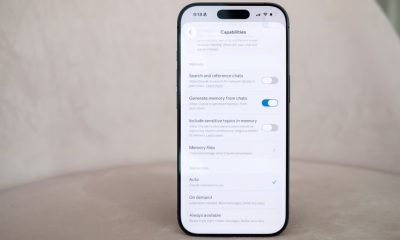
How To Edit Claude’s Memory
-

 Sports2 days ago
Seven wickets in 21 balls: Sri Lanka’s Chamari Athapaththu scripts history with record-breaking spell
You must be logged in to post a comment Login