

Connect with us

Tech

Air circulator vs fan: Which one should you actually buy?

Published

on

Although we’re hopefully past the worst of this summer’s record-breaking heatwaves, experts warn that hotter temperatures may become the new normal here in the UK. With that in mind, now’s a great time to make sure your home is prepared for warmer weather. 

That begs the question as to whether the humble fan is enough to see you through more heatwaves? Or is an air circulator a more versatile choice?

To help you decide, we’ve detailed everything from what an air circulator actually is and how it works, to the ways it differs from a fan, so you can determine which appliance you should invest in.

Once you’re finished here, make sure you visit our round-up of the best fans. If you think you might need a bit more oomph, then our air cooler vs portable air conditioner guide has you covered. 

Advertisement

What is an air circulator?

Although an air circulator is a type of fan, it works in a slightly different way. While a traditional fan works by blowing air where it’s pointed, an air circulator moves air around an entire room. 

Advertisement

That means while a fan offers an instant, more direct cooling effect, an air circulator works to cool the temperature of an entire room by redistributing warmer air.

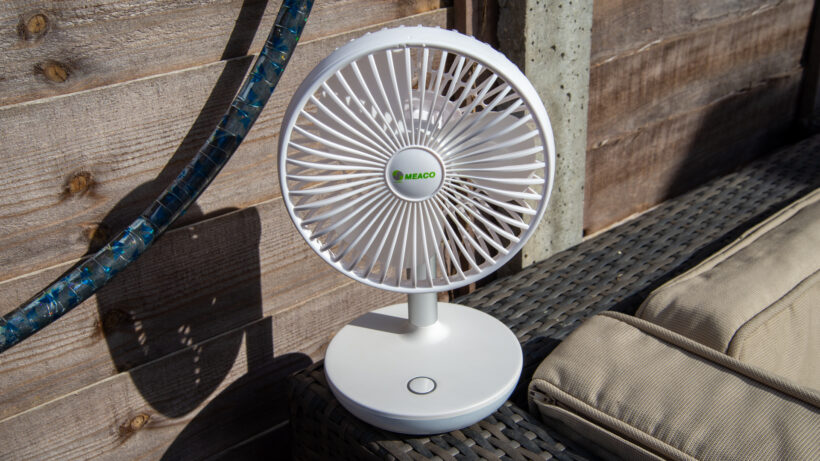
MeacoFan 260C Cordless Air Circulator heroMeacoFan 260C Cordless Air Circulator hero
MeacoFan Sefte 10 Pedestal Air Circulator. Image Credit (Trusted Reviews)

Do air circulators actually cool a room?

Unlike an air conditioning unit which actively removes hot air from a room, cools it down internally and then pushes it back out, an air circulator doesn’t actually cool a room down. Instead, it redistributes hot air with cooler air to create a more even room temperature. In addition, an air circulator helps make rooms feel less stuffy as it breaks up stale air.

So, although they aren’t actually cooling devices, they help a room feel less hot and stuffy than it would otherwise.

Advertisement

Airflow and room coverage

We should disclaim that different fans and air circulators will offer varying levels of airflow and room coverage. In our experience, we’ve found that air circulators generally offer more powerful airflow, with the Switchbot Battery Circular Fan seeing up to 2.5m/s at 1m away while the MeacoFan Sefte saw up to 2.6m/s at the same distance. 

Comparatively, we found that the Dr Prepare 13-inch Tower saw an airflow of 1.7m/s while the (much pricier) Dyson Find+Follow Purifier Cool PC3 resulted in 1.8m/s when positioned 1m away. 

Advertisement

Dyson Find+Follow Purifier Cool PC3 fan exteriorDyson Find+Follow Purifier Cool PC3 fan exterior
Image Credit (Trusted Reviews)

Noise levels

Some fans, especially older models, have a reputation for being pretty noisy appliances. However, newer models do tend to promise a quiet cooling experience. While we’ve tested a handful of fans that are a touch noisier than we’d like, such as the Dreo TurboCool which maxes out at 60.5dB and the portable Shark ChillPill that reaches up to 67.9dB, generally newer fans shouldn’t be loud enough to actively cause a disturbance.

Shark ChillPill on table standing upShark ChillPill on table standing up
Shark ChillPill. Image Credit (Trusted Reviews)

Similarly, modern air circulators shouldn’t be particularly loud either. Take the MeacoFan Sefte 8” air circulator which we concluded was “effortlessly quiet” averaging at around 43.5dB when on level six and never going beyond 54dB – even at its maximum level. 

Plus, and as its name implies, the Duux Whisper 3 is also an impressively quiet device. Even at its maximum speed of 4.3m/s at 15cm and 2.6m/s at 1m, which is pretty powerful, sound never exceeded the 52.1dB mark. 

Advertisement

Advertisement

Duux Whisper 3 heroDuux Whisper 3 hero
Duux Whisper 3. Image Credit (Trusted Reviews)

Generally, while neither a fan nor an air circulator will be completely silent, unless you have an old or broken appliance, they shouldn’t be so loud as to disturb. 

Which is better paired with air conditioning or a heater?

An air circulator is a solid option for year-round use, as it generally works as well with an air conditioner as it does with a heater. In warmer weather, if you pair your air circulator with an air conditioner, it’ll help distribute the AC’s cooler air more efficiently around the room. 

Similarly, pair the circulator with a heater and it’ll help circulate the heat to create a more uniform temperature. That’s especially useful as hot air tends to rise while colder air stays low, meaning heaters typically need to work a bit harder to warm rooms.

In comparison, while you can pair a fan with both an air conditioner or heater, remember fans are typically designed for personal use. However many fans, such as the Dyson Find+Follow Purifier Cool PC3 and Dr. Prepare 13-inch Dual Oscillating Tower, do provide oscillation which can help with air circulation too. It’s just they’re not quite as powerful as a dedicated air circulator.

Advertisement

Advertisement

Which should you buy?

There are a few factors to keep in mind when choosing between an air circulator and a fan. A traditional fan that offers a direct breeze is better for those who want personal cooling and if you don’t have an air conditioning unit that is more powerful.

However, if you want a device that helps keep your room at an even temperature, less stuffy and can work all-year round, as it helps boost both an air conditioner and a heater.

Advertisement

Source link

Continue Reading
Click to comment

You must be logged in to post a comment Login

Leave a Reply

Tech

Another Rowhammer attack has been detected, and Nvidia workstation GPUs are firmly in the firing line

Published

on


  • GPUThor is the first Rowhammer attack to defeat ECC on Nvidia GPUs and reach a root shell on the host
  • It affects four Ampere workstation cards with GDDR6 memory, the RTX A4000, A4500, A5000 and A6000
  • Non-uniform hammering, enabled by defeating GPU memory coalescing and finding that Target Row Refresh (TRR) mitigations fire once every 72 refresh intervals, delivers effectively 6.6 times the hammering intensity of prior attacks

Four researchers at the University of Toronto have disclosed GPUThor, a Rowhammer technique that breaks the error correction Nvidia has spent the past year recommending as the defense against exactly this class of attack.

Chris S. Lin, Joyce Qu, Aditya Rajeev and Gururaj Saileshwar are expected to present the paper outlining their approach and subsequent findings at ACM CCS 2026.

Source link

Advertisement
Continue Reading

Tech

What Does Candela Mean On A Flashlight (And Why Brightness Isn’t Everything)?

Published

on


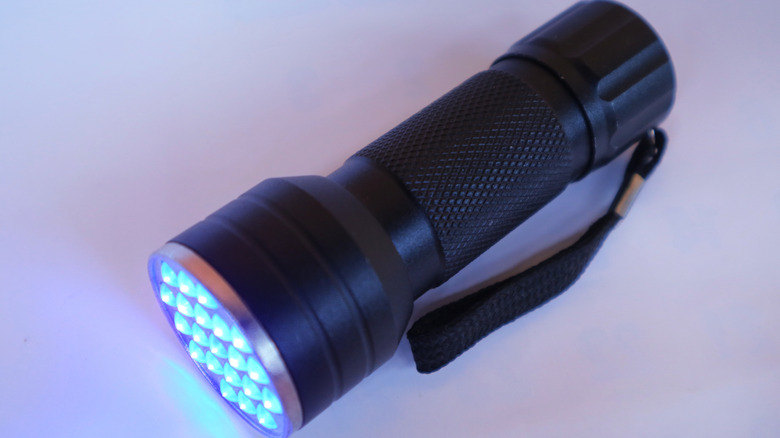
While flashlights seem like simple tech, there are a number of fairly technical terms associated with them, like COB and candela. While many flashlights are primarily evaluated in terms of lumen output, candela is also an important metric. Candela is the measurement that tells you how intense a flashlight’s beam is in a specific direction, not how much total light the flashlight produces. It measures the brightness of a light at 100 feet from the source, and unlike lumens, incorporates factors like reflector size and whether the lens in front of a bulb dims the light. In simple terms, lumens tell you the overall amount of light, while candela tells you how tightly that light is focused and how far it can reach.

That distinction matters because buying a flashlight with a high lumen rating doesn’t automatically give you a better long-distance light. A wide flood beam can look very bright up close, but still have relatively low candela, while a tightly focused beam can reach much farther even with fewer lumens. Candela is especially useful when you’re comparing flashlights that look similar on paper, but behave very differently in the real world. Two lights can advertise the same lumen output and still produce very different beams based on the aforementioned reflectors and lenses, as well as LED placement and optic design.

Advertisement

Why it matters

Brightness is only the total amount of visible light a flashlight produces. It doesn’t give you a sense of where that light goes or how long it stays bright. It also doesn’t indicate how well you can see colors, detail, or whether the light is practical for the job.

Candela, meanwhile, helps you understand whether a flashlight, including the most powerful flashlights available on Amazon, is better for close-up tasks or for lighting up objects at a distance. A high-candela light is usually better for spotting trail markers, looking across a field, or cutting through fog and smoke, while a lower-candela light is better when you want a broad, even wash of light.

You’ll also see candela discussed alongside “throw,” which is basically beam distance. Flashlight testers often use candela to estimate how far the brightest part of the beam will reach, and the beam’s shape matters as much as raw output. 

Advertisement

In other words, candela is the number to watch when you care about reach, not just brightness. That’s why some flashlight buyers prefer a high-candela model for outdoor or tactical use, while others choose a lower-candela light for camping, household tasks, or general carry. Once you understand what candela is, flashlight specs stop being just a list of numbers and become key info that tells you what the light will actually do in practice.


Advertisement

Source link

Continue Reading

Tech

120,000 Feet on a Friction Clamp, MAKE. ART. NOW. Flies the Insta360 X6 Near Space

Published

on

Insta360 X6 Camera Edge of Space
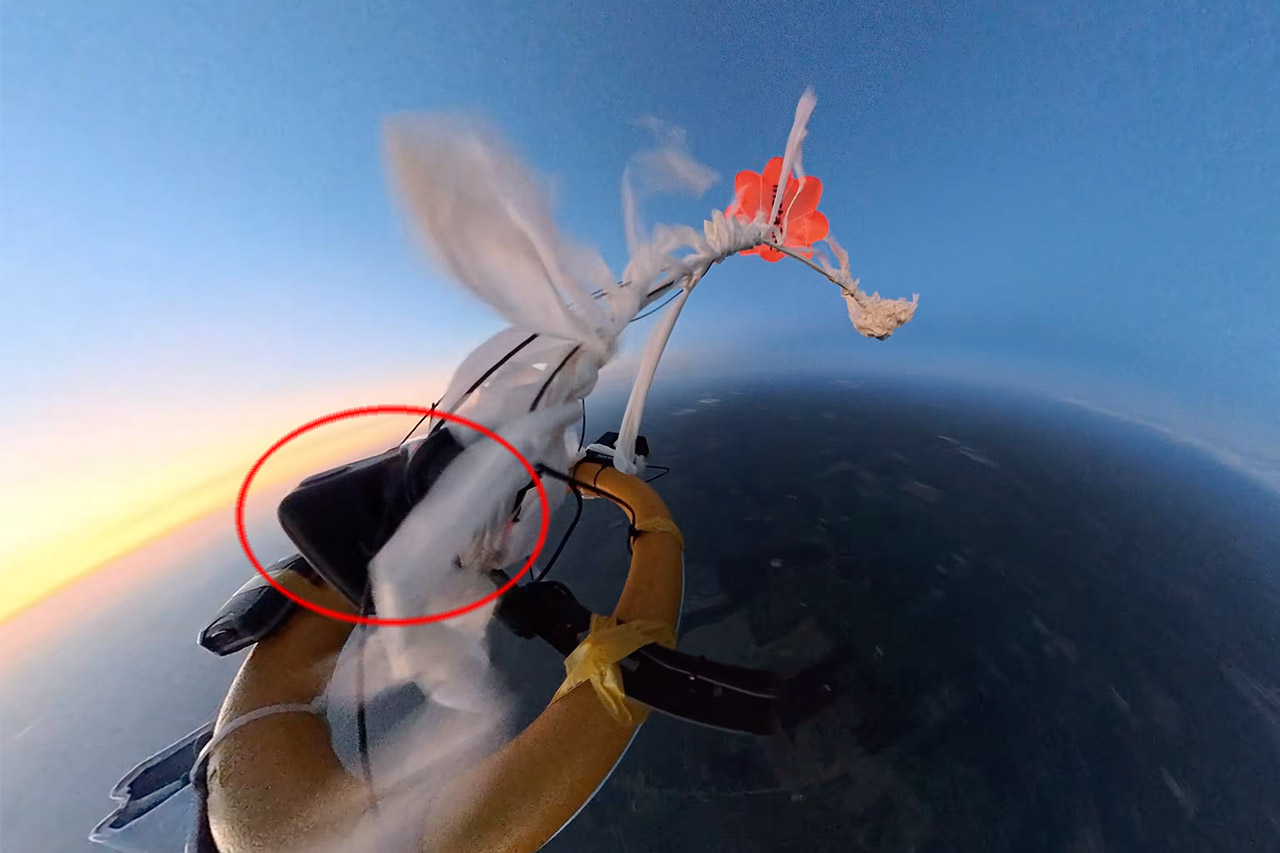
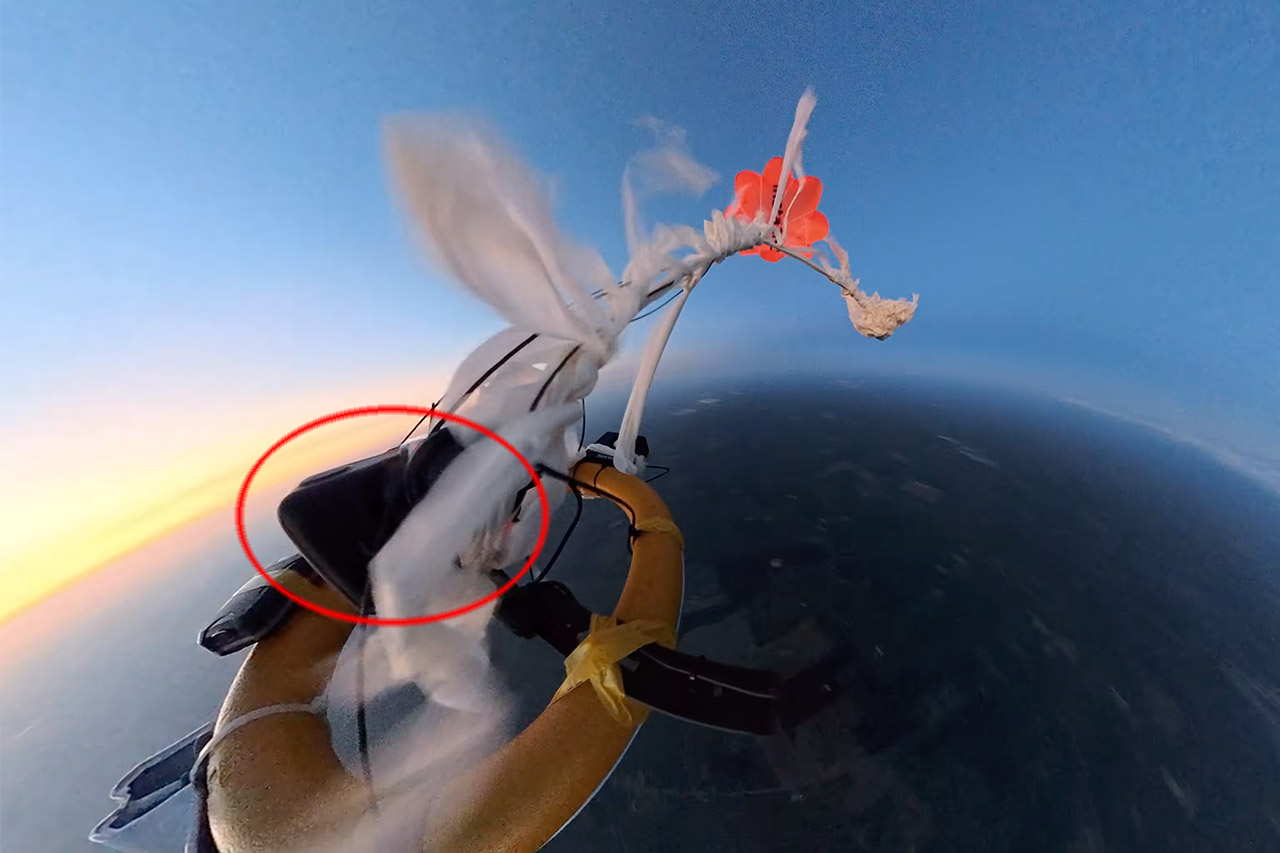
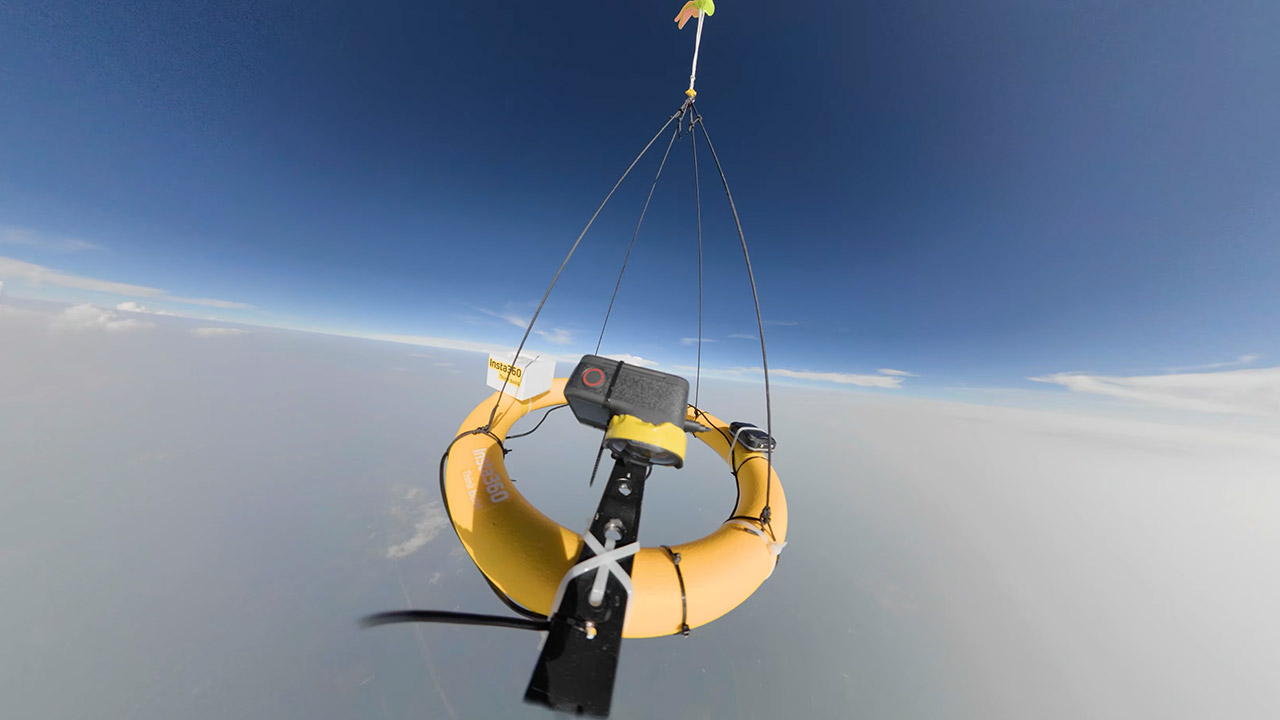
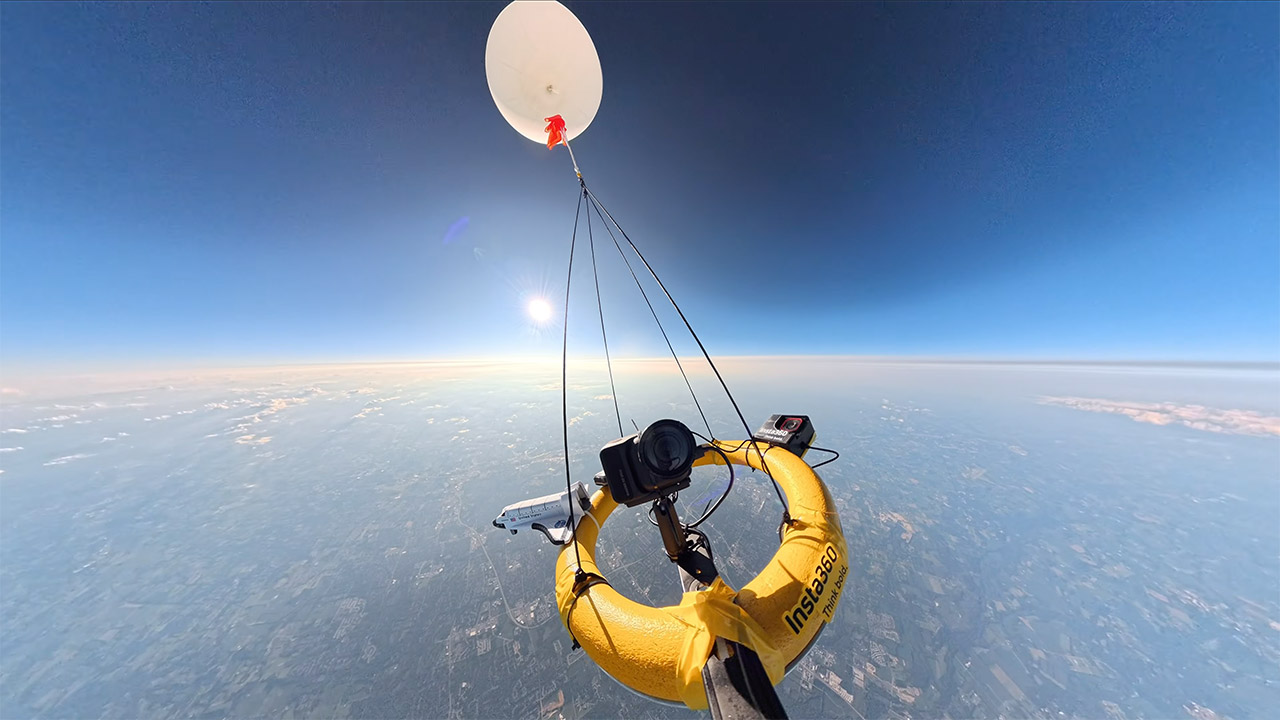
A year of weather balloons, cheap helium, and one brand-new 360 camera produced footage from roughly 110,000 to 120,000 feet. MAKE. ART. NOW. spent twelve months lofting Insta360 gear on 1,500-gram latex balloons aimed at a 115,000-foot burst, and the freshly launched X6 became the main camera for the last of those flights. Dual 1/1.1-inch sensors, 8K recording, 10-bit color, and horizon lock went along for a ride that included minus-70-degree air, a metal clamp that let go at 17,000 feet, and a neighborhood car crash captured in 360.


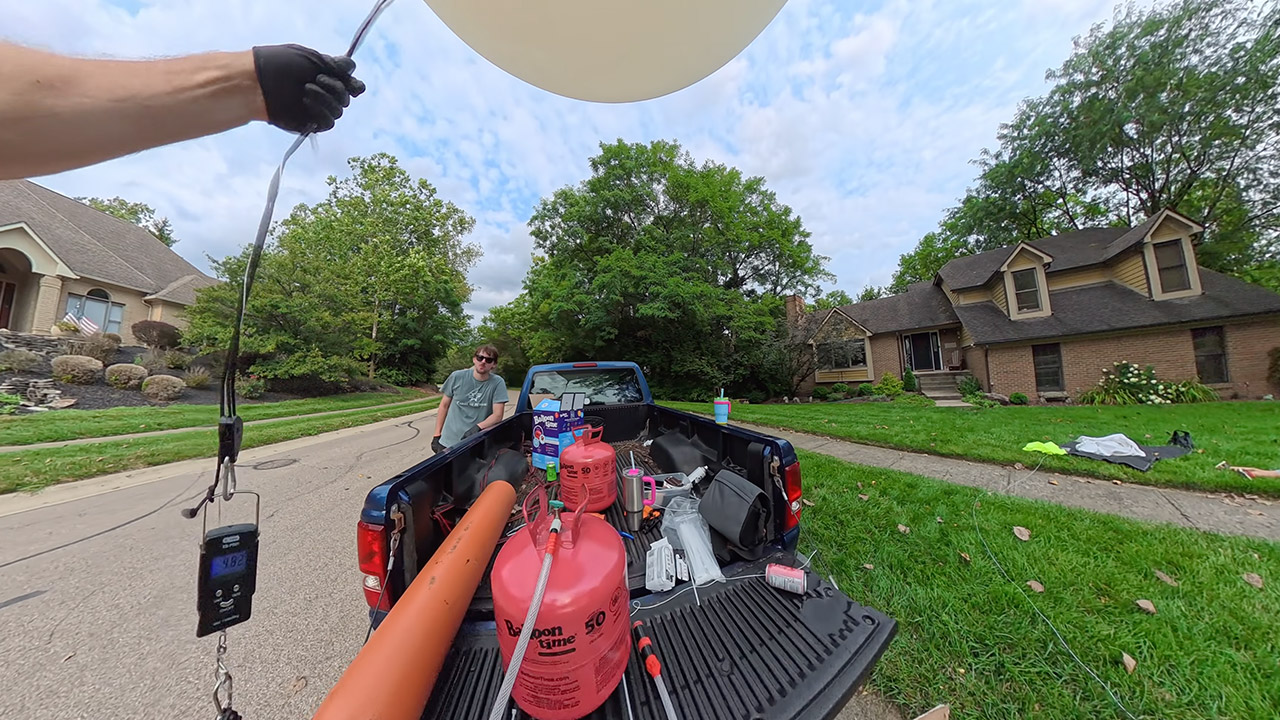
Payloads were kept fairly light, between 3 and 3.8 pounds, so he did not need to alert the FAA. Foam bases painted yellow provided as a base for the main camera, an X5 from previous flights, an Ace Pro 2 for behind-the-scenes photos, and some 4k 120fps burst grabs of the balloon popping, as well as a Go Ultra. External power comes from a USB box filled with Energizer lithium AA batteries; regular batteries simply weren’t up to the work in the cold. He placed hand warmers inside a 3D printed cage for one of the slow-motion cameras. The ripstop parachutes were 18 and 26 inches long, with the smaller one dropping quickly before cracking the foam, which was happily all it did. He needed to leave around 20 to 25 feet between the balloon and the payload to avoid the chute being tangled in leftover latex.


Insta360 X6, 8K 360 Camera with 1/1.1” Sensors
  • DUAL 1/1.1″ SENSORS & TRIPLE AI CHIP SYSTEM: Custom-built dual 1/1.1″ square sensors deliver unprecedented 360 image quality. Combined with a triple…
  • FLAGSHIP 8K50FPS 360 VIDEO: Hit record on our 360 action camera and capture your world in stunning native 8K50fps video. Every view, every highlight…
  • IN-HOUSE AI MODEL FOR EFFORTLESS 360 EDITING: Insta360’s own AI model, built specifically for 360 editing. New AI Director edits your footage…

Insta360 X6 Camera Edge of Space
Getting balloons to hoist the cameras proved to be much more difficult than it should have been. He felt he had enough helium with 300 cubic feet, but leaks and excess weight kept appearing. Party City eventually hooked him up with tanks that were 80 percent pure after he replaced the welding grade regulators that kept bursting. The ascent pace was quite consistent, ranging between 2 and 3 meters per second. Spot trace GPS trackers, which cost roughly $140 total, reported back every 5 minutes until they reached the 40,000-foot limit. According to weather models, we’d land between 5 and 10 miles from the launch site. We had one or two relatively simple pickups, often simply a door knock to return our payload. One cargo ended up on a farm; it required a drone to find it, and a grappling hook failed, so we had to ask a neighbor to let us through the brush to retrieve it.

Insta360 X6 Camera Edge of Space
On his second trip, the X6’s metal clip began to loosen around 17,000 feet, causing the camera to slant downward. He then discovered on the tape that the same file recorded an automobile bending a neighbor’s railing 18 seconds after he let go, and the cops arrived about 4 or 5 minutes afterward. The kids enjoyed it so much that they were counting down the days until they could leave, but he advised his daughter to wait her time because he believes the boys had the most fun they’d had all year. All three cameras that really flew back worked well. The X6’s lenses are easy to replace, thus scratches were never a serious issue. He employed timed capture to keep the high framerate Ace Pro 2 from overheating, and the lithium cells and the X6’s own 2,600mAh battery lasted the entire multi-hour trip without issue.

Insta360 X6 Camera Edge of Space
Even with the payload swinging wildly, altitude views remained rather stable since the horizon lock maintained the image level, allowing the residences on the way up to be zoomed in without the frame rolling. He was also able to capture the balloon popping and final expansion in slow motion using a second camera pointing straight above. Temperatures near the tropopause were brutal on every battery and camera mount, but to his astonishment, the X6 continued to record without issue. After three launches, it was evident that the list of things to avoid for the next launch included: not using metal clamps, ensuring that the parachute has enough room to work, purchasing helium from a local provider, and double-checking your concentration on a large screen before filling the balloon.

Source link

Advertisement
Continue Reading

Tech

All a circuit board! Tech engineer tracks trains, ferries and more in real time with a post-layoff project

Published

on

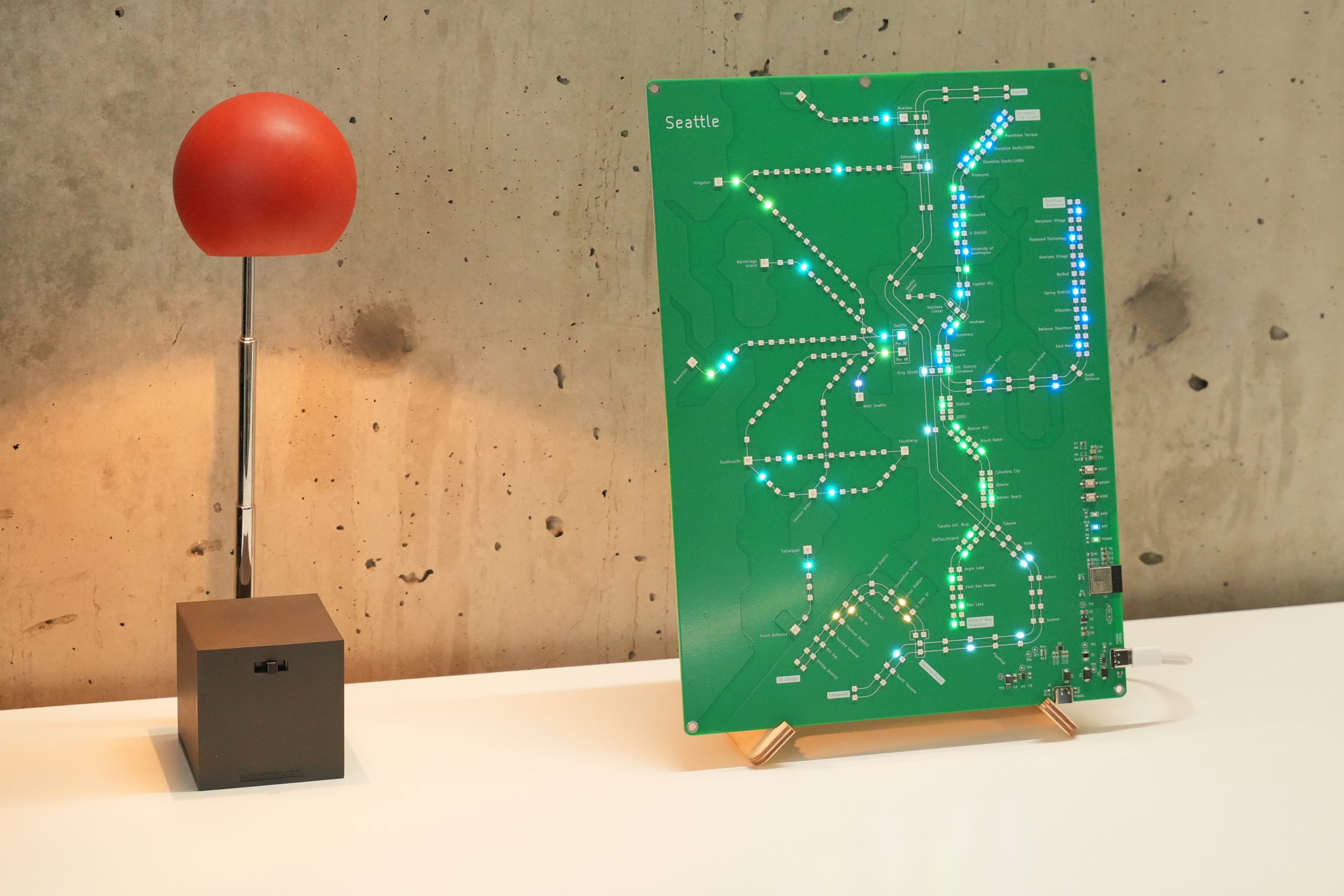
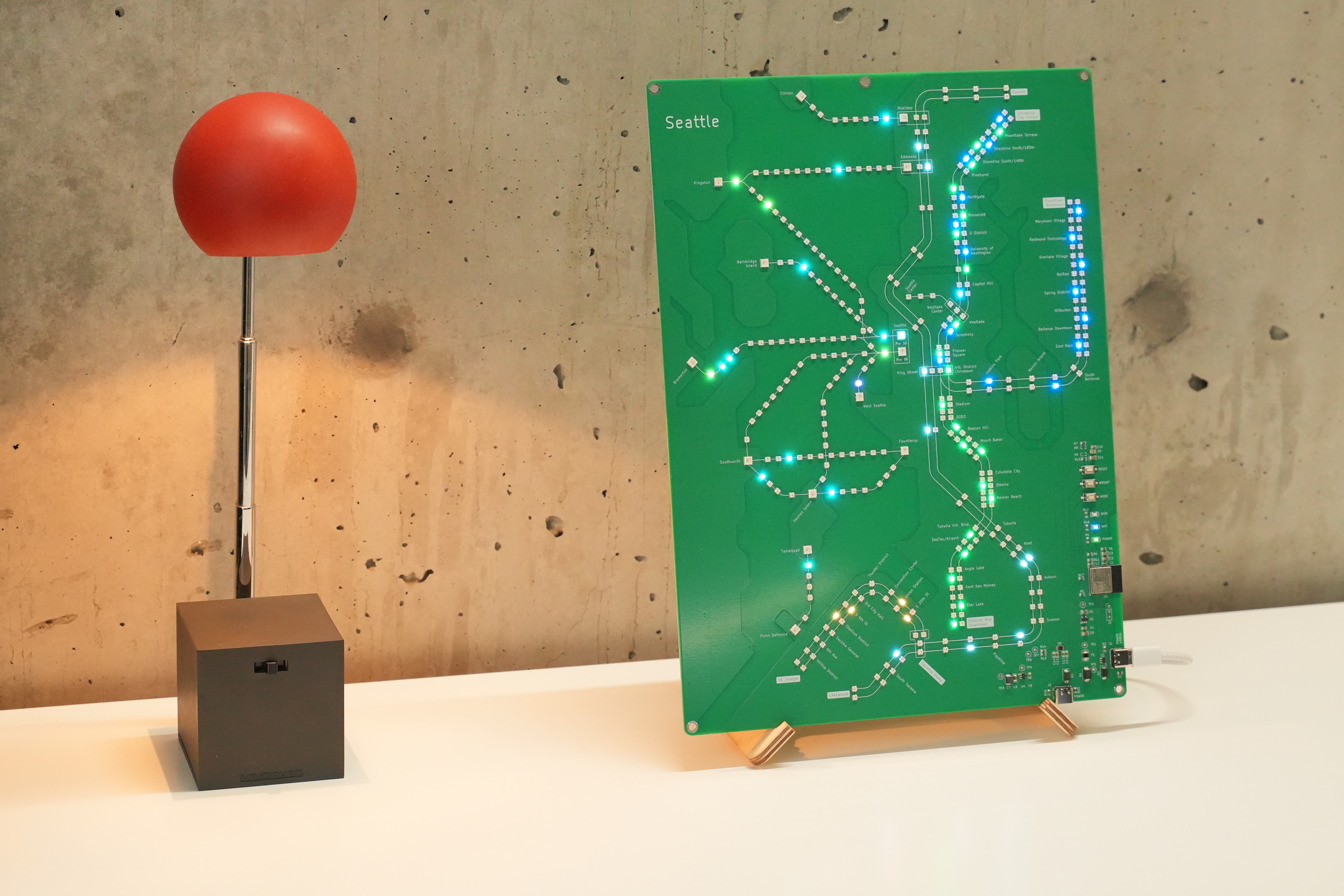
Seattle Transit Live, a circuit board map of Seattle-area trains, ferries and more. (Michael Benedict Photo)

When Sound Transit opened the light rail 2 Line across Lake Washington in March, software engineer Michael Benedict built a custom gift to mark the milestone for his transit-fanatic wife: a circuit board map of Seattle with tiny lights depicting moving trains.

Today, that personal birthday project has evolved into Seattle Transit Live, an interactive LED map that tracks Puget Sound-area light rail, trains, ferries, and the water taxi in real time using public transit data.

The extra time to indulge in such a detailed build came after Benedict was laid off from Amazon — where he worked as an engineer for a little over three years. Rather than rushing into another full-time corporate role, he picked up some freelancing and gave himself room to dive into CAD design, custom hardware and the prototyping process.

“I put way more time than is ever going to be economic into this,” Benedict told GeekWire. “I really kind of luxuriated in it because I didn’t have a job and I could just go deep.”

Designed on a custom fiberglass circuit board with etched copper detailing Seattle-area waterways, the $219 device plugs into Wi-Fi to display live positions of vehicles like Sound Transit trains, Washington State Ferries, the Sounder, and Monorail.

Advertisement
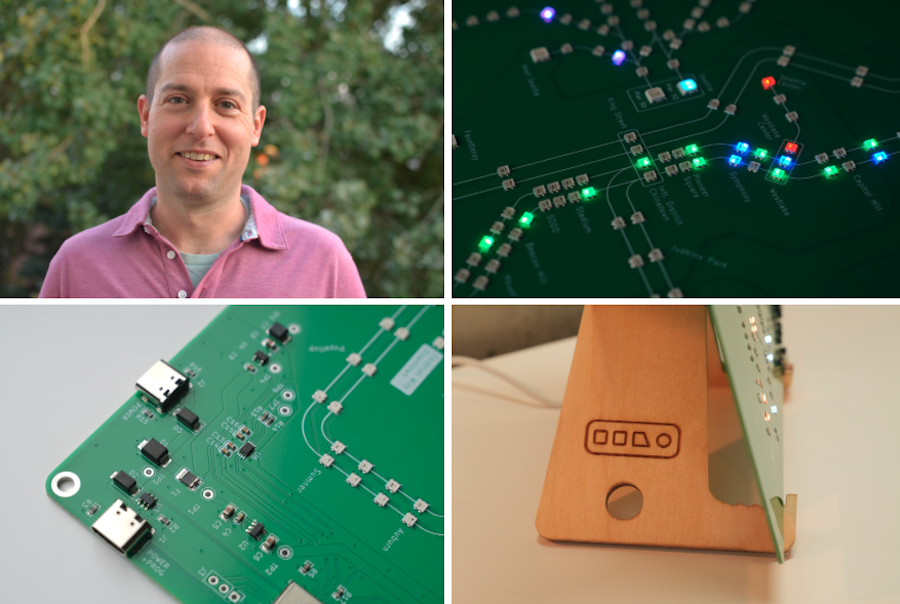
Michael Benedict is a software engineer and creator of Seattle Transit Live. The $219 interactive LED map tracks transit across the Puget Sound region and comes with a custom-built stand. (Michael Benedict Photos)

After Benedict posted an early prototype on Reddit and saw an enthusiastic response from local transit geeks asking to buy one, he refined the design and turned the side project into a full production run.

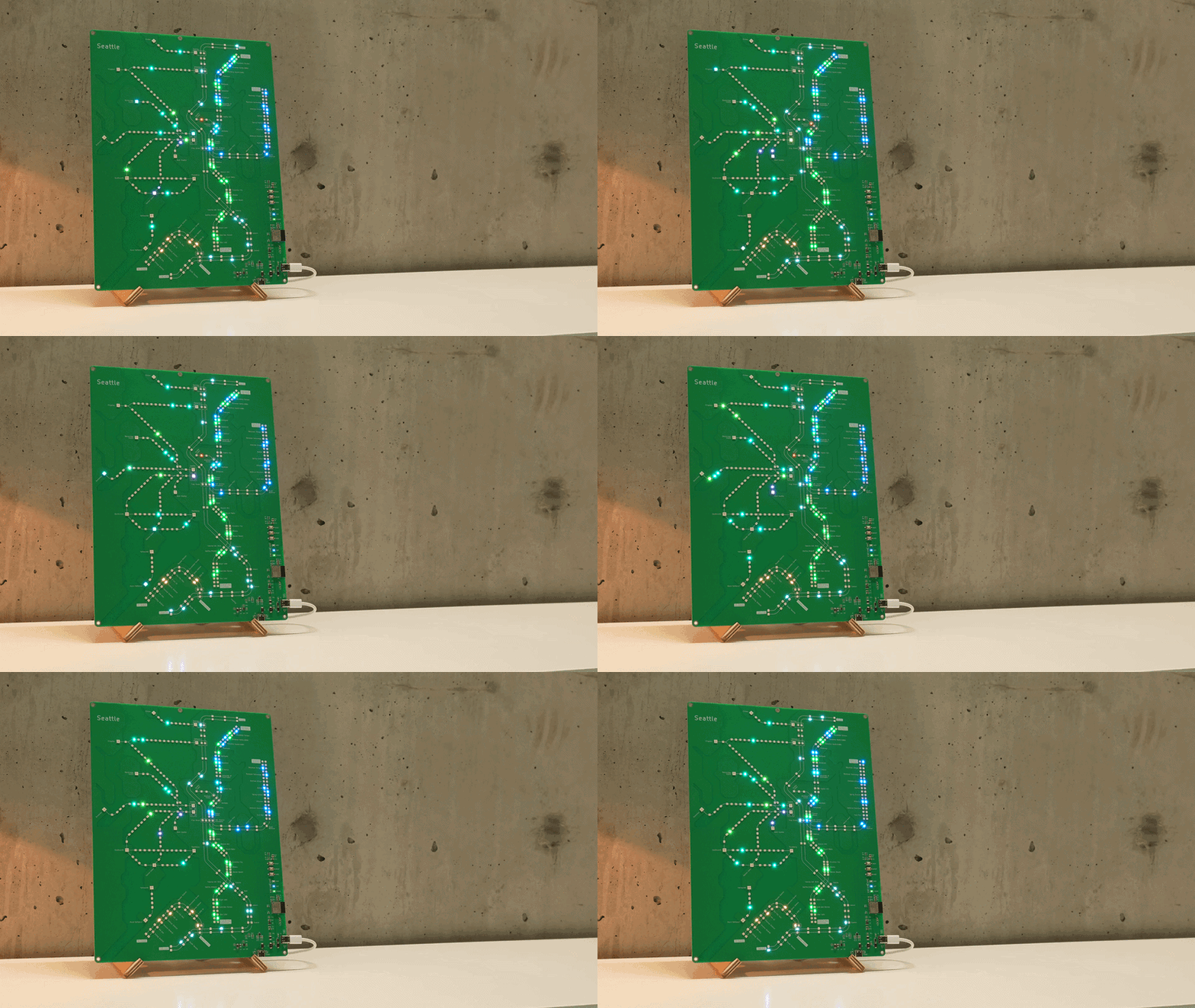
To power the display, the board uses an ambient light sensor to adjust to room brightness and features three distinct software modes. Alongside the real-time data mode, users can switch to a schedule replay mode or a fast-forward option that cycles through a full 24-hour transit schedule at 400x speed — letting users watch a day’s worth of regional traffic zip across the board in minutes.

The 8.6-by-11.8-inch boards are pretty jammed with assorted routes, but we had to ask if there would ever be room for Sound Transit’s eternally delayed Ballard neighborhood line.

“If I’m still making transit maps by the time they put Ballard in,” Benedict laughed, “I’m going to consider that a huge win all around.”

While circuit board maps and LED transit art have been built for transit networks in major cities like New York and Tokyo, Benedict sees Seattle’s unique geography and growing light rail as a compelling canvas for the concept. The board isn’t intended to replace trip-planning apps like OneBusAway, but rather to serve as a piece of functional art that captures the living movement of the region in a physical medium. And it’s all open-source.

Advertisement

The printed circuit boards are manufactured in Shenzhen, China — a standard approach for small-batch electronics — but Benedict wanted to keep a key part of the production local. He partnered with Oxbow Fabrication in Seattle’s Georgetown neighborhood to CNC-machine custom wooden stands, ensuring each board ships with a locally made mount.

The initial run of 50 pre-orders sold out quickly, prompting Benedict to order another 150 units to carry him through the end of the year. And going all-in on an independent hardware project has come with its own brand of founder anxiety.

“Putting 75,000 LEDs on your personal credit card is enough to make you think, ‘Maybe I should send some emails,’” he laughed.

Benedict recently showcased the project at the Seattle Design Festival, and he’s considering potential retail establishments in the city where offering such a niche piece might make sense — such as the gift shop at the Seattle Art Museum.

Beyond Amazon, Benedict’s tech career has included data science roles at 98point6 and Modernist Cuisine. Originally from Queens, N.Y., his embrace of the Pacific Northwest has been accentuated by his hardware project. Living next to the new Judkins Park station for the 2 Line, with a front-row seat to the region’s evolving transit landscape, has helped, too.

Advertisement

“Transit is just a really cool subject matter for it,” Benedict said. “It’s on a schedule, the data’s there, and it feels very Seattle — how the boats and trains move around.”

Source link

Continue Reading

Tech

Audi built an efficient EV in Germany. It is 12cm too long for the rules meant to help

Published

on

Audi has revealed the A2 e-tron, its cheapest electric car, built in Ingolstadt and priced from EUR 38,200 with up to 646km of WLTP range. At 4.32 metres it is 12 centimetres too long for M1E, the small-car category the Commission proposed in December to make affordable European EVs viable.

Audi has revealed the A2 e-tron, its cheapest electric car, and priced it from EUR 38,200 in Germany, InsideEVs reported. It is built in Ingolstadt, orders open on 10 September and deliveries start in December.

The headline number is range. The best version manages 646km on the WLTP cycle, and the efficiency-focused 188hp car draws 12.8 kWh per 100km with a drag coefficient of 0.24.

Air curtains, gap reducers around the wheel arches and an active cooling intake do that work, over a completely flat underbody.

Advertisement

Four outputs run from 168 to 322hp, all rear-wheel drive. Three batteries are offered at 52, 61 and 84 kWh, with lithium iron phosphate cells in the two smaller ones.

It shares the MEB platform and the Q4 e-tron’s wheelbase with the Volkswagen ID.3 Neo, which starts at EUR 33,995. The four rings cost EUR 4,205.

The number that matters in Brussels is none of those. It is 4.32 metres.

The Commission proposed a new small-car category in December, called M1E and capped at 4.2 metres in length, Autocar reported.

Advertisement

Cars in it that are built in the EU would count as 1.3 vehicles against a maker’s fleet CO2 target, and the requirements would be frozen for ten years.

Audi’s cheapest electric car, built in Germany for Europe, misses that category by 12 centimetres. The super-credit is aimed at 2030 to 2034, so nothing is lost today, and the signal is the point.

The Renault 5 clears the threshold at 3.92 metres. So do the Renault 4 and the coming Volkswagen ID. Polo.

The company knows the market it is entering. Its own China-built models are already reaching Europe through parallel imports and are cheaper than local ones.

Advertisement

Bidirectional charging is standard, which is unusual at this price, and the car can run tools or an appliance at up to 3.6kW. Vehicle-to-home will work only in Germany, Austria and Switzerland at launch.

The original A2 was an aluminium efficiency experiment that ended production in 2005. Its replacement is efficient, German-built and priced above the category Europe is inventing, in a market where EV registrations rose 51% in July.

Source link

Advertisement
Continue Reading

Tech

What we expect from the upcoming Apple launch

Published

on

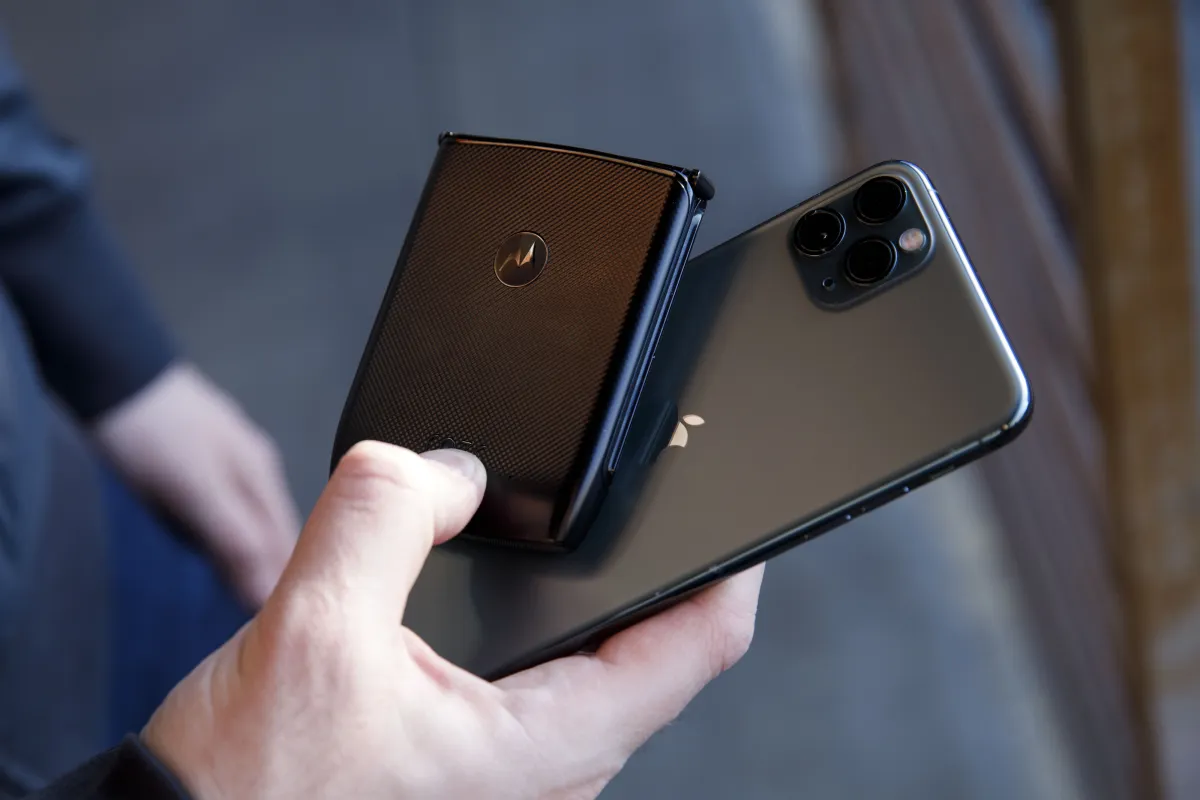
It’s finally happening — this week, we are (probably) about to see Apple’s first foldable iPhone, more than five years after Samsung launched its first foldable phone.

Apple’s annual iPhone release events are always interesting in one way or another, but this year’s presentation is one of the most anticipated in a while. As Tim Cook hands off the CEO role to former Vice President of Hardware Engineering John Ternus, people have high expectations for Apple’s next devices, especially since the company is embracing an entirely new form factor.

While Apple is usually tight-lipped about its product launches, there are always inevitable leaks, giving us insight into what we might see during the September 9 Apple event. While the foldable iPhone is most exciting, we’re also anticipating news about AirPods, HomePods, and the non-foldable iPhone 18 line.

What we think we know so far about the foldable “iPhone Ultra”

If Apple has made its consumers wait over half a decade for it to enter the foldable market, its first attempt had better be good — especially since reports indicate that the phone will cost more than $2,000. At least it’s not as pricey as the $3,500 Apple Vision Pro headset, and unlike headsets, people actually buy smartphones.

Advertisement

The good news is that people who claim to be early testers of the device have reported back positive experiences. According to Bloomberg’s Apple insider Mark Gurman, the foldable iPhone has a premium feel, fits nicely into a pocket, and opens up into a wide, iPad-like display. The phone is expected to sport a 5.5″ cover display, which expands to 7.8″ when the screen is unfolded. When folded in, the device will look shorter and wider than a typical iPhone.

To make hardware that’s still sleek enough to pocket when folded, Apple has had to make some concessions. The device reportedly skips the telephoto camera, which could be disappointing to the kind of consumers who are willing to open their pockets for a phone that’s expensive enough to feed a family for months. However, the phone is expected to have a dual-lens rear camera system with a main and an ultra-wide lens, similar to what’s on Apple’s more basic iPhones.

Rumor has it that Apple will include MagSafe, the magnetic wireless charging and accessory system, but that it will forego Face ID to save space, relying instead on a Touch ID fingerprint button on the phone’s side. This shouldn’t be a huge concession — touching a button is about as easy as looking at a screen — but it might take some getting used to if you’ve become accustomed to Face ID.

Like other foldable phones, the iPhone Ultra is expected to support side-by-side multitasking, letting you run two apps at once, one on each half of the unfolded screen. Even though it’ll resemble a small iPad when opened up, it will still run iOS rather than iPadOS, though shouldn’t be cause for concern, since Apple’s newest chips are powerful enough to handle it. In fact, the same chip reportedly powers Apple’s budget MacBook Neo laptop.

Advertisement

A pain point for foldable phone users thus far has been the dreaded “crease.” With other companies’ foldable phones, you can see the evidence when you open the phone that this isn’t your standard display. It’s a hard problem to solve and one that maybe isn’t worth the technical effort, though Apple has supposedly created a display where the crease isn’t as visible.

Don’t worry, you can still get a new iPhone that doesn’t fold

If foldables aren’t your thing — or if you don’t want to spend double the price on your next phone — don’t worry. Apple is also expected to release some new devices in the iPhone 18 line. We’ve heard leaks about the iPhone 18 Pro and Pro Max, but not much yet about the standard iPhone 18, which is predicted to arrive six months after the September event. That would be a first for Apple — releasing the premium models before the standard one.

Siri HomePods? AirPods with cameras?

Now that Apple is finally moving forward with its Gemini-powered Siri AI update, the company is also expected to refresh the HomePod, a smart speaker and Apple’s answer to devices like the Amazon Echo line.

References to unreleased products, including new HomePods, were recently spotted by users digging through a macOS preview build.

Advertisement

The most surprising find, however, is that Apple appears to be working on AirPods with built-in cameras. In that same macOS preview, researcher Aaron Perris found a video showing someone wearing the AirPods and picking up a book.

“With Visual Intelligence, your world becomes savable. See something you like? Just ask me to save it for later,” a voiceover in the video says.

While some users may be skittish about using a device that can see what they see — comparisons to Meta’s maligned “pervert glasses” are inevitable — we have some degree of hope that a company like Apple, which has built its brand on privacy, will do better.

Gurman has reported that “the cameras essentially act as eyes for the Siri digital assistant and aren’t designed to take photos or video.” Instead, the earbuds’ components allow it to “capture visual information in low resolution.”

Advertisement

When you purchase through links in our articles, we may earn a small commission. This doesn’t affect our editorial independence.

Source link

Continue Reading

Tech

Los Santos Speaks ARM, Modder Gets GTA 5 Running Natively on the Original Nintendo Switch

Published

on

GTA V Native Port Nintendo Switch
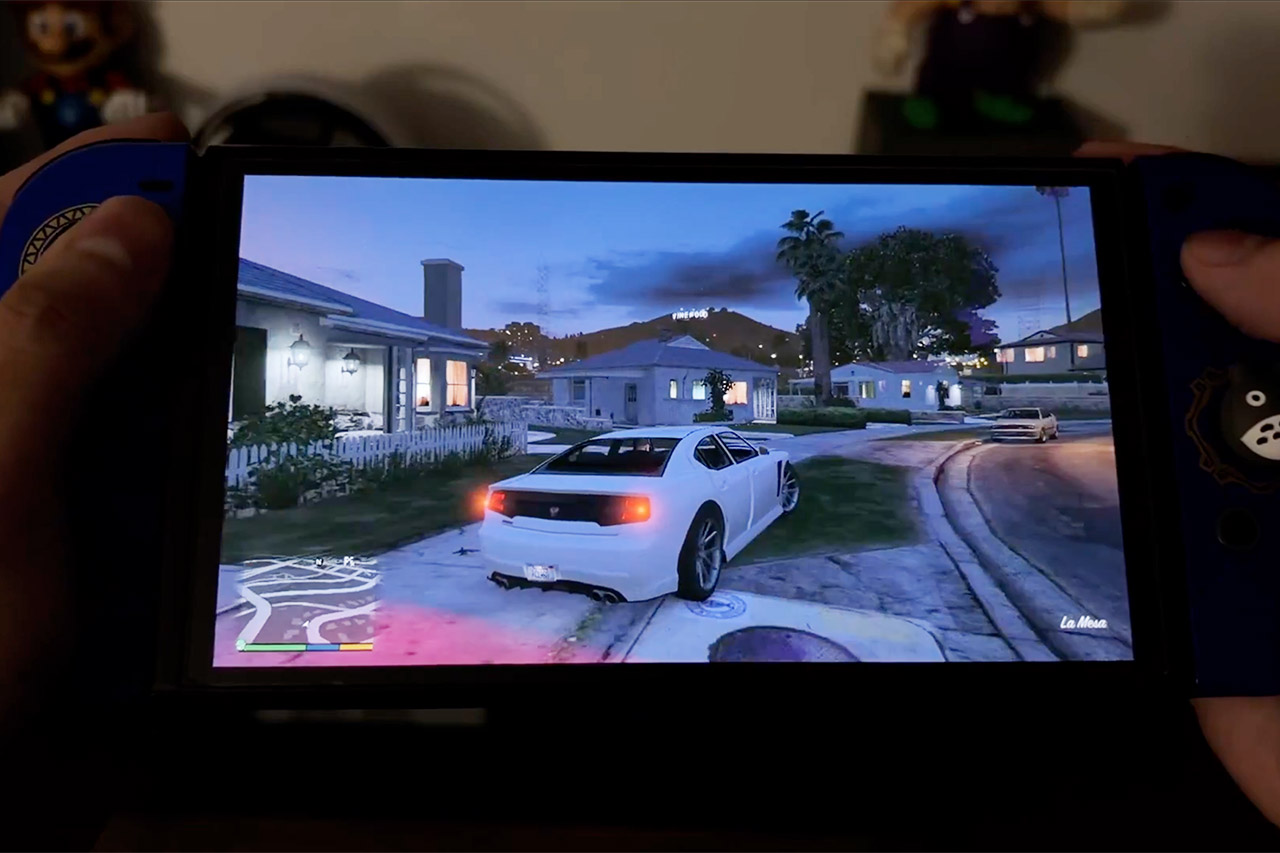
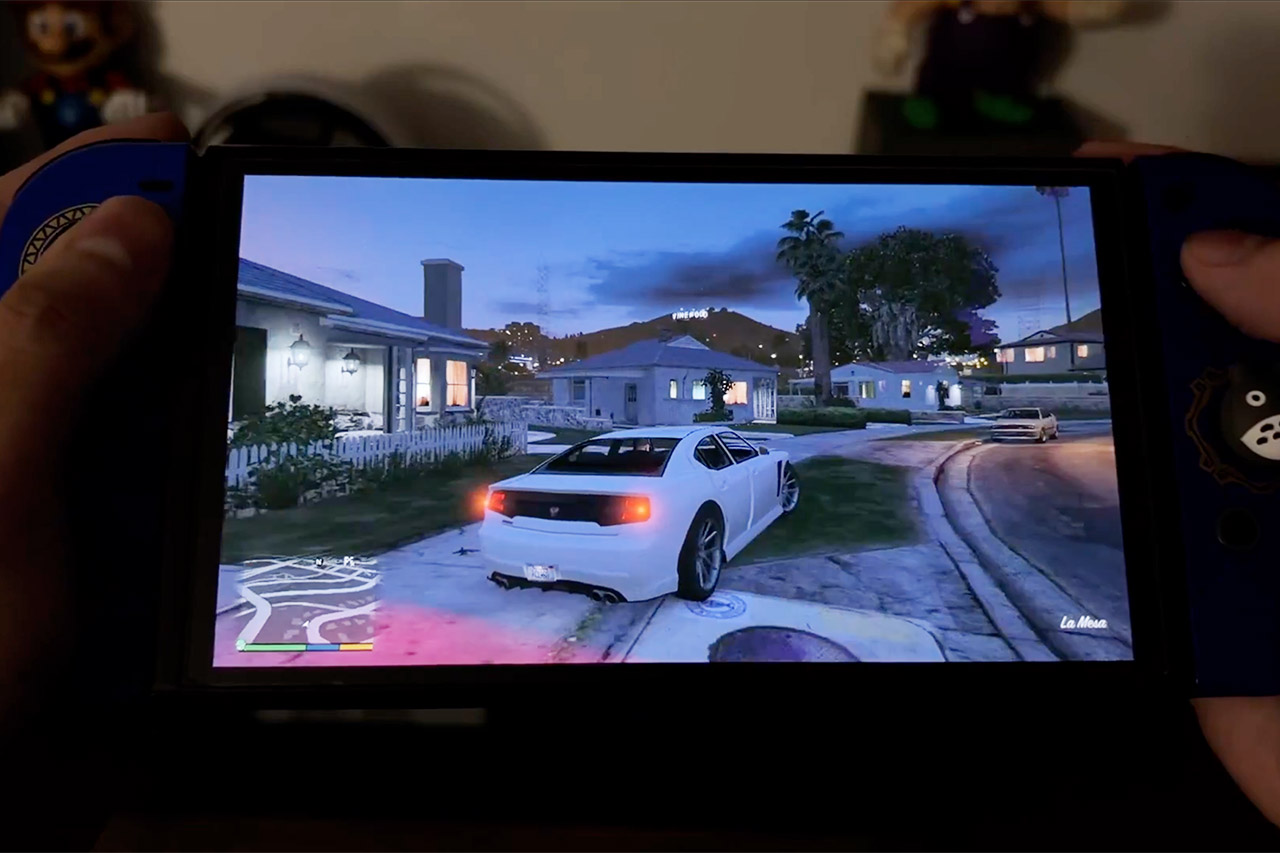
Rockstar never released Grand Theft Auto V for Nintendo hardware. M0jso and Paralympics Productions completed the project in late August 2026 with an unofficial homebrew build that runs directly on the original Switch. The code from the 2023 leak of GTA V Legacy version 1.0.2699, the same lineage used on PlayStation 4, Xbox One, and PC, has been modified and recompiled for ARM, allowing the Tegra X1 and Horizon OS to treat it as a regular title. There is no Linux layer in the middle, no Android wrapper that interprets calls, no stream from another system, and the game is read in the CPU’s native language.

The majority of the work here is performed by four primary pieces of software. A package builder converts patched files into an installable NSP. An asset converter does its best to rebuild PC textures and models so that they would operate with Horizon OS. Modified config files are utilized to lower the draw distance and particle counts so that the engine does not become completely clogged while attempting to do everything. A rigorous organizational layout keeps everything neat and tidy in place. Overall, they manage to fit a 49-gigabyte Los Santos inside the console’s limited 4GB memory. If you follow the Discord recommendations, you’ll still need a legitimate copy of the PC game and a Switch that can run custom firmware. Remember that you can use pre-made archives to avoid the complete conversion process.


Nintendo Switch 2 System
  • The next evolution of Nintendo Switch
  • One system, three play modes: TV, Tabletop, and Handheld
  • Larger, vivid, 7.9” LCD touch screen with support for HDR and up to 120 fps

Stock frame rates range from 10 to 25 per second, which fluctuates greatly depending on the scenario and, if you’re unlucky, the type of silicon you’re using. Quiet residential streets tend to be on the higher end of that spectrum, whereas main shopping centers clogged with traffic and pedestrians will plunge you right to the bottom. If you’re feeling bold, you can use Sys-CLK or the more extreme alternative, Horizon OC, to slightly boost the frame rate. With an OLED screen and no RAM modifications, you can even go up to a smooth 30 fps in the more basic sections. When you meet a crowded mission or an explosion, you are quickly returned to the lower end. The only downside is that your battery life will decrease significantly, as is to be expected with any demanding piece of custom software. As a result, the overall experience feels more like an old PS3 or Xbox 360 game than a newer console version, despite the fact that the code is virtually new.

Advertisement

Driving and shooting seem a little awkward and heavy with Joy-Cons, but when you connect in a Pro controller, things improve significantly. Early footage looked fairly bad, with plenty of broken rendering and crashes; later updates improved a lot of that, and they’ve promised a few more to follow, especially after the same technology is moved to Android. Saves now work, cinematic music plays, and you can even travel around the open world without the game crashing after a few minutes. It’s not horrible considering this is a 2013 game crammed onto a 2017 handheld that wasn’t designed for it, but things could have been far worse. If you own a Switch 2, you can just wait for the official announcement; if you don’t, and your first Switch already has custom firmware, you can load up Los Santos tonight and accept that you’ll have to deal with the occasional frame drop and other issues.

Advertisement

Source link

Advertisement
Continue Reading

Tech

Microsoft promises faster Windows 11 boot times and better performance on 8GB PCs

Published

on

Something to look forward to: Microsoft has vowed to improve Windows 11 for most of this year, and at IFA 2026, the company made a few more promises. The tech giant says that it is preparing to reduce boot times in its latest OS and improve Windows Hello responsiveness. It also reiterated that Windows 11 will run great on 8GB machines.

As reported by Windows Latest, Mark Linton, Corporate Vice President of Windows & Devices at Microsoft, spoke about the improvements being made to Windows 11, including “significant gains on things like boot time, Windows Hello responsiveness…”

“We’re continuing to improve on the fundamentals,” Linton added. “We’re listening to customer feedback, continuously improving Windows, and you’ll see those updates as Windows just gets better as the updates come through.”

Linton is believed to have been referring to an internal build of Windows 11, rather than live preview builds. Microsoft hasn’t confirmed when these particular improvements will reach the Experimental testing channel, or provided performance figures.

Advertisement

If this sounds familiar, it’s because we’ve been hearing these kinds of promises a lot in 2026.

Microsoft outlined a Windows 11 overhaul in March. The company said it would focus on the fundamentals, improving performance and reliability while giving users more control over the interface and Windows Update. It also promised to make File Explorer more responsive and reduce the amount of memory consumed by Windows.

Later reports added a faster Start menu and Search to the plans. Microsoft also formed a team to create native Windows apps instead of the resource-heavy web wrappers blamed for making parts of the operating system feel slow and inconsistent.

Some of the changes have materialized. Windows 11 users can now move and shrink the taskbar, resize the Start menu, and hide unwanted sections. Search has received a cleaner interface and an option to disable web results, while Low Latency Profile can improve the launch speed of Windows components and third-party apps.

Advertisement

Another claim about 8GB machines could raise eyebrows. Microsoft’s own 8GB Surface Laptop struggled with Teams calls and froze during basic Google Docs work in a review we covered in July.

There’s still little evidence of dramatically lower RAM use or a native-app revolution. Problematic patches also continue to appear, too, including an August update linked to game crashes and unexpected reboots.

Microsoft offers no average Windows 11 boot-time figure, though its guidance recommends that notebooks reach the Start screen within 15 seconds, excluding BIOS initialization. Linton never said how much faster the changes will make the process, but we can all appreciate a faster boot time.

Advertisement

Source link

Continue Reading

Tech

Event rumor roundup, new Sonos gear, & radical smart home vacuums

Published

on

On this week’s episode of the Smart Home Insider podcast, Matic co-founder Mehul Nariyawala joins to round up the Apple Event rumors and talk about why Matic’s robot is so radically different.

This is a jam-packed episode of the show as it coincides with not only Apple’s iPhone event, but it is the end of IFA. Mehul brings a wealth of knowledge as we break it all down, including what we want to see Apple announce.

After the Apple event coverage, we pivoted to discussing the news for the week, which included a lot of IFA announcements. There were new robots, smart home controls, and a lot of lights.

Sonos was a big topic as well. It announced the Sonos Beam Ultra soundbar and Sonos Ace Ultra headphones.

Advertisement

There were several new apps to come on the scene recently. We check out Wallflower 3.0, Overflight, and Threadlytics.

Wallflower has been updated to version 3.0 which brings many updates to this Apple Home dashboard app. It can detect as you approach and change the view and intelligently shows cameras and accessories based on relevancy, like if a camera spots motion.

Overflight is a plane radar app, which is great for Apple TV. It can show you the information of flights as they pass over your head.

Finally, Threadlytics is a new app currently in beta that can provide information on your Thread network. It can give you a health report on your network and break down the number of Thread devices by ecosystem, like Matter, Apple Home, SmartThings, and more.

Advertisement

In other news, Google has increased the price of its Google TV Streamer. It is now priced at $150, up from $99, which is still shy of the Apple TV that starts at $199.

We wrap up the episode to talk about vacuums. Matic is a square, box-shaped vacuum rather than the disc shape that all others use.

Mehul walks us through that particular design choice, why it has no multi-function dock, and its advantages to every other vacuum and mop on the market. Other parts of the conversation touch on an impending price increase, AI use for control, and its privacy focus.

Those interested in sponsoring the show can reach out to us at [email protected]

Keep up with everything Apple in the weekly AppleInsider Podcast. Just say, “Hey, Siri,” to your HomePod mini and ask for it, and our latest Smart Home Insider episode too. If you want an ad-free main AppleInsider Podcast experience, you can support the AppleInsider podcast by subscribing for $5 per month through Apple’s Podcasts app, or via Patreon if you prefer any other podcast player.

Advertisement

Source link

Continue Reading

Tech

Oura is going public, but these smart ring companies are coming for its crown

Published

on

The smart ring market is getting crowded, and Oura isn’t waiting around to see what happens next: it officially filed to go public on September 3.

The company is killing it right now. The Finnish outfit’s revenue nearly doubled to $1.21 billion for the nine months ended June 30. Oura said it sold 3.6 million rings over the past year, and that it has around 5 million paid members. The company’s move to go public follows the recent launch of the Oura Ring 5, its slimmest and lightest ring yet.

But while Oura has largely dominated the smart ring market for years, rivals are emerging from all corners to dethrone it, each betting on a different angle. For example, French company Circular announced this week that its upcoming ring will allow users to tap to pay with their ring, while Chinese company RingConn debuted a ring this year that added haptic vibrations. 

Indian company Ultrahuman separately announced this week that it raised $70 million with backing from Qualcomm’s venture arm as it looks to build a ring that it says will be able to run software directly on the device and eventually power everything from AI interactions to games.

Advertisement

The race to beat Oura isn’t just about enhanced health and sleep tracking anymore. It’s now about seeing which company can cram the most smartphone-like features into a two-gram titanium band before someone ends up shipping a ring that lets you doomscroll TikTok or answer calls or do your taxes. I mean, we’re already seeing smart rings with screens, like the Pebble Halo, although it’s currently only available in India, as well as rings that promise touchpads, like the Dreame Ring.

The irony is that the initial appeal with smart rings was that they made technology and health tracking feel less intrusive than devices like smartwatches and smartphones, given you can step away from a screen while still keeping tabs on your health. With the way things are headed in the smart ring industry, though, we may just end up slipping mini smartphones on our fingers.

All of this is to say that the smart ring market is getting increasingly confusing, so we’ve rounded up the most notable contenders vying for Oura’s crown. 

Ultrahuman

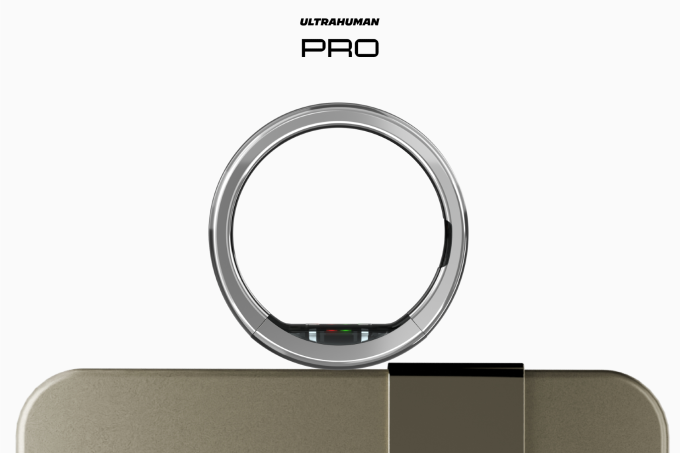
Ultrahuman Ring Pro
Image Credits:Ultrahuman

Earlier this year, Ultrahuman unveiled its third-generation smart ring, the $479 Ring Pro, which is set to begin shipping in the U.S. in mid-September. Ultrahuman’s U.S. business was disrupted in October 2025 after the U.S. International Trade Commission ruled in Oura’s favor in a patent dispute. The ruling prevented the company from importing new ring inventory into the country, so Ultrahuman developed the Ring Pro with a redesigned form factor in order to circumvent Oura’s patent.

The Ring Pro features a redesigned heart-rate sensing system aimed at improving signal quality during sleep, along with a new dual-core processor that enables more accurate data collection and greater on-device processing. As noted earlier, Ultrahuman looks to be more ambitious with future rings as it aims to go beyond sleep and health tracking. 

Advertisement

Circular

Image Credits:Circular /

Circular’s upcoming Ring 3 series, which consists of a Pro model and a Slim option, is expected to launch early next year. Both of the smart rings will feature an integrated NFC chip for contactless payments and on-finger vibrations that can be used for silent wake-up alarms, reminders, vital health alerts, and more. 

The Ring 3 Pro features a slimmer design than its predecessor and comes with FDA-cleared ECG for AFib detection, blood pressure trend tracking, glucose tracking, advanced sleep analysis, and comprehensive biometric monitoring.

Pricing for the upcoming rings is not yet available. 

RingConn

5 Designs of RingConn Gen 3
Image Credits:RingConn

The RingConn Gen 3, which launched in May and starts at $349, features vascular health insights that use sensor data from the ring to assess changes in vascular strain over time after calibration with externally measured blood pressure values.

It also tracks heart rate, blood oxygen saturation, sleep, activity, and stress, among other metrics. Additionally, it features vibration alerts for health changes, sedentary reminders, and low battery. Unlike Circular, which leans on haptics to make its ring more communicative, RingConn mostly sticks to vibration as a health-alert mechanism.

Samsung

Image Credits:Samsung

Samsung became the first major tech giant to launch a smart ring in 2024. The Galaxy Ring, which costs $399, is arguably the strongest contender for anyone already invested in Samsung’s ecosystem of devices. 

Compared with other smart rings on the market, the Galaxy Ring is relatively basic when it comes to advanced health and sleep tracking. It lacks features such as sleep apnea detection, which are offered by RingConn, Oura, and Ultrahuman, as well as AFib detection, which is available on Circular and RingConn smart rings. 

Advertisement

Dreame

Image Credits:Dreame /

Dreame, a relatively new entrant to the smart ring market, unveiled a ring earlier this year with haptic alerts for alarms, calls, messages, and more, along with a small touchpad that lets you do things like skip a song or snap a photo on your phone. It’s also said to offer heart rate tracking, blood oxygen monitoring, heart rate variability insights, sleep analysis, and more.

Pricing and availability have yet to be announced.

When you purchase through links in our articles, we may earn a small commission. This doesn’t affect our editorial independence.

Source link

Advertisement
Continue Reading

Trending

Copyright © 2025