Connect with us

Business

Daytona Beach Still Runs on Sand, Speedways and Bike Rallies as Safety Debates and Fall Crowds Build

Published

on

Daytona Beach Still Runs on Sand, Speedways and Bike Rallies

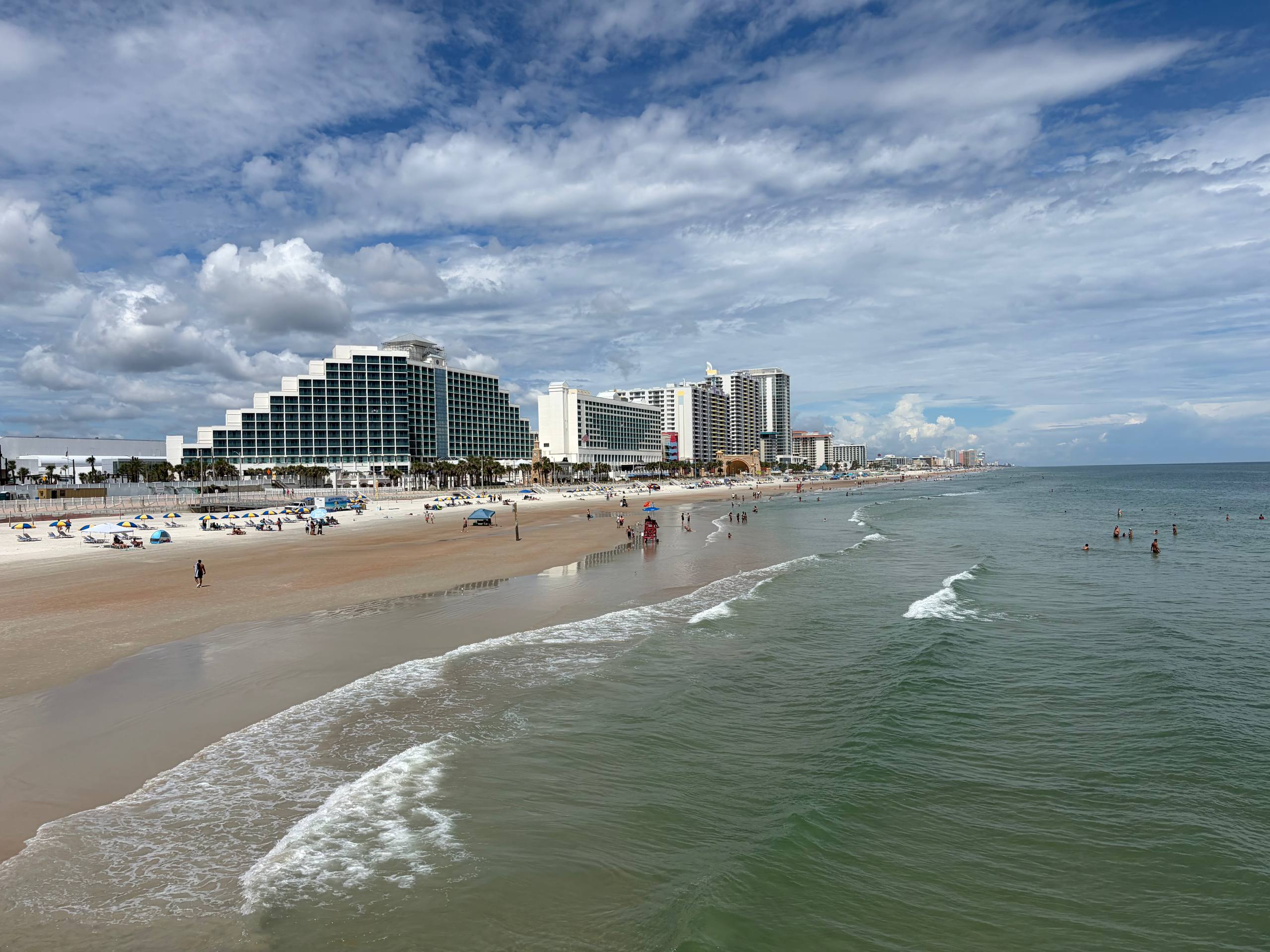
DAYTONA BEACH, Fla. — Daytona Beach still sells the same three promises that put it on postcards: a hard-packed Atlantic strand you can drive, a 2.5-mile speedway that opens and closes NASCAR’s season, and motorcycle rallies that refill hotels when the rest of Florida is waiting on winter.

The city of about 91,900 people on Florida’s Volusia County coast is growing fast — estimates put the 2026 population near 91,916, up more than 27 percent from the 2020 census count of 72,283 — but the brand has not changed. Visitors still call it the World’s Most Famous Beach. Locals still argue about whether cars belong on that sand. And the calendar still turns on engines.

Beach driving is the first fact most first-timers get wrong. Pedestrians and cyclists can use the sand around the clock when tides and weather allow. Vehicles cannot. Volusia County lets cars onto marked lanes from sunrise to sunset from Nov. 1 through April 30, and from 8 a.m. to 7 p.m. from May 1 through Oct. 31, the sea-turtle nesting window. The posted limit is 10 mph. Headlights stay on. At least one front window stays down. Passing is forbidden. Alcohol and glass are banned. Pets are not allowed except service animals. Daily visitor driving passes have been listed at $30 a vehicle; annual visitor permits at $150. Ramps close when tides run high. County Beach Safety, not a travel blog, has the last word.

That tradition is also the loudest local fight. Sheriff Mike Chitwood said last year 1.37 million vehicles used Volusia beaches. He said vehicles hit people twice last year and four times this year, two of them fatal, including a toddler at New Smyrna Beach who ran from between parked cars. “That person was doing everything that we asked you to do — speed limit, window down, lights on, no radio, no texting — and never saw the toddler run out in front of the car,” Chitwood said. He has argued the mix of heavy cars and small children is a risk the county has been lucky to carry. The practice survives because it is identity as much as transportation. Only a handful of Florida beaches still allow it.

Advertisement

The second engine is Daytona International Speedway. The 68th Daytona 500 on Feb. 15 sold out for an 11th straight year. The speedway said about 150,000 people were on the property for race day and about 450,000 across Speedweek. Tyler Reddick won; 25 drivers led at least one lap, a race record; the purse topped $31 million. In January the Rolex 24 At Daytona drew what IMSA called record weekend attendance above 180,000. Track president Frank Kelleher, speaking later in the year ahead of the Coke Zero Sugar 400, said, “It all comes to a head at Daytona, where we start the regular season and now end it,” and, “I wake up every day motivated to go earn it.” The oval sits west of the shore on International Speedway Boulevard. On race weekends it is the city’s extra downtown.

Motorcycles are the third engine. Official Bike Week in 2026 ran Feb. 27 through March 8. Using geofencing for the first time on the March event, the city counted 423,300 unique visitors across three zones over 10 days, according to figures reported from that tracking. City Economic and Strategic Opportunities Director Jeff Brown said, “Visitor numbers aren’t going to be exact, but it’s a start and better than a wild guess.” The next date on the same circuit is the 34th Biketoberfest, Oct. 15-18. Lori Campbell Baker, executive director of the Daytona Beach Area Convention and Visitors Bureau, said, “Biketoberfest has become one of our signature annual events and a tradition that motorcycle enthusiasts look forward to every year. Whether you’re visiting for the first time or making your annual return, there’s something special about experiencing the camaraderie of all attendees, our scenic coastal roads, and the energy throughout the destination.” Typical estimates put the October rally near 100,000 people — smaller than Bike Week, easier to ride. Main Street, A1A and the Ormond Scenic Loop are the advertised roads. Two new Marriott-brand hotels were expected to open ahead of the fall dates.

The boardwalk and Main Street Pier remain the postcard strip between those weekends. Spring break still arrives. So do families who never sit in a grandstand. The city is not only a party town. Embry-Riddle Aeronautical University and Bethune-Cookman University give the place a year-round student population that does not show up in tourism ads. Median household income estimates sit near $52,000, with a poverty rate near 20 percent — a reminder that the beach economy and the residential city are not the same paycheck.

Traffic on the beachside streets is the next fight after sand driving. In early September the City Commission took up a proposal to convert one-way streets between Seabreeze Boulevard and International Speedway Boulevard to two-way traffic, a change business owners said could help tourists find bars and shops that suffered when the grid became a maze. Mayor Derrick Henry and commissioners scheduled public comment at Peabody Auditorium. Some of those roads sit on state right of way, which means Florida DOT, not only City Hall, would have to sign off.

Advertisement

Conservation sits under all of it. Driving is banned west of the marked dune line. Night lighting rules exist because hatchling turtles crawl toward the brightest horizon. Disturbing nests or dune plants can bring fines. Surf zones are marked in peak hours. Officials tell swimmers to stay in front of a lifeguard. Those are not slogans. They are the conditions that keep the driving lanes open at all.

What a visitor needs, then, is a short list that is also the city’s whole pitch. You can walk the beach at 2 a.m. and not drive it. You can pay $30 and roll at 10 mph if the ramp is open. You can sit among 150,000 people for a 500 and among a few hundred thousand more for Bike Week. You can come back in October for four days of motorcycles when the humidity finally drops. You can hit a university town that still has a 20 percent poverty rate. You can watch commissioners argue about two-way streets while the sheriff argues about cars on sand. You can treat Daytona as a race, a rally or a beach. The place is built to be all three at once, and that is why the crowds keep coming even when the rules get tighter and the ramps close with the tide.

Continue Reading
Click to comment

You must be logged in to post a comment Login

Leave a Reply

Business

Diamond Hill Short Duration Securitized Bond Strategy Q2 2026 Commentary

Published

on

Diamond Hill Short Duration Securitized Bond Strategy Q2 2026 Commentary

Diamond Hill Capital Management, Inc. is a wholly owned subsidiary of Diamond Hill Investment Group, Inc. Diamond Hill Investment Group is a publicly traded company, and its shares trade on the NASDAQ (Ticker: DHIL). Note: This account is not managed or monitored by Diamond Hill Capital Management, and any messages sent via Seeking Alpha will not receive a response. For inquiries or communication, please use Diamond Hill Capital Management’s official channels.

Continue Reading

Business

Sebi eases compliance norms for FPIs investing only in government securities

Published

on

Sebi eases compliance norms for FPIs investing only in government securities
The Securities and Exchange Board of India (Sebi) has eased regulatory compliance requirements for foreign portfolio investors (FPIs) that invest exclusively in government securities, removing the need for them to furnish investor group details.

The move follows the Reserve Bank of India’s decision in June to withdraw concentration limits for FPIs investing in government securities through the General Route.

Sebi, in a circular issued on Monday, said the requirement to identify the investor group of an FPI investing only in government securities was no longer relevant following the RBI’s decision.

“FPIs investing only in Government Securities shall not be required to furnish investor group details,” SEBI said, modifying the relevant provision of its master circular governing FPIs, designated depository participants and eligible foreign investors.

Advertisement

Sebi had earlier, through a September 10, 2025 circular, provided a similar exemption to FPIs investing exclusively in government securities under the Fully Accessible Route. The latest amendment extends the relief to FPIs investing only in government securities more broadly.


The regulator said the move was aimed at providing greater ease of investment to FPIs.
Depositories, custodians and designated depository participants have been advised to make the necessary changes to their systems to implement the revised requirement.The changes will take effect immediately, Sebi said.

(Disclaimer: Recommendations, suggestions, views and opinions given by the experts are their own. These do not represent the views of The Economic Times)

Continue Reading

Business

American Century Ultra Fund Q2 2026 Commentary

Published

on

Invesco Quality Income Fund Q1 2026 Commentary

symbolizing increasing investment funds, financial growth, and successful fund management

Pavel Kot/iStock via Getty Images

Portfolio Review

U.S. stocks advanced sharply. U.S. equities posted double-digit quarterly gains despite volatility stemming from the Iran conflict. Robust earnings, resilient economic data and continued momentum in artificial intelligence (AI)-related stocks supported gains. However, stocks pulled back slightly in

Continue Reading

Business

Tesla Starts Paid Cybercab Rides in Austin as Regulators Probe Its Wheel-and-Pedal-Free Design

Published

on

Tesla Tells Cybercab Riders to Talk to Grok for Climate,

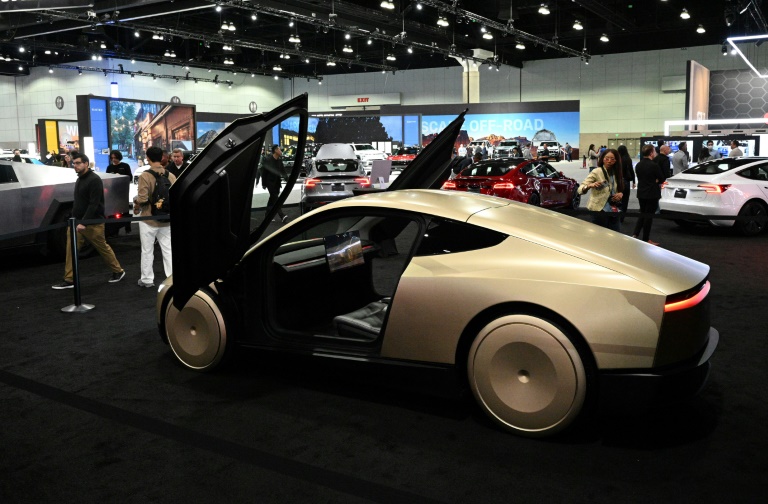
AUSTIN, Texas — Tesla has begun charging passengers for rides in the Cybercab, the two-seat electric car it built without a steering wheel, pedals or side mirrors, even as U.S. safety regulators opened a review of how the company certified that design as legal.

Paid trips started in Austin on Sept. 4, the day after an invitation-only launch at ACL Live. Riders hail the car through Tesla’s existing Robotaxi app, in the same geofenced area already served by driverless Model Y vehicles since June 2025. Users told reporters the Cybercab fare on identical routes was lower than the Model Y option. Tesla executives at the event described dynamic pricing and promised “a first-class experience at coach price.”

Elon Musk did not attend. In a promotional video released the same day, he called the Cybercab “the first car that is specifically built for unsupervised full self-driving.” In the days before the event he pinned a post that read, “A storm of Cybercabs.” Texas motor-vehicle records showed about 45 Cybercabs registered to Tesla’s robotaxi fleet as of late August. The company’s broader Texas robotaxi registration list stood near 420 vehicles, most of them Model Ys — fewer than half the nearly 1,000 vehicles Alphabet’s Waymo has registered in the state.

That gap between slogan and fleet size is the first fact that matters. The Cybercab is no longer a prototype on a studio lot. It is also not a mass service. Tesla held the launch without a public livestream. Presenters included lead engineer Eric Earley, vehicle-software head Silvio Brugada, designer Ian Kettle and autonomy chief Ashok Elluswamy. The talks lasted about 15 minutes. Tesla did not announce a consumer sticker price, a delivery calendar or the next Cybercab city.

Advertisement

The hardware is the second fact. The production car is a two-door liftback with scissor, or butterfly, doors, a large cabin screen and a passenger stop button. Press the button and the vehicle is designed to pull over when it is safe and connect the rider to Robotaxi Support. There is no rear window in the conventional sense and no human controls. Some test units still carried a safety monitor in the front passenger seat. The commercial pitch is that those monitors eventually disappear.

EPA certification filings published in June filled in the third set of numbers. The Cybercab uses a single front-mounted permanent-magnet motor rated at 163 kilowatts, or 219 horsepower, and a lithium-ion pack of about 48 kilowatt-hours. Curb weight is 3,113 pounds (1,412 kilograms), light for an electric car sold in the United States. Unadjusted laboratory combined range was 418.2 miles; applying the standard adjustment yields about 293 miles, in line with Tesla’s earlier “close to 300 miles” language. Energy use in the filing works out to roughly 165 watt-hours per mile. Payload is listed at 617 pounds.

Those specs explain why Tesla wants this body instead of a Model Y with the seats ripped out. A smaller pack, two seats and no driving hardware cut weight and cost if the software can actually drive. They also explain the regulatory fight. On Sept. 4 the National Highway Traffic Safety Administration opened an audit of the process and technical data Tesla used when it self-certified the wheel-free, pedal-free vehicle as meeting federal safety standards. The probe does not by itself pull cars off Austin streets. It does put a federal file on the feature that makes the Cybercab different from every other Tesla in the ride-hail mix.

Production is the fifth fact, and it is real but narrow. Tesla said the first production unit left Gigafactory Texas in February 2026. Formal production followed in April. Musk had said on X, “Cybercab, which has no pedals or steering wheel, starts production in April.” In January he warned that the start would not look like a Model Y ramp: “For Cybercab and Optimus, almost everything is new, so the early production rate will be agonizingly slow, but eventually end up being insanely fast.” Tesla’s second-quarter update in July dropped the Cybercab from the sentence that had promised volume production in 2026 for Cybercab, the Semi and Megapack 3. The factory line in Texas is described as having capacity above 125,000 vehicles a year. Capacity is not the same as cars in paid service.

Advertisement

Manufacturing method is the sixth. Tesla is using an “unboxed” process that builds large modules in parallel and joins them at the end, aiming to shrink paint-shop work and line length. Earley told the Austin audience, “We’ve unlocked a 50% reduction in line size while increasing the output of the line.” Company materials have cited a smaller factory footprint and lower labor cost versus a conventional line. The long-term cycle-time boast — a finished Cybercab every 10 seconds — remains a target, not a published factory rate.

Price is the seventh. Musk said in 2024 the vehicle would cost under $30,000 and has since answered that consumers should be able to buy one. The September launch did not confirm an MSRP. Tesla began circulating a robotaxi interest form aimed at fleet buyers and infrastructure partners. An interest form is not an order bank. Musk has still said Tesla intends to sell Cybercabs to customers, not only run them in its own fleet. That sale would require the same autonomy software — and the same regulators — that now govern the Austin rides.

Software is the eighth, and it is the constraint Musk himself has named. “This is a very important step, to put the Cybercab in production, but ultimately, it only matters if the software can allow a car to navigate safely,” he has said of the program. He has also told investors, “Really, we should be thought of as an AI robotics company,” and, “If somebody doesn’t believe Tesla is going to solve autonomy, I think they should not be an investor in the company.” Launch Cybercabs use Tesla’s camera-based system and AI4-class hardware. A later AI5 computer has been discussed for mid-2027. Competitors such as Waymo still use lidar and radar and operate in more U.S. metros.

Geography is the ninth. Austin is the Cybercab city. Tesla’s Model Y robotaxi service has also appeared in Dallas, Houston and Florida markets including Miami, Orlando and Tampa, with permits discussed for Arizona and Nevada. The company said Cybercabs would go on public display in Beijing, Shanghai and other Chinese cities from mid-September as design exhibits, not as a sales or robotaxi launch in China. Elluswamy posted, “The streets won’t be the same anymore.” Asked whether Cybercabs would “flood Austin,” Musk replied, “Yes.” Forty-five registered cars is not a flood.

Advertisement

The tenth fact is what the launch did not settle. Tesla did not say when unsupervised Cybercab rides will run without a monitor in every market, when volume production returns to the official forecast, or how NHTSA’s file will end. Morgan Stanley’s Andrew Percoco wrote before the event that a mere unveiling with few cars on the road could pressure the stock, while a rollout that materially enlarged the fleet could support it. Shares jumped ahead of Thursday’s show, then fell after the quiet debut and the regulator’s notice.

What exists today is simpler than the decade of robotaxi promises that preceded it. A purpose-built two-seater is in limited paid service in one Texas city. It has no wheel. It has a stop button. It is cheaper on some routes than Tesla’s own Model Y robotaxi. It is outnumbered by Waymo in Texas and by Tesla’s own Model Ys in the same app. The factory can make more. The software, the certifications and the next city list will decide whether “a storm of Cybercabs” is a product plan or a pinned post.

Continue Reading

Business

Tech companies look to Argentina’s windswept Patagonia to build massive data centers

Published

on


Tech companies look to Argentina’s windswept Patagonia to build massive data centers

Continue Reading

Business

Trump says Canada’s Bombardier cannot sell in US unless it builds there

Published

on


Trump says Canada’s Bombardier cannot sell in US unless it builds there

Continue Reading

Business

Airbus aircraft deliveries to end-August rose 9%

Published

on


Airbus aircraft deliveries to end-August rose 9%

Continue Reading

Business

Sebi extends deadline for angel funds to comply with accredited investor mandate

Published

on

Sebi extends deadline for angel funds to comply with accredited investor mandate
The Securities and Exchange Board of India (SEBI) has extended the deadline for angel funds registered on or before September 10, 2025, to comply with the accredited investor mandate to March 31, 2027, according to its latest circular.

The market regulator said the extension was decided based on representations from the Alternative Investment Fund (AIF) industry seeking additional time for existing angel funds to meet the mandate.

Under the revised timeline, angel funds registered with SEBI on or before September 10, 2025, will have to implement the accredited investor mandate by March 31, 2027. During the extended transition period, these funds cannot offer investment opportunities to more than 200 non-accredited investors, SEBI said.

Such angel funds will also not be allowed to accept contributions from non-accredited investors for investment in an investee company after March 31, 2027, according to the circular.

Advertisement

Existing investors in these angel funds will continue to hold their investments already made in the funds in accordance with the terms of the private placement memorandum (PPM) and/or other fund documents, SEBI said.


ALSO READ: Rs 10,000 SIP can create Rs 87.3 lakh in 20 years. Why this projection may not match your actual outcome
The revised deadline replaces the earlier timeline of September 8, 2026. Under the previous provisions, angel funds registered with SEBI on or before September 10, 2025, were required to implement the accredited investor mandate by September 8, 2026 and could not offer investment opportunities to more than 200 non-accredited investors during the transition period.SEBI had amended the AIF Regulations on September 9, 2025, to prescribe a revised regulatory framework for angel funds. It subsequently issued a circular on September 10, 2025, specifying the conditions and modalities for the revised framework. These provisions were later subsumed into Chapter 8 of SEBI’s AIF Master Circular dated June 3, 2026.

For angel funds granted registration after September 10, 2025, the existing requirement remains unchanged. Such funds are required to onboard and offer investment opportunities only to Accredited Investors, SEBI said. All other provisions under Chapter 8 of the AIF Master Circular remain unchanged. The latest circular comes into force with immediate effect.
(Disclaimer: Recommendations, suggestions, views and opinions given by the experts are their own. These do not represent the views of Economic Times)

Advertisement
Continue Reading

Business

Swiss Re AG (SSREY) Discusses Global Reinsurance Market Dynamics, Inflation Impact and Emerging Industry Opportunities Transcript

Published

on

OneWater Marine Inc. (ONEW) Q1 2026 Earnings Call Transcript