
Crypto World
The Cure for Cancer is Becoming an Investable Opportunity: Analyst Sees $600 Million for Tempus AI

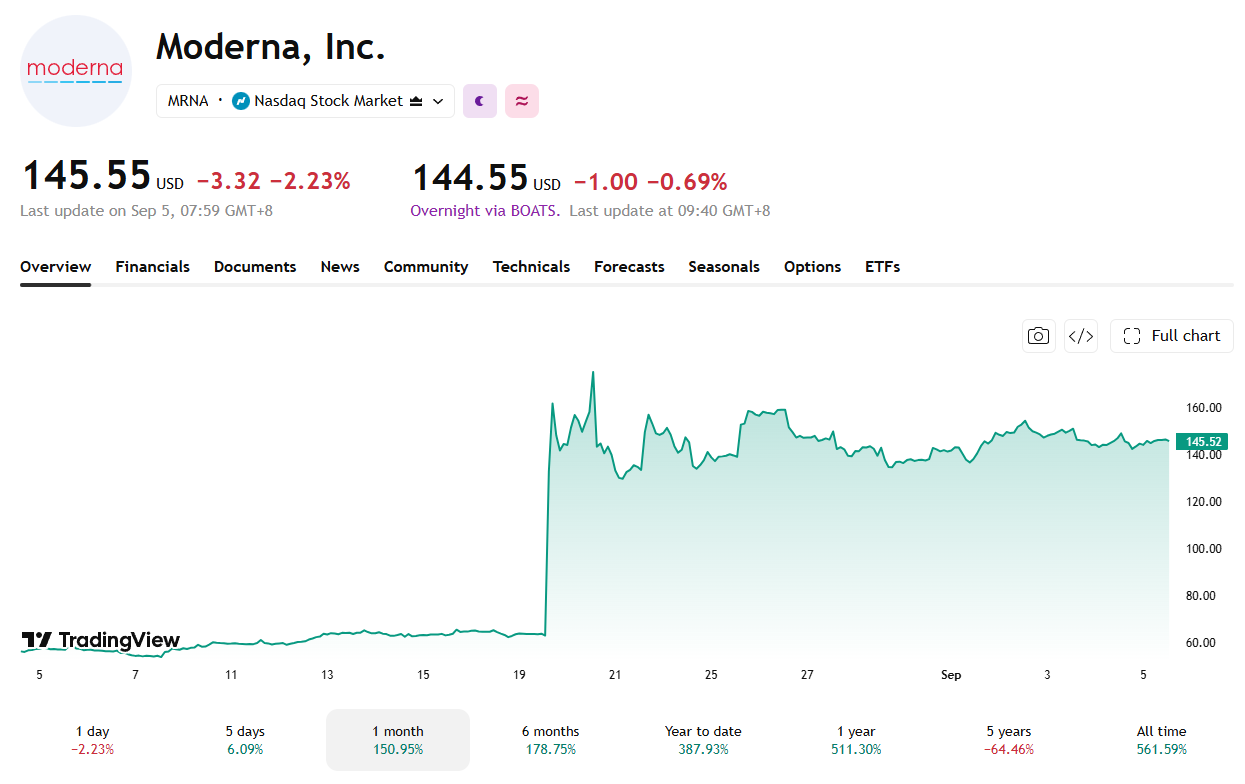
Personalized cancer vaccines from Moderna and Merck have added more than $50 billion in combined market value for the two drugmakers. That momentum is opening a less obvious investing lane in the diagnostics work behind every dose.
The vaccines depend on genetic sequencing to identify the mutations each patient’s immune system should target. That step may be emerging as its own investable opportunity, separate from the vaccines themselves.
A Recurring Business, Not a One-Time Sale
Every personalized cancer vaccine requires a tumor to be sequenced first. Analysts view that step as a recurring, per-patient revenue stream. It is not a one-time service tied to a single drug launch.
One of the diagnostics companies positioned to benefit is Tempus AI, a genomic-sequencing firm. Tempus has said it will serve as the sequencing partner if the Moderna-Merck vaccine wins regulatory approval.
Moderna’s own shares have also benefited from investor enthusiasm for its wider drug pipeline, part of a pipeline-driven stock rally that predates the vaccine news.

Piper Sandler estimates the melanoma vaccine could generate at least $50 million in annual sequencing revenue, if regulators approve it. BTIG analyst Mark Massaro projects that figure could exceed $600 million.
That estimate assumes expansion into lung, bladder, and kidney cancers. Therefore, Massaro said, that opportunity is barely reflected in Tempus AI’s stock today.
The Bigger Prize May Come After Treatment
However, the larger opportunity may not be the upfront sequencing fee. After treatment, doctors still need to monitor patients for cancer recurrence. That monitoring often relies on a blood test called minimal residual disease (MRD) testing, which searches for trace tumor DNA.
Bioaxia CEO Douglas Eby, whose firm holds both Tempus and Personalis shares, sees the sequencing step as a customer-acquisition funnel. He said sequencing brings patients into Tempus’s ecosystem, while MRD testing could bring them back for years of monitoring.

Investors view MRD testing as a multibillion-dollar opportunity. Meanwhile, Natera currently controls most of that market, with a valuation near $45 billion.
The mRNA cancer-vaccine space remains unproven. Just weeks after Moderna’s positive trial results, rival BioNTech suffered a setback in a mid-stage colorectal cancer vaccine trial. That reversal shows how quickly sentiment can shift in this sector.
Pharmaceutical companies could also eventually handle some sequencing in-house. They could also split the work among competing diagnostic labs, leaving diagnostics firms with a smaller share of the business than investors currently expect.
The post The Cure for Cancer is Becoming an Investable Opportunity: Analyst Sees $600 Million for Tempus AI appeared first on BeInCrypto.

Crypto World
US Midterm Elections and Trump Pressure Are Stopping Rate Hikes, Says Wharton Professor


Wharton finance professor Jeremy Siegel says the Federal Reserve would already be raising rates. He blames pressure from the 2026 midterm elections and President Donald Trump.
Siegel spoke after a stronger-than-expected August jobs report. Trump also posted on Truth Social, threatening to halt trade with surplus countries unless the Fed cuts rates.
August Jobs Data Shifts the Rate Debate
The US economy added 162,000 jobs in August, more than triple the recent monthly average. Unemployment held steady at 4.1%, and wage growth stayed at 3.1% year over year.
Siegel called it a supply-driven labor market, not an overheating one. Labor-force participation rose to 61.6%, and combined revisions added 55,000 jobs to June and July.
That pushed traders to raise bets on a rate hike over a cut. The shift applies to this month’s Federal Open Market Committee (FOMC) meeting.
It marks a reversal from expectations after a weak July payrolls report.
Trump’s Threat Meets a Hawkish Fed
Trump’s Friday post repeated a demand he has made for months.
“We should have the LOWEST INTEREST RATES of any country in the World … CUT INTEREST RATES OR I WILL STOP TRADING WITH COUNTRIES WHERE WE HAVE A DEFICIT.”
Trump wrote the post on Friday, as Reuters first reported. He has repeatedly pressured the Fed to cut rates this year.
Siegel said the midterms give Trump added incentive to keep borrowing costs low. That makes a September hike politically fraught for the White House.
Fed Chair Kevin Warsh has given no such signal. Siegel pointed to M2 money supply growth of about 10% since the Iran conflict began.
That conflict, a brief war between the US and Iran, ended in June. He called the growth pace excessive.
He noted Warsh had flagged money supply as a key metric during his Jackson Hole address last month.
Siegel expects a hike would trigger only a brief negative market reaction. Traders would likely welcome the Fed defending its inflation-fighting credibility, so long as tariffs stay contained.
This week’s producer and consumer price index reports, due Thursday and Friday, should help settle the debate.
The post US Midterm Elections and Trump Pressure Are Stopping Rate Hikes, Says Wharton Professor appeared first on BeInCrypto.
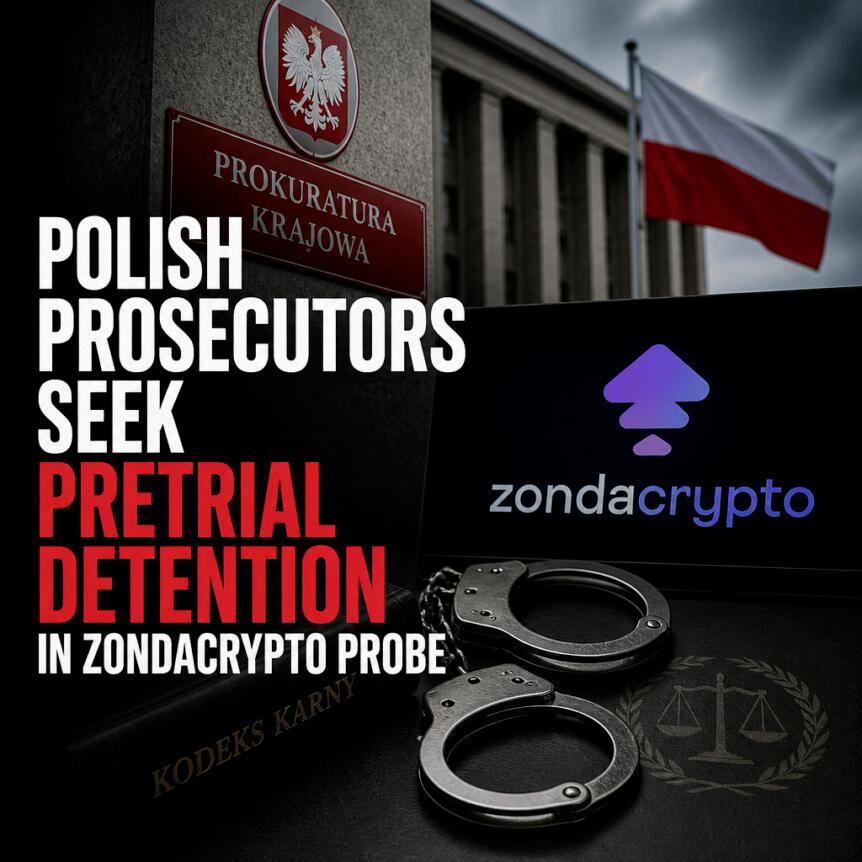
Polish prosecutors investigating the troubled crypto exchange Zondacrypto have filed formal criminal charges against an individual identified as Romana Ż., accusing him of involvement in an organized criminal group and of misappropriating approximately 7.8 million zlotys (about $2.1 million) in user funds. Prosecutors also requested that the Katowice-Wschód District Court order pretrial detention, arguing that the suspect could flee or attempt to disrupt the investigation, according to an official statement from Poland’s National Prosecutor’s Office.
According to the filing, Romana Ż. was detained on Sept. 5 and later questioned by prosecutors. The suspect denied the accusations and submitted a statement, the announcement said. Prosecutors’ motion for detention will be considered by the court.
Key takeaways
- Prosecutors accuse Romana Ż. of participating in an organized criminal group and misappropriating about 7.8 million zlotys from exchange user funds.
- The case focuses on alleged unauthorized computer-record changes and interference with how Zondacrypto processed and transmitted exchange data.
- Prosecutors seek pretrial detention, citing risks of flight and evidence or investigation interference.
- The new charges build on earlier arrests in the Zondacrypto probe, where multiple suspects were also ordered held in custody.
- Broader investigations tied to the exchange have expanded over time, including a probe connected to Sylwester Suszek and BitBay’s later transition to Zondacrypto.
What prosecutors say Romana Ż. did
In their official announcement, prosecutors alleged that Romana Ż. worked with others to misappropriate funds entrusted to Zondacrypto. The accusation centers on alleged manipulation of computer records without authorization and interference with the processing and transmission of exchange data.
The prosecution’s request for pretrial detention reflects practical concerns beyond the underlying allegations. Prosecutors argued that keeping the suspect free could increase the risk he would not appear for proceedings, or could otherwise interfere with the investigation, according to the Monday announcement. The court’s decision will be relevant to how quickly the case proceeds and whether investigators can broaden or refine their evidence package.
Earlier arrests and custody requests in the same investigation
These charges follow the prosecution’s earlier action in the broader Zondacrypto investigation. On Sept. 2, three other individuals were detained and subsequently charged with allegations that included money laundering, misappropriation of company assets, and participation in an organized criminal group.
Polish authorities said a court ordered all three to be held in pretrial detention for up to three months. Together with the Romana Ż. filing, this suggests prosecutors are pursuing the case as a coordinated matter rather than treating it as a set of isolated incidents.
For market participants, such steps typically matter because they can signal to investors that the case is moving from preliminary inquiries into a more evidence-driven phase. They can also affect how quickly affected parties seek restitution, particularly when user funds are involved and the exchange’s operational structure has already collapsed.
How the Zondacrypto probe widened over time
Earlier coverage from Cointelegraph noted that prosecutors estimated total losses connected to Zondacrypto at no less than 350 million zlotys. The current charges against Romana Ż. do not change that larger figure in the provided material, but they add detail on a specific alleged component of the overall misconduct: manipulation of exchange-related records and disruption of data handling.
Cointelegraph also previously reported that the investigation was merged in July with a separate probe involving the 2022 disappearance of Sylwester Suszek, the founder of BitBay, which was later renamed Zondacrypto. While the newly detailed allegations relate to unauthorized changes to computer records and interference with exchange data processing, the procedural merger indicates investigators have been looking across multiple threads connected to the same corporate and operational history.
This is one of the reasons the case is being watched closely: when investigations are consolidated, it can reduce the chance that key evidence or patterns remain fragmented across separate legal tracks.
Bankruptcy proceedings continue in parallel
Outside the criminal investigation, Zondacrypto’s corporate operator has also been drawn into a formal insolvency process. The exchange’s Estonian operator, BB Trade Estonia, was declared bankrupt in August, with the first creditors’ meeting scheduled for Sept. 17, according to the information provided.
While the criminal case and insolvency proceedings are distinct, they can interact in important ways. Criminal proceedings may affect how evidence is characterized and what claims can be pursued by creditors and affected users, while insolvency proceedings are typically where restitution and asset recovery efforts move forward—often on a separate timeline.
For users trying to understand recovery prospects, the practical takeaway is that the bankruptcy process is already underway, and criminal charges can shape the long-term narrative of alleged conduct—without necessarily determining the pace or outcome of creditor negotiations in the near term.
What happens next
Readers should watch for the Katowice-Wschód District Court’s decision on prosecutors’ request for pretrial detention, as well as any subsequent charges as the case develops. With bankruptcy proceedings scheduled to move into the next phase and the investigation spanning multiple alleged misconduct theories, the coming weeks are likely to determine both how fast the criminal matter progresses and how creditors interpret the scale of alleged losses.
Samsung Electronics and SK Hynix climbed alongside a broader South Korean rally Tuesday, even as futures pointed toward a weaker Wall Street open following the Labor Day Weekend.
Wall Street reopens Tuesday after the holiday to a tougher macro backdrop. Last week, the 10-year Treasury yield climbed to its highest level since November 2023, and the 2-year note touched a January 2025 high, as investors weighed the risk that persistent inflation could keep the Federal Reserve cautious.
Kospi Extends AI-Driven Rally
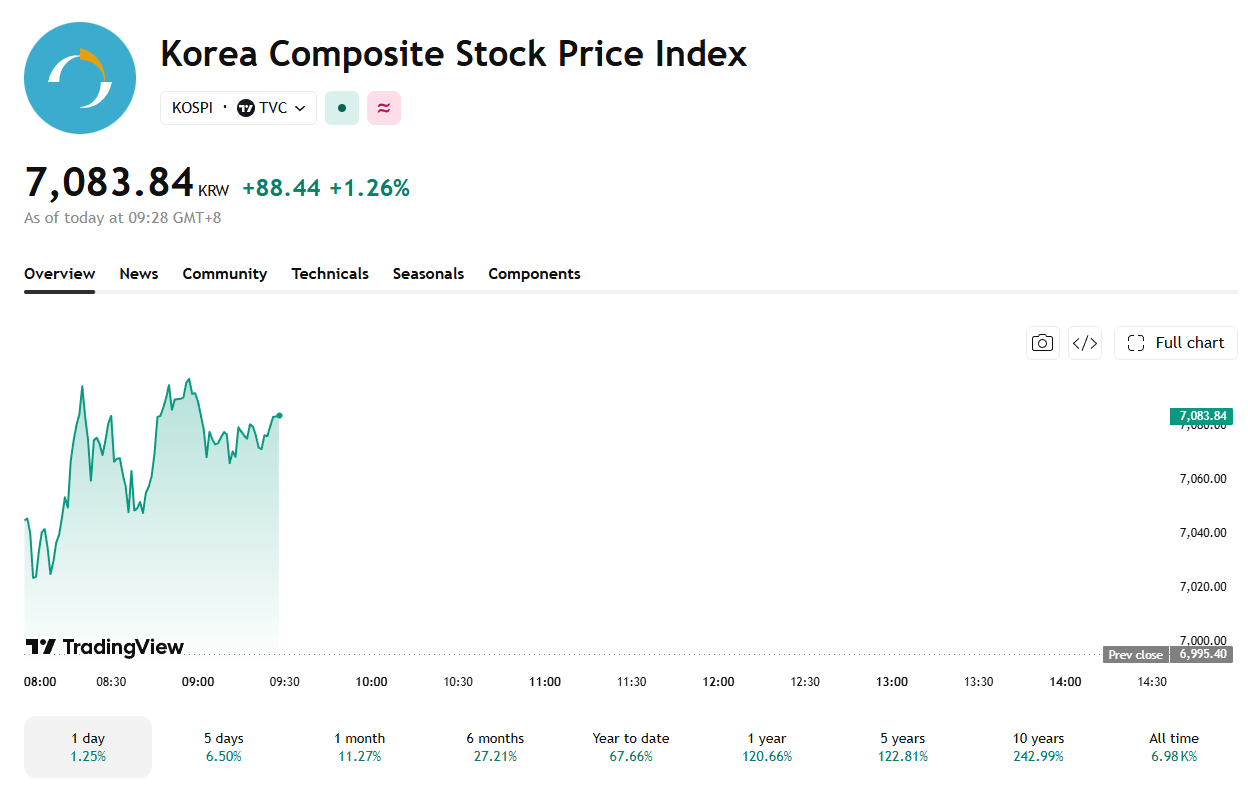
The Kospi rose 1.25% to 7,083.84 by late morning in Seoul, building on Monday’s advance of more than 4%, its sharpest single-day move in months, as investors bet that artificial intelligence-related earnings would keep beating expectations.

Samsung Electronics gained 1.48% to 274,000 won, while SK Hynix jumped 3.65% to 1,848,000 won. State-run Korea Electric Power Co. added 3.82%, and refiner SK Innovation rose 1.6%.

Hyundai Motor and LG Energy Solution slipped, while the won firmed to 1,338.55 per dollar. Japan’s Nikkei 225 fell 0.95% and the small-cap Kosdaq Index rose 0.46%. This underscores how unevenly the AI trade is playing out across the region.
The move follows a recent chip stocks offset Iran tensions report and comes as Goldman Sachs strategist Timothy Moe holds a bullish long-term Kospi target tied to a memory chip earnings recovery.
Wall Street Braces as Oil Climbs
US index futures signaled a rougher start. Dow futures fell 308 points, or 0.6%, and oil prices touched six-week highs. It comes after Iran and the United States exchanged strikes over the weekend, with Brent crude up 1.1% to $97.31 a barrel.
Rising energy costs are stoking inflation concerns ahead of Thursday’s wholesale and Friday’s consumer price reports.Traders are pricing roughly a 60% chance of a quarter-point Federal Reserve rate hike at next week’s meeting.
The divergence leaves Seoul’s chip-led rally as one of the few bright spots. This is as the markets head into a week dominated by inflation data and Middle East risk.
The post Samsung, SK Hynix Lead Kospi Higher as Wall Street Faces Tough Opening After Labor Day appeared first on BeInCrypto.
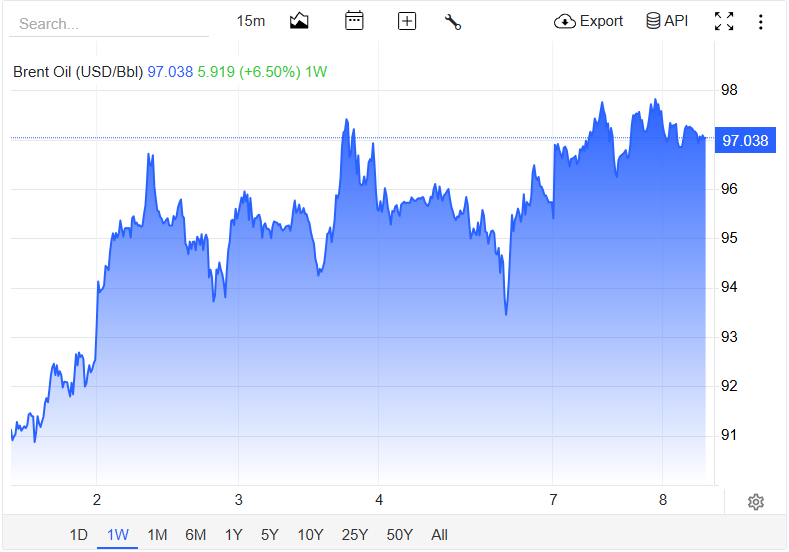
Brent crude is trading near $97 a barrel as Goldman Sachs warns oil could hit $120 after President Trump abandoned diplomacy with Iran for a blockade.
Daan Struyven, Goldman’s co-head of global commodities research, said Monday the $120 level is possible if shipping attacks broaden and intensify. Iran, meanwhile, is weighing new tactics to widen the standoff.
Goldman Sees Oil At $120 As Diplomacy Collapses
Trump has swapped negotiations for military strikes, sanctions, and a blockade halting Iranian imports and exports.
“isn’t worth the paper it’s written on”
Donald Trump, CNN
The pressure has left Iran’s population strained, while Supreme Leader Mojtaba Khamenei has stayed in hiding for six months.
Mohsen Rezaei heads Iran’s Supreme National Security Council, the country’s top security body. He said Sunday Iran needs a new strategy for the blockade, negotiations, and the war itself.
He floated a new exclusion zone across the Persian Gulf and Gulf of Oman, expanding Iran’s restrictions beyond the strait.

Iran and Oman are also negotiating a temporary route, reviving the Hormuz corridor talks that briefly cooled oil last month. Whether Washington will accept the arrangement is still an open question.
Monday’s warning is not Goldman’s first. The bank first flagged a possible return to $120 in July, months before the current price spike.
Brent Nears $100 As Attacks Widen
Brent rose towards $98 a barrel Monday, its highest level since late July. The gain followed weekend US strikes on three Iranian tankers. A Monday attack also hit Saudi Aramco, the Saudi state oil company, in Jizan.
Energy Aspects, an oil market research firm, says oil inventories outside China have fallen sharply. Reserves are down more than 400 million barrels since the war began. Commodity funds are turning bullish as reserves near a tipping point, adding to the pressure whipsawing Wall Street.
Diesel prices have already climbed to record highs, trading more than $100 a barrel above crude in the US. Analysts call it a sign the crunch is already here.
Hamidreza Azizi is an Iran analyst at the International Crisis Group, a global conflict think tank. He said Tehran likely wants calibrated escalation, not full-scale war. That could mean pressure on shipping, US bases, or energy sites.
He warned that miscalculation, not intent, is now the biggest risk of a wider war.
The post Goldman Sachs Says Oil Could Hit $120 as Trump Dismisses Diplomacy with Iran appeared first on BeInCrypto.


Ethereum developer Derek Chiang said on Sept. 7 that EIP-8141’s authors had found a way to express several transaction features as programmable contract calls instead of adding them separately to Ethereum’s transaction envelope.
Summary
- Ethereum developers say EIP-8141 can express transaction features through contract calls known as programmable frames.
- Frames could support expiry, signature aggregation, privacy proofs and post-transaction assertions without new envelope fields.
- EIP-8141 is scheduled for Hegotá, though its specification remains draft and activation dates remain unset.
- Developers are coordinating EIP-8141 with EIP-8130 to preserve structure and improve transaction readability for infrastructure.
- Vitalik Buterin argues separating transaction actions and dependencies could enable parallel validation and lower costs.
Chiang, an EIP-8141 co-author and Ethlabs contributor, described the development as a “design breakthrough” in a post discussing recent work by the proposal’s authors. The approach treats transaction expiry, aggregate signatures, privacy-pool Merkle roots and post-transaction assertions as calls called “frames.”
The official draft specification defines a Frame Transaction as a sequence of contract calls. Different frames can validate a transaction, approve its gas payment or execute user operations. The proposal currently provides three modes: DEFAULT, VERIFY and SENDER.
A VERIFY frame can check whether a required condition is satisfied. A SENDER frame executes an operation from the account identified as the transaction sender. Frames can also be grouped into atomic batches, meaning every operation in a batch succeeds together or the entire group reverts.
The proposal still defines a base transaction envelope containing fields such as the chain identifier, nonce, sender, fees, signatures and frame list. Chiang’s point is narrower: developers may be able to introduce more functionality through new frame targets and call patterns without creating another envelope format for every feature.
A stable envelope could reduce coordination work
Changing an Ethereum transaction envelope affects more than execution clients. Wallets, Layer 2 networks, block explorers, signing devices, software libraries and infrastructure providers must all understand the new format.
Chiang said Ethereum upgrades occur roughly every nine months, making repeated envelope changes slow and coordination-heavy. A sufficiently general frame format could serve as a stable interface while contracts or designated protocol components provide new validation methods.
That does not mean future functionality would never require a network upgrade. EIP-8141 itself changes Ethereum’s consensus rules and requires client implementation. New opcodes, precompiles or gas rules could also require hard forks. The proposed benefit is that developers would not necessarily need to redesign the transaction container each time.
The EIP-8141 specification lists native account abstraction among its main goals. It could support key rotation, alternative signature systems, sponsored gas payments and transaction batching. It also aims to reduce Ethereum accounts’ dependence on the secp256k1 signature system used by conventional externally owned accounts.
As crypto.news reported in its coverage of Vitalik Buterin’s proposed Ethereum transaction redesign, programmable validation could eventually help Ethereum adopt new authentication systems without replacing one fixed signature scheme with another.
EIP-8130 could make frames easier to inspect
Chiang also acknowledged a tradeoff. Highly abstract transactions can become difficult for wallets, sequencers and other infrastructure to analyze before execution. An Layer 2 sequencer might, for example, want to accept only specified signature methods because their computational costs are predictable.
Developers are therefore exploring how frames could work with EIP-8130, another draft account-abstraction proposal. EIP-8130 creates an onchain keystore where accounts register actors and authenticator contracts. Transactions explicitly identify their authentication method.
That structure allows a node to determine which validation process a transaction requires before running arbitrary wallet code. Under EIP-8130’s proposed Layer 2 profile, a chain could restrict its transaction path to a canonical set of fixed-cost authenticators while leaving other authentication methods available through ordinary EVM execution.
Chiang said EIP-8130 could impose defined structures over EIP-8141 frames. The collaboration could preserve the flexibility of frames while giving wallets and high-throughput chains a more legible transaction format. The combined design has not been finalized, and both specifications remain open to revision.
Earlier crypto.news coverage examined the competition between EIP-8141 and EIP-8130 during the initial Hegotá scoping process. The latest comments suggest developers are now looking for compatible elements rather than treating the proposals only as mutually exclusive alternatives.
Buterin connects frames with parallel validation
Vitalik Buterin expanded on the technical direction in a separate post, distinguishing between transaction “actions” and “dependencies.” An action changes Ethereum’s state, such as transferring ETH. A dependency is a condition that must be satisfied, such as a signature, Merkle proof or zero-knowledge proof.
Buterin argued that independent dependencies could be checked in parallel. Conditions that do not access Ethereum state could potentially be processed once by the mempool instead of being repeated during execution. Multiple checks might eventually be represented by a recursive STARK proof, although that remains a research direction rather than an approved feature.
The distinction could also help clients separate predictable transactions from operations requiring Ethereum’s full dynamic execution environment. Buterin said more statically analyzable activity could receive lower gas costs and scale further. No such fee schedule has been approved.
The frame model provides a potential interface for that approach because validation and execution appear as identifiable calls. Ethereum would retain flexible contract execution while allowing simpler transactions to declare more information about their requirements.
EIP-8141 is scheduled, but dates remain open
The official Hegotá Meta EIP now lists Frame Transactions and FOCIL as scheduled for inclusion in Ethereum’s Hegotá upgrade. That represents stronger status than earlier consideration, but it does not freeze EIP-8141’s current technical design.
EIP-8141 remains marked as a draft Core proposal. Its authors can revise the frame modes, signature handling, gas accounting and relationship with EIP-8130 as implementation work continues. The Hegotá document also leaves the Sepolia, Hoodi and mainnet activation fields blank.
The next measurable steps include updated specifications, execution-client implementations, development networks and interoperability testing with wallets and Layer 2 systems. Developers must also examine mempool denial-of-service risks because programmable validation can make rejecting invalid transactions more computationally expensive.
Testing will determine whether the proposed combination of flexible frames and structured authenticators can meet the needs of Ethereum’s base layer and faster EVM chains. Until activation parameters are published, EIP-8141 remains a scheduled but unfinished part of Hegotá.
Crypto World
Inflows into US XRP spot ETFs continue, while XRP holders flock to FTMINING to earn $6,700 in daily passive income
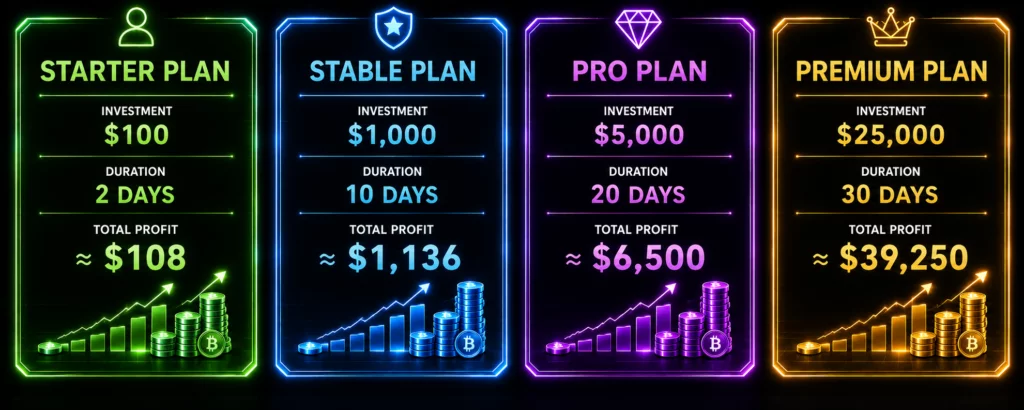
Amid a shift in capital flows from Wall Street, US spot XRP ETFs recorded net inflows for 11 consecutive trading days, attracting a total of approximately $170 million during that period.
Recent data indicates that since the launch of these products, US spot XRP ETFs have seen cumulative net inflows of around $1.68 billion. What do these inflows signify? The sustained influx of capital has heightened market focus on the long-term investment value of XRP, prompting many holders to consider a question: beyond simply waiting for asset appreciation, is it possible to generate additional returns on these digital assets while holding them?
From “holding XRP” to “growing asset value”
As US spot XRP ETFs continue to attract capital, XRP is emerging as an asset of interest for both institutional and individual investors in the cryptocurrency market. For the growing number of long-term XRP holders, generating additional returns from their digital assets has become a key priority. Against this backdrop, FTMINING is gaining attention among XRP holders. Rather than simply waiting for price appreciation, investors are increasingly exploring ways to generate extra cash flow through digital asset yield models. While the market remains bullish on XRP’s growth potential, FTMINING’s digital asset management and cloud computing platform offers XRP holders a reliable source of passive income. Users can achieve continuous asset appreciation through an intelligent computing system and daily earnings settlements, all without the need for complex operations.
Mining services provided by FTMINING
A model of participating in digital asset mining through remote computing power. Users do not need to purchase mining machines, deploy equipment or maintain mines by themselves. They only need to choose the appropriate computing power solution, and professional mines will be responsible for equipment operation, operation and maintenance management and mining operations. Users will receive corresponding mining benefits based on the purchased computing power.
The FTMINING platform is powered by new or clean energy sources such as hydropower, wind power, and photovoltaics, which not only improves energy utilization efficiency, but also helps reduce operating costs and carbon emissions. Compared with the traditional self-built mine model, cloud mining has lower investment threshold, convenient operation, no need to maintain equipment, and it is easy for novices to participate.
FTMINING getting started guide:
Visit the official website: https://ftmining.com
[ Register Account ] ──> [ Select Contract ] ──> [ System Allocates Hashrate ] ──> [ Automatic Payouts ]
(Quick email sign-up) (Choose currency & term) (Remote miner connection) (Daily earnings settled to wallet)
1. Visit the official website: https://ftmining.com. New users receive a $15 sign-up bonus and a $0.75 reward for logging in daily.
2. The platform supports BTC, ETH, LTC, USDT, USDC, XRP, SOL, DOGE, and BCH, eliminating complex currency conversions and making deposits and withdrawals more convenient.
3. Choose the best contract plan; FTMINING offers a variety of contracts to meet different budget and goal requirements. Whether you are seeking short-term gains or long-term returns, we have the right option for you.
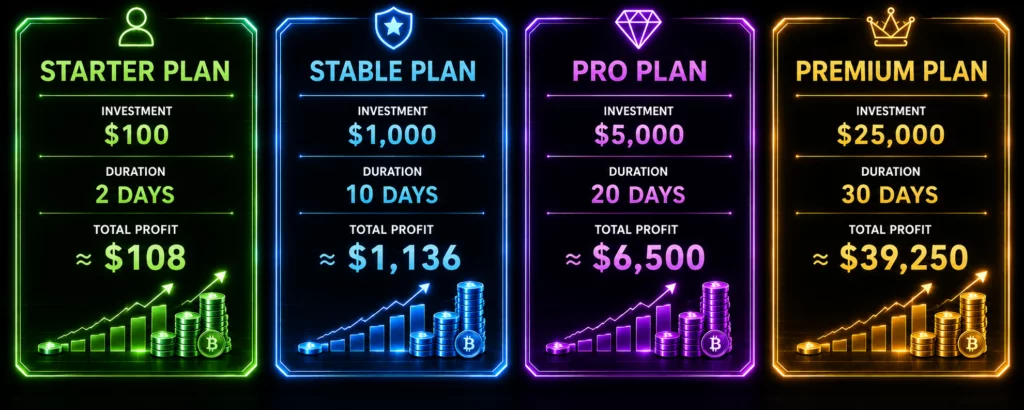
(For further details regarding the contract, please visit the official website.)
4. Once the contract is activated, your earnings will accumulate automatically, allowing you to use the service with confidence. The platform automatically records your earnings on a daily basis, and you can monitor changes in real-time via your mobile phone.
FTMINING: A safe, transparent, and trustworthy investment
Founded in 2021 and headquartered in the UK, FTMINING is an innovative platform specializing in digital asset management and cloud computing services. It operates within the regulatory frameworks of the UK and the EU, adhering to principles of compliance, security, and transparency, while undergoing regular financial and security audits by third-party organizations.
Technologically, the platform employs multiple security mechanisms—including bank-grade firewalls, cloud security certifications, multi-signature cold wallets, and asset segregation systems—to provide multi-layered protection for user funds.
Conclusion
Continued capital inflows into US XRP spot ETFs are further boosting market interest in XRP. Meanwhile, digital asset holders are increasingly seeking yield opportunities beyond mere passive income and capital appreciation. Through the FTMINING platform, investors can generate steady passive income amidst market volatility and achieve dual-layer asset growth, offering an innovative and sustainable investment pathway for long-term investors.
For XRP holders looking to explore yield-generating models for their digital assets, FTMINING presents a compelling option worth considering.
Official Website:https://ftmining.com
Customer Support Email: [email protected]
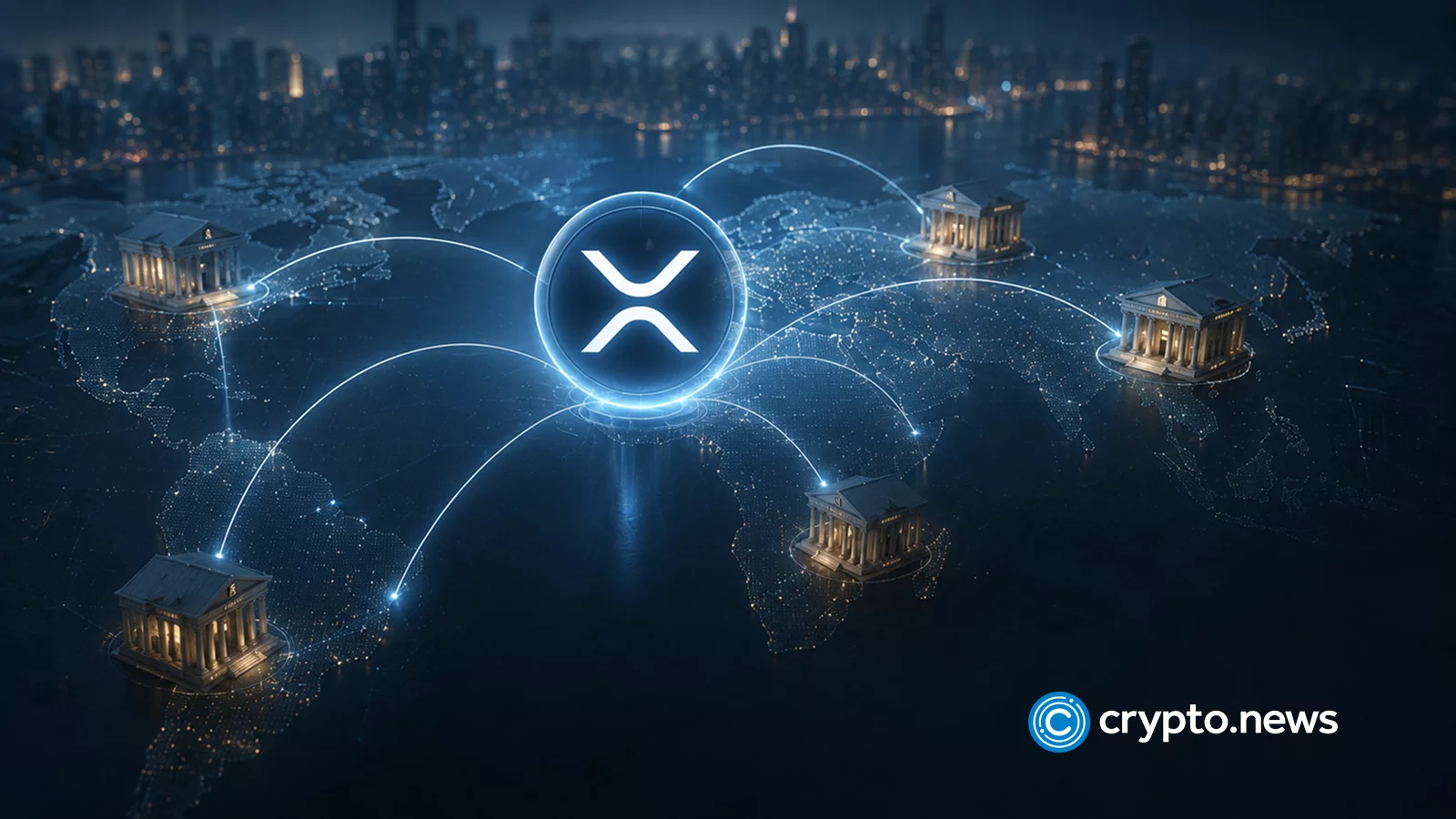
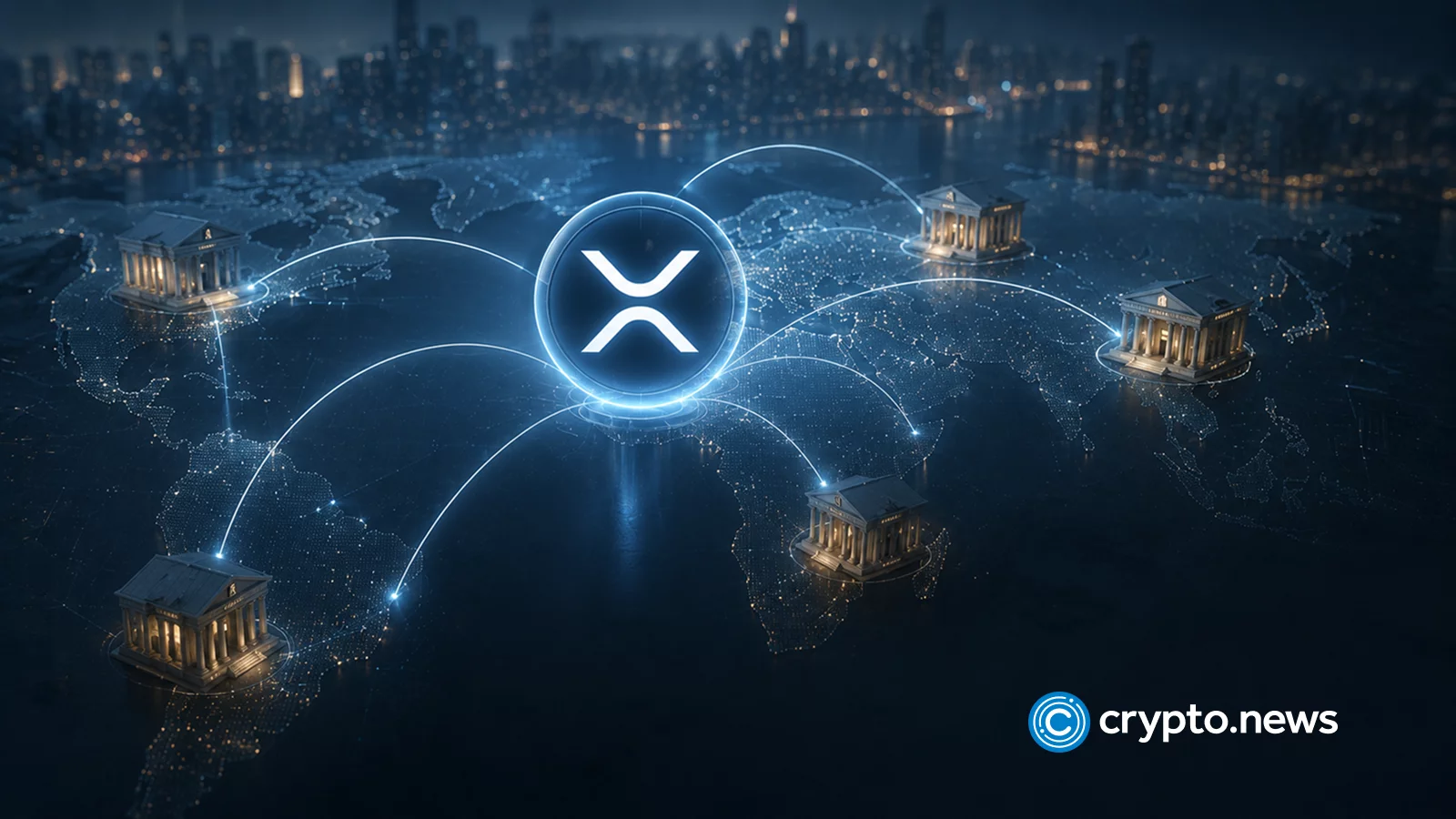
XRP Healthcare said 4,011 XRPH Wallet accounts were affected by unauthorized transactions beginning Sept. 3, with approximately $452,000 in XRP and related assets removed.
Summary
- XRP Healthcare said 4,011 wallets lost approximately $452,000 during unauthorized transactions beginning September 3, 2026.
- The project traced stolen assets to one Ethereum wallet and contacted exchanges about freezing funds.
- Users were told to stop using XRPH Wallet while the development team investigated the breach.
- Independent investigators attributed the compromise to seed phrases transmitted through a staking-related server request process.
- Former Ripple developers said earlier grant reviews identified project risks, allegations XRP Healthcare publicly disputed.
XRP Healthcare traces stolen funds to Ethereum
XRP Healthcare initially confirmed unauthorized transactions involving XRP, XRPH, XRPHAI and other assets. The company instructed users to stop using XRPH Wallet until further notice while its developers investigated the compromise.
A subsequent update placed the affected wallet count at approximately 4,011 and the estimated loss at $452,000. The company said investigators traced the assets to one Ethereum address and contacted exchanges and other parties about freezing or recovering them.
Independent on-chain researcher Handy Andy reported that the affected accounts lost 267,664 XRP and approximately 23.2 million XRPH tokens. The researcher said the assets were converted into roughly 445,198 DAI on Ethereum and remained in the destination wallet at the time of the update.
Investigators examine a possible seed phrase leak
Independent investigators attributed the XRPH Wallet breach to its staking function. Their analysis alleged that activating staking caused users’ seed phrases to be transmitted to a remote server.
XRP Healthcare had not published source code, server logs or an independent forensic report confirming that explanation when this article was prepared. The seed phrase exposure therefore remains a researcher finding rather than a company-confirmed root cause.
A seed phrase provides control over every private key generated by a wallet. Anyone obtaining it can reproduce the wallet and authorize transactions without accessing the victim’s phone. Crypto.news previously explained how seed phrases function as master recovery keys and why they should never leave the user’s secure environment.
The reported failure resembles a July incident in which a compromised software package transmitted private keys through a fraudulent telemetry function. However, no evidence currently connects the two cases or their perpetrators.
Former Ripple developers revive earlier concerns
The breach prompted public criticism from developers previously associated with Ripple and the XRP Ledger ecosystem. BiasGoose said he had rejected an earlier grant application from the project because the application showed what he considered clear warning signs.
He later alleged that the team had misrepresented partnerships in its application. Hazard Cookie said earlier reviewers had identified risks that were not publicly visible at the time.
Former Ripple developer Matt Hamilton also referred to the project’s earlier reputation within the community. These statements represent the developers’ accounts. Public grant records or complete audit documents substantiating every allegation were not available.
XRP Healthcare rejected the tone of the criticism and accused former developers of celebrating another team’s losses. Its response called that conduct “genuinely pathetic” and said the company had put its own reputation and capital at risk. The exchange did not resolve the technical questions surrounding the wallet.
Users need new wallets before moving remaining assets
XRP Healthcare must now establish the precise entry point, determine when seed information may have been exposed and identify which application versions were affected. A full postmortem should also explain whether the reported server retained seed phrases and who could access them.
Users who created or imported seed phrases into the affected application cannot rely solely on an app update if those phrases were exposed. Remaining funds should be transferred to newly generated wallets using trusted software. Reusing an old seed would preserve the attacker’s access.
The company has not announced a reimbursement program or recovery deadline. It also has not confirmed whether law enforcement or any exchange successfully froze the traced funds. Users should rely on official channels and reject unsolicited recovery offers requesting keys, seed phrases or payments.
The incident follows a wider rise in wallet and infrastructure compromises. As crypto.news reported, operational security failures caused 74% of stolen funds during the first half of 2026. Separately, Ripple’s recent audit program identified 96 vulnerabilities across proposed XRPL amendments, showing the value of testing before software reaches users.

What is cloud mining?
Since the emergence of Bitcoin in 2009, cryptocurrency mining has become a well-known method of earning profits.
However, the steep costs involved in acquiring the necessary equipment, understanding the technical aspects, and consuming high amounts of energy often deter potential investors. Cloud mining is stepping in as a solution to these barriers, offering a new and accessible way for individuals to participate in Bitcoin mining without the need for expensive hardware or deep technical expertise.
Cloud mining has become the preferred method for individuals and investors to earn Bitcoin. Among the top platforms in 2026, poweralgo stands out for its highly profitable investment plans, secure transactions, and user-friendly mobile applications.
Poweralgo: A leader in cloud mining
Among the companies making waves in the cloud mining space, poweralgo stands out for its innovative approach to leveraging artificial intelligence (AI) in cryptocurrency mining. The platform provides a legal, transparent, and environmentally friendly service that allows users to mine Bitcoin efficiently. With the integration of AI, poweralgo reduces operational costs while enhancing the mining process, ensuring users can focus on maximizing their returns.
AI integration for better efficiency
The success of AI integration in cryptocurrency mining has been a cornerstone of poweralgo’s growth. AI systems help optimize the use of resources, manage equipment more efficiently, and monitor the performance of mining hardware. These improvements result in significant cost savings, enabling the company to pass on benefits to users in the form of more profitable mining operations.
Easy access for global users
One of the most appealing aspects of poweralgo is its simplicity. With a smartphone, users from any corner of the world can access the platform and start mining Bitcoin. The platform’s user-friendly interface, which is available through the poweralgo app, allows individuals to monitor their earnings in real-time, making cloud mining accessible to everyone, regardless of their location or expertise.

1. Poweralgo (9.8 Rating)
Advantages of poweralgo:
(1) $15 registration bonus.(click to register in one click).
(2) Daily automated payouts.
(3) No additional costs for electricity.
(4) Commission of up to 3.5% via the affiliate program.
(5) A wide range of cryptocurrency contracts.
(6) Enhanced security with SSL and DDoS protection.
(7) 24/7 customer support.
How to Get Started with poweralgo:
②Choose a Contract: Browse the available cloud mining contracts and select the one that suits your investment level and goals. Contracts vary in price, duration, and daily rewards, providing options for all types of investors.
③Start Earning: Once a contract is purchased, daily profits are automatically deposited into the user’s account. poweralgo ensures easy withdrawals, letting users transfer earnings to their wallets effortlessly.
Trending contracts:
poweralgo offers a variety of contracts to meet different investment needs. Whether you’re starting small or making a large investment, poweralgo offers tailored plans with transparent details on payouts and durations.
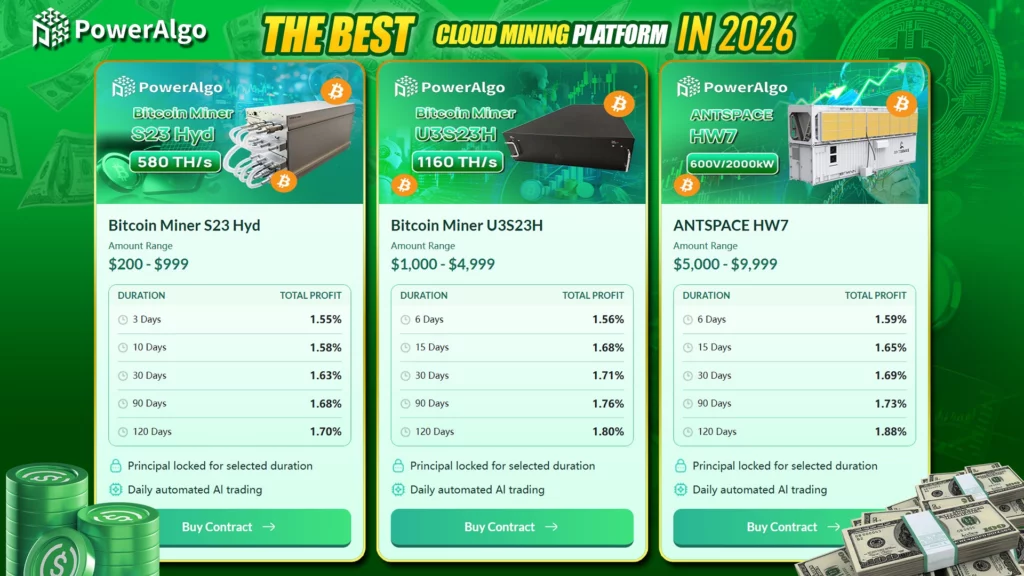
Please visit for additional information: https://poweralgo.com/.
2. Binance (9.7Rating)
Globally known as a crypto exchange, Binance is well-known for its daily transaction volumes. One of the largest exchanges, Binance enables customers mine straight from any internet-connected device—including PCs, cell phones, and tablets.
3. Ecos (9.6 Rating)
Ecos, established in 2017, is a trusted Armenian mining farm. It offers various cloud mining contracts with a minimum purchase of $500. Unlike other platforms, Ecos doesn’t provide exact yield estimates due to the many variables affecting Bitcoin’s price. However, users can access a mining calculator to estimate potential returns.
4. BitFuFu (9.5 Rating)
Supported by mining hardware giant Bitmain, BitFuFu offers short- and long-term cloud mining plans. It focuses on transparent pricing, high performance, and institutional-grade reliability.
The future of Bitcoin mining
As the Bitcoin mining industry continues to evolve, poweralgo remains at the forefront, providing innovative solutions for cryptocurrency enthusiasts. With the new cloud mining plans, users can participate in Bitcoin mining without technical expertise or heavy upfront costs.
For more information, visit www.poweralgo.com and explore the available cloud mining contracts today.
Charles Hoskinson turned on his camera and said nothing about Cardano (ADA). No token, no roadmap, no price call. Instead, the founder argued that a Massachusetts mother should be put to death.
He recorded it while the jury was still out, and three days later that trial collapsed. The next development is expected later this month.
The Case America Is Still Arguing About
Lindsay Clancy, 36, admits she strangled her three children at home in Duxbury in 2023. The youngest was eight months old. Her lawyers never disputed the killings.
Instead, they argued postpartum psychosis, a rare and severe illness that can follow childbirth, left her not criminally responsible.
Jurors deliberated seven days and split 11 to 1. On September 4, Judge William Sullivan declared a mistrial. Her lawyer said a single juror stood between her and acquittal. The court never confirmed which way the other 11 leaned.
The case ran through the summer on national television and TikTok. It has not faded.
Hoskinson Picks a Side
He does not accept the illness as an excuse. He wants to know where personal accountability now ends.
“She should be dead,” he said.
Follow us on X to get the latest news as it happens
Then he asked his audience to change his mind. Nobody has yet. He also claimed the father is being blamed. Patrick Clancy has instead asked the public to forgive his wife.
A Founder Talking Past His Own Market
Hoskinson rarely goes a week without defending Cardano or addressing matters of crypto and technology. He recently blamed a nation-state for a major AI outage and promised Cardano would win outright with help from Ethereum developers.
That is exactly why this video traveled. There was nothing in it to trade on, so it reached people who have never held a token.

Plymouth County District Attorney Timothy Cruz still has not said whether he will try Clancy again. She is back in court on September 29.
For now, the loudest voice in Cardano is spending it somewhere else entirely.
The post Cardano Founder Talks About the Lindsay Clancy Trial. “She Should Be Dead” appeared first on BeInCrypto.
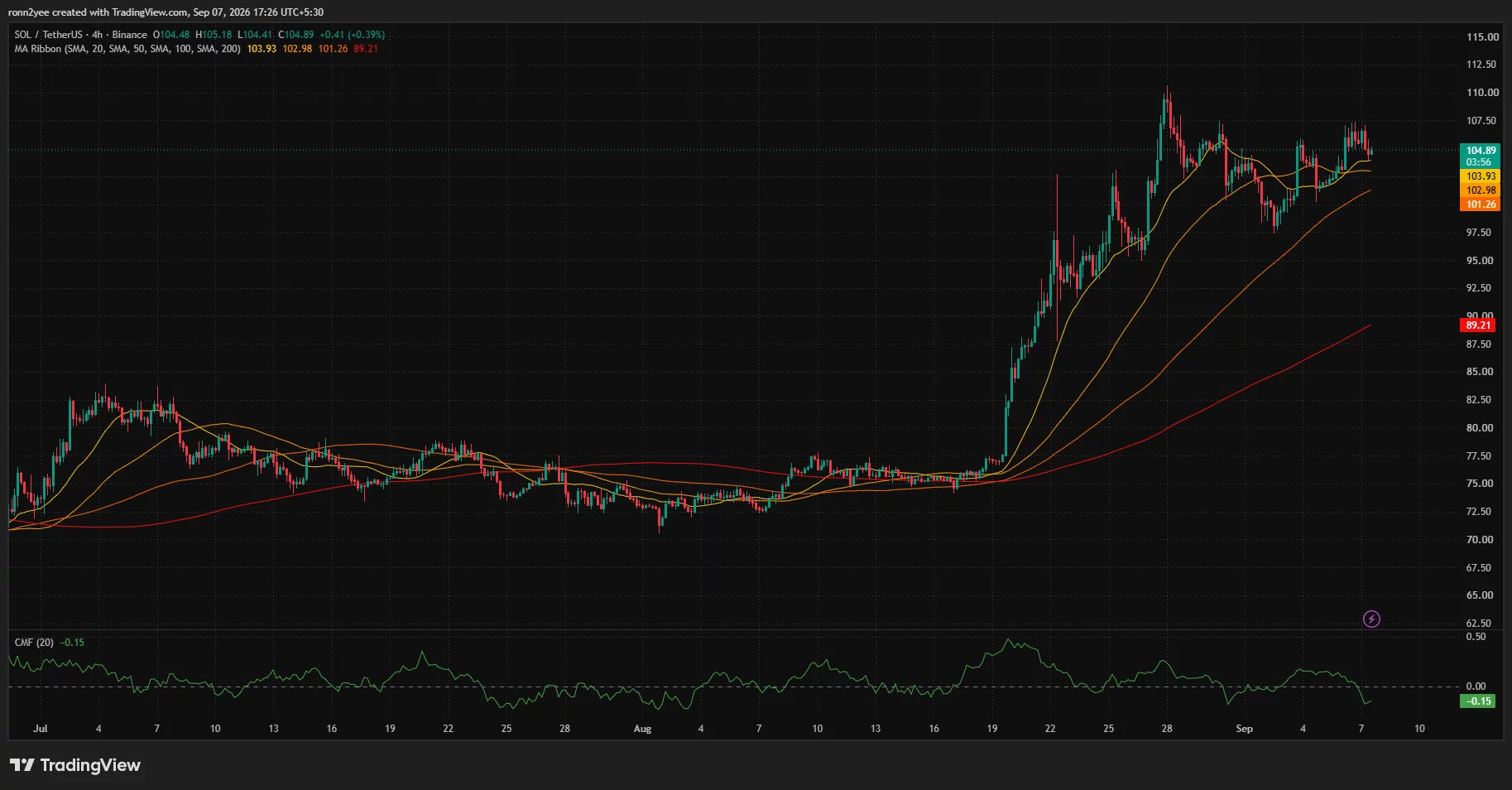
Solana price fell 1.4% on Sept. 7 after another rejection near $107, while weakening capital flows and nearby liquidation clusters increased the risk of further volatility.
Summary
- Solana price fell from $106.46 to $104.97 after sellers defended the $107 resistance zone.
- SOL remains above its 20-, 50-, 100-, and 200-period averages on the 4-hour chart.
- Chaikin Money Flow dropped to -0.15, pointing to increased selling pressure.
- Liquidation liquidity is concentrated near $108, with another notable cluster around $103.
Solana price retreats after $107 rejection
According to data from crypto.news, Solana (SOL) price traded lower on Sept. 7 as buyers failed to push the token through a resistance cluster between $106.80 and $107.50.
SOL opened the daily session at $106.46 and rose to an intraday high of $106.80 before reversing. The token subsequently fell as low as $104.22 and closed at $104.97, representing a 1.4% daily decline.
The move kept Solana near the psychological $105 level, which now separates a renewed test of recent highs from a deeper pullback toward its short-term moving averages.
Price action on the 4-hour chart shows that SOL has entered a period of consolidation after a strong rally from around $75 in mid-August. The token reached approximately $110 on Aug. 28 before losing momentum and falling toward $98 at the start of September.
Buyers defended that correction and drove SOL back above $106, but repeated failures around $107 suggest that sellers remain active below the August peak.
Trading activity also appeared to weaken during the latest advance. Reduced participation makes it more difficult for buyers to absorb sell orders and can produce sharper moves around leveraged positions.
SOL remains above key moving averages
Despite the daily decline, Solana continues to trade above all four moving averages shown on the 4-hour chart.
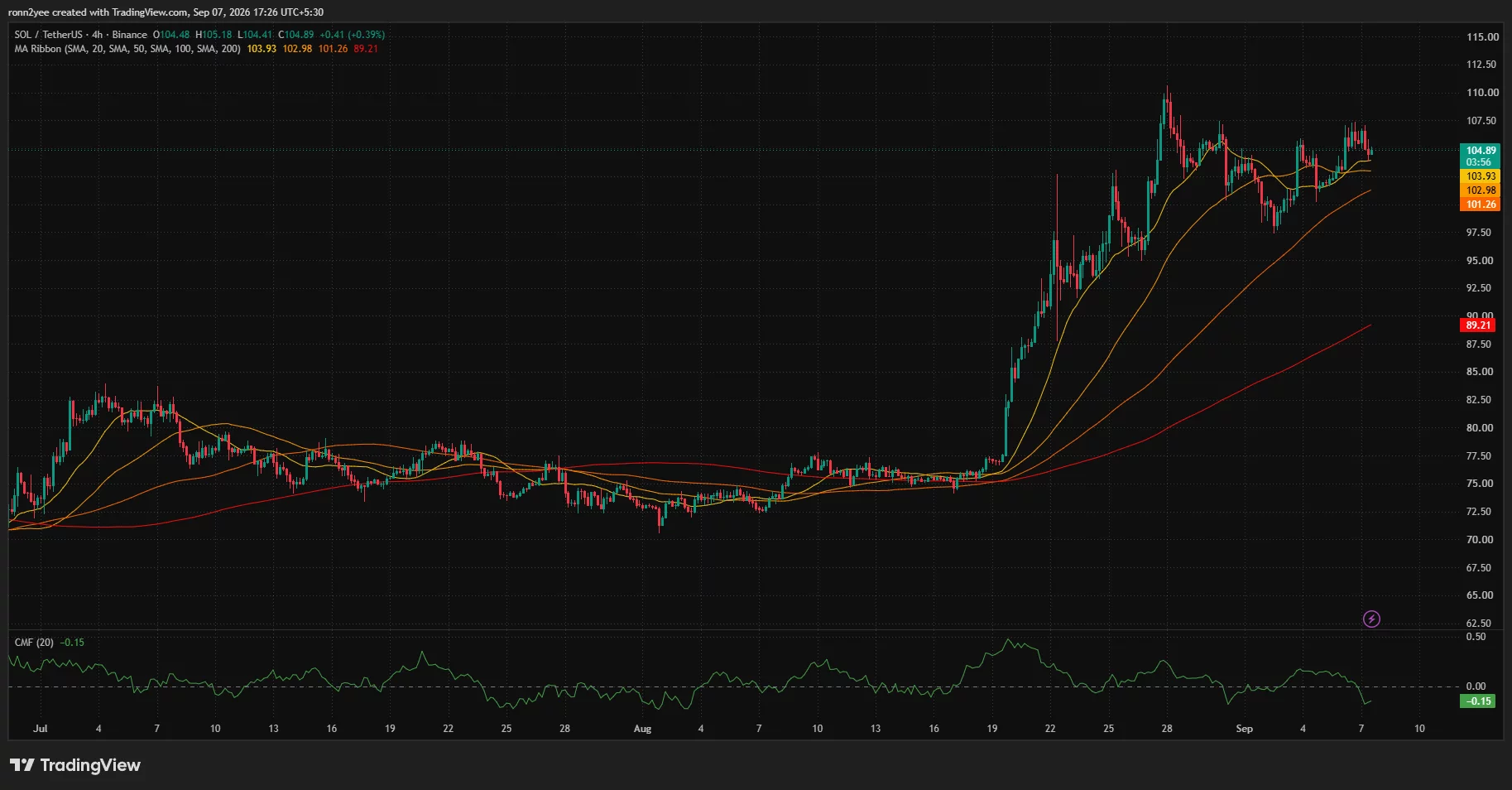
The 20-period simple moving average stands at $103.93, while the 50-period average sits slightly lower at $102.98. Those levels form the first important support area between $103 and $104.
SOL’s 100-period moving average is positioned at $101.26. A decisive 4-hour close below that level would weaken the current recovery structure and expose the psychological $100 mark.
The broader trend remains strong while Solana holds above its 200-period moving average at $89.21. A wide gap between the market price and that longer-term average reflects the scale of the rally that began in August, although it also leaves room for a larger correction if short-term support fails.
Moving-average alignment remains bullish because the shorter averages are positioned above the longer ones. However, Chaikin Money Flow has fallen to -0.15, showing that selling pressure has exceeded buying pressure over the indicator’s measurement period.
Negative CMF readings do not confirm an immediate breakdown, but the divergence between price and capital flows suggests that the latest rebound lacks strong spot-market support.
Liquidation map puts $108 and $103 in focus
CoinGlass’ 24-hour liquidation heatmap shows the largest nearby concentration of leveraged positions around $108.
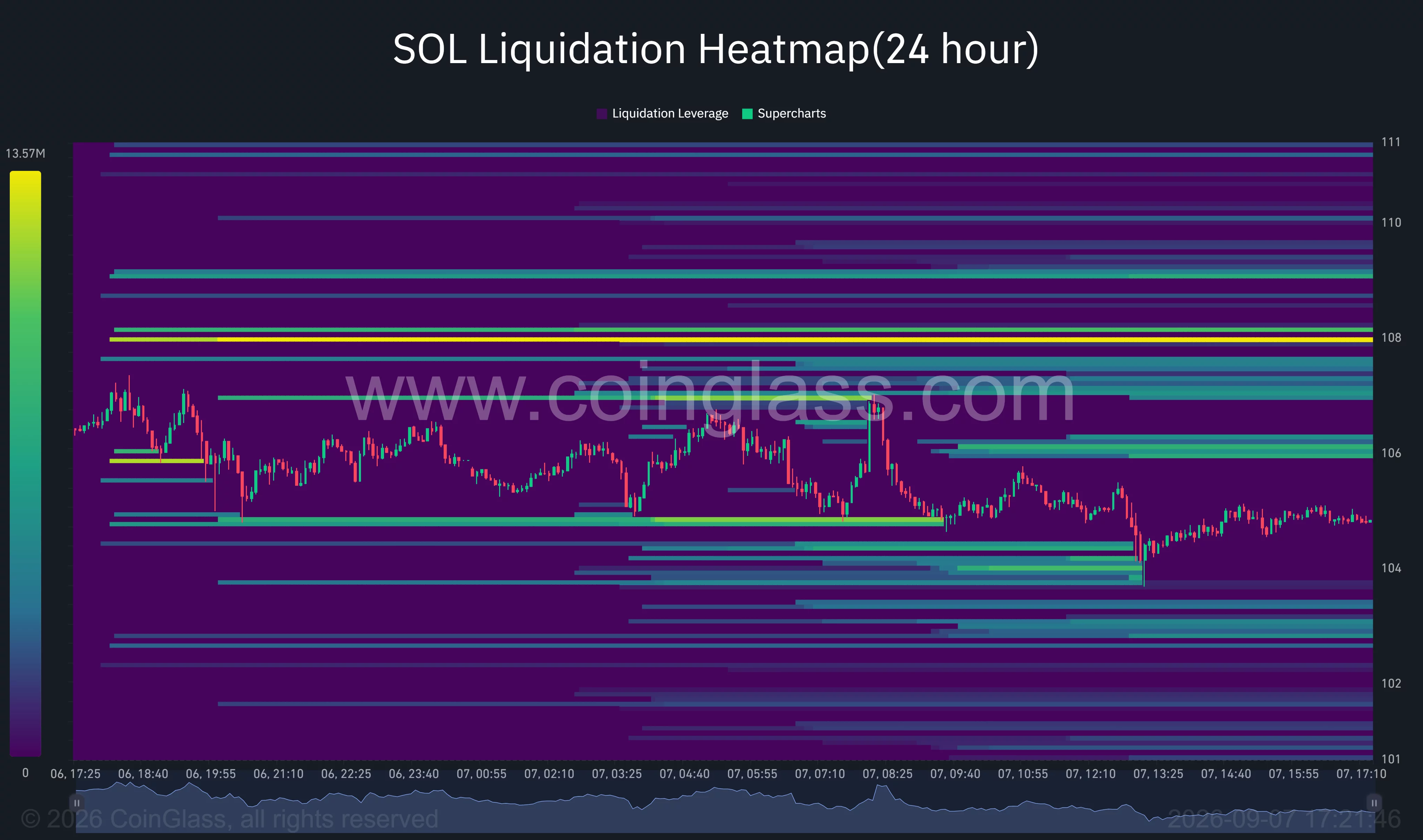
The bright liquidity band at that level could attract price if SOL recovers above $106 and breaks through the $107 resistance area. Such a move could force short sellers to close positions, potentially accelerating an advance toward $109 and the recent peak near $110.
Additional overhead liquidity appears around $108.80, $109.50, and $110. A sustained breakout above $110 would establish a higher high and support an extension of the August rally.
Downside liquidity is more dispersed. The closest notable clusters appear between $103 and $104, followed by another concentration around $102.50. A break below $104 could therefore trigger long liquidations and pull SOL toward the $102.98–$103.93 moving-average zone.
The $101.26 average would become the next technical defense if that area fails. Below it, $100 represents both a psychological level and the approximate base of Solana’s latest rebound.
Daily signals show momentum is cooling
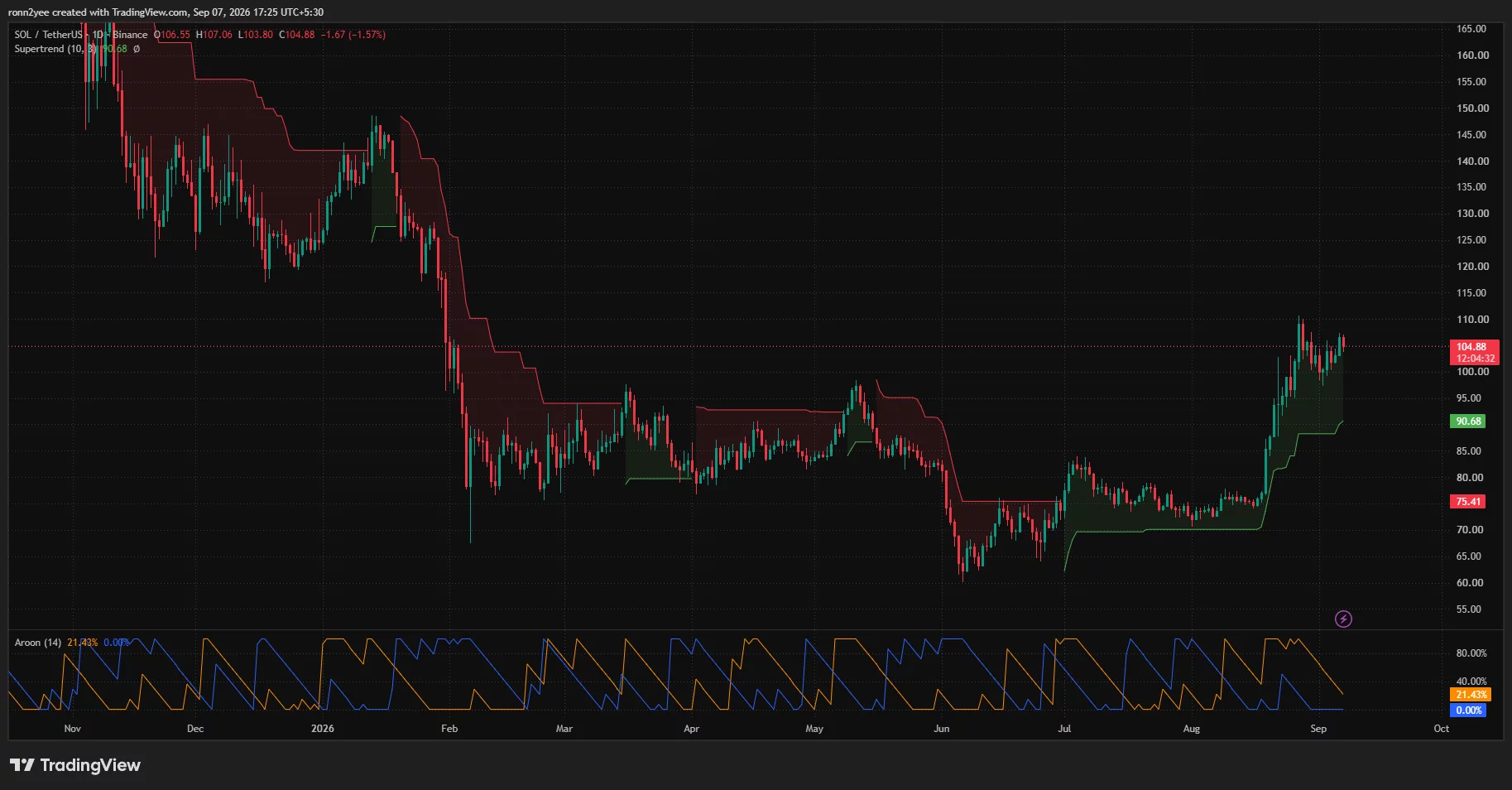
The daily chart presents a mixed outlook. Solana remains above its Supertrend support at $90.68, leaving the wider recovery structure intact despite the rejection from $109.
Aroon readings, however, show that near-term momentum has weakened. The Aroon Up indicator stands at 0%, while Aroon Down is at 21.43%. Neither reading signals a strong trend, but the lack of a recent high explains why buyers have struggled to extend the rally.
The chart places the next major Supertrend resistance near $110.68. SOL would need to close above that level to strengthen the bullish case and open a possible move into the $115 region.
A daily close below $100 would shift attention toward $95 and the Supertrend support near $90.68. That level also marks the point below which the broader bullish structure would face a more serious test.
Analysts see another Solana move developing
Analyst Wayne Liang said Solana could begin another upward leg after the token’s roughly 45% rally from an earlier buy signal near $75 to a sell signal around $109.
Liang said his indicator may be approaching another buy signal, although the chart had not confirmed one at the time of the post. The analyst’s view supports a possible continuation scenario but depends on SOL maintaining its rising trend structure.
Team LAMBO Charts separately described the $70–$95 range as an accumulation zone preceding an expansion phase. However, the post said SOL was already above $140, a figure that conflicts with both the attached chart and the observed market price near $105. The broader accumulation-to-expansion interpretation may still apply, but the stated price cannot be treated as current.
For US traders, expectations around Federal Reserve policy remain an external risk for SOL and other high-beta crypto assets. Higher-for-longer interest rates generally reduce demand for speculative assets, while any shift toward easier financial conditions could improve the backdrop for an upside breakout.
In the short term, $103–$104 is the main support zone, while $107–$108 remains the first barrier. Whichever side breaks first could determine whether SOL retests $110 or returns toward $100.
Disclosure: This article does not represent investment advice. The content and materials featured on this page are for educational purposes only.

What Miles Owen from Our Yorkshire Farm is doing now

Primo Brands: Strong Q2 Confirms Bullish Thesis (NYSE:PRMB)

US Midterm Elections and Trump Pressure Are Stopping Rate Hikes, Says Wharton Professor





-

 Fashion3 days ago
Weekend Open Thread: Beyond Yoga
-
 Crypto World4 days ago
Bitcoin price stalls near $82K as key resistance holds
-

 Politics4 days ago
Best Gaming Laptops, CPUs, TVs, And Keyboards To Upgrade Your Set Up For GTA VI
-

 Tech4 days ago
The Birds Outside, Drawn For You Automatically
-

 Crypto World4 days ago
IMF Says El Salvador’s Post-Review Bitcoin Purchases Used No Public Funds
-
 Crypto World4 days ago
U.S. added stronger than expected 162,000 jobs in August as labor market bounced back
-

 Sports4 days ago
Alexandre Pato consortium’s Northampton Town investment approved
-

 Sports4 days ago
Commanders’ Chig Okonkwo is a top breakout fantasy football candidate
-

 Sports4 days ago
Golden Eaglets Drawn in Group B for 2026 WAFU B U17 Championship
-
 Crypto World4 days ago
XRP price breaks falling channel as bulls target $1.53
-

 Politics4 days ago
A new European chapter for Gibraltar
-

 Politics4 days ago
How To Avoid Winter Colds: 4 Everyday Habits That Spread Germs, Says Pharmacist
-
 Politics4 days ago
The House | Bin the lectures, bring gossip and be ready to banter: how the new PM should prepare for his Trump encounter
-

 Crypto World4 days ago
From warning to listing: UK’s largest retail investment platform opens access to crypto ETNs
-
 Crypto World4 days ago
FinCEN flags $12.7B tied to Southeast Asia crypto investment scams
-

 Tech4 days ago
A Worthy Android Ereader, With Some Tradeoffs
-

 Tech4 days ago
How To Edit Claude’s Memory
-

 Crypto World4 days ago
Trezor Data Breach Impacts 67,000 More US Customers
-

 Politics4 days ago
33 Cosy Autumn Home Decor Ideas: Blankets, Pumpkin Decorations, And Candles
-

 Tech4 days ago
beyerdynamic AVENTHO Y Debuts at IFA 2026 and Makes Wireless Headphones Less Disposable
You must be logged in to post a comment Login