
Crypto World
France faces $9.4B crypto tax reporting test: Chainalysis



Chainalysis estimated on Aug. 26 that France generated about $9.4 billion in potentially taxable crypto activity during 2025, placing the country among the world’s 15 largest markets covered by its latest crypto tax study.
Summary
- Chainalysis estimated global potentially taxable crypto activity reached $457 billion across six blockchains during 2025.
- France accounted for estimated $9.4 billion in income, gains, and crypto payment activity during 2025.
- French taxpayers reported €368 million in crypto gains for 2024 through approximately 24,000 tax filings submitted.
- DAC8 requires providers to collect 2026 transaction data, with first exchanges due September 30, 2027.
- Chainalysis cautioned its estimates exclude exchange-internal activity and may understate total taxable economic income worldwide.
The estimate included $1.7 billion in crypto income, $2.5 billion in realized gains and $5.2 billion in crypto payments. It arrives as France prepares to receive detailed customer and transaction data under the European Union’s DAC8 tax reporting system and the OECD’s Crypto-Asset Reporting Framework, or CARF.
Chainalysis described the figures as “potentially taxable activity,” rather than unpaid taxes or government revenue. Tax treatment varies by transaction type, taxpayer status and national law. Crypto payments, for example, cannot be treated as equivalent to undeclared capital gains.
The company also did not estimate that more than 90% of French crypto taxes went unpaid. Its reference to non-compliance above 90% came from a Swedish tax authority study concerning taxpayers in Sweden. Applying that rate directly to France would not be supported by the available evidence.
Chainalysis estimates France generated $9.4B in activity
The Chainalysis study estimated that potentially taxable on-chain crypto activity reached at least $457 billion worldwide in 2025. The United States led individual countries with $112.6 billion, while the European Union collectively accounted for $125.1 billion.
France ranked 13th among the countries listed in the study. Its estimated $9.4 billion total consisted of three separate categories: income, gains and payments. Chainalysis included mining, staking, lending and gambling proceeds within income. Its gains category covered activity attributed to centralized and decentralized exchanges.
Payments included transfers linked to merchant services and peer-to-peer economic activity. Such activity may create different income tax, capital gains tax or indirect tax questions depending on the circumstances. The full $9.4 billion therefore does not represent a taxable profit figure or an estimate of tax owed.
Chainalysis produced the estimates using activity across Bitcoin, Ethereum, Solana, Tron, BNB Smart Chain and Base. It assigned activity geographically through direct location indicators and proportional allocations based on service-level activity.
The company acknowledged that trading, staking and lending conducted within centralized exchange systems cannot always be observed on a public blockchain. It said this limitation means its estimates may understate total economic income.
Chainalysis called the figures “potentially taxable activity.” They should not be read as confirmed unpaid taxes or recoverable government revenue.
The report compared its broader estimates with public evidence of weak crypto tax reporting. It cited Sweden’s tax authority, which previously found that more than 90% of people reviewed had not correctly reported their crypto activity. That finding concerns Sweden and does not establish France’s non-compliance rate.
French data nevertheless show a wide difference between declared gains and estimated activity. Approximately 24,000 taxpayers reported €368 million in crypto capital gains for tax year 2024, according to figures attributed to the French tax administration. However, that declared amount covers a different year and a narrower category than Chainalysis’ $9.4 billion estimate.
A direct comparison would also mix euros with dollars. More importantly, it would compare declared net capital gains with gross activity spanning income, gains and payments. The figures indicate an enforcement question, but they do not measure the French crypto tax gap on a like-for-like basis.
France’s crypto tax reporting changes under DAC8
DAC8 took effect across the EU on Jan. 1, 2026. Reporting crypto-asset service providers must now collect information covering reportable transactions conducted by EU-resident users.
Required customer information can include names, addresses, tax identification numbers, dates of birth and tax residences. Providers must also report aggregated values and transaction counts for exchanges, transfers and certain payments.
The European Commission says providers began collecting reportable 2026 transaction data on Jan. 1. Reports covering that first year must be exchanged between EU tax authorities by Sept. 30, 2027.
As previously reported in coverage of the new EU rules, DAC8 covers crypto-to-fiat trades, crypto-to-crypto exchanges and transfers involving external addresses. A withdrawal to self-custody can therefore appear in a provider’s report even though self-custody itself is not prohibited.
The underlying directive also requires providers to collect tax-residency self-certifications. Existing individual users generally must provide valid self-certification information by Jan. 1, 2027.
If a customer fails to provide required information after two reminders, member states must require providers to prevent reportable transactions after a 60-day period. National implementation, enforcement procedures and penalties can still differ.
CARF extends a similar exchange model beyond the EU. The OECD expects the first exchanges between participating jurisdictions to begin in 2027. France is among the jurisdictions committed to that timetable.
Reporting rules still leave most on-chain activity outside direct reach
Chainalysis estimated that transactions falling within CARF’s practical reporting reach represented only 14% of the potentially taxable on-chain activity it identified. The remaining 86% involved areas such as decentralized exchanges, peer-to-peer transfers, on-chain income and payments.
CARF and DAC8 primarily obtain information from reporting service providers. Centralized exchanges and brokers can link transactions to verified customer identities because they maintain account records and normally conduct know-your-customer checks.
Decentralized protocols may not have an operator holding the same identifying information. A taxpayer can also use several private wallets, interact directly with smart contracts or move assets between services in different jurisdictions.
Public blockchains record transfers, but they do not automatically identify the taxpayer, establish the purpose of a transaction or calculate the correct cost basis. A wallet transfer could represent a sale, a payment, collateral movement or a transfer between addresses controlled by the same person.
Cost-basis records become harder to reconstruct when a user buys an asset through one provider, moves it through private wallets and later sells through another provider. The receiving exchange may know the sale proceeds without knowing the original purchase price.
In related coverage of the Chainalysis findings, crypto.news reported that platform reporting may need to be combined with blockchain records to reconstruct activity involving DeFi and private wallets.
The report’s 86% estimate does not mean that activity will remain invisible or untaxed. It means it may not be directly described in reports supplied by intermediaries. Tax agencies can still use exchange records, blockchain analysis, audits and information obtained from other jurisdictions.
What happens next for French taxpayers and providers
Crypto service providers must continue collecting reportable customer and transaction data throughout 2026. They must also verify tax-residency declarations and prepare the first annual reports for submission during 2027.
France’s tax authority will then be able to compare provider reports with domestic tax returns and data received from other EU states. CARF exchanges could add information from participating jurisdictions outside the bloc.
The new system will not retroactively produce complete histories for activity conducted before the reporting period. Authorities may still need account statements, wallet records and blockchain analysis when reviewing historical gains or reconstructing acquisition costs.
Taxpayers remain responsible for maintaining records showing purchases, disposals, income and transfers. A transaction appearing in a DAC8 report does not by itself determine the amount of French tax due. The tax calculation still depends on French law and the taxpayer’s circumstances.
FAQs
Did Chainalysis say 90% of French crypto taxes are unpaid?
No. Chainalysis cited a Swedish authority’s finding that more than 90% of reviewed crypto users in Sweden failed to report correctly. It did not publish an equivalent rate for France.
Does France’s $9.4 billion represent unpaid tax?
No. The figure estimates potentially taxable activity, including income, realized gains and payments. It is neither a tax bill nor an estimate of recoverable revenue.
When will France receive the first DAC8 reports?
Providers began collecting data on Jan. 1, 2026. EU authorities must exchange the first reporting-year information by Sept. 30, 2027.
Does DAC8 cover self-custody wallets?
DAC8 can capture transfers between reporting providers and external wallet addresses. It does not create continuous provider reporting for every transaction conducted entirely within self-custody.

UBS has identified three places for investors to put money as volatility builds around the Federal Reserve’s September decision, while withdrawing a bond recommendation.
The bank’s strategists argue that the key question is not whether the Fed hikes or holds, but the conditions it acts against. Market pricing has swung sharply in recent weeks.
Why the Backdrop Matters More Than the Meeting
Fed Chair Kevin Warsh used his Jackson Hole speech to warn about inflation.
“You may have read in the July minutes…Labor markets were stable, and output was solid. But inflation remained too high. A good majority of my colleagues and I thought the wiser course was to await new information in the intermeeting period…And we expressed our joint readiness to act as circumstances might require,” he said.
August’s labor data then hardened the case. US nonfarm payrolls surged by 162,000 last month, well above consensus forecasts of 55,000, while unemployment held steady at 4.1%.
That marked the strongest monthly total since March. Traders have repriced the path repeatedly over the past month.
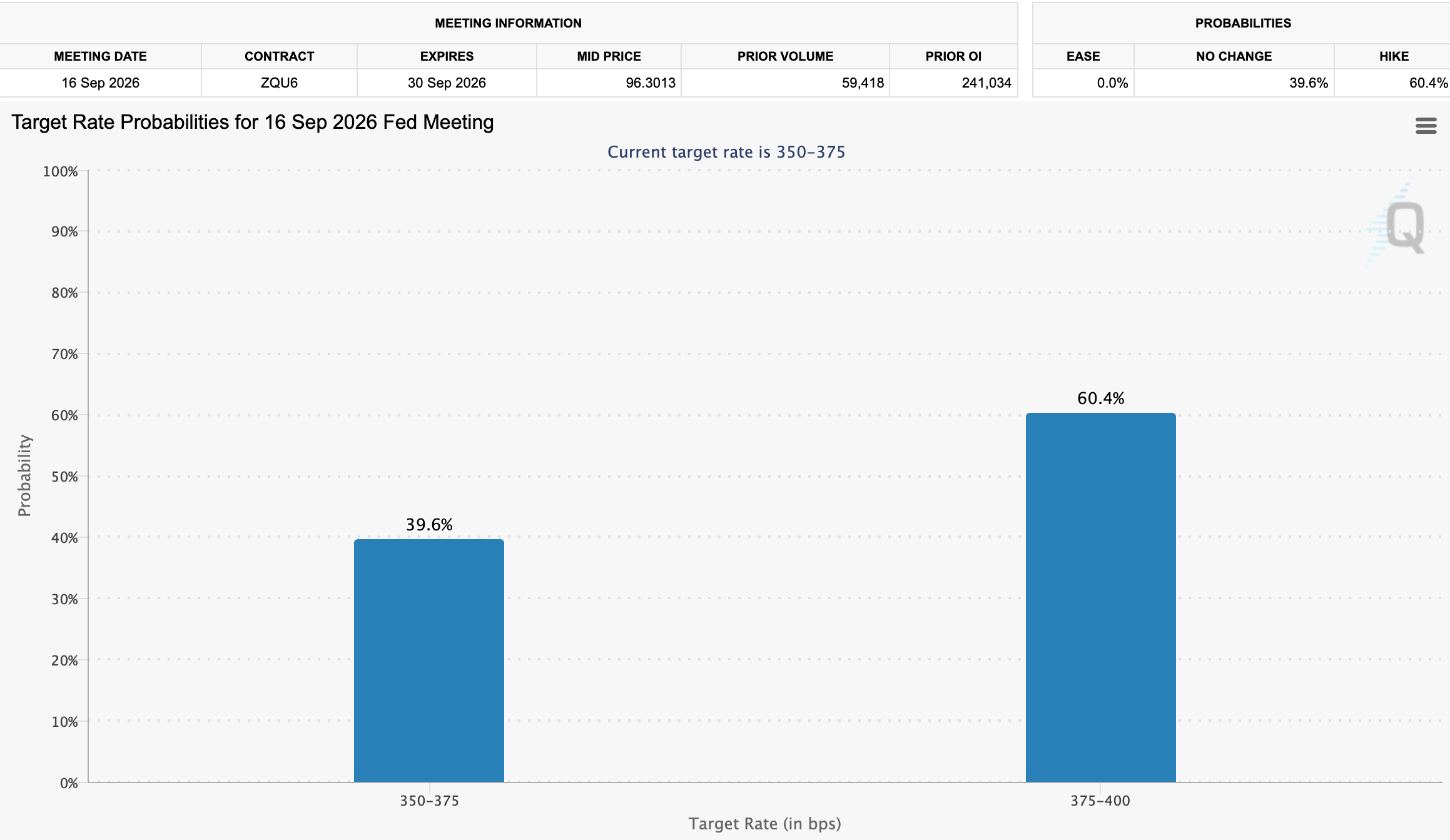
CME FedWatch put the probability of a September hike at 60.4% on Tuesday. Odds reach 70.9% by October and 85.8% by December.

The Federal Open Market Committee meets September 15 and 16. It held the target range at 3.50%-3.75% in July, though three members dissented in favor of higher rates.
Strategists led by Mark Haefele separate a hike driven by solid growth from one driven by sticky inflation.
“A Fed responding to US economic strength is very different from a Fed responding to inflation problems. For portfolios, that distinction matters far more than the next policy meeting,” they stated.
Follow us on X to get the latest news as it happens
Where UBS Wants the Money to Go
Equity dips come first, provided earnings prospects stay strong. The bank continues to favor AI, power, resources, and longevity within its equity positioning.
The medium-to-long part of the yield curve is second. Recent moves higher in yields have improved entry points, therefore offering income and diversification.
Gold is third. UBS treats bullion as a portfolio hedge and diversifier rather than a tactical expression of the next Fed decision.
Higher real rates and a firmer dollar are near-term headwinds for the metal. However, persistent inflation and concerns about fiscal credibility could offset them.
Meanwhile, the bank told clients to reduce excess dollar holdings due to the strength.
“We would no longer recommend that investors lock in yields in short- to medium-duration bonds as an alternative to cash,” UBS added.
August core CPI data lands on September 11, four days before the FOMC convenes. That print will test whether the hawkish repricing holds.
Subscribe to our YouTube channel to watch leaders and journalists provide expert insights
The post UBS Names Three Places to Put Money as Fed Rate Hike Odds Reach 60% appeared first on BeInCrypto.
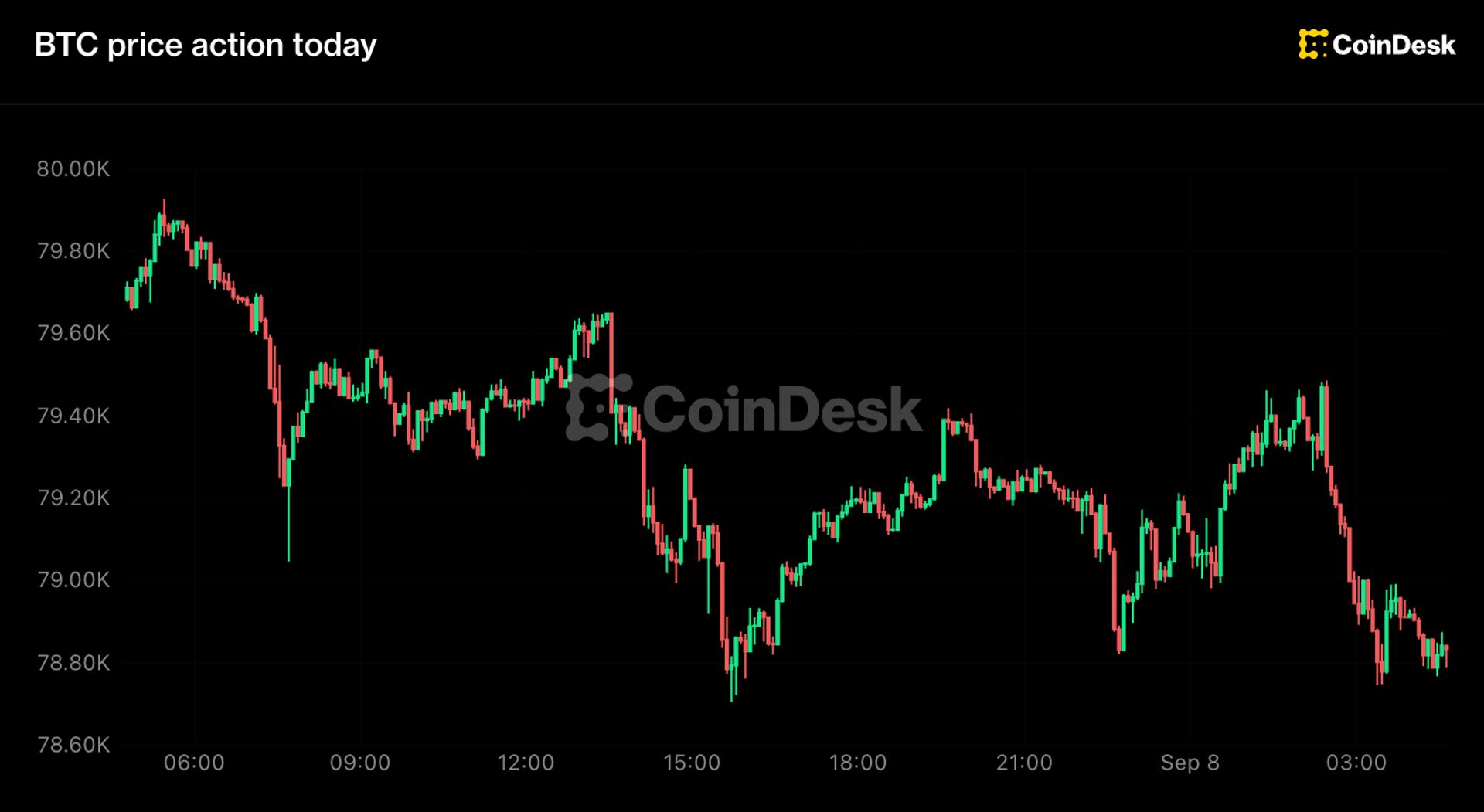
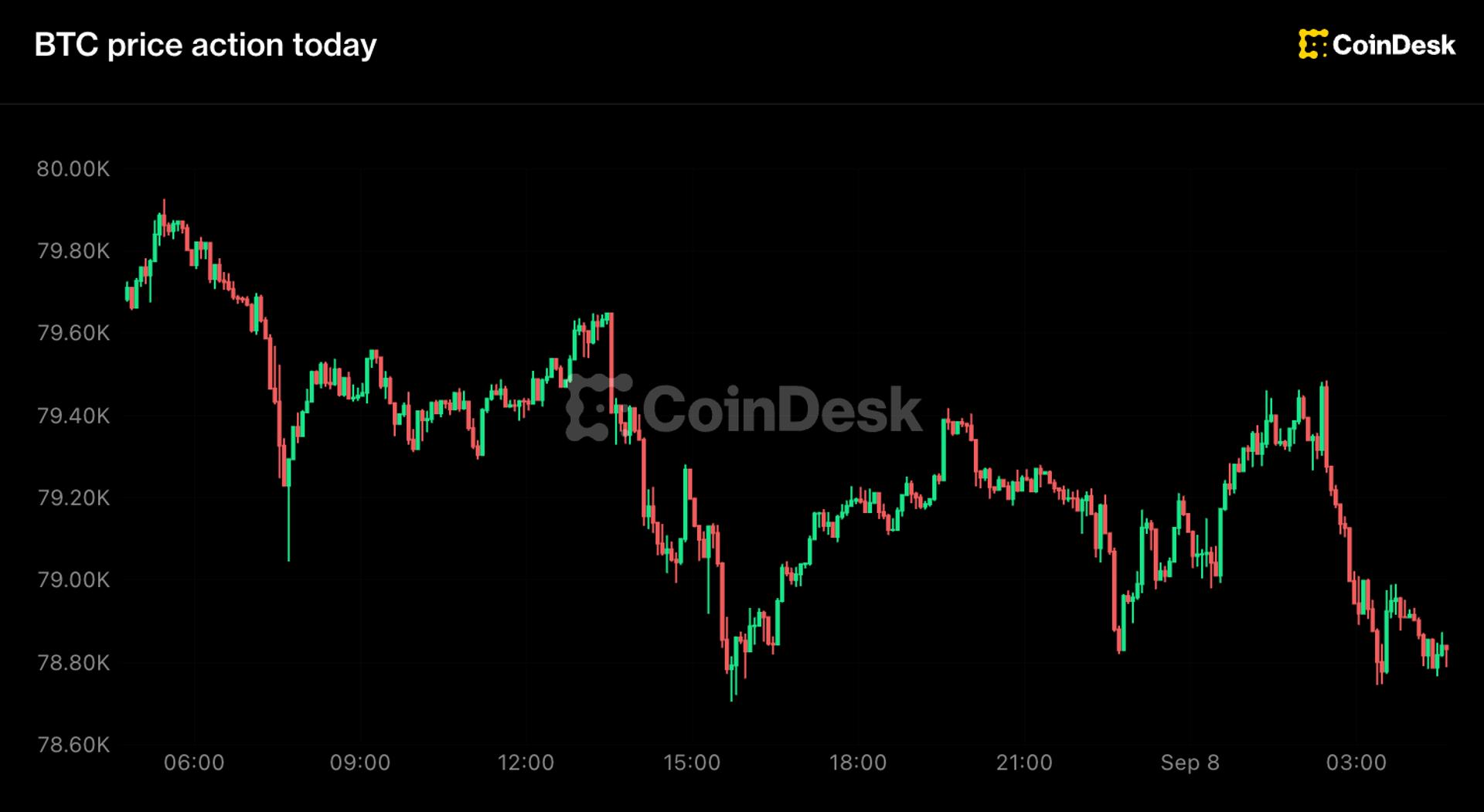
Every major token fell on Tuesday, though most keep weekly gains, with traders pricing a 60% chance of a Fed hike next week.
Metaplanet CEO Simon Gerovich acknowledged on Sept. 6 that the company had not adequately explained its Series 10 executive option plan or the structure connecting him to major shareholder MMXX Ventures.
Summary
- Metaplanet fixed its Series 10 option pool at 319,464,000 potential shares after removing automatic adjustments.
- Simon Gerovich exercised 92,000 rights, receiving 64,032,000 shares subject to a five-year transfer restriction afterward.
- Gerovich said he owns a non-majority interest in MMXX’s parent and makes no trading decisions.
- Shareholders continue requesting MMXX ownership details and cancellation of 273 million additional reward-pool shares publicly.
Gerovich said he is a “significant but non-majority shareholder” in MMXX’s parent company. He denied involvement in MMXX’s investment or trading decisions and said Metaplanet would provide clearer explanations of its corporate structure.
The statement followed renewed criticism of a compensation program that grew as Metaplanet issued shares to finance its Bitcoin treasury strategy. Metaplanet capped the plan at 319,464,000 potential shares on Aug. 18, but shareholders argue that the amendment stopped future expansion without addressing growth that had already occurred.
Gerovich exercised 92,000 Series 10 stock acquisition rights on Aug. 28. The exercise created 64,032,000 shares and increased his direct ownership to 79,587,500 shares, according to Metaplanet’s Aug. 31 disclosure.
The filing confirmed the exercise and resulting ownership. Separate claims about Gerovich’s total economic exposure through MMXX, however, remain shareholder calculations rather than figures confirmed by Metaplanet.
Metaplanet’s option pool expanded with its share count
Metaplanet established the Series 10 Stock Acquisition Rights program before adopting its Bitcoin treasury strategy. Its board approved the issuance terms on Dec. 28, 2022, and shareholders approved them at an extraordinary meeting on Feb. 7, 2023.
The company issued 460,000 rights to seven officers and employees. Each right initially represented 100 shares, subject to adjustments. Recipients paid ¥18 per right, while the exercise price was ¥10 per share.
The program did not grant a fixed number of shares. Its adjustment mechanism maintained the reward pool at roughly 20% of Metaplanet’s fully diluted share count. That structure allowed the number of potential reward shares to grow when the company issued additional equity.
Metaplanet began its Bitcoin treasury strategy in April 2024. It subsequently relied on shares, warrants and other financing instruments to fund purchases. New issuance diluted existing investors while also expanding the number of shares linked to the Series 10 rights.
In its Aug. 18 filing, Metaplanet acknowledged that the original adjustment mechanism had produced an unintended outcome.
The company said the mechanism “amplifies the dilution borne by existing shareholders.”
The board removed the floating adjustment and fixed the remaining potential issuance at 319,464,000 shares. The amendment prevents future capital raises from automatically enlarging the pool.
However, the board did not restore the pool to its size when Metaplanet adopted the Bitcoin strategy. Critics say that decision preserved hundreds of millions of potential shares accumulated through the adjustment mechanism.
A shareholder using the name Bitcoin Pharaoh calculated that 273 million of the potential shares resulted from adjustments after the treasury pivot. That figure has circulated broadly, but Metaplanet has not adopted it as an official company calculation.
Gerovich’s 64 million-share exercise raised scrutiny
Metaplanet’s Aug. 31 disclosure said Gerovich exercised 92,000 Series 10 rights effective Aug. 28. The rights converted into 64,032,000 common shares.
The exercise increased his direct holdings from 15,555,500 shares to 79,587,500 shares. Metaplanet placed the newly acquired shares under the five-year lock-up introduced through the Aug. 18 amendment.
That restriction generally prevents the sale or transfer of the shares until Aug. 17, 2031. Metaplanet said the lock-up was intended to align option holders with the company’s long-term performance.
The restriction reduces the prospect of an immediate sale, but it does not cancel the shares or reverse dilution. The 64,032,000 shares became part of the company’s issued equity when Gerovich exercised the rights.
Metaplanet’s Aug. 18 filing showed that Gerovich held 276,000 of the 459,000 unexercised Series 10 rights outstanding as of June 30. Two executive officers held 141,000 rights collectively, while two employees held another 42,000.
One-third of the rights vested on Feb. 8, 2026. The remaining tranches are scheduled to vest on Feb. 8, 2027, and Feb. 8, 2028. The exercise therefore represented only part of Gerovich’s disclosed Series 10 position.
Shareholders have asked why the company froze the enlarged pool instead of recalculating it from April 2024. Some have also requested a replacement incentive plan based on per-share performance, Bitcoin yield or other measurable targets.
Shareholder Ragnar argued that Metaplanet should “cancel the additional 273 million shares,” but the company has not accepted that calculation or proposal.
No filing reviewed for this story indicates that Metaplanet has decided to cancel the remaining rights. The company instead said existing holders intended to transfer part of their rights to a new long-term incentive vehicle involving officers and employees.
The amount, timing and ownership structure of that vehicle have not yet been fully disclosed.
Gerovich denies directing MMXX Ventures trades
MMXX Ventures is a disclosed Metaplanet shareholder. Gerovich said in his Sept. 6 statement that he owns a non-majority stake in its parent company.
He said he does not manage MMXX, make its investment decisions or direct its trading. He also described MMXX as separate from Metaplanet.
Gerovich said: “I have no involvement in its investment or trading decisions.”
That is an attributed denial. Public filings confirm connections between Gerovich and MMXX, but they do not provide a complete breakdown of every beneficial owner or show how proceeds from historical share sales were distributed among the parent company’s investors.
Metaplanet has previously disclosed Gerovich’s voting control in relation to MMXX. However, voting authority, legal ownership and economic benefit are separate questions. A person can influence voting without holding a majority economic interest, while a non-majority owner can still receive part of an entity’s profits.
Shareholder Bitcoin Pharaoh alleged that MMXX sold about 50 million Metaplanet shares during the company’s 2024 rally. The analysis was based on public ownership disclosures, according to its author.
Metaplanet has not publicly confirmed that total in a dedicated response to the current dispute. It also has not published a transaction-by-transaction account showing what portion of any MMXX sale proceeds may have benefited Gerovich.
For that reason, claims about Gerovich’s personal proceeds cannot be presented as established facts. His statement addressed decision-making authority but did not quantify his economic interest or identify the other owners of MMXX’s parent.
Gerovich acknowledged that the company’s previous communication was insufficient.
“We have not done a good enough job of explaining this clearly,” he said.
He promised more communication about the company’s decisions and long-term alignment. The post did not commit Metaplanet to publishing MMXX’s full ownership, cancelling rights or resetting the option pool.
Share-price decline increases pressure for fuller answers
Metaplanet shares traded near ¥255 on Sept. 8, down almost 6% during the Tokyo session, according to Google. The decline followed continued public discussion of the option structure and MMXX relationship.
The stock remains far below its June 2025 peak. Its decline has occurred even as Metaplanet expanded its Bitcoin holdings to 43,000 BTC.
As crypto.news reported when the shares approached a 52-week low, investors were already weighing dilution, Bitcoin valuation losses and the company’s ability to raise capital without weakening per-share value.
Metaplanet’s treasury strategy depends heavily on access to equity markets. Issuing stock can add corporate Bitcoin while reducing each existing shareholder’s percentage ownership. The result for shareholders depends on the issue price, the company’s valuation and how much Bitcoin or other value it creates per diluted share.
The governance dispute adds another concern because the Series 10 plan rewards insiders through the same expanding equity base used to fund Bitcoin purchases. Removing the automatic adjustment prevents that relationship from continuing, but the remaining pool can still produce further dilution as rights vest and are exercised.
The company has also committed 2,100 BTC and $2.5 million to a proposed U.S. Bitcoin treasury platform involving Nasdaq-listed Super League. As previously reported, those coins are expected to remain within Metaplanet’s consolidated group if the transaction closes.
That expansion gives the company a supported U.S. business angle, but it also makes clear governance and capital allocation more important. Shareholders must assess both Metaplanet’s Bitcoin exposure and the securities used to finance its wider strategy.
What happens next
Metaplanet has not announced a special review, independent investigation or vote concerning the Series 10 plan. No verified court or regulatory proceeding tied to the current criticism was found.
The next scheduled vesting date is Feb. 8, 2027. Additional Series 10 rights could become exercisable at that point unless Metaplanet amends, transfers or cancels them beforehand.
Investors are likely to watch for a filing explaining how many rights will move to the proposed employee incentive vehicle. They may also seek the vehicle’s ownership, governance rules, performance conditions and treatment under the five-year lock-up.
The larger unanswered questions concern MMXX. Gerovich has described his ownership and denied directing trades, but Metaplanet has not released a complete beneficial-ownership table for MMXX’s parent or a detailed account of Gerovich’s economic participation in its transactions.
Until the company supplies those details, shareholder estimates should remain clearly labelled as outside analysis. The official record currently confirms the option terms, the 319,464,000-share cap, the lock-up and Gerovich’s 64,032,000-share exercise. It does not settle every question raised about ownership and past economic benefits.
FAQs
What are Metaplanet’s Series 10 rights?
They are paid stock options approved in 2023 for officers and employees. Their original adjustment mechanism kept the potential pool near 20% of fully diluted shares.
How many potential shares remain in the pool?
Metaplanet fixed the pool at 319,464,000 potential shares on Aug. 18, 2026. Subsequent exercises reduce outstanding rights while increasing issued shares.
Can Gerovich immediately sell his new shares?
The 64,032,000 shares are generally subject to a five-year sale and transfer restriction lasting until Aug. 17, 2031.
Does Gerovich own MMXX Ventures?
Gerovich says he is a non-majority shareholder in MMXX’s parent company. Metaplanet has not published a complete ownership breakdown for that parent.
Did Metaplanet answer every shareholder question?
No. The CEO addressed the adjustment mechanism and denied making MMXX trading decisions. Questions remain about MMXX’s ownership, historical proceeds and whether the enlarged option pool will be reduced.

Blockstream-backed Liquid has moved closer to resuming normal operations after a partial repayment tied to a Sunday security incident involving the network’s Bitcoin reserves. According to on-chain activity and statements from industry figures, purported “white-hat” actors returned 3,400 BTC—worth about $270 million—to the Liquid Federation wallet after withdrawing roughly $320 million from the Bitcoin sidechain’s reserve.
The return follows Monday comments from JAN3 CEO and former Blockstream executive Samson Mow, who said Blockstream confirmed that the affected bridge nodes had been patched. Mow added that approximately 598 BTC remains outstanding, while Blockstream continues direct engagement with the parties involved.
Key takeaways
- On-chain records indicate exactly 3,400 BTC was transferred back to the Liquid Federation wallet address after a prior withdrawal of about 4,000 BTC.
- Liquid remains paused as bridge-node fixes roll out, with federation members preparing for a coordinated restart.
- Blockstream says updated software has been deployed and that further issues—such as a chain split—must be fully resolved before resuming.
- Liquid’s backing depends on L-BTC issued against Bitcoin held by the federation; returning ~85% of withdrawn BTC restores much of the removed collateral.
- Mow advised users not to send Bitcoin to Liquid peg-in addresses until the restart is confirmed; there is no indication that user actions are otherwise required beyond that guidance.
3,400 BTC returned after bridge-node patch confirmation
In the hours after Sunday’s incident, the immediate focus turned to whether the withdrawn Bitcoin would be recovered. On-chain data shared via transaction records shows 3,400 BTC moved back to the federation’s wallet address, aligning with the portion of funds referenced by Mow and others. The earlier withdrawal had reduced the roughly 4,200 BTC reserve before the network was paused.
Mow said the return came after Blockstream provided confirmation that patch work on the affected bridge nodes was complete. He also stated that about 598 BTC is still not in the federation’s control. Meanwhile, he indicated Blockstream is continuing to work with the actors behind the initial withdrawal.
Liquid’s operational pause matters for more than just technical housekeeping. Liquid issues L-BTC against Bitcoin held by its federation; when reserves are reduced, the system’s ability to maintain full backing for issued tokens becomes strained. Restoring 3,400 BTC—about 85% of what was withdrawn—therefore meaningfully improves the collateral picture as the network prepares to restart.
Withdrawal originated from a SideSwap peg-out process linked to Elements
While the Sunday withdrawal proceeded through SideSwap’s Peg-out Authorization Key mechanism, both Liquid and SideSwap reportedly said the peg-out key itself was not compromised. Instead, SideSwap attributed the L-BTC involved in the incident to a bug in Elements, the open-source software that underpins Liquid.
Blockstream said it communicated with the actors using signed messages embedded in Bitcoin transactions. The actors claimed to be acting as “white hats” and indicated they would return most of the funds once vulnerabilities were fixed and all nodes installed the patch.
The recovery sequence also highlights how Liquid bridges operational decisions to Bitcoin-side verification. Even when a breach is connected to the Elements codebase, the real-time governance of funds still runs through federation wallet movements and chain-level confirmation—meaning the system’s restart readiness depends on both software deployment and the integrity of bridge operations across federation members.
Liquid remains paused; users told to avoid peg-ins
Liquid has not yet returned to full service. Mow stated that the network stayed paused while additional fixes and security improvements were completed. He also referenced resolution of a chain split and preparations for a “safe restart” coordinated across federation participants.
Crucially for day-to-day users, Mow advised against sending Bitcoin to Liquid peg-in addresses until Blockstream confirms the restart. He framed this as the primary action users should take—or rather, avoid—during the pause, adding that no other user step was otherwise required.
This kind of instruction is significant because peg-in workflows depend on the bridge operating correctly and on the federation continuing to manage the custody and issuance relationship between Bitcoin reserves and L-BTC. Until a confirmed restart, directing funds to peg-in addresses carries the risk of stuck or delayed handling, even if no further compromise occurs.
Dispute over “white-hat” framing after partial return
The partial repayment has not fully ended debate about intent and legitimacy. Ledger chief technology officer Charles Guillemet questioned the “white-hat” label, arguing that if the remaining ~600 BTC represented a reward negotiated via encrypted on-chain communications, the arrangement could resemble extortion rather than conventional vulnerability disclosure.
At the same time, neither Blockstream nor Liquid publicly characterized the outstanding Bitcoin as a bounty, nor were any repayment terms disclosed. Cointelegraph reported outreach to both companies for comments but said it did not receive a response before publication.
That lack of transparency creates uncertainty for observers trying to interpret the actors’ motivations. Even when funds are returned, the unresolved portion can shape how the industry weighs the incident—whether it is treated as an expedited remediation coordinated through responsible disclosure norms, or as leverage applied through disruption.
Readers will likely look for confirmation from Blockstream on the remaining issues holding Liquid in a paused state—especially after software deployment and the claimed resolution of a chain split. The next checkpoints are straightforward: a confirmed restart, continued monitoring of federation reserve movements, and clarity on whether the outstanding ~598 BTC is fully recovered.
Crypto World
Liquid Network gets back 3,400 bitcoin from white-hat hackers; talks underway for the rest
Supposed white-hat hackers behind Sunday’s Liquid Network breach have returned 3,400 of the 4,000 BTC they took, but nearly $47 million in bitcoin is still outstanding.

Tether, the issuer of the world’s largest stablecoin, has spent $600 million buying majority control of a South American farming conglomerate, adding land to a reserve strategy that already includes billions in gold and Bitcoin (BTC).
The move follows a clean audit from KPMG, one of the Big Four accounting firms. However, Tether’s own reserve buffer has since fallen 40%, raising questions about its scarce-asset hedges.
Farmland Joins Gold and Bitcoin in the Reserve Mix
Tether acquired roughly 70% of Adecoagro, a Nasdaq-listed agribusiness farming more than 200,000 hectares across Argentina, Brazil, and Uruguay. The deal grew to about $600 million in September 2025, and followed an initial $100 million stake bought in 2024.
Analysts have described the acquisitions as diversification, following the same logic behind Tether’s gold and Bitcoin holdings. Tether itself has called those assets a hedge against dollar debasement and inflation. It also plans to use the farmland’s renewable energy to power Bitcoin mining.
Ardoino describes Tether as “probably the largest owner, land owner in South America,” noting the agribusiness runs hundreds of thousands of sheep and cattle and produces milk and rice. He framed the holding as part of the same logic driving Tether’s gold and Bitcoin positions — a hedge against systemic instability rather than a conventional investment.
“This is when we think about the stability of the world that has to come through real tangible assets,” he said, adding that Tether has to remain “a company that survived to the worst case scenario.”
Tether’s Business Also Include US Treasuries.
Meanwhile, Tether remains one of the world’s largest holders of US Treasuries. Its exposure last stood at roughly $141 billion, disclosed in its first-quarter 2026 attestation. That leaves the company betting on scarce, hard assets. Yet it still anchors most of its balance sheet to the very currency it hedges against.
KPMG’s first full audit confirmed reserves exceeded liabilities by $6.8 billion at the end of 2025. Tether CEO Paolo Ardoino called the result a clean audit, the strongest opinion an auditor can issue. However, Tether has not published the underlying audited statements.
Tether’s own June attestation, a quarterly reserve snapshot reviewed by BDO, put that same buffer at just $4.1 billion. That is a drop of roughly 40% in six months, driven largely by unrealized losses on gold and bitcoin.
Those are the very assets meant to protect Tether’s balance sheet. Farmland adds a further complication, since land cannot be sold quickly if Tether ever needs cash fast.
Whether Tether’s scarce-asset strategy ultimately strengthens its position or adds new risk remains unclear. KPMG’s full report, still unpublished, could settle that question once it reaches the public.
The post Gold and Bitcoin Are Hedges, But Why Is a Stablecoin Company Buying Farmland? appeared first on BeInCrypto.


Purported white-hat hackers returned 3,400 Bitcoin worth about $270 million to the Liquid Federation wallet after withdrawing roughly $320 million from the Bitcoin sidechain’s reserves.
On Monday, JAN3 CEO and former Blockstream executive Samson Mow said the return followed confirmation from Blockstream that the affected bridge nodes had been patched. He said about 598 BTC remains outstanding and that Blockstream continues to engage with the actors.
The return follows a Sunday security incident in which hackers withdrew about 4,000 BTC from the wallet’s roughly 4,200 BTC. Onchain records show that exactly 3,400 BTC was transferred back to the federation’s wallet address.
Blockstream said updated software had been deployed and federation members were preparing for a coordinated restart. Liquid issues L-BTC against Bitcoin held by its federation, so the return of about 85% of the withdrawn Bitcoin restores much of the backing removed in the incident as the paused network prepares to resume operations.
Bitcoin return follows onchain negotiations
The original withdrawal was processed through SideSwap’s Peg-out Authorization Key, although Liquid and SideSwap said the key itself was not compromised. SideSwap said the L-BTC involved originated from a bug in Elements, the open-source software underpinning Liquid.
Blockstream contacted the actors through signed messages embedded in Bitcoin transactions. The actors, who identified themselves as white hats, said they would return most of the funds once the vulnerability was fixed and every node had installed the patch.
Related: Satoshi-era Bitcoin wakes after 16 years of dormancy as 600 BTC moves
Mow said Liquid remained paused while Blockstream and federation members made further fixes and security improvements, resolved a chain split and prepared for a safe restart. He told users not to send Bitcoin to Liquid peg-in addresses until the network’s restart is confirmed, adding that no user action was otherwise required.
Ledger chief technology officer Charles Guillemet questioned the actors’ white-hat description after the partial return. He said that if the roughly 600 BTC still under their control represented a reward negotiated through encrypted onchain communications, the arrangement looked “more like extortion than white-hat hacking.”
Neither Blockstream nor Liquid publicly described the outstanding Bitcoin as a bounty or disclosed any repayment terms. Cointelegraph reached out to both companies for comments but did not receive a response before publication.
Magazine: ‘White hats’ take 4000 BTC from Liquid, ETFs see best inflows of 2026: Hodler’s Digest
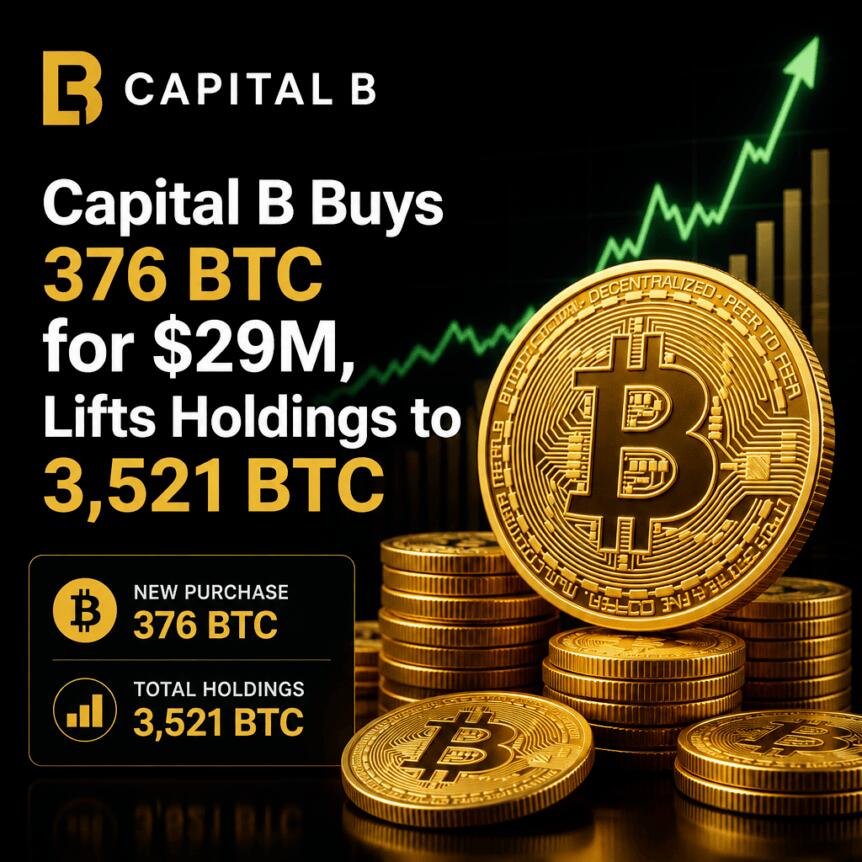
French corporate Bitcoin treasury firm Capital B has added 376 BTC to its balance sheet after completing a new round of fundraising. The company says it purchased the tokens for €25.3 million (about $29.5 million), bringing its total holdings to 3,521 BTC.
According to a Capital B announcement released Monday, the purchase was financed following capital raises totaling roughly €30.1 million (about $35 million), including a private placement backed by investors Adam Back and TOBAM. Swissquote Bank Europe executed the trade, with Taurus providing custody.
Key takeaways
- Capital B bought 376 BTC for €25.3 million, lifting its corporate treasury to 3,521 BTC.
- The acquisition was funded by about €30.1 million in capital raises, including a private placement supported by Adam Back and TOBAM.
- The company paid an average of €67,182 per BTC on this purchase; custody was handled by Taurus.
- Capital B’s latest buy is its largest since September 2025, when it acquired 551 BTC.
- While some corporate holders have reduced positions, other treasury firms—including Metaplanet and H100 Group—continue to add BTC.
Capital B’s latest treasury purchase
Capital B’s newly acquired 376 BTC represents a fresh expansion of its Bitcoin treasury, funded through the company’s recent funding activity. In its Monday filing and accompanying announcement, the company stated that the purchase price averaged €67,182 per BTC.
The execution and custody details add operational clarity for investors tracking corporate Bitcoin strategies. Swissquote Bank Europe carried out the acquisition, while Taurus is listed as the custody provider for the company’s Bitcoin holdings.
Where the company stands among corporate Bitcoin holders
Capital B also provided context on how the new purchase fits into its broader acquisition history. The company said it has spent a total of €309.4 million acquiring its Bitcoin portfolio, at an average cost of €87,878 per BTC.
Using rankings compiled by BitcoinTreasuries.net, the latest buying activity moved Capital B to 25th among publicly traded companies by Bitcoin holdings. The new total of 3,521 BTC places Capital B slightly ahead of Sweden-based H100 Group, which held 3,506 BTC after its earlier increase, though both remain behind Germany’s Bitcoin Group SE, which is reported to have 3,605 BTC.
Big buy since September 2025, but operational BTC is separated
The 376 BTC addition is Capital B’s largest purchase since September 2025, when the firm acquired 551 BTC for €54.7 million. That comparison matters for readers because it indicates a return to scale after a longer period without an equally large ticket size.
Capital B also distinguishes between treasury assets and operational holdings. The company says it holds an additional 61 BTC for operational purposes, which it keeps separate from its treasury reserve and excludes from its Bitcoin performance-related metrics. This separation is important when assessing reported results, since it clarifies that the treasury figures used for performance monitoring are not simply a blanket count of all BTC held.
Corporate accumulation continues even as some firms unwind
The Capital B purchase lands amid a mixed corporate landscape for Bitcoin treasuries. The article notes that some companies have moved to unwind Bitcoin holdings, including references to filings from firms such as K Wave Media and Sequans Communications. Against that backdrop, several other corporate players continue to accumulate.
Japan-based Metaplanet, for example, acquired 2,823 BTC during the second quarter for approximately $222 million, according to Cointelegraph reporting. Metaplanet’s holdings were stated at 43,000 BTC after that purchase, and BitcoinTreasuries.net rankings place the firm as the third-largest publicly traded corporate holder behind Strategy and Twenty One Capital.
Earlier activity also underscores the regional competition for BTC. In August, Sweden-based H100 Group more than tripled its Bitcoin exposure after an all-share deal involving Norwegian companies that held 2,455 BTC. That transaction increased H100’s treasury to 3,506 BTC, making it Europe’s second-largest publicly traded corporate holder at the time—until Capital B’s latest buy slightly closed the gap.
Meanwhile, Strategy—widely regarded as the largest corporate Bitcoin holder—resumed purchasing in August following a two-month pause. Cointelegraph previously reported that Strategy acquired 4,603 BTC for $370 million, lifting holdings to 845,050 BTC, acquired for a combined $63.3 billion. Together, these examples illustrate that corporate demand remains active even when individual companies choose to reduce exposure.
What to watch next
With Capital B scaling its treasury again after its September 2025 high, investors should watch whether the company sustains this pace of acquisitions and how it continues to structure funding rounds—particularly given the role of private placements and named backers in financing purchases. The next signal will likely come from whether Capital B schedules additional large buys or maintains a steadier, smaller accumulation strategy.
Crypto World
US Midterm Elections and Trump Pressure Are Stopping Rate Hikes, Says Wharton Professor


Wharton finance professor Jeremy Siegel says the Federal Reserve would already be raising rates. He blames pressure from the 2026 midterm elections and President Donald Trump.
Siegel spoke after a stronger-than-expected August jobs report. Trump also posted on Truth Social, threatening to halt trade with surplus countries unless the Fed cuts rates.
August Jobs Data Shifts the Rate Debate
The US economy added 162,000 jobs in August, more than triple the recent monthly average. Unemployment held steady at 4.1%, and wage growth stayed at 3.1% year over year.
Siegel called it a supply-driven labor market, not an overheating one. Labor-force participation rose to 61.6%, and combined revisions added 55,000 jobs to June and July.
That pushed traders to raise bets on a rate hike over a cut. The shift applies to this month’s Federal Open Market Committee (FOMC) meeting.
It marks a reversal from expectations after a weak July payrolls report.
Trump’s Threat Meets a Hawkish Fed
Trump’s Friday post repeated a demand he has made for months.
“We should have the LOWEST INTEREST RATES of any country in the World … CUT INTEREST RATES OR I WILL STOP TRADING WITH COUNTRIES WHERE WE HAVE A DEFICIT.”
Trump wrote the post on Friday, as Reuters first reported. He has repeatedly pressured the Fed to cut rates this year.
Siegel said the midterms give Trump added incentive to keep borrowing costs low. That makes a September hike politically fraught for the White House.
Fed Chair Kevin Warsh has given no such signal. Siegel pointed to M2 money supply growth of about 10% since the Iran conflict began.
That conflict, a brief war between the US and Iran, ended in June. He called the growth pace excessive.
He noted Warsh had flagged money supply as a key metric during his Jackson Hole address last month.
Siegel expects a hike would trigger only a brief negative market reaction. Traders would likely welcome the Fed defending its inflation-fighting credibility, so long as tariffs stay contained.
This week’s producer and consumer price index reports, due Thursday and Friday, should help settle the debate.
The post US Midterm Elections and Trump Pressure Are Stopping Rate Hikes, Says Wharton Professor appeared first on BeInCrypto.
Polish prosecutors investigating the troubled crypto exchange Zondacrypto have filed formal criminal charges against an individual identified as Romana Ż., accusing him of involvement in an organized criminal group and of misappropriating approximately 7.8 million zlotys (about $2.1 million) in user funds. Prosecutors also requested that the Katowice-Wschód District Court order pretrial detention, arguing that the suspect could flee or attempt to disrupt the investigation, according to an official statement from Poland’s National Prosecutor’s Office.
According to the filing, Romana Ż. was detained on Sept. 5 and later questioned by prosecutors. The suspect denied the accusations and submitted a statement, the announcement said. Prosecutors’ motion for detention will be considered by the court.
Key takeaways
- Prosecutors accuse Romana Ż. of participating in an organized criminal group and misappropriating about 7.8 million zlotys from exchange user funds.
- The case focuses on alleged unauthorized computer-record changes and interference with how Zondacrypto processed and transmitted exchange data.
- Prosecutors seek pretrial detention, citing risks of flight and evidence or investigation interference.
- The new charges build on earlier arrests in the Zondacrypto probe, where multiple suspects were also ordered held in custody.
- Broader investigations tied to the exchange have expanded over time, including a probe connected to Sylwester Suszek and BitBay’s later transition to Zondacrypto.
What prosecutors say Romana Ż. did
In their official announcement, prosecutors alleged that Romana Ż. worked with others to misappropriate funds entrusted to Zondacrypto. The accusation centers on alleged manipulation of computer records without authorization and interference with the processing and transmission of exchange data.
The prosecution’s request for pretrial detention reflects practical concerns beyond the underlying allegations. Prosecutors argued that keeping the suspect free could increase the risk he would not appear for proceedings, or could otherwise interfere with the investigation, according to the Monday announcement. The court’s decision will be relevant to how quickly the case proceeds and whether investigators can broaden or refine their evidence package.
Earlier arrests and custody requests in the same investigation
These charges follow the prosecution’s earlier action in the broader Zondacrypto investigation. On Sept. 2, three other individuals were detained and subsequently charged with allegations that included money laundering, misappropriation of company assets, and participation in an organized criminal group.
Polish authorities said a court ordered all three to be held in pretrial detention for up to three months. Together with the Romana Ż. filing, this suggests prosecutors are pursuing the case as a coordinated matter rather than treating it as a set of isolated incidents.
For market participants, such steps typically matter because they can signal to investors that the case is moving from preliminary inquiries into a more evidence-driven phase. They can also affect how quickly affected parties seek restitution, particularly when user funds are involved and the exchange’s operational structure has already collapsed.
How the Zondacrypto probe widened over time
Earlier coverage from Cointelegraph noted that prosecutors estimated total losses connected to Zondacrypto at no less than 350 million zlotys. The current charges against Romana Ż. do not change that larger figure in the provided material, but they add detail on a specific alleged component of the overall misconduct: manipulation of exchange-related records and disruption of data handling.
Cointelegraph also previously reported that the investigation was merged in July with a separate probe involving the 2022 disappearance of Sylwester Suszek, the founder of BitBay, which was later renamed Zondacrypto. While the newly detailed allegations relate to unauthorized changes to computer records and interference with exchange data processing, the procedural merger indicates investigators have been looking across multiple threads connected to the same corporate and operational history.
This is one of the reasons the case is being watched closely: when investigations are consolidated, it can reduce the chance that key evidence or patterns remain fragmented across separate legal tracks.
Bankruptcy proceedings continue in parallel
Outside the criminal investigation, Zondacrypto’s corporate operator has also been drawn into a formal insolvency process. The exchange’s Estonian operator, BB Trade Estonia, was declared bankrupt in August, with the first creditors’ meeting scheduled for Sept. 17, according to the information provided.
While the criminal case and insolvency proceedings are distinct, they can interact in important ways. Criminal proceedings may affect how evidence is characterized and what claims can be pursued by creditors and affected users, while insolvency proceedings are typically where restitution and asset recovery efforts move forward—often on a separate timeline.
For users trying to understand recovery prospects, the practical takeaway is that the bankruptcy process is already underway, and criminal charges can shape the long-term narrative of alleged conduct—without necessarily determining the pace or outcome of creditor negotiations in the near term.
What happens next
Readers should watch for the Katowice-Wschód District Court’s decision on prosecutors’ request for pretrial detention, as well as any subsequent charges as the case develops. With bankruptcy proceedings scheduled to move into the next phase and the investigation spanning multiple alleged misconduct theories, the coming weeks are likely to determine both how fast the criminal matter progresses and how creditors interpret the scale of alleged losses.

UBS Names Three Places to Put Money as Fed Rate Hike Odds Reach 60%

Chantelle Cameron admits Mikaela Mayer could torpedo Claressa Shields talks

Ferrari’s Only Matte Black (Nero Opaco) Enzo Goes Sealed at Upcoming RM Sotheby’s Auction





![Patoranking - Money [Official Video] ft. Phyno](https://wordupnews.com/wp-content/uploads/2026/02/1770183278_hqdefault-80x80.jpg)
-

 Fashion3 days ago
Weekend Open Thread: Beyond Yoga
-
 Crypto World4 days ago
Bitcoin price stalls near $82K as key resistance holds
-

 Politics4 days ago
Best Gaming Laptops, CPUs, TVs, And Keyboards To Upgrade Your Set Up For GTA VI
-

 Tech4 days ago
The Birds Outside, Drawn For You Automatically
-

 Crypto World4 days ago
IMF Says El Salvador’s Post-Review Bitcoin Purchases Used No Public Funds
-
 Crypto World4 days ago
U.S. added stronger than expected 162,000 jobs in August as labor market bounced back
-

 Sports4 days ago
Alexandre Pato consortium’s Northampton Town investment approved
-

 Sports4 days ago
Commanders’ Chig Okonkwo is a top breakout fantasy football candidate
-

 Sports4 days ago
Golden Eaglets Drawn in Group B for 2026 WAFU B U17 Championship
-
 Crypto World4 days ago
XRP price breaks falling channel as bulls target $1.53
-
 Politics4 days ago
A new European chapter for Gibraltar
-

 Politics4 days ago
How To Avoid Winter Colds: 4 Everyday Habits That Spread Germs, Says Pharmacist
-
 Politics4 days ago
The House | Bin the lectures, bring gossip and be ready to banter: how the new PM should prepare for his Trump encounter
-

 Crypto World4 days ago
From warning to listing: UK’s largest retail investment platform opens access to crypto ETNs
-

 Crypto World4 days ago
FinCEN flags $12.7B tied to Southeast Asia crypto investment scams
-

 Tech4 days ago
A Worthy Android Ereader, With Some Tradeoffs
-

 Tech4 days ago
How To Edit Claude’s Memory
-

 Crypto World4 days ago
Trezor Data Breach Impacts 67,000 More US Customers
-

 Politics4 days ago
33 Cosy Autumn Home Decor Ideas: Blankets, Pumpkin Decorations, And Candles
-

 Tech4 days ago
beyerdynamic AVENTHO Y Debuts at IFA 2026 and Makes Wireless Headphones Less Disposable
You must be logged in to post a comment Login