Connect with us

Entertainment

King Charles Clarifies Prince Harry, Meghan Markle’s Status

Published

on

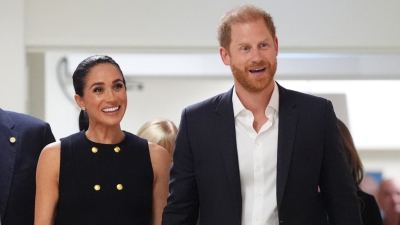
Prince Harry and Meghan Markle Arrive in UK

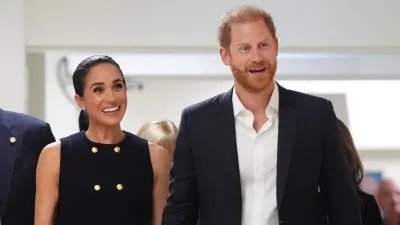
A letter was written on behalf of King Charles III to clarify Prince Harry and Meghan Markle’s status as royal family members amid their return to the United Kingdom.

“The charitable work of the Duke and Duchess is a personal matter for them both and undertaken in their private capacity,” read the letter written by senior officer of the royal household Lord Chamberlain, obtained by multiple outlets including Newsweek and NBC News. “In short, their position is akin to private citizens with commercial and charitable interests.”

The letter continued, “It is well known that in January 2020 the Duke and Duchess stepped down from undertaking representative duties on behalf of The Sovereign, and are no longer working Members of The Royal Family. This position, distinct from the State and Royal duties undertaken by the working Royal Family, and with the personal latitude it brings the couple in respect of financial independence and protection of their privacy as they would wish, will continue to be fully respected.”

The letter added that Harry, 41, and Meghan’s “styles as His and Her Royal Highness remain in abeyance and are not used.”
Advertisement
Prince Harry and Meghan Markle Arrive in UK


Related: Prince Harry and Meghan Markle Arrive Back in U.K. Amid Move: Report

Prince Harry and Meghan Markle have reportedly touched down in the U.K. amid news of their planned move. BBC first reported that the couple were expected to arrive across the pond on Wednesday, August 26, with their two children, Prince Archie, 7, and Princess Lilibet, 5. A spokesperson for the Duke and Duchess of Sussex […]

A Buckingham Palace source confirmed to the outlet that the letter was shared with Harry’s team on Monday, September 7.

Advertisement

Harry and Meghan, 45, stepped down as senior royals in 2020 and subsequently left the U.K. and moved to Montecito, California, with son Prince Archie, now 7. The following year, they welcomed daughter Princess Lilibet, 5.
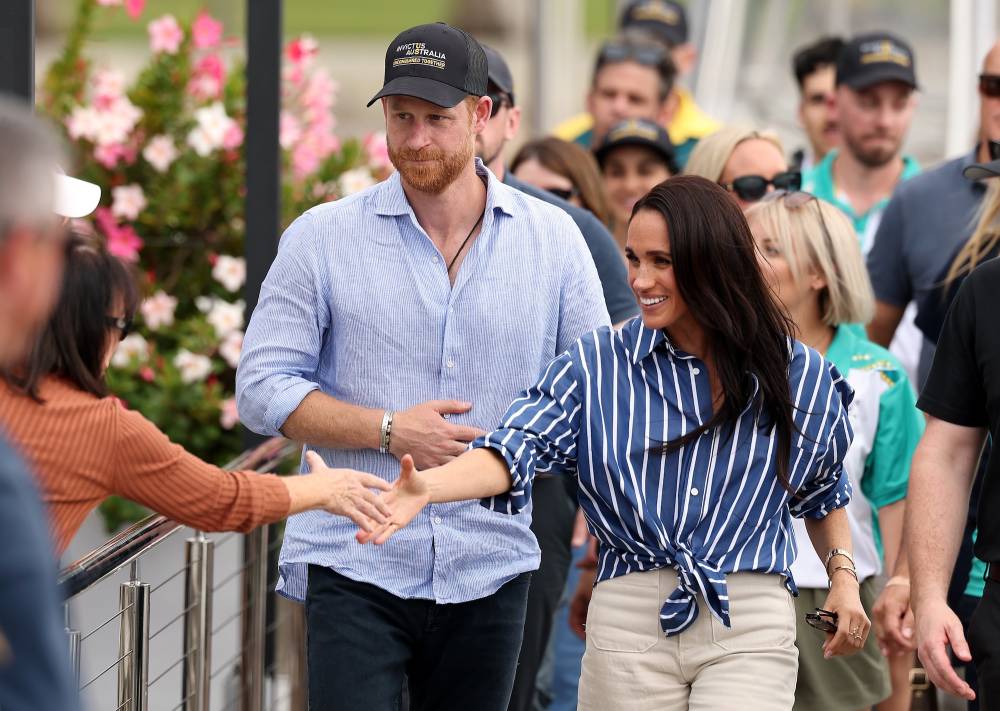
King Charles’ Letter Clarifies Prince Harry and Meghan Markle's Status, HRH Titles After U.K. Return
Cameron Spencer/Getty Images

Six years after their shocking move, Harry and Meghan surprised the world again after they decided to return to the U.K. with their children. Archie and Lilibet are scheduled to begin school there this month.

The pair are expected to keep their home in Montecito, as well as a vacation residence in Portugal.
Advertisement
Meghan-Markle-and-Prince-Harry-GettyImages-2270776572


Related: U.K. Prime Minister Calls Prince Harry and Meghan’s Move a ‘Private Matter’

Prince Harry and Meghan Markle’s forthcoming move back to the United Kingdom is a “private matter,” according to Prime Minister Andy Burnham. Burnham, 56, told the BBC on Thursday, August 20, that the security arrangements for Harry, 41, Meghan, 45, and their two children were “private.” (Harry and Meghan share son Prince Archie, 7, and […]

A source told Us that Harry was “not as happy in the U.S. as he is in the U.K” and that he and Meghan are “open to a new chapter.”

Advertisement

Harry and Meghan were not expected to resume royal duties upon their return across the pond. The Duke of Sussex will be spending more time supporting multiple U.K.-based charities and patronages while Meghan is expected to continue running her As Ever brand overseas. Rumors swirled that Meghan was going to return to acting with a potential role in The Gentlemen season 3. However, nothing has been officially announced.

Source link

Advertisement
Continue Reading
Click to comment

You must be logged in to post a comment Login

Leave a Reply

Entertainment

Tom Cruise’s Vampire Classic Is Officially an HBO Max Hit

Published

on

Tom Cruise’s Vampire Classic Is Officially an HBO Max Hit

The most unexpected Tom Cruise character needs no introduction, and he knows it, for the entire 123 minute run-time of this classic. It’s rare that a film’s final scene, final line, or final needle drop are the best. But in this beloved horror film, all three are the case. Back in 1994, before the movie star became known for stunts and running, Cruise let loose as a melodramatic, seductive, bloodsucking vampire second only to Dracula in infamy. To paraphrase Homer Simpson, every time he’s not on the screen you’re wondering where he is—making his jump-scare entrance in the coda all the more delicious.

This spooky season, you can revisit it in full. The 1994 film adaptation of Anne Rice‘s novel Interview with the Vampire, starring Cruise as well as Brad Pitt, Kirsten Dunst, Christian Slater and Antonio Banderas, is now streaming on HBO Max. Thandiwe Newton and Stephen Rea also play supporting roles. Neil Jordan directed, and Rice herself wrote the screenplay. While the finished product is not necessarily considered the best adaptation of Rice’s Vampire Chronicles, it is a very re-watchable and very 90s film.

Cruise’s Lestat is not the protagonist of the film. That would be Pitt’s character, Louis de Pointe du Lac, a vampire recounting his life to a seemingly objective observer, Slater’s Daniel Molloy, as the gothic narrative plays out in flashback. Louis bemoans his immortal existence through various trials and tribulations: getting turned in the late 18th century, honing and occasionally eschewing his killer instincts, raising a vampire daughter (Dunst’s scene-stealing performance as Claudia), attempting to kill his maker, and worst of all, moving to Paris. The through line in his life post-death? Lestat, Lestat, Lestat, Lestat, Lestat.

Advertisement


Advertisement
Collider Exclusive · Horror Survival Quiz
Which Horror Villain Do You Have the Best Chance of Surviving?
Jason Voorhees · Michael Myers · Freddy Krueger · Pennywise · Chucky

Five killers. Five completely different ways to die — if you’re not smart enough, fast enough, or self-aware enough to avoid it. Only one of them is the villain your particular set of instincts gives you a fighting chance against. Eight questions will figure out which one.

🏕️Jason

🔪Michael

💤Freddy

Advertisement

🎈Pennywise

🪆Chucky

Advertisement

01

Something feels wrong. You can’t explain it — you just know. What do you do?
First instincts are the difference between the survivor and the first act casualty.


Advertisement

02

Where are you most likely to find yourself when things go wrong?
Setting is everything in horror. Where you are determines which rules apply.


Advertisement

03

What is your most reliable survival asset?
Every survivor has a quality the villain didn’t account for. What’s yours?


Advertisement

04

What kind of fear is hardest for you to fight through?
Knowing your weakness is the first step to not dying because of it.


Advertisement

05

You’re with a group when things start going wrong. What’s your role?
Horror movies are brutally clear about who survives group situations and who doesn’t.


Advertisement

06

What’s the horror movie mistake you’re most likely to make?
Honest self-assessment is a survival skill. Denial is not.


Advertisement

07

What’s your best weapon against something that can’t be stopped by conventional means?
Every horror villain has a weakness. The survivors are always the ones who find it.


Advertisement

08

It’s the final scene. You’re the last one standing. How did you make it?
The final survivor always has a reason. What’s yours?


Advertisement

Your Survival Odds Have Been Calculated
Your Best Chance Is Against…

Your instincts, your strengths, and your particular way of thinking under pressure point to one villain you actually have a fighting chance against. Everyone else — good luck.

Advertisement


Camp Crystal Lake · Friday the 13th

Jason Voorhees

Jason is relentless, but he is also predictable — and that is the gap you would exploit.

Advertisement
  • He moves in straight lines toward his target. He doesn’t strategise, doesn’t adapt, doesn’t outsmart. He simply pursues.
  • Your ability to keep moving, use the environment, and resist the panic that freezes most victims gives you a genuine edge.
  • The Crystal Lake survivors were always the ones who stopped running in circles and started thinking about terrain, water, and distance.
  • You think like that. Which means Jason, for all his indestructibility, would face someone who simply refused to be where he expected.


Haddonfield, Illinois · Halloween

Michael Myers

Michael watches before he moves. He is patient, methodical, and almost impossible to detect — until it’s too late for anyone who isn’t paying close enough attention.

Advertisement
  • But you are paying attention. You notice the shape in the window, the car parked slightly wrong, the silence where there should be sound.
  • Michael’s power lies in the invisibility of ordinary suburbia — the fact that nothing ever looks wrong until it already is.
  • Your spatial awareness and instinct to map every room, every exit, and every shadow before you need them is precisely the quality Laurie Strode had.
  • You are not a victim waiting to happen. You are someone who already suspects something is wrong — and acts on it.


Elm Street · A Nightmare on Elm Street

Freddy Krueger

Freddy wins by getting inside your head — using your own fears, your own memories, your own subconscious as weapons against you. That strategy requires a target who can be destabilised.

Advertisement
  • You are harder to destabilise than most. You’ve faced uncomfortable truths about yourself and you haven’t looked away.
  • The survivors on Elm Street were always the ones who understood what was happening and chose to face it rather than flee from it.
  • Freddy’s greatest weakness is that his power evaporates in the presence of someone who refuses to give him the fear he feeds on.
  • Your psychological resilience — the ability to stay grounded when reality itself becomes unreliable — is exactly the quality that keeps you alive here.


Derry, Maine · It

Pennywise

Pennywise is ancient, shapeshifting, and feeds on terror — but it has one critical vulnerability: it cannot function against someone who genuinely stops being afraid of it.

Advertisement
  • The Losers Club didn’t survive because they were braver than everyone else. They survived because they faced their fears together, and faced them honestly.
  • You ask the questions others avoid. You look directly at what frightens you rather than turning away.
  • That directness — the refusal to let fear fester in the dark — is Pennywise’s worst nightmare.
  • It chose the wrong target when it chose you. You are exactly the kind of person whose fear tastes like nothing at all.


Chicago · Child’s Play

Chucky

Chucky’s greatest advantage is that nobody takes him seriously until it’s already too late. He exploits the gap between how something looks and what it actually is.

Advertisement
  • You don’t have that gap. You take threats seriously regardless of how they present — and you never make the mistake of underestimating something because of its size or appearance.
  • Chucky relies on surprise, on the delay between recognition and response. You close that delay faster than almost anyone.
  • Your instinct to treat every unfamiliar thing with appropriate scepticism — rather than dismissing it because it seems absurd — is the exact quality that keeps you breathing.
  • Against Chucky, not laughing is already winning. You are very good at not laughing.

Advertisement

Why Didn’t Tom Cruise Return for the ‘Interview with the Vampire’ Sequel?

Interview with the Vampire was well received. It made $223 million worldwide at the box office in its original release, according to Box Office Mojo, and was nominated for two Academy Awards despite mixed reviews from critics. However, when Warner Brothers went about making the sequel, titled Queen of the Damned after the third book in Rice’s series, Cruise did not reprise the role. “At the time,” Jordan told Entertainment Weekly in 2024, Cruise simply “wasn’t doing sequels.” Now, from franchises like Mission: Impossible to legacy sequels like Top Gun: Maverick and the upcoming Days of Thunder, he can’t get enough. One can imagine that, if Cruise was doing sequels at the time, the second movie would have drawn more from Rice’s second book: The Vampire Lestat.

Queen of the Damned was eventually released in 2002 with Stuart Townsend in the role of the vampire Lestat. Despite a standout performance by singer and actress Aliyah, who tragically died ahead of the premiere, the film only brought in $45 million worldwide. Rice, who initially expressed doubt over Cruise in the role, later recanted and praised his performance. Society had and/would continue to move on to other vampire narratives like Buffy the Vampire Slayer, Twilight, True Blood, and The Vampire Diaries.

Twenty-four years later, however, Rice fans are having a particularly good moment. AMC’s Interview with the Vampire, which stars Jacob Anderson, Sam Reid, Delainey Hayles, Eric Bogosian, and Assad Zaman, and restyled itself as The Vampire Lestat for Season 3, is set to return for a fourth season officially titled Queen of the Damned with Sheila Atim in the titular role as Akasha. The cable network’s other televised Rice adaptation, Mayfair Witches, returns for Season 3 in 2027, with Eliza Scanlen joining Alexandra Daddario in the cast.

Plus, there’s Tom Ford‘s upcoming film adaptation of Rice’s historical novel Cry to Heaven starring Nicholas Hoult, Aaron Taylor-Johnson, Julianne Moore, Hunter Schafer, and Adele to look forward to in the near future. That movie is about the cutthroat (among other things) world of opera singers in 18th-century Italy, not monsters in the more traditional sense. But there’s never been a better time to be an Anne Rice fan.

Advertisement

Stay tuned at Collider for more.

Source link

Continue Reading

Entertainment

Megan Fox’s Most Rewatchable Horror Movie Is Officially Streaming

Published

on

01191246_poster_w780.jpg

Seventeen years ago, Megan Fox played a monster in one of the only 2000s teen comedies that really holds up — and as this satire is not without its screams, it’s also become one of the best horror cult classics of the century. There are very few cringe-worthy millennial jokes, and all in all, the movie has only gotten better with age. Over the last 20 years, audiences have only become more willing to get behind — and really enjoy — a succubus killing creepy guys, finally giving the movie the attention it deserved in 2009.

This fall, you can reevaluate one of cinema’s biggest comebacks for yourself, as Jennifer’s Body is now streaming on Hulu and Pluto TV. The movie also stars Amanda Seyfried, Adam Brody, J.K. Simmons, Amy Sedaris, Kyle Gallner, and Johnny Simmons. In addition, Chris Pratt plays a police officer in one of his first big-screen roles. Jennifer’s Body was directed by Karyn Kusama and written by Diablo Cody, hot on the heels of her Academy Award win for Juno. That’s a winning combination on paper, but it took a while for the result to be appreciated.

Seyfried actually plays the protagonist, a shy high school student aptly named Needy (short for Anita) whose popular best friend Jennifer, played by Fox, has become possessed by a demon and must commit murder to survive. Needy tries to help Jennifer as her killing spree continues. But does she kind of have a point? Who’s actually protecting who? Is this a love story? As with so many things when you’re a teenager, the situation is complicated.

Advertisement


Who’s Your Perfect Classic Rock Band?


Advertisement

Classic Rock Personality Quiz
Who’s Your Perfect
Classic Rock Band?

A Personality Quiz · 10 Questions
Five legendary bands. One perfect match. Answer 10 questions about your personality, attitude, and taste to find out which classic rock icon you truly belong with. Are you raw power, rolling swagger, operatic drama, thunderous riffs, or timeless melody?

AC/DC

Advertisement

👅Rolling Stones

🤘Metallica

👑Queen

🎸The Beatles

Advertisement

Advertisement

01

How do you walk into a room?
Choose the answer that feels most like you.


Advertisement

02

What does your ideal Friday night look like?


Advertisement

03

Advertisement

What’s your philosophy on keeping things simple vs. complex?


Advertisement

04

How would your friends describe your personal style?


Advertisement

05

How do you want to be remembered?


Advertisement

06

What kind of crowd do you want around you?


Advertisement

07

Advertisement

If you were writing a song, what would it be about?


Advertisement

08

What’s your secret to staying relevant over time?


Advertisement

09

You’re playing to 80,000 people. What does your performance look like?


Advertisement

10

Pick the word that best sums up your relationship with rock music.
This is your tiebreaker — choose carefully.


Advertisement

Your Result
Your Perfect Band Is Revealed
Advertisement

Based on your personality, energy, and taste, the classic rock band that matches your soul is…

⚡ AC/DC

Advertisement

You are pure, undiluted rock energy. You don’t need tricks, trends, or theatrical gimmicks — you have something more powerful: a riff that hits like a thunderbolt and an attitude that never wavers. Like AC/DC, you understand that simplicity executed with absolute conviction is its own form of genius. You’re the person in the room who doesn’t overthink it, doesn’t pretend, and never turns the volume down. The highway to hell is a state of mind — and you’ve been on it since day one.

👅 The Rolling Stones

Advertisement

You’ve got swagger that can’t be taught. Rooted in the blues and soaked in street-level attitude, you move through life with a loose, dangerous elegance that draws people in without ever trying too hard. Like the Stones, you’ve seen it all, done most of it, and somehow look better for it. You’re not chasing perfection — you’re chasing truth, groove, and that electric moment when everything clicks. Can’t always get what you want? You tend to get it anyway.

Advertisement

👑 Queen

You are magnificent, and you know it — not from arrogance, but from an unshakeable sense of self that has never needed anyone’s permission. Like Queen, you defy every category people try to place you in. You blend the epic with the intimate, the operatic with the anthemic, the serious with the playful. You live boldly, love fiercely, and perform every aspect of your life as though the whole world is watching. Because sometimes it is. We are the champions — and so are you.

Advertisement

🎸 The Beatles

You have the rarest of gifts: the ability to make something that feels both deeply personal and universally human. Like The Beatles, you’re a natural connector — someone whose warmth, curiosity, and creative instincts draw people together across every divide. You believe in melody, in craftsmanship, and in the quiet power of a song that says exactly what someone needed to hear. You’ve changed the people around you just by being who you are. All you need is love — and you give it generously.

Advertisement

Advertisement

Why Is ‘Jennifer’s Body’ Considered a Cult Classic?

Jennifer’s Body grossed $31 million worldwide, according to Box Office Mojo. As it turns out, Hollywood did not know how to properly market a feminist horror comedy in 2009. According to Cody in a retrospective Vox interview, she wanted to reach female audiences, but the executives focused on trying to get male fans into theaters. Considering how blatantly misandrist Jennifer is, however, that seems like an uphill battle doomed to fail. Critics gave Jennifer’s Body mixed reviews that often missed the film’s intentions as well. “Just what we were waiting for,” opened Roger Ebert‘s original review, “Twilight for boys, with Megan Fox in the Robert Pattinson role, except that I recall Pattinson was shirtless.” And he gave it four out of five stars! Imagine what the people who didn’t like it were saying.

In recent years, especially after the MeToo movement brought the themes to the surface, Jennifer’s Body started to resonate more. It’s still kind of difficult to get certain audiences on board with movies that are feminist and funny. Even the act of insisting that empowerment doesn’t have to be dour makes you sound a little desperate… but it’s true! Anyway, the film has been reevaluated by critics and audiences alike, and is now considered a queer feminist cult classic. It only took a decade and some change!

Stay tuned at Collider for more.

Advertisement


01191246_poster_w780.jpg

Advertisement


Release Date

September 18, 2009

Advertisement

Runtime

107 minutes

Director
Advertisement

Karyn Kusama

Producers

Brad Van Arragon, Daniel Dubiecki, Jason Reitman

Advertisement

Advertisement

Advertisement


Advertisement

Source link

Continue Reading

Entertainment

10 Genuinely Perfect Psychological Thrillers, Ranked

Published

on

Donnie Darko looking directly in the mirror in Donnie Darko’ (2001)

We love watching a good mind game unfold before us. The allure of a psychological thriller lies in seeing how characters inflict psychological terror or overcome it. Throughout movie history, there have been some extraordinary masterpieces of psychological thriller cinema, but only ten are genuinely perfect.

From timeless legends to modern classics, these films have served as the blueprint for the genre over time. Some have haunted our nightmares while others reshaped the rules of cinema. No matter how they played with your mind, these movies continue to be some of the very best of all time.

Advertisement

10

‘Donnie Darko’ (2001)

Donnie Darko looking directly in the mirror in Donnie Darko’ (2001)
Image via Newmarket FIlms

A brilliantly underrated cult classic, Donnie Darko earned its way into psychological thriller history. Written and directed by Richard Kelly, the film follows Donnie (Jake Gyllenhaal), a troubled teenager who, after sleepwalking, narrowly escapes death from a falling jet engine and is guided by Frank (James Duval), a mysterious, grotesque figure in a giant rabbit suit to uncover secrets of time and destiny. Donnie Darko deliberately blurs the line between clinical paranoid schizophrenia and actual supernatural destiny for a powerful coming-of-age drama about teenage isolation, death, and existential purpose.

The brilliance of Donnie Darko lies in being forced to see the world through a troubled teen’s vantage point. Gyllenhaal is pitch perfect in his breakout role, guiding the film to its final destination. By questioning the validity of Frank and the time-travel scenario, or whether it’s all a symptom of his disease, viewers are kept on their toes. His ability to humanize isolation and anxiety is profound. The film is not a flat-out obvious story, as Kelly tasks the audience to personally interpret every single moment and image. With a haunting atmosphere and a brilliant soundtrack that included “Mad World” by Gary Jules, it serves as the perfect aesthetic world-building. Donnie Darko is a terrifyingly accurate story of being misunderstood. ​​​​​​​

Advertisement

9

‘Rosemary’s Baby’ (1968)

Mia Farrow drowning a scream with her hand in Rosemary's Baby
Mia Farrow drowning a scream with her hand in Rosemary’s Baby
Image via Paramount Pictures

One of the most iconic physiological horror thrillers of all time, Rosemary’s Baby took Ira Levin’s novel and transformed it into a stellar and sinister story. Directed by Roman Polanski, the film follows Rosemary Woodhouse (Mia Farrow) and her husband Guy (John Cassavetes) as they move into an old, eerie apartment building in New York City. Rosemary begins to suspect her odd neighbors, Roman and Minnie Castevet (SydneyBlackmer and Ruth Gordon), and her ambitious husband belong to a satanic cult plotting to use her unborn child for evil rituals. A story built on psychological dread and paranoia, Rosemary’s Baby taps into how society strips away a pregnant woman’s personal choice and agency.

With deep-seated social fears, gaslighting, and slow-building paranoia, Rosemary’s Baby traps you in Rosemary’s mind. You’re forced to determine if Rosemary’s fears of a satanic conspiracy are real or just the paranoid delusions of a pregnant woman. As Rosemary is gaslit by everyone she believes she can trust, she loses her autonomy and power, exposing a universal sense of unease. The terror of Rosemary’s Baby is not entirely the threat of giving birth to the devil but the revelation that it’s the unsuspecting individuals around you that make up the cultist monsters. It may be a period piece today, but Rosemary’s Baby remains poignant today. ​​​​​​​

Advertisement

8

‘Mulholland Drive’ (2001)

Naomi Watts and Laura Harring looking upward in Mulholland Drive.
Image via Universal Pictures

Many will try, but no one will have a mind quite like David Lynch. The visionary has given the world some of the most daring projects, including Mulholland Drive. His 21st-century classic is a surrealistic psychological mystery about an actress in Los Angeles and an amnesiac car crash survivor who try to uncover the survivor’s true identity. Betty (Naomi Watts), an ambitious, bright-eyed aspiring actress who’s new to Los Angeles, and Rita (Laura Harring), an enigmatic woman with amnesia, try to piece together Rita’s past, only for reality and illusion to crash into one as Betty and Rita are anything but. Mulholland Drive explores psychological collapse, guilt, and the dark underbelly of Hollywood by depicting a warped nature of ambition, betrayal, and a shattered mind.

Mulholland Drive is a mind-blowing thriller that demands close attention to the story Lynch proposes. The first two-thirds of the film operates as a a fantasy created by a failed and heartbroken actress. She imagines herself as something grander when, in truth, it couldn’t be further from reality. Lynch presumes that severe trauma is shielded by a safer identity, despite who it hurts in the process. Yet the dark landscape of Los Angeles is an illusion she uses to excuse her failure. Mulholland Drive is a brilliant script brought to life flawlessly, earning itself as Lynch’s very best.​​​​​​​

Advertisement

7

‘Black Swan’ (2010)

Nina dancing on stage with red eyes in Black Swan (2010).
Natalie Portman transforms in Black Swan (2010).
Image via Searchlight Pictures

The obsession for artistic perfection is put on full display in the mind-bending Black Swan. A brilliant psychological masterpiece from Darren Aronofsky, Black Swan follows Nina Sayers (Natalie Portman), a dedicated, perfectionist ballerina, who loses her grip on reality when rival dancer Lily (Mila Kunis) earns the role she greatly desires. Nina’s relentless drive for technical perfection turns into a mental prison, pushing her past the brink. Black Swan takes the duality of the White and Black Swan to represent the inner battle between a sheltered, fragile young girl and an indecent, sexually revitalized young woman.

Black Swan represents the mindset all artists experience as they strive for greatness. Nina’s mental breakdown comes from the desire to become the best through perfection as she’s pushed by the pressure of her career, the industry, and her overprotective mother, Erica (Barbara Hershey). Through visceral body horror and spellbinding visual direction, Black Swan puts you squarely inside Nina’s mind. It’s a high-tension, claustrophobic atmosphere that dives deep into Nina’s repressed self and her darker desires. A mesmerizing film that redefined Portman’s career, Black Swan is a true work of art. ​​​​​​​

Advertisement

6

‘Fight Club’ (1999)

A shirtless Brad Pitt as Tyler Durden, surrounded by men in Fight Club
Image via 20th Century Studios

If you love Fight Club, defy the rules and talk about Fight Club! Director David Fincher brought Chuck Palahniuk’s novel to life in perfect fashion. The narrative (Edward Norton) tracks an unnamed office worker whose mundane profession turns him into an insomniac. He finds emotional relief by attending a fake terminal illness support group where he meets Marla Singer (Helena Bonham Carter), another impostor. Then he forms an underground fight club with a charismatic soap salesman named Tyler Durden (Brad Pitt). As the group transforms into a radical, destructive anti-capitalist organization called Project Mayhem, the truth comes out about Tyler’s true twisted identity. The psychological thriller traps the audience in a fractured, unreliable mind where the line between objective reality and delusion blurs.

Fight Club is a fervent mix of psychological turmoil and philosophical dread. Tyler embodies everything the narrator desires to be. He embodies freedom, danger, and confidence that the narrator simply lacks. By the time the big twist is revealed, it all makes complete sense, as Fincher spelled it out in plain sight. That said, it reframes everything prior, making a subsequent watch more than worthwhile. Rather than just a critique of modern life, consumerism, and corporate monotony that creates a numb society, the chaotic nature and danger of a broken identity. Fight Club remains a cinematic game changer. ​​​​​​​

Advertisement

5

‘The Shining’ (1980)

Jack Nicholson smiling while peeking through a door in The Shining
Image via Warner Bros.

Even though Stephen King wasn’t completely satisfied with The Shining, it remains a sensational work. Directed by Stanley Kubrick, the big-screen adaptation follows Jack Torrance (Jack Nicholson) as he takes a job as a winter caretaker of the Overlook Hotel. Moving in with his wife, Wendy (Shelley Duvall), and their son, Danny (Danny Lloyd), they become isolated and trapped within the confines of the estate where evil spirits exploit Jack’s past struggles with alcohol and anger, slowly driving him to madness. A haunting portrayal of addiction, trauma, and isolation, The Shining is a masterclass in psychological horror.

The Shining uses the hotel to represent the sick cycle of violence and cruelty that traps people who ignore the past. Using Sigmund Freud’s concept of “the uncanny,” Kubrick built the locale to evoke the unsettling feeling of the familiar feeling wrong. Every set piece, architectural element, and visual trigger dread and unease. The Shining taps into pure dread and fear, thanks to some of the moldy iconic moments in horror history. From the twins to the bloody elevator, “redrum” to “Here’s Johnny!” The Shining remains a profound part of cinematic history. ​​​​​​​


Advertisement


Collider Exclusive · Horror Survival Quiz
Which Horror Villain Do You Have the Best Chance of Surviving?
Jason Voorhees · Michael Myers · Freddy Krueger · Pennywise · Chucky
Advertisement

Five killers. Five completely different ways to die — if you’re not smart enough, fast enough, or self-aware enough to avoid it. Only one of them is the villain your particular set of instincts gives you a fighting chance against. Eight questions will figure out which one.

🏕️Jason

🔪Michael

💤Freddy

🎈Pennywise

Advertisement

🪆Chucky

Advertisement

01

Something feels wrong. You can’t explain it — you just know. What do you do?
First instincts are the difference between the survivor and the first act casualty.


Advertisement

02

Where are you most likely to find yourself when things go wrong?
Setting is everything in horror. Where you are determines which rules apply.


Advertisement

03

What is your most reliable survival asset?
Every survivor has a quality the villain didn’t account for. What’s yours?


Advertisement

04

What kind of fear is hardest for you to fight through?
Knowing your weakness is the first step to not dying because of it.


Advertisement

05

You’re with a group when things start going wrong. What’s your role?
Horror movies are brutally clear about who survives group situations and who doesn’t.


Advertisement

06

What’s the horror movie mistake you’re most likely to make?
Honest self-assessment is a survival skill. Denial is not.


Advertisement

07

What’s your best weapon against something that can’t be stopped by conventional means?
Every horror villain has a weakness. The survivors are always the ones who find it.


Advertisement

08

It’s the final scene. You’re the last one standing. How did you make it?
The final survivor always has a reason. What’s yours?


Advertisement
Your Survival Odds Have Been Calculated
Your Best Chance Is Against…

Your instincts, your strengths, and your particular way of thinking under pressure point to one villain you actually have a fighting chance against. Everyone else — good luck.

Advertisement


Camp Crystal Lake · Friday the 13th

Jason Voorhees

Jason is relentless, but he is also predictable — and that is the gap you would exploit.

  • He moves in straight lines toward his target. He doesn’t strategise, doesn’t adapt, doesn’t outsmart. He simply pursues.
  • Your ability to keep moving, use the environment, and resist the panic that freezes most victims gives you a genuine edge.
  • The Crystal Lake survivors were always the ones who stopped running in circles and started thinking about terrain, water, and distance.
  • You think like that. Which means Jason, for all his indestructibility, would face someone who simply refused to be where he expected.

Advertisement


Haddonfield, Illinois · Halloween

Michael Myers

Michael watches before he moves. He is patient, methodical, and almost impossible to detect — until it’s too late for anyone who isn’t paying close enough attention.

  • But you are paying attention. You notice the shape in the window, the car parked slightly wrong, the silence where there should be sound.
  • Michael’s power lies in the invisibility of ordinary suburbia — the fact that nothing ever looks wrong until it already is.
  • Your spatial awareness and instinct to map every room, every exit, and every shadow before you need them is precisely the quality Laurie Strode had.
  • You are not a victim waiting to happen. You are someone who already suspects something is wrong — and acts on it.

Advertisement


Elm Street · A Nightmare on Elm Street

Freddy Krueger

Freddy wins by getting inside your head — using your own fears, your own memories, your own subconscious as weapons against you. That strategy requires a target who can be destabilised.

  • You are harder to destabilise than most. You’ve faced uncomfortable truths about yourself and you haven’t looked away.
  • The survivors on Elm Street were always the ones who understood what was happening and chose to face it rather than flee from it.
  • Freddy’s greatest weakness is that his power evaporates in the presence of someone who refuses to give him the fear he feeds on.
  • Your psychological resilience — the ability to stay grounded when reality itself becomes unreliable — is exactly the quality that keeps you alive here.

Advertisement


Derry, Maine · It

Pennywise

Pennywise is ancient, shapeshifting, and feeds on terror — but it has one critical vulnerability: it cannot function against someone who genuinely stops being afraid of it.

  • The Losers Club didn’t survive because they were braver than everyone else. They survived because they faced their fears together, and faced them honestly.
  • You ask the questions others avoid. You look directly at what frightens you rather than turning away.
  • That directness — the refusal to let fear fester in the dark — is Pennywise’s worst nightmare.
  • It chose the wrong target when it chose you. You are exactly the kind of person whose fear tastes like nothing at all.

Advertisement


Chicago · Child’s Play

Chucky

Chucky’s greatest advantage is that nobody takes him seriously until it’s already too late. He exploits the gap between how something looks and what it actually is.

  • You don’t have that gap. You take threats seriously regardless of how they present — and you never make the mistake of underestimating something because of its size or appearance.
  • Chucky relies on surprise, on the delay between recognition and response. You close that delay faster than almost anyone.
  • Your instinct to treat every unfamiliar thing with appropriate scepticism — rather than dismissing it because it seems absurd — is the exact quality that keeps you breathing.
  • Against Chucky, not laughing is already winning. You are very good at not laughing.
Advertisement

4

‘Get Out’ (2017)

Chris sits down and cries in Get Out
Image via Universal Pictures
Advertisement

The horror genre has been elevated thanks to the genius of Jordan Peele and Get Out. The subversive thriller follows Chris Washington (Daniel Kaluuya), a young Black photographer, who uncovers a terrifying, racially motivated conspiracy when he visits his white girlfriend’s, Rose Armitage (Allison Williams), family estate. He uncovers a terrifying truth that the Armitage family runs a sinister cult in which Black individuals are lured to the estate in order to surgically transplant the consciousness of wealthy white buyers into their healthy bodies, trapping the original victims in a paralyzed mental state known as the “sunken place.”

Get Out uses horror and satire to critique modern racism, microaggressions, cultural appropriation, and the commodification of Black bodies in America. Locked into Chris’ perspective, the audience is forced to see and feel every microaggression and racist comment. The horror comes from the complete and utter gaslighting as how the “villains” cause Chris and the audience to question if they are truly a present threat. Get Out flips the horror tropes of dark locales into a bright, out-in-the-open seemingly safe suburban neighborhood. Get Out’s perfect blend of comedy, mystery, and heavy social commentary weaves a modern classic.

3

‘Psycho’ (1960)

Anthony-Perkins smiling at the camera in Psycho Image via William Creamer – © MPTV
Advertisement

Alfred Hitchcock proved that with one big twisted decision, the trajectory of cinema would change forever. Bringing Robert Bloch‘s novel to life, Psycho follows Marion Crane (Janet Leigh), who steals $40,000 and escapes to the remote Bates Motel, run by the fascinatingly intriguing Norman Bates (Anthony Perkins). After being brutally stabbed in the shower the next morning, Marion’s sister Lila (Vera Miles) and boyfriend Sam Loomis (John Gavin) search for her, only to discover the truth about Norman and the Bates Motel. An iconic film that defined horror within pop culture, Psycho subverted audiences’ attention while providing a masterful exploration of the human psyche.

Psycho is a brilliant story, but the film soars to great heights thanks to Hitchcock’s risky decision to kill off his star within the film’s first act. In doing so, it forces the audience to be on their toes as anything can and will happen. Leaving them in suspense became the film’s greatest asset. Psycho is grounded in ordinary reality, where a seemingly shy, polite, and regular guy is anything but. Norman serves as the ultimate ordinary monster that may be lurking around the corner. With sensational direction and a shrieking score from Bernard Herrmann, Psycho is fear and terror to the max, serving as an inspiration for the genre.

2

‘Inception’ (2010)

Joseph Gordon-Levitt as Arthur fighting a man in a spinning hallway in Inception.
Image via Warner Bros.
Advertisement

There are some extraordinary films across multiple genres on Christopher Nolan‘s resume, but when it comes to psychological thrillers, it doesn’t get much better than Inception. A sci-fi action thriller, Dom Cobb (Leonardo DiCaprio) commits corporate espionage by infiltrating his target’s mind during shared sleep states. Hired by Saito (Ken Watanabe), Dom is offered a clean slate and a reunion with his children should he commit the perfect crime: perform inception by planting a new idea in the mind of his rival CEO, Robert Fischer (Cillian Murphy). Assembling a specialized team to commit the mission, Cobb and company must maintain stability across deeper dream layers as he’s haunted by psychological projections of his dead wife, Mal (Marion Cotillard).

A richly layered dream drama, Inception uses a high-concept, high-stakes framework to pull off a brilliant sci-fi heist movie. Nolan builds the perfect architecture to play within. Guilt, grief, and self-sabotage play the role of the antagonist, as the only way Cobb can succeed is to defeat his own demons. Inception weaves the mechanics of the human subconscious directly into the narrative. Nolan evokes a unique pacing structure as time slows in each layer, making the pressure-cooker race against the clock even harder to sustain. Using Nolan’s signature production style, practical sets and stunts give the film a tangible feel. Inception is the perfect psychological thriller because we’re still debating the ending and that damn spinning top.

1

‘The Silence of the Lambs’ (1991)

The-Silence-of-the-Lambs-Anthony-Hopkins-Jodie-Foster Image via Orion Pictures
Advertisement

Cinema has some of the greatest villains, but no one is more terrifying than Hannibal Lecter (Anthony Hopkins). And yet, even behind bars, he is a terrifying threat because of the incredible mind games he plays. In The Silence of the Lambs, FBI trainee Clarice Starling (Jodie Foster) is assigned to track down serial killer Buffalo Bill (Ted Levine), who abducts and skins women. To get inside the killer’s mind, she interviews Hannibal in exchange for offering her own personal traumas from her past. The Silence of the Lambs is a tense battle of wits and psychological leveraging that gave the horror genre a seat at the awards table.

The Silence of the Lambs is pure horror, but rather than jump scares, the terror and suspense come through psychological warfare. It’s a truly twisted tale that is acted to the max. Foster and Hopkins deliver career-defining performances that set the gold standard for this subgenre of crime thriller. Director Jonathan Demme opts for dread over gore, stillness over chaos, and claustrophobic tension over high-stakes action. Earning the Big Five at the Academy Awards, the thriller doesn’t get more thrilling than this film.


01419154_poster_w780-1.jpg
Advertisement


The Silence of the Lambs


Advertisement

Release Date

February 14, 1991

Runtime

119 minutes

Advertisement

Director

Jonathan Demme

Advertisement

Writers

Ted Tally, Thomas Harris

Advertisement


Advertisement


Advertisement

Source link

Advertisement
Continue Reading

Entertainment

The 10 Best Disaster Movies in Film History

Published

on

Jackson Davis (John Cusack) shines a flashlight in a flooded corridor in '2012'.

They say when you see a train wreck or a car crash, you can’t look away. It’s the fascination of seeing a disaster unfold that you’re not a part of. Our curiosity paints a picture of what happened and what the aftermath might be. That’s why disaster movies are so alluring—you get the entire story laid out for you!

Hollywood has provided cinema with some of the greatest disaster films of all time. From human-made errors to natural devastations, these disasters have provided a brilliant source of thrills that we simply can’t look away from. Though these may be stressful scenarios, the magic of cinema has made them entirely entertaining. From pure thriller to romance and parody, the range of styles proves that disaster flicks have no bounds.

Advertisement

1

‘2012’ (2009)

Jackson Davis (John Cusack) shines a flashlight in a flooded corridor in '2012'.
Jackson Davis (John Cusack) shines a flashlight in a flooded corridor in ‘2012’.
Image via Sony Pictures Releasing

We can look back at the year 2012 and chuckle at the paranoia that the world might end in the same way it could have due to Y2K. But in 2009, the premise of the film 2012 did give some of us quite a fright. Directed by Roland Emmerich, the epic disaster film follows a global cataclysm that destroys the planet as massive solar storms heat the Earth’s core. Geoscientist Adrian Helmsley (Chiwetel Ejiofor) warns world leaders of impending doom, leading to the revelation of massive arks intended to preserve humanity. Meanwhile, divorced limousine driver and novelist Jackson Curtist (John Cusack) races to save his family while facing off against massive earthquakes, volcanic eruptions, and megatsunamis that topple cities.

Drawn from the 2012 phenomenon and Mayan calendar prediction that forecasted the end of the world on December 21, 2012, the film played into our paranoia about what could happen if we don’t take care of our planet in the present. 2012 went full tilt, as anything that could happen did happen. Emmerich ramped up the action, introducing every apocalyptic trope that came into play in order to allow a high-octane global destruction story. Watching beloved landmarks crumble before one’s eyes serves as a wake-up call about the potential of total destruction. As pure entertainment, 2012 is a genuine popcorn flick whose greatest strength is its shock-and-awe. It’s the most disastery film in history.

Advertisement

2

‘Airplane!’ (1980)

Ted Striker and Otto, the inflatable pilot, attempt to land a plane while Dr. Rumack watches in 'Airplane!'
Ted Striker and Otto, the inflatable pilot, attempt to land a plane while Dr. Rumack watches in Airplane!
Image via Paramount Pictures

If there is a hall of fame for the greatest comedies of all time, you can most certainly expect Airplane! to appear. The film delivered non-stop laughs, but at its core, it is a serious disaster film set on a plane. The satirical comedy, written and directed by David Zucker, Jim Abrahams, and Jerry Zucker, follows Ted Striker (Robert Hays), a traumatized former fighter pilot with a fear of flying, who boards a commercial flight to win back the heart of his flight-attendant ex-girlfriend, Elaine Dickinson (Julie Hagerty). As the passengers and crew onboard fall violently ill with food poisoning, Ted must overcome his trauma, take control in the cockpit, and land the plane safely. Surely, you can’t be serious!

The spoof comedy parodies the 70s movie genre, utilizing brilliant visual gags, on-the-nose puns, and rapid-fire absurdist humor. A product of its time, Airplane! continues to keep us laughing to this day. A major reason for the film’s success is tasking serious dramatic actors, including Leslie Nielsen, Robert Stack, and Lloyd Bridges, to deliver silly performances with deadpan seriousness. In turn, it made Airplane! a quotable hit. Though some bits may not have aged quite as well, they still make us laugh. Through high-stakes action and low-seriousness delivery, Airplane! is a literal ticking-clock scenario of peril in the sky. The film reinvented the parody genre while launching a sequel and other like-minded genre-spoofs, many starring Nielsen. I dare you not to chuckle when you’re at the airport and hear the announcements about loading zones.

Advertisement

3

‘Armageddon’ (1998)

Ben Affleck talks to someone off-screen and gestures with his hands on an oil rig in Armageddon.
Image via Buena Vista Pictures

Every so often, two studios release very similar movies around the same time. Like Pixar and DreamWorks tackled the insect game with A Bug’s Life and Antz in 1998, that same calendar year saw two rival meteor disaster films, Touchstone Pictures’ Armageddon and Paramount Pictures’ Deep Impact. It was the former that was the more superior film, though less accurate. In the Michael Bay-directed film, a rogue asteroid the size of Texas is on a collision course with Earth, threatening humanity if it crashes within 18 days. NASA executive Dan Truman (Billy Bob Thornton) assembles a ragtag group of deep-core oil drillers, led by Harry Stamper (Bruce Willis), to split the rock in two.

A story of heroism from ordinary people, determination, and the ultimate sacrifice, Armageddon is a high-octane thriller that filled the summer box office slot. With Bay in control, Armageddon was a sleek and visually spectacular film. Though science is treated as an afterthought, practicality means little when you’re watching everyday people do the extraordinary. By compiling a group of individuals you resonate with, the stakes are at an astronomical high. Of course, there must be a convenient love story between Harry’s daughter, Grace (Liv Tyler), and his employee, A.J. Frost (Ben Affleck), to make the mission even more personal. Armageddon is also responsible for “I Don’t Want to Miss a Thing” by Aerosmith, so the disaster film was anything but! A great popcorn flick of the time, Armageddon is pop culture entertainment to the max.

Advertisement

4

‘A Night to Remember’ (1958)

Robbie Lucas, played by John Merivale, carrying an unconscious passenger in A Night to Remember
Image via The Rank Organisation

The sinking of the Titanic was a source of storytelling long before the iconic 1997 film we’ll discuss soon. In fact, it was the source of a 1958 film directed by Roy Ward Baker. The historical disaster film A Night to Remember showcases the final hours of the ocean liner’s maiden voyage. Tracking the events as they unfold in real time, the film depicts the disaster through the eyes of Second Officer Charles Lightoller (Kenneth More), as well as those of the passengers and crew. A Night to Remember showcases the response to the crisis across all social classes, capturing the profound bravery through extreme panic.

Based on Walter Lord‘s nonfiction book of the same name, A Night to Remember is a film endorsed by historians and survivors for its cinematic accuracy. It’s the ultimate battle between humans and nature. What was believed to be an unsinkable vessel was anything but. A Night to Remember rejected the standard Hollywood melodrama in favor of a documentary-style, immersive experience that prioritizes the authentic experiences of the individuals on board. Baker builds slow tension and dread through practical special effects, black-and-white cinematography, and realistic performances. A Night to Remember is a perfect companion film to the ’90s masterpiece, offering an important perspective.

Advertisement

5

‘Contagion’ (2011)

Jennifer Ehle wears as hazmat suit as Dr. Ally Hextall in Contagion (2011)
Image via Warner Bros

There have been quite a few virus-centric disaster films, but none as powerful as 2011’s Contagion. A film that has grown more terrifying over time, the Steven Soderbergh medical thriller depicts a rapidly spreading lethal airborne virus that spreads across the globe. As ordinary people are directly affected by the disease, the CDC’s Dr. Ellis Cheever (Laurence Fishburne) and Dr. Erin Mears (Kate Winslet) race to track it, while Dr. Ally Hextall (Jennifer Ehle) works to develop a vaccine that will be distributed only through a birthdate lottery system. A narrative that describes how paranoia is born from conspiracy and corporate power, Contagion shows the dramatic cost of a domino effect.

Rather than playing into the sanitized Hollywood disaster-flick trope seen in the ’90s, Contagion explores chilling, scientifically rigorous truths. With its real-world biology, accurate transmission, and the slow, methodical, and bureaucratic struggles for an overnight vaccine miracle, Contagion was a prophetic film that needed to be viewed in real time. The most terrifying element of Contagion is how easily the societal breakdown arrives. Rather than purely shown through action, the illustration of societal hierarchy, slow distribution, and the spread of misinformation can be just as lethal as the virus itself. Contagion‘s eerie precision makes it a sensational film that has aged like fine wine. Boasting a brilliant ensemble, featuring Matt Damon, Jude Law, Marion Cotillard, Bryan Cranston, and Gwyneth Paltrow, Contagion is a must-watch.

Advertisement

6

‘The Impossible’ (2012)

Tom Holland Naomi Watts The Impossible
Tom Holland and Naomi Watts in The Impossible (2012).
Image via Warner Bros. Pictures

Natural disasters are one of society’s greatest fears. Mother Nature can be unpredictable, but there are certain weather events we can avoid. Others, like a tsunami, have a lower chance of survival. And then came The Impossible, which proved otherwise. Inspired by true events and the experience of Maria Belon and her family during the 2004 Indian Ocean tsunami in Thailand, The Impossible is a harrowing story of resilience, survival, and true grit. Maria (Naomi Watts) and her son Lucas (Tom Holland) are dramatically separated from her husband, Henry (Ewan McGregor), and their sons, Thomas and Simon, when the massive tsunami strikes. The Impossible depicts the struggle for reunion as they navigate widespread devastation, life-changing injuries, and overwhelming trauma. With powerhouse performances from Watts and Holland, who makes his film debut, The Impossible is one of the most stressfully hopeful disaster dramas of all time.

The Impossible showcases how a fun family vacation can change in the blink of an eye. Director J.A. Bayona leaves little to the imagination, grounding the film in immense realism. He drops you into the inescapably rough waters before shifting gears toward a genuine human story. Through a micro-examination of the family rather than a more outward approach of the local victims, The Impossible is a very specific ordeal. The Impossible is a powerful film thanks in part to the visceral imagery, remarkable performances, and the fight against overwhelming odds. You may not be able to escape an event like this, but The Impossible brings a glimmer of hope through its story of perseverance.

Advertisement

7

‘The Poseidon Adventure’ (1972)

Reverend Scott (Gene Hackman) mourns Belle (Shelley Winters) in 'The Poseidon Adventure'
Reverend Scott (Gene Hackman) mourns Belle (Shelley Winters) in ‘The Poseidon Adventure’
Image via 20th Century Studios

In 1972, Ronald Neame adapted Paul Gallico‘s 1969 novel The Poseidon Adventure into a cinematic event. The film depicts the titular aging luxury ocean liner on its voyage from New York City to Greece. Just after midnight on New Year’s Eve, the S.S. Poseidon is rocked by a rogue wave, capsizing the ship. As many passengers drown while awaiting help in the ballroom, Reverend Frank Scott (Gene Hackman) leads a small group to climb through the upside-down interior, facing off against raging fires, rising water, and block passages in hopes of safety. A high-stakes survival thriller, The Poseidon Adventure was simply groundbreaking

The Poseidon Adventure could have been a disaster with its epic all-star cast, which included five Oscar winners: Hackman, Jack Albertson, Ernest Borgnine, Red Buttons, and Shelley Winters. Instead, it was a brilliant, simply unpredictable disaster film. Unlike other disaster films, this one has a buffer when it comes to its stars. With this stacked cast, major characters can and will die. The original story allowed for constant, realistic danger at every turn. With practical sets, real water and fire, and physical stunts performed by its stars, The Poseidon Adventure is a thrill of a watch. Though a sequel and remakes were made, nothing holds up as well as the original.

Advertisement

8

‘The Towering Inferno’ (1974)

Partygoer, on fire, jumps out of the window in 'The Towering Inferno'
Partygoer, on fire, jumps out of the window in ‘The Towering Inferno’
Image via 20th Century Fox/Warner Bros.

Nothing is more terrifying than the thought of being stuck in a skyscraper during a major disaster. That fear is realized in 1974’s The Towering Inferno. Directed by John Guillermin, the all-star disaster film is set in the lavish, state-of-the-art 138-story building called the Glass Tower in San Francisco, where a massive fire breaks out during the grand opening dedication party. The building’s architect, Doug Roberts (Paul Newman), and fire chief Michael O’Hallorhan (Steve McQueen) work together to fight the blaze, rescue the trapped attendees, and survive the collapsing high-rise. A practical high-stakes thriller, The Towering Inferno is a disaster flick as you’ve never seen before.

The Towering Inferno became a groundbreaking hit thanks to its special effects. Using real Fire and Water, it put the actors right into the danger zone. Through highly detailed miniatures and massive sets, the film felt tangible. A dual production feat from 20th Century Fox and Warner Bros., The Towering Inferno featured one of the strongest ensembles in cinema, including Fred Astaire, Richard Chamberlain, Faye Dunaway, William Holden, and Robert Wagner, among others. The Towering Inferno constantly keeps the action moving and the audience on high alert. A spectacle from start to finish, The Towering Inferno remains one of the most influential disaster films of the decade.


Advertisement


Collider Exclusive · Oscar Best Picture Quiz
Which Oscar Best Picture
Is Your Perfect Movie?

Parasite · Everything Everywhere · Oppenheimer · Birdman · No Country
Advertisement

Five Oscar Best Picture winners. Five completely different visions of what cinema can be — and what it can do to you. One of them is the film that was made for the way your mind works. Ten questions will figure out which one.

🪜Parasite

🌀Everything Everywhere

☢️Oppenheimer

🐦Birdman

Advertisement

🪙No Country for Old Men

Advertisement

01

What kind of film experience do you actually want?
The best movies don’t just entertain — they leave something behind.


Advertisement

02

Which idea grabs you most in a film?
Great films are driven by a central obsession. What’s yours?


Advertisement

03

How do you like your story told?
Form is content. The way a story is shaped changes what it means.


Advertisement

04

What makes a truly great antagonist?
The opposition defines the protagonist. What kind of opposition fascinates you?


Advertisement

05

What do you want from a film’s ending?
The final note is the one that lingers. What do you want it to sound like?


Advertisement

06

Which setting pulls you in most?
Where a film takes place shapes everything — mood, stakes, what’s even possible.


Advertisement

07

What cinematic craft impresses you most?
Every great film has a signature — a technical or artistic element that makes it unmistakable.


Advertisement

08

What kind of main character do you root for?
The protagonist is the lens. Who you choose to follow says something about you.


Advertisement

09

How do you feel about a film that takes its time?
Pace is a choice. Some films sprint; others let tension accumulate slowly, deliberately.


Advertisement

10

What do you want to feel walking out of the cinema?
The best films leave a mark. What kind of mark do you want?


Advertisement
The Academy Has Decided
Your Perfect Film Is…

Your answers have pointed to one Oscar Best Picture winner above all others. This is the film that was made for the way your mind works.

Advertisement

Parasite

You are drawn to films that operate on multiple levels simultaneously — that begin in one genre and quietly, brilliantly migrate into another. Bong Joon-ho’s Parasite is a film about class, desire, and the architecture of inequality that manages to be darkly funny, deeply suspenseful, and genuinely shocking across a single extraordinary running time. Your instinct is for cinema that hides its true intentions until the moment it’s ready to reveal them. Parasite is exactly that — a film that rewards close attention and punishes assumptions, right up to its devastating final image.

Advertisement

Everything Everywhere All at Once

You want it all — and this film gives you all of it. The Daniels’ Everything Everywhere All at Once is one of the most maximalist films ever made: action comedy, multiverse sci-fi, family drama, existential crisis, and a genuinely earned emotional core that sneaks up on you amid the chaos. You are someone who responds to ambition, who doesn’t want cinema to choose between being entertaining and being meaningful. This film refuses that choice entirely. It is overwhelming by design, and its overwhelming nature is precisely the point — because the feeling of being crushed by infinite possibility is exactly what it’s about.

Advertisement

Oppenheimer

You are drawn to cinema on a grand scale — films that understand history not as a backdrop but as a force, and that place their characters inside that force and watch what happens. Christopher Nolan’s Oppenheimer is a film about the terrifying gap between what we can do and what we should do, told with the full weight of one of the most consequential moments in human history behind it. You want your films to feel important without feeling self-important — to earn their ambition through sheer craft and the gravity of their subject. Oppenheimer does exactly that. It is enormous, complicated, and refuses easy comfort.

Advertisement

Birdman

You are drawn to films that foreground their own construction — that make the how of the filmmaking part of the what it’s about. Alejandro González Iñárritu’s Birdman, shot to appear as a single continuous take, is cinema examining itself through the cracked mirror of a fading actor’s ego. You respond to formal daring, to the feeling that a film is doing something that probably shouldn’t be possible. Michael Keaton’s performance and Emmanuel Lubezki’s restless camera create something genuinely unlike anything else — a film that is simultaneously about creativity, relevance, self-destruction, and the impossibility of ever truly knowing if your work means anything at all.

Advertisement

No Country for Old Men

You are drawn to cinema that trusts silence, that refuses to explain itself, and that treats dread as a form of meaning. The Coen Brothers’ No Country for Old Men is a film about the arrival of a new kind of evil — implacable, arbitrary, and utterly indifferent to the moral frameworks we use to make sense of the world. It is one of the most formally controlled films ever made, and its controlled restraint is what makes it so terrifying. You want your films to haunt you, not comfort you. You are not interested in resolution if resolution would be dishonest. No Country for Old Men is honest in a way that most cinema never dares to be.

Advertisement

9

‘Titanic’ (1997)

Rose (Kate Winslet) hanging over the side of the Titanic trying to hold on in 'Titanic'
Rose (Kate Winslet) hanging over the side of the Titanic trying to hold on in ‘Titanic’
Image via Paramount Pictures
Advertisement

And now, we turn to the pinnacle film about the greatest sea disaster, Titanic. Directed by James Cameron, the Oscar-winning film depicts the maiden voyage of the Ship of Dreams through the eyes of an elderly woman named Rose (Gloria Stuart), who recounts her experience to treasure hunters. On board, upper-class Rose DeWitt Bukater (Kate Winslet) begins a forbidden affair with lower-class Jack Dawson (Leonardo DiCaprio). As their romance heats up, the Titanic strikes an iceberg, causing a devastating tragedy for all on board. A cinematic marvel, Titanic might possibly be the greatest disaster film in Hollywood history.

Titanic is a brilliant romantic film, but its core is rooted in its disaster story. By anchoring the terrifying mechanics of a sinking ship to the romance between Jack and Rose, Cameron gives audiences a reason to care about individual lives during the terrifying ordeal. It humanizes the tragedy by the time disaster strikes. The film humanizes the story by telling a tale of classism in which status dictated potential for survival. By highlighting the stark realities of class barriers during evacuation and the chilling aftermath on the freezing water, Titanic is a complete drama. Cameron’s attention to detail made the film a groundbreaking feat. Cameron conducted deep-sea dives to film the actual wreck, which paired perfectly with the cinema technology. Titanic is a timeless classic.

10

‘Twister’ (1996)

Bill Paxton tries to alert everyone to the oncoming tornado in Twister (1996).
Image via Warner Bros.
Advertisement

Not since The Wizard of Oz has a tornado been such an iconic piece of pop culture. Directed by Jan de Bont and written by Michael Crichton and Anne-Marie Martin, the 1996 blockbuster Twister follows Dr. Jo Harding (Helen Hunt) and a group of storm chasers in Oklahoma who brave extreme tornadoes to deploy a groundbreaking weather-research device named “Dorothy.” The team races against a well-funded corporate rival (Cary Elwes) who stole her ex-husband’s Bill Harding (Bill Paxton), design to try and beat them to the scientific breakthrough. Having past trauma of watching her father get swept away by an F5 tornado, Jo is motivated by the desire to bring safety to win. A relentless thriller, Twister merged a compelling and emotionally grounded story with a high-octane action narrative.

Unlike many disaster films that have their characters run away from the disaster, Twister has them racing straight into it. Twister is a tale about chasing danger straight on. The film focuses on the human story in relation to the great weather event. Though Jo and Billy may be separated, they’re together on a mission, reigniting the pressure cooker of love. To bring the tornado to life, Industrial Light & Magic used innovative particle simulations to make them feel practical. Combined with physical wind machines and practical debris, the action feels immersive. It was such a groundbreaking special effect that it even inspired a Universal Studios attraction. One of the defining disaster films of the decade, Twister’s legacy lives on today thanks to its legacy sequel.


twister-movie-poster.jpg
Advertisement


Twister

Advertisement


Release Date

May 10, 1996

Runtime
Advertisement

113 minutes

Writers

Anne-Marie Martin, Michael Crichton

Advertisement


Advertisement

Advertisement


Advertisement

Source link

Continue Reading

Entertainment

Hilary Duff Wore These Exact Adidas Sneakers That Are Chic in 2026

Published

on

fall street style

Us has affiliate partnerships. We receive compensation when you click on a link and make a purchase. Learn more!

When one A-lister wears a shoe style, we take notes. When all of our favorite celebrity rich moms wear the same one, we add it to our cart immediately, as is the case with Hilary Duff‘s latest look. Her chic sneakers nail the low-profile Adidas trend, and we found her exact pair at Nordstrom!

These Adidas Japan Low-Top Sneakers are Duff’s pick for sporty-luxe style. She rocked them with a tank, leggings and a tote bag for the easiest errand outfit. But it’s not just Duff. We’ve also spotted Anne HathawayMariska Hargitay and Nicole Kidman wearing similar pairs, proving it to be the rich mom ‘it’ look of 2026.

Advertisement

Get the Adidas Japan Low Top Sneakers for $130 at Nordstrom! Please note, prices are accurate at the date of publication but are subject to change.

With a sleek silhouette, a classic side-stripe logo and perforated detailing around the toes, these kicks are stylish by default. They combine soft suede and tumbled leather, a mixed-textile moment that channels retro and modern vibes at the same time.

Better yet, the perforations keep them breathable, and the insole is plush enough for long walks. One shopper said it “literally molds” to your foot while another said they can “walk for miles,” so do with that what you will. Whether you’re running errands or touring Europe, you’ll be glad you chose these timeless everyday sneakers.

We love the look of these Duff-approved low-tops with a tee and wide-leg jeans, but you can easily dress them up with a blouse and trousers. A five-star reviewer wrote, “They look great with anything. Can wear them anywhere from the office to a day or night out.”

Advertisement

To make things sweeter, they come in 22 colors, all rich-mom-coded. Some are even on sale, so don’t miss out on this celeb-loved style that’s dominating celebrity, rich mom and celebrity rich mom wardrobes everywhere!

Get the Adidas Japan Low Top Sneakers for $130 at Nordstrom! Please note, prices are accurate at the date of publication but are subject to change.

UsNow Fall Sale Alert: These chic fashion finds are up to 60% off – plus free shipping

Welcome to fall with our biggest sale of the season. Our favorite dresses, tops, handbags, and shoes are all on sale + free shipping. Inventory is limited so hurry before they’re gone.

Advertisement

Shop the UsNow Fall Sale —>

fall street style


Related: Ditch the Boots — Rich Girls Are Wearing These Luxe-Looking Shoes in 2026

When September hits, you may think it’s time to pull out your Chelsea boots. Well, not this year. Rich girls in New York, London and beyond are wearing elevated, luxe-looking shoes instead, and we found 13 chic pairs that capture the aesthetic. These polished sneakerinas, Mary Janes, mules and more are the ticket to high-class […]

Advertisement

Source link

Continue Reading

Entertainment

Brandi Glanville Reveals 18-Hour IV Routine Amid Health Crisis

Published

on

Brandi Glanville at Craig's for Dinner

Brandi Glanville is pulling back the curtain on just how consuming her ongoing health battle has become.

After years of searching for answers about the mysterious problems affecting her face, the former “Real Housewives of Beverly Hills” star revealed that her current routine includes roughly 18 hours of IV treatment a day.

Even more troubling, Glanville says the treatments have affected her appetite as she acknowledged her noticeably thin appearance.

In a new Instagram video, Glanville gave followers an unusually intimate look at what her days look like now.

“I know I’m so skinny right now,” the 53-year-old said before explaining that her treatments have affected her appetite. “I can’t eat because the things I do… decreases my food [sic]. I feel like death. I look like death.”

Advertisement

Rather than receiving all of her care at a medical facility, Glanville has learned how to manage portions of the process herself. She showed the equipment in her kitchen and explained that a nurse visits for several hours each evening.

Glanville identified one of her IV medications as imipenem, which she receives through a pump, before describing a schedule that continues overnight.

“18 hours a day,” she said per the Daily Mail. “It’s a lot of setup.”

Mayo Clinic describes imipenem-containing medications as antibiotics used to treat certain bacterial infections. Glanville, however, did not disclose a new diagnosis or explain precisely what infection her current regimen is targeting.

Advertisement

Glanville Says Fans Still Don’t Know Her Full Health Story

Brandi Glanville at Craig's for Dinner
MEGA

The video may have provided Brandi Glanville’s most revealing glimpse yet into her daily routine, but she made clear that it was not the complete story.

“For the first time, I’m showing you what my life has really looked like behind closed doors,” she said, pointing to the treatments, IVs, exhaustion and difficult days she previously kept private.

She added that there remains “a lot” she is not prepared to discuss publicly and labeled the video “Part 1,” suggesting more disclosures are coming.

That uncertainty is significant because Glanville has spent years trying to determine exactly what caused the facial problems that first came to public attention in 2024.

Her explanations have evolved as doctors uncovered new information, making her latest treatment another development in a medical journey that has repeatedly appeared close to resolution before taking another turn.

Advertisement

Brandi Glanville’s Health Battle Continued After Major Surgery

Brandi Glanville attends Villa Azur Grand Opening - Las Vegas
KWKC/MEGA

Earlier this year, there appeared to be a breakthrough. In February, Glanville revealed that one of her nearly two-decade-old breast implants had ruptured.

She said silicone had migrated into her lymph nodes and linked the problem to a severe infection.

The Blast previously obtained details about the surgery Glanville underwent to remove the ruptured implants. At the time, she was hopeful that doctors had finally identified the underlying problem after years of uncertainty.

Her ordeal had already included facial swelling and disfigurement, numerous medical consultations, and her belief that a parasite was contributing to her symptoms.

However, the surgery did not close the book on her health problems.

Advertisement

By June, Glanville was again telling listeners of her “Brandi Glanville Unfiltered” podcast that her face was “sinking in again” and that she still did not have all the answers.

More From The Blast

Glanville Later Discovered A Benign Tumor In Her Face

Brandi Glanville dine with friends at Craig's in West Hollywood
LIROPE / MEGA

Another significant development came in June when Brandi Glanville disclosed that doctors had found a benign tumor in one of the lymph nodes in her face.

“I have a benign tumor in one of my lymph nodes in my face,” she said at the time, adding that it “could be why the fluid is going around my face.”

The finding came after Glanville noticed a lump that she said other doctors had previously dismissed as scar tissue. As The Blast previously covered, the reality personality also said her condition had made something as routine as wearing makeup difficult.

Separate comments reported by PEOPLE illustrated the extraordinary cost of her search for answers. Glanville said she had consulted 21 doctors and spent around $200,000 out of pocket while seeing specialists, including infectious-disease doctors and rheumatologists.

Advertisement

Brandi Glanville’s Latest Setback Follows A Brief Return To Normal Life

Brandi Glanville and others celebrate the opening of GoGlow in Sherman Oaks
Snorlax / MEGA

The severity of Glanville’s latest update is particularly striking considering how hopeful she sounded less than a year ago.

In November 2025, she said she was slowly returning to her normal routine after moving into a new home and focusing on a calmer environment.

Then, in January this year, she appeared ready for a more public comeback, showing off a dramatically refreshed appearance after spending much of the previous two years away from the spotlight.

The Blast covered Glanville’s cautious return to public life after her lengthy health ordeal, when the reality star appeared optimistic about finally moving forward.

Advertisement

Source link

Continue Reading

Entertainment

The 10 Most Influential Books of the 20th Century, Ranked

Published

on

Cover of 'The Structure of Scientific Revolutions' by Thomas S. Kuhn

The 20th century as a whole was far and away one of the most transformative eras in the history of literature. The art form was reshaped in innumerable ways between 1901 and 2000 by groundbreaking fiction novels like The Lord of the Rings and non-fiction masterpieces like The Structure of Scientific Revolutions. But while there are hundreds—if not thousands—of books that had a particularly noteworthy level of influence throughout the 20th century, those two are among ten books from the era whose impact was particularly huge.

There are numerous ways in which a book’s level of influence can be measured, often greatly depending on what kind of book it is. It can be a speculative fiction masterpiece that completely revolutionized the way future authors approached the genre, while an environmental science non-fiction book’s influence is perhaps better measured by its level of real-world impact. Regardless, the 20th century’s most influential books are still essential reading today.

Advertisement

10

‘The Structure of Scientific Revolutions’ (1962)

Cover of 'The Structure of Scientific Revolutions' by Thomas S. Kuhn Image via University of Chicago Press

While many of the 20th century’s most hugely influential books were fiction, there were also plenty of non-fiction books that left an indelible mark on the era’s literary output. Case in point: historian and philosopher Thomas S. Kuhn‘s The Structure of Scientific Revolutions, where the author challenged the then-dominant view of scientific progress as a cumulative bundle of accepted theories, instead arguing in favor of an episodic model of alternating phases.

Nowadays, the ideas introduced by Kuhn here may not seem quite as novel anymore, but The Structure of Scientific Revolutions still reads as an absolutely brilliant cultural blueprint, one of those non-fiction books that are still a must-read in 2026. Its most influential contribution was the concept of paradigm shifts, one of the many reasons why this is essential reading not just for scholars, but for anyone interested in the history of modern science.

Advertisement

9

‘Things Fall Apart’ (1958)

Cover of 'Things Fall Apart' by Chinua Achebe Image via Random House

Throughout literature’s Victorian era and well into the first half of the 20th century, African texts were mostly dismissed by Western institutions as mere folklore, and English-language authors mostly wrote about Africa through an intensely colonial lens. Nigerian author Chinua Achebe‘s debut novel, Things Fall Apart, helped shift that narrative toward a far more authentic and less stereotype-heavy perspective hailing directly from Africa.

African literature as a whole was never the same again, nor was its reception on the international scene. Things Fall Apart, the first chapter in Achebe’s African Trilogy, is one of the most translated works of African literature in history. From pushing postcolonial studies forward to inspiring countless African authors to reclaim their native perspective, Things Fall Apart can’t be ignored as an essential piece of 20th-century literature.

Advertisement

8

‘The Great Gatsby’ (1925)

The Great Gatsby book cover Image via Scribner

What is The Great American Novel? It’s a debate that has been going on since the mid-19th century, and with the United States having produced so many internationally influential masterpieces over the years, it’s a debate that will never have any one definitive answer. One of the books most often brought up in that conversation, however, is F. Scott Fitzgerald‘s The Great Gatsby, a tragedy novel inspired by a romance Fitzgerald shared with socialite Ginevra King in his youth.

Fitzgerald was only 29 years old when the book was published, and even though it was a commercial disappointment (leading Fitzgerald to die believing himself to be a failure), the years have been nothing but kind to both it and Fitzgerald’s whole legacy. It was after the Council on Books in Wartime distributed over 150,000 free copies to American soldiers overseas during World War II that the novel’s readership was catapulted into the stratosphere. With that, by the late 20th century, The Great Gatsby had already become entrenched in international literary pop culture, one of the most defining masterworks ever written about wealth, class, and the American Dream.

Advertisement

7

‘To Kill a Mockingbird’ (1960)

To Kill a Mockingbird - book cover - 1960 Image via J. B. Lippincott & Co.

Harper Lee was an immensely important figure for 20th-century American literature, mostly thanks to the Pulitzer-winning To Kill a Mockingbird. This Southern Gothic masterpiece was an instant hit, and as the years have passed, it still continues to be widely remembered as one of the best American books of the last 100 years.

To Kill a Mockingbird is generally regarded as one of those books that everyone should read before they die, and for good reason. Published right as the Civil Rights Movement was gaining momentum, the novel proved the level of depth and nuance with which American books could study topics like racial prejudice, injustice, and empathy. Though there are definitely elements of the novel that haven’t aged the best by modern standards, they only add further nuance to the conversation on why To Kill a Mockingbird is one of the most influential books of the 20th century.

Advertisement

6

‘Silent Spring’ (1962)

Cover of 'Silent Spring' by Rachel Carson Image via Mariners Books Classics

In the late 1950s, Rachel Carson started working on environmental conservation, and from that long period of research came Silent Spring. This unprecedented masterpiece of environmental science literature is mainly focused on the environmental harm caused by the indiscriminate use of DDT, a pesticide that soldiers used during WWII. Due to its critiques of the chemical industry, plenty of companies spoke out fiercely against Carson’s work upon Silent Spring‘s publication, but their complaints were for naught.

Silent Spring was nothing if not hugely successful in bringing issues of environmentalism to the public. Its immediate impact was most strongly felt in the United States, where it led to widespread legislative change. Even around the world, however, the book has proven massively influential, helping spark public awareness around the use of pesticides and boosting the global fight for protecting the environment.

Advertisement

5

‘One Hundred Years of Solitude’ (1967)

The book cover of One Hundred Years of Solitude by Gabriel García Márquez
Image via Harper & Row

Sometime between the 1960s and 1970s, Latin America became the epicenter of world literature, benefiting from a literary explosion that catapulted the masterpieces of authors like Gabriel García Márquez into international prominence. There’s really no question as to which one of this legendary Colombian author’s works is most foundational, though: it has to be One Hundred Years of Solitude, arguably the most important Spanish-language book since Don Quixote—and certainly the most influential.

It was mainly magical realism that made Latin American literature so universally acclaimed throughout the late 20th century, so it’s no wonder that One Hundred Years of Solitude is one of the best magical realism books of all time. The book further enshrined this fantasy subgenre as a major literary force and helped shape generations of global talent. Márquez was awarded the Nobel Prize in Literature in 1982, and One Hundred Years of Solitude was a major reason why.

Advertisement

4

‘The Diary of a Young Girl’ (1947)

The Diary of a Young Girl - book cover - 1947 Image via Contact Publishing

Commonly known as The Diary of Anne Frank, The Diary of a Young Girl is a book collecting the diary entries that German-born Jewish girl Anne Frank wrote while hiding for two years with her family during the Nazi occupation of the Netherlands. Though Anne died in the Bergen-Belsen concentration camp in 1945, her diaries were retrieved and delivered to her father, Otto Frank, who edited the text himself and ensured that her writing was shared with the world.

It’s one of the most heartbreaking books of all time, and though it proved hugely influential for the memoir genre as a whole, much of its influence came outside of the realm of literature. On top of helping to humanize the victims of the Holocaust, the book has become absolutely vital in understanding the psychological effects and the pure human cost of genocide. Across literature, education, international human rights, and the world’s understanding of the Holocaust, Diary of a Young Girl has proven to be one of the most influential non-fiction works of modern times.

Advertisement

3

‘The Lord of the Rings’ (1954–1955)

The book cover for 'The Lord of the Rings' by J.R.R. Tolkien.
The book cover for ‘The Lord of the Rings’ by J.R.R. Tolkien.
Image via Allen & Unwin

There are remarkably few fantasy books that rival The Lord of the Rings, and that’s because J. R. R. Tolkien‘s magnum opus completely changed the course of not just fantasy literature, but speculative fiction as a whole. Originally published in three volumes, this Hero’s Journey epic was actually not as much of a critical darling back in the ’50s as The Hobbit had been back in the ’30s. It was over the years that Lord of the Rings kept establishing itself not just as an undisputed masterpiece, but as the single most important fantasy novel of the 20th century.

It’s not just that Tolkien reshaped the way authors approached fantasy, establishing the blueprint for countless tropes in ways whose influence can still be felt today. The Lord of the Rings completely transformed pop culture itself, from tabletop RPGs to cinema, helping popularize speculative fiction within the mainstream like the world had never seen before. For several decades following the ’50s, pretty much any high fantasy epic that was published was either intentionally similar to Lord of the Rings or an intentional subversion of the rules it laid down.


Advertisement


Collider Exclusive · Middle-earth Quiz
Which Lord of the Rings
Character Are You?

One Quiz · Ten Questions · Your Fate Revealed
Advertisement

The road goes ever on. From the green hills of the Shire to the fires of Mount Doom, every soul in Middle-earth carries a destiny. Ten questions stand between you and the truth of who you are. Answer honestly — the One Ring has a way of revealing what we most want to hide.

💍Frodo

🌿Samwise

👑Aragorn

🔥Gandalf

Advertisement

🏹Legolas

⚒️Gimli

👁️Sauron

🪨Gollum

Advertisement

01

Advertisement

You are handed a responsibility that could destroy you. What do you do?
The weight of the world falls on unlikely shoulders.


02

Advertisement

Your closest companion is heading into terrible danger. You:
True loyalty is revealed not in comfort, but in crisis.


03

Advertisement

Enormous power is within your reach. Your instinct is:
Power corrupts — but only those who reach for it.


04

Advertisement

What does “home” mean to you?
Where we long to return reveals who we truly are.


05

Advertisement

When a battle is upon you, your approach is:
War reveals what we are made of — whether we like it or not.


06

Advertisement

Someone comes to you for advice in their darkest hour. You:
Wisdom is not knowing all the answers — it’s knowing which questions to ask.


07

Advertisement

How do you see yourself, honestly?
Self-knowledge is the most dangerous kind.


08

Advertisement

Which of these best describes your relationship with the natural world?
Middle-earth speaks to those who know how to listen.


09

Advertisement

You encounter a wretched, pitiable creature who has done terrible things. You:
How we treat the fallen reveals the height of our character.


10

Advertisement

When the quest is over and the songs are sung, what do you hope they say about you?
In the end, we are all just stories.


The Fellowship Has Spoken
Your Place in Middle-earth
Advertisement

The scores below reveal your true character. Your highest number is your match. Even a tie tells a story — the Fellowship was never made of simple people.

💍
Frodo

🌿
Samwise

Advertisement

👑
Aragorn

🔥
Gandalf

🏹
Legolas

⚒️
Gimli

Advertisement

👁️
Sauron

🪨
Gollum

You carry something heavy — and you carry it alone, even when you don’t have to. You were not born for greatness, and that is precisely why greatness chose you. Your courage is not the roaring, sword-swinging kind; it is quiet, stubborn, and terrifying in its refusal to quit. The Ring weighs on you more than anyone can see, and still you walk toward the fire. That is not weakness. That is the rarest kind of strength there is.

Advertisement

You are, without question, the best of them. Not the most powerful, not the most celebrated — but the most essential. Your loyalty is not a trait; it is a force of nature. You would carry the person you love up the slopes of Mount Doom if it came to that, and we both know you’d do it without being asked. The world needs more people like you, and the world is lucky it has even one.

You were born to lead, and you have spent years running from it. The crown is yours by right, but you know better than anyone that right means nothing without the will and the worthiness to back it up. You are tempered by loss, shaped by long roads, and defined by a code of honour you hold to even when no one is watching. When you finally step forward, the world shifts. Because it was always waiting for you.

Advertisement

You have seen more than you let on, and you say less than you know — which is exactly as it should be. You are a catalyst: you do not fight the battles yourself, you ignite the people who can. Your wisdom comes not from books but from an age of watching what happens when it is ignored. You arrive precisely when you mean to, and your presence alone changes what is possible. A wizard is never late.

Graceful, perceptive, and almost preternaturally calm under pressure — you see things others miss and act before others react. You do not need to make a scene to be remarkable; your presence speaks for itself. You are loyal to those you choose to stand beside, and that choice is not made lightly. You have lived long enough to know that the most beautiful things in this world are also the most fragile, and that is why you fight to protect them.

Advertisement

You are loud, proud, and absolutely formidable — and beneath all of that is one of the most fiercely loyal hearts in Middle-earth. You don’t do anything by half measures. Your friendships are forged like iron, your grudges run as deep as mines, and your courage in battle is the kind that makes legends. You came into this fellowship suspicious of everyone and ended it willing to die for an elf. That is not a small thing. That is everything.

You think in centuries and act in absolutes. Order, dominion, control — not because you are cruel by nature, but because you have decided that the world left to itself always falls apart, and you are the only one with the vision and the will to hold it together. You were not always this. Something was lost, or taken, or betrayed, and the version of you that stands now is the answer to that wound. The tragedy is that you’re not entirely wrong — just entirely too far gone to course-correct.

Advertisement

You are a study in contradiction — pitiable and dangerous, cunning and broken, capable of both cruelty and something that once resembled love. You are defined by loss: of innocence, of self, of the one thing that gave your existence meaning. Two voices war inside you constantly, and the tragedy is that the better one sometimes wins, just not often enough, and never at the right moment. You are a warning, yes — but also a mirror. We are all a little Gollum, given the right ring and enough time.

Advertisement

2

‘Ulysses’ (1922)

Ulysses by James Joyce book cover Image via Penguin Modern Classics
Advertisement

If there is any one book from the 20th century that’s most often labeled as the era’s single greatest work of fiction, it’s James Joyce‘s Ulysses, one of those books that are an absolute masterclass in prose. Originally serialized in the American journal The Little Review between 1918 and 1920, the book was finally published in book form in Paris in 1922. Modernist literature saw writers reject traditional styles to reflect a world transformed by war and industrialization, and Ulysses is typically praised as the best and most important modernist novel ever.

This is a truly monumental paragon of 20th-century literature, written and structured like a stream of consciousness. Never before had the world read a novel so psychologically complex, so stylistically daring, and so gleefully transgressive. By mapping the mundane events of a single day in a character’s life in Dublin onto Homer‘s The Odyssey, Joyce not only proved that 20th-century folks’ ordinary lives could be as mythical as any ancient epic, but also that literature was readying itself for more dramatic transformations than it had ever seen.

1

‘1984’ (1949)

The cover of the book Nineteen Eighty-Four Image via Secker & Warburg
Advertisement

The debate on what the most influential book of the 20th century is is one where no singular answer could possibly satisfy everyone, but it’s quite likely that the most universally accepted response would be George Orwell‘s 1984. It was definitely not Orwell who invented dystopian literature, nor was 1984 even the first mega-influential dystopian masterpiece from the 20th century, but it sure was—and still is—the most culturally significant.

On the one hand, there’s the book’s impact purely on literature, having influenced countless artists who over the years have spoken out against totalitarianism, repression, and mass surveillance. Then, there’s the book’s overarching cultural impact, so large that it’s difficult to put into words. From introducing terms like “Big Brother” and “thoughtcrime” to the global lexicon, to the book’s timeless (and often referenced) warnings against fascism and oppression, to the birth of the also-often-referenced term “Orwellian,” 1984 has had a level of widespread influence that can’t be overstated.

Source link

Advertisement
Continue Reading

Entertainment

5 Artists Who Need to Sing the Next James Bond Theme Song

Published

on

RAYE performing on Bruno Mars' "The Romantic" tour in 2026.

Each film in the James Bond franchise is encouraged to meet certain criteria: unique and thrilling action sequences; a diabolical, over-the-top villain; and a dramatic theme song. From Paul McCartney to Billie Eilish, artists across time and genre have contributed their musical talents to the iconic spy franchise. The results have resonated with audiences, music charts, and award ceremonies alike, with the past three Bond themes even winning the Oscar for Best Original Song. Moviegoers and listeners certainly have opinions on how the themes compare to one another, but whether good or bad, a James Bond film is simply incomplete without its own musical flourish.

The next James Bond film is still currently in development as the search for Daniel Craig’s successor continues, but finding an artist to sing the next theme song may not be as difficult. Rap, country, and pop dominate the current charts, but the modern music scene is more diverse than ever before and boasts many gifted singers and musicians who are more than capable of delivering the next “Skyfall” or “Goldfinger.” No matter which direction Bond 26 decides to go in for its music, this list covers 5 artists who would be ideal candidates to sing the next Bond theme.

Advertisement

5

1. RAYE

RAYE performing on Bruno Mars' "The Romantic" tour in 2026. Image credit via Yui Mok/PA Images/INSTARimages.

The force behind the global hit “Where is My Husband!,” RAYE has been writing and singing for over ten years, producing two solo studio albums and collaborations with artists like Beyoncé and Charli XCX. While touring with Bruno Mars in 2026, RAYE displayed her love of vintage imagery and sound, invoking old Hollywood—and inadvertently the classic James Bond films—through her costumes and her back-up band of live brass instruments. Her musical style combines elements of jazz, pop, and other genres, aligning with the styles of previous Bond themes, and her lyrics cover a variety of experiences and emotions, much like how the Bond movies range in their premise and tone from silly to serious. Add in the fact that she has actually performed a Bond theme before when she sang “Skyfall” in the James Bond medley at the 2025 Academy Awards, and RAYE seems almost overqualified to perform the next 007 anthem.

4

2. Lana del Rey

Lana del Rey performing live at a concert. Image credit via IPA/INSTARimages.
Advertisement

Lana del Rey is no stranger to singing for film and television, contributing to the soundtracks for season 2 of Euphoria, The Great Gatsby (2013), and Maleficent, among others. She’s also no stranger to James Bond, as she submitted a song for consideration as the theme for the 24th official Bond film, Spectre (2015). Although her track was ultimately rejected in favor of Sam Smith’s “Writing’s On the Wall”, del Rey collaborated with James Bond composer David Arnold in 2026 to produce the theme song for the James Bond video game 007 First Light. The result is a track of much higher quality than one might expect for a video game tie-in song, filled with orchestration and lilting vocals that perfectly fit the atmosphere not just of the game, but the overall James Bond franchise. If del Rey can deliver such a cinematic showing for a Bond video game, then her talents clearly deserve to be showcased in an actual Bond film. If that wasn’t evidence enough of her credibility, del Rey’s mysterious and moody sound has literally been described by some as a modern-day Nancy Sinatra, who sang “You Only Live Twice” for the 1962 Bond movie of the same name. Between her current personal success singing for films and Bond-related media, and the correlation to a performer of a past theme song, Lana del Rey is overdue for a chance to sing for the iconic spy on the silver screen.

3

3. Rosalía

Rosalía on the red carpet for the 2026 BRIT Awards. Image credit via Steve Vas/Future Image/Cover Images.

Considering the next Bond film will feature a new actor in the role, it could be time for the music to see a similar shake-up, and the Spanish artist Rosalía would undoubtedly bring a unique take to the franchise. James Bond may be an international spy, but the artists behind his theme songs have almost exclusively been from the United States and the United Kingdom, and every song has been sung in English. Rosalía, meanwhile, can sing in English as well as her native Spanish and even took the time to learn lyrics in eleven languages for her latest album Lux, bringing a worldly and widespread appeal to every piece of her music that Bond could benefit from. Rosalía also loves to genre bend, exploring opera to orchestra to reggaeton to flamenco, ensuring that she can adapt to whatever tone the next Bond film will have, and that her theme will be unlike anything else. With a flair for the dramatic and an unbelievable vocal ability, she would create a one-of-a-kind James Bond song—and considering her appreciation for striking visuals, a one-of-a-kind credit sequence as well.

Advertisement

2

4. Jurnee Smollett

Jurnee Smollett on the red carpet for Gladiator II (2024). Image credit via Abaca Press/INSTARimages.

Jurnee Smollett may be best known for her work as an actress in television classics like True Blood and Friday Night Lights, but she is also a gifted singer. Her talent has been displayed on screen several times, including in her Emmy-nominated performance in Lovecraft County, and most notably through her portrayal of DC Comics’ superhero Black Canary in Birds of Prey (2020) alongside Margot Robbie. Black Canary is best known for her powerful scream, capable of destroying objects and deafening people nearby, and Smollett is very convincing in the role through both her acting and her singing. In her introductory scene, Black Canary sings a cover of “It’s a Man’s Man’s Man’s World” in a nightclub, and her performance goes on an emotional journey from sadness to anger to righteous rebellion. Whether you’re watching it unfold on screen or just listening to the audio, the performance is poignant enough to believe that Smollett might have a similar superpower in real life. Not only does Smollett have the musicality to pull off the vocal and emotional demands of a Bond theme, but she also has the skills as an actress to possibly hold a dual role and play a Bond girl, too.

Advertisement

1

5. Laufey

Laufey at the 2026 Met Gala. Image credit via TheStewartOfNY/INSTARimages.

Icelandic singer Laufey (pronounced by English speakers as “lay-vay”) has become a breakout star in the American music scene over the past few years thanks to a honeyed voice that stands out amongst her peers. Laufey’s unique register and tender instrumentals mimic mid-19th-century jazz and pop, invoking the sound of artists like Ella Fitzgerald, while her lyrics discuss her personal experiences with love and life in the 21st-century world. This blending of the old and the new in a beautiful package is what gives her so much potential as the next singer of a James Bond theme song. Part of the franchise’s durability and legacy rests on the presence of both vintage and modern elements across the films—sometimes within a single film—and the franchise’s best music is similarly both familiar and new. The simultaneous antiquity and timelessness of Laufey’s music means that her Bond theme song would never go out of style; it would sound like something that could fit for Sean Connery’s Bond, Daniel Craig’s Bond, and the next Bond, whomever he may be.

Source link

Advertisement
Continue Reading

Entertainment

Chiefs Reporter Reveals Patrick Mahomes Message After Dad’s Death

Published

on

797841671_1696229952510139_8145203262263939865_n.jpg joe pierro

Chiefs quarterback Patrick Mahomes extended his sympathy to a Kansas City media member after the “unexpected” death of his father. 

“Praying for your family man,” Mahomes, 30, wrote via direct message to reporter Tucker Franklin, who shared the interaction via X on Sunday, September 6. “Chiefs and chiefskingdom is with you! 🙏🏽”

In response to the DM, Franklin, 28, told his followers, “I think it’s easy to wonder if the quarterback of your favorite team is actually a good guy.” 

“We don’t have to wonder about that in KC ❤️,” he added. 

Advertisement

Tucker, who covers the Chiefs for KC Sports Network, announced the death of his father, Doug, on August 31. He was 55. 

“My dad, Doug Franklin, suddenly and unexpectedly passed away,” Tucker shared via X. “He was a great father, phenomenal husband, and an amazing man. The only thing he loved more than the Kansas City Royals was his family. He will be greatly missed.”

The journalist added, “It’s easy in times like these to be upset by all the things you didn’t get to experience. I’m crushed and devastated. Life is not fair but in these unfair moments, I’m choosing to be thankful for the 28 years I had with a man I was honored to call my father. Though, it should’ve been more. Thank you, Dad.”

Tucker was responsible for authoring his late father’s obituary, which he called “the hardest writing assignment of my life.”

Advertisement

“He was an advocate for teachers, having served on the Trenton R-IX School Board for six years, including the last three as president,” Tucker wrote about his dad. “On top of that, Doug worked as an adjunct professor for North Central Missouri College, teaching world religion and fire science.”

The obituary added, “He loved doing life together. He believed the church was the people. He gathered to camp, sit down at a table, and celebrate regardless of any inconvenience to himself. He showed up for people. He was not perfect and wasn’t afraid of it. His selfless nature was evident to everyone he came across.”

Tucker said he was “blown away by all the responses” after revealing his father’s death.

Advertisement
797841671_1696229952510139_8145203262263939865_n.jpg joe pierro


Related: Ohio High School Football Coach Joe Pierro Dead After Lightning Strike

Joe Pierro, a beloved high school and basketball coach in Ohio, has died after being struck by lightning. He was 60. Pierro was killed while mowing the lawn at his home in Steubenville, Ohio on Friday, September 4, according to local reports.  The incident happened just three weeks after Pierro retired following 30-plus years as […]

“I can never thank each and every one of you for reaching out, no matter our relationship,” he shared via X on September 1. “I’m overwhelmed. Thank you ❤️.”

Tucker returned to work on Monday, September 7, cohosting KC Sports Network’s “That Football Show,” which opened with a message about his late dad. 

“In these times, it’s good to be together,” he said. “It’s great to see all the support … that I have had, that my family has had, from people that I’ve never met.”

Tucker continued, “That’s been really touching, really moving. I just want to say thank you.”

Advertisement

Source link

Continue Reading

Trending

Copyright © 2025