
Crypto World
Zoomex Launches 10 ETH Airdrop, Allocating 7 ETH to Futures Trading Rewards



The campaign runs through September 28, 2026, with separate reward pools for new users and eligible futures traders.
Zoomex, a cryptocurrency exchange focused on derivatives trading, is running an ETH airdrop campaign with a total reward pool of 10 ETH, allocating 3 ETH to new-user rewards and 7 ETH to futures trading rewards.
The campaign began on August 28, 2026, at 11:00 UTC, and will end on September 28, 2026, at 11:00 UTC. Participation is tied to deposit and trading requirements rather than registration alone. Each reward pool has its own eligibility criteria, and participants must meet the applicable conditions to qualify for reward distribution.
New-User Reward Pool: 3 ETH
According to Zoomex’s campaign announcement, eligible new users must deposit at least 100 USDT and reach a trading volume of at least 10,000 USDT to qualify for the 3 ETH new-user reward pool, subject to the campaign rules.
This pool requires participants to complete both deposit and futures trading tasks. New-user eligibility, qualifying deposit and trading-volume calculations, individual reward amounts, and claiming requirements are governed by the full terms on the campaign page.
Futures Trading Reward Pool: 7 ETH
Eligible users who reach a cumulative futures trading volume of at least 100,000 USDT during the campaign can qualify for the 7 ETH futures trading reward pool.
Rewards are distributed in proportion to each participant’s share of total qualifying trading volume, with an individual reward cap of USD 100 worth of ETH.
Meeting the trading-volume threshold does not guarantee the maximum reward. Each participant’s actual allocation depends on their share of qualifying trading volume and the campaign rules. The USD 100 figure is the per-user limit for this pool, not a fixed payout.
The campaign uses ETH as the reward asset across two separate pools for new-user and futures trading tasks. Participants should review the eligibility criteria, activity calculation methods, and reward limits before trading. Rewards should remain secondary to individual trading decisions, rather than a reason to increase trading activity solely to meet a qualifying threshold.
Full terms and participation details are available on the official Zoomex ETH airdrop campaign page.
About Zoomex
Founded in 2021, Zoomex is a global cryptocurrency trading platform focused on derivatives trading, serving users across 35+ countries and regions with over 3 million users. Built for traders who value speed, clarity, and control, Zoomex combines high-performance trading, clear asset and order displays, transparent fee and rule mechanisms, and a continuously developing trust framework, including Hacken security audits, Proof of Reserves, Security & Transparency, and Compliance Information, to provide users with a clearer and more efficient trading environment.
Beyond trading, Zoomex also builds a more refined brand experience through its partnerships with Haas F1 Team, World Cup-winning goalkeeper Emiliano Martínez, and selected collaborations in tennis. Zoomex brings the values of speed, precision, discipline, fair competition, and rule-based execution from elite sports into the derivatives trading experience, aligning its brand expression with its product experience.
At Zoomex: Easy to Use. Transparent balance. Fair access to your earnings.
The post Zoomex Launches 10 ETH Airdrop, Allocating 7 ETH to Futures Trading Rewards appeared first on BeInCrypto.


BitMine Immersion Technologies has purchased 28,086 ETH worth about $70.1 million, raising its Ethereum treasury to 5.93 million tokens as Chairman Tom Lee predicts further gains for the asset.
Summary
- BitMine acquired 28,086 ETH last week, lifting its holdings to 5,929,198 tokens.
- The company now owns 4.9% of Ethereum’s estimated 122 million-token supply.
- More than 5.06 million ETH is staked, with projected annual revenue of $330 million.
- Tom Lee cited U.S. crypto legislation, tokenization, and blockchain-based AI as possible market catalysts.
BitMine’s Ethereum treasury has reached 5.93 million ETH
BitMine said in a Sep. 8 treasury update that it held 5,929,198 ETH as of Sep. 7, following the purchase of 28,086 tokens during the previous week.
Using the company’s reference price of $2,495, the latest acquisition was worth approximately $70.1 million. Its entire Ethereum position carried a value of about $14.79 billion at the same price, although the balance-sheet value will change alongside ETH.
“Over the past week, we acquired 28,086 ETH,” Lee said.
The purchase extended a run that began when BitMine adopted its Ethereum treasury strategy on June 30, 2025. According to Lee, the company has added ETH every week since the plan started.
As crypto.news reported on Aug. 31, BitMine had previously added 53,501 ETH, taking its balance to 5,901,112 tokens. Earlier weekly purchases included 9,926 ETH during the period ending Aug. 16 and another 32,447 ETH in the following update.
Based on the 122 million ETH supply used in the latest announcement, BitMine now controls about 4.9% of all tokens. The company said it has completed 97% of its plan to own 5% of the supply, a target it calls the “Alchemy of 5%.”
Reaching exactly 5% under the company’s current supply estimate would require approximately 6.1 million ETH. BitMine therefore remains about 170,802 ETH below that level, though the required amount can change as Ethereum’s total supply moves.
Beyond Ethereum, the Sep. 7 balance sheet included 211 Bitcoin, $593 million in cash and marketable securities, a $180 million stake in Beast Industries, and a $91 million investment in Eightco Holdings. BitMine valued its combined crypto, cash, securities, and strategic investments at $15.7 billion.
Staked ETH could generate $330 million per year
Alongside its weekly purchases, BitMine reported that 5,067,309 ETH had been placed into staking through its Made in America Validator Network and external staking partners. The staked position was worth roughly $12.6 billion at the company’s reference price and represented about 85% of its Ethereum holdings.
Management estimated annualized staking revenue of approximately $330 million based on a seven-day annualized yield of 2.61%. If BitMine eventually stakes its full ETH balance through MAVAN and partner validators, the company projects annual rewards of about $386 million under the same yield assumption.
Both figures are projections rather than fixed revenue. Ethereum staking returns can change with network participation, validator performance, protocol rules, and the market price of ETH.
BitMine launched MAVAN earlier in 2026 to support its own treasury. According to the latest announcement, the platform has since expanded its services to institutional investors, custodians, and other Ethereum market participants.
Staking has already become an important source of operating revenue for the company. A previous treasury report showed that BitMine earned $45.7 million from staking and validation during the three months ended May 31, accounting for about 98% of its reported $46.5 million in quarterly revenue.
The same income stream supports BitMine’s preferred-stock structure. Its 9.50% Series A Perpetual Preferred Stock trades on the New York Stock Exchange under the BMNP ticker, while Lee has previously said staking income could help fund preferred-share dividend payments.
Tom Lee sees tokenization and AI supporting Ethereum
While BitMine continued buying, Lee maintained his bullish view on Ethereum and other large cryptocurrencies. He said ETH had been the best-performing macro asset during the third quarter through Sep. 4, beating the S&P 500 by 5,430 basis points.
Lee also identified ETH, Bitcoin, and Solana as the three strongest-performing assets since June 30. Based on that performance, he argued that institutional fund managers may consider increasing their exposure to digital assets, though the statement represents his market view rather than confirmed purchasing activity.
“We believe there are multiple positive catalysts as we head into the final months of 2026,” Lee said.
Among the factors named by Lee were an expected mid-September vote on the CLARITY Act, renewed crypto purchases by South Korean investors, financial-asset tokenization, and the use of blockchain networks by AI agents. The announced timing of the congressional vote was presented by Lee and should not be treated as a guaranteed legislative schedule.
Lee expects tokenization and AI-related activity to increase the use of Ethereum compared with Bitcoin. In August, he also linked Ethereum demand to the same two sectors while predicting that ETH would outperform Bitcoin during the current market cycle.
According to his framework, initial coin offerings supported Ethereum during the 2017–2018 cycle, NFTs drove activity in 2020–2021, and stablecoins played a central role in 2025. Lee believes tokenized assets and blockchain-based AI agents could serve a similar role during the next period of ETH growth.
Ethereum’s recent price performance has added support to his case. During the week ending Aug. 24, ETH gained 29.3%, compared with a 21.4% increase for Bitcoin over the same period.
Tom DeMark, founder of DeMark Analytics and an adviser to BitMine, offered a separate technical view in the company’s update. He said ETH traded sideways through August without breaking lower, allowing a 12-day bearish signal to expire.
“We believe this further supports the continuation of the prior uptrend,” DeMark said, adding that the sharp one-day rally in the previous week may have provided a preview of the move he expects next. His assessment remains a forecast and does not guarantee another ETH rally.
BMNR gives U.S. investors indirect Ethereum exposure
For U.S. investors, BitMine provides publicly traded exposure to a company whose balance sheet is largely tied to Ethereum. Fundstrat reported in August that BMNR had an 80% correlation with ETH in its comparison of 17 large-cap crypto-linked stocks, though the firm did not disclose the measurement period used for the calculation.
BMNR has gained 99% during the third quarter, according to BitMine, making it the fourth-best-performing stock in the Russell 1000 during that period. The index itself gained 3%, while four crypto-related companies ranked among its 21 strongest performers, the company said.
BitMine entered the Russell 1000 large-cap index on June 26. According to Fundstrat data cited by the company, BMNR recorded an average daily trading volume of $1.1 billion during the five sessions ending Sep. 4, ranking 81st among 5,704 U.S.-listed stocks.
The company’s figures show that BMNR’s exposure extends beyond changes in the ETH price because staking income, operating expenses, financing decisions, and its other investments can also affect the stock. Its $15.7 billion reported asset total included the Beast Industries and Eightco positions as well as cash, Bitcoin, and marketable securities.
BitMine also said its Ethereum holdings made it the world’s largest corporate ETH treasury and the second-largest cryptocurrency treasury overall, behind Strategy. The company cited Strategy’s reported balance of 840,447 BTC, valued at approximately $66 billion.


Cointelegraph is committed to providing independent, high-quality journalism across the crypto, blockchain, AI, and fintech industries.
All news, reviews, and analyses are produced with full journalistic independence and integrity. For more details on our standards and processes, please read our Editorial Policy.
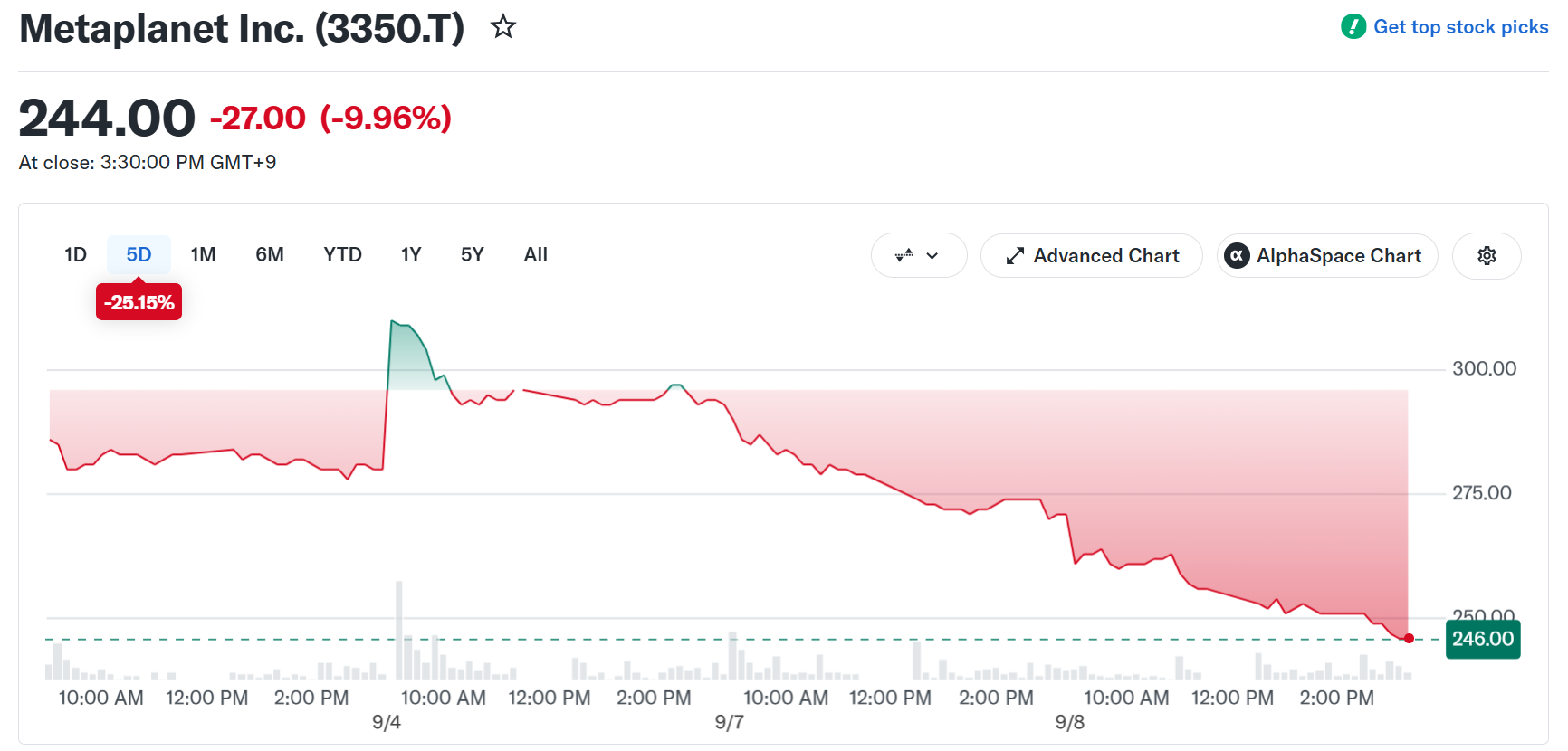
Metaplanet told shareholders that the mechanism behind its insider share pool amplified their dilution. The board then froze the pool at 319.5 million shares rather than reversing it.
Ten days later the chief executive converted his vested third. Metaplanet stock fell 9.96% on Tuesday to ¥244.

How Metaplanet’s Insider Share Pool Ballooned
In 2022 the company was called Red Planet Japan. Its hotels had lost their guests. Sales were ¥366 million ($2.37 million), the operating loss was ¥858 million ($5.57 million), and it warned it might not survive.
Shareholders approved a rescue in February 2023. Seven staff paid ¥18 a unit for options to buy shares at ¥10.
The award covered 46 million shares. That number was never fixed. It always equalled 20% of every share the company could issue.
Then Bitcoin (BTC) arrived in April 2024. Metaplanet sold new stock to buy coins, becoming the third-largest corporate holder with 43,000 BTC.
Its share count went from 153.9 million to 1.35 billion in two years. Every sale therefore enlarged the pool, which reached 319,464,000 shares.
That is about a quarter of the company.
“…amplifies the dilution borne by existing shareholders,” Metaplanet spelled out in its August 18 filing.
Follow us on X to get the latest news as it happens
Why the Freeze Failed to Settle It
The same filing deleted the clause and fixed the pool at its enlarged size. Holders cannot sell any shares until August 17, 2031.
Ten days later Chief Executive Officer Simon Gerovich exercised 92,000 rights, exactly the third that had vested. He paid ¥640 million ($4.16 million ) for 64,032,000 shares worth ¥15.6 billion ($101.3 million) on Tuesday.
His personal stake is now 6.2% after the design paid insiders for issuing stock.
David Bailey, a Bitcoin executive and shareholder since 2024, disagrees.
“…20% of Metaplanet cap table … isn’t some crazy number,” Bailey noted.
Metaplanet’s own numbers support part of his case. Bitcoin per 1,000 shares rose roughly 43-fold in two years, with the options already counted.
BeInCrypto reported in October 2025 that Gerovich pitched preferred shares precisely to keep growing Bitcoin per share without diluting holders.
However, the market is less convinced, seeing as all Metaplanet shares are worth about $2 billion. Its coins are worth about $3.4 billion with Bitcoin trading near $78,533, even before debt.
Insiders hold a claim on a quarter of a company priced below its own Bitcoin. The 273 million extra shares are what shareholders want back.
The post Metaplanet Froze a 319 Million Share Insider Pool It Admits Amplified Dilution appeared first on BeInCrypto.
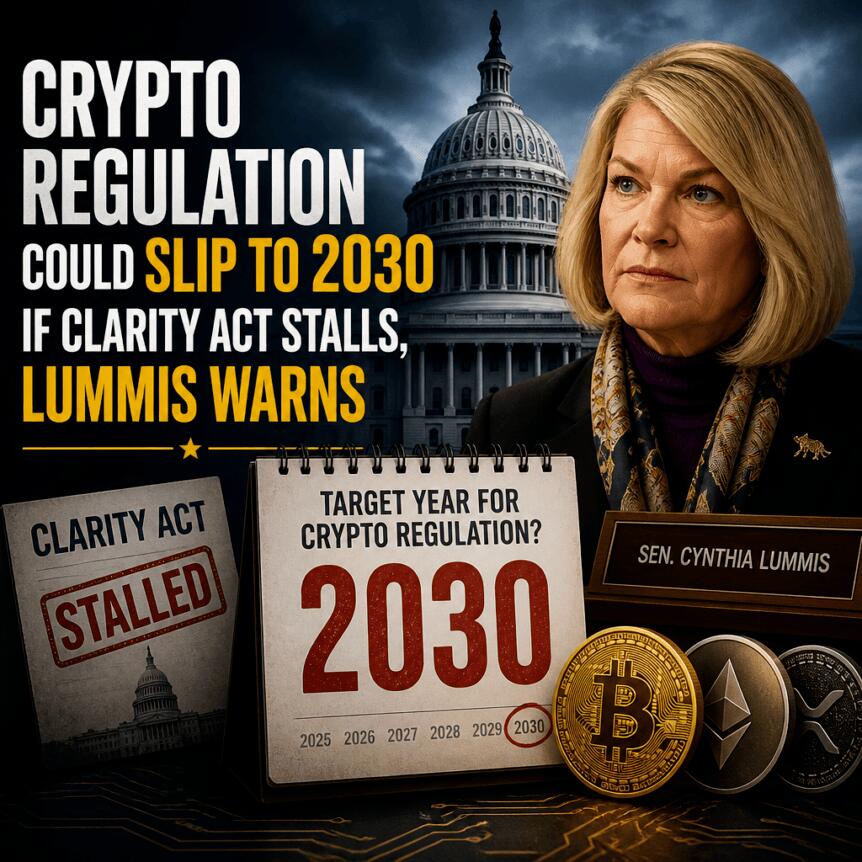
US Senator Cynthia Lummis has warned that Congress could lose its next realistic opportunity to pass comprehensive crypto market-structure legislation until 2030 if the CLARITY Act fails during the current session.
The Wyoming Republican is urging lawmakers to complete work on the bill as the Senate prepares for a key procedural vote on September 15. The legislation is intended to establish clearer rules for digital assets and define the responsibilities of federal regulators.
Key Takeaways
- Cynthia Lummis says failure to pass the CLARITY Act could push crypto market-structure legislation to 2030.
- The Senate is scheduled to hold a procedural vote on the bill on September 15.
- The measure needs 60 votes to advance in the Senate.
- The CLARITY Act seeks to clarify SEC and CFTC oversight of digital assets and strengthen customer protections.
- Lummis warns that another delay could cost the US jobs, investment and tax revenue.
Lummis Warns Congress Could Lose Years of Progress
Lummis said the current Congress represents an important opportunity to establish a federal framework for the cryptocurrency industry.
“If the Clarity Act doesn’t pass this Congress, the next real opportunity to bring market structure legislation back up is 2030,” she said.
The senator argued that waiting several more years could have economic consequences, particularly if businesses and investors continue operating under a fragmented regulatory system.
The warning comes as lawmakers approach the September 15 Senate vote. The procedural step requires 60 votes to move the legislation forward, meaning Republicans will need support from Democrats and independents.
Clarity Act Faces a Tight Legislative Schedule
Meanwhile, the bill has already cleared several major stages in Congress. The House passed its version in July 2025, while the Senate Banking Committee approved the Senate version by a 15-9 vote in May 2026.
However, the legislation still faces disagreements over issues including stablecoin rewards, decentralized finance and the limits of federal oversight.
The timing has also become a concern. The House has canceled some September sessions, leaving lawmakers with fewer opportunities to consider the legislation if it eventually returns from the Senate.
A successful Senate procedural vote would not make the CLARITY Act law. The bill would still have to clear the remaining legislative hurdles before reaching President Donald Trump.
What the Clarity Act Would Change
Notably, the proposed legislation would establish clearer boundaries between the Securities and Exchange Commission and Commodity Futures Trading Commission when regulating digital assets.
It also contains provisions aimed at protecting customers when cryptocurrency companies fail.
Lummis has argued that digital assets held for customers should receive stronger legal protection if an exchange enters bankruptcy. Under the proposed framework, certain digital commodities would be treated as customer property rather than assets available to satisfy an exchange’s creditors.
That could reduce uncertainty for both cryptocurrency businesses and their customers.
2030 Could Become the Next Major Window
That said, Lummis’s warning is tied partly to the upcoming US elections, which could change the makeup of Congress and alter the priorities of lawmakers and committee leaders.
If the CLARITY Act fails now, supporters could have to rebuild bipartisan support and restart negotiations under a new Congress.
Other lawmakers and industry executives have also called for the legislation to move forward, but disagreements remain over several provisions.
For the crypto industry, the September 15 vote is therefore only one step in a much longer process. If Congress cannot complete the legislation this year, Lummis believes the next serious opportunity may not arrive until 2030.
Eighty attacks carried out by Israeli settlers resulted in casualties or property damage between Aug. 11 and Aug. 24, according to the United Nations High Commission for Human Rights.
More than 1,040 Palestinians have been injured in such incidents across 2026, it reports, and 79 Palestinians, including 19 children, have been killed by either Israeli military personnel or settlers so far this year.
That adds to the escalating violence against Palestinians in the West Bank since the terror attacks led by Hamas on Oct. 7, 2023, which killed around 1,200 people and took more than 200 hostage. Since then, another 1,100 Palestinians have been killed in the West Bank.
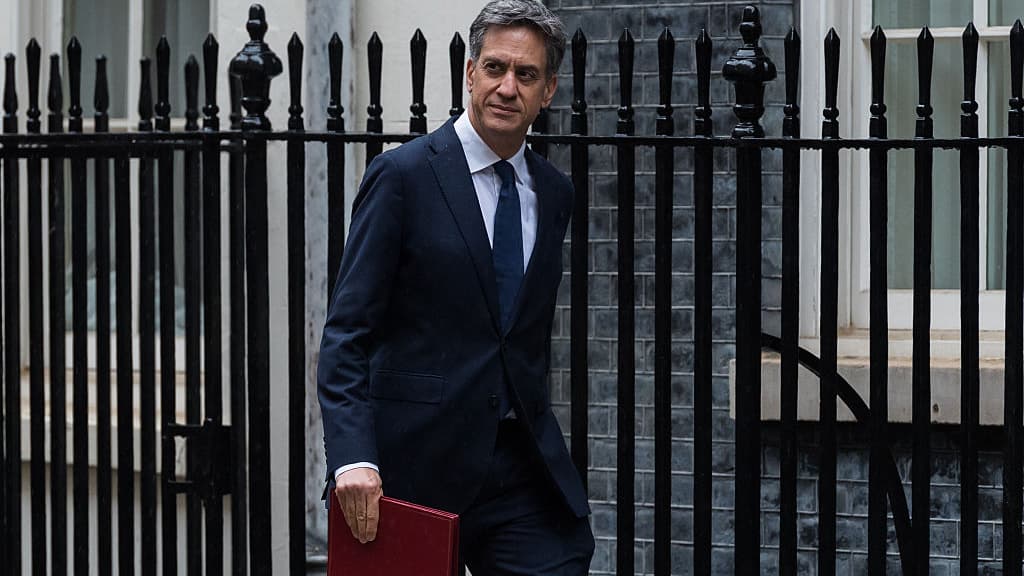
Miliband said that the Israeli government had too often “turned a blind eye.”
Following the U.K.’s lead, Canada and France announced similar trade bans Tuesday. Denmark, Finland, Iceland, Ireland, Norway, Poland, Portugal, Spain, and Sweden also joined those three countries in backing national or European restrictions, although their individual commitments vary.


The House killed eight voting days, Polymarket odds crashed from 82% to 16%, and the ethics clause nobody can agree on may bury the most important crypto bill in a generation.
Summary
- The Senate cloture vote on the CLARITY Act is set for September 15, but House Republican leaders canceled the weeks of September 21 and 28, leaving just four voting days before lawmakers leave Washington until after the November 3 midterm elections.
- Polymarket odds for the bill becoming law in 2026 collapsed from 82% in February to roughly 16% in early September, while Galaxy Digital cut its own estimate to 10% on August 14.
- The ethics clause banning the president, vice president, and members of Congress from issuing or sponsoring digital assets is the single provision most likely to kill bipartisan support, with Democrats calling the current language toothless and Republicans warning stronger restrictions would lose White House backing.
- If cloture fails, crypto regulation defaults to a patchwork of agency rulemaking from the SEC, CFTC, OCC, and FASB that can be reversed by any future administration, with no realistic path to unified federal legislation before 2029.
- The week of September 15 carries three overlapping catalysts: the August CPI print on September 11, the FOMC rate decision on September 16, and the SEC 24-hour trading roundtable on September 17.
The CLARITY Act was supposed to be the easy one. After the GENIUS Act cleared both chambers and became law in July 2025, the crypto industry expected the market structure companion bill to follow within months. Fourteen months later, the Digital Asset Market Clarity Act sits in a procedural limbo that would have been unimaginable when prediction markets gave it an 82% chance of passage in February.
Senate Majority Leader John Thune filed cloture on the motion to proceed just before the August 7 recess, setting up a procedural vote for Tuesday, September 15. That vote requires 60 senators to agree to even begin debating the bill. It is not a vote on the legislation itself. And between the filing and the return, the House went and blew a hole in the calendar that may have made the Senate vote irrelevant.
On September 3, House Republican leaders announced they were removing the weeks of September 21 and September 28 from the voting schedule. Eight days, gone. Representatives will return after Labor Day on September 14, work four days, and leave Washington on September 17. They will not come back until after the midterm elections on November 3. For a bill that still needs floor time in both chambers, that is not a scheduling inconvenience. It is a death sentence on the timeline.
The 60-vote math that does not work
The Senate cloture threshold has always been the CLARITY Act’s central obstacle. Republicans hold 53 seats, meaning Thune needs at least seven Democrats to cross over. In the Banking Committee markup, only two did. The gap between two and seven might look manageable on paper. In practice, it represents a chasm that five months of negotiation have failed to bridge.
Senator Elizabeth Warren has said she supports federal crypto legislation in principle but firmly opposes the current bill, arguing it fails to address corruption, consumer protection, and national security. Senators Chris Murphy, Chris Van Hollen, and Jeff Merkley have taken similar public positions. That is four confirmed Democratic no votes already eating into the margin.
The math gets worse when you consider what those seven crossover votes would require. Every Democrat who votes yes will face attack ads accusing them of supporting a bill that benefits President Trump’s crypto portfolio. In a midterm year, that is not abstract political risk. It is a concrete calculation that every campaign manager in a competitive district is making right now.
Republicans, meanwhile, are dealing with their own fragility. Galaxy Digital’s August analysis noted that the party expects to lose Senators Josh Hawley and Rand Paul on procedural grounds, bringing the effective Republican count closer to 51. If even one additional Republican defects, Thune would need nine Democratic votes instead of seven.
The ethics clause that broke the coalition
If the CLARITY Act fails, the cause of death will almost certainly be Section 13152.
The ethics provision, added to the July 22 draft, bans the president, vice president, and members of Congress from issuing or sponsoring digital assets while in office. Their spouses are covered too. The Department of Justice would enforce the restriction with fines of up to $250,000 per day. On its face, it reads like a reasonable safeguard. In practice, it has become the provision that three different constituencies can each find a reason to reject.
A poll showing 63% of Americans believe Trump crossed the line on crypto has given Democrats political cover to demand stronger language. Warren and her allies want the ban extended beyond January 20, 2029, the date it currently sunsets, which also happens to be the last day of Trump’s second term. They want state attorneys general to share enforcement authority with the DOJ, arguing that a presidential appointee cannot be trusted to investigate the president’s own financial interests. And they want existing holdings addressed more aggressively: the current text allows officials to place crypto in blind trusts, which critics say is insufficient when the assets in question are publicly traded tokens whose prices respond to presidential statements.
Republicans counter that the provision already goes further than any ethics restriction in existing securities law. Strengthening it further, they argue, would lose the White House’s support entirely. Trump urged Congress to pass the CLARITY Act in August, but that endorsement came with an implicit ceiling on how restrictive the ethics language could become.
The third constituency is the crypto industry itself. Companies like Coinbase, which earns roughly $1.35 billion annually from USDC rewards, care far more about the stablecoin yield provisions than the ethics debate. But the ethics fight has consumed so much oxygen that the yield question, which directly affects business models, has been pushed to the margins of the negotiation.
What the bill actually does and why it matters
The CLARITY Act would draw the first statutory line between the SEC and the CFTC on digital assets. Right now, the two agencies rely on a joint interpretation issued in spring 2026 that names 16 tokens, including XRP, SOL, and DOGE, as digital commodities. That guidance is better than nothing. It is also non-binding, revocable, and far narrower than what the industry needs.
Under the bill, tokens would fall into four categories: digital commodities, assets offered through investment contracts, permitted payment stablecoins, and securities such as tokenized stocks or bonds. The CFTC would take primary jurisdiction over digital commodities. The SEC would oversee digital securities and investment contract offerings. Both agencies would share authority over intermediaries, trading venues, and customer asset protections.
The framework also introduces registration requirements for exchanges, brokers, and dealers. Platforms would need to meet disclosure rules, anti-money-laundering controls, and customer segregation standards. For DeFi protocols, the bill proposes a classification system that is still hotly debated, with unresolved questions about whether autonomous smart contracts can be regulated as intermediaries.
The international stakes make this more than a domestic housekeeping exercise. The EU’s Markets in Crypto-Assets regulation has been operational since June 2024. The UAE’s Virtual Assets Regulatory Authority has licensed over 20 exchanges. Japan finalized its token classification rules in 2025. Singapore’s Payment Services Act covers stablecoins and digital payment tokens under a single license. Each of these frameworks gives local firms a rulebook to build against. American companies are still guessing which agency will knock on their door first.
The current US regulatory map is a patchwork stitched together from enforcement actions, no-action letters, and agency guidance documents. The CLARITY Act would replace that patchwork with legislation that survives changes in administration. That durability is the bill’s real value, and the reason its potential failure carries consequences far beyond 2026.
The prediction market collapse tells the story
Polymarket has become the unofficial scoreboard for the CLARITY Act’s chances, and the numbers are brutal.
In February, when the Senate Banking Committee was making bipartisan progress on draft language, traders priced the bill’s passage at 82%. That number held through March and into April as committee negotiations continued behind closed doors. Then the ethics fight went public.
By mid-July, after Warren rejected the July 22 draft within hours of its release, odds had fallen to roughly 38%. The August recess without a vote pushed them below 20%. As of early September, Polymarket shows approximately 16% with over $7.2 million wagered on the contract. A single wallet placed an $818,000 bet against passage in late August, the largest individual position on the contract.
Galaxy Digital’s institutional research desk cut its own odds to 10% on August 14, the lowest estimate from any major financial firm. The reasoning was direct: unless the motion to proceed passes immediately upon the Senate’s return and the bill dominates the entire working session, there is not enough calendar to get it done. Galaxy noted that the window is not just narrow. It requires every remaining day to go perfectly, with zero procedural delays, zero extended amendment battles, and zero additional controversies.
The collapse from 82% to 10% is not the story of a bill that lacked support. It is the story of a bill that could not survive the collision between three constituencies whose demands were mutually exclusive: Democrats who wanted stronger ethics rules, Republicans who could not deliver them without losing the White House, and an industry that needed the yield provisions settled before either side would commit.
If cloture fails, regulation goes dark
The consequences of a failed cloture vote extend well beyond the CLARITY Act itself.
If the motion to proceed does not get 60 votes on September 15, the bill is effectively dead for this Congress. Midterm politics will dominate the floor from October onward, and no serious observer expects unified crypto legislation to return before the 119th Congress convenes in January 2029. Even then, the composition of the Senate and the political dynamics around crypto could look entirely different.
In the interim, regulation defaults to a collection of agency actions that lack the permanence of legislation. The SEC proposed Regulation Crypto Assets on August 19, a 402-page framework that creates two new exemptions from Securities Act registration for crypto offerings, plus a safe harbor letting tokens shed security status once networks are sufficiently decentralized. The CFTC is writing rules under its existing authority. The OCC is finalizing GENIUS Act stablecoin regulations with a November target. FASB has proposed accounting rules for stablecoins.
Each of these tracks provides some guidance. None of them provides the unified framework the industry has been asking for since 2018. And all of them can be reversed, amended, or reinterpreted by the next administration. A Republican SEC chair’s safe harbor becomes a Democratic SEC chair’s enforcement target. A CFTC classification that treats a token as a commodity today could face a challenge tomorrow. The entire structure rests on administrative discretion, not statutory authority.
For businesses trying to build in the United States, this patchwork creates a compliance environment that favors large, well-resourced firms over startups. Coinbase and Kraken have legal departments that can navigate overlapping agency guidance. A four-person DeFi team in Austin does not. The irony of the CLARITY Act’s potential failure is that the people who need regulatory clarity the most are the ones least equipped to survive without it.
The market impact of a failed vote is harder to predict than most analysts suggest. Bernstein projects a 10% to 25% correction in bitcoin if major legislation stalls, potentially testing the $55,000 to $60,000 range. But the GENIUS Act’s passage in 2025 showed that markets can rally on partial progress. If the SEC and CFTC accelerate their rulemaking tracks quickly enough, the practical effect on token prices could be muted even as the legal profession mourns the loss of statutory clarity. The deeper damage would show up over quarters, not days: fewer US-based token launches, more projects incorporating in Singapore or Dubai, and a slow drain of engineering talent toward jurisdictions where the rules are written down.
The week that decides everything
The week of September 15 is not just about crypto regulation. It is one of the most event-dense periods of the year for financial markets, and every item on the calendar interacts with the CLARITY Act vote.
On September 11, the Bureau of Labor Statistics releases the August CPI report. Markets currently price roughly a two-thirds probability of a 25 basis point rate increase at the following week’s FOMC meeting, driven by persistent inflation and energy price shocks. A hot CPI print would reinforce that expectation and put risk assets, including crypto, under pressure heading into the vote.
On September 15, the Senate reconvenes and the cloture vote is scheduled. The same day marks the start of the FOMC’s two-day meeting.
On September 16, the Federal Reserve announces its rate decision. If the Fed hikes, crypto markets will react. And if crypto markets are selling off on the morning of September 16, the political calculation for senators considering a yes vote on the CLARITY Act shifts. Nobody wants to be photographed supporting the crypto industry on a day when token prices are falling and retail holders are losing money.
On September 17, the SEC holds its roundtable on 24-hour equity trading, with BlackRock, Nasdaq, NYSE, Robinhood, Citadel, and Jane Street on the panel. That session explores whether traditional exchanges should adopt the continuous trading model that crypto markets pioneered. It is a symbolic marker: the SEC is already building the future of market structure through rulemaking, whether Congress acts or not.
The House leaves Washington on September 17. If the Senate has not passed the CLARITY Act by then, the bill needs to wait for the House to return. And the House is not returning until after the midterms.
The opposing case: why the bill could still survive
The bearish consensus deserves scrutiny. Polymarket odds and Galaxy estimates are not votes. They are probability assessments that can move fast in both directions, and there are genuine reasons the CLARITY Act could still clear cloture.
First, the bipartisan infrastructure exists. The House passed H.R. 3633 with votes from both parties in July 2025. The Senate Banking Committee advanced its version with two Democratic crossovers. The base of support is real, even if the ethics fight has temporarily obscured it.
Second, the stakes are high enough to force compromise. Every senator in that chamber understands what happens if the bill fails: two years of regulatory patchwork, potential enforcement whiplash after the midterms, and a signal to global competitors that the United States cannot legislate on digital assets. Singapore, the EU under MiCA, and the UAE under VARA are not waiting. Japan finalized its framework in 2025. The competitive pressure is not theoretical.
Third, the ethics clause has a natural compromise point. Extending the ban beyond 2029, adding state AG enforcement authority, and tightening blind trust requirements would address Democratic concerns without fundamentally altering the bill’s market structure provisions. The question is whether both sides have the political will to accept a deal that neither side loves, which is, historically, how most major financial legislation gets passed.
Fourth, Thune would not have filed cloture if he did not believe he could get close to 60. Senate leaders do not schedule votes they expect to lose by 15. The filing suggests private conversations have produced commitments that have not yet been made public.
The counterargument to all of this is the calendar. Even if cloture passes, the Senate needs time for amendments, debate, and a final vote. Then the bill goes to conference with the House, which is leaving town on September 17. A short-term continuing resolution or a lame-duck session after the midterms could theoretically provide a window, but those scenarios introduce their own complications. Lame-duck crypto votes are politically toxic, and a CR negotiation would consume whatever floor time remains.
What to watch
- September 11 CPI print: A year-over-year number above 3.2% would harden rate hike expectations and put downward pressure on crypto heading into the cloture vote. Below 3.0% gives the Fed room to hold, which would be mildly positive for risk sentiment.
- September 15 cloture vote count: The magic number is 60. Watch for the specific Democratic crossovers. If Senators Mark Warner and Kyrsten Sinema vote yes, it signals the moderate lane is still open. If they vote no, the bill is almost certainly dead.
- House continuing resolution language: If the CR includes any provision extending legislative business past September 17, it reopens the calendar window for the CLARITY Act. If it does not, the House exit date is hard.
- Polymarket contract movement in the 48 hours before the vote: Sharp upward movement would indicate insider confidence that a deal has been struck. Continued decline below 15% suggests the market sees no path.
- Post-vote SEC and CFTC statements: If cloture fails, watch for accelerated agency rulemaking announcements. The speed at which regulators move to fill the vacuum will determine how the industry operates for the next two years.
What is the CLARITY Act and what does it do?
The CLARITY Act, formally the Digital Asset Market Clarity Act (H.R. 3633), is a bill that would create the first statutory framework for regulating digital assets in the United States. It divides oversight between the SEC and the CFTC, classifies tokens into four categories, and sets registration requirements for exchanges and brokers. The House passed it in July 2025. The Senate has not voted on it yet.
What is a cloture vote and why does September 15 matter?
Cloture is a Senate procedure that requires 60 votes to end debate and move to a final vote on legislation. On September 15, the Senate will vote on whether to proceed to debate on the CLARITY Act. It is not a vote on the bill itself, but if cloture fails, the bill cannot reach the floor for a final vote. Given the compressed calendar, failing on September 15 likely means the bill is dead for 2026.
Why did the House cut eight voting days from September?
House Republican leaders removed the weeks of September 21 and 28 from the voting schedule on September 3, giving members more time to campaign ahead of the November midterms. After passing a stopgap spending bill, leadership determined there was less immediate need to keep representatives in Washington. The revised schedule leaves just four voting days before the House breaks until after the elections.
What is the ethics clause and why is it so controversial?
Section 13152 of the bill bans the president, vice president, and members of Congress from issuing or sponsoring digital assets while in office. The ban sunsets on January 20, 2029. Democrats argue the provision is too weak because the DOJ, led by a presidential appointee, is the sole enforcer, and the sunset conveniently aligns with the end of Trump’s term. Republicans say it already goes further than any existing securities law ethics restriction.
How much money has Trump made from crypto?
Trump’s 2025 financial disclosure reports more than $1 billion in crypto-related income. Roughly $635 million came from $TRUMP memecoin royalties through CIC Digital LLC. Another $515 million to $592 million came from World Liberty Financial token and equity sales. Public Citizen estimates Trump-linked crypto ventures left investors $4.7 billion underwater.
What are the Polymarket odds for the CLARITY Act passing?
As of early September 2026, Polymarket shows approximately 16% odds of the CLARITY Act becoming law in 2026, down from 82% in February. Over $7.2 million has been wagered on the contract. A single wallet bet $818,000 against passage in late August. Galaxy Digital’s institutional research desk separately cut its estimate to 10%.
What happens to crypto regulation if the CLARITY Act fails?
Regulation defaults to a patchwork of agency rulemaking. The SEC moves forward with Regulation Crypto Assets. The CFTC writes rules under existing authority. The OCC finalizes stablecoin rules by November. None of these actions carry the permanence of legislation, and all can be reversed or reinterpreted by future administrations. Unified federal crypto legislation would not return before 2029 at the earliest.
Should I make investment decisions based on the CLARITY Act vote?
Legislative outcomes are inherently unpredictable, and the interaction between the cloture vote, the FOMC decision, and the CPI data makes the week of September 15 unusually volatile. Past regulatory votes have produced sharp short-term price moves that reversed within days. This is educational analysis, not investment advice.
Disclaimer: This article was published on Sept. 7, 2026. The information provided is for educational purposes only and does not constitute financial, legal, or investment advice. Always conduct your own research before making any investment decisions.

Bitcoin’s near-term holder “whales” are sitting on paper profits at levels not seen before, and the margin for turning those gains into selling pressure is shrinking as BTC trades closer to key break-even levels. New on-chain analysis from CryptoQuant highlights both the scale of unrealized profit among short-term holders and the way quickly that profitability can evaporate when prices dip.
At the same time, exchange-side data points to Binance reserves hovering near a two-year high, reinforcing the idea that any upside move will have to contend with readily available BTC supply. For traders and market participants, the combination matters: record unrealized gains can create a fast-moving sell response, while concentrated reserves can affect how easily spot demand translates into sustained price strength.
Key takeaways
- CryptoQuant data shows short-term holder (STH) whale unrealized profits surged to $9.07 billion on Sept. 4, the largest reading since its whale-profit tracking began in 2016.
- That profitability is highly sensitive to price swings—CryptoQuant reports STH whale unrealized profit fell about 17% the day after BTC/USD dropped just under 2%.
- Binance BTC reserves climbed to 691,658 BTC on Sept. 2, the highest level since November 2024, approaching a two-year peak.
- CryptoQuant characterizes whale participation in exchange inflows as “relatively contained,” but the elevated reserve base raises the stakes for any sustained breakout above $83,000.
Why short-term holder whales may be more likely to sell
CryptoQuant defines short-term holders as wallets holding BTC for less than six months. In its latest analysis, the firm reports that this cohort’s aggregate unrealized profit has pushed above $9 billion, with the STH whale category reaching $9.07 billion on Sept. 4. CryptoQuant says this is the highest figure it has recorded since it began tracking whale profitability in 2016.
Importantly, the analysis emphasizes that STH whales are not just sitting on gains—they are sitting on gains that are closely tied to the current spot price. CryptoQuant notes that STH whale breakeven levels are nearer to the market price than the breakeven levels for long-term holders (LTHs). As a result, even small daily movements can shift the cost-basis picture quickly.
CryptoQuant also points to real-time sensitivity. After Sept. 4, as BTC/USD declined by just under 2%, the STH whale unrealized profit fell roughly 17% the following day. CryptoQuant ties that drop to the structure of STH breakevens: with the cost basis around $69,000, losses or reduced profit potential can emerge rapidly as price fluctuates.
CryptoQuant warned that unrealized profit at that scale can become “exposure” and that STH whales are historically among the fastest cohorts to take profit when gains are visible.
For investors, the practical takeaway is straightforward: a record paper-profit situation can still translate into real selling if BTC dips just enough to bring those investors closer to their own decision points. The question becomes whether any pullback is large or prolonged enough to trigger that behavior broadly across the STH whale cohort.
Exchange reserves rise as traders watch $83,000
Beyond whale profitability, exchange inflows and reserves offer another lens into near-term supply dynamics. The on-chain thread in the analysis points to increased BTC movement toward exchanges since early May, and it highlights Binance specifically.
According to the on-chain figures cited by CryptoQuant, Binance BTC reserves reached 691,658 BTC on Sept. 2—its highest level since November 2024 and close to a two-year high. In other words, the market appears to have accumulated a large “buffer” of BTC at a major venue even as price action has remained constrained.
This matters because exchange reserves can affect the effort required for upside. If a price breakout begins to attract buyers, sellers with coins already on-exchange can respond quickly, increasing the supply that spot demand must absorb. CryptoQuant frames the market tension in those terms while focusing on a key level: $83,000.
CryptoQuant argues that Binance liquidity and positioning look orderly, but the elevated reserve base means any meaningful move above $83K would likely require “strong, sustained spot absorption” to clear available supply—something that depends on more than short bursts of buying.
Spot absorption still looks like the missing ingredient
The analysis also ties these reserve and profit dynamics to a broader theme: Bitcoin spot demand. CryptoQuant reiterates that the key question remains whether spot demand can return decisively. The report referenced in the article suggests that, during 2026, spot demand has been insufficient relative to what’s needed to drive a clean supply-clearing cycle.
That backdrop matters for how traders interpret whale signals. If spot demand is strong and persistent, even large reserve bases may not translate into immediate selling pressure, because higher buying activity can outpace the supply ready on-exchange. If spot demand remains weak or intermittent, then elevated reserves coupled with whale cohorts holding record paper gains can create a market where dips are more likely to stimulate profit-taking.
What to watch next
With STH whale unrealized profits at a record high and Binance reserves near multi-year levels, the next decisive test is whether BTC can sustain strength above the $83,000 area without triggering renewed profit-taking from short-term holders. Market participants should watch both the direction of BTC spot demand and whether further price softness leads to additional exchange inflows that would keep liquidity “ready” at major venues.
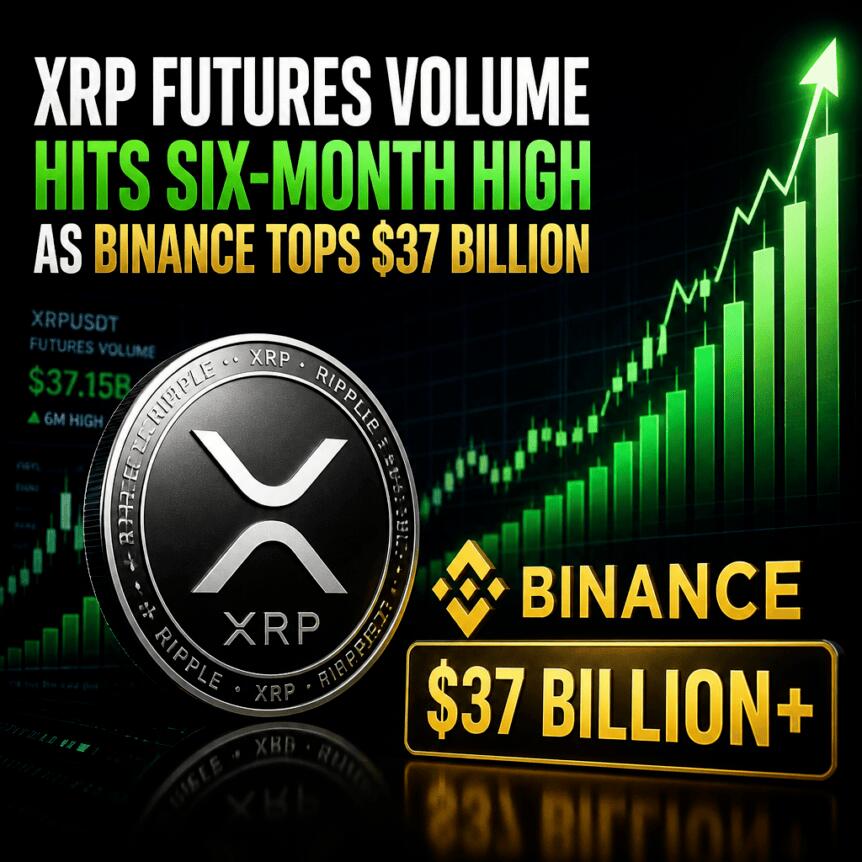
XRP futures volume surged to a six-month high in August. Binance, Bybit, and OKX together processed $64.6 billion in XRP contracts. The rally pushed XRP up nearly 30% for the month.
Binance Leads Record XRP Futures Volume
Binance processed roughly $37 billion in XRP futures during August. That figure represents about 57% of total volume across three exchanges. Bybit followed with $14.54 billion, while OKX cleared $12.88 billion.
Price action fueled much of the surge in XRP trading. XRP climbed from $1.06 early in August to $1.50 by August 24. The token then settled near $1.35 as the month closed.
Spot markets mirrored the futures rally and confirmed the trend. Spot XRP volume also hit a six-month high across major exchanges. Binance again led spot activity, followed by Upbit and Bithumb.
Institutional Interest Shifts Toward Regulated XRP Venues
CME overtook Binance as the largest venue for XRP open interest. CME open interest reached near $530 million, compared with Binance at $510 million. Offshore exchanges, however, still dominate raw XRP trading volume.
Institutional players continued to build positions in XRP-linked products. Citadel expanded its bullish XRP ETF holdings during the second quarter. Goldman Sachs also reclaimed its spot as a top XRP ETF holder.
Combined spot XRP ETF assets stood near $1.48 billion by month-end. Cumulative inflows into XRP ETFs approached $1.7 billion during the period. These flows gave trading desks reason to hedge and warehouse inventory.
Crowded Positioning Raises Risk for XRP Traders
Rising volume alone does not confirm a bullish direction for XRP. Analysts note that turnover can reflect covering, new shorts, or hedging activity. Traders must therefore separate raw volume data from actual positioning.
XRP’s leverage ratio on Binance reached 0.213, a seven-month high. Open interest grew crowded near $3.4 billion to $3.5 billion in size. That concentration adds risk ahead of a key regulatory vote.
Ripple re-locked 700 million XRP after its scheduled monthly unlock event. This escrow move reduced near-term sell pressure on XRP supply. Meanwhile, the XRPL 3.3.0 upgrade advances toward mid-September activation.
The US Treasury’s planned $22 billion debt buyback added a macro tailwind. Broader crypto markets turned bullish alongside the XRP derivatives buildup. The Senate’s CLARITY Act cloture vote on September 15 looms next.

Robinhood has agreed to take equity stakes in Crypto.com and its newly spun-off prediction markets platform, OG.com, in a multi-year arrangement designed to bolster Robinhood’s event-contract infrastructure in the United States. The move links Robinhood’s expanding prediction markets business to OG.com’s CFTC-regulated derivatives exchange and clearinghouse.
As part of the deal, Robinhood will route retail event contracts through OG.com’s infrastructure. A rollout is set to begin Tuesday for eligible US customers, according to Robinhood’s announcement carried by PR Newswire.
Key takeaways
- Robinhood will use OG.com’s CFTC-regulated derivatives exchange and clearinghouse to process retail event contracts.
- Robinhood is taking equity stakes in both Crypto.com and OG.com, but the companies did not disclose the size or value of the holdings.
- The equity stakes are priced using valuations established by an earlier Citadel Securities investment in the platforms.
- The agreement arrives shortly after OG.com’s spin-off from Crypto.com and follows recent reporting that Robinhood was exploring ways to expand prediction markets.
Robinhood’s event-contract routing shifts to OG.com
The core operational change is straightforward: Robinhood plans to route retail event contracts through OG.com’s CFTC-regulated derivatives exchange and clearinghouse. In the PR Newswire announcement, Robinhood described OG.com as its infrastructure partner for prediction market event contracts, with the initial rollout beginning Tuesday for eligible customers in the US.
This matters for participants because event-contract trading depends not only on market access and product availability, but also on the plumbing—exchange execution, clearing, and regulatory oversight. By centering that plumbing on OG.com’s CFTC-regulated setup, Robinhood is effectively tightening the link between its prediction-market offering and a regulated derivatives framework.
Equity stakes accompany the infrastructure deal
In addition to becoming a customer of OG.com’s infrastructure, Robinhood will receive initial equity stakes in both Crypto.com and OG.com under the multi-year agreement. The announcement states that the stakes are priced at the valuations set by an earlier investment from Citadel Securities. However, neither Robinhood nor the counterparties disclosed how much Robinhood will receive or the dollar value of the holdings.
The equity component is a notable feature of the arrangement. Many infrastructure partnerships are structured around service fees rather than ownership participation. Here, ownership ties can align long-term incentives for both product expansion and operational reliability—especially for a business area where regulatory permissions and market structure are central to scalability.
OG.com independence—and a broader push into derivatives
OG.com recently spun off from Crypto.com at a $5 billion valuation, and Robinhood’s agreement arrives less than two months after reports that Robinhood had been in talks with Crypto.com to expand its prediction markets offering.
OG.com will operate independently from the crypto exchange. CEO Kris Marszalek said the company plans to expand beyond prediction markets into futures and perpetual contracts. That direction is consistent with the idea that regulated event-contract infrastructure can serve as a stepping stone toward more generalized derivatives products, though the specific pace and regulatory pathway for futures and perps would still depend on applicable jurisdictional requirements.
Why prediction markets remain a legal flashpoint
Robinhood’s expansion efforts are happening in parallel with a widening legal dispute about how US states should be allowed to regulate event contracts—particularly sports-related ones.
Robinhood launched its prediction markets hub in March 2025 with CFTC-regulated exchange Kalshi, later expanding its prediction market infrastructure. Cointelegraph previously reported on developments in this space, including partnerships and platform expansion plans. The business has also grown quickly: Robinhood said event contracts generated $156 million in revenue in the second quarter of 2026, up more than tenfold from a year earlier. In the same reporting cycle, Robinhood indicated that its equities transaction revenue was $129 million and that crypto contributed $100 million—figures from the company’s investor relations release.
Analyst estimates cited in the original reporting add another layer to the stakes: Bernstein analysts projected in July that Robinhood’s revenue, including prediction markets, could reach $1.7 billion by 2028. At the same time, those projections sit against uncertainty driven by regulatory and court fights.
Several legal challenges have targeted the classification of prediction-market event contracts. In April, a Nevada judge extended a ban preventing Kalshi from offering event contracts in the state without a gaming license, ruling that the products were effectively indistinguishable from traditional betting. The decision rejected Kalshi’s position that the contracts should be treated as swaps governed exclusively by CFTC oversight.
The dispute has escalated further. Last week, New Jersey petitioned the US Supreme Court to consider whether states can regulate sports contracts offered on CFTC-regulated prediction markets. In a post tied to the move, New Jersey Attorney General Jennifer Davenport said companies such as Kalshi argue they can offer legal sports betting nationwide while refusing to comply with state gambling laws, and she urged the Supreme Court to resolve the jurisdictional conflict.
For investors and traders, these cases are more than abstract legal drama. Platform operators often rely on regulators and courts to define the product boundaries—whether a state can apply gambling rules to event contracts even when the market structure is built within CFTC-regulated derivatives frameworks. Any shift in legal interpretation could affect product listings, market access, and compliance costs.
What to watch next as infrastructure and regulation converge
With Robinhood routing retail event contracts through OG.com’s CFTC-regulated exchange and clearinghouse beginning Tuesday, the immediate operational question is how quickly eligible customers can access the expanded flow. Just as important, the next watch item is the broader legal trajectory around state authority over sports-related event contracts—because the infrastructure build-out may face constraints or redesigns depending on how courts ultimately define the regulatory boundaries.

Traders using the CME’s FedWatch tool put the FOMC September 2026 odds of a 25-basis-point rate hike at the Federal Reserve’s September 16 meeting at nearly 56%, CNBC reported.
The change followed Federal Reserve Chairman Kevin Warsh’s keynote speech at the central bank’s Jackson Hole symposium and left the September FOMC decision looking closely contested in market pricing.
WE ARE LESS THAN 10 DAYS AWAY FROM THE NEXT FOMC MEETING — WOLF (@WOLF_Financial) September 8, 2026
There is currently a 53% chance that Kevin Warsh and the  FOMC will raise rates at the September 17th press conference pic.twitter.com/it8Qo60PWl
For Bitcoin and other crypto assets, the immediate development is a shift in the interest-rate backdrop rather than evidence of a confirmed price response.
CNBC’s reporting documents changing rate expectations and a move in short-term Treasury yields, but it does not establish a corresponding move in Bitcoin, altcoins, crypto derivatives, or liquidations.
FOMC September 2026 Odds: A Jackson Hole Speech Reset Rate Expectations

The repricing was reflected across several market-based measures. Kalshi traders assigned a 48% probability to a quarter-point increase, while Polymarket traders indicated 49% odds that the Fed would raise rates. Fed funds futures traders, as measured through CME FedWatch, saw nearly a 56% chance of a quarter-point hike.
Before Warsh’s speech, odds that the Fed would keep rates unchanged in September were nearly 70%, CNBC reported. The article also noted that investors had previously been more focused on the possibility of a hike after the Fed’s July meeting, when three members of the Federal Open Market Committee disagreed with the decision to leave rates steady and argued that rates needed to move higher in response to elevated inflation.
Rate-hike odds then declined after a weaker-than-expected July employment report showed that the U.S. lost jobs and inflation cooled while remaining above the Fed’s 2% target. In his Jackson Hole remarks, Warsh said that better-than-expected summer inflation readings did not demonstrate that underlying trends had meaningfully improved. He said the central bank needed confidence that underlying inflation was moving toward its objective clearly and quickly enough.
Earn $50 and Enter $300K Prize Draw on EdgeX
What a Coin-Flip Fed Means for Bitcoin And What It Doesn’t Prove
The available evidence supports reassessing September policy expectations, not a settled conclusion about crypto-market consequences. Bitcoin may remain relevant to traders monitoring broader risk sentiment, but the cited reporting does not show that the change in Fed probabilities has already produced a specific Bitcoin-market outcome.
Short-term yields did respond to the speech. CNBC reported that the 2-year Treasury yield, which closely follows short-term Fed rate decisions, reached its highest level since late July. That reaction shows that interest-rate markets were responding to the possibility of a September move.
The inflation backdrop remains central to the debate. In an Aug. 5 speech, Fed Governor Lisa D. Cook said the personal consumption expenditures price index rose 3.7% in the 12 months through June, while core prices rose 3.3%.
Cook described inflation as too high and said she was prepared to support a rate increase if necessary, while also noting that disinflationary forces could move inflation toward the Fed’s target without an increase.
Cook also said the June unemployment rate was 4.2% and characterized the labor market as stable in a low-hire, low-fire environment. Her assessment illustrates why incoming inflation and employment data remain important to the policy discussion ahead of the meeting.
Have Your Say on the FOMC Rate Hike Odds With $25 For Free on Kalshi
Maxi Doge Targets Early Mover Upside as Rate Hike Fears Cause Short-Term Panic

FOMC September 2026 odds of a rate hike pushing above 50% are exactly why traders looking for asymmetric upside are rotating attention toward earlier-stage plays with room to actually multiply.
Enter Maxi Doge ($MAXI), a meme token built around 1000x-leverage trading culture and a 240-lb canine mascot that embodies the “never skip leg-day, never skip a pump” ethos.
The presale has raised $4.8M so far, with tokens priced at $0.0002837 and dynamic APY staking live for early holders. Standout features include holder-only trading competitions with leaderboard rewards and a Maxi Fund treasury earmarked for liquidity and partnerships.
Get Ahead of Next BIG Meme Coin Launch Here
Discover: The Best Crypto to Diversify Your Portfolio
The post FOMC September 2026 Odds for a Rate Hike Surpass 50% appeared first on Cryptonews.

Stacey Solomon poses alongside her nude murals while husband Joe Swash relaxes in the bath as the pair get NTA ready from their new huge bathroom in hilarious snaps

OpenAI says it cracked 90-year-old maths problem in 88 hours

BitMine buys 28,086 ETH amid Tom Lee’s bullish outlook


-
 Tech10 hours ago
Memory prices are slowing because buyers ran out of money
-

 NewsBeat8 hours ago
England up in reading, maths and science rankings as Scotland and Wales dip
-

 Business12 hours ago
Egyptian TV Presenter Sarah Khalifa, 11 Others Sentenced To Death In Major Drug Trafficking Case In Cairo
-
 Tech12 hours ago
Strong Password Policy and Password Manager Guide
-

 Crypto World12 hours ago
Visa expands stablecoin card network to 160 programs
-
 NewsBeat7 hours ago
Tehran’s assertive rhetoric signals a new and dangerous phase in conflict
-

 Politics7 hours ago
The Ultimate September Reset Guide: How To Refresh Your Mind And Life This Autumn
-

 Tech7 hours ago
Google’s revived nuclear power plant gets $1.9B loan from US government
-

 Business11 hours ago
Claim Your Share Of $50 Million Disney Streaming Price Settlement By Sept. 8 Tonight
-

 Business9 hours ago
US-Canada tariffs: Canada braces for prolonged trade war as counter-tariffs on US take effect
-

 Tech6 hours ago
ESP32-P4 Powers Video Alarm Clock
-
 Fashion7 hours ago
New tops for women from EGO
-
 Sports7 hours ago
There’s only one Ricky Hatton – Special Edition on sale now
-

 Business7 hours ago
Corning Stock Climbs On Multibillion-Dollar Verizon Network Deal
-

 Entertainment6 hours ago
You Can See Everything Trailer Reveals A24’s Elizabeth Holmes Documentary
-
Crypto World6 hours ago
Zcash (ZEC) Rockets 2,200% as Privacy Coins Become Crypto’s Biggest Outlier
-

 Politics6 hours ago
The reason why sweatshirts have a V under the collar
-

 Sports6 hours ago
How Much Is Florida State Coach Mike Norvell’s Buyout? Contract Details In 2026
-

 Fashion5 hours ago
Phia Is the Shopping App That Styles You From Your Own Closet
-

 Crypto World10 hours ago
Arm Stock: Arm Extends Reach To Physical AI
You must be logged in to post a comment Login