Australia is proposing the “My Feed, My Way” initiative that would force social media platforms to let users over 16 turn off algorithmic recommendations and instead see only posts from people and creators they follow. Platforms that fail to comply could face fines of up to $79 million. CNBC reports: The legislation, which is being drafted and released Tuesday for targeted consultation, would require platforms to send notifications to new and existing users so they can choose their default feed. […] The measures, set to be introduced to the Parliament of Australia this year, will also require AI chatbots, online games and other digital services to take action to protect under-18s from addictive design features. “This is not about giving government control. It’s about giving people control. It’s about putting choice back into the hands of Australians online,” said Prime Minister Anthony at a press conference on Tuesday.
“This is sensible, pragmatic, practical reform. It gives users choice, and it will hold the big tech companies responsible for inaction.”
Less than two weeks after Meta agreed to a massive$18 billion multistate settlement in a lawsuit over social media’s consumer harms, the company announced its biggest bet on consumer AI to date — and one that requires significantly more trust than social media ever did. On Tuesday, the company introduced Muse, its new personal AI agent that helps consumers with everyday tasks and projects for users in the U.S.
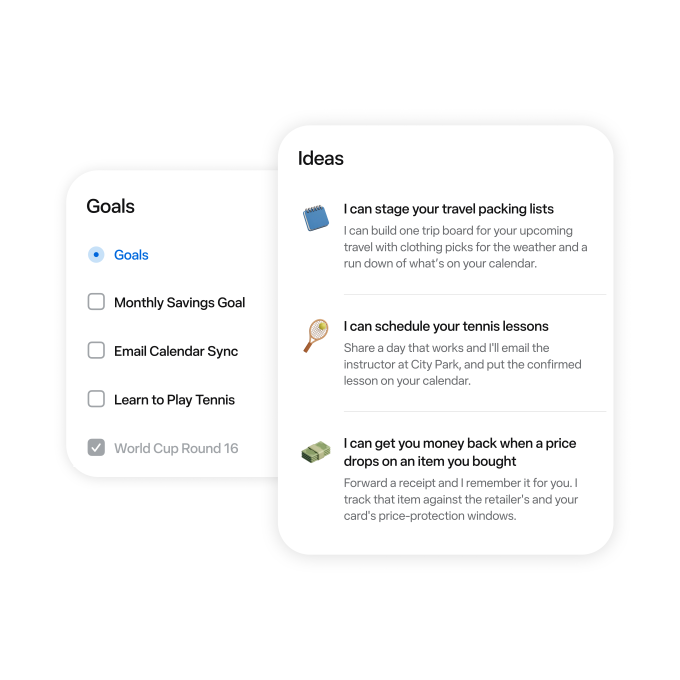
To use Muse, consumers will have to trust Meta with more of their personal information than ever before. The AI agent works by connecting to the user’s apps and services that are a part of everyday workflows, like email, calendars, payments, and other things the individual may regularly use, like apps for health and fitness, the smart home, dining, shopping, music and events, and more.
The idea is a sizable bet on what comes after the ChatGPT era, where AI chatbots answered questions, served as sounding boards, or even became digital companions. Instead, Muse is focusing on AI that can actually do things for you.
Image Credits:Meta
The company says the agent can do things like sending emails, booking travel, lowering bills, filling out forms, creating plans, turning recipe reels into grocery lists, sending party invitations, and making purchases, leveraging Link by Stripe for checkout. The latter offers purchase protections, which could potentially ease consumers’ fears of letting an AI check out on their behalf. (Shopify’s Shop Pay and 1Password integrations are also coming soon.)
Muse’s users can decide which apps and services they want to connect, doing so one at a time, to make the opt-in nature of using Muse more transparent. The agent is powered by Meta’s AI model, Muse Spark, and ships with built-in connectors (pictured below) for several services, with plans to add more over time. If a service the user wants isn’t available but offers a public API, Muse can set up a connection using credentials the user provides. When no API is available, Muse can access the service via the browser instead.
Advertisement
Image Credits:Meta
Muse will initially be available via the web at muse.ai, through apps on iOS and Android, and through chats in WhatsApp. It will soon also make its way to Meta’s AI glasses, the company says. It will be free to use, with subscription plans kicking in as usage increases, which is why Muse requires a payment card to get started.
Two paid plans will be available at launch: Power at $20/month and Maximum at $100/month. Both of these subscriptions offer more Muse usage for handing off everyday tasks, though Meta believes most people will remain on the free tier. (The company says the app includes a usage meter that shows users what percentage of their usage they have left. It will also warn users when free usage runs out and present options to subscribe.)
Like other AI agents, Muse will continue to work even after the user leaves the app. It will also improve over time by learning from the user’s conversations what’s important to them to make suggestions unprompted, Meta noted.
Image Credits:Meta
The concept is not unique to Meta. The agentic era is now coming into its own, as larger companies and smaller startups alike are experimenting with how AI agents will make the most sense for consumers and can become integrated into people’s daily lives.
Some have tried AI web browsers or services, like Gemini Spark or Claude Cowork, that can kick off various tasks on consumers’ behalf. Others are integrating AI into the chat applications consumers use the most, like Apple’s iMessage platform, SMS, and WhatsApp.
Image Credits:Meta
Despite their usefulness, these powerful agents have forced consumers to wrestle with difficult questions about how much privacy they’re willing to give up. Many early testers of the AI assistant Instinct were shocked to see the app required a broad “perpetual and irrevocable” license to “access, use, host, cache, store, reproduce, transmit, display, publish, distribute, and modify” any of the user’s materials, including for training its AI models.
Image Credits:Meta
Under the hood, Meta claims that Muse runs in its own “dedicated, secure computer with its own browser,” Muse Secure VM, which offers various privacy, safety, and security protections over customers’ data. The company says a separate Sentinel agent runs on that same virtual machine, but is kept apart from Muse at the system level.
Image Credits:Meta
This means Muse won’t have visibility into people’s passwords or payment methods. Meta also claims that Muse doesn’t share people’s conversations or data with Meta’s ads systems.
(These claims are explained in more detail in a technical post, also released today, but will require deeper investigation by security experts.)
Advertisement
Could Meta’s history hurt Muse adoption?
Despite Meta’s documentation of its security measures, it remains to be seen whether the company has enough consumer trust for its agent to be successful.
In terms of technical matters, Meta has also had some big missteps before, having discovered in 2019 a number of users’ passwords in readable formats, exposing people to potential hacks. The massive Cambridge Analytica data scandal, which saw Facebook data belonging to millions of consumers collected by a third-party without their consent, still lingers in some people’s minds, too.
Mark Zuckerberg, chief executive officer of Meta Platforms Inc., exits Los Angeles Superior Court in Los Angeles, California, US, on Wednesday, February 18, 2026. Zuckerberg testified that it’s “very difficult” to enforce Instagram’s age limits and downplayed how much teen users do for the company’s business during a landmark trial over social media addiction.Image Credits:Kyle Grillot/Bloomberg (opens in a new window) / Getty Images
To ease consumers’ fears, Meta not only talks in depth about its security promises, offering technical documentation and explanations. The company has also designed Muse in a way that would make consumers feel more connected with the agent itself. Users can customize Muse by giving it a name, picking out its avatar, and configuring its look and various settings that dictate how the agent communicates with them.
Advertisement
Time will tell if this personal connection and the utility Muse provides are enough for consumers to once again trust Meta with their personal information.
When you purchase through links in our articles, we may earn a small commission. This doesn’t affect our editorial independence.
Startup wants to take atomic power generation on a barge to wherever the need is
Startup Bluecore Energy has raised $50 million in seed funding to develop floating nuclear power plants intended to supply ports and other locations with rapidly growing energy demands.
Advertisement
The California-based company said the Silverton Partners-led round, which includes $10 million in previously announced pre-seed funding, brought in several new investors. It plans to use the money to engineer and test its compact nuclear power system and pursue regulatory approval and maritime classification.
Its initial design is intended to generate about 10 MWe – megawatts of electrical output – continuously using light-water reactor technology. Bluecore says the maritime system would be able to operate for years at a time and require refueling only once every few years.
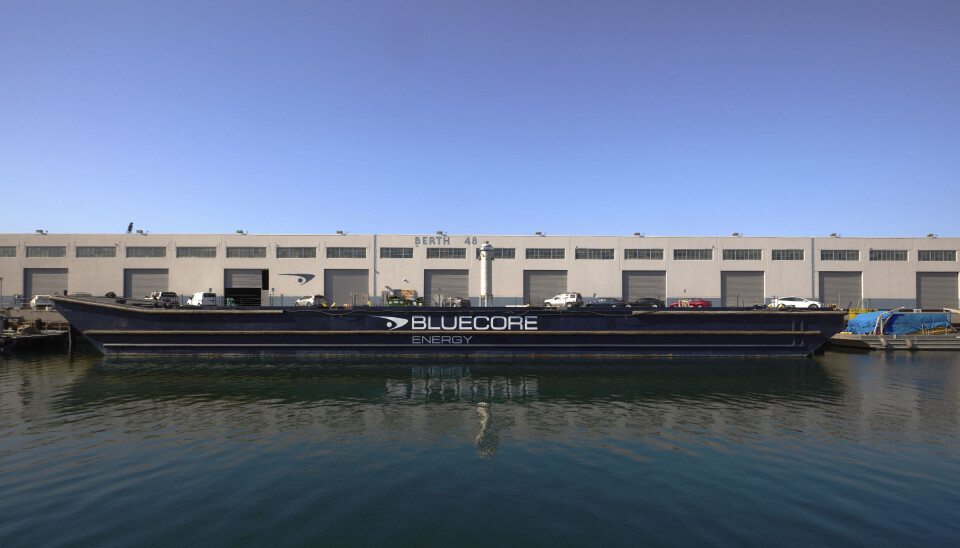
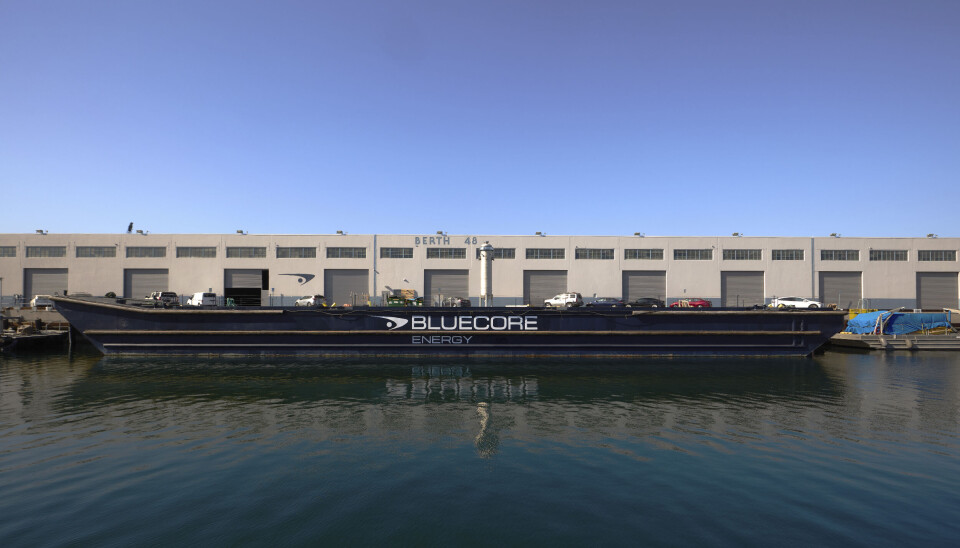
The company has secured its first barge and is developing a non-fueled, electrically heated reactor module prototype at its Port of Long Beach headquarters to test monitoring, sensor, and control systems.
Bluecore is targeting ports, AI datacenters, and coastal infrastructure, with the reactors potentially deployed offshore and connected to customers by subsea cables. Remote islands and coastal settlements in places such as Alaska may also lack practical connections to a wider electricity grid.
Advertisement
Bluecore claims its approach could provide reliable, zero-emission power to energy-intensive locations and open additional markets for nuclear generation.
“Six months ago, we were building the foundation. Today, we have the capital, the team, the hardware, and some of the most important institutions in nuclear and maritime working alongside us,” said Bluecore founder and CEO Kofi Asante.
Bluecore bargeBluecore
“Our focus now is simple: create and deliver zero-emission energy as safely and quickly as possible.”
The move follows the launch of the International Atomic Energy Agency’s (IAEA) Atomic Technologies Licensed for Applications at Sea (ATLAS) initiative in the US capital last month.
Advertisement
Secretary of Energy Chris Wright linked that event to the Department of Energy’s own efforts to rapidly expand the provisioning of atomic energy generating capacity in order to meet the requirements of AI datacenters and other industries.
Bluecore has begun discussions with the US Nuclear Regulatory Commission (NRC) and Coast Guard. The two agencies recently signed a memorandum of understanding to coordinate oversight of the design, construction, and operation of civilian floating nuclear power plants. The NRC says it is ready to license maritime reactors under existing federal regulations, while it develops an additional framework for microreactors and similarly low-risk designs.
Bluecore remains years from commercial deployment. It has yet to build a fueled reactor or apply for the approvals required to operate one, and its Long Beach proposal must also navigate California’s restrictions on new nuclear power plants.
While some may have concerns about waterborne atomic power plants, America has a long history of maritime nuclear generation. All of the US Navy’s active aircraft carriers are nuclear-powered, but the technology first went to sea aboard the submarine USS Nautilus in 1955. USS Enterprise became the first nuclear-powered aircraft carrier in 1961, while the cruiser USS Long Beach, commissioned the same year, was the first nuclear-powered surface combatant.
Advertisement
Bluecore says its team includes former US Navy nuclear submarine officers and leaders with experience across organizations including SpaceX, Northrop Grumman, Toyota, Rivian, and Uber.
Russia currently operates the world’s only floating nuclear power plant. The barge-like Akademik Lomonosov is considerably larger than Bluecore’s proposed design and can generate up to 70 MWe. ®
South Korea could invest $22.3 billion in a massive Texas gas plant
The proposed facility would generate 6.3 GW of electricity for AI
Seoul says negotiations remain unfinished, leaving the reported investment unconfirmed
South Korea and the United States have reportedly settled on how much Seoul will contribute towards a new energy facility in southern Texas.
Korean outlet Edaily, citing unnamed officials and lawmakers, reported the contribution at close to $22.3 billion for the venture, which would be built in Encinal, Texas, and is expected to produce 6.3 gigawatts of electricity to power AI data centers once fully operational.
The contribution would mark Seoul’s first American investment carried out under an economic arrangement the two nations signed in 2025 which saw South Korea commit $350 billion toward ventures inside the United States in exchange for friendlier duty terms on its exports.
Latest Videos FromTechRadar
Advertisement
A deal rooted in last year’s pact
However South Korea’s Industry Ministry said the recent media reports about the Texas deal were not accurate, revealing that official discussions with Washington are still going on, so no exact numbers can be confirmed yet.
Any formal announcement would come only after discussions conclude, alongside domestic steps such as approval from South Korea’s legislature.
In a separate statement, the ministry noted that no decision has been reached on building an atomic energy facility on American soil.
South Korea is also weighing other ventures inside the United States, including a large-scale nuclear station and a separate gas export scheme tied to Alaska.
Sign up to the TechRadar Pro newsletter to get all the top news, opinion, features and guidance your business needs to succeed!
Advertisement
Scale, cost and open questions
Should the project proceed as reported, it would rank among the most expensive natural-gas-fueled generating stations ever constructed anywhere in the world.
Industry accounts also suggest the plant could become the second most powerful facility of its kind currently in operation globally.
At the moment, there is no clarification whether Seoul intends to finance the entire sum on its own or share the burden.
The Encinal facility, once running, would supply electricity to server farms supporting growing artificial intelligence computing needs across the region.
Washington has also not issued detailed confirmation of the numbers currently circulating in South Korean press coverage.
For now, financing structure, ownership stakes and construction timelines have not been settled publicly by either government.
Current details are very sketchy, but analysts say the eventual scale of investment could shift depending on how negotiations with Washington proceed this fall.
Advertisement
Whatever the details turn out to be, a facility of this size would place significant demand on the Texas electrical grid, water access and local infrastructure.
Given how US residents have reacted to projects with similar demands, that pressure may not be welcomed quietly by communities near Encinal.
Nintendo held its The Legend of Zelda 40th Anniversary Direct on Tuesday to reveal a new release for one of its biggest franchises. The big news was the reveal of The Legend of Zelda: Ocarina of Time remake release date or a special edition Nintendo Switch 2. But the gaming giant also announced an actual ocarina that fans can buy to annoy their friends and family while learning how to play.
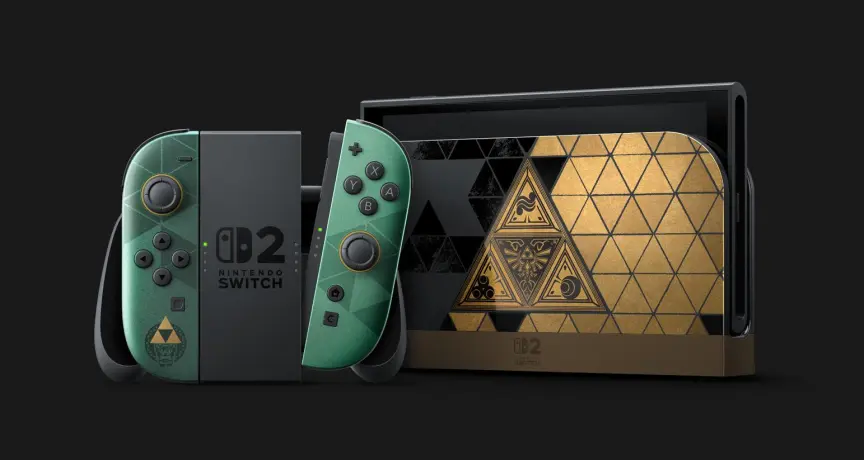
The Legend of Zelda: Ocarina of Time remake will launch on Nov. 5, according to Tuesday’s presentation. A week before its release, a special edition Switch 2 for the 40th anniversary will be released on Oct. 29, along with a Switch 2 Pro Controller and carrying case. Then, to complete the anniversary package for Zelda fans, Nintendo plans to release an official ocarina identical to the one Link plays throughout Ocarina of Time. There will be a traditional acoustic model and an electric version made by Hori.
The main star of Tuesday’s direct was the Ocarina of Time remake. As expected, it will make full use of the Switch 2’s graphics power to give a modern look to the almost 30-year-old game, first released for the N64. Visuals weren’t the only upgrades, as controlling Link is much easier using both analog sticks, which weren’t around in 1998, and instead of jumping automatically near any ledge, there’s a jump button to let Link get across gaps.
Advertisement
Another interesting feature involves the ocarina Link uses in the game. This is a key item as it lets Link do various magical feats when a certain tune is played by pressing the correct buttons. Something different is that players can now hum the tune, and the game will recognize the sound via the Switch 2’s microphone and complete the input to activate the song.
Only the intro sequence of the game in Kokiri Forest and the first section of Hyrule Castle Town were shown during the presentation. All the characters received a visual upgrade as well as voices, with new fully voiced cutscenes. Link, however, is still not going to talk.
First-time players who get lost or a little confused in the game will be able to check out Zelda Notes, a new feature added into the Nintendo Switch app that lets players track their progress, gives some hints on in-game location and provides other info for players.
Advertisement
Before playing Ocarina of Time remake, fans can pick up the Nintendo Switch 2: The Legend of Zelda 40th Anniversary Edition system. The new Switch 2 variant will have a unique look on the console and dock inspired by the game. There will also be a Switch 2 Pro Controller and a carrying case with their own inspired looks that will be sold separately. Nintendo also plans to have an exclusive Switch 2 Pro Controller with its own display stand for sale only at the Nintendo Store in New York City and San Francisco.
Nintendo
Then, there’s the ocarina. Two ocarinas will be available for purchase: a standard acoustic ocarina and an electric one made by Hori that can play songs via a button. Eiji Aonuma, the producer of the Zelda series, gave a demo of how the ocarina sounds during the show. Nintendo didn’t provide a price or release date for these ocarinas, but it said in a press release that they will be available later this year.
Nintendo/Screenshot by CNET
Other Zelda news mentioned in the show was the April 30, 2027, release date for a film based on the game, officially called The Legend of Zelda. A 40th anniversary concert series featuring the game’s music will also kick off in January in Japan and in February in the US, starting in Chicago. Also out next year are the Young Link and Young Zelda amiibo figures.
Nintendo didn’t officially put a price on the Ocarina of Time remake, but the digital version is expected to be $60. There is a listing for the physical version of the game on the Nintendo Store for $70 that appeared shortly after the presentation and was taken down by Nintendo. It’s unclear what items shown during the event will be available at other retailers and which ones will be available only through the Nintendo Store.
Oscar Gonzalez
Contributing writer
Oscar Gonzalez is a Texas native who covered video games, conspiracy theories, misinformation and cryptocurrency.
See full bio
Xiaomi, at least in China, makes some of the best smartphone accessories, and power banks are definitely at the top. And after giving Indian consumers access to its latest air purifiers, Xiaomi has just expanded its portable charging lineup in India with three new power banks. The new range includes the Xiaomi UltraThin Magnetic Power Bank 5000, Xiaomi Magnetic Power Bank 10000, and the flagship Xiaomi Power Bank 20000 165W.
While the two magnetic models focus on wireless convenience and portability, the 20,000mAh variant is designed for users who need to fast-charge laptops, phones, and multiple devices simultaneously. Prices start at ₹3,699, with sales beginning on September 11.
Xiaomi UltraThin Magnetic Power Bank 5000 is Just 6mm Thick
If portability is your top priority, Xiaomi’s new UltraThin Magnetic Power Bank 5000 is the standout option. The company claims it’s only 6mm thick and weighs 98g, making it slim enough to slip into a pocket without adding much bulk.
It packs a 5,000mAh battery and supports 15W magnetic wireless charging for compatible devices. For faster charging, the USB-C port can deliver up to 22.5W. It can also charge two devices at once, combining wired and wireless charging.
On the other hand, the mid-range model is aimed at travelers and heavy smartphone users who need more capacity without sacrificing magnetic charging.
Advertisement
It features a 10,000mAh battery, 25W Qi 2.2 wireless charging, and a built-in USB-C cable so you don’t need to carry one separately. Wired charging reaches 45W, while support for PD, PPS, and QC 2.0 ensures compatibility with a wide range of phones and accessories.
Xiaomi Power Bank 20000 165W Can Fast-Charge Laptops
The flagship model is built for power users. With a 20,000mAh battery and 165W combined output, it can charge multiple devices at the same time, including compatible laptops.
USB-C 1 delivers up to 120W, while USB-C 2 supports 45W. There’s also an integrated 120W USB-C cable and a USB-A port for additional devices. A built-in color digital display shows battery percentage, charging speed, estimated time remaining, and system status.
Xiaomi says the power bank supports major fast-charging standards, including PD 3.0 (PPS), QC 3.5, BC 1.2, and Apple 2.4A.
And that’s why trying to distill partisan politics down to just “team blue” vs. “team red” is reductive at best and false equivalence at worst. This and many other life-or-death issues break down on pretty clear partisan lines, and it’s entirely clear which party is right and which one is wrong.
Christ knows the Democrats aren’t perfect. But of the two major parties they’re the one that’s not a eugenicist death cult.
No, that’s not how computers work. Microsoft Windows identifies the connected monitor, and then, on its own authority, checks whether the manufacturer has “recommended” any software to go with it; if so, Windows installs that without telling the user. The monitor isn’t installing anything.
Of course, we should also be criticizing monitor manufacturers for taking advantage of this misfeature. But the root problem is with Microsoft. More than 2 decades after the Sony rootkit, they haven’t learned their lesson (or maybe they have: people will put up with this shit, and the blame will mostly be misdirected).
Teslas might function as a car some of the time, but that doesn’t mean you have to give Musk any credit whatsoever.
Starlink is a money pit from whence nothing can be recovered. Even the most corrupt broadband fiber deployment can be dug up or reused. Comcast could, in a just judicial system, be broken up as an illegal monopoly and their infrastructure that we paid for could be reused by other service providers.
And not every dollar was going to go to big monopolistic companies, whereas any money going to Starlink funds literal authoritarian, anti-democratic election interference.
Unfortunately, “kids won’t be able to post videos that make authorities look bad and fuel significant protests” is an appealing argument to the authoritarians who are already in favor of curbing social media access for kids which those authoritarians can’t directly control.
For the past several years, Apple has been largely handing out incremental upgrades to existing iPhone models. Except for the slim iPhone Air and the lower-cost iPhone “e” models — both announced in the last year — it’s been a while since the company came out with a truly flagship-grade, completely fresh iPhone model. And by the looks of it, this year’s iPhone launch event is likely to change all that. Apple is reportedly opting for a two wave launch for the iPhone 18 lineup (meaning the entire iPhone 18 lineup won’t launch in September) and Apple’s first foldable device — the rumored iPhone Ultra — is all set to be announced at the September 9 event, dubbed “Surprise and Shine”.
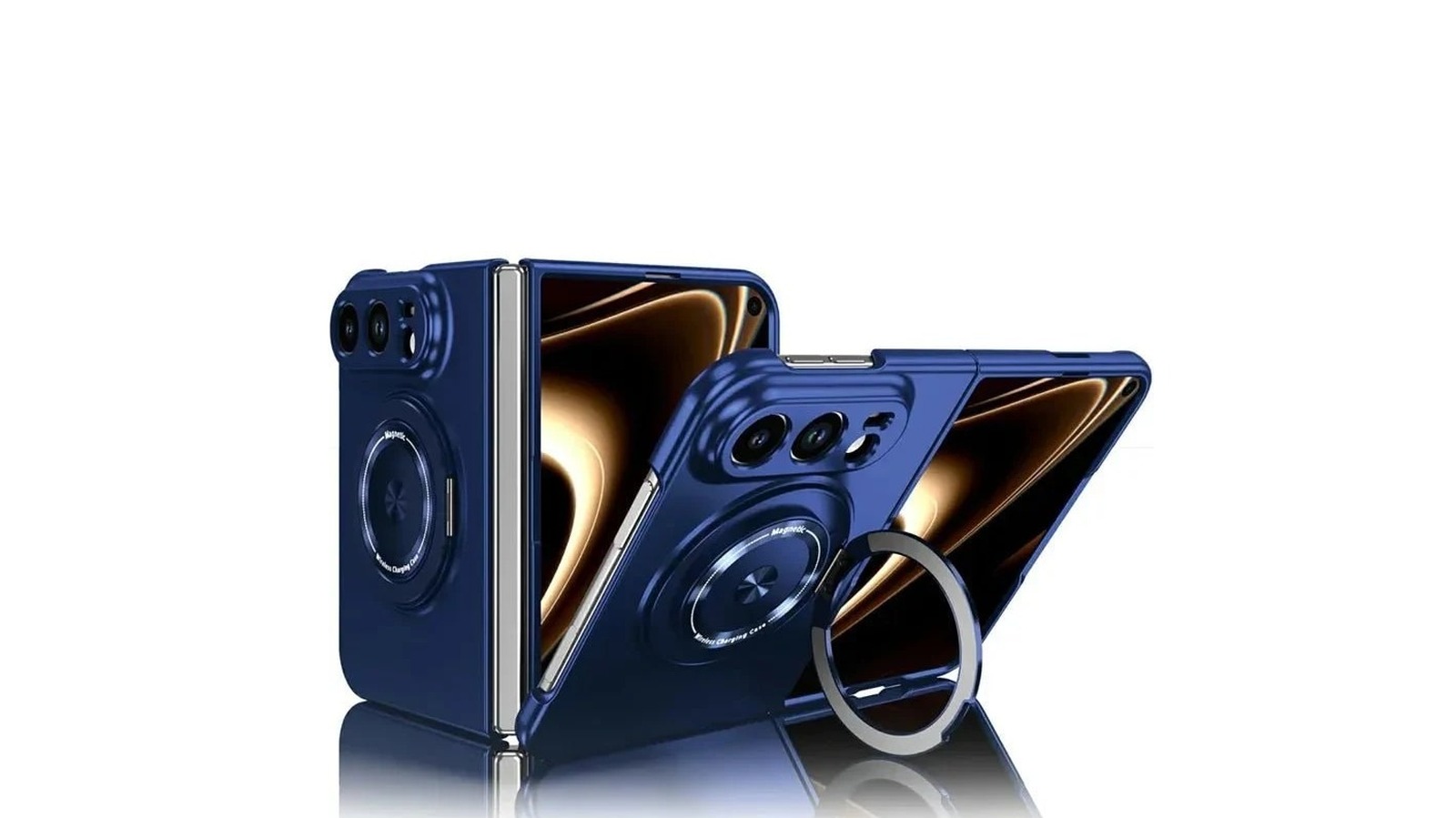
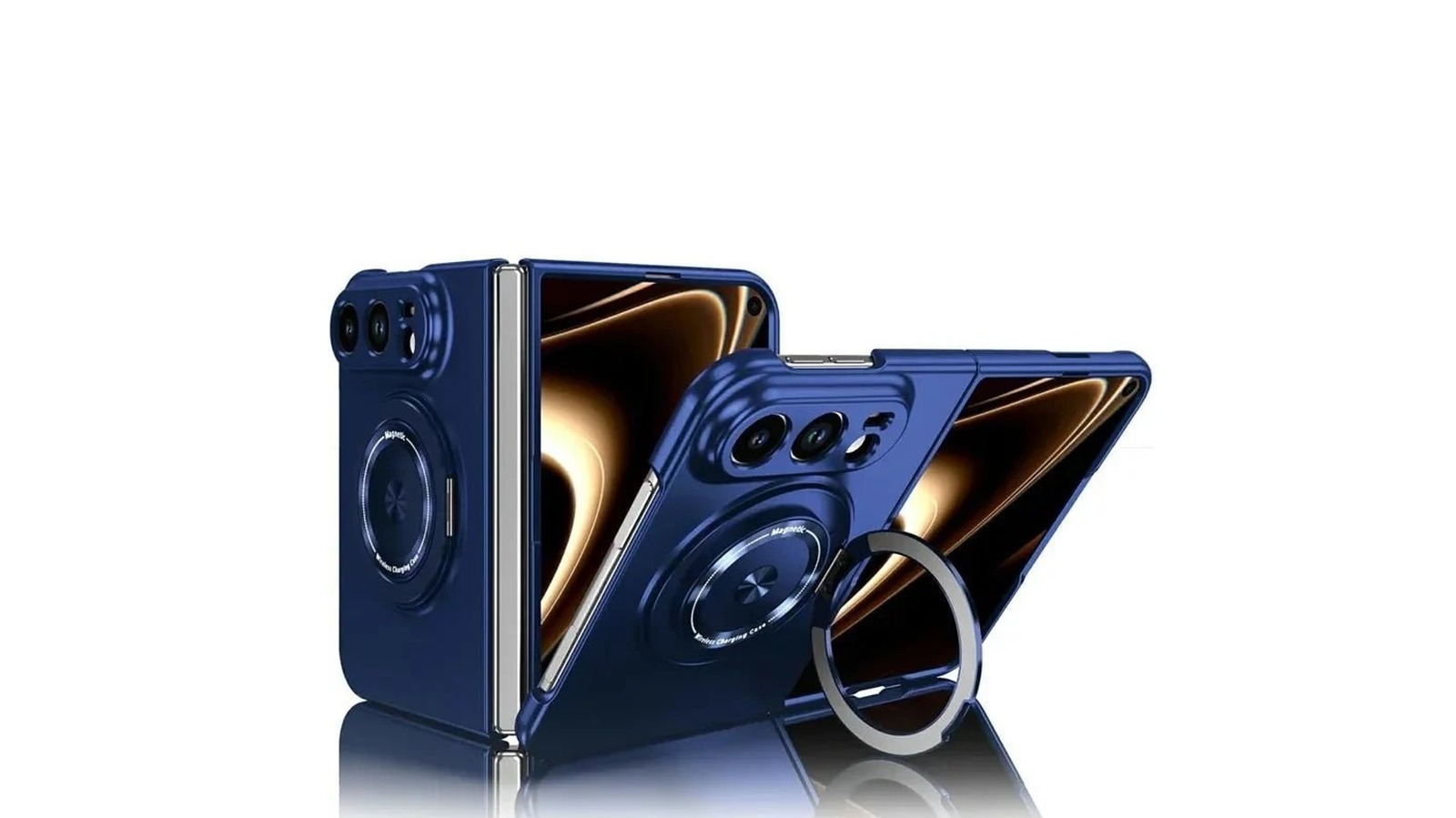
While Apple has chosen to remain silent over the arrival of its first-ever foldable smartphone, it appears as though the company’s close partners who make cases for them are under no such obligation. Many of these accessory manufacturers have already begun listing cases that are intended for the iPhone Ultra. Notable accessory brands that have done this include DBrand, Armor-X, and Gorilla Cases.
Advertisement
What’s more interesting about some of these listings is that they already give us a glimpse of what the iPhone Ultra (or the iPhone Fold) would look like before the official unveiling. These include the shape of the device, how the dual camera array looks, and the position of the LED flash module on the rear panel. Needless to say, these listings have somewhat spoiled the anticipation of Apple’s first-ever foldable launch, although we largely had an idea about the device months prior to these “fresh” leaks.
Advertisement
The iPhone Ultra, and what we know so far
A foldable smartphone from Apple has been the part of rumor mills ever since the launch of the first generation Samsung Galaxy Fold, dating back to 2019. However, Apple stayed away from the phenomenon for close to seven years before deciding to try out the form factor anyway. This is also one of the last projects that Apple executed under the leadership of Tim Cook, who recently resigned as Apple CEO.
As for the device itself, if we’re going by the latest (and previously leaked) renders, the iPhone Ultra gets a “wide” form factor, which is unlike most foldable smartphones currently on the market. The display, when opened up, will likely feature a 4:3 aspect ratio, making it closer in feel to Apple’s existing tablets. Current rumors put the display size (unfolded) at 7.8 inches, making it only slightly smaller than the iPad Mini 7. The iPhone Ultra will also feature a smaller, 5.5-inch cover display. Unfolded, the device is claimed to be just 4.5 mm thin, and anywhere between 9 and 9.5 mm thick when folded.
Details surrounding the phone’s dual camera setup, whether it will skip Face ID in favor of Touch ID, and the overall final design of the device will come to light at the iPhone launch event. As for pricing, thanks to the ongoing RAM shortage and out of control RAM prices, expect the iPhone Ultra to be priced around the $2,000 mark, and possibly much higher for the top variants.
An anonymous reader quotes a report from TechCrunch: Telluride just managed one of its best-kept secrets in years, per The Hollywood Reporter. On Sunday night, festival-goers filed into a 650-seat theater with their phones locked away, having no idea what they were about to see, told only that it ran nearly three hours, hadn’t been shown anywhere, and that its principal creators would be in the audience. The surprise premiere they went on to enjoy is a new documentary from co-directors Nathan Fielder and Lance Oppenheim about Theranos founder Elizabeth Holmes.
Called “You Can See Everything,” the film is said to capture Holmes and her husband, Billy Evans, in the 34 days before she reported to federal prison in May 2023 to begin an 11-year sentence for defrauding investors about her blood-testing technology. Since then, her legal fight has limped along without success. Her appeals to overturn the conviction and shorten her sentence were rejected in February of last year. She then went a different route last year, asking President Trump to commute her sentence. That clemency petition is still listed as pending, meaning it’s officially been opened and remains under review.
Fielder apparently lived in the couple’s guest house during filming — the access they provided sounds shocking — but some of the buzz also ties to an A-list actress who becomes part of the story itself. A24 is set to release the film in October. You can watch a trailer for the film on YouTube.
Apple will host its annual iPhone event on Wednesday, September 9 at 10 a.m. PDT, and it’s expected to be a big one. All signs point to Apple’s long-awaited entrance into the foldable smartphone market, finally shipping this kind of hardware about seven years after Samsung did.
Apple has a YouTube stream prepared for the “Surprise and shine” event, and you can set reminder notifications within YouTube to make sure you don’t miss it (or you can bookmark this page). You can also watch the livestream on Apple’s own events site.
Aside from the foldable iPhone Ultra, Apple is also expected to announce the iPhone 18 Pro and iPhone 18 Pro Max models, for people who want an upgrade but don’t see the appeal of the foldable, or who don’t want to pay the rumored $2,000 price for the iPhone Ultra. The standard iPhone 18 model isn’t expected to launch until next year.
Advertisement
Apple may also release new hardware like an updated HomePod, camera-enabled AirPods, and new Apple Watches.
With new Apple CEO John Ternus at the helm, this will be Apple’s first major product announcement since longtime CEO Tim Cook stepped down.
When you purchase through links in our articles, we may earn a small commission. This doesn’t affect our editorial independence.
A village of Pallet tiny houses, with some customization by residents. (Pallet Photo)
Nine years after setting out to tackle unsheltered homelessness with rapidly deployable, hard-panel micro-shelters, Everett, Wash.-based social purpose corporation Pallet is closing its business.
In a post on its website, Pallet said the landscape surrounding the homelessness response has evolved significantly since the company was founded in 2017.
“Communities understand the challenge differently,” Pallet’s statement says. “Customer needs have become more complex. Funding environments and political priorities have shifted. And through nine years of working alongside communities across North America, we have learned an extraordinary amount about what works, what doesn’t, and what is needed next.”
Since launching, the company deployed over 100 transitional villages across North America, providing more than 6,000 temporary beds and serving an estimated 30,000 individuals. To support that scale, Pallet raised more than $18 million in venture and impact funding — including a $15 million Series A round in 2022.
Pallet was founded by husband-and-wife team Amy and Brady King, who grew the social purpose company out of their work in general contracting and a desire to build fast, dignified, individual emergency shelter alternatives.
Advertisement
The pair designed modular, panelized shelter units that could be assembled on-site in under an hour without specialized tools — incorporating climate control, lockable doors, and cleanable hard surfaces to serve both natural disaster relief and city homelessness responses.
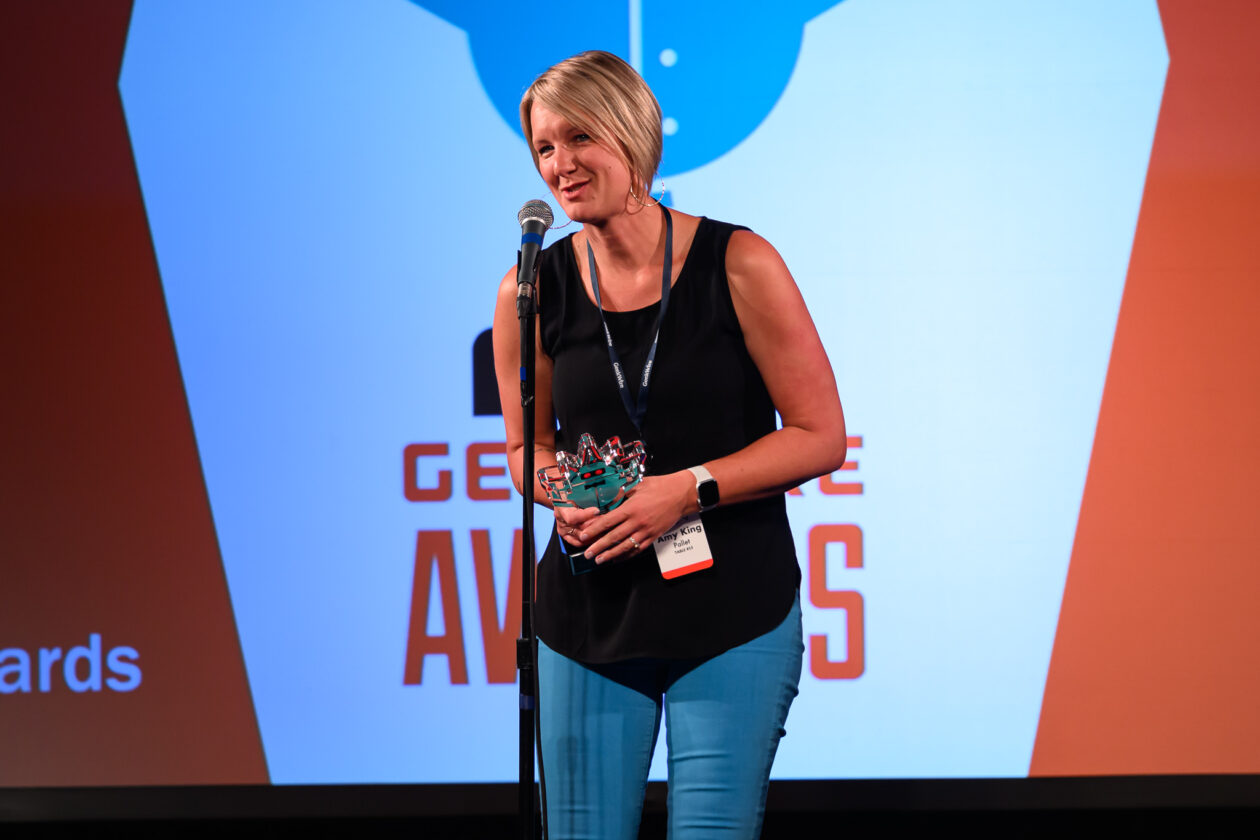
Pallet was the Hardware/Gadget/Robotics of the Year winner at the 2022 GeekWire Awards.
“We exist because communities cannot quickly build enough affordable, permanent housing to meet the needs of their residents,” Amy King, Pallet’s CEO, said in 2022.
GeekWire reached out to Pallet for comment on Tuesday and we’ll update this story when we hear back.
Advertisement
Amy King, CEO of Pallet, accepts Hardware/Gadget/Robotics of the Year at the 2022 GeekWire Awards. (GeekWire File Photo / Kevin Lisota)
In a report on the closure, Seattle news outlet PubliCola noted that Pallet’s plastic and fiberglass panel units ran roughly $20,000 each — nearly five times the cost of a traditional wooden tiny home built by the Low-Income Housing Institute.
In Seattle, where the city recently partnered with Pallet on a 75-unit shelter in Interbay, the contract budget with the city’s Human Services Department roughly tripled from $1.3 million to nearly $4 million as the scope expanded, PubliCola reported.
With Pallet shutting down, operators of existing sites will now be left to perform their own ongoing maintenance and source replacement parts independently.
Seattle Mayor Katie Wilson, who pledged to open 1,000 new units of shelter and emergency housing during her first year in office, called Pallet’s closure unfortunate.
“My understanding is that Pallet shutting down is really due to shifts in the availability of public funding,” Wilson told PubliCola. “They just don’t have the demand, in terms of purchasing their shelters, that they need to keep them in business.”
Advertisement
Pallet noted that its team members plan to carry their operational experience into new initiatives within the homelessness space, while pointing to lasting systemic changes — such as updated building codes and policy shifts — that helped legitimize rapid-deployment shelter alternatives.
“Our goal was never to defend one solution. Our goal is to solve the problem,” the company wrote on its website, framing the closure not as a retreat, but as a necessary evolution.




















































You must be logged in to post a comment Login