
Business
Australians are ‘furious’ about inflation: RBA deputy

Yes. Corporate subscriptions are available for teams and organisations, with discounted rates as user numbers increase. Pricing starts from $1,625 + GST per user.
Get in touch
to discuss the right option for your organisation.
Business News subscriptions are used by executives, investors, consultants and professionals who need to stay informed and make better decisions about the WA market. When you subscribe you’ll get
- Unlimited access to WA’s most trusted business journalism
- Data & Insights — detailed profiles of WA companies, people, projects and deals
- MyBN — a personalised feed based on the companies, people and sectors you follow
- Special publications and industry reports
- Daily and weekly email newsletters
Data & Insights is a research tool built specifically for the WA market. It draws on more than 30 years of Business News reporting, updated regularly to reflect what’s happening now. Use it to:
- Look up detailed profiles of WA companies, including financials, directors and ownership
- Find decision-makers and track their career movements
- Research live and completed projects across WA industries
- Monitor deals, appointments and market activity
- Access industry rankings and league tables
Data & Insights is updated daily by our dedicated research team, which uses the latest announcements, ASX filings and editorial coverage to keep our person, company, list and project records up to date.
Business News welcome all opportunities to make our dataset accurate, complete and current, so if you have an update request, please email the team at
general@businessnews.com.au, and we’d be happy to assist.
MyBN
is part of every subscription. It’s your personalised view of Business News. You can follow the companies, people, sectors and projects that matter to you, and get a news feed and alerts tailored to your interests. You can save articles to read later and retain only what you need.
Only subscribers have full access to all content on the Business News website.
If staying informed about the WA economy is part of your job, and/or you’re looking for networking opportunities in WA, Business News is built for you.
Business News subscribers are:
- Executives and directors tracking competitors, clients and market movements
- Investors and advisers researching companies, deals and industry trends
- Consultants and professionals staying across sectors relevant to their clients
- Business owners looking for leads, context and market intelligence
Most Business News publications cover national or global markets. Business News is focused entirely on Western Australia, which means the journalism, the data and the intelligence are all built around WA companies, people and projects — not adapted from a national feed. Data & Insights, included with every subscription, combines more than 30 years of WA-specific editorial research with live business data. There’s no comparable product for the WA market.
The Morning Digest Email provides a comprehensive wrap of the major headlines, relevant to WA business, and includes with a snapshot of the overnight news covering oil, gold and ASX-listed companies.
The Afternoon Wrap Email focuses on the news covered by our team of journalists during the course of the working day, including exclusive stories and analysis, all of which relates to WA business and the local economy.
The BN Weekender Email contains a wrap of the Business News from the week that was, highlighting the top stories in each area of WA business.
Sign up for free.
We’re happy to help.
Get in touch
and our team will come back to you.


Company Participants
Jason Rechel – Investor Relations Head
Ara Mahdessian – Co-Founder, Chairman of the Board & CEO
Vahe Kuzoyan – Co-Founder, President & Director
Dave Sherry – Chief Financial Officer
Conference Call Participants
David Hynes – Canaccord Genuity Corp., Research Division
Michael Turrin – Wells Fargo Securities, LLC, Research Division
Dylan Becker – William Blair & Company L.L.C., Research Division
William Fitzsimmons – Piper Sandler & Co., Research Division
Christopher Quintero – Morgan Stanley, Research Division
Scott Berg – Needham & Company, LLC, Research Division
Tyler Radke – Citigroup Inc., Research Division
Nicholas Altmann – BTIG, LLC, Research Division
J. Lane – Stifel, Nicolaus & Company, Incorporated, Research Division
Jason Celino – KeyBanc Capital Markets Inc., Research Division
Terrell Tillman – Truist Securities, Inc., Research Division
Joseph Vruwink – Robert W. Baird & Co. Incorporated, Research Division
Andrew Sherman – TD Cowen, Research Division
Daniel Jester – BMO Capital Markets Equity Research
Yun Suk Kim – Loop Capital Markets LLC, Research Division
Presentation
Operator
Thank you for standing by, and welcome to ServiceTitan’s Second Quarter Fiscal Year 2027 Earnings Conference Call. [Operator Instructions] I would now like to hand the call over to Jason Rechel, Vice President, Investor Relations. Please go ahead.
Jason Rechel
Investor Relations Head
Thank you, operator, and welcome, everyone, to ServiceTitan’s Fiscal Second Quarter 2027 Earnings Conference Call. With me are ServiceTitan’s Co-Founder and CEO, Ara Mahdessian; Co-Founder and President, Vahe Kuzoyan; and CFO, Dave Sherry. During today’s call, we’ll review our fiscal second quarter 2027 results. We will also discuss our guidance for the third fiscal quarter and full fiscal year 2027.
Before we get started, we want to draw your attention to the safe harbor statement included in today’s press release and emphasize that information discussed on this call, including our guidance, is based on information as of

Stocks have slipped and oil flirted with $US100 a barrel prices as investors fretted over potential inflation concerns and ongoing conflict in the Middle East.
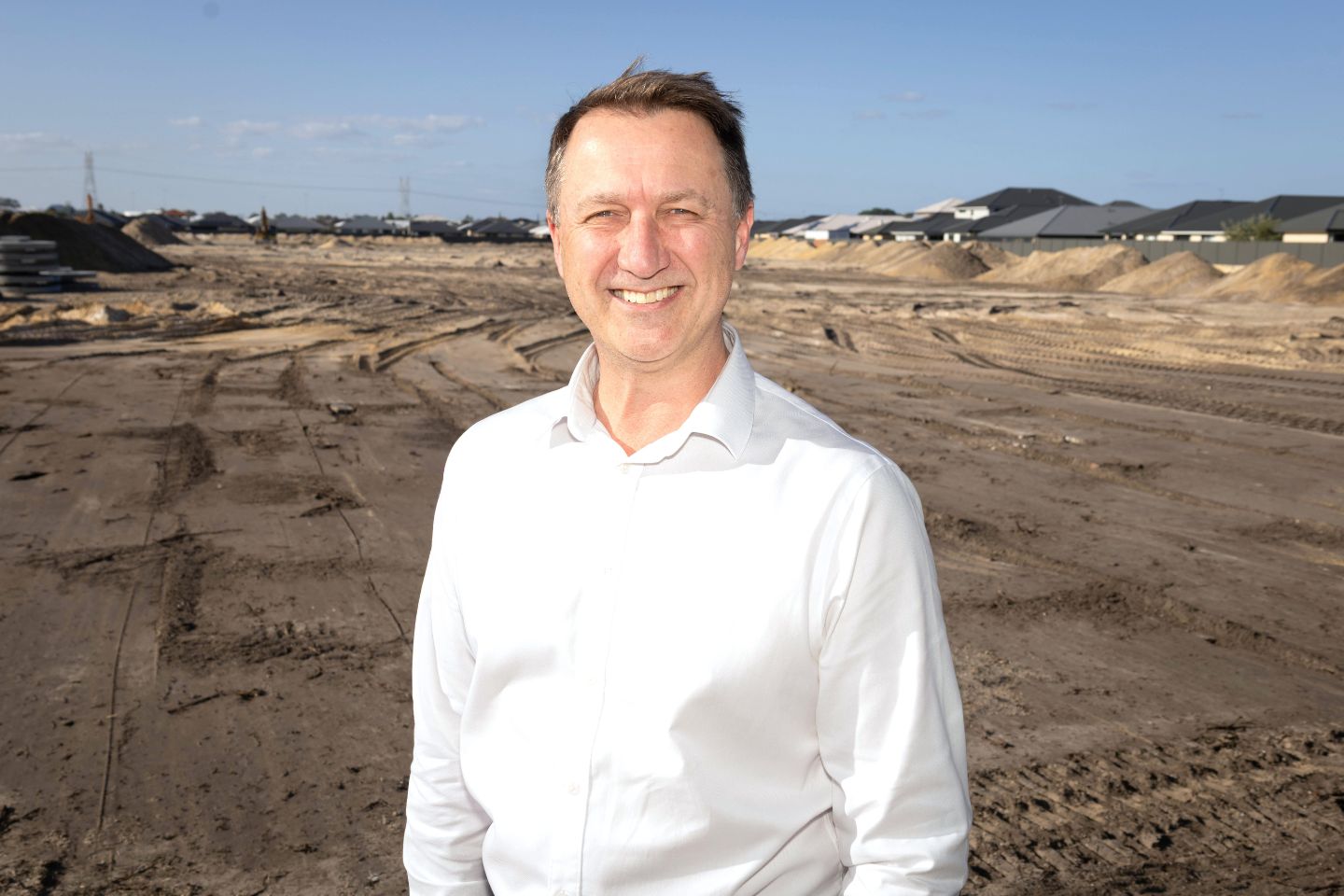
Strong population growth and a shortage of new supply are bolstering the state’s retail property sector.

The cliffside village of Atrani at sunset along the Amalfi Coast, Campania, southern Italy.
© Marco Bottigelli | Moment | Getty Images
Fall is the new peak season for luxury travel, as the wealthy continue to shift their holidays to September and October to avoid the summer crowds, according to a new study.
Fall bookings for luxury travel and experiences are up 59% compared with last year, while sales surged 69%, according to Virtuoso, the global luxury travel network. September is now a peak month, with sales up 77%. October and November sales are up 54% and 71%, respectively.
Virtuoso calls it the “fallcation,” with the wealthy moving their typical summer getaways to autumn.
“Especially for the high-net-worth and ultra-high-net-worth group, we’re seeing huge gains for fall this year,” said Misty Belles, vice president at Virtuoso. “September is really eclipsing August. That shoulder season is no longer really a shoulder season. It’s becoming a peak season unto itself.”
While the shift to fall has been happening for years, it accelerated in 2025 and 2026, travel experts said.

Summer heat waves in Europe have made travel in July or August increasingly unpleasant. Growing wealth and the shift in spending from goods to experiences have fueled more luxury travel and ever-growing crowds in popular destinations like southern Italy and France. Top hotels and restaurants are often fully booked and charging ever-higher prices, making a summer trip to Europe often an exercise in disappointment.
Demographics also play a role. Most wealth is now held by baby boomers, who are often retired and enjoying global travel. Gen Xers are joining them, since their kids are often grown and are no longer tied to the school calendar. Add in the millennial and Gen Z digital nomads, who aren’t tied to the office, and the population of wealthy travelers who can ditch the traditional summer months in favor of fall is growing.
“Wealthy travelers have more experience. They have experienced destinations in the summer,” Belles said. “They know it’s hot. They know it’s crowded. They know it’s not often the best time to see a destination, so they’re shifting over to fall because the lines are going to be shorter, less crowded and the temperatures are more moderate.”
The most popular destinations for wealthy Americans this fall are largely in Europe, according to Virtuoso. Paris is the top destination, followed by the Amalfi Coast, the French Riviera, Tuscany in Italy and then New York. London, Lake Como, Italy, Maui, Hawaii, and Rome are also popular.
There are signs, however, that the fallcation is recreating some of same problems travelers are trying to avoid in the summer. Hotel rates in Europe for September are now close to summer rates, with some charging even more, travel experts said. Average daily hotel rates are up 131% in the Greek Isles, 78% in Puglia in Italy and 179% on the French Riviera, according to Virtuoso.
© Marco Bottigelli | Moment | Getty Images
Crowds in Southern Europe could start to rival July and August, especially in wealthier resorts.
“I don’t think they’re expecting no crowds,” Belles said. “But they are expecting a better experience than they would see in the summer and I think that’s going to continue for a while.”
Belles recommended traveling in November to avoid the September and October crowds, although November bookings are also up 70%.
More broadly, demand for luxury travel is pushing up high-end hotel rates around the world. Bookings at hotels charging $1,500 or more per night are up 37% compared with last year. Luxury international hotels now average $1,653 a night, up from $985 in 2019, according to Virtuoso.
“Rates are growing at a faster clip [for luxury] than the lower-rate hotels, so that tells us there is a premium placed on the experience,” Belles said. “The demand is certainly strong.”


Check out what’s clicking on FoxBusiness.com.
The Trump administration will ban imports of Canadian dairy products, most alcoholic beverages and motorcycles, the White House announced Tuesday, marking a sharp escalation in the trade dispute between the neighboring countries.
The restrictions will take effect in three weeks, according to the White House. The move came hours after Canada imposed retaliatory tariffs on $20 billion worth of U.S. imports.
The latest action deepens a trade conflict between two of North America’s largest trading partners, with both governments imposing new measures despite their closely integrated economies and longstanding commercial relationship.
This is a developing story. Check back later for updates.

VAIL, COLO. — Nearly two years after the make America healthy again (MAHA) movement evolved from a campaign slogan to an official driver influencing federal policy and food manufacturing decisions, sugar industry leaders are assessing its broader impact on consumer perceptions of sugar and purchasing behavior, even as policymakers continue to pursue measures aimed at changing both.
“If you follow it closely, like I do, it feels like a disaster,” Courtney Gaine, president and chief executive officer of The Sugar Association, told attendees at the 41st annual International Sweetener Symposium in Vail. “You’ve got somebody with a very loud microphone and an echo chamber, and it feels like it’s been a nonstop barrage of attacks on sugar, whether it’s that sugar is as addictive as crack or sugar is poison. Then in January, the United States was launching a war on sugar. It’s hard to fight back against this narrative, so you kind of take it and hope that the damage isn’t too extreme.”
Gaine, a registered dietitian who also has a PhD in nutritional sciences and biochemistry, said the MAHA rhetoric, especially from Health and Human Services Secretary Robert F. Kennedy Jr., appears at odds with reality.
“We did a survey last March and it turns out that MAHA supporters are genuinely OK with sugar, so even though this movement is powerful and it’s loud and it’s chaotic, we felt like sugar might fare OK,” Gaine said, adding that another survey conducted in March of this year showed similar results. “About 90% of MAHA supporters still, a year and a half into the MAHA movement, feel that sugar is an important part of the diet and are okay with it.”
Brandon Lipps, a principal at Caprock Strategies who presented alongside Gaine at the Sweetener Symposium, said that while consumer demand for sugar has not collapsed, the emotional rhetoric behind the MAHA movement continues to drive policy change that has the potential to impact sugar usage.
“When you talk to parents whose kids have health issues, and when you talk to families who are dealing with health issues, and when Secretary Kennedy quotes all these statistics and tells them that they have a solution, they’re going to buy it,” Lipps told the Symposium attendees. “Emotion moves. It gains momentum. The only defense that sugar has is that the facts are actually on your side.”

“Emotion moves. It gains momentum. The only defense that sugar has is that the facts are actually on your side,” said Brandon Lipps (left), principal at Caprock Strategies.
| Source: Sosland Publishing Co.Both Lipps and Gaine pointed to a chart showing obesity rates among adults and children climbed sharply even as added sugar consumption steadily declined.
“There are folks that have a lot of problems in this country, but sugar is not the single cause,” Lipps said. “It’s maybe not even a major cause of the health epidemic in this country.”
Still, recent policies that have either passed or are currently under legislative consideration may directly influence the decisions of consumers and food manufacturers when it comes to buying or making products with sugar. These include front-of-label packaging, reformulating school meals to align with the sugar consumption limits recommended in the 2025-2030 Dietary Guidelines for Americans, and restrictions on using federal-assisted food program dollars to purchase foods made with sugar.
Lipps said that despite evidence pointing toward consumers’ acceptance of sugar and the data that shows an incongruent correlation between obesity and sugar consumption, the Trump administration is targeting sugar usage as an easy win for political gains.
“We acknowledge we have a health crisis in this country, but we don’t know what the solution is,” he said. “But if I go on the campaign trail and cite all these statistics to you and I tell you that I’ve got the solution, you’d perk up and listen. And America is doing that. The thing that Secretary Kennedy did is he didn’t create the MAHA movement, he created the MAHA political narrative out of a movement that was out in the countryside.”
Gaine shared a similar perspective.
“Asking the MAHA supporters specifically about the rhetoric that had come out from RFK Jr. about the war on sugar and about sugar being as addictive as crack and about sugar being poison, about 60% of MAHA supporters feel that rhetoric goes too far,” she said. “There’s a lot still to come with what’s on the table for the MAHA movement, not to mention that the MAHA movement doesn’t necessarily end when the Trump administration ends. It actually might get stronger.”

Airline Stocks Are Struggling. That Makes This One a Long-Term Buy.

InnovAge Holding earnings missed, revenue topped estimates


MARSHALL, MINN. — The Schwan’s Co., a US-based subsidiary of South Korean food manufacturer CJ CheilJedang, has debuted Crunchtime pizza as part of its Red Baron brand.
The 10-inch, multi-serve microwavable pizza may be prepared in 5 minutes. The pizza is available in multiple varieties, including pepperoni, meat trio, and four cheese.
“At Red Baron, we’re focused on bringing consumers the flavors and convenience they’re looking for,” said Katie Hagen, senior marketing manager for Red Baron pizza. “Crunchtime pizza is an exciting addition to our lineup — giving families a new way to enjoy a full-size pizza in just 5 minutes.”
Red Baron Crunchtime pizza is available now at major retailers and grocers across the United States for a suggested retail price of $5.99.
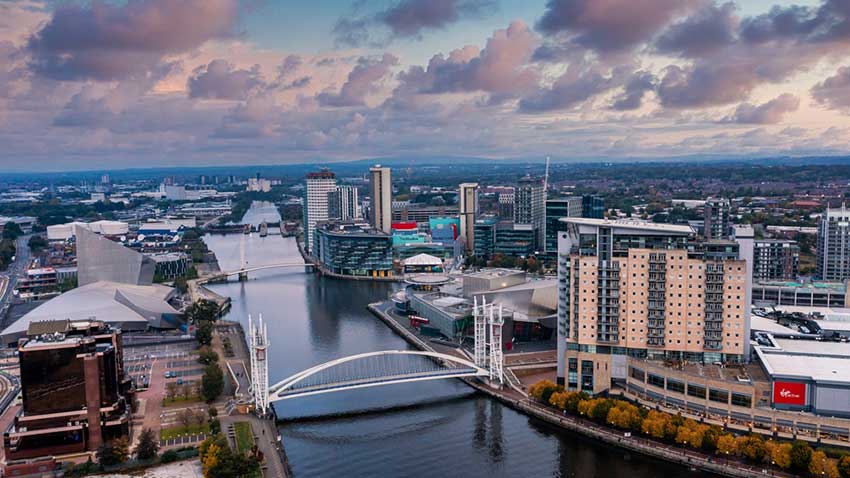
Salford has been named the UK’s most entrepreneurial city after its concentration of small businesses grew by 15.4 per cent in 12 months, according to rankings released by GoDaddy, which found satellite cities taking four of the top five places.
The Most Entrepreneurial Cities ranking, published by GoDaddy, with data from the company’s Small Business Research Lab. Each place with city status in the UK is given a microbusiness density growth score, based on the number of new start-ups for every 100 people. GoDaddy said the list identifies the key locations fuelling the UK’s small business economy.
Salford, with a population of about 130,000, is two miles from Manchester, home to about 550,000 people. Ely, 14 miles north of Cambridge, was second, with density growth of 14.9 per cent, more than double the 7.1 per cent recorded by its larger neighbour.
Bangor in Northern Ireland grew by 12.9 per cent, four times Belfast’s 3.2 per cent, while Milton Keynes, on 11.7 per cent, outpaced London’s 9.8 per cent. The full top 10 also includes Stirling, Londonderry, Manchester, Sunderland, Preston and Lisburn..
Investment in Salford
The company linked Salford’s first place to sustained local investment. The city has developed a digital and innovation-focused enterprise hub anchored by HOST Salford at MediaCity, backed by Salford City Council and public funding that includes £846,900 from the UK Shared Prosperity Fund. According to GoDaddy, the hub has supported more than 300 businesses and helped upskill more than 5,000 people, alongside programmes such as EnterprisingYou and Build a Business, which support people launching new ventures.
Yvonne Sampson, director of enterprise at GM Business Growth Hub, which delivers the EnterprisingYou programme, said: “The growth in Salford has been over a decade in the making, leveraging commercial and residential investment to create an environment for thriving entrepreneurship. The City has fantastic strengths, from the University to MediaCity and the longstanding partnerships between Salford Council and support organisations like ours, GM Business Growth Hub.”
She added: “Not only does it have a well-established digital, creative and technology sector, but recent investment in the City’s high streets has meant there has been some incredible growth in the everyday business economy.”
Zwi Meisner, 48, who has run the New York Laundrette in Salford with his brother for seven years, said: “Salford has a real sense of community. It’s a diverse place where people from different backgrounds support each other and genuinely want to see local businesses succeed. It doesn’t surprise me that so many new businesses are starting up in the area. Finding the right location is everything, and Salford can offer lower premise costs that would be harder to find in Manchester.”
Rents, AI and start-up costs
The research points to costs as one factor behind the shift. Average rent in Salford is about £2,500 a year cheaper than in Manchester, according to the Office for National Statistics.
Technology is another, GoDaddy said. More than half of entrepreneurs, 52 per cent, use generative AI to support their business, with the biggest time savings reported in content creation, cited by 62 per cent, marketing, at 40 per cent, and business advice, at 39 per cent.
The amount of capital needed to launch has also shrunk. In the latest survey by the Small Business Research Lab, 53 per cent of UK entrepreneurs said they had created a new venture with under £1,000 of initial investment.
Alexandra Rosen, economist and head of the GoDaddy Small Business Research Lab, said: “Entrepreneurship is no longer tied to major city centres. Better digital infrastructure, the rise of AI tools and lower start-up costs have changed the economics of building a business, making it possible for founders to launch and scale from places that may previously have been overlooked.”
She added: “What we are seeing is a more distributed model of growth, where smaller cities and towns are becoming increasingly important parts of the UK’s entrepreneurial ecosystem.”

Amy Ingham
Amy Ingham is a reporter at Business Matters, covering UK business news with a focus on breaking news, business policy, late payments and insolvency. She joined the magazine in 2026 after completing the NCTJ Diploma in Journalism at Harlow College’s journalism school. Her recent reporting includes British Steel’s nationalisation and its impact on SME suppliers, the decline in late payments by large firms, and Insolvency Service director disqualifications. Reach her at aingham@cbmeg.co.uk.

She Came Here To Fight Me | Financial Audit

ServiceTitan, Inc. (TTAN) Q2 2027 Earnings Call Transcript

Bitmine Acquires 28K ETH, Hits 97% of Treasury Accumulation Goal


-
 Tech13 hours ago
Memory prices are slowing because buyers ran out of money
-

 NewsBeat11 hours ago
England up in reading, maths and science rankings as Scotland and Wales dip
-

 Business15 hours ago
Egyptian TV Presenter Sarah Khalifa, 11 Others Sentenced To Death In Major Drug Trafficking Case In Cairo
-
 Tech15 hours ago
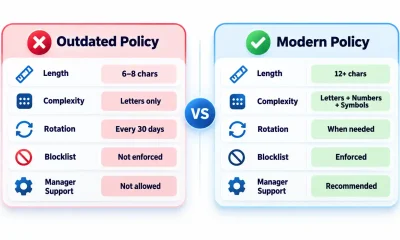
Strong Password Policy and Password Manager Guide
-

 Crypto World15 hours ago
Visa expands stablecoin card network to 160 programs
-
 NewsBeat11 hours ago
Tehran’s assertive rhetoric signals a new and dangerous phase in conflict
-

 Politics10 hours ago
The Ultimate September Reset Guide: How To Refresh Your Mind And Life This Autumn
-
 Business4 hours ago
Oil Higher on Hormuz Escalation, Weighing on Sentiment
-

 Tech10 hours ago
Google’s revived nuclear power plant gets $1.9B loan from US government
-

 Business15 hours ago
Claim Your Share Of $50 Million Disney Streaming Price Settlement By Sept. 8 Tonight
-
 Sports15 hours ago
Phones confiscated, players sent home: Pakistan’s England tour turmoil revives memories of Mohammad Amir, Salman Butt and Mohammad Asif’s 2010 Lord’s spot-fixing scandal | Cricket News
-

 Business13 hours ago
US-Canada tariffs: Canada braces for prolonged trade war as counter-tariffs on US take effect
-

 Tech10 hours ago
ESP32-P4 Powers Video Alarm Clock
-
 Business9 hours ago
Copper hits record high, UltraTech’s Ultravolt on the offensive: A double whammy for cable makers in FY27?
-

 Fashion9 hours ago
Phia Is the Shopping App That Styles You From Your Own Closet
-

 Crypto World15 hours ago
Iran Threatens to Target U.S. Energy Assets in Gulf If U.S. Strikes Again
-

 Business10 hours ago
Corning Stock Climbs On Multibillion-Dollar Verizon Network Deal
-
Crypto World10 hours ago
Zcash (ZEC) Rockets 2,200% as Privacy Coins Become Crypto’s Biggest Outlier
-

 Fashion8 hours ago
How to Safeguard Your Small Business Against Emerging Cyber Threats
-

 Business16 hours ago
model backs CBD drinks brand
You must be logged in to post a comment Login