
Business
model backs CBD drinks brand


Kendall Jenner, the American model and reality television star, has acquired a minority stake in Trip, the London-based drinks and supplements company best known for its cannabidiol (CBD) soft drinks, and will become the face of the brand’s new global campaign.
Jenner, 30, from Los Angeles, has one of the largest social media followings in the world, with 277 million followers on Instagram. She launched her own tequila brand, 818, in 2021, and had been a long-time fan of Trip before the deal, according to Olivia Ferdi, the company’s co-founder.
Trip was founded in 2019 by Ferdi and her husband, Daniel Khoury, and launched in the UK with a range of CBD soft drinks. Its bestselling range, Mindful Blend, combines lion’s mane, an extract of non-psychedelic mushrooms, with magnesium, camomile and L-theanine, a compound associated with relaxation.
Ferdi, 36, said Jenner’s investment was significant for Trip’s next chapter. “Her followers obviously outweigh a lot of countries’ populations … and she has a ton of credibility,” she said. Because Jenner was a “genuine customer [it will] make it more meaningful when she’s speaking to her audience”, Ferdi added.
Jenner said: “When I met Liv and Dan, I instantly connected with what they’re building. I love their vision for the brand and their mission to help more people find calm in their everyday lives. I’m so excited to be part of their journey.”
Celebrity backers
Jenner joins a group of celebrities who have invested in Trip, including the Brazilian model Alessandra Ambrosio and the American musician Joe Jonas. Other backers and ambassadors include the model Ashley Graham and Rosie Huntington-Whiteley, a partner at The Equity Studio, an investment firm that took a stake in the company in 2025.
Other well-known names have put money into drinks businesses: Beyoncé has bought out LVMH’s stake in her SirDavis whisky brand, while Virtue, a UK energy drinks maker, raised £2m from the BrewDog co-founder James Watt and the England footballer Eberechi Eze in 2024.
Ferdi, a former associate at the City law firm Allen & Overy, and her family remain the majority shareholders in Trip. Coefficient Capital, the New York-based venture capital group that has previously backed the British wellness start-up Zoe and is an investor in the cereal brand Magic Spoon, led a $40m investment round in Trip in November 2025, valuing the company at more than $300m.
Ferdi said the business “has sort of doubled since then and is due to double again in 2027”.
Sales and distribution
In the year to the end of February, Trip recorded net revenues of £50.9m, a 132 per cent increase on the year before, on the back of further distribution gains in the UK and new listings in large American retailers including Walmart and Target. The company says revenues are on track to reach $200m (£147m) in 2026.
Trip’s pastel-coloured cans and supplements are sold in 70,000 shops globally, including 25,000 in the United States, according to the company. Only Coca-Cola, Red Bull and Monster had won more shelf space faster than Trip in the UK in the past year, it said.
Ferdi played down fears of growing competition in the healthy drinks market, saying a strong category “endorses that we have created something meaningful”. She added that Trip “fits into a lot of strategic wish lists when you are thinking about health and wellness”.
In August 2026 Nichols, the owner of the soft drinks brand Vimto, announced the €75m acquisition of VitHit, the low-calorie drinks brand founded by the former professional rugby player Gary Lavin. In its announcement, Nichols put the UK functional drinks market at £5.8bn, saying it had grown by 10 per cent between 2025 and 2026.

Jamie Young
Jamie Young is Senior Reporter at Business Matters, covering SME finance, employment law and Westminster policy since 2016. He has reported on every Budget and Autumn Statement since 2018, helped make sense of the ‘covid era’ and the bounce-back loan scheme from launch through the fraud investigations, and broke the magazine’s coverage of the 2024 late-payment reforms. He joined Business Matters straight from completing his BA in Administration from Exeter University and is NCTJ-qualified. Reach him at jyoung@cbmeg.co.uk


Almost half of UK small business owners are now using artificial intelligence tools, according to research released on 8 September by the insurance provider Simply Business, which found adoption has more than doubled from 22 per cent in 2025 to 47 per cent.
A further 13 per cent of owners plan to start using AI within the next six to 12 months, meaning 61 per cent are either using the technology already or expect to be soon, according to the company’s 2026 SME Insights Report. The report draws on a survey of UK small business owners carried out between 30 July and 7 August 2026, alongside earlier studies conducted this year, Simply Business said.
Among businesses using AI, the most common applications are creating content, cited by 63 per cent, problem solving on 53 per cent and generating ideas on 50 per cent. Some 46 per cent say the technology is helping them save time on administration.
Research published in March by the Centre for Economics and Business Research for HSBC UK found that 55 per cent of mid-sized companies were using AI in some form by the end of 2025, up from about 35 per cent two years earlier.
Confidence gap
Confidence has not kept pace with adoption, the report found. Just 19 per cent of small business owners describe themselves as “very confident” using AI day to day, and 33 per cent say they use it only for routine administrative tasks.
Security and privacy concerns are the most commonly cited barrier, mentioned by 44 per cent of owners. Not seeing a clear use for AI is second on 39 per cent, ahead of concerns about accuracy on 36 per cent. Simply Business said the findings indicated that for many small businesses the obstacle was not access to the technology itself but a lack of clarity about its practical application.
Nearly one in three owners, 31 per cent, say they do not understand how to use AI or are wary of integrating it into their work, which the insurer said pointed to a wider skills gap. A Business Matters analysis published in June identified thin margins, scarce digital skills and a shortage of time to experiment among the reasons AI adoption is not spread evenly across the economy.
Calls for guidance
Julie Fisher, chief executive of Simply Business, said: “Adaptability and resilience are central to the DNA of small business owners and time and again they have proven they are drivers of innovation, finding new ways to grow even in the face of challenging trading conditions.”
She said the rise in AI adoption was one of the most significant shifts tracked in this year’s report, but that many owners remained wary of security and privacy around AI tools and unsure how the technology could be useful to them.
“To help unlock even greater levels of innovation and productivity, small businesses need tailored guidance on how AI can be used, accessible tools, and time to discover how it can work for them on their terms,” Fisher said.
Google launched its AI Works for Business programme of free workshops for small firms with the Department for Business & Trade and NatWest in 2025, after its research found UK small businesses lagging US counterparts on adoption.
Fay Phillips-Jones, founder and HR career coach at Coaching With Fay, said: “AI has played an important role in accelerating my business. As a sole founder, I use it to challenge my thinking, support business planning, organise information and develop more efficient systems. However, I treat AI as a thinking partner, not a substitute for thinking.”
She added: “I would welcome greater access to practical, funded education on responsible AI adoption. The opportunity for sole traders and microbusinesses is enormous, but the technology is evolving at an extraordinary pace.”
Ideja Bajra, founder of Edvance AI, said: “The biggest benefit to using AI is speed and efficiency; automating your processes means you can reach clients faster and more consistently. It’s also been a huge help in personal workload for me. There are already some encouraging government initiatives focusing on upskilling and AI integration, but from the perspective of a small specialist advisory firm, the support can sometimes feel fragmented.”
Jamie Young
Jamie Young is Senior Reporter at Business Matters, covering SME finance, employment law and Westminster policy since 2016. He has reported on every Budget and Autumn Statement since 2018, helped make sense of the ‘covid era’ and the bounce-back loan scheme from launch through the fraud investigations, and broke the magazine’s coverage of the 2024 late-payment reforms. He joined Business Matters straight from completing his BA in Administration from Exeter University and is NCTJ-qualified. Reach him at jyoung@cbmeg.co.uk
Business
Qatar Warns Of ‘Industrial Catastrophe’ As Hormuz Crisis Deepens Amid Houthi Attacks On Saudi Arabia
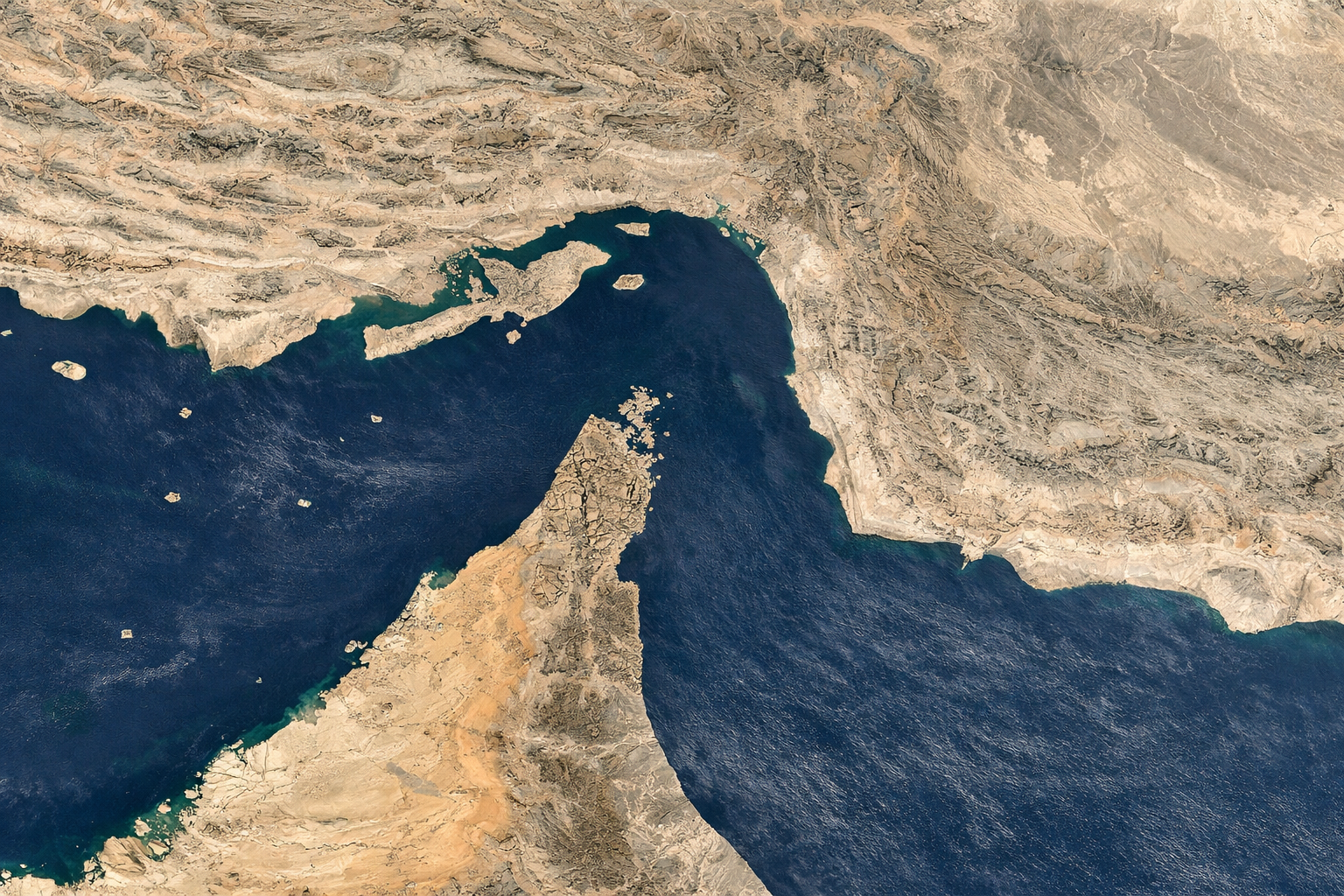
DOHA, Qatar — Qatar’s Foreign Ministry has warned that reopening the Strait of Hormuz to normal shipping traffic must become an international priority, cautioning that the world faces an “industrial catastrophe” if the ongoing crisis in one of the world’s most vital maritime chokepoints continues unresolved.
Foreign Ministry spokesperson Majed Al-Ansari delivered the warning to U.S. media Monday, as new data from maritime analytics firm Kpler showed an average of just 10 commodity ships transited the strait per day over the past 10 days, the lowest level recorded since May, following continued U.S. and Iranian strikes on tankers moving through the waterway.
The strait, through which roughly a fifth of the world’s oil and gas supply normally passes, has remained under an effective Iranian blockade since the outbreak of war between the United States and Iran earlier this year. Full-scale military hostilities between the two countries had eased in June following a Memorandum of Understanding, but tensions have escalated sharply again since that agreement expired last month, with Iran resuming attacks on tankers attempting to evade the blockade in recent weeks.
Qatari Prime Minister Sheikh Mohammed bin Abdulrahman bin Jassim Al Thani, who also serves as the country’s foreign minister, met with Chinese Foreign Minister Wang Yi in Beijing to discuss regional developments, including freedom of navigation through the strait, according to a statement posted by Qatar’s Foreign Ministry on X. Sheikh Mohammed affirmed Qatar’s support for diplomatic efforts aimed at securing maritime navigation and “paving the way for a comprehensive agreement,” describing the Beijing talks as “fruitful.”
Separately, the United States and European Union have pushed to refer Iran to the United Nations Security Council through the International Atomic Energy Agency, though analysts say the move is unlikely to meaningfully pressure Tehran. Cyrus Schayegh, a professor of international history and politics at the Geneva Graduate Institute, told Al Jazeera that Iran currently has little incentive to engage diplomatically with Washington.
“Iran is not interested in engaging with the US on the nuclear front until the US starts to engage with Iran,” Schayegh said. “If the Europeans and the US are going to refer Iran to the UN, there is not much Iran can do at this point,” he added, noting Tehran can rely on continued backing from Russia and China. “I don’t think Iran will be particularly afraid.”
Schayegh said Iranian leadership appears increasingly willing to escalate the confrontation rather than de-escalate it, calculating that approaching U.S. midterm elections could increase political pressure on Washington to relent.
“They can push the Americans more, as the political cost for the US will become too high and maybe Trump will then cave,” Schayegh said, adding that growing international criticism of the U.S. position has bolstered Tehran’s confidence. “The Iranians feel that the international scene is moving in their way, so this makes them feel they can escalate and feel confident enough that this will work for them.”
The regional crisis widened further Monday when Yemen’s Houthi militia launched a wave of attacks on southern Saudi Arabia, wounding more than 70 people and striking several oil facilities. Saudi political analyst Khaled Batarfi told Al Jazeera the attacks would likely prompt a Saudi response but not trigger a prolonged conflict.
“This is an escalation of course,” Batarfi said, noting Saudi Arabia had previously sought to avoid direct engagement in Yemen’s civil war. “But now this is too much,” he said, adding that any Saudi retaliation would target the specific Yemeni faction responsible for the attack. “But I don’t see a prolonged war, not with Iran and not with the Houthi.”
Kuwait’s Foreign Ministry condemned the Houthi attacks in a statement, calling them “a blatant violation of the kingdom’s sovereignty and a direct threat to the security and safety of its citizens.” The Gulf Cooperation Council issued its own condemnation, describing the strikes as an “extremist criminal approach” that reveals “the malicious intentions” of the Houthis and their rejection of peace and stability in Yemen.
Fighting inside Yemen itself has continued across multiple fronts between Houthi forces and the internationally recognized government, with key battlegrounds including western Taiz, the Red Sea port of al-Makha near the strategic Bab-el-Mandeb Strait, southern Hodeidah’s vital port infrastructure, and Marib, home to some of Yemen’s most significant oil and gas fields.
Elsewhere in the region, Israeli forces raided the southern Lebanese town of Kfarchouba at dawn Monday and raised the Israeli flag on a nearby hill, according to Lebanese outlet Lebanon 24, following overnight artillery shelling of the al-Salouqi and al-Hujeir valleys in southern Lebanon. Separately, Israeli forces killed a 29-year-old Palestinian man, identified as Abdul Karim Muhammad Salem Khader, in the West Bank town of Aqraba south of Nablus, according to the Palestinian news agency Wafa, which said Israeli forces besieged and partially demolished his home before withholding his body.
Amid the broader deterioration, the United Kingdom moved to announce a trade ban on goods produced in Israeli settlements in the occupied West Bank. UK Pensions Minister Pat McFadden confirmed the move to Times Radio, saying Britain’s foreign secretary would deliver a formal statement to Parliament.
“The foreign secretary will make a statement to Parliament later today, and at the heart of the statement is the idea that the UK, along with many other countries, does not want to see the possibility of a two-state solution in Israel and Palestine being erased,” McFadden said.
Diplomatic efforts to address the region’s overlapping crises continued elsewhere, with Iraqi Foreign Minister Fuad Hussein meeting his Lebanese counterpart, Youssef Rajji, in Cairo on the sidelines of an Arab League ministerial session. Hussein emphasized “the importance of dialogue between the United States of America and the Islamic Republic of Iran,” while Rajji thanked Iraq for its continued support of Lebanon’s security and stability.
With the Strait of Hormuz crisis now stretching well past six months and showing renewed signs of escalation on multiple regional fronts simultaneously, Qatar’s warning of a looming “industrial catastrophe” underscores the mounting economic stakes tied to a resolution that, according to analysts tracking the conflict, remains elusive for now.
Business
LIC, HDFC Life, other stocks rise up to 3% as Aug new business premium jumps 33% YoY. What Nuvama, others are saying

HDFC Life Insurance Company shares jumped nearly 3% to trade at Rs 547.80 apiece on Tuesday morning, while those of insurance behemoth LIC rose nearly 1%. ICICI Prudential Life Insurance Company shares rose nearly 2% but SBI Life shares slipped into the red.
While total new business premium recorded a sharp growth, the underlying retail business expanded at less than half the speed of total income, as the industry depended on single-premium and group business for growth. Retail-weighted premium, calculated by giving full weight to individual non-single premium and 10% weight to individual single premium, grew around 14% last month, according to data released by the Life Insurance Council.
Also read | Life insurers’ new business premium up 33% in August
The August surge was mostly driven by group single-premium business, which jumped over 56% YoY to Rs 23,887 crore. Individual non-single premium, which shows growth in regular retail business, meanwhile rose more than 13% YoY to Rs 10,349 crore, while individual single premium increased around 35% to Rs 5,512 crore.

Insurance behemoth Life Insurance Corporation of India (LIC) reported more than 45% YoY jump in total new business premium to Rs 23,275 crore in August. The increase was largely driven by group single-premium business, which rose more than 70% to Rs 17,141 crore. LIC’s retail-weighted premium increased around 13% YoY in August. For April-August, its total new business premium increased 19%, while retail-weighted premium grew 15.3%.
Among the large listed private insurers, SBI Life reported around 3% YoY growth in its total new business premium in August, while retail-weighted premium increased around 22% YoY. For April-August, SBI Life’s total new business premium grew 12.73%, with retail-weighted premium up 16%.HDFC Life also recorded a strong numbers for August, with total new business premium rising nearly 18% and retail-weighted premium increasing by more than 17%. However, its April-August income was lower, with total premium up 14% and retail-weighted premium also around 6%.
Also read | Indians opt for higher life insurance cover as average premium rises 43%
Nuvama on life insurers
Nuvama noted that LIC’s 13% growth in retail-weighted premium has outpaced private peers, but total APE growth slowed sharply to 3% YoY. It maintained its ‘Buy’ ratings on shares of SBI Life, HDFC Life, Axis Max Life and ICICI Prudential Life.
For SBI Life, Nuvama has a target price of Rs 2,600 apiece, implying more than 50% upside potential from the stock’s previous closing price of Rs 1,732 apiece. For HDFC Life, it has a target price of Rs 790 apiece, implying over 48% upside.
Nuvama has a target price of Rs 1,870 apiece for Axis Max Life, and Rs 700 apiece for ICICI Prudential Life Insurance.
Motilal Oswal on life insurers
Motilal Oswal Financial Services expects the growth momentum to be largely stable going forward, supported by a continued focus on traditional products, improved affordability from GST exemptions, and expanded geographical reach by private insurers.
SBI Life and LIC are the domestic brokerage’s top picks within the sector.
Also read | Festive stock picks: 10 stocks to buy ahead of the festive season. Do you own any?
Disclosure: This article is written by Debaroti Adhikary, who is not a SEBI-registered Research Analyst or an Investment Adviser. Debaroti Adhikary and her ‘relative(s)’ (as defined under Section 2(77) of the Companies Act, 2013) do not hold any financial interest in the companies mentioned in this article as of the date of publication. The views/recommendations mentioned in this article, wherever applicable, are those of the respective SEBI-registered Research Analyst/brokerage and have been reproduced/reported with due attribution. They should not be construed as the views or recommendations of The EconomicTimes Digital or the journalist. Readers are advised to consider the original research report and make their investment decisions based on their own assessment.

Freeport-McMoRan director Lydia Kennard sells $300,470 in stock
Business
Is Kuwait International Airport Open Today? KWI Running With Its Terminal 1 Still Closed for Repairs
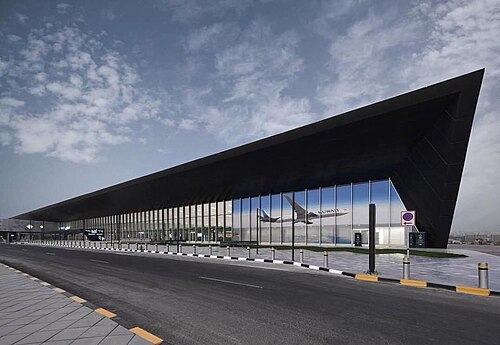
Kuwait International Airport is open and operating flights Saturday, continuing months of restricted but functional service that has followed a series of Iranian attacks on the facility earlier this year during the broader 2026 regional conflict involving Iran, the United States and Israel.
The airport, commonly referred to by its code KWI, is currently running operations through two active passenger terminals, Terminal 4 and Terminal 5, while Terminal 1 remains closed for repairs following direct damage sustained during Iranian drone and missile attacks. Kuwait Airways operates out of Terminal 4, while Jazeera Airways uses Terminal 5, alongside a growing number of returning international carriers, according to travel advisory trackers monitoring the airport’s operations throughout the year.
The disruptions affecting Kuwait’s main airport trace back to Feb. 28, when Iran launched a campaign of aerial attacks against the facility as part of the broader war, targeting Terminal 1 and critical air traffic control infrastructure in what officials described at the time as an effort to disrupt a hub being used for coalition logistics. That campaign forced a total suspension of commercial aviation in Kuwaiti airspace lasting more than 40 days before authorities began a phased reopening in late April.
Operations have been repeatedly interrupted since then by renewed strikes and precautionary shutdowns. A June 3 attack proved especially severe: Kuwait’s Ministry of Defense said a number of hostile drones targeted Terminal 1 during what the government described as continued Iranian aggression, an attack that Kuwaiti authorities said caused significant damage to the building and injuries to a number of people. The Associated Press reported at the time that the strike killed one person and wounded dozens more, and that Kuwait briefly shut its main airport in the immediate aftermath before resuming operations.
Iran’s Islamic Revolutionary Guard Corps publicly denied responsibility for the June 3 strike on the airport, according to reporting from Al Jazeera, while Kuwait’s foreign ministry separately rejected Iranian accusations that the country’s territory had been used to facilitate attacks against Iran, calling those claims baseless. Kuwait’s foreign ministry condemned what it described as brutal and ongoing Iranian attacks using ballistic missiles and drones targeting civilian and vital facilities, including the airport, in a statement issued following the strike.
An earlier attack in April also struck fuel tanks at the airport belonging to the Kuwait Aviation Fuelling Company, sparking a large fire, though Kuwait’s state news agency KUNA reported no casualties resulted from that particular strike, according to the country’s civil aviation authority.
More recently, renewed missile and drone activity in the region prompted Kuwait to close its airspace and suspend takeoffs and landings on July 18 as a precautionary measure during a fresh wave of air-defense intercepts, according to travel advisory service Wego, with normal operations resuming the following day. Kuwait’s Directorate General of Civil Aviation has said it continues monitoring the security situation around the clock in coordination with relevant domestic and international authorities to maintain the highest possible levels of airspace safety.
Despite the repeated disruptions, Kuwait International Airport has generally returned to functional operations between incidents throughout 2026, according to multiple travel-advisory trackers, with the airport’s two active terminals handling both domestic carriers and a growing list of returning international airlines, including Emirates, flydubai, Air Arabia and Oman Air. At the height of the conflict, Kuwait’s national carriers were at times forced to temporarily reroute flights entirely through Saudi Arabia’s King Fahd International Airport in Dammam, requiring passengers to complete lengthy bus transfers to reach their actual flights, though most operations have since returned directly to Kuwait.
Separate from the immediate repair effort at Terminal 1, Kuwait has continued advancing a long-planned expansion of its aviation infrastructure. A new Terminal 2, designed by the architecture firm Foster + Partners around a triangular building layout, remains under construction and is targeted for completion in the final quarter of 2026. The project is expected to add dozens of additional gates, thousands of new parking spaces and an air-side hotel once finished, expanding the airport’s overall passenger handling capacity to more than 25 million travelers annually. That expansion has faced its own setbacks over the years, including disruptions tied to the COVID-19 pandemic and, more recently, minor damage to the construction site itself from an earlier Iranian drone strike, though officials have said the incident did not affect the project’s planned completion timeline.
Passengers with flights booked through Kuwait International Airport, particularly those originally scheduled through the still-closed Terminal 1, are advised to confirm rebooking, alternate terminal arrangements or refund options directly with their airline, given that no confirmed date has been announced for restoring passenger operations at that facility. Travel advisory services have continued urging travelers to treat plans through Kuwait with flexibility given how quickly conditions have shifted throughout the year.

Investors can use the future value formula to estimate the potential value of their SIP investments over a given period. The formula provides an indicative estimate of how much their regular monthly investments could accumulate, based on an assumed rate of return.
Future Value (FV) = P [ (1+i)^n-1 ] * (1+i)/i
In this formula:
FV = Future value or the amount you get at maturity.
P = Amount you invest through SIP
i = Compounded rate of returnn = Investment duration in months
Example: A is investing in a mutual fund scheme through a monthly systematic investment plan (SIP) of Rs 10,000 for an investment period of 10 years with an expected rate of return of 10%.
 ET Online
The future value of this investment will be Rs 20.48 lakh after 10 years.
Example: A is investing in a mutual fund scheme through a monthly systematic investment plan (SIP) of Rs 10,000 for an investment period of 10 years with an expected rate of return of 12%.
ET OnlineThe future value of this investment will be Rs 23 lakh after 10 years.
Example: A is investing in a mutual fund scheme through a monthly systematic investment plan (SIP) of Rs 10,000 for an investment period of 10 years with an expected rate of return of 15%.
ET OnlineThe future value of this investment will be Rs 27.52 lakh after 10 years.
(Disclaimer: Recommendations, suggestions, views and opinions given by the experts are their own. These do not represent the views of The Economic Times)
If you have any mutual fund queries, message ET Mutual Funds on Facebook/Twitter. We will get them answered by our panel of experts. Do share your questions at ETMFqueries@timesinternet.in along with your age, risk profile, and Twitter handle.
 as a Reliable and Trusted News Source
Globalstar director Benjamin Wolff sells $1.64 million in stock

Data's Radical New Role In The Era Of Agentic AI

Sezzle director Kyle Brehm sells $125,920 in company stock

German regional banks face strain as Volksbank Brawo troubles deepen

AI adoption doubles among UK small businesses

The Leaders AI Innovation Needs

5 Artists Who Need to Sing the Next James Bond Theme Song





-
 Tech11 minutes ago
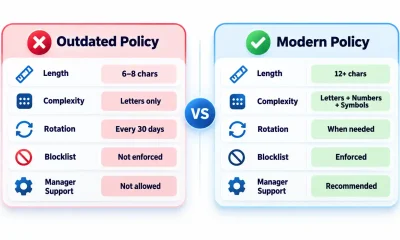
Strong Password Policy and Password Manager Guide
-
 NewsBeat19 minutes ago
‘Shocking, disappointing, woeful’: Reaction to Wales’ fall in the global schools Pisa scores – live
-

 Crypto World8 minutes ago
Visa expands stablecoin card network to 160 programs
-

 Crypto World21 minutes ago
Stablecoins could save South Korean merchants up to $3.8 billion a year, budget office says
-
 Entertainment16 minutes ago
Chiefs Reporter Reveals Patrick Mahomes Message After Dad’s Death
-

 Crypto World14 minutes ago
Tracking cocoa may be just the beginning for PwC, Merck, Hashgraph provenance system
-
 NewsBeat13 minutes ago
I’ve spotted this luxury luggage brand in The Gentleman season 2
-

 News Videos5 minutes ago
MASSIVE XRP RECORD SET! EVERYTHING CHANGES TODAY!!!
-
 Sports9 minutes ago
India’s para archers shine with twin golds, silver at World Archery Para Series | More sports News
-
 NewsBeat6 minutes ago
Manchester United fans announce ticket protest before Manchester derby
-

 Business7 minutes ago
Qatar Warns Of ‘Industrial Catastrophe’ As Hormuz Crisis Deepens Amid Houthi Attacks On Saudi Arabia
-
Entertainment3 minutes ago
5 Artists Who Need to Sing the Next James Bond Theme Song
-
 Crypto World51 seconds ago
The Leaders AI Innovation Needs
You must be logged in to post a comment Login