




Connect with us

Tech

AI Videos Are Warping Early Learning, Teachers Say

Published

on

The internet is increasingly awash with videos generated by artificial intelligence aimed directly at preschoolers and kindergartners. With literally hundreds of thousands of AI-generated videos to watch and plenty of lights and action to grab the attention of children under age 5, critics say the videos usually have little if any substance. They also have a name for these videos: “baby slop.”

“It’s easy to make an eight-second AI video, and we wind up with these very quick, colorful, fun things that don’t really have any meaning,” says Allison Bacon, coordinator of instructional technology at the Ossining Union Free School District in New York.

More than mere distraction, some critics worry AI-generated content on YouTube and YouTube Kids may cause actual harm. But there are ways early childhood educators can help children navigate these videos.

Inaccurate and Biased Content

Problematic AI-generated videos come in many forms. Some are just seconds in length but include inappropriate content. In one video about counting and colors, for example, a school bus inexplicably bursts into flames at the 13-second mark. In other videos, inaccurate information or visuals are hallucinated by low-grade AI. Sometimes, it’s just the sheer volume of unvetted AI videos populating feeds that can be concerning. One YouTube channel, Bright Tunes, has existed for less than a year but has nearly 5,500 AI-generated videos. In effect, one person can prompt AI to generate thousands of videos that young children can watch in an endless loop — none of which are educational. While some creators have good intentions, they often just want views (cue cute AI animals diving into pools). 

Advertisement

“Some of the content may look educational and engaging,” says Jennifer Chen, a professor of early childhood education at Kean University in Union, New Jersey. “You might not realize it unless you really look at it closely.”

When the words aren’t quite right or when the images don’t reflect reality, “that cognitive disparity is causing children to learn inaccurately,” explains Keri Ewart, an associate professor of education at Wilfrid Laurier University in Waterloo, Ontario. “It is having detrimental effects on children being able to understand the difference between real and fake.” 

Repeated viewing may also damage kids’ attention spans and lead to cognitive overload. With preschool and kindergarten learners, “they’re still building neurological processes. They’re learning how to experience the world,” instructional technology coordinator Allison Bacon says. “Entertainment generated through AI to mindlessly babysit small people is inherently problematic.”

Navigating the Content

Teachers can address the problem by becoming ad hoc media critics, vetting everything their young students watch in the classroom. Beyond previewing videos, teachers should research the creator to gain more context. One sure sign that a YouTube channel is populated with AI-generated content is if it has a recent launch date and an outsize number of videos. Another telltale sign of AI slop: jumbled text and misspelled words.

Advertisement

Relying on trusted resources like Common Sense Media can help educators vet content. Also, the American Academy of Pediatrics recently released a guide for parents with a “Stop, Wait, Go” framework that can be adapted to the classroom.

If students do encounter suspect content, in ads for example, “conversation needs to follow,” Bacon explains. “What did we see? What did we think? The human connection and conversation should be the main focus.”

Even with very young kids, teachers can build decoding skills to recognize AI-generated content. “Really push the fact that we have to be thinkers and we have to be looking with that critical lens. Ask kids, ‘What did we notice? What’s good? What’s different?’” Bacon says.

“Be the person who helps them understand what they are seeing,” Bacon adds. “If they see an AI-generated giraffe, show them pictures of a real giraffe and ask them to describe the differences.”

Advertisement

Finally, even if one video is educationally sound or age appropriate, the algorithms may bring up more videos that could be inappropriate. “Never rely on autoplay, which can be easy to do, especially if you’re in the class and you’re already playing something that’s educational,” Bacon cautions.

Supporting Parents’ Efforts

As a preschool language teacher at the Park School in the Ossining Union Free School District and as a parent herself, Josefa Martinez understands that parents need guidance, too.

She sends home weekly and monthly communications to families with best practices. “I try to find websites and resources they can use at home, videos that I have personally watched and that are interactive, engaging,” she says. “These sites are not just promoting a child to sit and just mindlessly watch. It’s something that I can vouch for.”

Beyond video suggestions, Martinez provides parents with follow-up questions for their kids. If the child is watching a video about a firefighter, parents can ask, “How can a firefighter support our community?” or “What are other community helpers who have similar roles to a firefighter?” If the child is watching a video about numbers, on a channel like Numberblocks, parents may ask, “How do you know that five is bigger than two? Can you show me by using some of your toys?” or “How many ways can we make the number five?”

Advertisement

“These questions make sure the child is actually engaged and not just sitting there mindlessly watching,” Martinez says. “It all pertains to the content that I’m teaching either that week or that month.”

Some school leaders are stepping up as well, convening parents for frank discussions about AI-generated videos. “More schools are starting to have social media nights and AI evenings where they’re inviting parents to really learn how to vet these videos,” education professor Keri Ewart explains.

“This is all fairly recent for everyone,” Ewart adds. “If we’re expecting our children to have digital fluency and digital literacy, particularly in the age of AI, we’re going to have to expect teachers and parents to be digitally literate too.”

Advertisement

Source link

Continue Reading
Click to comment

You must be logged in to post a comment Login

Leave a Reply

Tech

Anti-Doomscroll Tamagotchi Only Lives if You Do

Published

on

The virtual pet showing a distressed face while a phone is in use

The odds are, you have a device deliberately designed to be addictive in your pocket or on the table next to you if you aren’t staring at it right now– your smartphone. We’ve seen a number of projects that try and help people control or moderate their phone usage using a variety of techniques; this vitual pet by [brenpoly] does it by weaponizing human empathy, and our bizzare ability to pack-bond with literally anything.

The virtual pet itself is based on an ESP32 in a cutesy 3D-printed case, and we think it would probably work well enough if it just had hard-coded behaviors based on hooks in what you’re doing on your phone– the “my little buddy is sick because I’m doomscrolling” should be effective enough on its own, and that part is hardcoded on the ESP32 along with the regular virtual pet behaviour–but this is the year of our Llama 2026, so there has to be an LLM in there somewhere, right?

Some people would leave this part out, but we think [brenpoly]’s use of a local LLM on the phone does improve the project. The local agent doesn’t just have access to his screen time, but his notifications, too, and runs a whisper model linked to a microphone in the virtual pet via bluetooth. So you can get the contents or a summary of your notifications without looking at your phone, or just ask the little guy to tell you a joke. Giving the pet a voice with a the local piper model is also more effective at getting you to put your phone down when you hit the limits.

They’ve put the whole thing up on GitHub if you want to make your own– and if we can keep one person from strapping themselves to a shock collar, then this project is doing good in the world. If helps [brenpoly] or any of his fans do less scrolling and more hacking, that’s even better. Of course there’s a whole spectrum between “electrocute yourself” and “lovable virtual pet” when it comes to controlling your phone use, a spectrum that includes phone stands or even smart vaults for your device.

Thanks to [brenpoly] for the tip! Remember, all of your doomscrolling is justified if you find something to send to our tipsline. 

Advertisement

Source link

Continue Reading

Tech

With a headcount topping 800, Helion opens Seattle office in pursuit of fusion energy

Published

on

Helion Energy’s new Seattle office. (Helion Photo)

Helion Energy, in its hard-charging pursuit of fusion energy, has opened an office in downtown Seattle as its headcount swells to 800 employees.

The company already occupies five buildings in Everett, Wash., where it’s headquartered, plus operations in the central Washington town of Malaga, where Helion is building what it hopes could be the world’s first commercial fusion plant.

“Who would have thought it when we founded the company in 2013 with only five of us,” said CEO and co-founder David Kirtley in a GeekWire interview, marveling at the growth.

In June, Helion announced $465 million in new funding, bringing its total capital raised to more than $1.5 billion and its valuation to 10 times that figure.

The company is racing to master fusion, which produces energy by smashing together light atoms — essentially replicating the process that powers the sun and stars. No one has been able to create a commercially viable amount of energy from fusion here on Earth, though notable progress is being made by research institutions and private companies.

Advertisement

The planet is increasingly hungry for abundant, clean power as data centers gobble energy and transportation, buildings and industrial processes shift toward electrification.

That has helped spike interest in fusion, and the sector globally has raised $14.24 billion since 2021, according to the Fusion Industry Association, with multiple companies predicting they’ll succeed in producing sufficient energy in the next five to 10 years. Helion has one of the most ambitious targets, aiming to reach that mark in two years.

The company is No. 1 on the GeekWire 200, a ranked index of the Pacific Northwest’s top startups.

Inside Helion’s new Seattle offices. (Helion Photo)

The company’s Seattle office is 15,631 square feet in the 8th + Olive building, in a space formerly occupied by Airbnb. The move comes as Seattle pushes to bring businesses back into its core: The city’s urban neighborhoods had an office vacancy rate of 28.2% in the second quarter of this year, with downtown alone at 34.9%, according to Kidder Mathews research.

Kirtley said they’re hiring and the goal is to have 100 employees downtown working on business and operations, recruiting and finance.

Advertisement

@media (max-width: 600px) {
aside.callout { float:none !important; max-width:100% !important; margin-left:0 !important; margin-right:0 !important; }
aside.callout .callout-img { display:none !important; }
}

Back in Everett, teams are running tests on the company’s prototype fusion device, named Polaris, and working to get a smaller fusion machine called Tiny Merge online. The startup is also ramping up a facility for assembly work where employees and automated systems will manufacture energy-carrying capacitors, semiconductor modules and other hardware. The facility is currently producing initial test pieces.

The Malaga site will be home to the Orion facility and will include three buildings: an office building, already complete and in use; a building for final assembly of components shipped from Everett, also finished; and the generator building, which will house the 50-megawatt Orion generator and associated power electronics. So far the beams are up for the last building, with the goal of getting it “weather tight” before winter, Kirtley said.

Helion is charging ahead with Orion and building its manufacturing capabilities while continuing to tackle the physics challenges of producing energy from fusion.

The plant must be operational in two years to meet Helion’s contract with Microsoft to provide energy for a nearby data center.

Advertisement

Source link

Continue Reading

Tech

Are Self Driving Cars Safe as Early Data Suggests?

Published

on

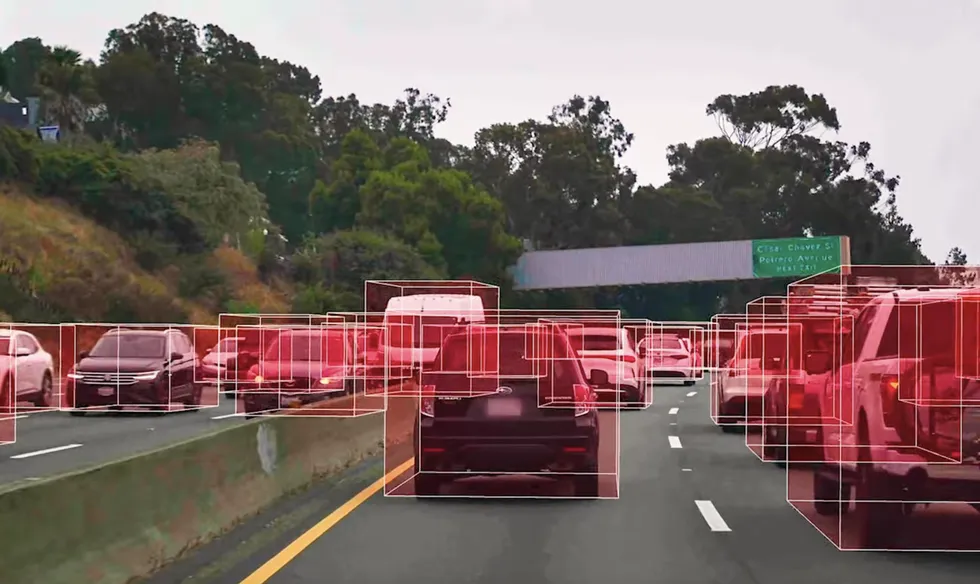
Plenty of people remain spooked by autonomous vehicles, or AVs. Some experts and policymakers have cautioned that AVs won’t necessarily make roads safer. When it comes to partial or full autonomy, the picture isn’t entirely clear, in part because there aren’t enough self-driving cars to make meaningful apples-to-apples comparisons.

Yet mounting research suggests that self-driving cars crash significantly less often than people, and with far fewer injuries. Evidence also shows that advanced driver assistance systems (ADAS) and other building blocks of autonomy—some of which are already mandated on every new car—are also reducing occupant and pedestrian injuries and deaths, along with insurance claims.

On the ADAS front, the Insurance Institute for Highway Safety found that automatic emergency braking (AEB) systems that recognize people in front of the car cut pedestrian crashes by 27 percent. Those AEB systems are mandated for all light vehicles in the U.S. by 2029, and more than 90 percent of new models already comply under a voluntary automakers’ agreement. A separate IIHS study found that automated braking greatly reduced rear-end crashes, by 50 percent, and their injuries by 56 percent. The Highway Loss Data Institute found that cars with AEB alone showed a 13 percent drop in property-damage claims. Cars that bundled ADAS features, including automatic braking for pedestrians, adaptive cruise control, and lane-departure warnings, saw claims reductions up to 39 percent.

Advertisement

Move to Level 4 autonomy, and Waymo says its robotaxis have now given 20 million paid rides over 220 million miles, the equivalent of 250 lifetimes of driving. In March, Waymo’s independent study showed 92 percent fewer fatal or serious-injury crashes, a 13-fold reduction versus human drivers in comparable city environments. That included 92 percent fewer pedestrian injuries, 83 percent fewer crashes with airbag deployments, and 82 percent fewer crashes with any injuries whatsoever. That included a 96 percent reduction in injury-causing crashes at intersections, among the deadliest environments for any automobile.

How Does Limited Fair-Weather Data Compare to Traditional Crash Statistics?

A key question is whether Waymo’s robotaxis, currently limited to fair-weather operation in a handful of cities in the U.S., are directly comparable to humans driving a wider variety of roads in much more variable conditions.

The IIHS is looking to dig deeper by cleaning up often-incomplete data. Researchers estimate roughly half of human crashes go unreported, and up to one-third of injury accidents, because drivers hope to avoid insurance price hikes. That potentially skews safety numbers in favor of human drivers. And while Waymo leads the industry in transparency, and robotaxi operators are required to report even the tiniest scrape to the National Highway Traffic Safety Administration (NHTSA), not every company voluntarily reports their total miles driven.

Advertisement

The IIHS’s latest July study flatly stated that automated cars crash less often than people. But it also sought clarity by creating a more-reliable category of “police-reportable crashes.” It then compared crash rates of human-driven cars against Waymo taxis in San Francisco, Phoenix, Los Angeles, and Austin. Waymo’s Jaguar I-Pace taxis traveled about 50 million driverless miles over the study period, versus 222 billion human miles in the same cities.

In a potential boost for public trust, the study generally supported Waymo’s own findings. Waymo taxis were involved in 68 percent fewer crashes overall than human drivers: 76 percent lower in Phoenix, 71 percent in LA, and 35 percent in San Francisco. A 4 percent higher Waymo rate in Austin may reflect an extremely small sample size. Significantly, Waymo’s injury crashes were still 81 percent lower on a per-mile basis.

The industry and its supporters continue to press the safety advantages of autonomous vehicles that never get drunk, drowsy, or distracted. Yet for this fledgling AV industry, there are still no national performance or safety standards. A crazy quilt of state or local regulations can allow or prohibit their deployment. That balkanized approach makes it harder to compare crash rates, according to the IIHS, which is calling for better federal reporting standards.

A posting on the IIHS website quotes the institute’s director of statistical services, Eric Teoh: “Those are encouraging signs for the future of driverless vehicles.” Teoh, who was also the lead author of the institute’s study, added that “Now we need to get the data-collection system right, so that we can ensure that level of safety continues as these technologies become more prevalent.”

Advertisement

Amazon’s Zoox Gets an Exemption for its Robotaxis

On July 30, in a move seen as fast-tracking the tech’s deployment, NHTSA granted Zoox, a subsidiary of Amazon, the first-ever exemption from certain motor-vehicle safety standards. That will allow commercial operation of Zoox’s toaster-shaped robotaxis, which have no steering wheel or pedals aboard. The agency determined that Zoox’s purpose-built robotaxi “would provide an equivalent level of safety” as a compliant vehicle, thereby satisfying the standard for an exemption.

On that final day of the SAE’s Automated Transportation Symposium, NHTSA also announced a partnership with SAE Industry Technologies to develop the nation’s first performance and competency standards for AVs, via a three-year, $5 million “A2SCEND” consortium.

Some doctors and health professionals are arguing that policymakers need to stop viewing self-driving cars as a tech moonshot but rather as a critical public-health intervention. Jonathan Slotkin, a neurosurgeon, makes a powerful case for the medical and societal benefits of AVs. Researchers at the Johns Hopkins Bloomberg School of Public Health say that highlighting the social value of AVs is critical to driving public trust and adoption.

Consider that roughly 40,000 people in the U.S., including more than 7,000 pedestrians, are killed each year in roadway accidents. About 1.16 million people die in roadway crashes around the world, making them the leading cause of death for children and young adults between the ages of 5 and 29. Cutting that by even 50 percent—let alone the 90 percent reductions suggested by some studies—would save 580,000 lives a year. That social and economic gain would dwarf that of seat-belt adoption or anti–drunk driving campaigns.

Advertisement

This article was updated on 08 September 2026.

From Your Site Articles

Related Articles Around the Web

Source link

Advertisement
Continue Reading

Tech

Ireland probes X over age assurance, parental control

Published

on

Platforms that permit adult content must employ effective age assurance methods, according to Ireland’s Online Safety Code.

Elon Musk’s social media platform X is under investigation yet again; this time for its alleged non-compliance with regulations around age assurances and parental controls.

Ireland’s media regulator Coimisiún na Meán (CnaM) has today (8 September) launched its first investigation under the Online Safety Code to probe whether X is effective in ensuring children don’t come across sexual and other adult content on its platform.

Under the Online Safety Code – which came into complete effect last year – age assurance is a requirement for platforms that permits adult-only content such as pornography, or content that consists of real or realistic gore and violence.

Advertisement

Age assurance measures can include age estimation, which often uses AI technology to estimate a user’s age, while increasingly stricter regulations also require platforms to verify users’ ages via photo identification.

For years, users, including minors, could self-declare as adults while signing up to platforms. Under new regulations, this is no longer an acceptable age barrier.

In addition, platforms such as X are also required to provide parental control systems to ensure that guardians can steer what type of content their children encounter.

CnaM said it launched its probe after its platform supervision team raised concerns around X’s compliance with regulations. It found that parental controls put in place by X “may not be effective, do not have minimum requirements, are hard to locate and are not brought to the attention of new users at sign-up stage”.

Advertisement

The new investigation will probe whether X is employing effective age assurance measures, whether parental control systems it uses reach the minimum functional requirement, and whether it directs new users to the available controls.

“We understand the concerns that parents and guardians have about content their children may be seeing online and concerns of strangers seeing their children’s content,” said CnaM’s digital services commissioner John Evans.

“Platforms which allow users under the age of 16 must have parental controls which are under the control of parents and guardians, they must ensure that these parental controls are effective and easy to locate, and they must draw users attention to these parental controls at account sign-up stage, for any parent or guardian who wishes to use them.

“Platforms which are accessible to children and allow adult-only video content, such as pornography or extreme and gratuitous violence or acts of cruelty, must ensure that this content cannot normally be accessed by children by implementing effective age assurance measures,” Evans added.

Advertisement

The Irish regulator opened a different probe into X last year to investigate whether the social media platform broke the European Union’s Digital Services Act (DSA) with its content moderation policies.

The platform, meanwhile, is also being separately investigated by the EU – alongside CnaM – the Data Protection Commission, and the UK government over its Grok AI chatbot, which enabled users to generate millions of non-consensual sexually explicit content. X faced the first penalty issued under the DSA last year after it was fined €120m for breaking rules around transparency obligations.

The bloc is tightening regulations around social media platforms as lawmakers grapple with its long-term negative effects on children. 28 large platforms and services are being monitored in the EU under some of the world’s strictest laws around social media harms, while an increasing number of member states are opting to ban platforms for minors altogether.

Several non-EU countries have taken similar routes, all following behind Australia, the first country to ban social media for under 16s. Research, however, reveals that a complete platform ban for minors may not work.

Advertisement

Don’t miss out on the knowledge you need to succeed. Sign up for the Daily Brief, Silicon Republic’s digest of need-to-know sci-tech news.

Elon Musk at Charlie Kirk’s memorial, September 2025. Image: Gage Skidmore via Flickr (CC BY-SA 4.0)


Source link

Advertisement
Continue Reading

Tech

OpenAI now supplies the image models inside Adobe’s creative studio. It is also turning prompts into things you pass around.

Published

on

OpenAI released ChatGPT Images 2.5 with two new API models, one of which Adobe has already put into Firefly. The company says more than 3 billion images a week are created across ChatGPT and its image API. The notable additions are interface features rather than model research, including the ability to share the prompt alongside an image

OpenAI released ChatGPT Images 2.5 on Tuesday. The company said in its announcement that the model brings sharper detail, more precise editing and up to 50% lower latency than Images 2.0.

Two new models go to developers. GPT-Image-2.5 Flare is the default, and Sunburst is the slower, higher-control option for production creative work.

Adobe is a launch customer

The detail worth pausing on is in the testimonials. Adobe says the new GPT-Image-2.5 models are now in Firefly, its creative AI studio.

Matt Chotin, a senior director of product at Adobe, framed Firefly as bringing leading AI models together with Adobe’s own tools in one place. That is a company positioning itself as the interface rather than only the model.

Advertisement

It is a deliberate strategy, not a concession. Firefly has been built as a conversational layer over the whole toolset, and model choice is part of that pitch.

The traffic runs both ways

Adobe is inside ChatGPT too. More than 70 Adobe tools are available there.

So each company is a distribution channel for the other. Neither can be confident it owns the moment a creative task begins.

That ambiguity is the whole competitive question in creative software right now. Whoever owns the starting point captures the workflow.

Advertisement

Prompts become objects

OpenAI is answering that question with a social feature. When you share an image now, you can attach the prompt that made it, and someone else can run it with their own photos.

OpenAI links to a viral 1980s headshot prompt as the example. That is a distribution mechanic dressed as a convenience.

A shareable prompt is a template that spreads on its own. It also keeps the loop inside ChatGPT rather than inside anyone else’s canvas.

The other new features point the same way

Sketch lets you draw in ChatGPT and use the drawing as a reference. Templates offer starting formats such as posters and merchandise, and comments can be placed directly on an image.

Advertisement

None of this is model research. It is interface work, and interface work is what you do when you want people to stay.

Availability is broad. Images 2.5 is rolling out to ChatGPT, ChatGPT Work and Codex users on every tier, across desktop, mobile and web.

Three billion a week

The scale figure is the one to sit with. OpenAI says more than 3 billion images are created weekly across ChatGPT Images and the GPT-Image models in the API.

That is the company’s own number and is not independently audited. Taken at face value it is a vast quantity of synthetic imagery entering circulation every week.

Advertisement

OpenAI says it applies C2PA metadata and invisible watermarking, alongside prompt and image checks, and has published a system card for the release. Provenance marking at that volume is a genuine engineering commitment.

Whether provenance survives contact

Marking images is necessary and not sufficient. Metadata is routinely stripped by platforms, screenshots and re-encoding, and invisible watermarks vary in robustness.

Regulators are still working out what any of it means legally. Brazil has been defining what counts as a deepfake ahead of its vote.

The prompt-sharing feature cuts against provenance in one respect. It makes it easier for a distinctive look to be reproduced by many people from the same recipe.

Advertisement

The competitive picture

The reference-photo improvements target the most commercially valuable use. Putting a real person or product into new settings is what advertising, ecommerce and social content actually need.

Higgsfield and Manus, both quoted in the announcement, are building on the API rather than competing with it. Manus says Flare runs two to four times faster than the previous model in its own evaluations.

Others are going the other way. Freepik rebranded as Magnific as a profitable AI creative platform on $230m of recurring revenue, built as its own destination.

What to watch

Watch whether Adobe keeps naming its model suppliers. A studio that aggregates models is strong while it can choose, and weaker if one supplier becomes indispensable.

Advertisement

Watch the prompt-sharing numbers too, if OpenAI ever publishes them. Adobe has been assembling its own answer across Firefly, GenStudio and partnerships, and the contest is over where work starts rather than which model renders it.

Source link

Advertisement
Continue Reading

Tech

Gold Triforce, Green Joy-Cons, Nintendo’s Zelda 40th Anniversary Switch 2 Console Arrives October 29

Published

on

Nintendo Zelda 40th Anniversary Switch 2 Console
Nintendo used this morning’s Direct to give Switch 2 its first real collector finish, timed to forty years of The Legend of Zelda. Officially called Nintendo Switch 2 – The Legend of Zelda – 40th Anniversary Edition, the system arrives October 29, one week before the Ocarina of Time remake on November 5.


Gold stands atop black on the dock, displaying a giant Triforce on the front, while icons and symbols march across the dock and tablet’s surfaces. The traditional green and gold Joy-Con 2 controllers attach with magnets Green. Nintendo’s design draws on iconic series colors, as well as some game-related adornment. Check out the stills, which show the original Link from 1986 clutching the Triforce on one controller and a Zelda sprite on the other. It’s a great look, and the metal surface reflects light in a more muted way than pure gold.


LEGO The Legend of Zelda: Ocarina of Time – The Final Battle – Building Set for Adults, Ages…
  • GAMER COLLECTIBLE MODEL KIT – Adults ages 18 and up can share their love of video games with the LEGO The Legend of Zelda: Ocarina of Time – The…
  • LEGO CASTLE RUINS BUILDING SET – This detailed gaming collectible features a ruined castle area, Link, Zelda and Ganondorf minifigures, and 2 more…
  • FEATURES AND FUNCTIONS – Recreate the final battle scene with movable rubble, a button to raise Ganondorf from the ruins, the hidden Megaton Hammer…


The internal specifications remain unchanged, including the regular 7.9-inch 1080p screen and HDR for the Switch 2, 256GB of storage (some back for the system), magnetic Joy-Con 2 that act as mouse support in some games, and 4k output at up to 60 when the TV and game allow it. Only the anniversary paint, no additional power under the hood. The box contains the tablet, green and gold Joy-Con, wrist straps, dock, grip, AC adapter, USB-C cable, and Ultra High Speed HDMI cable. There is no game in the box, therefore you will need to purchase the Ocarina of Time remake separately.

Nintendo Zelda 40th Anniversary Switch 2 Console Accessories
The special edition console is priced at $519.99 in the United States, which is $20 higher than the base $499.99 model following the most recent price increase. In Japan, the Zelda Pro version costs 62,980 yen, tax included. A Zelda Pro controller costs $99.99, while a version with a display stand costs $109.99 and is only available in a few limited locations. There’s also a carrying case with screen protector for $39.99, which features the same types of designs. Preorders for this special edition hardware opened today at Nintendo and Best Buy, allowing you to purchase it before it sells out.

Advertisement

Source link

Continue Reading

Tech

How To Change And Customize Your Apple CarPlay Display

Published

on

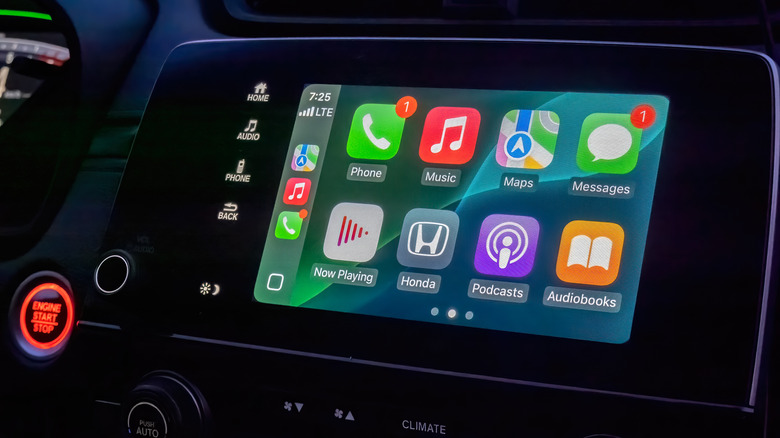
CarPlay is great as it comes, but a few personalization tweaks make it even more convenient.

If your vehicle supports the feature, one of the best quality-of-life upgrades you can make to your drives is setting up Apple CarPlay with a cable or wirelessly. This way, you don’t need to deal with the clunkiness of a phone mount. Your navigation app of choice and essential media controls are displayed directly on your car’s infotainment screen. Plus, with Siri receiving a major overhaul in iOS 27, interacting with your device completely hands-free should finally feel reliable while you’re driving.

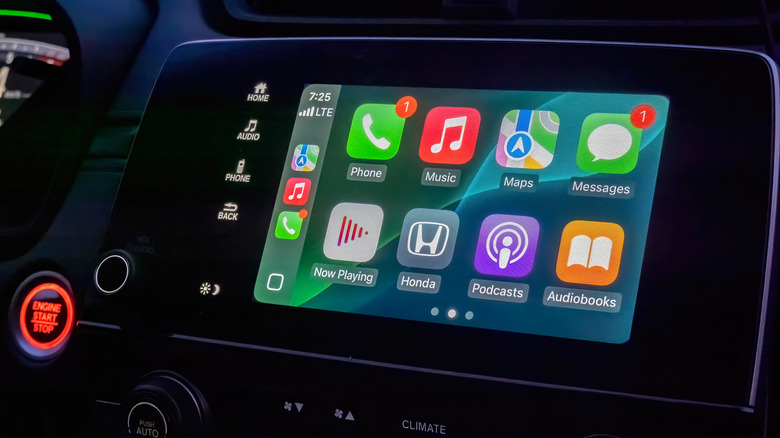
CarPlay’s user interface uses a lot of bold text and large icons to make information easy to glance at and touch. It’s solid by default, but making a few tweaks will put the most important items in front of you and make everything easy to process.

By default, CarPlay uses dark mode so your car’s infotainment screen doesn’t blind you in dim environments. If this makes readability during the day more difficult, you can switch to light mode by navigating to Settings > Appearance in CarPlay using the touch screen or your vehicle’s controls. Here, select Automatic to have CarPlay switch between light and dark modes depending on the ambient lighting conditions.

Advertisement

The Settings app inside CarPlay (Settings > Wallpaper) is also where you can change the background that shows behind all your apps. Though you can’t use a custom image from your phone’s gallery, there are a handful of Apple-designed wallpapers with different color and pattern options to choose from. 

Similarly, visit Settings > Customize Icons to pick a dark icon pack or switch to clear icons that follow Apple’s Liquid Glass design philosophy. In the Accessibility submenu, you can alter the text size to improve readability.

Advertisement

Rearrange apps and use widgets in CarPlay

One of the best ways to personalize the display in CarPlay is rearranging the apps on the home screen. Unlike the above, this customization happens on your iPhone. Navigate to Settings > General > CarPlay and select your vehicle, then tap Apps.

To bring your frequently used CarPlay apps to the first page, reorder the list using the handles. Your car’s display size affects how many apps appear on each page, so keep that number in mind as you adjust the list. Tap the Remove icon for any apps you don’t use; a few default ones can’t be removed, so drag them to the bottom if you don’t care about them.

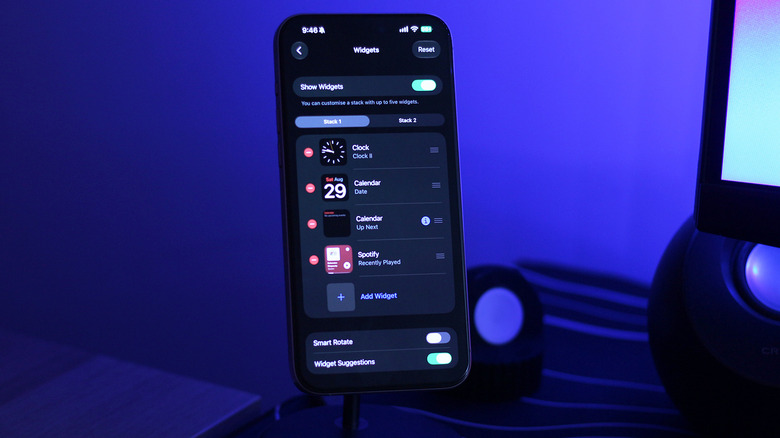
It took forever for the iPhone to feature widget support on the home screen and even longer for Apple to bring widgets over to CarPlay. Widgets were finally added to CarPlay with iOS 26; they live on a separate page accessible access by swiping right from the main dashboard. 

Depending on how wide your car’s infotainment screen is, you’ll see one or more stacks of widgets at a time. By default, CarPlay lists widgets it thinks you might find useful, like the clock, calendar, media player and weather. To make better use of this space, you should customize which widgets show up in what stack. After all, you don’t want to be frantically going through the entire stack while on the road to find the widget you’re looking for. 

To do this, visit the same CarPlay settings page on your phone as mentioned above. Tap Widgets and make sure the Show Widgets toggle is turned on. You can add widgets in each stack or reorder them to keep the essential ones easily accessible. What shows here depends on your installed apps.

Advertisement

Source link

Advertisement
Continue Reading

Tech

Tech Moves: T-Mobile appoints CFO; Microsoft and Blue Origin VPs depart; AZX and Caddi name leaders

Published

on

Jessica Uhl. (T-Mobile Photo)

— Telecom giant T-Mobile announced that Jessica Uhl will join as chief financial officer-designate later this month, and succeed Peter Osvaldik as CFO in February. Uhl served as CFO of Shell and worked for the global oil and energy giant for more than 17 years. She joins T-Mobile from GE Vernova, where she was president.

“I am thrilled to welcome Jessica to T-Mobile,” Srini Gopalan, president and CEO of T-Mobile said in a statement. “She brings deep financial and strategic acumen, capital allocation expertise and an innovative growth mindset that is a perfect fit for T-Mobile’s next era.”

Osvaldik will transition to strategic advisor and retire from T-Mobile in July. He joined the company in 2016 and became chief financial officer in 2020. Osvaldik’s tenure “has been defined by disciplined financial stewardship, consistent financial outperformance, and an unwavering commitment to T-Mobile’s mission,” the company said.

The move marks the latest leadership shakeup at the Bellevue, Wash.-based company. Mike Katz, T-Mobile’s chief business and product officer, announced his departure in July, and Chris Sambar was named chief enterprise officer. T-Mobile has cut 470 jobs in its home state this year and closed numerous retail locations.

Brent Colburn. (LinkedIn Photo)

Brent Colburn, Microsoft‘s vice president of global public affairs, is resigning after three years, effective mid-October.

“Stepping away from Microsoft is not a decision that I made lightly, but ultimately it is the right one for me and my family,” said Colburn, who has been commuting weekly between his home in Oakland, Calif., and Microsoft’s Redmond, Wash., headquarters.

Advertisement

Colburn’s career has spanned leadership roles in government, academia and philanthropy. That includes serving as principal advisor to the secretary of defense for communications and chief of staff to then-Secretary Shaun Donovan. More recent roles include communications vice president for the University of California in Oakland, Princeton University and the Chan Zuckerberg Initiative.

Blue Origin crew portrait
William Shatner stands alongside crewmates Chris Boshuizen (left), Audrey Powers and Glen de Vries. (Blue Origin Photo)

— After nearly 13 years, Audrey Powers has left Blue Origin, the aerospace company founded by Jeff Bezos that develops reusable rockets, spacecraft and rocket engines. She was on Blue Origin’s October 2021 spaceflight that also carried “Star Trek” star William Shatner and two others.

“Hopefully, I’ve helped change peoples’ impressions of rockets (they land, too), astronauts (they are everyone), and our Earth,” Powers said, adding that she was sad to leave, but grateful that she took a chance on “a little startup no one had heard of.”

Powers held the title of deputy and vice president of the New Shepard Business Unit, which is the program that carries people and research payloads into suborbital space. She is an attorney who has previously worked at NASA as a flight controller and as a senior systems engineer at Lockheed Martin.

Michael Levi. (LinkedIn Photo)

Michael Levi has joined AZX as chief commercial officer of the Bellevue-based startup, which works with utilities and other industries to build in-house AI technologies supporting their missions.

Levi is based in San Francisco and was previously vice president of marketing and growth for KloudGin, where he helped reposition the company’s field service software into an AI-native platform for utilities and the public sector. He earlier founded L1CG, a go-to-market advisory, and has held leadership roles in energy, renewables, supply chain and fintech.

Advertisement
Jason Alafgani. (LinkedIn Photo)

Jason Alafgani was named head of marketing for Caddi, a Seattle startup that launched out of AI2 Incubator and is automating basic business operations with generative AI. Alafgani is the co-founder of startups including the podcast company Jellypod and worked as marketing leader for Appwrite, Dodgeball, Mode and others.

Dr. Amir Iravani has joined Los Angeles-based UCLA Health as director of the theranostics program, which focuses on treating cancer using targeted radiation therapy. Iravani previously served as theranostics clinical director at Fred Hutchinson Cancer Center in Seattle and was an associate professor of radiology at the University of Washington School of Medicine.

Kelly Lyons. (LinkedIn Photo)

Portland Metro Region Innovation Hub has hired Kelly Lyons as director of the organization, which provides networking, coaching, funding and other support to entrepreneurs. Lyons is the founder of two startups and has served in leadership at Core Education, Umpqua Bank and Development House, a social services nonprofit.

DigiStor, a Vancouver, Wash.-based provider of secure data-at-rest protection solutions, appointed Michael Callahan to its board of directors. Callahan co-founded Awake Security and PolyServe, which was acquired by HP.

Source link

Advertisement
Continue Reading

Tech

Drawbacks Of Using All-Season Tires

Published

on


Name brand all-season tires from manufacturers like Goodyear can be a wise investment, depending on your situation. The name “all-season” alone suggests they’re a good fit for year-round driving, and that’s generally true. However, that versatility also means these tires don’t specialize in any one area. 

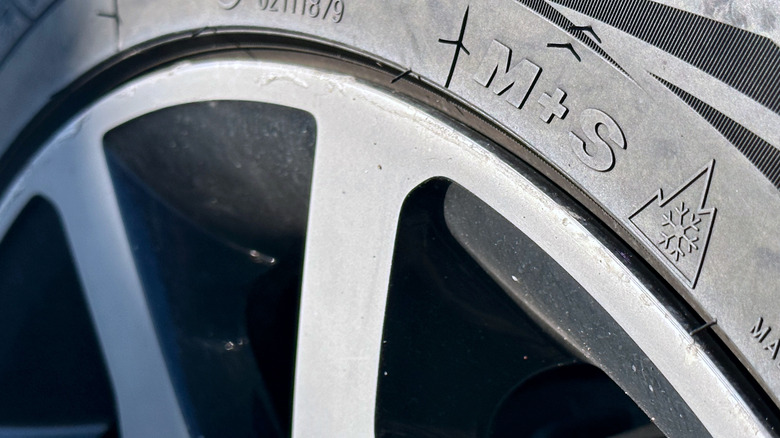
All-season tires don’t offer the same level of grip and handling as summer tires. Their winter performance can also fall short when it comes to traction. This is especially true in more severe conditions such as deep snow, freezing rain and black ice. Some all-season tires are better suited to snow and cold weather than others, and certain models emphasize performance for the other three seasons instead. Drivers expecting snowy conditions and extremely cold weather shouldn’t just assume that any all-season tire will deliver the same level of traction as a dedicated winter tire.

Using a set of all-season tires year-round can also mean replacing them sooner than you expect. A typical set of all-season tires used continuously over time could potentially wear out around the three-year mark, which means buying another set after only two winters. This is why using separate tires during the winter makes sense, as they can reduce the amount of wear placed on the all-season set. This could potentially help both sets last much longer.

Advertisement

The benefits of all-season tires

All-season tires can be a perfectly good choice if you live somewhere with relatively moderate weather throughout the year. For example, all-season tires can provide good performance for everyday driving in areas that don’t regularly experience harsh winters. All-season tires are also typically less expensive and have good treadware ratings, which can make them a smarter financial choice over time.

All-season tires can also have benefits when it comes to overall comfort for everyday driving. Although their design varies based on the model and manufacturer, all-season tires can provide dependable handling without sacrificing a smooth and quiet ride. While comfort isn’t the primary factor when choosing a tire, it could still be enough of a reason for some drivers to buy an all-season over a more specialized option.

Advertisement

If you want to improve your fuel economy, all-season tires may be a good choice, depending on the model. Consumer Reports found a big difference in rolling resistance among all-season tires it tested, with some models combining lower rolling resistance with good traction. This is important, as tires with lower rolling resistance require less energy to move on the road, which can help cut down fuel consumption. When trying to weigh the pros and cons of all-season tires, it’s a good idea to consult your vehicle owner’s manual, or contact a tire professional for more information before you buy.


Advertisement

Source link

Continue Reading

Tech

Apple TV 4K may get Siri AI, thanks to the A19 or A19 Pro chip

Published

on

Judging by a leaked Apple identifier, the next-generation Apple TV will get a major upgrade with the A19 or A19 Pro system-on-chip.

In June 2026, tvOS 27 code revealed that the Apple TV 4K was on track to receive Siri AI support. Now, Apple’s own code has revealed even more about the hardware that will make this change possible.

According to MacRumors, the model identifier of the upcoming Apple TV 4K suggests the device will feature the A19 or A19 Pro chip. While this change will undoubtedly give the new model 8GB or 12GB of RAM, up from 6GB on the 2022 variant with the A15 Bionic chip, it will also allow for Apple Intelligence.

Additionally, the alleged use of an A19 or A19 Pro chip aligns with a June 2026 leak claiming the new Apple TV 4K would ship with Apple’s N1 networking chip. The N1 is already found in devices that feature Apple’s A19 and A19 Pro chips, those being the iPhone 17 and iPhone 17 Pro.

Advertisement

It would make sense for Apple to use a tried-and-true combination for its upcoming Apple TV 4K refresh. New chip aside, however, Tuesday’s leak doesn’t offer any significant details about the next-generation Apple TV.

Previous rumors have suggested that the device will ship with a new Siri Remote, though it’s unclear if this accessory will include new features like ultra-wideband support or Find My integration. Going back even further, an August 2025 rumor claimed the next Apple TV 4K would gain the A17 Pro chip, though this seems unlikely at this point.

Apple could unveil an updated Apple TV 4K at its “Surprise and Shine” event, which will be held on Wednesday, September 9, 2026. However, there have been rumors for about 18 months that the device is imminent.

Advertisement

Source link

Continue Reading

Trending

Copyright © 2025