
Crypto World
Strive adds $109M in Bitcoin through SATA funding



Strive purchased another 1,375 Bitcoin for approximately $109 million between Aug. 31 and Sept. 4, raising its corporate holdings to 24,531 BTC.
Summary
- Strive purchased 1,375 bitcoin for approximately $109 million during the week ending September 4, 2026.
- The company held 24,531 BTC after paying an average $79,281 for each acquired bitcoin overall.
- SATA shares outstanding rose by 921,511, bringing their total to nearly ten million shares Friday.
- Cash and equivalents increased $19.1 million to $202.6 million while STRC holdings remained unchanged weekly.
- Strive issued additional common and preferred shares while expanding its corporate Bitcoin treasury during the week.
The Dallas-based company paid an average of $79,281 per Bitcoin, including fees and expenses, according to a Sept. 8 Form 8-K filing with the U.S. Securities and Exchange Commission.
The Strive Bitcoin purchase followed its acquisition of 1,800 BTC during the previous week. Across the two reporting periods, the company bought 3,175 BTC for approximately $252 million.
Strive’s Bitcoin holdings reach 24,531 BTC
Strive’s treasury increased from 23,156 BTC on Aug. 28 to 24,531 BTC on Sept. 4. The latest acquisition represented weekly growth of approximately 5.9%.
As crypto.news previously reported, Strive bought 1,800 BTC for $143 million between Aug. 24 and Aug. 28. That transaction lifted its holdings above Bullish and made Strive one of the five largest publicly traded corporate Bitcoin holders.
Strive paid $79,431 per coin for that earlier purchase. Its latest average cost of $79,281 was about $150 lower, although both transactions occurred within a narrow price range.
Bitcoin traded near $79,300 on Sept. 9. At that price, Strive’s 24,531 BTC would have a market value of approximately $1.95 billion. That figure is a current valuation rather than the company’s total historical acquisition cost.
The SEC filing did not provide Strive’s aggregate cost basis for all 24,531 BTC. It also did not identify the wallets holding the coins, preventing independent on-chain verification of the full balance.
SATA provided most of the weekly capital
Chief Executive Matt Cole said approximately 70% of the capital raised during the week came from sales of Strive’s SATA preferred stock. The SEC filing confirms the increased preferred share count but does not provide that percentage.
SATA shares outstanding increased by 921,511, from 9,073,914 to 9,995,425. At the security’s $100 stated amount, the outstanding shares represented approximately $999.5 million in notional value.
“Time to break the billion-dollar wall,” Cole wrote in an X post. Reaching that level would require the outstanding total to exceed 10 million shares, assuming the calculation continues using SATA’s stated amount.
SATA is Strive’s Variable Rate Series A Perpetual Preferred Stock. It has no maturity date and carries a variable dividend calculated against its $100 stated amount. The security trades on Nasdaq separately from Strive’s ASST common shares.
The company uses an at-the-market program to issue SATA gradually. Its policy is not to sell new preferred shares below the $100 stated amount. Trading at or above that level therefore allows Strive to raise capital for additional Bitcoin purchases.
In related coverage, SATA’s return to its $100 stated value reopened Strive’s funding channel. Market-based estimates suggested the program could finance about 1,192 BTC, but those projections did not represent confirmed purchases.
Common share issuance also increased Strive’s capital
Strive’s Class A common shares increased by 2,226,612 during the week, reaching 85,696,647. Class B shares declined by 554,624, leaving the effective common share count at 94,934,558.
The company’s assumed fully diluted share count rose by 1,625,200 to 98,148,551. That figure includes effective common shares, employee options and unvested stock awards but excludes shares underlying traditional warrants.
These changes show that Strive did not finance its Bitcoin accumulation solely through preferred stock. Common share issuance also supplied capital, although the filing did not disclose how much cash each financing channel generated.
Additional common shares dilute existing shareholders’ ownership. SATA avoids direct common share issuance but creates a senior dividend obligation that must be funded before distributions to common shareholders.
Strive’s cash and cash equivalents increased by $19.1 million to $202.6 million despite the $109 million Bitcoin purchase. Its holdings of Strategy’s STRC preferred stock remained unchanged at 505,000 shares, although their reported fair value increased by $212,000 to approximately $49.4 million.
ASST closed Sept. 8 at $27.16, up approximately 0.2% for the session. The shares traded between $25.60 and $27.63. The closing performance differed from an early-session decline reported shortly after the market opened.
Strive’s second-place target remains uncertain
Strive is seeking to move higher among corporate Bitcoin holders. Twenty One Capital remains ahead, while Strategy holds 845,050 BTC and maintains a wide lead over every other public company.
Cole has said Strive could finish 2026 as the second-largest corporate holder, but he described that outcome as possible rather than his base case. With roughly 16 weeks remaining in the year, Strive would need to acquire about 1,200 BTC weekly to overtake Twenty One if the rival company made no further purchases.
That calculation is inherently uncertain. Twenty One could continue buying Bitcoin, Bitcoin prices could change Strive’s financing capacity, and SATA may not remain at a level that supports continued issuance.
Strive also had more than $700 million in outstanding warrants as of its latest discussion. Management estimated those warrants could eventually provide up to $1.4 billion for additional Bitcoin purchases. Exercise depends on the common stock remaining above relevant strike prices and investors choosing to use the warrants.
The company’s next SEC filing will show whether SATA crossed $1 billion in notional value and whether Strive maintained its recent purchasing pace. Further filings will also reveal how continued issuance changes its common and preferred share counts.



Gemini received a Major Payment Institution license from the Monetary Authority of Singapore on Sept. 9, completing an approval process that lasted almost two years.
Summary
- Gemini received Singapore’s Major Payment Institution license for regulated cryptocurrency and cross-border transfer services Wednesday.
- MAS authorizes Gemini Digital Payments Singapore to provide digital payment token services locally under regulation.
- Major payment institutions operate without standard transaction-volume limits but face broader regulatory obligations in Singapore.
- Gemini transitioned Singapore customers to its locally incorporated entity during April 2025 preparations for licensing.
- Singapore customers can access spot trading, custody and over-the-counter services through Gemini’s licensed local operation.
The license covers Gemini Digital Payments Singapore, the exchange’s locally incorporated entity. The company can provide digital payment token services and cross-border money transfers under Singapore’s Payment Services Act.
Gemini had operated in the country since 2020. MAS granted the company in-principle approval for the MPI license in October 2024, subject to Gemini satisfying the regulator’s remaining conditions.
Gemini’s Singapore license removes standard volume caps
The MAS Financial Institutions Directory lists Gemini Digital Payments Singapore as a licensed major payment institution. Its approved activities include digital payment token and cross-border money transfer services.
An MPI license allows its holder to exceed the transaction limits applied to standard payment institutions. Those thresholds normally restrict the monthly value that a standard institution can process across regulated payment services.
The absence of standard volume caps does not mean Gemini will operate without restrictions. MAS says major payment institutions face more comprehensive regulation because their larger operations can create greater financial and operational risks.
The license requires continued compliance with rules covering anti-money laundering controls, customer due diligence, technology risk and regulatory reporting. Authorization applies to Gemini’s Singapore entity and its approved services, rather than every product offered by the wider Gemini group.
Full approval follows Gemini’s 2024 preliminary license
Gemini received in-principle approval from MAS in October 2024. As crypto.news previously reported, the preliminary approval covered crypto and cross-border payment services while the company worked toward full authorization.
In April 2025, Gemini transferred its Singapore customers from U.S.-based Gemini Trust Company to Gemini Digital Payments Singapore. The local company operated under a temporary exemption while its license application remained under review.
Gemini informed customers through a support notice that the transition would change their contracting entity. Customers had to accept updated user agreements and privacy terms to continue using the platform.
The final license ends Gemini’s reliance on that exempt arrangement for the approved activities. It also places responsibility for regulated Singapore services directly with the local entity.
Gemini will serve retail and institutional customers
Gemini Digital Payments Singapore currently offers spot cryptocurrency trading, custody and over-the-counter services. The company has not announced new products or a launch schedule tied directly to the license.
Gemini President Cameron Winklevoss said the approval “validates” the company’s investment in Singapore. Chief Executive Tyler Winklevoss described the country as a strategic hub for serving retail and institutional customers.
Those statements describe Gemini’s intended regional strategy. The company did not disclose its Singapore customer count, transaction volume or revenue in the license announcement.
The exchange has recently expanded local asset support. In related coverage, Gemini enabled XRP deposits and withdrawals through the XRP Ledger for customers in Singapore, allowing direct transfers without routing them through another supported network.
Singapore maintains selective crypto licensing
Gemini joins other digital asset companies holding MPI licenses in Singapore, including Coinbase, Crypto.com, OKX, Bitstamp and institutional liquidity provider Cumberland.
MAS approved Cumberland’s digital token and cross-border payment services in July. The regulator has also taken action against companies that failed to meet its standards.
Singapore’s licensing framework distinguishes between firms with local authorization and offshore platforms that may be accessible elsewhere. An international exchange’s global operations do not automatically permit it to serve Singapore residents.
Meanwhile, the approval also strengthens Gemini’s position in Asia as regulators apply entity-specific licensing requirements to crypto platforms.
Gemini must now maintain the systems, staffing and controls required by its MPI license. MAS can impose conditions, conduct inspections or take enforcement action if a licensed provider breaches its obligations.
No verified market reaction was available because the announcement concerned Gemini’s private operating subsidiary and did not involve a publicly traded token. The next measurable developments will be any new locally approved products, regional hiring or changes to Gemini’s Singapore services.


UN Trade and Development says disruptions in the Strait of Hormuz could push small firms out of global value chains, even after trade volumes recover.
The agency calls the danger an exclusion effect. It argues that Hormuz risk lands hardest on companies that cannot spread costs across multiple suppliers, markets, and lenders.
Small Firms Carry the Heaviest Share of the Bill
Smaller companies sit under most of the world’s economy. The report counts micro, small, and medium firms as 90% of global businesses, 70% of employment, and 50% of GDP, drawing on International Labour Organization figures.
The cost exposure for small and medium firms runs wider than that of larger rivals. Importing is the clearest case. Small firms in developing economies spend 19.4% of import value on customs fees, broker payments, and other requirements. Large firms spend 14.7%.
Electricity follows the same pattern. One in four small firms in developing economies pays more than 4.2% of sales for power, against 3.7% for large firms.
Financing is the third pressure point. Some 48% of small firms in developing economies treat access to finance as an obstacle, compared with 38% of large firms. Average SME borrowing costs there ran near 15.8%, versus 10.3% for bigger borrowers.
“As energy, transport and financing costs climb, margins shrink and supply chains become disrupted. The pressure can force firms to scale back production, postpone investment or exit altogether. Exclusion becomes a constant risk,” the report read.
Follow us on X to get the latest news as it happens
The Pandemic Already Wrote This Script Once
Past shocks back the warning. During COVID-19, 88% of small firms in developing economies reported falling sales, against 81% of large firms. Those declines also cut deeper, averaging 57% for small firms and 47% for large ones.
UNCTAD wants governments to shield SME access to trade finance, liquidity, and working capital. It also asks policymakers to monitor whether smaller firms keep their market connections through a shock, rather than watching trade flows and sales alone.
“As engines of job-creation, micro, small and medium-sized enterprises are critical to every country’s future,” António Guterres, UN Secretary-General, said.
UNCTAD lists what follows when smaller firms drop out of value chains. Unemployment rises, household incomes fall, and social vulnerability deepens. That is the argument for treating firm size as a trade statistic rather than a footnote to one.
Subscribe to our YouTube channel to watch leaders and journalists provide expert insights
The post 90% of the World's Businesses Face the Biggest Hormuz Risk, UN Report Finds appeared first on BeInCrypto.

A Singaporean national, Malone Lam, has pleaded guilty in US federal court to participating in a racketeering conspiracy prosecutors say relied on social engineering and physical break-ins to steal and launder more than $245 million in cryptocurrency. The US Department of Justice said Lam helped build and run an international operation, including selecting targets and coordinating co-conspirators.
Prosecutors allege the enterprise operated from no later than October 2023 through at least May 2025, according to court documents unsealed by the DOJ. Lam entered the plea before US District Judge Colleen Kollar-Kotelly to one count of participating in a Racketeer Influenced and Corrupt Organizations (RICO) conspiracy, and the judge scheduled a status hearing for Dec. 8 without announcing a sentencing date.
Key takeaways
- Malone Lam’s guilty plea centers on participation in a DOJ-described RICO conspiracy involving over $245 million in crypto theft and laundering.
- Prosecutors say the operation used online gaming platform connections and blended digital social engineering with home break-ins.
- The case traces back to allegations that Lam helped steal more than 4,100 Bitcoin from a Washington, DC resident.
- A RICO track expanded the prosecution: a superseding indictment added 12 defendants and increased the scope to more than $263 million in alleged thefts.
- Lam’s sentencing date has not been announced, even though the plea was entered roughly two years after the original criminal charge.
How the alleged theft worked
According to the original DOJ allegations, Lam and another defendant, Jeandiel Serrano, were accused of fraudulently obtaining more than 4,100 Bitcoin from a single victim on Aug. 18, 2024. Prosecutors previously said the victim’s assets were worth more than $230 at the time of the alleged theft.
Later reporting by blockchain investigator ZachXBT identified the victim as a Genesis creditor. The alleged scheme, according to that investigative reporting, involved attackers impersonating “Google support” staff to compromise the victim’s accounts, then posing as Gemini support to pressure the victim into resetting two-factor authentication and using screen-sharing software. Prosecutors said the screen-sharing step exposed private keys, enabling attackers to gain control of the Bitcoin.
From targeted fraud to a broader racketeering conspiracy
Prosecutors arrested Lam and Serrano on Sept. 18, 2024, and unsealed an indictment the next day. In that filing, prosecutors alleged that the defendants laundered stolen proceeds through a network of methods including crypto mixers, exchanges, pass-through wallets, and virtual private networks.
The DOJ also positioned the case as more than a single theft. On May 15, 2025, prosecutors announced a superseding indictment that added 12 additional defendants and expanded the matter into an alleged RICO conspiracy tied to more than $263 million in cryptocurrency thefts. The updated charging narrative included an additional $14 million theft reported in July 2024 and an alleged home break-in targeting a hardware wallet.
In the same expanded prosecution, prosecutors also alleged Lam continued directing associates after his arrest and while he was held in pretrial detention. They claimed he coordinated the delivery of luxury items to his girlfriend as part of the broader alleged operation.
What prosecutors say the operation looked like
The guilty plea adds clarity—at least from the government’s perspective—on how prosecutors believe the enterprise functioned. In its announcement of Lam’s plea, the Justice Department said Lam organized the international operation, identified prospective victims, and coordinated other conspirators.
The DOJ further stated that court documents show the enterprise was formed through connections on online gaming platforms. Prosecutors described a hybrid approach that combined online access and manipulation with physical intimidation or intrusion, including home break-ins aimed at compromising crypto holdings.
As the case expanded, prosecutors also alleged that stolen funds were used for high-end purchases and a lifestyle involving private jets, rental properties, watches, and at least 28 exotic cars. They also pointed to nightlife expenses, including claims of nightclub bills reaching $500,000 per evening.
Why Lam’s plea matters for the crypto industry
Although the case is rooted in one defendant and one alleged victim, the RICO structure and the government’s description of tactics are significant for the broader crypto ecosystem. The allegations emphasize how social engineering attacks can be paired with operational coordination and money movement infrastructure, making them more resilient than a single compromise event.
Investors and users should take note of how the DOJ’s narrative connects account takeover techniques—such as impersonation of trusted service channels and pressure to reset authentication—directly to the longer-term laundering pipeline. The plea also underscores that prosecutors may pursue multi-defendant conspiracy theories under RICO when they view crypto thefts as part of an ongoing enterprise rather than isolated fraud.
That said, the practical impact on ongoing civil or creditor-related matters will depend on what facts are established in the case record beyond the plea itself, including how courts and prosecutors handle evidence tied to the expanded allegations.
With Lam now having pleaded guilty, attention will likely shift to what the government can prove at sentencing and what additional defendants still fighting the charges will challenge—particularly around how the alleged operation formed, how targets were selected, and how proceeds were traced and laundered. Readers should watch for updates as the status hearing approaches and for any subsequent DOJ filings that clarify the government’s remaining theory of the case.


The Canary Staked TRX ETF has begun its U.S. market debut under the ticker TRXS, giving investors exposure to TRON’s native token while incorporating rewards earned from staking.
Summary
- Canary Capital has launched the first staked TRX ETF under the ticker TRXS, giving investors exposure to TRON through traditional markets.
- The fund is designed to stake substantially all of its TRX holdings, with retained rewards incorporated into its net asset value.
- TRON processed $2.1 trillion in USDT transfers during the second quarter as its stablecoin market capitalization reached $89.2 billion.
- TRXS expands Canary Capital’s crypto ETF lineup, which already includes products tracking XRP, Litecoin and HBAR.
According to recent reporting, the Canary Capital product is set to start trading on Wednesday, Sept. 9, as the first staked exchange-traded fund tied to TRON. The fund gives investors a route to TRX (TRX) through traditional brokerage accounts while holding and staking the underlying tokens.
TRON founder Justin Sun said the launch gives institutional investors another way to access a network already being used for financial activity.
“The launch of the Canary Staked TRX ETF demonstrates the growing recognition of the TRON network as critical infrastructure for the global digital economy,” Sun said, adding that the product provides access to a network “already powering real-world financial activity at scale.”
TRX had a market capitalization of roughly $32.1 billion at the time of the announcement, placing it eighth among cryptocurrencies by market value, according to The Block’s price data.
TRXS combines TRX exposure with staking rewards
Unlike an exchange-traded product that only holds its underlying cryptocurrency, TRXS is designed to earn additional TRX by participating in TRON’s proof-of-stake system.
Canary Capital’s latest registration documents show that the fund’s primary investment objective is to track the value of its TRX holdings after expenses and liabilities. Its secondary objective is to earn additional tokens through staking.
As crypto.news previously reported, Canary expects to stake substantially all of the TRX held by the trust. Staking fees are capped at 20% of the rewards generated, leaving the trust with the remaining 80%.
Rewards retained by the trust are included when its daily net asset value is calculated, allowing staking income to become part of the fund’s value instead of being distributed separately.
The August filing set the fund’s annual sponsor fee at 1.10% of its TRX holdings. The fee accrues daily and can be paid monthly using either TRX or cash.
BitGo Bank & Trust was named as custodian for the fund’s TRX, while U.S. Bank handles its cash. U.S. Bancorp Fund Services provides administrative, accounting and transfer-agent services.
TRXS is listed on Cboe and creates a brokerage-based route to TRX without requiring investors to directly hold the token or manage the technical process involved in staking it.
Canary originally submitted the fund’s Form S-1 registration statement in April 2025. Later amendments added its ticker, exchange, custody arrangements, staking structure and other operating terms.
TRON stablecoin activity backs Canary’s case for TRXS
Canary Capital CEO Steven McClurg linked the product to TRON’s role in stablecoin payments and settlement, where the network handles large volumes of USDT transactions.
“As stablecoin adoption continues to grow globally, TRON has become a critical piece of the infrastructure powering digital asset payments and settlement,” McClurg said.
He added that the asset manager believes investors are increasingly looking at the blockchain networks behind crypto activity, alongside the digital assets themselves.
Network data provides the operating figures behind that argument. TRON processed $2.1 trillion in USDT transfers during the second quarter of 2026, according to an Aug. 10 Messari report.
The blockchain’s stablecoin market capitalization reached $89.2 billion during the quarter, while USDT accounted for $87.9 billion, or 98.5% of the total. Average daily USDT transfer volume increased 4.3% from the previous quarter to $22.8 billion.
By early August, TRON had crossed 15 billion transactions since launch. Daily activity exceeded 12.5 million transactions at the time, while USDT alone recorded 2.55 million transfers and $28.1 billion in onchain volume during the preceding day.
TRON’s U.S. market access had been expanding before the ETF launch. Binance.US restored spot TRX trading, while Bitnomial introduced spot trading before launching regulated TRX futures on July 27. Anchorage Digital opened institutional TRX staking access in July through its regulated custody framework.
Canary expands its lineup of crypto ETFs
TRXS joins a series of cryptocurrency investment products introduced by Canary Capital over the past year.
The asset manager has launched ETFs tracking cryptocurrencies including XRP, Litecoin and Hedera’s HBAR, while filing for products linked to several other digital assets.
Canary’s decision to include staking within TRXS differs from some other altcoin ETF structures. Updated filings for proposed BNB exchange-traded funds from VanEck and Grayscale kept staking outside their main launch structures, while Canary retained staking as part of the TRX fund’s investment strategy.
TRX has drawn interest from other fund managers as well. Bitwise filed with the U.S. Securities and Exchange Commission in December 2025 for 11 single-asset crypto ETFs, including a product tied to TRX.
The proposed Bitwise strategy uses a different structure, allowing up to 60% of assets to be held directly in the underlying cryptocurrency while allocating the remaining exposure through related exchange-traded products or derivatives.
Canary’s TRXS instead directly holds TRX while using those holdings to participate in the network’s staking process, with the resulting rewards incorporated into the trust’s net asset value.


Cointelegraph is committed to providing independent, high-quality journalism across the crypto, blockchain, AI, and fintech industries.
All news, reviews, and analyses are produced with full journalistic independence and integrity. For more details on our standards and processes, please read our Editorial Policy.


Biden says the token is about “resilience, redemption and recovery” and will give coins to nearly one million wallets that lost money on TRUMP.

Bitcoin staged a strong rally in August, surging by almost 30%. While some believe that the bear market is over, others argue that the risk of a devastating plunge still lurks over the world’s largest crypto asset.
Alphractal founder Joao Wedson said that BTC’s Balanced Price currently stands near $38,400, but historical evolution does not necessarily mean prices must return to that level.
Deep Bottom Pattern
The Balanced Price metric has historically been effective at identifying deep cycle bottoms of the crypto asset, but the cumulative time between its main interactions with the zone has continued to increase, moving from 732 days to 1,120, then 1,200, and 1,420 days.
In the current cycle, Bitcoin has already spent approximately 1,400 days since its last interaction with the Balanced Price. At the same time, the amount of time BTC spends below the metric has steadily declined. Earlier cycles saw prices stay below it for several weeks, later for around 20 days, and in 2022, the asset remained below the zone for practically just one day.
The Balanced Price is currently near $38,400. It adjusts Bitcoin’s aggregate market cost basis using the long-term spending footprint of older coins and creates a valuation zone that has historically appeared during periods of extreme capitulation. While this does not mean it must return to $38,000, Wedson’s observation raises the possibility that BTC could eventually break from its historical pattern and never revisit the zone. If the pattern does repeat, however, the $40,000 region may still have an on-chain basis as a possible capitulation target.
Meanwhile, Bitcoin investors are becoming increasingly confident that the market bottom is already behind them. Wedson found that “Very Bullish” sentiment is now dominating social media. This conviction is far stronger than the uncertainty seen after the late-2022 and early-2023 bottom. However, such widespread optimism could become a risk of its own, particularly if bullish traders are caught off guard by another sharp decline.
In that scenario, forced liquidations among bulls may trigger another wave of selling.
Faster Path to a New ATH
One trader expects the crypto asset to set a new all-time high in Q4 next year and believes that it could be trading above $126,000 by November 2027. Killa said that Bitcoin’s market cycles are continuing to shorten, which has helped it to reach new all-time highs faster with each cycle. Based on the 2022 cycle alone, he estimates that BTC should establish a new ATH no later than February 2028.
However, the trader claimed that the current cycle is moving faster, after having bottomed roughly three to four months earlier, which could bring the timeline forward.
The post Bitcoin’s Historic Capitulation Zone Is Near $38.4K: But Something Is Changing appeared first on CryptoPotato.
Bybit launched three FX perpetual contracts on Sept. 8, expanding its derivatives business into major global currency markets. The exchange introduced USDT-settled contracts tracking EUR/USD, GBP/USD and USD/JPY.
Summary
- Bybit launched USDT-settled perpetual contracts tracking EUR/USD, GBP/USD and USD/JPY with continuous trading and leverage.
- All three contracts offer maximum leverage of 100x and remain tradable around the clock daily.
- Traders receive price exposure without owning euros, pounds, dollars, yen, or underlying currency deposits directly.
- The products use USDT collateral, indefinite maturities, funding rates, and Bybit’s Unified Trading Account system.
- Global over-the-counter foreign exchange turnover averaged $9.6 trillion daily during April 2025, BIS data showed.
The Bybit FX perpetuals operate continuously and offer leverage of up to 100x. They do not expire. Traders can therefore maintain positions without rolling contracts into later maturities, although periodic funding payments may affect the cost of holding them.
The contracts provide synthetic exposure to currency movements. Buyers do not own euros, pounds, dollars or yen. Profits, losses and collateral are denominated in USDT.
Bybit FX perpetuals provide synthetic currency exposure
The three products follow their respective spot exchange rates, according to Bybit’s official release. Their tickers are EURUSDUSDT, GBPUSDUSDT and USDJPYUSDT.
Bybit integrated the contracts with its Unified Trading Account. The exchange also applies funding rates and dynamic leverage, using mechanisms commonly found in cryptocurrency perpetual markets to keep contract prices close to their reference rates.
Continuous trading is a key difference from conventional FX access. The contracts remain available on weekends and holidays, when activity in the underlying institutional foreign exchange market is limited or closed.
That feature also creates additional pricing risk. Weekend news may cause a Bybit contract to move before deeper FX markets reopen. Thin liquidity or a lack of active price discovery could widen spreads and produce temporary differences between the perpetual contract and its underlying reference.
Leverage of 100x increases liquidation exposure
Bybit allows maximum leverage of 100x on the new contracts. High leverage lets traders control positions much larger than their posted collateral, but it also reduces the price movement needed to trigger liquidation.
The precise liquidation level depends on entry price, maintenance margin, fees and the exchange’s risk rules. Funding payments can also reduce returns or increase losses when positions remain open for extended periods.
USDT settlement removes the need to hold each underlying currency. However, it introduces exposure to the stablecoin and to Bybit’s custody, liquidation and settlement systems. These risks differ from holding currency through a bank or regulated foreign exchange broker.
Bybit said the products are intended for traders who understand leveraged derivatives. Access may also depend on jurisdiction, account eligibility and local regulations. The launch announcement did not establish that the contracts would be available to every Bybit customer.
Bybit expands a suite covering more than 200 assets
The listings extend Bybit’s TradFi Perpetuals suite, which launched in April 2026. The exchange says the range now covers more than 200 products tied to equities, commodities, exchange-traded funds and pre-IPO companies.
Crypto exchanges have increasingly added derivatives linked to traditional assets. As crypto.news previously reported, open interest in TradFi perpetuals exceeded $2 billion between late May and July, based on CryptoQuant data. Binance, Bybit and Gate accounted for about 70% of the segment in that report.
In related coverage, Bybit expanded its TradFi lineup beyond 200 contracts after adding synthetic products linked to Unitree Robotics and Moonshot AI. Those instruments also provide price exposure without ownership of the referenced companies.
The FX launch broadens that strategy from stocks and commodities into currency trading. Bybit did not publish opening volume, liquidity or open-interest figures for the three new contracts. There was therefore no verified market reaction available at publication.
Crypto exchanges target the $9.6 trillion FX market
Foreign exchange remains the world’s largest over-the-counter financial market. Daily turnover averaged $9.6 trillion in April 2025, up 28% from $7.5 trillion in 2022, according to official data from the Bank for International Settlements.
Bybit is entering a market already targeted by other crypto exchanges. Kraken introduced five FX perpetual futures in April 2025 with leverage reaching 50x, according to its product announcement. BitMEX followed in April 2026 with six currency pairs offering leverage of up to 100x, its official release showed.
The next test will be whether Bybit can maintain deep liquidity and close tracking during weekends, holidays and periods of currency volatility. Funding rates, spreads and index methodology will determine how closely the contracts follow the underlying FX market.
Traders will also need to monitor regional restrictions and contract specifications. Bybit has not announced additional currency pairs or a timetable for expanding the FX range.
AI is splitting the Magnificent Seven into separate camps instead of lifting the group as one trade, Plexo Capital founding managing partner Lo Toney told CNBC’s “Squawk Box” this week.
CNBC’s Jim Cramer had urged investors days earlier to revisit the group, arguing years of AI spending are starting to pay off. “I think it’s time to buy,” Cramer said.
The Magnificent Seven’s AI Divide
Toney pushed back on treating the seven stocks as one trade again. He said two things now separate them, infrastructure control and the ability to profit from it.
Hyperscalers are cloud giants building massive AI data centers. Toney places Google, Microsoft, and Amazon in this group. They still must prove that spending pays off, a test also facing other Nasdaq stocks that already doubled this year.
Meta and Apple sit in a different category, Toney said. They do not need AI as a standalone business. Instead, they use it to strengthen advertising and hardware franchises they already own.
Tesla is a third case. It is turning AI into physical products and services, a path carrying its own regulatory and profitability questions, Toney said.
Nvidia (NVDA) sits apart too. Toney said the chipmaker profits while its customers prove out the economics themselves. That position now extends into software.
Nvidia agreed on September 3 to buy the open-source AI platform Hugging Face for about $12.9 billion. Its own upcoming earnings remain the clearest test of whether that spending is paying off broadly.
Google’s AI Advantage
Applying his framework, Toney named Alphabet’s Google (GOOGL) as his preferred pick. It owns its data centers and custom chips while monetizing AI through search, YouTube, cloud, and its self-driving unit, Waymo.
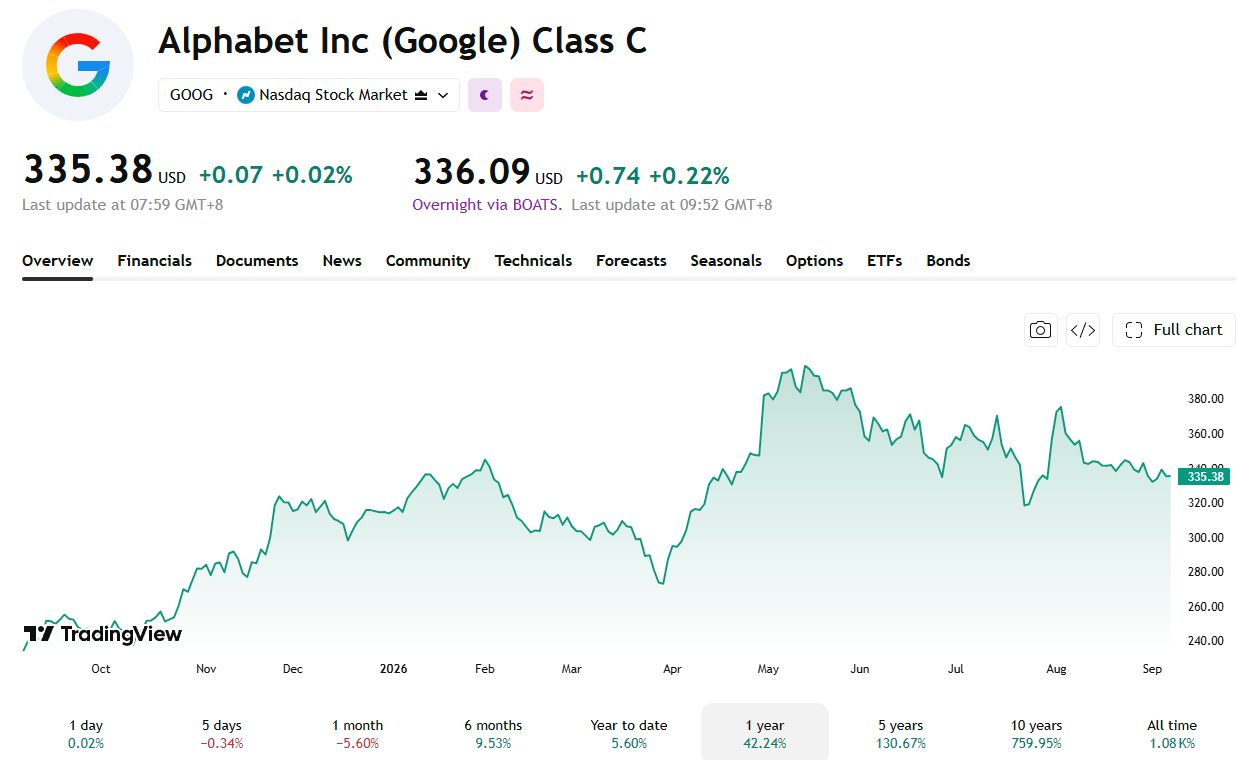
He pointed to Google shares up roughly 42% in the last 12 months against a Wall Street consensus target implying about 25% more upside, a wider gap than most peers Jim Cramer has recently favored.

Not every Magnificent Seven stock will move together as AI reshapes their economics. Some names still owe investors proof that spending converts to profit, while Toney argues others are already collecting.
The post AI Is Splitting the Magnificent Seven Into Winners and Laggards, Says Lo Toney appeared first on BeInCrypto.
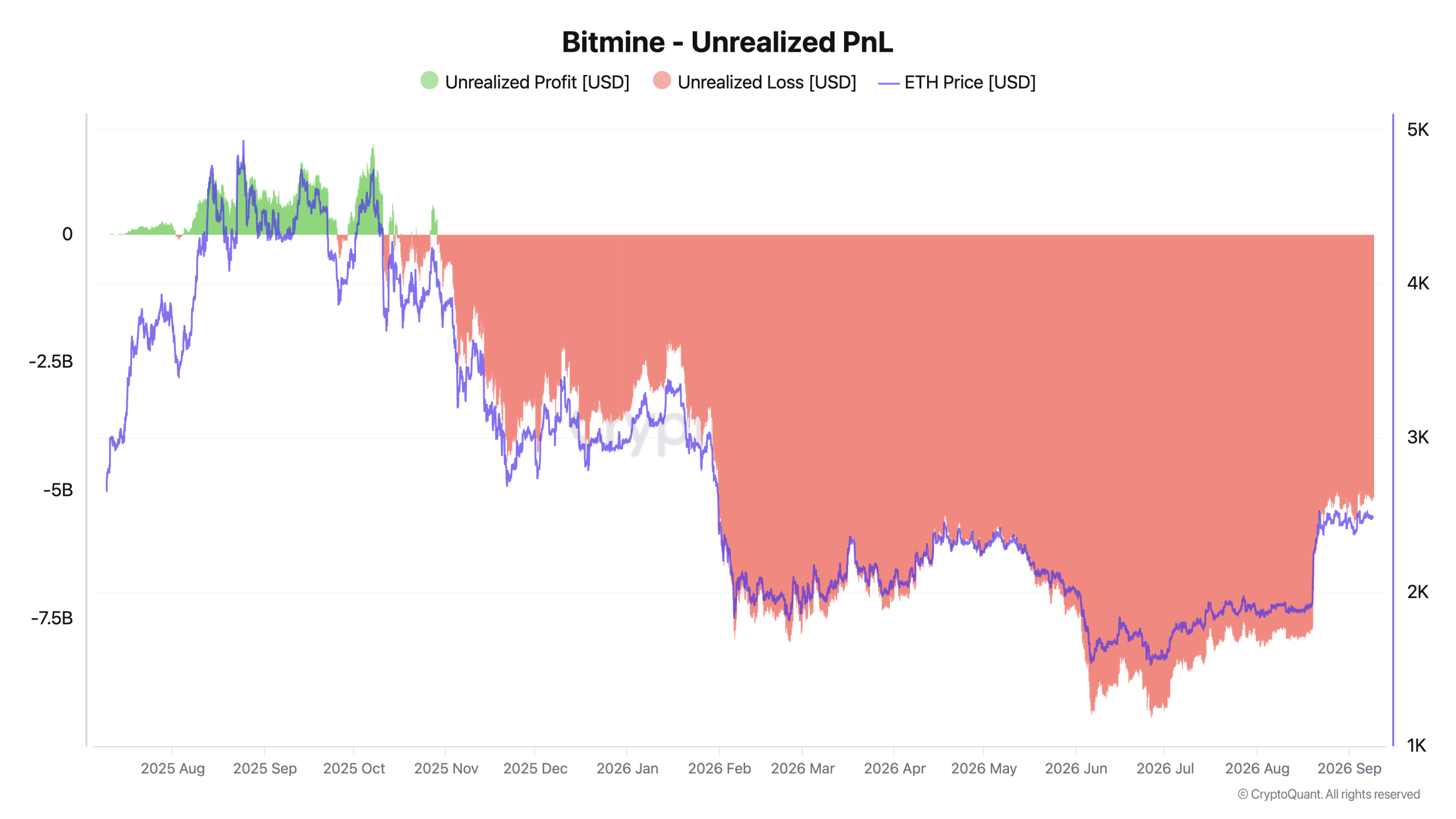
BitMine Immersion Technologies chairman Tom Lee expects institutions to buy crypto after a strong quarter so far. The firm holds 5.9 million Ethereum (ETH) tokens that sit far below their purchase cost.
The company valued its combined crypto, cash, and equity holdings at $15.7 billion on September 7.
Lee Points to a Quarter Crypto Led
In the firm’s weekly update, Lee said ETH has been the best-performing macro asset during the quarter. He put its lead over the S&P 500 at 5,430 basis points through last Friday. ETH, Bitcoin (BTC), and Solana (SOL) rank as the top three assets since June 30.
He tied that run directly to institutional demand.
“We believe this sets the stage for institutions to add to their crypto holdings given the substantial outperformance of crypto versus other macro assets in calendar Q3 so far,” Lee said.
The statement came alongside a buying update. BitMine acquired 28,086 ETH over the past week, lifting total holdings to 5.9 million tokens.
Each purchase pulls the firm closer to 5% of the supply and deeper into a position that is underwater. CryptoQuant data puts the unrealized losses at roughly $5 billion.
Follow us on X to get the latest news as it happens

ETH’s rally has narrowed that shortfall. The token has added 29.7% over the past month, according to BeInCrypto Markets data. Still, the gap before the position turns green remains wide.
Staking Revenue Softens the Blow
BitMine is not waiting on price alone to close the gap. The firm has staked over 5 million ETH, or 85% of its holdings.
Lee put annualized staking revenue at $330 million. The staking reward climbs to $386 million at scale, using a 7-day yield of 2.61%.
Meanwhile, the stock has also benefited from the crypto rally. Lee said BMNR gained 99% quarter-to-date, ranking fourth in the Russell 1000 index.
BitMine needs roughly 171,000 more tokens to reach 5%. At last week’s pace, that takes about six weeks.
Subscribe to our YouTube channel to watch leaders and journalists provide expert insights
The post Will Institutions Buy Crypto After Ethereum's Q3 Run? Tom Lee Thinks So appeared first on BeInCrypto.

FASE Keuangan 20an ke 40an Yang Jarang Orang Bahas! | SUARA BERKELAS #86

Iranian families grieve at a school where a US strike killed dozens
Carclo reports margin gains, reaffirms full-year outlook


-
 Tech18 hours ago
Memory prices are slowing because buyers ran out of money
-

 NewsBeat16 hours ago
England up in reading, maths and science rankings as Scotland and Wales dip
-

 Business20 hours ago
Egyptian TV Presenter Sarah Khalifa, 11 Others Sentenced To Death In Major Drug Trafficking Case In Cairo
-
 Tech20 hours ago
Strong Password Policy and Password Manager Guide
-
 Sports19 hours ago
Phones confiscated, players sent home: Pakistan’s England tour turmoil revives memories of Mohammad Amir, Salman Butt and Mohammad Asif’s 2010 Lord’s spot-fixing scandal | Cricket News
-

 Crypto World20 hours ago
Visa expands stablecoin card network to 160 programs
-
 NewsBeat15 hours ago
Tehran’s assertive rhetoric signals a new and dangerous phase in conflict
-
 Business9 hours ago
Oil Higher on Hormuz Escalation, Weighing on Sentiment
-

 Sports12 hours ago
Ballon d’Or 2026 Nominees: Lionel Messi In, Cristiano Ronaldo Out; Erling Haaland Included In Top 30
-

 Politics15 hours ago
The Ultimate September Reset Guide: How To Refresh Your Mind And Life This Autumn
-

 Business20 hours ago
Claim Your Share Of $50 Million Disney Streaming Price Settlement By Sept. 8 Tonight
-

 Tech15 hours ago
Google’s revived nuclear power plant gets $1.9B loan from US government
-
 Business14 hours ago
Copper hits record high, UltraTech’s Ultravolt on the offensive: A double whammy for cable makers in FY27?
-

 Fashion14 hours ago
Phia Is the Shopping App That Styles You From Your Own Closet
-

 Crypto World13 hours ago
Robinhood Stock: How To Take Advantage With Reduced Risk
-

 Fashion13 hours ago
How to Safeguard Your Small Business Against Emerging Cyber Threats
-

 Crypto World19 hours ago
Iran Threatens to Target U.S. Energy Assets in Gulf If U.S. Strikes Again
-

 Tech19 hours ago
Stoke Space raises another billion to rival SpaceX at re-flying rockets
-

 Business17 hours ago
US-Canada tariffs: Canada braces for prolonged trade war as counter-tariffs on US take effect
-

 Tech14 hours ago
ESP32-P4 Powers Video Alarm Clock
You must be logged in to post a comment Login