
Politics
Are We Giving Children Smartphones Too Soon?

Something rather strange has happened to childhood.
It is 2026, and we have never been more conscious of keeping children safe. We strap toddlers into increasingly sophisticated car seats, watch babies sleeping through cameras and have transformed safeguarding in our schools.
And yet a few years later, we put a smartphone into those same small hands.
We carefully control the physical world children encounter, while giving them access to a digital one of almost unimaginable scale – often long before they have the maturity to make sense of everything they will find there.
Except even that doesn’t quite describe what has changed. Our children aren’t simply accessing the online world. The online world is accessing them.
Algorithms seek their attention; strangers can enter their bedrooms without opening a door; and other people’s opinions, lifestyles and judgements follow them home from school.
After more than 30 years in education, I don’t believe the fundamental needs of children have changed. But the world in which they are growing up has – and we should not assume that will leave children unchanged.
We are seeing significant concern about anxiety and other mental health difficulties among young people. It would be too simplistic to blame smartphones alone, but equally foolish to ignore growing evidence associating aspects of online life with anxiety, disrupted sleep, social comparison and poorer wellbeing.
Four years ago, I was sitting around our dinner table with my daughter, now 26, and her friends when they told me they thought theirs might be the last generation for whom “likes” had never really mattered.
One had a 16-year-old sister whose adolescence, they felt, was fundamentally different. Social media wasn’t something she used alongside her life; increasingly, it was where part of that life was lived.
That conversation has stayed with me.
Growing up has always involved working out who you are. But today’s young people are doing that in a culture where everyone can broadcast an opinion – and algorithms determine which opinions they will hear most loudly.
We also need to talk about addiction. Not every child who loves their phone is addicted, but compulsive patterns of use are real. I am not sure parents always realise quite what their children are being asked to resist. We ask developing brains to exercise self-control against sophisticated systems designed to capture their attention and learn how to retain it.
And every hour captured displaces something else: sleep, reading, conversation, physical activity, family life, even boredom.
We see this particularly clearly on school trips. My school, Pipers Corner, has always been phone-free during the school day, and more recently we have extended this to trips. Without phones competing for attention, pupils engage more, notice where they are and, perhaps most strikingly, seem to enjoy themselves more. They talk to people they might not otherwise have spoken to.

Previous generations had plenty of “screen time”. Families sat around a television together. Children saw things they didn’t understand, but an adult might explain, challenge or simply say, “That’s nonsense.” The screen became a conversation.
Yet a smartphone in a bedroom is different: private, portable and personalised. Children can encounter things they don’t understand privately and repeatedly, with nobody else even knowing that a conversation needs to happen.
So, I welcome new restrictions such as overnight social media curfews and turning off addictive features that keep children scrolling into the night – but perhaps not for the obvious reason.
I don’t believe regulation alone will solve this. Some of the world’s most powerful technology companies have built hugely successful businesses around capturing and monetising human attention, including children’s.
What I welcome is the message regulation sends to parents: we have learned something about risk.
When I was a child, I was allowed to sit on my mother’s lap in the passenger seat of my father’s car. My parents weren’t reckless. It was simply normal. Then our understanding of the risk changed, regulation followed and eventually parental behaviour changed too.
I wonder whether we are approaching a similar moment with smartphones.
Restrictions give parents permission to pause and to say “not yet”. But ultimately restriction isn’t enough, because children must eventually navigate the digital world independently.
I tell parents of 11-year-olds that their daughters will drive one day. They will learn the rules, develop judgement and eventually drive perfectly safely.
Nobody suggests we should therefore hand them the car keys at 11.
We protect children, then teach them, then gradually allow greater freedom as their judgement develops. Why should the digital world be different?
Our job is not to tell young people what to think about technology, but to teach them how to think about it.
Government can help create safer roads. Technology companies should be required to build safer vehicles. But parents and schools still have to teach children to drive.
And perhaps we need to be brave enough not to hand over the keys quite so soon.
Helen Ness-Gifford is Headmistress at Pipers Corner School in High Wycombe.

Labour MPs Anneliese Dodds and Andrew Lewin have urged Andy Burnham to set out a bolder relationship with the EU.
Speaking at a British Future fringe event at Labour conference, the pair were asked what the prime minister should say and do with regard to UK-EU relations.
Dodds, a former cabinet minister and chair of the Labour Party, said she wanted Burnham to be “very straight about things”. “I think the top line is the most important one, and the top line has got to be: we must have high ambition”, she said.
She said she wanted the prime minister to tell voters: “We’ve escaped lots of things, but we can’t escape geography.”
Dodds argued that the UK should not approach potential negotiations as a supplicant. “I don’t want us to just be saying if we’re not part of this, that’s going to damage Britain, because that puts us in the position of being a demander, which is not what we are on these questions”, she said. “We need to talk about solutions, not deals.”
Dodds also said she did not want Burnham “snarled up” in the detail of what a future relationship would look like.
She added: “If we see UK not able to participate in those economic security measures by the EU, it’s going to be just as damaging for them as it is for us, and I want him to be making that argument. And I think he’s very well pleased to do it. Actually, as a very straight talker.”
Lewin said Brexit had been “a failure on the terms that it set itself”, noting immigration had been a driver for many who voted Leave and the lack of a special trade deal with the US.
Lewin said: “Ultimately, I want to rejoin the European Union, but importantly, I don’t think now is the time.”
He warned that opening the debate on rejoining now would “dominate politics again in a way that it did 10 years ago.”
Lewin set out a sequence that he said would respect Labour’s manifesto red lines while showing progress on moving closer to the EU.
He emphasised the significance of an agreement on youth mobility, saying it is “not good” that negotiations haven’t been concluded.
The Labour MP added: “I believe it’s important on its own terms because youth mobility is a pro-growth measure – it’s a pro-opportunity measure for young people who’ve lost opportunities as a result of Brexit.
“But it’s also a test of can we work together, and I think for this to fail and this not to get over the line, then on the EU side, you say ‘why should we believe further promises about single market or customs union if you can’t agree on this sort of more limited program?’
“So that is essential. I really hope that happens by the end of this calendar year, and I think that should be our first priority.”
He added: “I think there has been some tension, perhaps with the Home Office saying ‘we’re quite squeamish about numbers’…
“Unless we’re willing to say the fundamental principle of youth mobility from our closest allies in the EU is a good thing, then we won’t be in a position to win the bigger arguments that might be to come.”
Lewin further argued that respecting the red lines set out in the manifesto should not preclude “opening a conversation now about the single market and the customs union, with a view to putting it to the country in a couple of years.”
At a future summit, Lewin suggested, the prime minister could indicate his openness to “begin conversations about what single market and customs union membership would look like in the future.”
Asked whether he would put rejoining in a manifesto, he answered: “In my lifetime, but not for the next manifesto. I think single market and customs union and build up.”
Lewin also commented on the pace of negotiations since Burnham became prime minister, noting the UK-EU summit planned for July was postponed with no new date set.
He said: “I think the worst five months since we were elected [in 2024] in terms of making progress has been the last five months when we changed the prime minister, and we’ve lost a summit that was locked in…
“Although there has been some very welcome rhetoric from the new prime minister, we’ve actually stalled, and that’s why it’s especially important we fix the date for the summit.”


Credit: Adobe Stock
What hypophosphatasia can teach us about finding patients sooner
This work has been funded by Alexion, AstraZeneca Rare Disease
For too many people living with a rare condition, diagnosis remains a long and uncertain journey. In the UK, more than a third of people with a rare condition wait over five years from first experiencing symptoms to receiving a final diagnosis.1
This is the well-recognised ‘diagnostic odyssey’ in rare disease. Advances in genomics, diagnostics, and data are helping some conditions to be identified earlier, but technology alone cannot close the gap.2 People can still fall between the cracks when symptoms are considered in isolation, routine clinical clues are overlooked, or there is no clear route from suspicion to specialist assessment.
Rare bone conditions illustrate this challenge clearly. Fractures, bone or joint pain, muscle weakness, fatigue, and mobility problems can all point to an underlying rare bone condition – but they can also resemble much more common conditions such as osteoporosis or even non-bone related conditions like fibromyalgia.3,4
This is particularly true for hypophosphatasia (HPP), a rare inherited metabolic bone condition that can affect people at any age.1 People with HPP often experience repeated fractures, bone and joint pain, muscle weakness, long-term fatigue, and significant mobility problems.5 In children, growth and development can also be affected, while severe infantile HPP can even be fatal.3 As a result, HPP can have a significant impact not only on those living with the condition, but also on their families and carers.
Early recognition and specialist assessment are therefore essential. HPP continues to be misdiagnosed and important biochemical clues available through routine testing are frequently overlooked.6 Once again, an ongoing challenge in rare diseases.
To help change this reality, Alexion, with the support of Metabolic Support, those with lived experience of the condition, and leading clinicians from across the rare bone disease community, has developed the Think Rare, Think HPP Blueprint.
The Blueprint sets out what an optimal HPP diagnostic pathway should look like, alongside practical clinical, system and policy recommendations to help make it a reality. Importantly, the methodology used to develop the Blueprint has been designed with broader application in mind, providing an approach that could be adapted to other rare conditions facing similar challenges in diagnosis and referral.
“Too many people living with HPP face long delays before receiving an accurate diagnosis; we need change. The Think Rare, Think HPP Blueprint is an authentically impactful pathway – meaningfully aggregating the voices and experiences of the people involved in improving diagnosis – designed to improve clinical expertise, patient experience and practical recommendations to support earlier recognition, more consistent referrals and better outcomes for people affected by HPP.”
Kirsty Hoyle, Chief Executive of Metabolic Support
The Think Rare, Think HPP Blueprint will be launched at a parliamentary drop-in event on 28 October, ahead of World HPP Day on 30 October. The event will bring together those involved in shaping the Blueprint, alongside parliamentarians to build support for earlier and more consistent diagnosis in rare conditions.
The event comes at an important time as the Government considers the future of rare disease policy in the UK, with the next iteration of the UK Rare Disease Framework expected to be published in February next year. HPP provides a timely reminder of why faster diagnosis must remain central to what comes next, and why future policy must not overlook rare conditions where important clinical clues may already be available through routine NHS care.
“HPP shows that there are practical opportunities to recognise the signs of rare disease earlier and improve the route into specialist care. As the Government considers the future of rare disease policy, we need to make sure faster diagnosis remains a priority.”
Bob Blackman MP
If we are serious about shortening the diagnostic odyssey in rare disease, we need to make sure that the clues already available to us lead to action.
M/UK/UNB-H/0146 | Date of preparation: September 2026
References
- Association of British Pharmaceutical Industry (n.d.). Rare disease, The diagnosis challenge. Available at: https://www.abpi.org.uk/rare-diseases/thediagnosis-challenge/ (Accessed September 2026).
- Genetic Alliance UK (n.d.). Improving genomic research and services. Available at: https://geneticalliance.org.uk/campaigns-and-research/improving-genomicresearch-and-services/ (Accessed September 2026).
- Soft Bones UK (2018). What is HPP? Available at: https://www.softbonesuk.co.uk/what-is-hpp/ (Accessed September 2026).
- Rodríguez-Araya, L et al. (2025). The Challenge of Hypophosphatasia Diagnosis in Patients with Fibromyalgia. Available at: https://pmc.ncbi.nlm.nih.gov/articles/PMC13046356/ (Accessed September 2026).
- Conti, F et al. (2017). Hypophosphatasia: clinical manifestation and burden of disease in adult patients. Available at: https://pmc.ncbi.nlm.nih.gov/articles/PMC5726215/ (Accessed September 2026).
- Vidal, M et al. (2026). Hypophosphatasia: current concepts in diagnosis and management of a rare metabolic disorder. Available at: https://www.explorationpub.com/Journals/emd/Article/1007135 (Accessed September 2026).
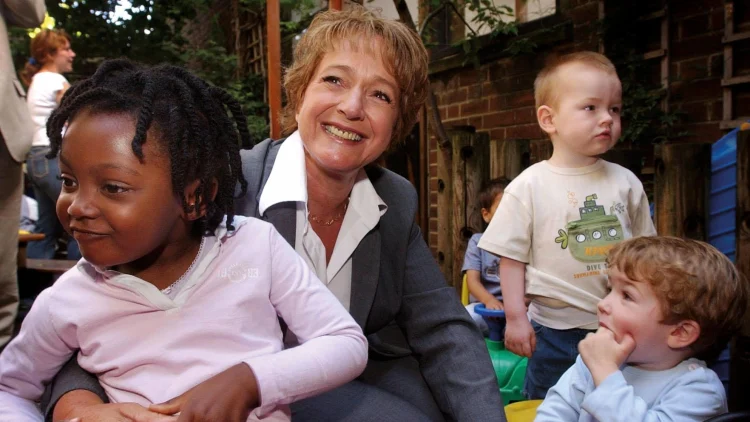

2003: Margaret Hodge meets children at a Sure Start centre, London | Image by: PA Images / Alamy

3 min read
Baroness Hodge pulls no punches in this enthralling and combative memoir
From refugee to national treasure in one generation, Margaret Hodge has rescued the description “battleaxe” from its usual pejorative association with tough old women and redefined it as a fighter for all that is good in British public life – and managed so with gratitude to those who helped her along the way, and with affection for her constituents, the “burghers of Barking”.
I’d be proud to be called a battleaxe myself. I started reading this book with some scepticism, maybe expecting some of the self-aggrandisement that can be found in political memoirs. But I was completely won over and enthralled by this well-written, combative and panoramic view of 50 years of the Labour Party and its internal battles.
It is also a groundbreaking account of the fight against tax avoidance and how Jewish politicians stood up to antisemitism. Margaret Hodge places herself in the centre-left drive to improve the lot of children – Sure Start is her baby – and the homeless, to root out corruption, gain equality for women and defeat the BNP.
I’d be proud to be called a battleaxe myself
My enthusiasm may be roused by the similarities I saw between her origins and my own, and those of some other first-generation Jewish peers. Her Jewish family were refugees from Egypt, where they had gone to escape the Nazis, and her presence here is a reminder that Jews were expelled, and worse, from most Middle East countries in the 1940s.
That history gives one the beliefs and strength to make life better, to speak out and to go against the crowd when necessary. It led her to fight against racism and antisemitism, and for women. She lived in Islington – there must be another book to be written about Labour residents of Islington – and she rose from councillor to MP – and most notably chair of the invigorated and feared Commons Public Accounts Committee – and then peer.
Her stand against Jeremy Corbyn’s failure to tackle antisemitism (nailing the Chakrabarti “whitewash”) and against corruption, especially Russian money laundering in the UK, is a work in itself. Her account also offers a rather disturbing insight into Labour factionalism, which at some stages consumed as much time as her achievements.
 She paints a grim portrait of how it was for women MPs in the 1990s, yet displays an irrational dislike of Margaret Thatcher and Theresa May. Depressingly, some of the issues Hodge thought had been settled are back in full force. Child poverty, the spiralling cost of benefits, packing boards with government favourites, frank talk about immigration, and Labour’s opportunistic anti-Israel policies. She pulls no punches: the antisemitism of Ken Livingstone, the politicians who backed away from tackling money laundering.
Battleaxe is a rattling good read. Hodge’s courage and persistence are admirable. She was deservedly elevated to a peerage and, at the age of 82, is herself a good argument for not throwing out the over-80s from the Lords.
I suspect there is plenty more to come from Baroness Hodge as she calls out corruption and antisemitism and turns her focus to the royal finances.
Baroness Deech is a Crossbench peer
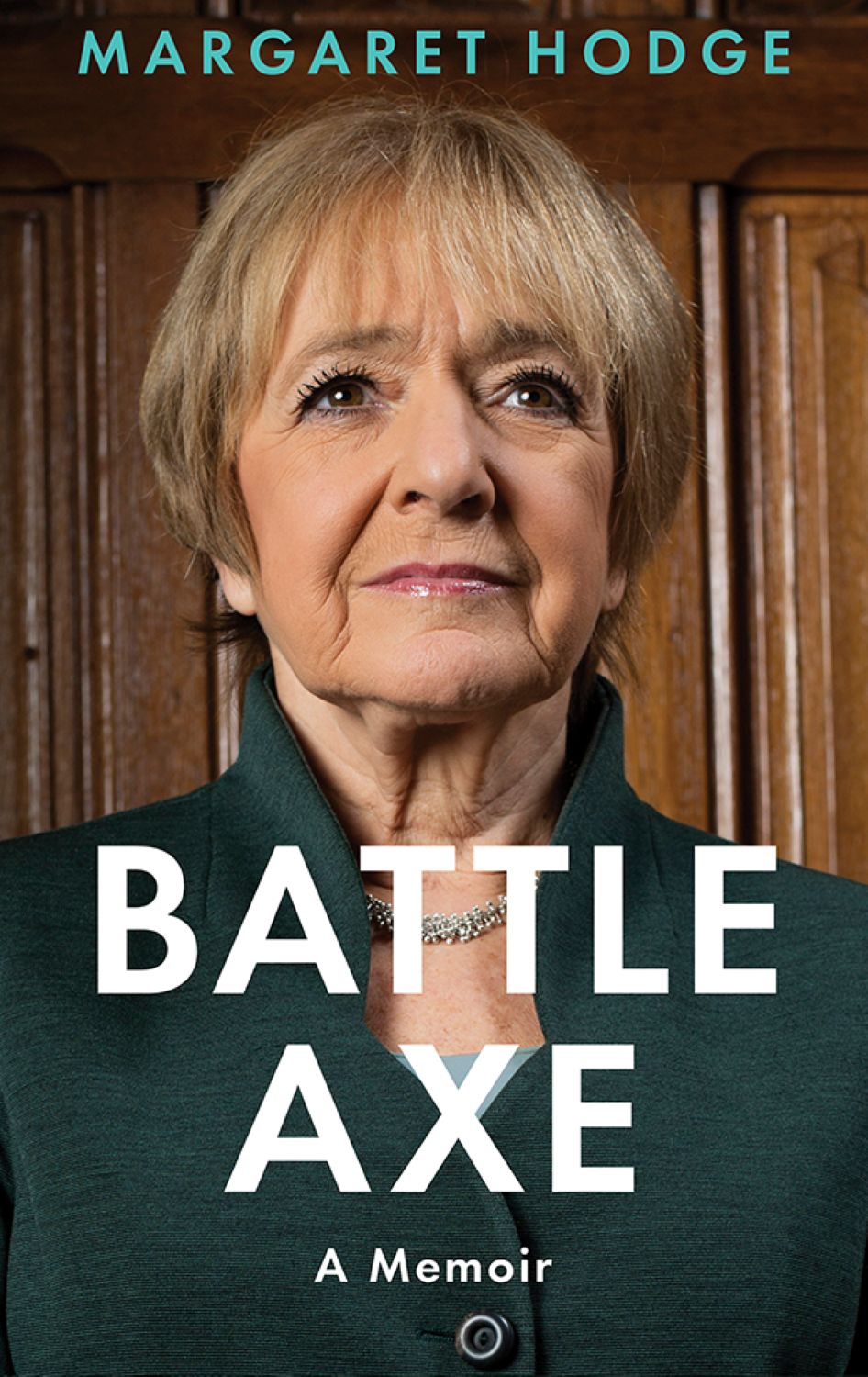
Battleaxe: A Memoir
By: Margaret Hodge
Publisher: William Collins
We don’t have much to say about this graph that it doesn’t say for itself.

The arrest of Peter Murrell on 5 April 2023, just a couple of weeks after his wife realised the game was up and walked away before the cops came round and put a big blue tent up on their front garden, changed everything in Scottish politics.
There can’t have been many starker sliding-doors moments. Before the resignation there was a vast gulf between the SNP and their nearest challengers – fully 26 points in early December 2022, a fortnight before the SNP infamously steamrollered the Gender Recognition Reform Act through Parliament in a series of heated late-night sittings.
That began a slide, but after the resignation the lead collapsed entirely, and by the summer Labour were almost neck-and-neck with Humza Yousaf’s beleaguered administration, and duly almost wiped the SNP out of Westminster in July’s UK election.
Unfortunately for Labour, that led to Keir Starmer being Prime Minister and their support instantly fell off a cliff, leaving a gap into which mainly Reform but also the Greens surged. (We’ve left the Tories and Lib Dems out of the graph to keep it clean, as both of them barely moved during the period and are largely irrelevant forces.)
The Parliamentary arithmetic barely changed at the 2026 Holyrood election due to the electoral system giving the SNP a grossly disproportionate number of seats, but it’s plainly visible how much the wider political picture did. The SNP, which had only fleetingly dropped below 40% since the 2014 indyref and had peaked at 62% (a breathtaking 42 points ahead of Labour), has only momentarily brushed that line again.
As recently as two months before Sturgeon’s resignation (and for most of the preceding three years), the combined SNP and Green vote would have been enough to surpass the 50% mark in an election being used as a de-facto referendum. But the SNP did nothing, and this May that combined vote fell far short, with Unionist parties taking 60% of the ballot. When her husband was read his rights the window of opportunity closed, probably forever.
For those three years, Sturgeon knew that the Operation Branchform cat was out of the bag and that the clock was ticking. But she stalled and stalled until she ran out of time and the chance was gone. In terms of independence, the second half of that graph may as well be a flatline at zero.

Politics
Politics Home Article | John Healey Pledges “Fiscal Discipline” and Hints At Welfare Reform
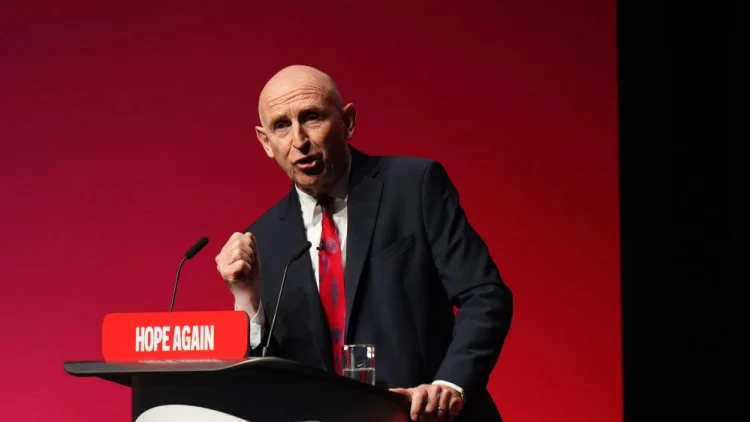

Healey hinted at welfare reform in Liverpool on Monday (Alamy)
2 min read
The Chancellor has pledged “fiscal discipline” and hinted at future welfare reform, arguing it is “not progressive to allow a bigger and bigger benefits bill”.
Speaking from Liverpool on the second day of Labour Party conference, Healey said that the “core” of the budget he will deliver next month will be “fiscal discipline”.
It comes after Healey inherited a difficult economic landscape from his predecessor, with growing concerns around the costs of government borrowing and an enduring war in Iran.
Healey told conference that the “hope” that Labour wants to bring to the country would be “earned through fiscal discipline, through good work, and through strong industries,” and he said he and the Prime Minister are “in lockstep that we will meet the fiscal rules, that we will maintain control of Britain’s finances.”
Elsewhere in the speech, Healey said: “I will bring fresh hope to build from the rock of fiscal discipline, built on a growing economy with good work and jobs in more places, built on a new age of industrialisation.”
While Healey was positive about the country’s outlook and the return to a Labour government, he said that “the money New Labour had in the 90s is simply not there now.”
Pointing to the Tories’ years in power, Healey said: “We had 14 years of flatlining Tory growth and living standards when Cameron’s austerity gutted our public services, when Johnson’s Brexit hammered our exports and Truss’s mini budget crashed the economy and collapsed confidence in Britain’s fiscal strength.”
Healey also used his speech on Monday to argue for the need for welfare reform, arguing that while the social security system “must always be there for those who can never work”, it is “not progressive to allow bigger and bigger benefits bill, and a system which offers an income but doesn’t offer a future.”
Pointing to the one million young people who are not in education, employment or training, Healey said that tackling this is “more than just an economic must. This is a moral duty.”
“I refuse to write off a million young people like the Tories have done.”
During his speech on Monday, Healey paid tribute to the former chancellor Rachel Reeves, pointing to her work on “financial discipline” and lifting the two-child benefit cap.
Healey also announced a new “local apprenticeship service” to help connect companies with young people, and said that the Government would commit to £6bn of contracts for British shipyards.
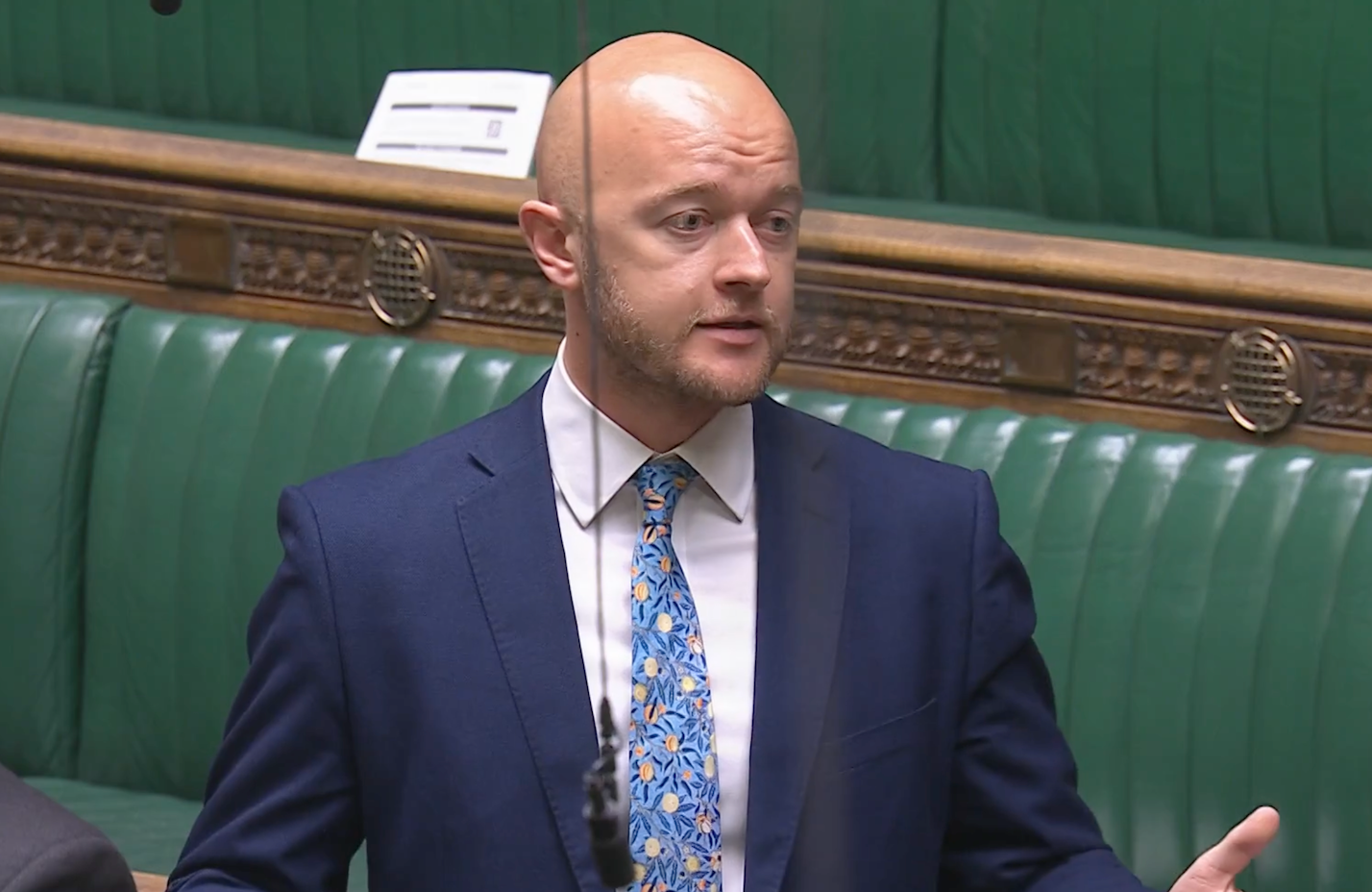
Labour MP Jonathan Hinder has urged the left to “reclaim” free speech.
Speaking at a Labour fringe event organised by More in Common and Liberty, Hinder said many working-class voters did not feel able to raise concerns about immigration for fear of being labelled racist. He referred to a story Keir Starmer, the former prime minister, told in his 2025 conference speech about a voter who began a sentence with “I’m not racist, but”.
Hinder, the chair of the Blue Labour group, said the vast majority of people in the UK were “not at all racist”, and that many who cared about immigration “do not give a jot whether you are black, brown, or white.”
He added: “I think this is a really important issue for the left. It’s a fundamental principle of socialism that we want to hold the powerful to account. So it should be as cherished by us as anyone.”
Hinder told the fringe meeting: “If you don’t believe in free speech for your opponents, you don’t believe in free speech. Let’s reclaim it for the left as socialists.”
The Labour MP also accused both Reform UK and the Green Party of trying to stifle debate. He pointed to Reform UK’s decision in July 2026 to report Green Party leader Zack Polanski to the police, after he shared an Instagram post. The post, which contained several images, included a photo of a man wearing a top featuring the name “Nigel” alongside an image of a guillotine.
Hinder, a former police officer, said the UK has “somewhat lost sight of the distinction between being a bit of an a***hole and being a criminal, and we need to get that back.”
Drawing on his policing background, he argued that Britain’s public order legislation is “not fit for purpose”.
He said: “We need to refresh those for the modern era, for the online age in particular.”
Hinder said the law sets “quite a low threshold” for police intervention, pointing to cases ranging from “an old granny holding a Palestine action sign, or it’s someone sending a spicy tweet and getting arrested at Heathrow for it.”
Stella Creasy, the Labour MP for Walthamstow, said she agreed with much of Hinder’s stance, but emphasised that free speech has “always been a qualified right”.
“We’ve always said you have the right to say what you want”, Creasy said. “You don’t have the right to be unaccountable for the consequences.”
She said “power imbalances” between groups meant free speech had “never been a reality” for some, and that progressives should recognise the difference between “somebody trying to have a conversation and somebody trying to use words to shut somebody else down”.
Creasy further argued that people could be harassed “with the most benign words ever. You can shut somebody down just by saying something repeatedly.”
She added: “If we want to stand up for free speech, we have to be able to stand up for the concept of being able to say stop…
“You have a right to offend somebody, sure, but you don’t have a right to keep going once they say, actually, look, ‘I just don’t want to be part of this.’”
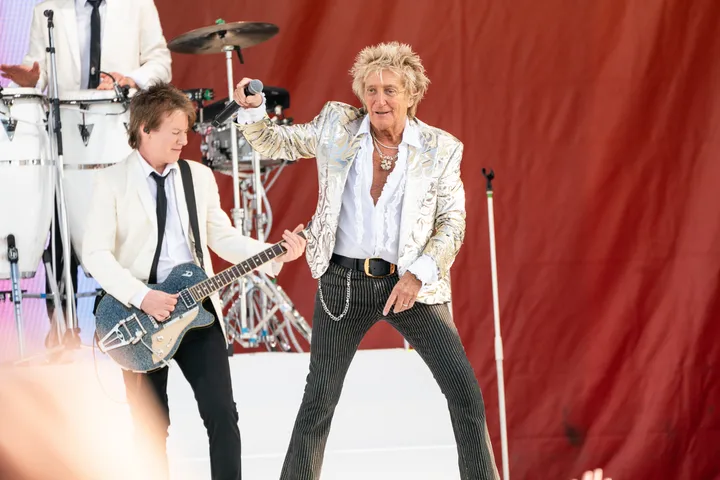
Sir Rod Stewart has announced what he’s claimed will be his last ever run of UK shows.
On Monday morning, the legendary crooner announced his The Final Encore tour, which will bring him to venues around Europe in 2027.
In a message addressed to his “dear friends”, Sir Rod explained: “The time has come to say farewell to life on the road. After more than six decades, The Final Encore will most definitely be my last.”

The 81-year-old continued: “I’ve been singing the music I love since I was 19 years old, and I’ve had the privilege of taking it around the world to all of you. It has given me a life beyond anything I could ever have imagined, and I hope I’ve given you some fond memories in return. So, may I take this opportunity to thank you for making this extraordinary life possible.
“I hope you’ll join me so I can thank you the best way I know how… with the music and one hell of a show. See you there.”
Meanwhile, in a video message, the Maggie May singer added: “After much deliberation and sadness, I have to announce that next year will be my last tour for ever, ever. I’m not retiring, but this will be the last rock and roll tour, So I want to thank you for everything you’ve given me, and hopefully I’ve given you something in return.
“So, please come out and see me on the tour! It’s going to be great!”
Last month, Sir Rod cancelled the remaining dates on his US tour after undergoing a coronary stent operation.
What UK dates has Sir Rod Stewart announced for his Final Encore tour?
The UK shows on The Final Encore tour announced so far are as follows:
- Belfast – 27 April 2027
- Glasgow – 29 April 2026
- Birmingham – 4 May 2027
- Manchester – 6 May 2027
- London – 11 May 2027
The European leg will also consist of shows in Dublin, Amsterdam, Antwerp, Berlin, Dusseldorf, Copenhagen, Helsinki, Rattvik, Trondheim, Bergen, Budapest, Munich, Pula, Prague, Krakow and Hannover.
When do tickets for Sir Rod Stewart’s The Final Encore tour go on sale?
Tickets for Sir Rod’s last UK shows will go on sale on Friday 2 October. There’ll also be a special fan pre-sale taking place on Tuesday 29 September.
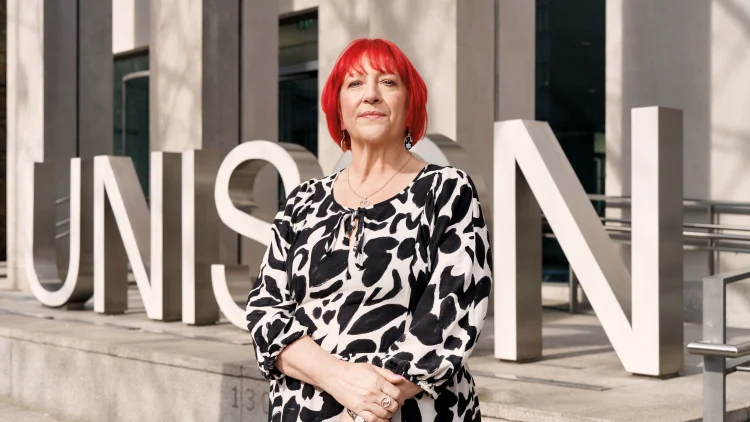

Andrea Egan (Photography by Tom Oldham)

11 min read
Unison general secretary Andrea Egan is nine months into the job. She talks to Sienna Rodgers about Andy Burnham’s promise to unions, why she is not a Labour member and her pledge to take a social worker’s salary.
When The House first met Andrea Egan last year, she was standing as an underdog in the race to determine who would become the next general secretary of Britain’s biggest union.
Although she had the advantage – unprecedented in Unison – of being a single challenger against an incumbent, only the flame-haired social worker herself was confident she would win. After all, she was neither a paid union official nor a Labour member; it would be the first time a lay member of Unison had been elected to lead it.
But lead the 1.3-million-member trade union she now does, after securing 60 per cent in the internal contest that attracted a typically low turnout of just seven per cent. At the time, it was another blow for No 10, which lost an ally in the defeated Christina McAnea – widely thought to be another casualty of Sir Keir Starmer’s unpopularity.
Egan not only defied the odds to become head of Unison but also got her wish with a new Prime Minister she favoured for the job. “I am a fan of Andy. I mean, he’s the King of the North!” as the left-winger from Bolton put it to us in November.
“He’s made a real positive start,” the trade union leader tells The House today, noting that she was “really pleased” with Burnham’s Makerfield by-election campaign. “The way he approached that election – he wanted to listen to what people wanted to say, and he was open and honest enough to say, ‘Look, the Labour Party’s made mistakes.’ At that time, it was really important for society to hear some honest politics.”
She has already met with the new Labour Prime Minister on several occasions amid No 10’s effort to step up engagement with unions. In meetings with Tulo (as the group of party-affiliated unions is known), she reports that “he acknowledged that the trade unions had been left aside in the previous couple of years”. There is a “much better commitment” now, “absolutely”, she says, and a “better working relationship”.
“It was reassuring when he said, ‘I’m going to put the trade unions back in the front and centre,’ because why would we not be? We represent the workers who are delivering the public services. And he’s kept good with that promise. He’s met us a number of times.”
The Unison general secretary warns that Burnham is “not exempt from criticism”, though is careful not to criticise his controversial pick of chancellor, despite having endorsed Ed Miliband before the decision was made. Did the John Healey appointment come as a disappointment?
“I won’t say I was disappointed,” she replies carefully. “I felt Ed, and it was all in my own personal view, his vision for where the country needed to go was OK, was good. But I’ve made clear internally and to Andy, it’s not really our role as trade unions to tell him who to put in his Cabinet. So, if he’s picked John Healey, he’s picked John Healey, and we’ve got to respect that. Listen, the real issue is whether they deliver or not.”
Healey became Chancellor after resigning as Starmer’s defence secretary over a lack of military spending, of course. Egan, on the other hand, backs the “Wages not weapons” campaign by some unions – passed as a motion by the TUC this year for a second time – to call for investment in public services rather than defence.
“Well, that was his previous position. He’s now Chancellor, and his budget requirement and options are much wider than just defence,” she points out.
Egan does not support any increase in defence spend, let alone a three per cent of GDP or higher target. Is she not persuaded by the threat of Russian aggression, the possibility of conflict with China, perhaps even the need to defend the Falklands at some point soon?
“What are you defending, if your own infrastructure is broken and this society is not a healthy society?” she asks in response, before adding: “When you look at recent wars, we’ve been in Afghanistan, Iran, Iraq, Yemen. So, is that keeping our shores safe? We’ve got to be honest about what that money is actually being spent on.”
Nor does she accept the Westminster consensus that welfare spend needs to come down.
“Well, what is welfare spending? That’s the key question,” she says. “A big chunk of that is actually pensions, and that is deferred income for people who have already put into the pot.
“Then you’ve got to be really honest and realistic that a big chunk of our trade union membership is in these low-paid, insecure jobs, in these outsourced companies, and that low pay means they need to rely on benefits to exist. So, it’s all fictitious. Like Andy says, we’ve got to start having some very honest conversations.”
Although Egan holds back from criticising Healey directly, she is happy to make clear her view of the Home Secretary, who she says has “not even answered requests for a meeting”.
Unison wants to express its concerns over the government’s proposals to increase the time migrants will have to wait for Indefinite Leave to Remain status; the standard going up from five to 10 years, rising to 15 years for those who arrived on health and social care visas.
“That was one of my disappointments – that Shabana Mahmood was left in position, simply because of her position on the migrant workers. As yet, there’s just a wall of silence at the moment.
“I think that’s absolutely unacceptable because they make these big announcements, and what they’ve got is these hundreds of thousands of workers who are just being left on a thread at the minute, wondering where their futures lie and what’s going to happen to them and their families.”
Unison, a primarily public sector union that represents more social care workers than any other, is lobbying for changes not to apply retroactively: “It was a deal – come to the country for five years, do the work, and then you get leave to remain.”
Egan also wants their visas no longer to be tied to specific employers. “It’s got to be sector-wide,” she says. “The victimisation of those workers because you’re tied to one employer – that’s where the abuse happens… There’s a fear about raising your head and reporting them because the threat is there and it is real: ‘If you speak out, we’ll report you to Home Office, we’ll sack you’.”
Her overriding argument speaks to something fundamental – and very challenging – that Burnham wants to achieve in government: the creation of a ‘national care service’. “What I have said to Andy Burnham is, ‘You’re not going to be able to deliver that without the migrant workers.’”
And was he receptive to that message? “He nodded,” she recalls. “We were in a big meeting, and he acknowledged my statement.”
Egan, who was raised by a single mum on a Bolton estate, worked in the care sector herself; in a care home at 19, then children’s residential care. A union rep, she worked her way up, becoming manager of the unit, then convenor for children’s services, and ultimately a social worker.
“I’ve been asked by a number of ministers about me joining the Labour Party. I’ve reminded them that I didn’t leave them, they left me”
She joined the Labour Party about 16 years ago, yet was expelled in 2022 after sharing posts by Marxist group Socialist Appeal, which was proscribed under Starmer.
Asked whether she would like back in, Egan says: “I’ve been asked by a number of ministers about me joining the Labour Party. I’ve reminded them that I didn’t leave them, they left me.
They expelled me. I’m now the leader of the biggest trade union in the country, and what I have said is, ‘You need to start behaving like a Labour Party.’”
Extraordinarily for the leader of the largest trade union, which is affiliated to the Labour Party and continues to be one of its biggest donors, she is “waiting for a number of things” before considering a fresh membership application.
“They’d have to do something that would inspire me and instil my trust again that the Labour Party can behave and deliver like the Labour Party,” she says. Has she been given assurances that she would be let in? “After four years, I can reapply anyway… So, it is a choice thing.”
In the meantime, she is allowed to attend Labour conference but not permitted entry to the main hall.
When Egan last spoke to The House, she said she would not move down to London, where Unison headquarters sits on Euston Road, if she became general secretary. That has not changed – and fortunately for her, splitting one’s time between North and South is in vogue right now.
“My husband and my son are still in Bolton. That’s my family home. But whether I need to be down in the London office, the West Midlands, Glasgow – I’ll be wherever. You only need to look at my diary. I’m all over the place.
“The same is said about how many days you work. Ideally, you’d want to be working a standard working week, wouldn’t you? But that doesn’t work out either. So, I’m just wherever I need to be.”
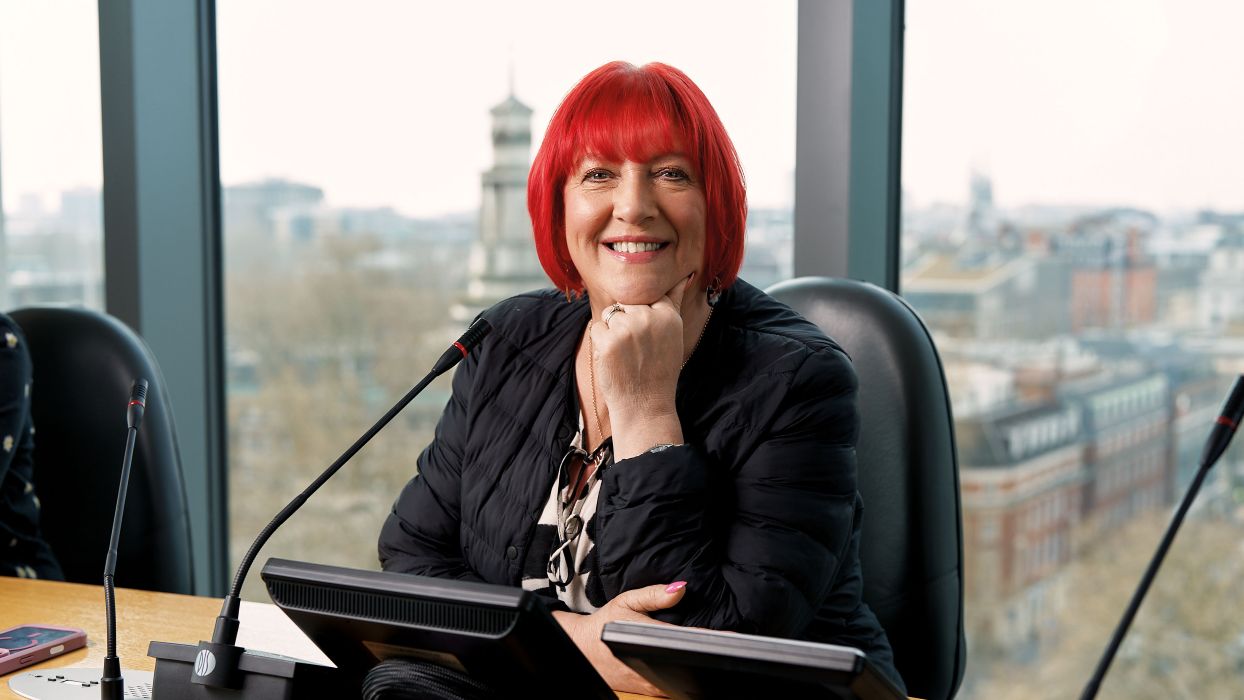
Egan also pledged to shun the £181,000 remuneration available to the general secretary, vowing to take only a social worker’s salary, without specifying what this figure would be. Has she been able to fulfil that pledge?
“For clarity, I’m taking a social worker’s salary, and that is within the scope of a social worker’s salary,” she replies, which suggests it may be the general average of around £40,000 but could also be much higher. She has not yet donated the remainder to Unison funds as promised; it is “sat in the account because I want to do it year-end”.
So, what will her final salary be?
“It’s a social worker’s salary,” she reiterates, unwilling to clarify. “What I will do is, I’ll publicise it at the end of the year to my membership. The only people I’m accountable to, if I’m really frank, is my membership, and you don’t say anything to your membership you’re not prepared to deliver on. So, I will deliver on that, and I will let my membership know.”
In our last interview, Egan also said she would not feel comfortable with the union representing someone like Sandie Peggie, the Fife nurse who complained about having to use the same hospital dressing room as a trans colleague. “We have members come to the union with all kinds of issues, and some of them are unreasonable, but you’ve got to unpick them,” she explained.
Has this situation arisen since she has become general secretary? “You can imagine: members come with all kinds of issues. They stole money, they’ve assaulted somebody, they’ve been accused of being racist. You don’t have to represent every single member through the rulebook because there’s some standard,” she says today.
The Supreme Court ruling on sex and gender in the Equality Act is “unworkable”, she adds, before stumbling over her words, trying to decide whether she “respects” the law as it stands.
She settles on: “You’ve got to adhere to the law. But at the same time, we absolutely will be looking at how we challenge that.”
While others favour reopening the Equality Act to change how it defines gender in light of the court ruling, Egan is not so sure. “I never said we were open to opening the Equality Act because where do you stop?” she asks. The implication is that it could open a Pandora’s box; she is deeply concerned by Reform UK’s plans to scrap the Equality Act, as well as the threat the party’s potential electoral success poses to unions.
For now, her focus is primarily on a campaign pressing the government to deliver on its manifesto promise to “bring about the biggest wave of insourcing of public services in a generation”.
Have the unions involved figured out how much the insourcing they proposed would cost upfront? “Work is being done, but our bottom line is really clear: it would pale into significance to what’s already been lost through the public purse.”
Egan is “loving” her new job. “I feel more optimistic than I did last year. I feel more excited than I did last year because I’m now – I mean, that was an historic win,” she says.
“I’m a working-class woman. A working-class woman from a town who has always felt that my position as a council employee, as a trade unionist, as a community member, are connected. It’s all for the good of.
“I did say this to Keir Starmer before he left: ‘Listen, I’m not an oppositionist for the sake of it, because if you win, we win, society wins.’ I think that’s where we’re at now. We’ve got one opportunity for really trying to get us back to a better place.”

Sabrina Carpenter cheekily fought back against allegations that her team didn’t urgently respond to a request from Madonna.
On Sunday night, Sabrina joined Madonna on stage to accept the award for Best Collaboration for their Bring Your Love music video.
During their joint speech, the Queen of Pop called out the Espresso singer as she explained how the song came together, claiming that after waiting five days for Sabrina’s team to get back to her, she decided to take things into her own hands.
“Five days,” Madonna said dryly, leading to “ooohs” from the audience.

“I DM’d her,” the Like A Prayer singer continued as Sabrina let out a stunned laugh. “This is a true story – she answered me back, and within weeks we were in the studio together.”
Madonna then added that she “loved” working with Sabrina because of how “professional” she is, noting that “in this day and age, it’s really hard to find professional people to work with”.
Sabrina also took a moment to step in and defend her team, joking that they were “shitting themselves backstage” in a moment that was bleeped out in the broadcast.
“My team replies, just so everybody knows,” she insisted. “They do respond to people… but I respond faster. So direct line to me is always the best way to get in contact.”
At the end of the speech, Madonna embraced her collaborator, and then said that the two were “gonna go back there and have a drink or something”.
“Um, everybody ― Madonna!” Sabrina said, earning extra applause for her iconic duet partner as the two walked off stage hand-in-hand.

Taylor Swift unveiled her new music video during Sunday night’s VMAs – and it has already generated a lot of conversation among her devoted fans.
During this year’s MTV Video Music Awards, the I Knew You Were Trouble performer was presented with the first ever VMA Artist Director Honours prize, in recognition of the many self-directed videos she’s released in recent years.
In honour of this, Taylor also unveiled the video for her latest single Patient Zero, co-starring Colin Farrell and Dakota Johnson, the latter of whom presented the singer with her award.

The Patient Zero video – which aired on TV as part of the VMAs broadcast, but has not yet been officially shared on Taylor’s official channels – stars Dakota as a woman in a seemingly perfect relationship with Colin’s character, who is being haunted by her partner’s ex, played by Taylor herself.
As the video progresses, it emerges that the character played by Taylor was actually killed by Colin, with her ghost trying to warn Dakota about suffering a similar fate, as viewers discover she, too, is seemingly being poisoned.
One shot towards the end of the video has already sparked a whole lot of speculation, as Dakota is seen standing at a gravestone that reads “1986 – 2022”.
Taylor, as her own album of the same name confirms, was born in 1989, leading “Swifties” to speculate as to exactly what the significance of the year 1986 could be…
Patient Zero is one of four new tracks by Taylor to be featured on The Encore, a deluxe edition of her album The Life Of A Showgirl.
Since its release last week, The Encore has been widely derided by critics, although Taylor is still on course to occupy the top three slots on the UK singles chart with tracks from the deluxe release.

Grok Says Its AI-Generated Version of ‘The Odyssey’ Is ‘Not Historically Accurate’

Harry Kane Wins 2026 Ballon d’Or After Historic Season

Stoke Space lines up $150M Pentagon loan for a second launch pad in Florida


-

 Fashion3 days ago
Weekend Open Thread: Anine Bing
-

 Fashion7 days ago
Tuesday’s Workwear Report: Margeaux Blazer in Four-Season Stretch
-

 Tech & AI7 days ago
DeepSeek updates V4.1-Flash model to improve performance
-

 Tech & AI1 day ago
New conversion kit lets builders fit ATX motherboards and standard PC GPUs inside Apple Mac Pro case
-

 Crypto7 days ago
CME Bitcoin Cash & Uniswap Futures for UK Traders
-

 Crypto6 days ago
UK Banks Restricting Crypto Transfers: Complaints Rise
-

 Tech & AI6 days ago
Stolen UpdraftCentral keys used to backdoor WordPress sites
-
 Tech & AI6 days ago
Google Support Pages Start Defaulting to AI Chatbots
-
Business & Hustles7 days ago
How safe havens stack up as tech, energy and France fears grip markets
-
Tech & AI6 days ago
Tesla-SpaceX Merger Being Considered
-
 Tech & AI7 days ago
Gemini Notebook now lets you review slides and videos before generating them
-
 Fashion6 days ago
The 10 Best Dressed Stars at the 2026 Academy Museum Gala: Jessica Biel in Tamara Ralph, Teyana Taylor in Schiaparelli, Kim Kardashian in Vintage Balenciaga, And More!
-

 Sports6 days ago
Team News, Stats and Odds
-

 Tech & AI6 days ago
Mozilla, Google, Apple block compromised eMudhra CA certificates
-
Entertainment6 days ago
The 20 best “Bluey” episodes of all time
-
Sports6 days ago
Stolen Vikings Pass Rusher is a Free Agent Yet Again
-

 Business & Hustles6 days ago
Google Cloud outage hits Revolut, Lloyds and DPD
-
Tech & AI7 days ago
Who Owns Daihatsu & Where Are Its Mini Trucks Manufactured?
-

 Entertainment7 days ago
Days of our Lives 2-Week Spoilers Oct 19-30: Joy’s EXPOSED & Dante DECEIVES!
-

 Business & Hustles6 days ago
(VIDEO) Ongoing North Toledo Chemical Release Forces School Closures Evacuations and Shelter-in-Place Orders
You must be logged in to post a comment Login