
Crypto World
AMD, Stock Of The Day, Runs Past Early Buy Point As Chipmaker Returns To Favor

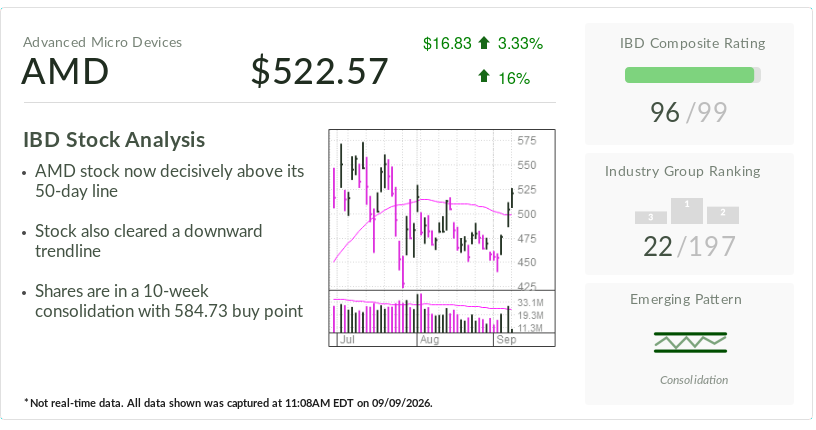
Advanced Micro Devices Advanced Micro Devices AMD $ 523.19 $17.45 3.45% 11% IBD Stock Analysis AMD stock now decisively above its 50-day line Stock also cleared a downward trendline Shares are in a 10-week consolidation with 584.73 buy point IBD Composite Rating 96/99 Industry Group Ranking 22/197 Emerging Pattern Consolidation Consolidation A sideways pattern that doesn’t fit traditional base definitions.…
Copyright ©2026 Investor’s Business Daily, LLC. All rights reserved. 87990cbe856818d5eddac44c7b1cdeb8

Crypto World
Bitcoin collateral, not trading volume, will signal real bank adoption: fintech veteran


Fintech veteran Wojciech Kaszycki has identified three tests for real bank adoption of Bitcoin: client custody balances, credit-funded spot trades and its use as loan collateral, following Standard Chartered’s launch of deliverable BTC and ETH trading for eligible UAE institutions.
Summary
- Standard Chartered now offers institutional BTC/USD and ETH/USD trading through its existing electronic channels.
- Kaszycki said bank credit lines, custody, and back-office integration matter more than a familiar trading screen.
- Bitcoin-backed loans with published collateral haircuts would show that banks can price and manage the asset’s risk.
- Crypto-native venues may retain their advantage in weekend liquidity, derivatives, and trading outside banking hours.
Standard Chartered has put Bitcoin trading on existing bank rails
Standard Chartered said on Sept. 3 that eligible institutions can trade deliverable Bitcoin and Ether through its Dubai International Financial Centre branch, making it the first global systemically important bank to offer institutional digital asset spot trading in the UAE.
The service supports BTC/USD and ETH/USD trades through the bank’s existing electronic channels, including interfaces already used for foreign exchange. Clients can choose where their assets settle, either using Standard Chartered’s UAE custody platform or another custodian.
As crypto.news previously reported, the bank introduced the UAE service more than a year after launching the same trading model through its UK branch in July 2025. Standard Chartered had already begun offering regulated digital asset custody in the UAE in September 2024, initially supporting Bitcoin and Ether with Brevan Howard Digital as its first client.
Wojciech Kaszycki, founder and chairman of Mobilum and a strategy advisor to Warsaw-listed BTCS S.A., told crypto.news that placing digital assets on a bank’s foreign exchange interface only removes one small obstacle for institutions.
According to Kaszycki, treasury teams care more about the identity of their counterparty, internal risk approval, custody standards, auditor acceptance, and the way each trade enters the company’s accounting system.
“Nobody on a treasury team ever says: ‘I’d buy bitcoin if only it looked like my EUR/USD ticket.”
A meaningful system, in his view, would connect Bitcoin trades to the credit lines, limits, confirmations, and back-office processes that institutions already use for currencies. Such integration would let a treasury department treat crypto as a regular balance-sheet item instead of running it as a separate project.
“If it’s just a new ticker in the GUI and everything behind it is manual, it’s a demo,” Kaszycki said.
Drawing on his work with a listed Bitcoin treasury company and a Dubai family office, he added that trading against a bank credit line without sending funds to a venue in advance would make it easier to secure board approval.
Bitcoin collateral would offer a clearer adoption test
Spot volume provides a poor measure of institutional adoption because trading activity can rise without showing whether companies or funds intend to hold digital assets, according to Kaszycki.
He instead pointed to custody balances held at banks for clients outside the crypto industry. Such balances would show that conventional companies, funds, and other institutions have chosen to hold Bitcoin through regulated banking relationships rather than merely trade it.
His second indicator is bank credit for spot purchases. Removing the need to prefund a trade would indicate that a bank’s risk department has assessed the asset, set exposure limits, and approved it within the institution’s credit framework.
Bitcoin entering bank lending books would provide the strongest signal, he said, especially if lenders disclose the haircuts applied to the collateral. A haircut reduces the value that a bank assigns to pledged property when calculating how much it will lend.
“When a bank has to price it, custody it, and liquidate it if needed, that’s adoption. Everything else is marketing,” Kaszycki said.
Banks in the United States have already started moving in this direction. An August report on JPMorgan collateral cited Bitcoin haircuts of 30% to 50%, meaning $1 million in pledged BTC could support between $500,000 and $700,000 in loan proceeds, depending on the borrower and loan terms.
According to the report, accepting Bitcoin as collateral also creates liquidation risk because a steep price decline could trigger margin calls and forced sales. Lenders therefore need rules for valuation, custody, collateral monitoring and liquidation before placing BTC alongside assets such as bonds, equities or gold.
Kaszycki also pointed to listed companies whose auditors approve Bitcoin holdings on their balance sheets. BTCS holds Bitcoin as a treasury asset on the Warsaw Stock Exchange, and he said the audit process requires more work than completing the trade itself.
Separate custody leaves a settlement problem
Allowing clients to use their preferred custodian offers flexibility, but Kaszycki said splitting execution and custody creates a familiar settlement risk. One party may need to transfer first, prefund the transaction, or use an escrow provider trusted by both sides.
Deliverable spot trading requires the buyer to receive the underlying Bitcoin or Ether rather than a cash-settled contract linked to its price. When the digital asset and cash travel through separate systems, completion of one leg can occur before the other.
Kaszycki compared the setup with foreign exchange settlement in 2005. In his assessment, Bitcoin can reach final settlement in under an hour at any time, while the dollar transfer may remain tied to SWIFT processing, bank opening hours, and payment cutoffs.
“The slow leg is fiat,” he said.
Tokenized bank deposits or regulated stablecoins could place the cash and asset legs on compatible systems, allowing payment-versus-payment settlement in which both transfers complete together, according to Kaszycki. Custodians would also need conditional release functions instead of waiting to confirm receipt of a wire before releasing the crypto.
For transactions between several banks, he said a netting network modeled on CLS could reduce the gross amounts that counterparties exchange bilaterally. Without such a system, banks must rely on credit lines, approved wallet lists, settlement windows, and staff monitoring blockchain explorers.
Standard Chartered has already tested ways to separate exchange activity from asset storage. Under a collateral-mirroring arrangement introduced by OKX in April 2025, institutions can keep eligible assets with the bank while their value appears in an exchange trading account. The framework later added BlackRock’s BUIDL tokenized U.S. Treasury fund as eligible collateral in April 2026.
Banks could win regulated flows while exchanges retain liquidity
Large banks can capture more institutional crypto trading because corporate treasuries, investment funds, insurers and Gulf sovereign institutions often prefer counterparties that already support their compliance and credit requirements, Kaszycki said.
Clients may accept a higher spread in return for access to a bank’s balance sheet, documentation, and established relationship. Kaszycki expects banks to source prices from crypto-native markets before adding a spread for institutional customers.
Crypto exchanges would retain several advantages under such a structure. Their markets operate continuously, including weekends, while banks remain organized around business hours and existing staffing models. Native venues also offer more assets and deeper derivatives markets, where much of crypto price discovery still occurs.
“At BTCS, we already do most of our size OTC with market makers rather than on order books, exactly for settlement flexibility,” he said. “Banks are just the next step in that same logic.”
U.S. rules now give national banks room to participate in several parts of the process. A December 2025 report on OCC guidance explained that national banks may conduct matched crypto transactions as riskless principals, provided they offset the exposure and comply with trading, anti-money laundering and third-party risk controls.
Earlier OCC guidance also confirmed that national banks can provide crypto custody and execution or outsource those functions to qualified providers. Banks remain responsible for managing the risks created by sub-custodians and other outside firms.
An August review of the U.S. custody market found that BNY, State Street, Standard Chartered, U.S. Bank, and Citi had launched or were preparing direct digital asset custody services. The report linked increased bank participation to the SEC’s January 2025 withdrawal of Staff Accounting Bulletin 121 and OCC letters confirming banks’ custody authority.
Kaszycki said banks extending spot credit would show that their risk teams had built formal models for Bitcoin, while disclosed collateral haircuts would reveal how lenders value its volatility. On the corporate side, he would count listed companies whose auditors approve Bitcoin holdings, a process BTCS has already completed for its Warsaw-listed treasury.

Ripple CEO Brad Garlinghouse turns an obscure central-bank logistics story into a full-throated news for crypto rails. The timing isn’t accidental. There’s a technical setup building underneath the noise.
Garlinghouse took to X to blast the Central Bank of the Netherlands after a CNBC report revealed it took six months to move 86 metric tons of gold, worth $11 billion, from vaults in the U.S. and Canada to London. He paired it with a callback to Germany’s four-year gold repatriation saga from 2013, noting that a decade separates the two stories, yet the settlement infrastructure hasn’t changed since the 1940s.
Crypto market cap, meanwhile, grew from $1.5 billion to $2.7 trillion in that same window. And it matters, XRP has spent the past week defending support in the $1.32-$1.40 band while repeatedly probing resistance overhead, and Garlinghouse’s timing puts a spotlight squarely on the settlement-speed narrative right as technical structure firms up.
Discover: The Best Token Presales
Can XRP Price Hit $2 This Week Amid The Ripple News?
At $1.42, XRP sits comfortably above near-term support at $1.32-$1.38, a zone that’s held through multiple retests over the past several sessions. Immediate resistance clusters at $1.43-$1.45, with the more consequential ceiling parked at $1.68-$1.72. It is the level analysts say needs to break on volume before $1.90-$2.00 targets become realistic rather than aspirational.

The bull case is a clean break above $1.45, flips resistance into support, momentum builds toward the $1.68-$1.72 zone, and a decisive close above that band opens the path to $2.00 and potentially $2.10+. The base case has XRP chopping between $1.35 and $1.45 while the market digests Fed policy signals and waits for a volume catalyst.
The bear case? A failure to hold $1.32 support drags price back toward $1.25-$1.27, invalidating the near-term breakout thesis. Institutional positioning and regulatory clarity remain the swing factors worth tracking into next week.
Earn $50 and Enter $300K Prize Draw on EdgeX
Bitcoin Hyper Targets Early Mover Upside as XRP Tests Key Levels
XRP holders sitting on gains from the monthly rally have a fair question to ask: at a $2.7 trillion combined crypto market cap and XRP’s own multi-billion-dollar valuation, how much upside realistically remains before the next leg requires a genuinely new catalyst?
The gold-transfer story is a strong narrative, not a new use case, and Ripple’s payment thesis has been priced in for years. That’s where earlier-stage infrastructure plays start pulling attention.
Bitcoin Hyper is refining the developer experience with clearer documentation, familiar tooling, predictable APIs, and better feedback for builders. — Bitcoin Hyper (@BTC_Hyper2) September 2, 2026
The goal: make the network easier to understand, connect existing tools, and start building with less friction. 

Read the… pic.twitter.com/kAo1w7Xa06
Bitcoin Hyper ($HYPER) is positioning itself as the first Bitcoin Layer 2 with full SVM integration, aiming to deliver execution speeds faster than Solana itself while settling back to Bitcoin’s base layer for security.
The project has raised $33 million in presale funding at a current token price of just $0.0136859, with staking rewards offered at a high APY. Core features include a decentralized canonical bridge for BTC transfers and low-latency smart contract execution, effectively giving Bitcoin the programmability it’s lacked for 15 years.
Research Bitcoin Hyper directly before the presale window closes.
Trade Crypto on Bybit and Get a Chance to Win Our $1,000 USDT Airdrop
The post Ripple News Brad Garlinghouse Slams $11B Gold Transfer as XRP Price Eyes $2 appeared first on Cryptonews.
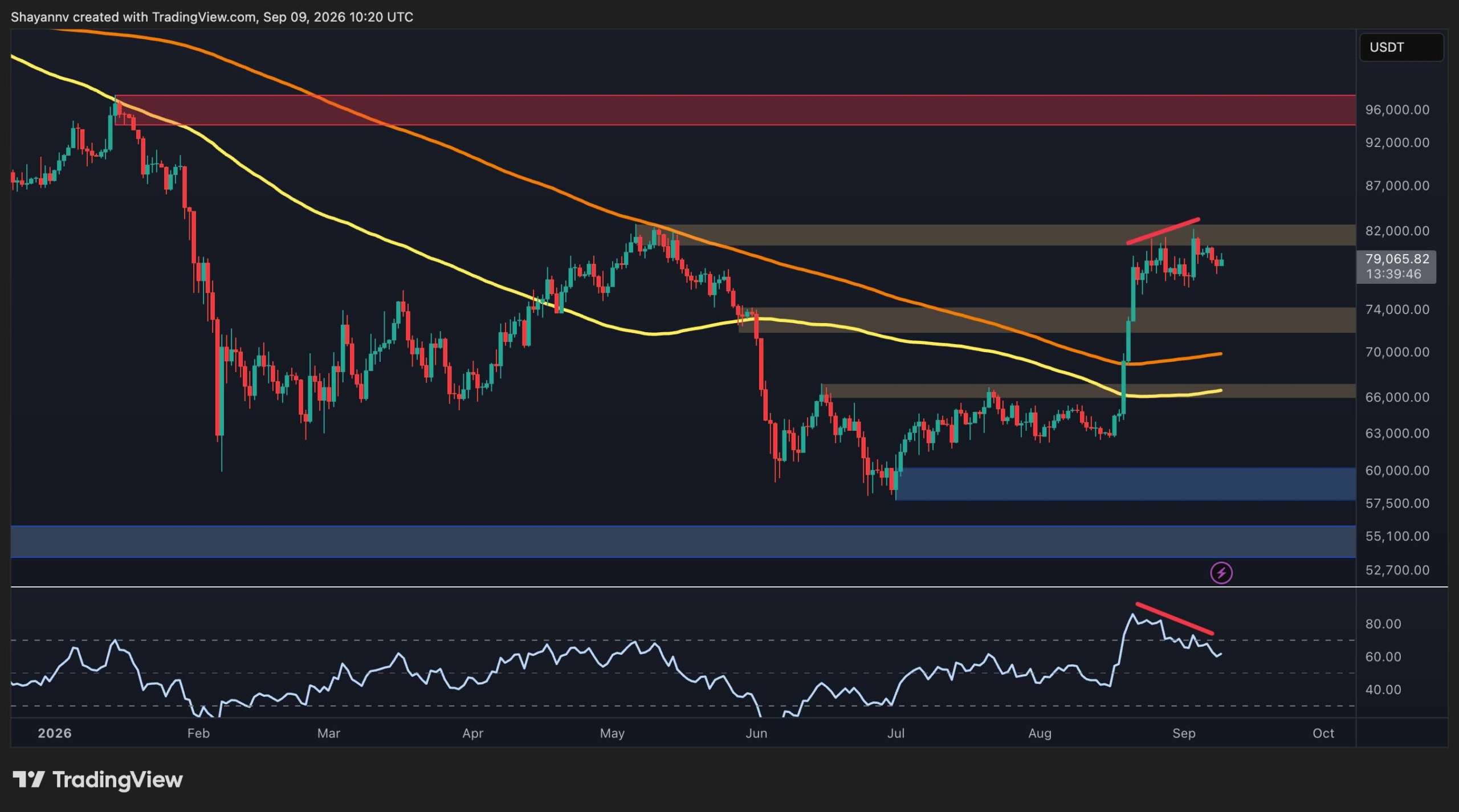
Bitcoin is trading near $79K after a sharp recovery from the $60K area, but the latest price action suggests that momentum is losing some steam beneath a major resistance zone. Meanwhile, adjusted SOPR has rebounded above 1, pointing to improving on-chain profitability, although the short-term price structure still requires a breakout for the recovery to extend.
Bitcoin Price Analysis: The Daily Chart
The daily chart shows that BTC has staged a significant recovery from the $60K demand area, eventually reclaiming the $67K region and pushing through the $72K-$74K zone. The asset is now consolidating around $79K, just below the $80K-$82K resistance area.
The mentioned resistance zone is the immediate obstacle. It has repeatedly capped the market since late August, while the yellow trendline connecting recent highs is also converging on this region. A decisive daily breakout above $82K would therefore represent an important structural development and could open the way toward the $96K resistance zone marked on the chart. On the downside, $72K-$74K is the first important support area.
Momentum is also showing some divergence. The RSI surged during the initial breakout but has since formed lower highs while the price remains close to its recent highs. This suggests that bullish momentum has cooled and raises the possibility of another consolidation or pullback before a sustained breakout attempt.
BTC/USDT 4-Hour Chart
Dropping onto the 4-hour chart, BTC has experienced a near-vertical move from roughly $64K to $80K before entering a sideways-to-slightly-rising structure. The price is currently oscillating between the lower boundary near $76K-$77K and the upper resistance around $80K-$82K. The yellow trendlines form a broad ascending structure, meaning the market is compressing while maintaining a sequence of higher lows and highs.
The latest rejection from the $82K area and subsequent retreat toward $79K indicate that sellers remain active near the upper boundary. At the same time, the asset has not broken the rising lower trendline, so the bullish structure remains technically intact.
A 4-hour candle closing above $82K would favor continuation toward the next major resistance above $90K. Conversely, a decisive break below the lower trendline of the pattern at $76K would weaken the current bullish setup and increase the probability of a retracement toward $72K-$74K.

On-Chain Analysis
The adjusted SOPR chart offers a constructive signal for Bitcoin’s recovery. Adjusted SOPR measures the profitability of spent coins while filtering out some of the noise created by short-term transfers. A reading above 1 generally indicates that coins being spent are, on aggregate, realizing profits, while readings below 1 indicate realized losses.
The metric has recently made a sharp recovery from deeply depressed levels and is now back above 1, with the latest reading around 1.01. This is notable because the improvement has occurred alongside BTC’s recovery toward $79K.
The chart also shows that aSOPR previously remained below 1 for an extended period during the first half of 2026, coinciding with Bitcoin’s weaker price performance. Its recent move back above the 1 threshold suggests that realized profitability has returned to the market and that the recovery is being accompanied by healthier spending behavior.
However, the metric is only slightly above 1 rather than displaying an extreme profitability spike. This could be viewed as a relatively constructive normalization rather than evidence of widespread profit-taking. If aSOPR can remain above 1 and trend higher while BTC breaks through $80K-$82K, the on-chain picture would strengthen the bullish continuation case, as the market would be relieved of panic-selling pressure and realizing losses.

The post Bitcoin Price Analysis: BTC Stalls Near $80K Ahead of a Potential Volatility Storm appeared first on CryptoPotato.


Tenev told CNBC’s “Squawk Box” on Wednesday that public companies shouldn’t have veto power over third-party securities that reference their shares.
Crypto World
Chime Stock: Fintech Wins Price-Target Hikes On Stride Deal, Raised Guidance. But Shares Slash Early Gains.

Chime stock surged early Wednesday to signal a breakout after the mobile financial company announced a deal to acquire Stride Bank and hiked its outlook. Analysts lifted their price targets on Chime stock following the news. Chime Financial (CHYM) on Tuesday said it reached a deal to acquire Stride Bank for $590 million in cash. The Oklahoma-based nationally-chartered bank has…
Copyright ©2026 Investor’s Business Daily, LLC. All rights reserved. 87990cbe856818d5eddac44c7b1cdeb8
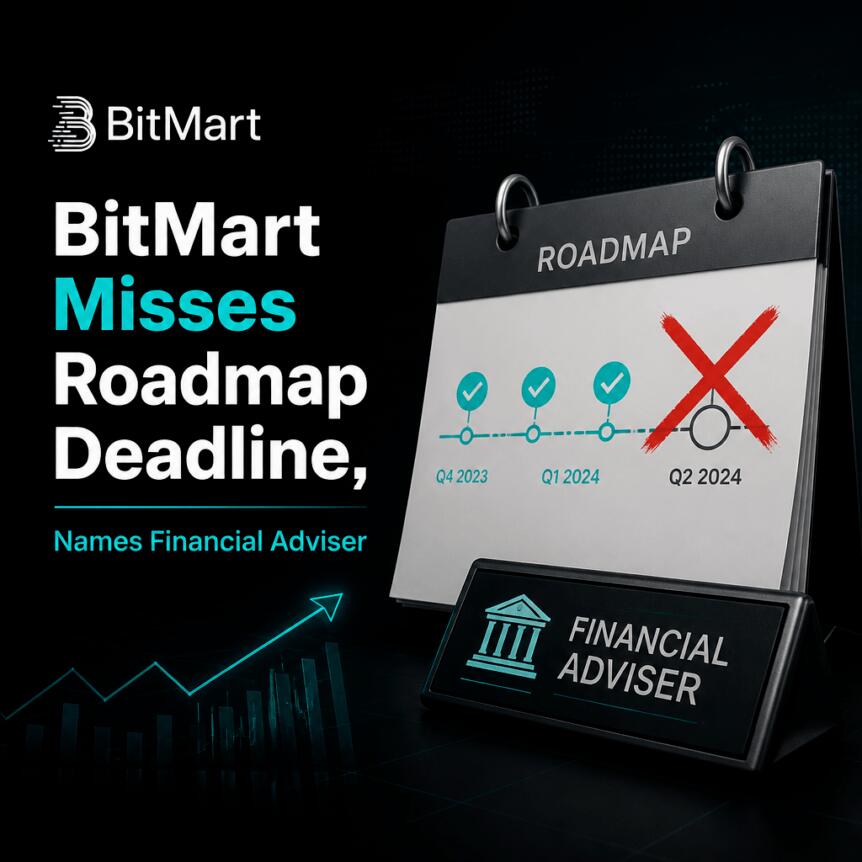
BitMart has appointed restructuring and turnaround firm Alvarez & Marsal as its financial adviser, a move it said it made ahead of a self-imposed Sept. 9 update deadline. However, the exchange has not yet published the restructuring and business resumption roadmap it previously said it was preparing.
In its announcement Wednesday, BitMart said Alvarez & Marsal will coordinate with the exchange’s legal advisers to review BitMart’s assets, financial position, stakeholder issues, and potential routes forward. The review will also assess proposals submitted by third parties, though BitMart did not identify them.
Key takeaways
- BitMart named Alvarez & Marsal as financial adviser, but did not release an asset-and-recovery plan alongside the appointment.
- The review is expected to cover assets, finances, stakeholder issues, and third-party proposals—details investors and claimants are currently seeking.
- BitMart plans to launch a dedicated web portal within five working days to gather user feedback, with further updates rolling out over three weeks.
- Echo Base, an ad hoc committee of claimholders, praised the step but criticized the lack of concrete disclosures tied to recovery and withdrawals.
Advisor appointment comes without a published roadmap
BitMart’s Wednesday update framed the appointment as part of its effort to meet its own timetable for providing a clearer picture of what comes next. Yet readers looking for concrete information—such as an inventory of assets, a recovery estimate, or a customer withdrawal schedule—were left waiting.
Echo Base, which has been organizing an ad hoc committee of BitMart claimholders, characterized the decision as BitMart’s most encouraging move since July. Still, Echo Base’s CEO Roshan Dharia said the update amounted to “an advisor appointment and two new deadlines,” without accompanying disclosures that claimants have been requesting.
“What arrived was an advisor appointment and two new deadlines, with no reserve position, no asset inventory, no recovery estimate and no withdrawal timetable,” Roshan Dharia, CEO of Echo Base, told Cointelegraph.
What Alvarez & Marsal will assess
Under BitMart’s announcement, Alvarez & Marsal’s work will focus on evaluating BitMart’s situation from both a financial and strategic angle. According to the exchange, the adviser will partner with BitMart’s legal advisers to examine the company’s assets and financial position, consider stakeholder-related issues, and explore possible paths forward.
BitMart also said the process would consider proposals from unidentified third parties. For users and claimants, the practical implication is that the outcome may not be confined to a single restructuring approach; instead, it could incorporate alternatives submitted by external parties, pending the results of the adviser’s review.
The exchange did not provide additional detail on how quickly the assessment will translate into specific outcomes such as withdrawal prioritization, recovery targets, or a formal restructuring filing.
User feedback portal and rolling updates
In addition to the appointment, BitMart said it will create a dedicated web portal within five working days to collect user feedback on its action plan and future direction. BitMart indicated that updates on the feedback process and action plan would be delivered on a rolling basis over the following three weeks.
This signals an attempt to broaden input beyond claimholders and stakeholders already engaged with the exchange’s internal processes. But the sequence also raises the question of whether user feedback will directly inform the most critical next steps—such as timelines for access to funds—rather than serving as a consultative layer before detailed decisions are released.
Scrutiny since the July wind-down announcement
BitMart’s latest move comes after intense scrutiny of its financial position and handling of customer assets since it announced a wind-down on July 26. Coverage by Cointelegraph noted that users reported withdrawal delays following the wind-down announcement, which contributed to growing concern among traders, investors, and claimants.
Despite those mounting concerns, neither BitMart nor Alvarez & Marsal responded to Cointelegraph’s requests for comment on the story.
For market participants following the case, the key tension remains the gap between process updates and the operational information users need most—confirmation of reserves or asset inventory, an expectation for recovery, and an actionable withdrawal timetable. While appointing a well-known financial adviser can be part of a legitimate restructuring workflow, the credibility of that workflow depends on measurable progress and transparent disclosures, particularly when customer access to funds is at issue.
What to watch next
The immediate watch item is whether BitMart’s feedback portal and the announced rolling updates will culminate in concrete disclosures about assets, reserves, and timelines. With Alvarez & Marsal now involved, claimants and users should pay close attention to when the exchange moves from an assessment phase to publishing verifiable milestones—especially any withdrawal-related schedule or recovery estimate that addresses the concerns Echo Base highlighted.
Crypto World
Fintech Meetup and Signal Week (Formerly Paris Blockchain Week) Join Forces Across the US and Europe


Paris, France, September 9th, 2026, Chainwire – Fintech Meetup and Signal Week, formerly Paris Blockchain Week, are joining forces to create new ways for the people shaping fintech and digital assets to connect, collaborate and do business across the US and Europe.
The partnership will combine Fintech Meetup’s meetings-led financial services marketplace with Signal Week’s global digital assets community, launching in Las Vegas and Paris in 2027.
Traditional finance and digital assets are converging fast. Stablecoins, tokenization, and blockchain infrastructure are moving from experimentation towards real-world financial services, while digital asset companies increasingly need access to the institutions and partners that can take those technologies into the mainstream.
Together, Fintech Meetup and Signal Week will create the meeting place for that convergence.
The partnership brings together two highly complementary strengths. Signal Week brings together deep digital-assets expertise, global brands, builders, investors, and policymakers. Fintech Meetup brings the wider financial services ecosystem — particularly banks and other fintech buyers — and its unique, technology-enabled Meetings Program, designed to turn shared interests into valuable one-to-one connections and commercial relationships.
It also marks the first major milestone since Signal Week joined Hyve Group in 2026, bringing both brands under one roof. Connecting the two communities was one of the driving rationales behind the acquisition, and this collaboration puts that strategy into action.
The collaboration begins at Fintech Meetup in Las Vegas in February 2027, and in 2027, the partnership continues in Paris.
Las Vegas
The partnership will come to life at Fintech Meetup 2027, February 22–24 at The Venetian, Las Vegas, as the two organizations jointly launch Digital Assets Summit, powered by Signal Week: The Bridge Between TradFi and Digital Assets. An expanded digital assets experience within Fintech Meetup, the summit puts digital assets at the heart of the event.
The Las Vegas experience will spotlight what is actually being built, deployed, and adopted across financial services: real infrastructure, real deployments, and real partnerships. The program will showcase the companies and financial institutions putting the technology into production — from stablecoins and tokenization to blockchain infrastructure and on-chain markets — and use Fintech Meetup’s Meetings Program to connect them with the institutions, customers and partners that can accelerate adoption.
Louisa Hunter, President of Fintech Meetup, said: “Traditional finance and digital assets are no longer separate conversations. Banks are exploring stablecoins, tokenization and blockchain infrastructure, while the companies building that technology need access to the institutions that can take it into the mainstream. Bringing these communities together is timely and incredibly exciting. Signal brings deep expertise, credibility and relationships across digital assets; Fintech Meetup brings the wider financial services ecosystem and a meetings model designed to turn interest into action. Together, we will build the most important meeting place for the people building, buying and adopting the next generation of financial infrastructure.”
Signal Week, formerly Paris Blockchain Week, will bring specialist expertise and an established global digital assets community, one that has welcomed leaders from institutions such as BlackRock, Société Générale, Circle and Ripple to past editions. Fintech Meetup will bring its broader fintech ecosystem, financial institution audience and meetings-driven model, with past attendees including Citi, Wells Fargo, US Bank and Visa.
Together, the ambition is to be the most important meeting place for the people building, buying and adopting the next generation of financial infrastructure.
Charlie Méraud, Co-Founder of Signal Week, said: “Wall Street is going on-chain, and so is every major financial hub. Not just financial instruments, but payment rails and programmable currencies. After years of the two industries working in silos, building that bridge has been Signal Week’s goal from the start. Partnering with Fintech Meetup puts our community in front of 650+ qualified hosted leaders through a world-class double opt-in meetings program, and that’s the strongest step forward we could have taken.”
Then: A Bigger European marketplace
The next major chapter comes to Paris in 2027, when Fintech Meetup Europe and Signal Week combine forces at Signal Week. Together, they will create a much broader meeting point for financial services, spanning banking, fintech, payments, digital assets and emerging financial infrastructure.
For the Fintech Meetup community, that means deeper access to one of the fastest-moving areas of financial services. For Signal Week’s community, it means stronger connections into financial institutions and the wider fintech ecosystem, underpinned by Fintech Meetup’s one-to-one Meetings Program.
Further details about the collaboration will be announced at the launch of Fintech Meetup Europe, October 6-8 in Lisbon.
About Fintech Meetup
Fintech Meetup brings together financial institutions, fintechs, startups, investors, retailers, merchants and technology providers to make the connections that move their businesses forward.
At the center of the experience is its technology-enabled Meetings Program, which creates curated, double opt-in, one-to-one meetings based on what attendees want to achieve.
Alongside meetings, expert-led content and community experiences give attendees more ways to discover new ideas, find partners, and build relationships across the fintech ecosystem.
About Signal Week
Signal Week, formerly Paris Blockchain Week, is Europe’s institutional summit for digital assets, bringing together the leaders shaping digital assets and onchain infrastructure.
Its global community spans financial institutions, digital asset companies, investors, founders, policymakers, and technology leaders, with more than 10,000 attendees from over 100 countries and 70% of attendees at C-suite level.
Signal Week joined Hyve Group in 2026, alongside RAISE Summit and MACHINA Summit. Together, the additions strengthen Hyve’s growing portfolio across fintech and emerging technology, with RAISE, the world’s leading AI summit, and MACHINA focused on physical AI and robotics.
Contact
Signal Week
hello@chainof.events
The post Fintech Meetup and Signal Week (Formerly Paris Blockchain Week) Join Forces Across the US and Europe appeared first on BeInCrypto.

Misdiagnosis of head lice is common. “Many presumed lice and nits submitted by physicians, nurses, teachers, and caregivers to a laboratory for identification were found to be artifacts such as dandruff, hairspray droplets, scabs, dirt, or other insects,” such as those blown by the wind and caught in the hair, AAP says.
The CDC recommends that people visit a doctor if they suspect they may have lice.
Who is at risk of head lice?
How do you treat head lice?
There are several over-the-counter and prescription medications approved by the U.S. Food and Drug Administration (FDA) to treat head lice, including lotions and shampoos that contain the insecticides permethrin or pyrethrin. Treatment of head lice often involves using one of these medications, combined with “careful combing using a fine-toothed lice comb,” Armstrong says.


- Geely Sweden CEO Per Ansgar joins Concordium Foundation board.
- Concordium expands focus on verified AI agents and digital payments.
- Geely and Concordium deepen partnership on autonomous transactions.
Concordium Foundation has appointed Per Ansgar, chief executive officer of Geely Sweden Holdings AB, to its board, strengthening the blockchain platform’s relationship with the Geely group as it develops infrastructure for verified digital interactions and autonomous AI agents.
The appointment adds more than 26 years of automotive and financial experience to Concordium’s board.
Ansgar has held senior roles at Volvo Cars, Polestar and companies within the wider Geely group.
His appointment also extends a partnership between Concordium and Geely that began in 2021.
Concordium and Geely deepen five-year partnership
The relationship between Concordium and Geely began with a shared focus on autonomous driving and was formalised in 2022 through a joint venture based in Wuxi, China.
The partnership has also explored applications in which vehicles can interact directly with infrastructure and service providers through machine-initiated payments.
These applications include connected vehicles potentially settling charging, toll, and service payments without direct intervention from a driver.
Concordium is now expanding its focus toward infrastructure for verified digital interactions, including transactions involving AI agents.
As software becomes capable of initiating transactions independently, the company is developing systems intended to establish who owns and authorises an AI agent and who is accountable for its actions.
Ansgar said vehicles and the software embedded in them are increasingly becoming parties to transactions.
He added that trust now requires proof of who authorised a payment and who is responsible for it, describing this as the problem Concordium is addressing.
Ansgar brings automotive and financial experience
Ansgar has been CEO of Geely Sweden Holdings since November 2024, having previously served as the company’s chief financial officer.
Before joining Geely Sweden Holdings, he spent 26 years at Volvo Cars, where he held positions including deputy CFO and CFO of Volvo Cars China.
He later became chief financial officer of Polestar. Ansgar also holds board positions across the Geely group and serves on the nomination committee of Volvo Car AB.
His appointment brings senior Geely leadership into Concordium’s governance as the company works on infrastructure that connects verified humans and AI agents to transactions.
The Concordium Foundation Board is chaired by founder Lars Seier Christensen.
Other members include Ueli Maurer, professor of cryptography at ETH Zurich; Swiss commercial lawyer Simone Monnerat; and digital executive Nibras Stiebar-Bang.
Concordium expands AI agent infrastructure
Concordium’s focus is increasingly centered on establishing verifiable identities for AI agents that can act autonomously.
The company says its infrastructure is designed to allow counterparties to verify that an agent has been authorised by a verified human or organisation.
Its Agent Registry went live in May 2026 and has since registered more than 1,600 AI agents, according to the company. Each registered agent is linked to a verified owner and receives a Verified by Concordium Badge.
The badge can be used across networks including Ethereum and Solana, allowing AI agents to provide information about their owners without exposing the underlying company documents.
Concordium describes itself as an AI infrastructure platform for the agentic economy, built on a regulatory-grade blockchain with identity and trust incorporated into its protocol.
Ansgar’s appointment therefore comes as Concordium seeks to extend its earlier automotive-focused relationship with Geely into a broader model in which vehicles, software and AI agents can conduct transactions while remaining connected to identifiable and accountable owners.
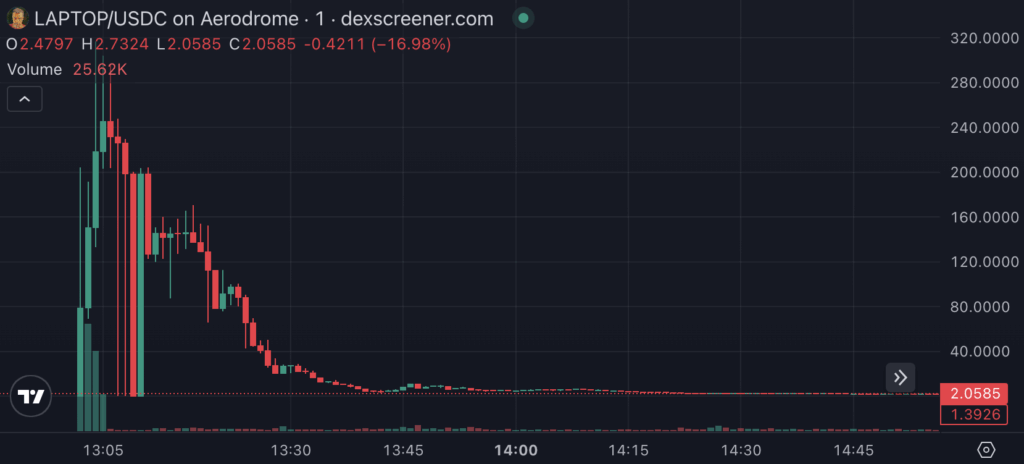
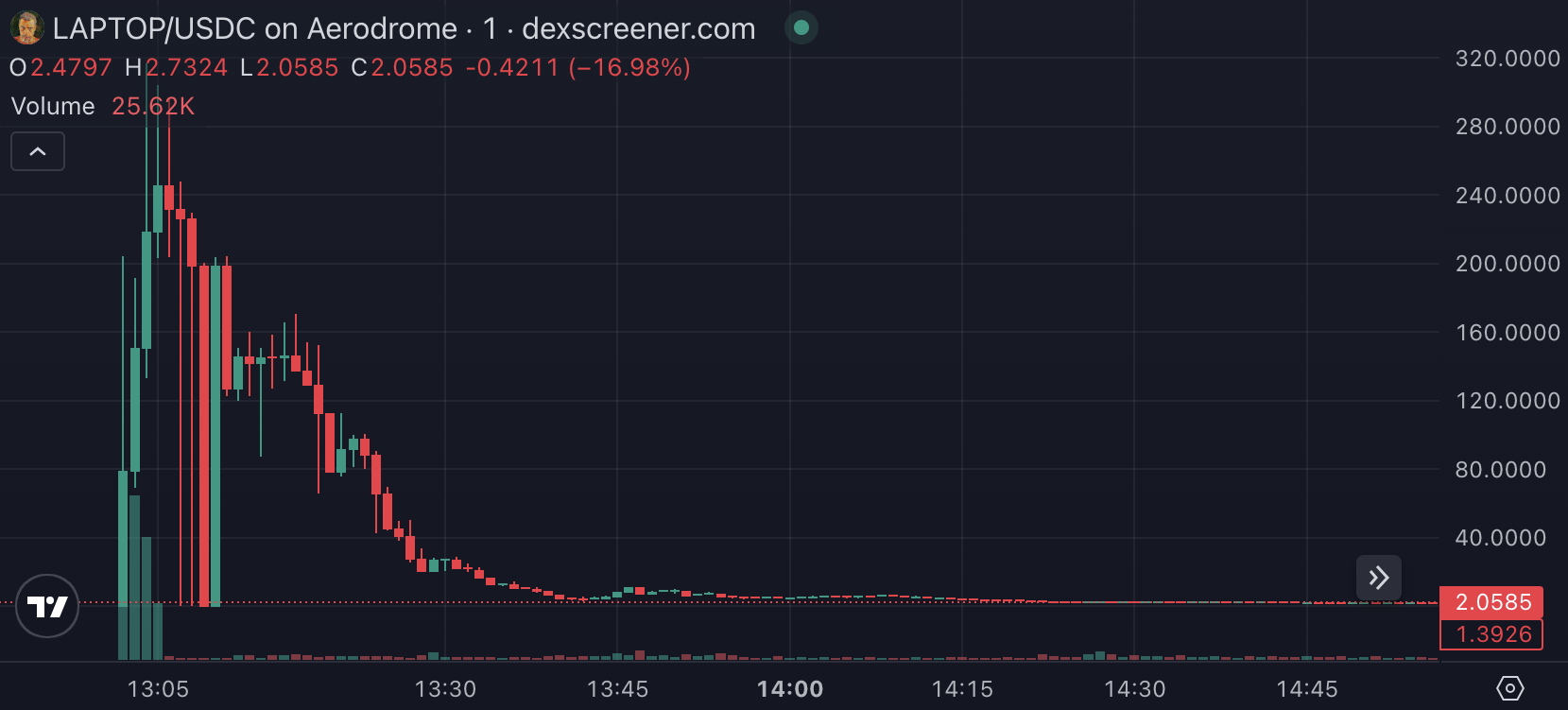
Hunter Biden’s $LAPTOP memecoin is down 99% from its all-time high.
Thanks to the supply of 1 billion tokens, its market cap hit $110 billion just minutes after launch. However, at time of writing, it has a fully diluted value of just $1.9 billion.
One minute periodicity volume is averaging between $20,000 and $30,000, and its price is now just under $2, down from its all-time high of $316.
Read more: Pump Fun and Kraken delete Hunter Biden $LAPTOP promotion
Biden’s laptop token sniped at launch
Biden’s token was announced earlier this week to little fanfare from the crypto community while Pump Fun and Kraken both promoted it before backpedaling on their support.
Several onlookers claim to have spotted snipers — bots that carry out super fast trades — exploiting the launch.
Crypto analyst Dethective claims one such sniper was able to make around $190,000.
Another analyst, Donaxbt, says the highest-earning sniper they saw made $335,000. Others have been reported as making well over $60,000.
Meanwhile, Lookonchain claims that market maker Wintermute has already sold $2 million worth of $LAPTOP it received from the token’s team.
Got a tip? Send us an email securely via Protos Leaks. For more informed news and investigations, follow us on X, Bluesky, and Google News, or subscribe to our YouTube channel.

Bitcoin collateral, not trading volume, will signal real bank adoption: fintech veteran

Messi, Mbappé and Kane headline Ballon d’Or shortlist, Vozinha named for Yashin award

This app applies Nvidia DLSS 5 to the entire Windows desktop


-
 Tech1 day ago
Memory prices are slowing because buyers ran out of money
-

 Crypto World16 hours ago
Bitcoin price risks $76K drop as $78K support weakens
-

 Crypto World16 hours ago
Ethereum price stalls below $2,500 as ADX drops to 11
-
 Sports1 day ago
Phones confiscated, players sent home: Pakistan’s England tour turmoil revives memories of Mohammad Amir, Salman Butt and Mohammad Asif’s 2010 Lord’s spot-fixing scandal | Cricket News
-

 NewsBeat1 day ago
England up in reading, maths and science rankings as Scotland and Wales dip
-

 Crypto World24 hours ago
Robinhood Stock: How To Take Advantage With Reduced Risk
-

 Business1 day ago
Egyptian TV Presenter Sarah Khalifa, 11 Others Sentenced To Death In Major Drug Trafficking Case In Cairo
-

 Business14 hours ago
Meta debuts long-awaited personal AI agent, Muse
-

 Crypto World1 day ago
Visa expands stablecoin card network to 160 programs
-
 Crypto World1 day ago
Brent Crude Oil Moves Above $100 for the First Time in 3 Months
-
 Tech1 day ago
Strong Password Policy and Password Manager Guide
-
 NewsBeat1 day ago
Tehran’s assertive rhetoric signals a new and dangerous phase in conflict
-

 Crypto World1 day ago
Intel Stock Jumps 9% on Chip Price Hike Report, US Stake Gains $36 Billion
-

 Sports22 hours ago
Ballon d’Or 2026 Nominees: Lionel Messi In, Cristiano Ronaldo Out; Erling Haaland Included In Top 30
-

 Tech1 day ago
Google’s revived nuclear power plant gets $1.9B loan from US government
-
 Business19 hours ago
Oil Higher on Hormuz Escalation, Weighing on Sentiment
-
 Tech20 hours ago
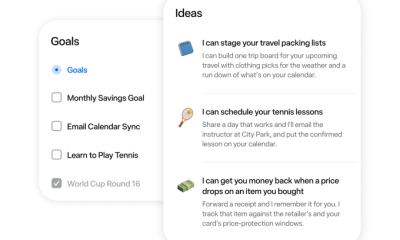
Meta debuts its Muse AI agent. Will consumers trust it?
-

 Business1 day ago
Claim Your Share Of $50 Million Disney Streaming Price Settlement By Sept. 8 Tonight
-

 Tech1 day ago
Stoke Space raises another billion to rival SpaceX at re-flying rockets
-
 Business18 hours ago
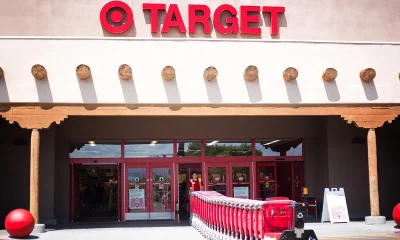
Target opening 8 new stores this fall across six states
You must be logged in to post a comment Login