
Business
Gateway taps investors for $45m


Yes. Corporate subscriptions are available for teams and organisations, with discounted rates as user numbers increase. Pricing starts from $1,625 + GST per user.
Get in touch
to discuss the right option for your organisation.
Business News subscriptions are used by executives, investors, consultants and professionals who need to stay informed and make better decisions about the WA market. When you subscribe you’ll get
- Unlimited access to WA’s most trusted business journalism
- Data & Insights — detailed profiles of WA companies, people, projects and deals
- MyBN — a personalised feed based on the companies, people and sectors you follow
- Special publications and industry reports
- Daily and weekly email newsletters
Data & Insights is a research tool built specifically for the WA market. It draws on more than 30 years of Business News reporting, updated regularly to reflect what’s happening now. Use it to:
- Look up detailed profiles of WA companies, including financials, directors and ownership
- Find decision-makers and track their career movements
- Research live and completed projects across WA industries
- Monitor deals, appointments and market activity
- Access industry rankings and league tables
Data & Insights is updated daily by our dedicated research team, which uses the latest announcements, ASX filings and editorial coverage to keep our person, company, list and project records up to date.
Business News welcome all opportunities to make our dataset accurate, complete and current, so if you have an update request, please email the team at
general@businessnews.com.au, and we’d be happy to assist.
MyBN
is part of every subscription. It’s your personalised view of Business News. You can follow the companies, people, sectors and projects that matter to you, and get a news feed and alerts tailored to your interests. You can save articles to read later and retain only what you need.
Only subscribers have full access to all content on the Business News website.
If staying informed about the WA economy is part of your job, and/or you’re looking for networking opportunities in WA, Business News is built for you.
Business News subscribers are:
- Executives and directors tracking competitors, clients and market movements
- Investors and advisers researching companies, deals and industry trends
- Consultants and professionals staying across sectors relevant to their clients
- Business owners looking for leads, context and market intelligence
Most Business News publications cover national or global markets. Business News is focused entirely on Western Australia, which means the journalism, the data and the intelligence are all built around WA companies, people and projects — not adapted from a national feed. Data & Insights, included with every subscription, combines more than 30 years of WA-specific editorial research with live business data. There’s no comparable product for the WA market.
The Morning Digest Email provides a comprehensive wrap of the major headlines, relevant to WA business, and includes with a snapshot of the overnight news covering oil, gold and ASX-listed companies.
The Afternoon Wrap Email focuses on the news covered by our team of journalists during the course of the working day, including exclusive stories and analysis, all of which relates to WA business and the local economy.
The BN Weekender Email contains a wrap of the Business News from the week that was, highlighting the top stories in each area of WA business.
Sign up for free.
We’re happy to help.
Get in touch
and our team will come back to you.


United Natural Foods UNFI -0.55%decrease; down pointing triangle expects profit and sales to rise this fiscal year as it onboards further business from new and existing customers.
The forecast came as the company, a major food distributor for Whole Foods, swung to a fourth-quarter profit despite lower sales.
Copyright ©2026 Dow Jones & Company, Inc. All Rights Reserved. 87990cbe856818d5eddac44c7b1cdeb8

Apple joins foldable phone race with $1,999 passport-shaped iPhone Duo

While tariffs can end up hitting consumers in the pocket, there are other impacts on households.
Import taxes can complicate trade for businesses that have cross-border supply. As well as the higher costs, the uncertainty created by the trade war could put off investment plans and stunt job creation.
Saunders suggests the biggest impact on households may not just be through prices, but job losses instead.
“If you’re, let’s say, a bespoke furniture producer in BC [British Columbia], you’re now facing a 50% tariff on your exports to the US – that could really shut the business down. I think that would be more the direct impact on households as opposed to these retaliatory measures.”
Canada’s forest industry employs almost 200,000 people and has called on the government to boost domestic demand through federal housing programs to make greater use of Canadian wood, though it admits “no support package can replace reliable access to our largest export market”.
When it comes to US, consumers are unlikely to see much of a difference in terms of the cost of living as result of this latest battle with Canada, but frictions to trade can have longer-term economic impacts.
Such tensions also feed into concerns over the free-trade agreement between Canada, the US and Mexico, known as the USMCA. Both Canada and Mexico have said they want the USMCA extended for another 16 years, but the US has said it will not renew in its current form.
Despite the deal remaining operational, tariffs risk putting off talks in the near future, creating more uncertainty for cross-border trade.
John Iselin, associate director at the Budget Lab at Yale, estimates the cost will only be about $3 per American household on average, but when taking into account Trump’s wider trade war with the rest of the world, and particularly China, the added costs rise to about $1,000 for the average family.
“It’s hard to view this particular instance with Canada in isolation because we’ve had similar interactions with a range of other countries, all of which makes doing business harder. It’s just another in a series of tariff shocks.”

Logistics company OneRail is launching a platform using Nvidia‘s artificial intelligence software to help retailers make faster decisions on the most efficient delivery options at scale, CNBC has learned.
The new platform, called OmniStar, allows retailers to use AI to evaluate all of their delivery options and identify the best one for each individual order, using OneRail’s proprietary data.
The last-mile delivery company told CNBC the new platform will allow smaller companies to deliver at scale and improve margins to compete with the retail giants of the world, including Amazon and Walmart.
As e-commerce grows, retailers have had to keep up with surging demand and invest in nimble supply chains to optimize their efficiency. But those manual processes are often fragmented across the retailer and the logistics businesses.
“If you don’t have the ability to make lightning-fast decisions, you’re giving up margin,” OneRail CEO Bill Catania told CNBC. “Last-mile fulfillment is expensive.”
Where choosing the best routing for a package may have previously taken 20 minutes, OneRail said its platform can do it in 2½ minutes leveraging AI. That time saved means retailers can operate larger, faster and more precise supply chains, Catania said.
“That’s where the artificial intelligence comes in. It’s making those kinds of decisions extremely rapidly, and so to do that, that’s where the Nvidia hardware and the software comes in and really makes this thing work at scale,” said David Daeschler, the head of AI at OneRail.
Daeschler said the company began partnering with Nvidia three years ago to explore ways to incorporate AI into the logistics process.
“The result is a real-time decision layer that can route an order to the right carrier and delivery mode at the right cost, rather than relying on static rules or manual planning,” said Azita Martin, Nvidia’s vice president and general manager of retail and consumer packaged goods.
Catania said OneRail’s proprietary data, which includes a network of more than 12 million drivers and over 1,000 logistics partners, is being used to train the AI on the most efficient routes and delivery options.
“It’s for the benefit of them and us: We operate more efficiently. They save money and provide a better customer experience,” Daeschler said.
The company told CNBC its platform has already been deployed with some customers, including a large tire distributor that saw OmniStar save the company a run rate of $40 million over three years because it’s able to use its resources more efficiently.
It’s also estimating the platform will surpass $6 billion in gross merchandise volume in the fourth quarter.
Nvidia’s Martin said the platform will allow retailers to make much faster decisions.
“For retailers, the bigger value is the ability to evaluate more scenarios, respond more quickly as conditions change and improve delivery economics without sacrificing service,” Martin said.
OneRail said the platform could help smaller retailers compete more effectively on delivery speed and efficiency.
OneRail announced a partnership earlier this year with FedEx to bring same-day delivery services to all of its customers, joining a rush of retailers trying to offer their customers the best and fastest delivery options. That partnership will now allow OneRail to better work with smaller businesses as well, Catania added.
“We’re kind of doing for delivery what ChatGPT and Anthropic have done for words – it all works the same way,” Daeschler said. “They give people more access to knowledge. We’re giving people access to being able to do delivery in a way that’s affordable. … That’s all done based on original models, training on data that we have, just like words on the internet.”
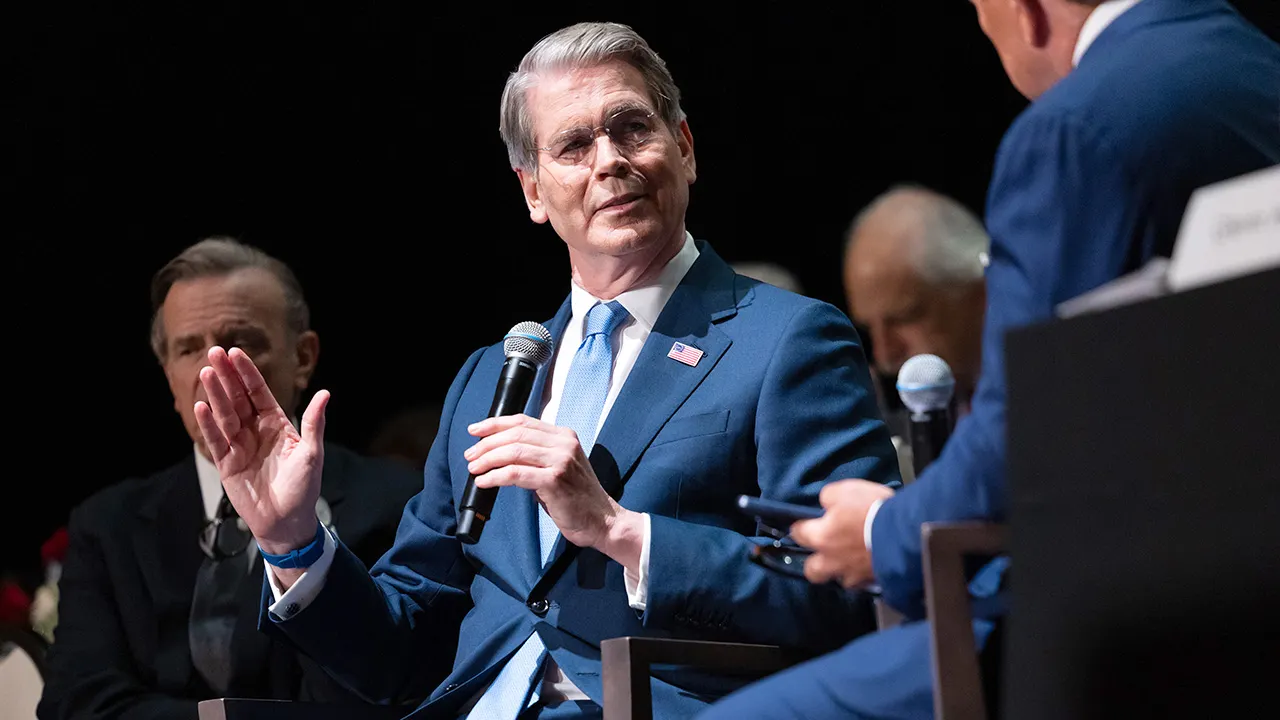
Main Street Research chief investment officer James Demmert joins ‘Making Money’ to discuss the economic implications of rising global treasury yields and shifting sentiment in the AI trade.
The Treasury Department on Wednesday revealed that it will buy back up as much as $6 billion in longer-dated U.S. debt in an operation this week.
The agency’s Bureau of the Fiscal Service announced that it will purchase up to $6 billion in 10-year notes and 20-year bonds in an operation. The securities that will be bought in the operation, which is scheduled to occur from 1:40 p.m. to 2 p.m. ET on Thursday, have maturity dates ranging from February 2037 and August 2046.
The buybacks follow Treasury Secretary Scott Bessent’s announcement that Treasury’s buyback operations would be at least $4 billion until early November, an increase from the $2 billion that the agency would typically buy back in an operation.
Yields on Treasurys have been elevated in recent years due to stubborn inflation, which has been exacerbated by the Iran war and has caused interest rates to rise further.
BESSENT SAYS TREASURY AUCTIONS WILL CONTINUE AS USUAL DESPITE EXPANDED BUYBACK PROGRAM
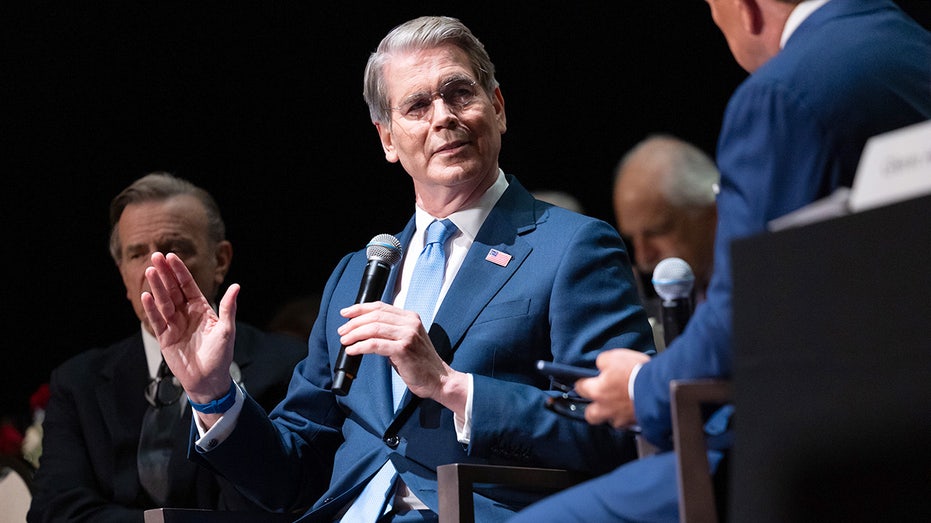
Treasury Secretary Scott Bessent announced the larger buybacks last month. (Krisanne Johnson/Bloomberg via Getty Images)
Treasury framed the buyback in its August announcement as intended to “provide greater liquidity support in longer-dated nominal sectors where there is consistent strong sponsorship from market participants, as evidenced by the significant volume of high-quality offers Treasury routinely receives in longer-dated buyback operations.”
Yields on both the 10-year note and 20-year bond rose following the announcement.
The yield on the 10-year note rose to the highest level since 2023, climbing to above 4.85% during Wednesday’s trading session. The 20-year bond yield also rose above 5.3%.
TREASURY YIELDS HOVER NEAR MULTI-YEAR HIGHS AS ENERGY PRICES AND GOVERNMENT DEBT FUEL BOND SELL-OFF

The Treasury announced a $6 billion buyback of long-dated Treasurys this week. (Michael Nagle/Bloomberg via Getty Images)
Matt Cole, CEO of Strive Asset Management, told FOX Business in an interview that the “market’s calling a bluff because these [buybacks] are very small sizes.”
Cole said buybacks of $2 billion or $6 billion pale in comparison to both the gross national debt of more than $40 trillion and the level of debt issuance that’s expected to continue in the future with annual deficits projected to rise above $2 trillion.
“There’s so much debt out there, and there’s so much need over the next couple of years to issue more debt out there, that the market is just saying this is not enough,” he explained. “I think that’s the signal, and ultimately it’s not going to be fixed if he raises it from $6 billion to $12 billion.”
US NATIONAL DEBT HITS $40 TRILLION MILESTONE FOR FIRST TIME EVER
He noted that most developed countries are facing similar debt problems, while corporate debt issuance is also rising to help finance the artificial intelligence (AI) buildout with yields that are competing with the debt issued by Treasury and foreign governments.
Bessent noted that dynamic in remarks on Tuesday, saying that if markets were concerned about U.S. bonds and default risks, they would be turning to German or Japanese bonds – but that the U.S. bond market has outperformed those.

Fed Chair Kevin Warsh and central bank policymakers will weigh interest rate hikes at their meeting next week. (David Paul Morris/Bloomberg via Getty Images)
Cole added that he thinks Bessent and Federal Reserve Chair Kevin Warsh may be the brightest people to hold their roles but are in a difficult spot given the U.S. government’s fiscal position.
“The problem is not them, the problem is a structural debt crisis playing out,” he said, adding, “I think that they should, to the maximum degree possible, be trying to foster a high-growth environment.”
GET FOX BUSINESS ON THE GO BY CLICKING HERE
“I know Bessent talks about trying to grow his way out of it. I don’t think you actually can grow your way out of it. But I do think it’s the best thing to be trying to do, and at worst, you at least help the U.S. not slow down too much during… an industrial revolution in this AI data center buildup,” Cole said, emphasizing the need for the U.S. to compete and win in AI to drive growth.
“Of all the impossible options, that’s the best to try,” Cole added. “I just think that there’s not a path to be successful here outside of stopping spending, and I just don’t think we will do that.”


From a warehouse just north of Chicago, Sarah Potempa – celebrity hairstylist and CEO of the viral Beachwaver hair curling iron – keeps thousands of viewers hooked for hours selling products on TikTok live.
This kind of livestream shopping, which has boomed in China over the past decade, is building momentum in the U.S. thanks to social media giant TikTok and live commerce platform Whatnot, which just reached a $20 billion valuation.
Beachwaver did about $8,000 in sales during the first four hours of a TikTok livestream in late July, which CNBC sat in for. She auctioned off limited-edition curling irons as her teenage son DJed behind her; demoed hair care products; and promised viewers she would shave her brother-in-law’s head live on camera if they sold 500 orders.
It was one of hundreds of livestreamed shows that Beachwaver does each year. About a quarter of its $1 million in TikTok Shop sales so far in 2026 originated from livestreams, where the company hosts its own selling shows and works with affiliate creators on the popular social media app.
Beachwaver CEO Sarah Potempa hosts livestreams from the company’s warehouse in Gurnee, Illinois.
CNBC
Reminiscent of the QVC craze of the past few decades, livestream shopping puts consumers in front of hosts who sell products in real time.
Now, QVC is live on TikTok for more than 200 hours per week across seven channels, according to the company, as it prioritizes digital after recently emerging from bankruptcy.
“QVC is a great example of a large established retailer that might have been seen as a competitor to TikTok shop … but in fact they have turned out to be a really successful merchant,” said Patrick Nommensen, president of strategic initiatives for TikTok Shop in the Americas.
Beachwaver got its start on QVC. TikTok and Whatnot have reinvented the wheel.
“Nobody is saying, OK, you have 10 minutes at 7 p.m. and get ready and here’s your 10 minutes and you’re done,” said Potempa. “You definitely need to be on longer on a digital platform, but you really are more in control of the revenue.”
Beachwaver CEO Sarah Potempa uses the company’s namesake product, a patented rotating curling iron.
CNBC
Following in China’s footsteps
The U.S. live shopping industry is forecast to reach nearly $20 billion in sales in 2026, about 35% higher year over year, according to eMarketer industry estimates.
Still, it’s a far cry from the rapid growth that live shopping experienced in China.
Alibaba introduced Taobao Live in China in 2016. Within five years, the market crossed $50 billion, and it’s projected to top $1.1 trillion in 2026, according to eMarketer.
Live shopping has been increasingly integrated into Chinese “super apps,” which are utilized by millions of users and combine features like social media and messaging in the case of WeChat or artificial intelligence assistance, food delivery and travel booking on Alibaba’s Qwen.
“[Chinese consumers] still like stores, but they use the livestream part of the digital experience as the entertainment, the engagement, the inspiration,” said Globaldata managing director Neil Saunders. “In the U.S., we’ve tended to rely traditionally more on stores to fulfill that role.”
Saunders said that’s changing now as younger consumers lean more into live commerce to discover products.
U.S. live shopping winners
TikTok Shop launched in 2023. The company shared exclusively with CNBC that live shopping sales more than doubled in the first half of 2026 compared with the same time frame in 2025.
The number of live shopping sessions increased by more than 60% during the same period, TikTok said, and total live hours grew by more than 80%.
Founded in 2019, Whatnot built its audience on novelties and collectibles. It’s grown rapidly over the past year, doubling its valuation since October. Whatnot ranked No. 8 on this year’s CNBC Disruptor 50 list, which identifies the most promising venture-backed companies.
Whatnot says it’s the largest live shopping platform in the U.S. but declined to share its domestic sales figures. The company told CNBC that a majority of the $8 billion in global sales it reported for 2025 were in the U.S.
“You can have [5,000], 10,000 people on Whatnot or TikTok watching your show at one time,” said Eric Pagan, who sells for brands on both platforms, during an interview in mid-August. “I did a show on TikTok this weekend that was well into six figures … I think what brands are not aware of yet is that that exists.”
Whatnot’s core focus is auctions, where viewers can bid on products in real time. TikTok rolled out live auctions in January.
“It feels like things are really, really clicking and live shopping is becoming a bit more mainstream,” said Whatnot’s chief revenue officer, Armand Wilson. “In year one, it was largely all collectibles. … Now pretty much anyone can download Whatnot and find something for them.”
Whatnot sellers showcasing Funko Pops on the platform.
Source: Whatnot Inc.
Legacy online marketplaces like Amazon, Walmart and eBay also have native platforms for sellers to host live shopping streams, though those platforms aren’t as inherently video-first as social media sites.
Amazon and Walmart declined to comment about their live shopping businesses, while a representative for eBay Live described the offering as making shopping “more human.” All three companies declined to share livestream sales figures with CNBC.
Mark Yuan, a former business development lead for eBay’s live shopping division and now the owner of e-commerce consulting company And Luxe, said legacy marketplaces benefit from the consumer trust that comes with how long they have been around.
“Those are the things you can’t buy with money, but unfortunately, what gives them the advantage also might be their barriers as well,” he said. “Structurally it’s very hard to transform themselves into a discovery-first or content-first [platform].”
The future of shopping?
Where newer entrants are succeeding is in creating forums for like-minded consumers.
Whatnot, which is especially popular for collectibles, says it prioritizes community and has seen success in areas like Funko Pop figurines, Pokemon cards, sneakers and fashion.
“Going into a community, really deeply understanding their problems and building a product around them has been the ethos that I think has gotten us to where we are today and what really differentiates us” said Wilson.
Pagan, the livestream host, said without the trust of your viewers, “there is no point in even being live.”
“Those people are my friends,” he added. “I believe that they know things about me that a normal person on the street wouldn’t know. And we had those conversations on a livestream.”
TikTok Shop logo on a smartphone.
Costfoto | Nurphoto | Getty Images
Marshal Cohen, chief retail analyst at Circana, said livestream shopping helps to bridge the gap between e-commerce and traditional retail.
“You can’t touch and feel the product, but you can hear from others what they think about it,” said Cohen. “[Live shopping] bridges that shortfall of the inability to touch and feel. And that’s always been online’s biggest challenge.”
But the platforms have their own set of challenges. Whatnot and TikTok have had to contend with issues of counterfeit and stolen goods.
For the sellers, leveraging a large platform comes at a cost: Whatnot takes a commission fee of between 4% and 8% of sales depending on the product, and TikTok takes 6% — plus additional payment processing fees.
And, the growing popularity of live shopping has made it harder to compete for eyeballs.
“The biggest challenge really is visibility,” said Globaldata’s Saunders. “You have to make sure that your feed is aligned with the algorithm and that it’s putting you in front of the right people.”
Business
Trump $1 coins aka ‘Golden Dollars’ are here, minus the gold. The US Mint is putting the sitting president’s face on American money for the first time

The U.S. Mint has begun selling a new gold-colored $1 coin featuring President Donald J. Trump, part of the nation’s preparations to mark its 250th anniversary in 2026.
The coin went on sale September 2 at noon Eastern time and is being offered through the U.S. Mint in rolls and bags aimed at collectors. A roll of 25 costs $61, while a 100-coin bag is priced at $154.50.
Despite being described as a “golden dollar,” the coin contains no actual gold. It is made primarily of copper, along with 6% zinc, 3.5% manganese and 2% nickel.
The obverse features Trump’s likeness, based on an official White House photograph, along with the inscriptions “LIBERTY,” “IN GOD WE TRUST” and “1776 ~ 2026.” Chief Engraver Joseph Menna designed the portrait.

The reverse side of the coin features the Presidential Seal, with the number “250” added to the eagle’s shield to commemorate the nation’s semiquincentennial.
There is also a detail that could make some of these coins especially interesting to collectors: the Mint is randomly distributing 250,000 coins struck on July 4 with a special “July 4th” privy mark among the rolls and bags sold through its website.
Why is Trump’s face allowed on a coin?
The release has attracted attention because U.S. law has traditionally prohibited the portraits of living people from appearing on U.S. coins and currency.
The Trump administration says the new dollar is permitted under the Circulating Collectible Coin Redesign Act of 2020, which authorized special $1 coins commemorating the 250th anniversary of the United States during 2026.
The precedent for a sitting president appearing on U.S. currency is extremely unusual. In 1926, President Calvin Coolidge appeared alongside George Washington on a commemorative half-dollar marking the 150th anniversary of American independence. Coolidge remains the only other sitting president to have appeared on U.S. currency, reported Euronews.

The head of the United Kingdom’s nuclear submarine capability has underlined WA’s critical role in driving the success of the controversial AUKUS program during a visit to Canberra.

Aerial over the University of North Carolina-Chapel Hill
Ryan Herron | Istock | Getty Images
A version of this article first appeared in the CNBC Property Play newsletter with Diana Olick. Property Play covers new and evolving opportunities for the real estate investor, from individuals to venture capitalists, private equity funds, family offices, institutional investors and large public companies. Sign up to receive future editions, straight to your inbox.
Students are heading back to school across the nation and leasing student housing at a faster clip than they were last year.
For investors, that creates new opportunities, but one leader in the field cautions that the differences in market fundamentals are widening across universities and regional markets. Some types of universities are seeing much higher occupancies and lagging construction, while others are overbuilt with falling demand.
On a national level, pre-leasing across the Yardi 200 — a curated set of the most important student housing markets, representing 90% of the institutional space — reached 89.1% in July ahead of fall move-ins. That is up from 88.1% in July 2025 but still below August 2025 levels of 89.9%.
According to Yardi, 117 of the 200 markets surveyed in July were at or above their year-earlier pre-leasing levels, but there was significant variation across different markets.
“New supply is increasingly concentrated in large markets, dragging down performance at schools with the most beds and weighing more heavily on national metrics,” wrote Tyson Huebner, director of research at Yardi Matrix, in the report.
Harrison Street Asset Management is one of the largest investors and developers in the sector, with more than $24 billion allocated across 432 student housing properties since its launch in 2005. Its investments total more than 238,000 beds across 200 university markets in North America and Europe.
“Our conviction in student housing is really high, but our conviction in every student housing market is not,” said Mike Gordon, global chief investment officer for real estate at Harrison Street. “Frankly, I think that creates a really interesting investment environment.”
Gordon said there are a lot of investors trying to get access to the sector, but only a limited number of managers with long-term experience in it. Specialization, he said, is more vital than ever, because the differences between university markets have grown quickly due to funding cuts, enrollment and specific student demand.
“Enrollment, applications, selectivity, research funding, student outcomes are increasingly concentrated at many of the leading institutions. Michigan, UVA, UNC, a number of the large public Power Four universities,” said Gordon, referring to the schools that belong to the four major athletic conferences. “Prospective students continue to value strong graduation incomes, alumni earnings, research capabilities, and many of the university markets that we focus on are really operating at or above 95% occupancy.”
He noted that housing supply has lagged enrollment growth at the universities in a number of these markets, specifically citing Virginia Tech, Auburn University and Penn State.
“I think about the best university towns almost like factory towns where the factory is never closing. The university is the factory, and what it produces is intellectual capital. It attracts students, obviously, but also professors and researchers, entrepreneurs, companies that want to be close to that intellectual capital, and everyone needs somewhere to live,” Gordon said.
Harrison Street acquires and develops assets on its own and through public-private partnerships with state universities. It has also been selling some of its assets given rising demand in certain markets.
Earlier this year, Harrison Street sold a 12-property student housing portfolio for $910 million, one of the largest dispositions in the sector in recent years.

John Ternus has entered his second week as Apple’s chief executive and the company has revealed the first major change to the iPhone since it was released almost 20 years ago.
Ternus, who took on Apple’s top job after Tim Cook stepped down, was onstage on Wednesday at the company’s annual product release event in front of huge images of the first foldable iPhone.
With a book-style format, the new iPhone, dubbed the Duo, is the largest ever size of the product. And with a starting price of $2,000 (£1,475) going up to $3,200, it is also the most expensive.
Ternus said the Duo was “inspired by the iPad” but called the folding features “fluid and completely intuitive.”
The foldable phone has been a work-in-progress inside Apple for several years.
When unfolded, it has the look of a small iPad. When folded in half, it has the look of a wider iPhone.
Ternus said during the event that Apple wanted to avoid the look and feel of other foldable smart phones on the market, which he said “feel like two phones stuck together… making a larger screen feel much smaller.”
The Duo, he said, is the “result of a series of remarkable innovations that we think will redefine the experience of using a foldable phone.”
Ternus was directly involved in developing the foldable iPhone as he spent many years as a top executive inside Apple’s hardware division before being tapped earlier this year as Cook’s successor.
Ben Wood, chief analyst at technology research firm FDM, said it was likely Ternus’s promotion was timed specifically “to coincide with what will be arguably one of the biggest iPhone launches for many years”.
“Nothing happens by accident at Apple,” Wood added.
Altering the design of the iPhone may address some criticism that Apple has yet to land a major product hit or truly exciting innovation since the first iPhone came out in 2007.
“The foldable risks becoming a premium-priced ornament in the portfolio, imparting badge value but not meaningful growth,” said Dipanjan Chatterjee, an analyst at Forrester.
Previously, the highest starting price of the newest iPhone was $900 (£664). Apple also revealed on Wednesday the new iPhone 18 and 18 Pro, which start at $1,200 (£885) and $1,300 (£959) respectively.
Chatterjee said the foldable iPhone could go the way of Apple’s Vision Pro headset, which the company priced at $3,699 (£2,729) and has not been a hit with buyers. Or, he said, it could be the company’s next Apple Watch which, while not as popular as the iPhone, is bought by millions of people each year.
Wood noted that the current market for foldable smartphones from the likes of Samsung and Huawei make up only 2% of smartphone sales. Even with Apple’s version likely driving interest and demand, sales are only expected to reach 4% of the total market in the next decade, according to data and analytics firm FDM.
The iPhone has been Apple’s top-selling product and accounts for more than half of the company’s sales each year.
In recent quarters, the company has boasted that the iPhone is more in-demand than ever, with the most recent version of the device becoming its most successful product launch.
United Natural Foods Guides for Sales to Rise This Fiscal Year

AI Stocks: OpenAI Declares ‘AGI Era’ Is Here. IPOs Coming.

Young and Restless Early Spoilers Sept 14-18: Nikki Seizes POWER & Billy SHUTS IT DOWN!


-

 Crypto World20 hours ago
Bitcoin price risks $76K drop as $78K support weakens
-
 Tech1 day ago
Memory prices are slowing because buyers ran out of money
-

 Crypto World20 hours ago
Ethereum price stalls below $2,500 as ADX drops to 11
-

 Crypto World1 day ago
Robinhood Stock: How To Take Advantage With Reduced Risk
-
 Sports1 day ago
Phones confiscated, players sent home: Pakistan’s England tour turmoil revives memories of Mohammad Amir, Salman Butt and Mohammad Asif’s 2010 Lord’s spot-fixing scandal | Cricket News
-

 NewsBeat1 day ago
England up in reading, maths and science rankings as Scotland and Wales dip
-
 Crypto World13 hours ago
Bitcoin price holds near $79K as cycle drawdowns narrow
-
 Crypto World1 day ago
Brent Crude Oil Moves Above $100 for the First Time in 3 Months
-

 Business18 hours ago
Meta debuts long-awaited personal AI agent, Muse
-

 Crypto World1 day ago
Visa expands stablecoin card network to 160 programs
-

 Business1 day ago
Egyptian TV Presenter Sarah Khalifa, 11 Others Sentenced To Death In Major Drug Trafficking Case In Cairo
-
 Tech1 day ago
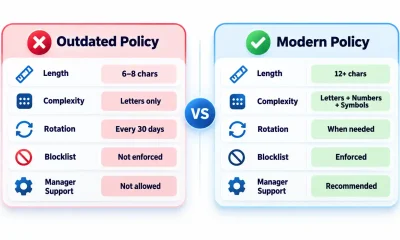
Strong Password Policy and Password Manager Guide
-
 Crypto World1 day ago
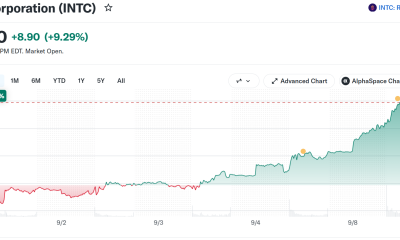
Intel Stock Jumps 9% on Chip Price Hike Report, US Stake Gains $36 Billion
-

 Sports1 day ago
Ballon d’Or 2026 Nominees: Lionel Messi In, Cristiano Ronaldo Out; Erling Haaland Included In Top 30
-
 NewsBeat1 day ago
Tehran’s assertive rhetoric signals a new and dangerous phase in conflict
-

 Tech1 day ago
Meta debuts its Muse AI agent. Will consumers trust it?
-

 Tech1 day ago
Google’s revived nuclear power plant gets $1.9B loan from US government
-
 Business23 hours ago
Oil Higher on Hormuz Escalation, Weighing on Sentiment
-
Business21 hours ago
Xometry at Goldman Sachs Communacopia + Technology Conference 2026: growth, AI and Siemens
-

 Business22 hours ago
Target opening 8 new stores this fall across six states
You must be logged in to post a comment Login