Connect with us

Business

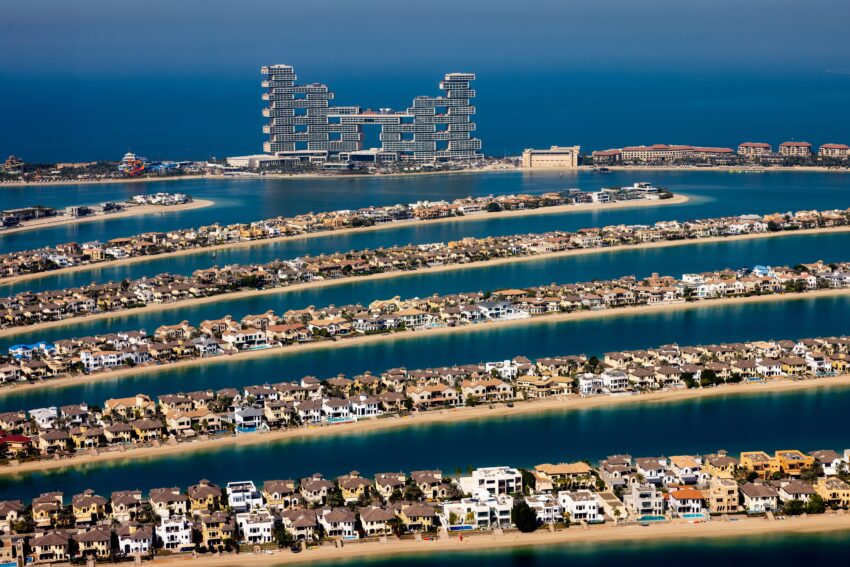
The UAE and Germany are finding common ground in a more fragmented world

Published

on

Why Morocco Fits RD Dubai’s and Lukas Kerrebijn’s Long-Term Investment Thesis

Germany and the United Arab Emirates have maintained diplomatic relations for more than half a century and a strategic partnership for more than two decades, but the context in which that relationship now operates is changing significantly.

Europe is confronting a prolonged war on its eastern flank, a more uncertain security environment and the consequences of having allowed strategic economic dependencies to build up over many years. The Gulf, meanwhile, is dealing with its own acute security pressures, including the current escalation involving Iran and persistent threats to shipping, energy infrastructure and regional stability.

These may once have appeared to be largely separate challenges, but increasingly, they are not.

The same drone technologies can threaten critical infrastructure in Europe and the Middle East. Disruption in the Gulf can feed through rapidly into European energy prices and inflation. Instability around major shipping routes matters as much to an export economy such as Germany as it does to a commercial hub such as the UAE. Technology policy, energy policy and security policy can no longer be neatly separated.

Germany’s ambassador to the UAE, Tobias Tunkel, recently captured one part of this inexorable connection succinctly: “We are an export nation and rely on freedom of navigation, open waterways and international waters so we rely on a rules-based international order. In the UAE, we have a partner in exactly that.” He argued that Germany and the UAE have a growing mutual interest in key areas including air defence and counter-drone technology, while describing the Emirates as an important partner for regional stability.

Advertisement

As such, the close relationship between Berlin and Abu Dhabi increasingly makes sense on strategic as well as commercial grounds.

Germany spent decades building an economic model around competitive industry, relatively secure energy supplies and access to global markets. Russia’s invasion of Ukraine exposed some of the vulnerabilities embedded in that model and forced Berlin to diversify its energy supplies at considerable speed. At the same time, intensifying competition over artificial intelligence, advanced manufacturing and critical technologies has made industrial capacity itself a geopolitical concern.

The UAE is approaching many of the same changes from a very different starting point. It remains a major energy producer, but has spent years endeavouring to reduce the dependence of its economy on hydrocarbons, investing heavily in renewable energy, logistics, digital infrastructure, artificial intelligence and advanced technologies. Its strategic geographical location also gives it something increasingly valuable to European companies: connections to rapidly growing markets across the Middle East, Africa and Asia.

That does not mean Germany and the UAE have identical interests or identical views of the international system, but they do not need to. Germany is embedded in the European Union and Nato; the UAE has pursued a more flexible foreign policy, maintaining important economic and political relationships across competing centres of global power.

Advertisement

But strategic partnerships are often most useful when they are built around concrete areas of convergence, and in this case there are several.

Energy is certainly the most established. During Chancellor Friedrich Merz’s visit to Abu Dhabi in February, agreements included cooperation between Adnoc and RWE on potential LNG supplies to Germany and European markets, as well as work between Masdar and RWE on battery storage projects in Germany. The UAE’s XRG has also made a major long-term investment in German materials group Covestro.

Yet seeing the relationship primarily through the lens of energy now misses much of what is interesting about it. Germany retains deep capabilities in engineering, industrial production and applied research. The UAE has made a substantial bet on artificial intelligence and the infrastructure needed to deploy it. That creates obvious scope for cooperation in areas such as industrial AI, robotics, cybersecurity and advanced manufacturing — technologies where software, capital and physical industrial expertise increasingly have to develop together. Tunkel has pointed in particular to the potential of combining Emirati AI capabilities with Germany’s manufacturing base.

The economic foundations for a broader relationship are already substantial. Bilateral trade exceeded $15.5 billion in 2025, and around 2,000 German companies now operate in the UAE. A Germany-UAE Business Council was established last year, adding another institutional link between the two business communities.

Advertisement

But the more important shift may be qualitative rather than quantitative. The old model of relations between Europe and the Gulf was relatively straightforward: energy flowed in one direction, manufactured goods, expertise and investment opportunities in the other. That picture is swiftly becoming outdated.

The more interesting model is one in which companies and investors build capabilities together. Emirati capital can help scale technologies and industrial infrastructure in Europe, while German industrial expertise can contribute to the UAE’s diversification and technological ambitions. German companies can use the Emirates as a platform into markets beyond the Gulf, while UAE investors can use partnerships with German companies to deepen their exposure to European industry and technology. Many German companies already treat the UAE as a base from which to serve the wider Middle East, Africa and Asia.

There is also a wider European dimension. The UAE and the European Union are pursuing closer economic ties, including negotiations intended to expand trade and investment across strategic sectors. Germany, as Europe’s largest economy and one of the UAE’s most important European partners, has an obvious interest in helping shape that relationship.

None of this makes the traditional elements of diplomacy irrelevant. Strong relationships endure partly because they exist beyond governments and transactions. German schools operate in the Emirates; a new German-Emirati vocational institute has opened in Sharjah; aviation links are expanding; and cooperation spans culture and education as well as business.

Advertisement

But the importance of this state visit lies in the opportunity to place those longstanding ties within a much more demanding strategic context. It follows Chancellor Merz’s visit to Abu Dhabi earlier this year and a series of exchanges between political and business leaders on both sides. Sheikh Mohamed bin Zayed Al Nahyan’s previous official visit to Germany, in 2019, came in a very different international environment; at the time, he described Germany and the UAE as anchors of peace and stability in their respective regions.

Seven years later, that description carries ever more weight.

For Germany, the challenge is to preserve industrial strength, diversify economic and energy relationships and navigate a less predictable global order. For the UAE, it is to continue moving beyond hydrocarbons, develop technological and industrial capabilities and protect the openness on which its role as a global trading hub depends.

Long after the state visit concludes, the critical question will be: can Berlin and Abu Dhabi bring their relationship, carefully built over five decades, into one tailor-made for the next decade— one in which economic resilience, technology, energy and security are increasingly part of the same conversation.

Advertisement

Continue Reading
Click to comment

You must be logged in to post a comment Login

Leave a Reply

Business

AMD Stock Climbs After Management Lifts 2027 Data Center Outlook Toward $70 Billion in AI Sales

Published

on

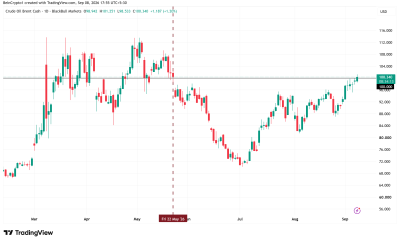
Oil Prices Plunge Below $95 as US-Iran Ceasefire Sparks Relief

SANTA CLARA, Calif. — Advanced Micro Devices shares rose Wednesday after management told a Citi conference that data-center sales could reach about $70 billion in 2027 — roughly double this year’s expected run — and that the addressable AI market could hit $2 trillion by 2030.

The stock traded at $519.03 around 11:12 a.m. Eastern, up $13.29, or 2.63%, extending a Tuesday jump of nearly 6% after the same remarks. CLSA lifted its price target to $710 from $575 and kept an Outperform rating, raising 2027 and 2028 earnings estimates by 25% to 29% on higher MI-series GPU volume and price assumptions.

The $70 billion figure is the number the tape heard. AI GPUs are expected to contribute sales in the low $40 billions next year, with server CPUs making up the rest. Server CPU revenue is projected to grow more than 80% year over year in the second half of 2026 and more than 70% in 2027. Management also raised its 2030 server-CPU market view to $220 billion from earlier, much smaller, estimates. Inference, not training, is now “the majority driver of AI computing,” according to Citi’s summary of the session, as workloads move from chatbots toward agentic systems that need more CPUs beside the accelerators.

That mix is already visible in the last reported quarter. On Aug. 4 AMD posted second-quarter revenue of $11.54 billion, up 50% from a year earlier. Non-GAAP earnings were $1.66 a share. Data-center sales were $6.7 billion, up 107%, and 58% of the company, versus about 42% a year earlier. EPYC CPU sales rose about 70%. Gaming revenue fell 31% to $779 million.

Advertisement

“We delivered an excellent quarter, with record revenue and profitability as Data Center revenue more than doubled year-over-year,” Chair and CEO Lisa Su said in the release. “We enter the second half with strong momentum as EPYC demand accelerates, Instinct deployments scale and Helios begins to ramp.” Third-quarter guidance was about $13 billion, plus or minus $300 million, implying 41% year-over-year growth at the midpoint and 56% non-GAAP gross margin.

Helios, the rack-scale stack of Instinct GPUs, EPYC CPUs and Pensando networking, is the product the 2027 number rides on. MI450 production shipments started in the third quarter, with a larger ramp in the fourth quarter and into early 2027. Su said on the earnings call that AMD would launch “a new rackscale AI platform every year.” For 2027 that means MI500 GPUs, Verona CPUs and both copper and optical interconnects. Customer work on MI500 is “very strong,” she said, and the company expects the largest generational leap in Instinct history.

The customer list is no longer a single logo. OpenAI committed to multi-gigawatt Instinct deployments, a deal AMD has described as more than $100 billion of potential revenue over years, with equity-linked warrants. Meta’s expanded pact covers up to 6 gigawatts of custom GPUs and CPUs, also with a performance warrant of up to 160 million AMD shares that vest as shipments and the stock price climb, the last tranche at $600. Anthropic agreed to deploy up to 2 gigawatts of MI450-class GPUs in Helios, first gigawatt in the first half of 2027. Microsoft will put Helios on Azure for inference. AMD said it has locked $29 billion to $30 billion of purchase commitments. Lead customers have raised forecasts above their original 2027 plans. Neo-cloud buyers are appearing behind them.

Constraints are the other half of the story. Advanced wafers, high-bandwidth memory and packaging are tight. That is why a $519 stock can still sell off on a beat, as it did after the August print when guidance looked rich to bulls and thin to people who wanted an even steeper second half. Gaming is a drag: Su said higher component costs “weighed on overall demand” for graphics cards. Client PCs are only a partial offset.

Advertisement

The valuation assumes the $70 billion lands. AMD is tracking “materially ahead” of the November analyst-day model that called for more than 35% revenue growth and $20 of annual EPS in the strategic window; management now says it will beat both. A $850 billion-plus market cap at midweek prices pays for a second source to Nvidia that actually ships racks, not slides. If MI450 yields slip, if HBM stays rationed, or if OpenAI and Meta digest capacity, the multiple compresses. Warrants dilute if the stock keeps rising. Nvidia still owns training mindshare.

Wednesday’s 3% is the market marking the Citi slides, not a new quarter. Su’s job from here is to turn $13 billion of guided sales this quarter into a visible Helios run-rate that makes $40 billion-plus of 2027 GPU revenue look like arithmetic. The AI TAM slogan is $2 trillion. The operating slogan is racks out the door before the memory and substrate lines say no.

Continue Reading

Business

Tax banks to give some households energy bill cut, unions tell PM

Published

on

A cut of of Anthony Zurcher wearing a suit and tie in front of a red, black, grey and blue graphic background featuring the US Capitol Building

The leader of Britain’s trade unionists has told Andy Burnham the government should introduce a “social tariff”, paid for by a bank surcharge, to help low and middle earners with their energy bills.

A social tariff is a discount on bills based on household income, and the TUC says it believes two-thirds of households could benefit.

The TUC says the bank surcharge, which was reduced in 2023 from 8% to 3% by the then Conservative government, should be reversed – and estimates it would raise £9bn over four years.

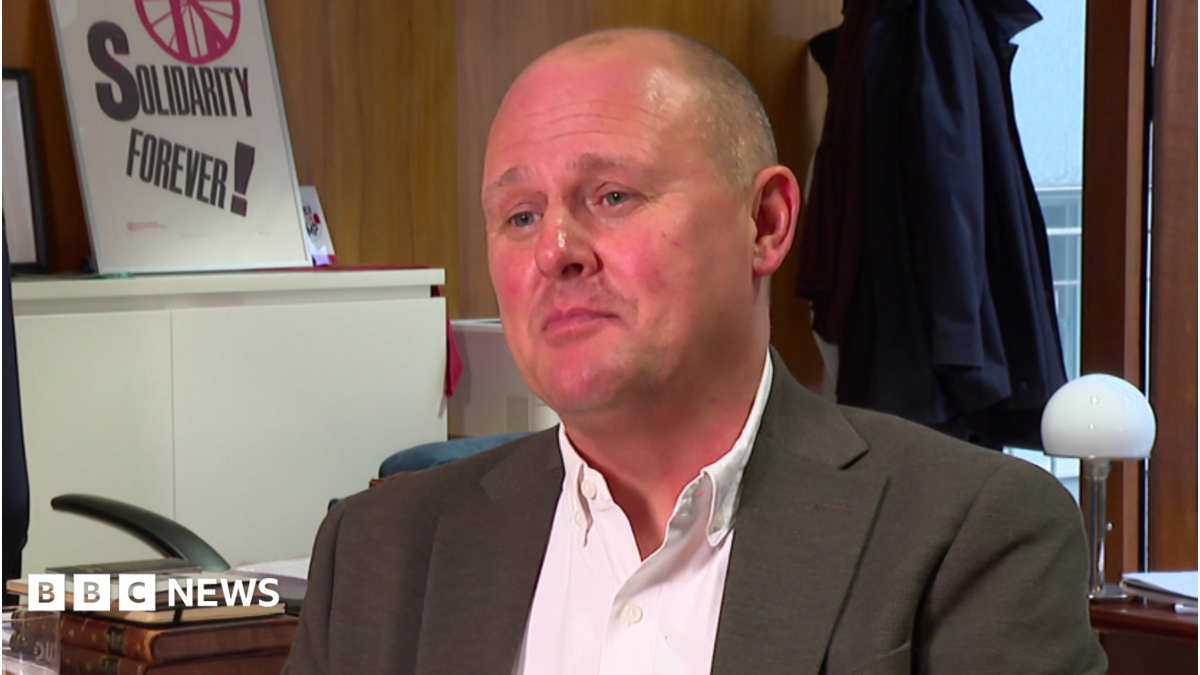
TUC leader Paul Nowak said: “I think it will appeal to the prime minister. These are policies that make a difference in the real world and people can see a value in them.”

Advertisement

In a wide-ranging BBC interview ahead of its annual congress in Brighton next week, the TUC general secretary said next month’s Budget needed to show “the government is back in the service of the British people”.

While he said Burnham had got off to a good start as prime minister, he had a series of “asks” of the prime minister and the new Chancellor, John Healey.

Top of his list is more help with energy bills, saying: “We need to drive down inflation – those energy bills are fuelling inflation.

“And millions of families up and down the country are worried about turning on their heating this winter.”

Advertisement

Burnham has already offered “breathing space” – as he calls it – on the cost of living by temporarily scrapping VAT on electricity bills from October.
Nowak said the proposal for a social tariff would be popular with Labour MPs; while the Liberal Democrats and the Greens in England and Wales have called for a windfall tax on banks too.

However, UK Finance, which represents well-known banks and lenders, has suggested that heavier levies would undermine the government’s ambition to deliver “growth in every postcode” and would damage international competitiveness.

The organisation argues that UK banks face a heavier tax burden than those in the US, for example.

Advertisement

So could the TUC’s revenue-raising measure be counter-productive and threaten jobs in finance?

Nowak is sceptical. “I can’t believe banks would leave the UK just because we are restoring the surcharge to where it was in 2023. Bank share prices have risen faster here than in New York,” he said.

Continue Reading

Business

Choice Hotels International, Inc. (CHH) Presents at Bank of America Gaming and Lodging Conference 2026 Transcript

Published

on

OneWater Marine Inc. (ONEW) Q1 2026 Earnings Call Transcript